96. The volume (in mL) required to prepare 350 mL of 1X buffer solution from a fifty times (50X) concentrated buffer stock solution is ________.

Volume Required to Prepare 350 mL of 1X Buffer

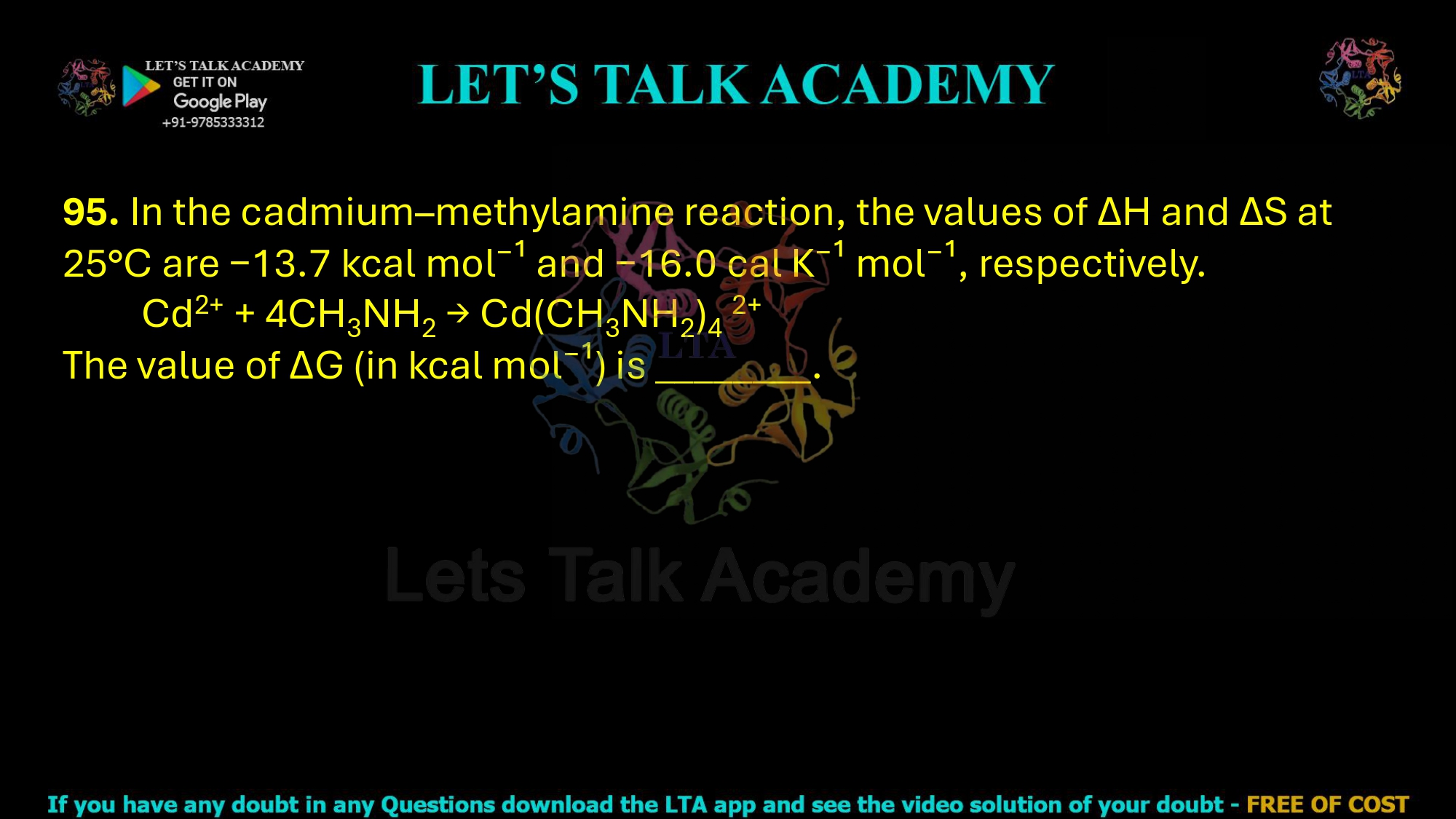
95. In the cadmium–methylamine reaction, the values of ΔH and ΔS at 25°C are −13.7 kcal mol⁻¹ and −16.0 cal K⁻¹ mol⁻¹, respectively.          Cd2+ + 4CH3NH2 → Cd(CH3NH2)4 2+ The value of ΔG (in kcal mol⁻¹) is ________.

Calculation of Gibbs Free Energy (ΔG) from ΔH and ΔS

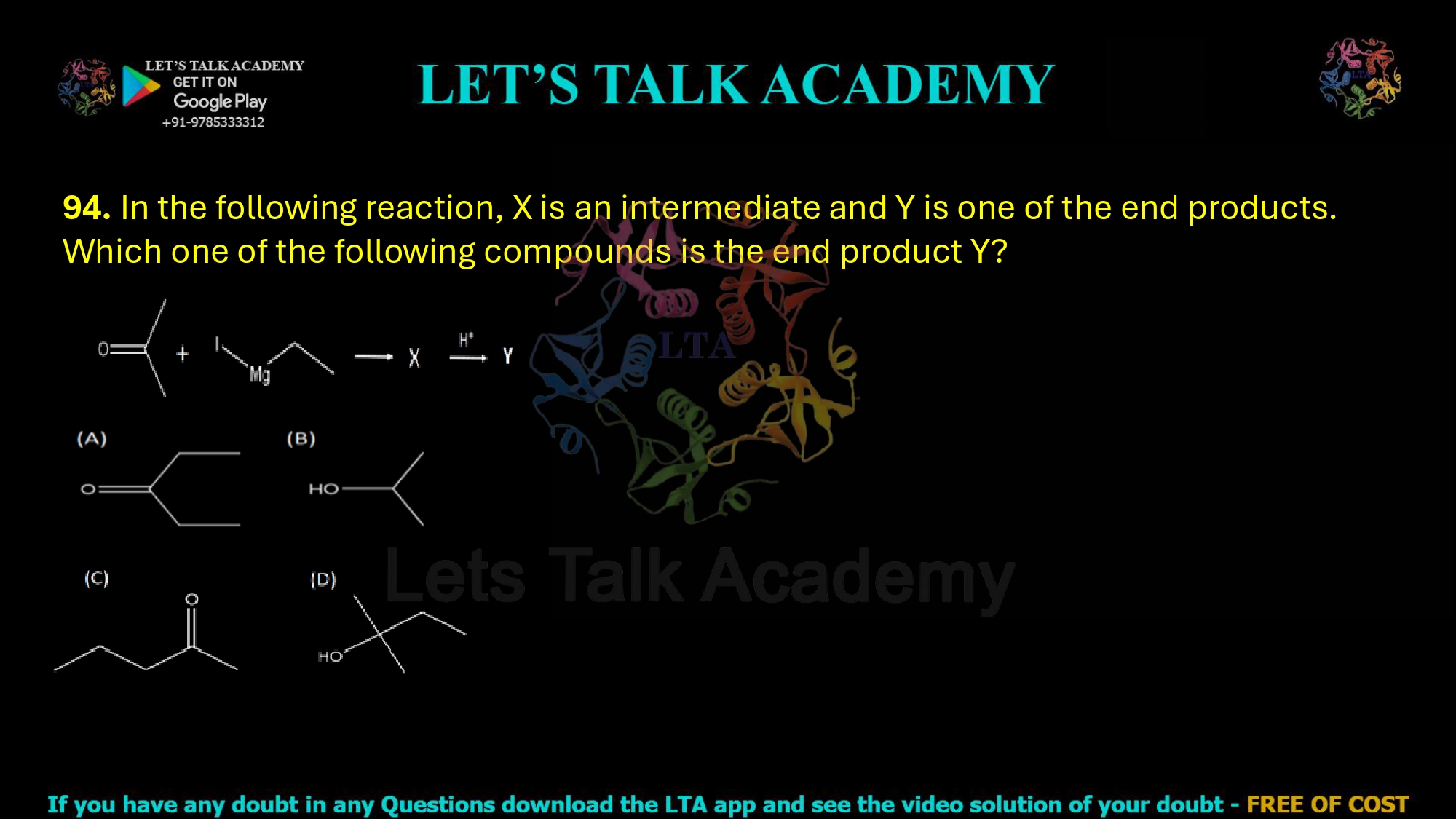
94. In the following reaction, X is an intermediate and Y is one of the end products. Which one of the following compounds is the end product Y?

Major Product of Acetone with Ethylmagnesium Iodide

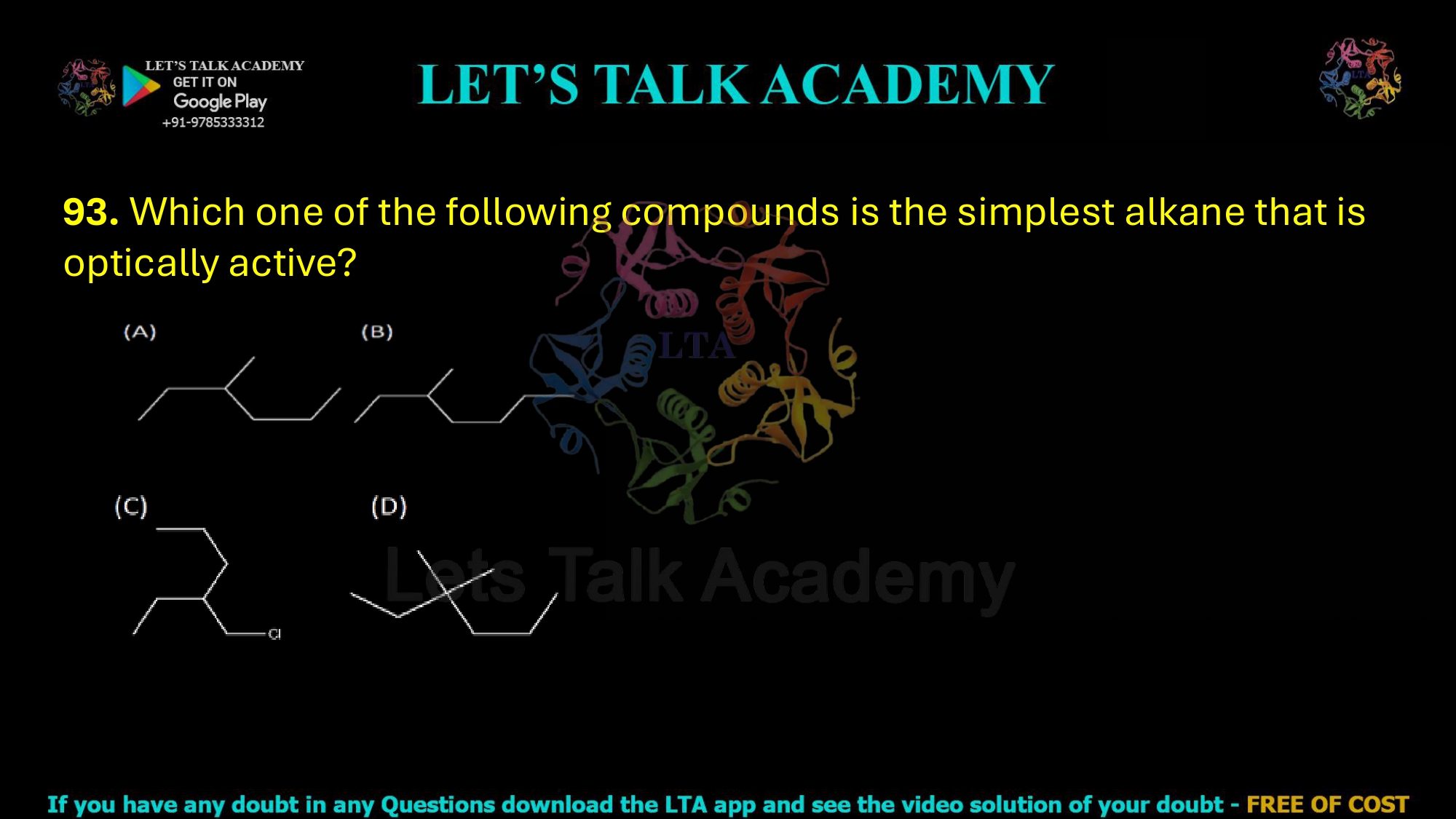
93. Which one of the following compounds is the simplest alkane that is optically active?

Simplest Optically Active Alkane

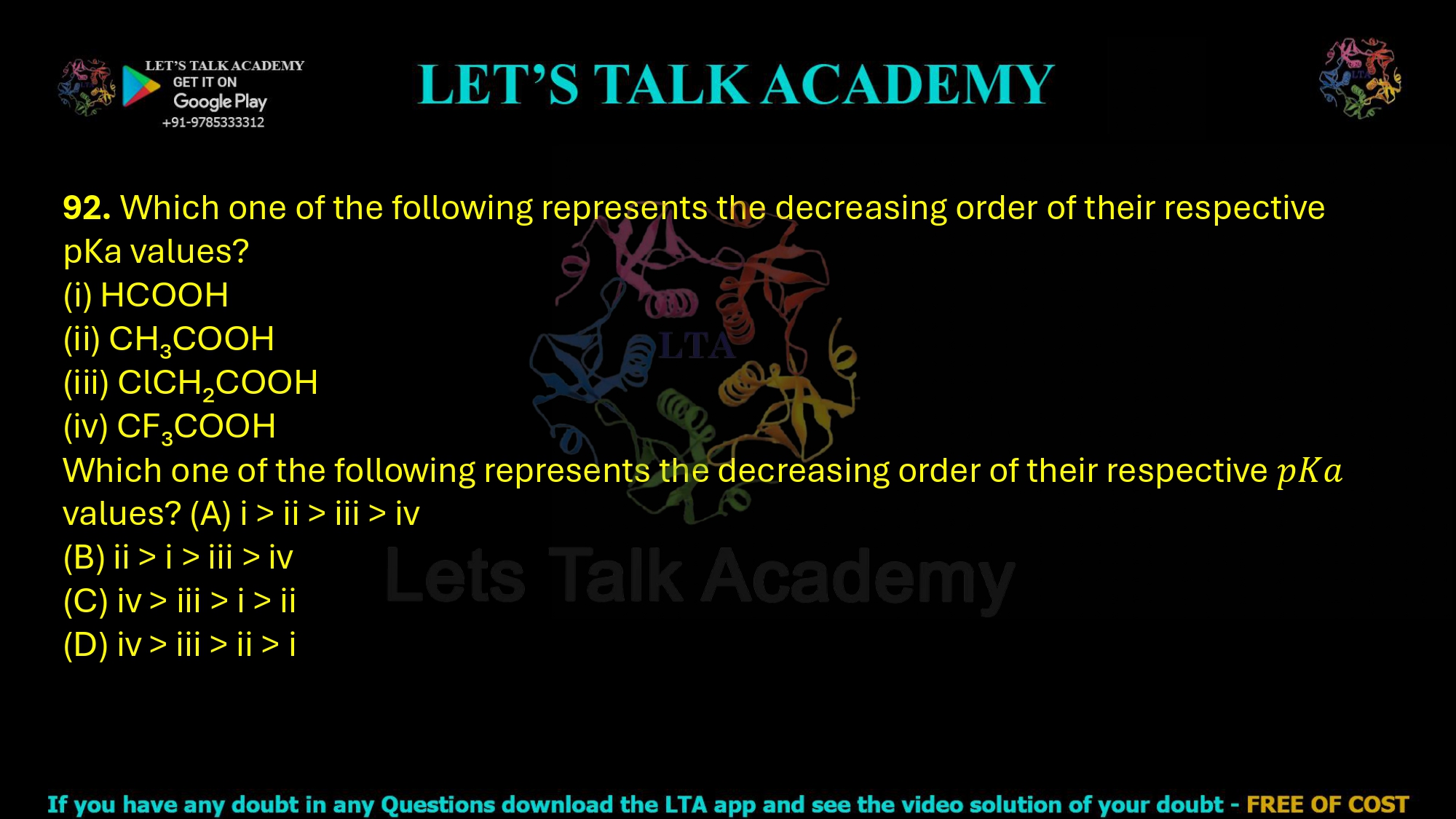
92. Which one of the following represents the decreasing order of their respective pKa values? (i) HCOOH (ii) CH₃COOH (iii) ClCH₂COOH (iv) CF₃COOH Which one of the following represents the decreasing order of their respective 𝑝𝐾𝑎 values? (A) i > ii > iii > iv (B) ii > i > iii > iv (C) iv > iii > i > ii (D) iv > iii > ii > i

Decreasing Order of pKa Values of Carboxylic Acids

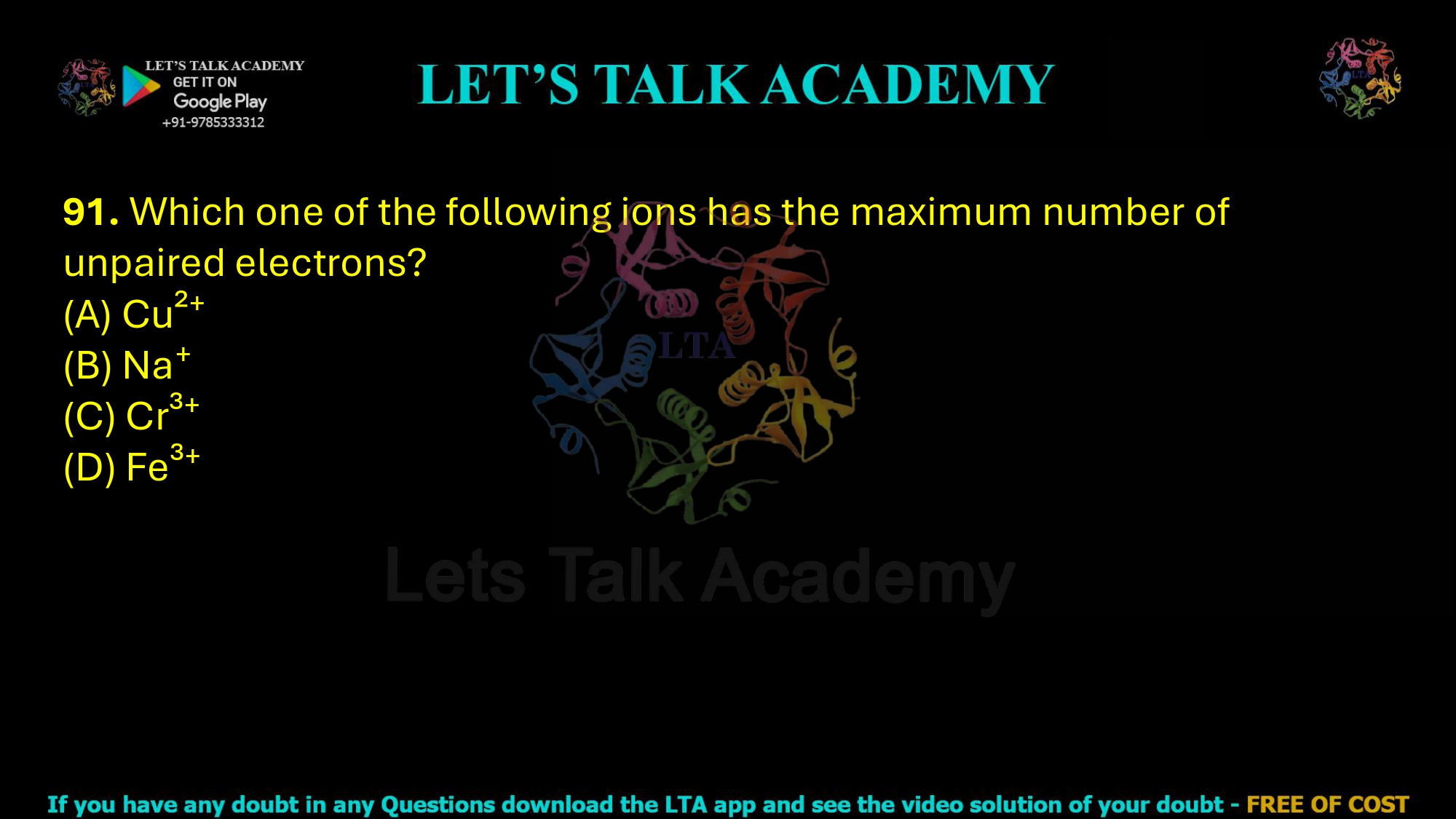
91. Which one of the following ions has the maximum number of unpaired electrons?  (A) Cu²⁺ (B) Na⁺ (C) Cr³⁺ (D) Fe³⁺

Which Ion Has the Maximum Number of Unpaired Electrons?

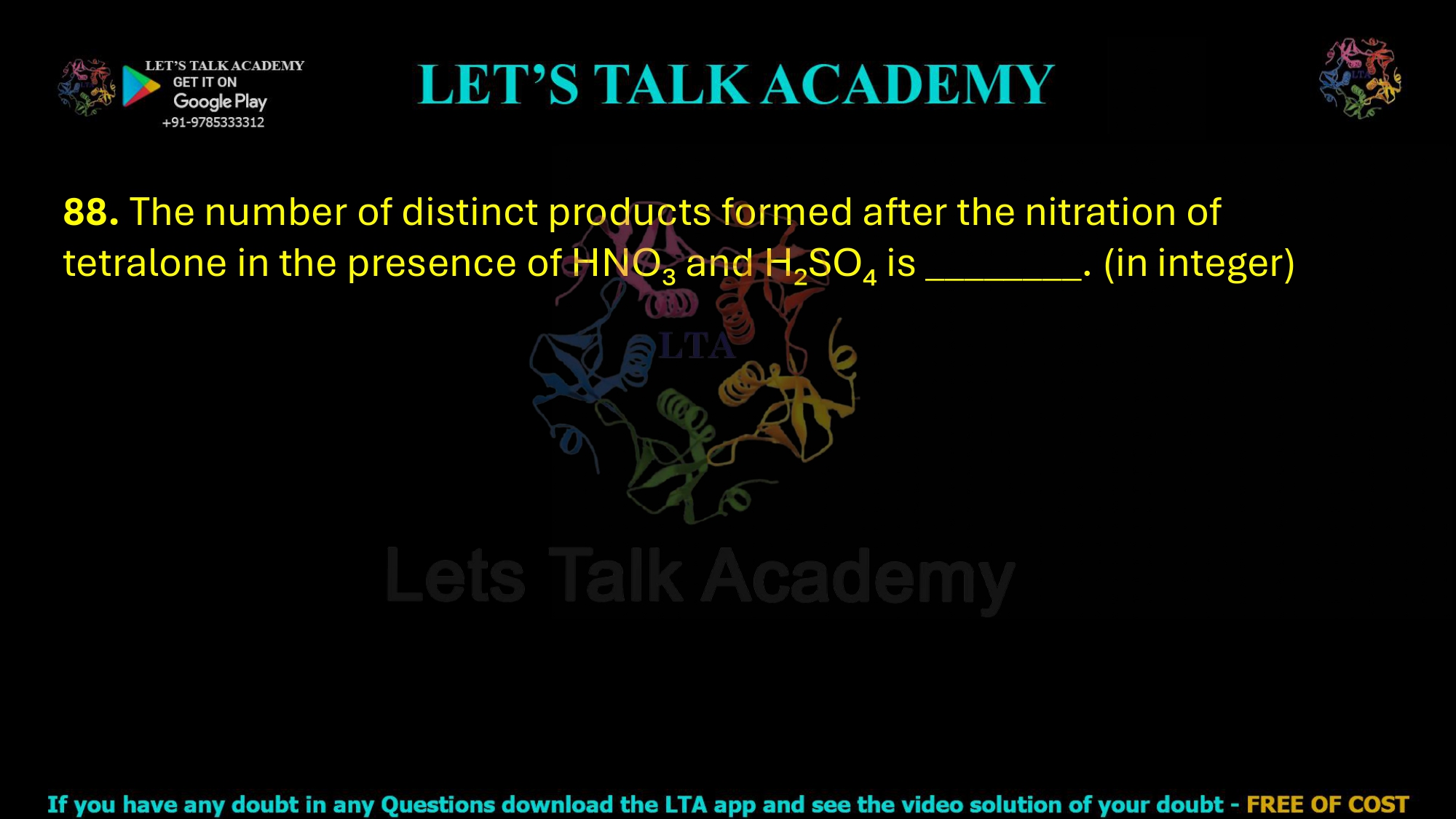
88. The number of distinct products formed after the nitration of tetralone in the presence of HNO₃ and H₂SO₄ is ________. (in integer)

Number of Distinct Products Formed on Nitration of Tetralone

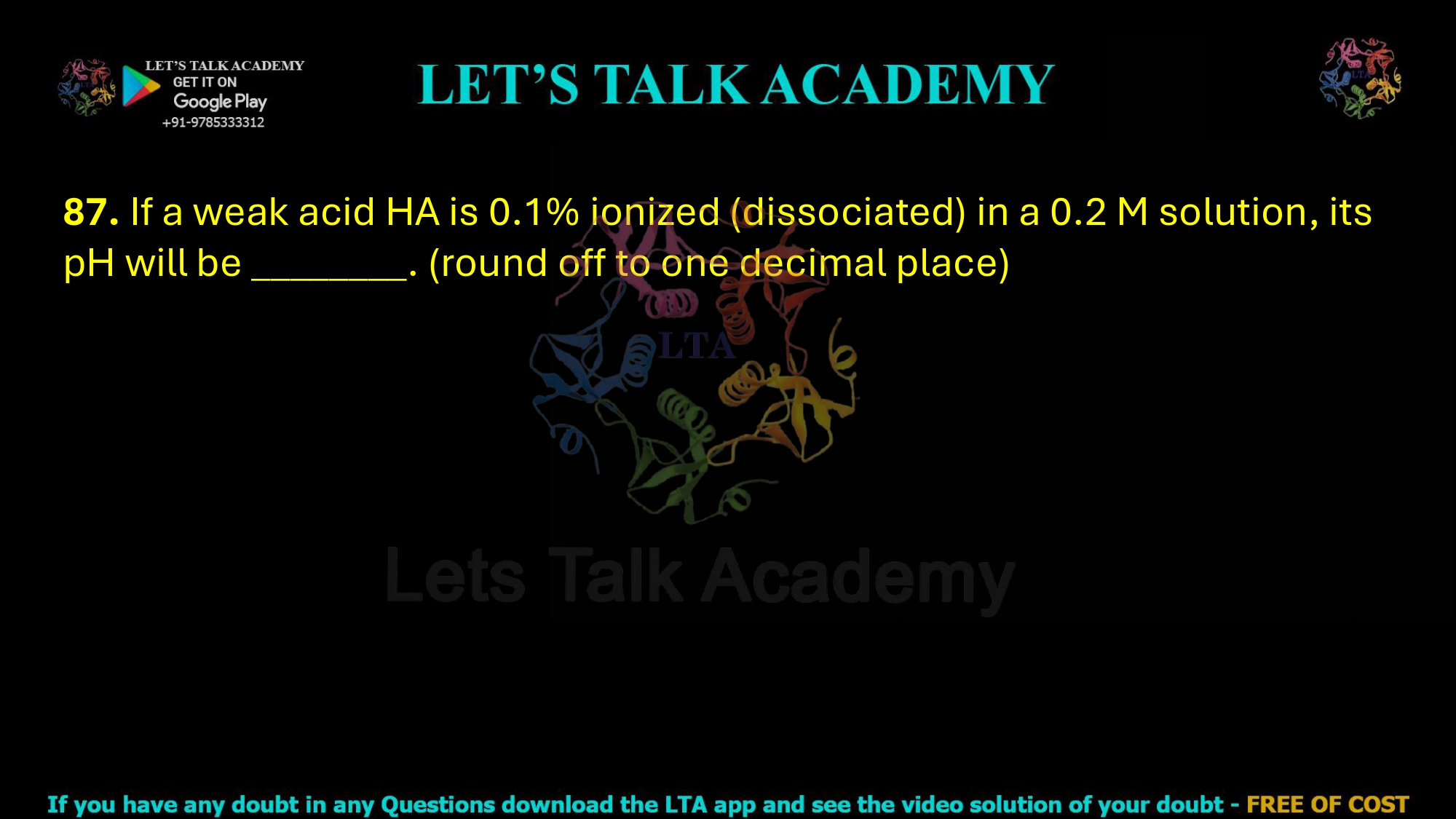
87. If a weak acid HA is 0.1% ionized (dissociated) in a 0.2 M solution, its pH will be ________. (round off to one decimal place)

pH of a Weak Acid with 0.1% Ionization

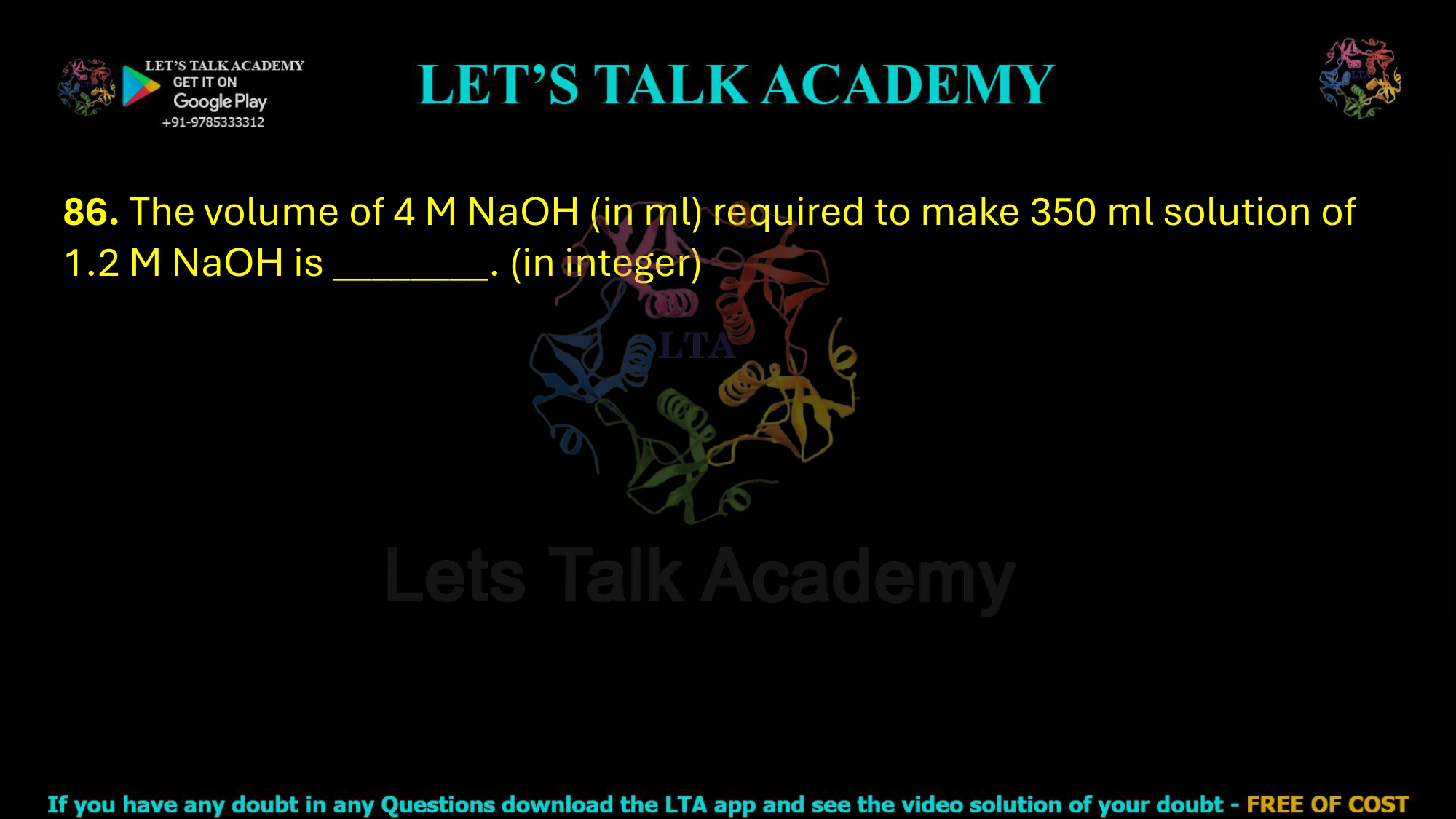
86. The volume of 4 M NaOH (in ml) required to make 350 ml solution of 1.2 M NaOH is ________. (in integer)

Volume of 4 M NaOH Required to Prepare 350 mL

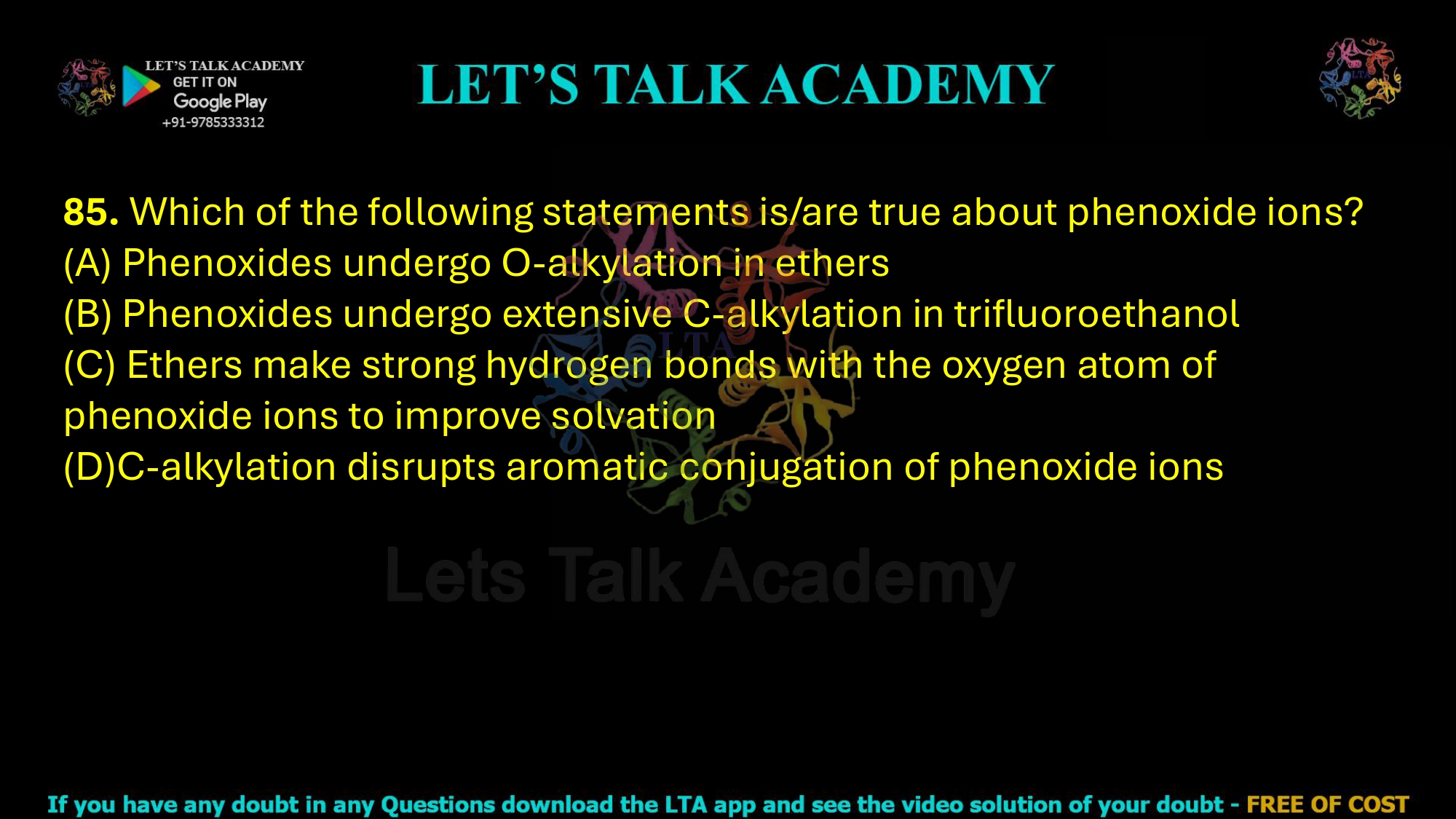
85. Which of the following statements is/are true about phenoxide ions?  (A) Phenoxides undergo O-alkylation in ethers (B) Phenoxides undergo extensive C-alkylation in trifluoroethanol (C) Ethers make strong hydrogen bonds with the oxygen atom of phenoxide ions to improve solvation (D)C-alkylation disrupts aromatic conjugation of phenoxide ions

True Statements About Phenoxide Ions

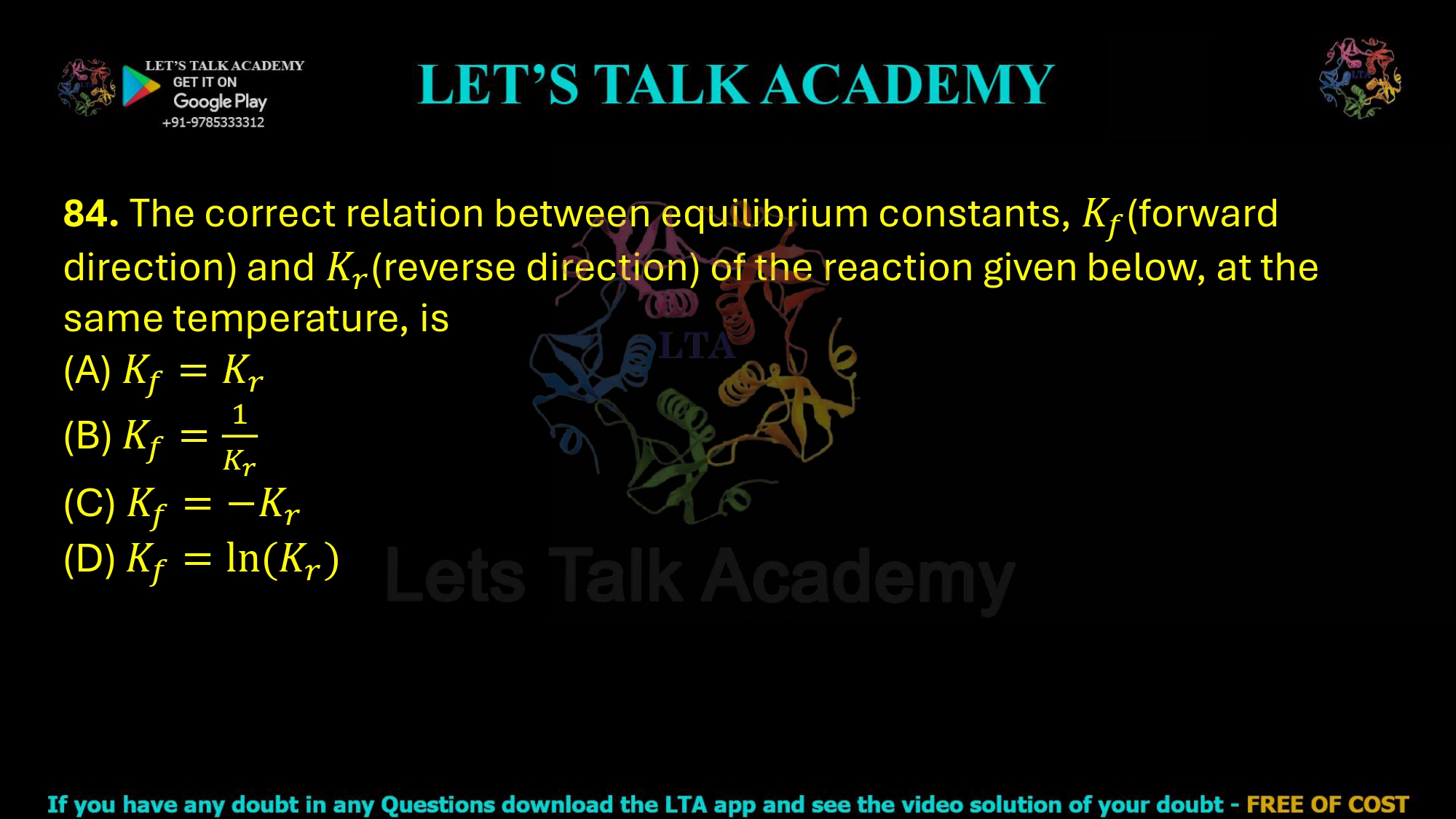
84. The correct relation between the equilibrium constants of the forward reaction (Kf) and the reverse reaction (Kr) at the same temperature is: (A) Kf = Kr (B) Kf = 1 / Kr (C) Kf = –Kr (D) Kf = ln(Kr)

Relation Between Forward and Reverse Equilibrium Constants

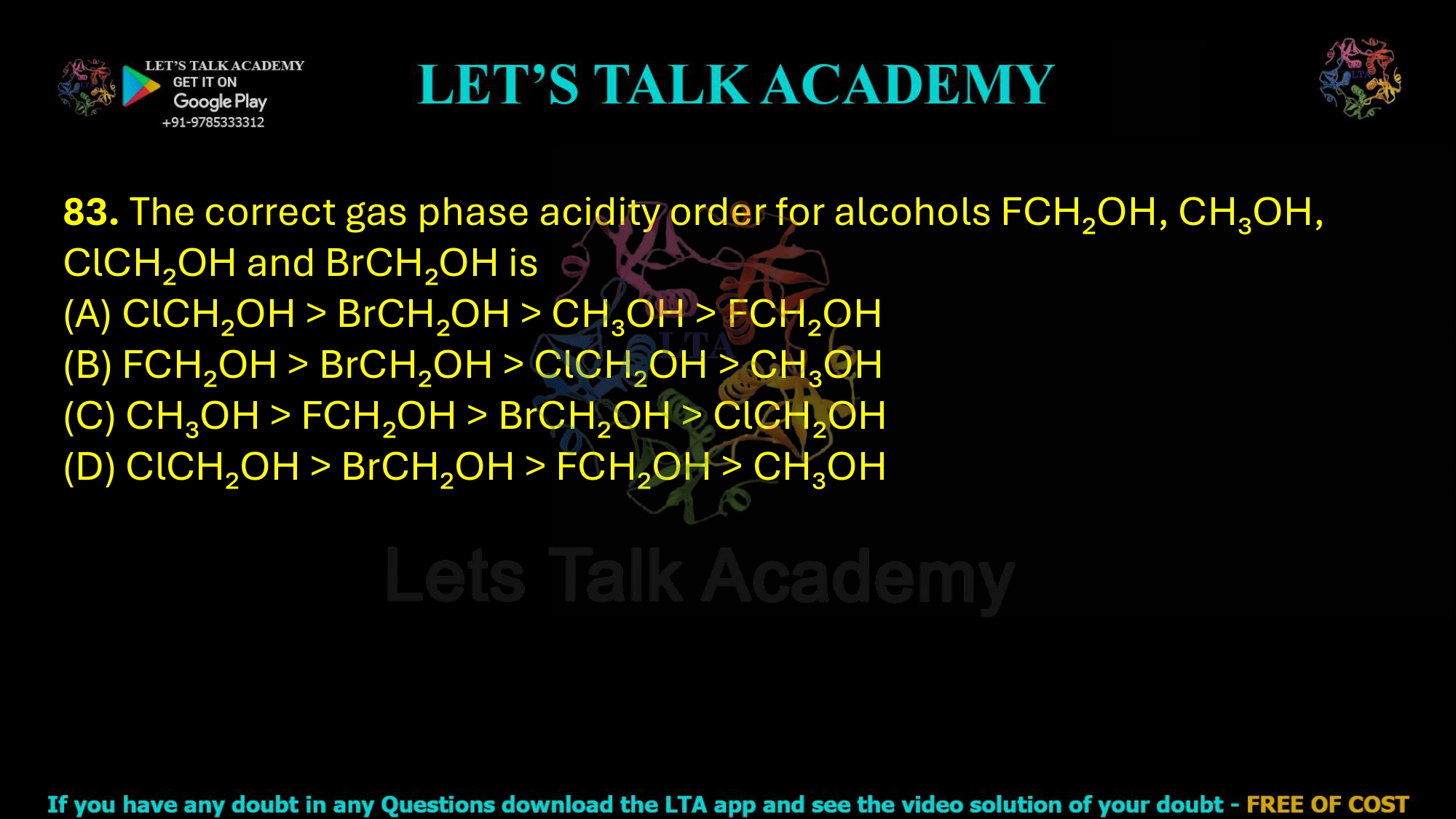
83. The correct gas phase acidity order for alcohols FCH₂OH, CH₃OH, ClCH₂OH and BrCH₂OH is (A) ClCH₂OH > BrCH₂OH > CH₃OH > FCH₂OH (B) FCH₂OH > BrCH₂OH > ClCH₂OH > CH₃OH (C) CH₃OH > FCH₂OH > BrCH₂OH > ClCH₂OH (D) ClCH₂OH > BrCH₂OH > FCH₂OH > CH₃OH

Gas Phase Acidity Order

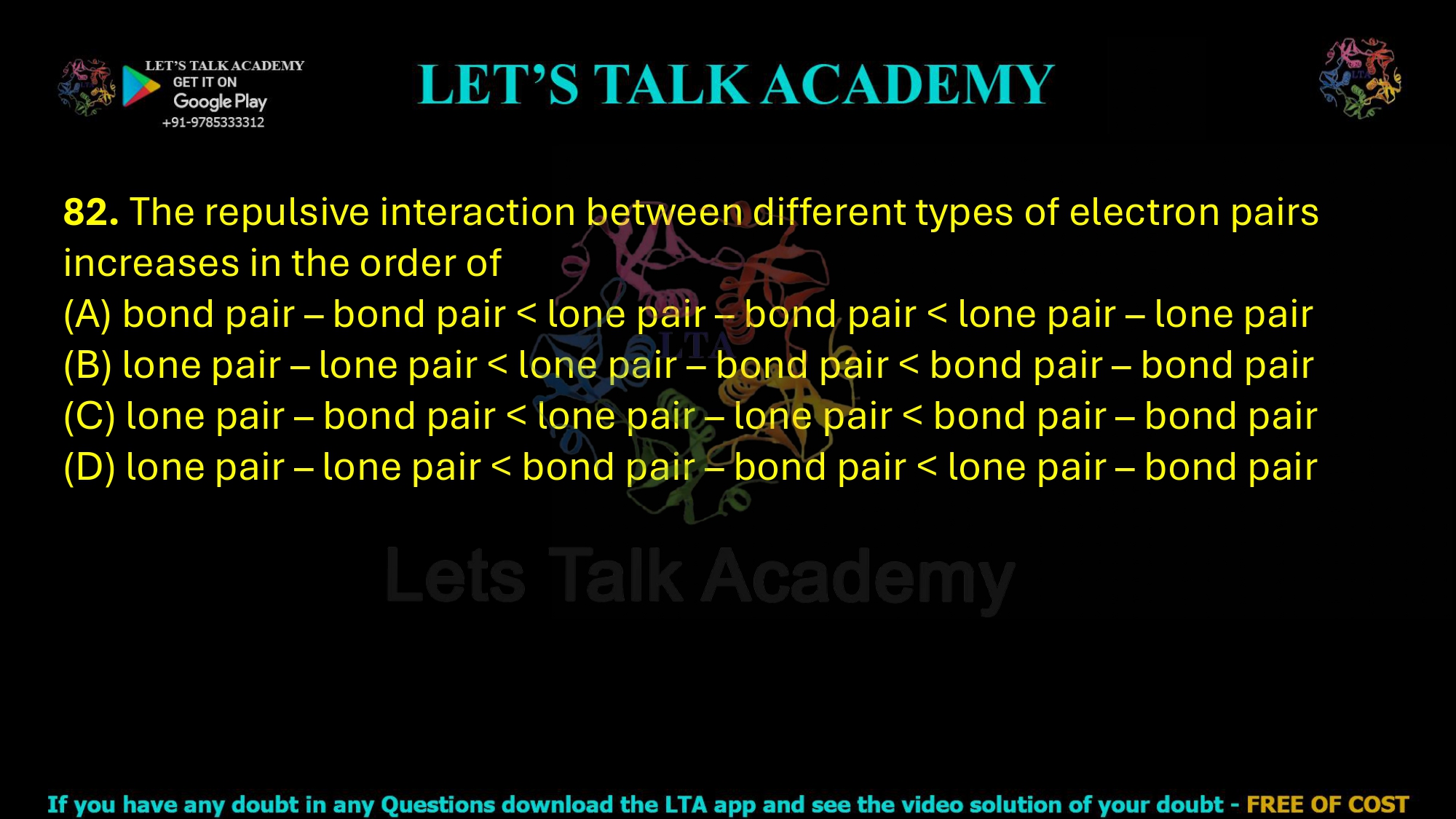
82. The repulsive interaction between different types of electron pairs increases in the order of (A) bond pair – bond pair < lone pair – bond pair < lone pair – lone pair (B) lone pair – lone pair < lone pair – bond pair < bond pair – bond pair (C) lone pair – bond pair < lone pair – lone pair < bond pair – bond pair (D) lone pair – lone pair < bond pair – bond pair < lone pair – bond pair

Order of Repulsive Interactions Between Electron Pairs

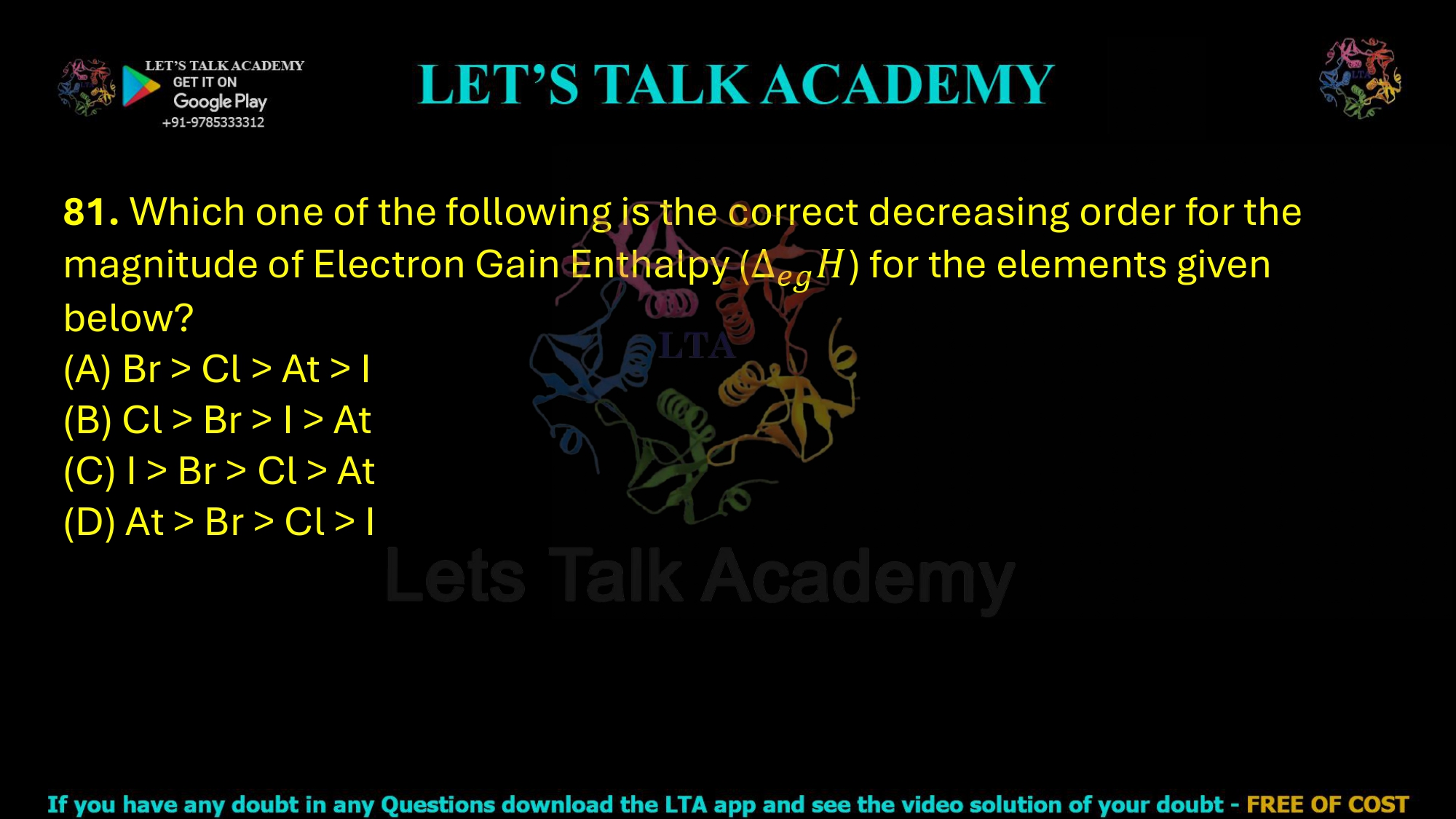
81. Which one of the following is the correct decreasing order for the magnitude of Electron Gain Enthalpy () for the elements given below? (A) Br > Cl > At > I (B) Cl > Br > I > At (C) I > Br > Cl > At (D) At > Br > Cl > I

Correct Decreasing Order of Electron Gain Enthalpy

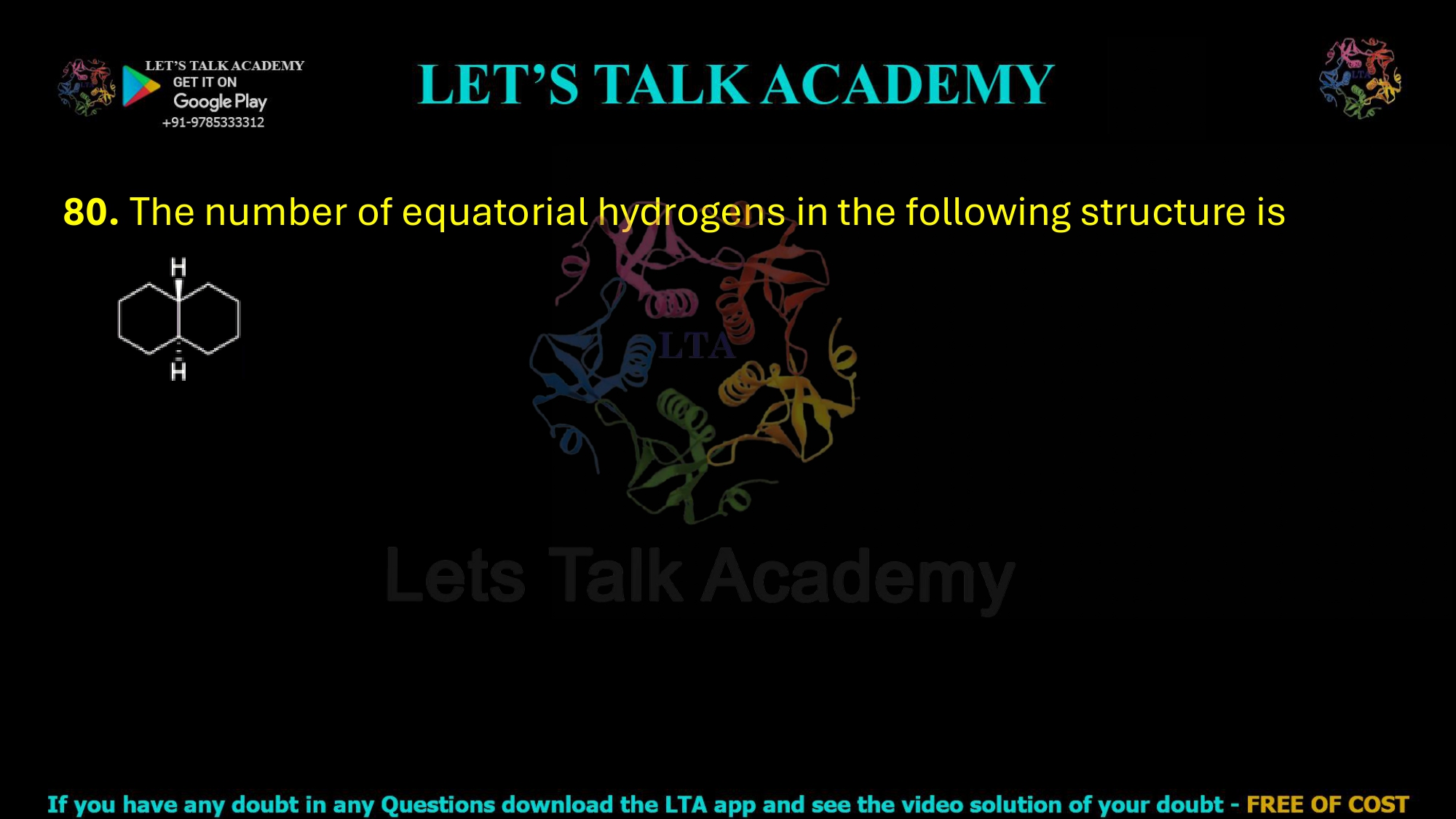
80. The number of equatorial hydrogens in the following structure is

Number of Equatorial Hydrogens in trans-Decalin

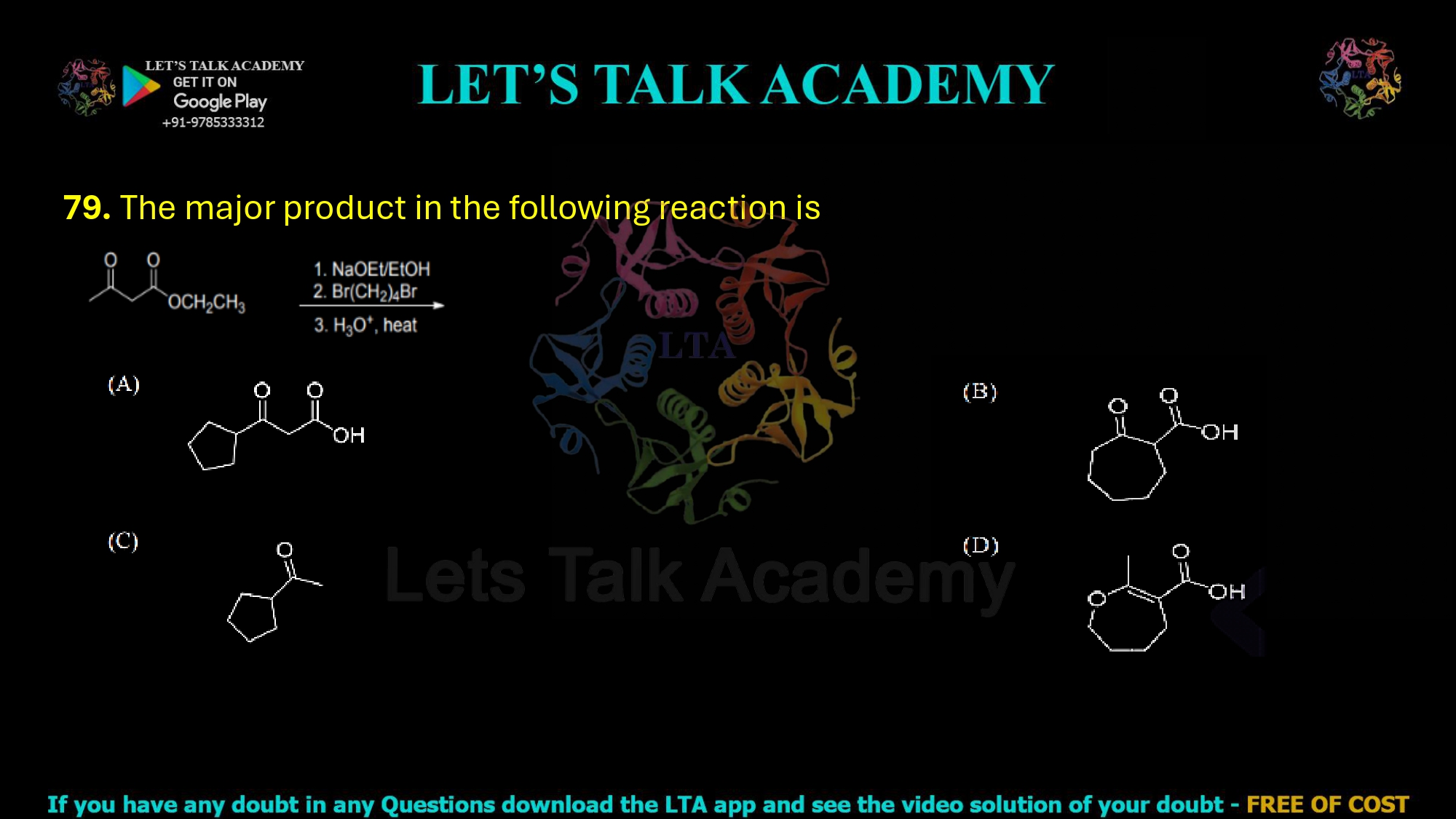
79. The major product in the following reaction is

Major Product of Ethyl Acetoacetate Reaction

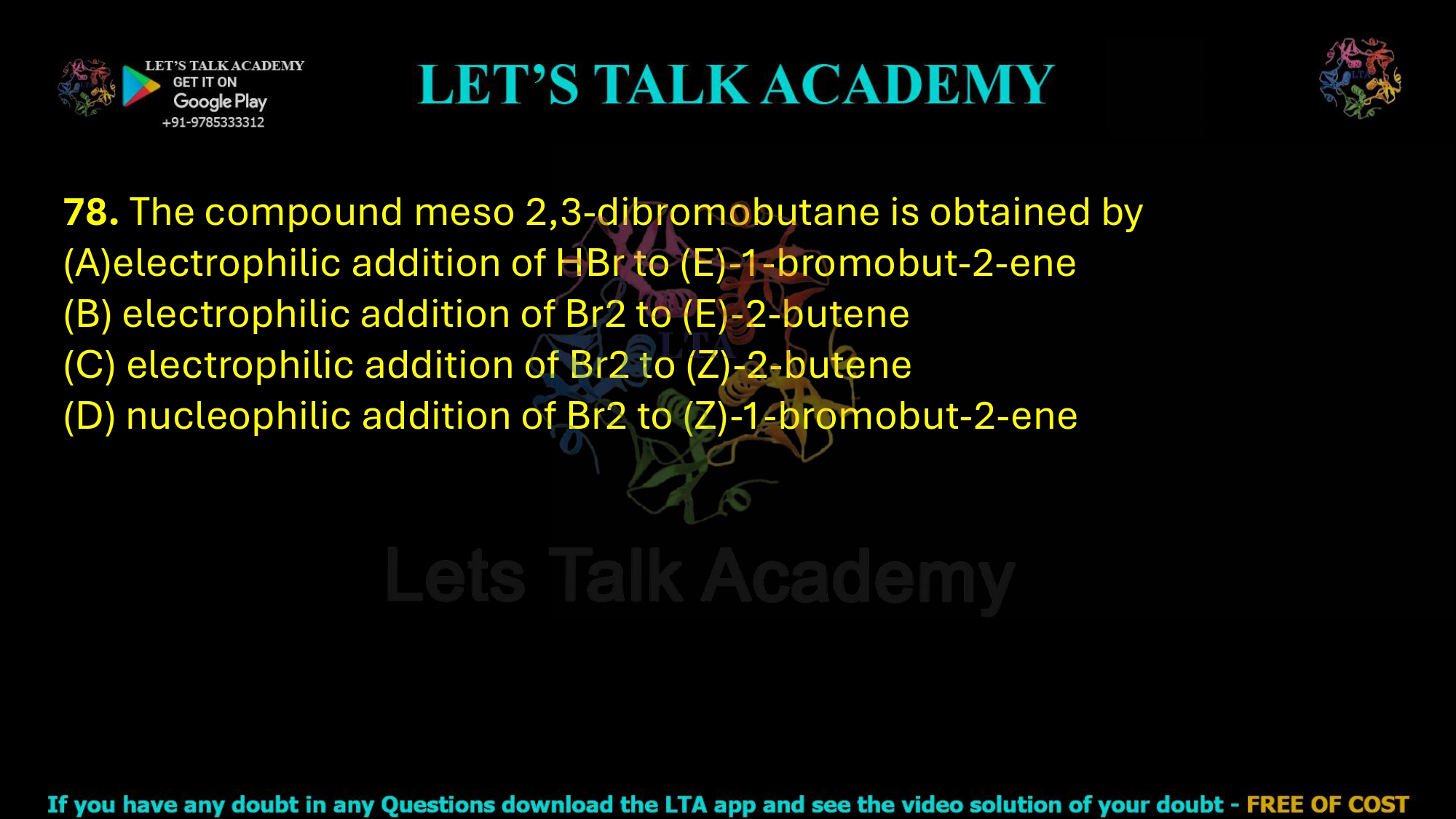
78. The compound meso 2,3-dibromobutane is obtained by  (A)electrophilic addition of HBr to (E)-1-bromobut-2-ene (B) electrophilic addition of Br2 to (E)-2-butene (C) electrophilic addition of Br2 to (Z)-2-butene (D) nucleophilic addition of Br2 to (Z)-1-bromobut-2-ene

Formation of meso-2,3-Dibromobutane from Butene Isomers

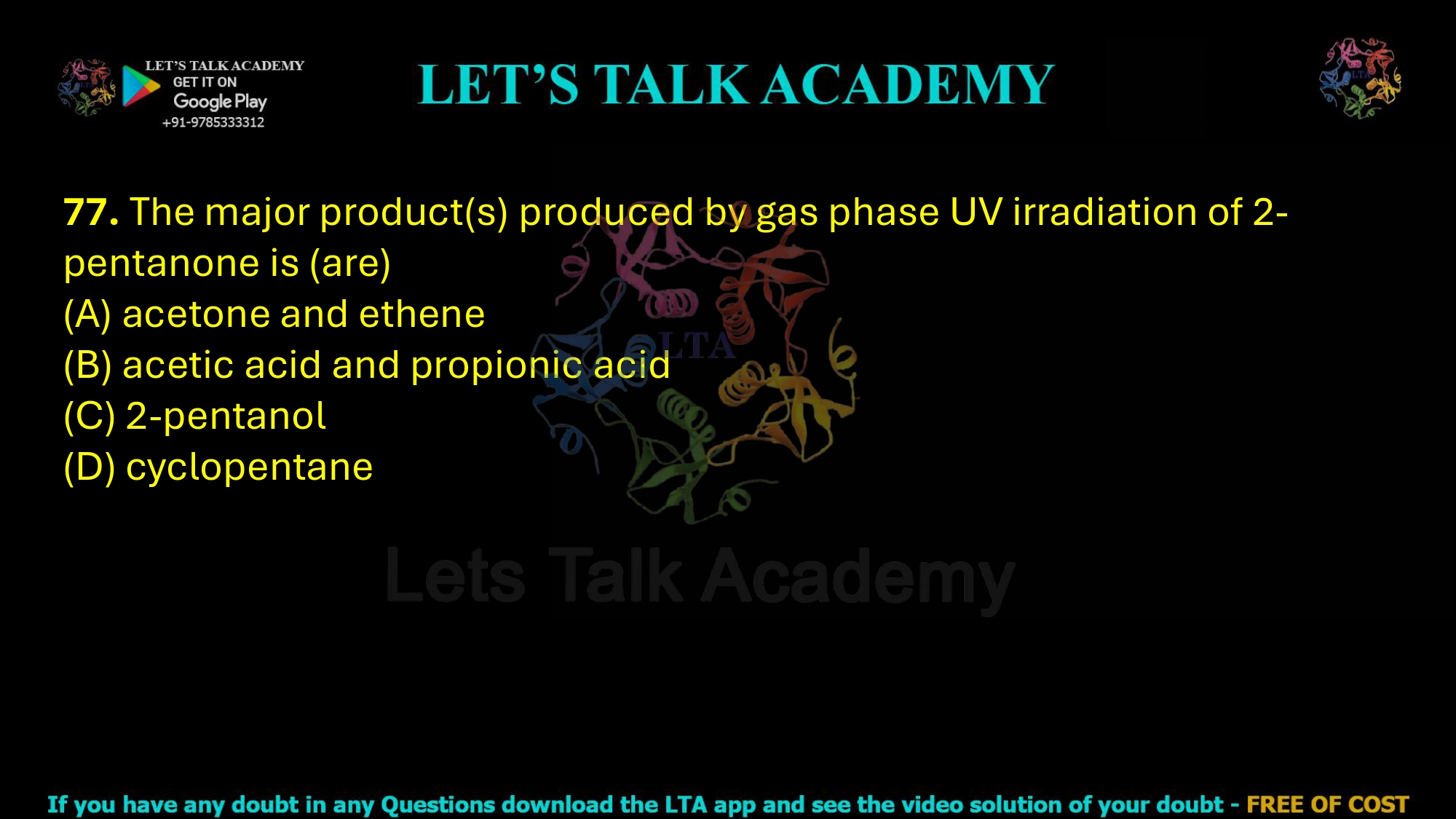
77. The major product(s) produced by gas phase UV irradiation of 2-pentanone is (are)     (A) acetone and ethene (B) acetic acid and propionic acid (C) 2-pentanol (D) cyclopentane

Major Products of Gas Phase UV Irradiation of 2-Pentanone

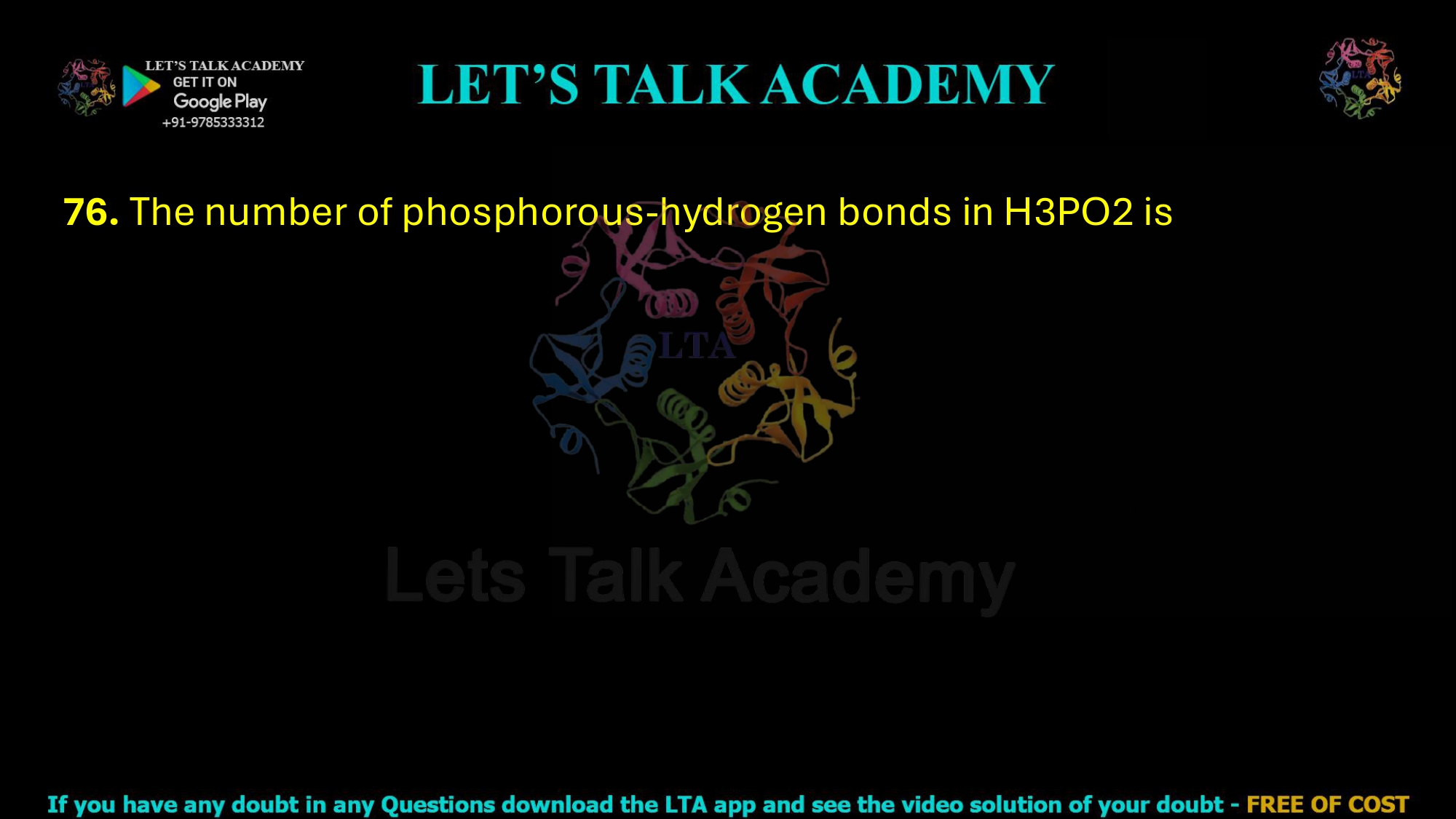
76. The number of phosphorous-hydrogen bonds in H3PO2 is

Number of Phosphorus-Hydrogen Bonds

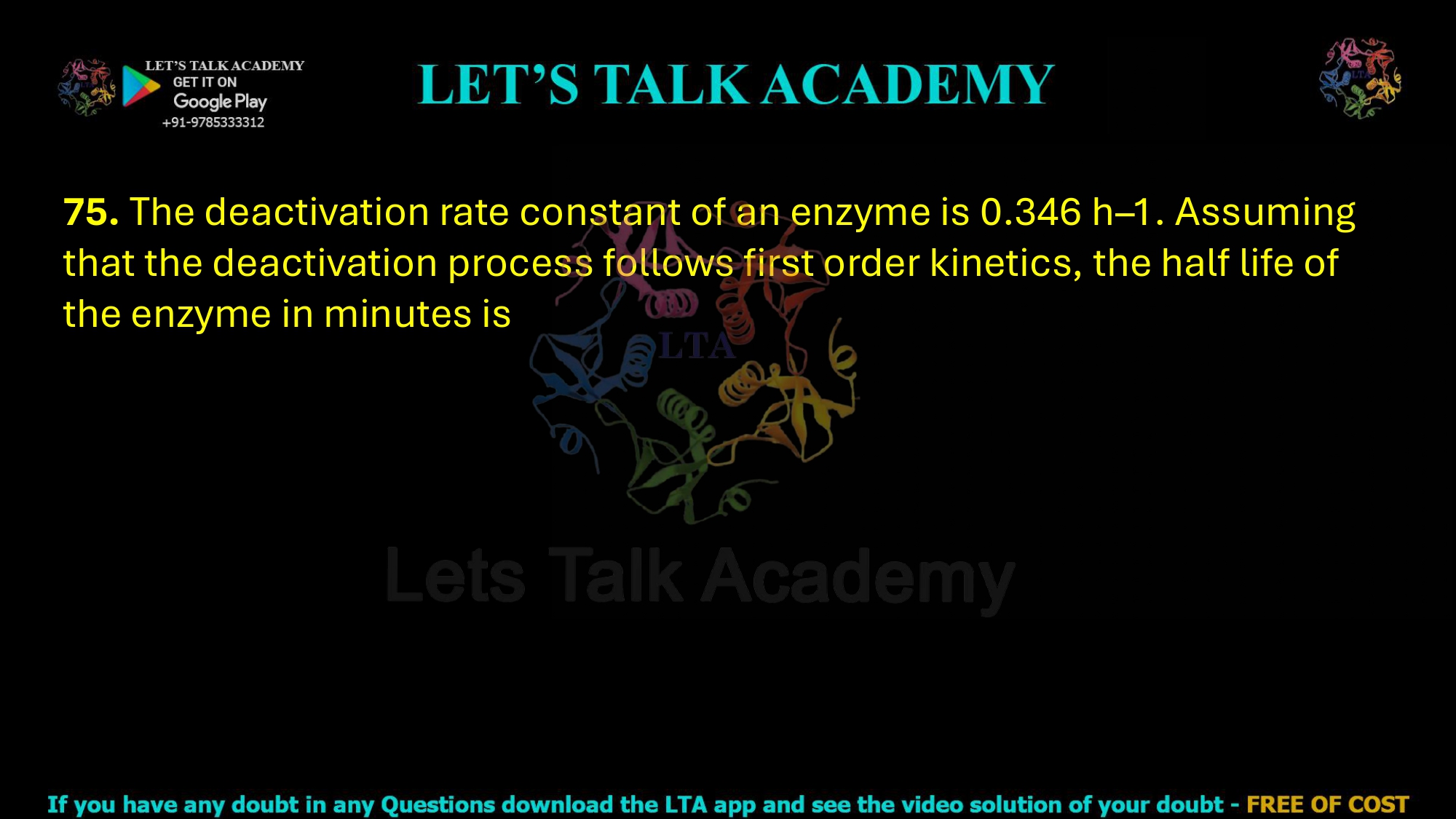
75. The deactivation rate constant of an enzyme is 0.346 h–1. Assuming that the deactivation process follows first order kinetics, the half life of the enzyme in minutes is

Half-Life of an Enzyme Following First Order Deactivation Kinetics

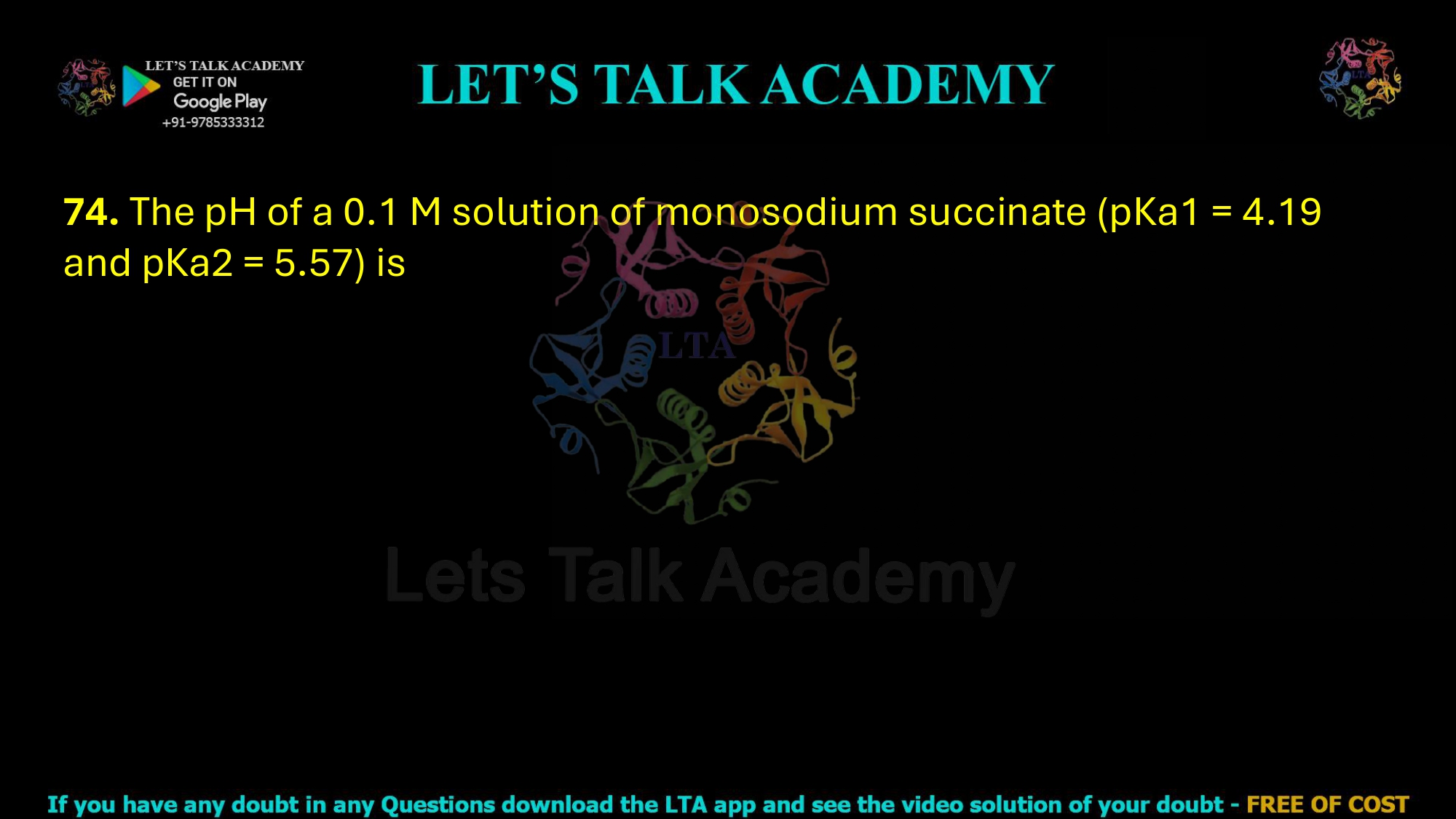
74. The pH of a 0.1 M solution of monosodium succinate (pKa1 = 4.19 and pKa2 = 5.57) is

pH of 0.1 M Monosodium Succinate Solution

73. Among the following pairs of co-ordination compounds, the pair(s) which represent(s) a case of “ionization isomerism” is (are): (A) [Pt(en)2Cl2]Br2 and [Pt(en)2Br2]Cl2 (B) [Cr(NH3)4ClBr]NO2 and [Cr(NH3)4ClNO2]Br (C)[Co(NH3)6][Cr(CN)6] and[Cr(NH3)6][Co(CN)6] (D)[Co(NH3)5Br]SO4 and [Co(NH3)5 SO4]Br

Ionization Isomerism in Coordination Compounds

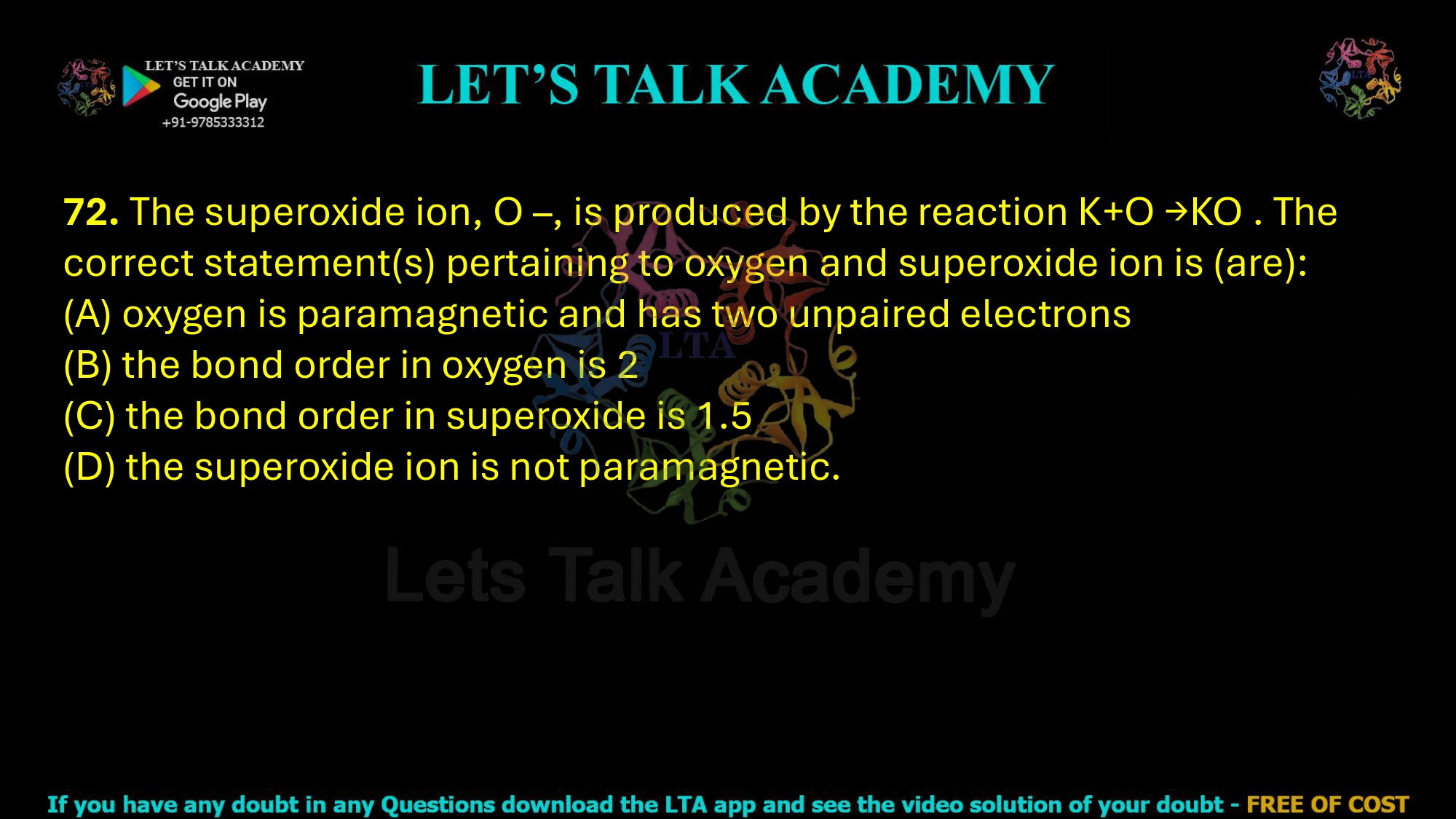
72. The superoxide ion, O –, is produced by the reaction K+O →KO . The correct statement(s) pertaining to oxygen and superoxide ion is (are): (A) oxygen is paramagnetic and has two unpaired electrons (B) the bond order in oxygen is 2 (C) the bond order in superoxide is 1.5 (D) the superoxide ion is not paramagnetic.

Properties of Oxygen and Superoxide Ion (O₂⁻)

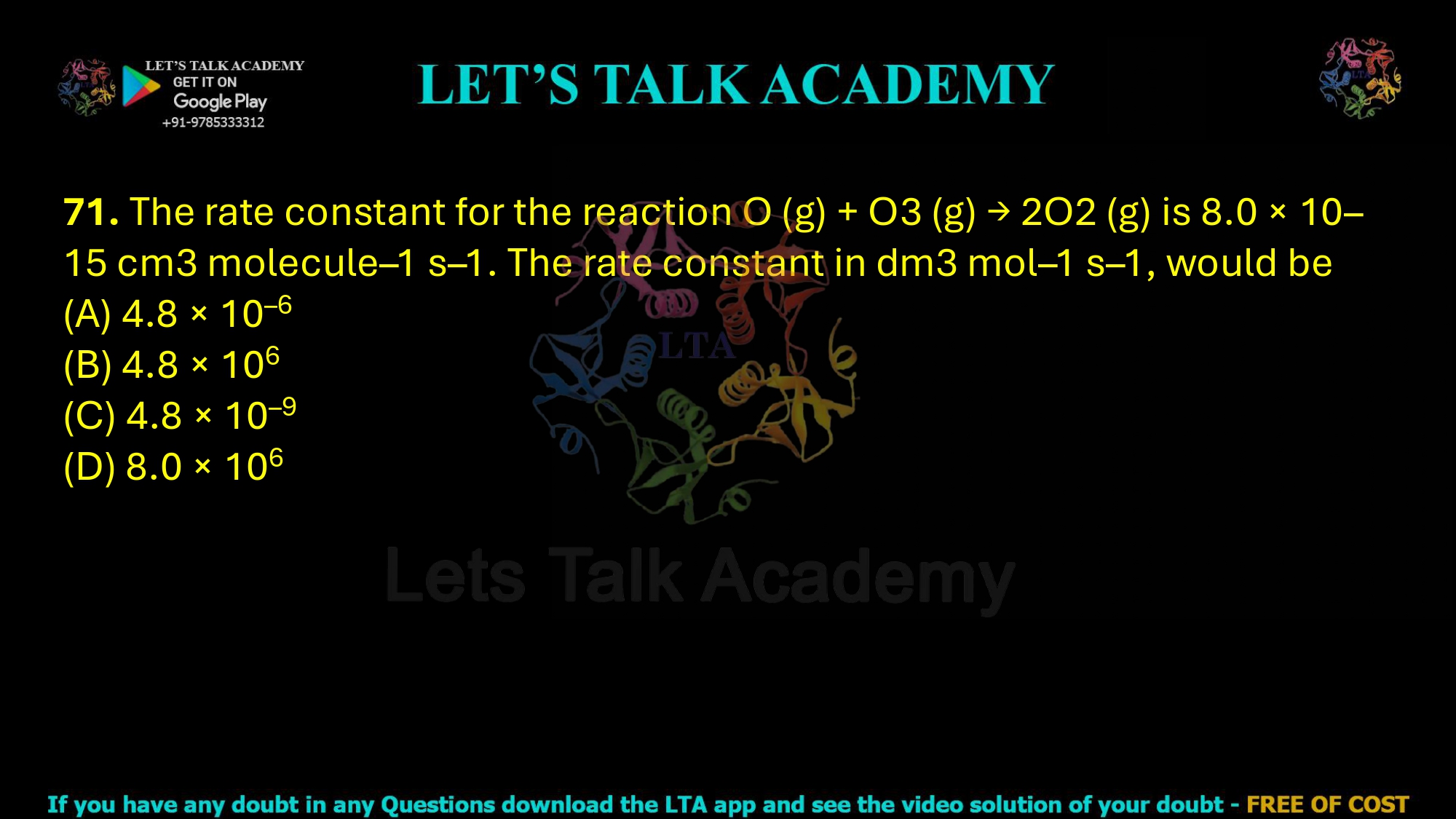
71. The rate constant for the reaction O (g) + O3 (g) → 2O2 (g) is 8.0 × 10⁻¹⁵ cm3 molecule–1 s–1. The rate constant in dm3 mol–1 s–1, would be  (A) 4.8 × 10⁻⁶       (B) 4.8 × 10⁶      (C) 4.8 × 10⁻⁹    (D) 8.0 × 10⁶

Convert Rate Constant from cm³ molecule⁻¹ s⁻¹ to dm³ mol⁻¹ s⁻¹

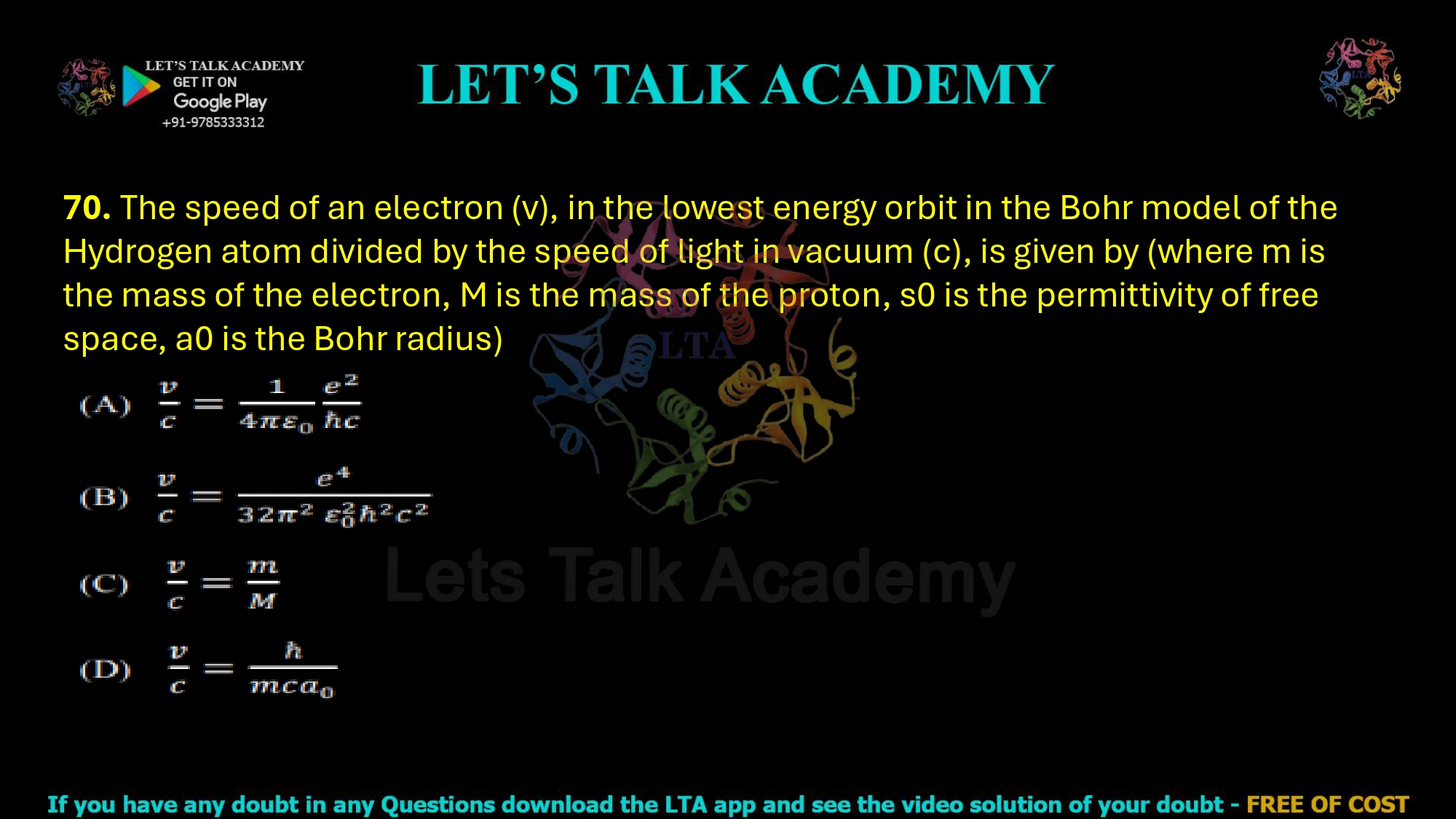
70. The speed of an electron (v), in the lowest energy orbit in the Bohr model of the Hydrogen atom divided by the speed of light in vacuum (c), is given by (where m is the mass of the electron, M is the mass of the proton, s0 is the permittivity of free space, a0 is the Bohr radius)

Speed of an Electron in the First Bohr Orbit

69. The number of optically inactive geometrical isomers of [Pt(NH3)2(py)2Cl2]2+ is_______ . (where, ‘py’ is pyridine)

Number of Optically Inactive Geometrical Isomers

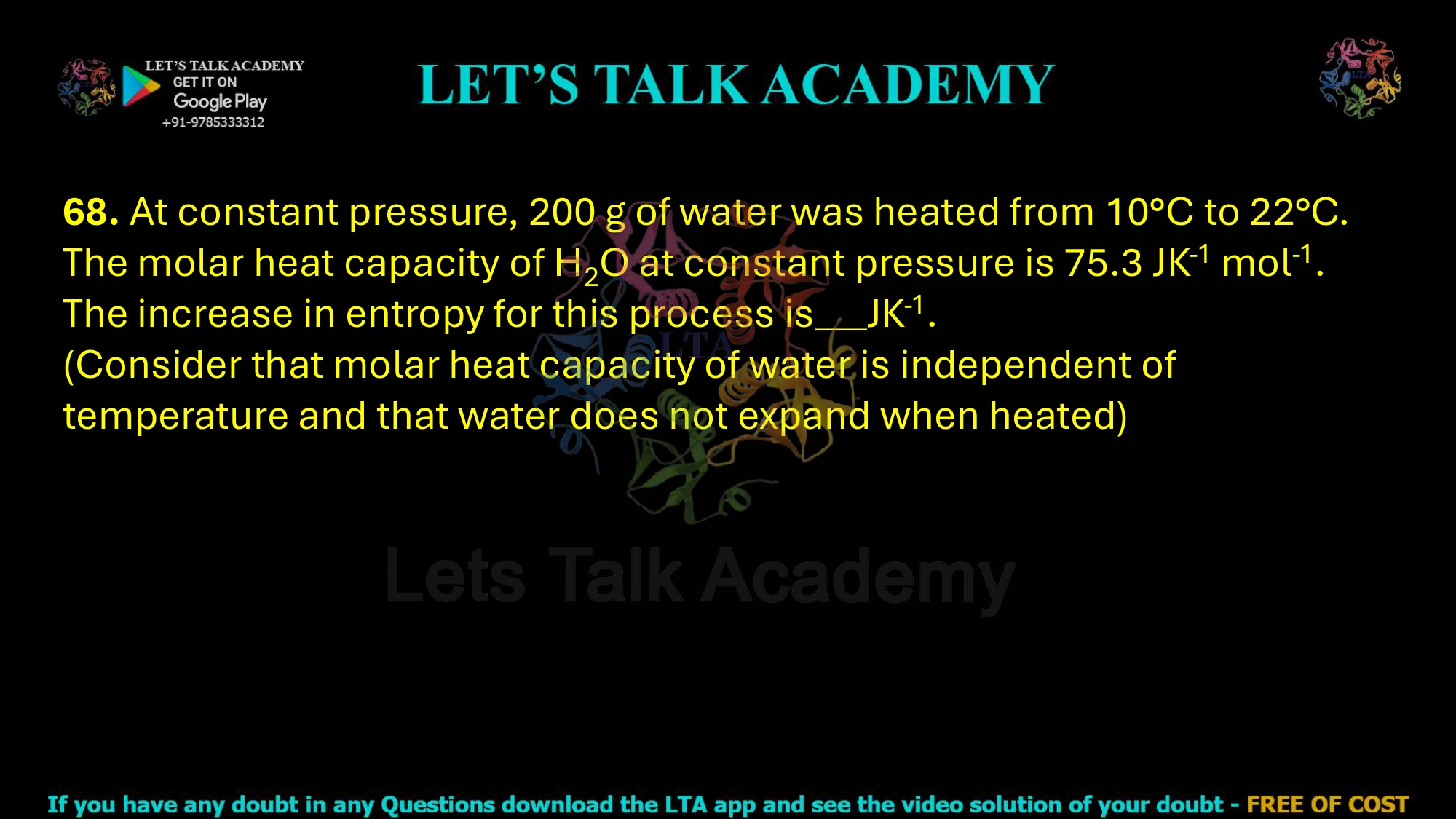
68. At constant pressure, 200 g of water was heated from 10°C to 22°C. The molar heat capacity of H2O at constant pressure is 75.3 JK-1 mol-1. The increase in entropy for this process is JK-1. (Consider that molar heat capacity of water is independent of temperature and that water does not expand when heated)     

Entropy Increase of Water Heated at Constant Pressure

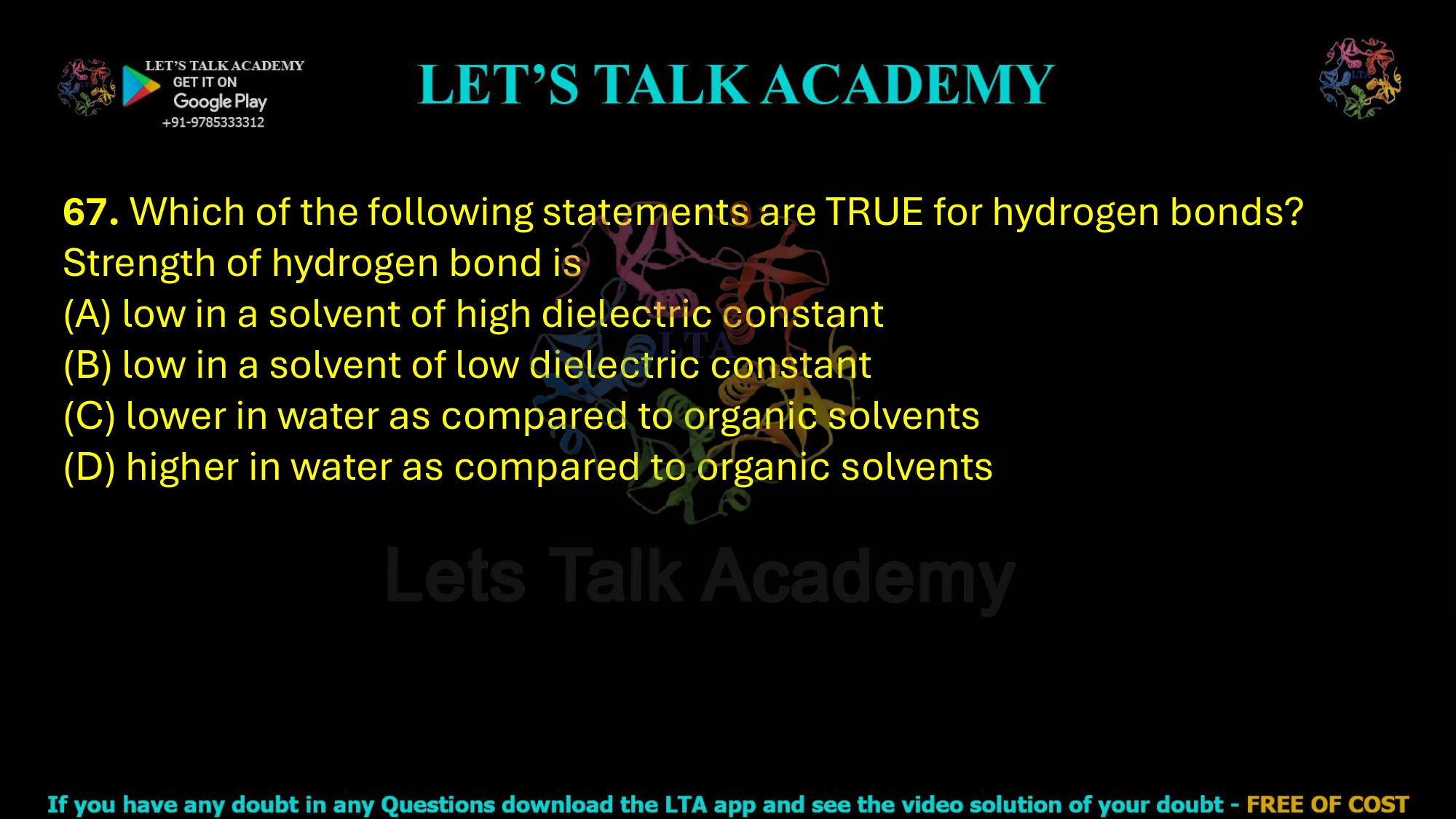
67. Which of the following statements are TRUE for hydrogen bonds? Strength of hydrogen bond is                       (A) low in a solvent of high dielectric constant (B) low in a solvent of low dielectric constant (C) lower in water as compared to organic solvents (D) higher in water as compared to organic solvents

True Statements About Hydrogen Bond Strength

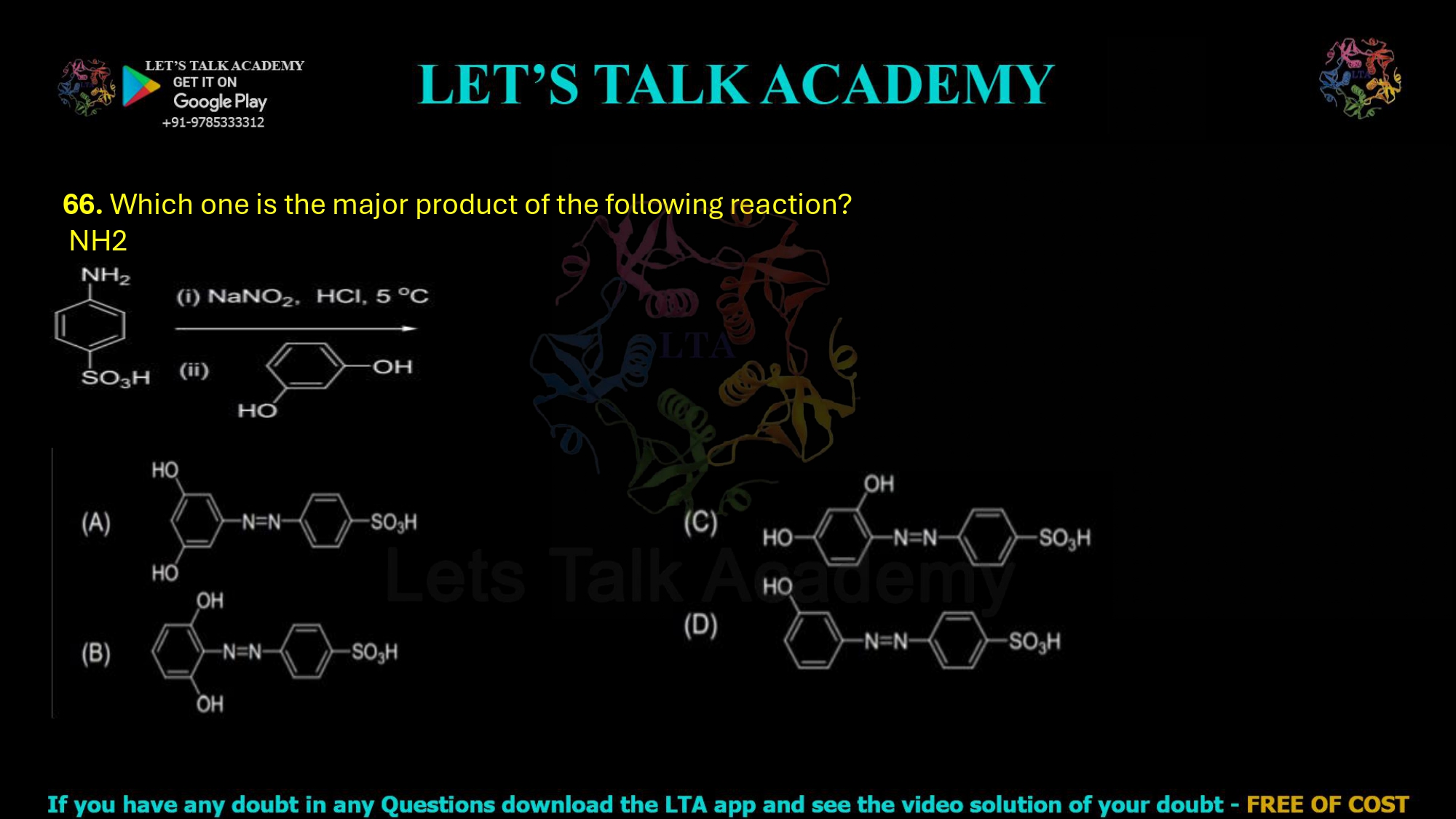
66. Which one is the major product of the following reaction?  NH2    

Major Product of Diazotization and Azo Coupling Reaction

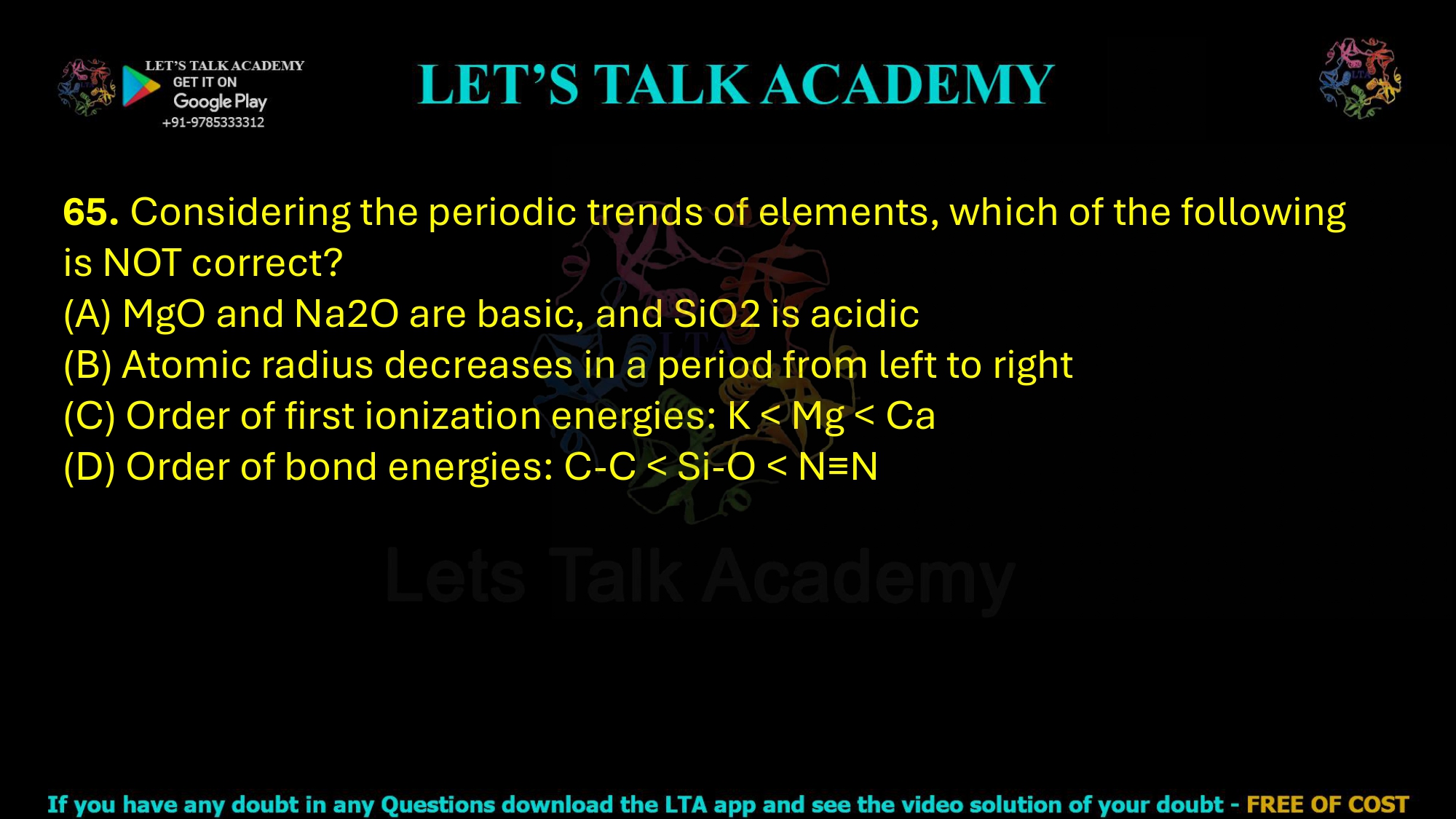
65. Considering the periodic trends of elements, which of the following is NOT correct?  (A) MgO and Na2O are basic, and SiO2 is acidic (B) Atomic radius decreases in a period from left to right (C) Order of first ionization energies: K < Mg < Ca (D) Order of bond energies: C-C < Si-O < N≡N

Which Statement About Periodic Trends is NOT Correct?

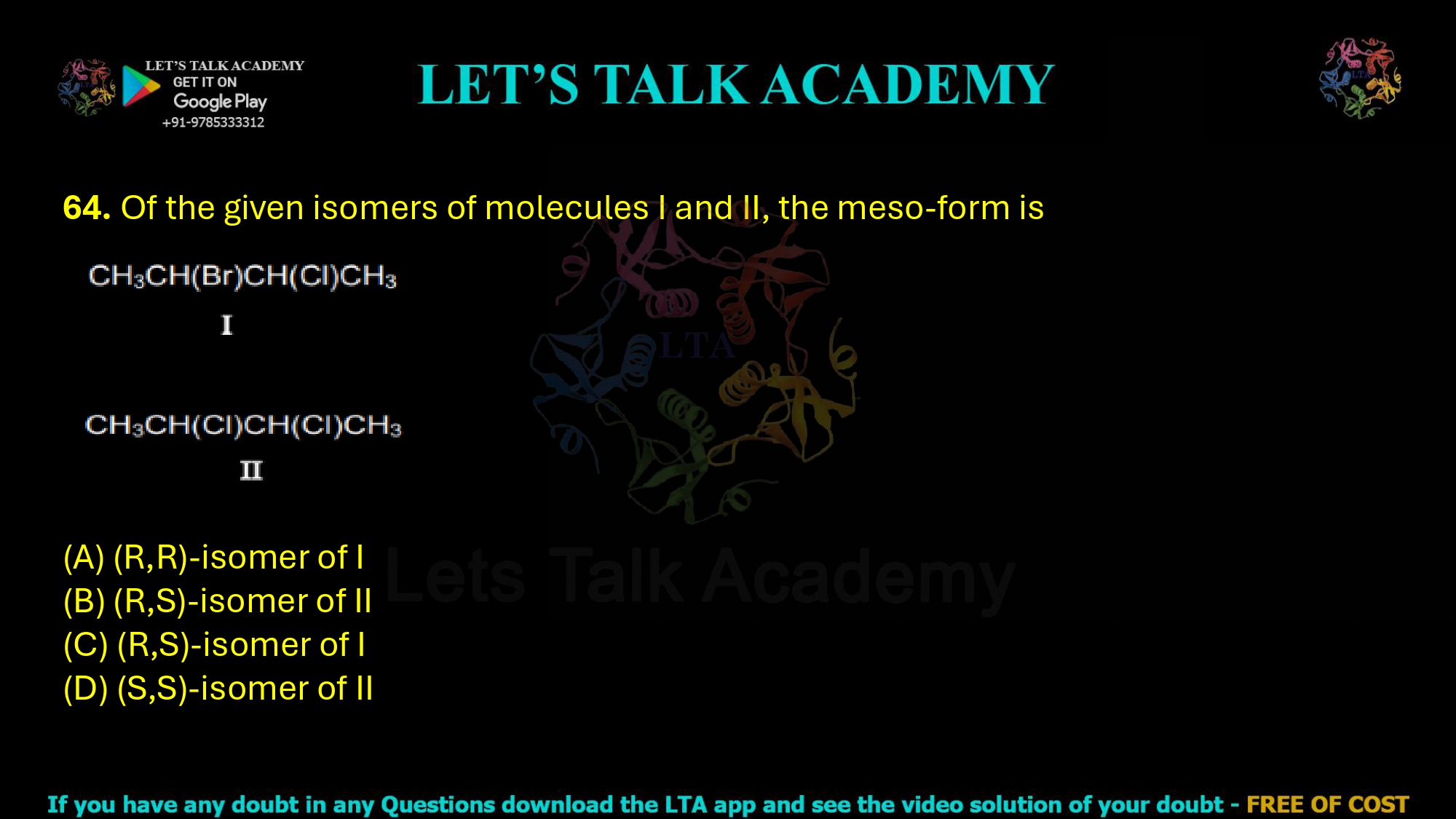
64. Of the given isomers of molecules I and II, the meso-form is  (A) (R,R)-isomer of I      (B) (R,S)-isomer of II (C) (R,S)-isomer of I      (D) (S,S)-isomer of II

Which Isomer is Meso?

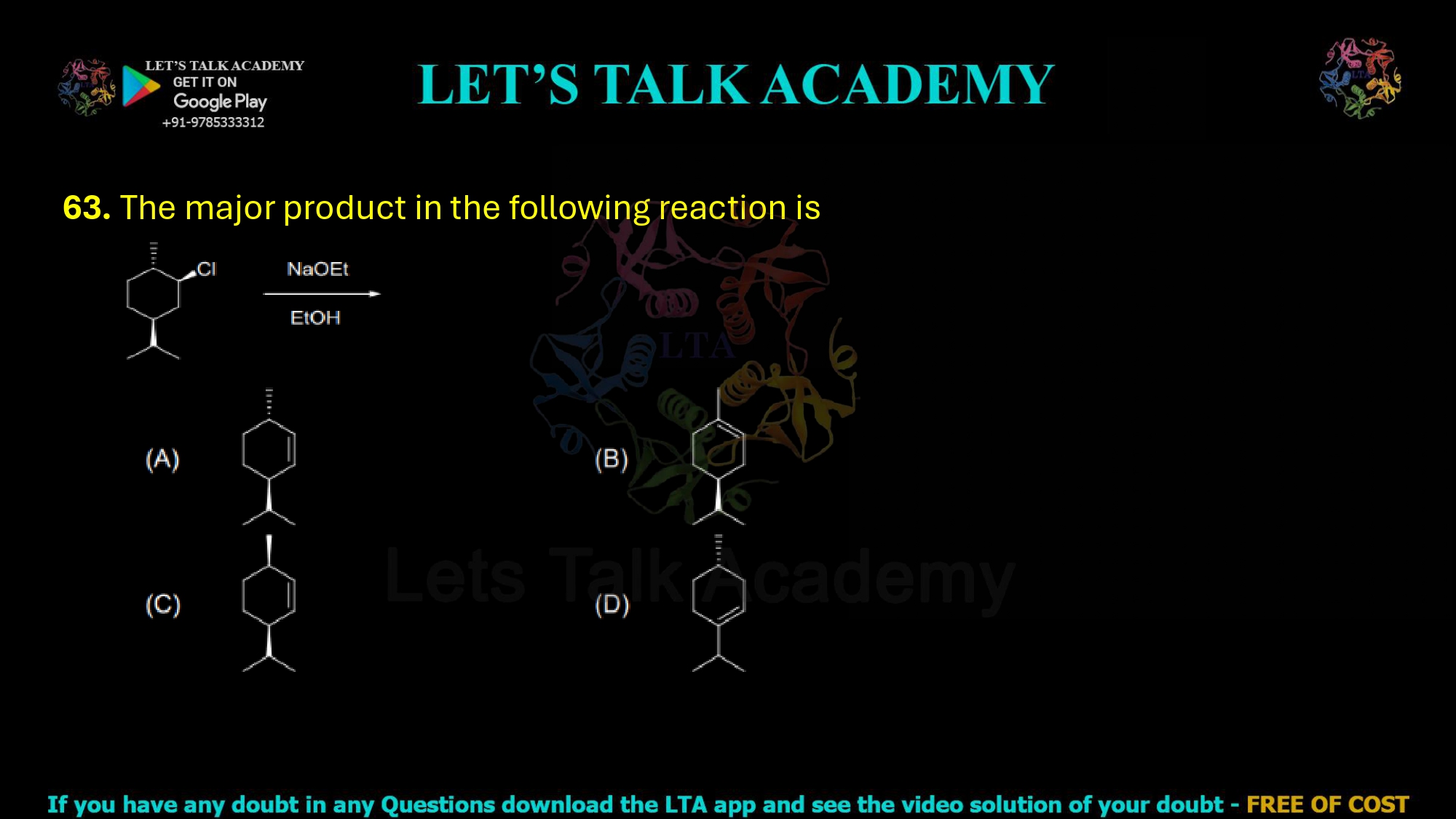
63. The major product in the following reaction is

Major Product of E2 Elimination with NaOEt/EtOH

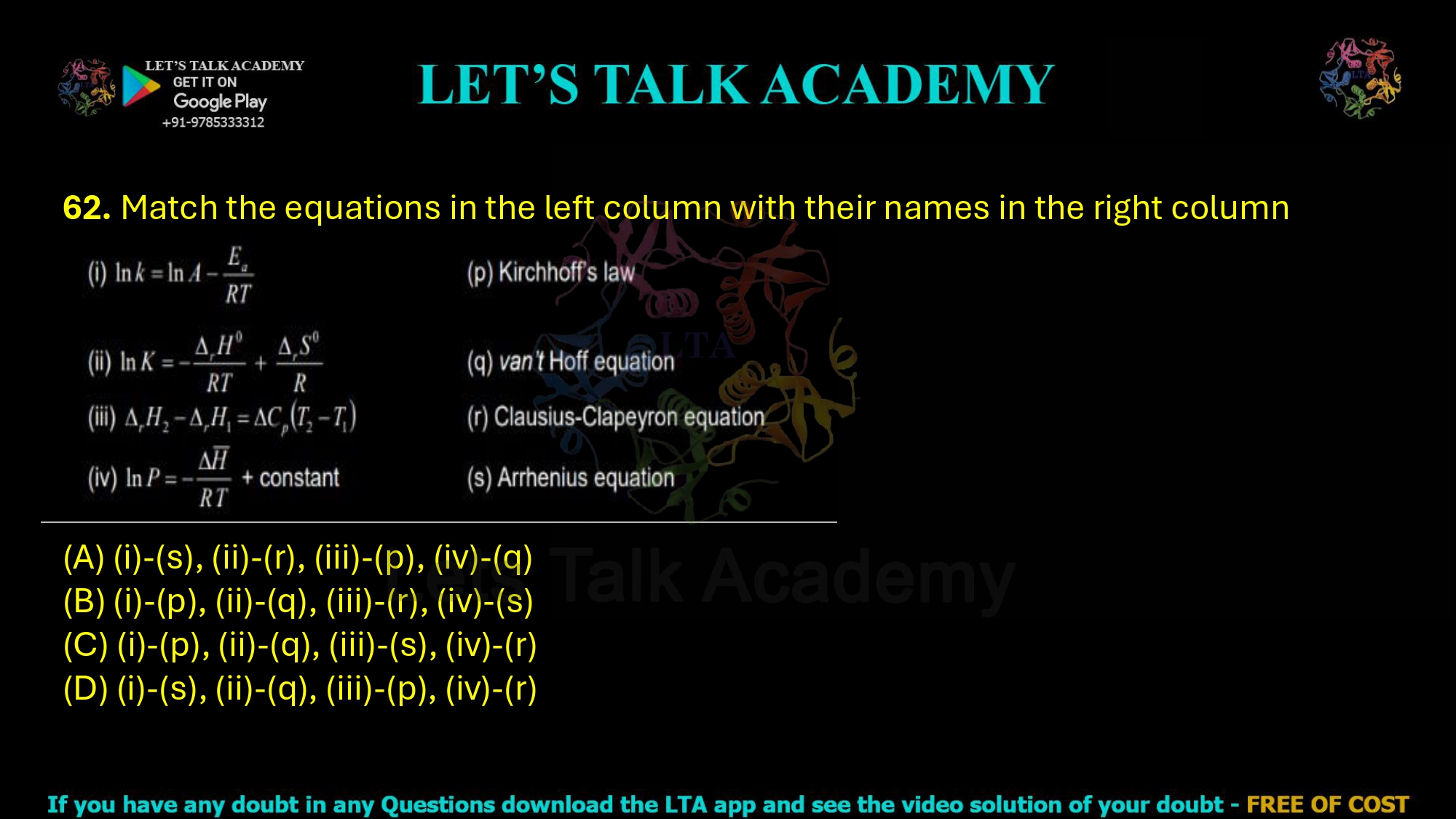
62. Match the equations in the left column with their names in the right column  (A) (i)-(s), (ii)-(r), (iii)-(p), (iv)-(q) (B) (i)-(p), (ii)-(q), (iii)-(r), (iv)-(s) (C) (i)-(p), (ii)-(q), (iii)-(s), (iv)-(r) (D) (i)-(s), (ii)-(q), (iii)-(p), (iv)-(r)

Match the Equations with Their Names

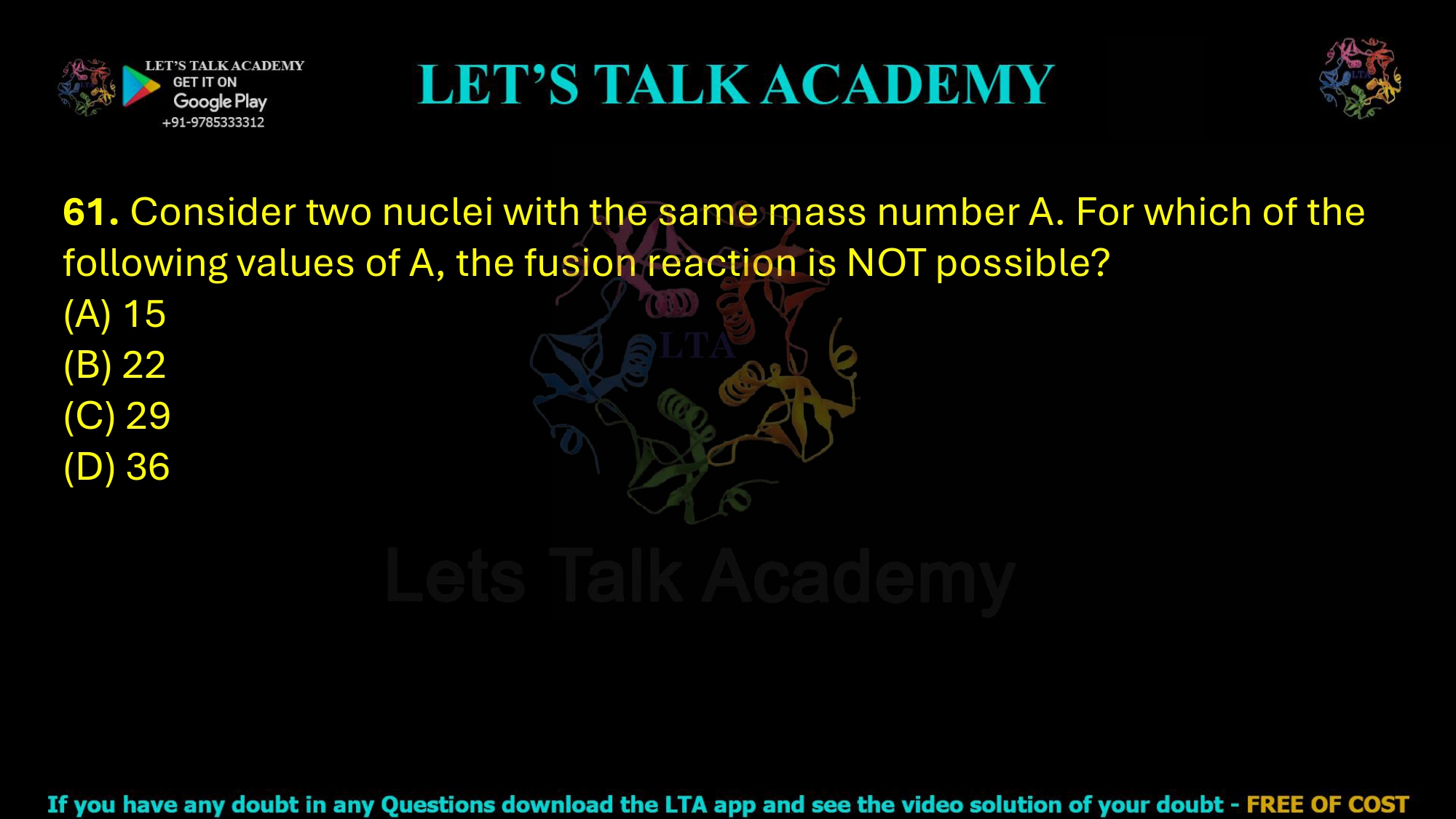
61. Consider two nuclei with the same mass number A. For which of the following values of A, the fusion reaction is NOT possible?  (A) 15   (B) 22   (C) 29   (D) 36

Fusion Reaction Between Two Identical Nuclei

60. In acidic solution, permanganate ion is reduced by ferrous ion. The number of electrons involved in the reduction of permanganate ion is______

Reduction of Permanganate Ion

59. The [H+] of 0.1 N acetic acid solution is 1.33 × 10⁻³. The pH of the solution (correct to two decimal places) is .

How to Calculate the pH of 0.1 N Acetic Acid Solution

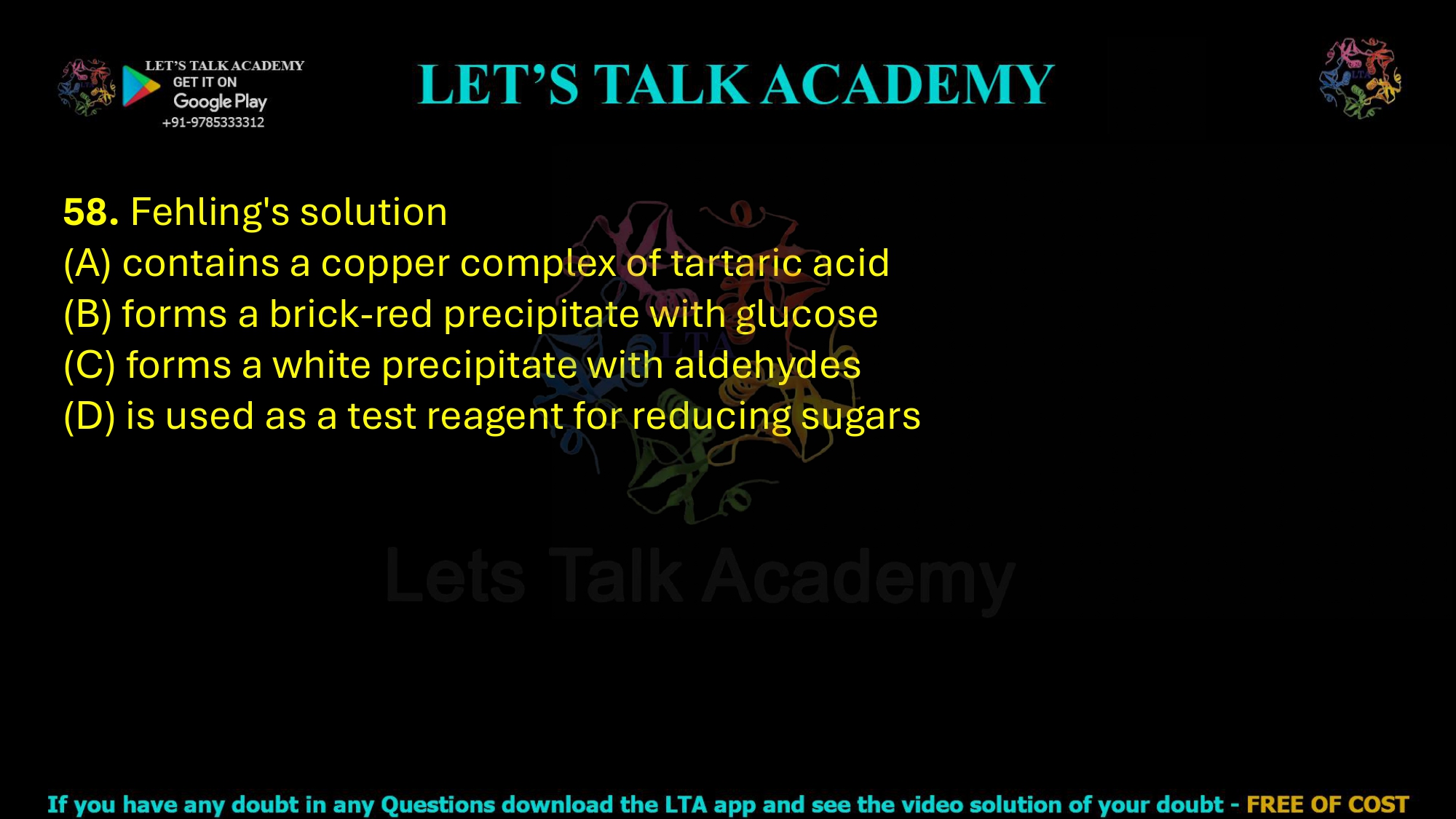
58. Fehling's solution  (A) contains a copper complex of tartaric acid (B) forms a brick-red precipitate with glucose (C) forms a white precipitate with aldehydes (D) is used as a test reagent for reducing sugars

Fehling’s Solution

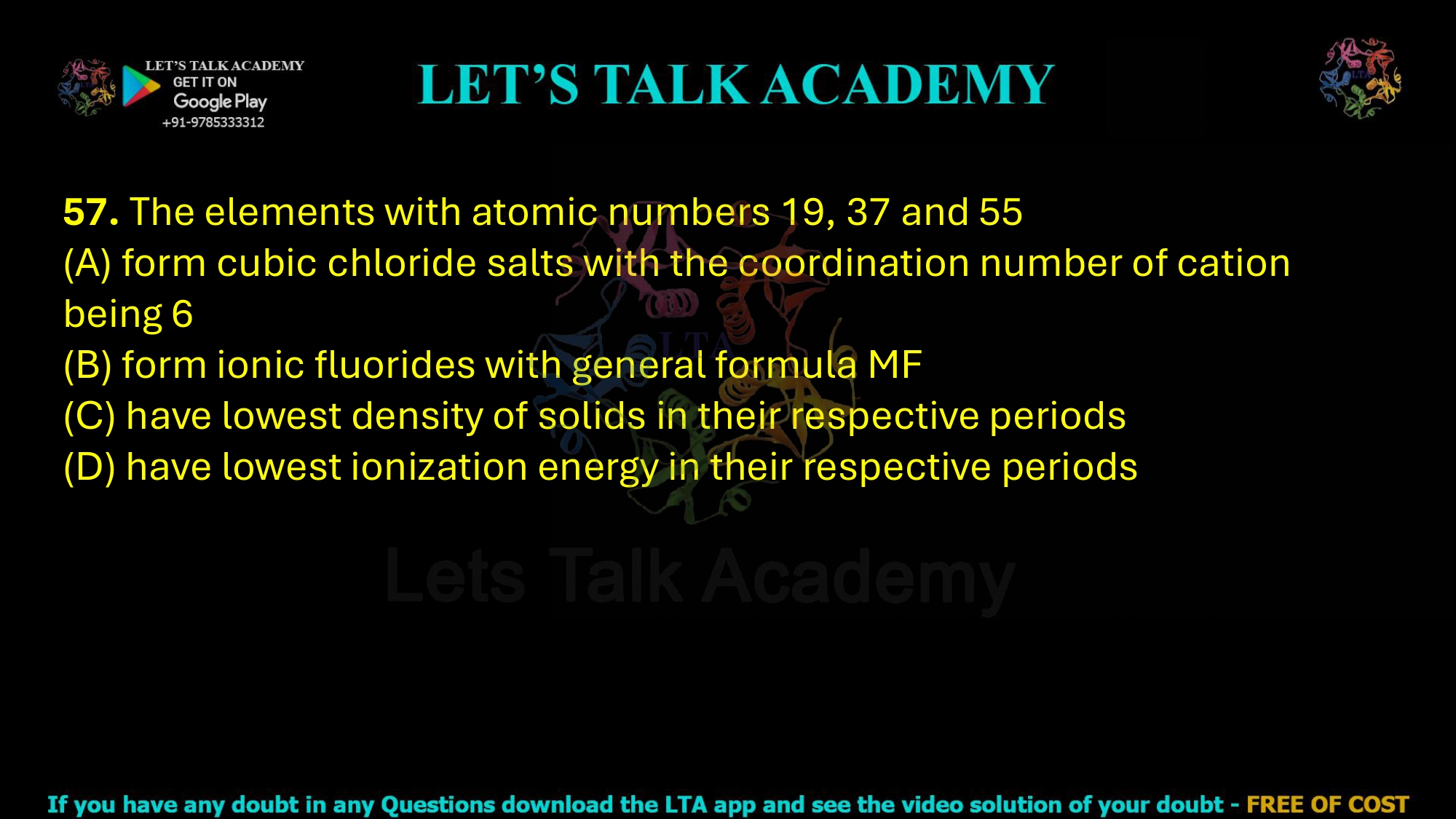
57. The elements with atomic numbers 19, 37 and 55  (A) form cubic chloride salts with the coordination number of cation being 6 (B) form ionic fluorides with general formula MF (C) have lowest density of solids in their respective periods (D) have lowest ionization energy in their respective periods

Elements with Atomic Numbers 19, 37, and 55

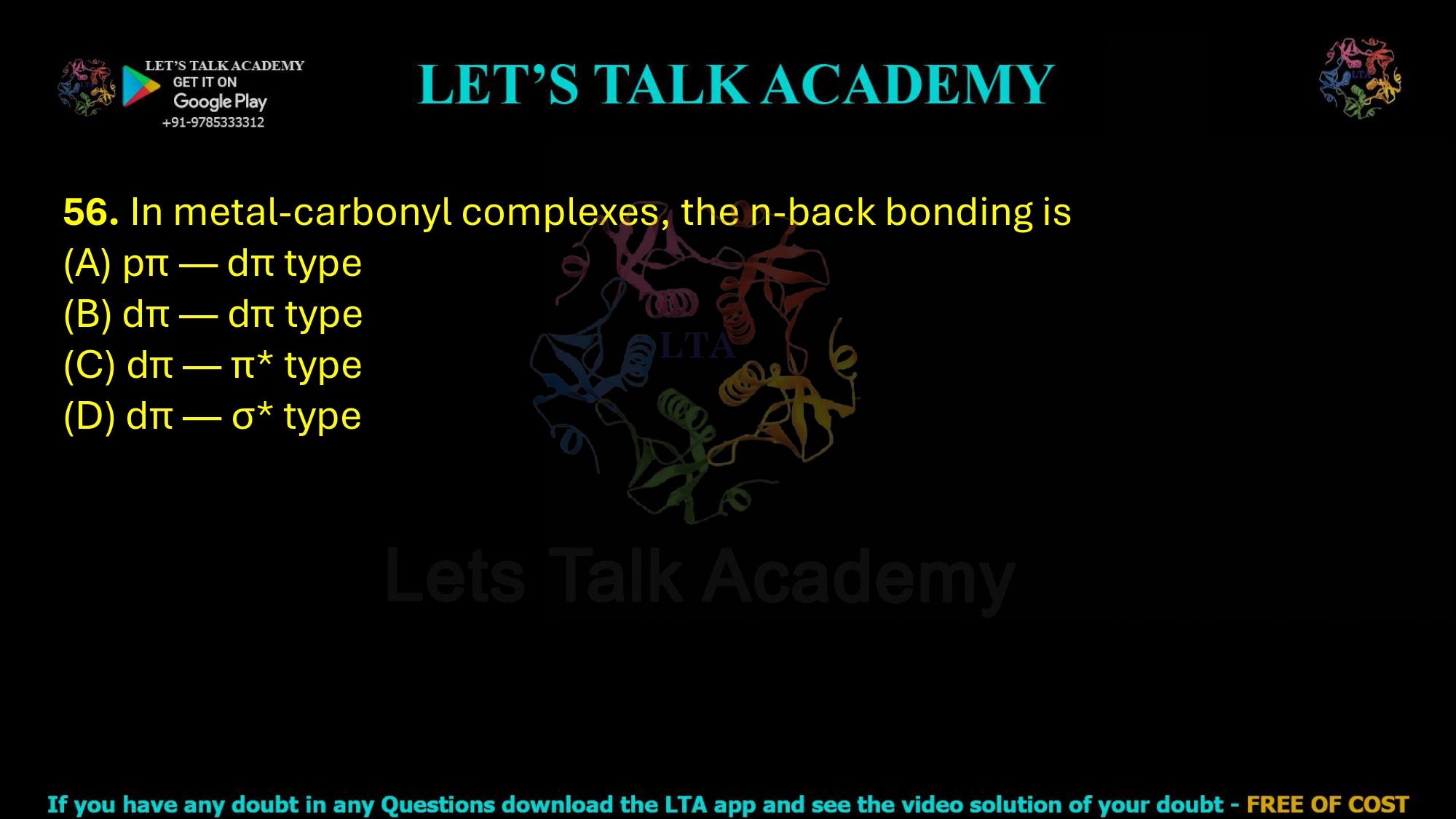
56. In metal-carbonyl complexes, the n-back bonding is  (A) pπ — dπ type           (B) dπ — dπ type (C) dπ — π* type           (D) dπ — σ* type

π-Back Bonding in Metal Carbonyl Complexes

55. For an autocatalytic second order reaction R → P, the rate law is [where v is rate of the reaction and k is the rate constant] (A) v = k[R]      (B) v = k[R][P]  (C) v = k[R]2 (D) v = k[P]2

Autocatalytic Second Order Reaction Rate Law

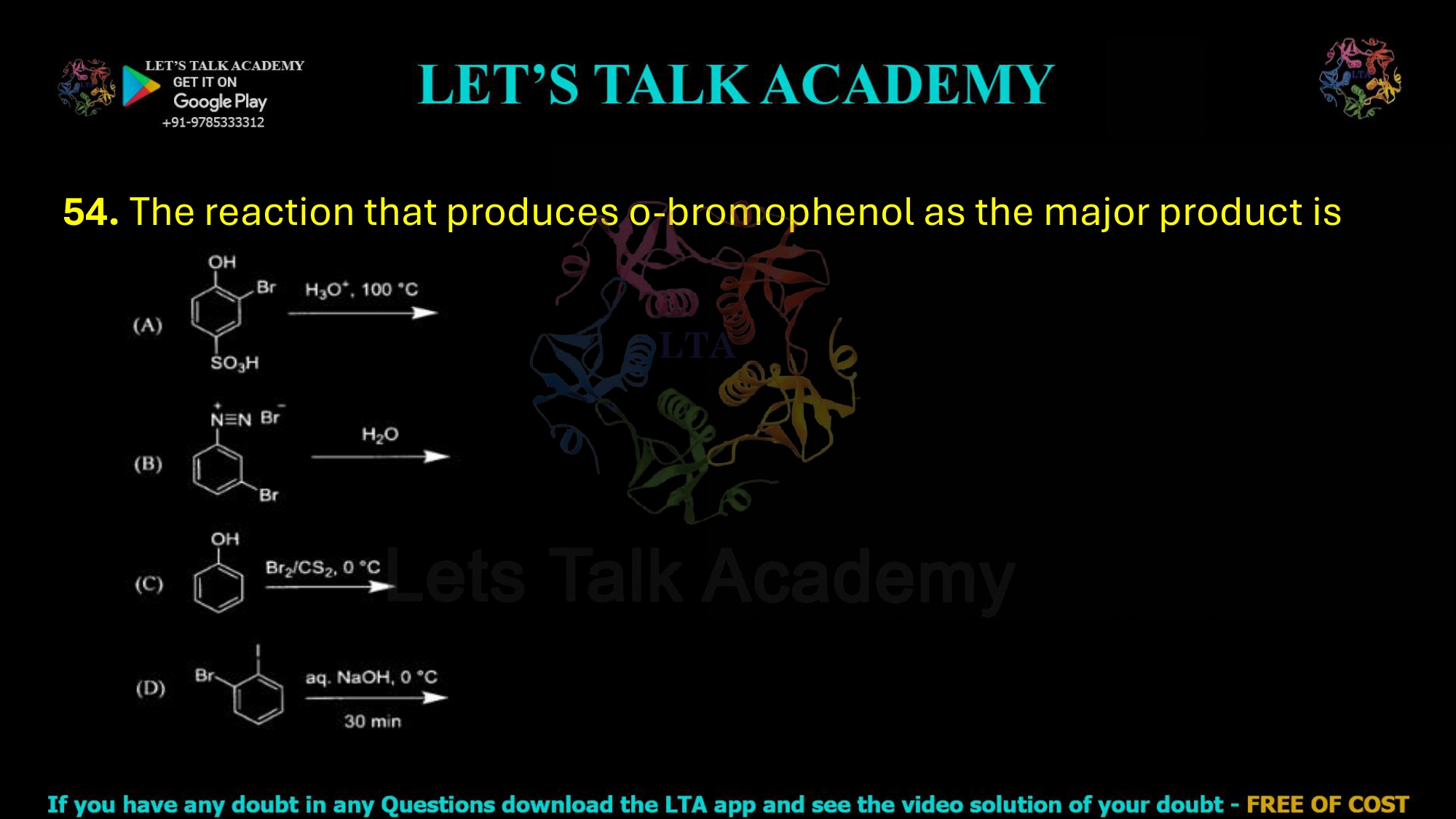
54. The reaction that produces o-bromophenol as the major product is

Which Reaction Produces o-Bromophenol as the Major Product?

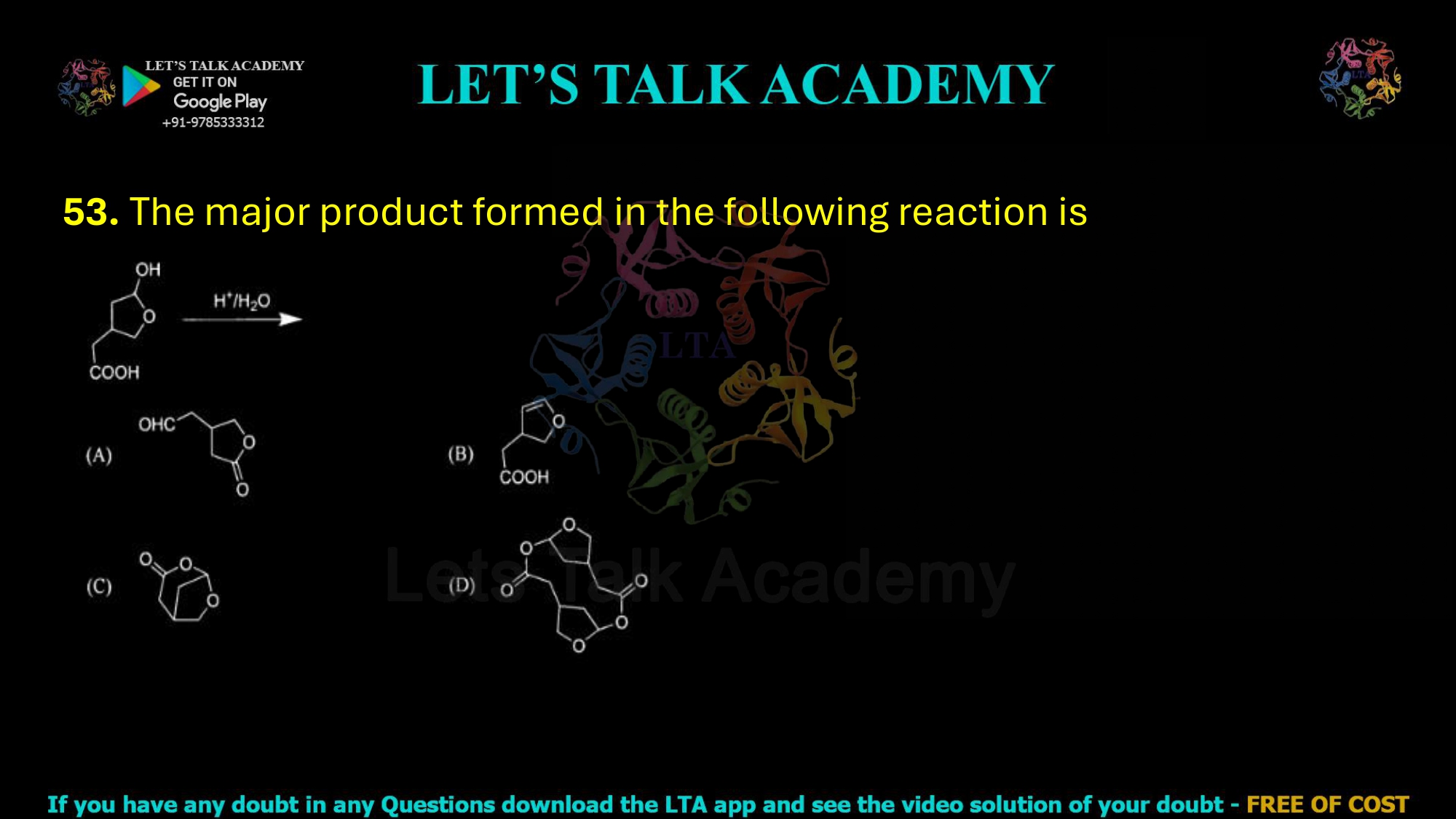
53. The major product formed in the following reaction is

Major Product Formed During Acid-Catalyzed Hydrolysis

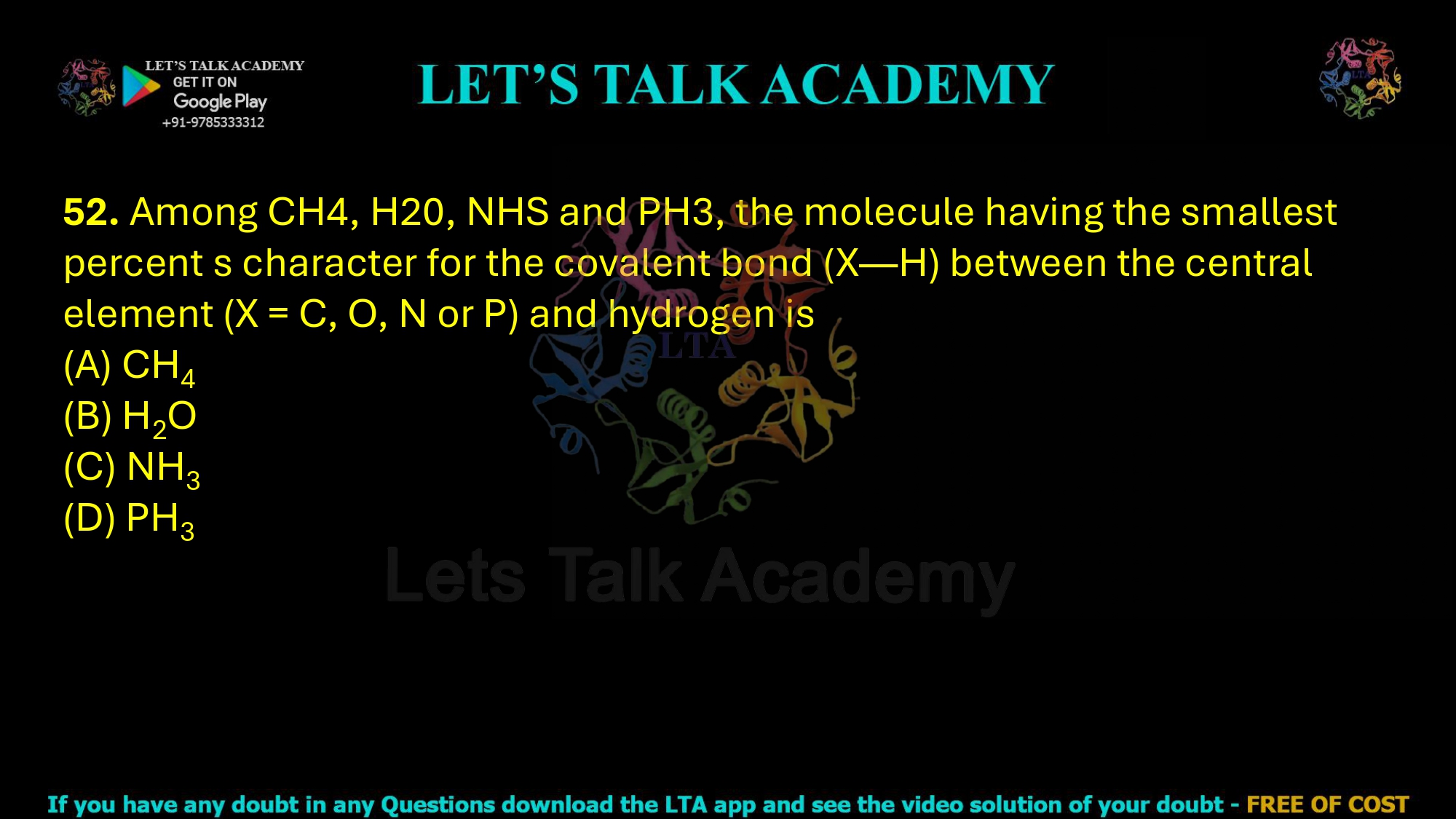
52. Among CH4, H20, NHS and PH3, the molecule having the smallest percent s character for the covalent bond (X—H) between the central element (X = C, O, N or P) and hydrogen is  (A) CH4 (B) H2O (C) NH3 (D) PH3

Which Molecule Has the Smallest Percentage

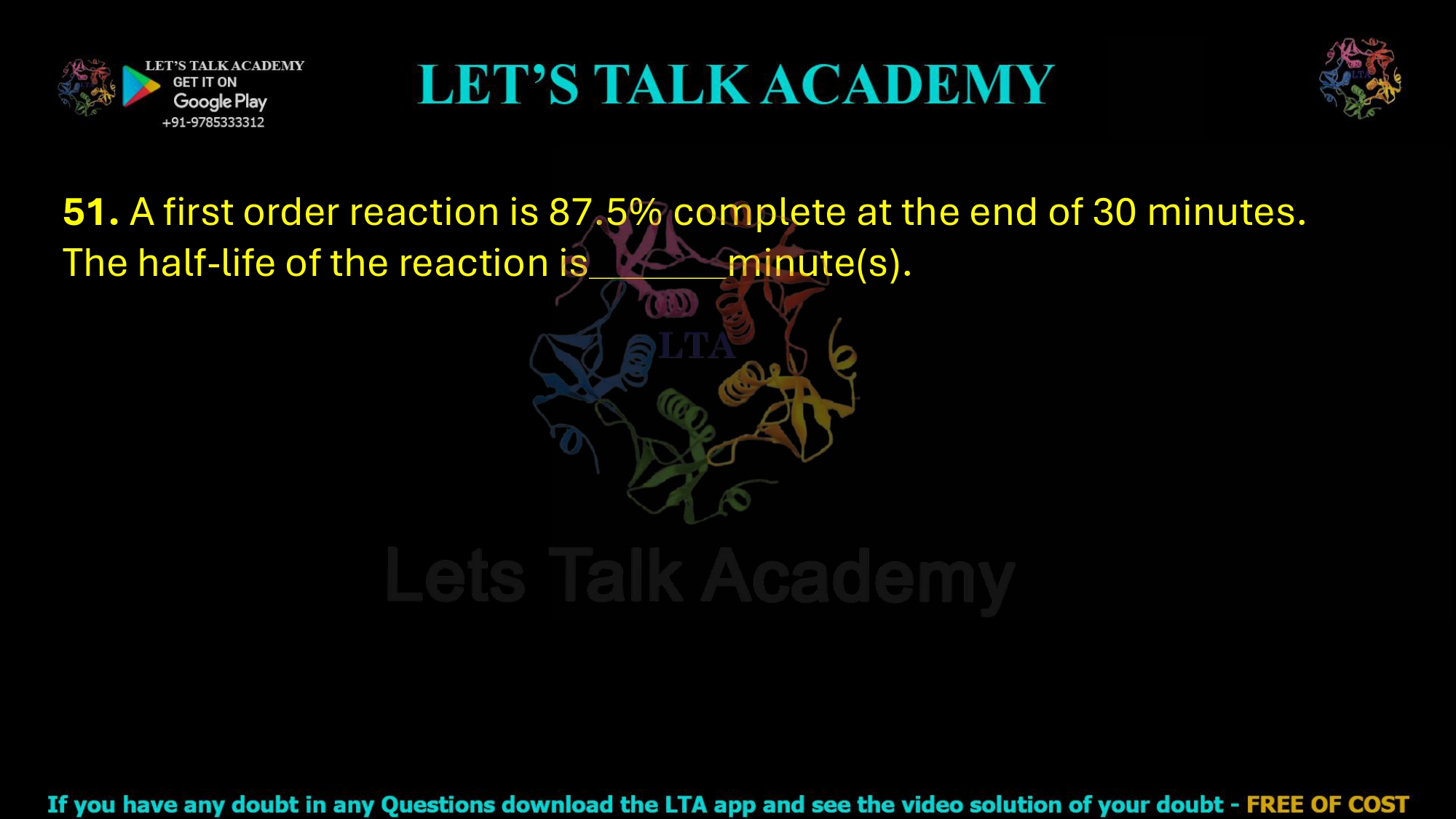
51. A first order reaction is 87.5% complete at the end of 30 minutes. The half-life of the reaction is minute(s).

First Order Reaction 87.5% Complete in 30 Minutes

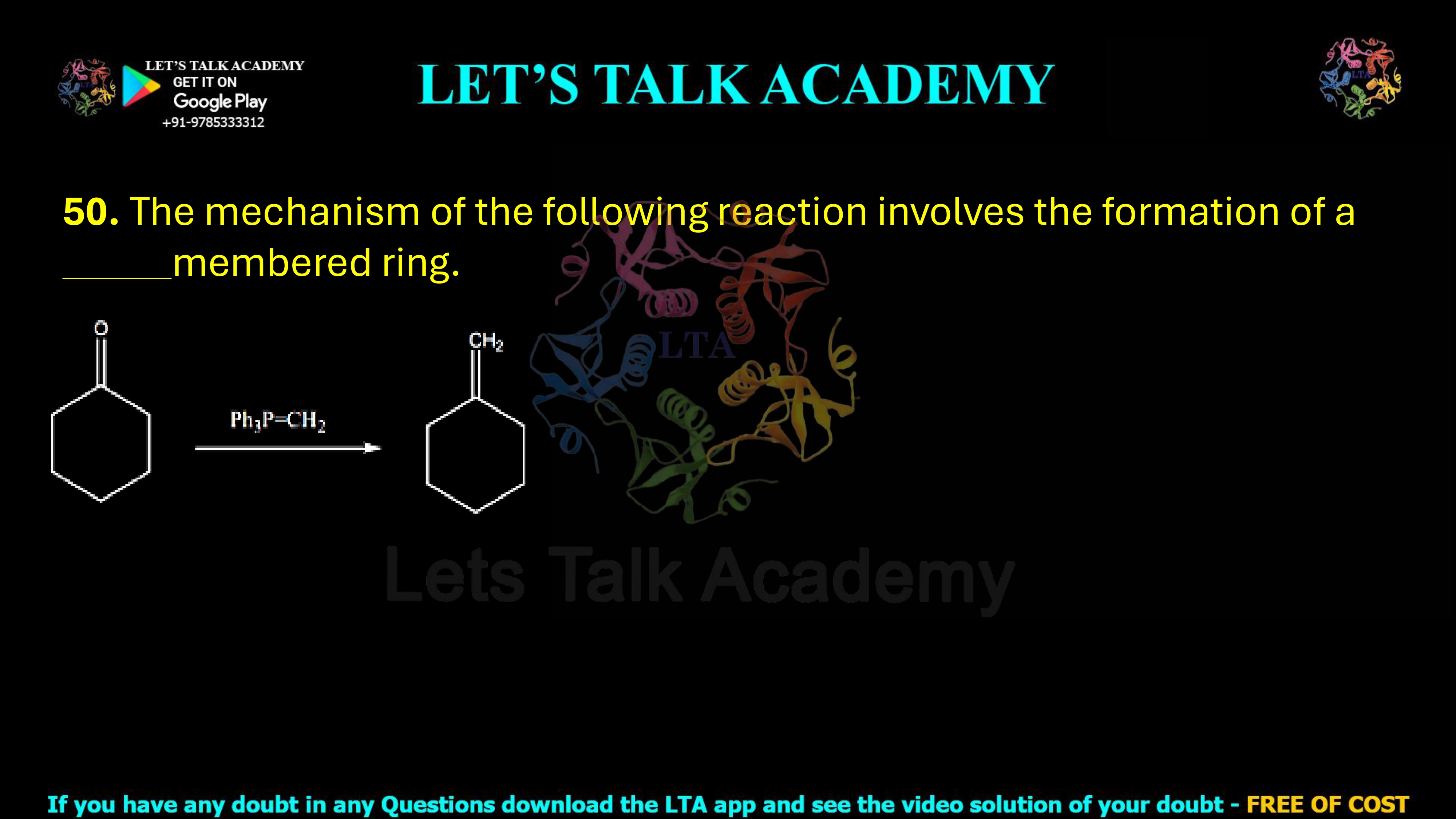
50. The mechanism of the following reaction involves the formation of a _____-membered ring.

Wittig Reaction Mechanism

49. Oxidation state of Fe in the complex K3[Fe(CN)5NO] is (+) _____.

Oxidation State of Fe in K3[Fe(CN)5NO]

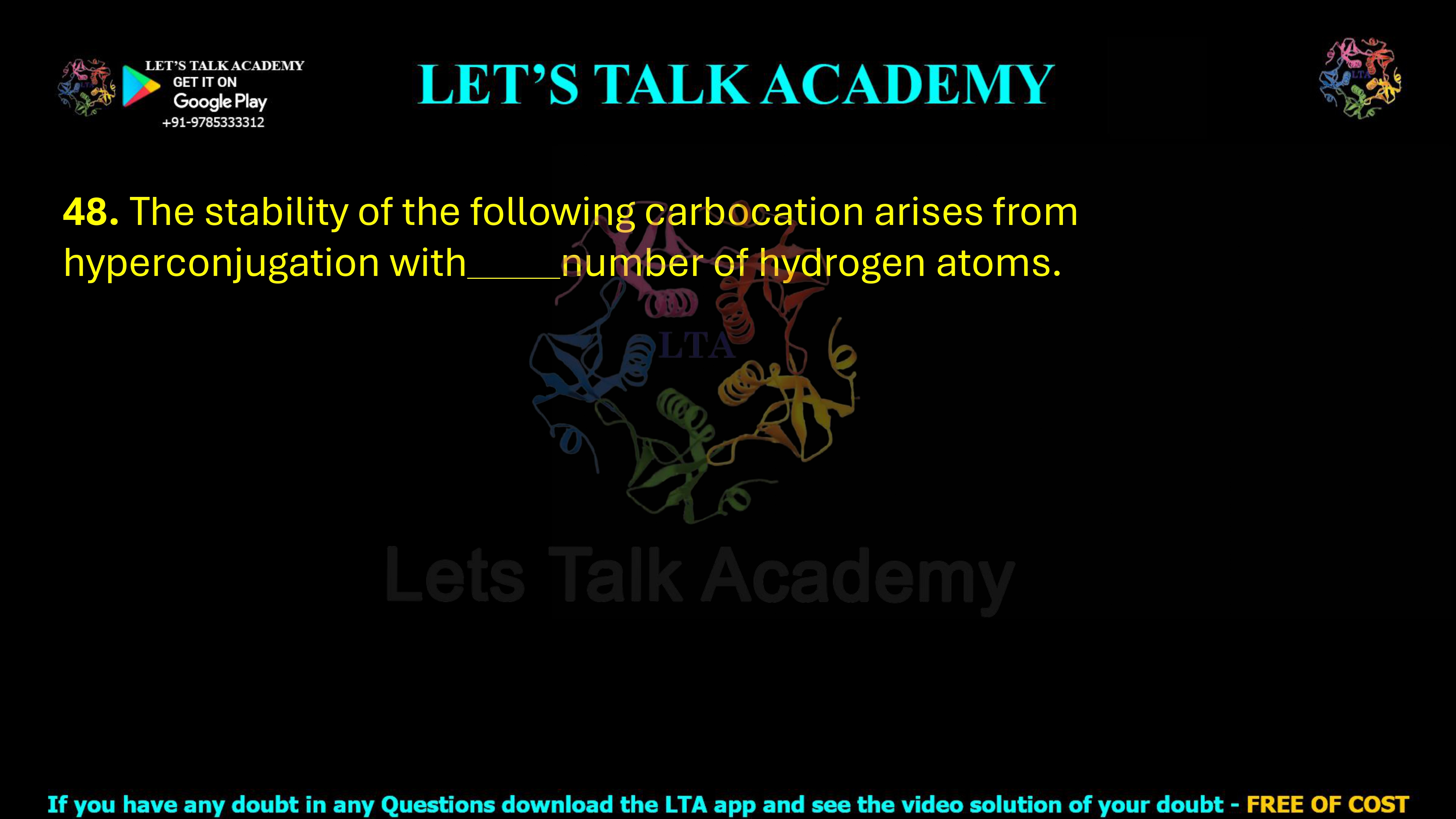
Question 48: The stability of the following carbocation arises from hyperconjugation with _____ number of hydrogen atoms.

Carbocation Stability Due to Hyperconjugation

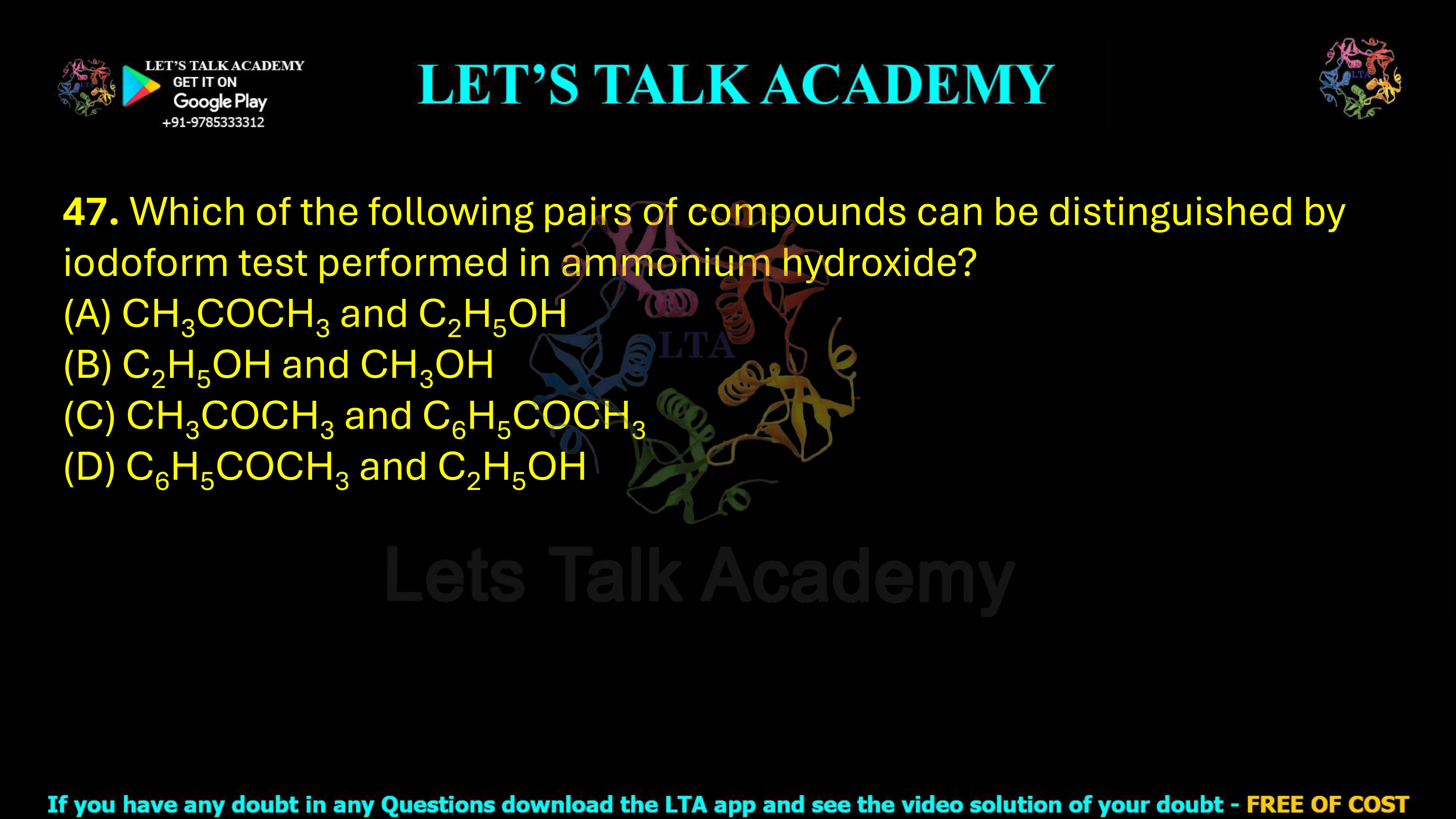
47. Which of the following pairs of compounds can be distinguished by the iodoform test performed in ammonium hydroxide? (A) CH3COCH3 and C2H5OH (B) C2H5OH and CH3OH (C) CH3COCH3 and C6H5COCH3 (D) C6H5COCH3 and C2H5OH

Iodoform Test in Ammonium Hydroxide

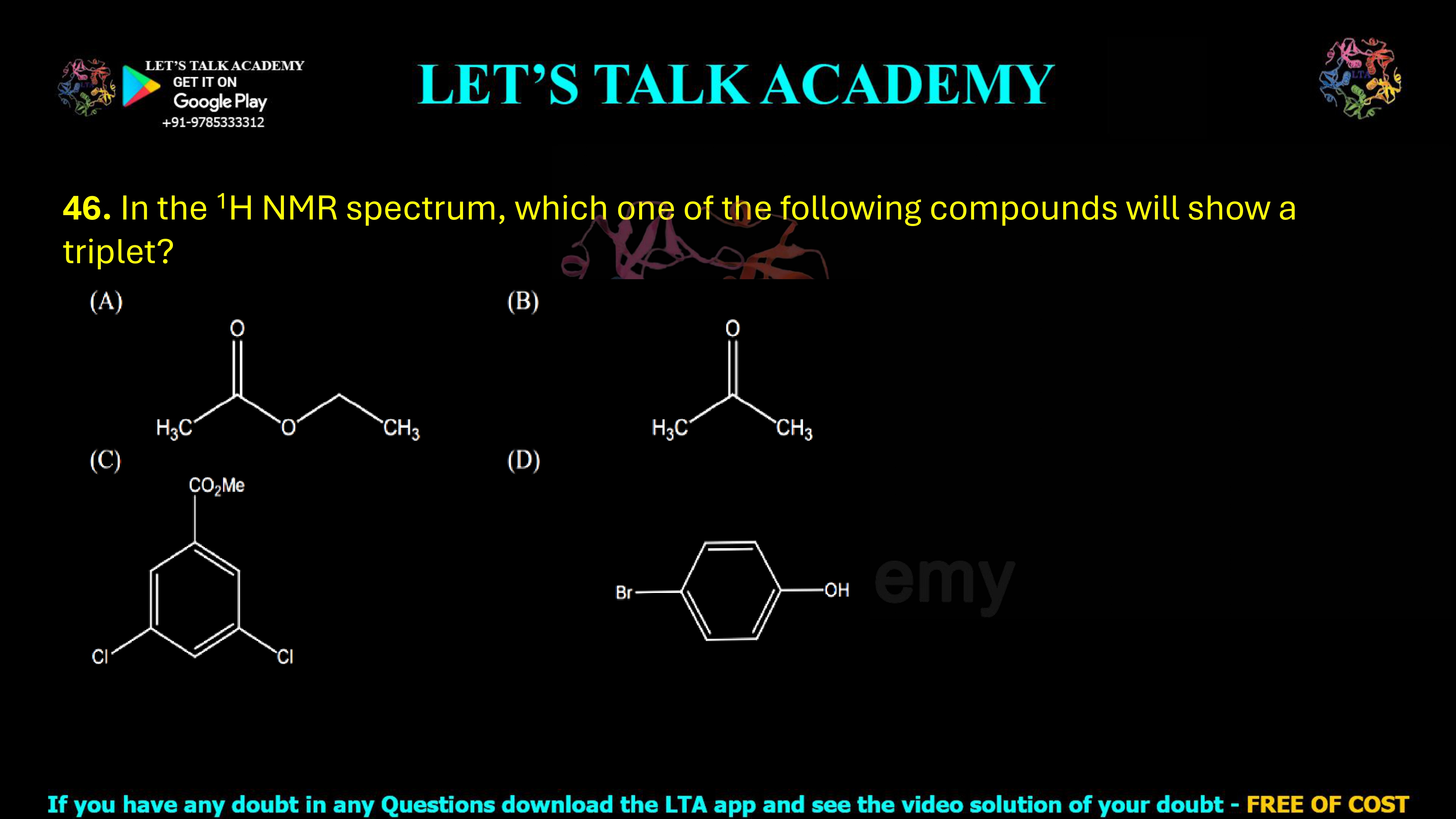
46. In the ¹H NMR spectrum, which one of the following compounds will show a triplet?

Which Compound Shows a Triplet in ¹H NMR Spectrum?

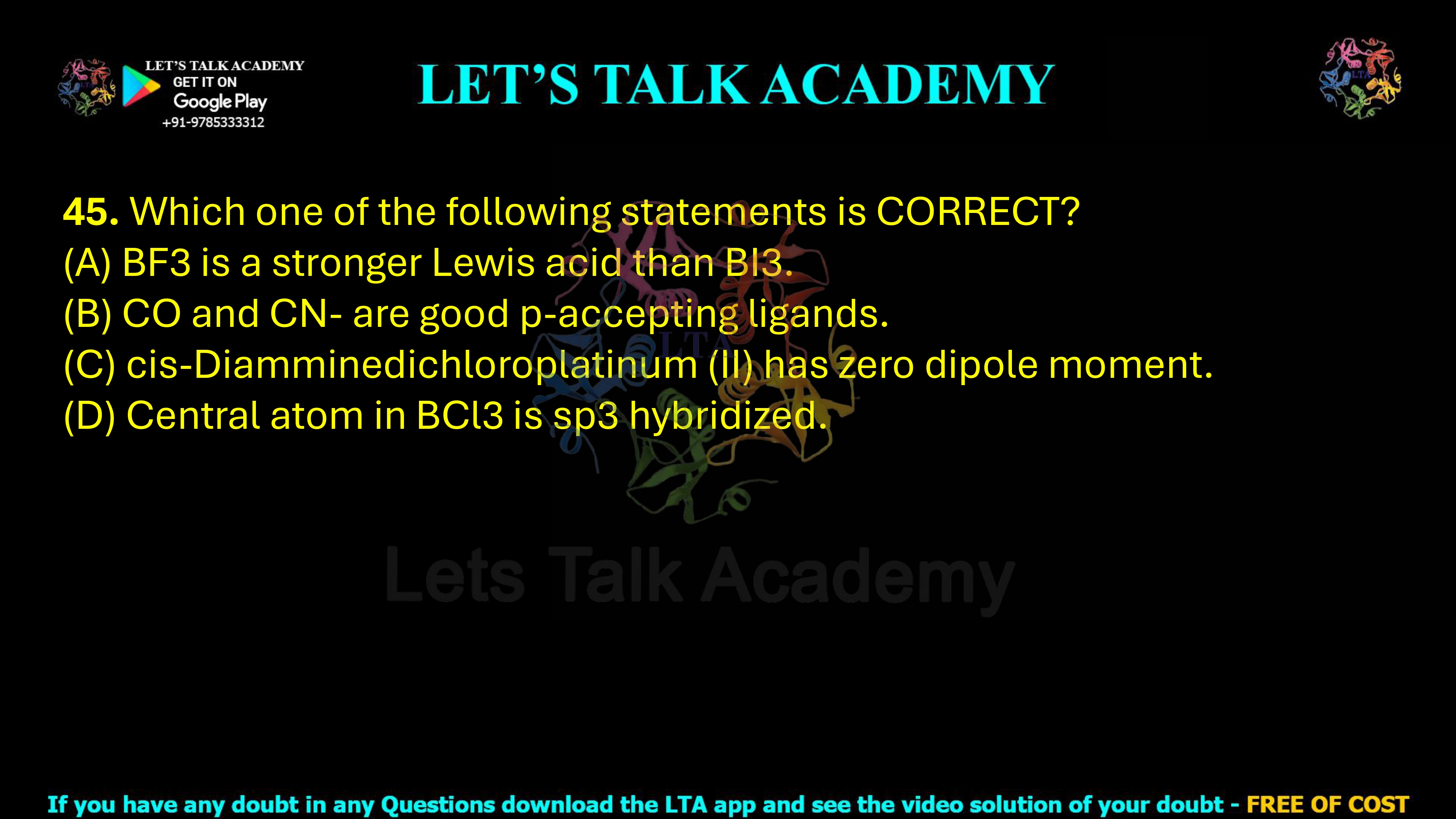
45. Which one of the following statements is correct? (A) BF3 is a stronger Lewis acid than BI3. (B) CO and CN− are good π-accepting ligands. (C) cis-Diamminedichloroplatinum(II) has zero dipole moment. (D) Central atom in BCl3 is sp3 hybridized.

Which Statement Is Correct? BF3 Lewis Acidity

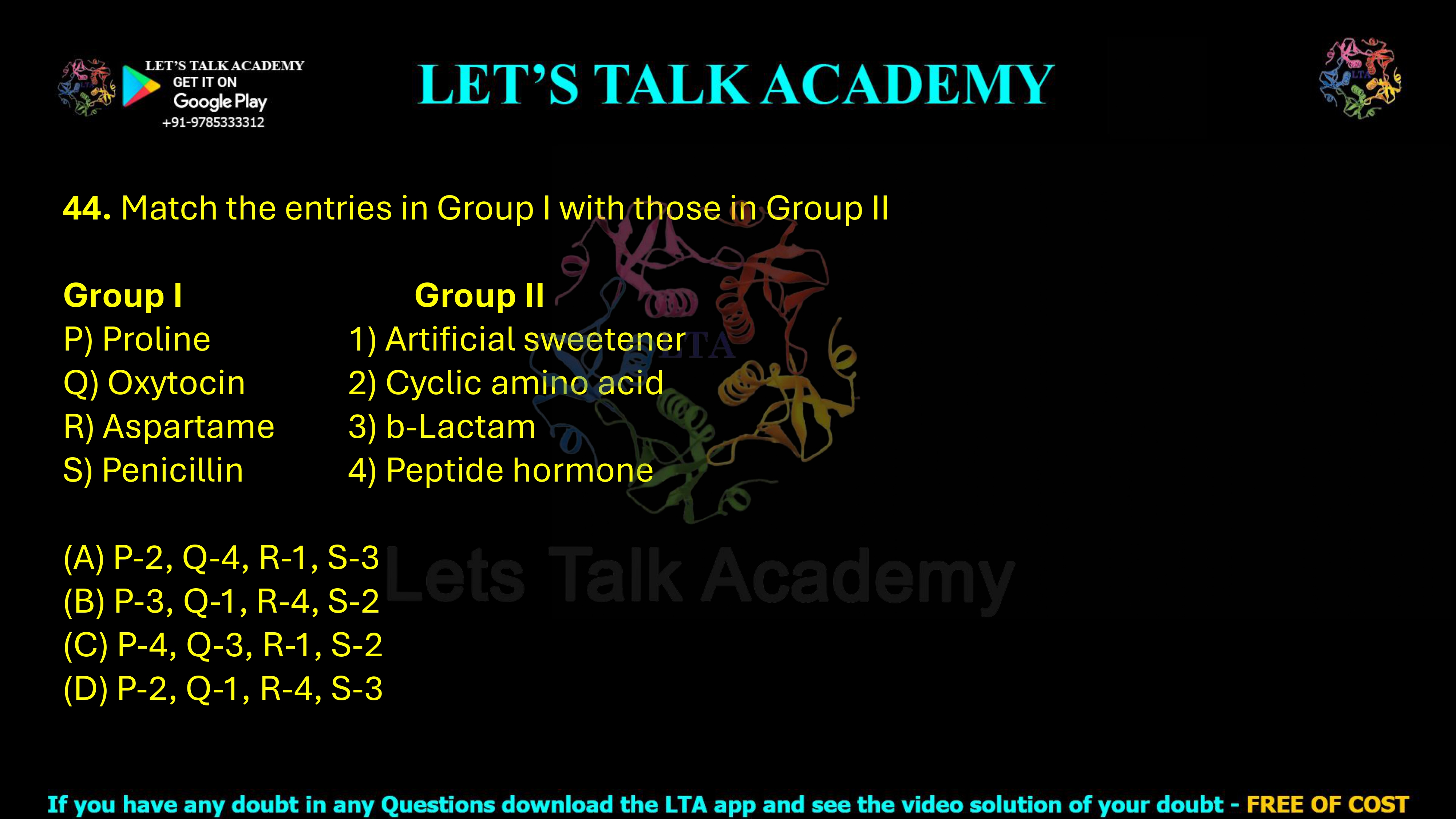
44. Match the entries in Group I with those in Group II. Group I P) Proline Q) Oxytocin R) Aspartame S) Penicillin Group II 1) Artificial sweetener 2) Cyclic amino acid 3) β-Lactam 4) Peptide hormone (A) P-2, Q-4, R-1, S-3 (B) P-3, Q-1, R-4, S-2 (C) P-4, Q-3, R-1, S-2 (D) P-2, Q-1, R-4, S-3

Match Proline, Oxytocin, Aspartame and Penicillin

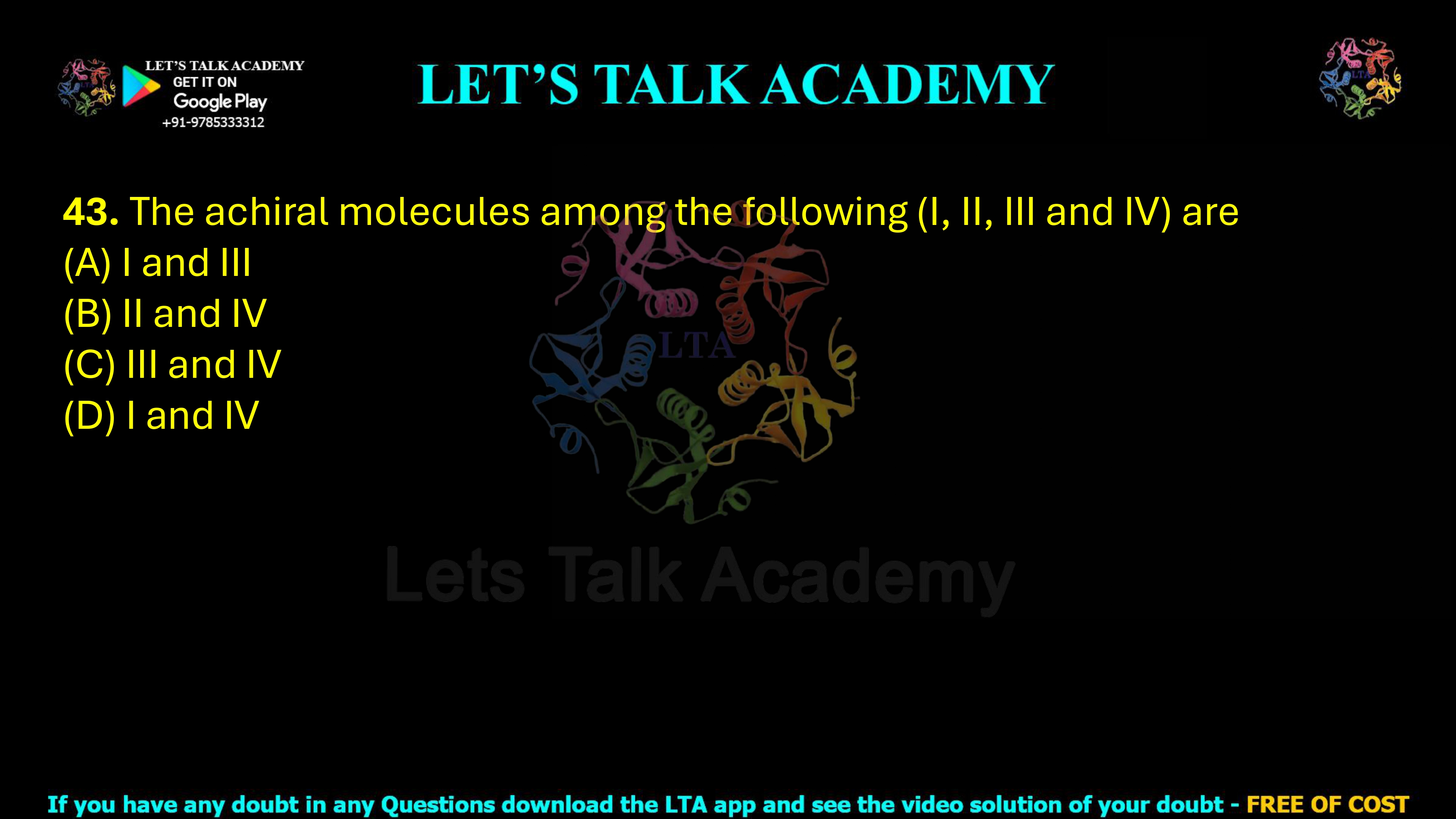
43. The achiral molecules among the following (I, II, III and IV) are: (A) I and III (B) II and IV (C) III and IV (D) I and IV

Achiral Molecules Among I, II, III and IV

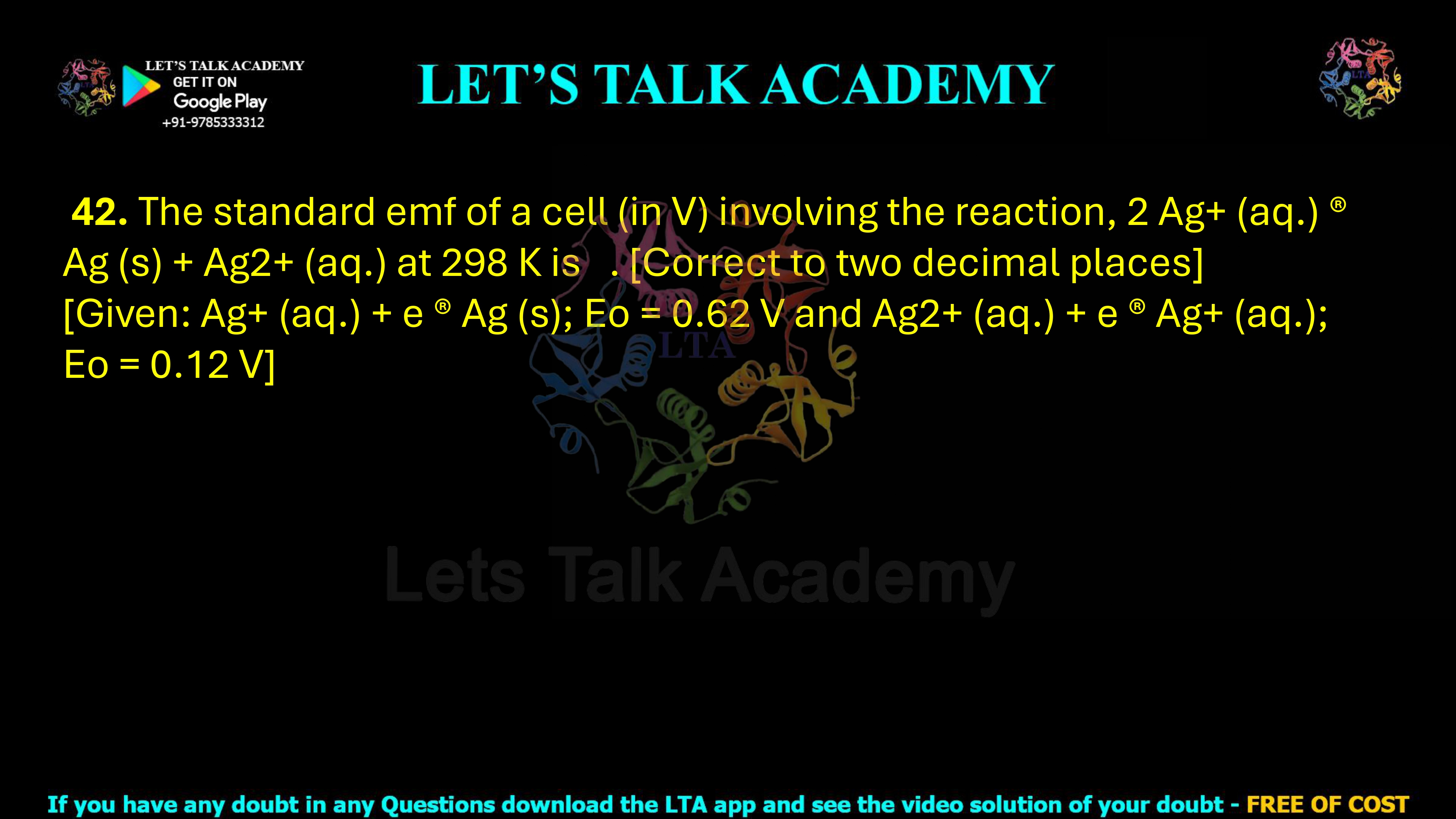
42. The standard EMF of a cell, in volts, involving the following reaction at 298 K is _____, correct to two decimal places. 2Ag+(aq) → Ag(s) + Ag2+(aq) Given: Ag+(aq) + e− → Ag(s); E° = 0.62 V Ag2+(aq) + e− → Ag+(aq); E° = 0.12 V

Standard EMF of Silver Cell Reaction 2Ag⁺ → Ag + Ag²⁺

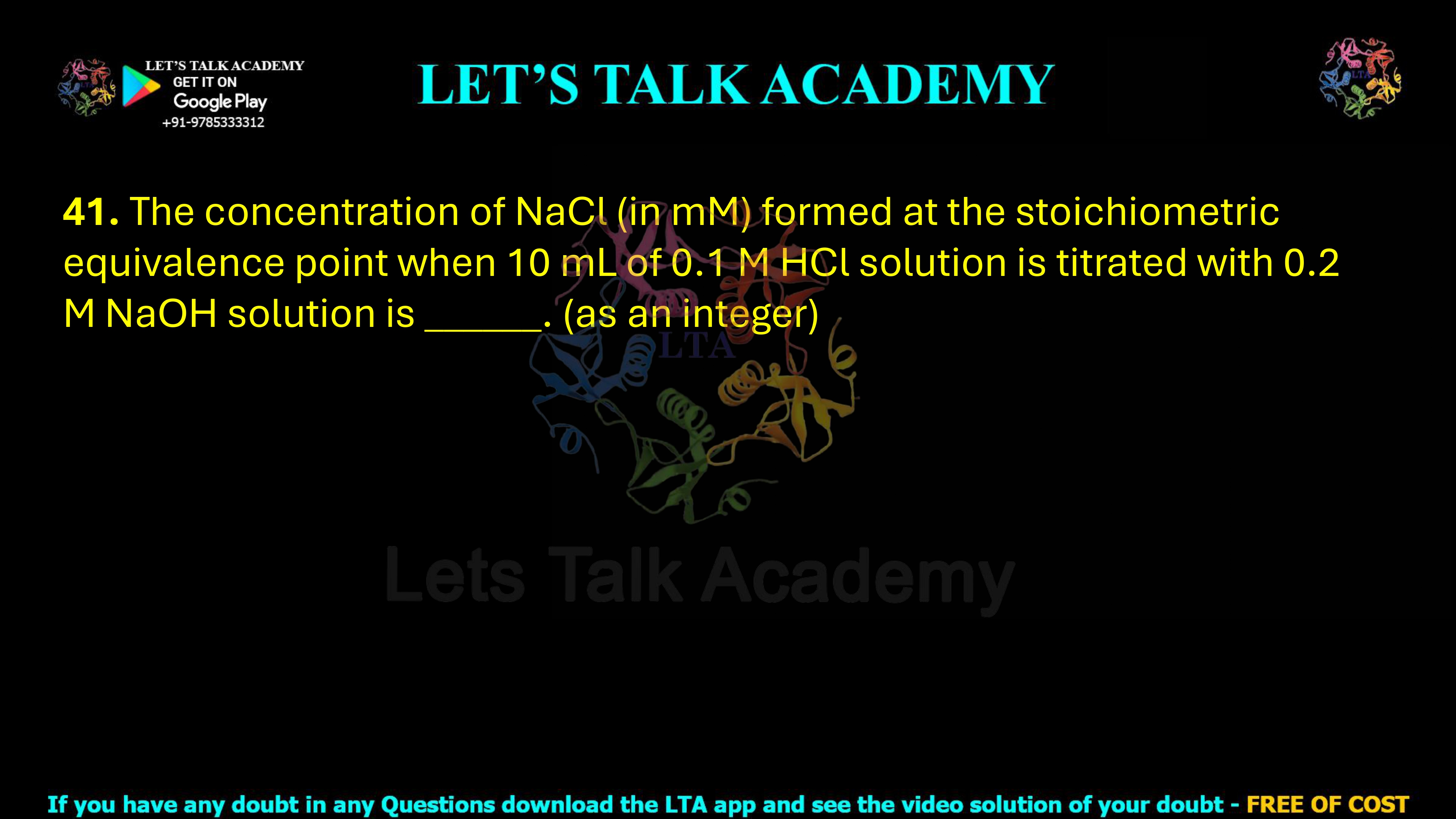
41. The concentration of NaCl, in mM, formed at the stoichiometric equivalence point when 10 mL of 0.1 M HCl solution is titrated with 0.2 M NaOH solution is _____, as an integer.

Concentration of NaCl at the Stoichiometric Equivalence Point

40. The total number of lone pairs of electrons in NO2F is _____.

Total Number of Lone Pairs of Electrons in NO2F

39. The reaction of (R)-2-bromobutane with CN⁻ proceeds by: (A) Retention of configuration (B) Inversion of configuration (C) Formation of CH₂=CH(CH₂CH₃) (D) Formation of (S)-2-methylbutanenitrile

Reaction of (R)-2-Bromobutane with CN⁻ – SN2 Mechanism

38. BF3 reacts readily with: (A) C5H5N (B) SnCl2 (C) SO3 (D) (C5H5N)-SnCl2

BF₃ Reacts Readily With Which Compound?

37. Among the following species, the metal center that has the highest number of unpaired electrons is _____. (A) VCl4 (B) Ni(CO)4 (C) [AuCl4]− (D) [CdBr4]2−

Metal Center with Highest Number of Unpaired Electrons

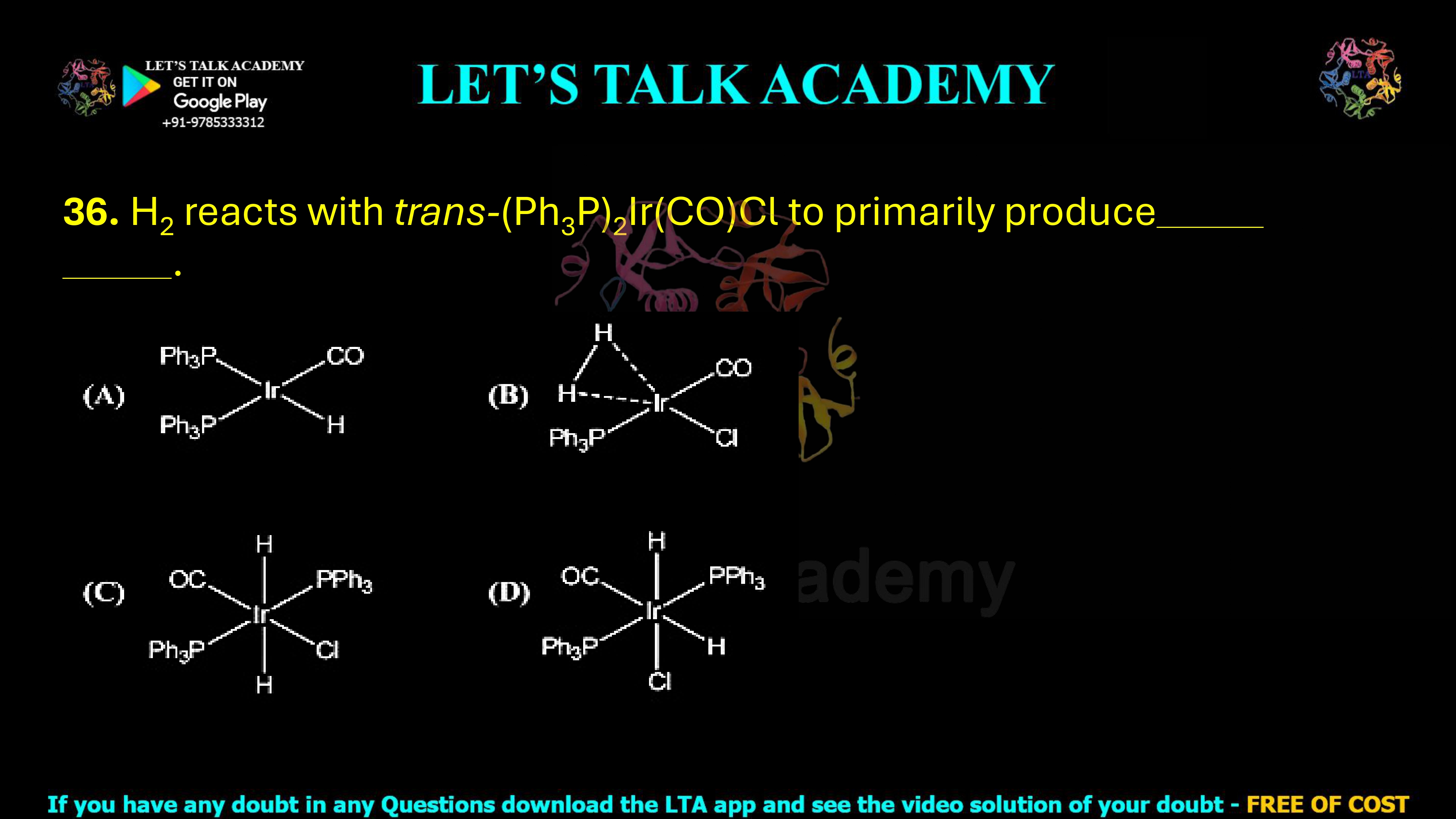
36. H2 reacts with trans-(Ph3P)2Ir(CO)Cl to primarily produce _____.

H2 Reaction with trans-(Ph3P)2Ir(CO)Cl

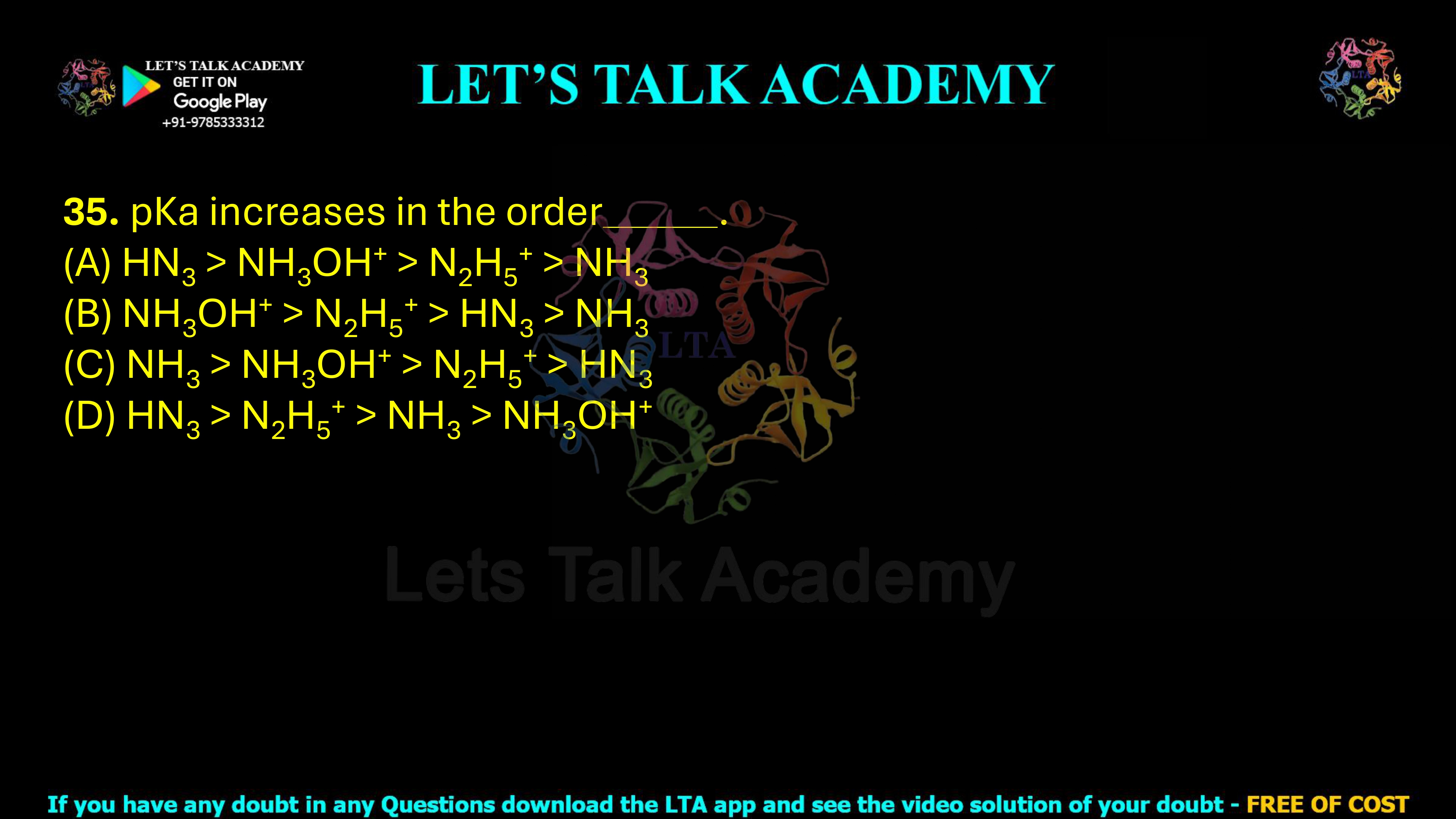
35. pKa increases in the order: (A) HN₃ > NH₃OH⁺ > N₂H₅⁺ > NH₃ (B) NH₃OH⁺ > N₂H₅⁺ > HN₃ > NH₃ (C) NH₃ > NH₃OH⁺ > N₂H₅⁺ > HN₃ (D) HN₃ > N₂H₅⁺ > NH₃ > NH₃OH⁺

pKa Increases in Which Order?

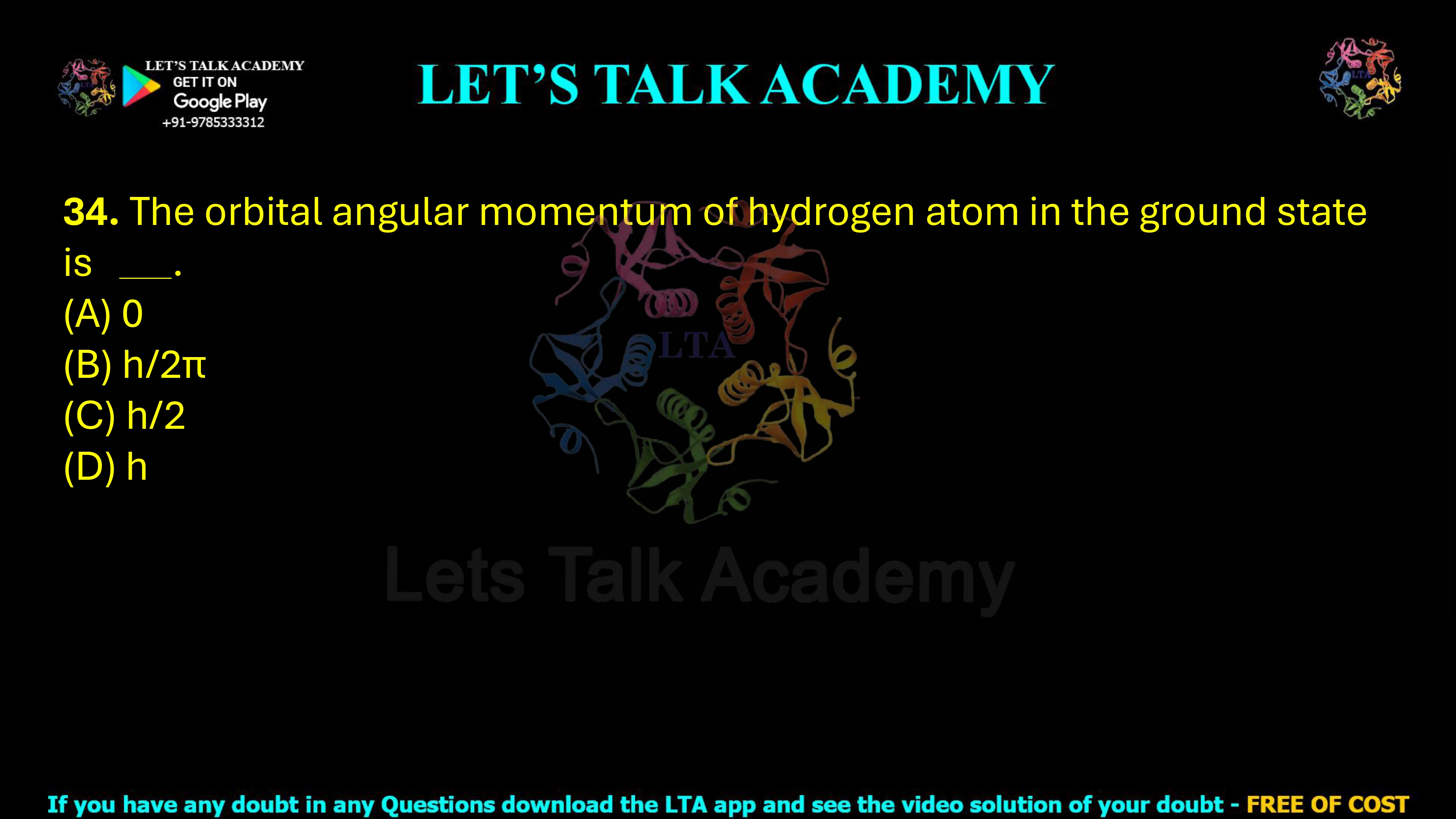
34. The orbital angular momentum of hydrogen atom in the ground state is _____. (A) 0 (B) h/2π (C) h/2 (D) h

Orbital Angular Momentum of Hydrogen Atom

33. In a reaction A + B → C, the initial rate of formation of C at 25°C was measured for different initial concentrations of A and B. The overall order of the reaction with respect to both A and B is _____ (answer in integer). Experimental Data: Experiment Initial [A] (mol L−1) Initial [B] (mol L−1) Initial Rate of Formation of C (mol L−1 s−1) 1 0.4 0.3 0.078 2 0.8 0.3 0.312 3 0.4 0.6 0.156 4 0.8 0.6 0.624

Overall Order of Reaction with Respect to A and B

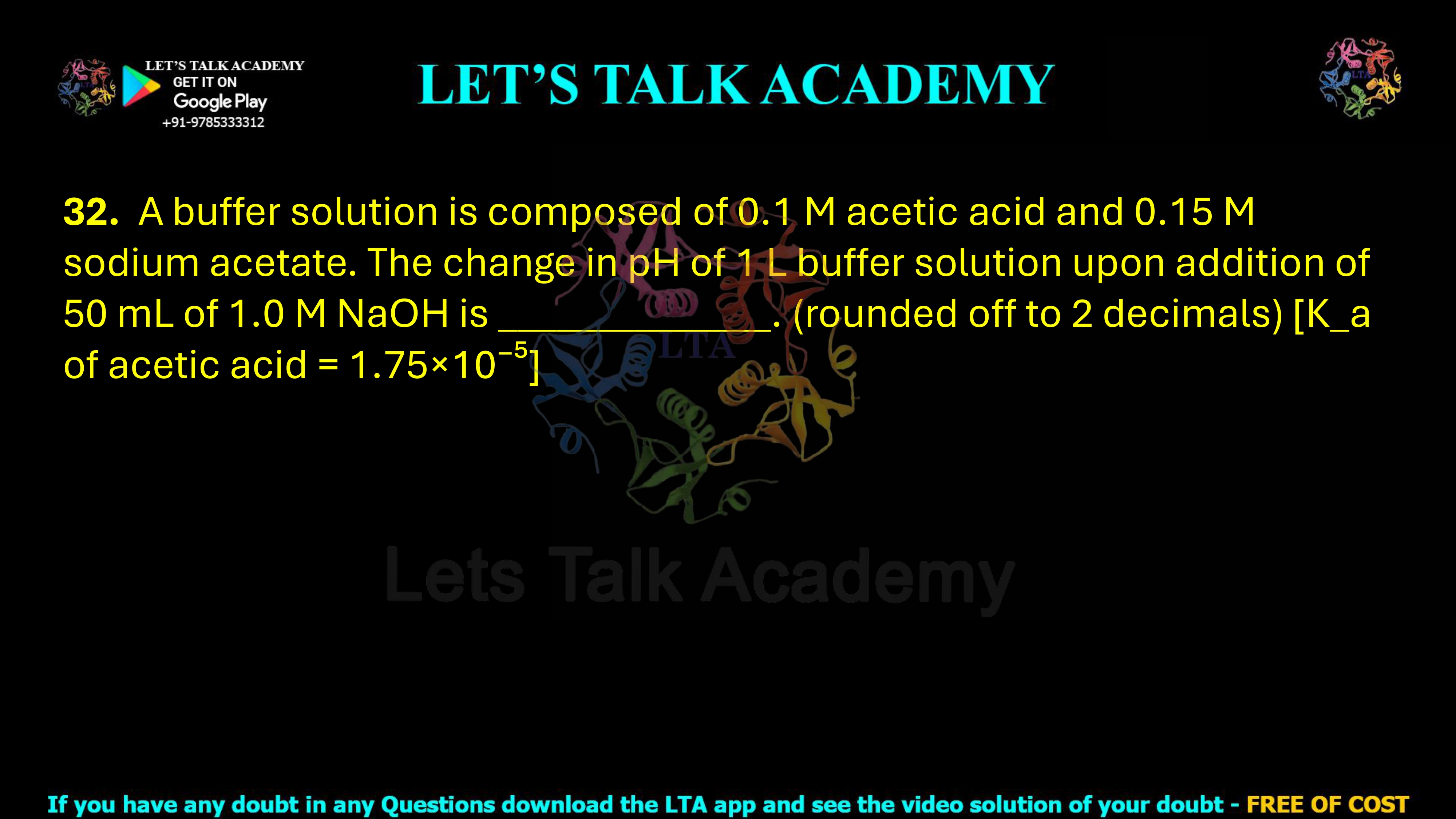
32. A buffer solution is composed of 0.1 M acetic acid and 0.15 M sodium acetate. The change in pH of 1 L buffer solution upon addition of 50 mL of 1.0 M NaOH is _____, rounded off to two decimal places. The Ka of acetic acid is 1.75 × 10⁻⁵.

Change in pH of Acetic Acid–Sodium Acetate Buffer

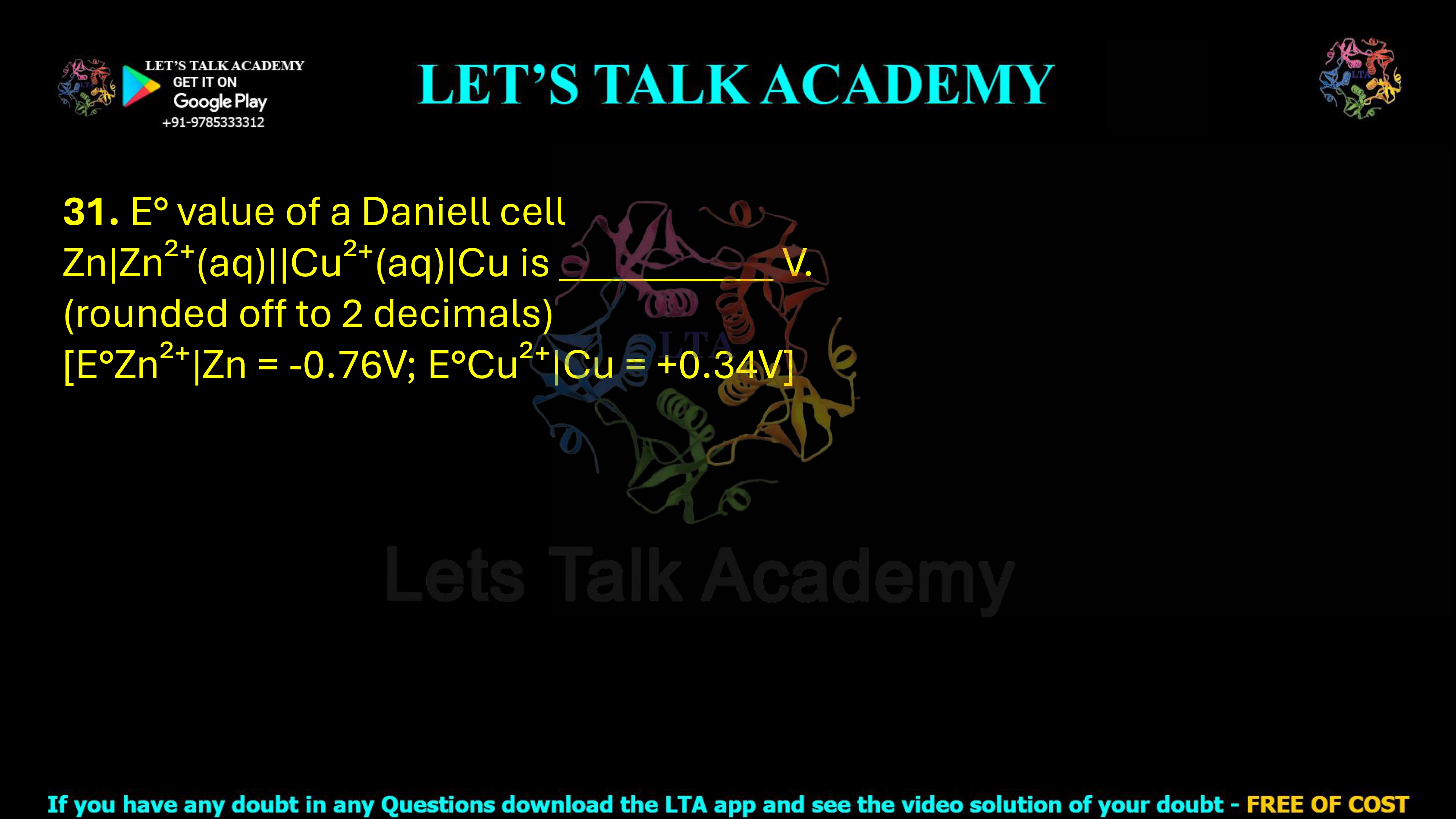
31. The E° value of a Daniell cell Zn|Zn²⁺(aq)||Cu²⁺(aq)|Cu is ______ V, rounded off to two decimal places. The given standard reduction potentials are E°(Zn²⁺/Zn) = −0.76 V and E°(Cu²⁺/Cu) = +0.34 V.

E° Value of a Daniell Cell Zn|Zn²⁺(aq)||Cu²⁺(aq)|Cu

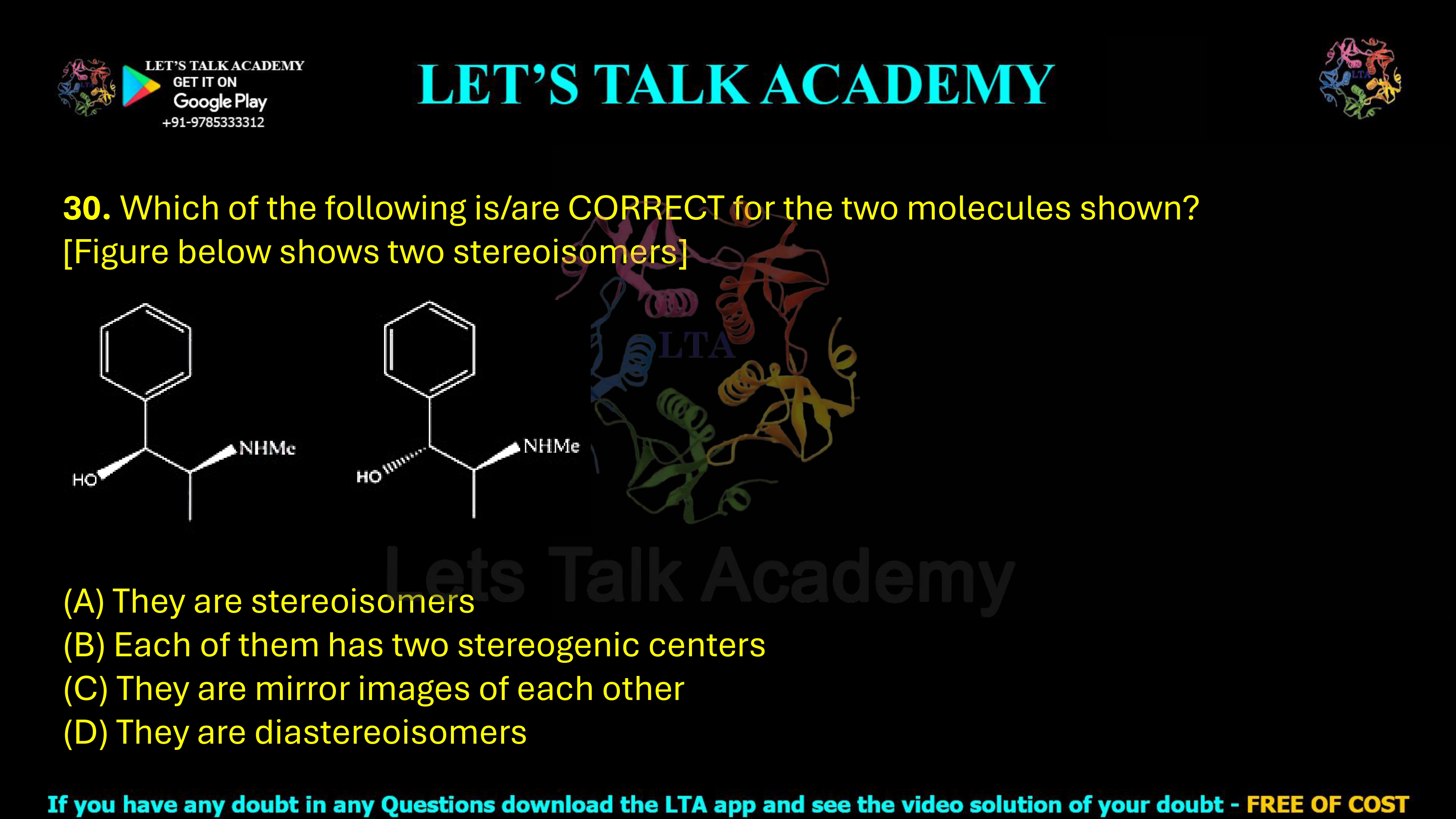
30. Which of the following is/are correct for the two molecules shown? (A) They are stereoisomers (B) Each of them has two stereogenic centers (C) They are mirror images of each other (D) They are diastereoisomers

Stereoisomers, Stereogenic Centers and Diastereomers

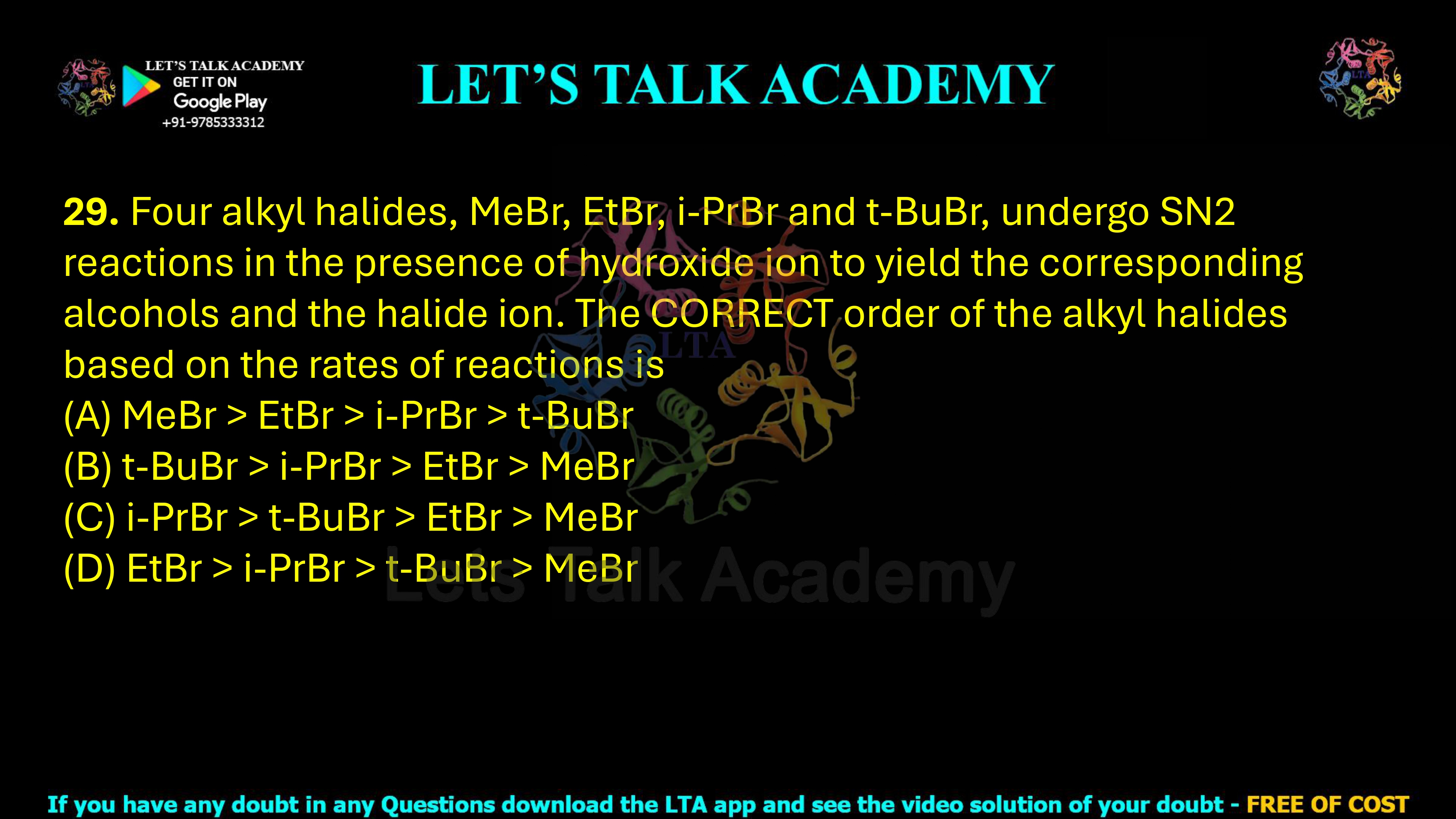
29. Four alkyl halides, MeBr, EtBr, i-PrBr and t-BuBr, undergo SN2 reactions in the presence of hydroxide ion to yield the corresponding alcohols and halide ion. The correct order of the alkyl halides based on the rates of reactions is: (A) MeBr > EtBr > i-PrBr > t-BuBr (B) t-BuBr > i-PrBr > EtBr > MeBr (C) i-PrBr > t-BuBr > EtBr > MeBr (D) EtBr > i-PrBr > t-BuBr > MeBr

Correct SN2 Reaction Rate Order

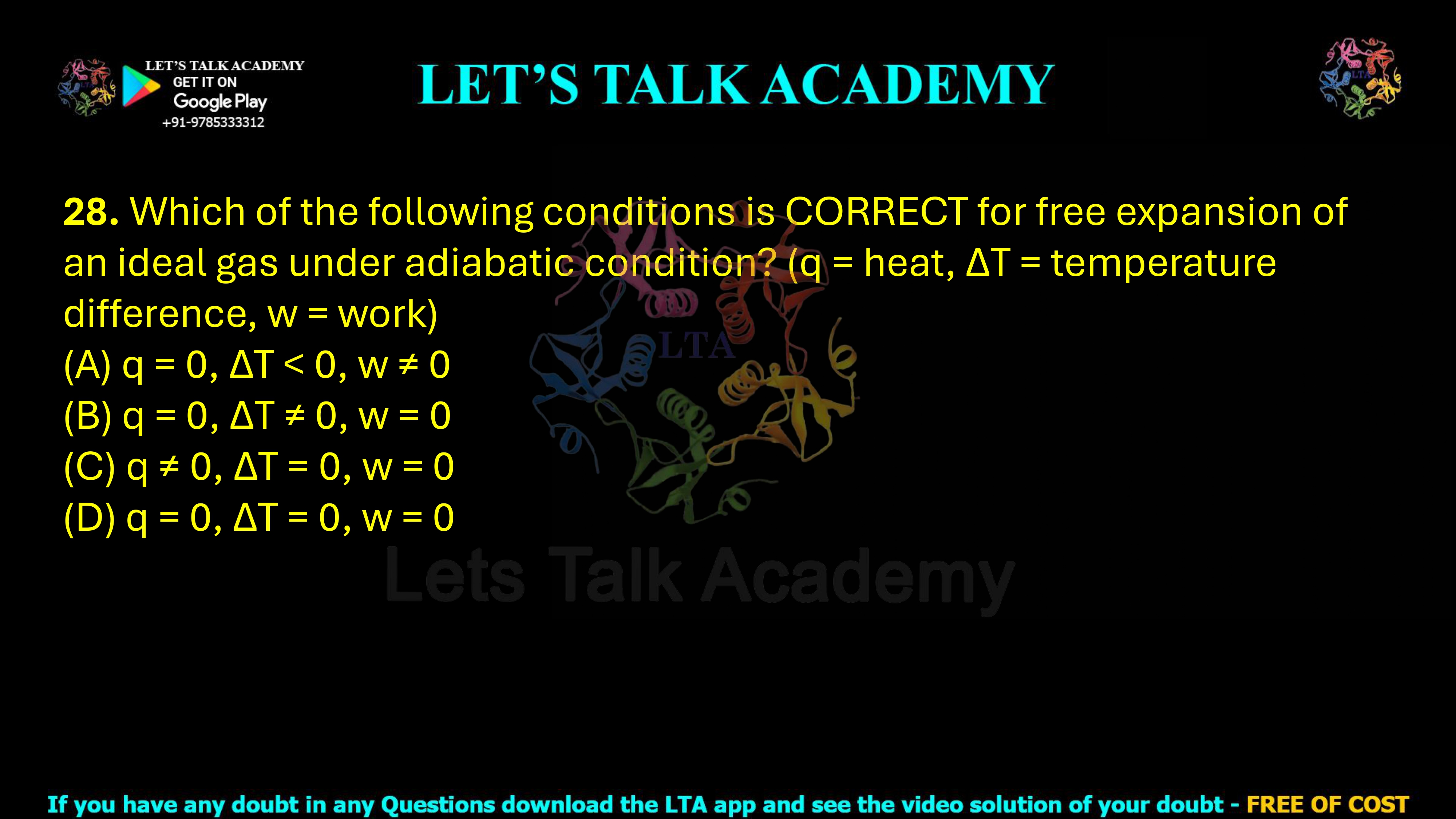
28. Which of the following conditions is correct for the free expansion of an ideal gas under adiabatic conditions? Here, q represents heat, ΔT represents temperature difference, and w represents work. (A) q = 0, ΔT < 0, w ≠ 0 (B) q = 0, ΔT ≠ 0, w = 0 (C) q ≠ 0, ΔT = 0, w = 0 (D) q = 0, ΔT = 0, w = 0

Free Expansion of an Ideal Gas Under Adiabatic Conditions

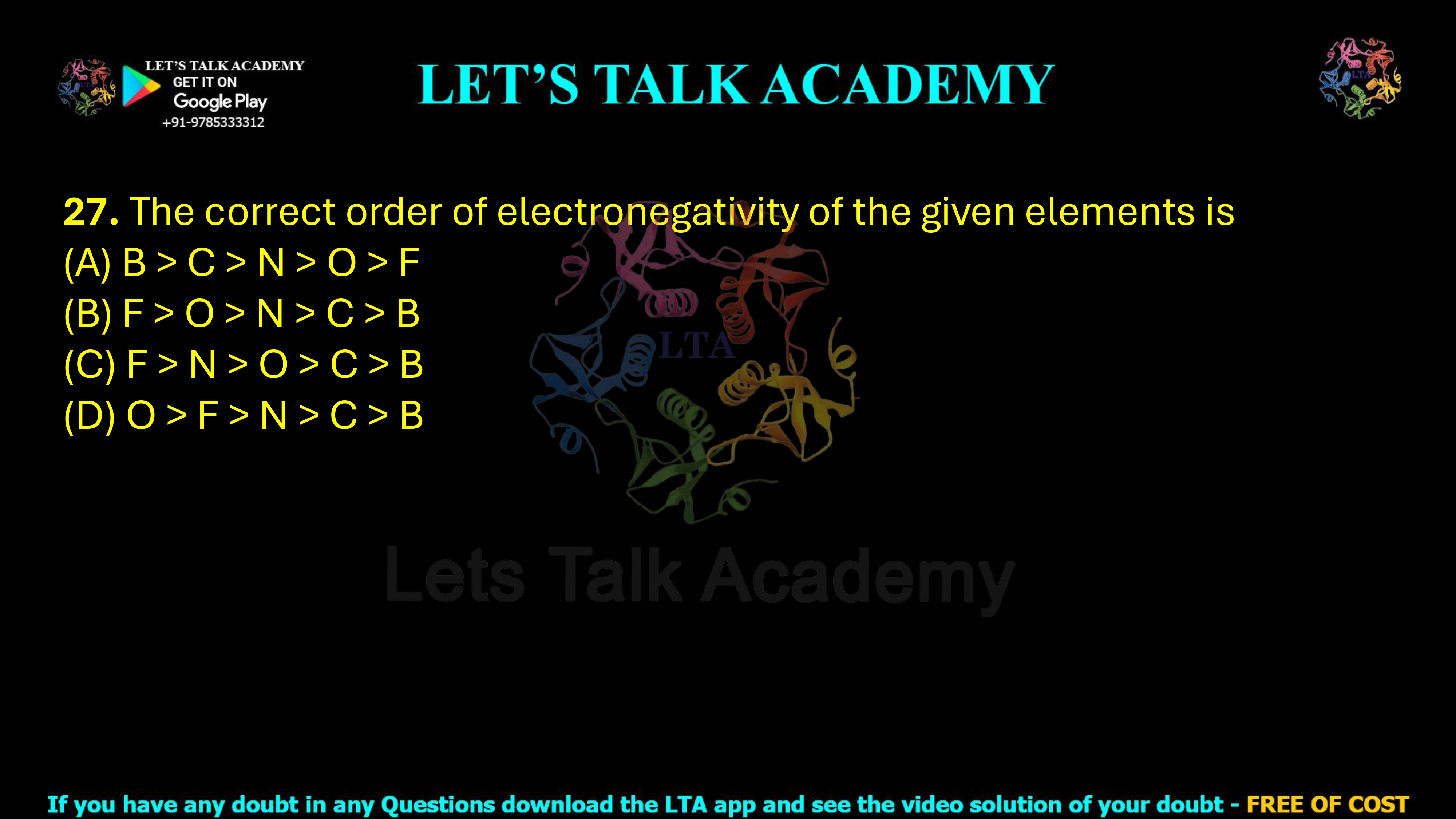
27. The correct order of electronegativity of the given elements is: (A) B > C > N > O > F (B) F > O > N > C > B (C) F > N > O > C > B (D) O > F > N > C > B

Correct Order of Electronegativity of B, C, N, O and F

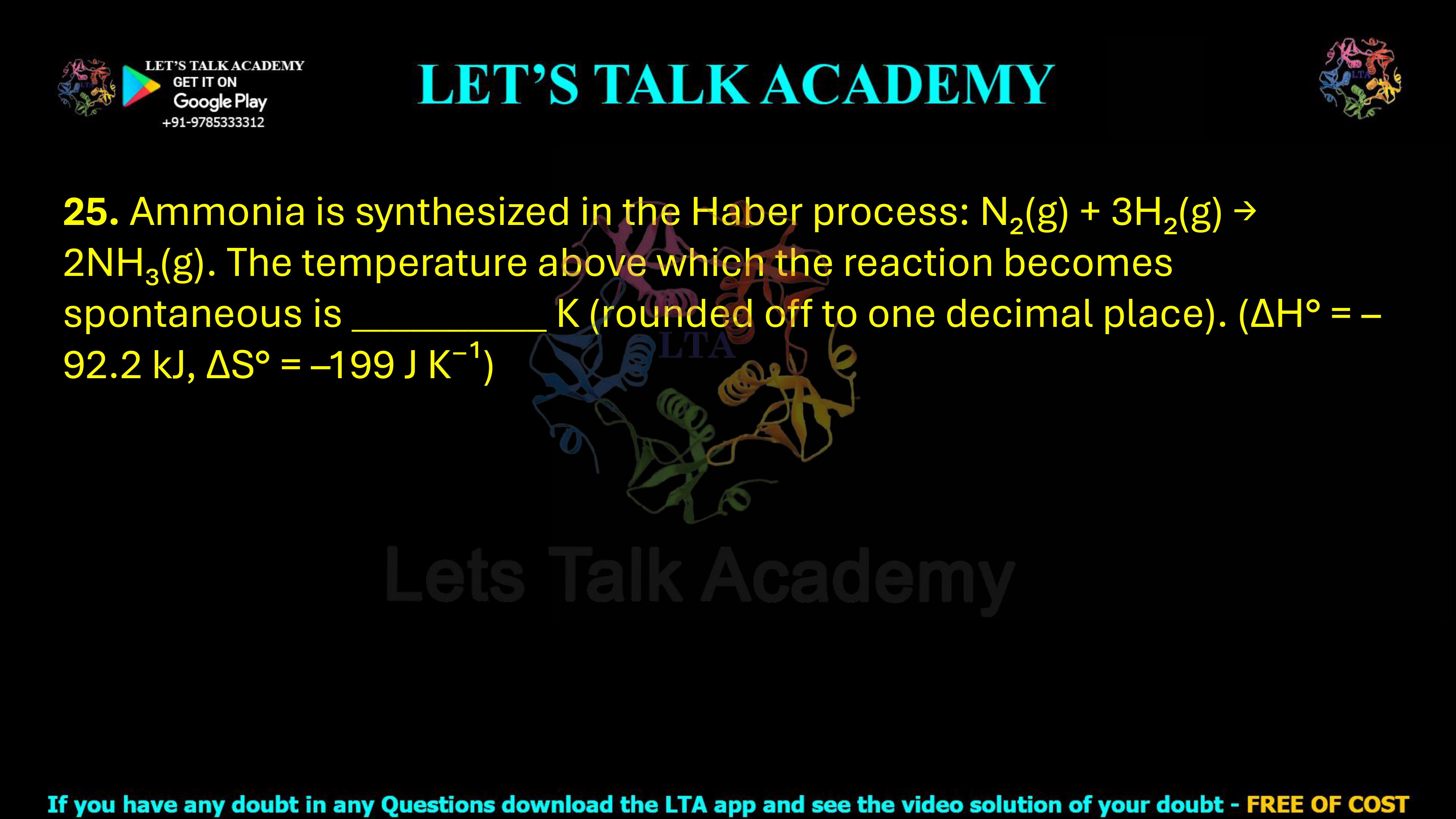
25. Ammonia is synthesized in the Haber process: N2(g) + 3H2(g) → 2NH3(g) The temperature above which the reaction becomes spontaneous is _____ K, rounded off to one decimal place. Given: ΔH° = −92.2 kJ mol−1 ΔS° = −199 J K−1 mol−1

Haber Process Spontaneity Temperature Calculation

24. The data provided in the table were obtained for the following reaction carried out at 273 K: A + B → C The experimental data are: Experiment 1: [A] = 0.2 mol L−1, [B] = 0.2 mol L−1, Initial rate = 0.3 mol L−1 s−1 Experiment 2: [A] = 0.4 mol L−1, [B] = 0.2 mol L−1, Initial rate = 0.6 mol L−1 s−1 Experiment 3: [A] = 0.4 mol L−1, [B] = 0.4 mol L−1, Initial rate = 2.4 mol L−1 s−1 The order of the reaction with respect to A is _____.

Order of Reaction with Respect to A Using Initial Rate Data

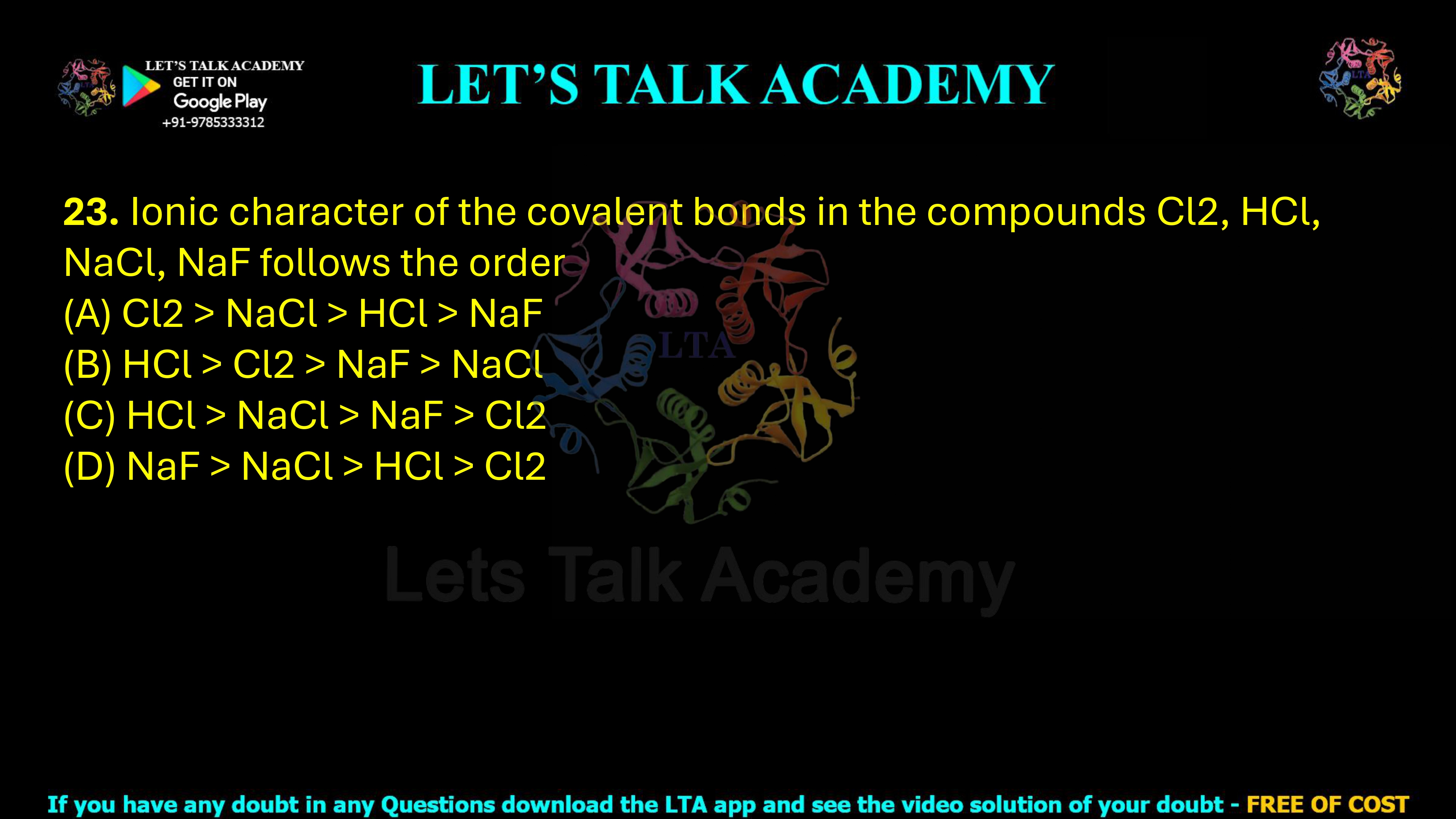
23. Ionic character of the bonds in the compounds Cl2, HCl, NaCl and NaF follows the order: (A) Cl2 > NaCl > HCl > NaF (B) HCl > Cl2 > NaF > NaCl (C) HCl > NaCl > NaF > Cl2 (D) NaF > NaCl > HCl > Cl2

Ionic Character Order of Cl₂, HCl, NaCl and NaF

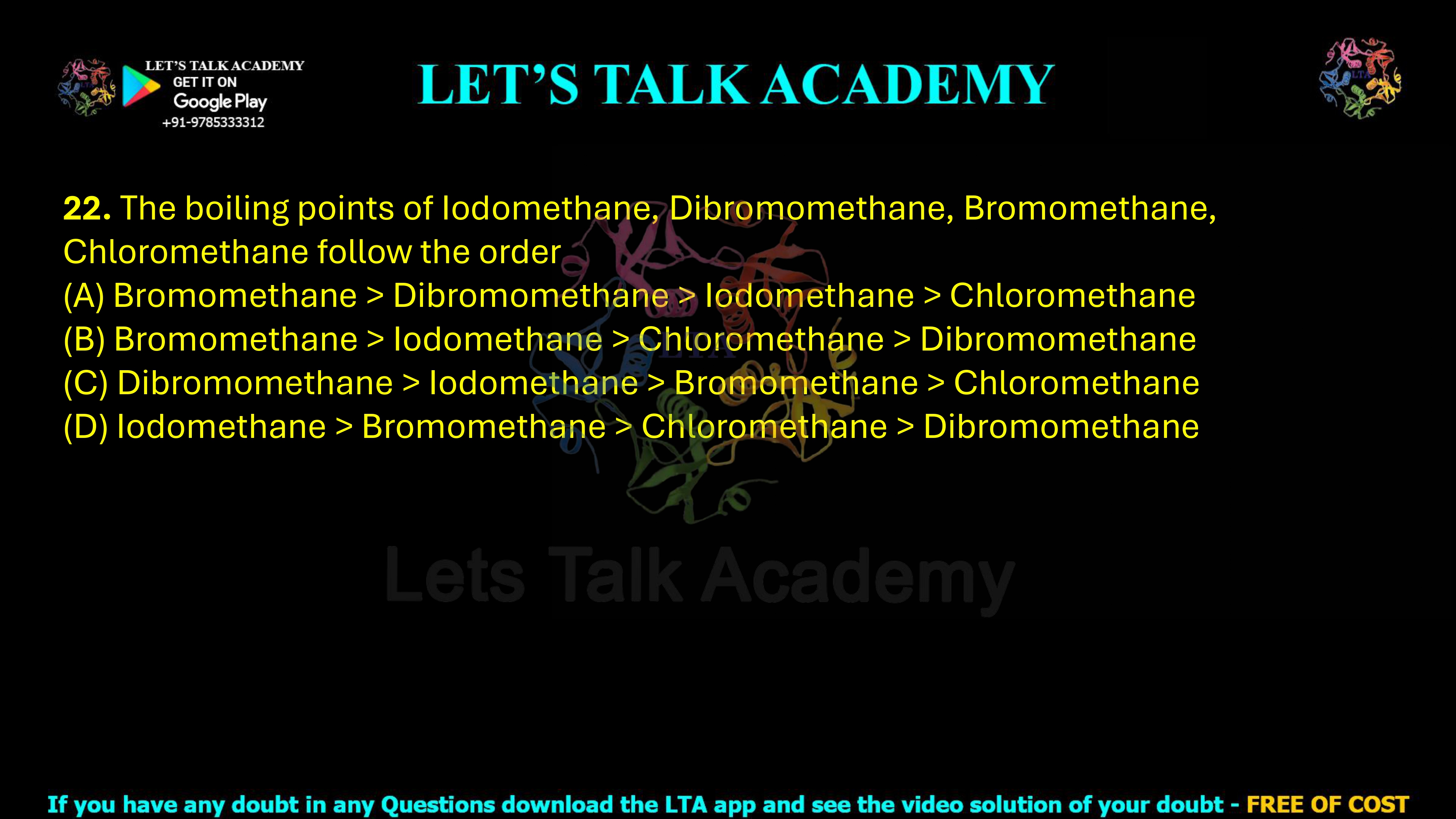
22. The boiling points of iodomethane, dibromomethane, bromomethane, and chloromethane follow which order?

Boiling Point Order of Iodomethane, Dibromomethane

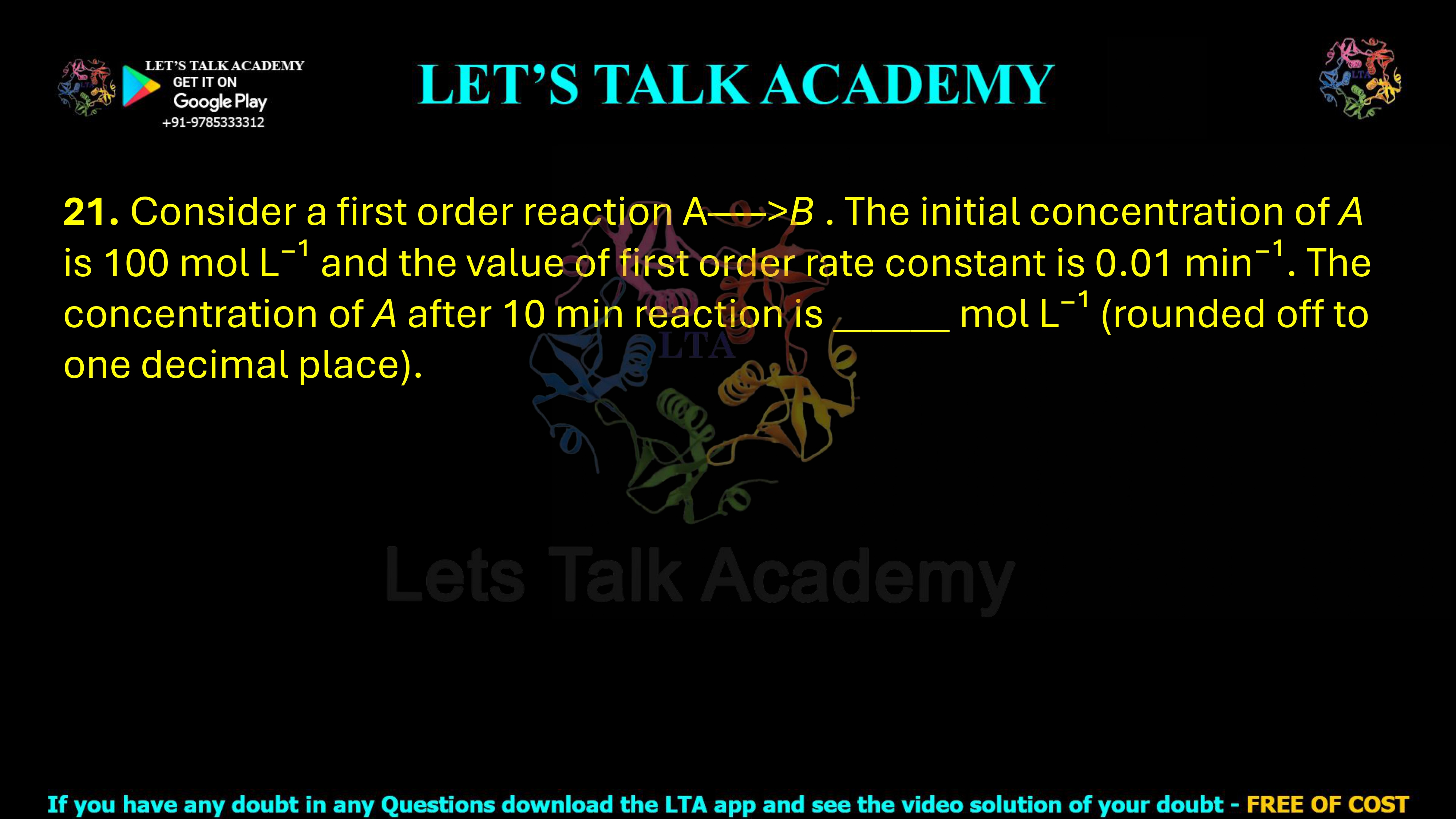
21. Consider a first order reaction A → B. The initial concentration of A is 100 mol L−1 and the value of the first order rate constant is 0.01 min−1. The concentration of A after 10 min reaction is _____ mol L−1, rounded off to one decimal place.

First Order Reaction Concentration After 10 Minutes

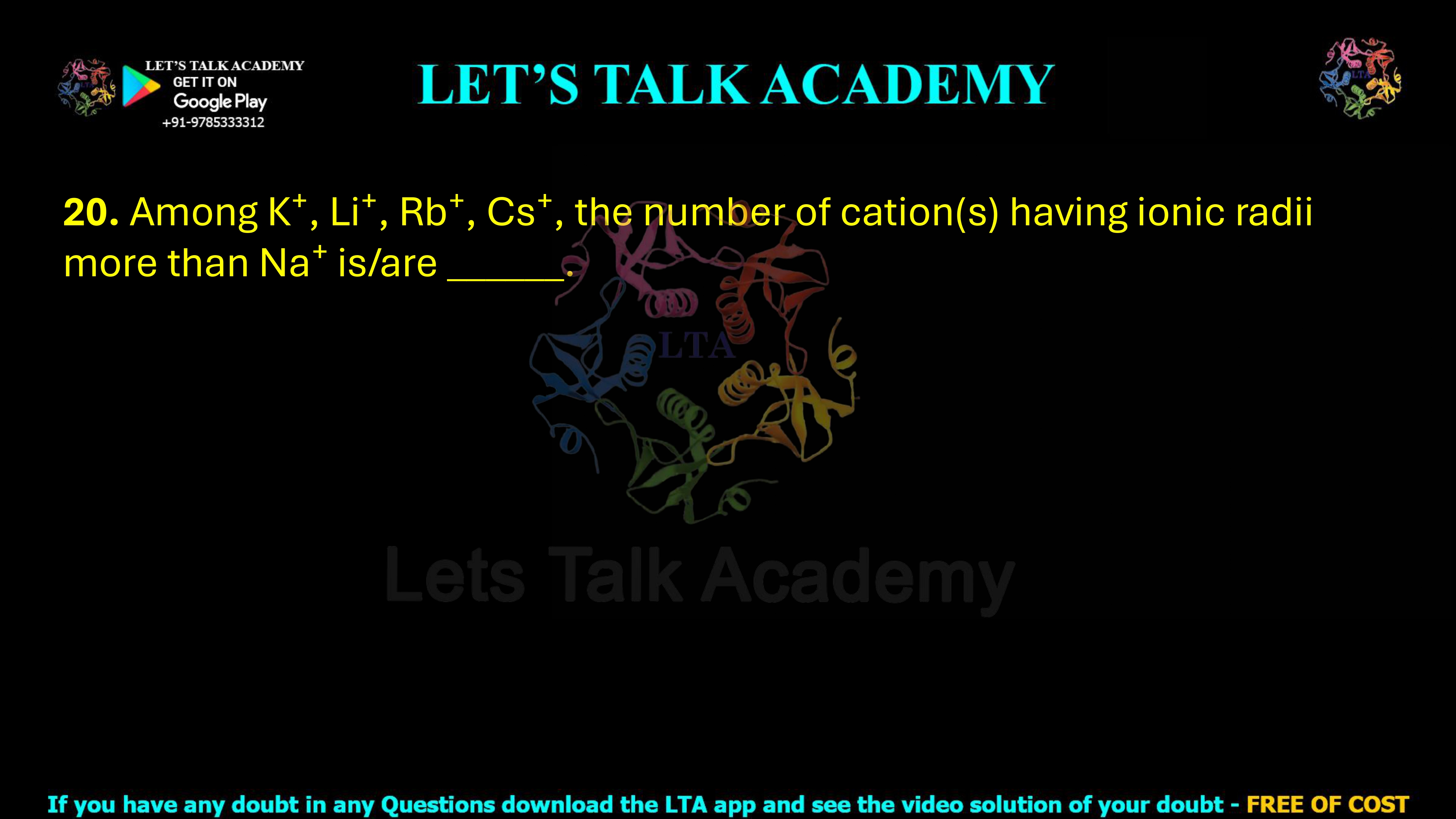
20. Among K+, Li+, Rb+, and Cs+, the number of cation(s) having ionic radii more than Na+ is _____.

Number of Cations Having Ionic Radii Greater Than Na+

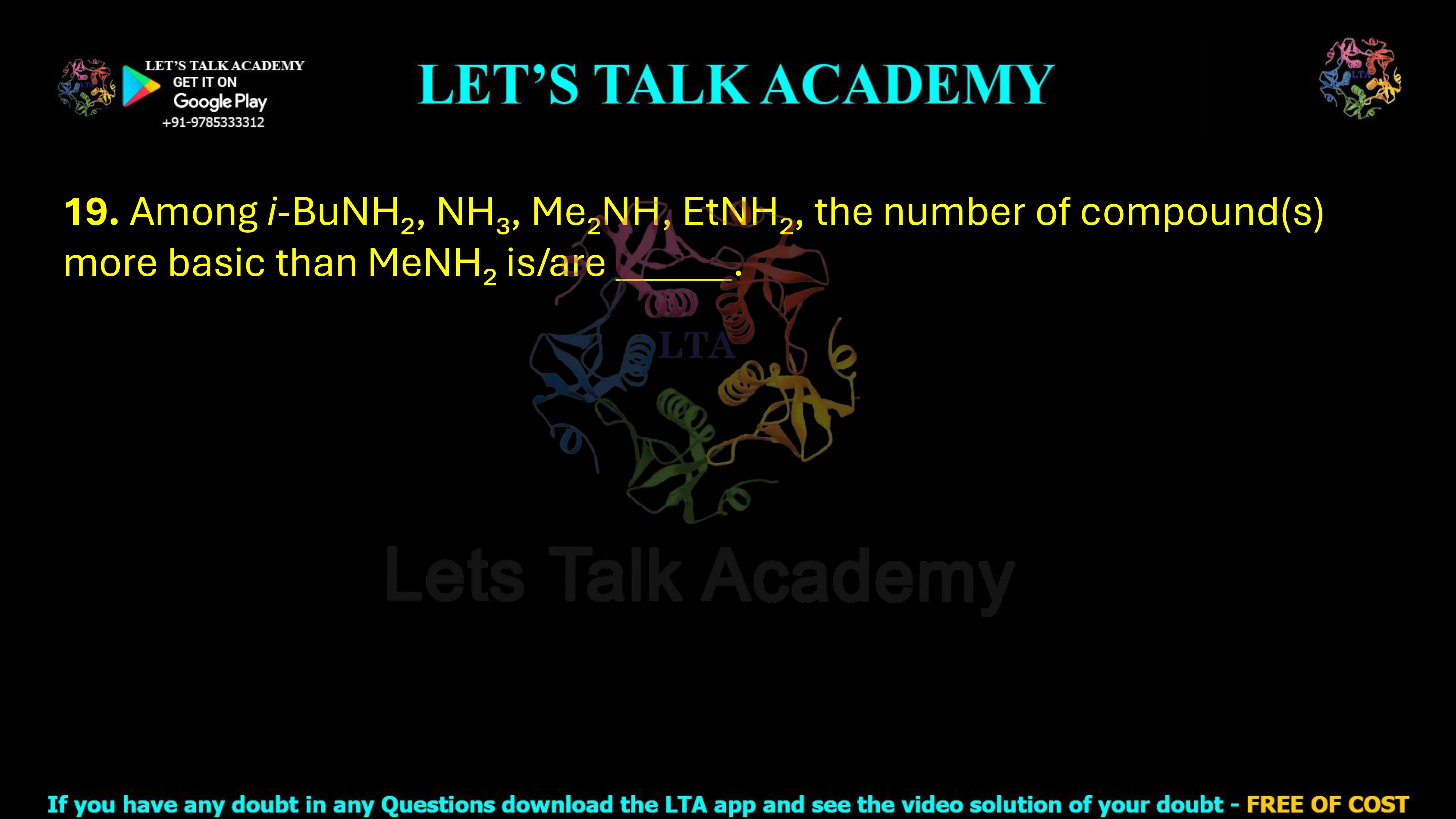
19. Among i-BuNH2, NH3, Me2NH and EtNH2, the number of compound(s) more basic than MeNH2 is/are _____.

Number of Compounds More Basic Than Methylamine

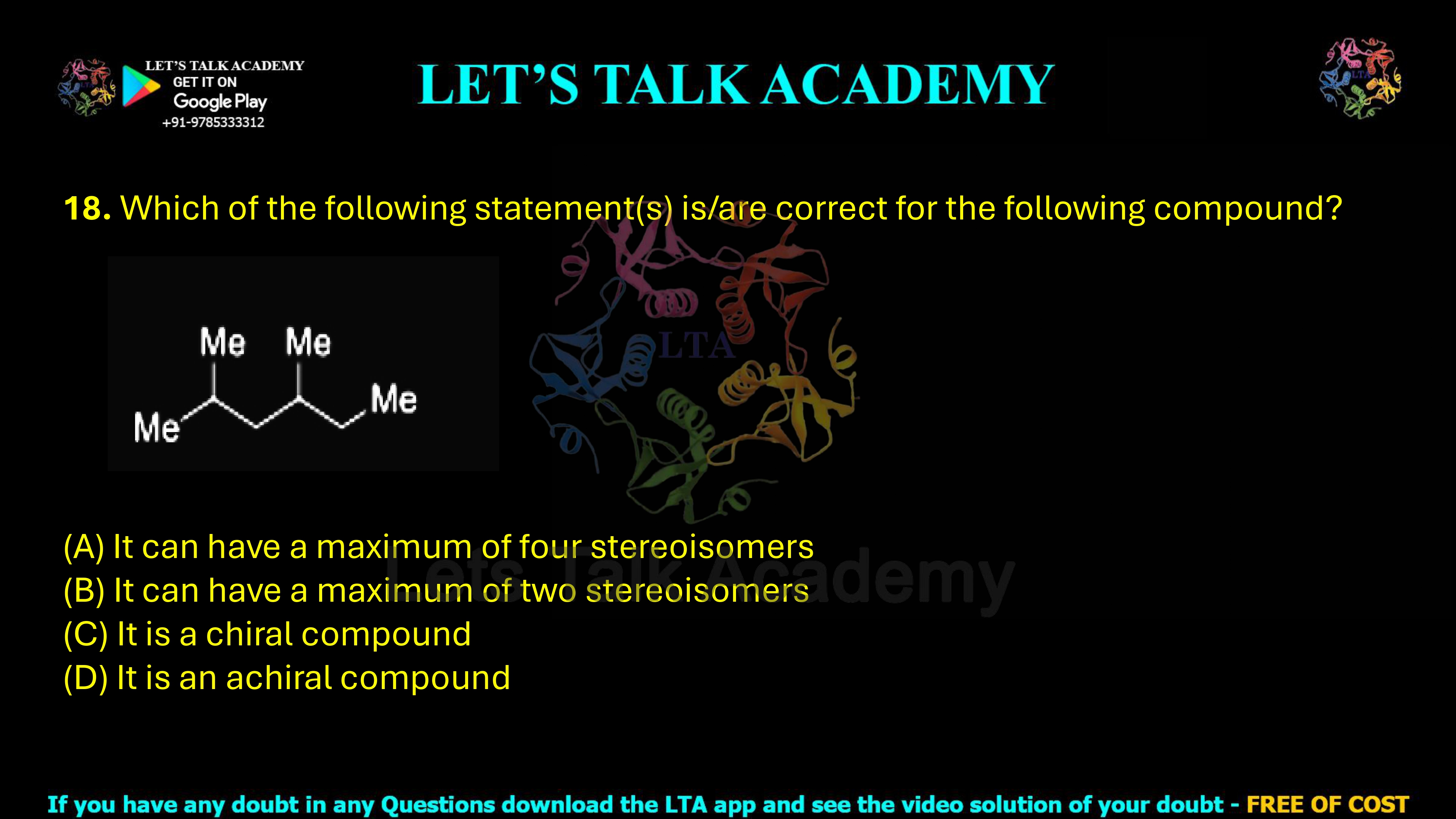
18. Which of the following statement(s) is/are correct for the following compound? (A) It can have a maximum of four stereoisomers. (B) It can have a maximum of two stereoisomers. (C) It is a chiral compound. (D) It is an achiral compound.

Maximum Number of Stereoisomers of 2,4-Dimethylhexane

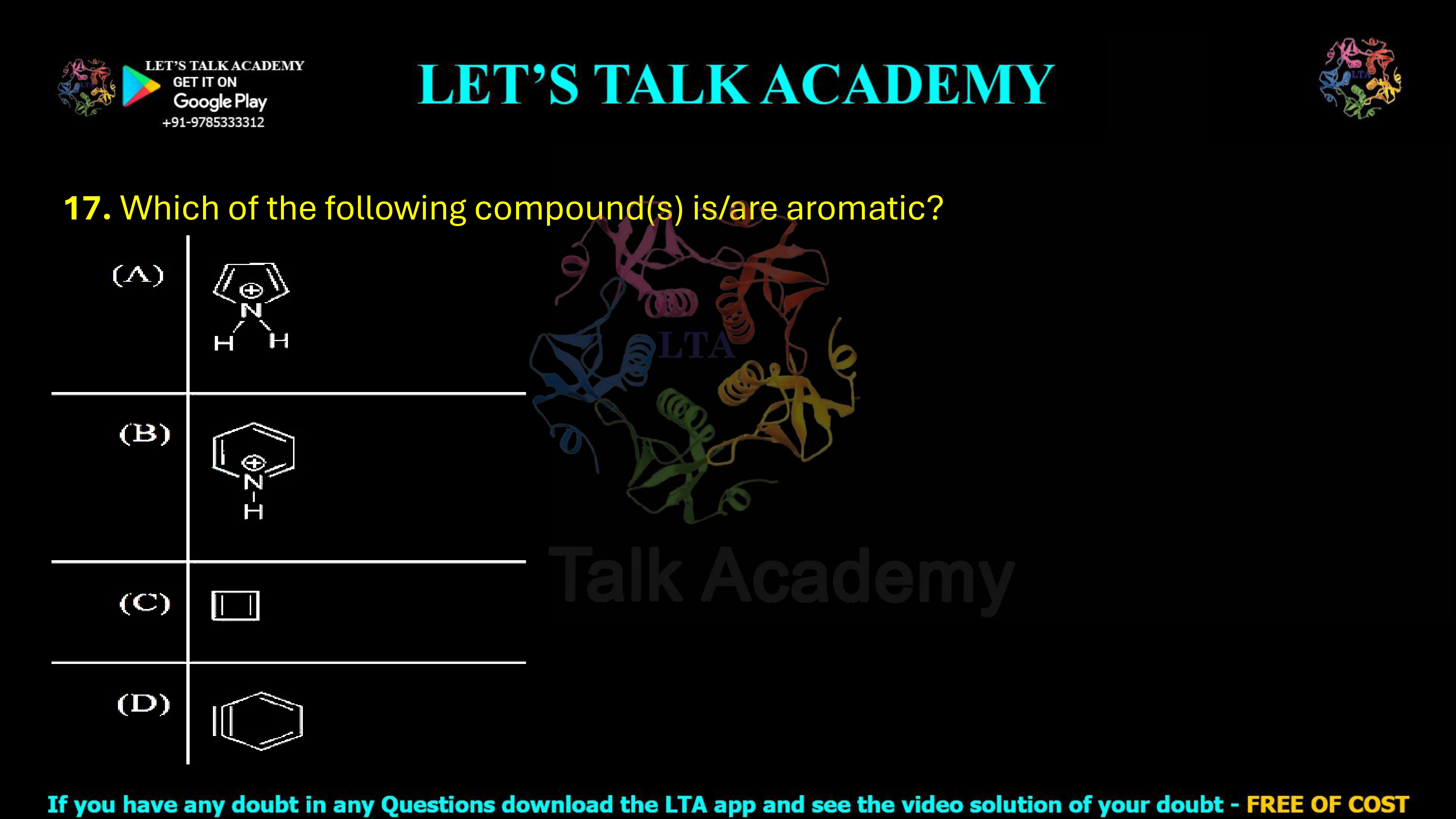
17. Which of the following compound(s) is/are aromatic?

Which of the Following Compounds Are Aromatic?

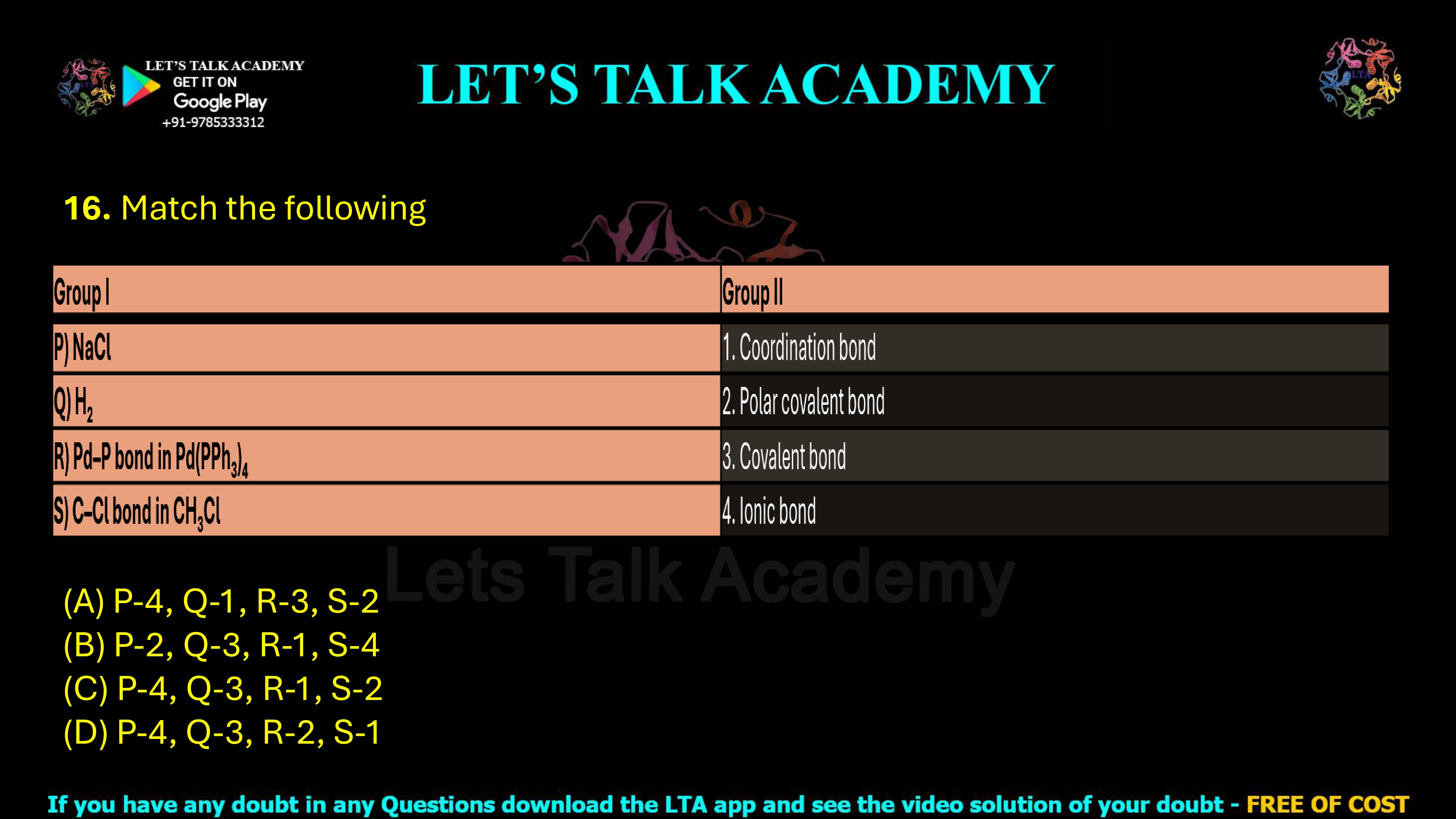
16. Match the following compounds and bonds in Group I with the correct type of chemical bond given in Group II. Group I: P) NaCl Q) H2 R) Pd–P bond in Pd(PPh3)4 S) C–Cl bond in CH3Cl Group II: 1. Coordination bond 2. Polar covalent bond 3. Covalent bond 4. Ionic bond (A) P–4, Q–1, R–3, S–2 (B) P–2, Q–3, R–1, S–4 (C) P–4, Q–3, R–1, S–2 (D) P–4, Q–3, R–2, S–1

Match the Following Chemical Bonds

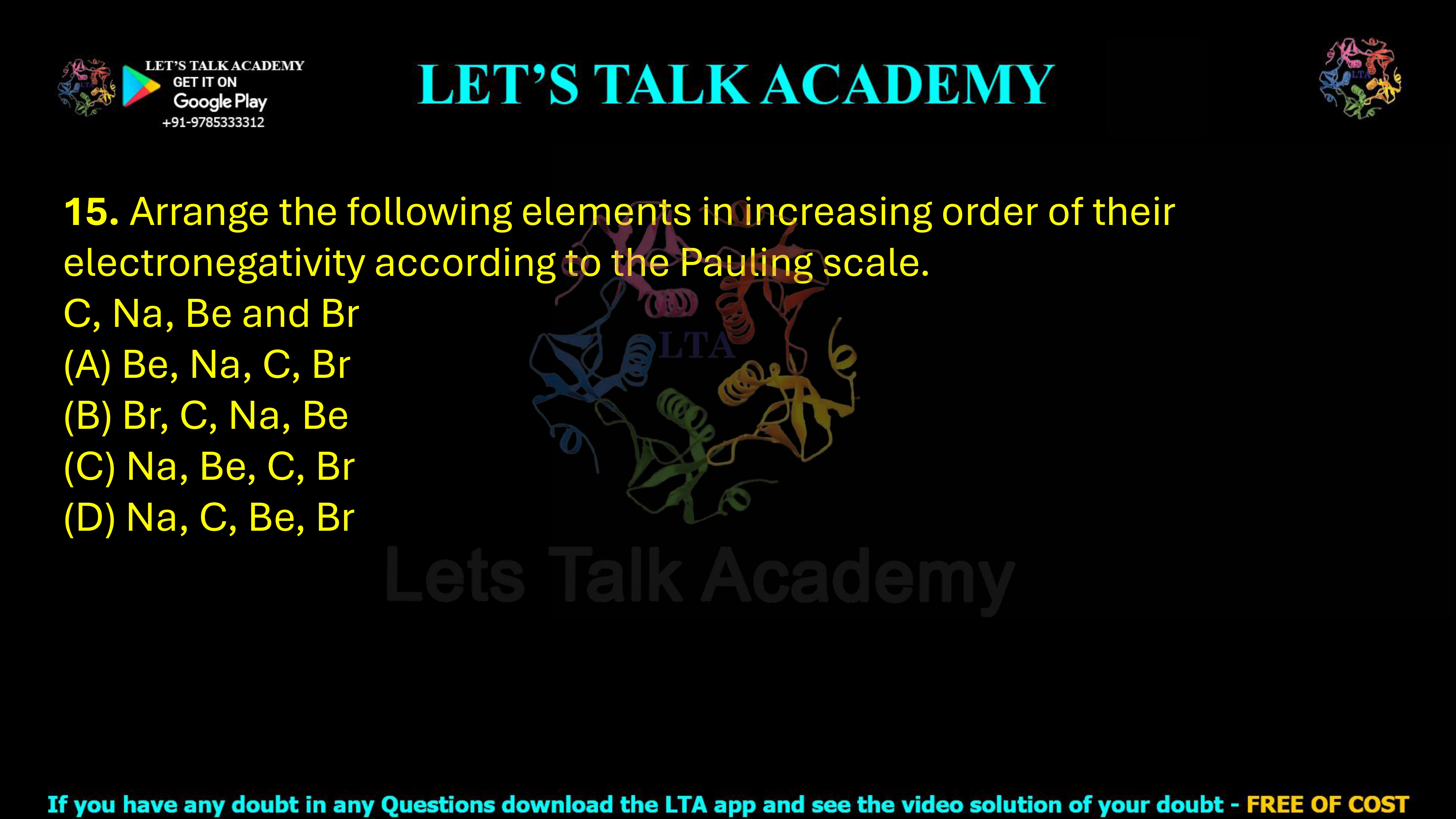
15. Arrange the following elements in increasing order of their electronegativity according to the Pauling scale: C, Na, Be and Br.

Increasing Order of Electronegativity According to Pauling Scale

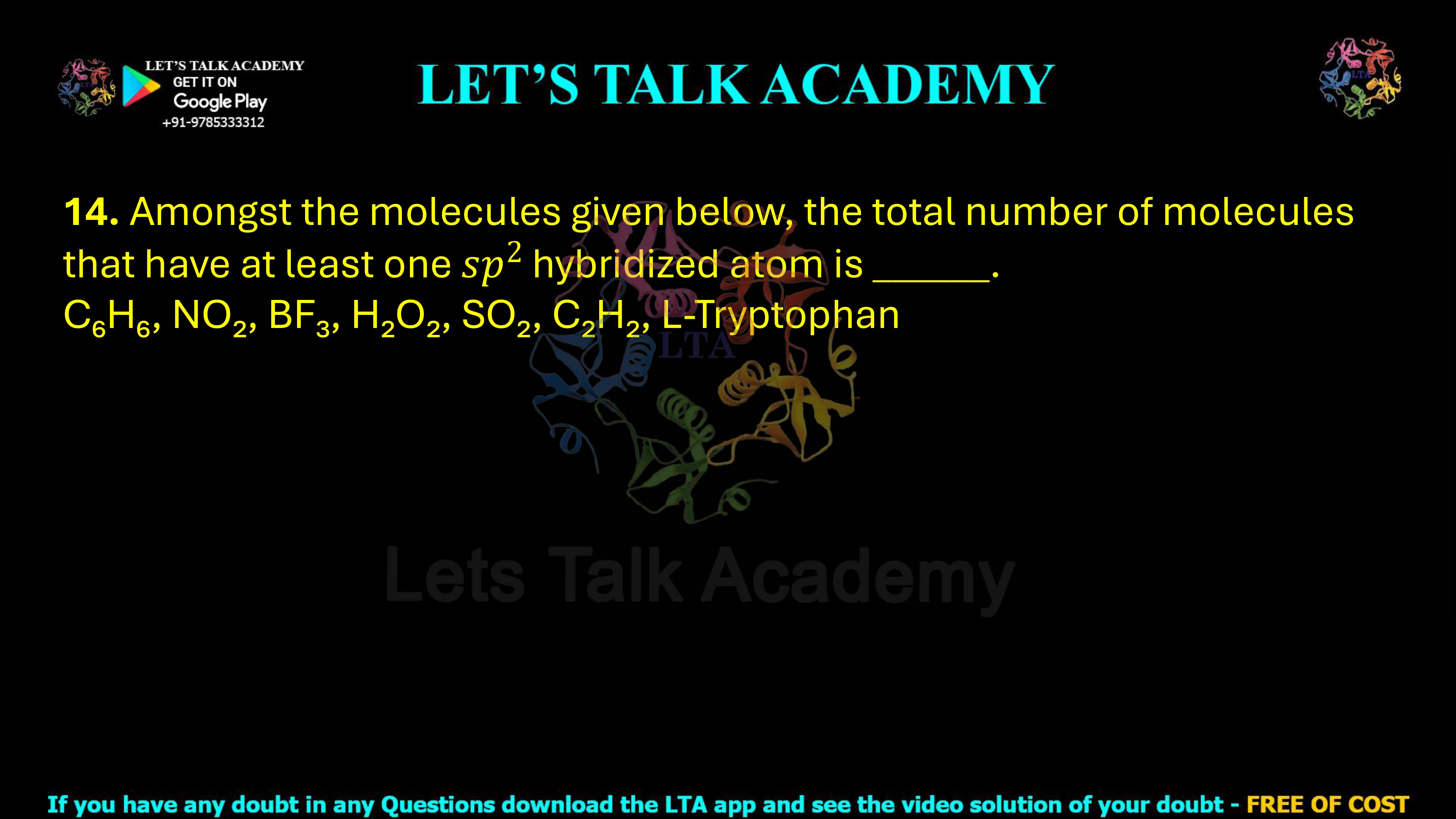
14. Amongst the molecules given below, the total number of molecules that have at least one sp2 hybridized atom is _____.

Total Number of Molecules Having at Least One sp2

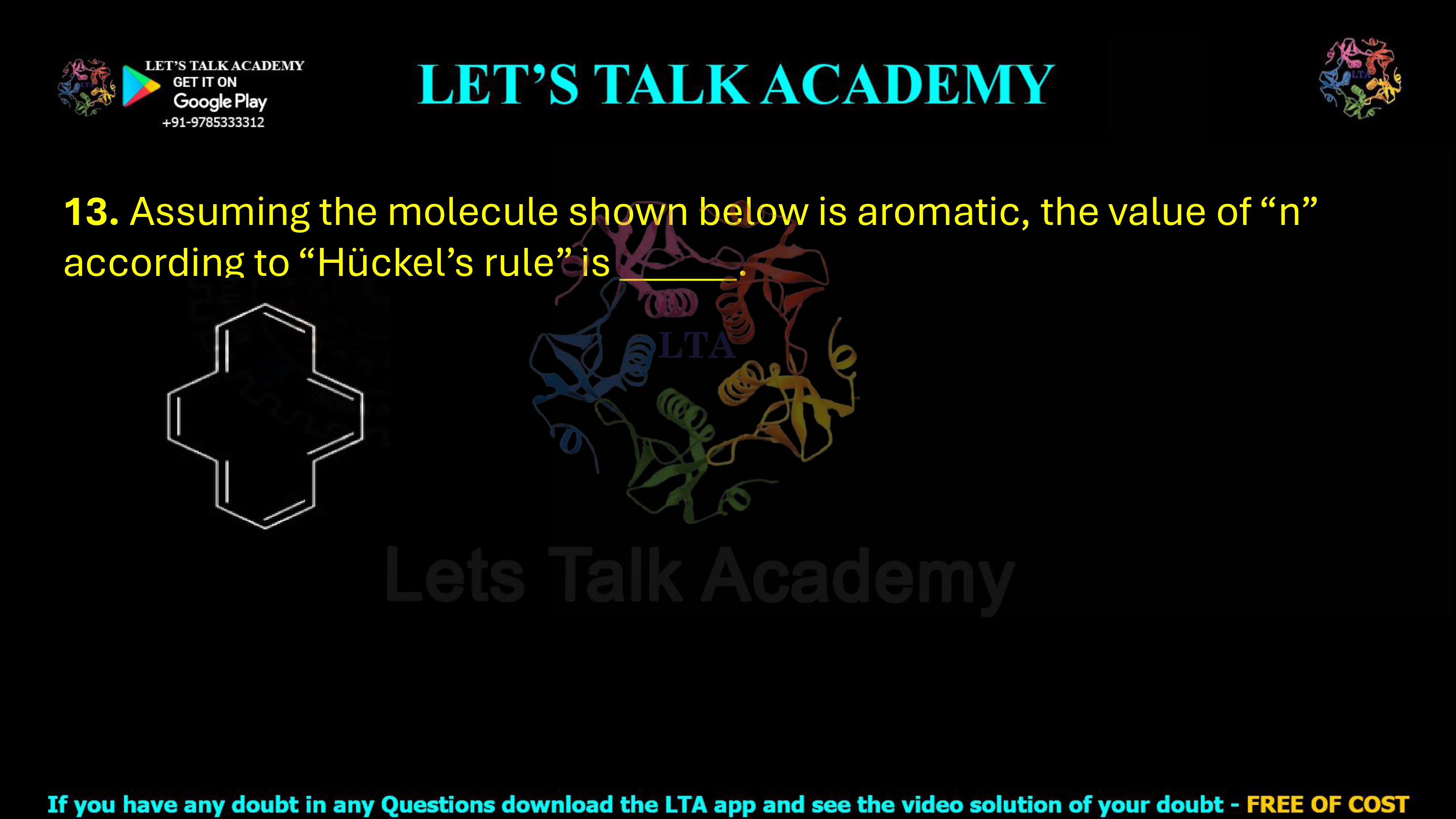
13. Assuming the molecule shown below is aromatic, the value of “n” according to “Hückel’s rule” is _____.

Value of n According to Hückel’s Rule

12. Match the following bacterial structures with their correct functions. Bacterial Structures: (i) Cell wall (ii) Glycocalyx Functions: (a) Virulence factor (b) Selective permeability (c) Attachment to surfaces (d) Protection from osmotic lysis

Match Bacterial Cell Wall and Glycocalyx with Their Functions

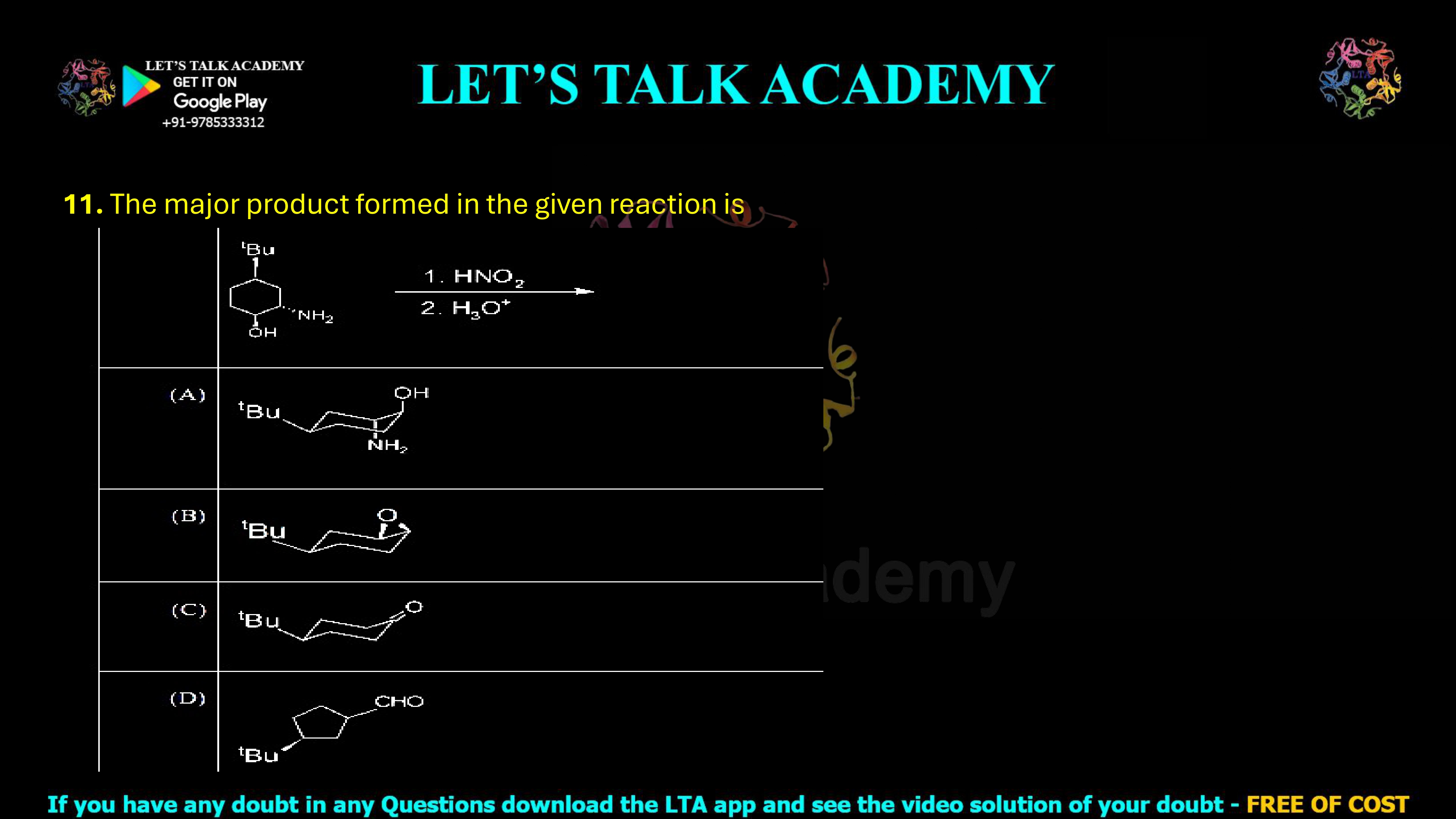
11. The given cyclic amino alcohol is treated first with HNO2 and then with H3O+. Which structure represents the major product formed in the reaction?

Major Product of Aminino Alcohol Reaction with HNO2 and H3O+

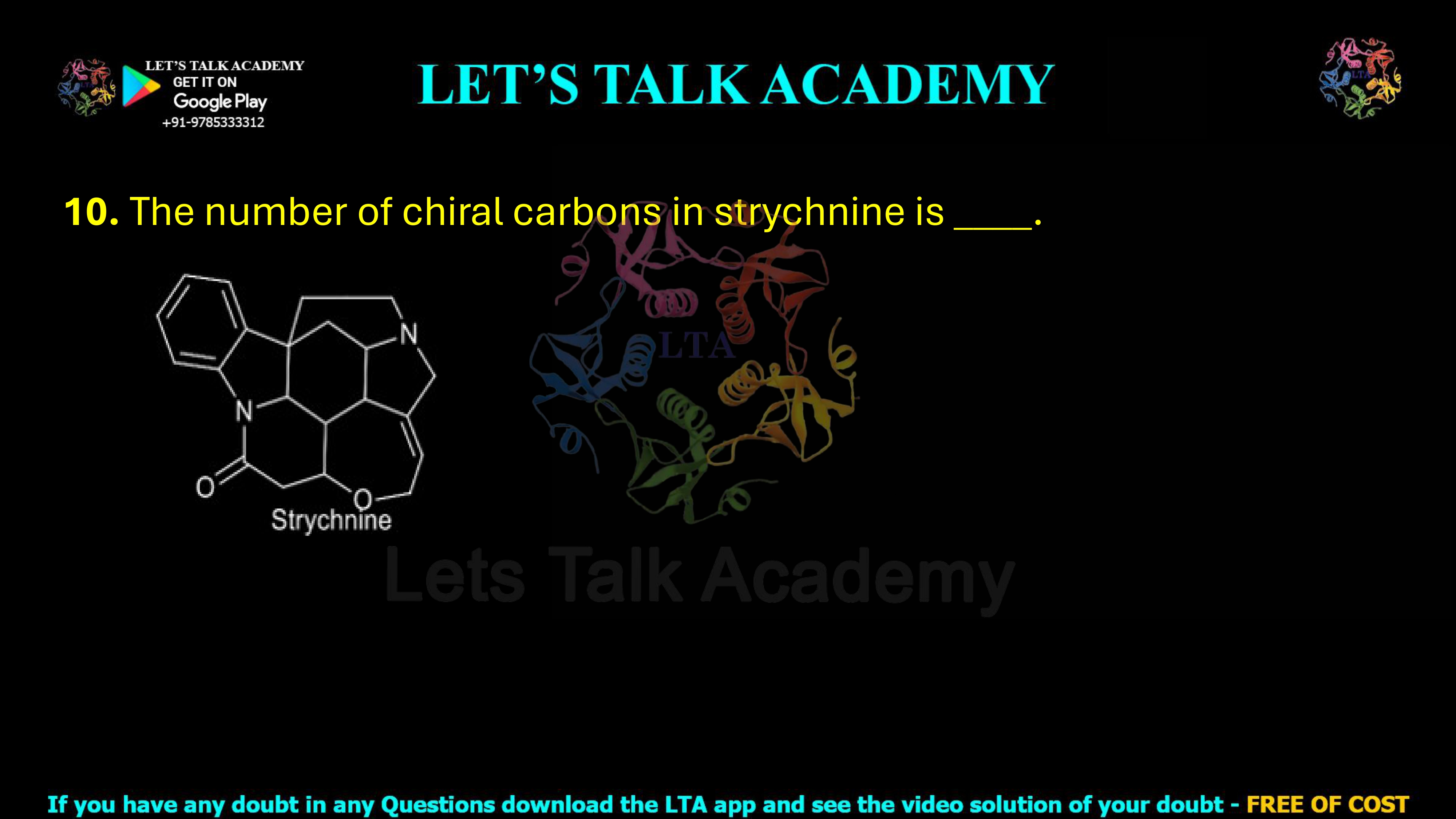
10. The number of chiral carbons in strychnine is _____.

Number of Chiral Carbons in Strychnine

9. The molar concentration of water in pure water is _____ M (rounded off to 1 decimal).

Molar Concentration of Water in Pure Water

8. The amount of hydrogen required to reduce 30 g of 2-butene is _____ g (rounded off to 2 decimals).

Amount of Hydrogen Required to Reduce 30 g of 2-Butene

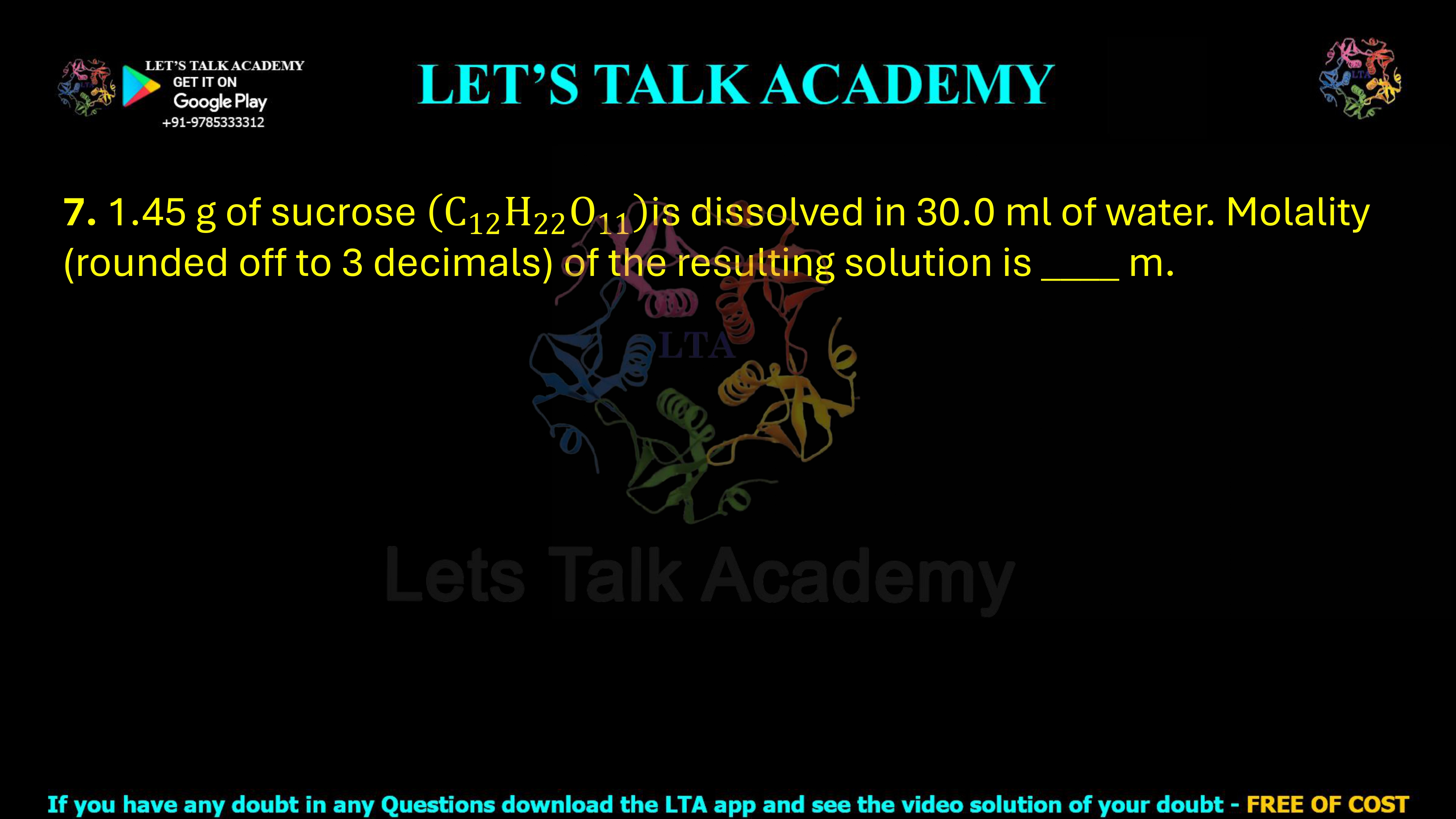
7. 1.45 g of sucrose (C12H22O11) is dissolved in 30.0 mL of water. Molality, rounded off to 3 decimals, of the resulting solution is _____ m.

Molality of Sucrose Solution

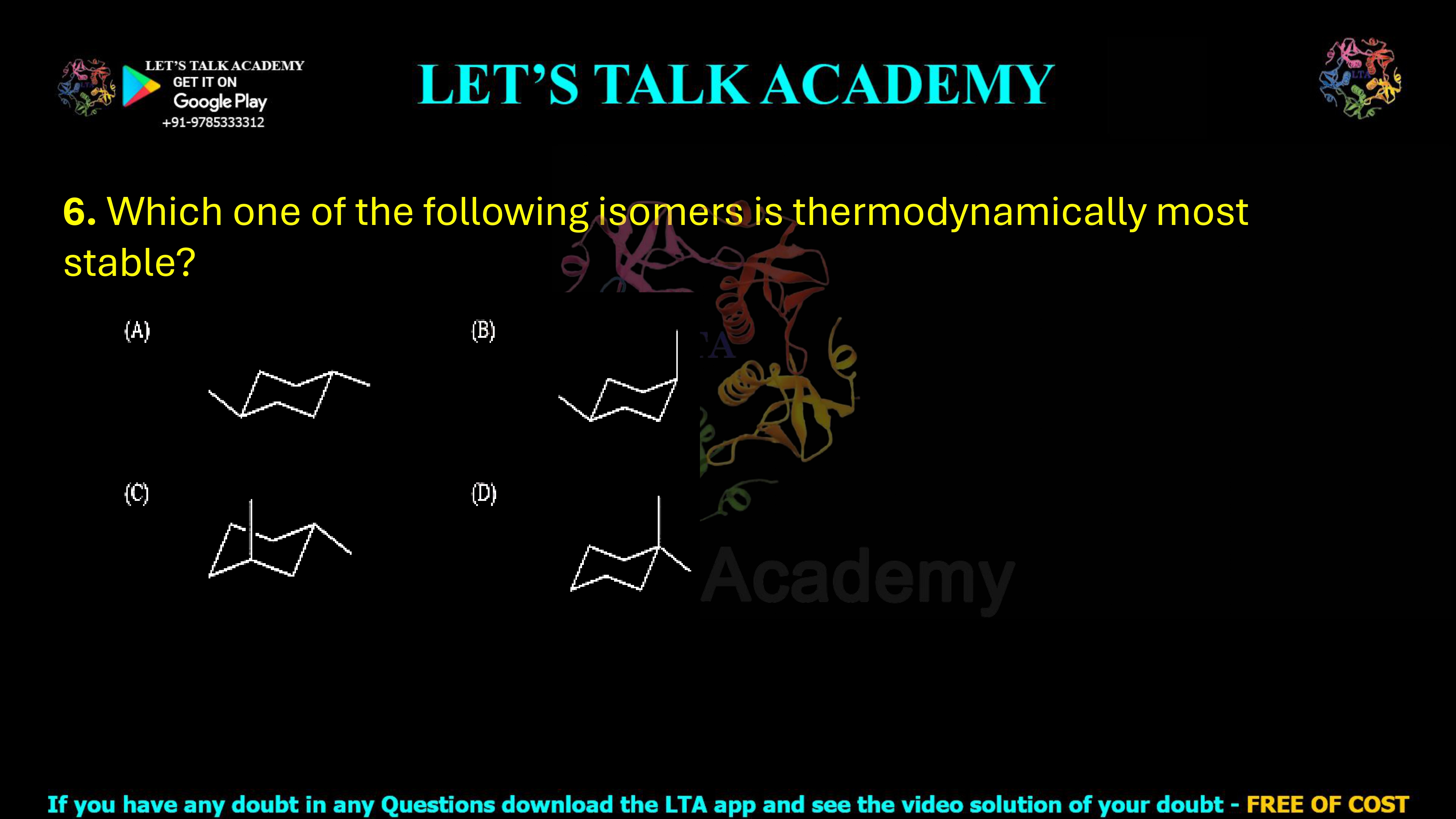
6. Which one of the following isomers is thermodynamically most stable?

Which Isomer Is Thermodynamically Most Stable?

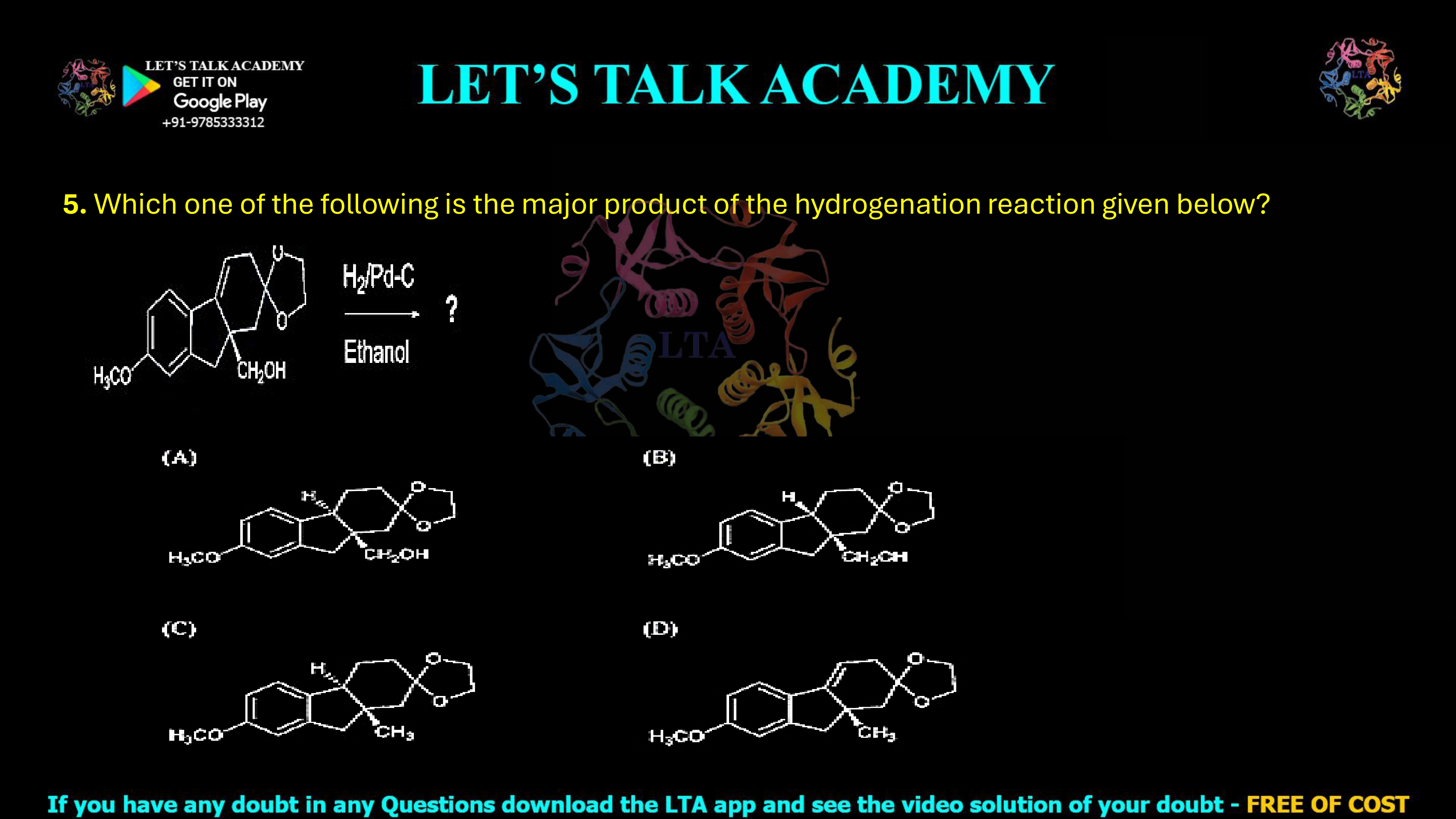
5. Which one of the following is the major product of the hydrogenation reaction given below?

Major Product of H₂/Pd-C Hydrogenation Reaction

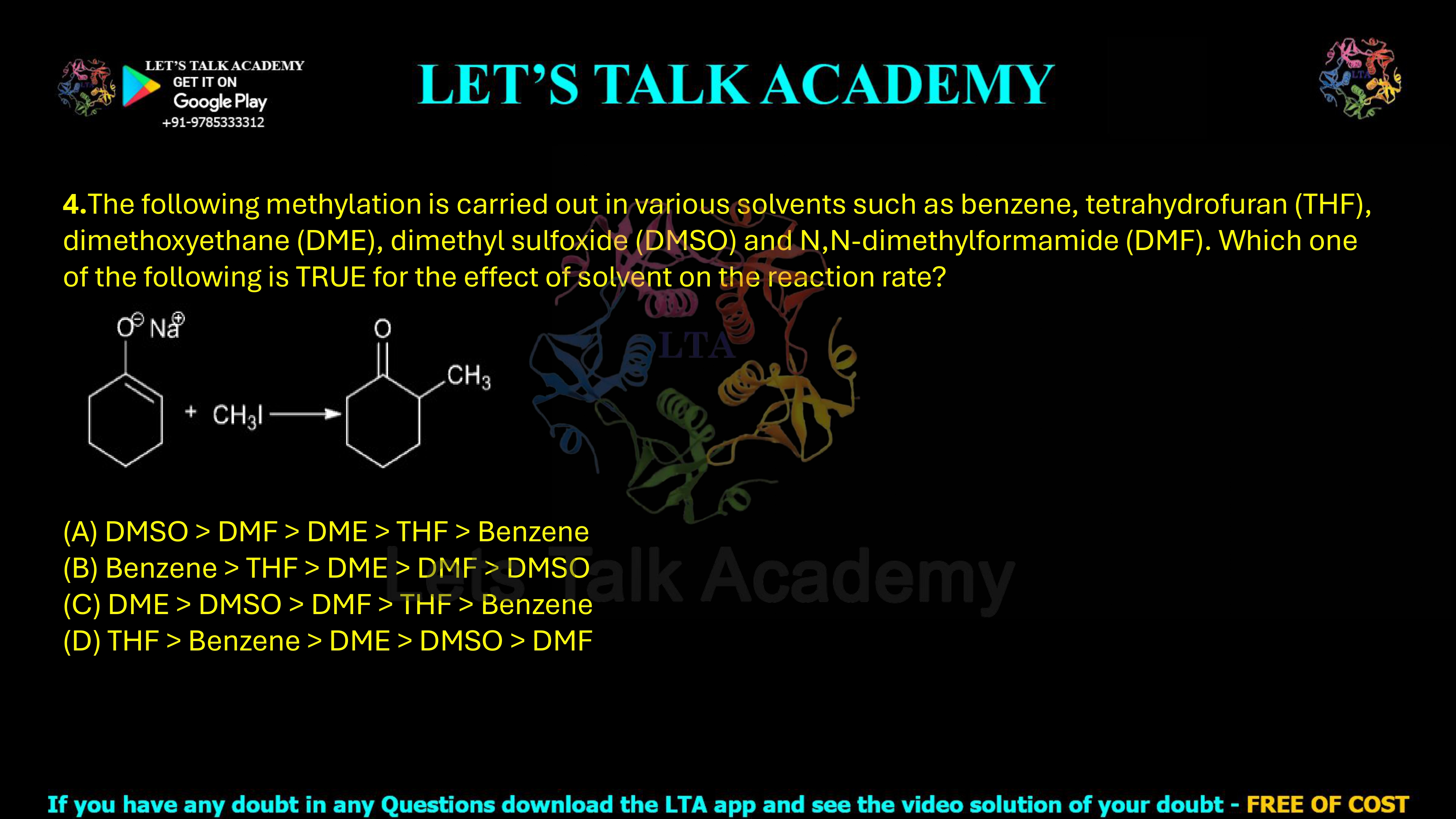
4. The following methylation is carried out in various solvents such as benzene, tetrahydrofuran (THF), dimethoxyethane (DME), dimethyl sulfoxide (DMSO), and N,N-dimethylformamide (DMF). Which one of the following is TRUE for the effect of solvent on the reaction rate? (A) DMSO > DMF > DME > THF > Benzene (B) Benzene > THF > DME > DMF > DMSO (C) DME > DMSO > DMF > THF > Benzene (D) THF > Benzene > DME > DMSO > DMF

Effect of Solvent on Enolate Methylation Reaction Rate

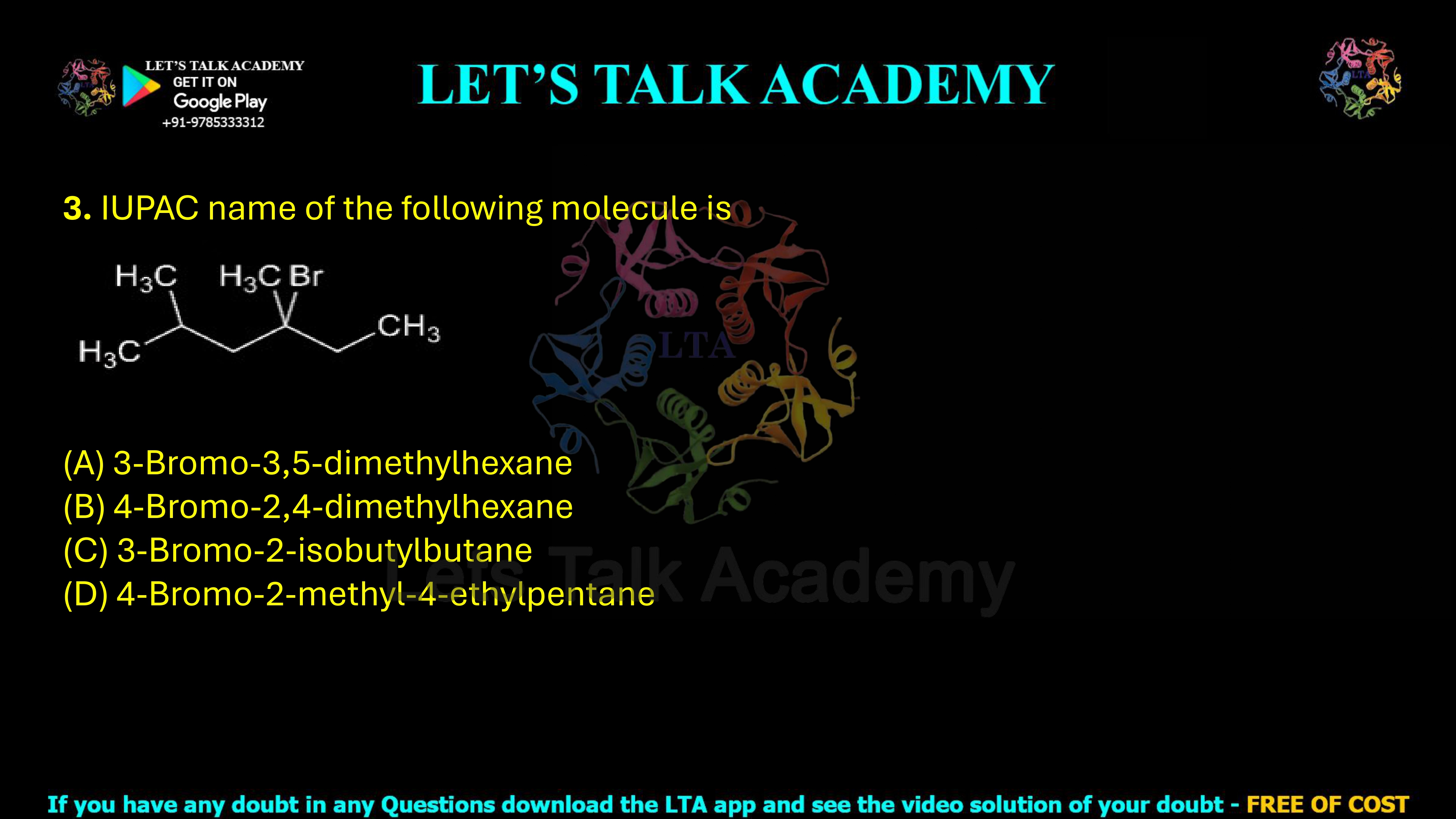
3. What is the correct IUPAC name of the given organic molecule? (A) 3-Bromo-3,5-dimethylhexane (B) 4-Bromo-2,4-dimethylhexane (C) 3-Bromo-2-isobutylbutane (D) 4-Bromo-2-methyl-4-ethylpentane

IUPAC Name of the Given Branched Haloalkane

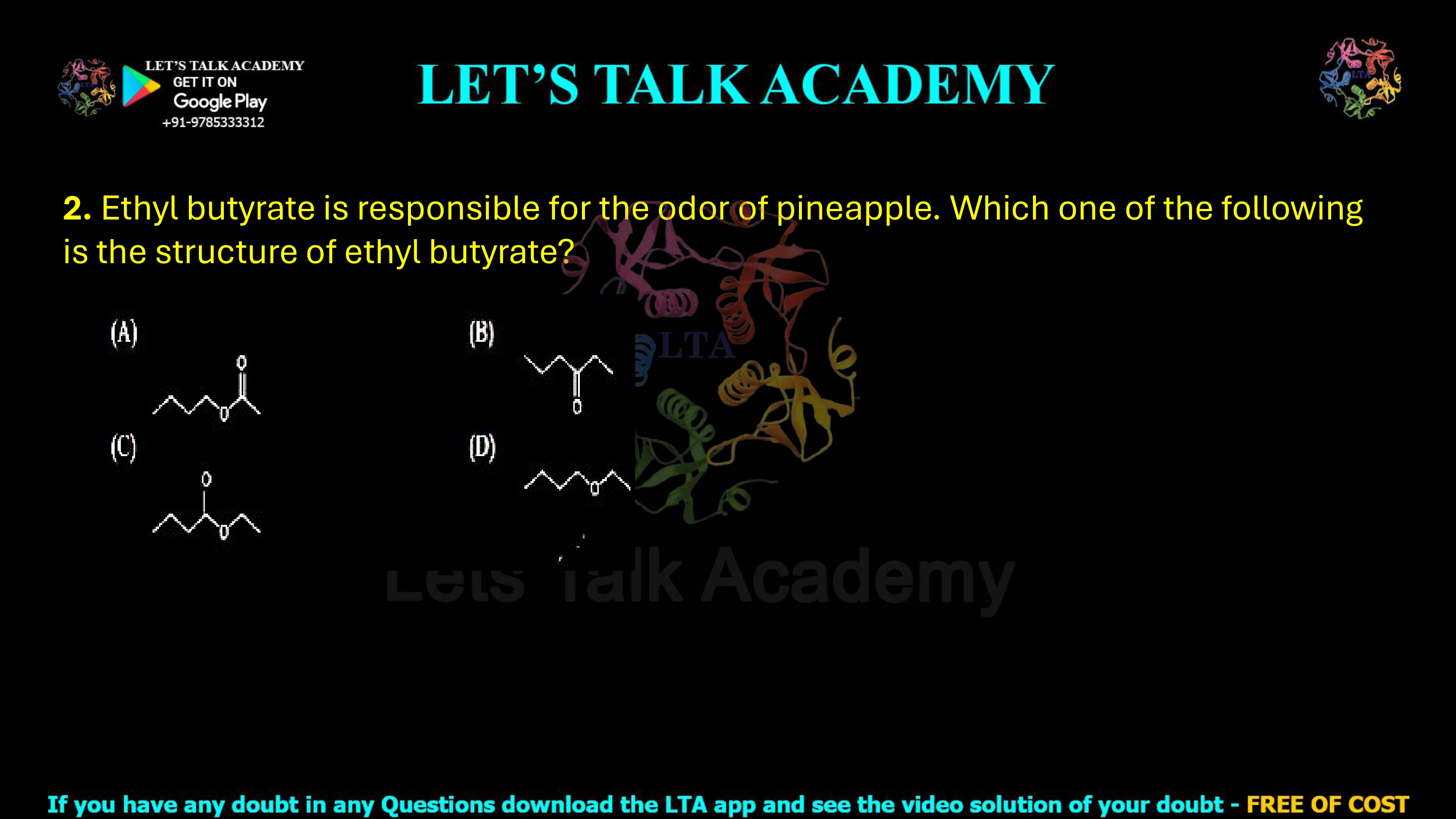
2. Ethyl butyrate is responsible for the odor of pineapple. Which one of the following is the structure of ethyl butyrate?

Ethyl Butyrate Structure Explained

1. An acid contains carbon (C), hydrogen (H), and oxygen (O) atoms. On combustion analysis, 0.454 g of the acid gives 0.418 g of H2O and 1.023 g of CO2. What is the empirical formula of the acid? (A) C4H5O2 (B) C3H6O (C) CH2O (D) C5H8O

Combustion Analysis Empirical Formula Problem

Latest Courses