83. The following statements are made regarding a plant cell: A. Polysaccharides of various sugars with methyl esters of galacturonic acid are generically referred as chitin. B. Suberin and cutin are polymers and are mixtures of polyesters of hydroxy fatty acids and glycerol C. Cellulose is a polymer of glucose and fructose which can be stained by light green and haematoxylin D. Plasmodesmata maintain continuity between the cytoplasm of adjacent cells and allow large molecules to pass between them without crossing membrane. Wjich one of the following options represents a combination of correct statements? (1) A and C (2) B and C (3) B and D (4) A and B

Plant Cell Wall Components and Functions

82. Sucrose-phosphate synthase (SPS) and sucrose-phosphate phosphatase (SPP) are two key enzymes involved in the biosynthesis of sucrose. Following are certain statements regarding these two enzymes: A. Fructose-6-phosphate is one of the substrates of SPS enzyme. B. Fructose-6-phosphate and UDP-glucose are the substrates of SPP enzyme. C. Sucrose is the final product of SPP enzyme. D. UDP is one of the products of SPS enzyme while Pi is one of the products of SPP enzyme. Which one of the following options represents the combination of all correct statements? (1) A, B and C (2) A, B and D (3) A, C and D (4) B, C and D

Substrates and Products of Sucrose-Phosphate Synthase and Sucrose-Phosphate Phosphatase Enzymes

81. Which one of the following correctly states the action of sucrose phosphate synthase enzyme? (1) UDP-glucose and Fructose-6-phosphate are used as substrates. (2) UDP-glucose and Fructose-6-phosphate are the products (3) Sucrose is formed as product (4)Sucrose-6-phosphate and UDP-glucose are the products

Sucrose Phosphate Synthase enzyme

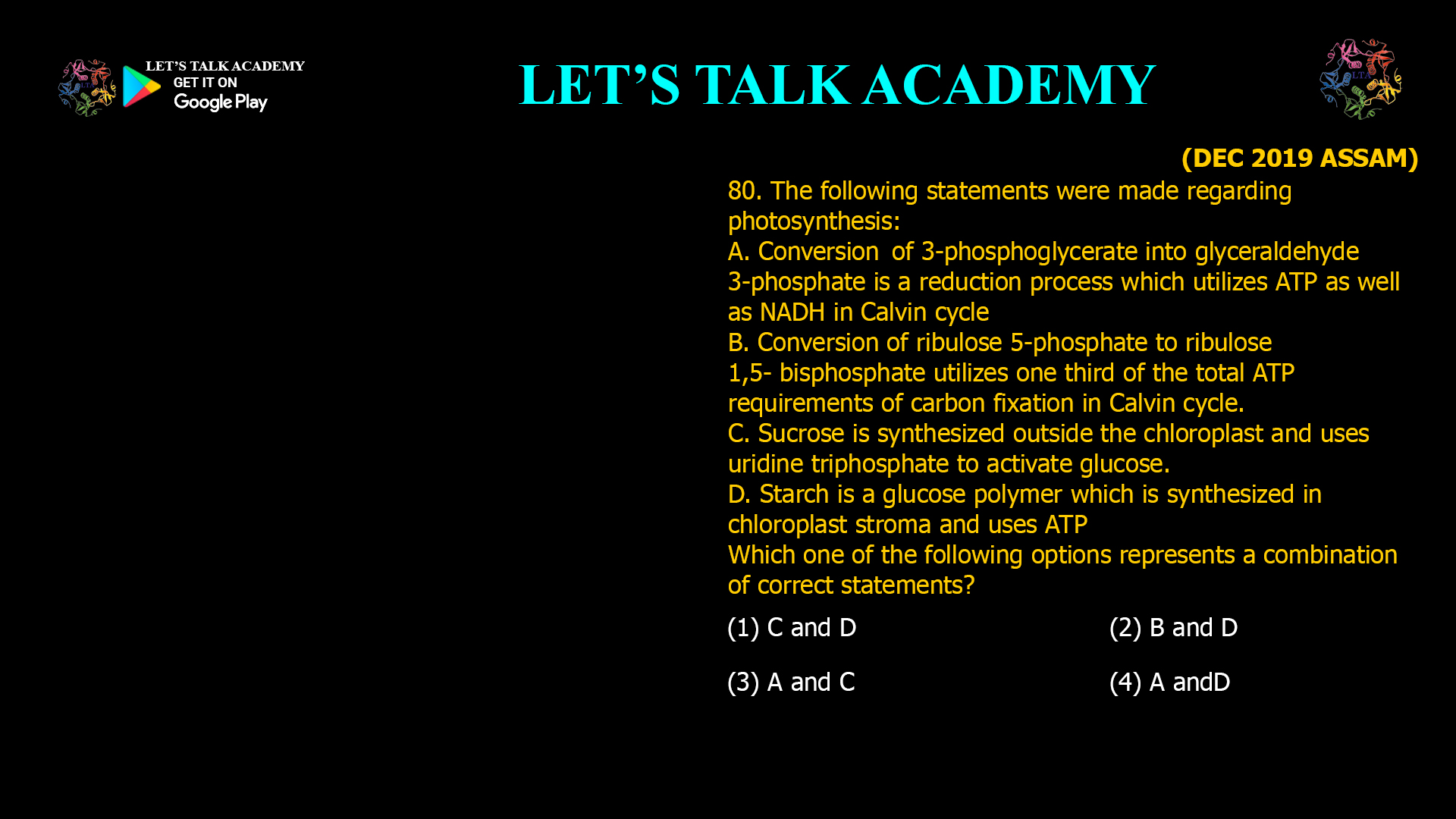
80. The following statements were made regarding photosynthesis: A. Conversion of 3-phosphoglycerate into glyceraldehyde-3-phosphate is a reduction process which utilizes ATP as well as NADH in Calvin cycle B. Conversion of ribulose 5-phosphate to ribulose 1,5- bisphosphate utilizes one third of the total ATP requirements of carbon fixation in Calvin cycle. C. Sucrose is synthesized outside the chloroplast and uses uridine triphosphate to activate glucose. D. Starch is a glucose polymer which is synthesized in chloroplast stroma and uses ATP Which one of the following options represents a combination of correct statements? (1) C and D (2) B and D (3) A and C (4) A and D

Energy and Site Requirements for Sucrose and Starch Synthesis in Photosynthesis

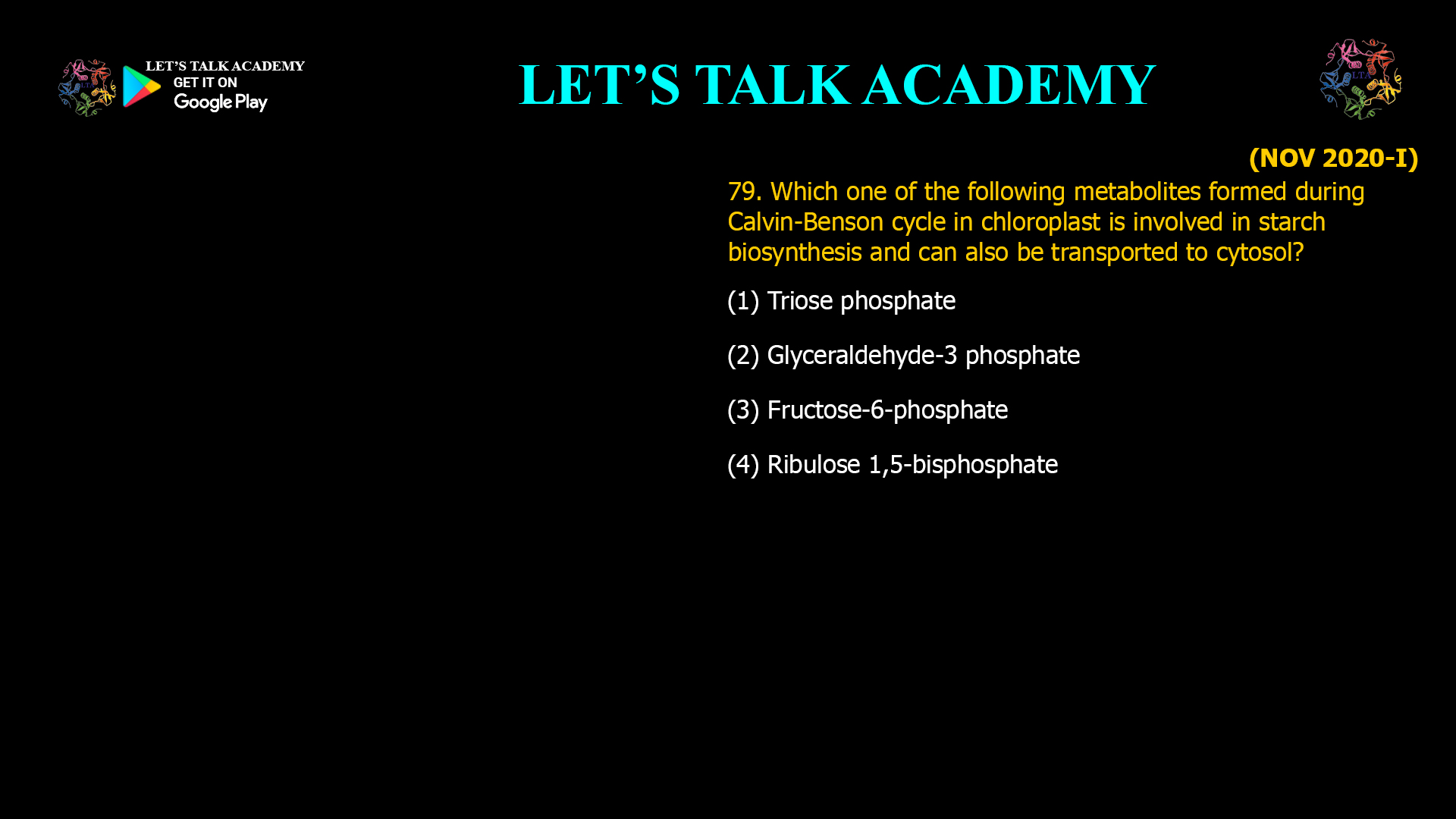
79. Which one of the following metabolites formed during Calvin-Benson cycle in chloroplast is involved in starch biosynthesis and can also be transported to cytosol? (1) Triose phosphate (2) Glyceraldehyde-3 phosphate (3) Fructose-6-phosphate (4) Ribulose 1,5-bisphosphate

The Central Calvin Cycle Metabolite Linking Starch Synthesis and Cytosolic Transport

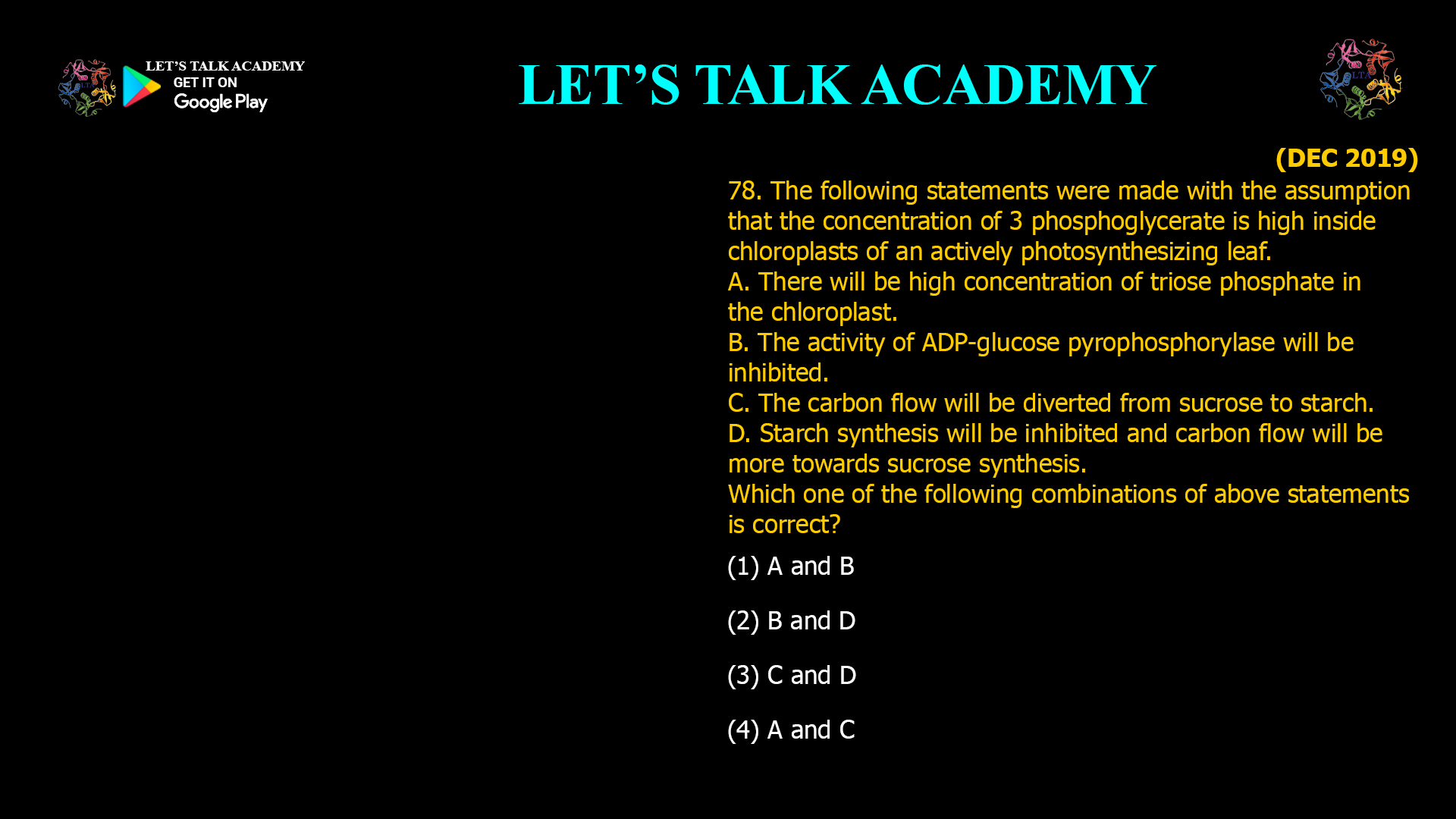
78. The following statements were made with the assumption that the concentration of 3 phosphoglycerate is high inside chloroplasts of an actively photosynthesizing leaf. A. There will be high concentration of triose phosphate in the chloroplast. B. The activity of ADP-glucose pyrophosphorylase will be inhibited. C. The carbon flow will be diverted from sucrose to starch. D. Starch synthesis will be inhibited and carbon flow will be more towards sucrose synthesis. Which one of the following combinations of above statements is correct? (1) A and B (2) B and D (3) C and D (4) A and C

High 3-Phosphoglycerate Drives Triose Phosphate Accumulation and Starch Synthesis in Chloroplasts

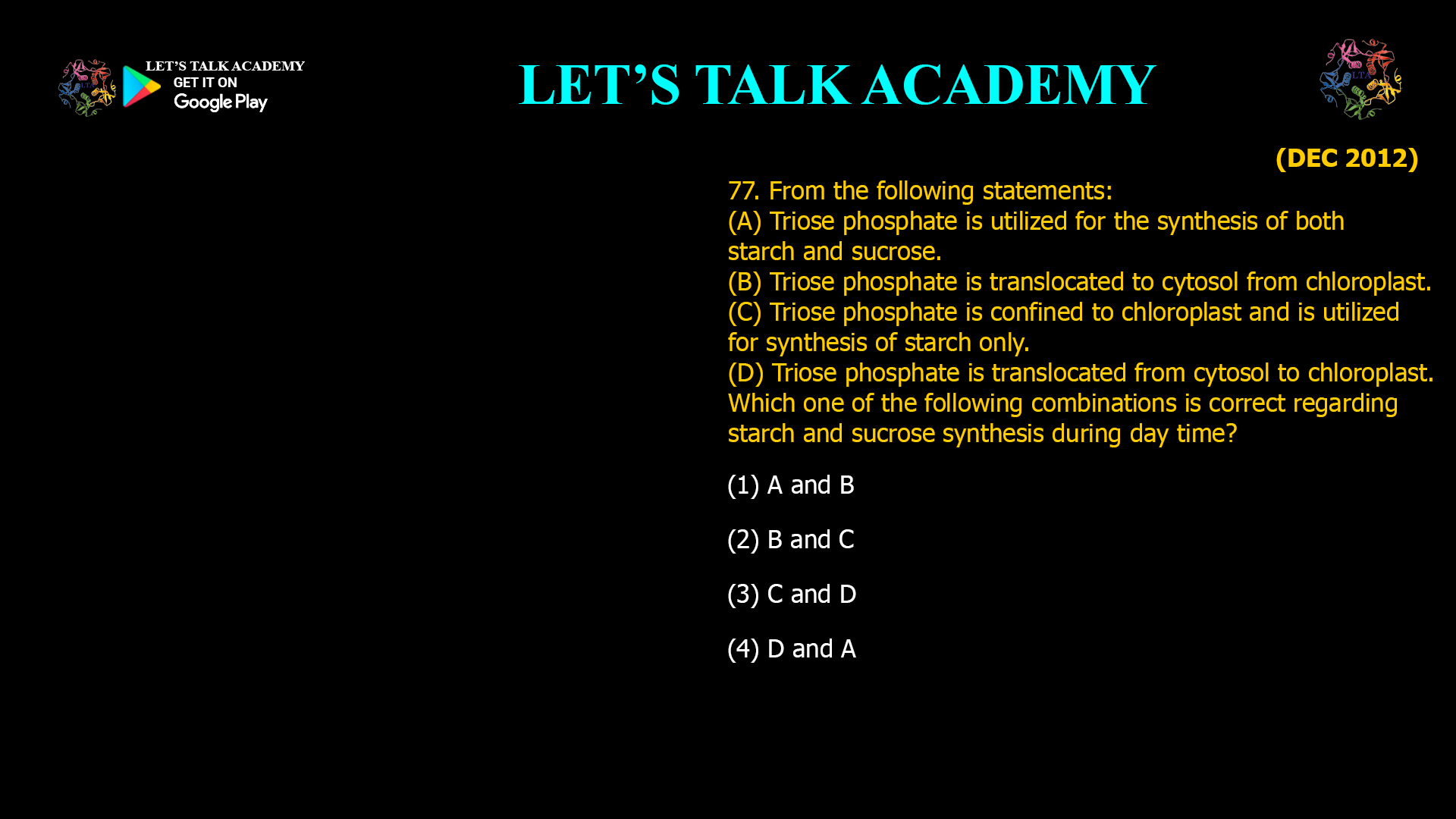
77. From the following statements: (A) Triose phosphate is utilized for the synthesis of both starch and sucrose. (B) Triose phosphate is translocated to cytosol from chloroplast. (C) Triose phosphate is confined to chloroplast and is utilized for synthesis of starch only. (D) Triose phosphate is translocated from cytosol to chloroplast. Which one of the following combinations is correct regarding starch and sucrose synthesis during day time? (1) A and B (2) B and C (3) C and D (4) D and A

Daytime Role of Triose Phosphate in Starch and Sucrose Synthesis

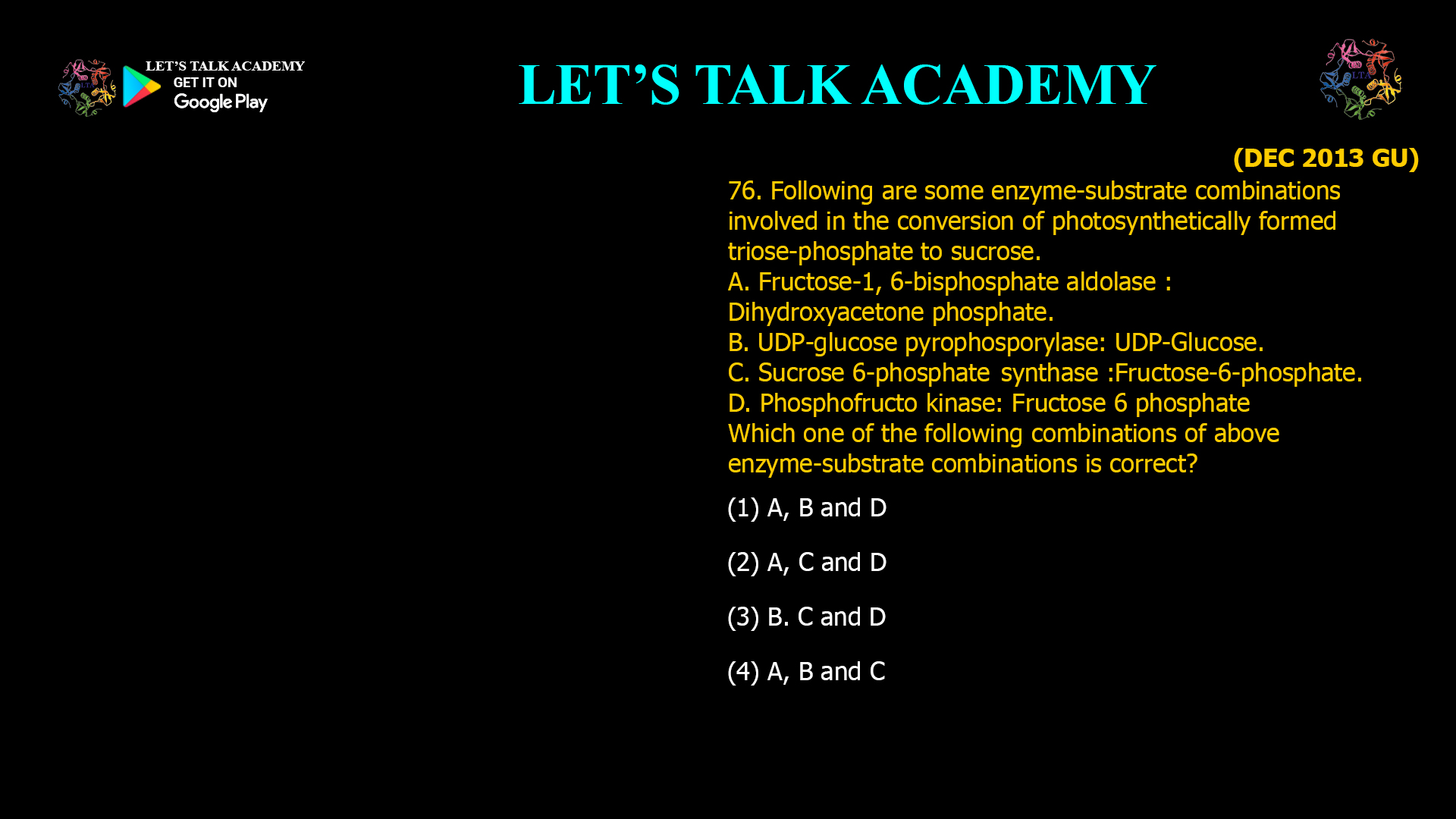
76. Following are some enzyme-substrate combinations involved in the conversion of photosynthetically formed triose-phosphate to sucrose. A. Fructose-1,6-bisphosphate aldolase : Dihydroxyacetonephosphate. B. UDP-glucose pyrophosporylase : UDP-Glucose. C. Sucrose 6-phosphate synthase : Fructose-6-phosphate. D. Phosphofructo kinase : Fructose 6 phosphate Which one of the following combinations of above enzyme-substrate combinations is correct? (1) A, B and D (2) A, C and D (3) B. C and D (4) A, B and C

Photosynthetically formed triose-phosphate to sucrose

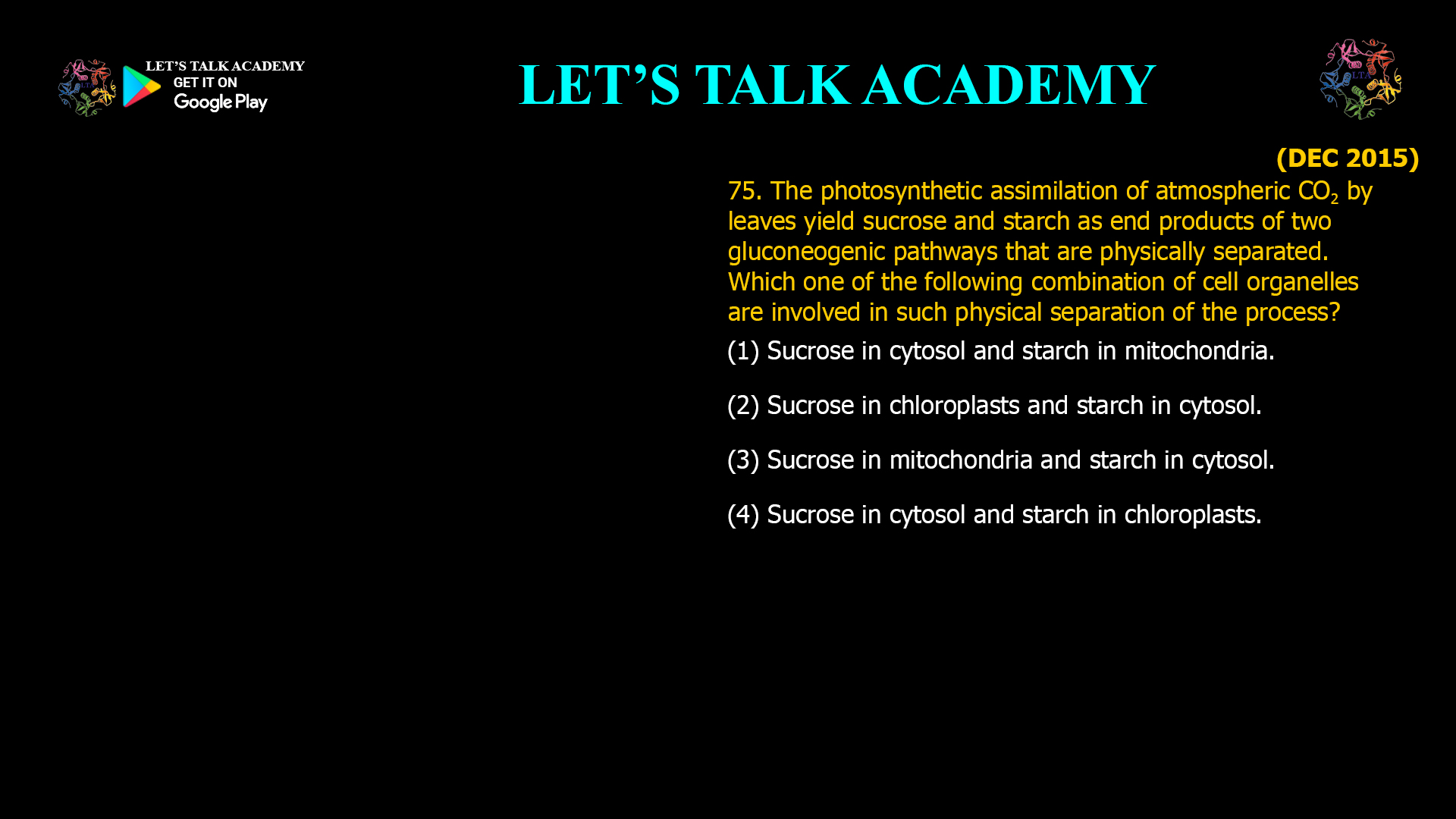
75. The photosynthetic assimilation of atmospheric CO2 by leaves yield sucrose and starch as end products of two gluconeogenic pathways that are physically separated. Which one of the following combination of cell organelles are involved in such physical separation of the process? (1) Sucrose in cytosol and starch in mitochondria. (2) Sucrose in chloroplasts and starch in cytosol. (3) Sucrose in mitochondria and starch in cytosol. (4) Sucrose in cytosol and starch in chloroplasts.

Cellular Compartmentalization of Sucrose and Starch Synthesis

74. A Plant with variegated plants were allowed for photosynthesis by placing it in light and then brought into dark, then final reserve material of photosynthesis, the starch will accumulate in which part of leaf- (1) Green portion (2) Colored portion (3) In whole leaf (4) No where

Chlorophyll’s Role in Starch Accumulation

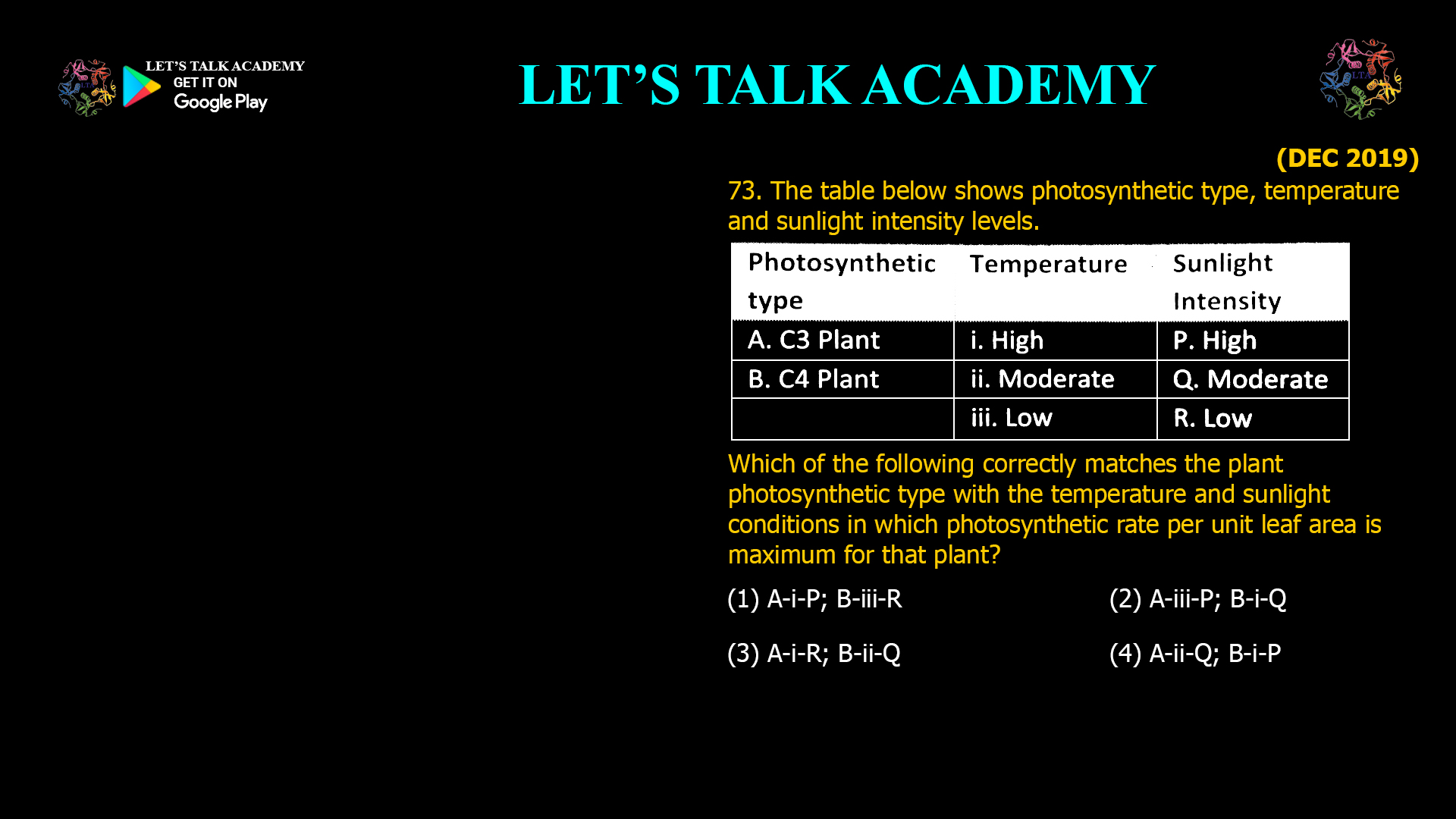
73. The table below shows photosynthetic type, temperature and sunlight intensity levels. Photosynthetic Type Temperature Sunlight Intensity A. C3 Plant i. High P. High B. C4 Plant ii. Moderate Q. Moderate iii. Low R. Low Which of the following correctly matches the plant photosynthetic type with the temperature and sunlight conditions in which photosynthetic rate per unit leaf area is maximum for that plant? (1) A-i-P; B-iii-R (2) A-iii-P; B-i-Q (3) A-i-R; B-ii-Q (4) A-ii-Q; B-i-P

Optimal Temperature and Sunlight Conditions for Maximum Photosynthesis in C3 and C4 Plants

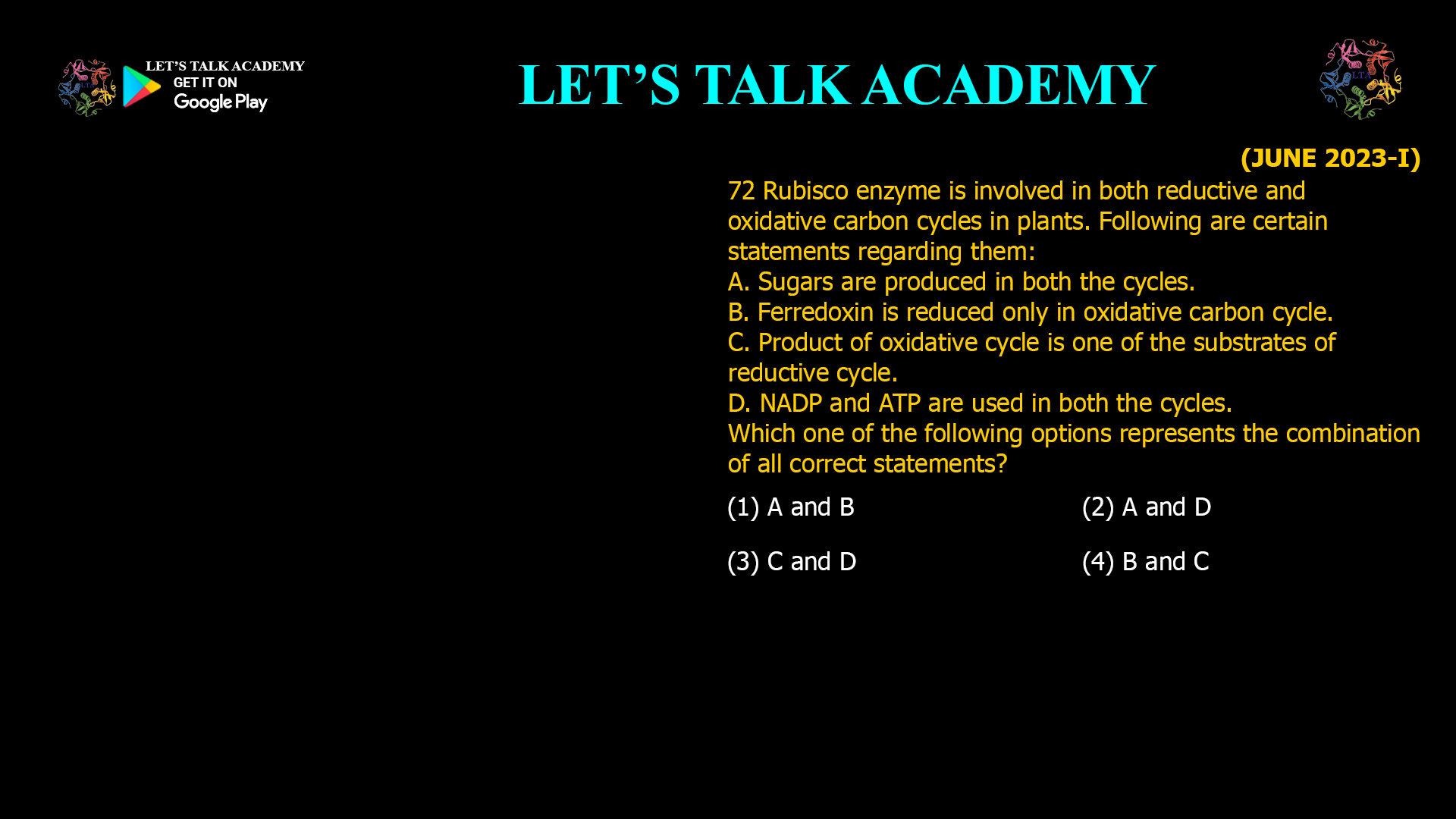
72 Rubisco enzyme is involved in both reductive and oxidative carbon cycles in plants. Following are certain statements regarding them: A. Sugars are produced in both the cycles. B. Ferredoxin is reduced only in oxidative carbon cycle. C. Product of oxidative cycle is one of the substrates of reductive cycle. D. NADP and ATP are used in both the cycles. Which one of the following options represents the combination of all correct statements? (1) A and B   (2) A and D (3) C and D   (4) B and C

Rubisco’s Dual Role in Reductive and Oxidative Carbon Cycles:

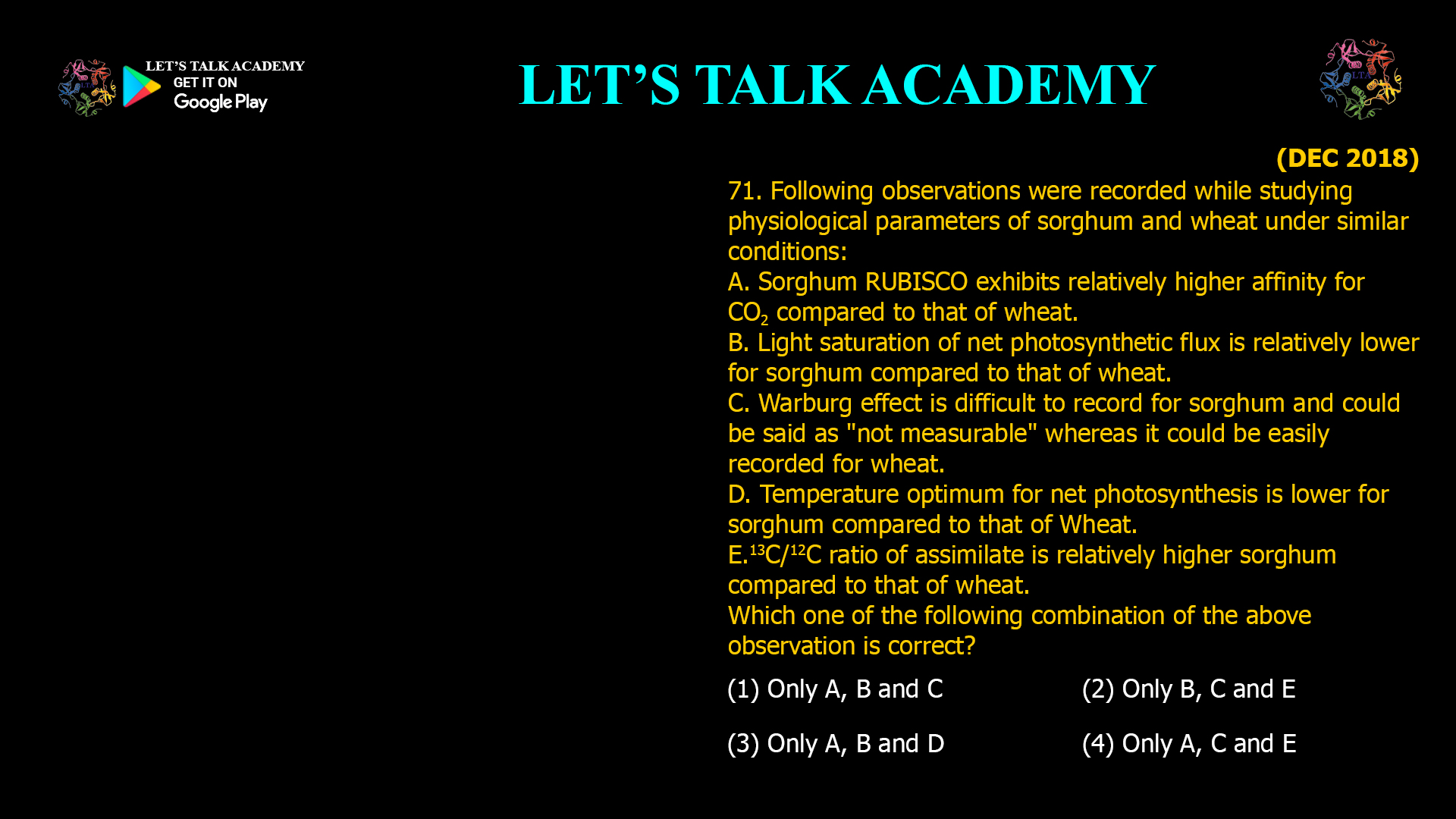
71. Following observations were recorded while studying physiological parameters of sorghum and wheat under similar conditions: A. Sorghum RUBISCO exhibits relatively higher affinity for CO2 compared to that of wheat. B. Light saturation of net photosynthetic flux is relatively lower for sorghum compared to that of wheat. C. Warburg effect is difficult to record for sorghum and could be said as "not measurable" whereas it could be easily recorded for wheat. D. Temperature optimum for net photosynthesis is lower for sorghum compared to that of Wheat. E. 13C/12C ratio of assimilate is relatively higher sorghum compared to that of wheat. Which one of the following combination of the above. observation is correct? (1) Only A, B and C (2) Only B, C and E (3) Only A, B and D (4) Only A, C and E

Physiological Differences Between C3 Wheat and C4 Sorghum

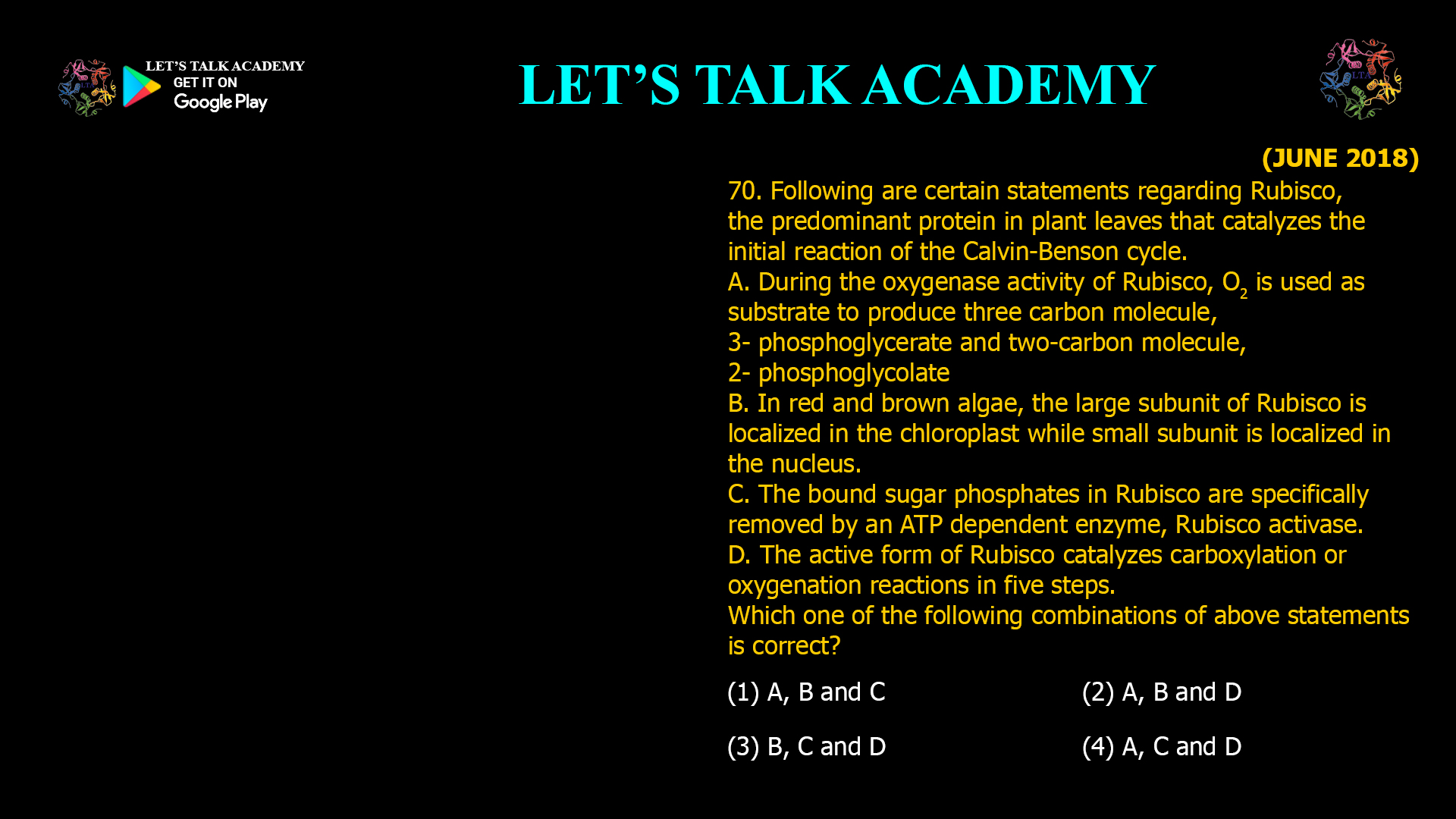
70. Following are certain statements regarding Rubisco, the predominant protein in plant leaves that catalyzes the initial reaction of the Calvin-Benson cycle. A. During the oxygenase activity of Rubisco, O2 is used as substrate to produce three carbon molecule, 3- phosphoglycerate and two-carbon molecule, 2- phosphoglycolate B. In red and brown algae, the large subunit of Rubisco is localized in the chloroplast while small subunit is localized in the nucleus. C. The bound sugar phosphates in Rubisco are specifically removed by an ATP dependent enzyme, Rubisco activase. D. The active form of Rubisco catalyzes carboxylation or oxygenation reactions in five steps. Which one of the following combinations of above statements is correct? (1) A, B and C (2) A, B and D (3) B, C and D (4) A, C and D

Essential Biochemical Features and Enzyme Regulation of Rubisco in Higher Plants

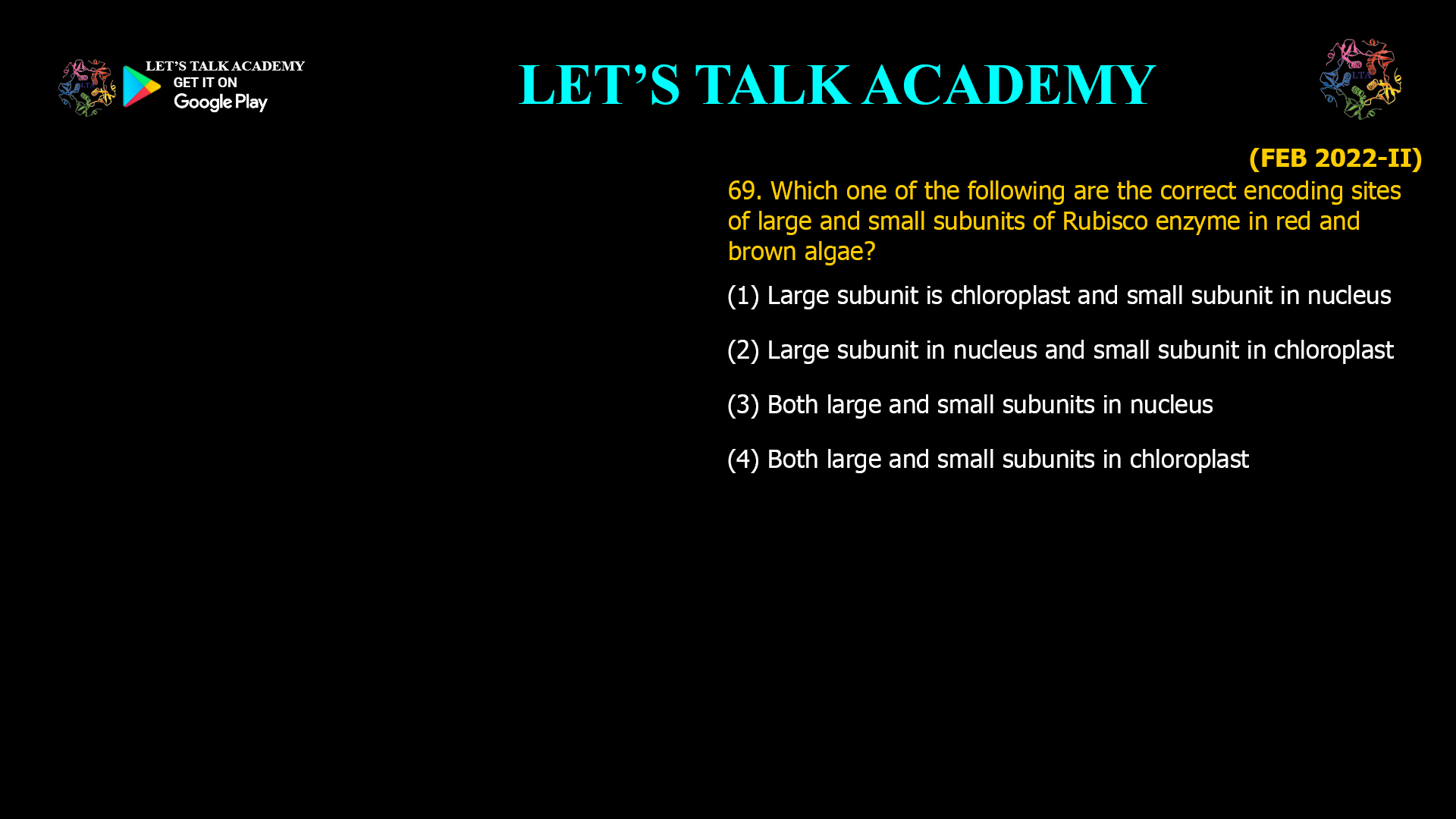
69. Which one of the following are the correct encoding sites of large and small subunits of Rubisco enzyme in red and brown algae? (1) Large subunit is chloroplast and small subunit in nucleus (2) Large subunit in nucleus and small subunit in chloroplast (3) Both large and small subunits in nucleus (4) Both large and small subunits in chloroplast

Rubisco enzyme in red and brown algae

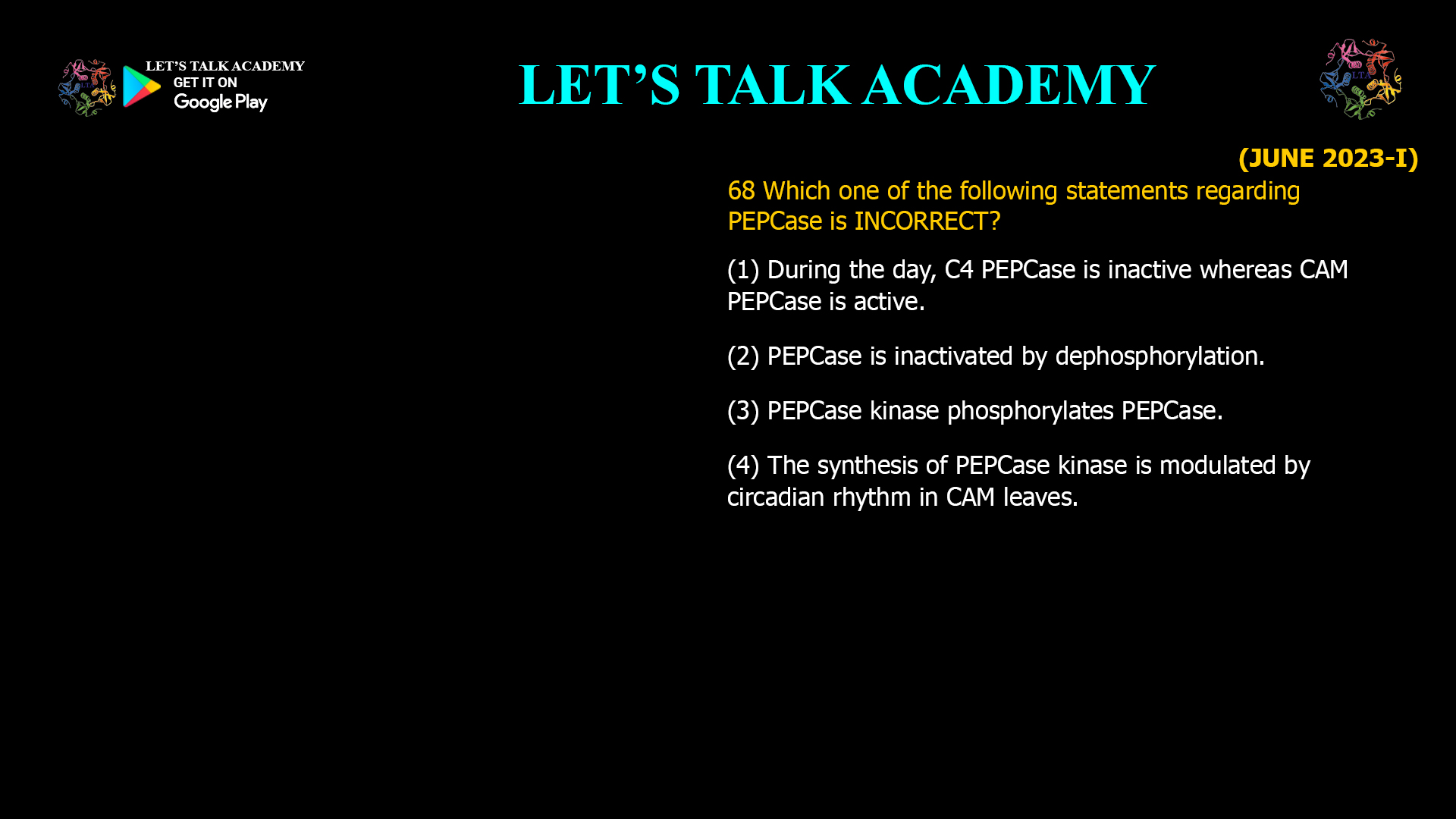
68 Which one of the following statements regarding PEPCase is INCORRECT? (1) During the day, C4 PEPCase is inactive whereas CAM PEPCase is active. (2) PEPCase is inactivated by dephosphorylation. (3) PEPCase kinase phosphorylates PEPCase. (4) The synthesis of PEPCase kinase is modulated by circadian rhythm in CAM leaves.

PEPCase is inactive whereas CAM PEPCase is active

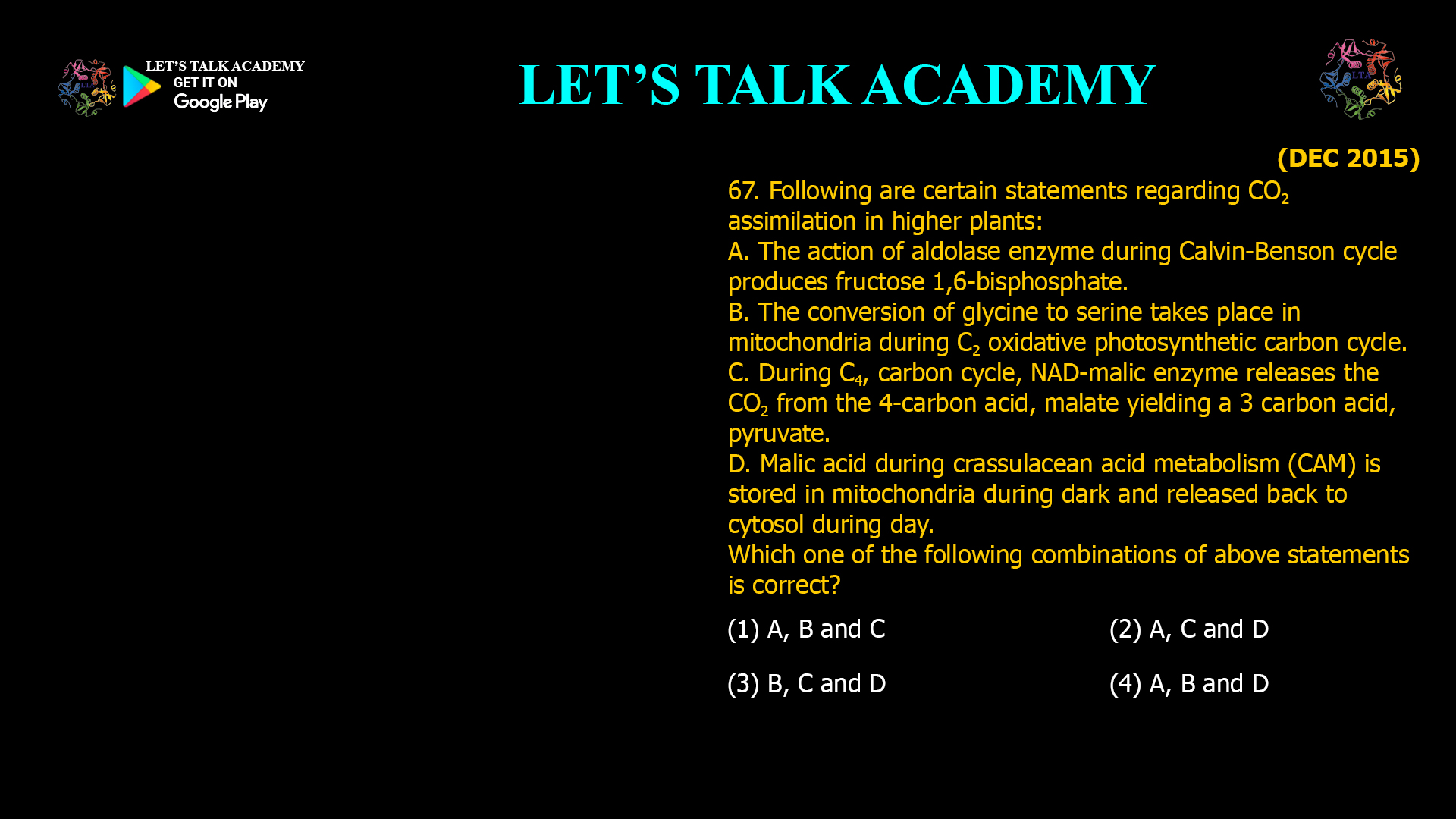
67. Following are certain statements regarding CO2 assimilation in higher plants: A. The action of aldolase enzyme during Calvin-Benson cycle produces fructose 1,6-bisphosphate. B. The conversion of glycine to serine takes place in mitochondria during C2 oxidative photosynthetic carbon cycle. C. During C4, carbon cycle, NAD-malic enzyme releases the CO2 from the 4-carbon acid, malate yielding a 3 carbon acid, pyruvate. D. Malic acid during crassulacean acid metabolism (CAM) is stored in mitochondria during dark and released back to cytosol during day. Which one of the following combinations of above statements is correct? (1) A, B and C (2) A, C and D (3) B, C and D (4) A, B and D

CO2 assimilation in higher plants

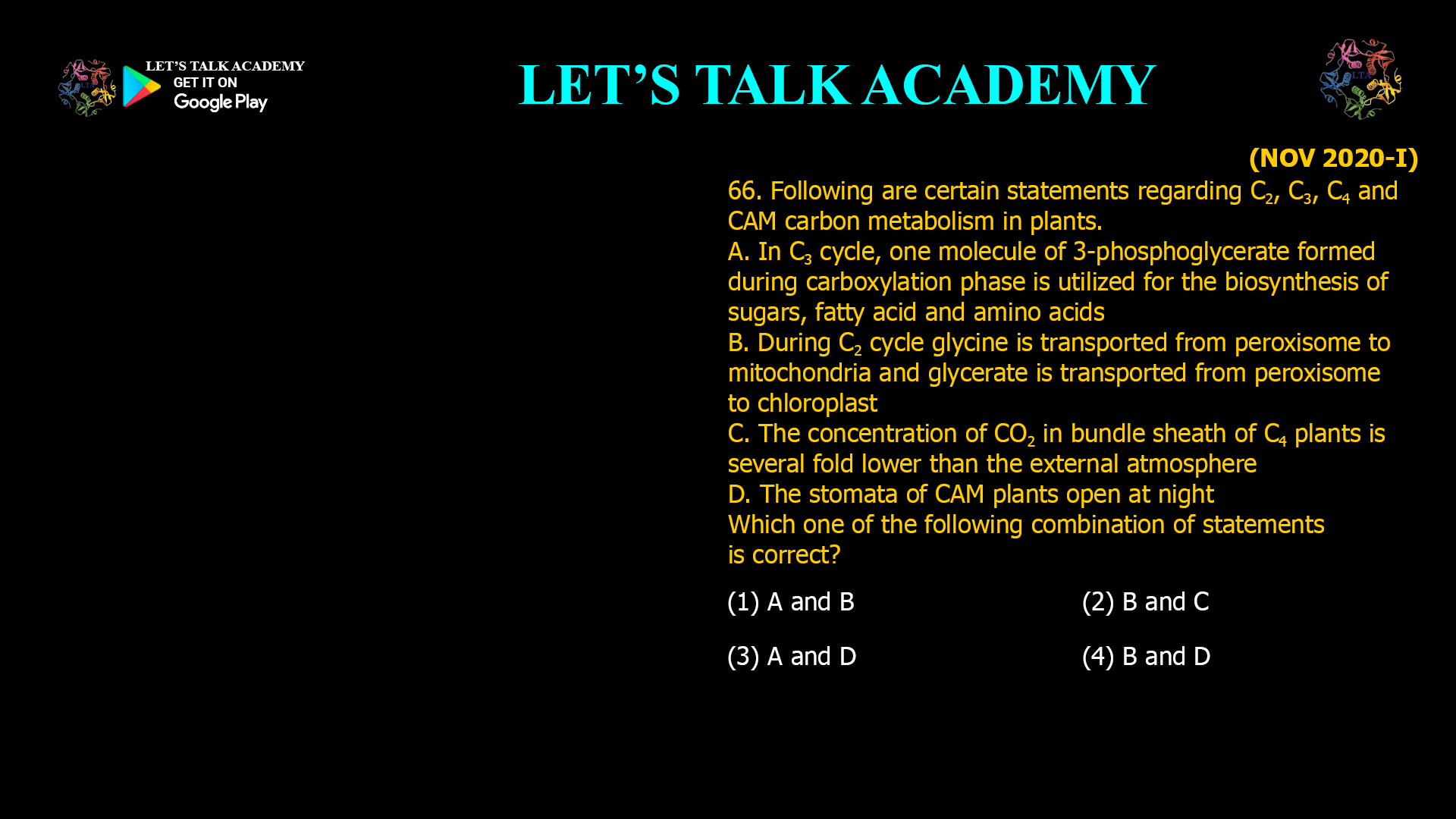
66. Following are certain statements regarding C2, C3, C4 and CAM carbon metabolism in plants. A. In C3 cycle, one molecule of 3-phosphoglycerate formed during carboxylation phase is utilized for the biosynthesis of sugars, fatty acid and amino acids B. During C2 cycle glycine is transported from peroxisome to mitochondria and glycerate is transported from peroxisome to chloroplast C. The concentration of CO2 in bundle sheath of C4 plants is several fold lower than the external atmosphere D. The stomata of CAM plants open at night Which one of the following combination of statements is correct? (1) A and B (2) B and C (3) A and D (4) B and D

C2, C3, C4 and CAM carbon metabolism in plants

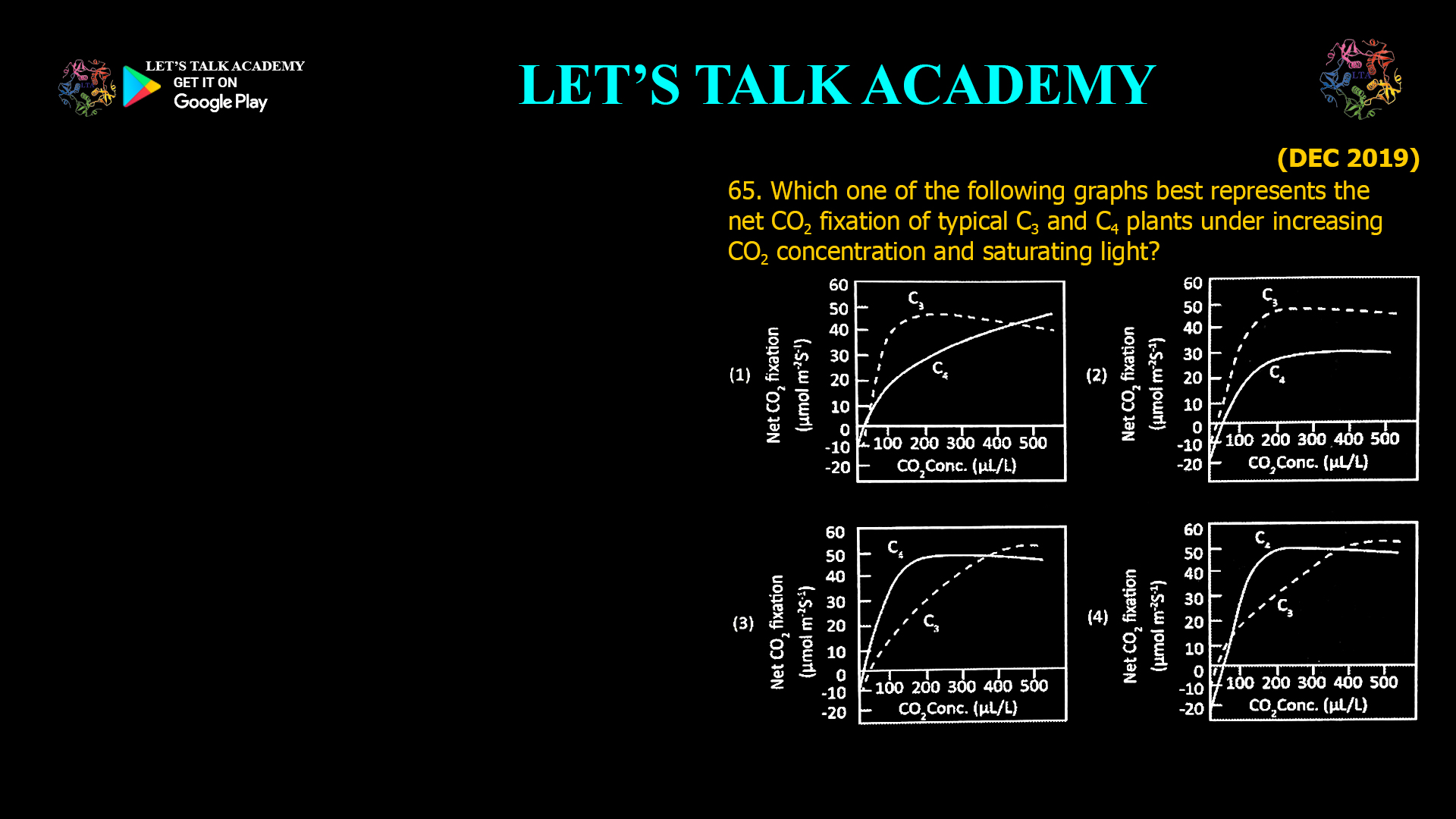
65. Which one of the following graphs best represents the net CO2 fixation of typical C3 and C4 plants under increasing CO2 concentration and saturating light?

Graphical Comparison of Net CO₂ Fixation in C3 and C4 Plants Under Increasing CO₂ Concentration

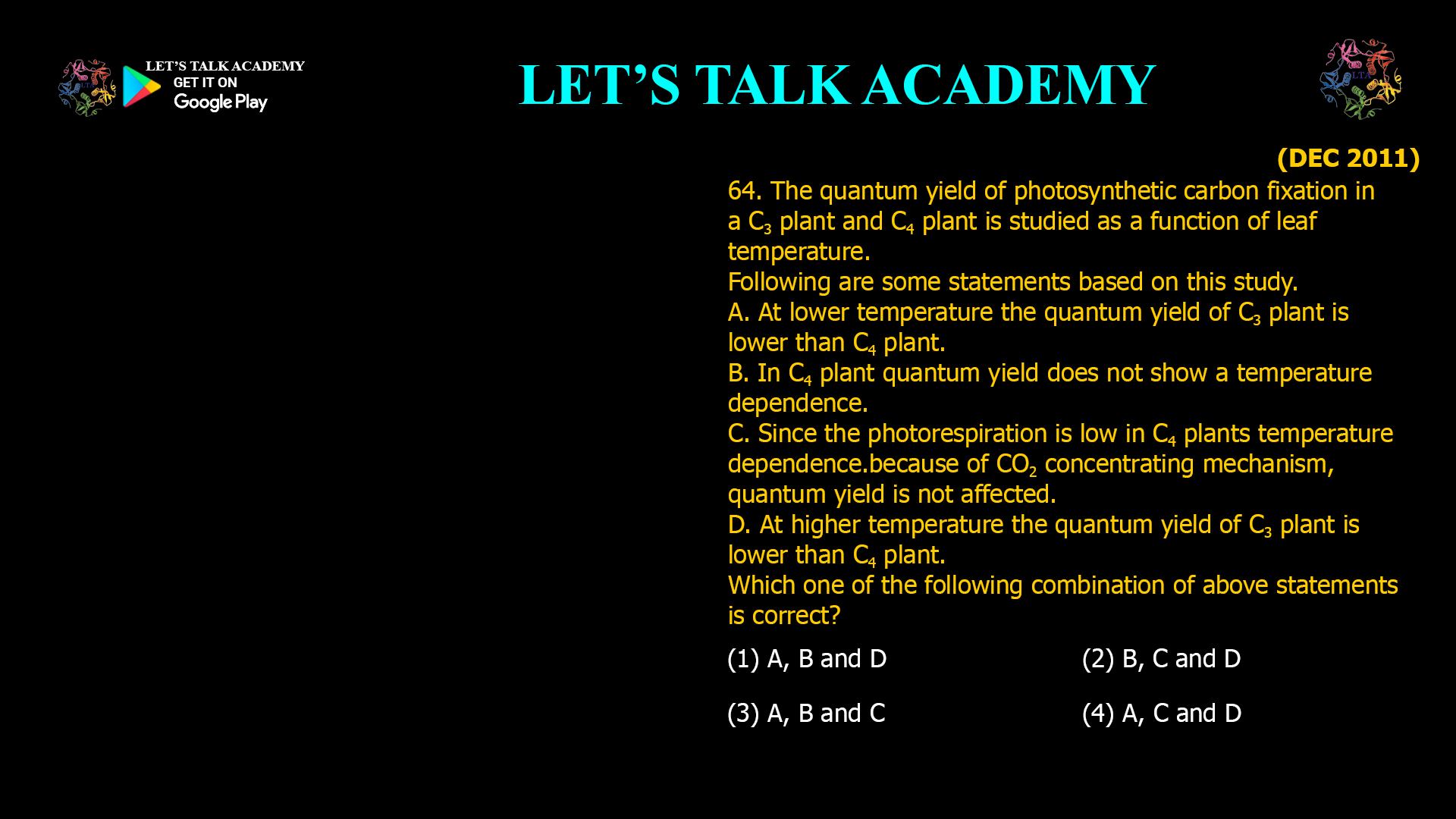
64. The quantum yield of photosynthetic carbon fixation in a C3 plant and C4 plant is studied as a function of leaf temperature. Following are some statements based on this study. A. At lower temperature the quantum yield of C3 plant is lower than C4 plant. B. In C4 plant quantum yield does not show a temperature dependence. C. Since the photorespiration is low in C4 plants temperature dependence. because of CO2 concentrating mechanism, quantum yield is not affected. D. At higher temperature the quantum yield of C3 plant is lower than C4 plant. Which one of the following combination of above statements is correct? (1) A, B and D (2) B, C and D (3) A, B and C (4) A, C and D

Temperature Effects on Quantum Yield of Photosynthesis in C3 and C4 Plants

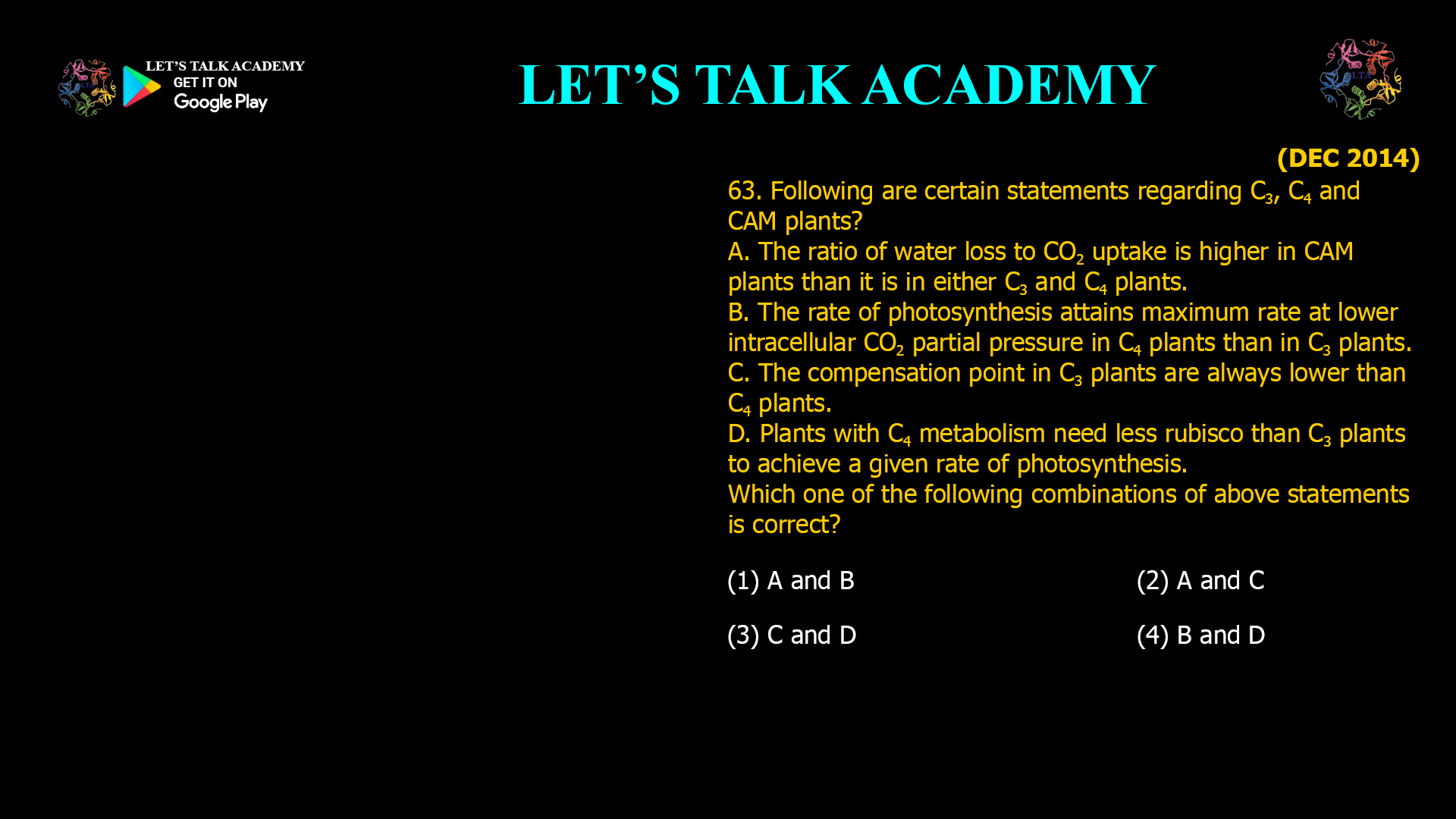
63. Following are certain statements regarding C3, C4 and CAM plants? A. The ratio of water loss to CO2 uptake is higher in CAM plants than it is in either C3 and C4 plants. B. The rate of photosynthesis attains maximum rate at lower intracellular CO2 partial pressure in C4 plants than in C3 plants. C. The compensation point in C3 plants are always lower than C4 plants. D. Plants with C4 metabolism need less rubisco than C3 plants to achieve a given rate of photosynthesis. Which one of the following combinations of above statements is correct? (1) A and B (2) A and C (3) C and D (4)B and D

C3, C4, and CAM plants

62. Following are some of the statements regarding the effect of CO2 concentration on photosynthesis in plants. A.With elevated CO2 levels, C3 plants are much more responsive than C4 plants under well watered conditions. B. In C3 plants, increasing intracellular CO2 partial pressure can stimulate photosynthesis only over a narrow range. C. In C4 plants, CO2 compensation point is nearly zero. Which one of the following combination of above statements is correct? (1) A and B (2) B and C (3) A and C (4) Only C

Effect of Elevated CO₂ Concentration on Photosynthesis in C3 and C4 Plants

61. The C4 carbon cycle is a CO2 concentrating mechanism evolved to reduce photorespiration. The following are stated as important features of the C4 pathway: A. The leaves of C4 plants have Kranz anatomy that distinguishes mesophyll and bundle sheath cells. B. In the peripheral mesophyll cells, atmospheric CO2 is fixed by phosphoenol pyruvate carboxylase yielding a four-carbon acid. C. In the inner layer of mesophyll, NAD-malic enzyme decarboxylates four-carbon add and releases CO2 D. CO2 is again re-fixed through Calvin cycle in the bundle sheath cells. Which one of the following combinations is correct? (1) B, C and D (2) A, B and C (3) A, B and D (4) A, C and D

CO2 concentrating mechanism evolved to reduce photorespiration

60. The CO2 compensation point for C3 plants is greater than C4 plants because in C4 plants (1) dark respiration is higher (2) dark respiration is lower (3)photorespiration is present (4) photorespiration is absent

C3 plants is greater than C4 plants

59. For which one of the following physiological studies 12CO2 and 13CO2 are used? (1) Estimate the rate of photosynthesis (2) Determine rate of photorespiration (3) The ratio of C3 and CAM pathways of CO2 fixation. (4) The ratio of C3 and C4 pathways of CO2 fixation

Estimate the rate of photosynthesis

58. Atmospheric CO2 contains the naturally occurring stable carbon isotopes 12C and 13C in the proportion of 98.9% and 1.1%, respectively. Following are some of the statements regarding CO2 assimilation: (A) Both C3 and C4 plants assimilates less 13CO2 than 12CO2. (B) Both C3 and C4 platns assimilates less 12CO2 than 13CO2. (C) C3 plants assimilates lesser 13CO2 than 12CO2 as compared to C2 plants. (D) C4 plants assimilates lesser 13CO2 than 12CO2 as compared to C3 plants. Which one of the following combinations of above statements is true? (1) A and B (2) A and C (3) C and D (4) A and D

57. In which molecule would the radiolabel appear the earliest when wheat and sugarcane leaves are fed with 14CO2? (1) Wheat : malate, sugarcane : 3 phosphoglycerate. (2) Wheat : aspartate, sugarcane : malate. (3) Wheat : 3 phosohoglycerate, sugarcane : 3 phosphoglycerate. (4) Wheat : 3-phosphoglycerate, sugarcane : malate.

56. Photo-chemically generated ATP is consumed in which one of the following phases of Calvin-Benson cycle? (1) Only carboxylation (2) Only regeneration (3) Carboxylation and reduction (4) Reduction and regeneration

55. Calvin-Benson cycle is divided into three phases, namely carboxylation, reduction and regeneration. The following statements are related to the three phases of Calvin-Benson cycle: A. The product of light reaction, ATP and NADPH is utilized in the carboxylation phase. B. Six molecules of 3-phosphoglycerate is converted into six molecules of glyceraldehyde 3-phosphate in the reduction phase. C. The action of aldolase enzyme for the production of fructose 1, 6- bisphosphate takes place in reduction phase. D. Formation of seven carbon compound, sedoheptulose-7- phosphate takes place in the regeneration phase. Which one of the following combinations is correct? (1) A and C (2) B and D (3) A and B (4) C and D

54. A student listed following combinations of enzymes and their involvement in different phases of Calvin-Benson cycle: (A) Phosphoglycerate kinase — Reduction phase (B) Glyceraldehyde-3-phosphate dehydrogenase — Regeneration phase (C) Triose-phosphate isomerase — Reduction phase (D) Phosphoribulokinase — Regeneration phase Which one of the following combinations is correct? (1) A, B and C         (2) B and C only (3) B, C and D        (4) A and D only

Brief overview of Calvin–Benson cycle phases

53. Which one of the following reactions takes place during the reduction phase of the Calvin- Benson cycle? (1) Ribulose 1,5-bisphosphate to 3-phosphoglycerate (2) 1,3-bisphosphoglycerate to glyceraldehyde-3 phosphate (3) Dihydroxyacetone phosphate to fructose 1,6- bisphosphate (4) Ribulose 5-phosphate to ribulose1,5 bisphosphate

 Calvin–Benson cycle phases

52. During photosynthetic carbon reduction cycle in green leaves, net production of one molecule of glyceraldehyde 3-phosphate requires one of the following combinations of energy equivalents: (1) 9 NADPH and 6 ATP (2) 3 NADPH and 9 ATP. (3) 2 NADPH and 3 ATP (4) 6 NADPH and 9 ATP.

Core concept

51. What would be effect on photosynthesis in C3 and C4 plants on elevating the concentration of CO2 under light saturated condition? (1) No effect on both type plants (2) Increase in C3 plant and unaffected in C4 plant (3) Increase in C4 plant and low in C3 plants (4) Increase in both type plants

50. Oxygenase activity of RUBISCO generates (1) Two molecules of PGA (2) Two molecules of Phosphoglycolate (3) One molecule each of PGA and phosphoglycolate (4) Two molecules each of PGA and phosphoglycolate

Concept: RUBISCO carboxylase vs oxygenase

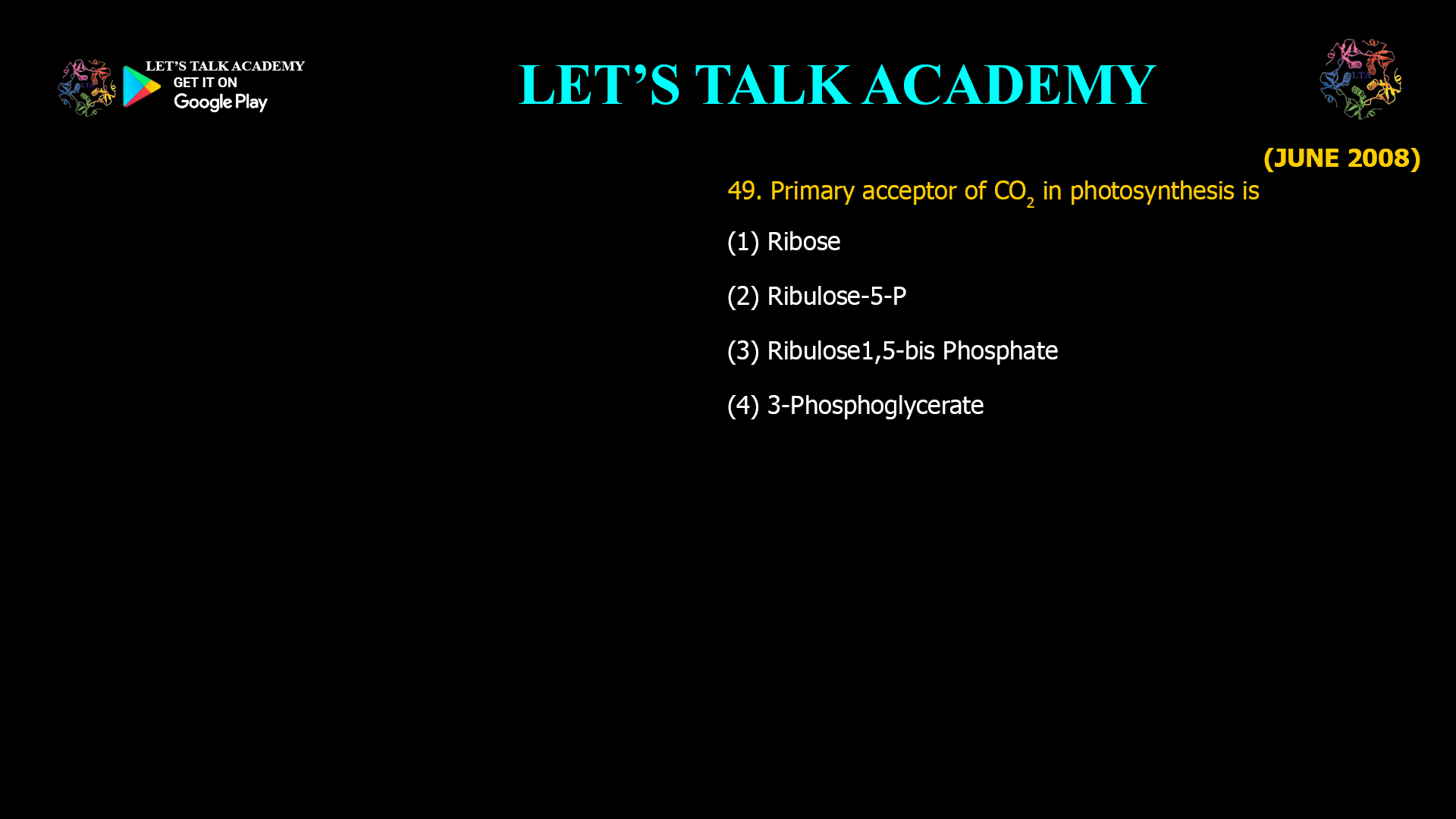
49. Primary acceptor of CO2 in photosynthesis is (1) Ribose                                          (2) Ribulose-5-P (3) Ribulose1,5-bis Phosphate           (4) 3-Phosphoglycerate

CO₂ Fixation: Primary Acceptor in Photosynthesis

48. Which protein subunit of RUBICO is coded by chloroplast genome? (1) Small sub-unit of RUBISCO (2) Large sub-unit of RUBISCO (3) Entire RUBISCO (4) none

RUBISCO Subunit Genes: Chloroplast vs Nuclear Origin

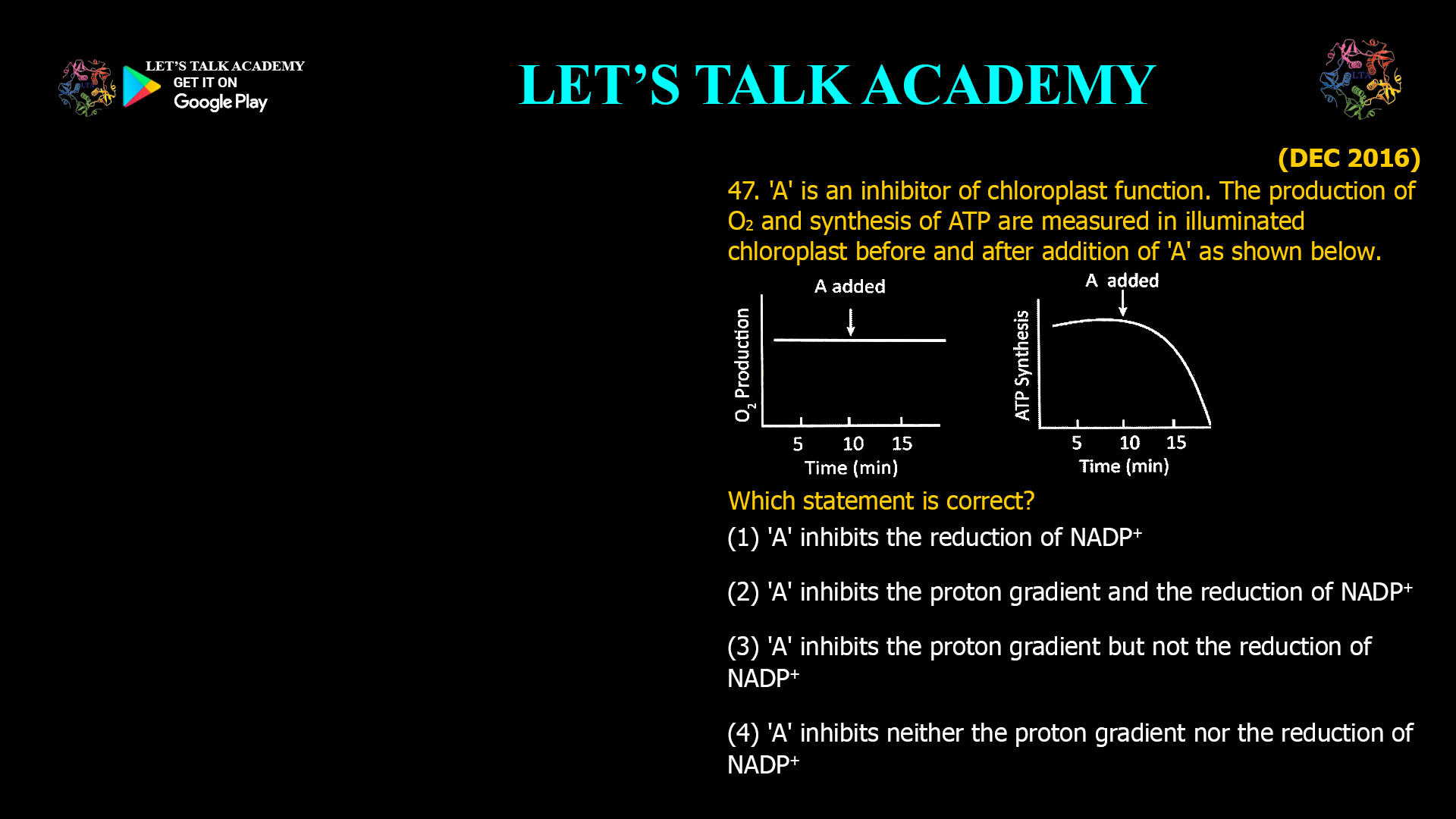
47. 'A' is an inhibitor of chloroplast function. The production of O2 and synthesis of ATP are measured in illuminated chloroplast before and after addition of 'A' as shown below. Which statement is correct? (1) 'A' inhibits the reduction of NADP+ (2) 'A' inhibits the proton gradient and the reduction of NADP+ (3) 'A' inhibits the proton gradient but not the reduction of NADP+ (4) 'A' inhibits neither the proton gradient nor the reduction of NADP+

Chloroplast Inhibitors: Impact on Electron Transport and ATP Synthesis

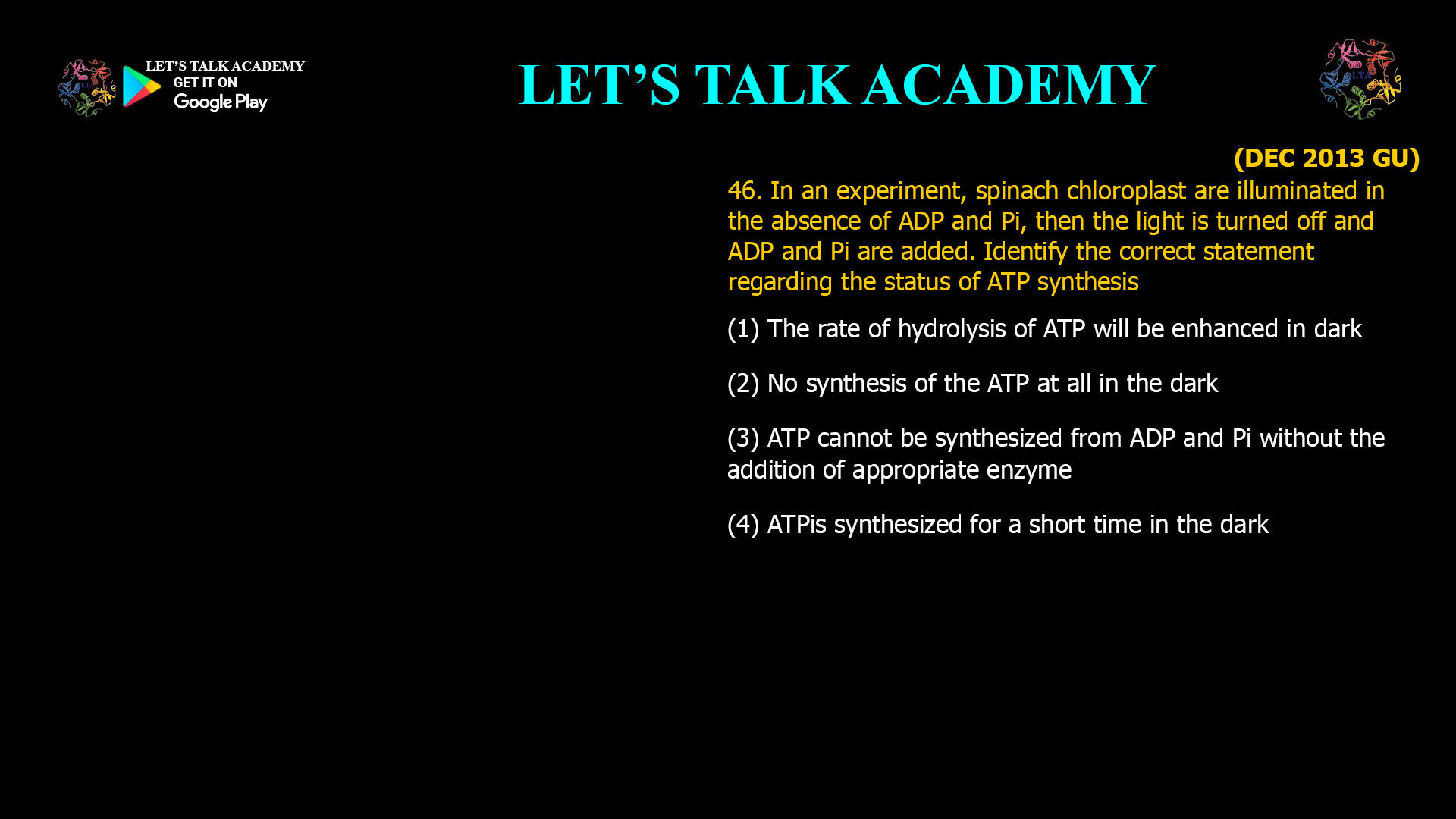
46. In an experiment, spinach chloroplast are illuminated in the absence of ADP and Pi, then the light is turned off and ADP and Pi are added. Identify the correct statement regarding the status of ATP synthesis (1) The rate of hydrolysis of ATP will be enhanced in dark (2) No synthesis of the ATP at all in the dark (3) ATP cannot be synthesized from ADP and Pi without the addition of appropriate enzyme (4) ATP is synthesized for a short time in the dark

ATP Synthesis in Chloroplasts: Light vs. Dark

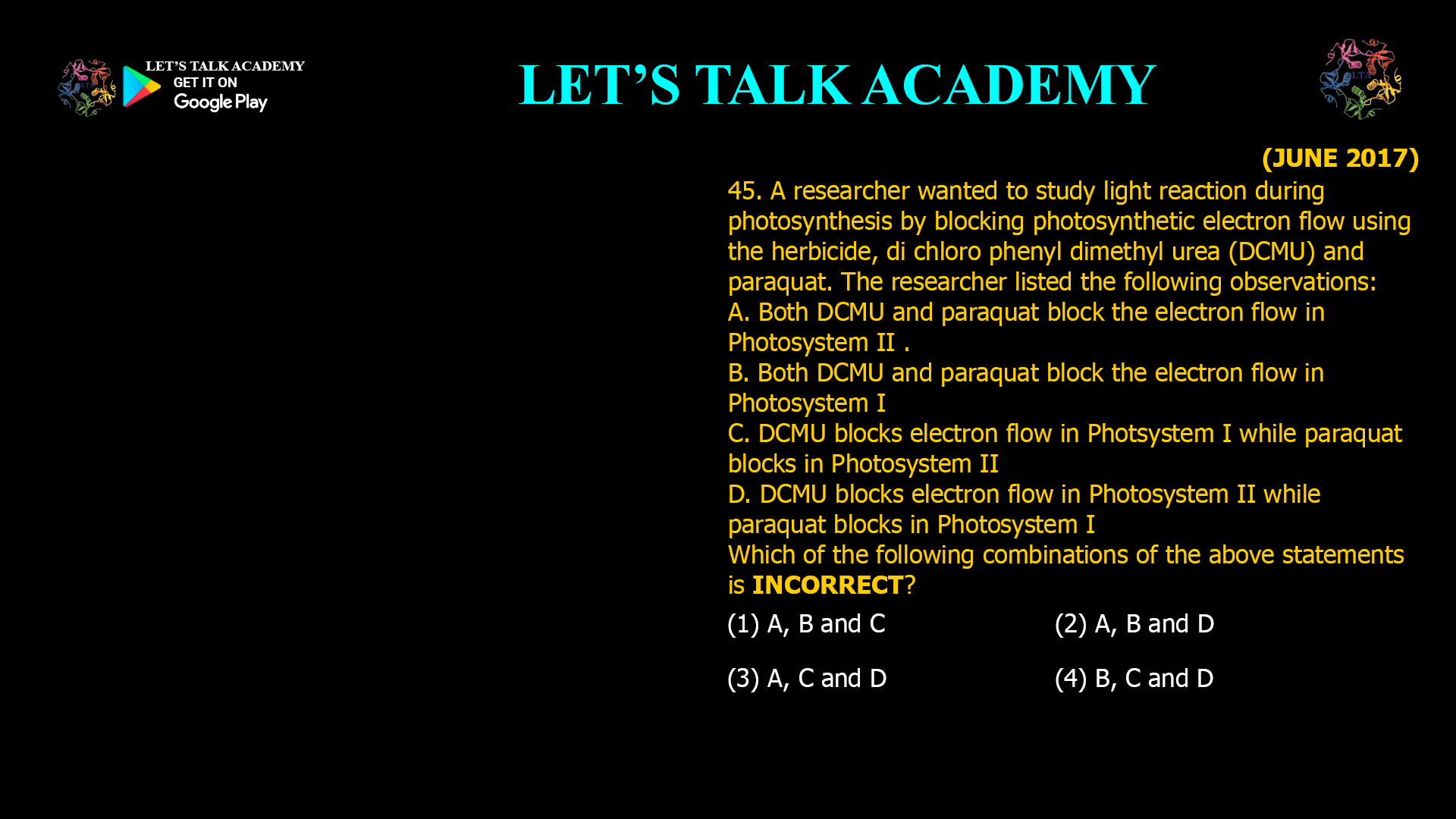
45. A researcher wanted to study light reaction during photosynthesis by blocking photosynthetic electron flow using the herbicide, di-chloro-phenyl-dimethyl-urea (DCMU) and paraquat. The researcher listed the following observations: A. Both DCMU and paraquat block the electron flow in Photosystem II . B. Both DCMU and paraquat block the electron flow in Photosystem I C. DCMU blocks electron flow in Photsystem I while paraquat blocks in Photosystem II D. DCMU blocks electron flow in Photosystem II while paraquat blocks in Photosystem I Which of the following combinations of the above statements is INCORRECT? (1) A, B and C (2) A, B and D (3) A, C and D (4) B, C and D

DCMU and Paraquat: Sites of Action and Misconceptions

44. The one of the most widely used herbicides methyl viologens (paraquat) interfere photosynthesis of higher plants. They are responsible for (1) Evolution of more oxygen (2) Dissipation of proton gradient across thylakoid membrane (3) Inhibition of flow of electron from PS II to PSI (4) transfer of electrons from PS I (ferroredoxin) to molecular oxygen to form ROS.

43. Identify the correct site of action of DBMIB (2,5-dibromo-3-methyl-6-isopropyl-p-benzoquinone), an inhibitor of the chloroplast electron transport chain. (1)QA --QB (2) QB --PQ’ (3) PQ --Cytb6 f (4) QA --QB’

DBMIB Action: Blocking Plastoquinone to Cytochrome b6f Step

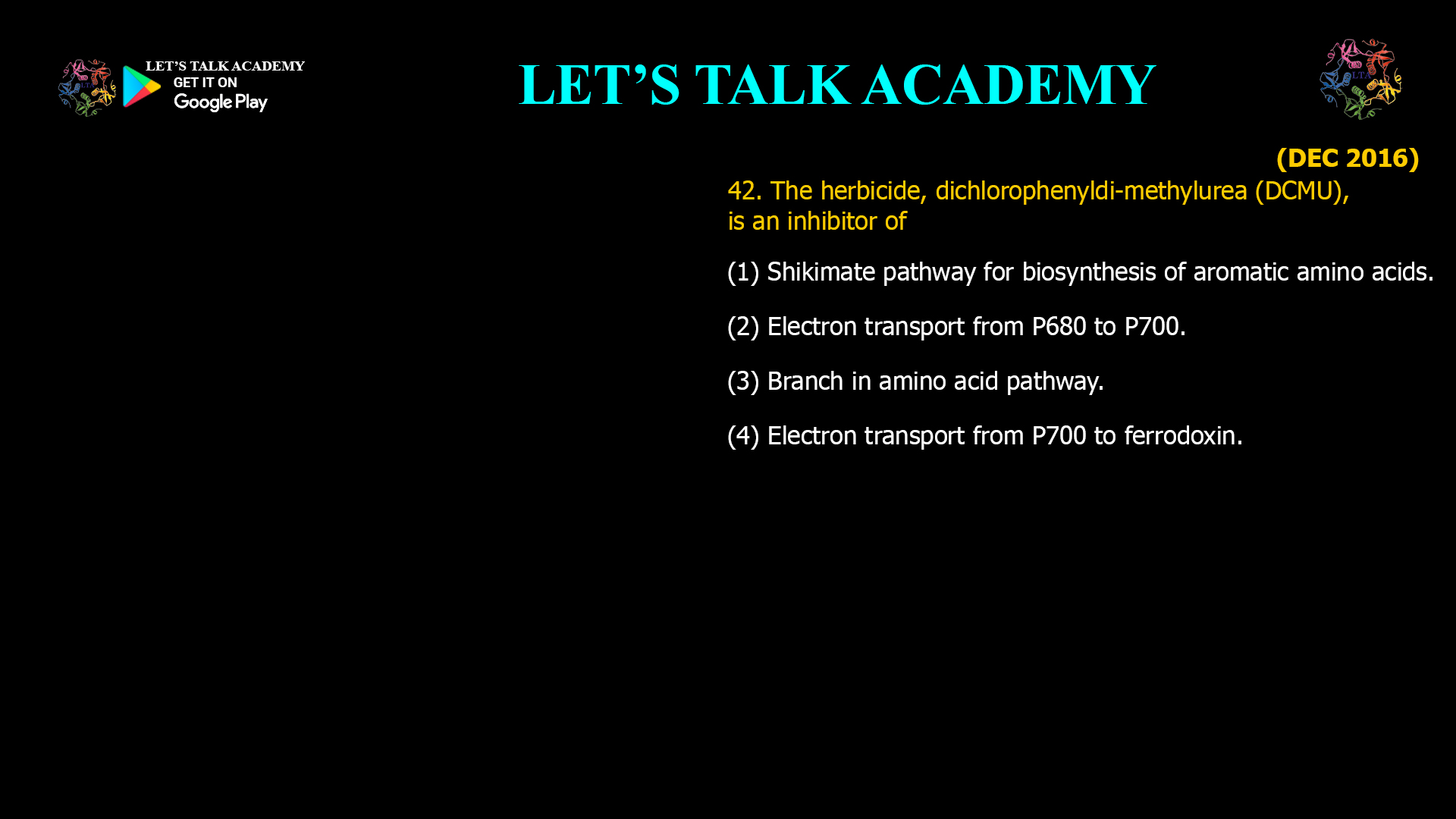
42. The herbicide, dichlorophenyldi-methylurea (DCMU), is an inhibitor of (1) Shikimate pathway for biosynthesis of aromatic amino acids. (2) Electron transport from P680 to P700. (3) Branch in amino acid pathway. (4) Electron transport from P700 to ferrodoxin

DCMU Herbicide: Blocking Electron Flow Between Photosystems

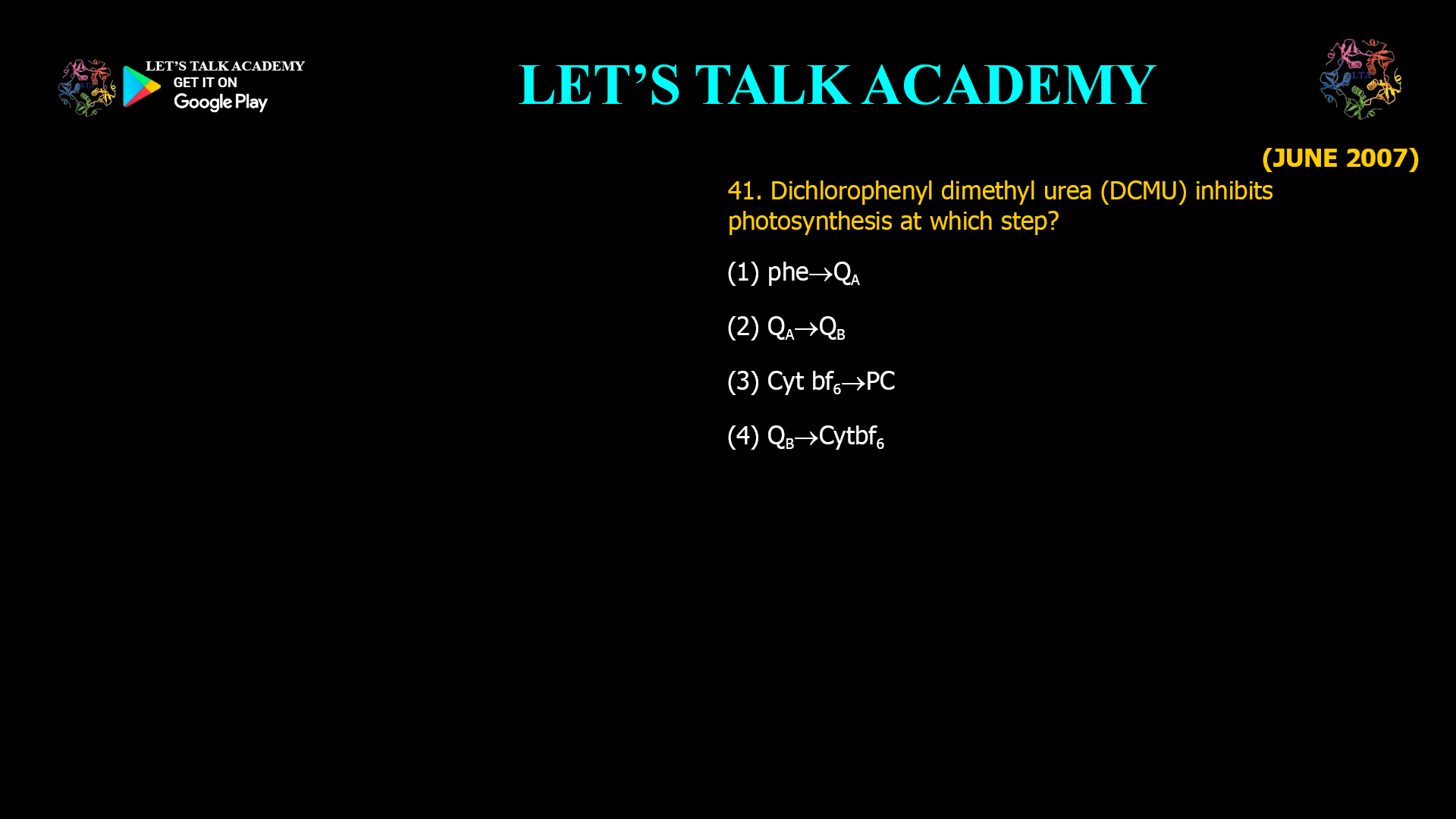
41. Dichlorophenyl dimethyl urea (DCMU) inhibits photosynthesis at which step? (1) phe--QA (2) QA--QB (3) Cyt bf6--PC (4) QB--Cytbf6

DCMU Inhibition in Photosynthesis: Mechanism and Step

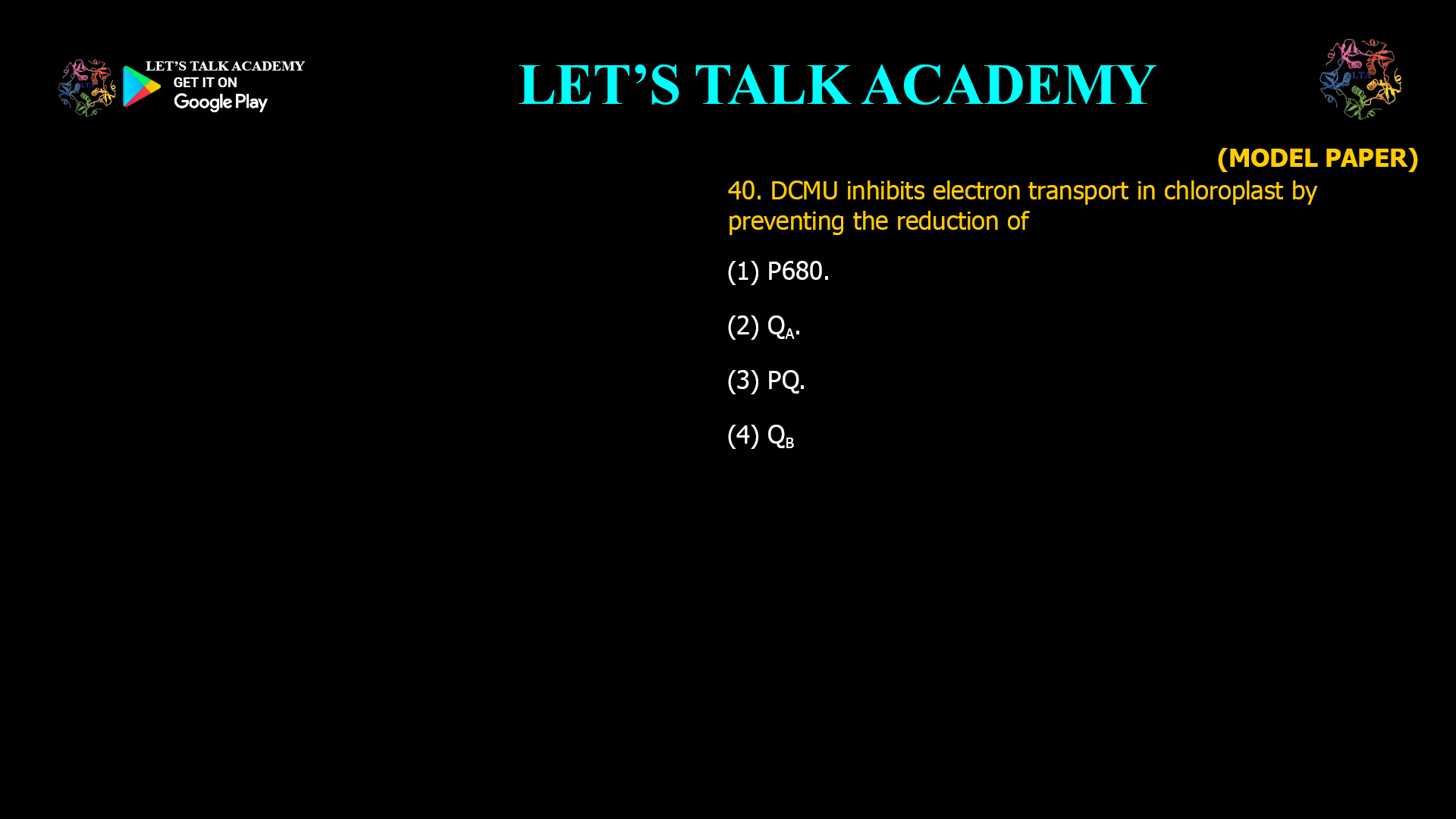
40. DCMU inhibits electron transport in chloroplast by preventing the reduction of (1) P680. (2) QA. (3) PQ. (4) QB

DCMU Action: Blocking Electron Transport in PSII

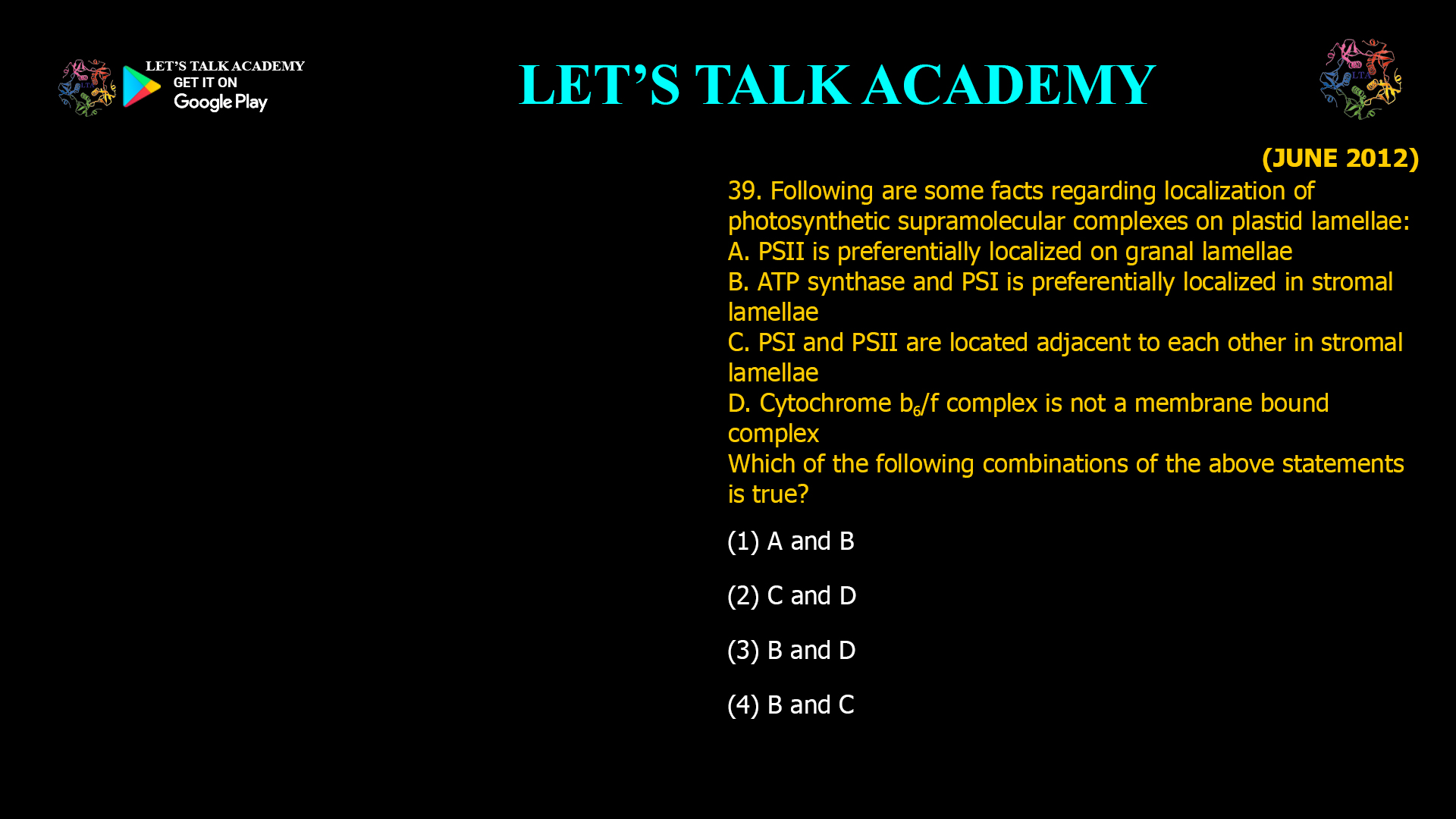
39. Following are some facts regarding localization of photosynthetic supramolecular complexes on plastid lamellae: A. PSII is preferentially localized on granal lamellae B. ATP synthase and PSI is preferentially localized in stroma) lamellae C. PSI and PSII are located adjacent to each other in stroma) lamellae D. Cytochrome bob complex is not a membrane bound complex Which of the following combinations of the above statements is true? (1) A and B (2) C and D (3) B and D (4) B and C

Organization of Photosynthetic Complexes in Thylakoid Membranes

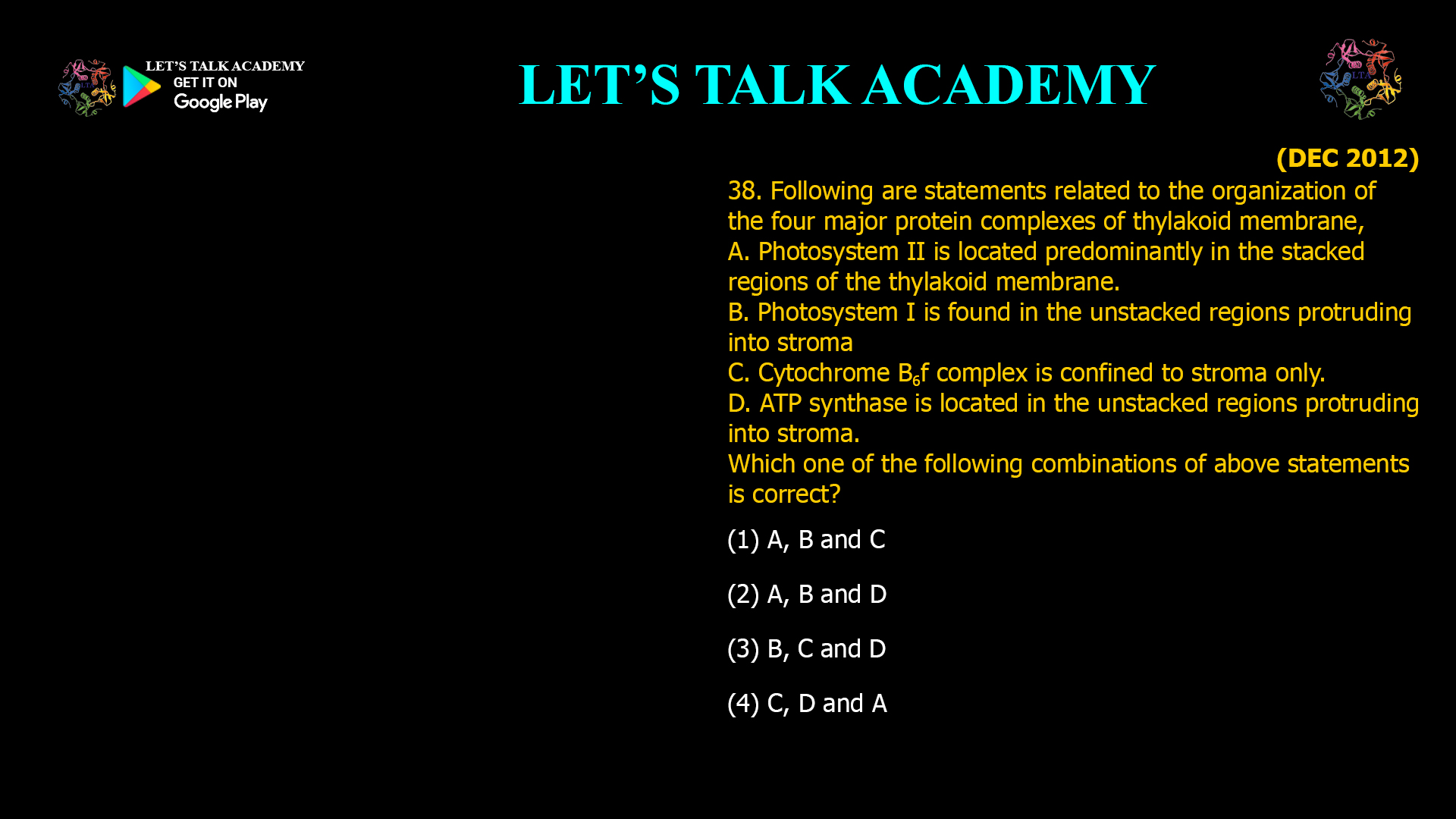
38. Following are statements related to the organization of the four major protein complexes of thylakoid membrane, A. Photosystem II is located predominantly in the stacked regions of the thylakoid membrane. B. Photosystem I is found in the unstacked regions protruding into stroma C. Cytochrome B6f complex is confined to stroma only. D. ATP synthase is located in the unstacked regions protruding into stroma. Which one of the following combinations of above statements is correct? (1) A, B and C (2) A, B and D (3) B, C and D (4) C, D and A

Thylakoid Protein Complex Localization: What Is True?

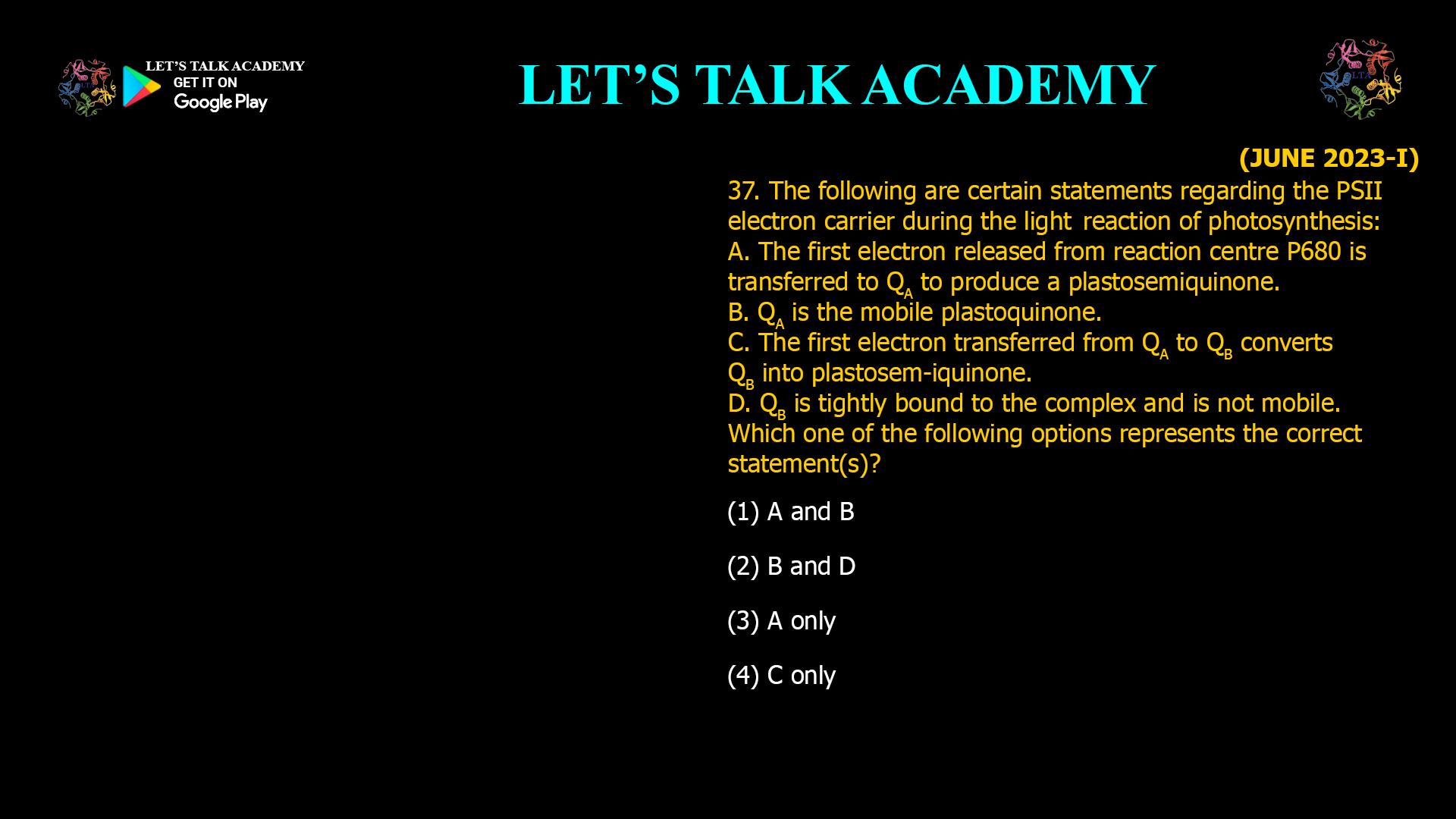
37. The following are certain statements regarding the PSII electron carrier during the light reaction of photosynthesis: A. The first electron released from reaction centre P680 is transferred to QA to produce a plastosemiquinone. B. QA is the mobile plastoquinone. C. The first electron transferred from QA to QB converts QB into plastosemiquinone. D. QB is tightly bound to the complex and is not mobile. Which one of the following options represents the correct statement(s)? (1) A and B (2) B and D (3) A only (4) C only

PSII Electron Carriers: Mobile and Tightly Bound Roles

36. The following statements refer to photosystem structure and function involved in light-dependent reaction of photosynthesis: A. The antenna or light harvesting complex absorbs light energy and transfers it to the reaction centre. B. The first electron is released from P680 and transferred to QA to produce a semiquinone C. D1, a protein subunit of the plant PS-II core complex is encoded by gene psbD Which one of the following combinations of above statements is INCORRECT? (1)A and B (2) B and C (3) A and C (4) Only C

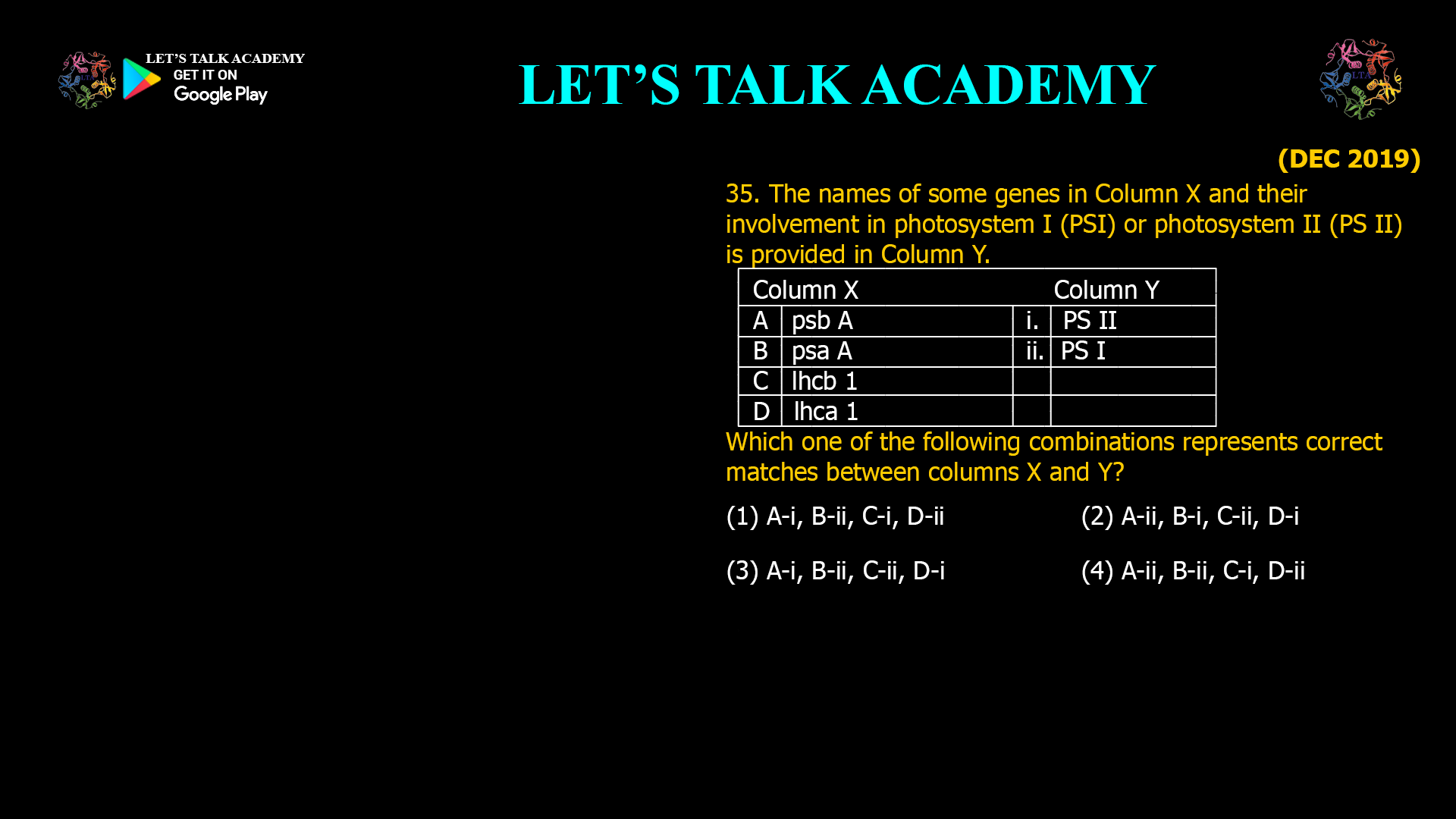
35. The names of some genes in Column X and their involvement in photosystem I (PSI) or photosystem II (PS II) is provided in Column Y. Column X Column Y A psb A i. PS II B psa A ii. PS I C lhcb 1 D lhca 1 Which one of the following combinations represents correct matches between columns X and Y? (1) A-i, B-ii, C-i, D-ii (2) A-ii, B-i, C-ii, D-i (3) A-i, B-ii, C-ii, D-i (4) A-ii, B-ii, C-i, D-ii

Photosystem Gene Assignments: PSII and PSI

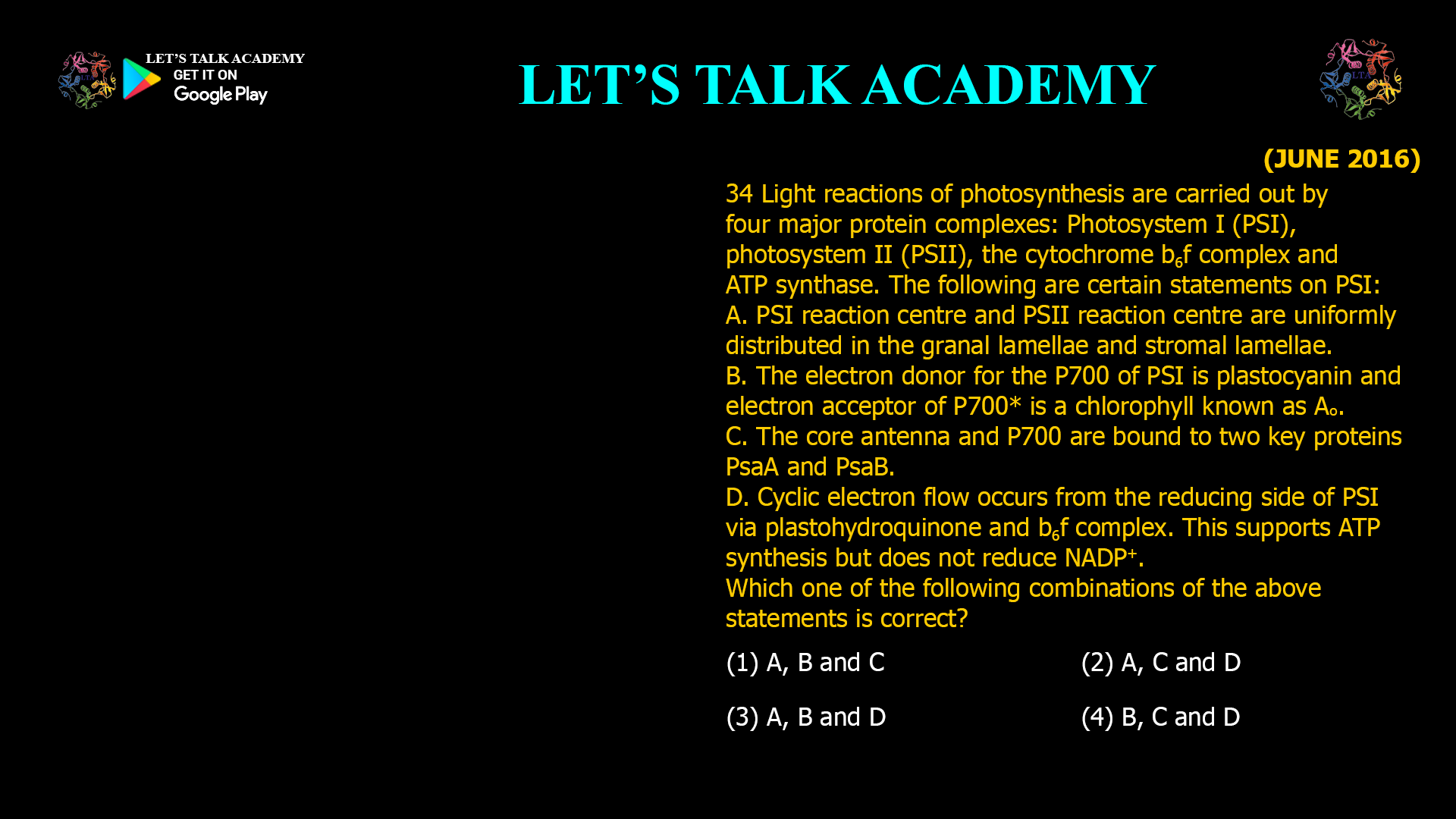
34 Light reactions of photosynthesis are carried out by four major protein complexes: Photosystem I (PSI), photosystem II (PSII), the cytochrome b6f complex and ATP synthase. The following are certain statements on PS I: A. PSI reaction centre and PSII reaction centre are uniformly distributed in the granal lamellae and stromal lamellae. B. The electron donor for the P700 of PSI is plastocyanin and electron acceptor of P700* is a chlorophyll known as Ao. C. The core antenna and P700 are bound to two key proteins PsaA and PsaB. D. Cyclic electron flow occurs from the reducing side of PSI via plastohydroquinone and b6f complex. This supports ATP synthesis but does not reduce NADP+. Which one of the following combinations of the above statements is correct? (1) A, B and C (2) A, C and D (3) A, B and D (4) B, C and D

Photosystem I: Structure, Electron Flow, and Function

solve this question in details explain every option and write SEO friendly article on it with key phrase and metadiscriprion and slug, slug shoud be from keywords of question. and the keyswords of slug and discription and keyphrase and introduction should be according to SEO

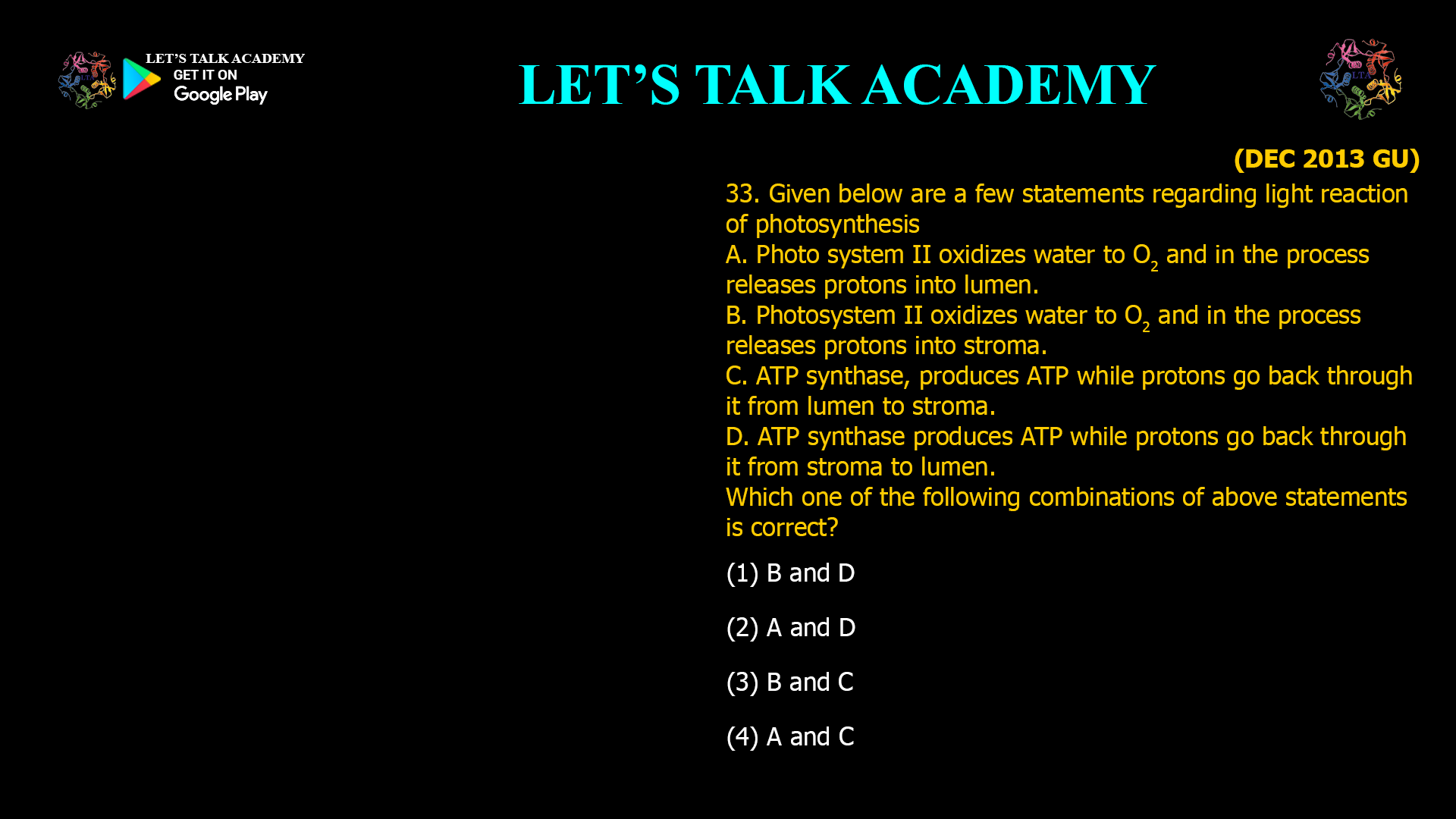
Light Reaction: Water Oxidation, Proton Movement, ATP Synthesis

solve this question in details explain every option and write SEO friendly article on it with key phrase and metadiscriprion and slug, slug shoud be from keywords of question. and the keyswords of slug and discription and keyphrase and introduction should be according to SEO

Light Reaction Electron Transport: Facts and Errors

31. Which one of the following statements related to photosynthesis is NOT correct? (1) Light reaction takes place in the thylakoid membranes (2) ATP and NADPH are produced in thylakoid membranes. (3) Lumen is the enclosed interconnected region of the thylakoid membranes. (4) NAPDH is produced during carbon reactions by the enzymes present in stroma.

Photosynthesis: Correct and Incorrect Statements

solve this question in details explain every option and write SEO friendly article on it with key phrase and metadiscriprion and slug, slug shoud be from keywords of question. and the keyswords of slug and discription and keyphrase and introduction should be according to SEO

Z-Scheme Electron Flow: Thylakoid Pathways

solve this question in details explain every option and write SEO friendly article on it with key phrase and metadiscriprion and slug, slug shoud be from keywords of question. and the keyswords of slug and discription and keyphrase and introduction should be according to SEO

Electron Transport Chain in Thylakoid Membrane

solve this question in details explain every option and write SEO friendly article on it with key phrase and metadiscriprion and slug, slug shoud be from keywords of question. and the keyswords of slug and discription and keyphrase and introduction should be according to SEO

Z-Scheme Electron Transport: Sequence and Carriers

solve this question in details explain every option and write SEO friendly article on it with key phrase and metadiscriprion and slug, slug shoud be from keywords of question. and the keyswords of slug and discription and keyphrase and introduction should be according to SEO

Chlorophyll Types and Distribution: Plant and Bacterial Pigments

26. After absorbing light, chlorophyll molecules in green plants exist in singlet and triplet states. Following are certain statement on singlet and triplet states of chlorophyll molecules: A. Singlet state is short lived compared to triplet state. B. Singlet state is long lived compared to triplet state. C. Singlet state contains electrons with anti-parallel. Spins while triplet state has electrons with parallel spins. D. Singlet state contains electrons with parallel spins while triplet state has

Singlet and Triplet States of Chlorophyll: Key Facts

25. Upon absorption of a photon, a chlorophyll molecule get converted to its excited state when the energy of photon is (1) more than that of ground state of pigment molecule (2) equal to that of pigment molecule's excited state (3) more than that of ground state but lesser then excited state of the pigment molecule (4) equal to energy gap between ground state and excited state energy

Chlorophyll Excitation: Photon Energy Requirements

24. If an Arobidopsis plant, mutated in lycopene biosynthetic pathway is grown in sunny tropical climate in the presence of oxygen: (1) it would accumulate higher biomass due to higher rate of photosynthesis. (2) there will not be any influence of this mutation on the rate of photosynthesis and plant growth. (3) it would show reduced biomass due to photo oxidative damage. (4) the leaves would be bluish purple in color because of higher accumulation of xanthophylls.

Lycopene Pathway Mutant Arabidopsis: Impact on Biomass and Photoprotection

23. Which one of the following is NOT a characteristic property of carotenoids? (1)They possess complex porphyrin ring. (2)They are integral constituent of thylakoid membrane. (3) They are also called accessory pigments. (4) They protect plants from damages caused by light.

Properties of Carotenoids: What’s NOT Correct

22. Which one of the following is the function of cytochrome b6f complex? (1) Oxidation of water to O2 (2) Oxidation of plasto-hydroquinone (PQH2)

Cytochrome b6f Complex Function in Photosynthesis

21. In chloroplast, the site of coupled oxidation-reduction reactions is the (1) outer membrane              (2) inner membrane (3) thylakoid membrane    (4) stromal space

Thylakoid Membrane: The Site of Redox Reactions in Chloroplast

20. Which of the following mechanisms is NOT involved in providing photo protection to plants? (1) Degradation of 01 protein. (2) Zeaxanthin formation. (3) Photolysis of water. (4) Thermal dissipation

Photoprotection Mechanisms in Plants: What Works and What Doesn’t

19. The photon intensity captured by green plants is used in the following processes: (i) Photosynthesis (ii) Generation of heat (iii) Production of toxic products such as superoxide, singlet oxygen etc. (iv) Damage to D1 protein of PSII Based on the above facts, photoinhibiton will happen when the: (1) entire photon intensity is used for photosynthesis (2) excess photon intensity is completely used for heat generation (3) excess photon intensity is used for heat generation and formation of toxic products (4) excess photon intensity leads to the damage of D1 protein

Photoinhibition: When Excess Light Damages PSII

18. Photosystem II functions as a light dependent water plastoquinone oxidoreductase. What are the names of two reaction center protein that bind electron transfer prosthetic group, such as P680, pheophytin and plastoquinone? (1) CP43 and CP47 (2) D1 and D2 (3) 33 kDa and 23 kDa (4) FA and FB

Photosystem II Reaction Center Proteins: D1 and D2

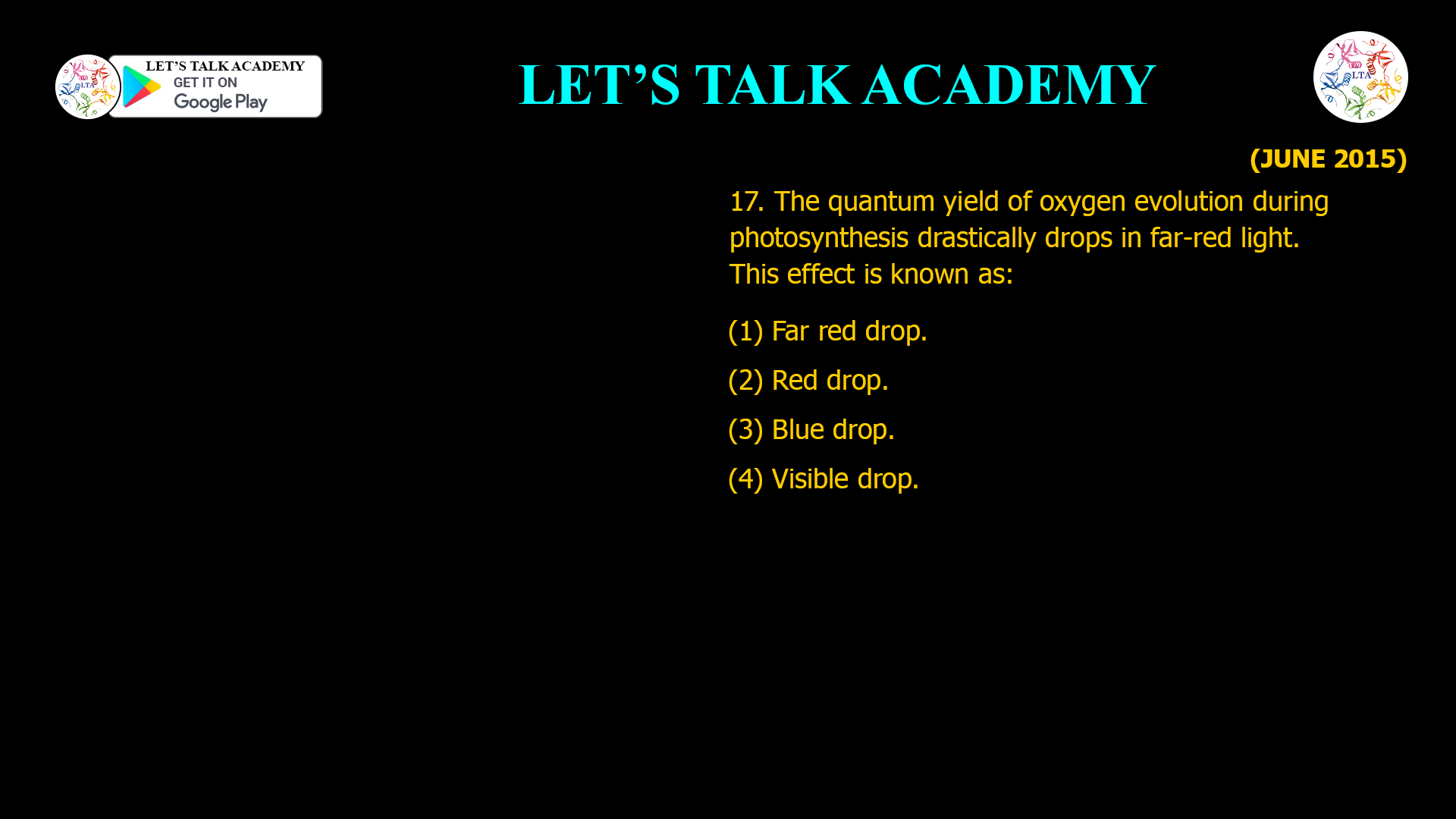
17. The quantum yield of oxygen evolution during photosynthesis drastically drops in far-red light. This effect is known as: (1) Far red drop. (2) Red drop. (3) Blue drop. (4) Visible drop.

Red Drop Effect: Quantum Yield Decline in Far-Red Light

16. The donor and acceptor of electron for cytb/f6 are (1) PQ and UQ (2) UQ and Cyt C (3) UQ and PC (4) PQ and PC

Donor and Acceptor of Electrons for Cytochrome b6f

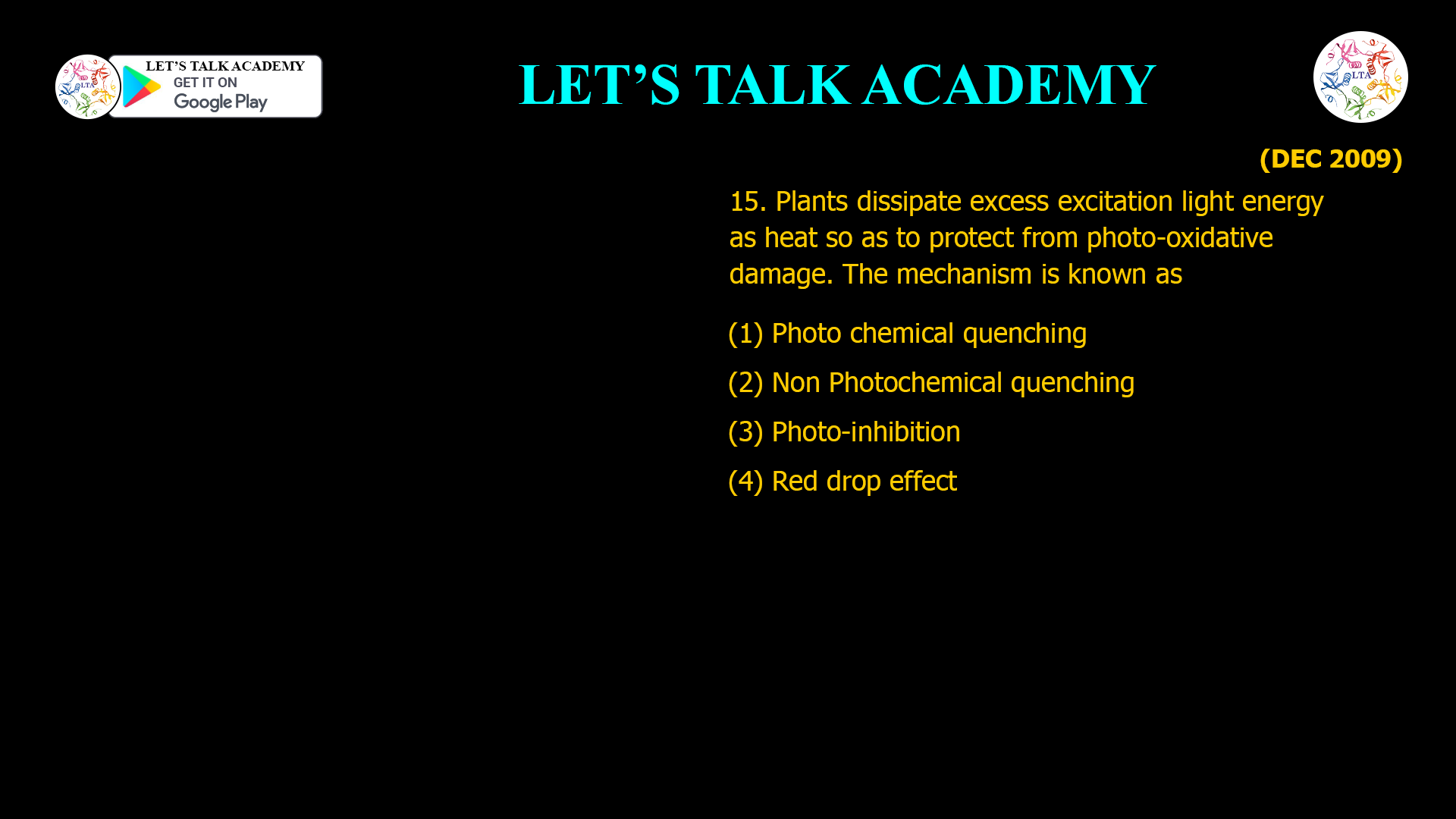
15. Plants dissipate excess excitation light energy as heat so as to protect from photo-oxidative damage. The mechanism is known as (1) Photo chemical quenching (2) Non Photochemical quenching (3) Photo-inhibition (4) Red drop effect

Non Photochemical Quenching: Plant Protection from Excess Light

14. Thylakoid membrane has lateral asymmetrical positioning of photosystem in chloroplast. Which statement is correct for distribution of PS-I and PS-II? (1) PS-I in no appressed portion and PS-II in appressed portion (2) PS-II in non appressed portion and PS-I in appressed portion (3) Both PS-I and PS-II in appressed portion (4) Both PS-I and PS-II in non appressed portion of thylakoid

Photosystem Distribution in Thylakoid Membranes

13. Among the following which mineral plays an important role in photolysis of water? (1) Mg++ (2) Ca++ (3) Na+ (4) Mn++

Manganese and Water Photolysis in Photosystem II

12. Which mineral ion play important role in photolysis of water associated with photosystem II? (1) Manganese (2) Magnesium (3) Iron (4) Molybdenum (1) Manganese (2) Magnesium (3) Iron (4) Molybdenum

Manganese: Key to Water Photolysis in Photosystem II

11. Essential component of chloroplast photosynthetic apparatus for photosynthesis is coded by (1) Nuclear gene (2) Chloroplast gene (3) Nuclear and chloroplast gene (4) Chloroplast and mitochondrial genes

Genetic Control of the Photosynthetic Apparatus

10. Which ion gradient is formed across the thylakoid membrane, if a light is incident on isolated thylakoid? (1) H+ (2) Na+ (3) Both Na+ and H+ (4) Cl-

Ion Gradient Across Thylakoid Membrane

9. The role of carrier proteins in light reaction is- (1) To transfer energetic electrons from PSII to PSI. (2) Pumping of Protons (3) Formation of ATP (4) Transferring of high energy electrons from PSI to PSII

Carrier Proteins in Light Reaction: What Do They Do?

8 Electrons excited from PS II are accepted by- (1) PQ (2) Pheophytin (3) PC (4) Cyt b6

Electron Acceptance in Photosystem II

7. The major difference in PS-I and PS-il found in Chloroplast are (1) Position on grana (2) Chlorophyll a (3) Position of electron carriers (4) Light harvesting

Major Differences Between PSI and PSII

6 DCMU effects the photosynthesis by attacking at (1) Ps I (2) PS II (3) PC (4) Cyt b-f6

DCMU Effects on Photosynthesis: Target Site

5 Most sensitive part of Photosynthesis is (1) PS-I (2) PS-II (3) Carboxylation reaction (4) Photolysis of water

Photosynthesis Sensitivity: Key Steps Under Stress

4 Which protein component is mobile in between PS II and PS I ? (1) PC (2) PQ (3) Cytochrome F6 (4) Ferrodoxin

Mobile Protein Component Between PSII and PSI

3. Which of the following statements regarding chlorophyll is NOT correct? (1) Chlorophyll-a has a —CH3 group in its porphyrin-like ring structure. (2) Chlorophyll-b has -CHO group in its porphyrin-like ring structure. (3) Only chlorophyll-a, but not chlorophyll-b, has a Mg++ coordinated at the centre of the porphyrin ¬like ring structure. (4) The long hydrocarbon tails of chlorophyll anchors them in the photosynthetic membrane.

Chlorophyll Structure: True and False Statements

2. A photosystem contains which of the following? (1) One photochemical reaction centre and multiple antennae (2) Multiple photochemical reaction centres and one antenna (3) One photochemical reaction centre and one antenna (4) Multiple photochemical reaction centres and multiple antennae

Photosystem Structure Explained

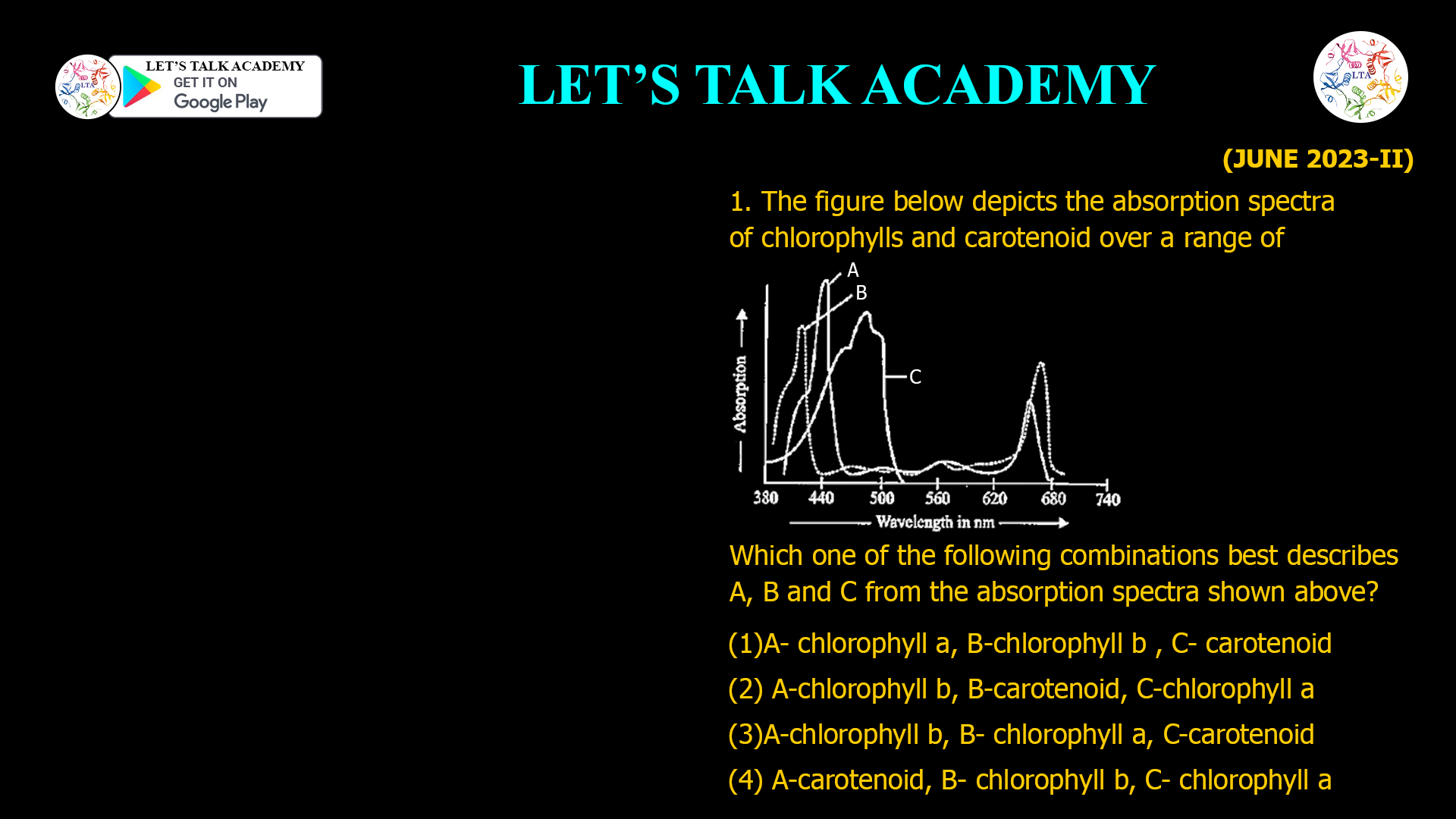
The figure below depicts the absorption spectra of chlorophylls and carotenoid over a range of Which one of the following combinations best describes A, B and C from the absorption spectra shown above? (1) A- chlorophyll a, B-chlorophyll b , C- carotenoid (2) A-chlorophyll b, B-carotenoid, C-chlorophyll a (3) A-chlorophyll b, B- chlorophyll a, C-carotenoid (4) A-carotenoid, B- chlorophyll b, C- chlorophyll a

Absorption Spectra of Chlorophyll and Carotenoids

Latest Courses