Which one of the following codons is used to code for selenocysteine in Escherichia coli? (1) UGA              (2) UAA (3) UAG              (4) UCC

Which Codon Codes for Selenocysteine in Escherichia coli? Understanding UGA Recoding

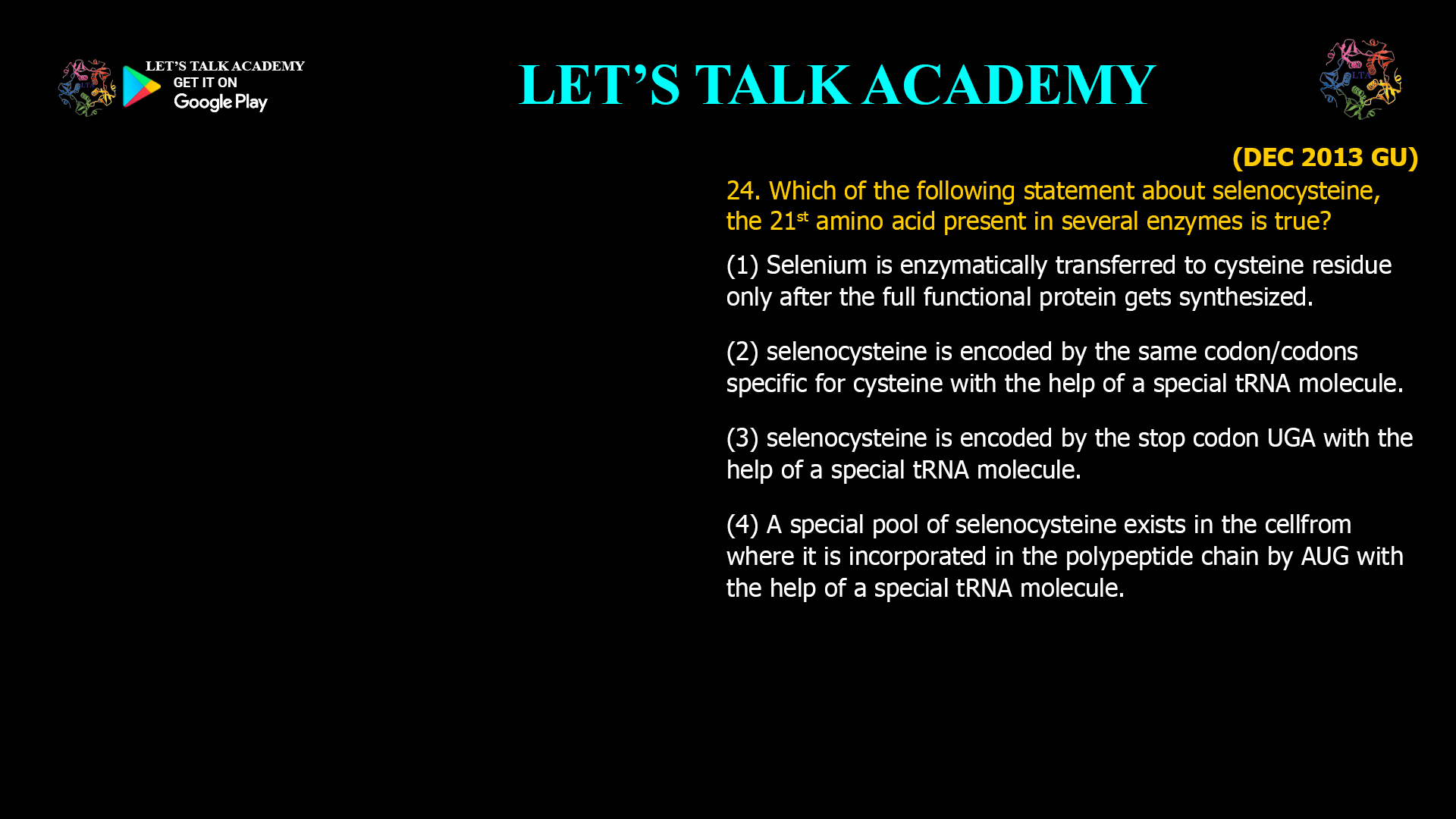
Which of the following statement about selenocysteine,the 21st amino acid present in several enzymes is true? (1) Selenium is enzymatically transferred to cysteineresidue only after the full functional protein getssynthesized. (2) selenocysteine is encoded by the samecodon/codons specific for cysteine with the help ofa special tRNA molecule. (3) selenocysteine is encoded by the stop codon UGAwith the help of a special tRNA molecule. (4) A special pool of selenocysteine exists in the cellfrom where it is incorporated in the polypeptidechain by AUG with the help of a special tRNAmolecule.

Selenocysteine: How the 21st Amino Acid Is Encoded by the UGA Stop Codon

Many organisms encode only 18 aminoacyl-tRNAsynthetases (aaRS). These organisms lack aars that use Asn or Gln (as one of the substrates) for direct aminoacylation of the tRNAAsn and TrnaGln, respectively. Which one of the following statements represents the correct option? (1) The organism lacking AsnRS and lnRs lack Asn and Gln in their proteins. (2) In these organism, selected Asp and Glu residuesin the poteirls are post translationally modified by a regulated mechanism (3) In these organisms, the tRNAAsn and tRNAGln arefirst aminoacylated by AspRS and GluRS,respectively, and then the Asp and Glu attached tothe tRNAs are modified to Asn and Gln,respectively. (4) In these organisms, the precursors of mRNAs thatencode AspRS and GluRS are alternatively splicedto generate AsnRs and GlnRs. 

How Organisms Without Asparaginyl- and Glutaminyl-tRNA Synthetases Incorporate Asparagine and Glutamine

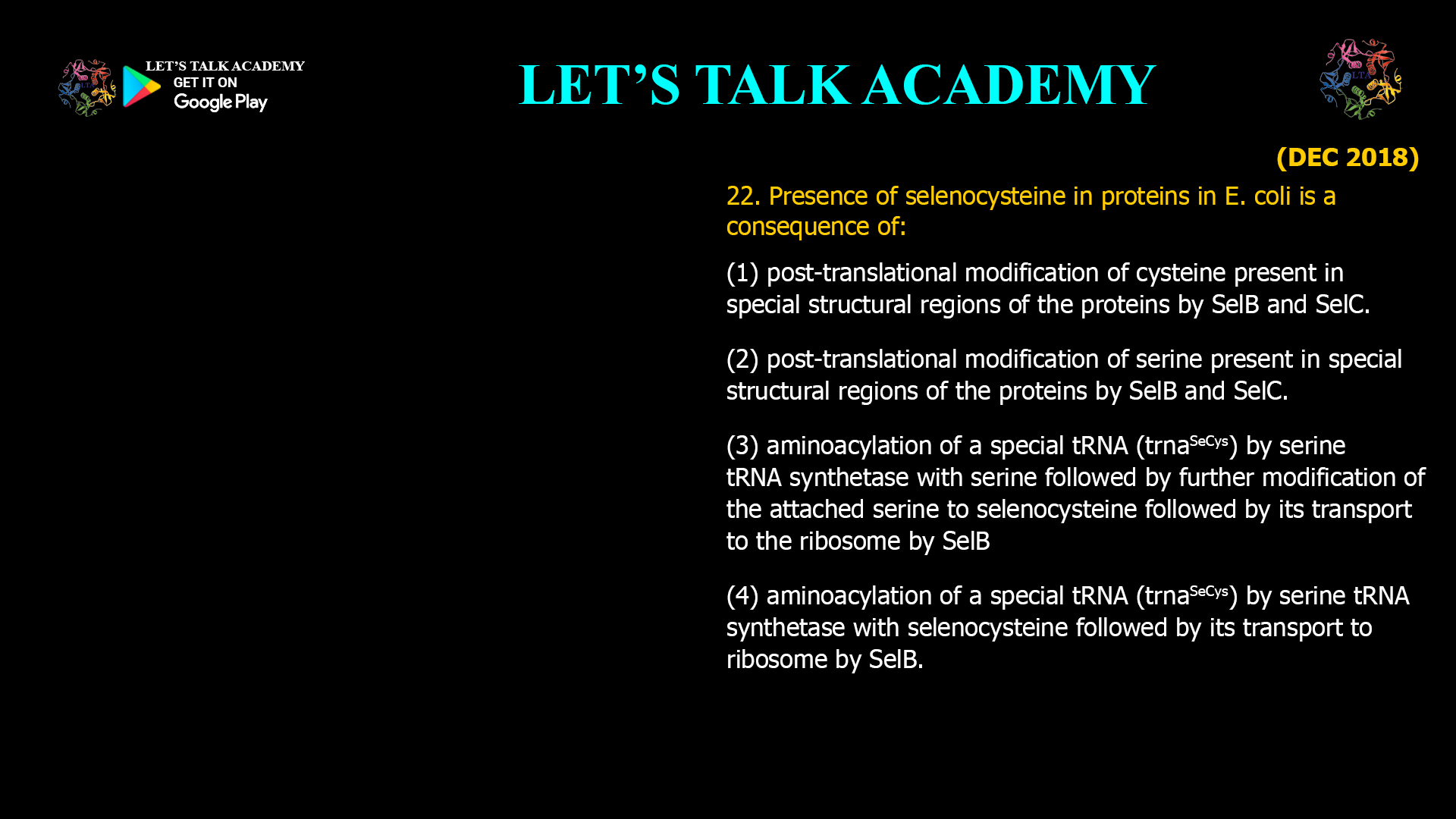
Presence of selenocysteine in proteins in E. coli is a consequence of: (1) post-translational modification of cysteine present in special structural regions of the proteins by SelBand SelC. (2) post-translational modification of serine present in special structural regions of the proteins by SelBand SelC. (3) aminoacylation of a special tRNA (TrnaSeCys) by serine tRNAsynthetase with serine followed by further modification of the attached serine to selenocysteinefollowed by its transport to the ribosome by SelB (4) aminoacylation of a special tRNA (TrnaSeCys) by serine tRNAsynthetase with selenocysteinefollowed by its transport to ribosome by SelB.

How E. coli Incorporates Selenocysteine into Proteins: Role of Ser-tRNA^Sec Charging and SelB

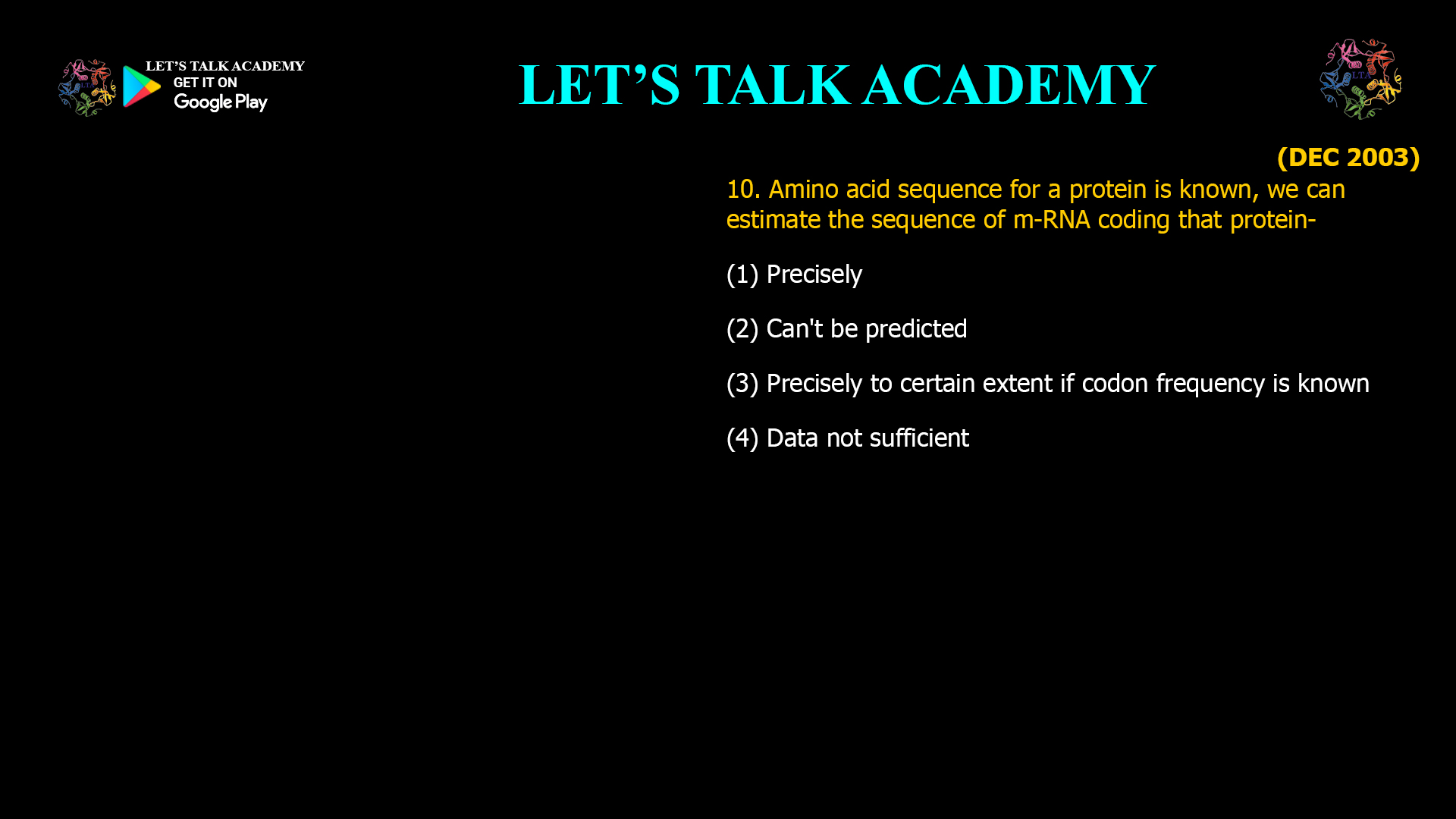
Amino acid sequence for a protein is known, we canestimate the sequence of m-RNA coding that protein- (1) Precisely (2) Can't be predicted (3) Precisely to certain extent if codon frequency is known (4) Data not sufficient

Predicting mRNA Sequences from Protein Sequences: The Role of Codon Usage and Genetic Code Degeneracy

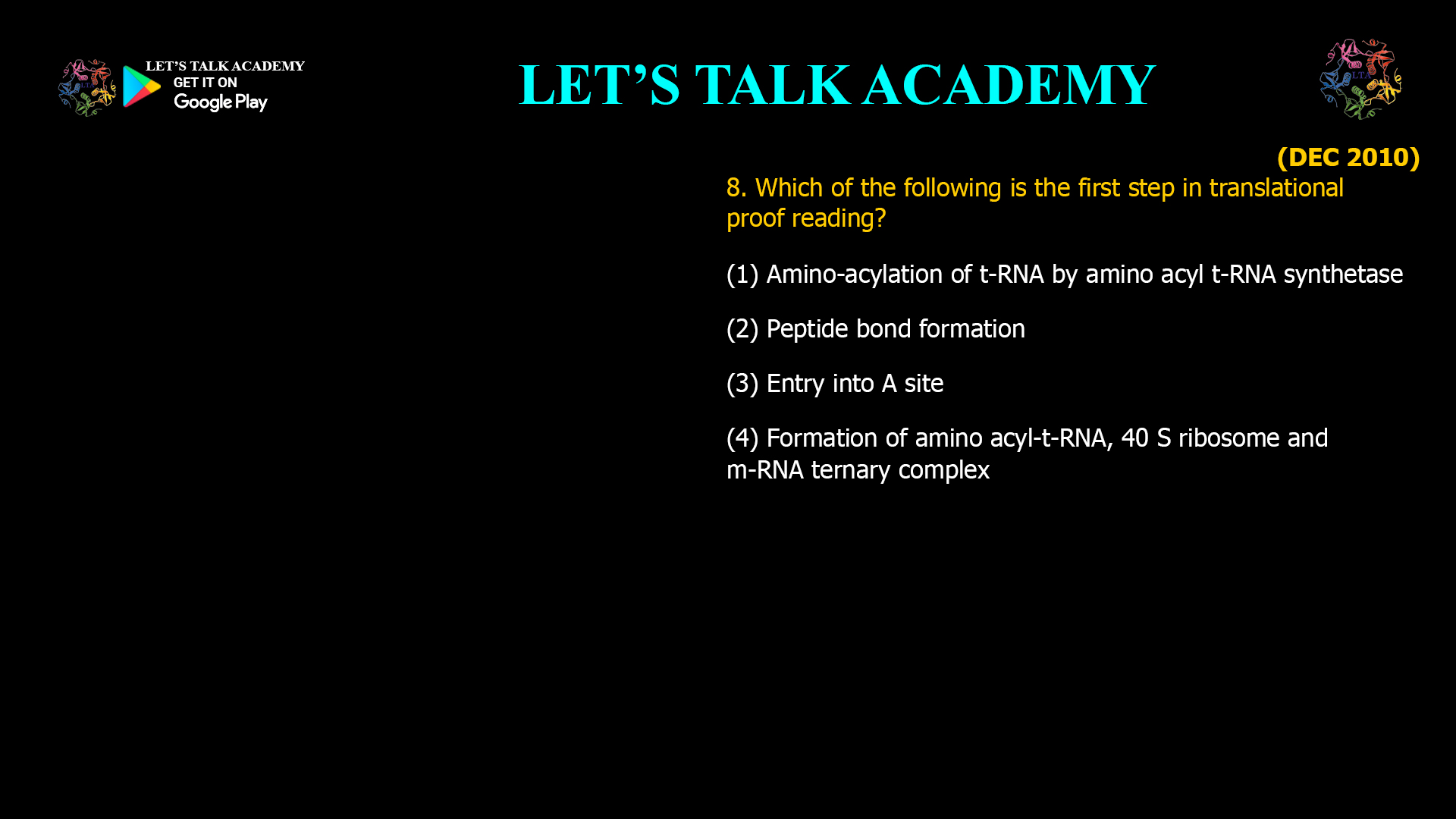
Which of the following is the first step in translational proof reading? (1) Amino-acylation of t-RNA by amino acyl t-RNA synthetase (2) Peptide bond formation (3) Entry into A site (4) Formation of amino acyl-t-RNA, 40 S ribosome and m-RNA ternary complex write a seo freindly artical with appropriate slug and title meta description with in 1000 words without giving refrence link also use all keyword realted to this artical and give the correct answer 

Aminoacylation of tRNA by Aminoacyl-tRNA Synthetase: The First Step in Translational Proofreading

In prokaryotes, the initiator t-RNA is first charged with a methionine, followed by the addition of a formyl groupto the methionine by the enzyme Met-tRNAtransformylase. Given below are several statements in this context.  All prokaryotic proteins have formyl methionine at their amino terminal end B.Deformylase removes the formyl group from the amino terminal methionine C. All prokaryotic proteins have methionine at their amino end D. Aminopeptidases often remove the amino terminal methionine. E. Aminopeptidases remove ammo terminal formyl methionine. Which of the above statement(s) are most likely to be true? (1) A only      (2) B and C (3) E only     (4) B and D

Prokaryotic Protein Initiation: The Role of Formyl Methionine, Deformylase, and Aminopeptidase in Translation and N-Terminal Processing

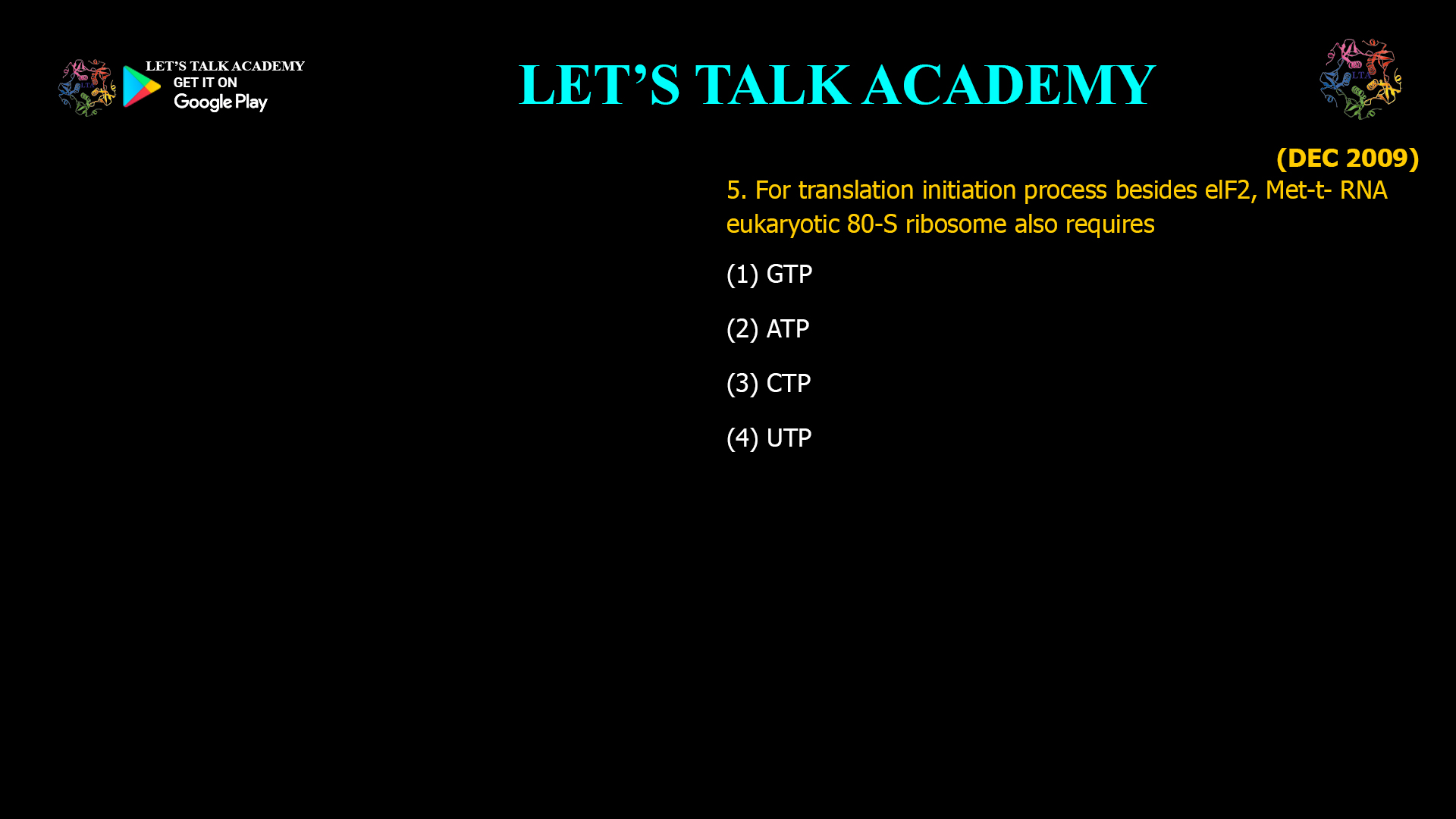
For translation initiation process besides elF2, Met-t- RNA eukaryotic 80-S ribosome also requires (1) GTP (2) ATP (3) CTP (4) UTP

Eukaryotic Translation Initiation: Beyond eIF2 and Met-tRNA

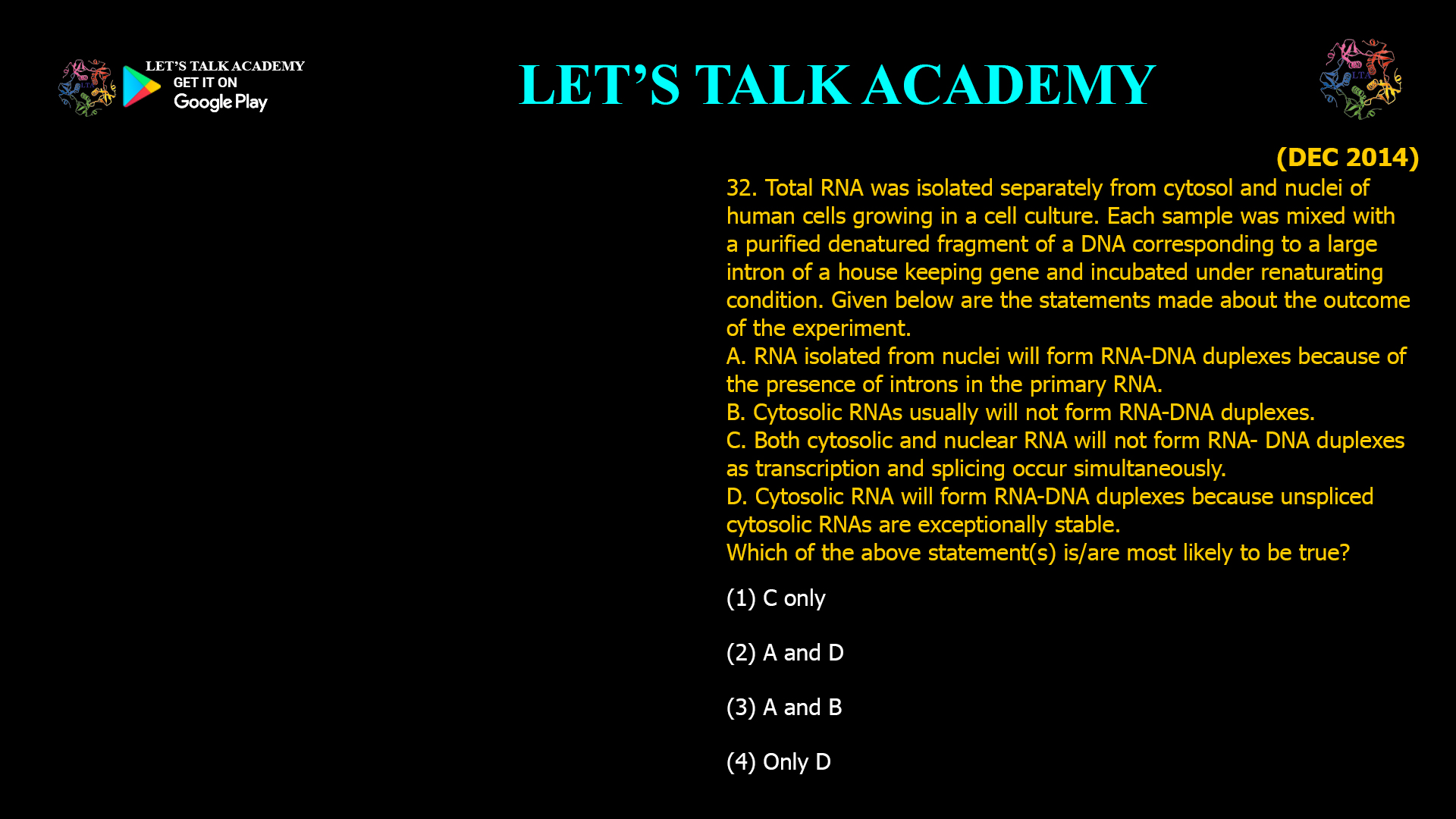
Nuclear RNA contains introns and can hybridize with intron DNA fragments

Nuclear RNA contains introns and can hybridize with intron DNA fragments

A DNA segment was cloned into the active site region of lacZ gene and the recombinant plasmid introduced into lac T strain of E. coli and plated on a medium containing X-gal. The colonies showed blue color. Which one of the following statements is correct? (1) The nature of the cloned DNA segment need not be special as cloning of any DNA in lacZ will result in disruption of its reading frame and production of blue colour on X-gal plates. (2) The cloned DNA segment could be a Group I intron whose removal from the precursor lac Z transcript in E. coli results in production of mature lac Z mRNA which can then produce active Lac Z protein. (3) The cloned sequence is likely to be lacY sequence which is naturally a part of lac operon in E. coli. (4) The cloned sequence is likely to be an anti-terminator sequence which allows full length transcription of lacZ.

A DNA segment was cloned into the active site region of lacZ gene and the recombinant plasmid introduced into lac T strain of E. coli and plated on a medium containing X-gal.

Following statements were made about catalytic introns: A. Group I introns may undergo self-splicing by transesterification. B, Group II introns do not require any factor/protein for auto-splicing either in vivo or in vitro C. Certain introns of both the group I and II classes may contain open reading frames which are translated into protein. D. Generally, group I introns migrate by DNA mediated mechanisms, whereas group II introns migrate by RNA-mediated mechanisms. E. Ribonuclease P (RNase P) is essential for bacteria and archaea but not eukaryotes. Which one of the following combinations represents statements which are all correct? (1) A, B, D             (2) B, D, E (3) A, C, D             (4) C, D, E

Catalytic Introns | Group I Group II introns | Transesterification

‘G-OH' from outside makes a nucleophilic attack on 5'-P of first base of intron

‘G-OH’ from outside makes a nucleophilic attack on 5′-P of first base of intron

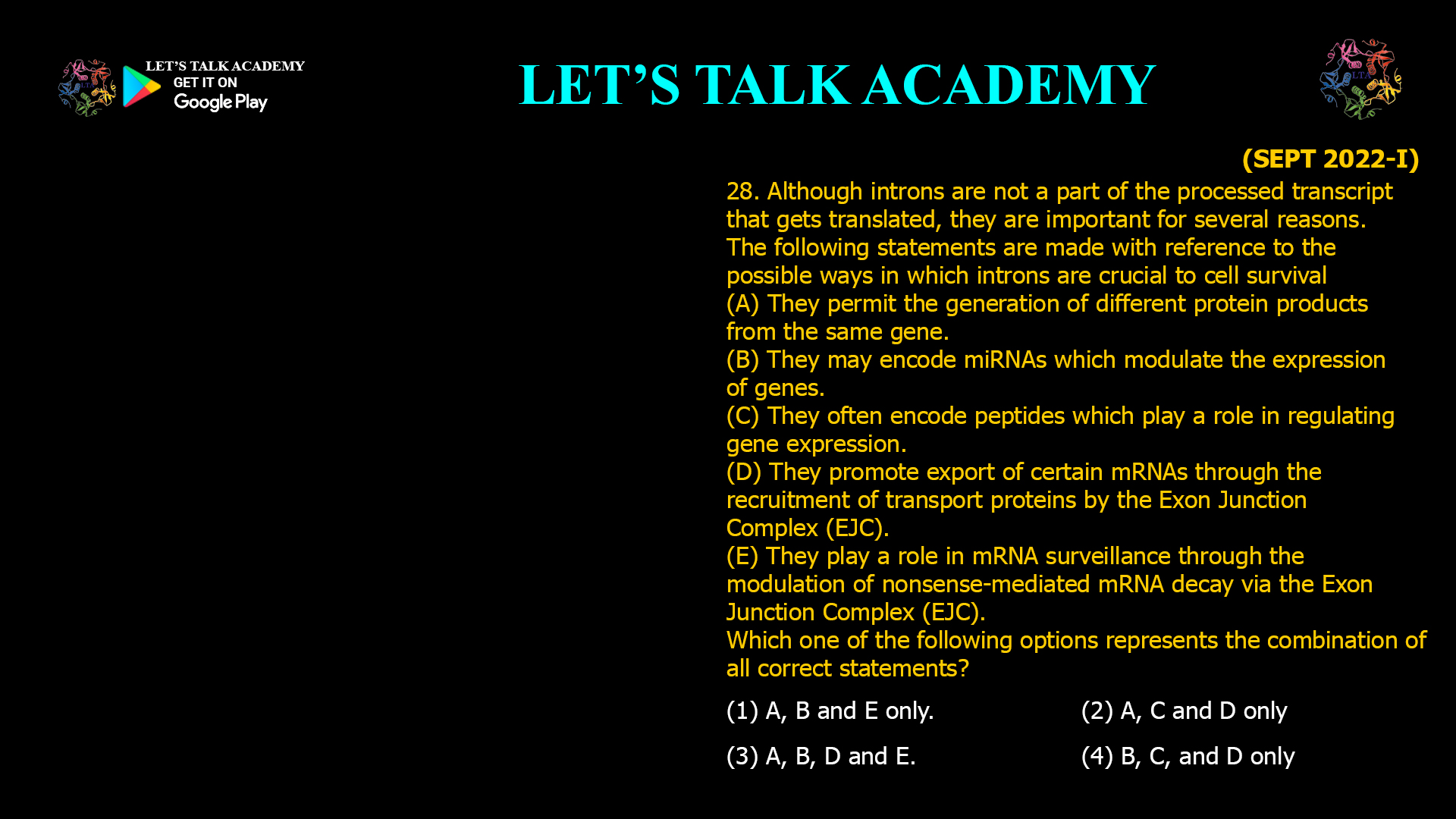
Although introns are not a part of the processed transcript that gets translated, they are important for several reasons. The following statements are made with reference to the possible ways in which introns are crucial to cell survival (A) They permit the generation of different protein products from the same gene. (B) They may encode miRNAs which modulate the expression of genes. (C) They often encode peptides which play a role in regulating gene expression. (D) They promote export of certain mRNAs through the recruitment of transport proteins by the Exon Junction Complex (EJC).

Role of Introns in cell survival Protein Diversity Encode miRNAs

post-transcriptional processing of RNA in eukaryotes. A. Soon after transcription initiation, RNA polymerase II pauses -30 nucleotides downstream from the site of initiation until the Cap structure is added to the 5' end of the nascent pre- mRNA B. The 5' splice sites are functionally divergent whereas the 3' sites are functionally equivalent C. In addition to helping in recognition of the splice sites, the exon definition also functions as a splicing regulator by allowing pairing and linking of adjacent 5’ and 3' splice sites. D. The intron definition mechanism applies only to the larger introns (above 500 nucleotides length) and assists in achieving alternate splicing. E. The splicing reactions carried out in vitro have the first and second trans- revealed that esterification reactions are reversible. Which one of the following combination of statements correct?

Post-Transcriptional Processing of RNA in Eukaryotes

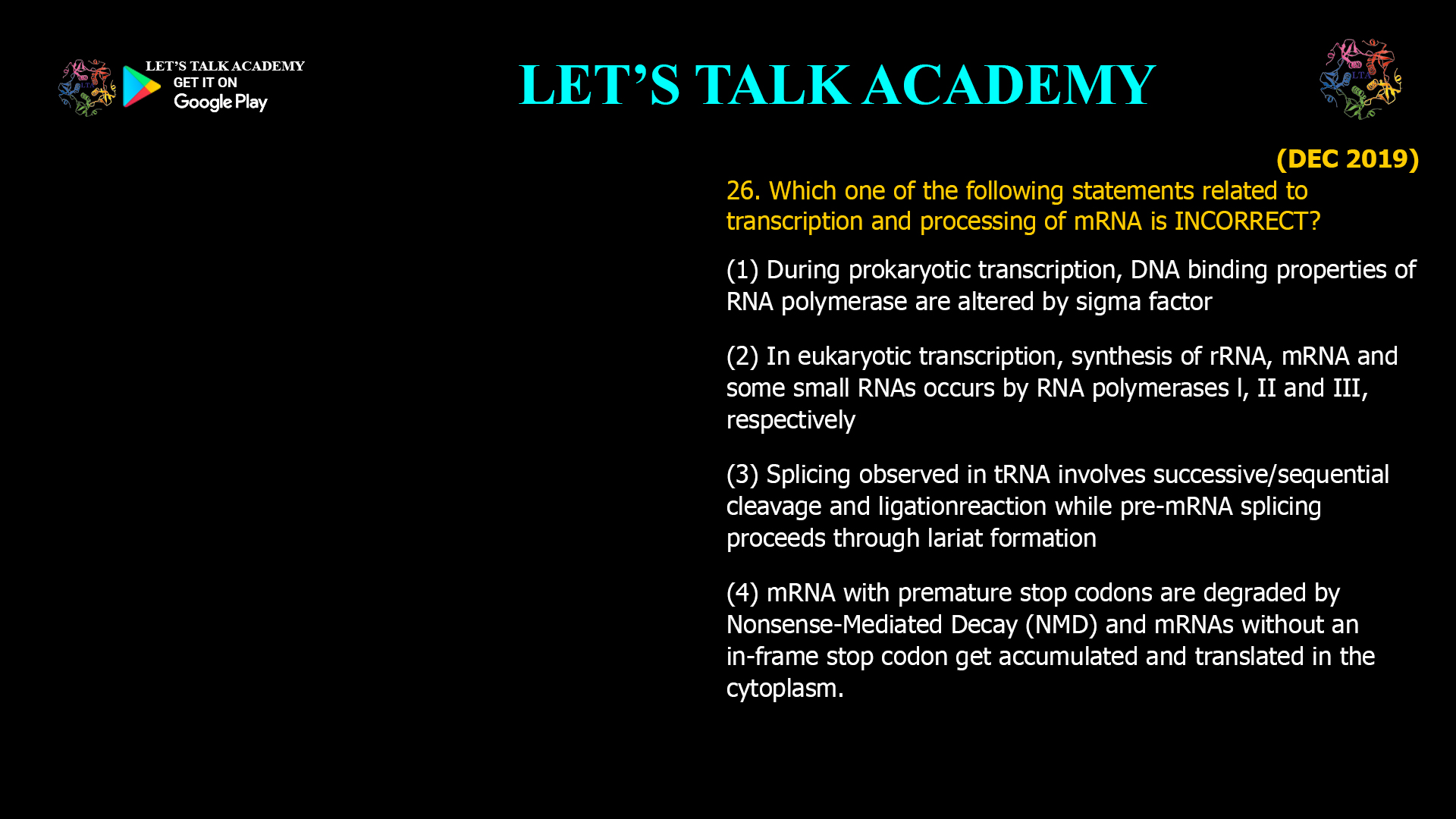
26. Which one of the following statements related to transcription and processing of mRNA is INCORRECT? (1) During prokaryotic transcription, DNA binding properties of RNA polymerase are altered by sigma factor (2) In eukaryotic transcription, synthesis of rRNA, mRNA and some small RNAs occurs by RNA polymerases l, II and III, respectively (3) Splicing observed in tRNA involves successive/sequential cleavage and ligationreaction while pre-mRNA splicing proceeds through lariat formation (4) mRNA with premature stop codons are degradedby Nonsense-Mediated Decay (NMD) and mRNAs without an in-frame stop codon get accumulated and translated in the cytoplasm.

Transcription and Processing of mRNA | Nonsense-Mediated Decay

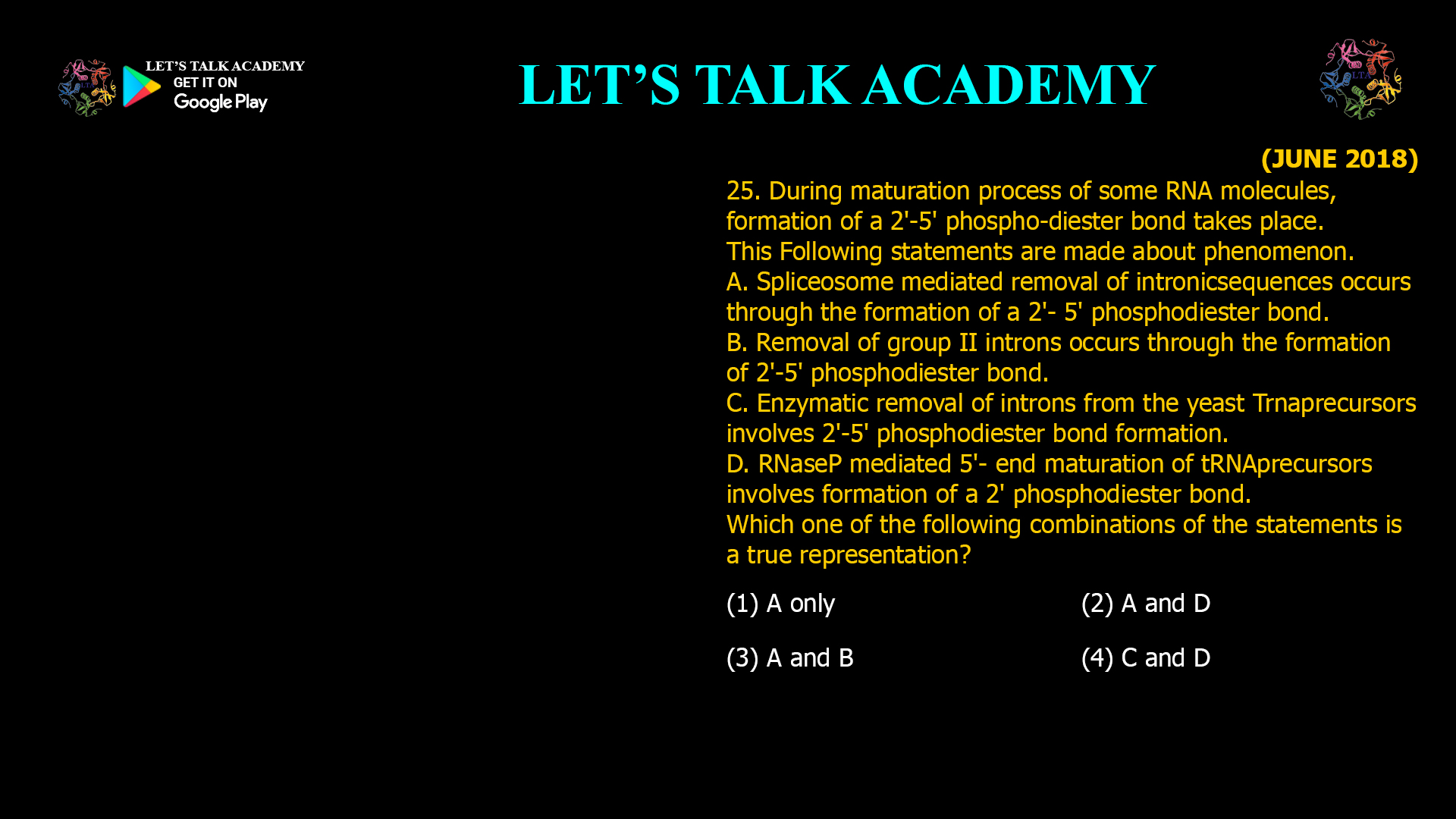
25. During maturation process of some RNA molecules, formation of a 2'-5' phospho-diester bond takes place. This Following statements are made about phenomenon. A. Spliceosome mediated removal of intronicsequences occurs through the formation of a 2'- 5' phosphodiester bond. B. Removal of group II introns occurs through the formation of 2'-5' phosphodiester bond. C. Enzymatic removal of introns from the yeast Trnaprecursors involves 2'-5' phosphodiester bond formation. D. RNaseP mediated 5'- end maturation of tRNAprecursors involves formation of a 2' phosphodiester bond. Which one of the following combinations of the statements is a true representation? (1) A only (2) A and D (3) A and B (4) C and D

The Formation of 2′-5′Phosphodiester Bonds During RNA Maturation

Splicing of pre-mRNA is mediated by snRNAs, which are integral parts of the spliceosome complex responsible for intron removal and exon ligation during mRNA processing

Splicing of pre-mRNA is mediated by snRNAs

The U1 snRNA is the key small nuclear RNA that base pairs with the 5′ splice site of pre-mRNA, playing a pivotal role in early spliceosome assembly and splice site recognition.

The snRNA that base pairs with the 5′ splice site of pre-mRNA is U1 snRNA

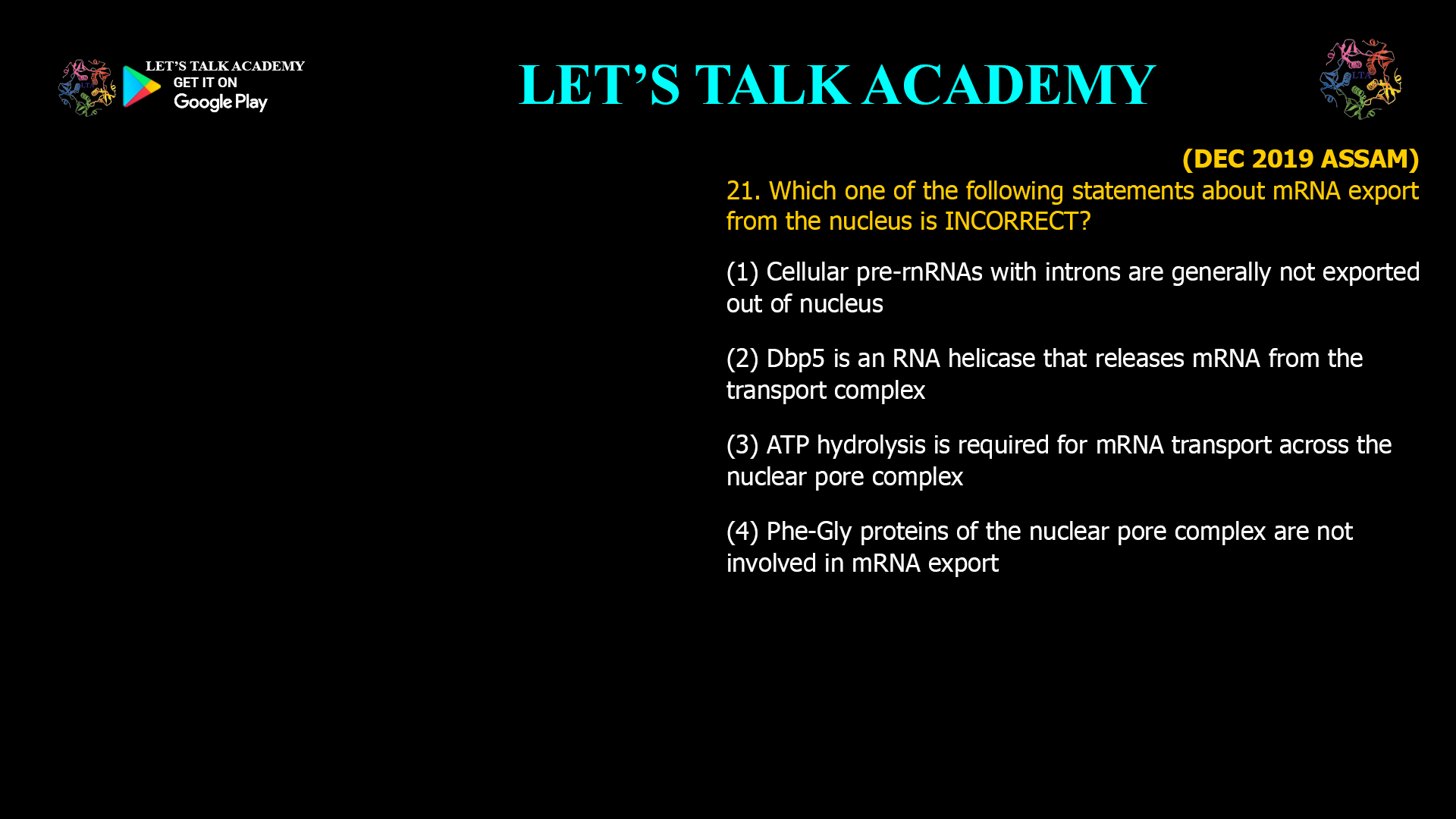
mRNA Export Required ATP | Unspliced mRNA Retention | Dbp5 Role as RNA helicase

mRNA Export Required ATP | Unspliced mRNA Retention | Dbp5 Role as RNA helicase

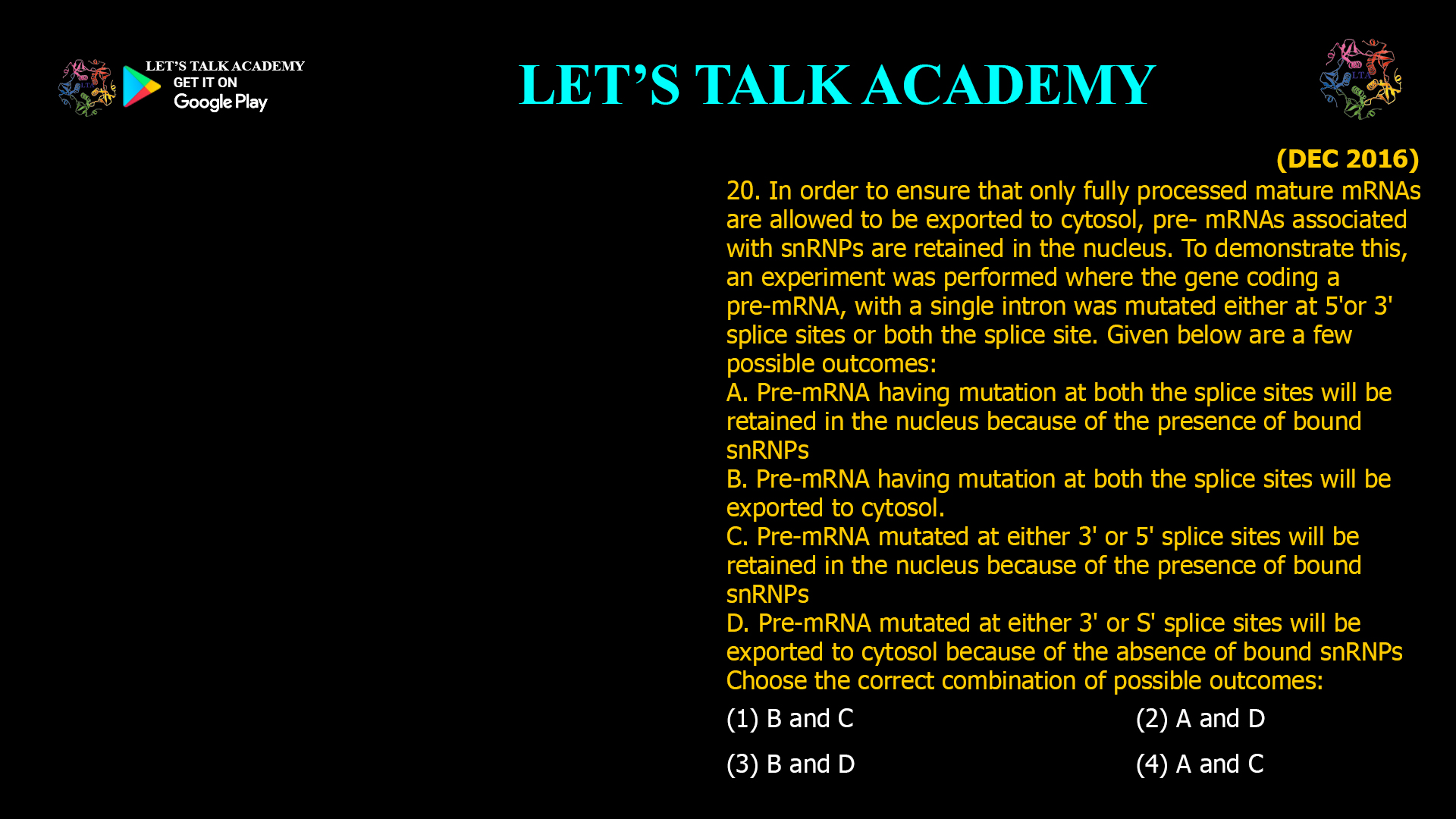
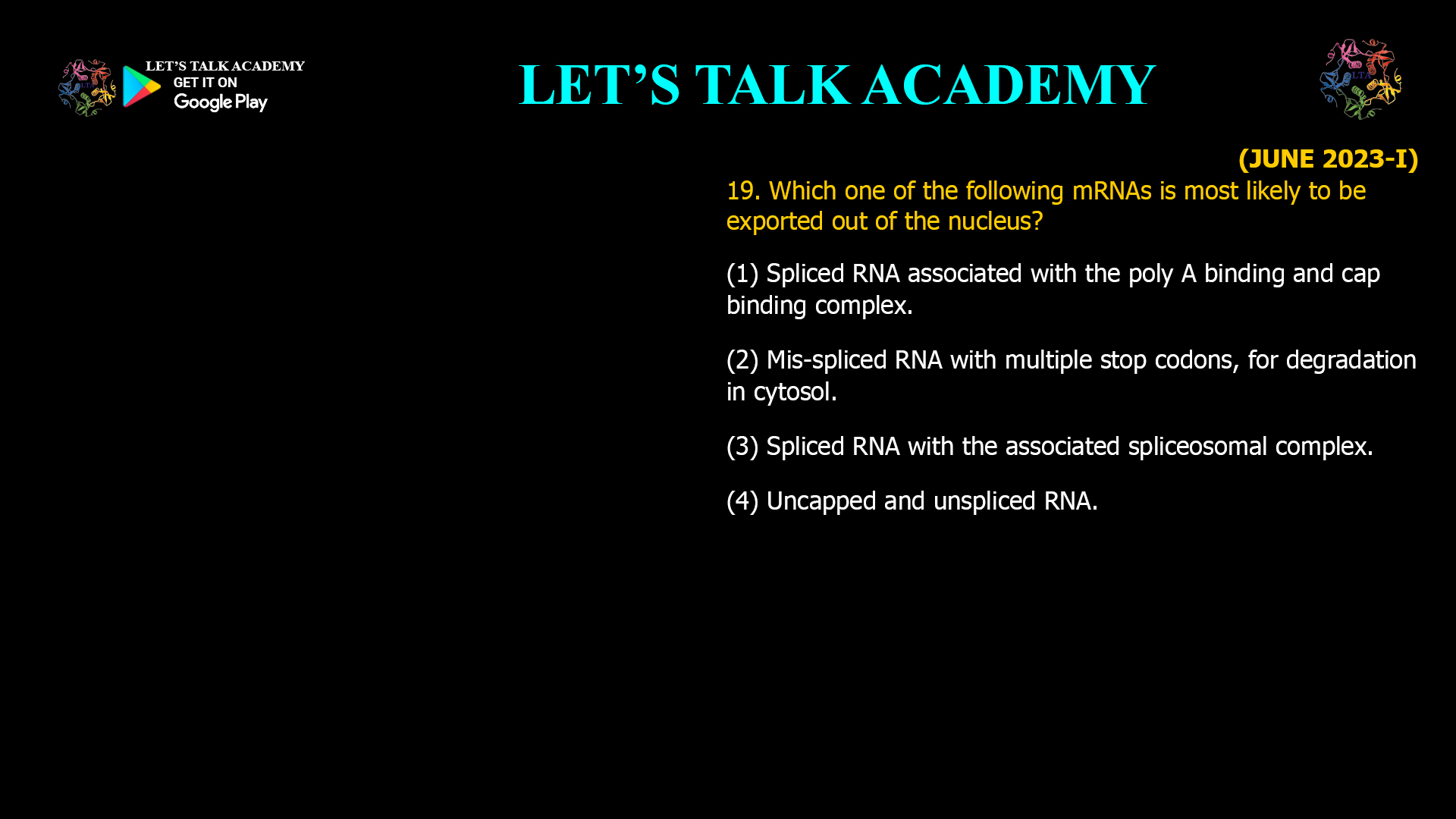
Pre-mRNAs that contain introns and are associated with spliceosomal small nuclear ribonucleoproteins (snRNPs) are typically retained in the nucleus until splicing is complete.

Nuclear Retention and Export of Pre-mRNAs with Splice Site Mutations

Mature, export-competent mRNAs in eukaryotic cells are typically spliced, 5′ capped, and 3′ polyadenylated.

Nucleus Export Spliced RNA associated with the poly A binding and cap binding complex

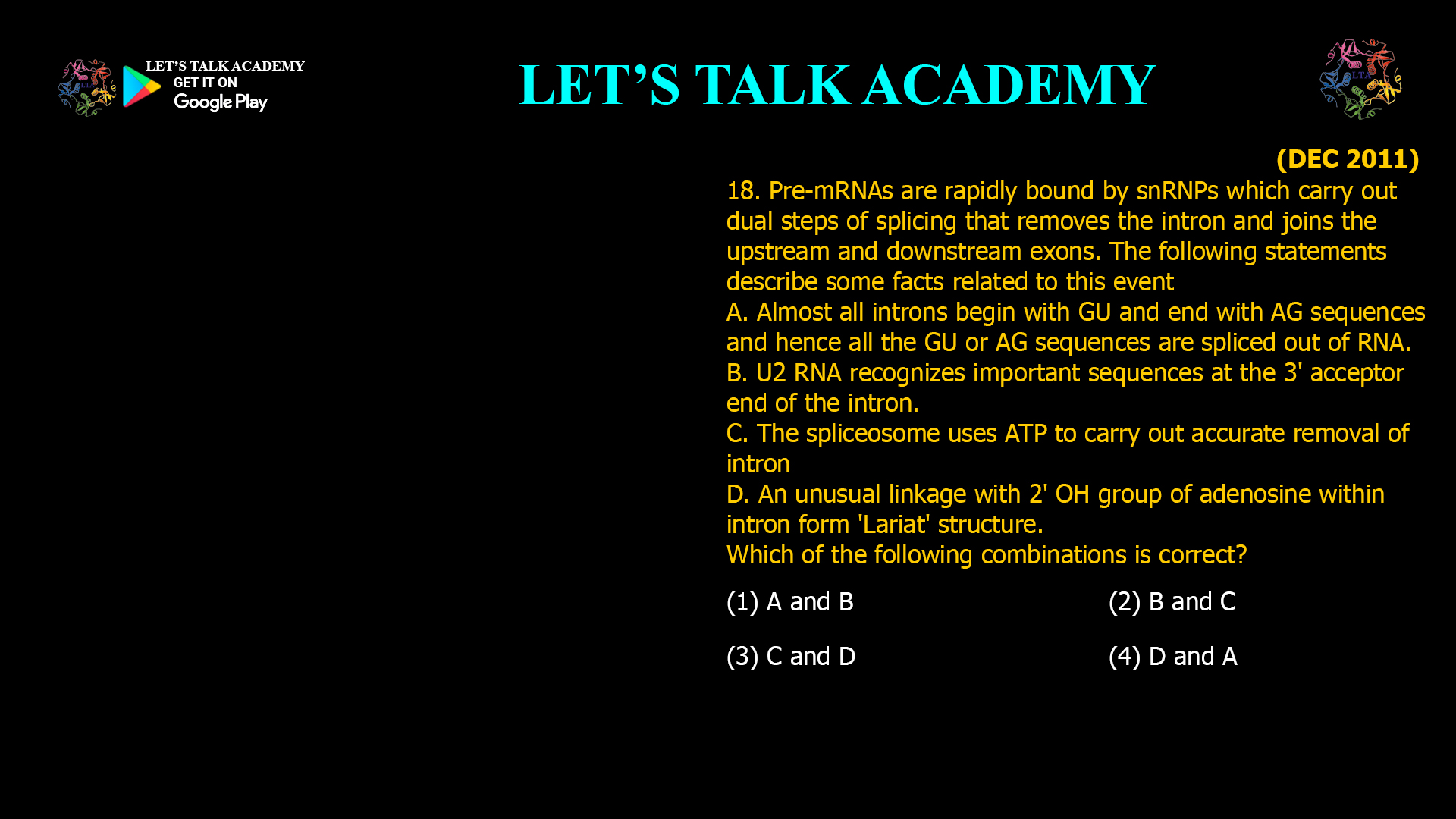
18. Pre-mRNAs are rapidly bound by snRNPs which carry out dual steps of splicing that removes the intron and joins the upstream and downstream exons. The following statements describe some facts related to this event A. Almost all introns begin with GU and end with AG sequences and hence all the GU or AG sequences are spliced out of RNA. B. U2 RNA recognizes important sequences at the 3' acceptor end of the intron. C. The spliceosome uses ATP to carry out accurate removal of intron D. An unusual linkage with 2' OH group of adenosine within intron form 'Lariat' structure. Which of the following combinations is correct? (1) A and B (2) B and C (3) C andD(4) D and A

Pre-mRNA Splicing | snRNPs and the Spliceosome

17. Which of following is reactive centre for splicing of exons during processing of m-RNA? (1) U1 and U5 (2) Branch point, U2 and U6 (3) Branch point, U4 and U6 (4) U2 and U4

The Branch Point Sequence | Small Nuclear RNAs U2 and U6.

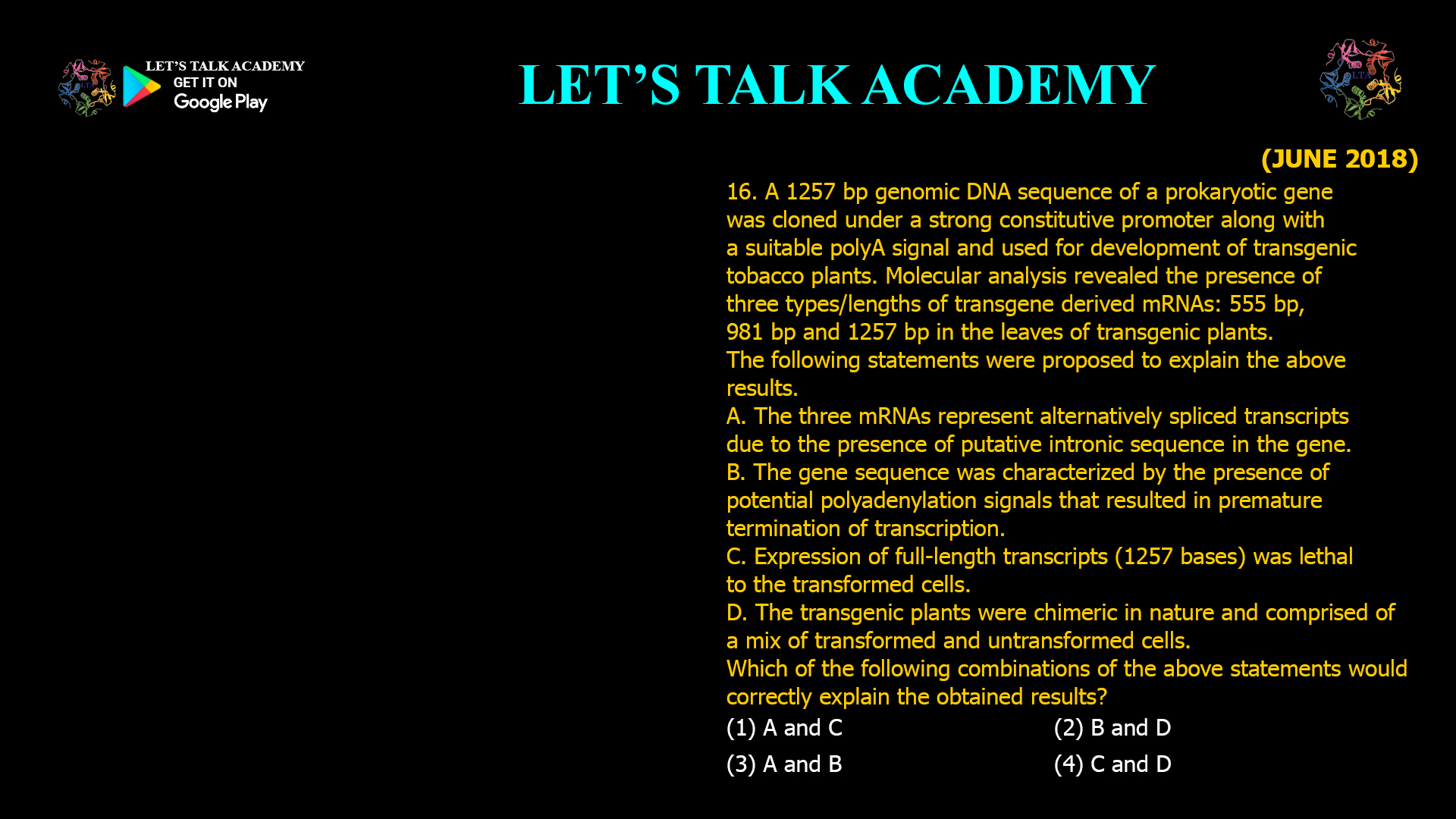
Multiple mRNA Sizes from a Prokaryotic Gene in Transgenic Tobacco Plants

Multiple mRNA Sizes from a Prokaryotic Gene in Transgenic Tobacco Plants

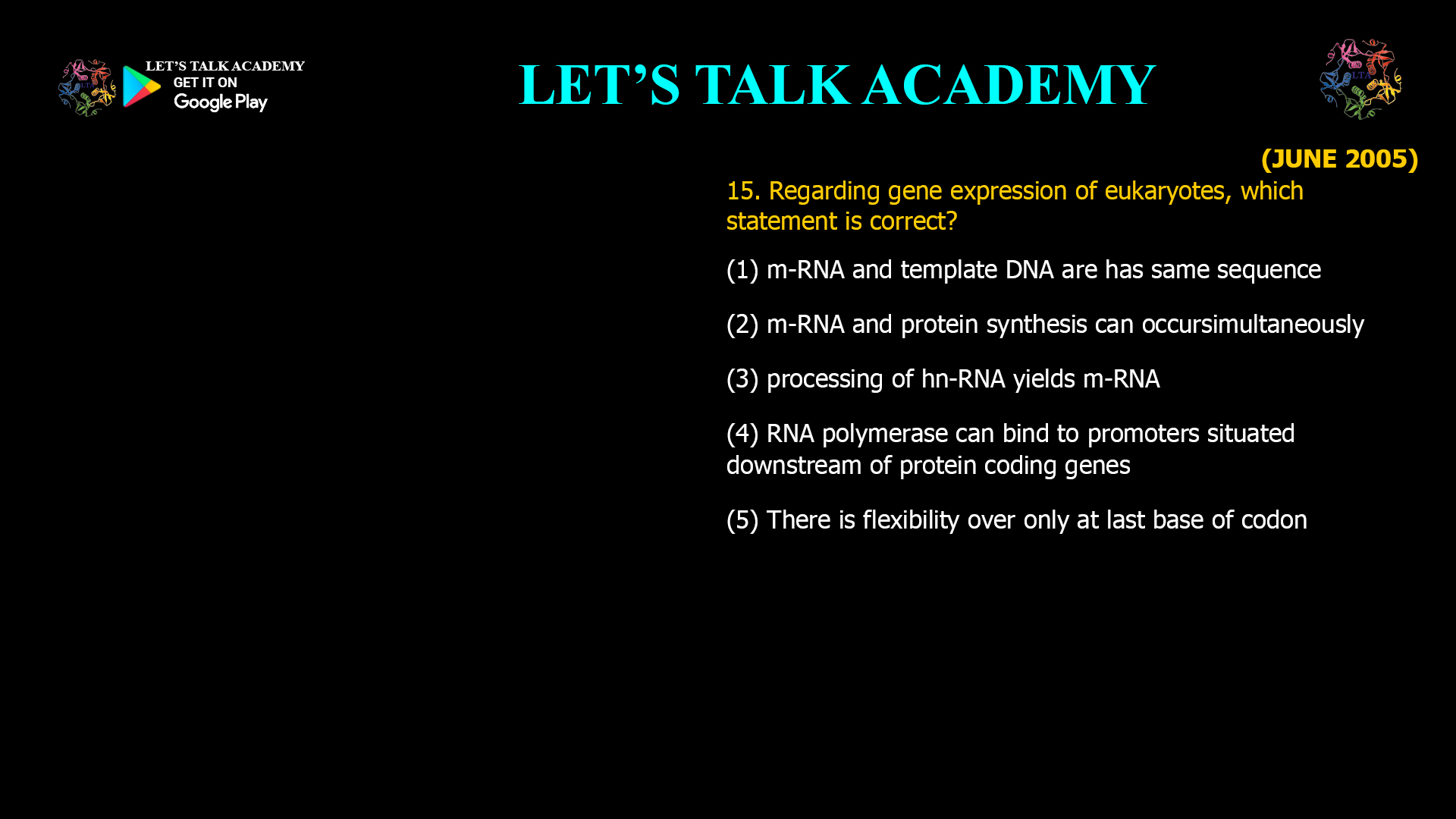
Eukaryotic Gene Expression: Processing of hn-RNA Yields mRNA

Eukaryotic Gene Expression: Processing of hn-RNA Yields mRNA

P-TEFb is a complex of Cdk9 and cyclin T1 that plays a crucial role in regulating transcription elongation by RNA polymerase II. Cyclin T1 activates Cdk9 and directs P-TEFb to paused polymerases, facilitating the transition to productive elongation.

Role of Cyclin T1 in the Human P-TEFb Complex | Transcription Elongation

Eukaryotic RNA Processing | Phosphorylation of the Ser 2 | Polyadenylation | Xrn 2 degrades RNA

Eukaryotic RNA Processing | Phosphorylation of the Ser 2 | Polyadenylation | Xrn 2 degrades RNA

Polyadenylation in Eukaryotic mRNA: Role and Mechanism of Poly(A) Polymerase

Polyadenylation in Eukaryotic mRNA: Role and Mechanism of Poly(A) Polymerase

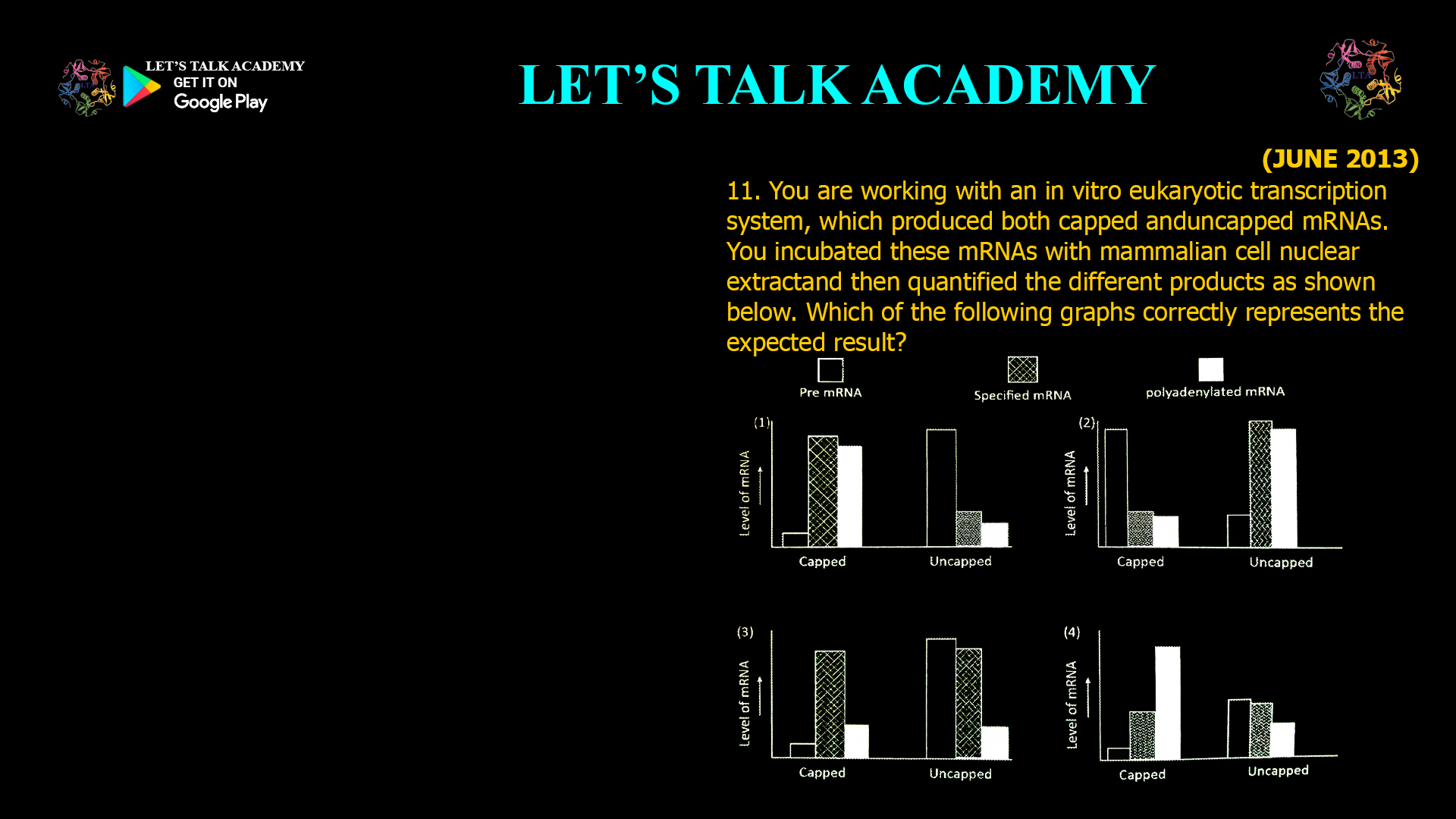
Capped vs. Uncapped mRNAs in Nuclear Extracts

Capped vs. Uncapped mRNAs in Nuclear Extracts

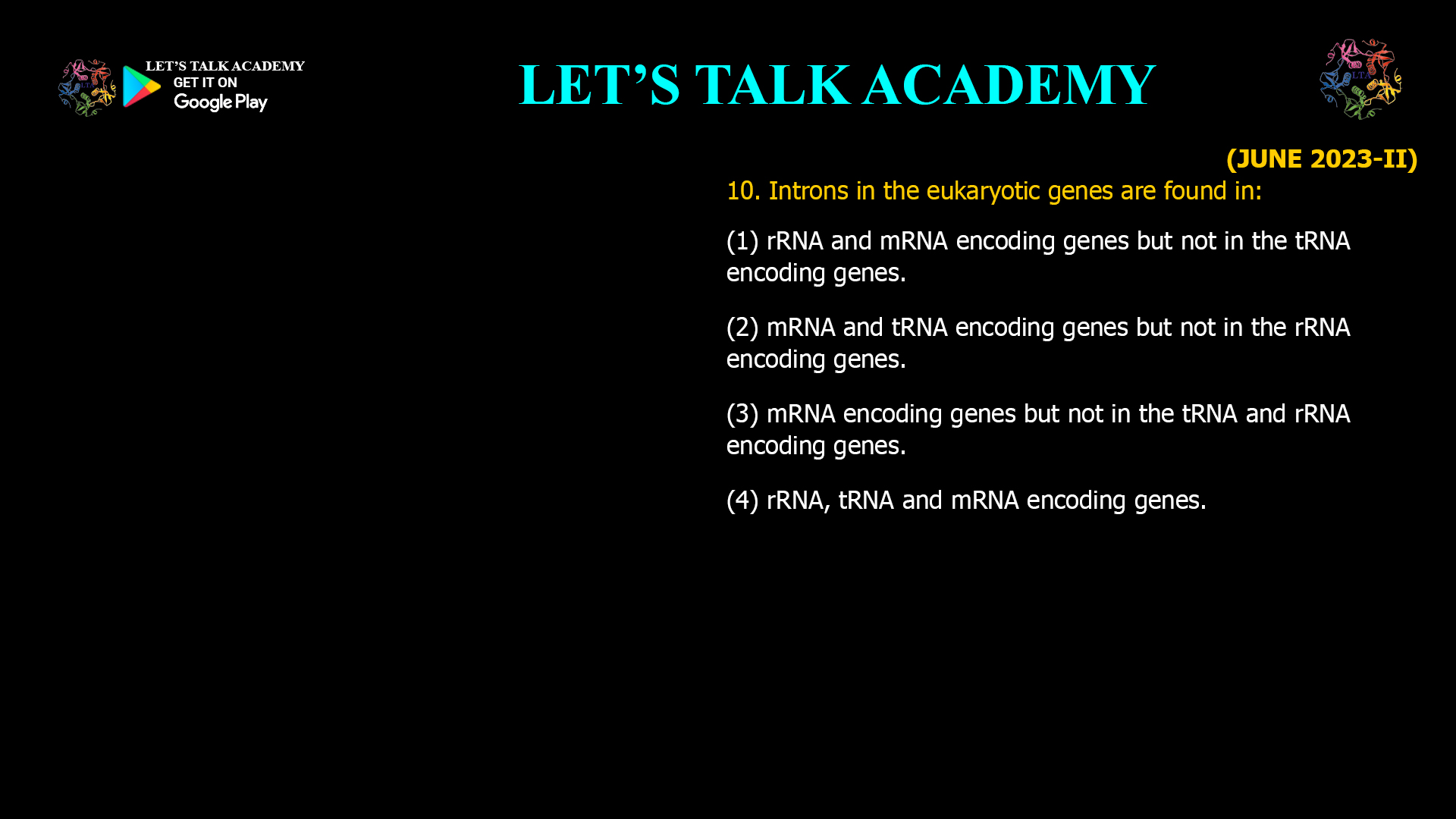
Introns in Eukaryotic Genes: Found in rRNA tRNA and mRNA Encoding Genes

Introns in Eukaryotic Genes: Found in rRNA tRNA and mRNA Encoding Genes

A gene has: Two introns, A 5′ untranslated region (5′ UTR), A 3′ untranslated region (3′ UTR). What is the probable number of exons?

Calculating the Number of Exons in a Gene with Two Introns and UTRs

When ATP labeled at the β-phosphate is used, the radioactive label will appear only at the 5′ end of the mature mRNA if the first nucleotide incorporated is adenosine (A). This is because the β-phosphate of the initiating ATP remains attached at the 5′ end during transcription and capping.

Where Does β-32P-Labeled ATP Appear in Mature Eukaryotic mRNA

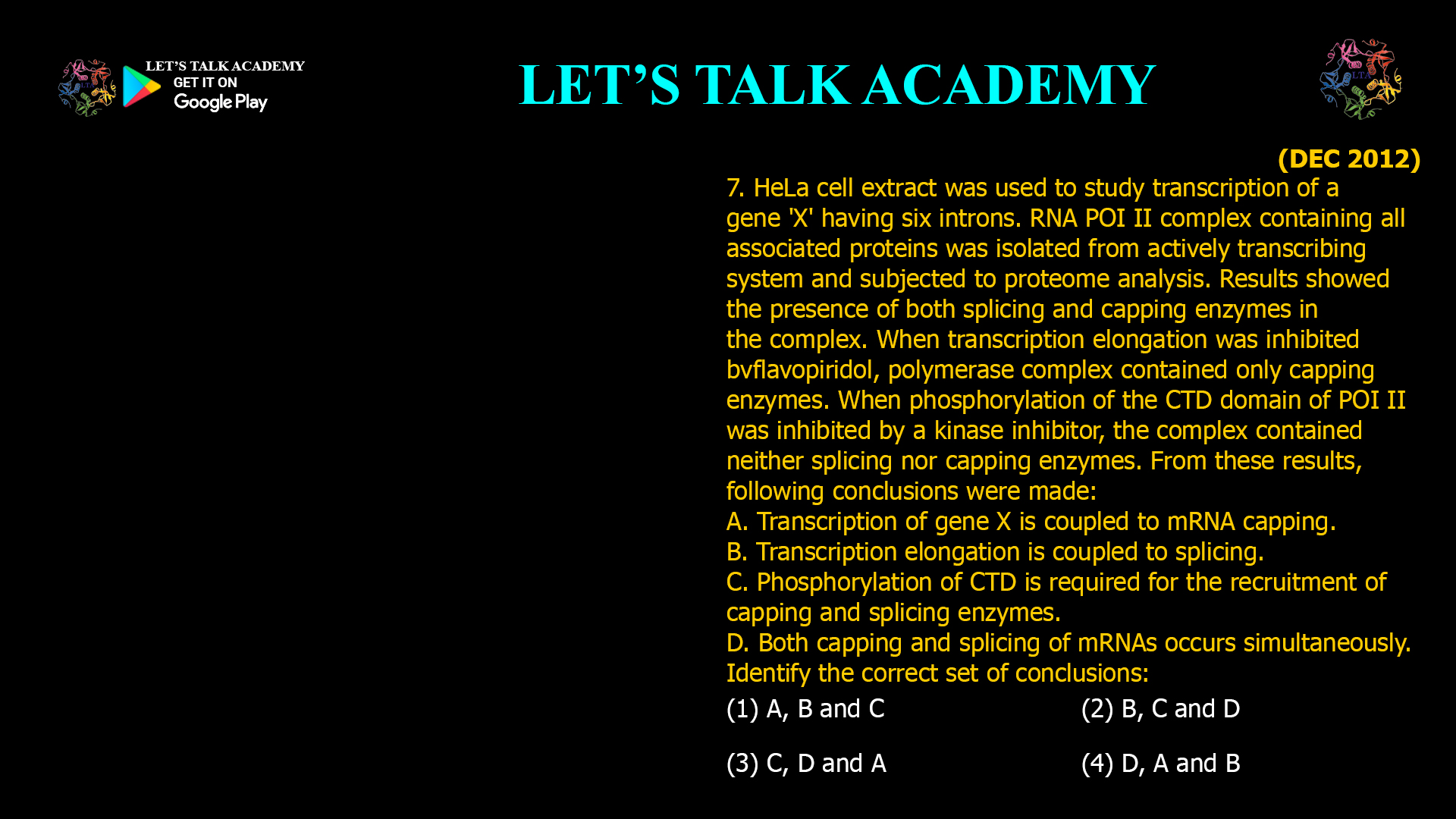
RNA Polymerase II CTD Phosphorylation Couples Transcription with mRNA Capping and Splicing

RNA Polymerase II CTD Phosphorylation Couples Transcription with mRNA Capping and Splicing

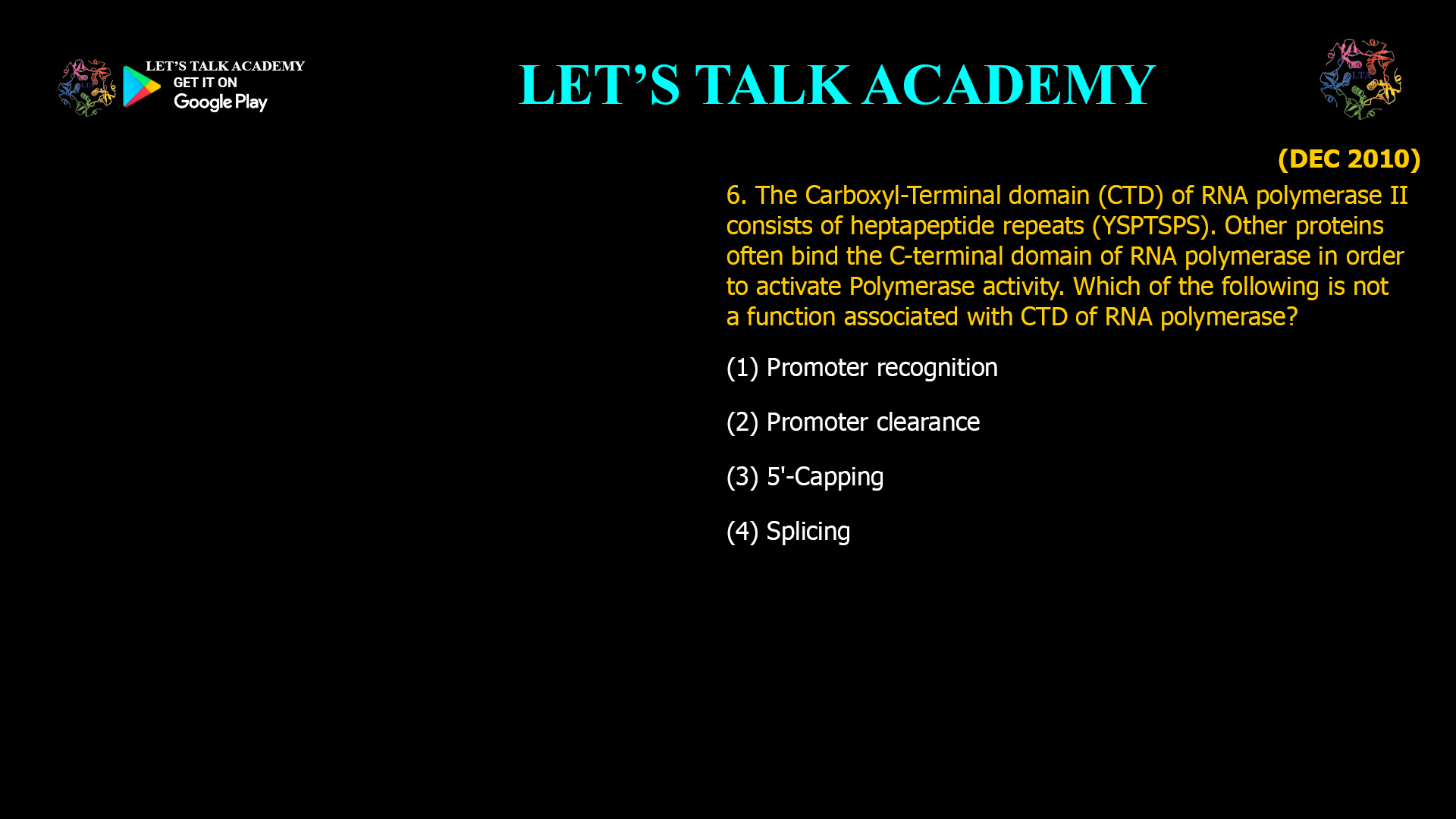
The CTD of RNA polymerase II plays essential roles in promoter clearance, 5′-capping, and splicing during the transcription

Function of the Carboxyl-Terminal Domain (CTD) of RNA Polymerase II

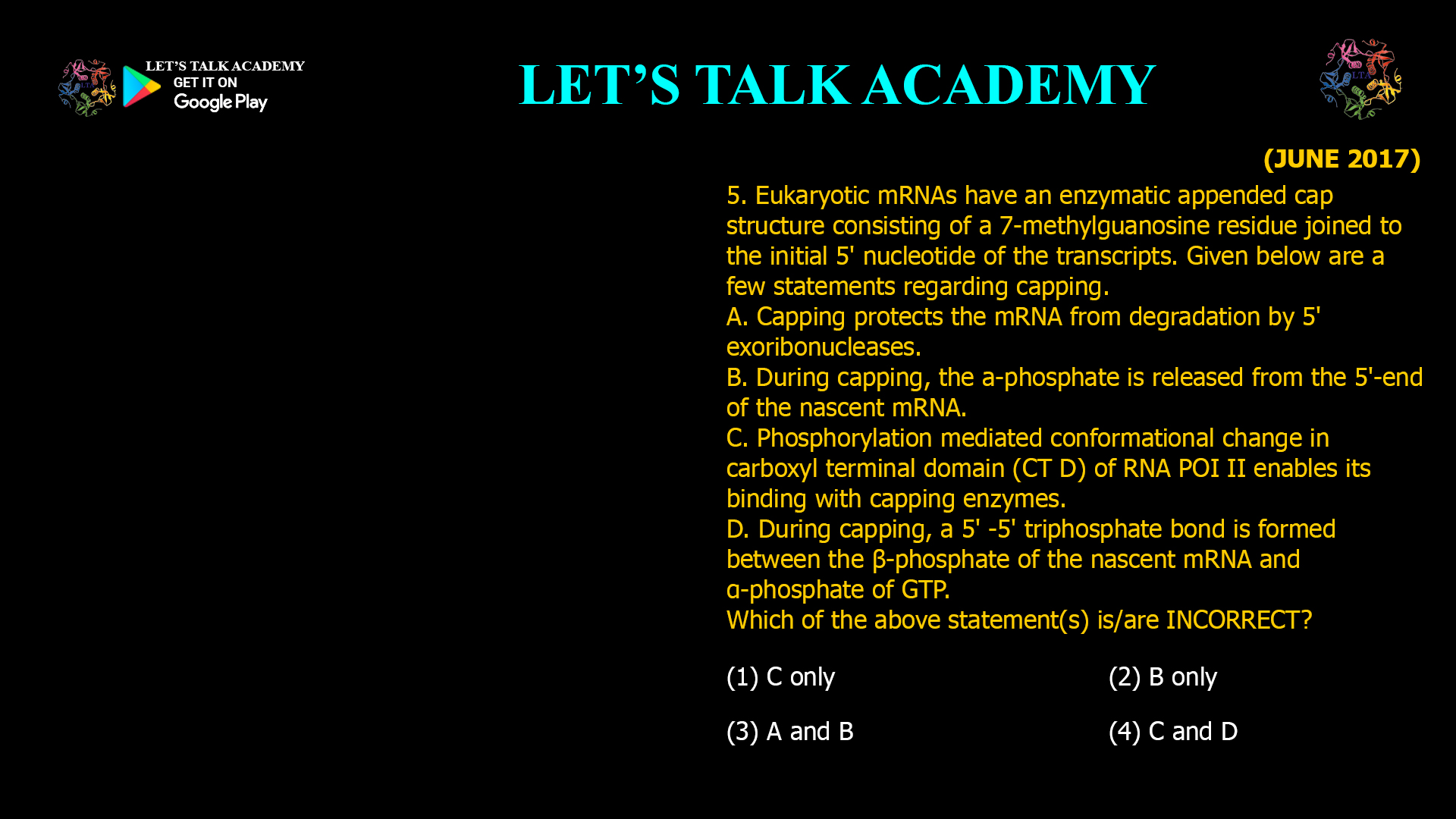
Understanding mRNA 5′ Capping | Role of Phosphates and CTD Phosphorylation in Cap Formation

Understanding mRNA 5′ Capping | Role of Phosphates and CTD Phosphorylation in Cap Formation

5′ Cap Function in Eukaryotic mRNA

Eukaryotic mRNA are modified to possess a 5′ cap structure

5′-capping of mRNA is necessary for its efficient transport from the nucleus to the cytoplasm. The cap structure and its binding proteins ensure that the mRNA is properly processed and recognized by the nuclear export machinery, facilitating its passage through the nuclear pore complex.

Necessary Factor for mRNA Transport from Nucleus in Eukaryotes

The 5′ cap of RNA is essential for both the stability and transport of RNA in eukaryotic cells. It protects RNA molecules from degradation and promotes their export from the nucleus to the cytoplasm, ensuring proper gene expression.

Role of the 5′ Cap in RNA | Stability and Transport

The 5′ cap on eukaryotic mRNA is essential for the initiation of translation, protecting the mRNA from degradation and enabling ribosome binding.

Role of 5′-Capping in Eukaryotic mRNA | Initiation of translation

Latest Courses