![32. Poly-L-lysine exists in pure α-helix, β-sheet and random coiled conformation depending upon the solvent conditions. The values of mean residue ellipticity at 220 nm ([Θ]₂₂₀) are −35,700, −13,800 and +3,900 deg cm² dmol⁻¹ for α-helical, β-sheet and random coil conformations of this polypeptide, respectively. The polypeptide exists in α-helix conformation at pH 10.8 and 25°C. Addition of urea leads to a two-state transition between α-helix and random coil conformation. It has been observed that [Θ]₂₂₂ of the polypeptide is −14,800 deg cm² dmol⁻¹ in the presence of 6 M urea. The percentage of the polypeptide in α-helix conformation is: (A) 37 (B) 41 (C) 47 (D) 50](https://www.letstalkacademy.com/wp-content/uploads/2026/07/32.jpg)
![30. At 25°C values of [Θ]₂₂₂, the mean residue ellipticity at 222 nm, are −33,000 and −3,000 deg cm² dmol⁻¹ for a polypeptide existing in α-helical (α) and β-structure (β), respectively. If this polypeptide undergoes a two-state heat-induced α → β transition, and a value of [Θ]₂₂₂ = −18,000 deg cm² dmol⁻¹ is observed at 60°C, then this observation leads to the conclusion that the α helix conversion to β-structure: (A) 40% (B) 50% (C) 55% (D) 60%](https://www.letstalkacademy.com/wp-content/uploads/2026/07/30.jpg)
![29. A protein polypeptide chain exists in α-helical conformation in a solvent and it has a value of −30,000 deg cm² dmol⁻¹ for the mean residue ellipticity at 222 nm ([Θ]₂₂₂) in the temperature range 20–50°C. On raising the temperature above 50°C, [Θ]₂₂₂ increases and reaches a value of −2,000 deg cm² dmol⁻¹ at 70°C and the value of [Θ]₂₂₂ remains unchanged above 70°C. The observed value of [Θ]₂₂₂ is −14,000 deg cm² dmol⁻¹ at 60°C. If one assumes that the heat-induced denaturation is a two-state process, the fraction of α-helix at 60°C is (A) 0.40 (B) 0.43 (C) 0.50 (D) 0.57](https://www.letstalkacademy.com/wp-content/uploads/2026/07/29.jpg)





55. The molecular ion peak [M]⁺ of an analyte as measured by Electron Ionization Mass Spectrometry has an m/z of 149 and a relative abundance of 100%. The [M]⁺ has […]
![55. The molecular ion peak [M]⁺ of an analyte as measured by Electron Ionization Mass Spectrometry has an m/z of 149 and a relative abundance of 100%. The [M]⁺ has a relative abundance of 6.7% and the [M + 2]⁺ peak has a relative abundance of 5%. The abundance of the major isotope of H, C, N, O, and S are ¹H–100%, ¹²C–98.9%, ¹³C–1.1%, ¹⁴N–99.6%, ¹⁵N–0.4%, ¹⁶O–99.8%, ¹⁸O–0.2%, ³²S–95.0%, ³³S–0.75% and ³⁴S–4.2%. The most probable molecular formula of the compound is: (A) C₇H₂₁N₂O (B) C₅H₁₁NO₂S (C) C₆H₁₃O₂S (D) C₆H₁₅NOS](https://www.letstalkacademy.com/wp-content/uploads/2026/07/55.jpg)
If you are preparing for the CSIR NET Life Science exam, mastering Spectroscopy is essential. This topic frequently appears in Part B and Part C questions, often testing both conceptual understanding and application-based problem solving. Practicing CSIR NET Life Science Previous Year Questions (PYQs) from Spectroscopy can significantly boost your preparation and help you score higher.
In this guide, you will find:
Weightage in previous years
Solved Previous Year Questions from Spectroscopy
Preparation tips and study resources
Why Spectroscopy is Important in CSIR NET Life Science?
Spectroscopy forms the backbone of experimental biology and biochemistry. From studying protein structures to analyzing DNA, spectroscopic techniques such as UV-Vis, IR, NMR, Fluorescence, and Circular Dichroism are crucial.
Principles of different spectroscopic techniques
Absorbance and Beer–Lambert Law
Instrumentation and detectors
Applications in life sciences
Interpretation of spectra
Based on the analysis of last 10 years of CSIR NET Life Science PYQs, Spectroscopy appears almost every year:
Year No. of Questions Marks
2024 4 16
2023 3 12
2022 5 20
2021 4 16
2020 3 12
Trend: On average, 3–5 questions (12–20 marks) are directly from Spectroscopy, making it a high-return topic.
CSIR NET Life Science Previous Year Questions – Spectroscopy (With Solutions)
Question 1 – CSIR NET 2023 (Part B)
Which of the following statements regarding Beer–Lambert Law is correct?
A. Absorbance is inversely proportional to concentration.
B. Absorbance is directly proportional to path length.
C. Transmittance is directly proportional to concentration.
D. Wavelength has no effect on absorbance.
Answer: B
Solution: Beer–Lambert Law states:
𝐴
=
𝜀
𝑐
𝑙
A=εcl
where
𝐴
A = absorbance,
𝜀
ε = molar extinction coefficient,
𝑐
c = concentration,
𝑙
l = path length. Absorbance is directly proportional to both concentration and path length.
Question 2 – CSIR NET 2022 (Part C)
In a UV-Vis spectroscopy experiment, a solution shows maximum absorbance at 280 nm. What does this indicate about the sample?
Answer:
Absorbance at 280 nm is characteristic of aromatic amino acids like tryptophan and tyrosine in proteins. This indicates the presence of protein in the sample.
Question 3 – CSIR NET 2021 (Part C)
A protein sample shows a circular dichroism (CD) spectrum with a negative band at 222 nm and 208 nm. What is the predominant secondary structure?
Answer:
Negative bands at 222 nm and 208 nm in CD spectroscopy indicate an α-helical secondary structure.
Question 4 – CSIR NET 2020 (Part B)
Match the spectroscopic technique with its application:
Technique Application
NMR A. Protein secondary structure
IR B. Functional group identification
CD C. 3D protein structure determination
Answer:
NMR – C
IR – B
CD – A
Preparation Tips for Spectroscopy in CSIR NET Life Science
Understand the Principles: Don’t just memorize formulas – understand how each technique works.
Practice Numerical Problems: Many PYQs involve calculations using Beer–Lambert Law or energy-wavelength relationships.
Focus on Applications: Know which technique is used for which type of biological analysis.
Analyze PYQs: Identify question patterns and recurring concepts.
Revise with Summary Notes: Keep a quick revision sheet for all spectroscopy techniques.
Recommended Study Resources
CSIR NET Life Science Previous Year Question Papers – Practice all Spectroscopy-related questions.
Molecular Biology & Biophysics books – e.g., Principles of Instrumental Analysis by Skoog and Biophysical Chemistry by Upadhyay.
Let’s Talk Academy Online Coaching – Learn Spectroscopy concepts from experts like Suraj Sir, known as the God of Life Science.
Conclusion
Spectroscopy is a scoring section in the CSIR NET Life Science exam. By solving previous year questions with solutions, you not only strengthen your conceptual understanding but also gain the speed and accuracy needed in the exam.
If you want to master Spectroscopy for CSIR NET Life Science, make PYQ practice a daily habit. Remember, concept + practice = guaranteed marks.
Meta Description (SEO):
“CSIR NET Life Science Spectroscopy Previous Year Questions with solutions. Learn important concepts, weightage, and exam tips to score high in CSIR NET.”
Keywords for SEO:
CSIR NET Life Science Spectroscopy, CSIR NET PYQ Spectroscopy, CSIR NET Life Science Previous Year Questions, Spectroscopy questions and solutions, CSIR NET preparation Life Science
55. The molecular ion peak [M]⁺ of an analyte as measured by Electron Ionization Mass Spectrometry has an m/z of 149 and a relative abundance of 100%. The [M]⁺ has […]
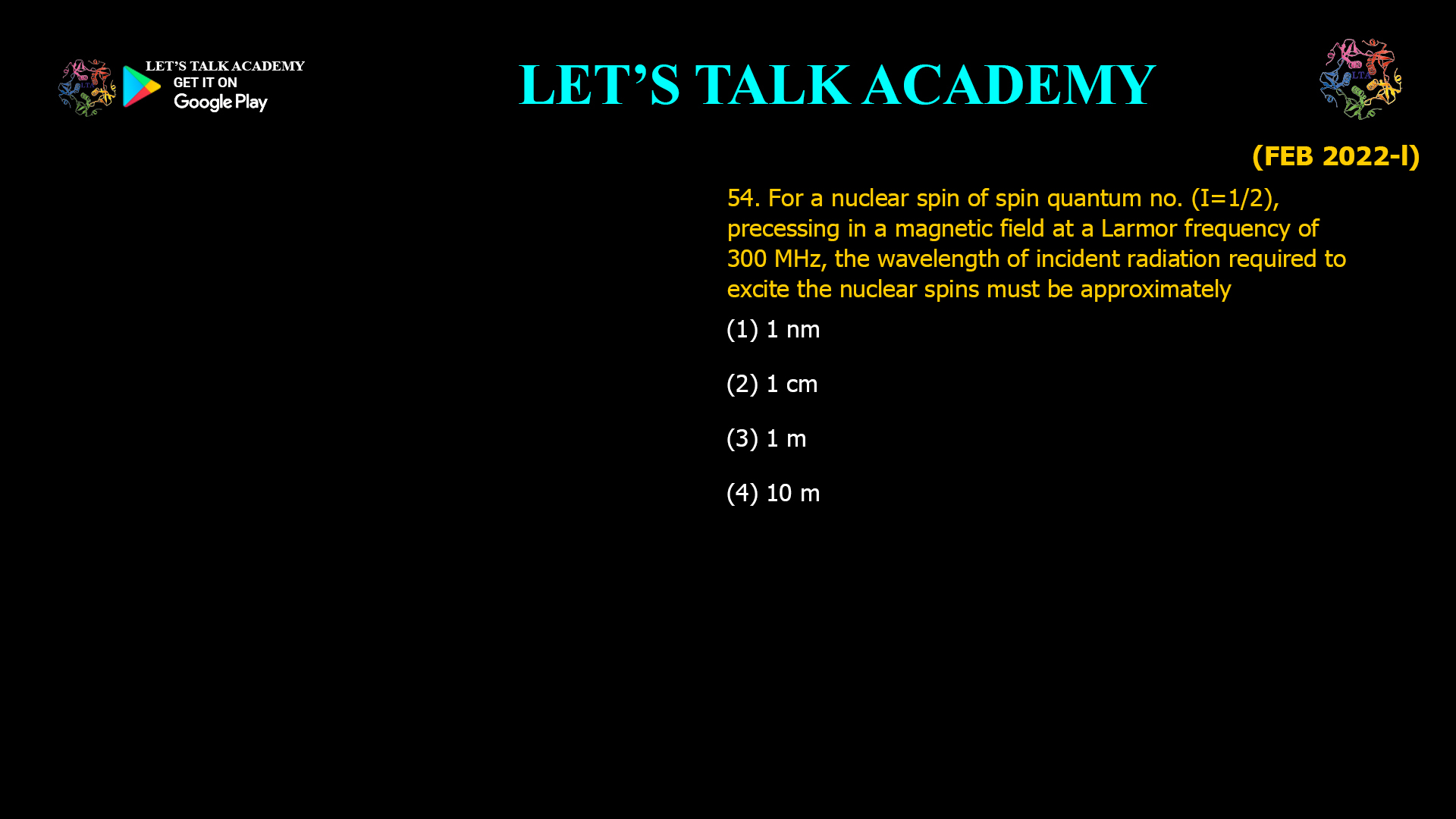
54. For a nuclear spin of spin quantum number (I = 1/2), precessing in a magnetic field at a Larmor frequency of 300 MHz, the wavelength of incident radiation required […]
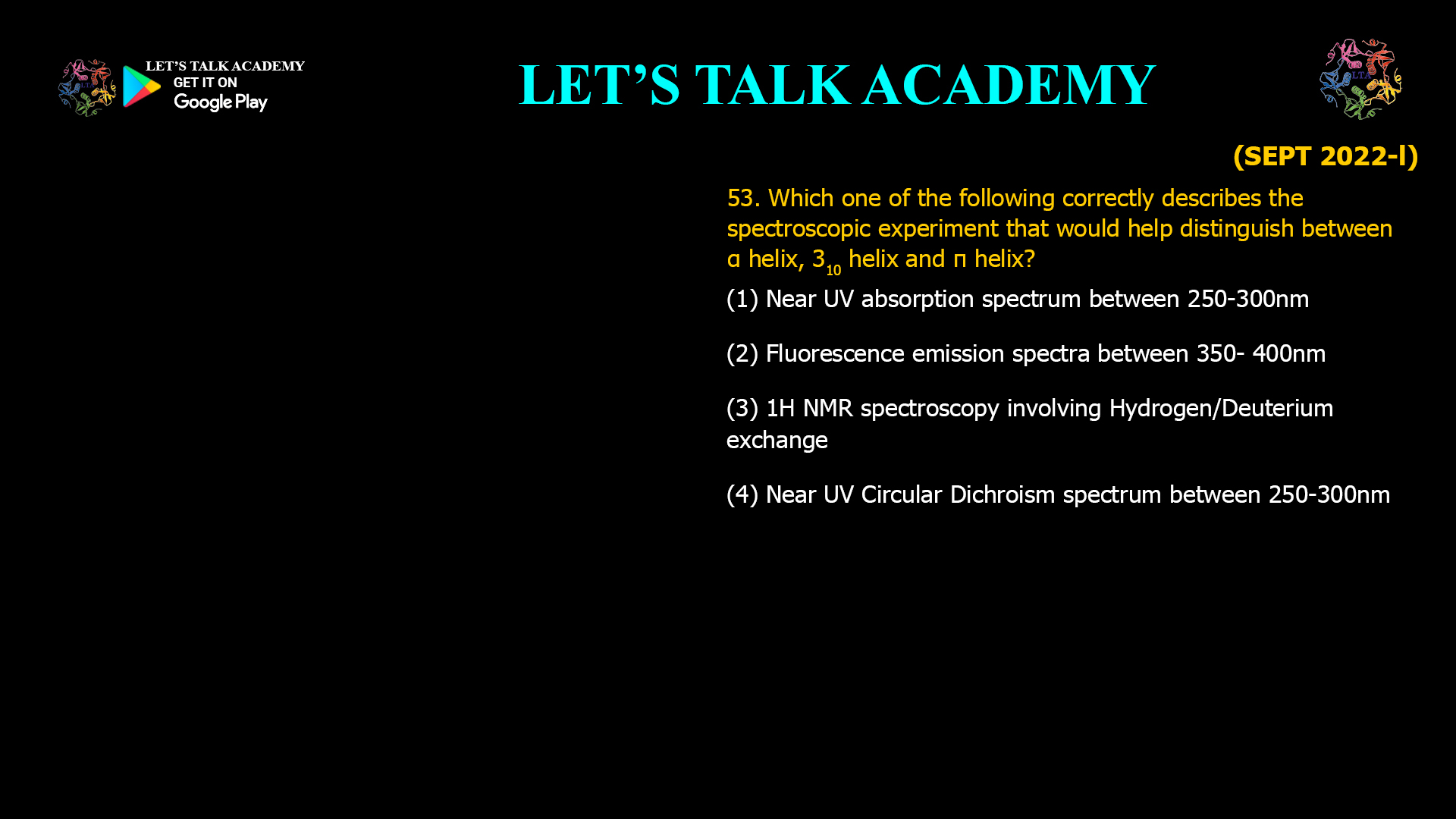
53. Which one of the following correctly describes the spectroscopic experiment that would help distinguish between an α-helix, 3₁₀ helix and π helix? (A) Near UV absorption spectrum between 250–300 […]
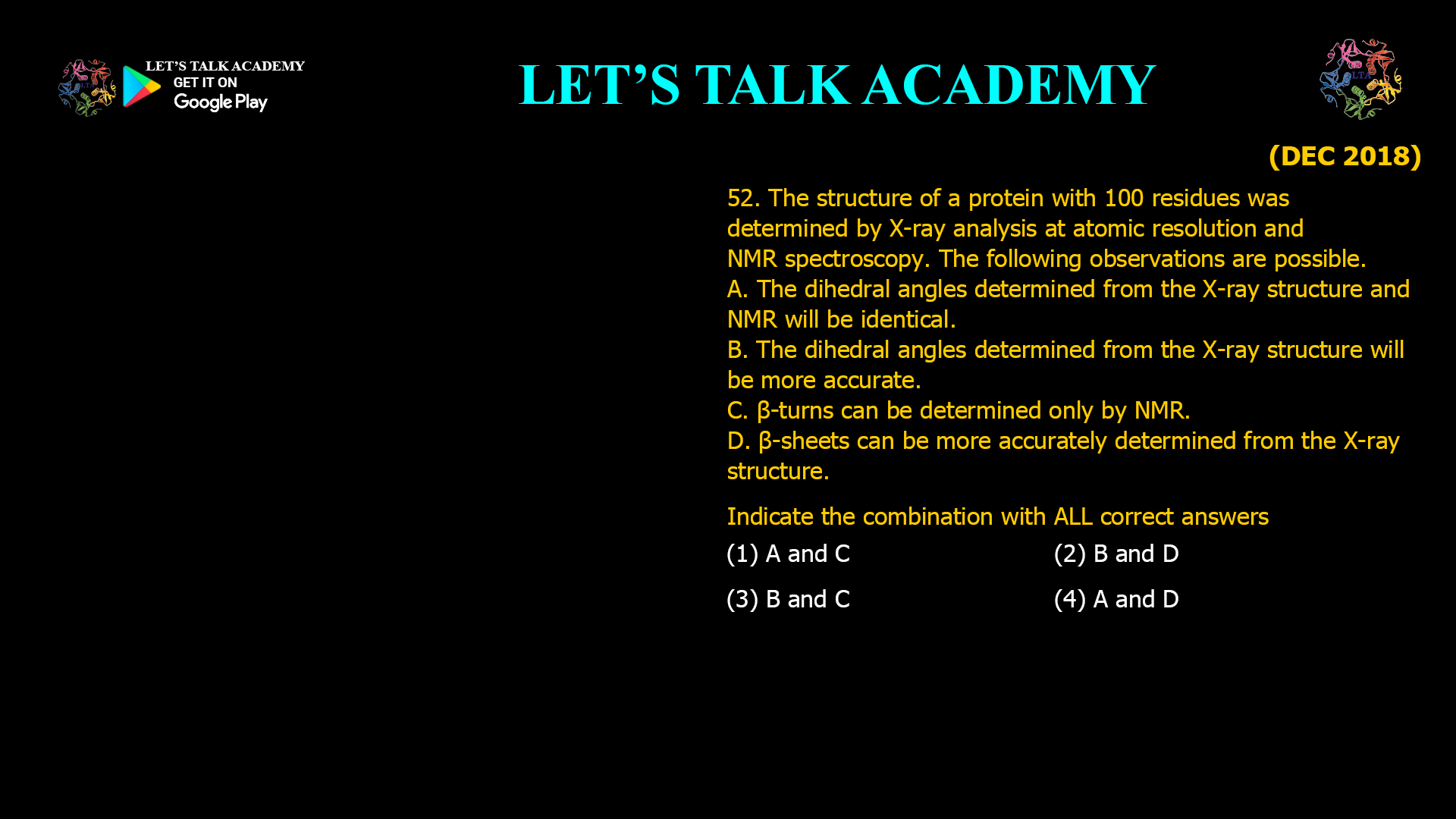
52. The structure of a protein with 100 residues was determined by X-ray analysis at atomic resolution and NMR spectroscopy. The following observations are possible. A. The dihedral angles determined […]
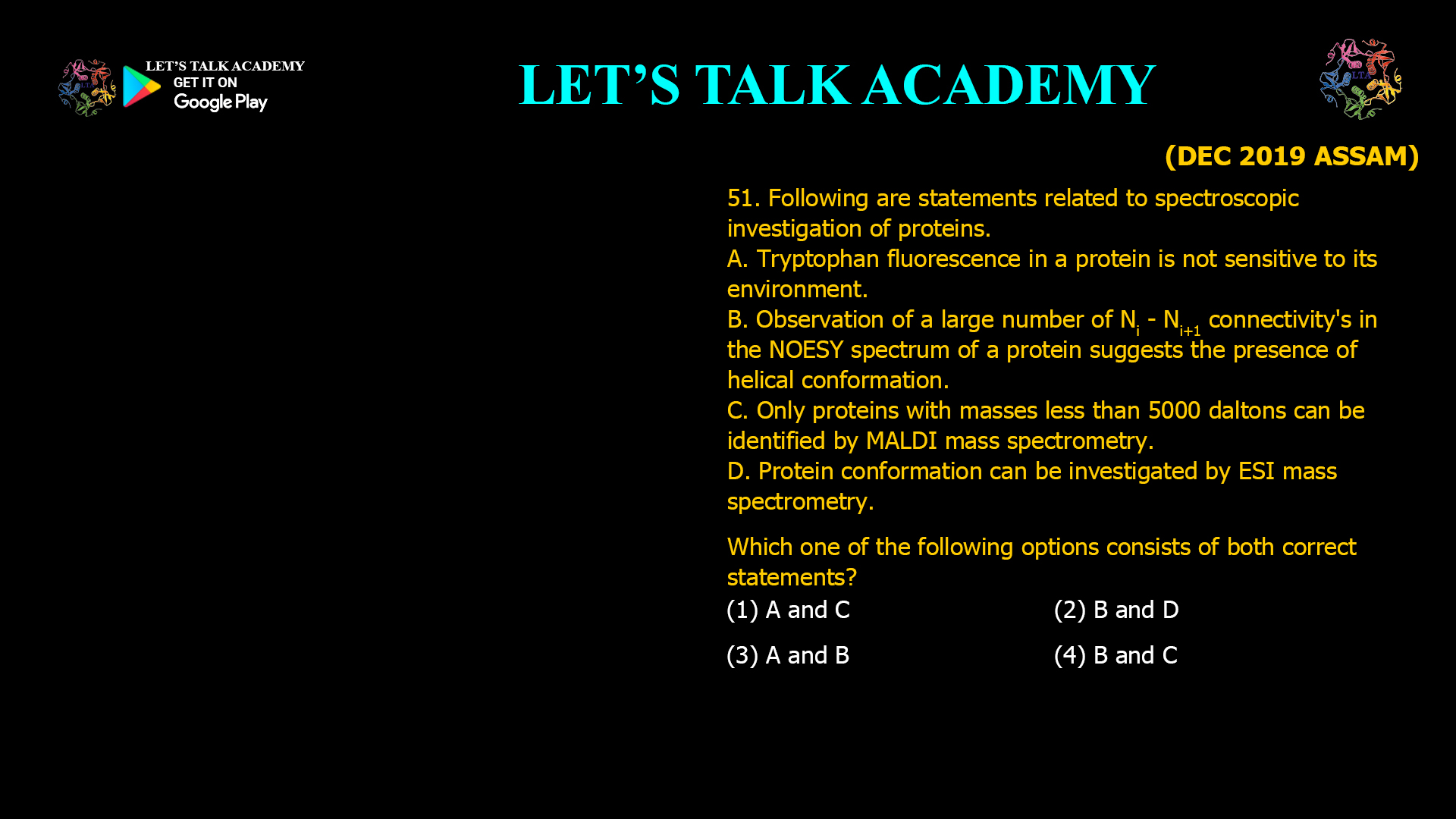
51. Following are statements related to spectroscopic investigation of proteins. A. Tryptophan fluorescence in a protein is not sensitive to its environment. B. Observation of a large number of Nᵢ […]
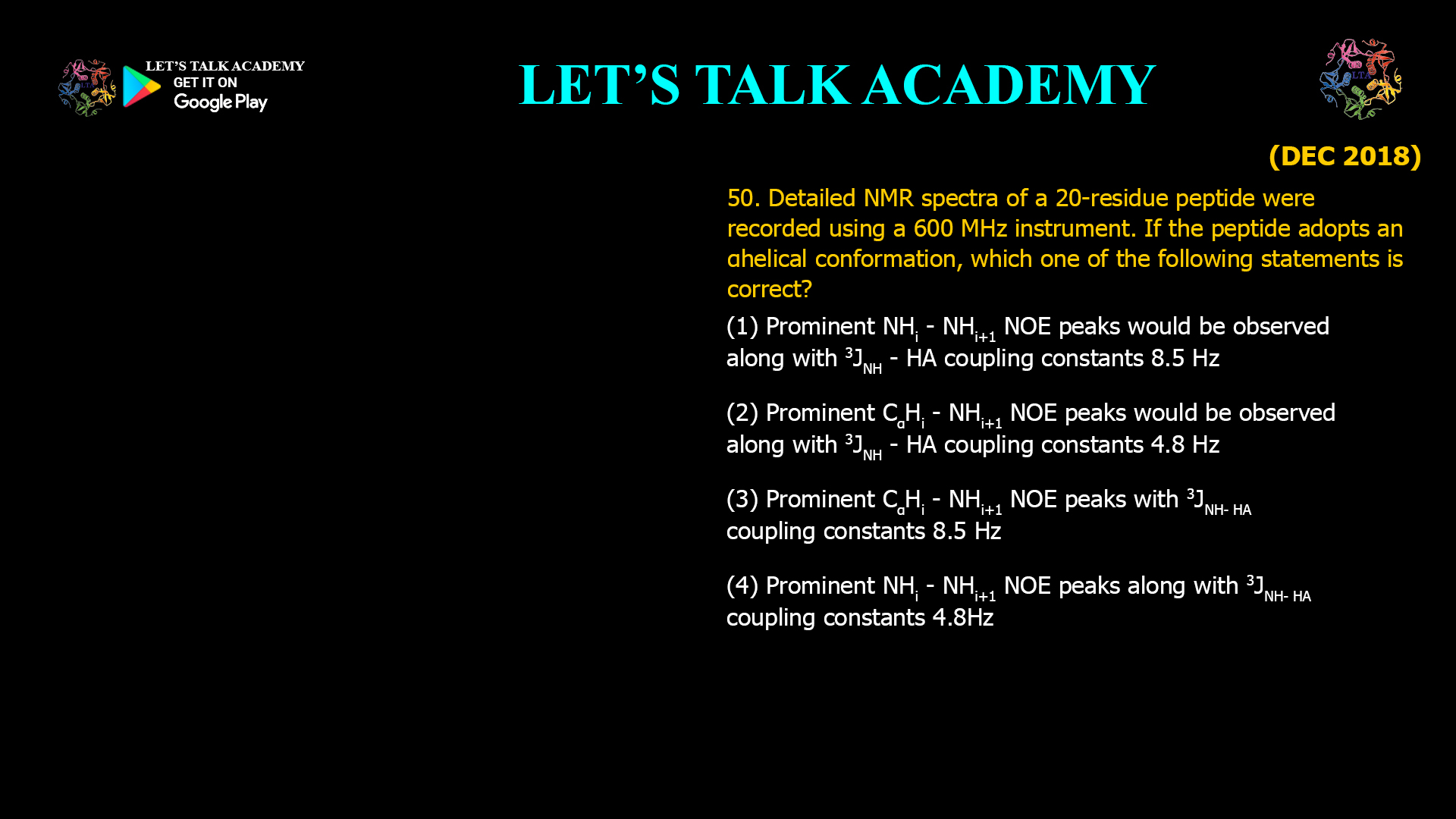
50. Detailed NMR spectra of a 20-residue peptide were recorded using a 600 MHz instrument. If the peptide adopts an α-helical conformation, which one of the following statements is correct? […]
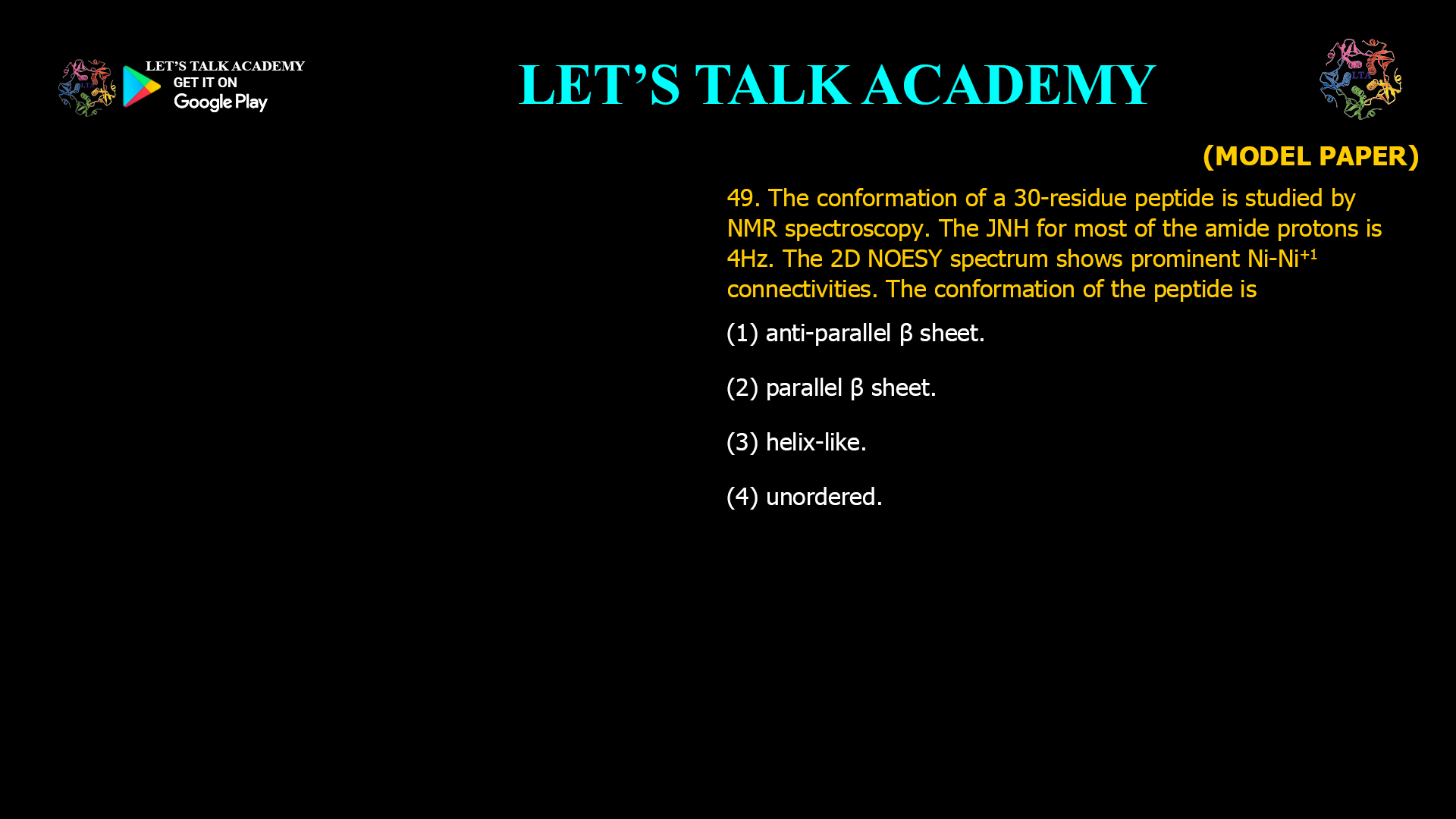
49. The conformation of a 30-residue peptide is studied by NMR spectroscopy. The JNH for most of the amide protons is 4 Hz. The 2D NOESY spectrum shows prominent Nᵢ–Nᵢ₊₁ […]
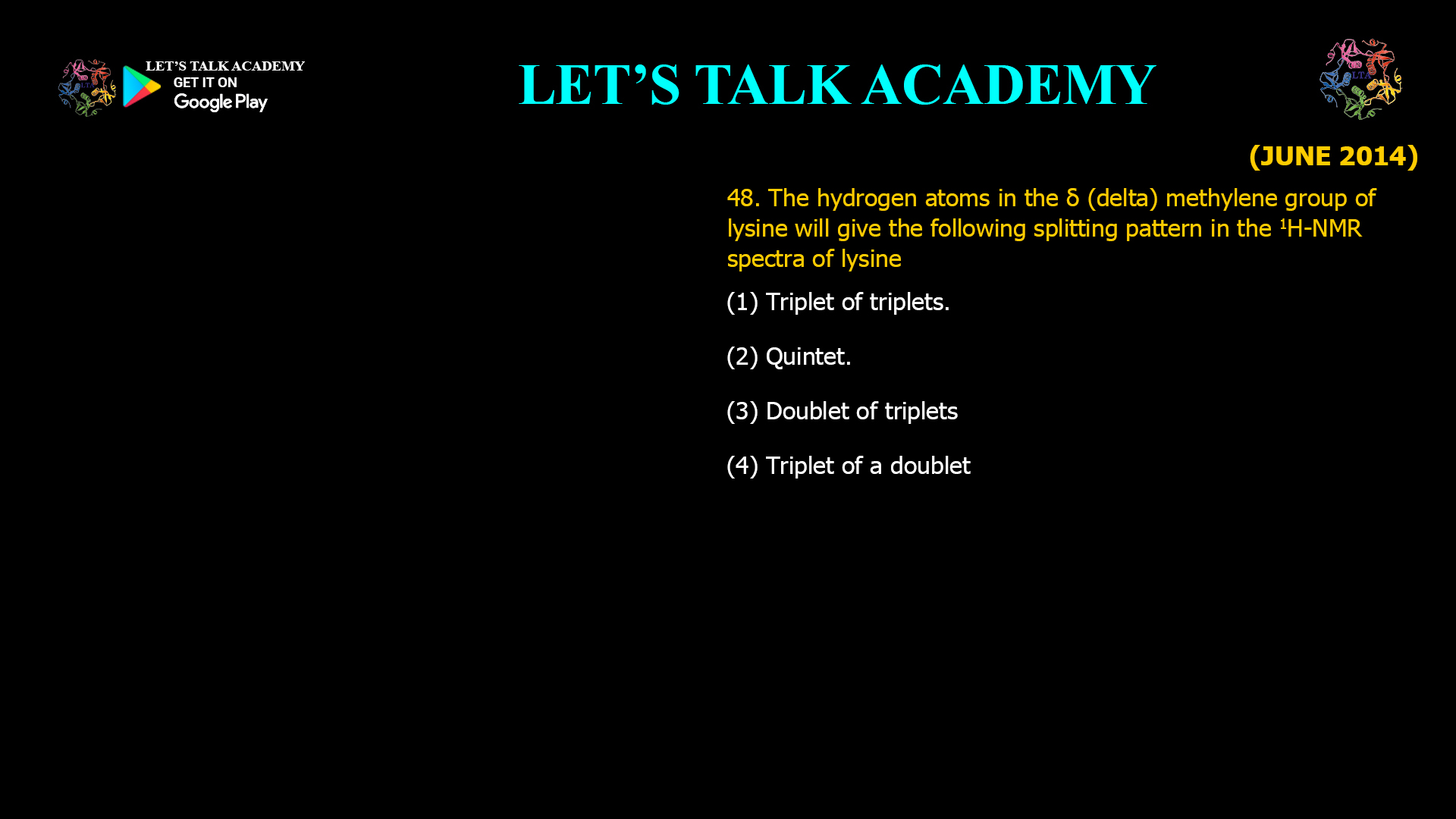
48. The hydrogen atoms in the δ (delta) methylene group of lysine will give the following splitting pattern in the ¹H-NMR spectra of lysine (A) Triplet of triplets. (B) Quintet. […]
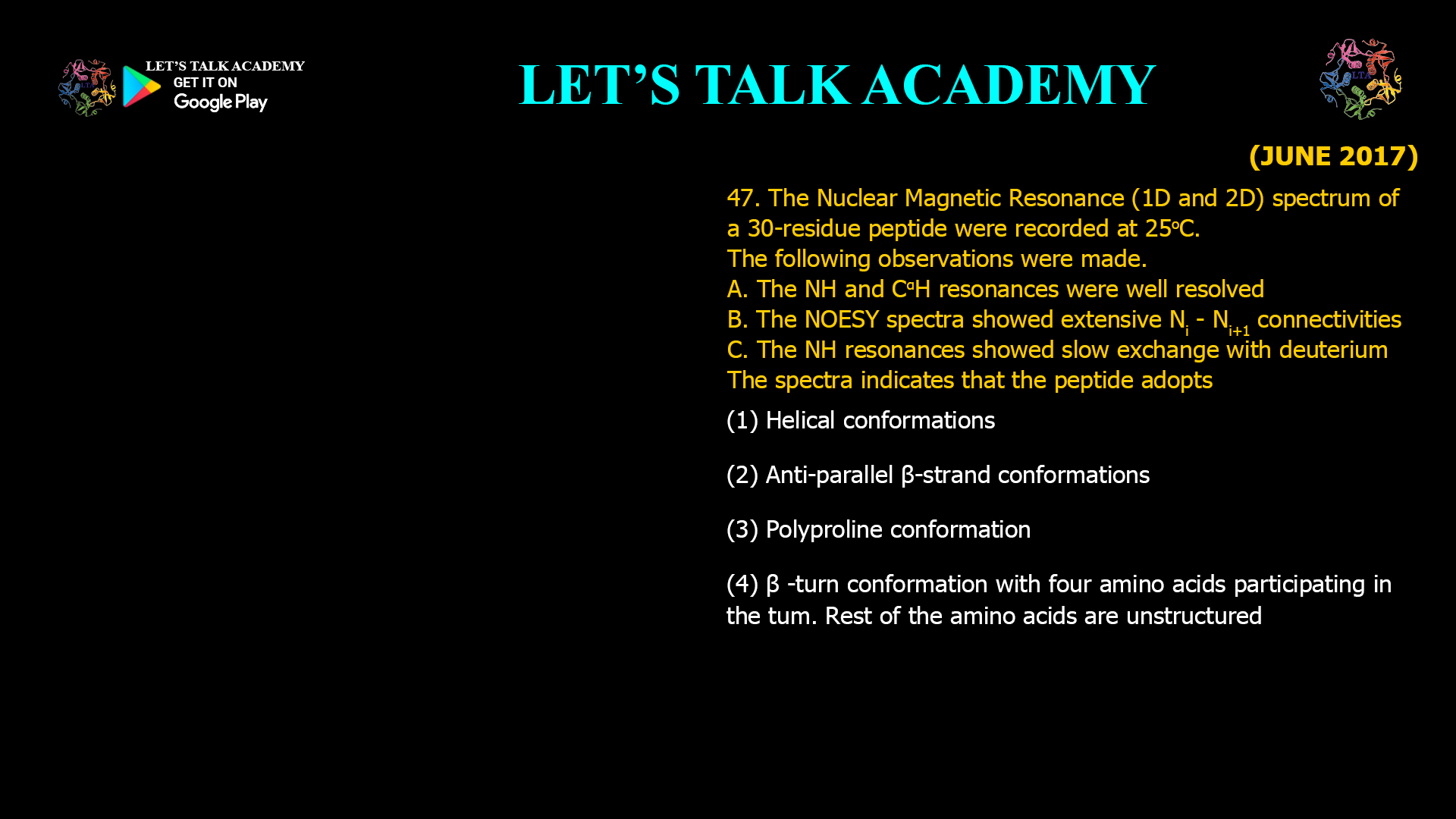
47. The Nuclear Magnetic Resonance (1D and 2D) spectrum of a 30-residue peptide were recorded at 25°C. The following observations were made. A. The NH and CαH resonances were well […]
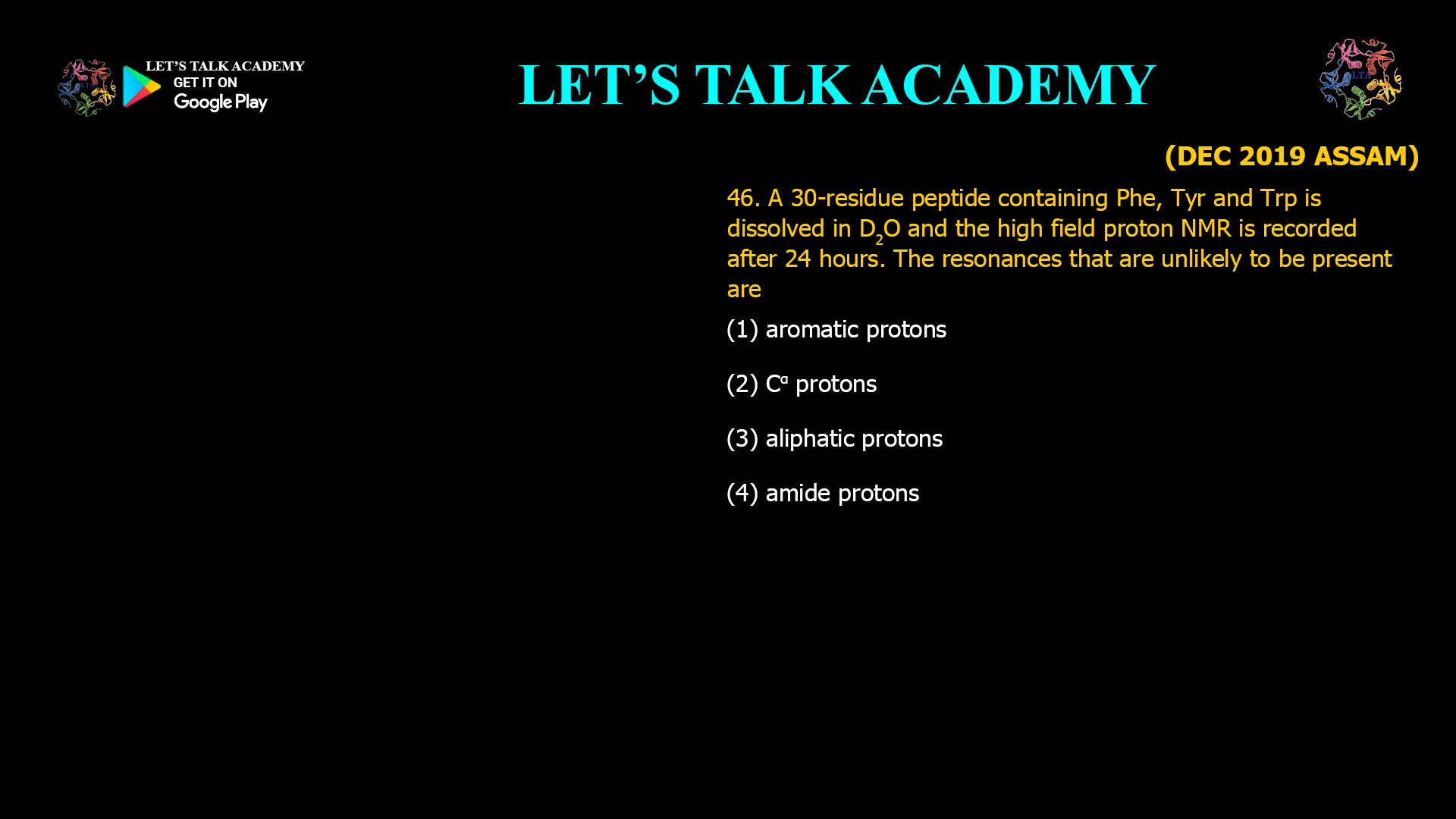
46. A 30-residue peptide containing Phe, Tyr and Trp is dissolved in D₂O and the high field proton NMR is recorded after 24 hours. The resonances that are unlikely to […]


