Q.75 Choose the correct answer from the Match List I with List II : List I – Phylum (A) Porifera (B) Ctenophora (C) Platyhelminthes (D) Annelida List II – Salient features (I) Body segmentation like rings (II) Body with pores and canals in walls (III) Comb plates for locomotion (IV) Flat body, suckers Choose the correct answer from the options given below : (1) (A)-(IV), (B)-(III), (C)-(II), (D)-(I) (2) (A)-(I), (B)-(II), (C)-(III), (D)-(IV) (3) (A)-(II), (B)-(III), (C)-(IV), (D)-(I) (4) (A)-(III), (B)-(II), (C)-(I), (D)-(IV)

Phylum Matching

Q.74 Choose the correct answer from the Match List I with List II : List I – DNA Replication Protein (A) DNA Polymerase III (B) DNA Polymerase I (C) DNA ligase (D) Tus List II – Function (I) Binds to ter sequences and prevents the advancement of the replication fork (II) Synthesizes DNA in the leading and lagging strands (III) Removes RNA primers, fills in gaps with DNA (IV) Covalently attaches adjacent Okazaki fragments Choose the correct answer from the options given below : (1) (A)-(II), (B)-(IV), (C)-(I), (D)-(III) (2) (A)-(II), (B)-(IV), (C)-(III), (D)-(I) (3) (A)-(II), (B)-(III), (C)-(IV), (D)-(I) (4) (A)-(IV), (B)-(III), (C)-(I), (D)-(II)

DNA Replication Proteins Matching

Q.73 Choose the correct answer from the Match List I with List II : List I (A) Vancomycin (B) Bacitracin (C) Streptomycin (D) Amphotericin List II (I) Bacillus subtilis (II) Streptomyces nodosus (III) Streptomyces griseus (IV) Streptomyces orientalis Choose the correct answer from the options given below : (1) (A)-(IV), (B)-(III), (C)-(II), (D)-(I) (2) (A)-(I), (B)-(II), (C)-(IV), (D)-(III) (3) (A)-(IV), (B)-(I), (C)-(III), (D)-(II) (4) (A)-(I), (B)-(II), (C)-(III), (D)-(IV)

Antibiotic Producers Matching

Q.72 Choose the correct answer from the Match List I with List II : List I (A) Fluorescence microscopy (B) Darkfield microscopy (C) Electron microscopy (D) Light microscopy List II (I) Light is the source for illumination (II) Streams of electrons are deflected by an electromagnetic field (III) Light is scattered at boundaries between regions having different refractive indices (IV) Tissue sections are examined under UV light near the visible spectrum and components are recognizable by the fluorescence they emit in the visible spectrum Choose the correct answer from the options given below : (1) (A)-(I), (B)-(III), (C)-(II), (D)-(IV) (2) (A)-(IV), (B)-(II), (C)-(III), (D)-(I) (3) (A)-(IV), (B)-(III), (C)-(II), (D)-(I) (4) (A)-(I), (B)-(II), (C)-(III), (D)-(IV)

Microscopy Types Matching

q.71 Choose the correct answer from the Match List I with List II : List I (A) Hexokinase (B) Pyruvate kinase (C) Aldolase (D) Enolase List II (I) 2–phosphoglycerate → phosphoenol pyruvate (PEP) (II) Fructose 1,6-bisphosphate → Glyceraldehyde 3-phosphate and DHAP (III) Glucose → Glucose-6-phosphate (IV) Phosphoenol pyruvate (PEP) → Pyruvate Choose the correct answer from the options given below : (1) (A)-(IV), (B)-(III), (C)-(II), (D)-(I) (2) (A)-(I), (B)-(IV), (C)-(II), (D)-(I) (3) (A)-(I), (B)-(II), (C)-(III), (D)-(IV) (4) (A)-(IV), (B)-(III), (C)-(I), (D)-(II

Glycolysis Enzymes Matching

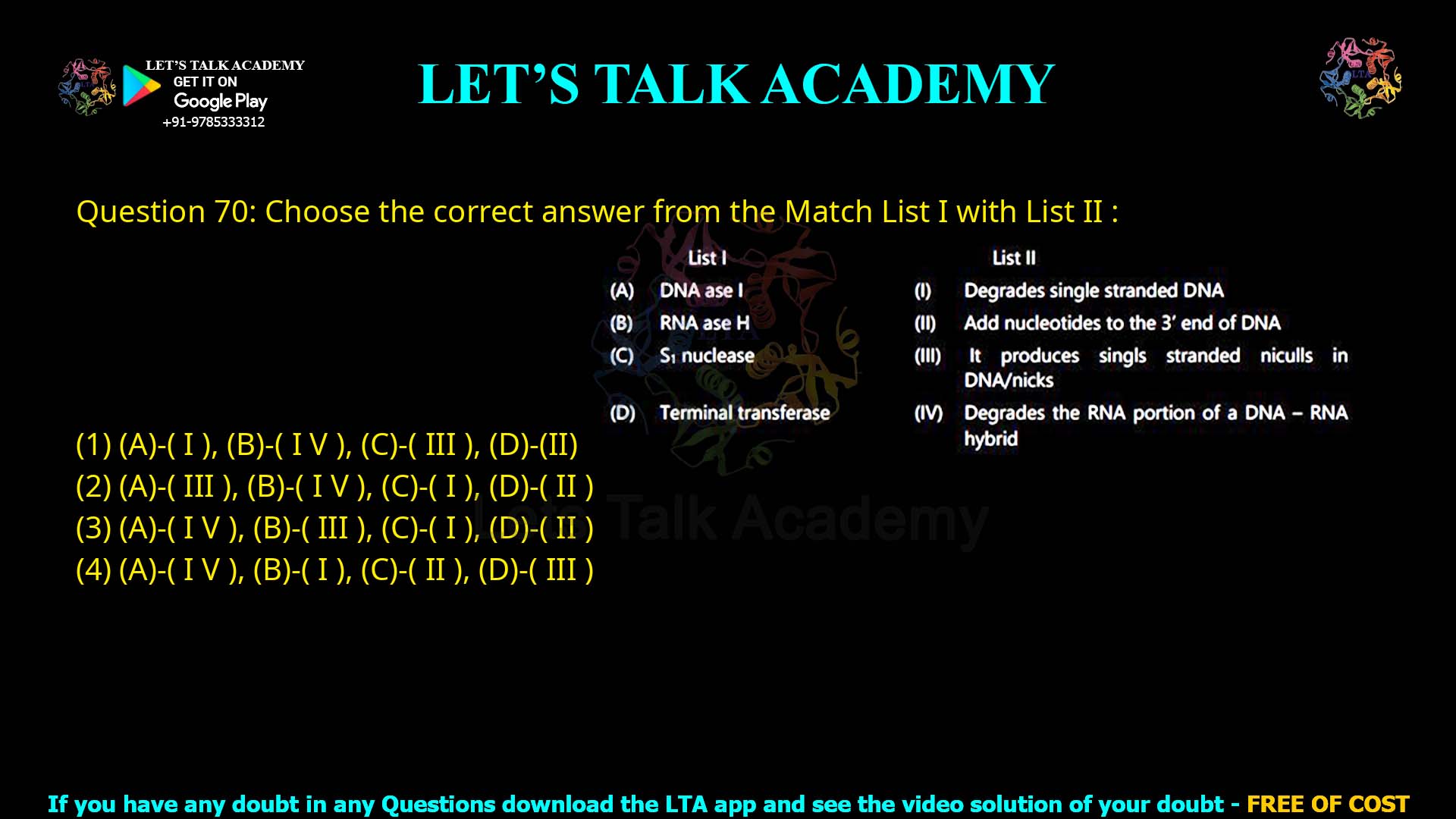
Q.70 Choose the correct answer from the Match List I with List II : List I List II (A) DNA ase I (I) Degrades single stranded DNA (B) RNA ase H (II) Add nucleotides to the 3′ end of DNA (C) S₁ nuclease (III) It produces single stranded nicks in DNA (D) Terminal transferase (IV) Degrades the RNA portion of a DNA–RNA hybrid Choose the correct answer from the options given below: (A)-(I), (B)-(IV), (C)-(III), (D)-(II) (A)-(III), (B)-(IV), (C)-(I), (D)-(II) (A)-(IV), (B)-(III), (C)-(I), (D)-(II) (A)-(IV), (B)-(I), (C)-(II), (D)-(III)

DNase I RNase H S1 Nuclease Terminal Transferase

Q.69 Choose the correct answer from the Match List I with List II : List I List II (A) Withania (I) Morphine (B) Papaver (II) Quinine (C) Rauwolfia (III) Aswagandha (D) Cinchona (IV) Reserpine Choose the correct answer from the options given below: (A)-(I), (B)-(II), (C)-(III), (D)-(IV) (A)-(IV), (B)-(III), (C)-(II), (D)-(I) (A)-(I), (B)-(II), (C)-(IV), (D)-(III) (A)-(III), (B)-(I), (C)-(IV), (D)-(II)

Medicinal Plants Matching

Q.68 Which of the following is linked with β-oxidation of fatty acids? Activation of fatty acids Break down of fatty acids in cytoplasm Transport of fatty acids into mitochondria β-oxidation in Krebs cycle β-oxidation in mitochondrial matrix Choose the correct answer from the options given below: A, B, C only A, D, E only A, C, E only A, C, D only

β-Oxidation of Fatty Acids

Q.67 Polymerase chain reaction is a laboratory technique for generating large quantities of a specified DNA. The essential requirements for PCR are: A target DNA Polymerases and ligase enzymes Two primers and a DNA polymerase Four deoxyribonucleotides Nitrocellulose membrane Choose the correct answer from the options given below: A, C, D only A, B, C only A, B, E only A, C, E only

PCR Essential Requirements

Q.66 Food-borne bacteria that cause acute bacterial vomiting and diarrhea: Shigella sp. Salmonella sp. Pseudomonas aeruginosa Clostridium tetani Yersinia enterocolitica Choose the correct answer from the options given below: A, B, D only A, B, C only C, D, E only E, A, B only

 Foodborne Bacteria

Q.65 Which one of the following is correct about biogeochemical cycling? The cycling between inorganic (CO2) and organic carbon occurs aerobically and anaerobically by the microbes. Biogeochemical cycle is not energised by solar energy. Phosphorus is cycled in its oxidized state, phosphate, and there is no gaseous form. Methane is a greenhouse gas of increasing concern due to its low global warming potential. Nitrogen, phosphorus and sulfur cycles have gaseous component only. Choose the correct answer from the options given below: A, B, C only A, B, D only A, C, E only A & C only

Biogeochemical Cycling Inorganic Organic

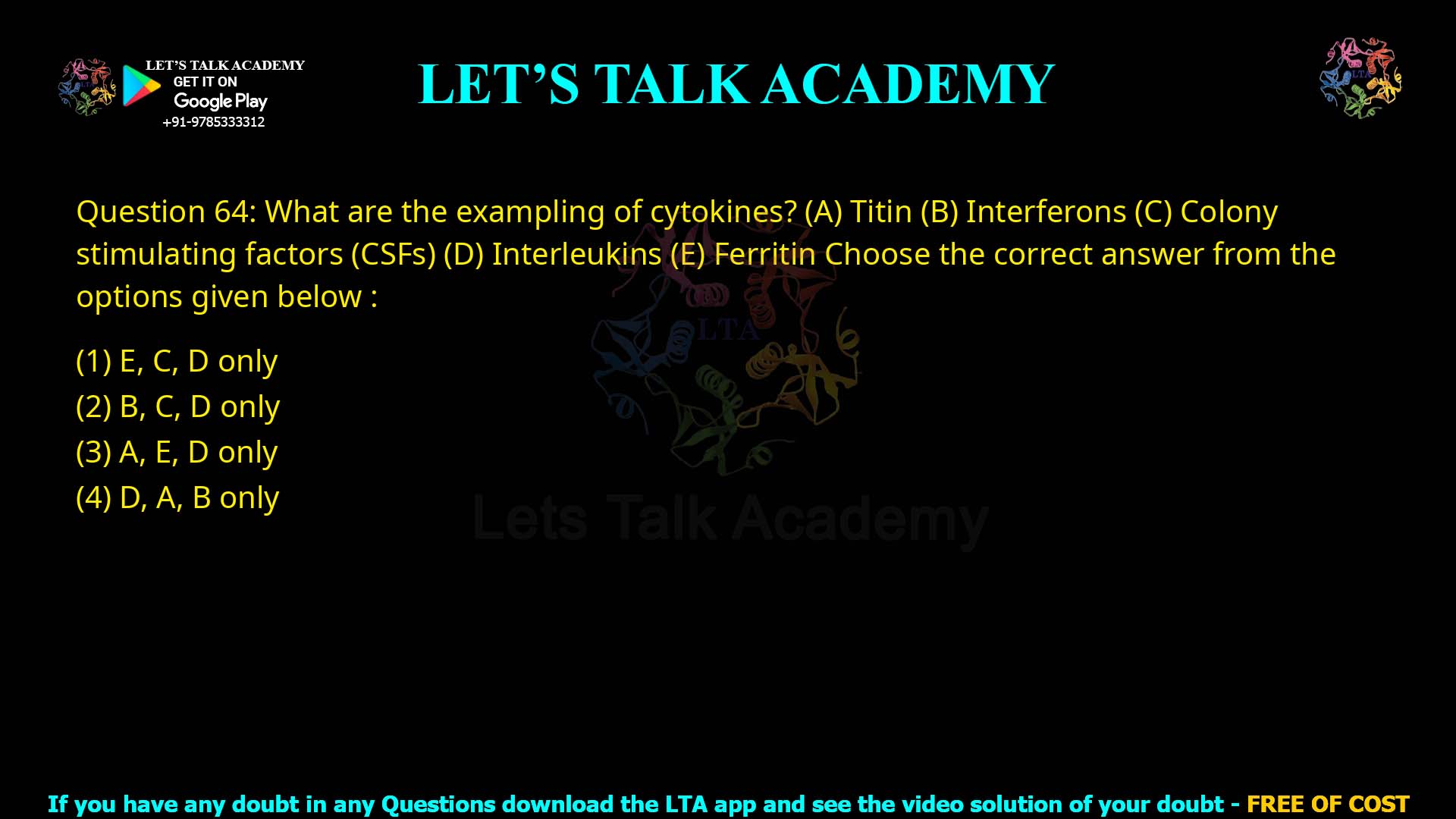
Q.64 What are the examples of cytokines? Titin Interferons Colony stimulating factors (CSFs) Interleukins Ferritin Choose the correct answer from the options given below: E, C, D only B, C, D only A, E, D only D, A, B only

Cytokines Examples Interferons

Q.63 Key effects of Genetic Drift are: Significant in small populations Cause allele frequencies to change at random Lead to a loss of genetic variation within populations Cause harmful alleles to become fixed Significant in extremely large population size Choose the correct answer from the options given below: E only A, E only A, B, C, D only C, D, E only

Genetic Drift Small Populations

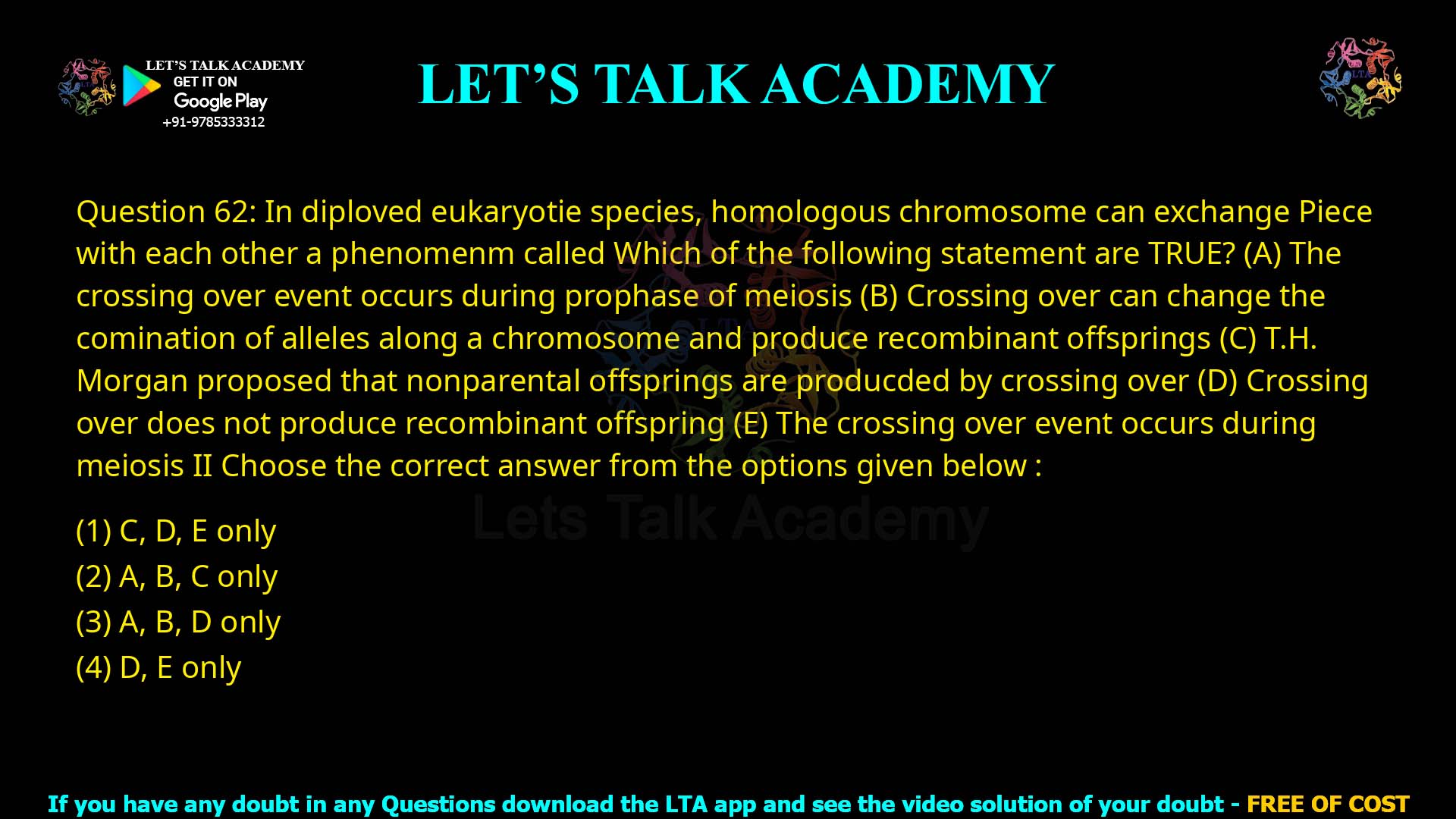
Q.62 In diploid eukaryotic species, homologous chromosomes can exchange pieces with each other, a phenomenon called crossing over. Which of the following statements are TRUE? The crossing over event occurs during prophase of meiosis. Crossing over can change the combination of alleles along a chromosome and produce recombinant offsprings. T. H. Morgan proposed that non-parental offsprings are produced by crossing over. Crossing over does not produce recombinant offspring. The crossing over event occurs during meiosis II. Choose the correct answer from the options given below: C, D, E only A, B, C only A, B, D only D, E only

Crossing Over Meiosis Prophase

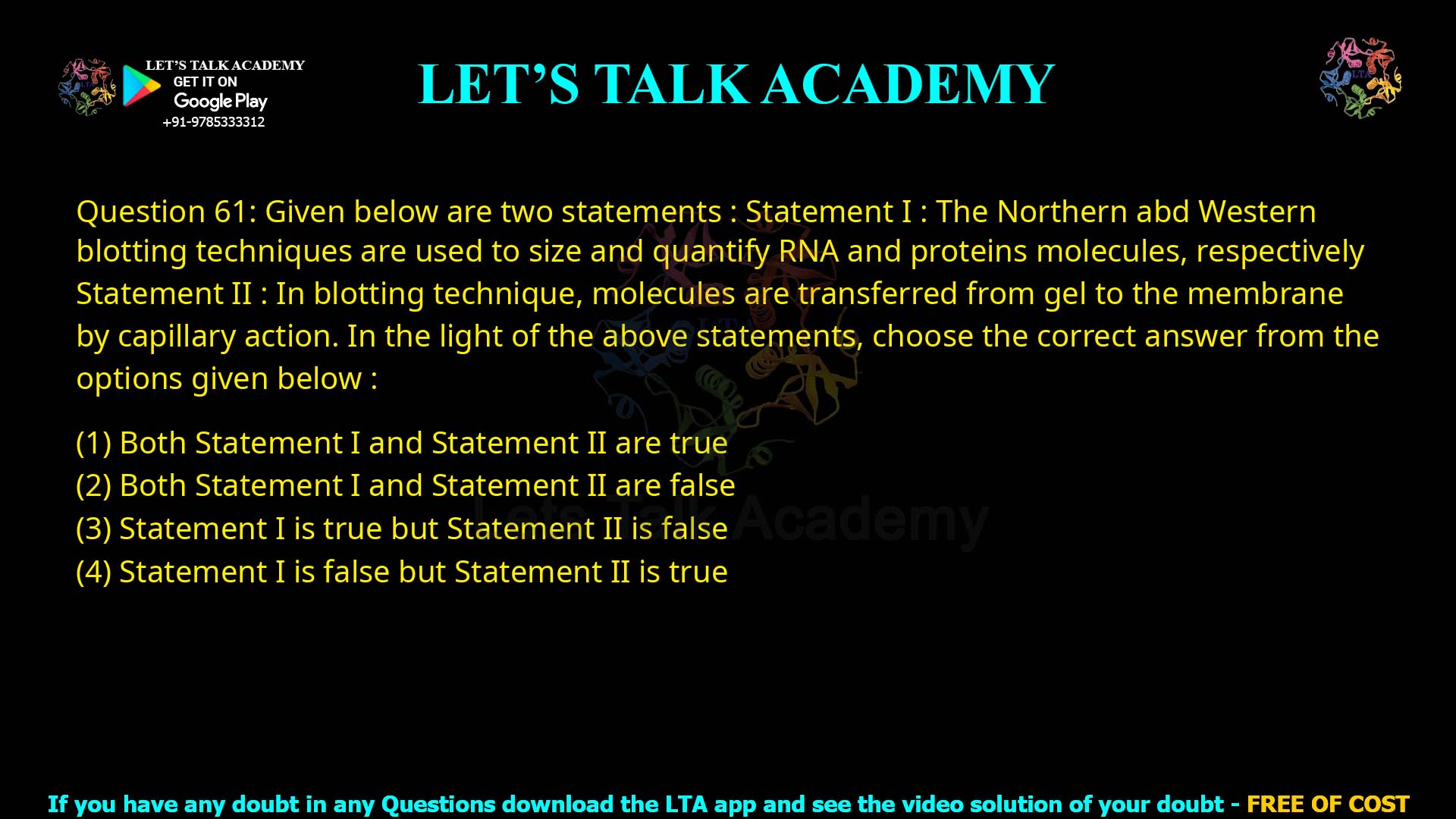
Q.61 Given below are two statements: Statement I : The Northern and Western blotting techniques are used to size and quantify RNA and protein molecules, respectively. Statement II : In blotting technique, molecules are transferred from gel to the membrane by capillary action. In the light of the above statements, choose the correct answer from the options given below: Both Statement I and Statement II are true Both Statement I and Statement II are false Statement I is true but Statement II is false Statement I is false but Statement II is true

 Northern Western Blotting

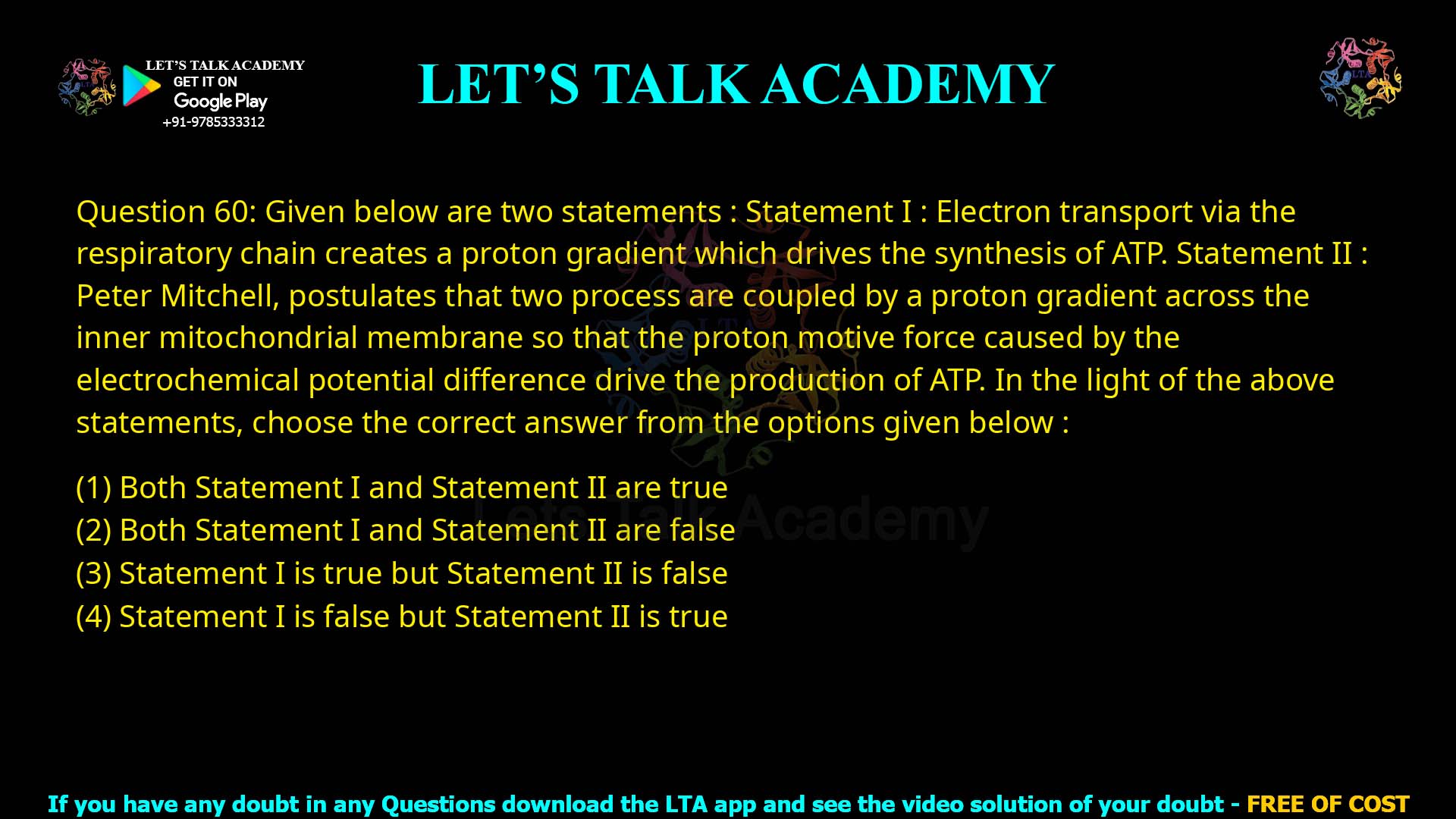
Q.60 Given below are two statements: Statement I : Electron transport via the respiratory chain creates a proton gradient which drives the synthesis of ATP. Statement II : Peter Mitchell postulates that two processes are coupled by a proton gradient across the inner mitochondrial membrane so that the proton motive force caused by the electrochemical potential difference drives the production of ATP. In the light of the above statements, choose the correct answer from the options given below: Both Statement I and Statement II are true Both Statement I and Statement II are false Statement I is true but Statement II is false Statement I is false but Statement II is true

 Electron Transport Proton Gradient

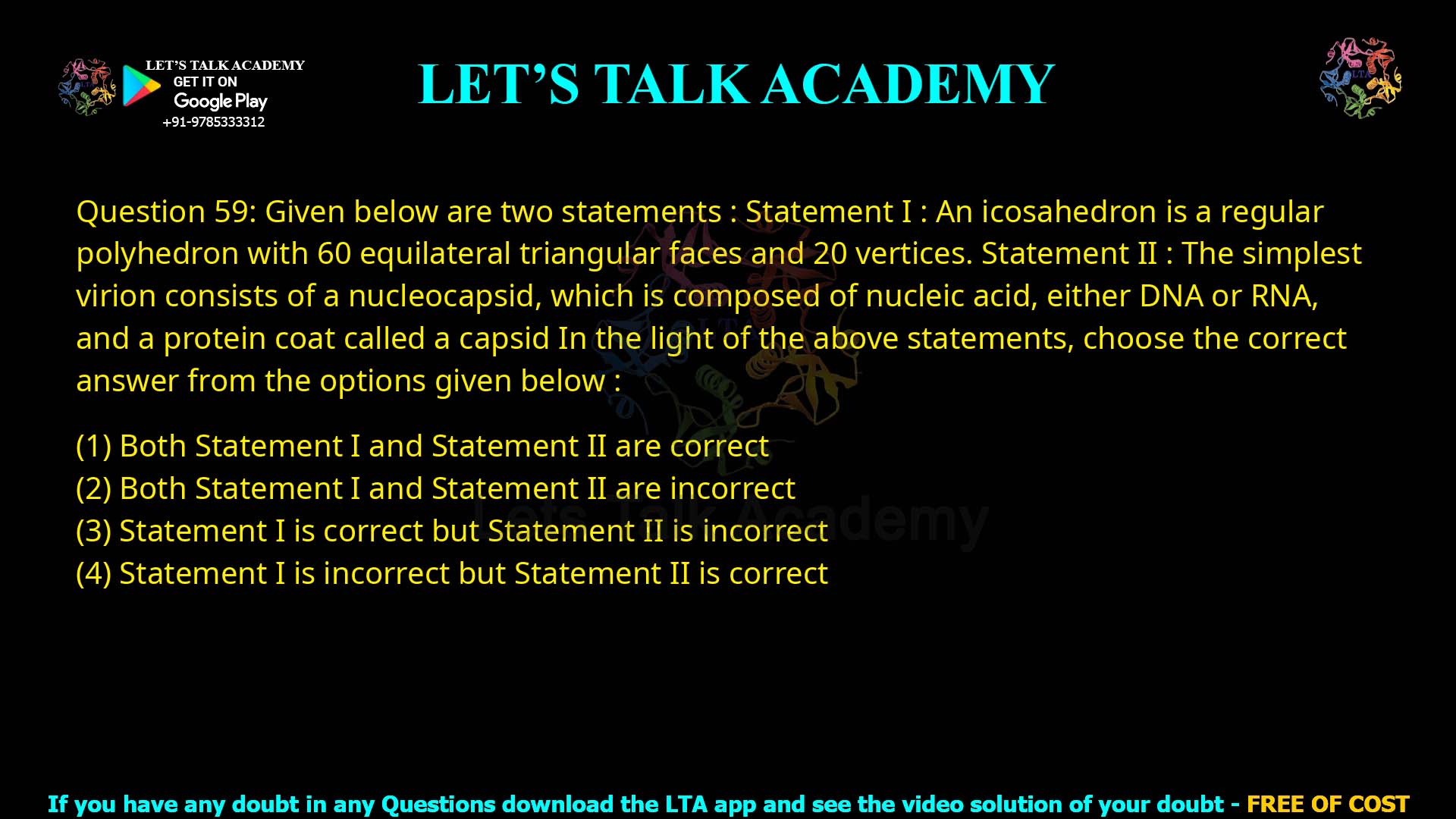
Q.59 Given below are two statements: Statement I : An icosahedron is a regular polyhedron with 60 equilateral triangular faces and 20 vertices. Statement II : The simplest virion consists of a nucleocapsid, which is composed of nucleic acid, either DNA or RNA, and a protein coat called a capsid. In the light of the above statements, choose the correct answer from the options given below: Both Statement I and Statement II are correct Both Statement I and Statement II are incorrect Statement I is correct but Statement II is incorrect Statement I is incorrect but Statement II is correct

 Icosahedron Faces Vertices

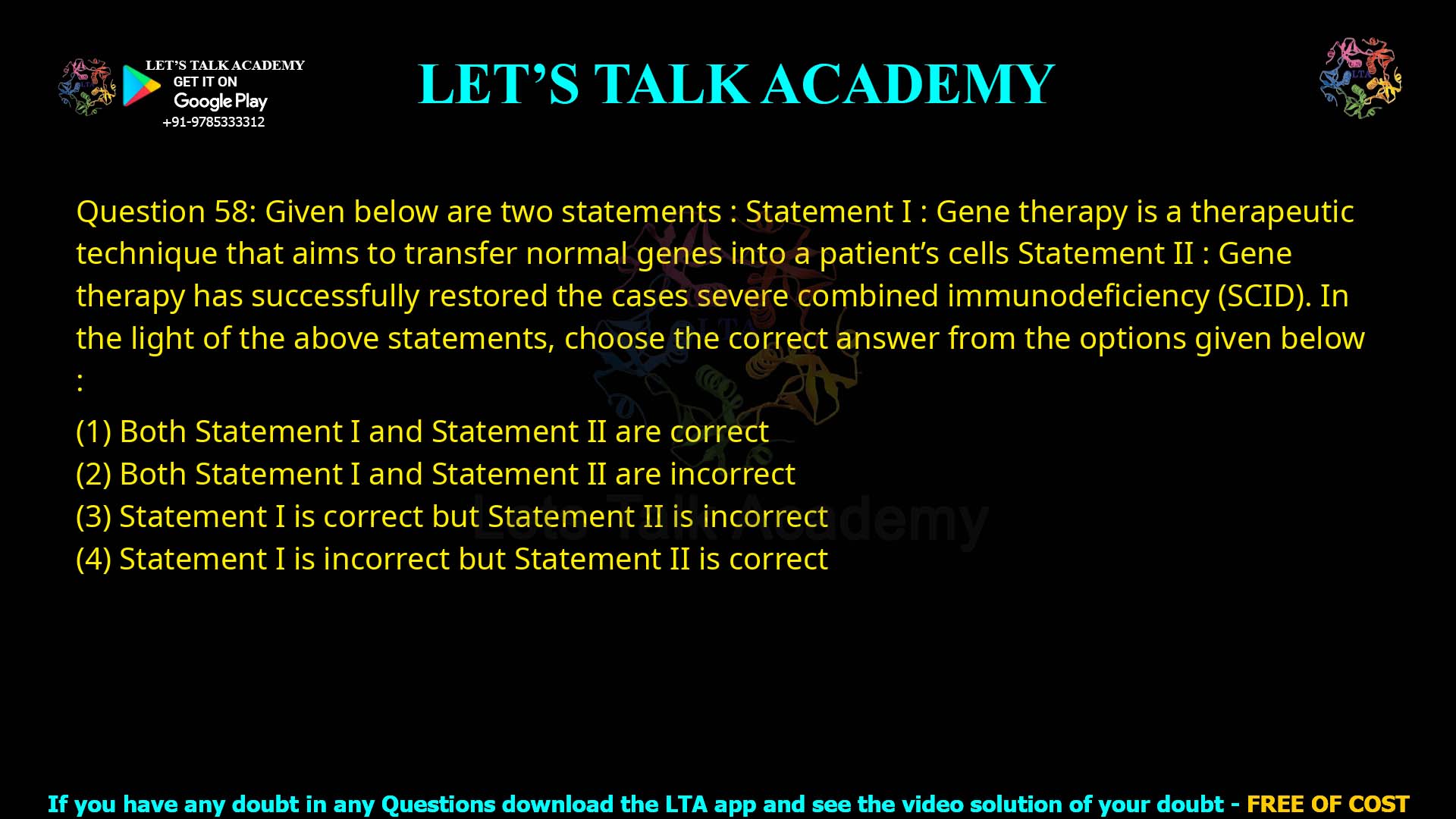
Q.58 Given below are two statements: Statement I : Gene therapy is a therapeutic technique that aims to transfer normal genes into a patient’s cells. Statement II : Gene therapy has successfully restored cases of severe combined immunodeficiency (SCID). In the light of the above statements, choose the correct answer from the options given below: Both Statement I and Statement II are correct Both Statement I and Statement II are incorrect Statement I is correct but Statement II is incorrect Statement I is incorrect but Statement II is correct

 Gene Therapy

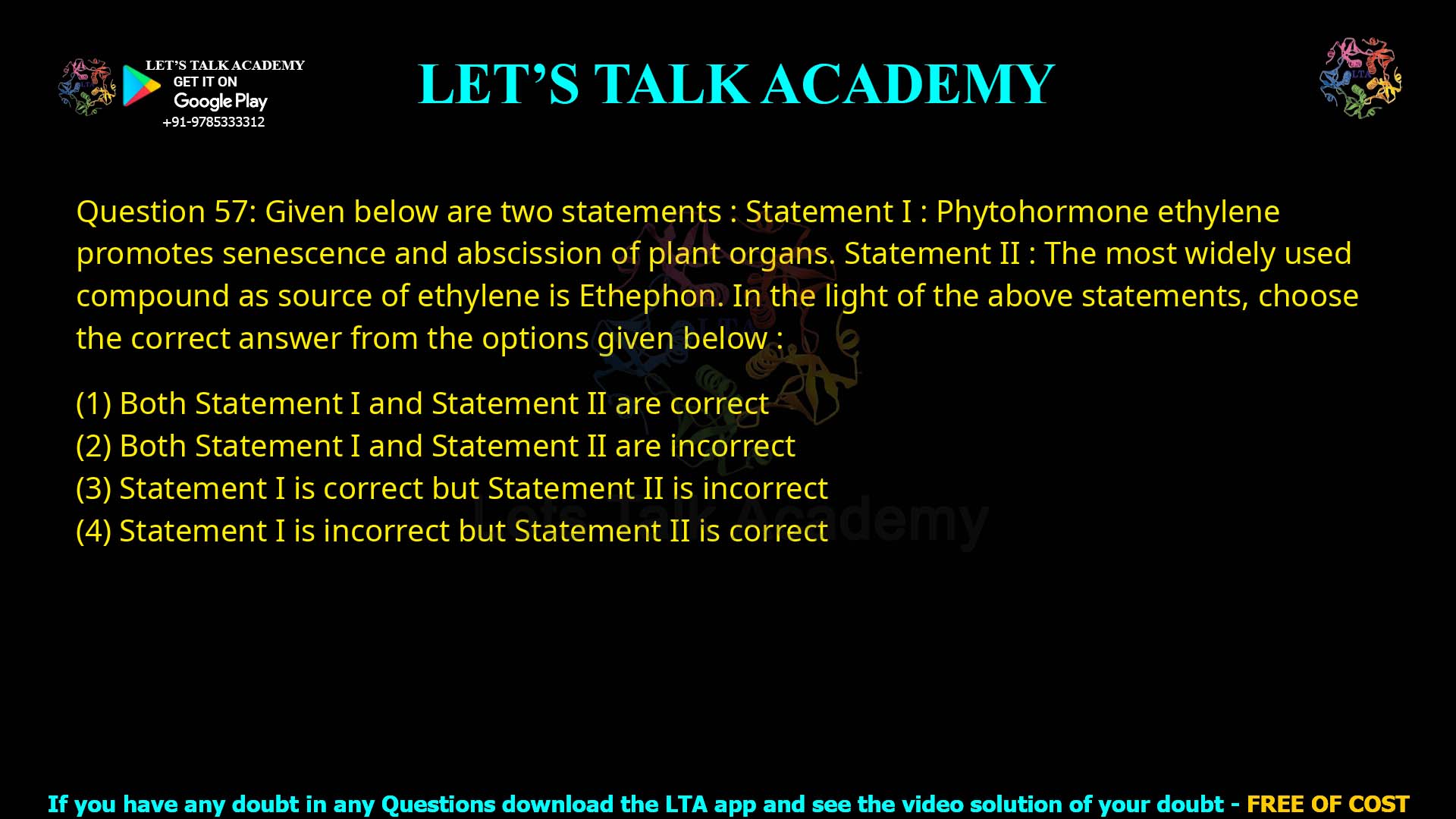
Q.57 Given below are two statements: Statement I : Phytohormone ethylene promotes senescence and abscission of plant organs. Statement II : The most widely used compound as source of ethylene is Ethephon. In the light of the above statements, choose the correct answer from the options given below: Both Statement I and Statement II are correct Both Statement I and Statement II are incorrect Statement I is correct but Statement II is incorrect Statement I is incorrect but Statement II is correct

 Phytohormone Ethylene

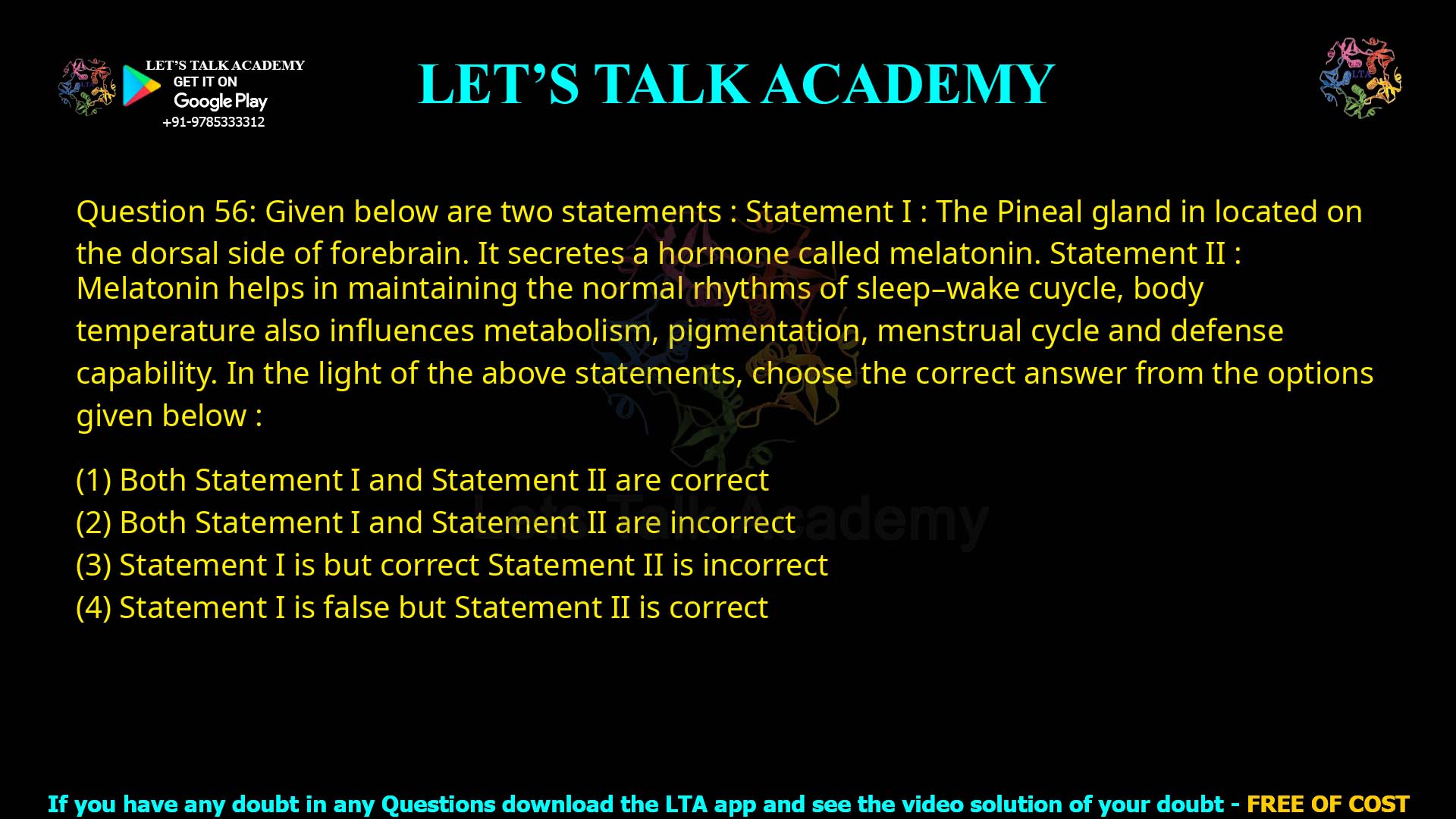
Q.56 Given below are two statements: Statement I : The Pineal gland is located on the dorsal side of forebrain. It secretes a hormone called melatonin. Statement II : Melatonin helps in maintaining the normal rhythms of sleep–wake cycle, body temperature and also influences metabolism, pigmentation, menstrual cycle and defense capability. In the light of the above statements, choose the correct answer from the options given below: Both Statement I and Statement II are correct Both Statement I and Statement II are incorrect Statement I is correct but Statement II is incorrect Statement I is false but Statement II is correct

Pineal Gland Location

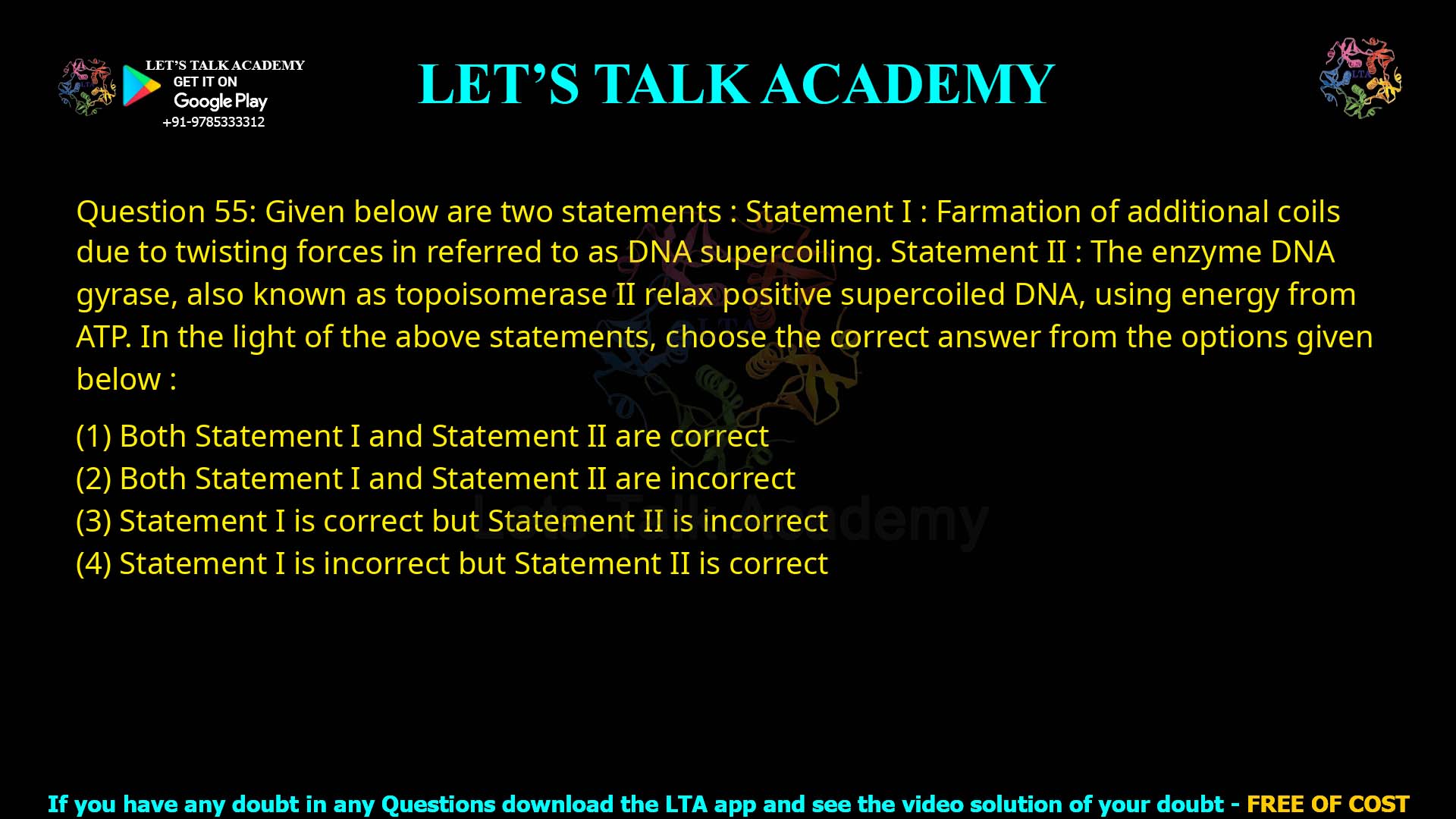
Q.55 Given below are two statements: Statement I : Formation of additional coils due to twisting forces is referred to as DNA supercoiling. Statement II : The enzyme DNA gyrase, also known as topoisomerase II, relaxes positive supercoiled DNA, using energy from ATP. In the light of the above statements, choose the correct answer from the options given below: Both Statement I and Statement II are correct Both Statement I and Statement II are incorrect Statement I is correct but Statement II is incorrect Statement I is incorrect but Statement II is correct

DNA Supercoiling Formation

Q.54 Identify the correct sequence of steps involved in detection of specific DNA fragments from a mixture of DNA: DNA is separated by electrophoresis and visualized by staining. Filter is placed in sealed bag with solution containing radioactive probe. DNA samples are cut by Restriction Endonucleases and loaded onto gel. Filter is washed to remove excess probe and placed on X-ray film to produce images of DNA bands. DNA binding filter paper towels and weights are placed on gel. Due to capillary action DNA fragments bind to the membrane. Choose the correct answer from the options given below: C – A – E – B – D A – B – C – D – E E – D – C – B – A A – B – D – C – E

Southern Blot DNA Detection Sequence

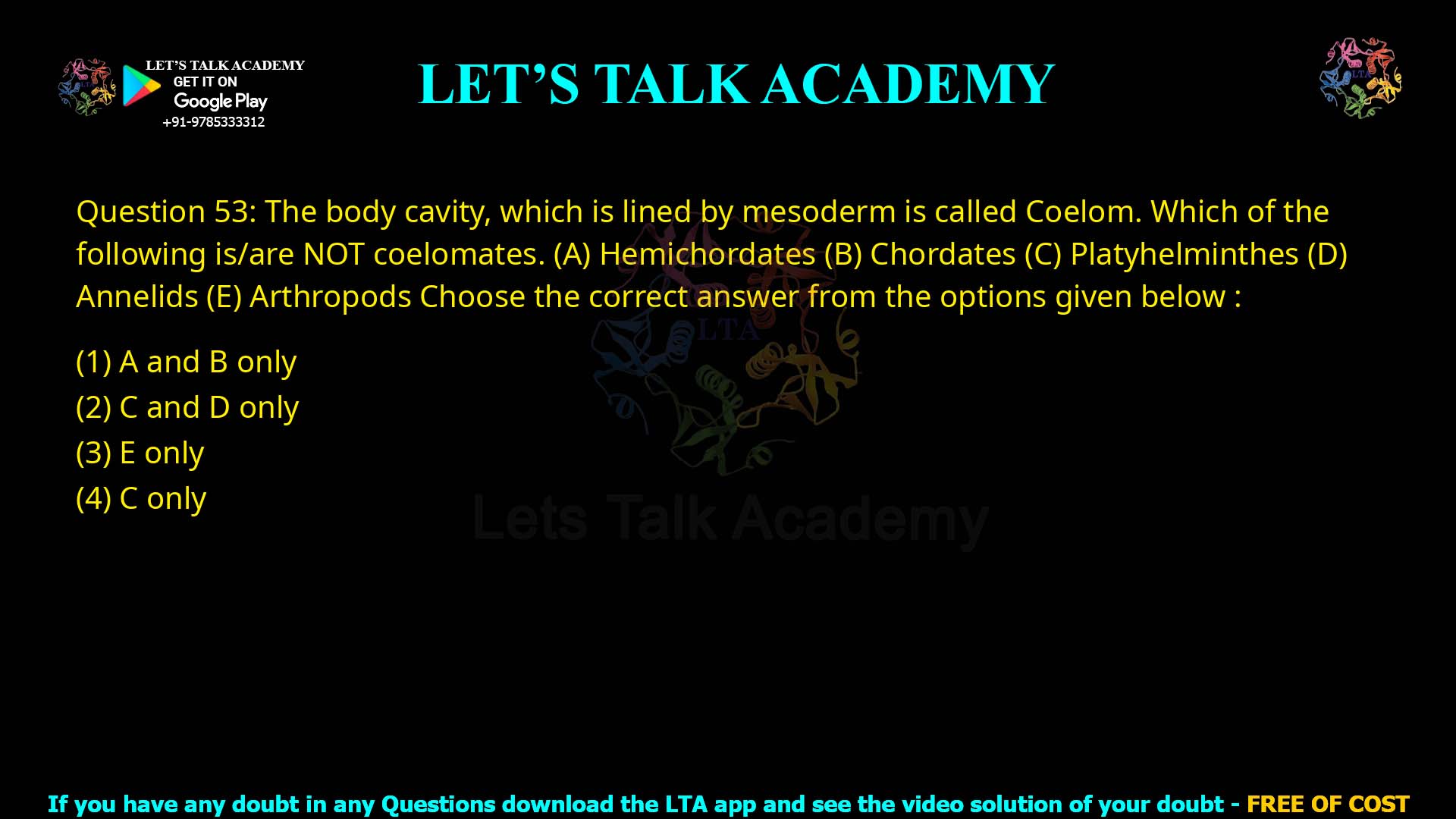
Q.53 The body cavity, which is lined by mesoderm is called Coelom. Which of the following is/are NOT coelomates: Hemichordates Chordates Platyhelminthes Annelids Arthropods Choose the correct answer from the options given below: A and B only C and D only E only C only

Coelomates Identification

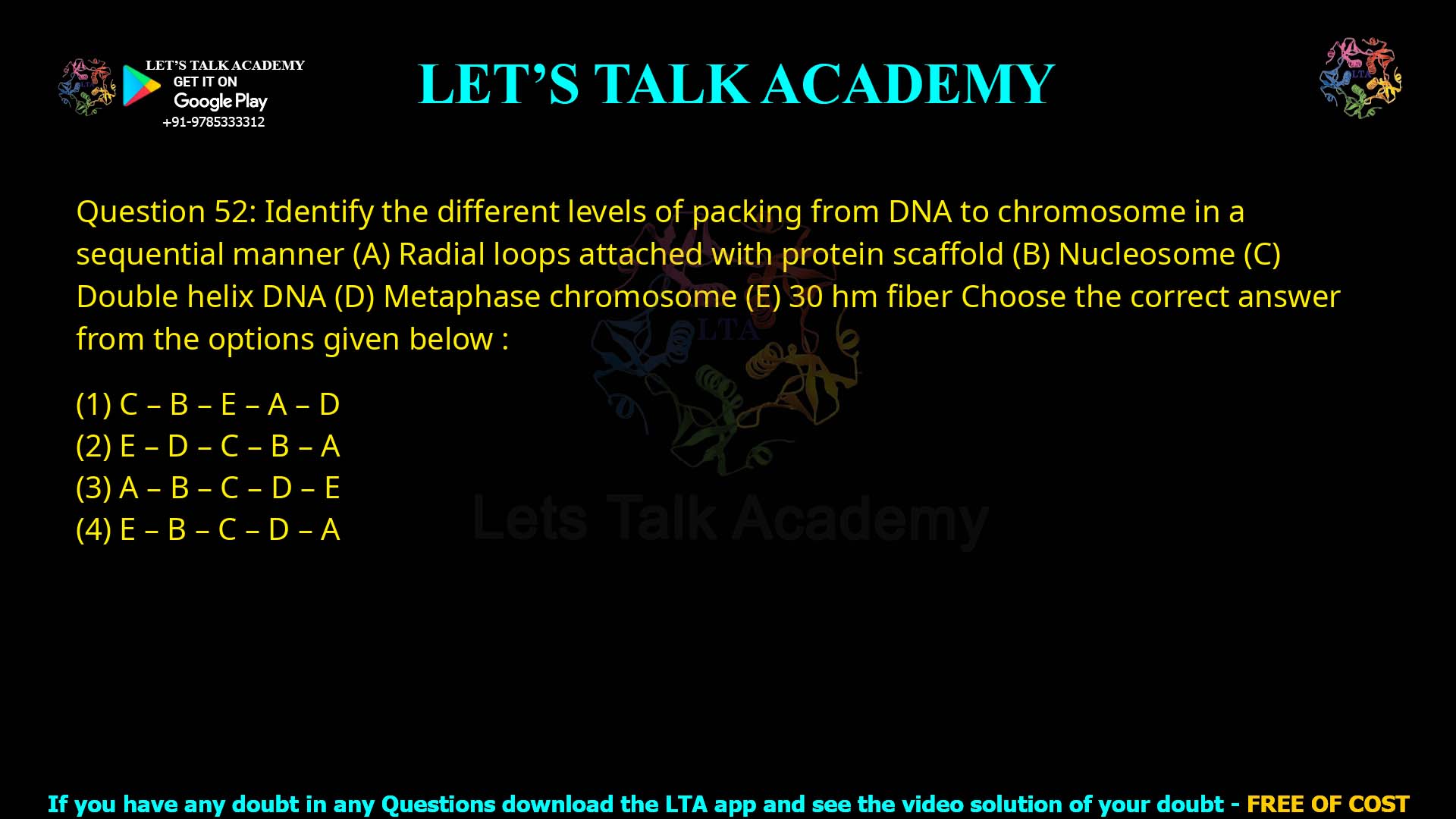
Q.52 Identify the different levels of packing from DNA to chromosome in a sequential manner: Radial loops attached with protein scaffold Nucleosome Double helix DNA Metaphase chromosome 30 nm fiber Choose the correct answer from the options given below: C – B – E – A – D E – D – C – B – A A – B – C – D – E E – B – C – D – A

DNA Chromosome Packing Levels Sequence

Q.51 Identify the appropriate sequence for the production of dendritic cells from hematopoietic stem cells in bone marrow. Common myeloid progenitor Monoblast Hematopoietic stem cells in bone marrow Monocytes Dendritic cells Choose the correct answer from the options given below: C – B – D – A – E C – A – B – D – E A – B – C – D – E C – B – A – E – D

Dendritic Cells Production Sequence

Q.50 Write the different steps for water purification process of untreated water to drinking water for human use in sequence: Color and precipitate removal Softening process (Ca, Mg removal) Taste and odour removal Disinfection Turbidity removal Choose the correct answer from the options given below: A – C – D – E – B A – C – E – B – D A – B – E – C – D A – B – C – D – E

Water Purification Process Steps Sequence

Q.49 The sequence of events taking place during Calvin cycle are: The first product of the fixation of carbon dioxide is glycerate 3-phosphate. Glycerate 3-phosphate is immediately reduced to 3 carbon sugar phosphate, triose phosphate. Conversion of glycerate-3-phosphate to triose phosphate consumes NADPH + H+ and ATP. Triose phosphate is further metabolized to produce sugars. Some of the triose phosphate is metabolized to produce ribulose bisphosphate. Choose the correct answer from the options given below: E – D – C – B – A A – B – D – E – C A – B – C – D – E A – C – B – D – E

Calvin Cycle Sequence

Q.48 Write the correct sequence for compounds in citric acid cycle : A. Malate B. Fumarate C. Succinyl Co-A D. Oxaloacetate E. Succinate Choose the correct answer from the options given below : C – E – B – A – D A – B – C – D – E E – D – C – B – A C – E – A – B – D

 Citric Acid Cycle Sequence

Q.47 Given below are two statements : One is labelled as Assertion (A) and the other is labelled as Reason (R). Assertion (A) :In pteridophytes, genera like Se/agine//a and Sa/vinia produces heterospores. Reasons (R) :Hetrospory in pteridophytes is a precursor to the seed habit. which is an important step in evolution In the light Of the above statements, choose the most appropriate answer from the options given below : (1)Both (A) and (R) are correct and (R) is the correct explanation of (A) (2)Both (A) and (R) are correct but (R) is NOT the correct explanation of (A) (3)(A) is correct but (R) is not correct (4)(A) is not correct but (R) is correct

Pteridophytes Heterospory

Q.46 Given below are two statements : One is labelled as Assertion (A) and the other is labelled as Reason (R). Assertion (A) :Restriction enzymes its particular recognition sequence and cut the ss DNA / ds DNA to produce cohesive and blunt fragments. Reasons (R) :Restriction enzyme with A — base recognition will cut, on average. every 256 base pairs if all four nucleotides are present in equal proportions. In the light of the above statements, choose the most appropriate answer from the options given below : (1)Both (A) and (R) are correct and (R) is the correct explanation of (A) (2)Both (A) and (R) are correct but (R) is NOT the correct explanation of (A) (3)(A) is correct but (R) is not correct (4)(A) is not correct but (R) is correct

Restriction Enzymes Assertion Reason

Q.45 Given below are two statements : One is labelled as Assertion (A) and the other is labelled as Reason (R). Assertion (A) :PCR is a technique to ampify large quantities of a specific DNA. Reasons (R) :PCR technique involves the following steps; renaturation, denaturation and synthesis. In the light Of the above statements, choose the most appropriate answer from the options given below : (1)Both (A) and (R) are correct and (R) is the correct explanation of (A) (2)Both (A) and (R) are correct but (R) is NOT the correct explanation of (A) (3)(A) is correct but (R) is not correct (4)(A) is not correct but (R) is correct

PCR Technique Steps

Q.44 Given below are two statements : One is labelled as Assertion (A) and the other is labelled as Reason (R). Assertion (A) :In tertiary structure of protein hydrophbic side chains are held interior while the hydrophilc groups are on the surface Of the protein molecule. Reasons (R) : Other than hydrogen bonds disulifide bonds ( S —S ), ionic interaction (Electrostatic), hydrophobic interaction and Vander Waals forces also contribute to the tertiary structure Of protein. In the light of the above statements, choose the most appropriate answer from the options given below : (1)Both (A) and (R) are correct and (R) is the correct explanation of (A) (2)Both (A) and (R) are correct but (R) is NOT the correct explanation of (A) (3)(A) is correct but (R) is not correct (4)(A) is not correct but (R) is correct

Protein Tertiary Structure Hydrophobic

Q.43 Given below are two statements : One is labelled as Assertion (A) and the other is labelled as Reason (R). Assertion (A) :Staphylococcus au/eus is gram negative bacteria. Reasons (R) :Saccharomyces cerevisiae and Neurospora crassa are the examples of class Ascomycetes in fungi. In the light of the above statements, choose the most appropriate answer from the options given below : (1)Both (A) and (R) are correct and (R) is the correct explanation of (A) (2)Both (A) and (R) are correct but (R) is NOT the correct explanation of (A) (3)(A) is correct but (R) is not correct (4)(A) is not correct but (R) is correct

Staphylococcus Aureus Gram Negative Assertion

Q.42 Given below are two statements : One is labelled as Assertion (A) and the other is labelled as Reason (R). Assertion (A) :Constitutive hetecochromatin is the region of chromosome, that is always heterochromatic and pesmanently inactive with regard to transcription. Reasons (R) :Facultative heterochromatin refers to chromatin that can occasionally interconvert between heterochromatin and euchromatin. In the light of the above statements, choose the most appropriate answer from the options given below : (1)Both (A) and (R) are correct and (R) is the correct explanation of (A) (2)Both (A) and (R) are correct but (R) is NOT the correct explanation of (A) (3)(A) is correct but (R) is not correct (4)(A) is not correct but (R) is correct

Constitutive Heterochromatin vs Facultative Heterochromatin

Q.41 Given below are two statements : One is labelled as Assertion (A) and the other is labelled as Reason (R). Assertion (A) :Gluconse homeostasis relies predominantly on the antagonistric effects of the hormones, insulin and glucagon. Reasons (R) :When the blood glucose level rises above the normal range, the Secretion of insulin trigger the uptake of glucose from the blood into body cells, decreasing the blood glucose concentration. When the blood glucose level drops below the normal range, the secretion Of glucagon promotes the release Of glucose into the blood from energy stores, such as liver glycogen, increasing the blood glucose concentration. In the light of the above statements, choose the most appropriate answer from the options given below : (1)Both (A) and (R) are correct and (R) is the correct explanation of (A) (2)Both (A) and (R) are correct but (R) is NOT the correct explanation of (A) (3)(A) is correct but (R) is not correct (4)(A) is not correct but (R) is correct

 Glucose Homeostasis Insulin Glucagon

Q.40 The Sea anemones and corals belongs to the phylum : Platyhelminthes Coelenterata Porifera Echinodermata

 Sea Anemones and Corals Phylum

Q.39 The sequences essential for centromere function are: About 200 bp long and very rich in G = C pairs. About 1000 bp long and very rich in A = U pairs. About 130 bp long and very rich in A = T pairs. About 20,000 bp and very rich in lysine and arginine.

Centromere Essential Sequences

Q.38 Topoisomerase II introduces the : Single stranded supercoils in DNA Both positive and negative supercoils in DNA Negative supercoils in DNA Positive supercoils in DNA

Topoisomerase II Supercoils

Q.37 Lampbrush chromosomes were first discovered in Salamander oocytes by : E.G. Balbiani Robert Hook J. Ruckelt Walther Flemming

Lampbrush Chromosomes Discovery

Q.36 The karyotype of individual is written as 47, XX, +21 indicating: (1) Edward Syndrome (2) Down Syndrome (3) Turner Syndrome (4) Klinefelter Syndrome

Karyotype 47 XX +21

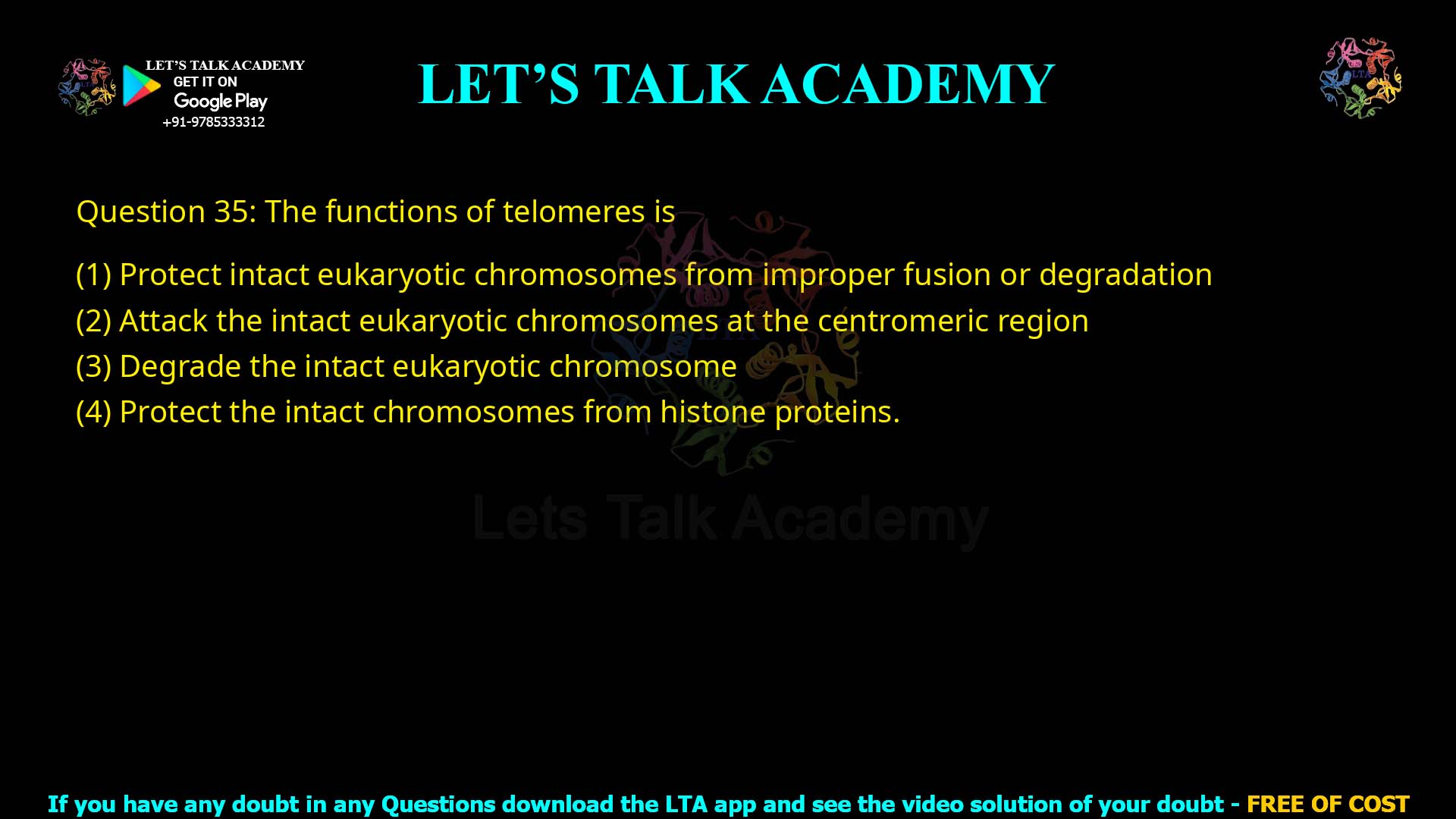
Q.35 The functions of telomeres is : Protect intact eukaryotic chromosomes from improper fusion or degradation Attack the intact eukaryotic chromosomes at the centromeric region Degrade the intact eukaryotic chromosome Protect the intact chromosomes from histone proteins

Telomere Functions

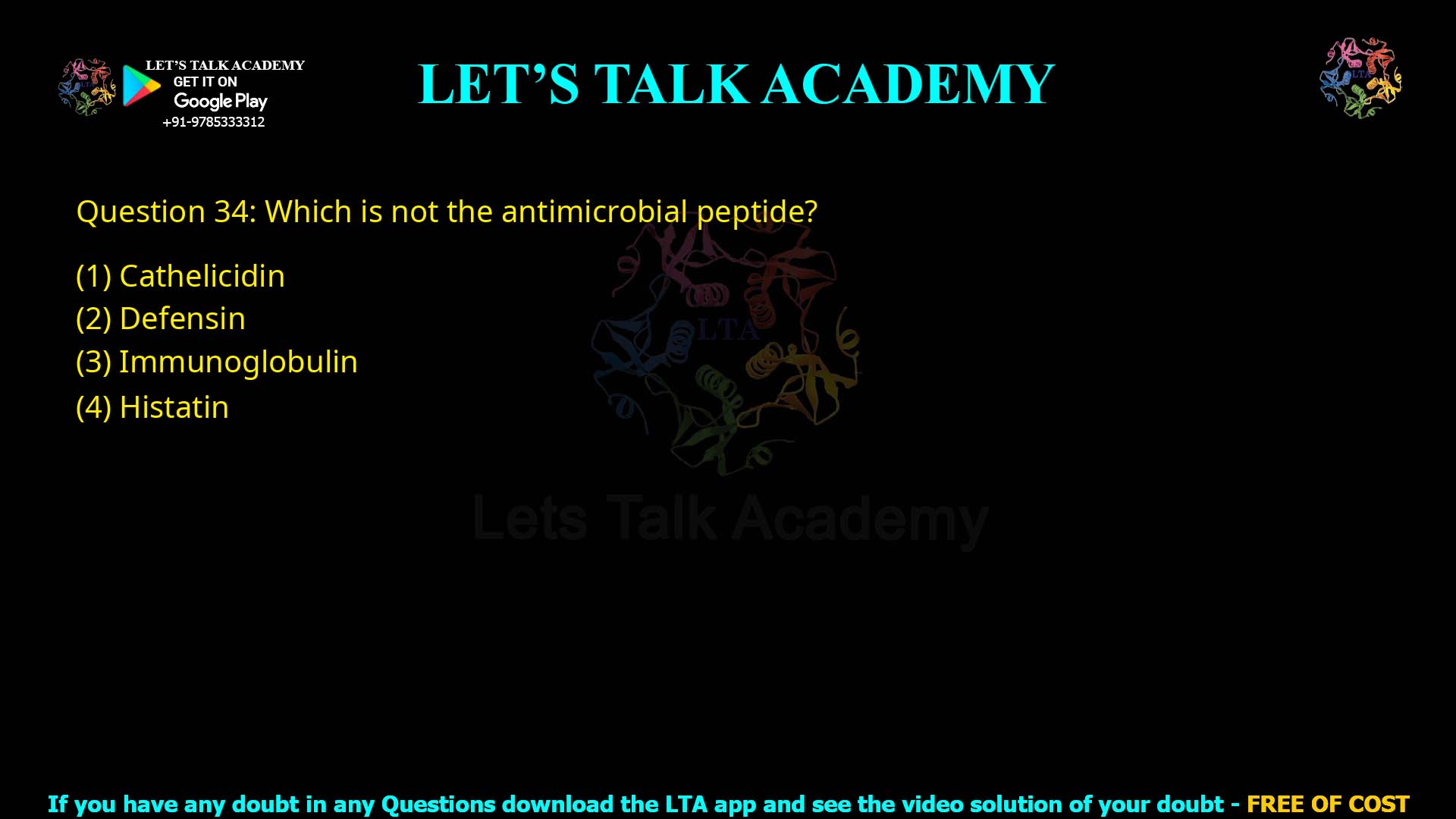
Q.34 Which is not the antimicrobial peptide? (1) Cathelicidin (2) Defensin (3) Immunoglobulin (4) Histatin

Antimicrobial Peptide Not

Q.33 In interphase cell, less compacted and highly condensed chromatin are called as: Heterologous and homologous, respectively Heterochromatin and euchromatin, respectively Euchromatin and heterochromatin, respectively Orthologous and paralogous, respectively

Interphase Chromatin

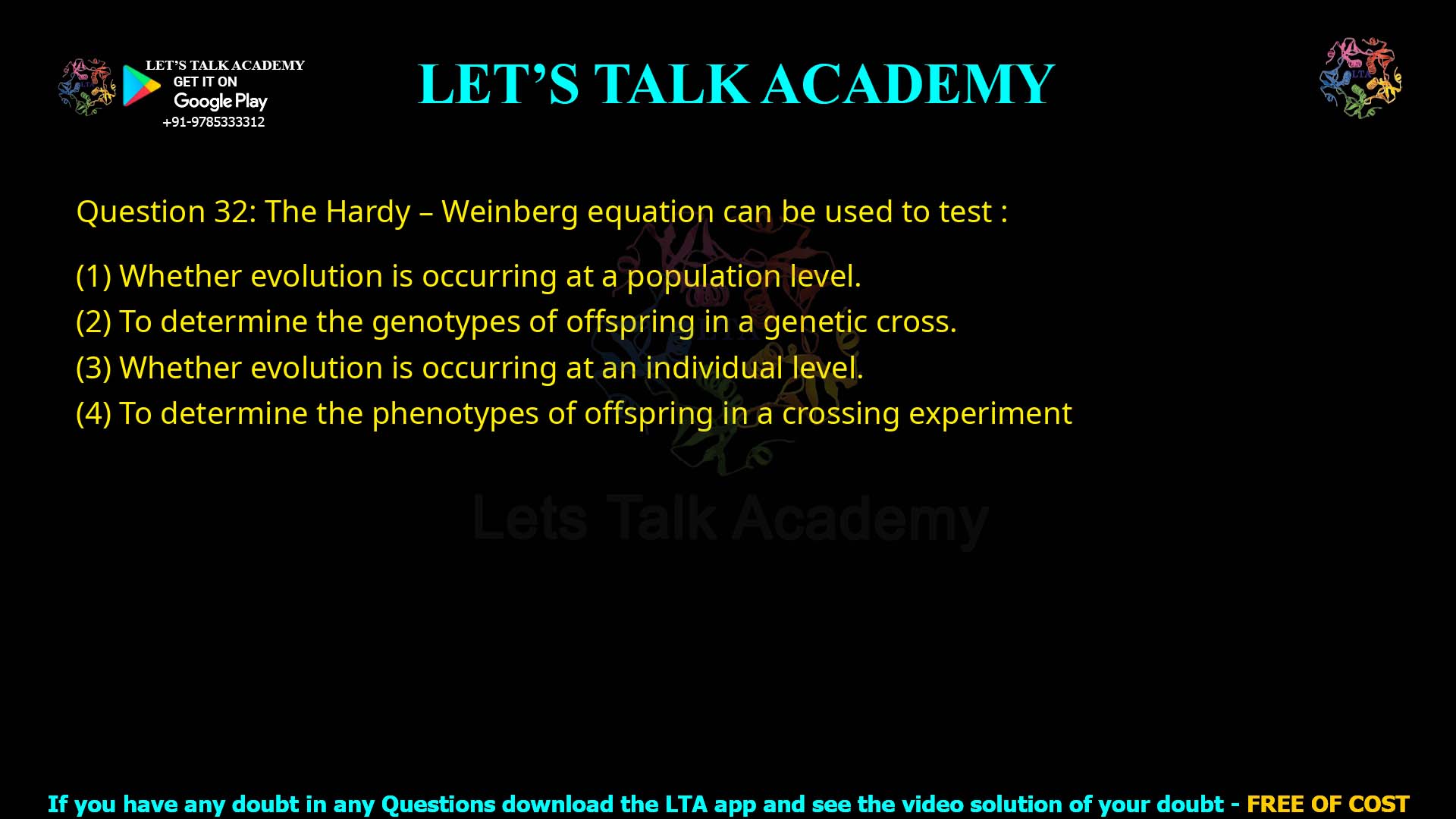
Q.32 The Hardy–Weinberg equation can be used to test : Whether evolution is occurring at a population level. To determine the genotypes of offspring in a genetic cross. Whether evolution is occurring at an individual level. To determine the phenotypes of offspring in a crossing experiment.

Hardy-Weinberg Equation

Q.31 J chain is present in : (1) IgE (2) IgA (3) IgG (4) IgD

 J Chain Present in

Q.30 If the template strand of a segment of a gene has the nucleotide sequence 3′– GCTAAGC –5′, what nucleotide sequence will be present in the RNA transcript specified by this gene segment? (1) 3′– GCTAAGC –5′ (2) 5′– CGAUUCG –3′ (3) 3′– CGATTCG –5′ (4) 5′– CGATTCG –3′

Template Strand Sequence to RNA Transcript

Q.29 Extra nuclear genomes of mitochondria and chloroplasts have evolved from : Natural selection Adaptive radiation Heteroplasmy Endosymbiosis

Extra Nuclear Genomes Origin

Q.28 Application of genetic fingerprinting is not directly linked with : Identification of suspects Species conservation Determining paternity Property disputes

Application of Genetic Fingerprinting

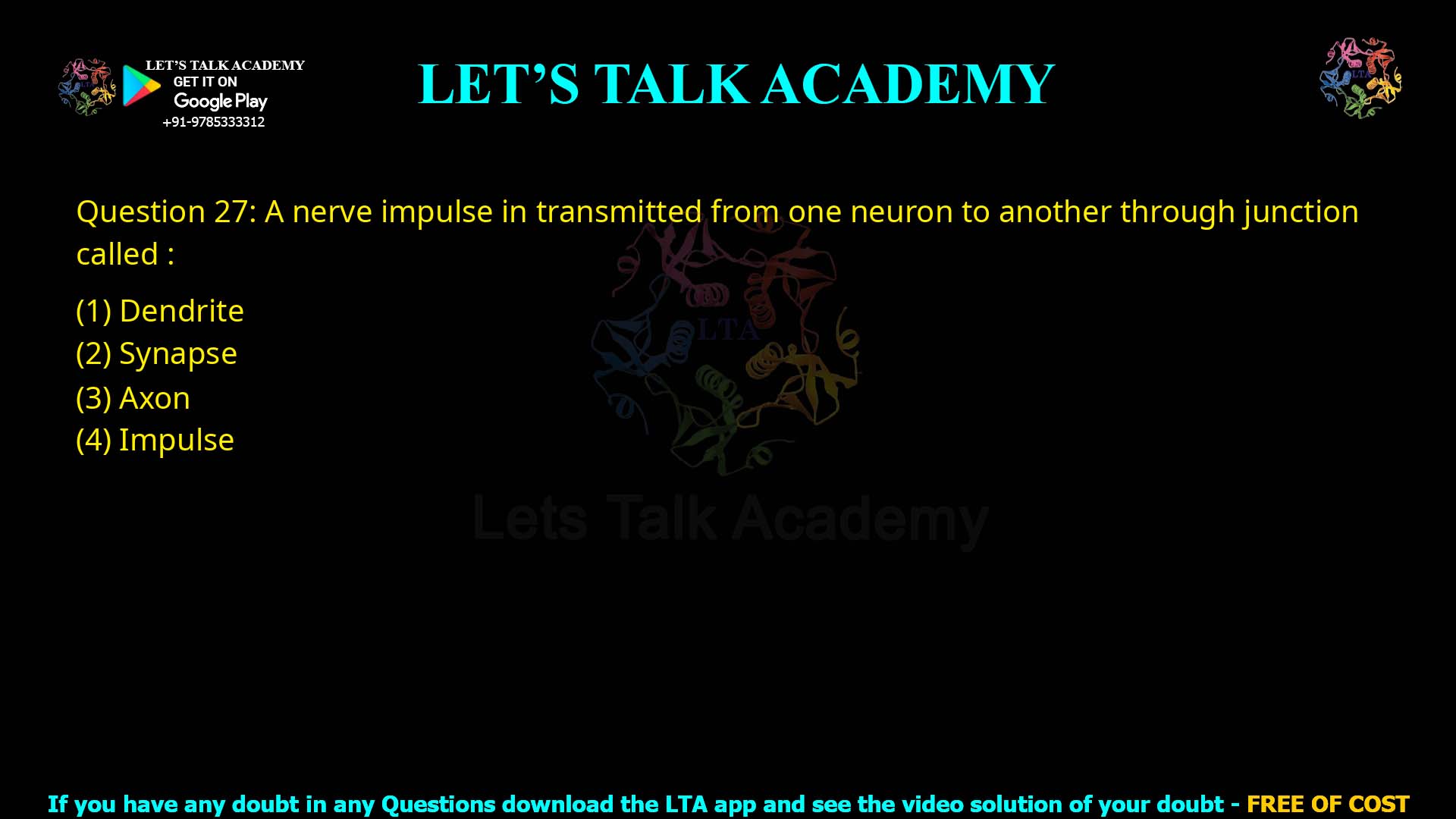
Q.27 A nerve impulse is transmitted from one neuron to another through junction called : Dendrite Synapse Axon Impulse

Nerve Impulse Transmission

Q.26 Which of the following is one of the possible hazards of genetically modified (GM) crops? Modified genes of herbicide resistance from GM crops get into weed plants through pollination and this plant might become resistant to herbicide and so become a “Superweed”. There is no possible hazard known till date, regarding transfer of any genes between the plants. Production techniques of GM crops is proof and genetic engineering offers the advantage of transferring only those genes that are required. Production of GM crops may replace the existing germplasm.

GM Crops Hazards

Q.25 Which is not the heteropolysaccharide of extra cellular matrix in multicellular animals? (1) Hyaluronan (2) Keratan sulfate (3) Keratin (4) Heparin

Heteropolysaccharide ECM Multicellular Animals

Q.24 Citronella oil is obtained from (1) Linum usitatissimum (2) Glycine max (3) Cymbopogon nardus (4) Elaeis guineensis

Citronella Oil Source Plant

Q.23 Geitonogamy is a type of pollination, in which : Transfer of pollen grains from anther to the stigma of a different plant Transfer of pollen grains from anther to the stigma of chasmogamous flower Transfer of pollen grains from anther to stigma of another flower of the same plant Transfer of pollen grains from anther to stigma of another of cleistogamous flower

Geitonogamy Pollination

Q.22 In photoperiodism, long day plant flowers only: If the night is longer than a critical dark period If the night is shorter than a critical dark period A flash of light interrupting the dark period prevents flowering A light period of less than 8 hours is sufficient for the plants to flower

Long Day Plant Photoperiodism

Q.21 The precursor molecule for the synthesis of Vitamin D3 in human skin is: Prednisolone 7-dehydrocholesterol Estradiol Isoprene

Vitamin D3 Precursor in Human Skin

Q.20 Which of the following is correct about RNA interference (CRNAi)? RNAi take place in all prokaryotic organisms as a method of cellular defense. RNAi involves silencing of a specific mRNA due to a complementary dsRNA molecule that binds to and prevents translation of the mRNA. RNAi involves silencing of all types of RNA due to a complementary dsRNA molecule that binds to and prevents translation of the mRNA. RNAi involves silencing of a specific mRNA by the host cell itself due to overproduction of mRNA by sense strand.

RNA Interference RNAi

Q.19 In chloroplast, ATP generation by chemiosmosis mechanism involves: The diffusion of hydrogen ions from stroma to stroma in the presence of light The diffusion of hydrogen ions from thylakoid to another thylakoid space The diffusion of hydrogen ions from the stroma space to thylakoid through ATP synthase complex The diffusion of hydrogen ions from the thylakoid space back to the stroma through ATP synthase complexes

Chloroplast ATP Chemiosmosis

Q.18 Which microorganism produces dextran? Clostridium acetobutylicum Leuconostoc mesenteroides Bacillus subtilis Enterobacter aerogenes

Microorganism Produces Dextran

Q.17 Which molecule, ATP does not donate? (1) Phosphoryl groups (2) Deoxyribosyl group (3) Phosphoryl groups (4) Adenylyl groups

Molecule ATP Does Not Donate

Q.16 What is the composition of membrane attack complex in complement systems? C1 – C2 – C9 – C3 – C6 – C7 C5b – C3b – C2 – C5a – C4b C3b – C2 – C4b – C1 – C3 C5b – C6 – C7 – C8 – C9

 Composition Membrane Attack Complex Complement Systems

Q.15 Self incompatibility prevents self fertilization and this mechanism involves: S₁ – pollen grain from an S₁ S₂ parental sporophyte cannot fertilize eggs of an S₁ S₂ flower S₁ – pollen grain from an S₁ S₂ parental sporophytes can fertilize eggs of an S₁ S₂ flower S₂ pollen grain can fertilize eggs of S₁ S₂ and S₂ S₃ flower S₁ – pollen grain from an S₁ S₂ parental sporophytes can fertilize eggs of an S₁ S₃ flower

Self Incompatibility Mechanism

Q.14 In Bryophytes: Sporophyte is fully or partially dependent on gametophytes Xylem and phloem are the main water and food conducting tissues Spore dispersal takes place by means of peristomial teeth only Heterospory and seed habit evolved in higher bryophyte

Bryophytes Explained

Q.13 Which one of the following statement is incorrect about gel electrophoresis? Proteins or nucleic acid fragments are separated based on their net charges and mass Differential migration of these molecules through agarose gel or polyacrylamide gel, in which small particles move slowly to resolve better Electrical charge that is on DNA molecule help them to move towards the anode Migration of small DNA fragments through gel is quickly

Gel Electrophoresis Incorrect Statement

Q.12 The polar head group in sphingomyelins is composed of: Glycerol or ethanolamine Serine or glycerol Phosphocholine or phosphoethanolamine Cholesterol or sterol

Polar Head Group in Sphingomyelins

Q.11 Two envelope spikes in influenza virus HA & NA stands for Hemagglutinin and calnexin Hemagglutinin and neuraminidase Hemoglobin and neuroserpine Heme and nexim

 Influenza Virus HA NA Envelope

Q.10 Which of the following secretes Progesterone hormone? (1) Leydig cells (2) Corpus luteum (3) Sertoli cells (4) Graafian follicle

Which Secretes Progesterone Hormone

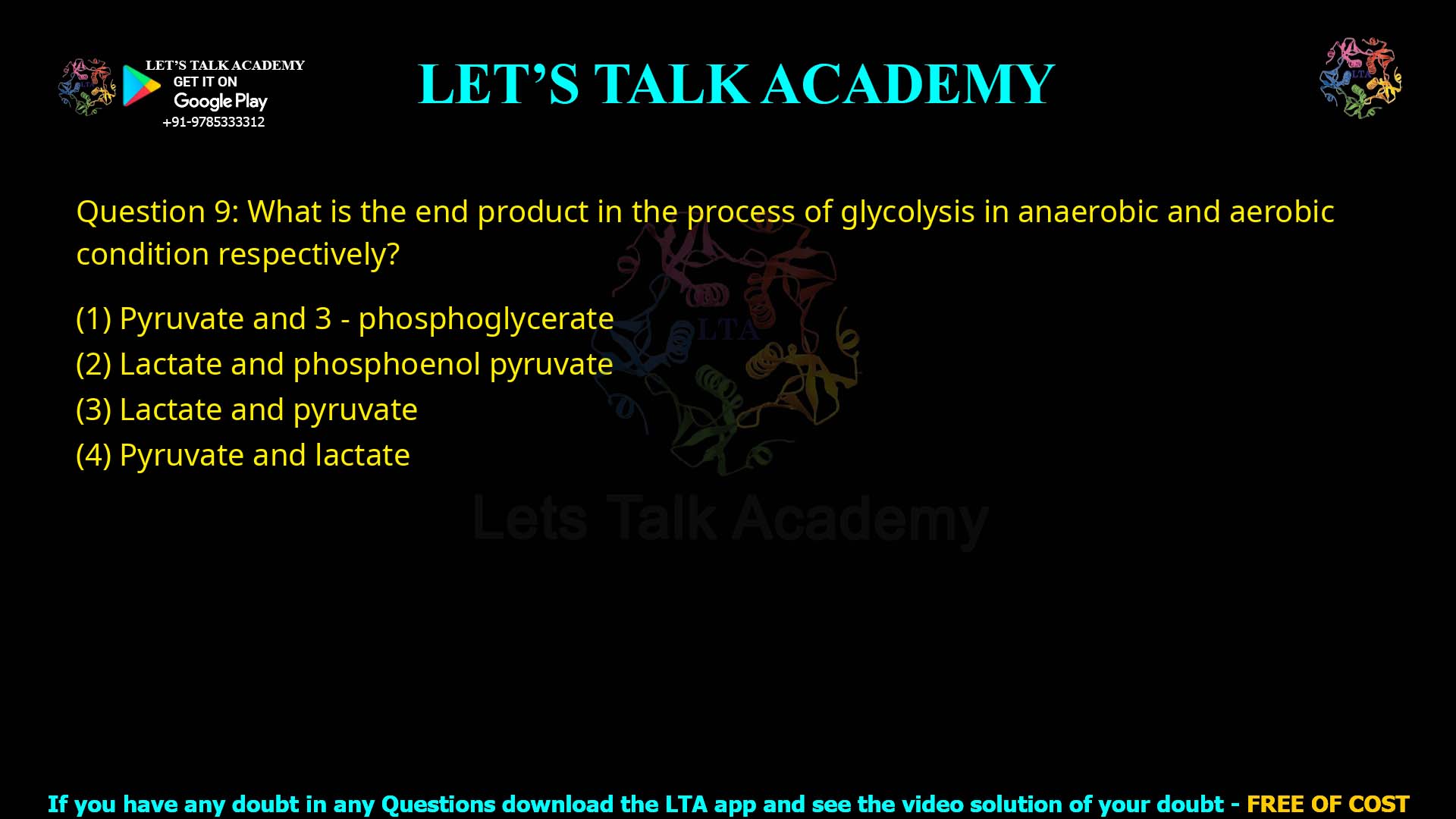
Q.9 What is the end product in the process of glycolysis in anaerobic and aerobic condition respectively? Pyruvate and 3-phosphoglycerate Lactate and phosphoenol pyruvate Lactate and pyruvate Pyruvate and lactate

End Product Glycolysis

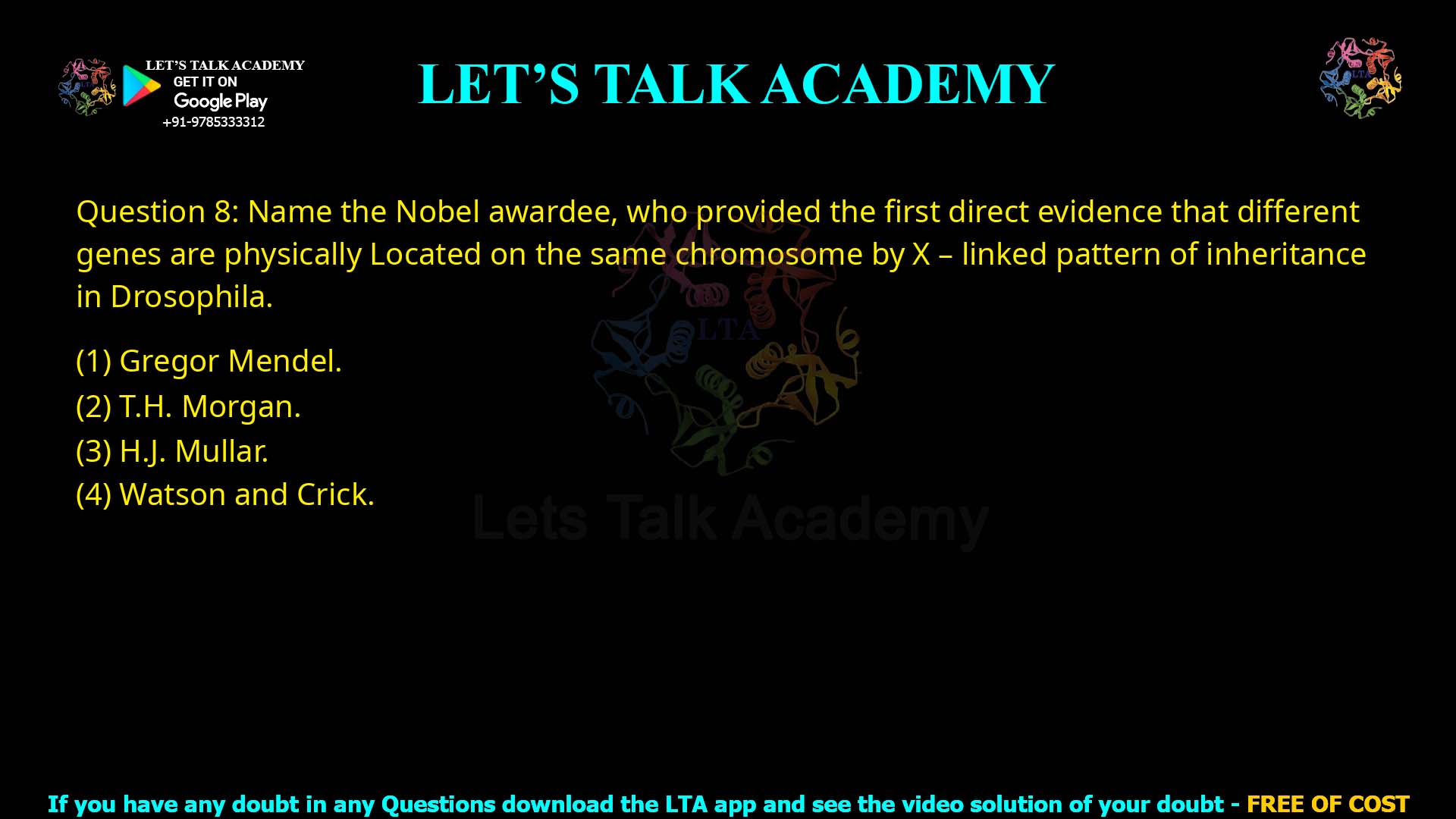
Q.8 Name the Nobel awardee, who provided the first direct evidence that different genes are physically located on the same chromosome by X–linked pattern of inheritance in Drosophila. (1) Gregor Mendel (2) T.H. Morgan (3) H.J. Muller (4) Watson and Crick

Nobel Awardee T.H. Morgan

Q.7 The hormone which stimulates an appetite is : (1) Insulin (2) Leptin (3) Ghrelin (4) PYY hormone

Hormone Which Stimulates Appetite

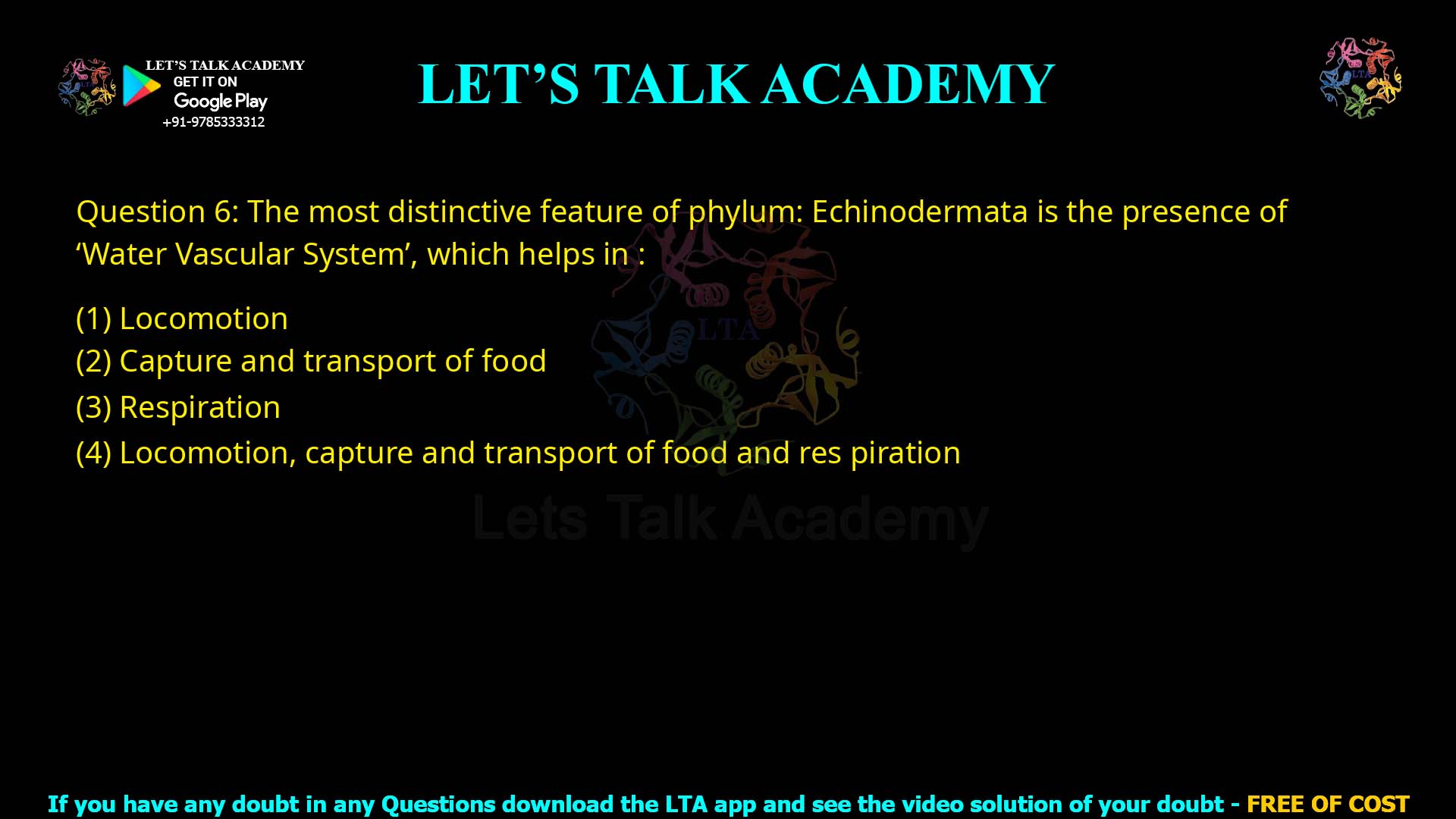
Q.6 The most distinctive feature of phylum: Echinodermata is the presence of ‘Water Vascular System’, which helps in: Locomotion Capture and transport of food Respiration Locomotion, capture and transport of food and respiration

Echinodermata Water Vascular System

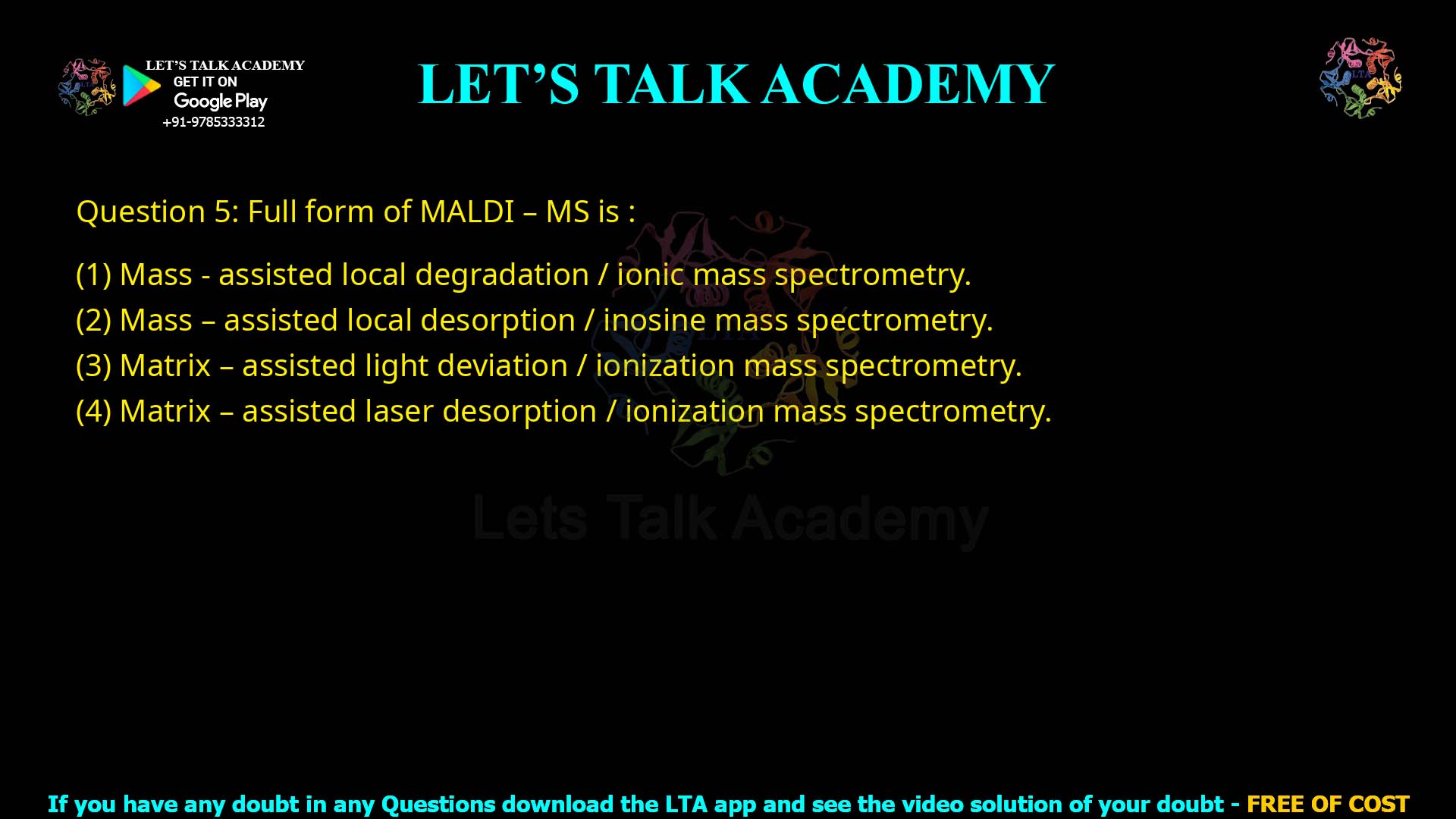
Q.5 Full form of MALDI – MS is : Mass – assisted local degradation / ionic mass spectrometry. Mass – assisted local desorption / inosine mass spectrometry. Matrix – assisted light deviation / ionization mass spectrometry. Matrix – assisted laser desorption / ionization mass spectrometry.

Full Form of MALDI-MS

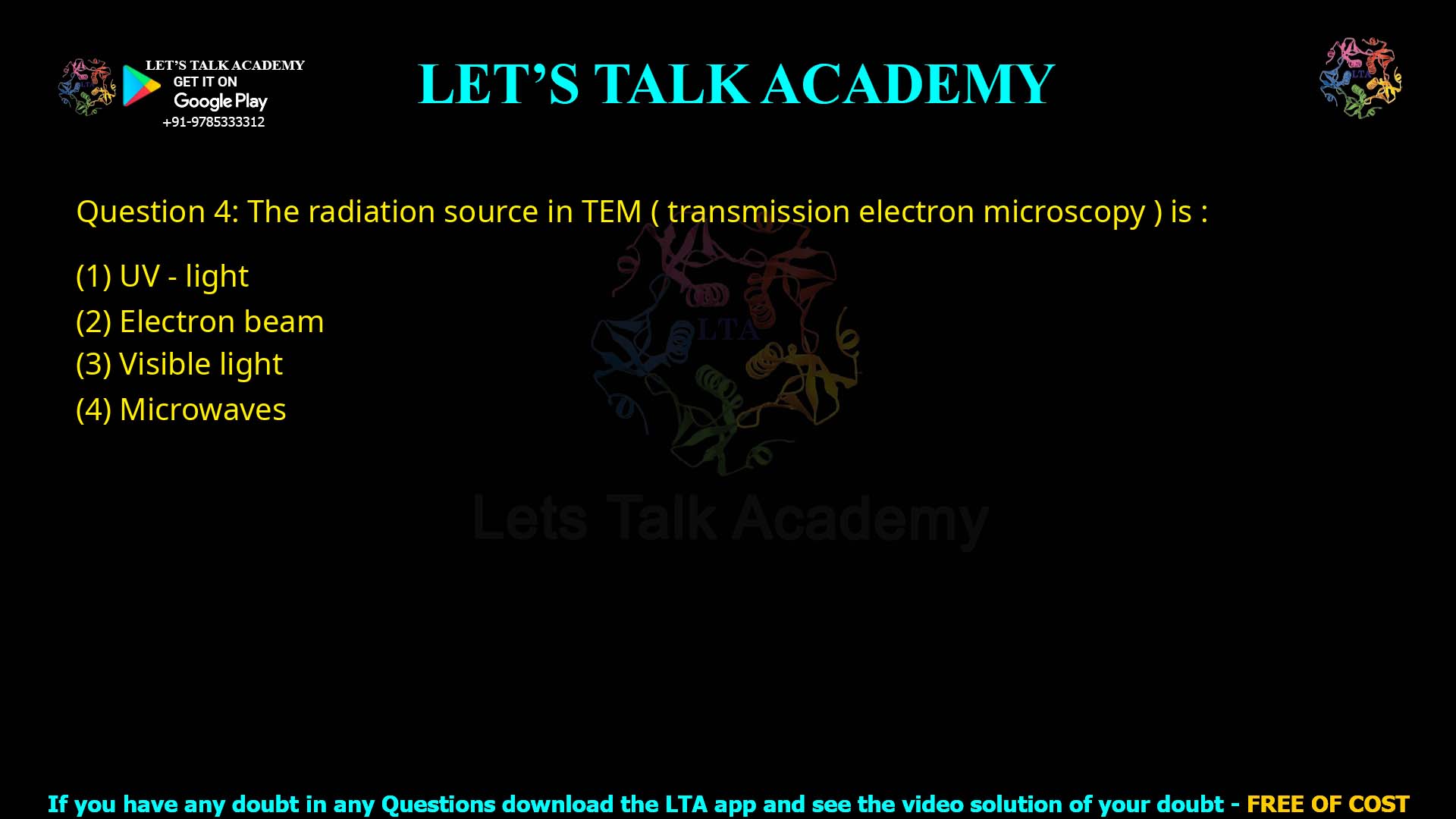
Q.4 The radiation source in TEM (transmission electron microscopy) is : (1) UV - light (2) Electron beam (3) Visible light (4) Microwaves

Radiation Source in TEM Transmission Electron Microscopy

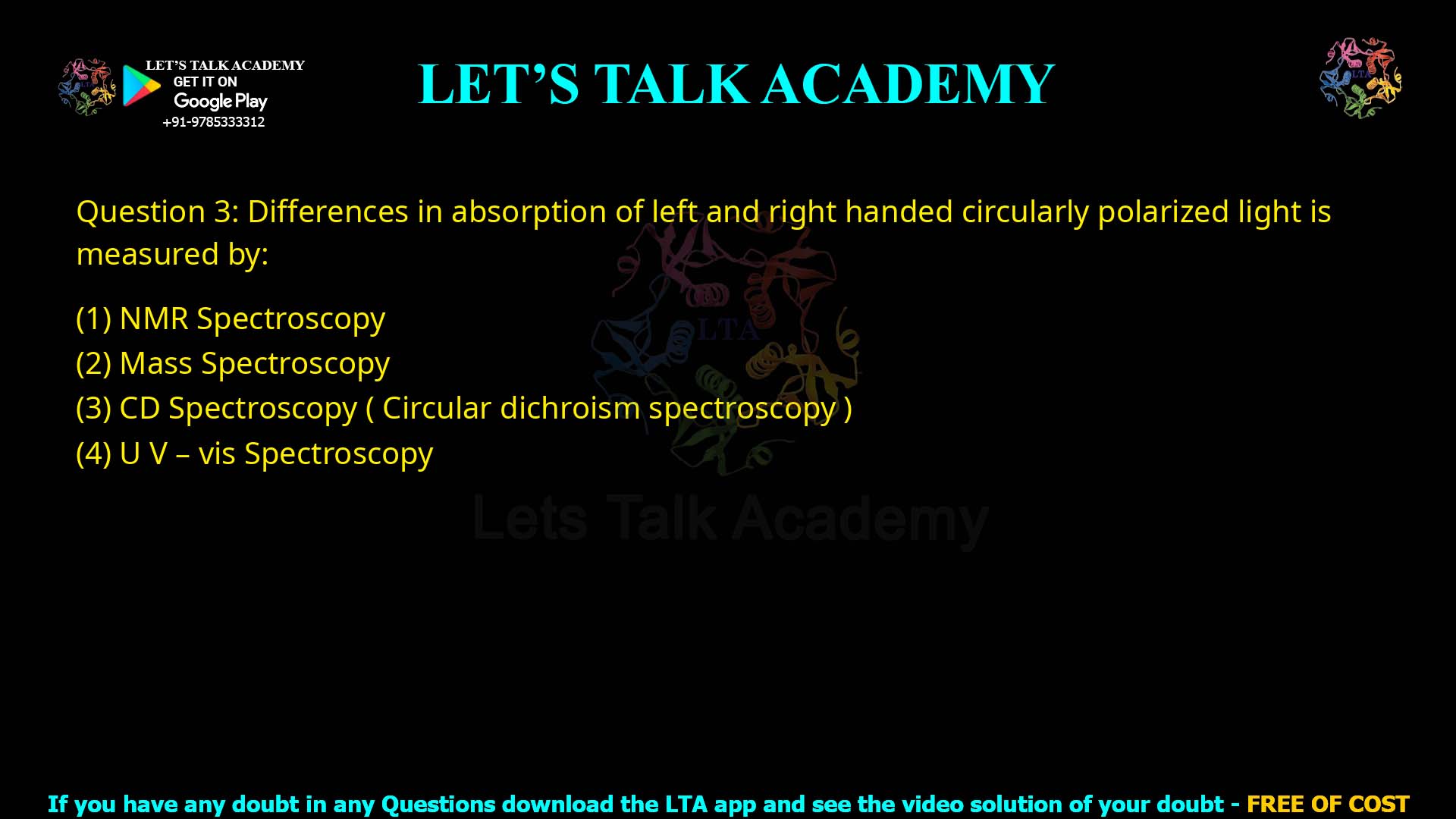
Q.3 Differences in absorption of left and right handed circularly polarized light is measured by: NMR Spectroscopy Mass Spectroscopy CD Spectroscopy (Circular dichroism spectroscopy) UV–Vis Spectroscopy

 Differences in Absorption

Q.2 Two-dimensional electrophoresis resolve the proteins on the basis of : (1) Net mass and osmotic pressure (2) Net viscosity and volume (3) Net charge and mass (4) Net charge and volume

Two Dimensional Electrophoresis Net Charge Mass

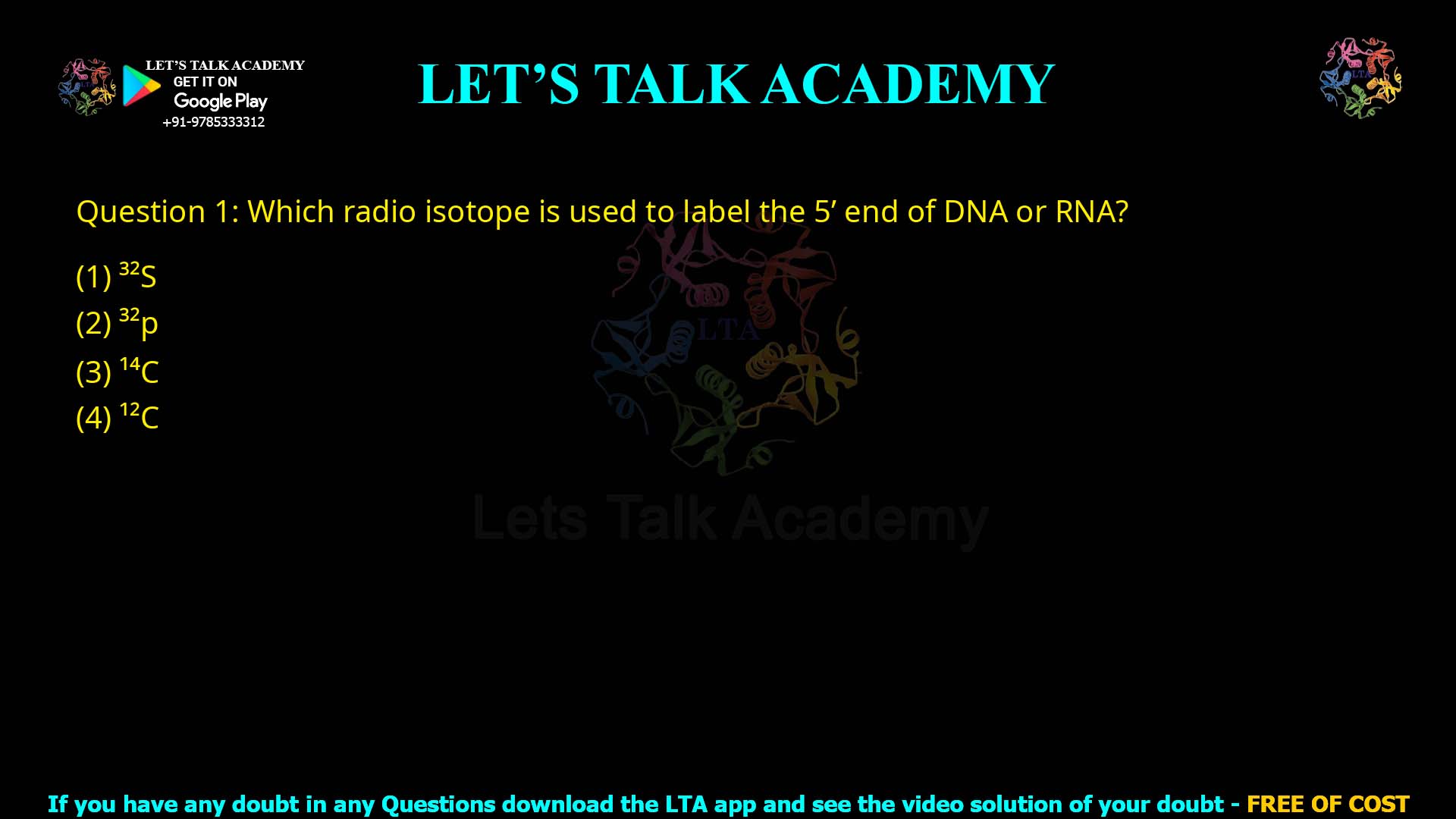
Q.1 Which radio isotope is used to label the 5′ end of DNA or RNA? (1) 32S (2) 32P (3) 14C (4) 12C

32P Radioisotope 5′ End DNA RNA Labeling

Latest Courses