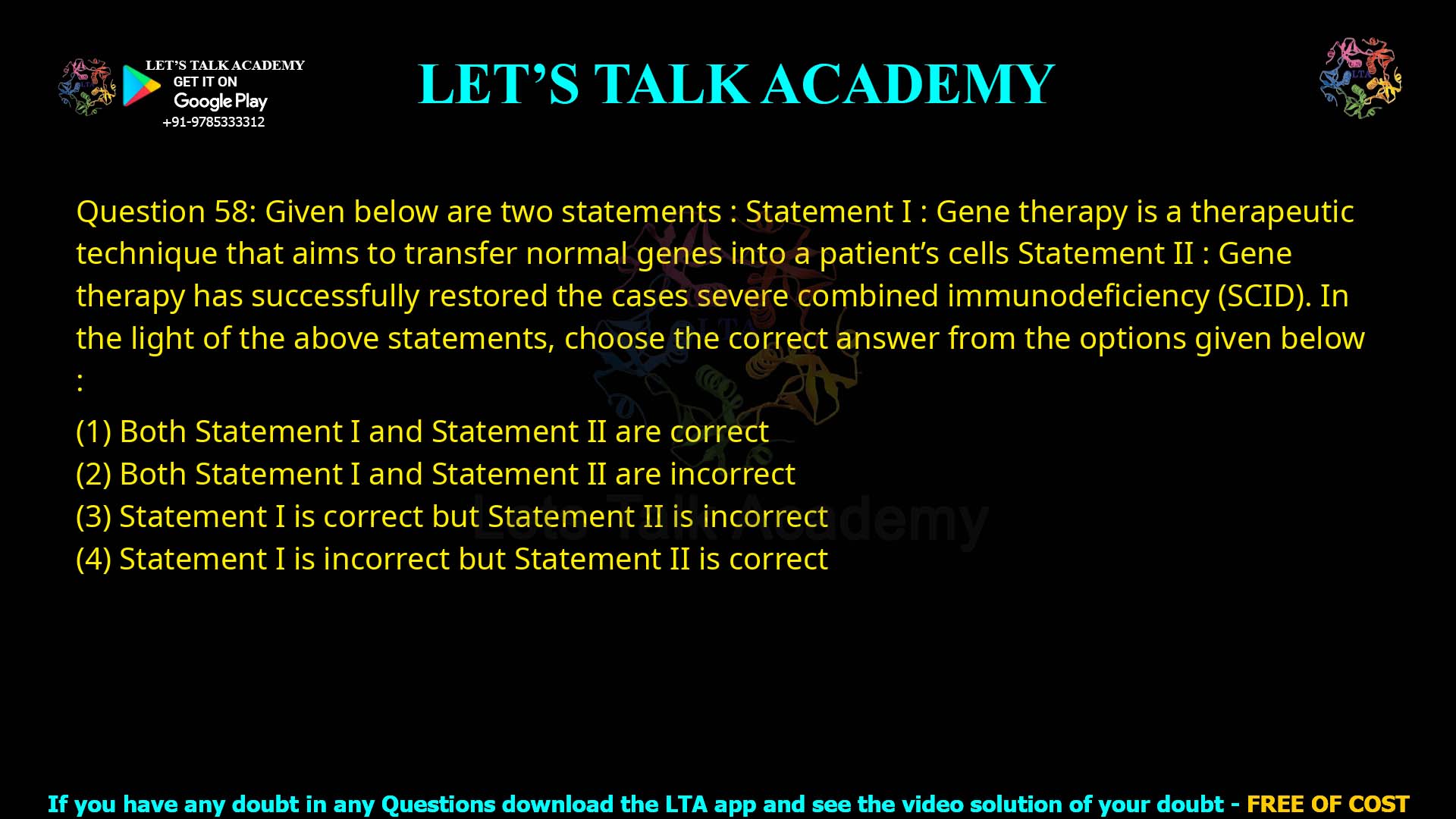
Q.58 Given below are two statements:
Gene therapy is a therapeutic technique that aims to transfer normal genes
into a patient’s cells.
Gene therapy has successfully restored cases of severe combined immunodeficiency (SCID).
In the light of the above statements, choose the correct answer
from the options given below:
- Both Statement I and Statement II are correct
- Both Statement I and Statement II are incorrect
- Statement I is correct but Statement II is incorrect
- Statement I is incorrect but Statement II is correct
Both Statement I and Statement II are correct.
Statement I Analysis
Gene therapy involves transferring normal, functional genes into a patient’s cells to correct genetic defects, typically using vectors like viruses to deliver the genes. This replaces faulty genes or introduces corrective ones, addressing diseases at their genetic root.
Statement II Analysis
Gene therapy has successfully treated severe combined immunodeficiency (SCID), often called “bubble boy” disease, by restoring immune function through retroviral delivery of the missing gene (e.g., IL2RG for X-SCID). Pioneering trials in the 1990s and refined protocols since have led to long-term cures in multiple patients.
Option Breakdown
Option Evaluation Reason Both Statement I and Statement II are correct Correct Aligns with standard definitions and proven SCID successes. Both Statement I and Statement II are incorrect Incorrect Overlooks established techniques and clinical outcomes. Statement I is correct but Statement II is incorrect Incorrect SCID cases demonstrate real-world efficacy despite challenges. Statement I is incorrect but Statement II is correct Incorrect Core aim is precisely gene transfer for therapy. Gene therapy normal genes transfer and SCID success mark milestones in genetic medicine, offering hope for inherited disorders. This article details the technique for biology students targeting NEET/GATE exams.
Gene Therapy Mechanism
Gene therapy is a technique that transfers normal genes into patient cells to fix defective ones causing disease. Vectors deliver these genes, enabling cells to produce functional proteins and restore health.
SCID Treatment Success
Severe combined immunodeficiency (SCID) has been successfully restored via gene therapy, with patients regaining immunity after ex vivo correction of hematopoietic stem cells. French and UK trials achieved over 80% long-term success rates in ADA-SCID and X-SCID cases.
Challenges and Advances
While early risks like leukemia occurred, modern lentiviral vectors minimize issues, paving the way for FDA-approved therapies like Strimvelis for ADA-SCID. Ongoing trials expand to other immunodeficiencies.
Exam Insights
For assertion questions on gene therapy normal genes SCID success, both statements hold true—key for competitive biology prep.


