







31.Following statements were made about stress response in prokaryotes: A. PerR functions as a major peroxide sensor in many Gram- positive bacteria. B. Extreme acidic pH induces RecA-mediated DNA damage, […]
Post-translational modifications (PTMs) are chemical changes made to proteins after translation and are critical for protein function, stability, localization, and interaction. In CSIR NET Life Science, PTM is an important topic in Part B and Part C, and often linked to cell biology, molecular biology, and signaling pathways.
In this article, we cover:
Important concepts of PTMs
CSIR NET PYQs with answers and explanations
Strategy to handle PTM-related questions
Expert guidance from Let’s Talk Academy
Phosphorylation – regulation via kinases and phosphatases
Ubiquitination – protein degradation via proteasome
Methylation, Acetylation – chromatin and transcriptional control
Glycosylation – protein targeting and function
Disulfide Bond Formation, Lipidation, Sumoylation, etc.
Which of the following post-translational modifications is most commonly associated with protein degradation?
(A) Phosphorylation
(B) Acetylation
(C) Ubiquitination
(D) Glycosylation
✅ Answer: (C)
Explanation: Ubiquitination tags proteins for degradation via the proteasome pathway (26S proteasome).
Histone acetylation generally results in:
(A) Tighter packing of chromatin and reduced gene expression
(B) Loosening of chromatin and increased gene expression
(C) Inhibition of transcription factor binding
(D) Chromatin condensation at centromeres
✅ Answer: (B)
Explanation: Acetylation of histone tails reduces positive charge, loosens chromatin structure, and facilitates gene transcription.
Which modification is required for proper folding of insulin?
(A) Ubiquitination
(B) Hydroxylation
(C) Glycosylation
(D) Disulfide bond formation
✅ Answer: (D)
Explanation: Disulfide bonds are essential for the correct 3D structure of insulin.
👉 [Download Link – PDF of Post-Translational Modification PYQs] (To be inserted by admin)
Link Function to Modification – Know how phosphorylation activates enzymes or ubiquitin tags degradation.
Focus on Pathways – PTMs in MAPK signaling, histone code, or apoptosis often appear in Part C.
Study Enzyme Specificity – Understand kinases, ligases, acetyltransferases, deacetylases, etc.
Practice PYQs and Experiments – Many questions are framed as experimental setups.
Let’s Talk Academy, founded by Suraj Sir, offers an in-depth, research-focused coaching approach for aspirants. Here’s what sets them apart:
Suraj Sir explains PTMs not as isolated facts but as integrated molecular events – from gene expression to signal transduction – with real experimental data, case studies, and visuals.
Most PTM questions in CSIR NET are scenario-based or experiment-based (e.g., kinase assays, histone modification mutants). LTA prepares students to analyze and answer these logically.
Separate module on Post-Translational Events
Practice assignments after every class
Mock CBTs to simulate real NET environment
Many students under Suraj Sir’s guidance have scored in top 100 AIR consistently, with strong command on molecular biology topics like PTM.
“Post-translational modification used to be a buzzword for me. But after Suraj Sir’s class, I now understand its full role in disease, signaling, and protein biology. The way he connects concepts is magic.”
– Shraddha Kulkarni, CSIR NET JRF AIR-59
Post-Translational Modifications are a favorite area of examiners in CSIR NET Life Science. They bridge molecular biology, cell biology, and gene regulation — making them high-yield for Part C.
With conceptual clarity, regular PYQ practice, and guidance from experts like Suraj Sir, mastering this topic is absolutely achievable.
Would you like a PDF version of this article with PYQs included, or want help preparing an infographic or video content on PTMs for your platform? I can assist you with that too.
31.Following statements were made about stress response in prokaryotes: A. PerR functions as a major peroxide sensor in many Gram- positive bacteria. B. Extreme acidic pH induces RecA-mediated DNA damage, […]

In a form of stress response, bacteria synthesize a group of proteins called stress proteins (or heat shock proteins) such as DnaK,DnaJ, GroEL, GroES, and GrpE. DnaK is an ATP […]

In bacteria, N-formyl methionine is the first amino acid to be incorporated into a polypeptide chain. Accordingly, one would think that all bacterial proteins have a formyl group at theiramino […]
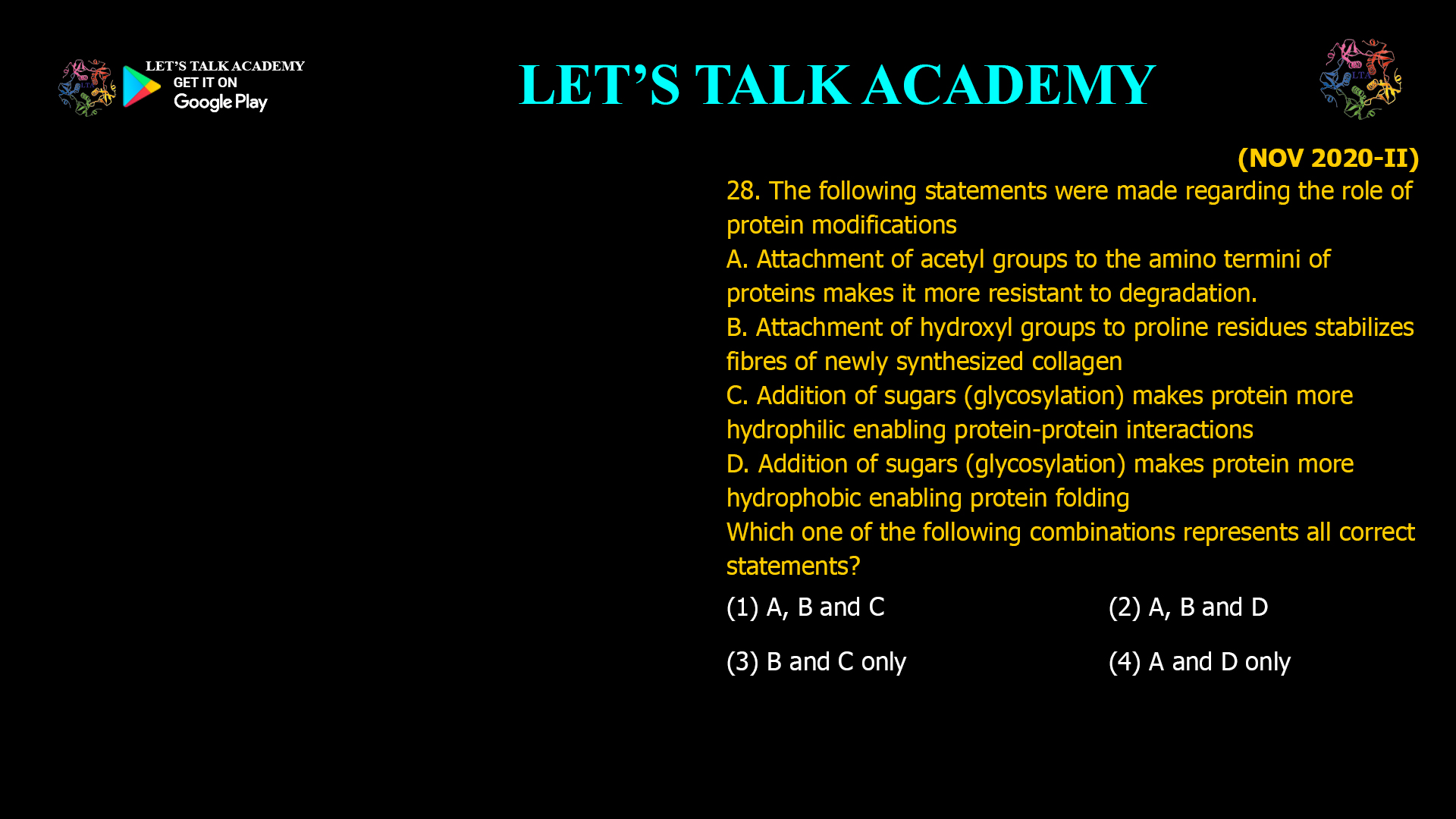
The following statements were made regarding the role of protein modifications A. Attachment of acetyl groups to the amino termini of proteins makes it more resistant to degradation. B. Attachment […]
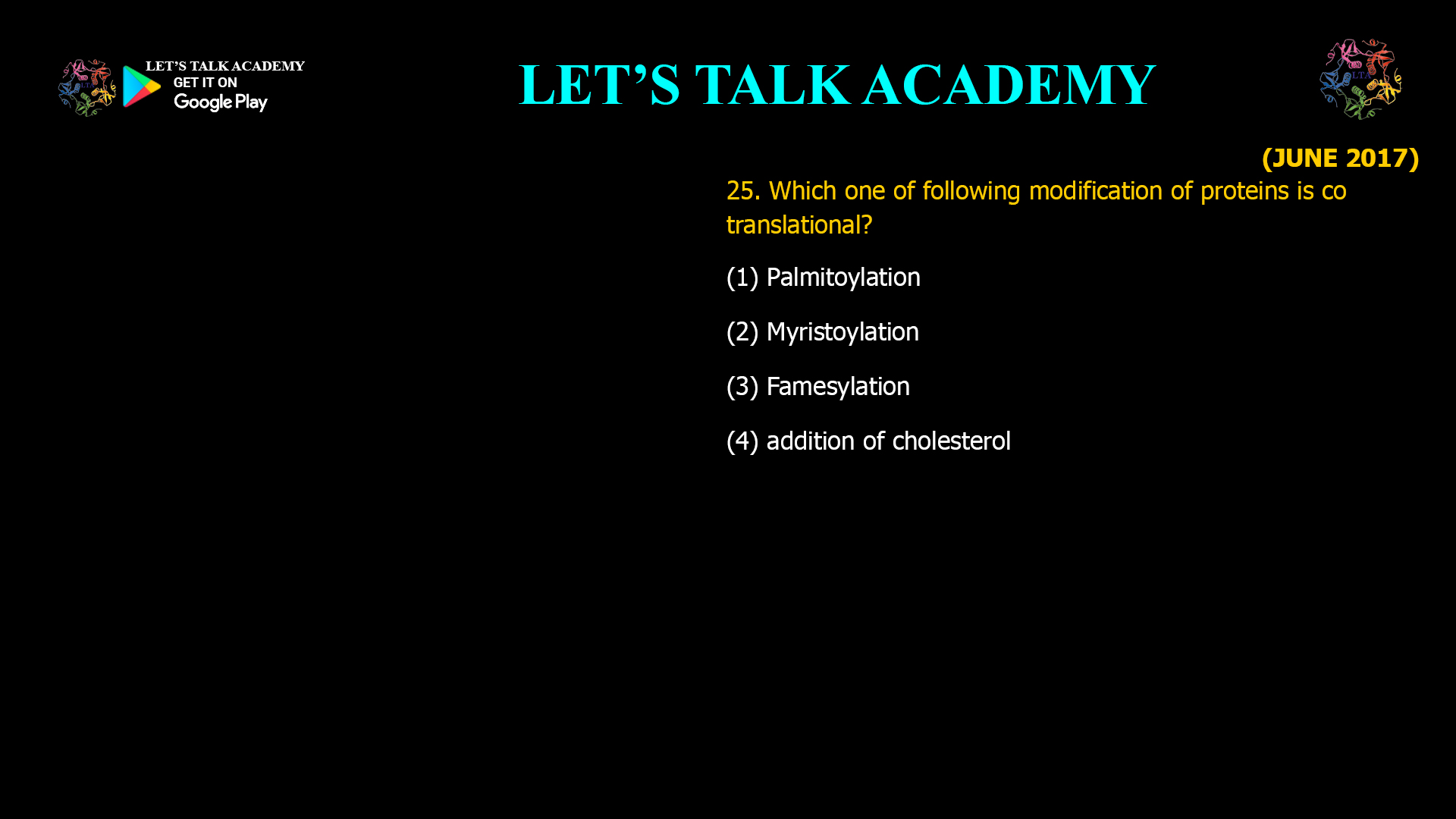
Which one of following modification of proteins is co translational? (1) Palmitoylation (2) Myristoylation (3) Famesylation (4) addition of cholesterol Introduction to Protein Modification Proteins undergo a variety of modifications […]
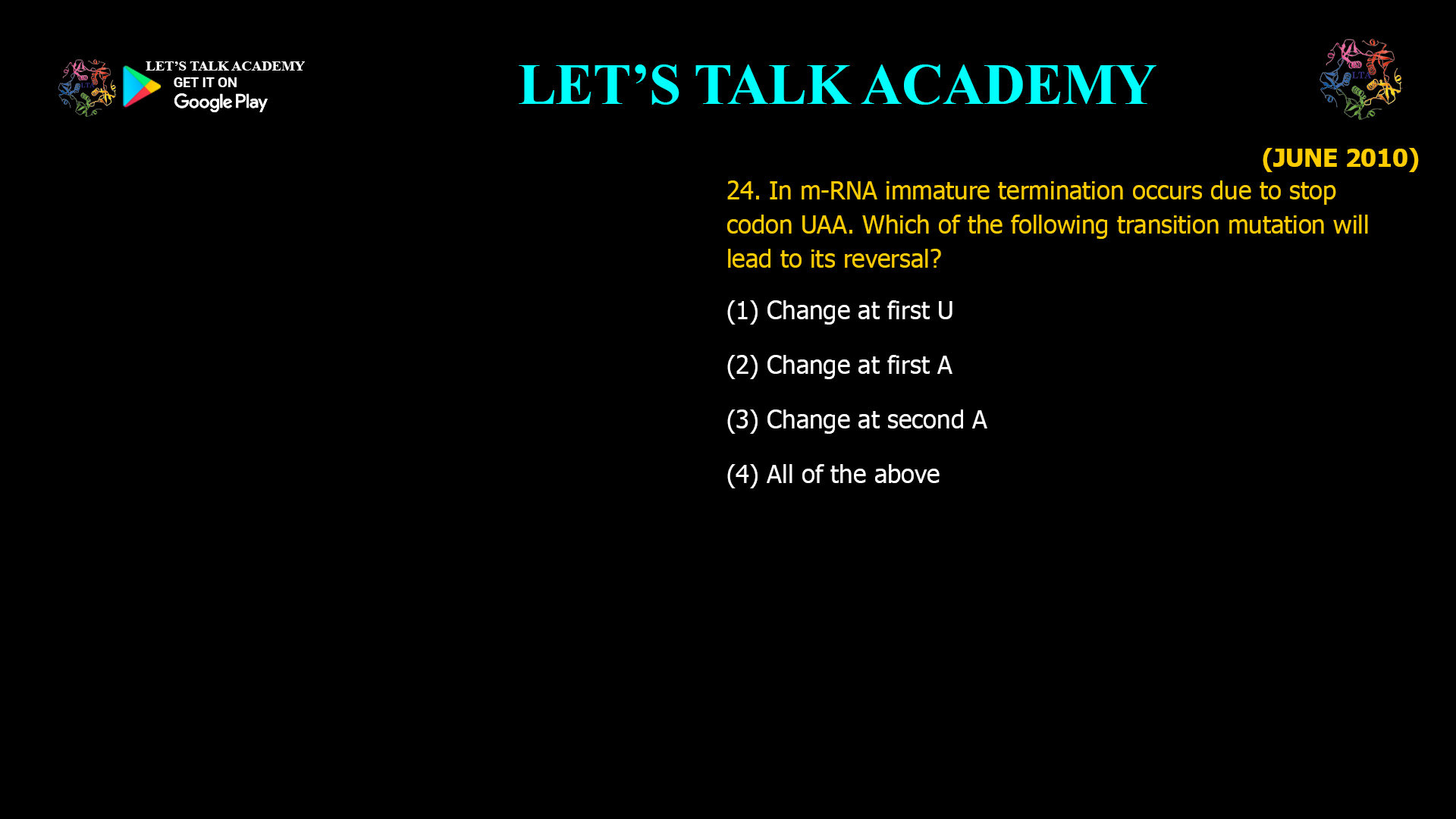
In m-RNA immature termination occurs due to stop codon UAA. Which of the following transition mutation will lead to its reversal? (1) Change at first U (2) Change at first […]
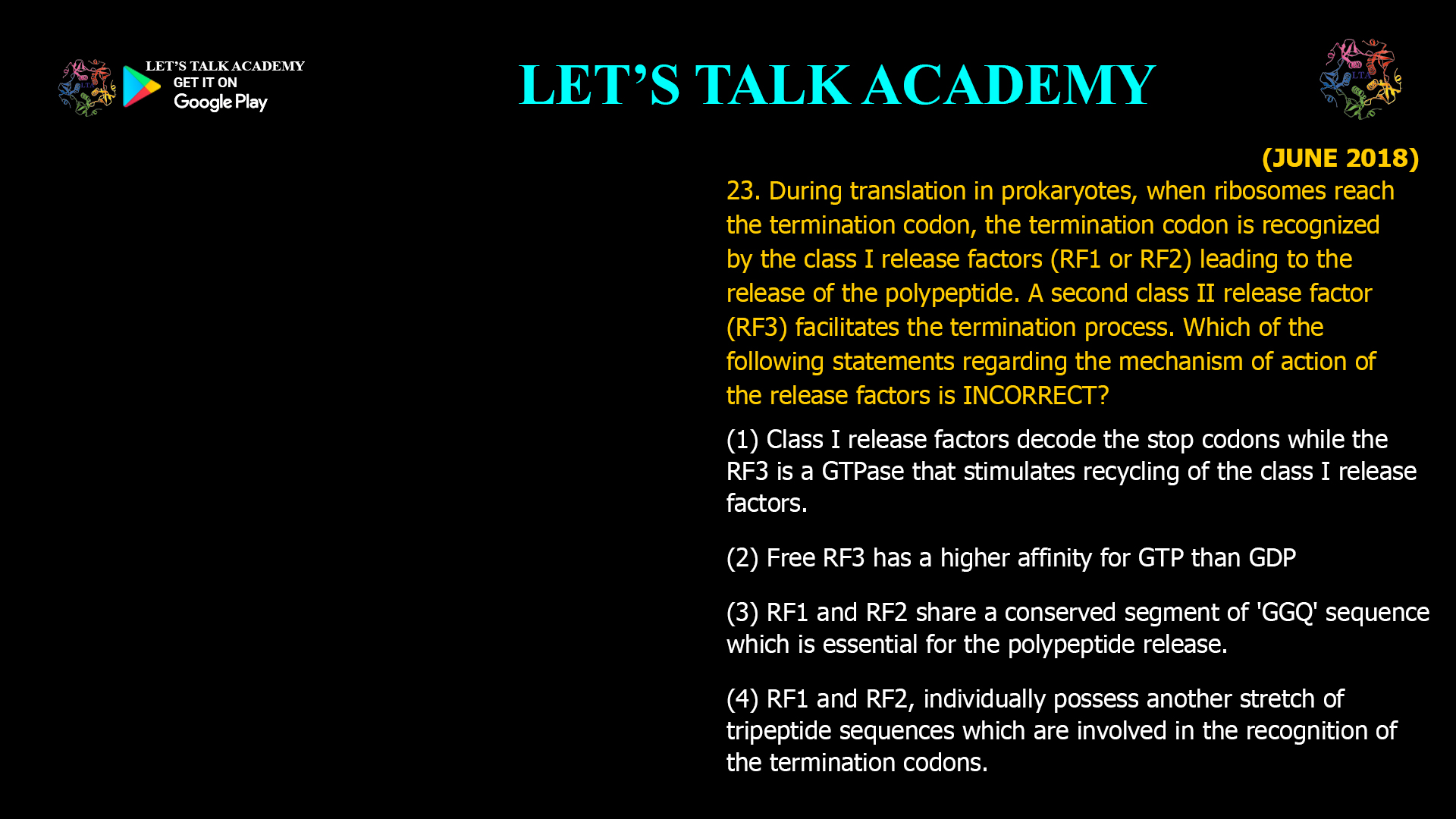
During translation in prokaryotes, when ribosomes reach the termination codon, the termination codon is recognized by the class I release factors (RF1 or RF2) leading to the release of the […]
During elongation step or protein synthesis, translocation moves the mRNA and the peptidyl t-RNA by one codon through the ribosome. Translocation in E.coli involves GTP and EF-G. However, in vitro […]
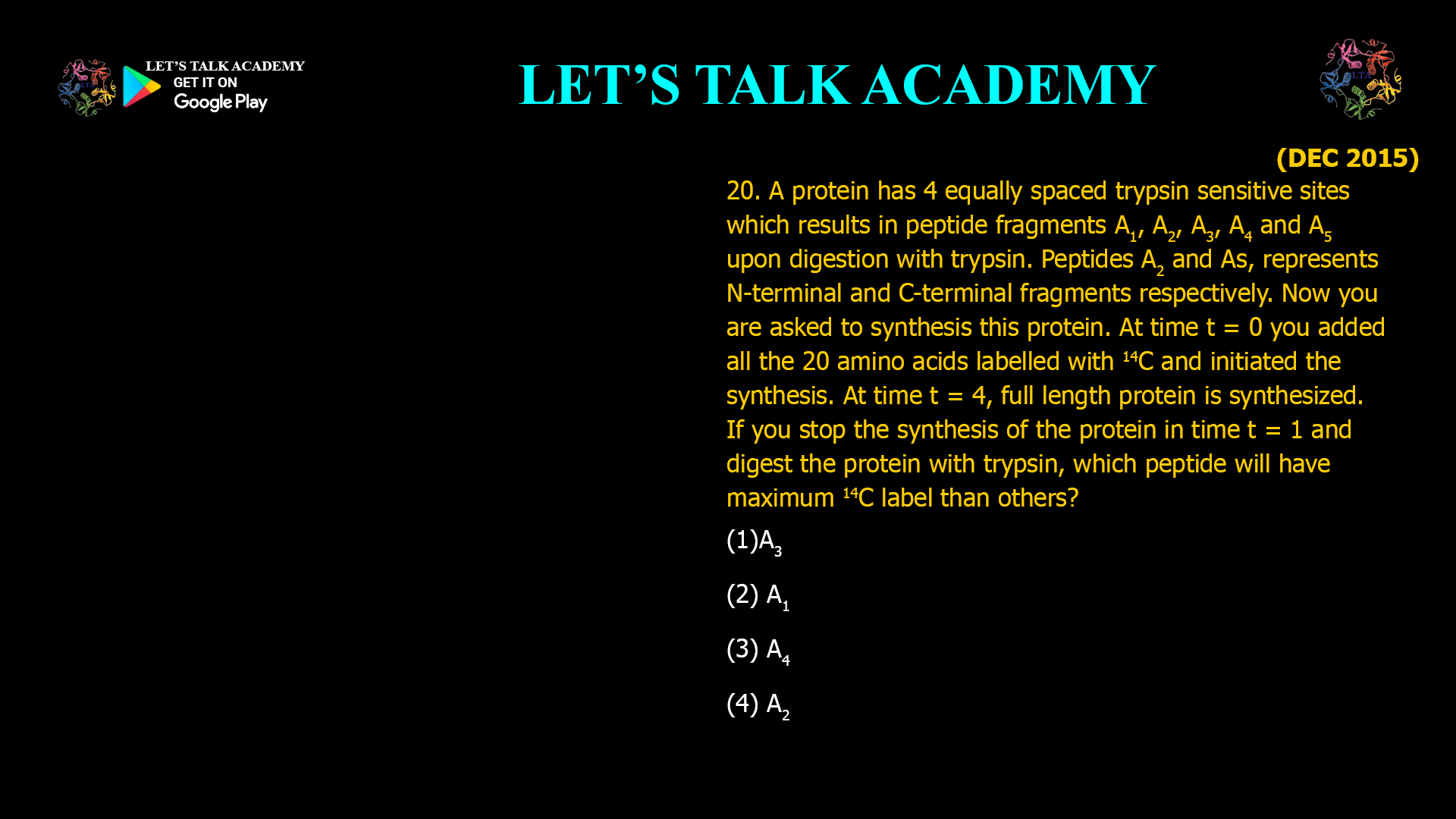
A protein has 4 equally spaced trypsin sensitive sites which results in peptide fragments A1, A2, A3, A4 and A5 upon digestion with trypsin. Peptides A2 and As, represents N-terminal […]
For continuation of protein synthesis in bacteria, ribosome need to be released from the mRNA as well as to dissociate into subunits. These processes do not occur spontaneously. They need […]


