Q.105 Increasing estradiol (E2) hormone from ovarian follicles prior to ovulation has been hypothesized to play a critical role for induction of pheromones. These pheromones render females sexually receptive to males to facilitate mating. An investigator performs experiments in sheep in which females are gonadectomized, then treated with E2 or vehicle alone and allowed to breed. Which one of the findings listed below will validate the hypothesis that pheromones are induced by E2? (A) Sexual receptivity is regained only in vehicle treated females. (B) Sexual receptivity is regained only in E2 treated females (C) Sexual receptivity was regained irrespective of E2 treatment (D) Sexual receptivity is not regained by any treatment

Estradiol E2 Induction

Q.104 The nerve impulse at the neuromuscular junction results in discharge of acetylcholine (Ach) from its vesicles into the synaptic cleft. Ach gets degraded by acetylcholine esterase and is present in which one of the following locations? (A) Post synaptic membrane (B) Both pre and post – synaptic clefts (C) Presynaptic membrane (D) Synaptic cleft

Acetylcholine Esterase Synaptic Cleft

Q.103 A patient comes with symptoms of autonomic hemolysis. The diagnostic tests reveal that he has auto-antibodies to red blood cells (RBCs). Which one of the following mechanisms is the cause of this condition? (A) Neutrophils release granzymes which lyse RBCs (B) Complement is activated and membrane attack complex lyse RBCs (C) Cytotoxic T-cells lyse RBCs (D) Interleukin-2 binds to the receptor on RBCs

 Autoimmune Hemolysis Complement

Q.102 In an individual, three distinct proteins bind oxygen depending on the location and development stage. While hemoglobin is the major oxygen binding protein in adults, myoglobin is present in skeletal muscles and fetal hemoglobin is present in fetal stage only. The following graph shows the oxygen binding capacity of these proteins. The A, B and C plots represent oxygen binding capacity of (A) hemoglobin, fetal hemoglobin and myoglobin, respectively (B) fetal hemoglobin, hemoglobin and myoglobin, respectively (C) hemoglobin, myoglobin and fetal hemoglobin, respectively (D) myoglobin, fetal hemoglobin and hemoglobin, respectively

Oxygen Binding Curves

Q.101 Golgi apparatus is also termed as cellular post office, since it packages and transports cellular proteins across various organelles and outside the cell. In general, the Golgi is perinuclear in location and is closely associated with the endoplasmic reticulum. A chemical compound, Monensin inhibits all trafficking from Golgi. If Golgi is visualized by immunofluorescence microscopy after treatment with this compound, the Golgi will be (A) absent (B) normal (C) swollen (D) fragmented

Monensin Golgi Swollen Immunofluorescence

Q.100 Red-Green color blindness is an X-linked recessive disorder. In a population which is in the Hardy- Weinberg equilibrium, the incidence of occurrence of this in males is 1:1000. What will be the expected incidence of affected homozygous females? (A) 1 in 1002000 (B) 1 in 2000000 (C) 1 in 1001000 (D) 1 in 1000000

Red-Green Color Blindness Females

Q.99 Seasonally breeding animals and birds measure the day length, i.e. photoperiod and use these measurements as predictive information to prepare themselves for breeding. Besides melatonin, which of the following hormones is involved in this biological process? (A) Gonadotropin releasing hormone (B) Growth hormone (C) Thyroxine (D) Adrenocorticotropic hormone

Photoperiod Breeding Hormones

Q.98 If all the nucleotides have equal probability of occurrence in a 4 Mbp long DNA sequence, then how many times will the site of EcoRI restriction endonuclease occur? (A) 976 (B) 46 (C) 64 (D) 1000

EcoRI Restriction Site Frequency

Q.97 A female cat with a mutant phenotype was bred with a wild-type male cat. All progeny (4 males and 4 females) show the mutant phenotype. On the other hand, all progeny (4 males and 4 females) from the reciprocal cross between a mutant male and a wild-type female show the wild-type phenotype. Which of the following explain the inheritance pattern of the mutation? (A) Recessive                               (B) Linked inheritance (C) Mitochondrial inheritance (D) Autosomal inheritance

Mitochondrial Inheritance in Cats

Q.96 Match the following evolutionary biologists with their respective theory I) August Weisman                                     i) Neutral theory of molecular evolution II) Jean-Baptiste Lamark                          ii) Handicap principle III) Amotz Zahavi                                        iii) Germ plasm theory IV) Motoo Kimura                                       iv) Inheritance of acquired characteristics (A) I-ii, II-iv, III-i, IV-iii (B) I-iii, II-iv, III-ii, IV-i (C) I-iii, II-iv, III-i, IV-ii (D) I-iii, II-i, III-iv, IV-ii

Evolutionary Biologists and Theories Matching

Q.95 Glucose and hexanoic acid, each having six carbon atoms can undergo complete biological oxidation. In terms of net ATP generation, which of the following statements is CORRECT? (A) Glucose produces more ATP than hexanoic acid (B) Only glucose can generate ATP (C) Both glucose and hexanoic acid produce same amount of ATP (D) Hexanoic acid produces more ATP than glucose

Glucose Hexanoic Acid ATP Generation Comparison

Q.94 Chorionic gonadotropin plays an important role in the establishment and maintenance of pregnancy and is synthesized in the placenta of (A) Cattle (B) Pigs (C) Mice (D) Human

Chorionic Gonadotropin Placenta Pregnancy

Q.93 Lamprey, a jawless fish, belongs to which one of the following ‘Classes’? (A) Myxini (B) Cephalaspilomorphi (C) Conodonta (D) Anaspida

 Lamprey Jawless Fish Class

Q.92 The blind spot in the retina is blind because of which of the following reasons? (A) It is the region where the optical nerve leaves the retina. (B) The opsin is not expressed in this region. (C) It lies in the shadow of pupil. (D) It is the junction between rods and cones.

Retina Blind Spot Optical Nerve Reason

Q.91 The relationship between genes and enzymes was first suggested by the discovery of (A) in-born errors of metabolism in human (B) sexual phenotype in insects (C) metabolic pathways in fungi (D) gene regulation in bacteria

Genes Enzymes Relationship

Q.90 A typical receptor senses extracellular stimuli by virtue of its localization on plasma membrane. The receptor to which of the following ligands is an exception to this rule? (A)  γ-amino butyric acid (B) Acetylcholine (C) Estrogen (D) Luteinizing hormone

Receptor Extracellular Stimuli Plasma Membrane

Q.89 Zygotic genes required for the formation of a group of adjacent segment in the developing Drosophila embryo is called (A) Maternal gene (B) Pair rule gene (C) Homeotic gene (D) Gap gene

 Drosophila Zygotic Pair Rule

Q.88 Some species of beetles and fishes can survive at sub freezing temperature. They accomplish this by maintaining cellular integrity using one of the following mechanisms. (A) Expressing anti-freeze proteins (B) Accumulating fats (C) Increasing accumulation of complex polyols (D) Reducing the availability of total water in the body

Beetles Fishes Sub-Freezing Survival

Q.87 A swimmer is preparing to swim ‘non-stop’ across the English channel (a distance of 34 kilometers). Consumption of which of the following category of food/s should the swimmer increase to accomplish this feat? (A) Proteins (B) Fats (C) Proteins and Carbohydrates (D) Carbohydrates

Swimmer English Channel Nutrition

Q.86 Trees in the equatorial region of earth supply oxygen into the atmosphere that sustains species living in distant polar regions. This relationship is called as (A) mutualism (B) symbiosis (C) commensalism (D) parasitism

Trees Equatorial Region Oxygen Polar Regions Relationship

Q.85 Methane belched (eructation) out by cattle arises from the carbon dioxide produced (A) during normal respiration (B) oxidation of food stuff occurring in mitochondria (C) lactic acid fermentation occurring in muscles (D) bacterial fermentation occurring in the gut

Cattle Eructation Fermentation

Q.84 Transformation of normal cyanobacterial cells into heterocysts involves (A) synthesis of nitrogenase and retention of photosystem I (B) synthesis of nitrogenase and loss of photosystem I (C) loss of nitrogenase but retention of photosystem I (D) loss of both nitrogenase and photosystem I

Cyanobacterial Heterocysts Transformation

Q.83 Nalidixic acid inhibits gyrase activity. Resistance to this antibiotic arises mainly due to (A) nonsense mutation in the gyrase gene (B) deletion mutation in the gyrase gene (C) missense mutation in the gyrase gene (D) degradation of the gyrase gene product

Nalidixic Acid Resistance Gyrase Mutation

Q.82 Which one of the following pairs of bacterial species fixes atmospheric Nitrogen? (A) Clostridia and Rhizobia (B) Clostridia and Lactobacillus (C) Rhizobia and Enterococcus (D) Actinomycetes and Mycoplasma

Bacterial Species Atmospheric Nitrogen Fixation

Q.81 An E.coli mutant defective for an enzyme is unable to grow on acetate but grows on glycerol as the sole carbon source. Which ONE of the following enzymes is likely to be defective in this mutant? (A) Isocitrate dehydrogenase (B) Glyceraldehyde 3-phospahte dehydrogenase (C) Pyruvate dehydrogenase (D) Isocitrate lyase

E.coli Mutant Defective Enzyme

Q.80 The first step in the replication of a virus with the reverse transcriptase deals with the synthesis of (A) complementary strand of RNA (B) double stranded RNA (C) complementary strand of DNA (D) double stranded DNA

Reverse Transcriptase First Step

Q.79 Ten bacteria were inoculated into a rich medium. If at the end of ten hours the total number of cells is 104, then the number of elapsed generations and the generation time respectively is Options: (A) 10, 120 minutes (B) 10, 60 minutes (C) 20, 30 minutes (D) 40, 15 minutes

Bacterial Growth Calculation

Q.78 Match the Phylum in Group I with their characteristic motility appendage listed in Group II. Group I Group II P. Archaeozoa Q. Amoebozoa R. Ciliophora S. Apicomplexa I. Flagella II. Fimbriae III. Pseudopods IV. Cilia V. Pili Options: (A) P-V, Q-II, R-IV, S-IV (B) P-II, Q-I, R-IV, S-III (C) P-I, Q-III, R-IV, S-I (D) P-III, Q-II, R-IV, S-V

Match the Phylum with Their Characteristic Motility Appendage

Q.77 Entry of λ phage lysogen to lytic phase is triggered by (A) mutation in theλ genome (B) loss of co-operativity in binding of λ repressor (C) increase in the λ repressor concentration (D) decrease in recA function

 λ Phage Lysogen Lytic Phase Triggered

Q.76 Frederick Griffith used smooth (S) and rough (R) strains of Streptococcus pneumoniae in his classical experiment that showed DNA might be the genetic element. Which ONE of the following observations gave the clue for this discovery? (A) R strain became S strain when mixed with heat killed S strain (B) R strain remained R strain when mixed with heat killed S strain (C) S strain became R strain when mixed with heat killed R strain (D) R strain became S strain when mixed with live S strain

Frederick Griffith Experiment

Q.75 Select the technique most appropriate to demonstrate that lactose induces the synthesis of β-galactosidase enzyme. Options: (A) Northern Blot (B) Western Blot (C) Quantitative PCR (D) Southern Blot

Lactose Induces β-Galactosidase Synthesis

Q.74 Match the disease in Group I with their corresponding organism in Group II Group I Group II P. African sleeping sickness Q. Rocky mountain spotted fever R. Mumps S. Filariasis I. Rubulavirus II. Trypanosoma brucei III. Wuchereria bancrofti IV. Rickettsia rickettsii V. Leishmania donovani Options: (A) P-III, Q-V, R-II, S-I (B) P-II, Q-I, R-III, S-IV (C) P-II, Q-IV, R-I, S-III (D) P-I, Q-V, R-II, S-IV

Match the Disease with the Corresponding Organism

Q.73 Antibody coated pathogens are recognized by effector cells through (A) CD4 receptor (B) FC receptor (C) CD8 receptor (D) IFN gamma receptor

Antibody Coated Pathogens Recognition

Q.72 Which ONE of the following statements about E.coli is NOT true ? (A) E.coli was the first disease- causing bacterium identified by Robert Koch (B) E.coli is part of the normal microbiota of humans (C) Certain E.coli strains can cause bloody diarrohea (D) E.coli is beneficial to human

E.coli NOT First Disease-Causing

Q.71 A rich medium is inoculated with a bacterium that divides every 30 minutes. The number of bacteria at the end of 50 hours is Options: (A) 2 × 10¹⁰ (B) 2 × 10²⁰ (C) 1 × 1050 (D) 1 × 2100

Bacteria 50 Hours Doubling 30 Minutes Calculate

Q.70 An E.coli mutant constitutive for the lac operon was mated with a wild type strain. The merodiploid thus obtained was inducible by lactose. This observation indicates that the original mutation is (A) dominant (B) trans-dominant (C) recessive (D) cis-dominant

Lac Operon Constitutive Mutation

Q.69 Which ONE of the following mutants is used to carry out genetic analysis to determine the function of an essential gene? (A) Knock out mutant (B) Deletion mutant (C) Insertion mutant (D) Temperature sensitive mutant

Temperature Sensitive Mutant Essential

Q.68 An auxotrophic mutant arises spontaneously in a wild type E.coli culture growing in a rich medium. Which ONE of the following techniques will ensure the isolation of the auxotrophic mutant? (A) Replica plating (B) Streaking for single colonies (C) Pour plating method (D) Direct microscopic observation

Auxotrophic Mutant Isolation Replica Plating E.coli

Q.67 Bergey’s Manual of Systematic Bacteriology groups bacteria into species according to their (A) nutritional requirement (B) phylogenetic relationships (C) pathogenic properties (D) morphology

Bergey’s Manual Groups Bacteria Species

Q.66 Which ONE of the following components is NOT an electron acceptor during anaerobic respiration? (A) Lactate (B) Carbonate (C) Nitrate (D) Sulphate

Anaerobic Respiration Electron Acceptor

Q.65 Match the name of the disease with the causal organism. Disease Causal organism P. Black rot of sugarcane Q. Stem rot of jute R. Tikka disease of groundnut S. Crown gall of grapes 1. Cercospora personata 2. Macrophomina phaseolina 3. Ceratocystis adiposa 4. Synchytrium endobioticum 5. Agrobacterium tumefaciens 6. Colletotrichum corchorum Options: (A) (B) (C) (D) P-1 Q-3 R-6 S-5 P-2 Q-3 R-1 S-5 P-3 Q-2 R-1 S-5 P-2 Q-6 R-3 S-4

Match the Disease with the Causal Organism

Q.64 Which of the following statements are TRUE for respiration? P. The conversion of one molecule of pyruvate to three molecules of CO2 generates four molecules of NADH Q. Fructose 6-phospate is the principal substrate for glycolysis R. The oxidation of glucose 6-phosphate to 6-phosphogluconate is the first step in the oxidative pentose phosphate pathway S. The mitochondrial ‘alternative oxidase’ provides an alternative pathway for transfer of electrons from ubiquinone to oxygen utilizing proton pumping complex of the respiratory chain (A) P, R (B) P, S (C) Q, R (D) Q, S

Respiration True Statements

Q.63 Identify the CORRECT statements in plant secondary metabolism. P. Tropane alkaloids in Atropa belladonna are synthesized from tyrosine Q. Antioxidative food ingredient rosmarinic acid is obtained from cell suspension cultures of Coleus blumei R. Thiophenes are produced from hairy root cultures of Tagetes patula S. Cyanidin, the principal anthocyanin responsible for red color in Rosa hybrida is produced from cinnamaldehyde (A) P, S (B) R, S (C) P, Q (D) Q, R

Plant Secondary Metabolism

Q.62 With respect to adhesion and cohesion of stamens, identify the INCORRECT statements. P. Adnation of stamens to petals is described as epiphyllous stamens Q. In Calotropis, stamens and carpels are united to form gynostegium R. In syngenesious stamens, filaments are united to form a bundle while the anthers are free S. Synandrous stamens found in Cucurbita represent the union of filaments as well as anthers (A) P, Q (B) P, R (C) Q, S (D) Q, R

Stamen Adhesion Cohesion

Q.61 Identify the free radicals (marked as '?') in sequence from the inter-conversion of reactive oxygen species as shown below. O2 → ? → H2O2 → ? → H2O Given species: P. O2•− Q. OH− R. HO2• S. 1O2 Options: (A) P, Q (B) R, Q (C) P, R (D) Q, S

 Free Radicals ROS Sequence

Q.60 Which of the following statements are TRUE on transgene approach? P. T-DNA integration occurs mainly through non-homologous recombination Q. The Gateway cloning depends on recombination technology as opposed to standard uses of restriction enzymes and DNA ligase R. The localization of β-glucuronidase (GUS) activity as a result of expression of GUS reporter gene can be visualized in a histochemical assay using the X-gal S. The green fluorescent protein gene (GFP) is isolated from the bacterium Photinus pyralis (A) P, Q (B) Q, R (C) P, S (D) R, S

Transgene Approach True Statements

Q.59 Which of the following statements are CORRECT for somatic cell hybridization? P. For fusion of protoplast, dimethylsulfoxide (DMSO) is used as a fusogen Q. The enzyme ‘Cellulase Onozuka’ used for protoplast isolation is sourced from Trichoderma viride R. The first report of somatic hybrid plants resulted from the fusion of protoplasts of Nicotiana glauca and N. tabacum S. Viability of isolated protoplasts can be determined by Evan’s blue staining (A) P, Q (B) Q, S (C) R, S (D) Q, R

Somatic Cell Hybridization

Q.58 Match the recombinant proteins produced through molecular farming with their applications. Recombinant Proteins Applications P. Hirudine Q. Trichosanthin R. Somatomorphin S. β-Interferon 1. HIV therapy 2. Anticoagulant 3. Growth hormone 4. Hypertension 5. Cystic fibrosis 6. Treatment for hepatitis-B Options: (A) (B) (C) (D) P-2 Q-3 R-4 S-1 P-4 Q-1 R-5 S-2 P-1 Q-5 R-3 S-2 P-2 Q-1 R-3 S-6

Match the Recombinant Proteins Produced

Q.57 Which of the following statements are TRUE for the transposable elements? P. Barbara McClintock discovered the autonomous and non-autonomous transposable elements in Maize Q. Variations in flower pigmentation in Antirhinum are due to the presence of transposable elements Ac and Ds R. The Ac transposable element is 4563 bp long and has an 11 bp inverted repeats S. Ds produces the transposase and mobilize the Ac elements (A) Q, S (B) P, Q (C) P, R (D) R, S

 Transposable Elements True Statements

Q.56 Which of the following statements are TRUE for plant growth regulators? P. The release of cellulase and polygalacturonase into the cell wall is promoted by abscissic acid Q. The early biosynthetic steps of gibberellic acid, up to the formation of ent-kaurene take place in the plastid R. The naturally occurring zeatin belongs to the aromatic group of cytokinins S. Induction of protease inhibitors as a result of wounding and pathogen attack is activated by jasmonic acid (A) P, R (B) Q, S (C) Q, R (D) P, Q

Plant Growth Regulators True Statements

Q.55 Which one of the following drugs is obtained from the capsule of Papaver somniferum? (A) Papain (B) Codeine (C) Digoxin (D) Bromelain

Drugs from Papaver Somniferum Capsule Codeine

Q.54 Which of the following best represents the flow of energy through an ecosystem? (A) Producers --> Primary consumers -->Secondary consumers (B) Sun -->Producers -->Secondary consumers -->Primary consumers (C) Sun -->Producers -->Primary consumers -->Secondary consumers (D) Secondary consumers -->Primary consumers -->Producers -->Sun

Ecosystem Energy Flow Sun Producers

Q.53 Carbon dioxide and other ‘greenhouse gases’ act by (A) destroying ozone in the stratosphere (B) trapping heat in the earth’s atmosphere (C) allowing more visible light to reach the earth’s surface (D) reducing the amount of radiant energy which reaches the surface of the earth

Greenhouse Gases Trap Heat

Q.52 Which one of the following is a free-living photosynthetic nitrogen fixer? (A) Frankia (B) Clostridium (C) Rhodospirillum (D) Rhizobium

Free-Living Photosynthetic Nitrogen Fixer Bacteria

Q.51 Which one of the following performs normal C3 photosynthesis when water is available, but switches to crassulacean acid metabolism (CAM) during salt or drought stress? (A) Mesembryanthemum crystallinum (B) Cynodon dactylon (C) Eleucine coracana (D) Hordeum vulgare

C3 to CAM Switch

Q.50 The number of nucleosomes present in a 30 nm solenoid structure of a chromatin is (A) 2 (B) 4 (C) 6 (D) 8

30 nm Solenoid Chromatin Nucleosomes

Q.49 Cytoplasmic male sterility via the chloroplast genome can be induced by the expression of Pha A gene encoding (A) β-Ketothiolase (B) Acetoacetyl CoA carboxylase (C) Acetoacetyl CoA reductase (D) PHB synthase

Cytoplasmic Male Sterility PhaA Gene

Q.48 Parenchyma cells associated with sieve tube members are called (A) Albuminous cells (B) Companion cells (C) Bulliform cells (D) Subsidiary cells

Parenchyma Cells Sieve Tube Members

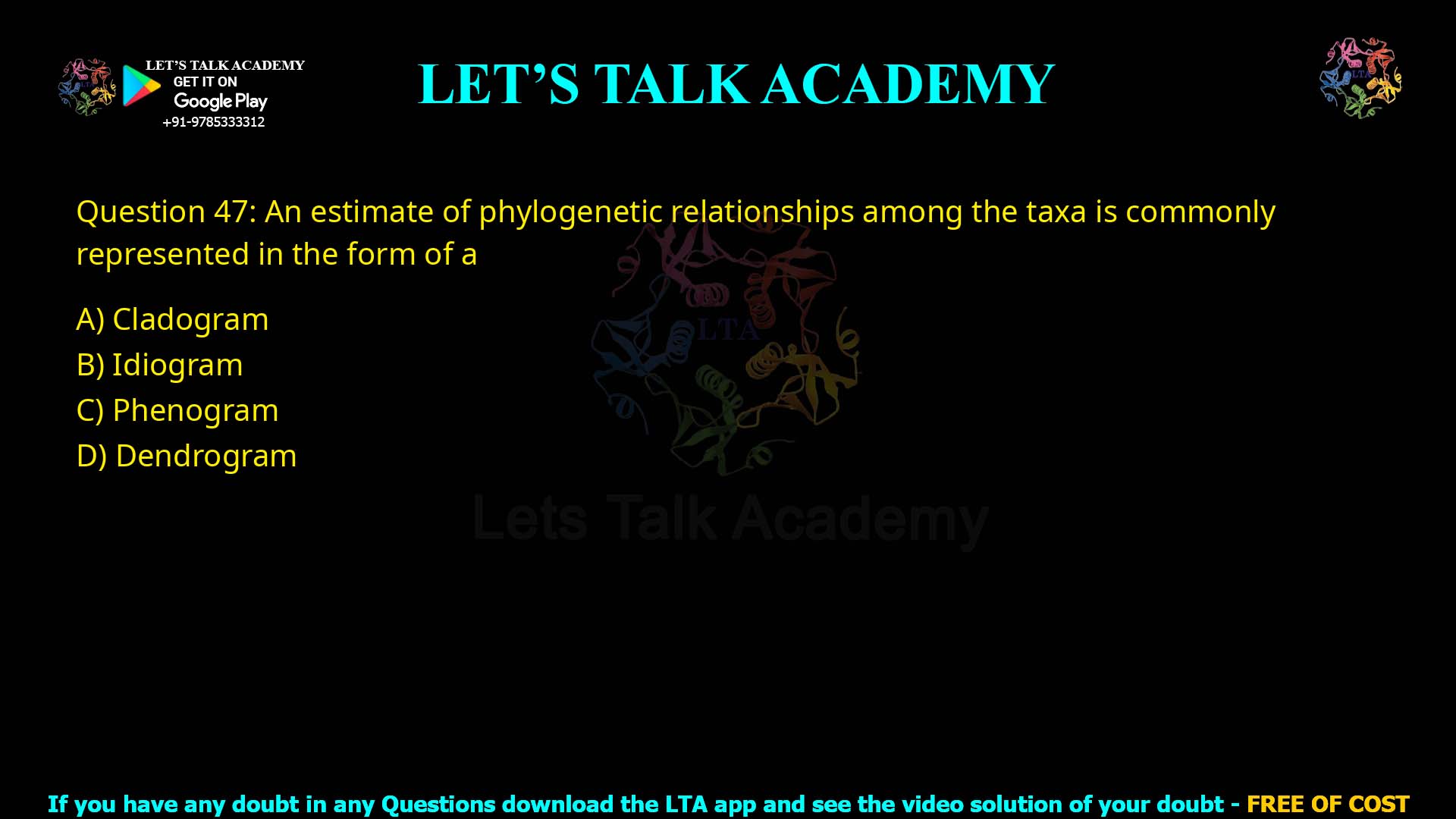
Q.47 An estimate of phylogenetic relationships among the taxa is commonly represented in the form of a (A) Cladogram (B) Idiogram (C) Phenogram (D) Dendrogram

Phylogenetic Relationships Cladogram

Q.46 The swollen base of a petiole is known as (A) Ligule (B) Hastule (C) Pulvinus (D) Stipule

Swollen Base of Petiole

Q.45 The figure below is a schematic of a linear double stranded DNA containing the indicated restriction sites. The DNA was completely digested with PvuII and EcoRI. The products were purified and added to an appropriately buffered reaction mixture containing dNTP mix, α32P dATP, and Klenow fragment of E. coli DNA polymerase I. The Klenow reaction products were analyzed by gel electrophoresis and autoradiography. Which of the following products depicts the expected result?

Klenow Fragment End-Labeling after PvuII and EcoRI Digestion

Q.44 The kinetics of an enzyme in the presence (+I) or absence (−I) of a reversible inhibitor is described in the following graph. If concentration of the reversible inhibitor in the +I experiment was equal to 3.0 × 10⁻³ M, then the dissociation constant for the enzyme–inhibitor complex is Options: (A) 1 × 10⁻³ M (B) 2 × 10⁻³ M (C) 3 × 10⁻³ M (D) 4 × 10⁻³ M

Determination of Dissociation Constant

Match Antibiotics with Their Mechanism

Q.42 Match the enzymes in Group I with their corresponding activity in Group II Group I Group II P. Flippase 1. Catalyzes the movement of any phospholipid across the lipid bilayer down its concentration gradient Q. Floppase 2. Catalyzes the translocation of amino-phospholipids from the extracellular to the inner leaflet R. Lipase 3. Catalyzes the translocation of membrane phospholipids from cytosolic to the extracellular leaflet S. Scramblase 4. Degradation of phospholipids from the lipid bilayer including the inner and outer leaflets Options: (A) P-2, Q-3, R-4, S-1 (B) P-1, Q-2, R-3, S-4 (C) P-4, Q-1, R-2, S-3 (D) P-3, Q-2, R-4, S-1

Matching Membrane Enzymes

Q.41 The actual free energy change of a given biochemical reaction carried out under standard conditions with 1 M initial concentration of each of the reactants and products will be (A) equal to zero (B) equal to standard free energy change for the reaction (C) less than the standard free energy change for the reaction (D) greater than the standard free energy change for the reaction

Free Energy Change in Biochemical Reactions

Q.40 Pick the correctly matched pairs. P. Immature B cells — Terminal deoxynucleotidyl transferase Q. Activated B cells — Class switching R. Pre B cells — Surrogate light chain S. Mature B cells — Recombination activating gene 1 (A) P and R (B) Q and R (C) Q and S (D) Q and P

B Cell Development Markers

Q.39 β-oxidation of a 16 carbon fatty acid and a 17 carbon fatty acid leads to formation of (A) (8 Acetyl CoA) and (8 Acetyl CoA + CO2), respectively (B) (5 Propionyl CoA + 1 CO2) and (5 Propionyl CoA + 1 Acetyl CoA), respectively (C) (5 Propionyl CoA + 1 CO2) and (5 Propionyl CoA + 2 CO2), respectively (D) (8 Acetyl CoA) and (7 Acetyl CoA + 1 Propionyl CoA), respectively

β-Oxidation Products

Q.38 The CORRECT pair of amino-acid sequence and the corresponding target organelle is (A) KDEL – Golgi (B) K-K/R-X-K/R – Lysosome (C) SKL – Peroxisome (D) NPVY – Endoplasmic reticulum

Amino Acid Targeting Sequences

Q.36 An amino-acid has one proton donating group in the side chain (R). The pKCOOH, pKNH2 and pKR values for this amino-acid are 2.19, 9.67 and 4.25, respectively. Which one of the following statements about this amino-acid is CORRECT? (A) Majority of the molecules will have a net charge of -1 at pH of 7.0 (B) Majority of the molecules will have a net charge of 0 at pH of 4.25 (C) All the molecules will have a deprotonated R group at pH of 3.22 (D) During titration with a strong base, deprotonation will start with the R group

Ionization of Amino Acids

Q.37 Which one of the following bacterial toxins does NOT have ADP-ribosyl transferase activity? (A) Pertussis toxin (B) Diphtheria toxin (C) Pseudomonas Exotoxin A (D) S. aureus α-toxin

Bacterial Toxin ADP-Ribosyl Transferase

Q.35 The membrane of mature B cells have (A) both IgG and IgM (B) both IgG and IgD (C) both IgM and IgE (D) both IgM and IgD

Mature B Cells Membrane Antibodies

Q.34 Leguminous plants maintain a very low concentration of free oxygen in their root nodules because (A) the nitrogen fixing bacteria living in the root nodules are anaerobic (B) of binding of oxygen to leghemoglobin (C) reductase enzyme of the nitrogenase complex helps in removal of O2 (D) nitrogenase enzyme of the nitrogenase complex helps in removal of O2

Legume Root Nodules Low Oxygen

Q.33 Upon stimulation of a eukaryotic cell, the intracellular calcium (Ca2+) is released from (A) Endoplasmic reticulum (B) Nucleus (C) Peroxisome (D) Mitochondria

Intracellular Calcium Release in Eukaryotic Cells

Q.32 Match the hormones in Group I with their metabolic precursor in Group II Group I 17-β estradiol Thromboxane A2 Epinephrine Retinoic acid Group II Arachidonic acid Tyrosine β-carotene Cholesterol (A) P-4, Q-2, R-3, S-1 (B) P-1, Q-3, R-2, S-4 (C) P-4, Q-1, R-2, S-3 (D) P-1, Q-2, R-4, S-3

Hormones and Metabolic Precursors Matching

Q.31 The pair of amino-acids which does NOT undergo post-translational modification is (A) Asn-His (B) Tyr-Ser (C) Asn-Ser (D) Ala-Gly

Post-Translational Modifications

Q.30 Which one of the following compounds does NOT block electron transport? (A) Cyanide (B) Rotenone (C) Oligomycin (D) Antimycin A

Electron Transport Chain Inhibitors

Q.29 Which one of the following amino-acids has highest fluorescence quantum yield (Φ) in aqueous solution? (A) Tyrosine (B) Tryptophan (C) Phenylalanine (D) Histidine

Amino Acid Fluorescence Quantum Yield

Q.28 Which one of the following closely defines ‘Molten Globule’ state of a protein? (A) State with high degree of secondary structure and loss of tertiary structure (B) State with complete loss of secondary structure (C) Completely unfolded state (D) Loss of quaternary structure

Molten Globule Protein State

Q.27 Which one of the following pairs of amino-acids in the protein has high propensity to take up the α-helix conformation? (A) Gly-Asp (B) Pro-His (C) Gly-Pro (D) Ala-Arg

Alpha Helix Propensity

Q.26 Four proteins (P1, P2, P3 and P4) have 17, 10, 21 and 14 percent hydrophobic amino-acids respectively. The order of precipitation of these proteins using ammonium sulphate will be (A) P3, P1, P4, P2 (B) P3, P1, P2, P4 (C) P2, P4, P3, P1 (D) P2, P4, P1, P3

Ammonium Sulphate Protein Precipitation Order

Bromine water is decolourised upon reaction with (E)-3-hexene. Q.25 The structure of the product obtained is

Product Formed When Bromine Water Reacts

Bromine water is decolourised upon reaction with (E)-3-hexene. Q.24 It is due to (A) electrophilic addition of bromine to C=C (B) nucleophilic addition of bromine to C=C (C) electrophilic allylic bromination (D) nucleophilic allylic bromination

Bromine Water Decolourised

[FeCl4]2− (I), [CoCl4]2− (II) and [NiCl4]2− (III) are paramagnetic tetrahedral complexes. Q.23 The order of values of spin-only magnetic moment is (A) III > II > I (B) III > I > II (C) II > I > III (D) I > II > III

Order of Spin-Only Magnetic Moment

[FeCl4]2− (I), [CoCl4]2− (II) and [NiCl4]2− (III) are paramagnetic tetrahedral complexes. Q.22 The order of values of crystal field stabilization energy is (A) I > III > II (B) III > I > II (C) I > II > III (D) II > III > I

CFSE Order in Tetrahedral Complexes

Q.21 The value of standard half-cell potential of Cu2+/Cu couple (E0Cu2+,Cu) is 0.34 V. A wire of pure copper is immersed into a solution of copper nitrate. If the measured cell potential against standard hydrogen electrode at 298 K is 0.24 V, the molar concentration of copper nitrate is (Assume activity of Cu2+ = [Cu2+]). (A) 4.1 × 10⁻⁴ M (B) 2.0 × 10⁻² M (C) 3.4 × 10⁻² M (D) 1.8 × 10⁻¹ M

How to Calculate Cu²⁺ Concentration

Q.20 The value of Ka of acetic acid is 1.7 × 10⁻⁵ mol/dm3. The pH of a buffer solution prepared by mixing 100 ml of 0.1 M acetic acid with a solution of 100 ml of 0.2 M sodium acetate is: (A) 4.1 (B) 4.5 (C) 5.1 (D) 5.5

pH of Acetic Acid–Sodium Acetate Buffer

Q.19 The iodide which reacts most slowly with cyanide ion as a nucleophile in an SN2 reaction is: (A) CH3CH2CH2CH2I (B) (C) (D) (CH3)2CHI

Which Iodide Reacts Most Slowly in SN² Reaction?

Q.17 The value of ionic product of water changes with temperature. It is 1 × 10⁻¹⁴ at 25 °C and 1 × 10⁻¹³ at 60 °C. The CORRECT statement with respect to ΔH and ΔS is: (A) ΔH is negative and ΔS is negative (B) ΔH is positive and ΔS is zero (C) ΔH is positive and ΔS is negative (D) ΔH is negative and ΔS is positive

Thermodynamic Nature of Ionic Product

Q.16 As predicted by MO theory, the bond order and magnetic nature of NO+ are: (A) three and paramagnetic (B) two and diamagnetic (C) two and paramagnetic (D) three and diamagnetic

NO+ Bond Order and Magnetic Nature

Q.15 The non-aromatic compound/ion is:

Non-Aromatic Compound or Ion: Complete

Q.14 The ionic size of Na+, F−, Mg2+ and Al3+ varies as: (A) Al3+ > Mg2+ > Na+ > F− (B) F− > Na+ > Mg2+ > Al3+ (C) Al3+ > Mg2+ > F− > Na+ (D) Na+ > F− > Mg2+ > Al3+

Ionic Size Order of Na⁺, F⁻, Mg²⁺ and Al³⁺

Q.12 The molecule that does NOT absorb the microwave radiation is: (A) CO2 (B) H2O (C) CO (D) NO

Which Molecule Does Not Absorb Microwave Radiation?

Q.13 The hybridization of atomic orbitals of sulphur in SF4 is: (A) dsp2 (B) sp3d2 (C) sp3d (D) sp3

Hybridization of Sulphur

Q.11 Among the following, the most reactive diene in the Diels–Alder reaction is:

Most Reactive Diene in Diels–Alder Reaction

Q.10 Raju has 14 currency notes in his pocket consisting of only Rs. 20 notes and Rs. 10 notes. The total money value of the notes is Rs. 230. The number of Rs. 10 notes that Raju has is (A) 5 (B) 6 (C) 9 (D) 10

Finding the Number of Rs. 10 Notes

Q.9 There are eight bags of rice looking alike, seven of which have equal weight and one is slightly heavier. The weighing balance is of unlimited capacity. Using this balance, the minimum number of weighings required to identify the heavier bag is (A) 2 (B) 3 (C) 4 (D) 8

Minimum Number of Weighings

Q.8 The data given in the following table summarizes the monthly budget of an average household. Category Amount (Rs.) Food 4000 Clothing 1200 Rent 2000 Savings 1500 Other expenses 1800 The approximate percentage of the monthly budget NOT spent on savings is (A) 10% (B) 14% (C) 81% (D) 86%

How to Calculate Percentage

Q.7 A and B are friends. They decide to meet between 1 PM and 2 PM on a given day. There is a condition that whoever arrives first will not wait for the other for more than 15 minutes. The probability that they will meet on that day is (A) 1/4 (B) 1/16 (C) 7/16 (D) 9/16

Probability That Two Friends

Q.6 One of the legacies of the Roman legions was discipline. In the legions, military law prevailed and discipline was brutal. Discipline on the battlefield kept units obedient, intact and fighting, even when the odds and conditions were against them. Which one of the following statements best sums up the meaning of the above passage? (A) Thorough regimentation was the main reason for the efficiency of the Roman legions even in adverse circumstances. (B) The legions were treated inhumanly as if the men were animals. (C) Discipline was the armies’ inheritance from their seniors. (D) The harsh discipline to which the legions were subjected to led to the odds and conditions being against them.

Roman Legions Discipline

Q.5 Choose the most appropriate alternative from the options given below to complete the following sentence: If the tired soldier wanted to lie down, he ___ the mattress out on the balcony. (A) should take (B) shall take (C) should have taken (D) will have taken

Tired Soldier Lie Down Mattress Balcony Sentence Completion

Q.4 Choose the most appropriate word from the options given below to complete the following sentence: Given the seriousness of the situation that he had to face, his ___ was impressive. (A) beggary (B) nomenclature (C) jealousy (D) nonchalance

Nonchalance Seriousness Situation Sentence

Q.3 Which one of the following options is the closest in meaning to the word given below? Latitude (A) Eligibility (B) Freedom (C) Coercion (D) Meticulousness

Latitude Meaning Closest Word

Q.2 One of the parts (A, B, C, D) in the sentence given below contains an ERROR. Which one of the following is INCORRECT? I requested that he should be given the driving test today instead of tomorrow. (A) requested that (B) should be given (C) the driving test (D) instead of tomorrow

Subjunctive Mood Error

Q.1 If (1.001)1259 = 3.52 and (1.001)2062 = 7.85, then (1.001)3321 = (A) 2.23 (B) 4.33 (C) 11.37 (D) 27.64

Evaluating (1.001)^3531

Latest Courses