Angelman Syndrome Pedigree Problem

35. Which one of the following conditions associated with chromosome 15 may cause Prader-Willi syndrome? (1) Paternal uniparental disomy (2) Maternal uniparental disomy (3) Imprinting of 15q11-q13 locus in maternal copy (4) Imprinting of 15q23-q25 locus in paternal copy

Prader-Willi Syndrome Chromosome 15: Maternal Uniparental Disomy

34. Angelman syndrome (AS) and Prader-Willi Syndrome (PWS) have very distinct symptoms. Factors responsible for the occurrence of these syndromes are given below: A. Microdeletion of 15q 11-13 in paternal chromosome. B. Uniparental disomy of maternal chromosome 15. C. Lack of functional maternal copy of ubiquitin ligase E3A. D. Lack of SNURF.SNRPN transcript, which is produced only from paternal chromosome. E. Deficiencies of small nucleolar RNAs, which are encoded from the introns of SNURF-SNRPN transcript from paternal chromosome. Which of the following combination of answers is correct for Angelman and Prader-Willi Syndromes (1) PWS - A, C, D; AS - B, E (2) PWS - B only; AS - A, C, D, E (3) PWS - A, B, D, E; AS - C only (4) PWS-A, B; AS-C, D, E

Genetic Causes and Differences Between Angelman Syndrome and Prader-Willi Syndrome

33. A gene was located on 10p11. This means the gene was located on the (1) short arm of chromosome 10 at G-sub band 1 of band 1 (2) short arm of chromosome 10 at G-band 11 (3) short arm of chromosome 10 much away from the centromere (4) long arm of chromosome 10 at G-sub band 1 of band 1

Gene Location on 10p11: Chromosome Banding Notation

32. Which of the following statements about R-banding chromosomes is FALSE? (1) The heat treatment preferentially denature the GC rich DNA to produce R-banding pattern. (2) This is essentially the reserve of the G-banding pattern. (3) The R bands are Q (quinacrine) negative (4) The DNA of R bands generally replicate early during the S-phase of cell cycle

R-Banding Chromosomes: False Statements and Mechanism

31. Eukaryotic genomes are organized into chromosomes and can be visualized at mitosis by staining with specific dyes. Heat denaturation followed by staining with Giemsa produced alternate dark and light bands. The dark bands obtained by this process are mainly (1) AT -rich and gene rich regions. (2) AT -rich and gene desert regions. (3) GC-rich and gene rich regions. (4) GC-rich and gene desert regions.

Giemsa Staining Dark Bands

30. Which is best technique to separate the two loci on chromosome? (1) C- banding (2) Gel electrophoresis (3) G-banding (4) Chromatography 30. Which is best technique to separate the two loci on chromosome? (1) C- banding (2) Gel electrophoresis (3) G-banding (4) Chromatography

Best Technique to Separate Two Loci on Chromosomes: G-Banding Explained

29, First child of parents shows developmental defects want to take help from genetic counselor for their second child. The genetic counselor must know to predict the fate of second child (1) Both parents are diseased (2) Mode of inheritance of disease (3) Marker for disease monomorphic (4) Marker for disease is polymorphic

 Genetic Counselor Predict Second Child Risk After First Child Developmental Defects

28. If both arms of one chromosome have same genotype and structure, such chromosome is referred as (1) Isochromosome (2) Allochromosome (3) Duplicate chromosome (4) Homologous Chromosome

 What Is an Isochromosome?

27. In the following pedigree, individual with shaded circle or shaded square show presence of a recessive autosomal trait. The calculated risk of occurrence of this trait for iii-1 is (1) 1/2 (2) 1/4 (3) 1/8 (4) 1/3

Calculating Risk of Autosomal Recessive Trait in III‑1

26. The pedigree below represents the inheritance of an autosomal recessive trait. What is the probability that individual ‘6’ is a heterozygote? (1) 1/4 (2) 1/2 (3) 2/3 (4) 1/3

Probability That Individual 6 Is a Heterozygote in an Autosomal Recessive Trait

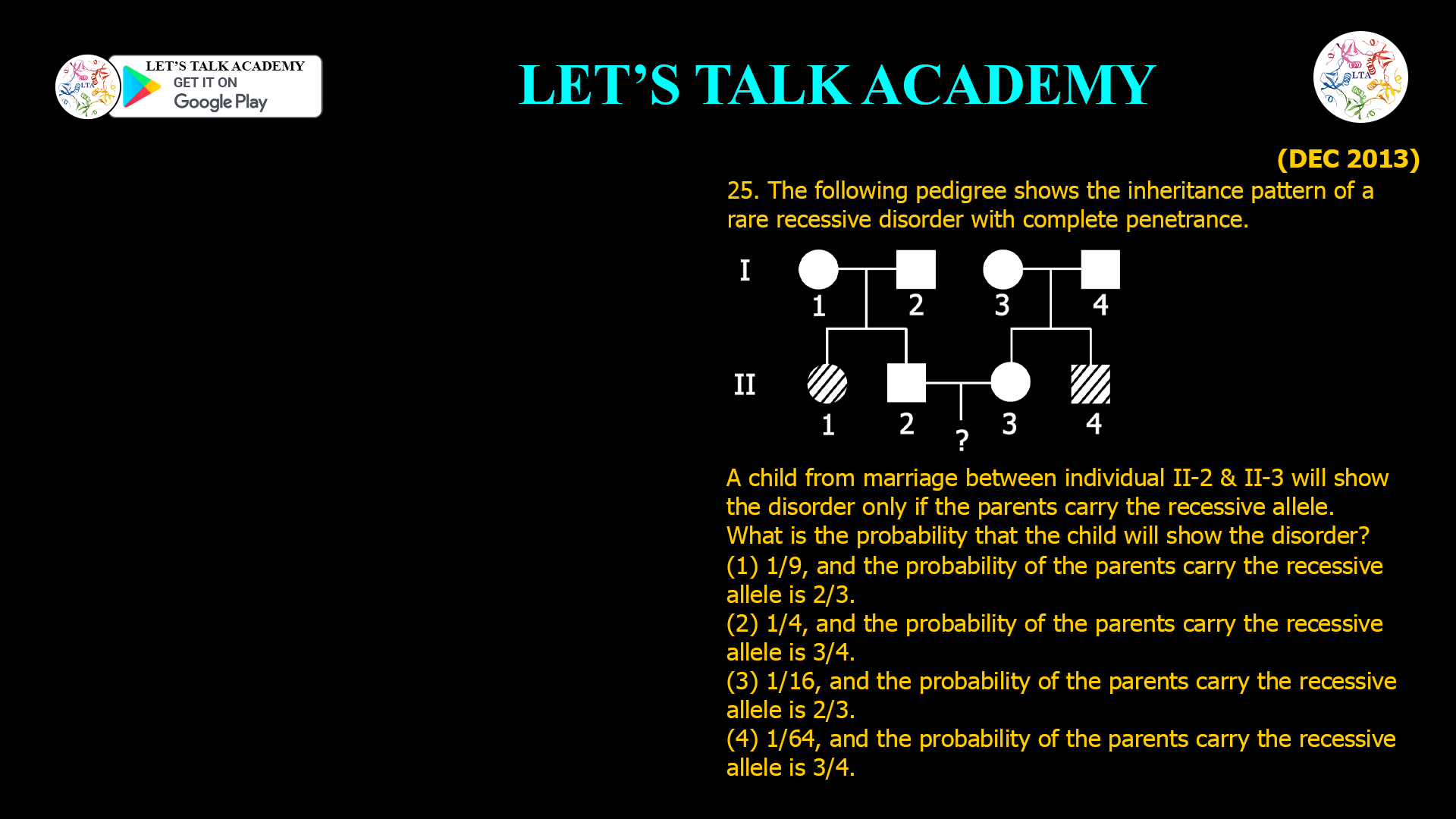
25. The following pedigree shows the inheritance pattern of a rare recessive disorder with complete penetrance. A child from marriage between individual II-2 & II-3 will show the disorder only if the parents carry the recessive allele. What is the probability that the child will show the disorder? (1) 1/9, and the probability of the parents carry the recessive allele is 2/3. (2) 1/4, and the probability of the parents carry the recessive allele is 3/4. (3) 1/16, and the probability of the parents carry the recessive allele is 2/3. (4) 1/64, and the probability of the parents carry the recessive allele is 3/4.

Pedigree Analysis of a Rare Recessive Disorder

24. The inheritance pattern of a common trait which shows complete penetrance is shown below: Based on the above pedigree, fill in the blanks from the options given below: ‘’The trait is__[A] __, The probability that a child from the marriage of individual III-1 and III-2 will show the trait is __[B]__ considering that the individual III-1 is a carrier of the trait.” A B (1) Y-linked 0 (2) Y-linked 1/2 (3) Autosomal 1/8 (4) Autosomal 1/6

Pedigree Analysis of a Common Autosomal Trait with Complete Penetrance

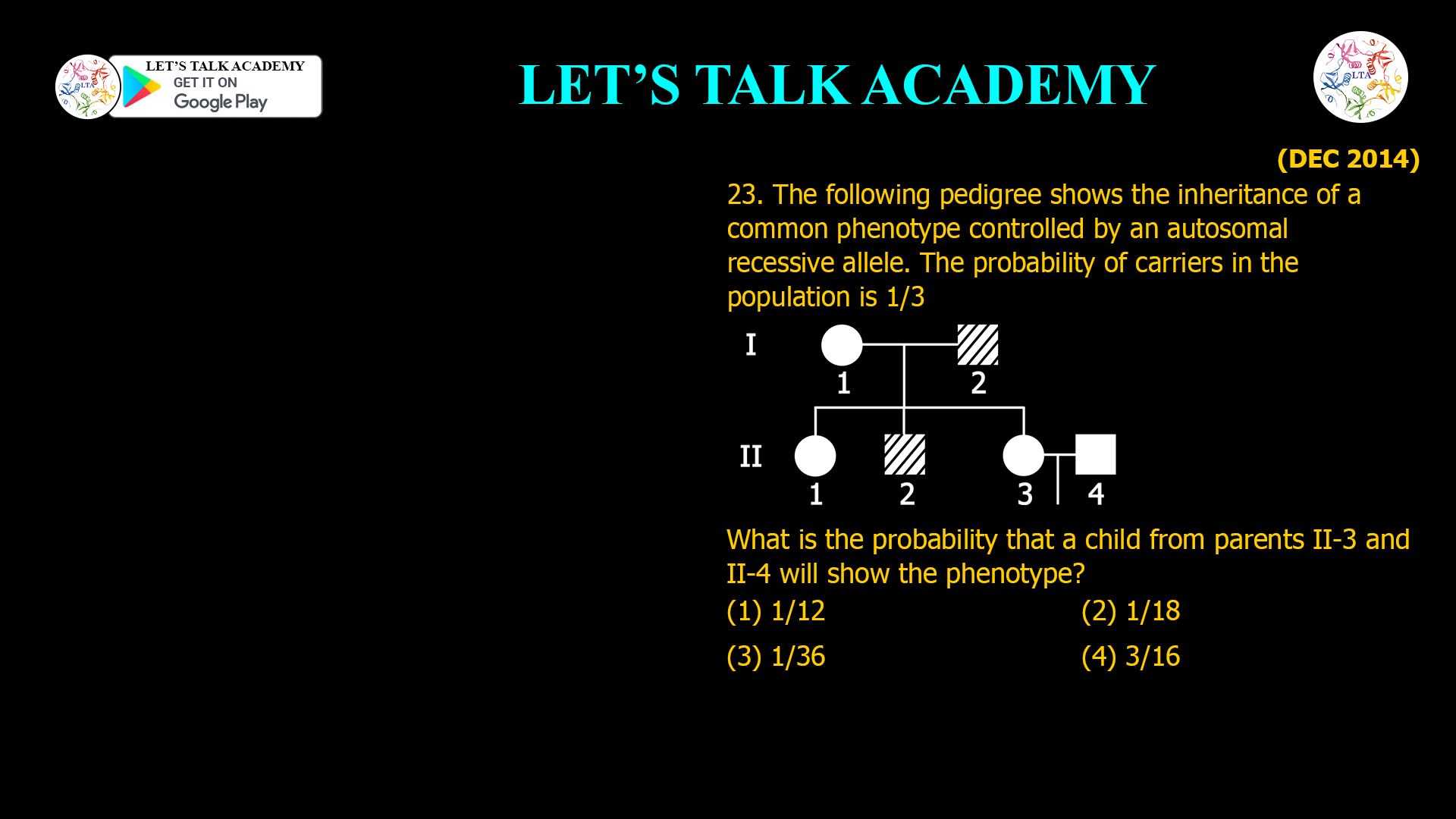
23. The following pedigree shows the inheritance of a common phenotype controlled by an autosomal recessive allele. The probability of carriers in the population is 1/3 What is the probability that a child from parents II-3 and II-4 will show the phenotype? (1) 1/12 (2) 1/18 (3) 1/36 (4) 3/16

Autosomal Recessive Carrier Frequency and Affected Child Risk

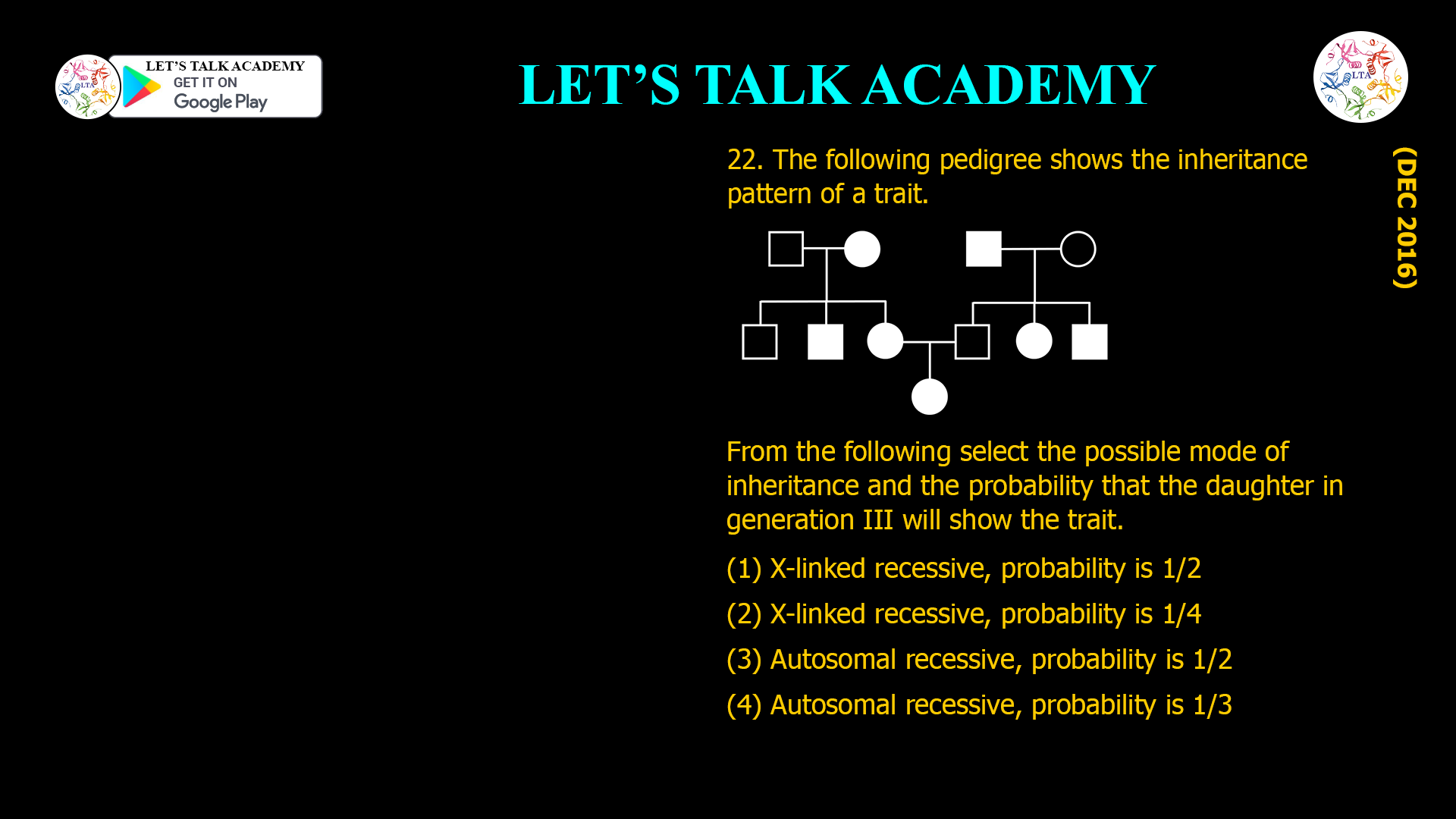
22. The following pedigree shows the inheritance pattern of a trait. From the following select the possible mode of inheritance and the probability that the daughter in generation III will show the trait. (1) X-linked recessive, probability is 1/2 (2) X-linked recessive, probability is 1/4 (3) Autosomal recessive, probability is 1/2 (4) Autosomal recessive, probability is 1/3

Autosomal Recessive Inheritance and Probability for Affected Daughter

21. Affected individuals from the pedigree given below are suffering from albinism, an autosomal recessive disease. Identify the confirmed carrier individuals in this pedigree assuming that the members coming from outside the family are homozygous for the dominant allele. (1) III-2, III-3, III-5, III-6, II-1, II-3 and II-6 (2) III-2, III-3, III-5, III-6, II-2, II-4, II-5, and I-2 (3) III-2 ,III-3, III-5, III-6, II-2, II-4 and II-5 (4) III-1, III-4, III-7, II-2, II-4 and II-5

Autosomal Recessive Albinism Pedigree

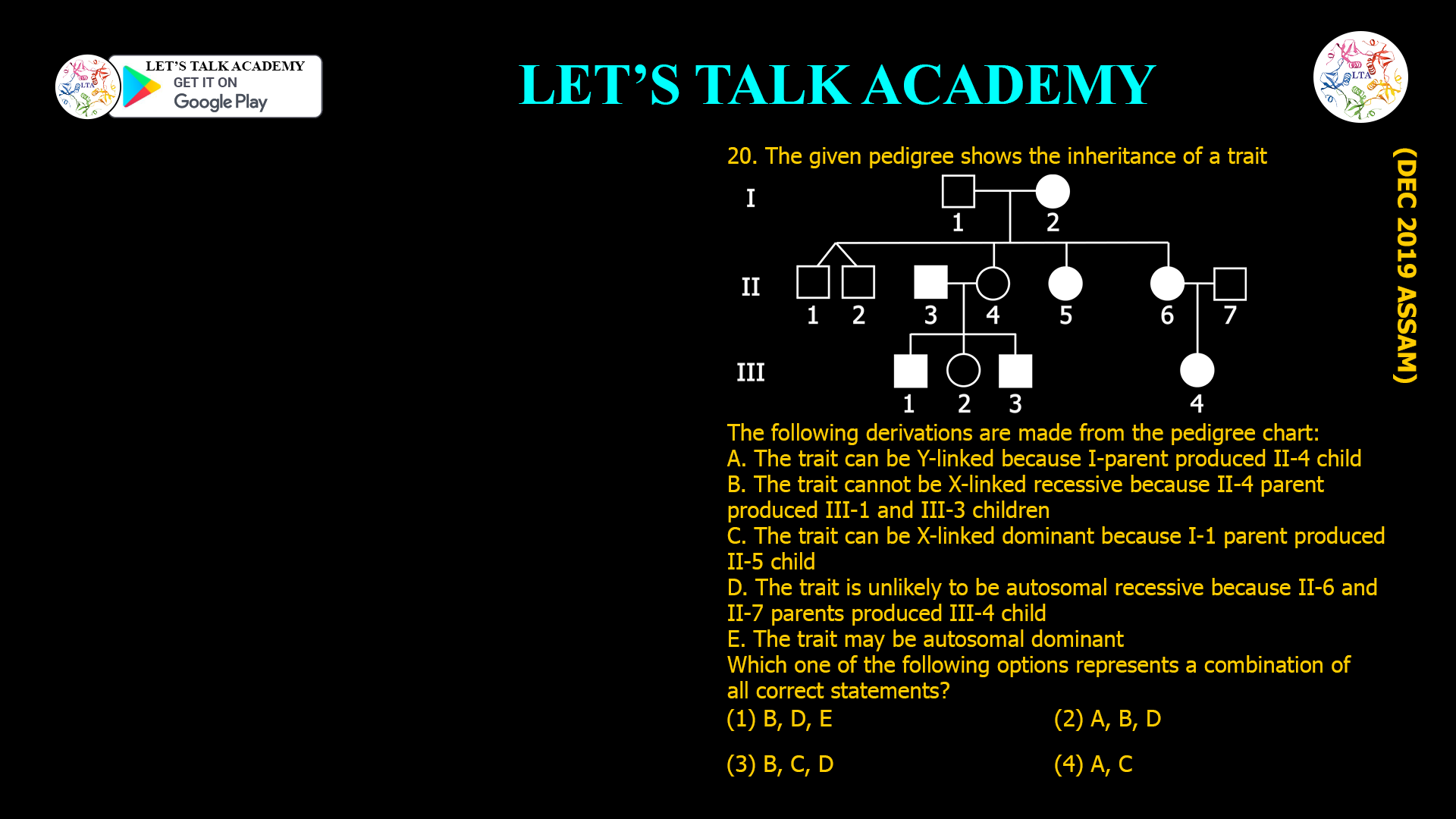
20. The given pedigree shows the inheritance of a trait The following derivations are made from the pedigree chart: A. The trait can be Y-linked because I-parent produced II-4 child B. The trait cannot be X-linked recessive because II-4 parent produced III-1 and III-3 children C. The trait can be X-linked dominant because I-1 parent produced II-5 child D. The trait is unlikely to be autosomal recessive because II-6 and II-7 parents produced III-4 child E. The trait may be autosomal dominant Which one of the following options represents a combination of all correct statements? (1) B, D, E (2) A, B, D (3) B, C, D (4) A, C

Identifying Autosomal Dominant Inheritance (B, D, E)

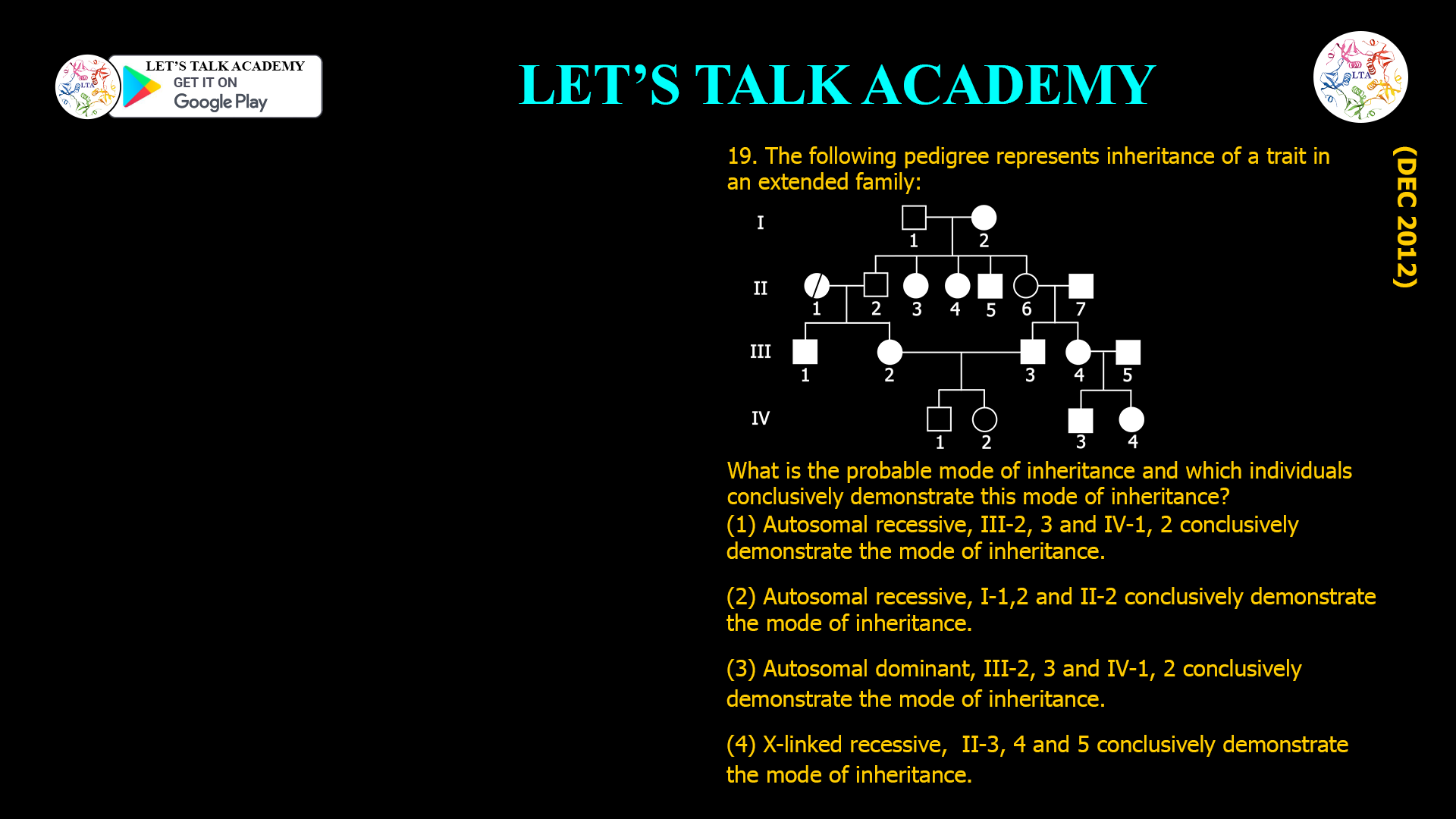
19. The following pedigree represents inheritance of a trait in an extended family: What is the probable mode of inheritance and which individuals conclusively demonstrate this mode of inheritance? (1) Autosomal recessive, III-2, 3 and IV-1, 2 conclusively demonstrate the mode of inheritance. (2) Autosomal recessive, I-1,2 and II-2 conclusively demonstrate the mode of inheritance. (3) Autosomal dominant, III-2, 3 and IV-1, 2 conclusively demonstrate the mode of inheritance. (4) X-linked recessive, II-3, 4 and 5 conclusively demonstrate the mode of inheritance.

Autosomal Dominant Inheritance Explained

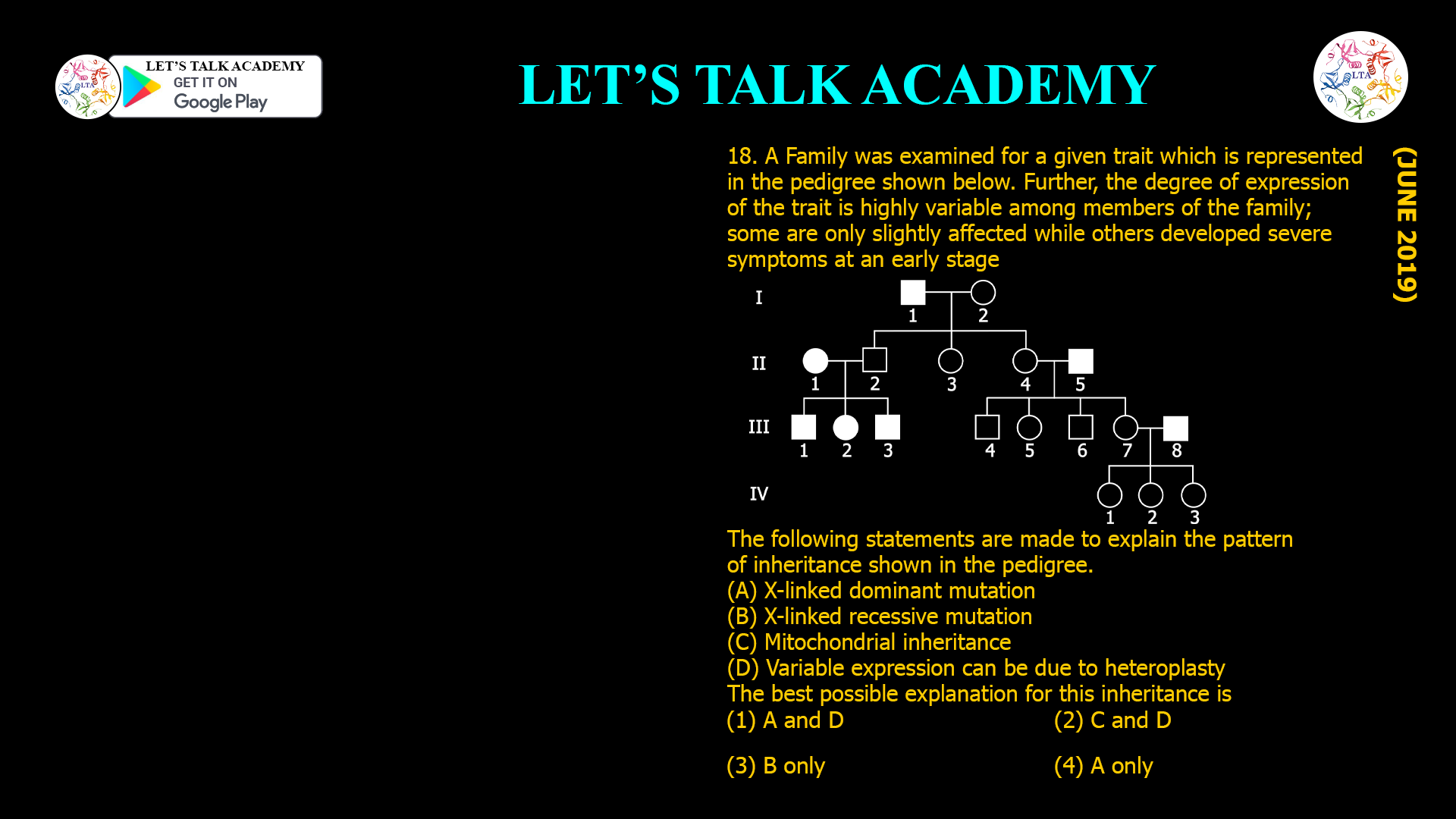
18. A Family was examined for a given trait which is represented in the pedigree shown below. Further, the degree of expression of the trait is highly variable among members of the family; some are only slightly affected while others developed severe symptoms at an early stage The following statements are made to explain the pattern of inheritance shown in the pedigree. (A) X-linked dominant mutation (B) X-linked recessive mutation (C) Mitochondrial inheritance (D) Variable expression can be due to heteroplasty The best possible explanation for this inheritance is (1) A and D (2) C and D (3) B only (4) A only

Mitochondrial Inheritance and Heteroplasmy Explained

17. Following are four modes of inheritance A. X-linked recessive B. X-linked dominant C. Autosomal recessive D. Autosomal dominant Which of the above modes of inheritance can explain the pedigree shown below? (1) A and C (2) B and C (3) C and D (4) D only

X‑Linked vs Autosomal Modes of Inheritance

16. Following are four modes of inheritance: (A) X-Linked recessive (B) X-Linked dominant (C) Autosomal recessive (D) Autosomal dominant Which of the above modes can explain the inheritance of a common trait shown in the pedigree below? (1) B and D only (2) A, C and D only (3) c only (4) D only

Identifying X‑Linked Dominant vs Autosomal Dominant Inheritance

14. The following pedigree chart shows inheritance of a given trait. This can be taken as an example of (1) Y-linked inheritance (2) X-linked recessive as well as autosomal recessive inheritance (3) Autosomal dominant inheritance. (4) X-linked dominant inheritance.

X‑Linked Dominant Inheritance Pedigree Problem

15. Find the pattern of inheritance of the trait showing incomplete penetrance from the figure shown above. (1) Autosomal dominant. (2) Autosomal recessive. (3) Mitochondrial inheritance. (4) X-linked recessive.

Autosomal Dominant Inheritance with Incomplete Penetrance

13. The above pedigree shows the inheritance of a rare allele. The allele is: (1) X-linked recessive (2) Autosomal recessive (3) Dominant with incomplete penetrance (4) Autosomal recessive with incomplete penetrance

Identifying Autosomal Recessive Inheritance in a Rare Allele

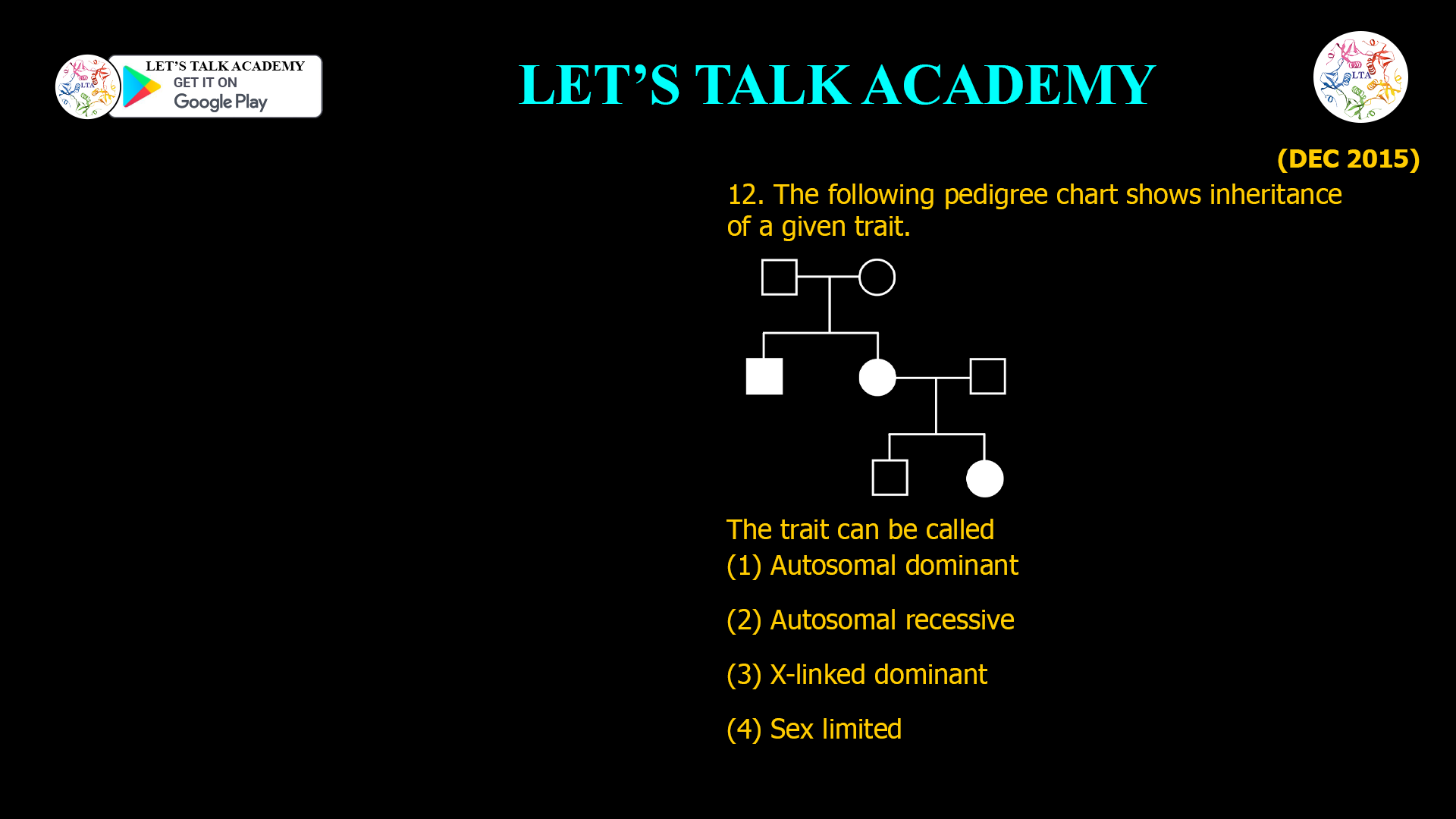
12. The following pedigree chart shows inheritance of a given trait. The trait can be called (1) Autosomal dominant (2) Autosomal recessive (3) X-linked dominant (4) Sex limited

Understanding X‑Linked Dominant Inheritance

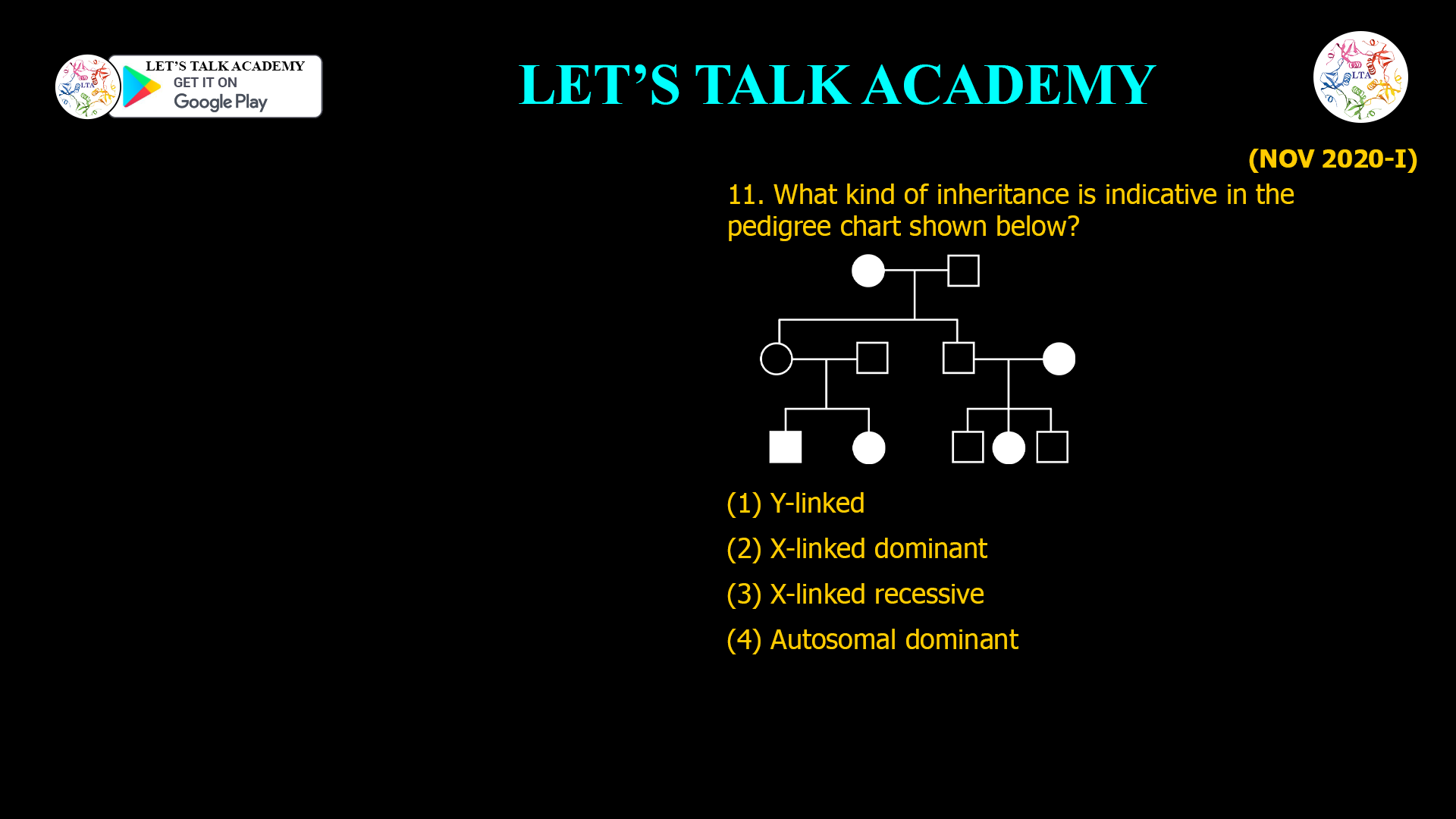
11. What kind of inheritance is indicative in the pedigree chart shown below? (1) Y-linked (2) X-linked dominant (3) X-linked recessive (4) Autosomal dominant

What Kind of Inheritance Is Indicative in This Pedigree Chart?

10. The trait shown in the above pedigree is (1) X-linked recessive trait (2) Autosomal recessive trait (3) Y-linked trait (4) X-linked dominant trait

Autosomal Recessive Pedigree

9. The inheritance of a given disorder is recorded in three small families shown below: Based on the above limited information, which one of the following inheritance pattern best explain the observations? (1) X-linked recessive (2) X-linked dominant (3) Autosomal recessive (4) Autosomal dominant

Inheritance of a Given Disorder in Three Small Families

8. The following the inheritance pattern of a trait under observation: (i) The trait often skips a generation (ii) The number of affected males and females is almost equal (iii) The trait is often found in pedigrees with consanguineous marriages. The trait is likely to be (1) autosomal recessive. (2) autosomal dominant. (3) sex-linked recessive. (4) sex linked dominant.

Why Skipping Generations and Consanguinity Indicate Autosomal Recessive Inheritance

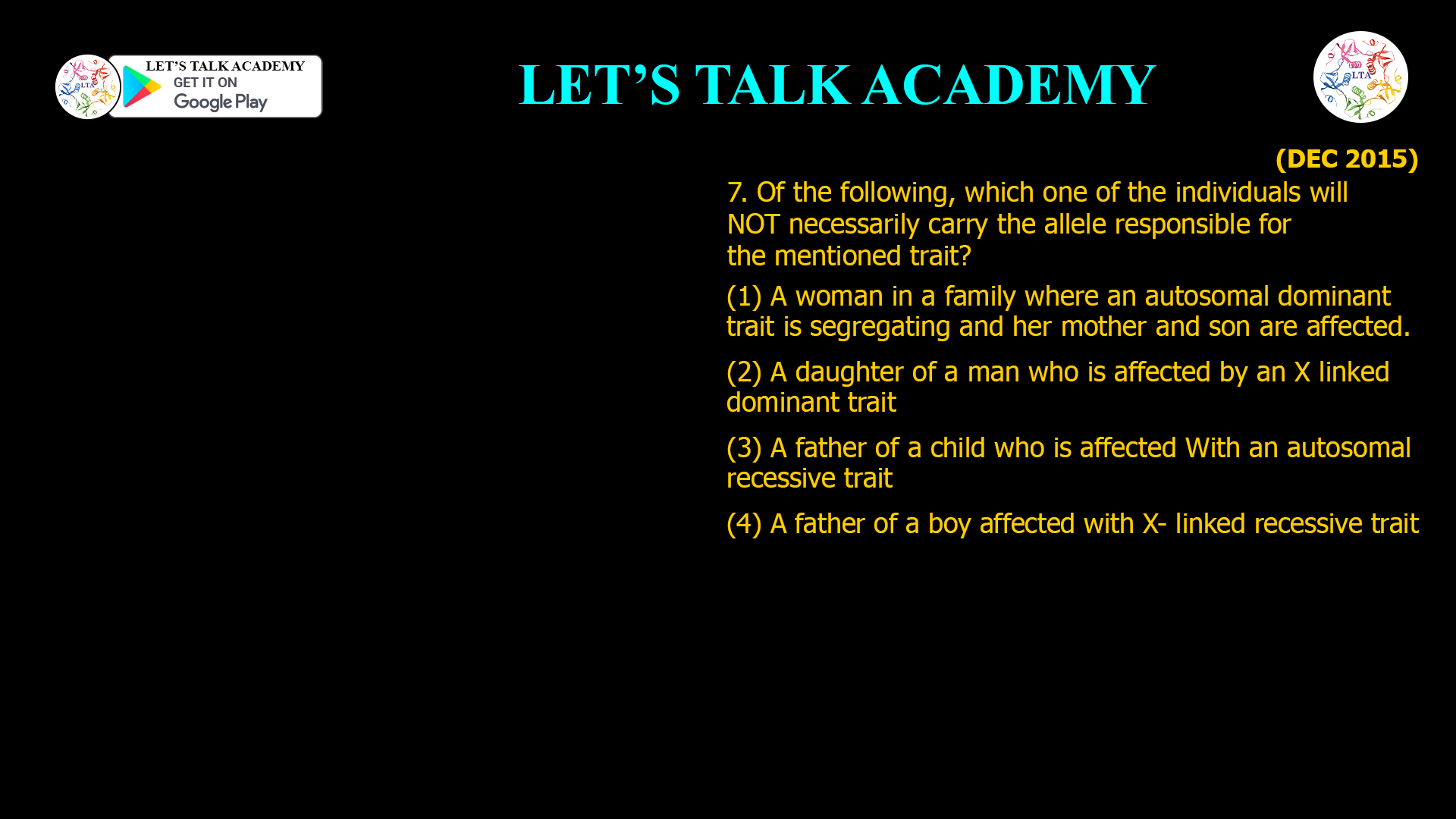
7. Of the following, which one of the individuals will NOT necessarily carry the allele responsible for the mentioned trait? (1) A woman in a family where an autosomal dominant trait is segregating and her mother and son are affected. (2) A daughter of a man who is affected by an X linked dominant trait (3) A father of a child who is affected With an autosomal recessive trait (4) A father of a boy affected with X- linked recessive trait

Autosomal vs X‑Linked Inheritance

6. The following pedigree represents the inheritance of a rare disorder. Based on the above pedigree. what is the most likely mode of inheritance? (1) Autosomal dominant (2) X-linked recessive (3) X-linked dominant (4) Y-linked dominant

Identifying X‑Linked Dominant Inheritance in a Rare Disorder

5. Given below is a pedigree a pattern of inheritance: The following statements are drawn from the above pedigree towards understanding the pattern of inheritance. A. An affected male does not appear to pass the trait to his sons B. An affected male appear to pass the allele to a daughter who is unaffected C. All affected individuals have at least one affected parent D. The given trait appear to be a recessive one E. The given trait appears to be an autosomal recessive one Select the option from the following that has all correct statements: (1) C and E only (2) A, B and D only (3) E only (4) A, B, C, D and E

Identifying X‑Linked Recessive Inheritance

4. Given below is a pedigree indicating a pattern of inheritance: Which one of the following options correctly describes the pattern of inheritance shown in the above pedigree? (1) X-linked recessive (2) Autosomal recessive (3) X-linked dominant (4) Autosomal dominant

Identifying X‑Linked Dominant Inheritance

3. The following pedigree represents the inheritance of a rare disorder. Based on the above pedigree, what is the most likely mode of inheritance? (1) Autosomal Dominant (2) X-linked recessive (3) X-linked dominant (4) Autosomal recessive

 Pedigree Analysis of a Rare Disorder

2. Consider the following pedigree chart (1) X-linked recessive (2) X-linked dominant (3) Sex limited recessive (4) Autosomal dominant

Identifying X‑Linked Recessive Inheritance

1. The following pedigree tree represents (1) Autosomal Dominant (2) Autosomal Recessive (3) X-linked Dominant (4) X-linked Recessive

Identifying Autosomal Recessive Inheritance

Latest Courses