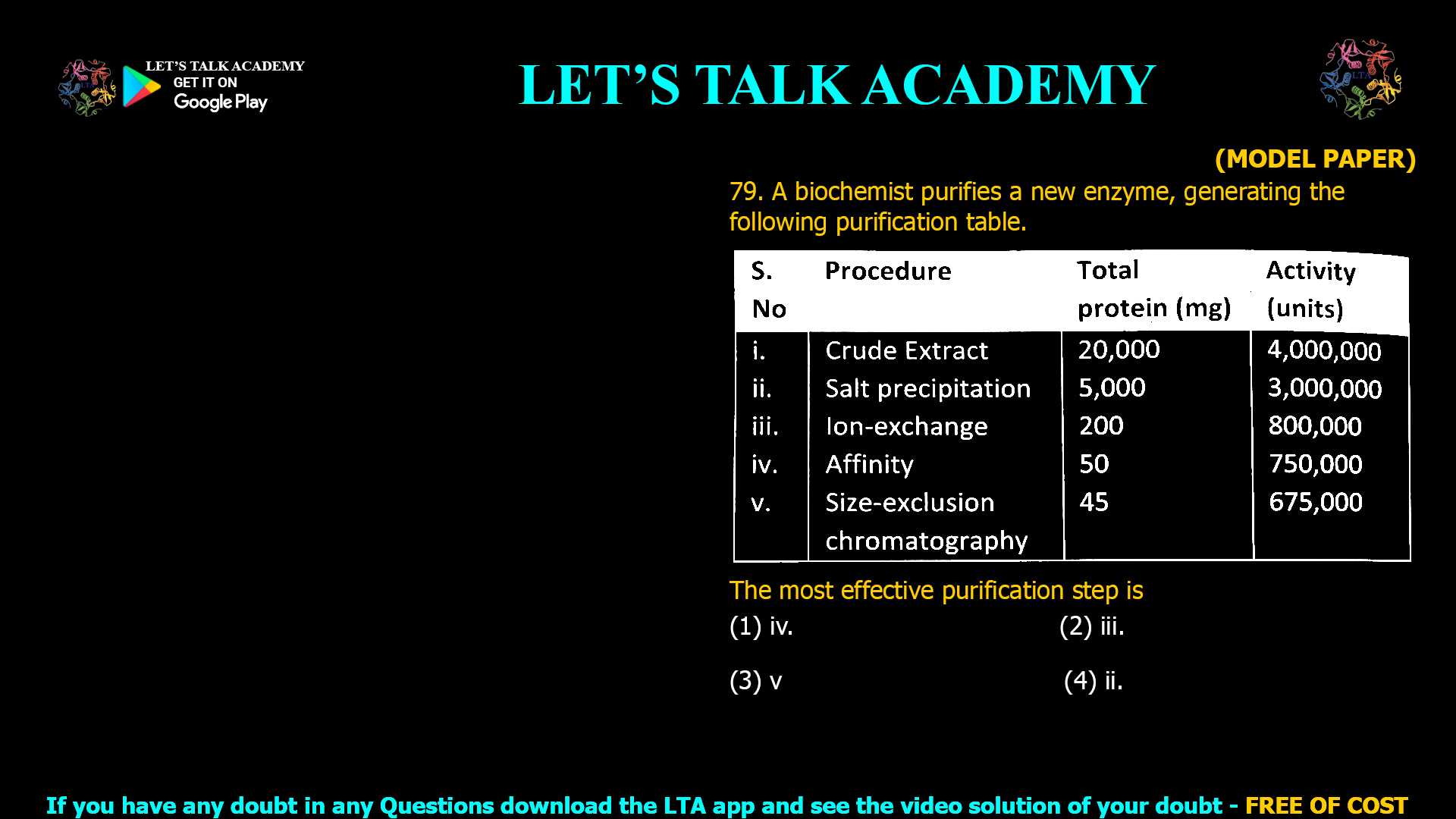
The correct answer is (1) iv. Affinity chromatography. Introduction Enzyme purification is a multistep process designed to isolate proteins from complex biological mixtures. Each stage serves to increase the purity and specific activity of the desired enzyme, but not all steps contribute equally. Effective purification is typically identified by dramatic increases in specific activity and reduction […]
Tag: csir enzymes kinetics PYQ
No posts found.
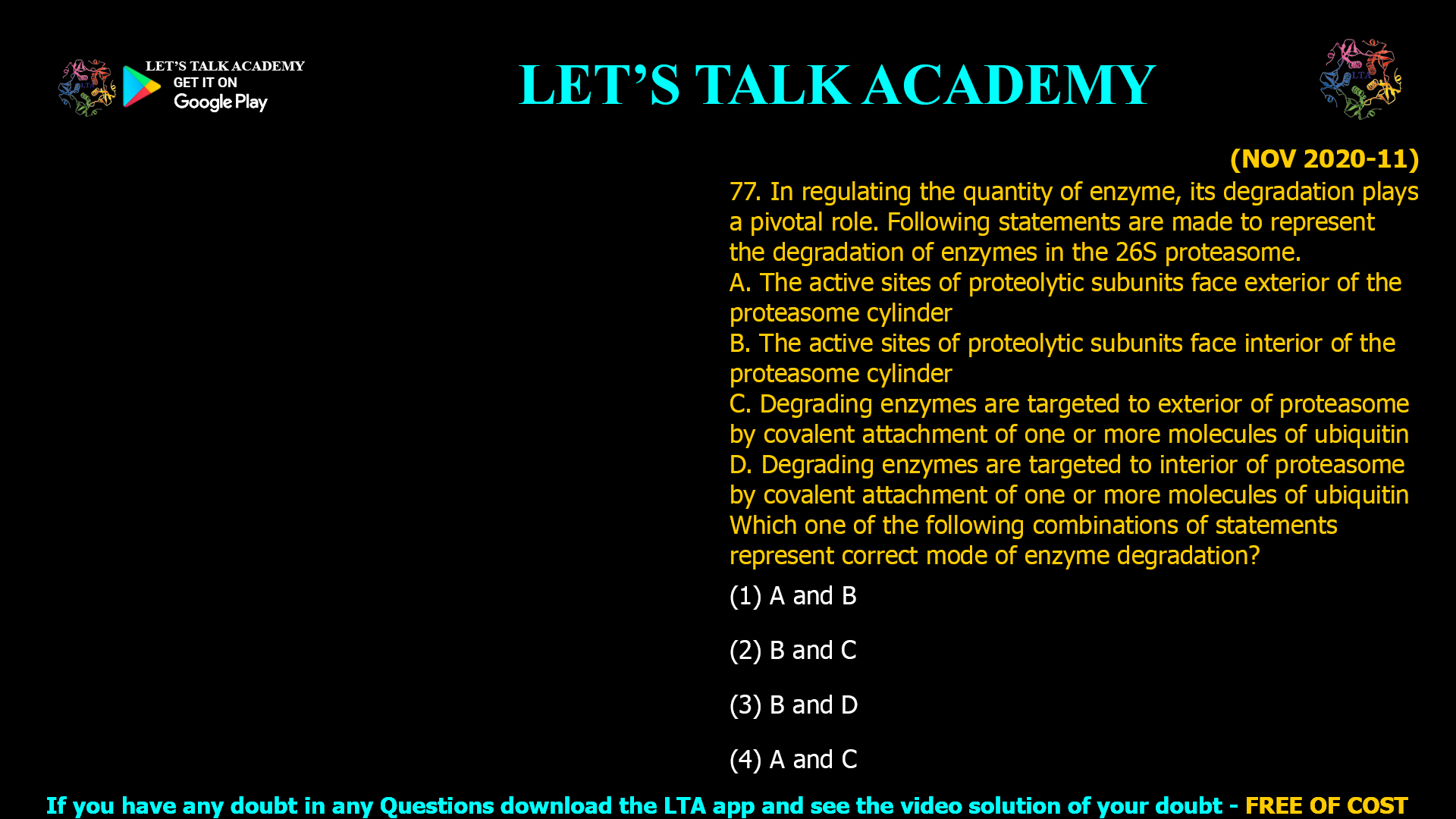
Mechanism of Enzyme Degradation by the 26S Proteasome: Orientation of Active Sites and Ubiquitin Targeting
- admin
- September 12, 2025
- 24 Comments
(NOV 2020-11) 77. In regulating the quantity of enzyme, its degradation plays a pivotal role. Following statements are made to represent the degradation of enzymes in the 26S proteasome. A. The active sites of proteolytic subunits face exterior of the proteasome cylinder B. The active sites of proteolytic subunits face interior of the proteasome cylinder […]
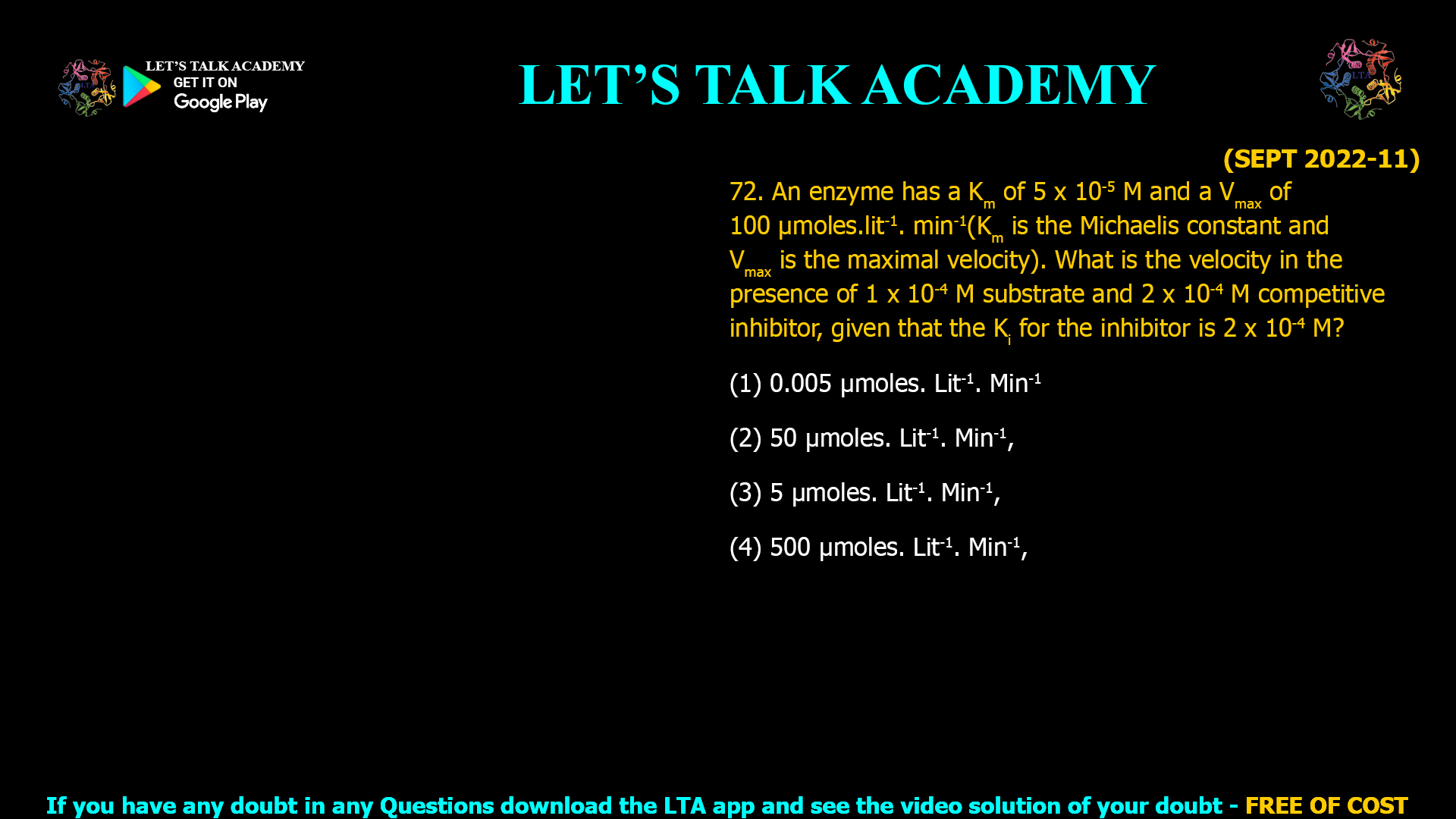
Calculating Enzyme Velocity with Competitive Inhibition: A Practical Example
- admin
- September 12, 2025
- 21 Comments
(SEPT 2022-11) 72. An enzyme has a Km of 5 x 10⁻⁵ M and a Vmax of 100 µmoles.lit-1. min-1(Km is the Michaelis constant and Vmax is the maximal velocity). What is the velocity in the presence of 1 x 10⁻⁴ M substrate and 2 x 10⁻⁴ M competitive inhibitor, given that the Ki for […]
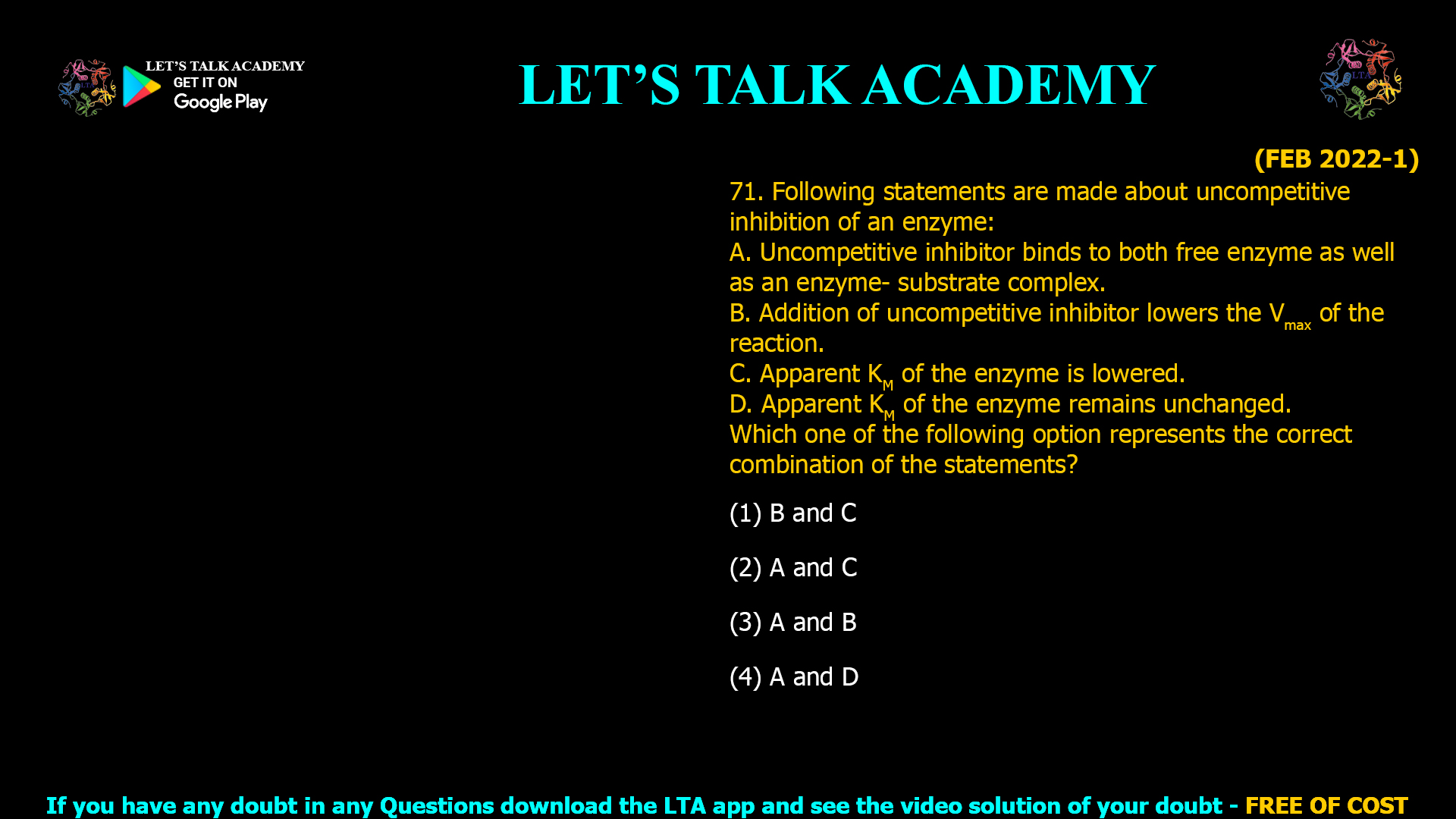
Uncompetitive Enzyme Inhibition: Binding Mechanism and Effects on KmKm and VmaxVmax
- admin
- September 12, 2025
- 44 Comments
(FEB 2022-1) 71. Following statements are made about uncompetitive inhibition of an enzyme: A. Uncompetitive inhibitor binds to both free enzyme as well as an enzyme- substrate complex. B. Addition of uncompetitive inhibitor lowers the Vmax of the reaction. C. Apparent KM of the enzyme is lowered. D. Apparent KM of the enzyme remains unchanged. […]
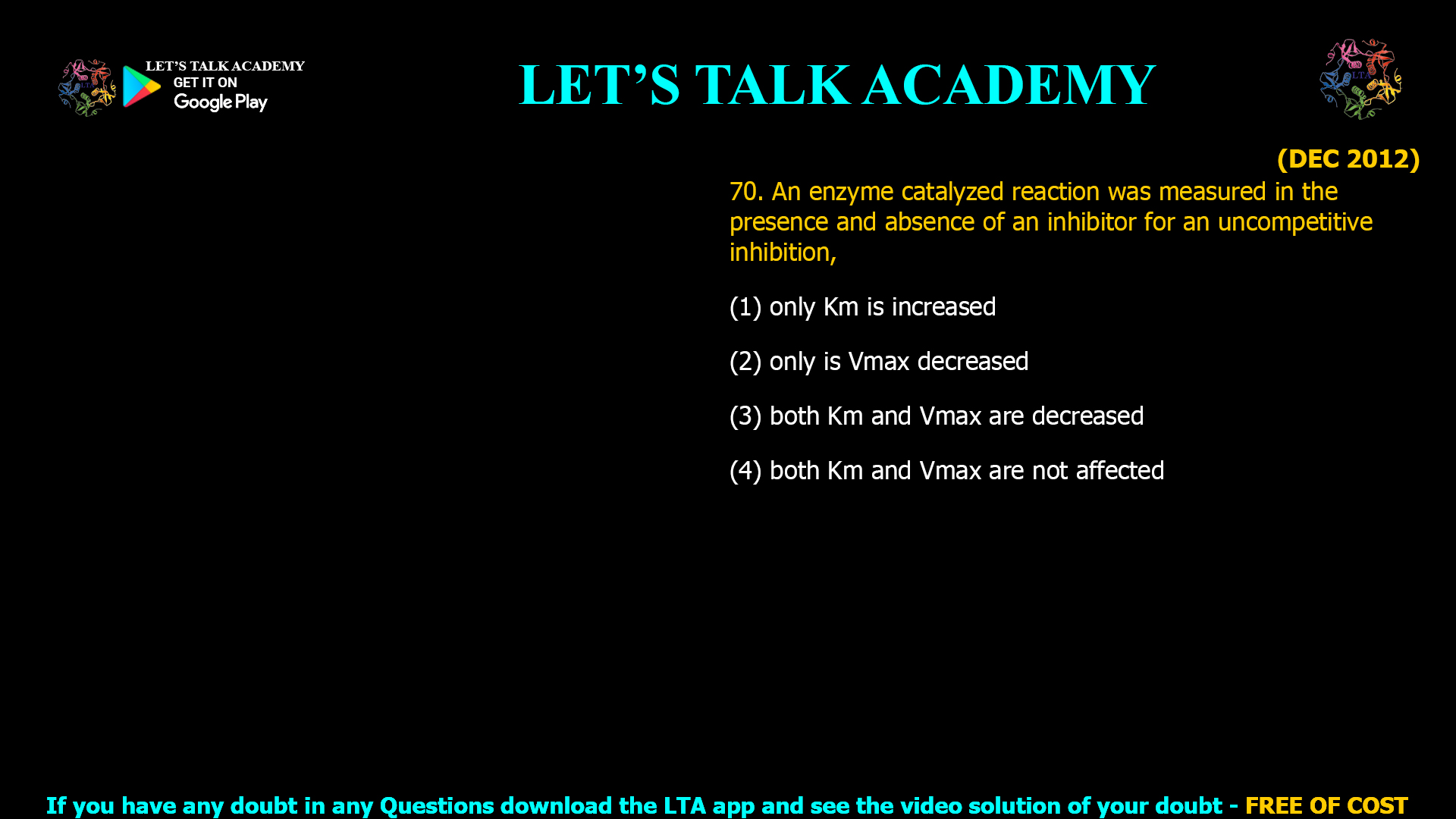
Uncompetitive Inhibition: Effects on Enzyme Kinetics and Determination of Km and Vmax
- admin
- September 12, 2025
- 55 Comments
(DEC 2012) 70. An enzyme catalyzed reaction was measured in the presence and absence of an inhibitor for an uncompetitive inhibition, (1) only Km is increased (2) only is Vmax decreased (3) both Km and Vmax are decreased (4) both Km and Vmax are not affected The correct answer is (3) both Km and Vmax are […]
Demystifying Competitive Enzyme Inhibition: Substrate Competition and Reversibility
- admin
- September 12, 2025
- 44 Comments
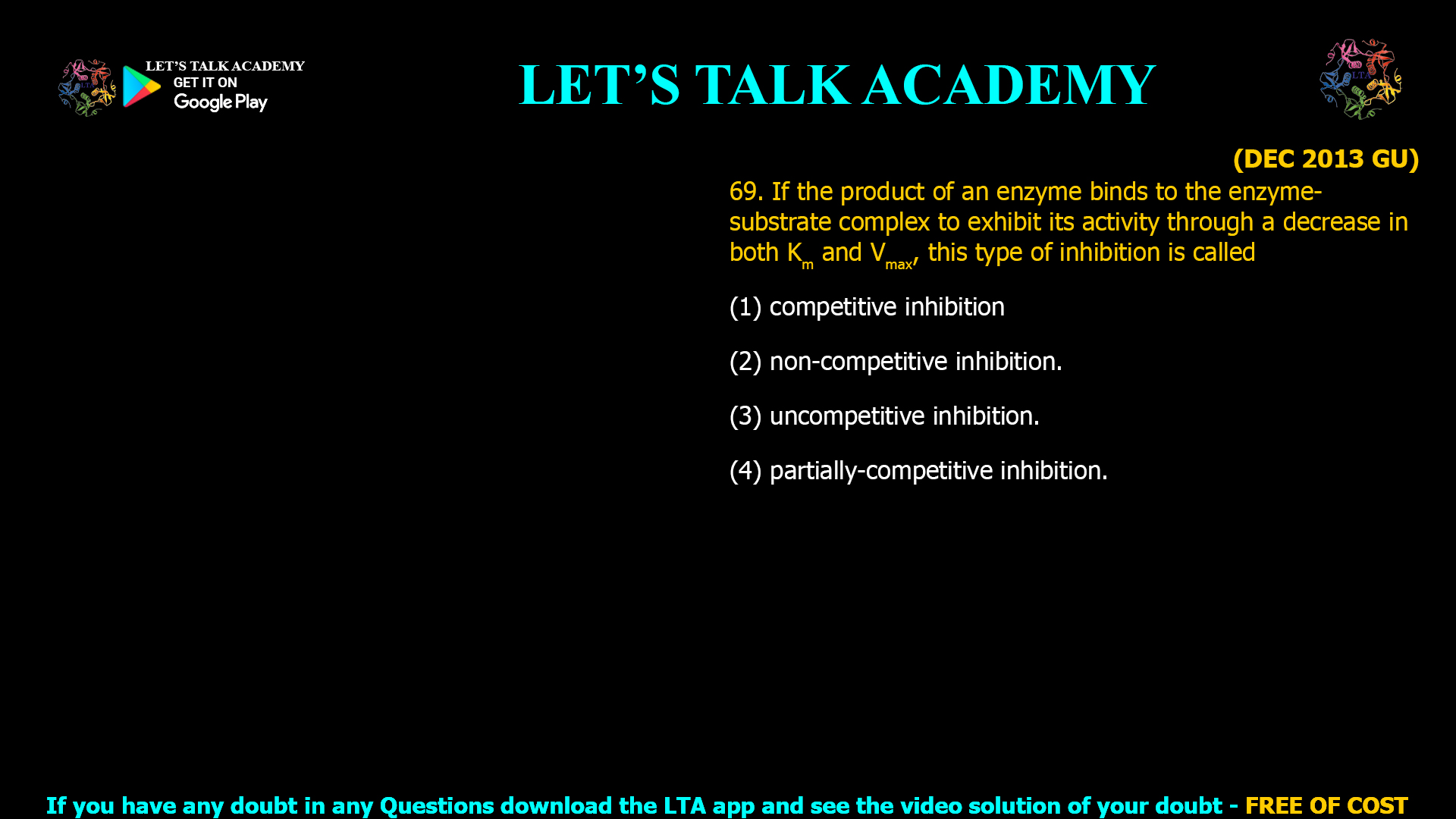
(DEC 2013 GU) 69. If the product of an enzyme binds to the enzyme- substrate complex to exhibit its activity through a decrease in both Km and Vmax, this type of inhibition is called (1) competitive inhibition (2) non-competitive inhibition. (3) uncompetitive inhibition. (4) partially-competitive inhibition. The correct answer is (4) Reaction cannot be favorably biased […]
Lineweaver-Burk Plot Analysis for Km Determination in Reversible Non-Competitive Enzyme Inhibition
- admin
- September 12, 2025
- 34 Comments
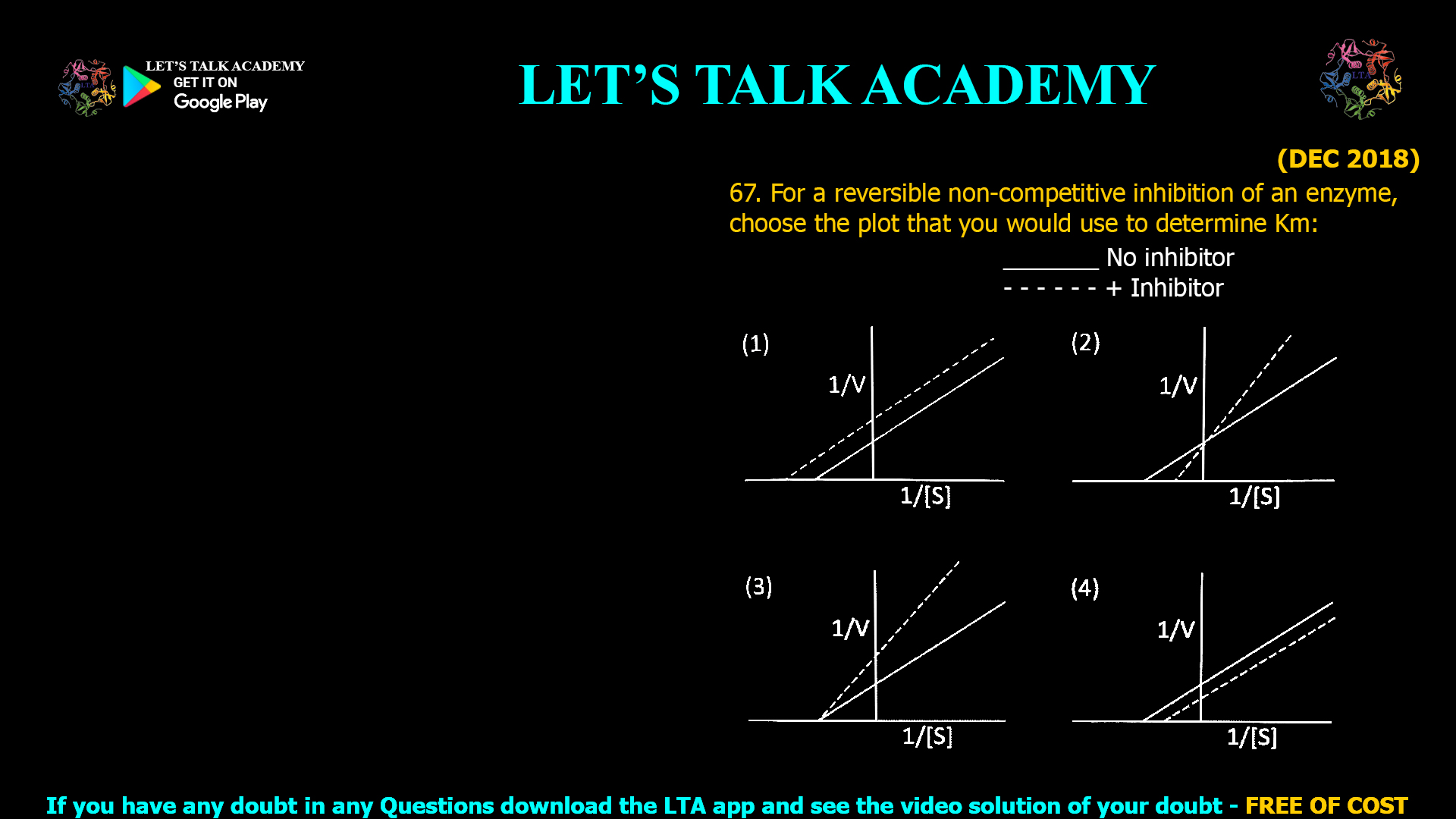
The correct answer is (1). Introduction Enzyme inhibition is a cornerstone of biochemistry and pharmacology, and visualizing its effects on kinetic parameters is essential. The Lineweaver-Burk double reciprocal plot provides a clear way to distinguish between competitive, non-competitive, and uncompetitive inhibition based on their effects on VmaxVmax and KmKm. In reversible non-competitive inhibition, the x-intercept—used for determining KmKm—remains unchanged, even […]
Non-Competitive Enzyme Inhibition: Effects on Kinetic Parameters VmaxVmax and KmKm
- admin
- September 12, 2025
- 48 Comments
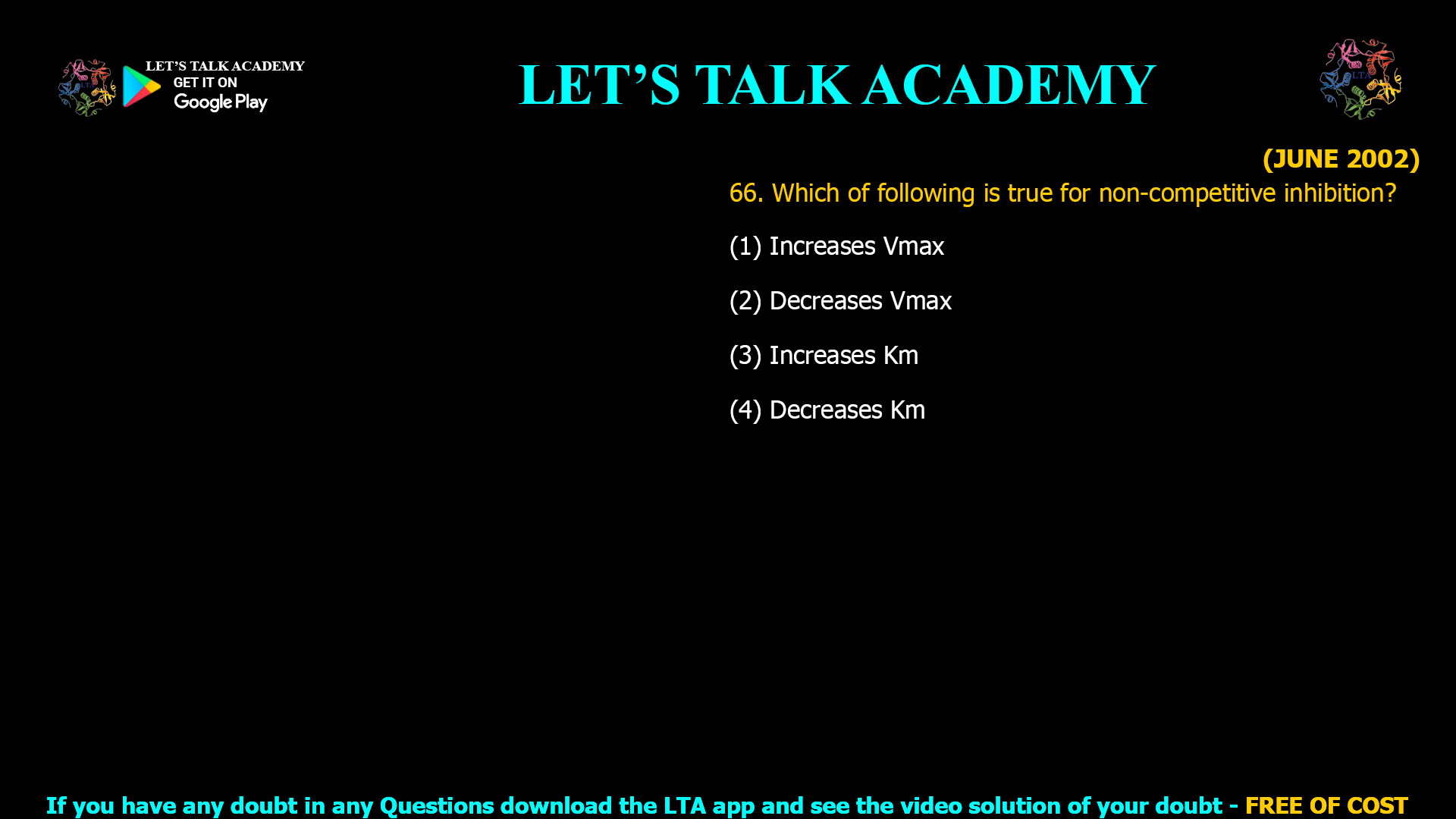
(JUNE 2002) 66. Which of following is true for non-competitive inhibition? (1) Increases Vmax (2) Decreases Vmax (3) Increases Km (4) Decreases Km The correct answer is (2) Decreases Vmax. Introduction Non-competitive inhibition is a classical mechanism by which enzymes are regulated or inhibited without competing with the substrate for the active site. Unlike competitive inhibition, […]
Noncompetitive Enzyme Inhibition: Reaction Schemes, Mechanism, and Impact on Kinetics
- admin
- September 12, 2025
- 41 Comments
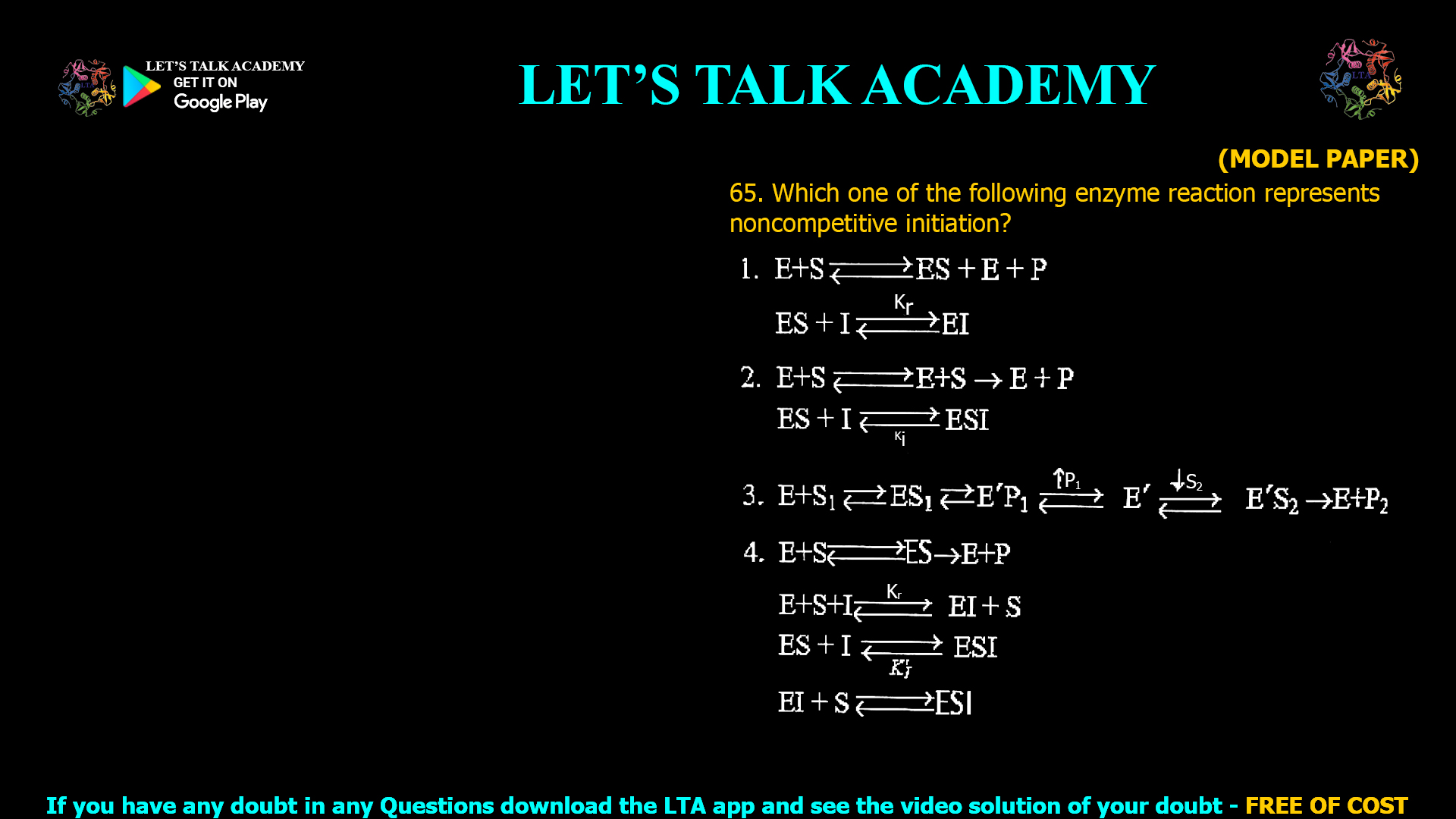
The correct answer is (2) E+S ⇄ ES → E+P; ES+I ⇄ ESI. Introduction Noncompetitive inhibition is a fundamental model in enzyme kinetics, describing how inhibitors can reduce enzyme activity regardless of substrate concentration. Unlike competitive inhibitors, which compete for the active site, noncompetitive inhibitors bind elsewhere—often to both the free enzyme and the enzyme-substrate complex—resulting […]
Understanding Competitive Inhibition: How Substrate Concentration Overcomes Inhibition
- admin
- September 12, 2025
- 42 Comments
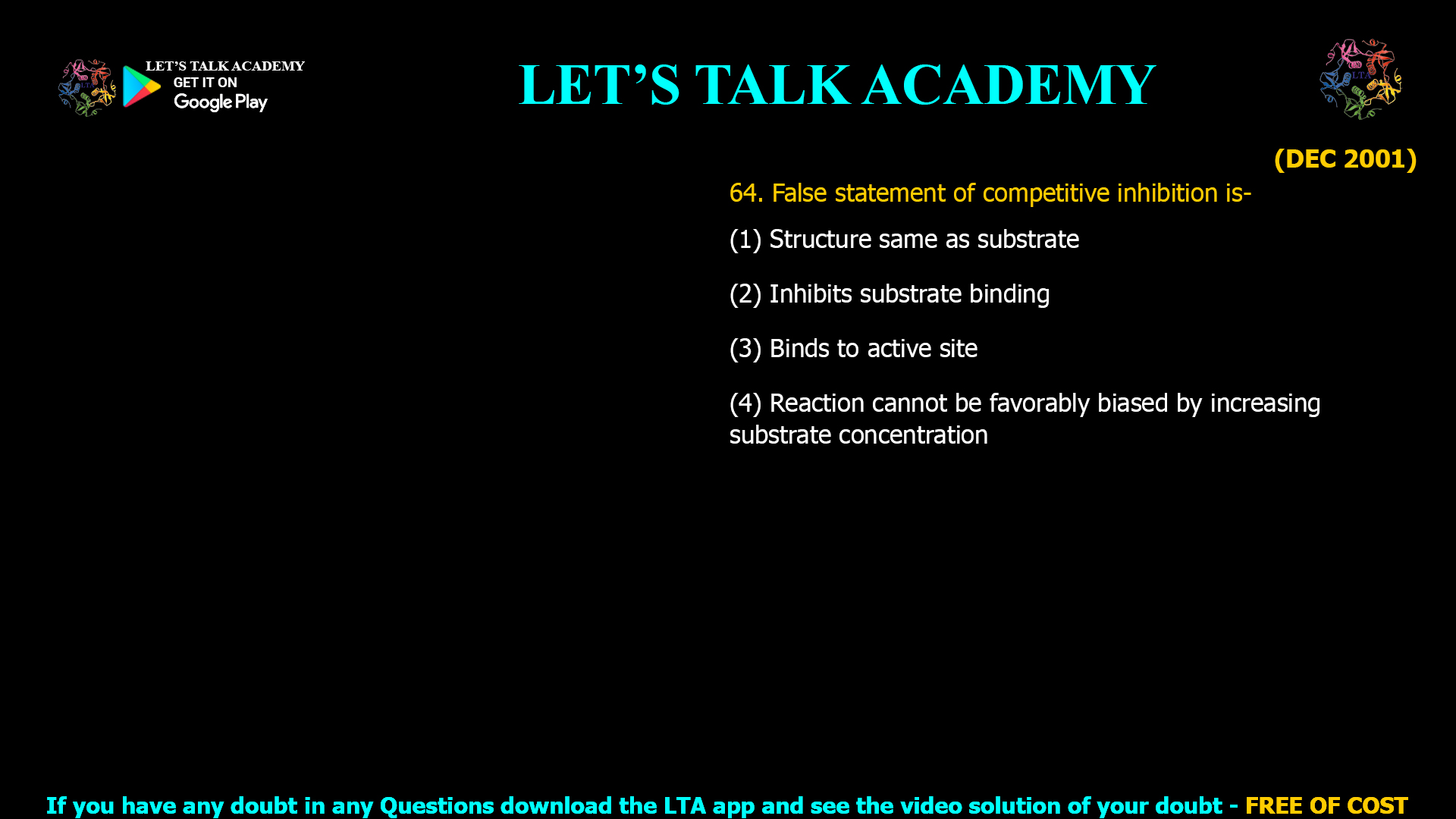
(DEC 2001) 64. False statement of competitive inhibition is- (1) Structure same as substrate (2) Inhibits substrate binding (3) Binds to active site (4) Reaction cannot be favorably biased by increasing substrate concentration The correct answer is (4) Reaction cannot be favorably biased by increasing substrate concentration. Introduction Competitive inhibition is a classic and vital concept […]