No posts found.

Cancer

Rapamycin as a Specific Inhibitor of mTOR in Mammalian Cell Growth Regulation

Which one of the following inactivates the serine/threonine protein kinase, mTOR, related to cell growth in mammalian system? (1) Rifamycin (2) Rapamycin (3) Erythromycin (4) Chloramphenicol The agent that inactivates the serine/threonine protein kinase mTOR, which is related to cell growth in the mammalian system, is: (2) Rapamycin Explanation Rapamycin, originally discovered as an antifungal […]

Cancer

Matching Tumor Types with Their Characteristics: A Comprehensive Guide

52. The table below lists the characteristics of specific tumor types (Column A) and their names (Column B). Which of the following options represents the correct match between Column A and Column B? Options:- (1) A-iii; B-iv; C-i; D-ii                                     (2) A-ii; B-iv; C-vi; D-iii (3) A-iii; B-v; C-vi; D-l                                     (4) A-iv; B-v; C-i; D-ii] The […]

Cancer

Matching Cancer Types with their Descriptions and Origins

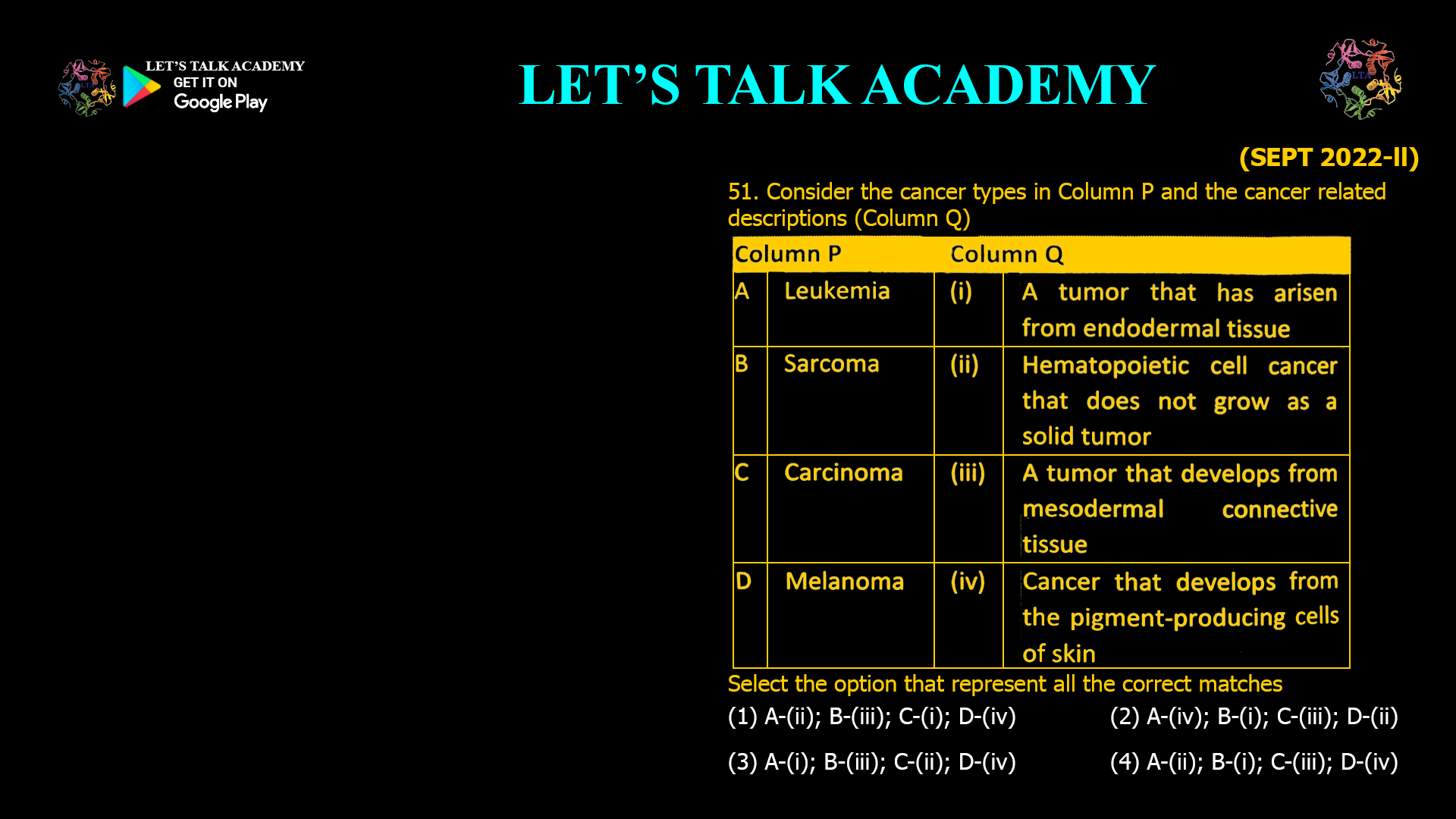
51. Consider the cancer types in Column P and the cancer related descriptions (Column Q) Select the option that represent all the correct matches (1) A-(ii); B-(iii); C-(i); D-(iv) (2) A-(iv); B-(i); C-(iii); D-(ii) (3) A-(i); B-(iii); C-(ii); D-(iv) (4) A-(ii); B-(i); C-(iii); D-(iv)   The correct option representing all the correct matches between cancer […]

Cancer

Synergistic Oncogenic Roles of Bcl2 and Myc in Murine B-Cell Lymphomas

49. The following experiment was designed to establish the synergy of Bcl2 with genes like Myc in leading to B- cell lymphomas Identify the figure that correctly represents conditions under which mice succumbed to lymphomas.   The correct figure representing the conditions under which mice succumbed to lymphomas in the experiment designed to establish the […]

Cancer

Abnormal Protein Expression in Cancer: Roles of Telomerase, Bcl-2, and Cell Cycle Regulators

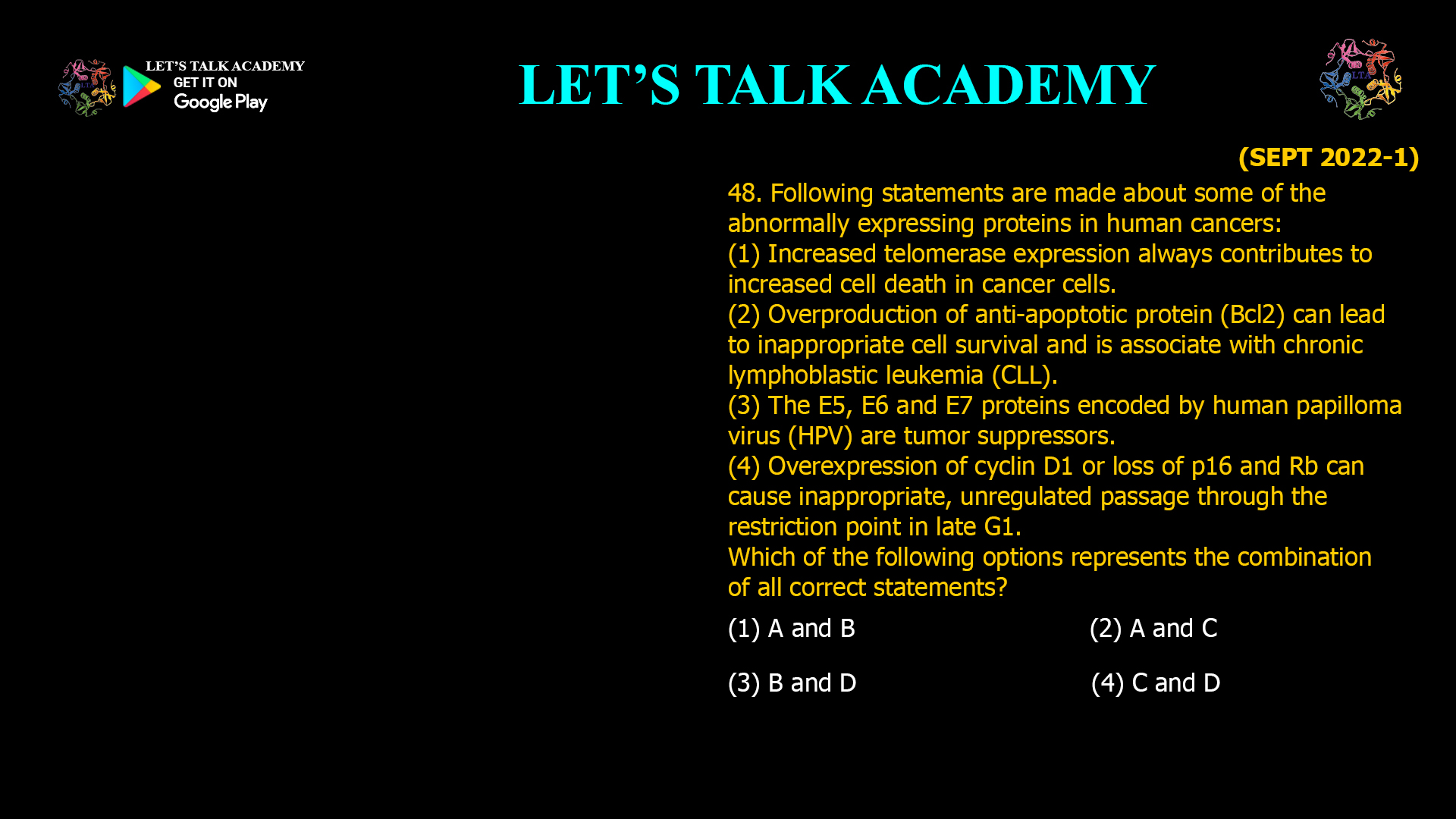
Following statements are made about some of the abnormally expressing proteins in human cancers: (1) Increased telomerase expression always contributes to increased cell death in cancer cells. (2) Overproduction of anti-apoptotic protein (Bcl2) can lead to inappropriate cell survival and is associate with chronic lymphoblastic leukemia (CLL). (3) The E5, E6 and E7 proteins encoded […]

Cancer

Human Papilloma Virus (HPV) Vaccine: Virus-Like Particle-Based Immunization for Cancer Prevention

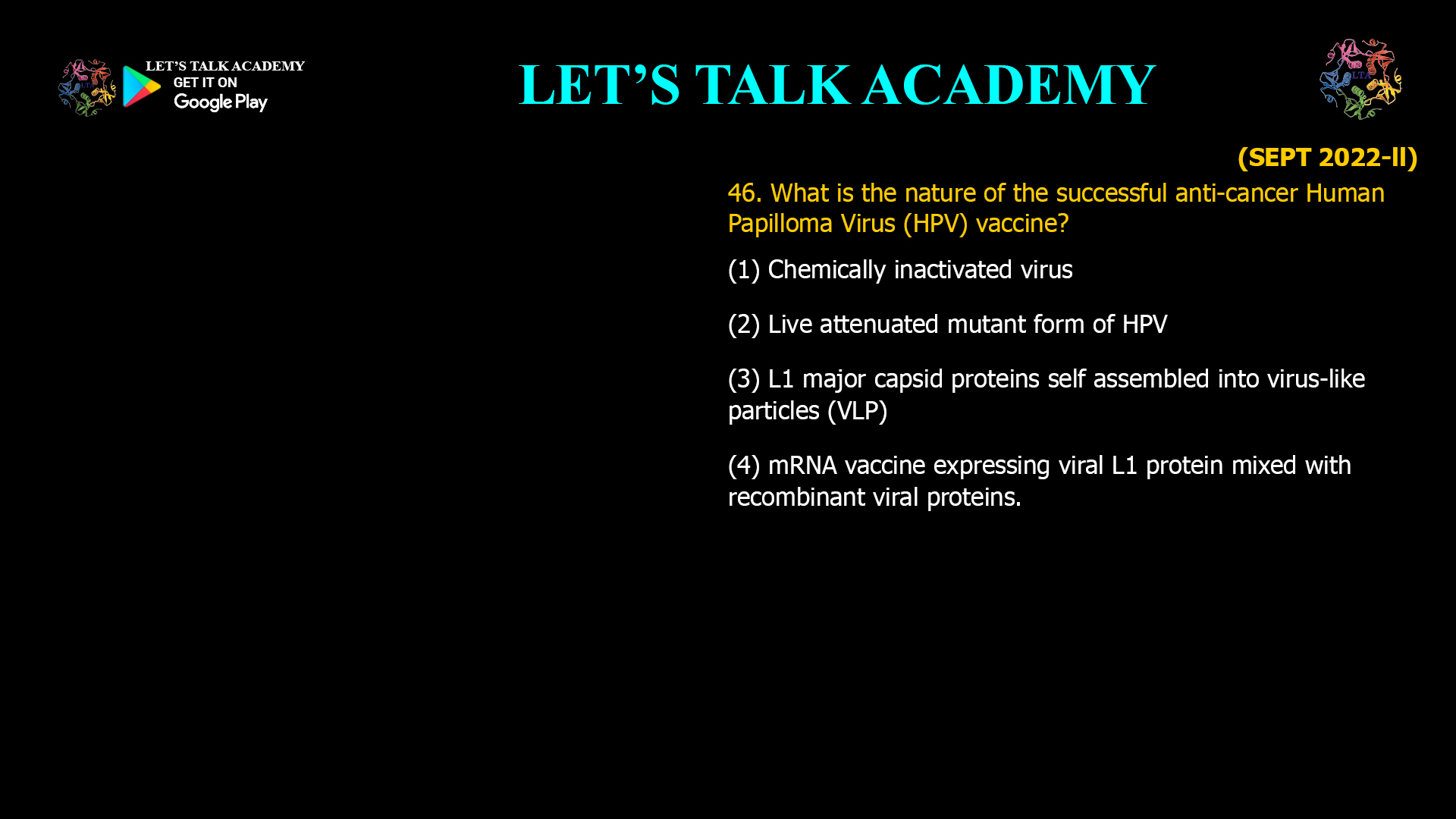
What is the nature of the successful anti-cancer Human Papilloma Virus (HPV) vaccine? (1) Chemically inactivated virus (2) Live attenuated mutant form of HPV (3) L1 major capsid proteins self assembled into virus-like particles (VLP) (4) mRNA vaccine expressing viral L1 protein mixed with recombinant viral proteins. The nature of the successful anti-cancer Human Papilloma […]

Cancer

Role of HPV E6 and E7 Oncoproteins in Cervical Cancer: Inactivation of p53 and Rb

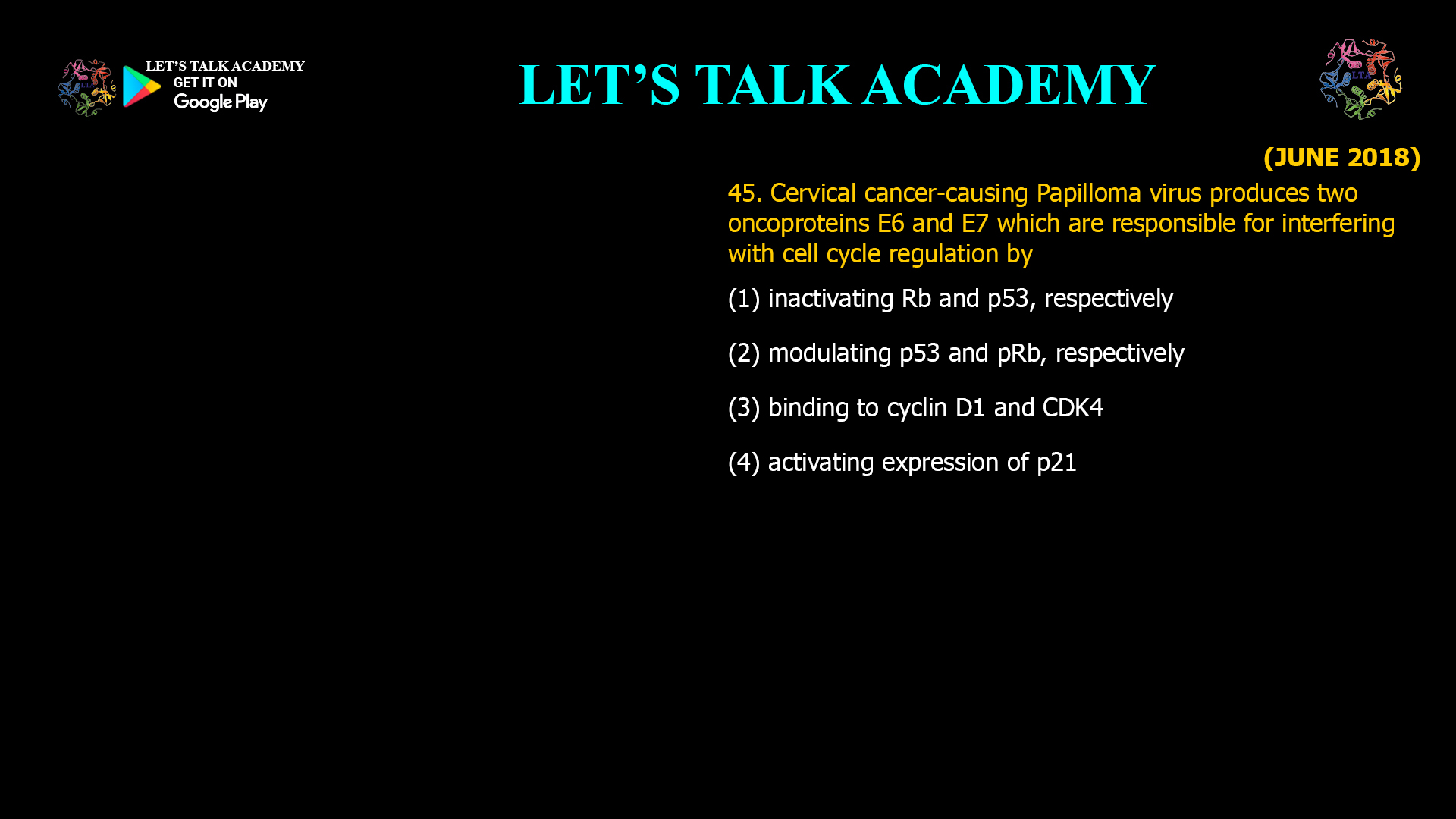
Cervical cancer-causing Papilloma virus produces two oncoproteins E6 and E7 which are responsible for interfering with cell cycle regulation by (1) inactivating Rb and p53, respectively (2) modulating p53 and pRb, respectively (3) binding to cyclin D1 and CDK4 (4)activating expression of p21 The cervical cancer-causing Papilloma virus produces two oncoproteins, E6 and E7, which […]

Cancer

Classification of Chemotherapy Drugs by Mechanism and Chemical Nature

44. Present-day cancer treatment uses many approaches. Beyond surgery and radiation treatment, which are most often employed in cases of larger, more discrete tumors, drug therapies can be used to target residual tumor cells and to attack dispersed cancers. Chemotherapies by anti-cancer drugs are mostly aimed at blocking DNA synthesis and cell division. A list […]

Latest Courses