
1. Introduction
In most genes, an individual normally possesses two copies or alleles:
- One inherited from the mother
- One inherited from the father
Usually, both copies can contribute to gene expression.
However, a special group of genes behaves differently. For these genes, expression depends on the parental origin of the allele.
This phenomenon is called genomic imprinting or parent-of-origin-specific gene expression.
For an imprinted gene:
Maternal allele may be active + paternal allele may be inactive
or
Paternal allele may be active + maternal allele may be inactive
Therefore, the organism can effectively use only one parental copy of a particular imprinted gene.
Genomic imprinting is an important example of epigenetic regulation because it changes gene activity without changing the DNA sequence itself.
2. Definition of Genomic Imprinting
Genomic imprinting is an epigenetic phenomenon in which the expression of certain genes depends on whether the gene was inherited from the mother or the father.
The important point is:
The DNA sequence of the maternal and paternal copies may be essentially the same, but their epigenetic marks can cause them to have different expression patterns.
3. Basic Concept
Consider an imprinted gene called Gene X.
Maternal expression
Maternal allele → Active
Paternal allele → Silenced
Therefore:
Gene X expression → Mainly from maternal allele
Paternal expression
Maternal allele → Silenced
Paternal allele → Active
Therefore:
Gene X expression → Mainly from paternal allele
This creates parent-of-origin-specific expression.
4. Why Is Imprinting Called Epigenetic?
Epigenetics refers to heritable or relatively stable changes in gene activity that occur without changing the underlying DNA sequence.
Major mechanisms include:
- DNA methylation
- Histone modifications
- Chromatin remodeling
- Regulatory non-coding RNAs
Genomic imprinting uses these mechanisms to establish different expression states on maternal and paternal alleles.
Therefore:
Same DNA sequence
↓
Different epigenetic marks
↓
Different gene activity
↓
Different developmental effects
5. Imprinted Genes Are Usually Monoallelically Expressed
Many imprinted genes show monoallelic expression.
This means that mainly one allele is expressed.
For example:
| Maternal allele | Paternal allele | Expression |
|---|---|---|
| Active | Inactive | Maternal |
| Inactive | Active | Paternal |
This is different from a typical non-imprinted gene, where both alleles may be expressed.
6. Parent-of-Origin Effect
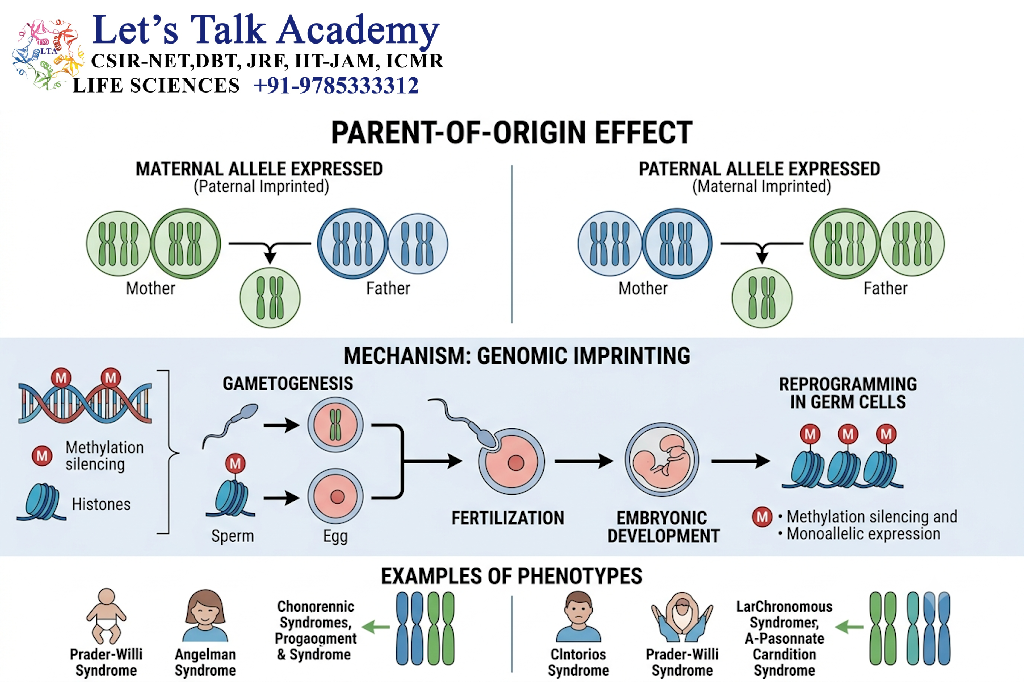
The most important characteristic of genomic imprinting is the parent-of-origin effect.
The biological effect of an allele can depend on whether it came from:
- Mother
- Father
For example, a mutation in an imprinted gene may produce a disease only when inherited from one particular parent.
Thus:
Same gene + different parental origin → potentially different phenotype
This is why inheritance patterns of imprinting disorders can be unusual.
7. How Imprinting Is Established
Imprints are established during gametogenesis, when sperm and eggs are being produced.
Male and female germ cells establish different epigenetic marks.
General process
Primordial germ cells
↓
Erasure of previous imprinting marks
↓
Development of germ cells
↓
Establishment of sex-specific imprinting marks
↓
Mature sperm or egg
↓
Fertilization
↓
Embryo inherits maternal and paternal imprints
The specific imprint depends on whether the allele passed through the maternal or paternal germline.
8. Erasure and Re-establishment of Imprints
An important feature of imprinting is that existing parental imprints are erased in developing germ cells and then new imprints are established according to the sex of the individual producing the gamete.
For example:
A person inherited an allele from their mother.
When that person’s germ cells develop, the previous parental imprint is erased and replaced with an imprint appropriate for that person’s germline.
Thus:
Old imprint → Erased
↓
New germline-specific imprint established
This is essential for imprinting to function correctly across generations.
9. DNA Methylation
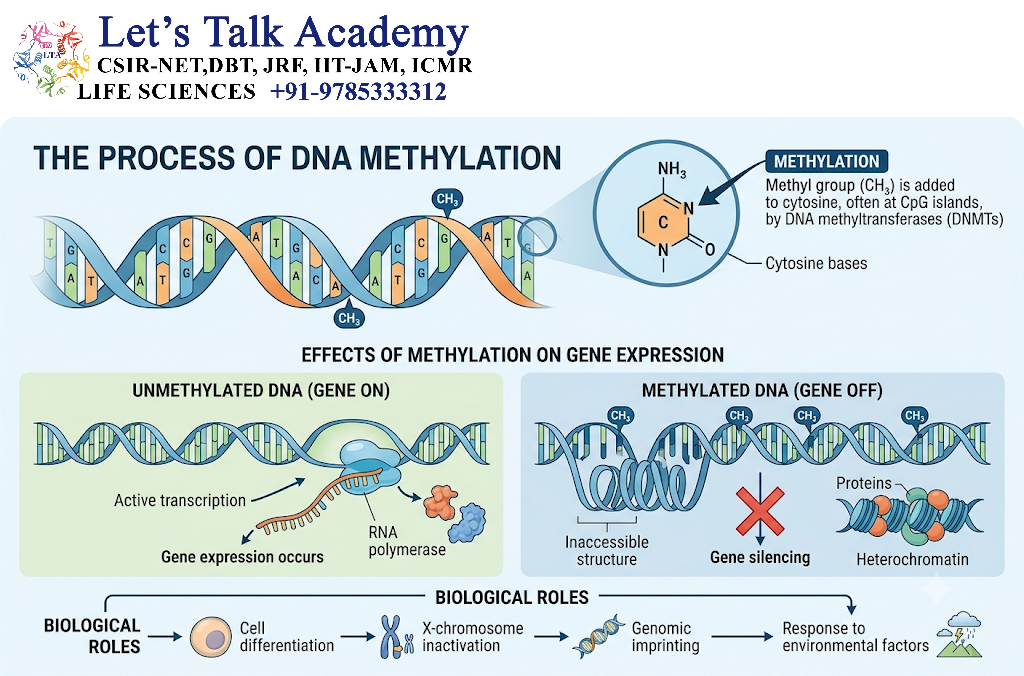
DNA methylation is one of the major mechanisms involved in genomic imprinting.
A methyl group is added to cytosine residues, commonly at CpG sites.
This can alter the accessibility and activity of nearby regulatory regions.
Simplified mechanism
DNA methylation
↓
Changes chromatin/regulatory environment
↓
Transcription reduced or prevented
↓
Gene silencing
Therefore, methylation can contribute to the inactive state of an imprinted allele.
However, imprinting is not simply “methylation everywhere”; it involves specific regulatory regions and additional chromatin mechanisms.
10. Imprinting Control Regions
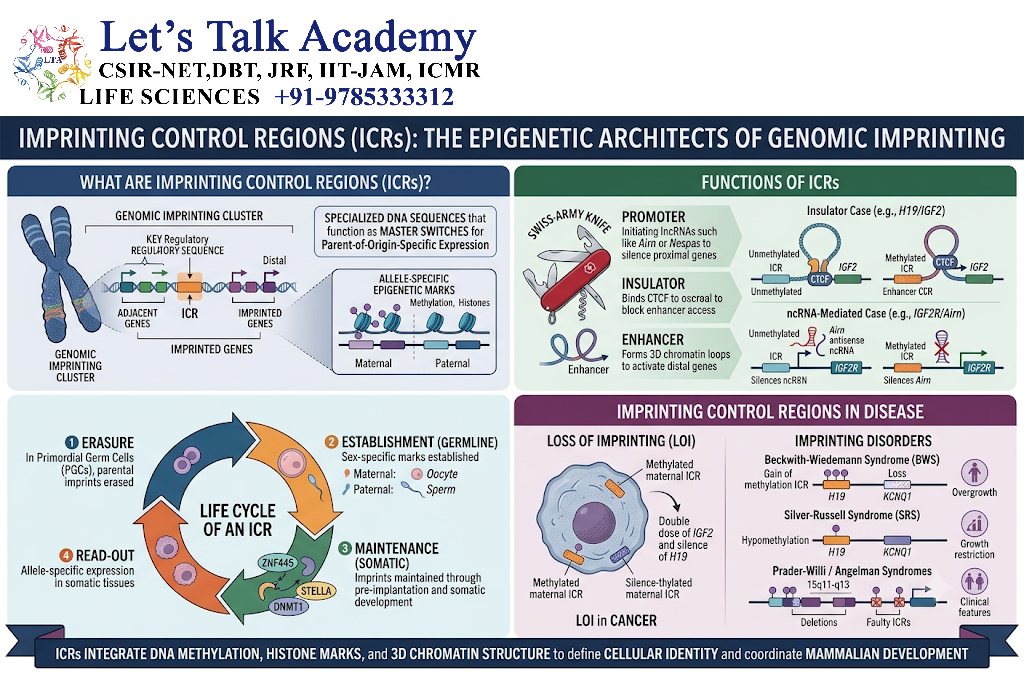
Many imprinted gene clusters contain specialized regulatory regions called imprinting control regions (ICRs).
These regions carry parent-specific epigenetic states and help control expression of nearby genes.
General mechanism
Maternal ICR state
↓
Specific gene expression pattern
or
Paternal ICR state
↓
Different gene expression pattern
Thus, an ICR can coordinate the expression of multiple genes within an imprinted genomic region.
11. Differentially Methylated Regions
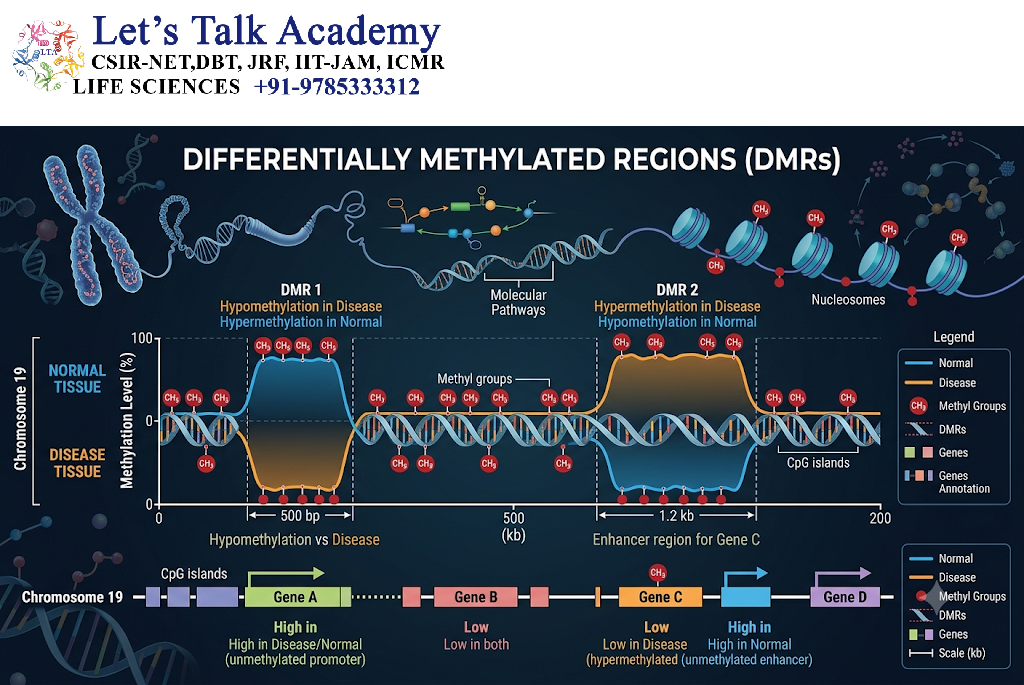
Differentially methylated regions (DMRs) are genomic regions that show different DNA methylation patterns depending on parental origin.
For example:
Maternal chromosome → methylated at a particular DMR
Paternal chromosome → unmethylated at that DMR
This difference can determine which genes are expressed.
12. Histone Modifications
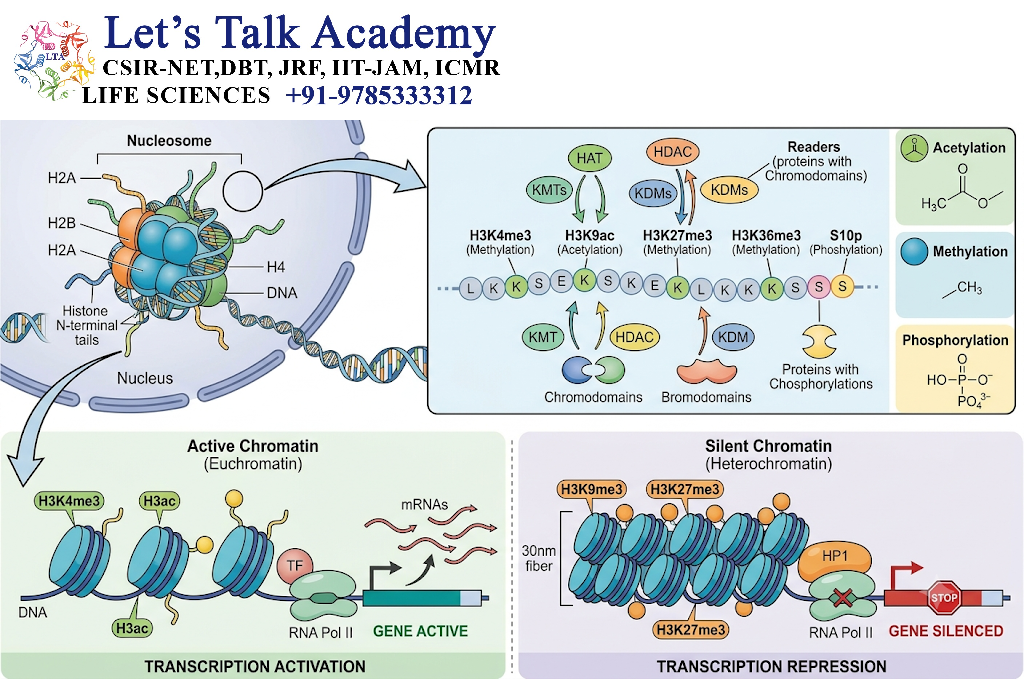
Histones are proteins around which DNA is organized.
Chemical modifications of histones can influence chromatin structure and gene expression.
Important modifications can include:
- Histone acetylation
- Histone methylation
- Other histone modifications
Some combinations promote transcription, while others promote transcriptional repression.
Therefore:
DNA methylation + histone modifications + chromatin organization
can work together to maintain an imprinted state.
13. Chromatin Structure
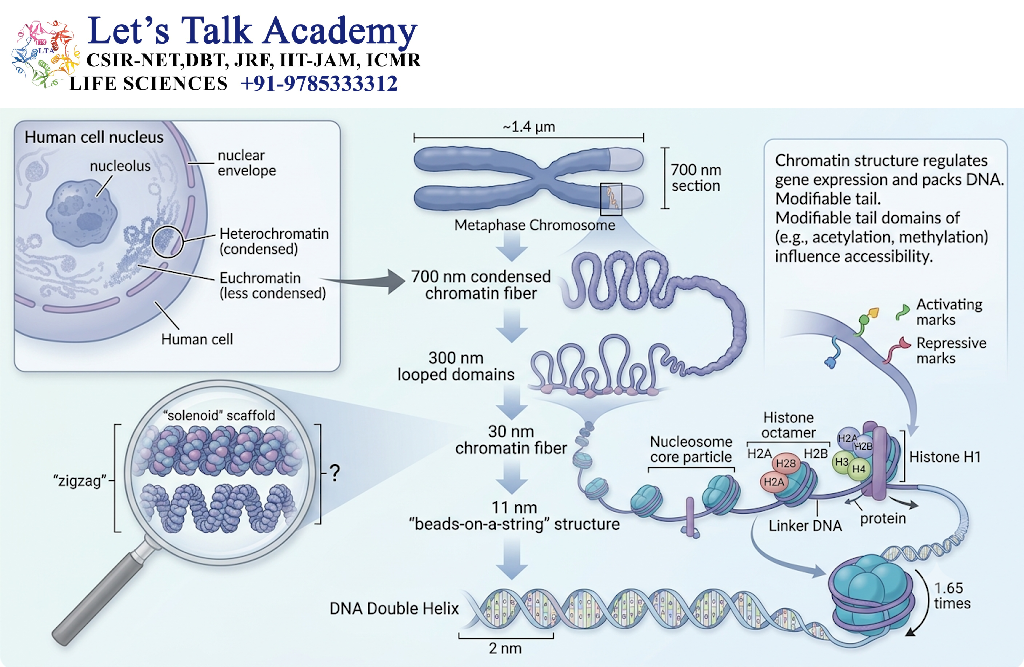
Gene expression depends partly on whether DNA is accessible to transcription machinery.
Open chromatin
DNA is relatively accessible.
↓
Gene expression can occur.
Condensed/repressive chromatin
DNA is less accessible.
↓
Gene expression is reduced or silenced.
Imprinting can involve establishment of different chromatin states on maternal and paternal chromosomes.
14. Non-Coding RNAs
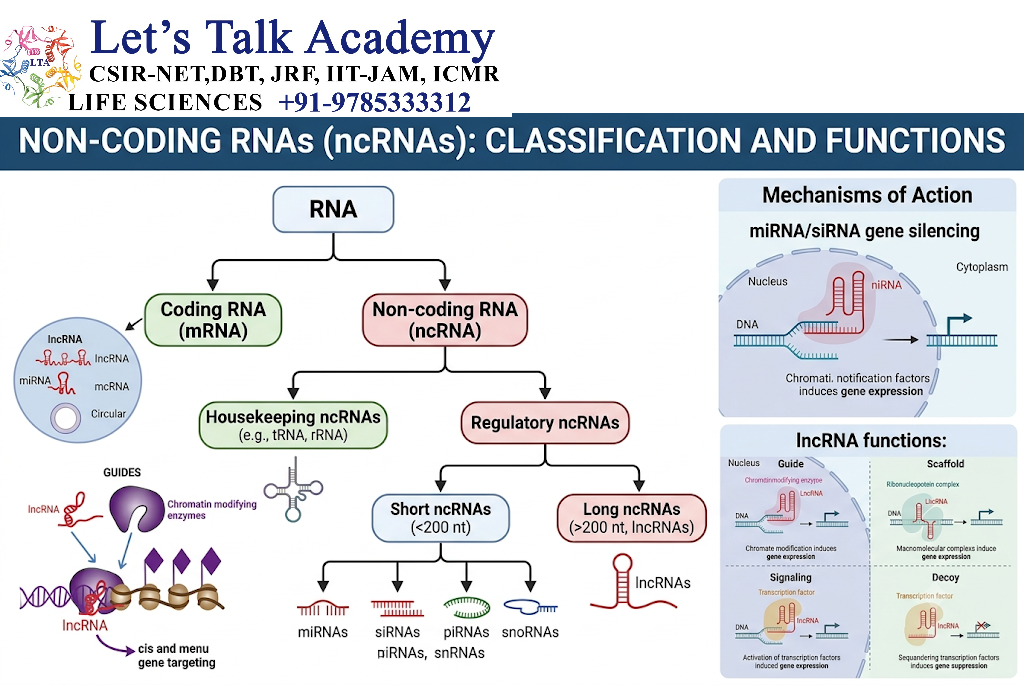
Some imprinted genomic regions produce non-coding RNAs that participate in regulation of nearby genes.
These RNAs may influence:
- Chromatin organization
- Transcription
- RNA stability
- Gene silencing
Therefore, imprinting can involve multiple layers of epigenetic regulation.
15. Imprinting and Fertilization
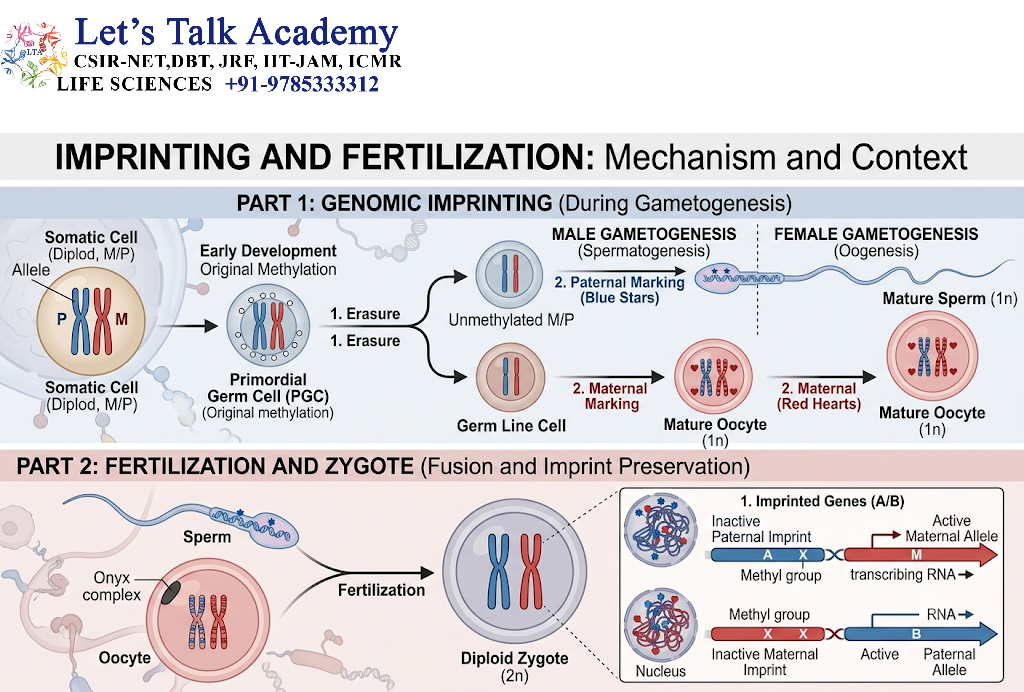
During fertilization, the embryo receives:
Maternal genome + paternal genome
The two genomes carry different imprinting patterns.
After fertilization, many epigenetic marks undergo extensive remodeling, but important imprinting marks are protected or appropriately maintained so that parental-origin information is retained.
Simplified sequence
Egg
Sperm
↓
Zygote
↓
Maintenance of critical parental imprints
↓
Parent-specific gene expression
↓
Normal development
16. Imprinting and Embryonic Development
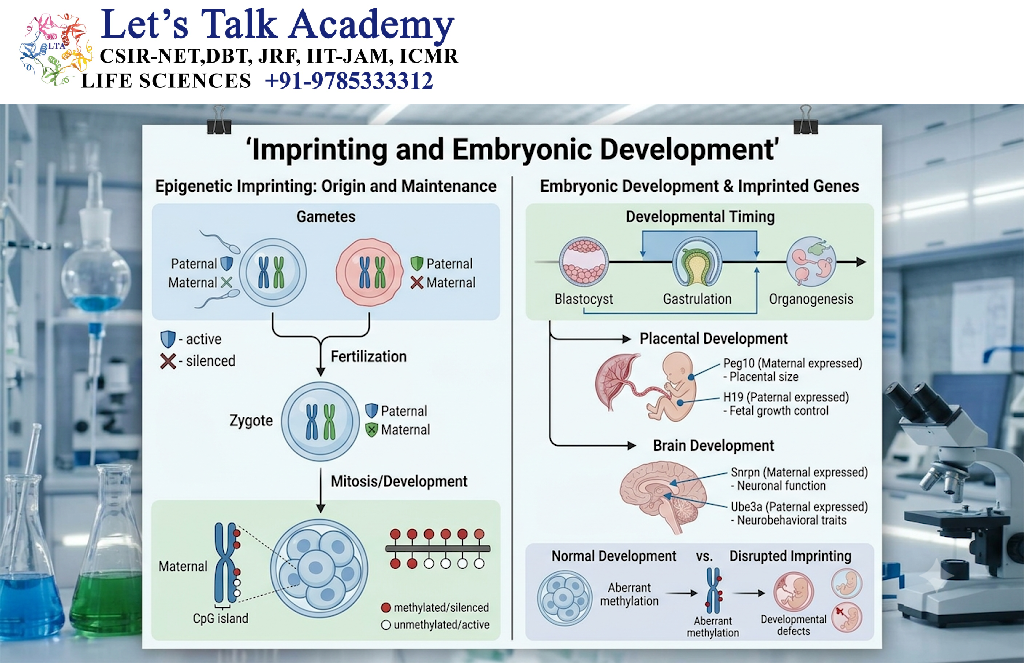
Genomic imprinting is particularly important during development because imprinted genes regulate processes such as:
- Embryonic growth
- Placental development
- Nutrient allocation
- Cell proliferation
- Differentiation
- Tissue development
- Metabolism
Incorrect imprinting can therefore cause developmental abnormalities.
17. Imprinting and Placental Development
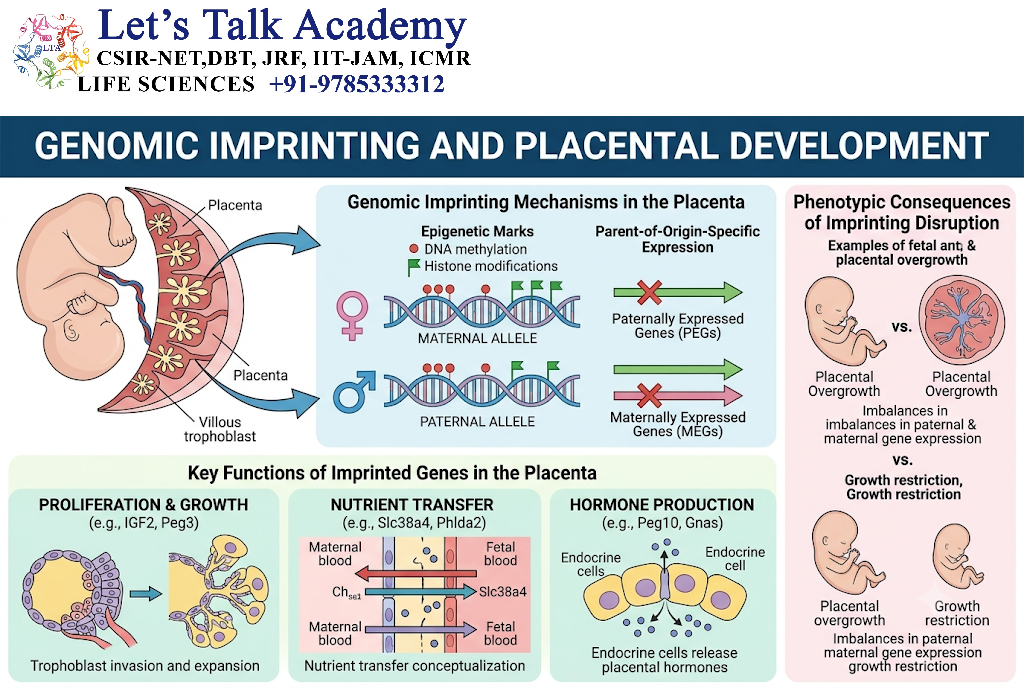
The placenta is an important tissue in which many imprinted genes function.
Imprinted genes can regulate:
- Placental growth
- Nutrient transfer
- Fetal growth
- Maternal-fetal interactions
This has contributed to the idea that parental genomes can have different developmental interests regarding fetal growth and resource allocation.
18. Genomic Imprinting and the Conflict Theory
A well-known evolutionary explanation is the parental conflict hypothesis or kinship theory of genomic imprinting.
According to this evolutionary framework, maternally and paternally expressed genes may sometimes have different effects on resource allocation between mother and offspring.
In simplified terms:
- Some paternal alleles may favor greater fetal growth or resource acquisition.
- Some maternal alleles may favor regulation of fetal growth and resource use.
This is a model used to explain the evolution of imprinting, although the biological functions of individual imprinted genes are more complex.
19. Important Examples of Imprinted Genes
Several well-studied genes demonstrate genomic imprinting.
IGF2
IGF2 (Insulin-like Growth Factor 2) is a major example.
In many human tissues, the paternal allele is preferentially expressed while the maternal allele is generally silenced.
IGF2 promotes growth-related processes.
H19
H19 is a long non-coding RNA gene located in the same genomic region as IGF2.
Its expression pattern is complementary to IGF2 in the classic imprinting model.
The IGF2/H19 region is therefore an important example of coordinated imprinting control.
20. IGF2/H19 Imprinting Mechanism
The IGF2/H19 region demonstrates how an imprinting control region can regulate neighboring genes.
A simplified model:
Paternal chromosome
ICR methylated
↓
Insulator activity altered
↓
IGF2 expression promoted
↓
H19 expression suppressed
Maternal chromosome
ICR unmethylated
↓
Insulator function maintained
↓
IGF2 restricted
↓
H19 expressed
This is a simplified representation of a more detailed regulatory system involving CTCF and chromatin organization.
21. Imprinting and Growth Regulation
Imprinted genes often have important roles in controlling growth.
For example:
IGF2 → growth-promoting activity
Therefore, inappropriate activation or loss of imprinting can disturb normal growth regulation.
This demonstrates why imprinting is important during embryonic development.
22. Prader-Willi Syndrome
Prader-Willi syndrome (PWS) is a well-known disorder involving abnormal expression of imprinted genes in the chromosome 15q11-q13 region.
In the typical molecular mechanism, there is loss of expression of paternally expressed genes in this region.
Possible mechanisms include:
- Deletion of the paternal region
- Maternal uniparental disomy
- Imprinting defects
Common features can include:
- Hypotonia during infancy
- Feeding difficulties in early life followed by characteristic hyperphagia
- Developmental and learning difficulties
- Short stature or growth abnormalities
- Hypogonadism
The exact clinical presentation varies.
23. Angelman Syndrome
Angelman syndrome also involves the chromosome 15q11-q13 imprinted region but results from loss of function of the maternally expressed UBE3A in relevant neurons.
Mechanisms can include:
- Maternal deletion
- Paternal uniparental disomy
- Imprinting defects
- Pathogenic variants affecting UBE3A
Common features include:
- Developmental delay
- Severe speech impairment
- Movement or balance problems
- Characteristic behavioral features
- Seizures in many affected individuals
Thus, Prader-Willi syndrome and Angelman syndrome demonstrate how parental origin matters.
24. Prader-Willi vs Angelman Syndrome
| Feature | Prader-Willi syndrome | Angelman syndrome |
|---|---|---|
| Region | 15q11-q13 | 15q11-q13 |
| Typical affected parental contribution | Loss of paternal gene expression | Loss of maternal UBE3A expression in neurons |
| Important mechanism | Imprinting defect/deletion/UPD | Imprinting defect/deletion/UPD/UBE3A alteration |
| Major developmental effects | Growth, feeding and endocrine abnormalities | Neurological and developmental abnormalities |
The important concept is:
Same chromosomal region + different parental origin → different disorder
25. Uniparental Disomy
Uniparental disomy (UPD) occurs when both copies of a chromosome or chromosomal region are inherited from one parent and none from the other parent.
Normal
Mother → one copy
Father → one copy
Uniparental disomy
Mother → two copies
Father → zero copies
or the reverse.
UPD can cause disease when the affected region contains imprinted genes because normal parent-specific expression is disrupted.
26. Loss of Imprinting
Loss of imprinting (LOI) occurs when an allele that should normally be silenced becomes active or when normal parent-specific regulation is otherwise disrupted.
For example:
Normally
Maternal allele → ON
Paternal allele → OFF
Loss of imprinting
Maternal allele → ON
Paternal allele → ON
This can produce excessive gene dosage.
Loss of imprinting has also been studied in cancer biology.
27. Imprinting and Cancer
Abnormal imprinting can contribute to cancer through altered expression of growth-regulating genes.
Mechanisms can include:
- Loss of imprinting
- Abnormal DNA methylation
- Epigenetic silencing
- Abnormal activation of growth-promoting genes
For example, abnormal regulation of the IGF2/H19 region has been observed in several cancers.
Therefore:
Normal imprinting → controlled gene expression
Abnormal imprinting → altered growth regulation → possible disease
28. Imprinting and Dosage
Because only one parental allele may be active, imprinted genes are particularly sensitive to changes in gene dosage.
Consider:
Maternal allele = active
Paternal allele = inactive
If the active maternal allele is deleted:
No normal expression
Even though another copy exists, it may be epigenetically silenced.
This explains why deletions involving imprinted regions can produce unusual inheritance patterns.
29. Imprinting and Developmental Timing
Imprinting is especially important during:
- Gametogenesis
- Fertilization
- Early embryonic development
- Placental development
- Growth
- Organ development
The timing of establishment, maintenance and erasure of epigenetic marks is highly regulated.
30. Imprinting and Germ Cells
Germ cells are particularly important because imprinting information must be reset between generations.
General cycle
Parental imprint
↓
Transmission to offspring
↓
Imprint maintained during development
↓
Erasure in developing germ cells
↓
New sex-specific imprint established
↓
Transmission to next generation
This allows the same genomic region to carry different imprinting states depending on whether it passes through sperm or eggs.
31. Imprinting and Epigenetic Reprogramming
Early embryonic development involves extensive epigenetic reprogramming.
Many epigenetic marks are erased or remodeled.
However, imprinting marks must be appropriately protected or re-established to preserve parent-of-origin information.
Therefore:
Global epigenetic reprogramming
Maintenance of essential imprints
↓
Normal embryonic development
32. Imprinting and Stem Cells
Imprinting is important in stem-cell biology because abnormal imprinting can affect:
- Growth
- Differentiation
- Developmental potential
- Placental-like behavior
- Gene dosage
When stem cells are cultured or experimentally reprogrammed, imprinting patterns may sometimes become altered.
Therefore, imprinting status is an important consideration in developmental and regenerative biology.
33. Imprinting and Assisted Reproductive Technologies
Because imprinting is established and maintained through precise epigenetic mechanisms, disturbances in epigenetic regulation have been investigated in relation to assisted reproductive technologies.
However, imprinting disorders remain rare, and the relationship between assisted reproduction and imprinting is complex.
The key biological principle is that normal development requires accurate establishment and maintenance of parental epigenetic information.
34. Imprinting vs Ordinary Gene Regulation
| Feature | Ordinary gene regulation | Genomic imprinting |
|---|---|---|
| Alleles | Often both can be expressed | One parental allele may be preferentially expressed |
| Parent of origin | Usually not decisive | Critical |
| Main mechanisms | Transcription factors, signaling, chromatin | Epigenetic marks linked to parental origin |
| Expression | Can vary by tissue and condition | Often parent-specific |
| Inheritance pattern | Usually conventional | Can show unusual parent-of-origin effects |
35. Genomic Imprinting vs Mutation
These are fundamentally different.
Mutation
A change in the DNA sequence.
Example:
A → G
Imprinting
A change in gene activity caused by epigenetic regulation without changing the underlying DNA sequence.
Example:
DNA sequence unchanged
↓
DNA methylation/chromatin changes
↓
Gene silenced
Thus:
Mutation = DNA sequence change
Imprinting = parent-specific epigenetic regulation
36. Imprinting vs X-Chromosome Inactivation
These are also different phenomena.
| Genomic imprinting | X-chromosome inactivation |
|---|---|
| Depends on parental origin | Primarily associated with dosage compensation in XX cells |
| Can affect autosomal and X-linked genes | Involves an entire X chromosome in typical female somatic cells |
| Usually affects specific genes/regions | Broadly silences one X chromosome |
| Maintains parent-specific expression | Balances X-linked gene dosage |


