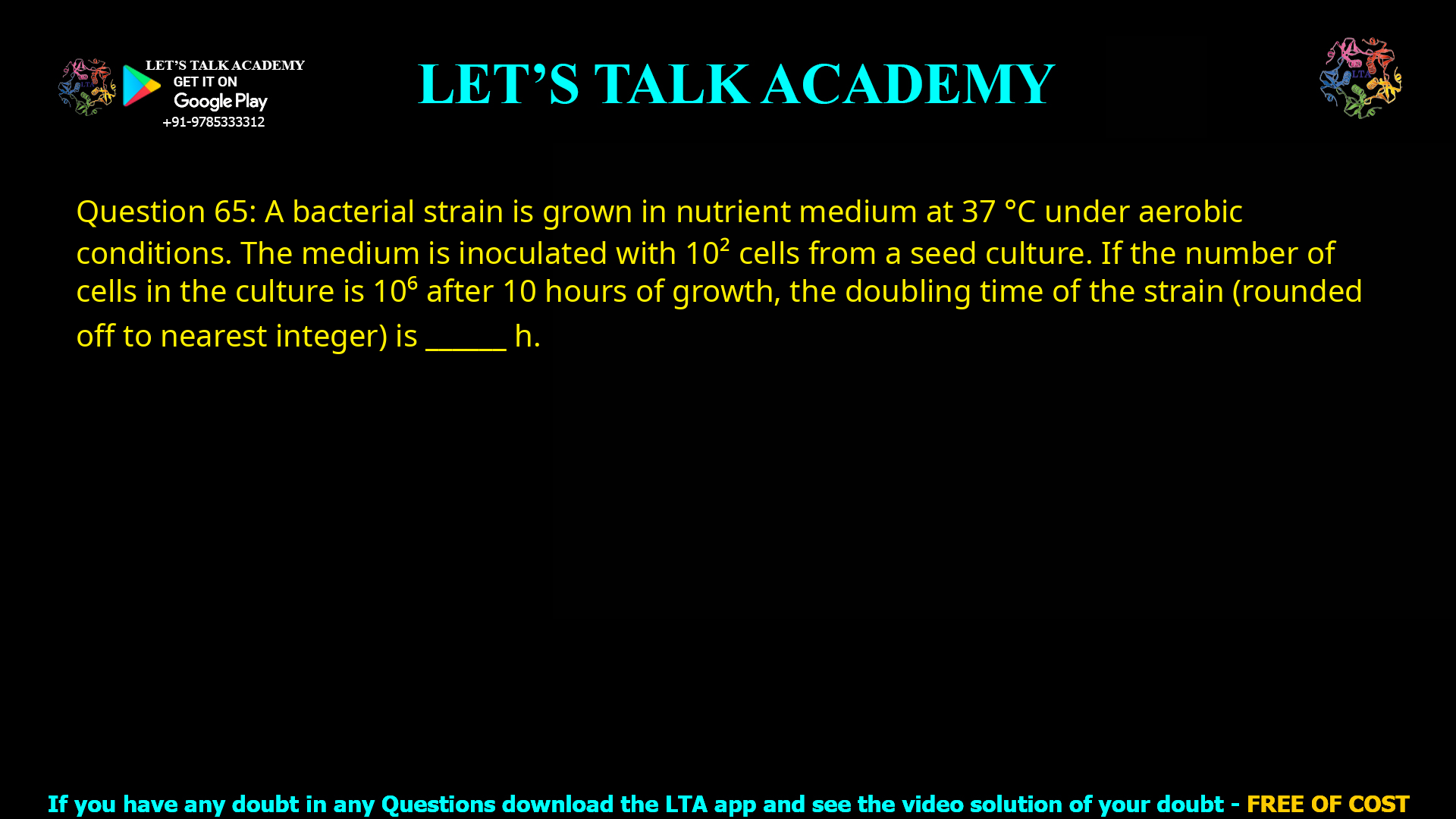

Q.65 A bacterial strain is grown in nutrient medium at 37 °C under aerobic conditions. The medium is inoculated with 102 cells from a seed culture. If the number of cells in the culture is 105 after 10 hours of growth, the doubling time of the strain (rounded off to nearest integer) is __________ h.
Bacterial Doubling Time Calculation

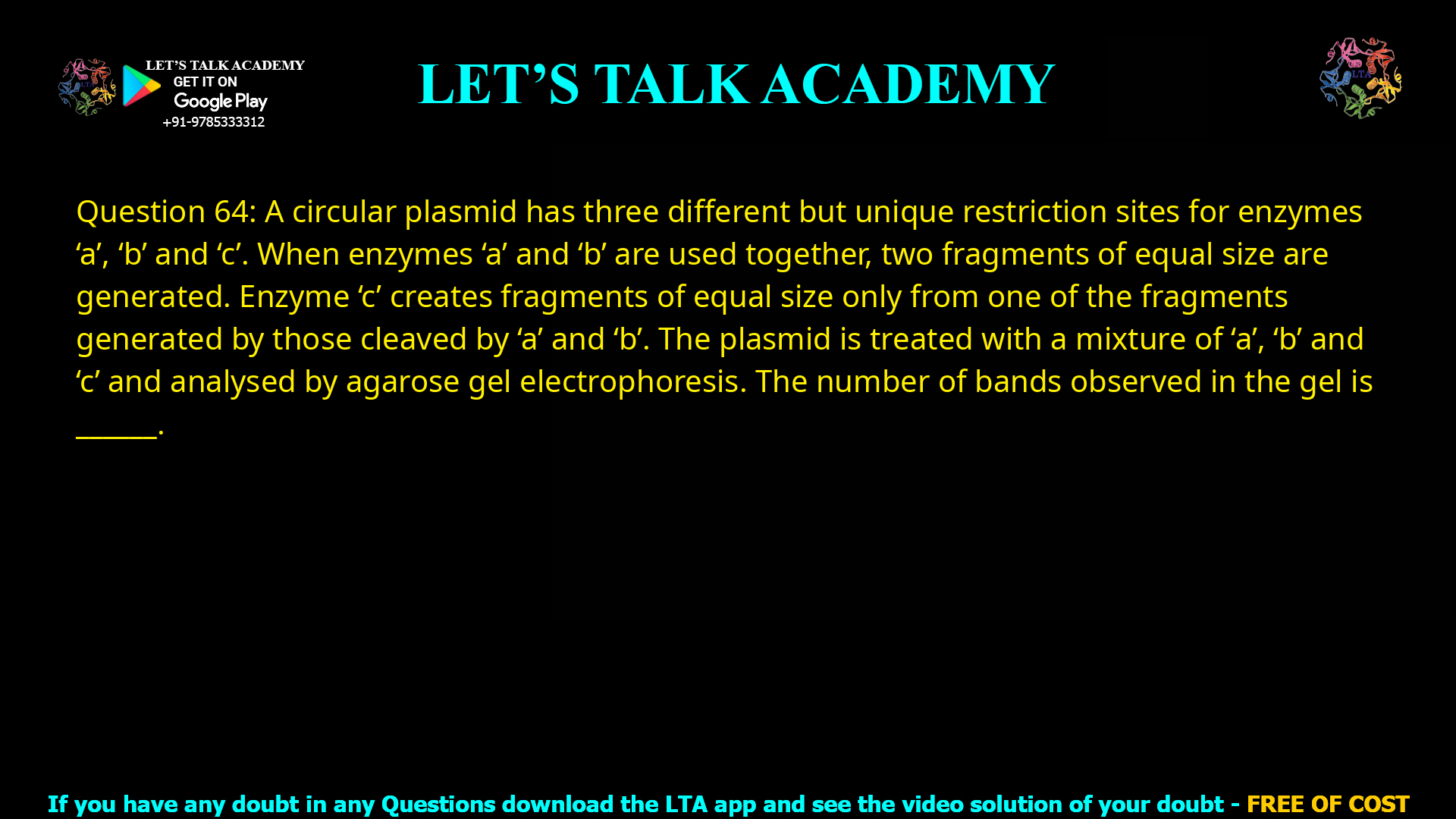
Q.64 A circular plasmid has three different but unique restriction sites for enzymes ‘a’, ‘b’ and ‘c.’ When enzymes ‘a’ and ‘b’ are used together, two fragments of equal size are generated. Enzyme ‘c’ creates fragments of equal size only from one of the fragments generated by those cleaved by ‘a’ and ‘b’. The plasmid is treated with a mixture of ‘a’, ‘b’ and ‘c’ and analysed by agarose gel electrophoresis. The number of bands observed in the gel is __________.

Plasmid Triple Digest

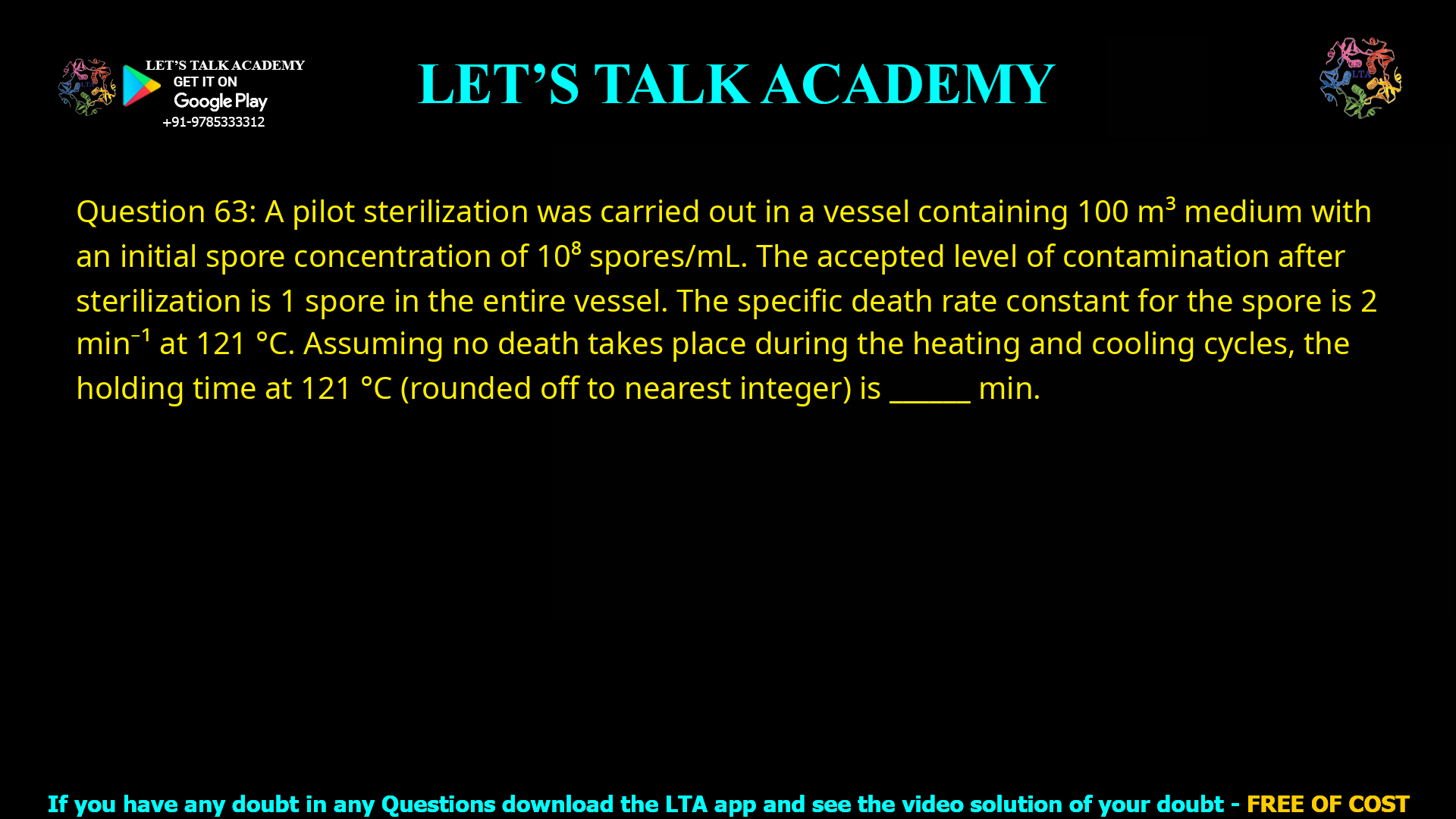
Q.63 A pilot sterilization was carried out in a vessel containing 100 m3 medium with an initial spore concentration of 108 spores/ml. The accepted level of contamination after sterilization is 1 spore in the entire vessel. The specific death rate constant for the spore is 2 min−1 at 121 °C. Assuming no death takes place during the heating and cooling cycles, the holding time at 121 °C (rounded off to nearest integer) is ____________ min.

Calculate Holding Time for Sterilization

Heat Generation in Yeast Growth

Q.61 Consider a piston-cylinder assembly shown in the figure below. The walls of the cylinder are insulated. The cylinder contains 1 mole of an ideal gas at 300 K and the piston is held initially at the position z₁ using a stopper. After the stopper is removed, the piston suddenly rises against atmospheric pressure (1.013 × 10⁵ Pa) to the new position z₂ where it is held by another stopper. The heat capacity (CV) of the gas is 12.5 J mol−1 K−1. The cross-sectional area of the cylinder is 10−3 m2. Assume the piston is weightless and frictionless. If z₂ − z₁ = 1 m, the final temperature of the gas (rounded off to nearest integer) is ___________ K.

Adiabatic Expansion in a Piston Cylinder

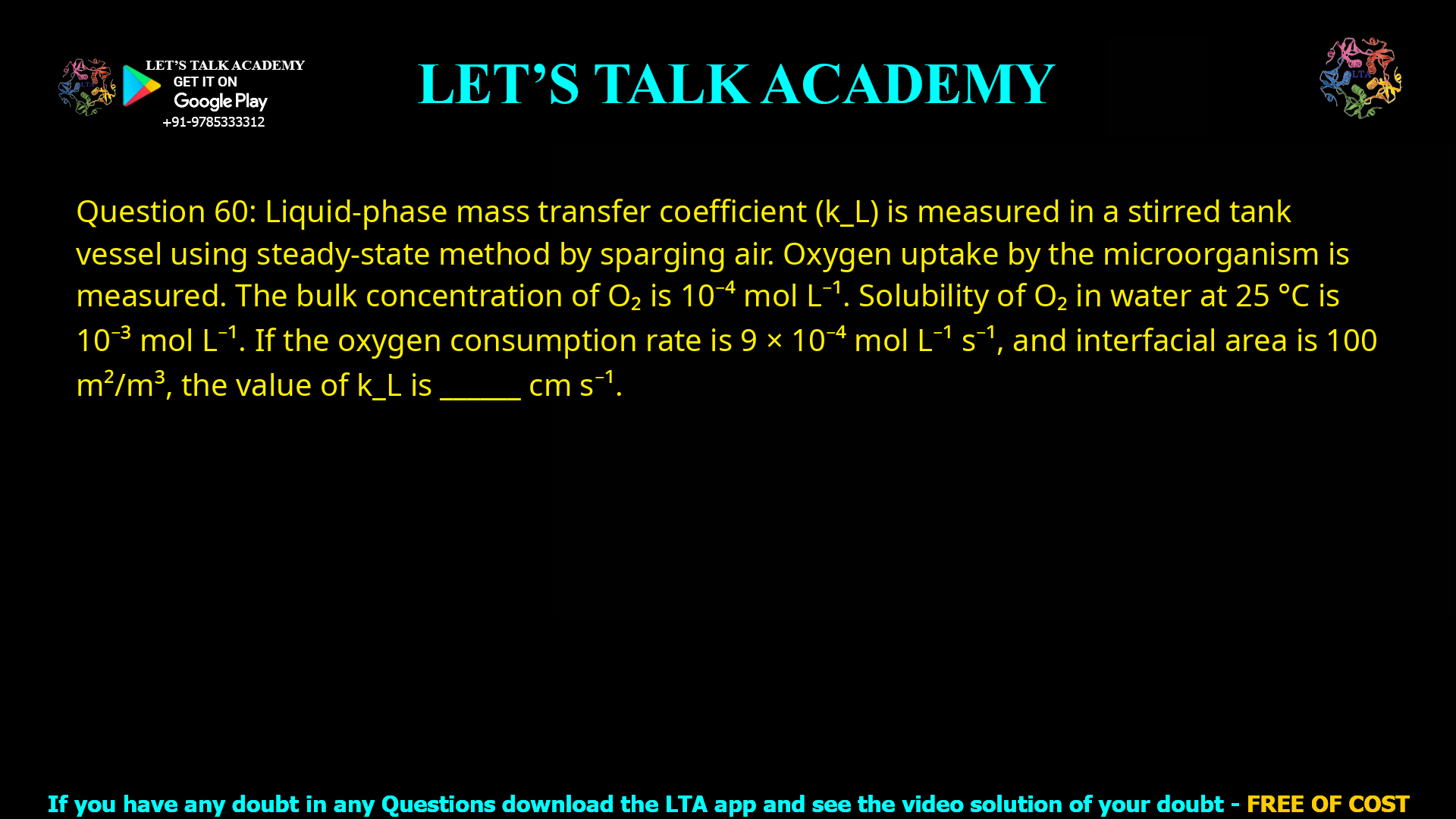
Q.60 Liquid-phase mass transfer coefficient (kL) is measured in a stirred tank vessel using steady-state method by sparging air. Oxygen uptake by the microorganism is measured. The bulk concentration of O2 is 10−4 mol L−1. Solubility of O2 in water at 25 °C is 10−3 mol L−1. If the oxygen consumption rate is 9 × 10⁻⁴ mol L−1 s−1 and interfacial area is 100 m2 / m3, the value of kL is __________ cm s−1.

Liquid Phase Mass Transfer Coefficient kL Calculation

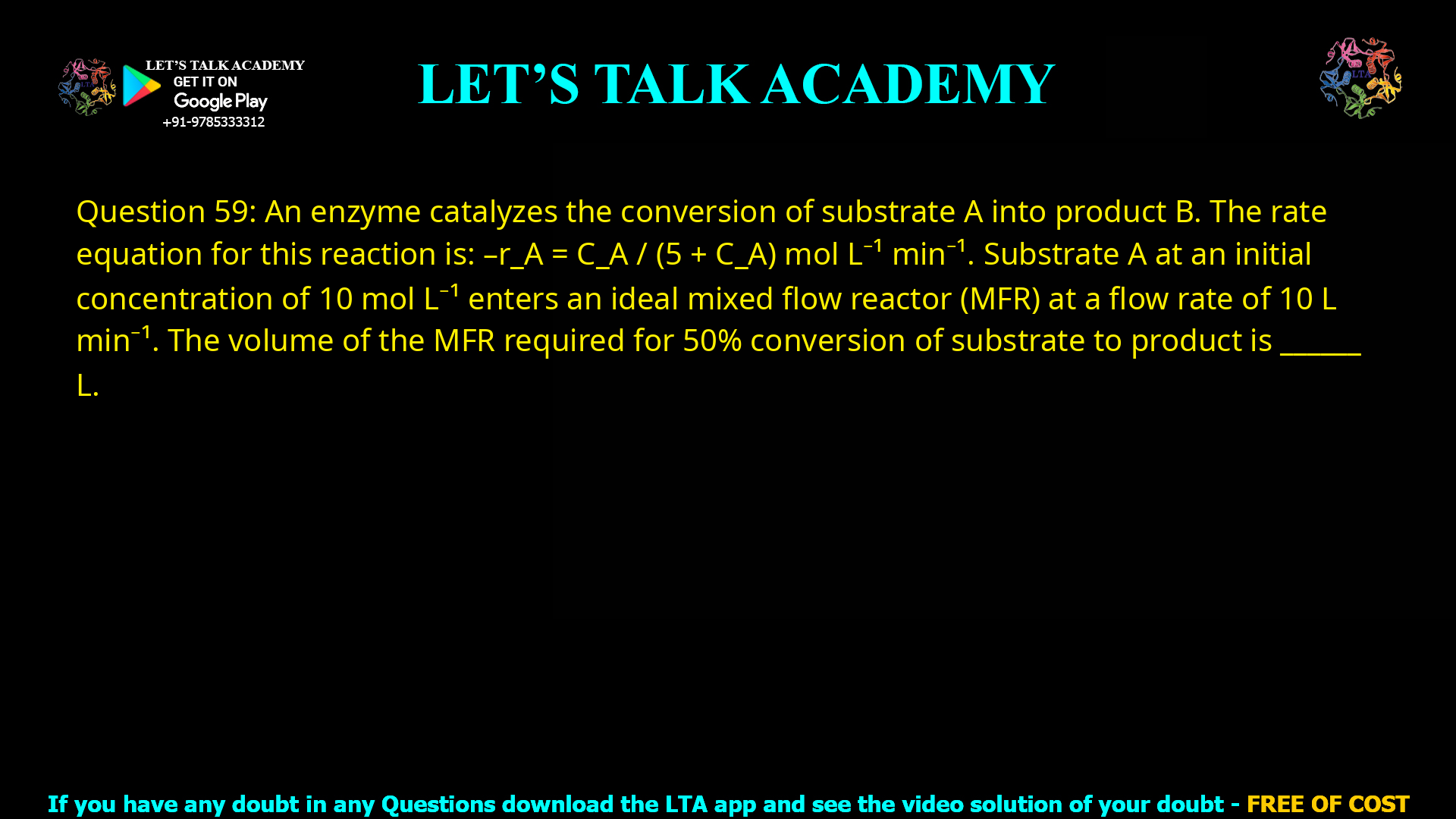
Q.59 An enzyme catalyzes the conversion of substrate A into product B. The rate equation for this reaction is −rA = CA / (5 + CA) mol L−1 min−1 Substrate A at an initial concentration of 10 mol L−1 enters an ideal mixed flow reactor (MFR) at a flow rate of 10 L min−1. The volume of the MFR required for 50% conversion of substrate to product is ___________ L.

MFR Volume Calculation

Q.58 The amount of biomass in a reactor at the end of the batch process is 50 g. Fed-batch operation is initiated by feeding the substrate solution at a constant rate of 1 L h−1. The concentration of substrate in the feed is 50 g L−1. The maximum biomass yield (YXSM) is 0.4 g biomass / g substrate. Assuming the system is at quasi-steady state, the maximum amount of biomass after 5 h of feeding is __________________ g.

Fed-Batch Biomass Calculation at Quasi-Steady State

Q.57 Figure below depicts simplified metabolic and transport reactions taking place in the production of B from A in a cell. The subscript ‘i’ refers to intracellular metabolites. rj is the jth reaction flux in g / (g dry mass · h). Under pseudo-steady-state condition, the following reaction fluxes are available. r1 = 4, r3 = 1 and r6 = 1. The transport flux of B, r4, is __________________ g / (g dry mass · h).

Metabolic Flux Balance Problem

Q.56 For x₁ > 0 and x₂ > 0, the value of limx₁ → x₂ (x₁ − x₂) / [x₂ ln(x₁ / x₂)] is ___________.

Mastering the Limit: limx1→x2 x2ln(x1/x2)/(x1−x2)

Q.55 Consider a random variable X with mean μX = 0.1 and variance σX² = 0.2. A new random variable Y = 2X + 1 is defined. The variance of the random variable Y (rounded off to one decimal place) is __________________.

Unlocking Variance in Linear Transformations

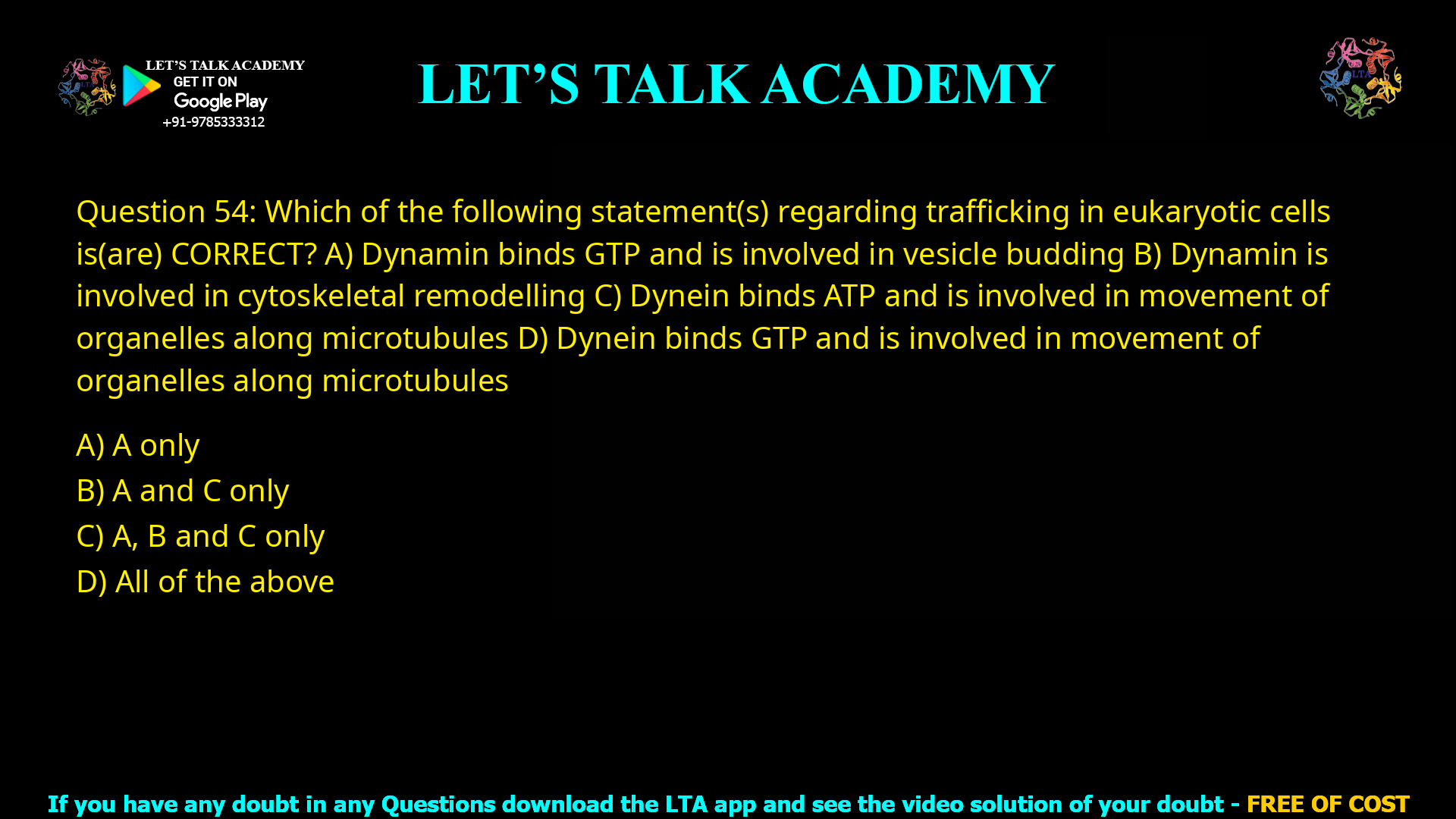
Q.54 Which of the following statement(s) regarding trafficking in eukaryotic cells is(are) CORRECT? (A) Dynamin binds GTP and is involved in vesicle budding (B) Dynamin is involved in cytoskeletal remodelling (C) Dynein binds ATP and is involved in movement of organelles along microtubules (D) Dynein binds GTP and is involved in movement of organelles along microtubules

Eukaryotic Cell Trafficking

Q.53 Introduction of foreign genes into plant cells can be carried out using (A) Agrobacterium (B) CaCl2 mediated plasmid uptake (C) Electroporation (D) Gene gun

Agrobacterium-Mediated Gene Transfer in Plants

Q.52 Emerging viruses such as SARS-CoV2 cause epidemics. Which of the following process(es) contribute to the rise of such viruses? (A) Mutation of existing virus (B) Jumping of existing virus from current to new hosts (C) Spread of virus in the new host population (D) Replication of virus outside a host

Emerging Viruses Like SARS-CoV-2

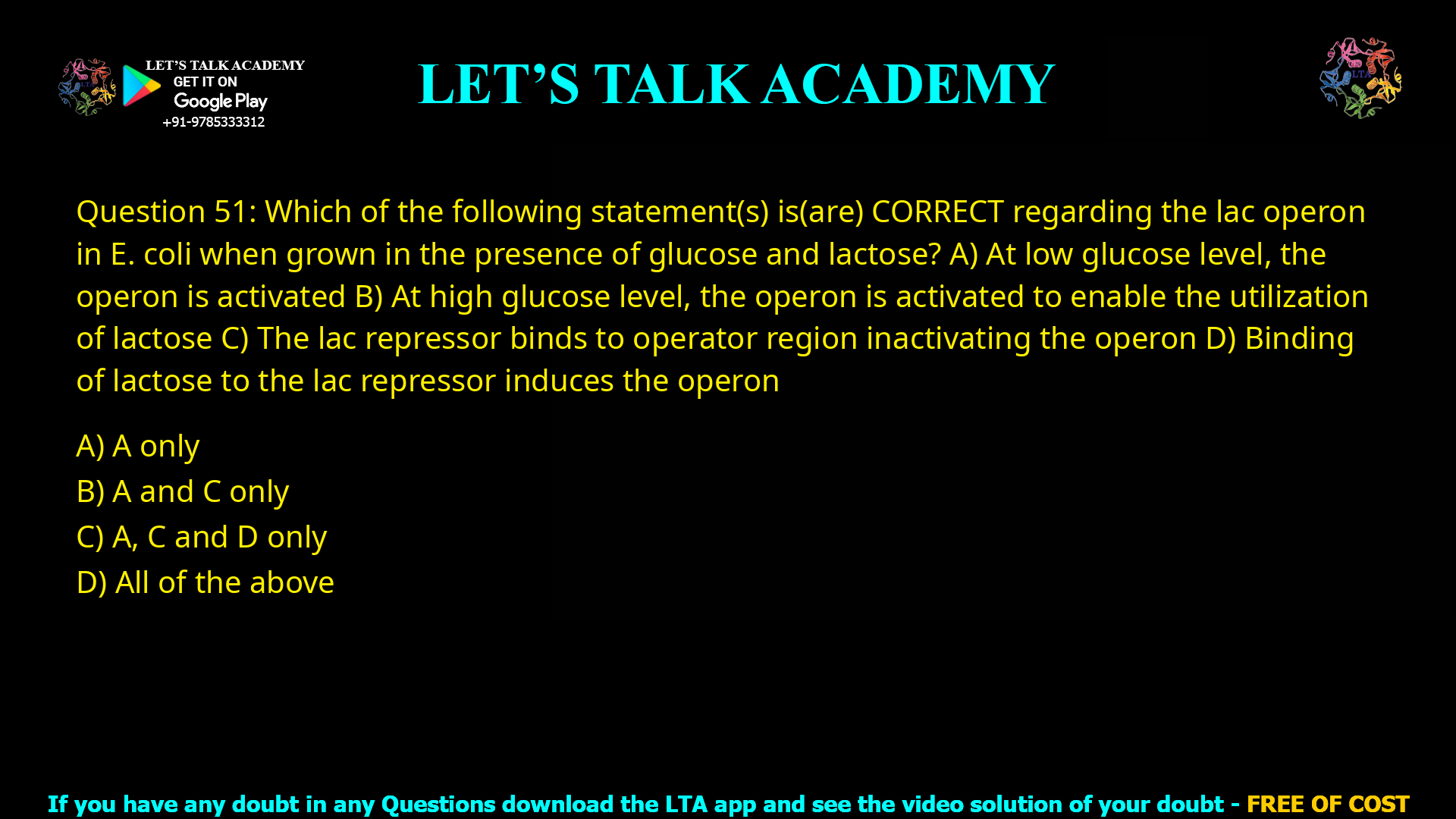
Q.51 Which of the following statement(s) is(are) CORRECT regarding the lac operon in E. coli when grown in the presence of glucose and lactose? (A) At low glucose level, the operon is activated (B) At high glucose level, the operon is activated to enable the utilization of lactose (C) The lac repressor binds to operator region inactivating the operon (D) Binding of lactose to the lac repressor induces the operon

Lac Operon in E. coli

Q.50 Which of the following plot(s) is(are) CORRECT for an enzyme that obeys Michaelis-Menten kinetics, assuming [𝑆] ≪ 𝐾m? [𝑆] is the concentration of the substrate, 𝐾m is the Michaelis constant, and v0 is the initial reaction velocity.

Correct Plot for Michaelis–Menten Enzymes

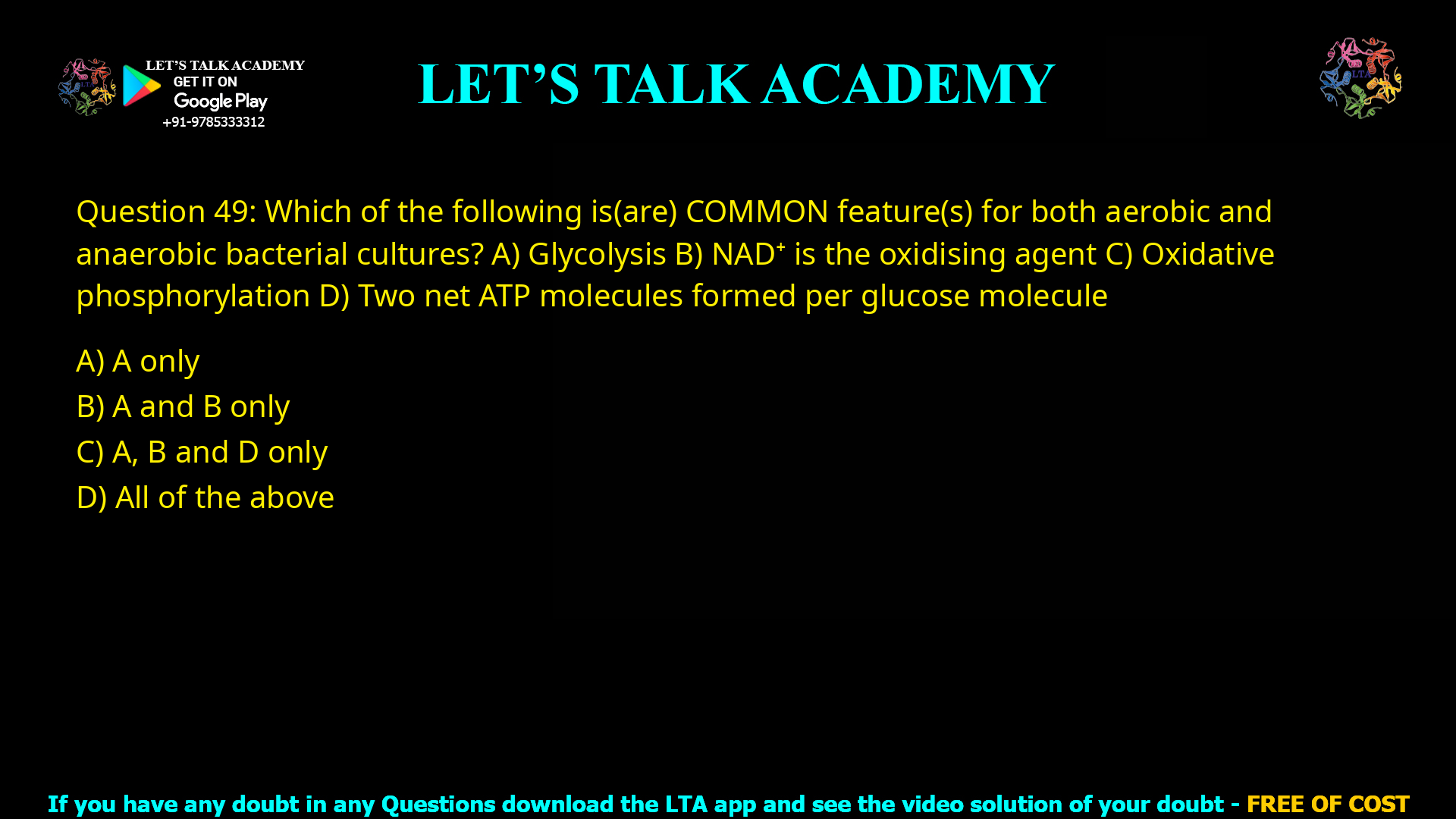
Q.49 Which of the following is(are) COMMON feature(s) for both aerobic and anaerobic bacterial cultures? (A) Glycolysis (B) NAD+ is the oxidising agent (C) Oxidative phosphorylation (D) Two net ATP molecules formed per glucose molecule

Common Feature in Aerobic and Anaerobic Bacterial Cultures

Q.48 Which of the following statements are CORRECT for an enzyme entrapped in a spherical particle? (A) Effectiveness factor is ratio of the reaction rate with diffusion-limitation to the reaction rate without diffusion-limitation (B) Internal diffusion is rate-limiting at low values of Thiele modulus (C) Effectiveness factor increases with decrease in Thiele modulus (D) Internal diffusion-limitation can be reduced by decreasing the size of the particle

Enzyme Entrapped Spherical Particles

Q.47 Consider the ordinary differential equation dy/dx = f(x,y) = 2x² – y². If y(1) = 1, the value(s) of y(1.5), using the Euler’s implicit method [yn+1 = yn + h f(xn+1, yn+1)] with a step size of h = 0.5, is (are) (A) −1 − 5√0.3 (B) −1 + 5√0.3 (C) 1 + 5√0.3 (D) 1 − 5√0.3

Implicit Euler Method Example

Q.46 Adenine can undergo a spontaneous change to hypoxanthine in a cell, leading to a DNA base pair mismatch. The CORRECT combination of enzymes that are involved in repairing this damage is (A) Nuclease, DNA polymerase, DNA ligase (B) Nuclease, DNA ligase, helicase (C) Primase, DNA polymerase, DNA ligase (D) Primase, helicase, DNA polymerase

Adenine to Hypoxanthine DNA Repair

Q.45 Which of the following spectroscopic technique(s) can be used to identify all the functional groups of an antibiotic contaminant in food? P. Infrared Q. Circular dichroism R. Nuclear magnetic resonance S. UV-Visible (A) P only (B) P and R only (C) P, Q and R only (D) P, Q, R and S

Best Spectroscopic Techniques

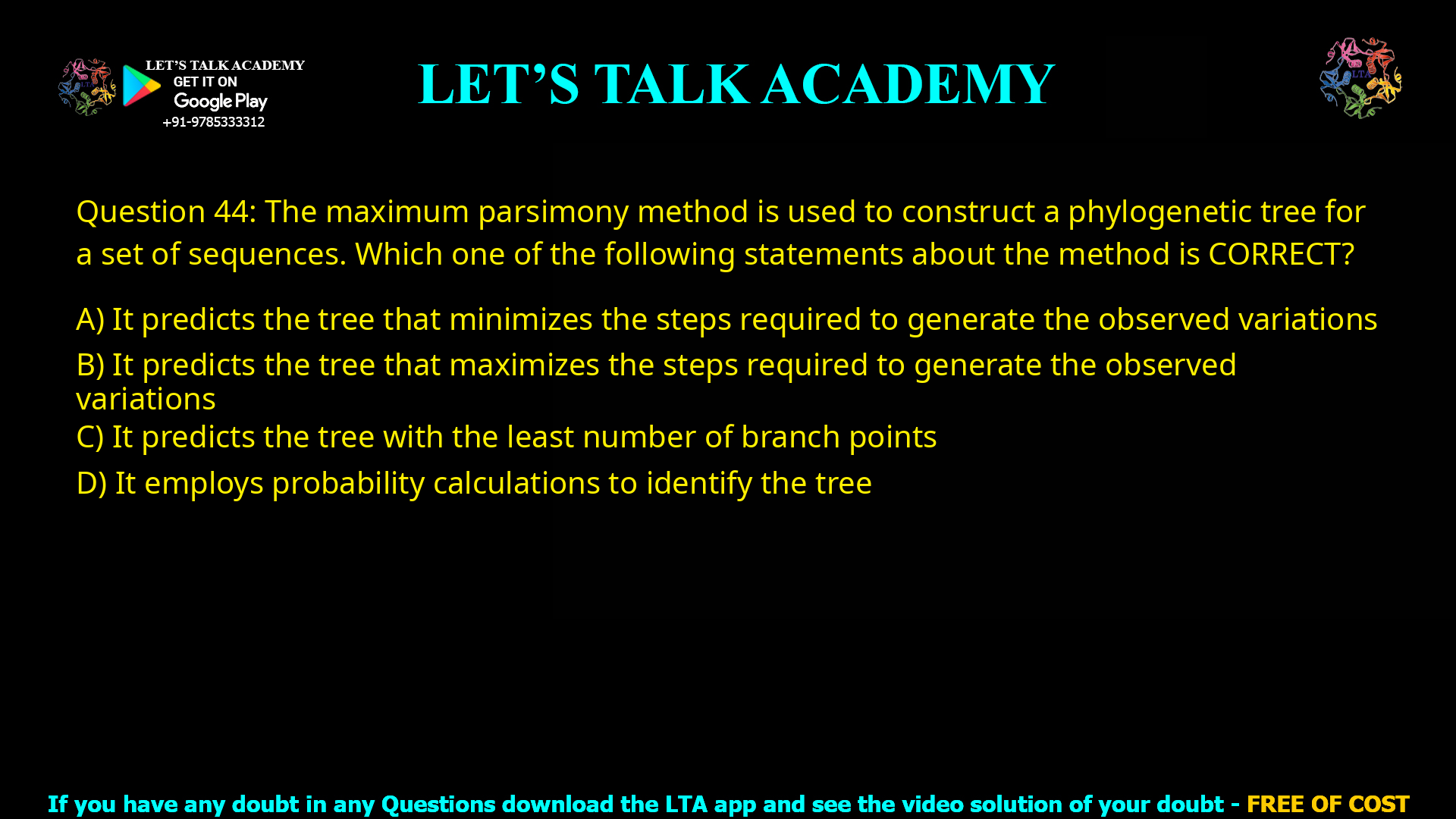
Q.44 The maximum parsimony method is used to construct a phylogenetic tree for a set of sequences. Which one of the following statements about the method is CORRECT? (A) It predicts the tree that minimizes the steps required to generate the observed variations (B) It predicts the tree that maximizes the steps required to generate the observed variations (C) It predicts the tree with the least number of branch points (D) It employs probability calculations to identify the tree

Understanding Maximum Parsimony

Q.43 The enzymes involved in ubiquitinylation of cell-cycle proteins are (A) E1 and E2 only (B) E1 and E3 only (C) E1 and E4 only (D) E1, E2 and E3

E1 E2 E3 Enzymes in Ubiquitinylation of Cell Cycle Proteins

Q.42 Which of the following are CORRECT about protein structure? P. Secondary structure is formed by a repeating pattern of interactions among the polypeptide backbone atoms Q. Tertiary structure is the three-dimensional arrangement of the polypeptide backbone atoms only R. Quaternary structure refers to an assembly of multiple polypeptide subunits (A) P and Q only (B) P and R only (C) Q and R only (D) P, Q and R

Understanding Protein Structure Levels

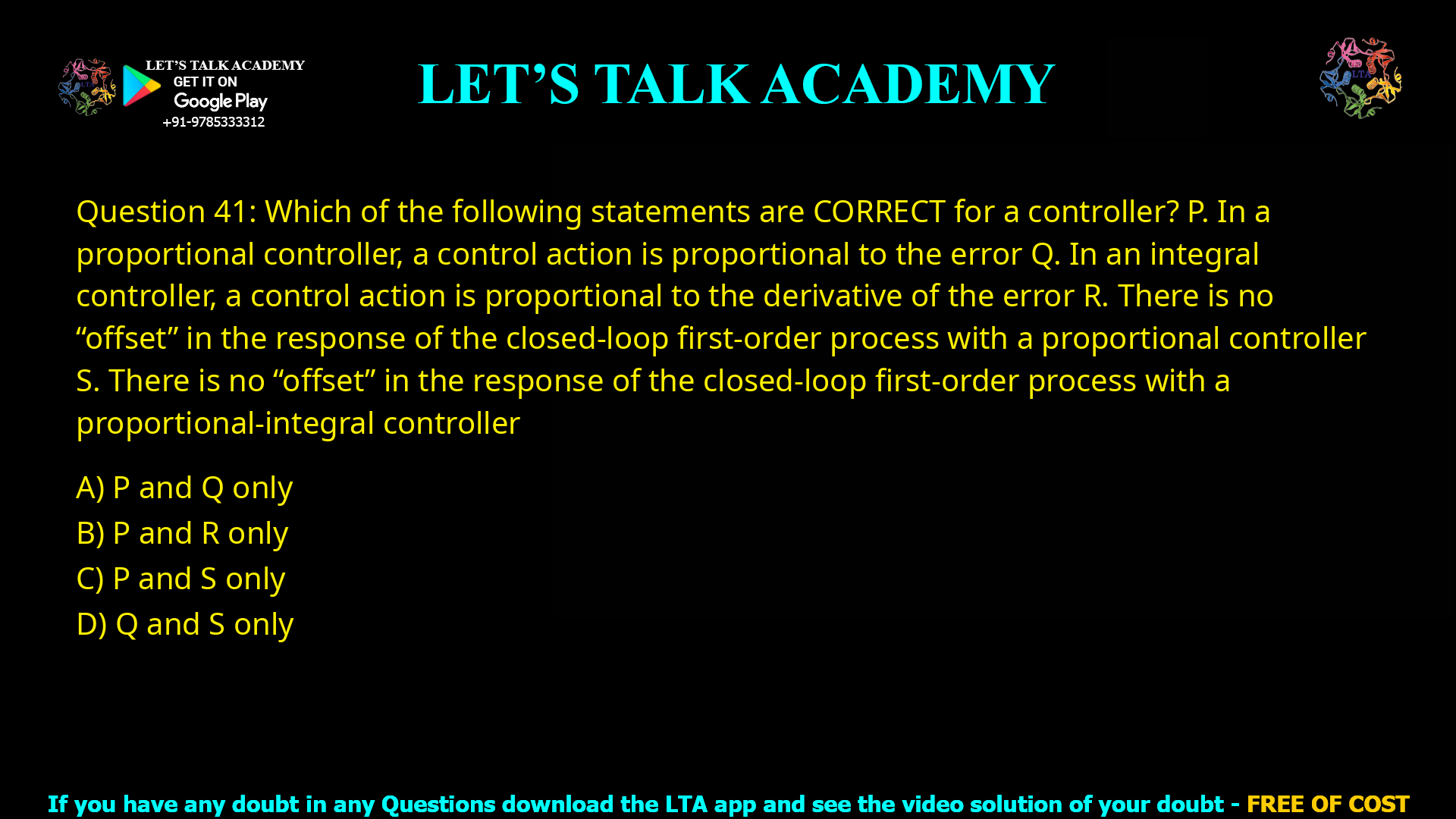
Q.41 Which of the following statements are CORRECT for a controller? P. In a proportional controller, a control action is proportional to the error Q. In an integral controller, a control action is proportional to the derivative of the error R. There is no “offset” in the response of the closed-loop first-order process with a proportional controller S. There is no “offset” in the response of the closed-loop first-order process with a proportional-integral controller (A) P and Q only (B) P and R only (C) P and S only (D) Q and S only

Proportional vs Integral Controllers

Q.40 Match the stationary phase (Column I) with its corresponding chromatography technique (Column II). Column I                                                                 Column II P. Protein A                                                1. Size exclusion chromatography Q. Sephadex                                                2. Ion-exchange chromatography R. Phenylsepharose                                   3. Affinity chromatography S. Diethylaminoethyl cellulose                4. Hydrophobic interaction chromatography (A) P-1, Q-4, R-2, S-3 (B) P-3, Q-1, R-4, S-2 (C) P-3, Q-4, R-2, S-1 (D) P-4, Q-1, R-3, S-2

Master Chromatography Matching

Q.39 A 2×2 matrix P has an eigenvalue λ1 = 2 with eigenvector x1 = ( 1 0 )T and another eigenvalue λ2 = 5, with eigenvector x2 = ( 1 1 )T. The matrix P is (A) ( 2   0 ) ( 0   5 ) (B) ( 2   3 ) ( 0   5 ) (C) ( 1   1 ) ( 0   1 ) (D) ( 1   1 ) ( 1   0 )

Eigenvalue–Eigenvector Matrix Construction

Q.38 Match the cell type (Column I) with its function (Column II). Column I                                     Column II P. B cells                                    1. Humoral immunity Q. Neutrophils                         2. Cytotoxicity R. T cells                                   3. Histamine-associated allergy S. Mast cells                            4. Phagocytosis (A) P-1, Q-2, R-3, S-4 (B) P-1, Q-4, R-2, S-3 (C) P-4, Q-3, R-1, S-2 (D) P-4, Q-3, R-2, S-1

Match B Cells, Neutrophils, T Cells, Mast Cells Functions

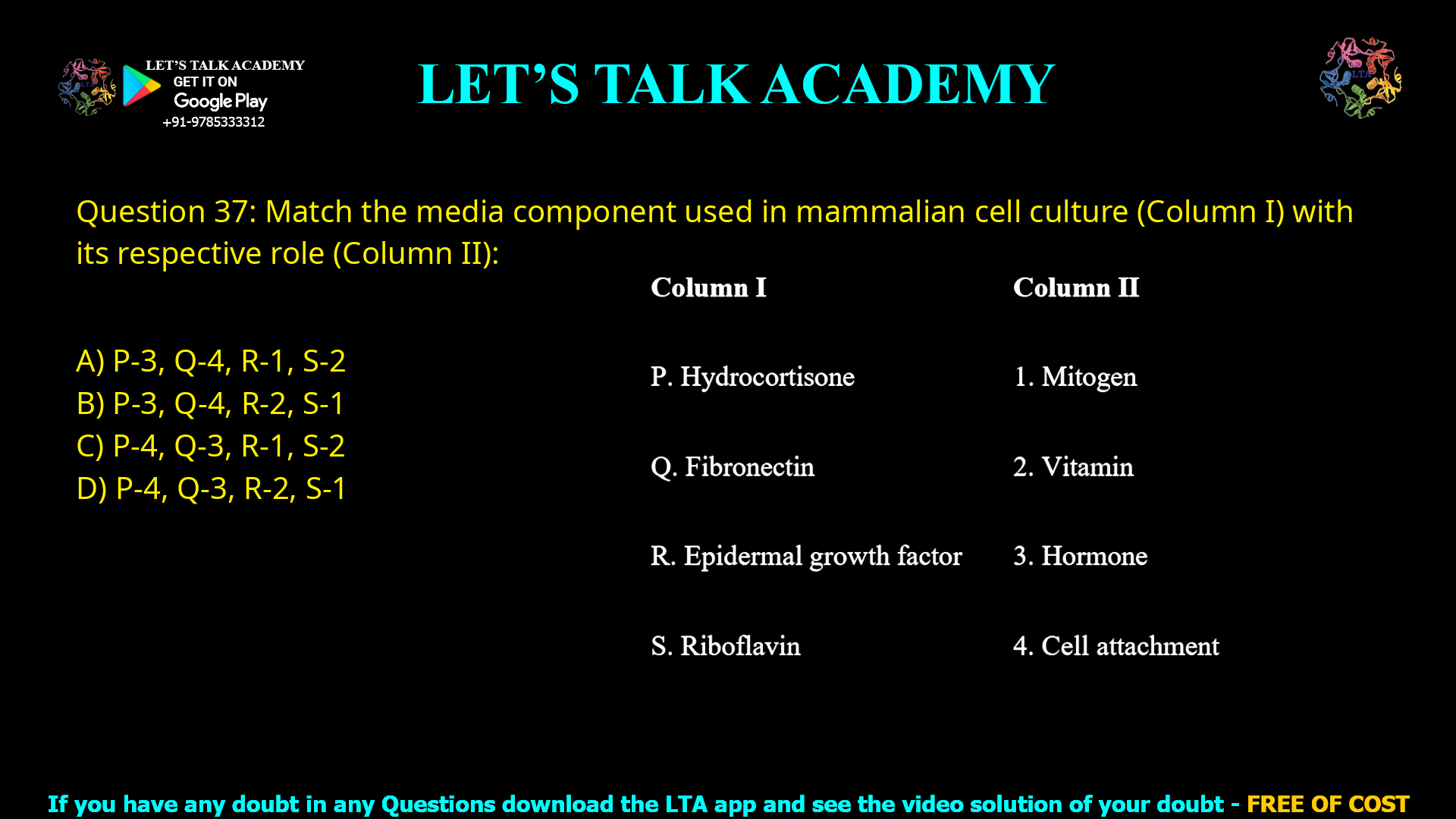
Q.37 Match the media component used in mammalian cell culture (Column I) with its respective role (Column II). Column I                                              Column II P. Hydrocortisone                             1. Mitogen Q. Fibronectin                                    2. Vitamin R. Epidermal growth factor             3. Hormone S. Riboflavin                                       4. Cell attachment (A) P-3, Q-4, R-1, S-2 (B) P-3, Q-4, R-2, S-1 (C) P-4, Q-3, R-1, S-2 (D) P-4, Q-3, R-2, S-1

Mammalian Cell Culture Media Components

Q.36 Which of the following conditions will contribute to the stability of a gene pool in a natural population? P. Large population Q. No net mutation R. Non-random mating S. No selection (A) P only (B) P and Q only (C) P and R only (D) P, Q and S only

Gene Pool Stability in Natural Populations

Q.35 For a pure species, the slope of the melting line dP/dT at −2 °C is −5.0665×10⁶ Pa K−1. The difference between the molar volumes of the liquid and solid phase at −2 °C is −4.5×10⁻⁶ m3 mol−1. The value of the latent heat of fusion (rounded off to nearest integer) is ________ J mol−1.

Latent Heat of Fusion Calculation

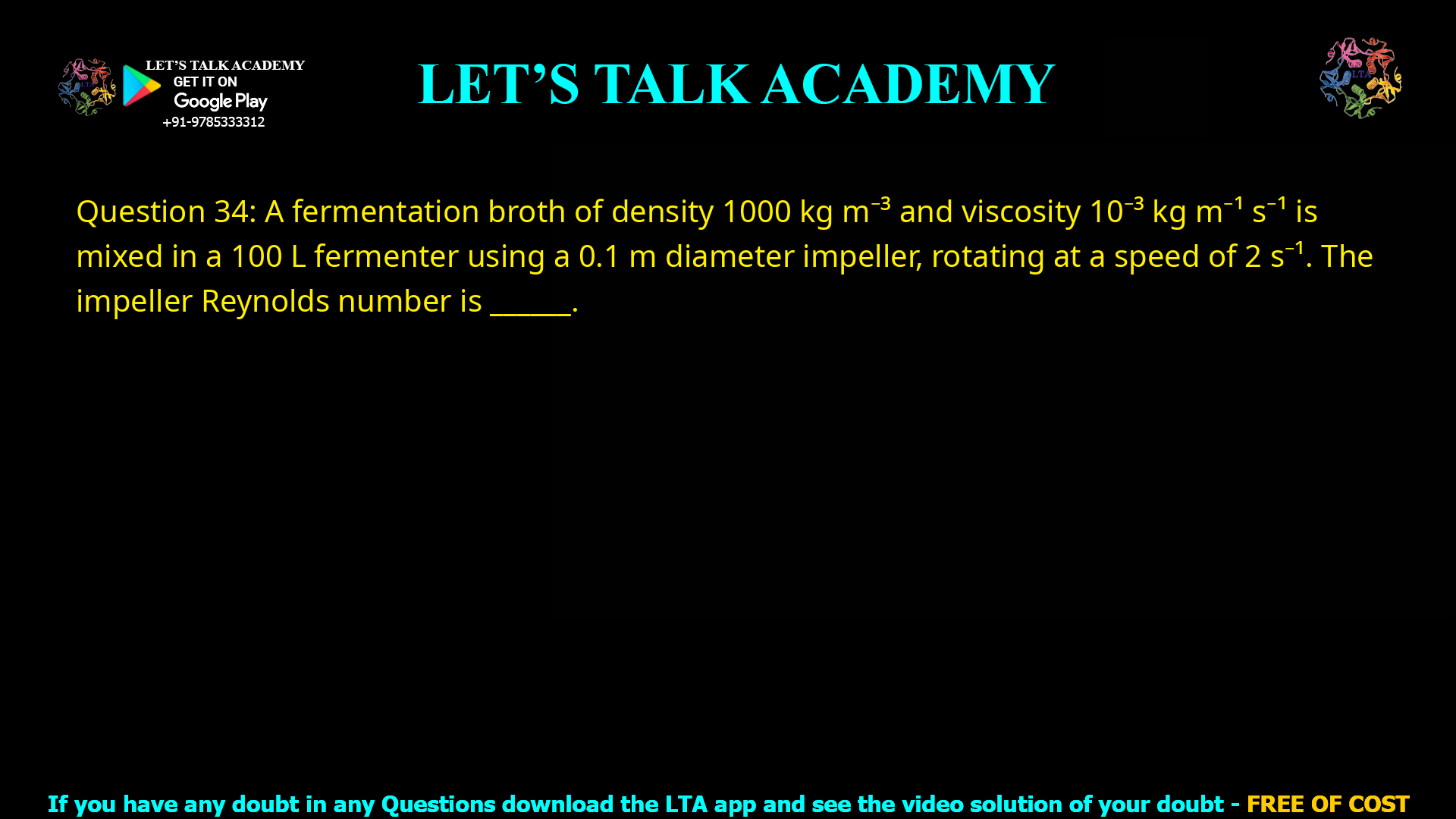
Q.34 A fermentation broth of density 1000 kg m-3 and viscosity 10-3 kg m-1 s-1 is mixed in a 100 L fermenter using a 0.1 m diameter impeller, rotating at a speed of 2 s-1. The impeller Reynolds number is ________.

Impeller Reynolds Number Calculation

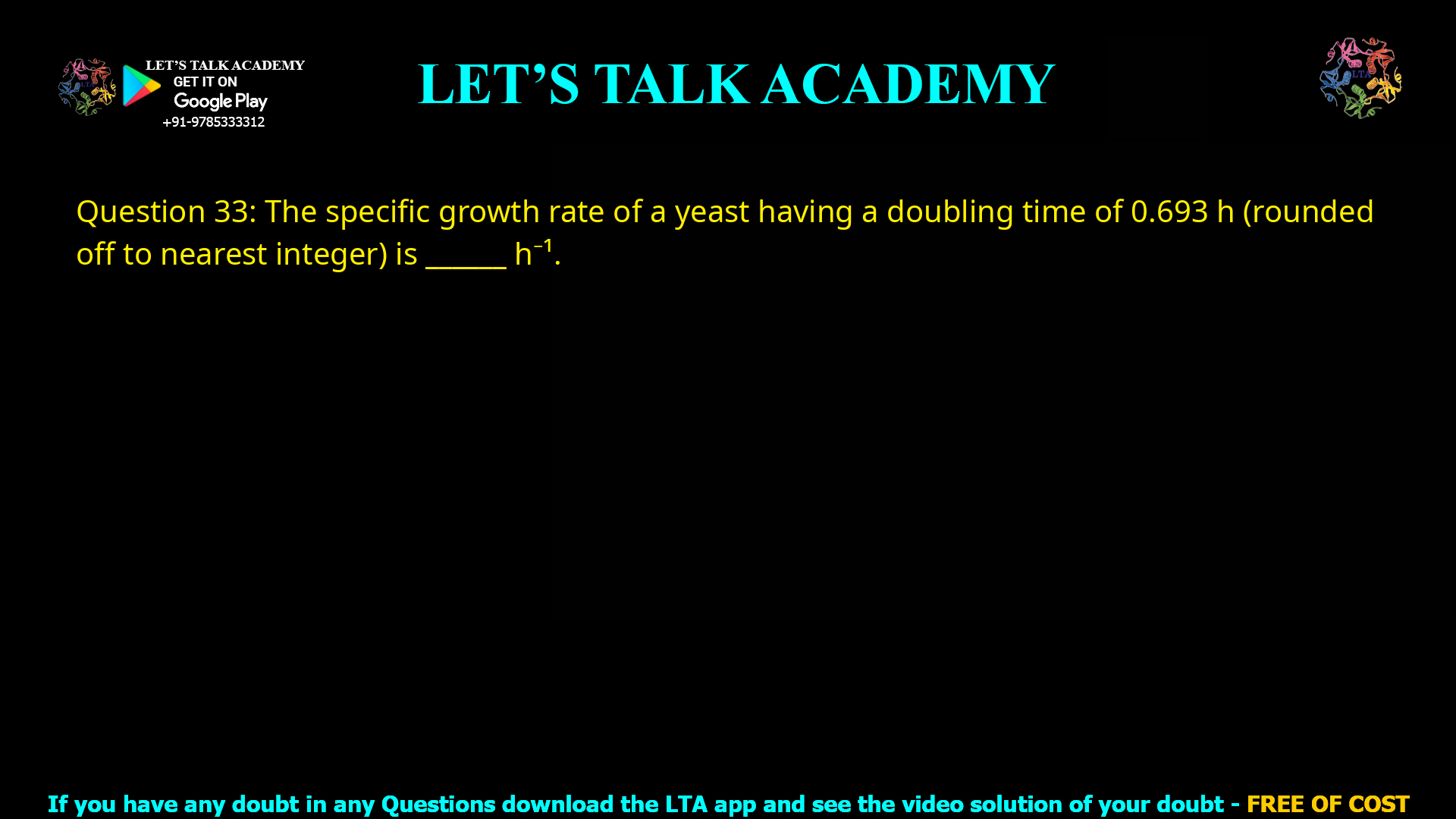
Q.33 The specific growth rate of a yeast having a doubling time of 0.693 h (rounded off to nearest integer) is ________ h-1.

Calculating Yeast Specific Growth Rate

Q.32 The maximum value of the function f(x) = 3x2 − 2x3 for x > 0 is ________.

Maximum Value of 3x² – 2x³ for x > 0

Q.31 The probability density function of a random variable X is p(x) = 2e-2x. The probability P(1 ≤ X ≤ 2) (rounded off to two decimal places) is ________.

P(1 ≤ X ≤ 2) for PDF 2e−2x

Q.30 Consider a nonlinear algebraic equation, 𝑥𝑙𝑛𝑥 + 𝑥 − 1 = 0. Using the NewtonRaphson method, with the initial guess of 𝑥0 = 3, the value of 𝑥 after one iteration (rounded off to one decimal place) is __________.

Newton-Raphson Method

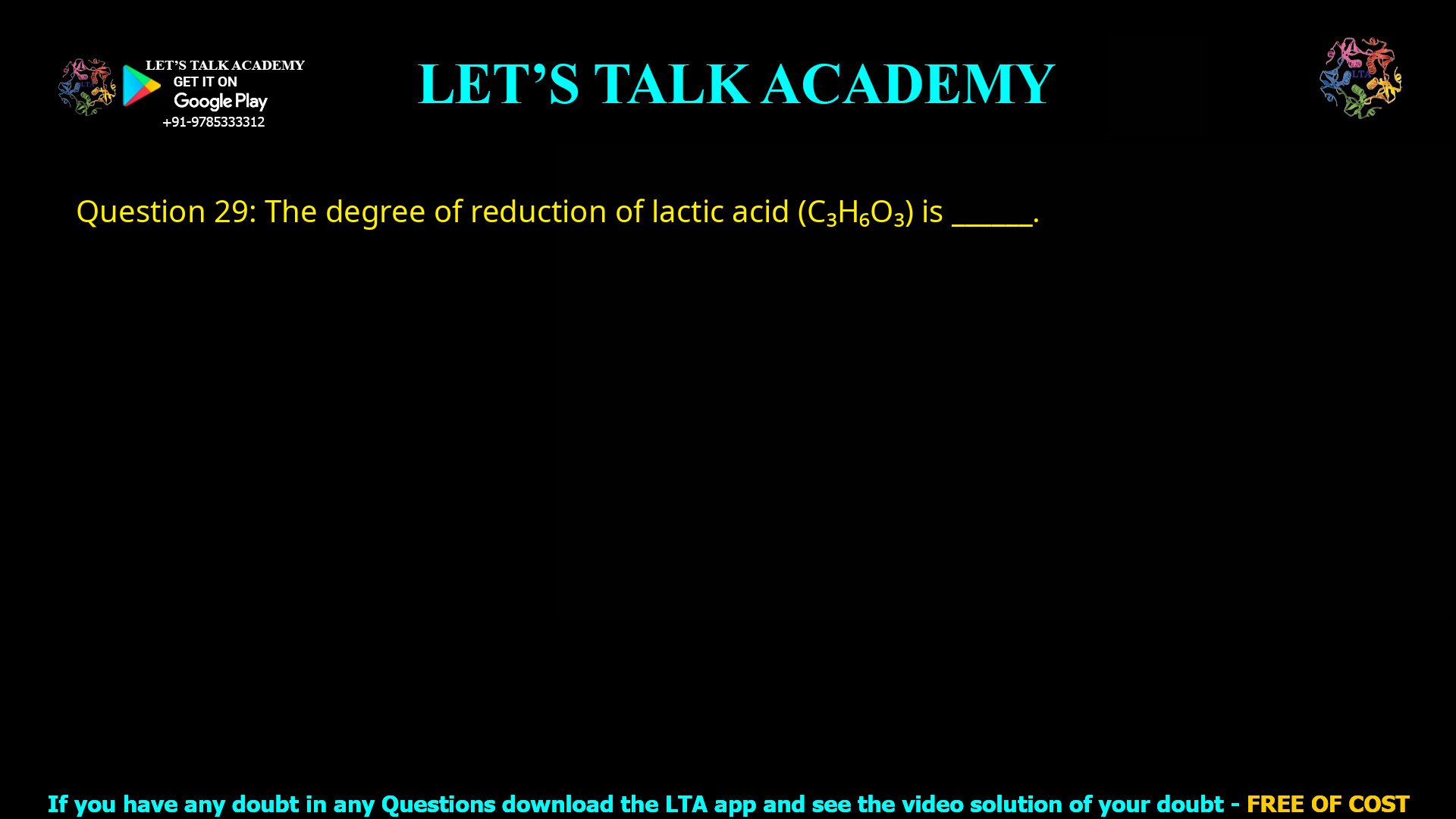
Q.29 The degree of reduction of lactic acid (C3H6O3) is ________________.

Degree of Reduction of Lactic Acid (C3H6O3)

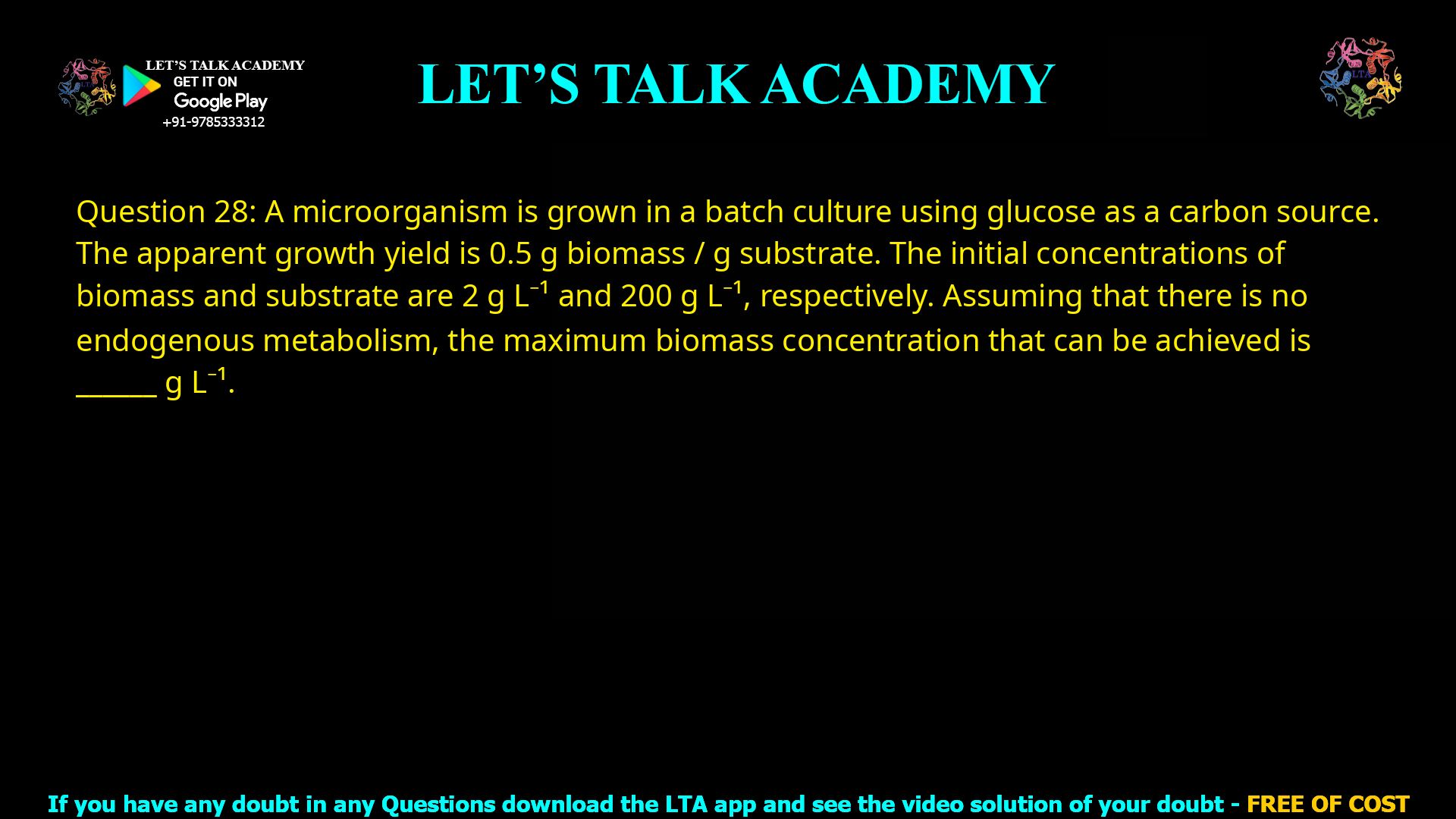
Q.28 A microorganism is grown in a batch culture using glucose as a carbon source. The apparent growth yield is 0.5 g biomass/g substrate. The initial concentrations of biomass and substrate are 2 g L-1 and 200 g L-1, respectively. Assuming that there is no endogenous metabolism, the maximum biomass concentration that can be achieved is ________________ g L-1.

Calculating Maximum Biomass in Batch Culture

Q.27 Assuming independent assortment and no recombination, the number of different combinations of maternal and paternal chromosomes in gametes of an organism with a diploid number of 12 is _________________.

Independent Assortment Explained

Q.26 Among individuals in a human population, minor variations exist in nucleotide sequences of chromosomes. These variations can lead to gain or loss of sites for specific restriction enzymes. Which of the following technique is used to identify such variations? (A) Polymerase dependent fragment insertion (B) Real-time polymerase chain reaction (C) Restriction fragment length polymorphism (D) Reverse transcriptase polymerase chain reaction

Restriction Fragment Length Polymorphism

Q.25 The recognition sequences of four Type-II restriction enzymes (RE) are given below. The symbol (↓) indicates the cleavage site. Identify the RE that generates sticky ends. (A) RE1 - 5̍ G↓GATCC 3̍ (B) RE2 - 5̍ CTG↓CAG 3̍ (C) RE3 - 5̍ CCC↓GGG 3̍ (D) RE4 - 5̍ AG↓CT 3̍

Which Type II Restriction Enzyme Produces Sticky Ends?

Q.24 Which of the following is NOT used for generating an optimal alignment of two nucleotide sequences? (A) Gap penalties (B) Match scores (C) Mismatch scores (D) Nucleotide composition

What Is NOT Used in Nucleotide Sequence Alignment?

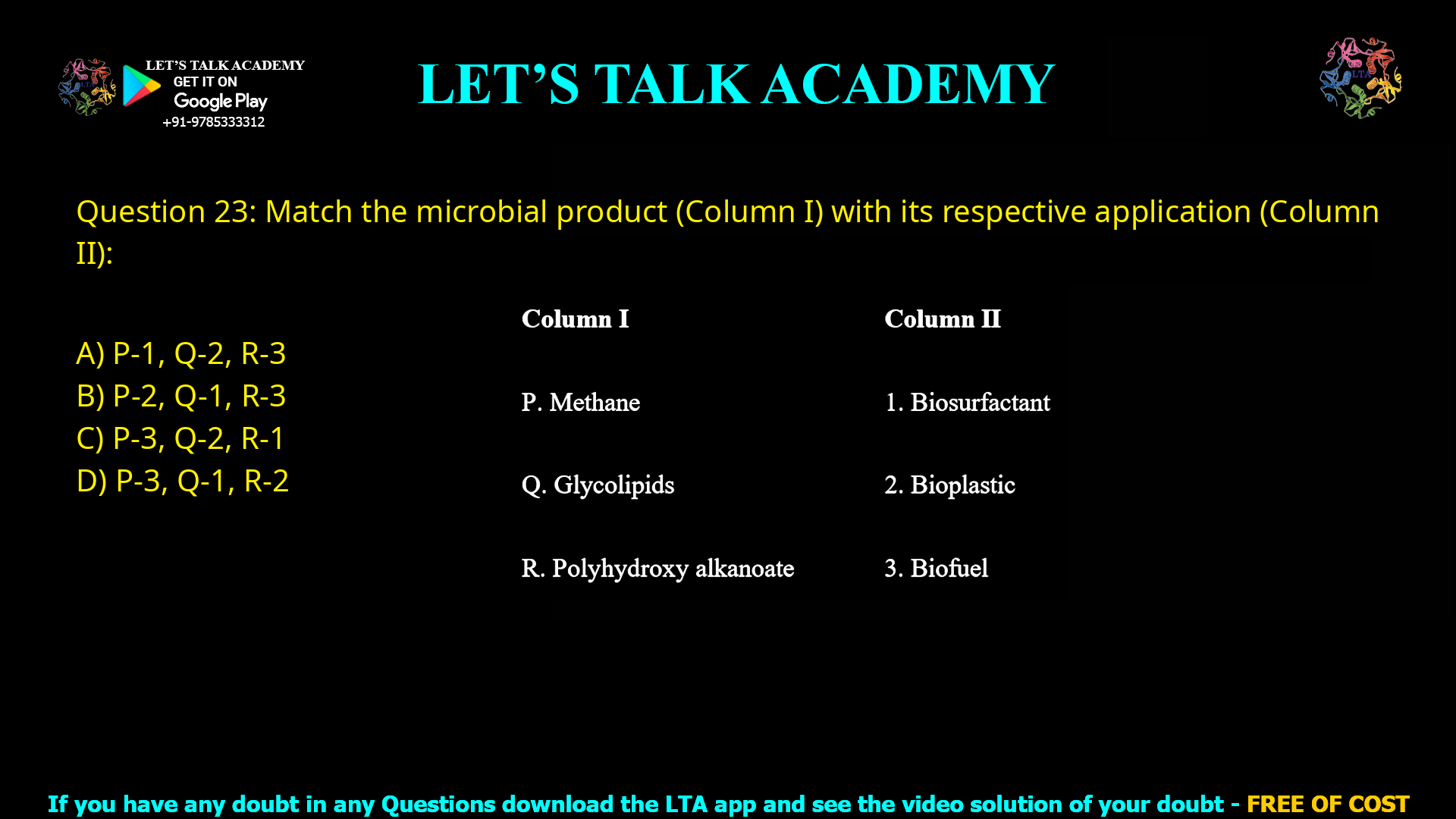
Q.23 Match the microbial product (Column I) with its respective application (Column II). Column I                                           Column II P. Methane                                     1. Biosurfactant Q. Glycolipids                                2. Bioplastic R. Polyhydroxy alkanoate           3. Biofuel (A) P-1, Q-2, R-3 (B) P-2, Q-1, R-3 (C) P-3, Q-2, R-1 (D) P-3, Q-1, R-2

Microbial Products Matching Explained

Q.22 Terpenoids are made of ___________ units (A) amino acid (B) carbohydrate (C) isoprene (D) triacylglycerol

Terpenoids Made of Isoprene Units

Q.21 In animal cells, the endogenously produced miRNAs silence gene expression by (A) base pairing with the 3'-untranslated region of specific mRNAs (B) blocking mRNA synthesis (C) binding to the operator site (D) base pairing with the 3' region of specific rRNAs

How miRNAs Silence Gene Expression in Animal Cells

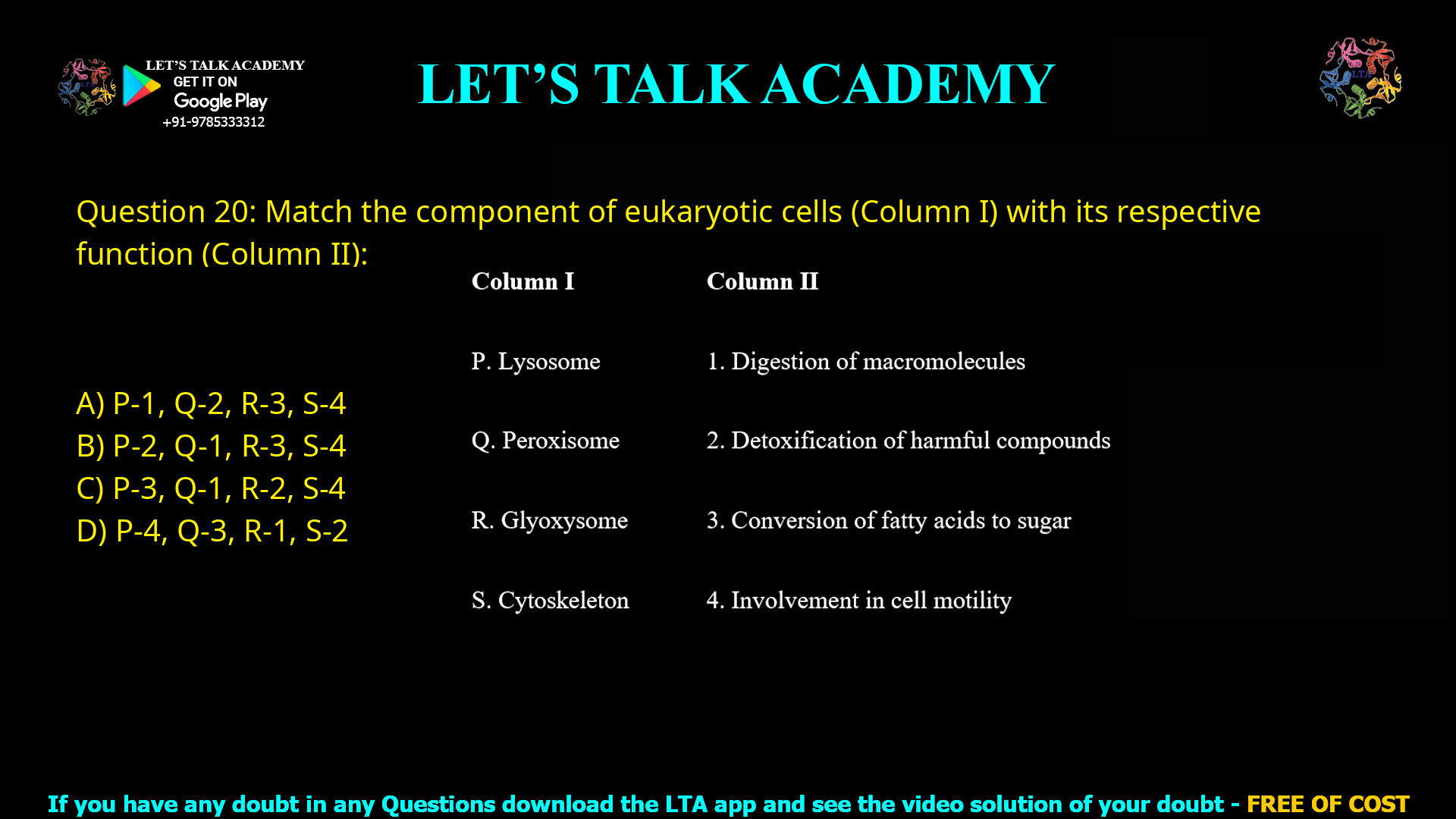
Q.20 Match the component of eukaryotic cells (Column I) with its respective function (Column II). Column I                                  Column II P. Lysosome                       1. Digestion of macromolecules Q. Peroxisome                    2. Detoxification of harmful compounds R. Glyoxysome                   3. Conversion of fatty acids to sugar S. Cytoskeleton                   4. Involvement in cell motility (A) P-1, Q-2, R-3, S-4 (B) P-2, Q-1, R-3, S-4 (C) P-3, Q-1, R-2, S-4 (D) P-4, Q-3, R-1, S-2

Unlocking Eukaryotic Cell Organelles

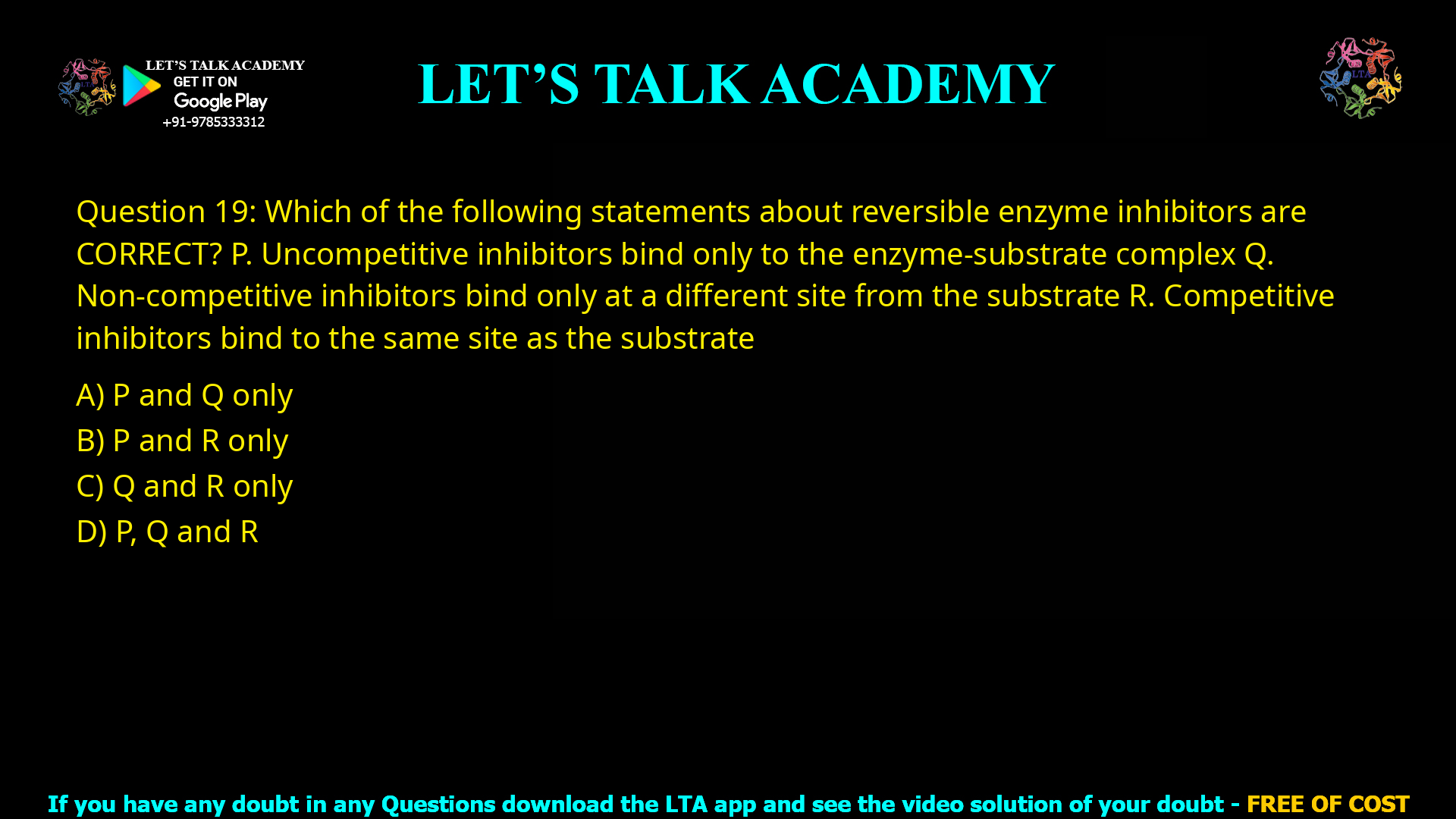
Q.19 Which of the following statements about reversible enzyme inhibitors are CORRECT? P. Uncompetitive inhibitors bind only to the enzyme-substrate complex Q. Non-competitive inhibitors bind only at a different site from the substrate R. Competitive inhibitors bind to the same site as the substrate (A) P and Q only (B) P and R only (C) Q and R only (D) P, Q and R

Understanding Reversible Enzyme Inhibitors

Q.18 The type of nucleic acid present in λ-phage is (A) Double stranded DNA (B) Single stranded circular DNA (C) Single stranded DNA (D) Single stranded RNA

λ-Phage Nucleic Acid Type

Q.17 In binomial nomenclature, the name of a bacterial strain is written with the first letter of ___________ word(s) being capitalized. (A) first (B) second (C) neither (D) first and second

Binomial Nomenclature Bacterial Strain Capitalization

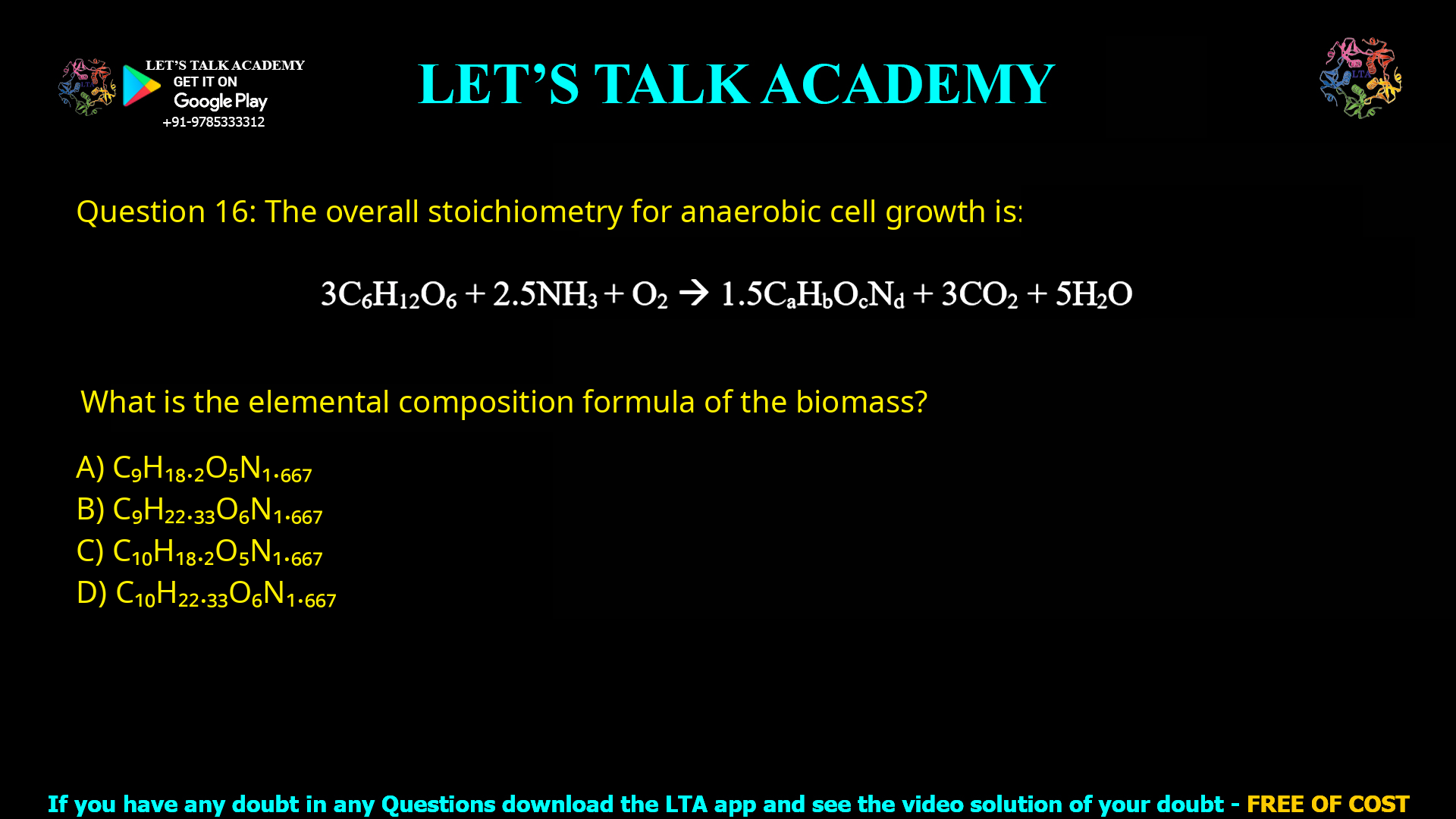
Q.16 The overall stoichiometry for an aerobic cell growth is: 3C6H12O6 + 2.5NH3 + O2 → 1.5CaHbOcNd + 3CO2 + 5H2O What is the elemental composition formula of the biomass? C9H18.2O5N1.667 C9H22.33O6N1.667 C10H18.2O5N1.667 C10H22.33O6N1.667

Unlocking Biomass Stoichiometry

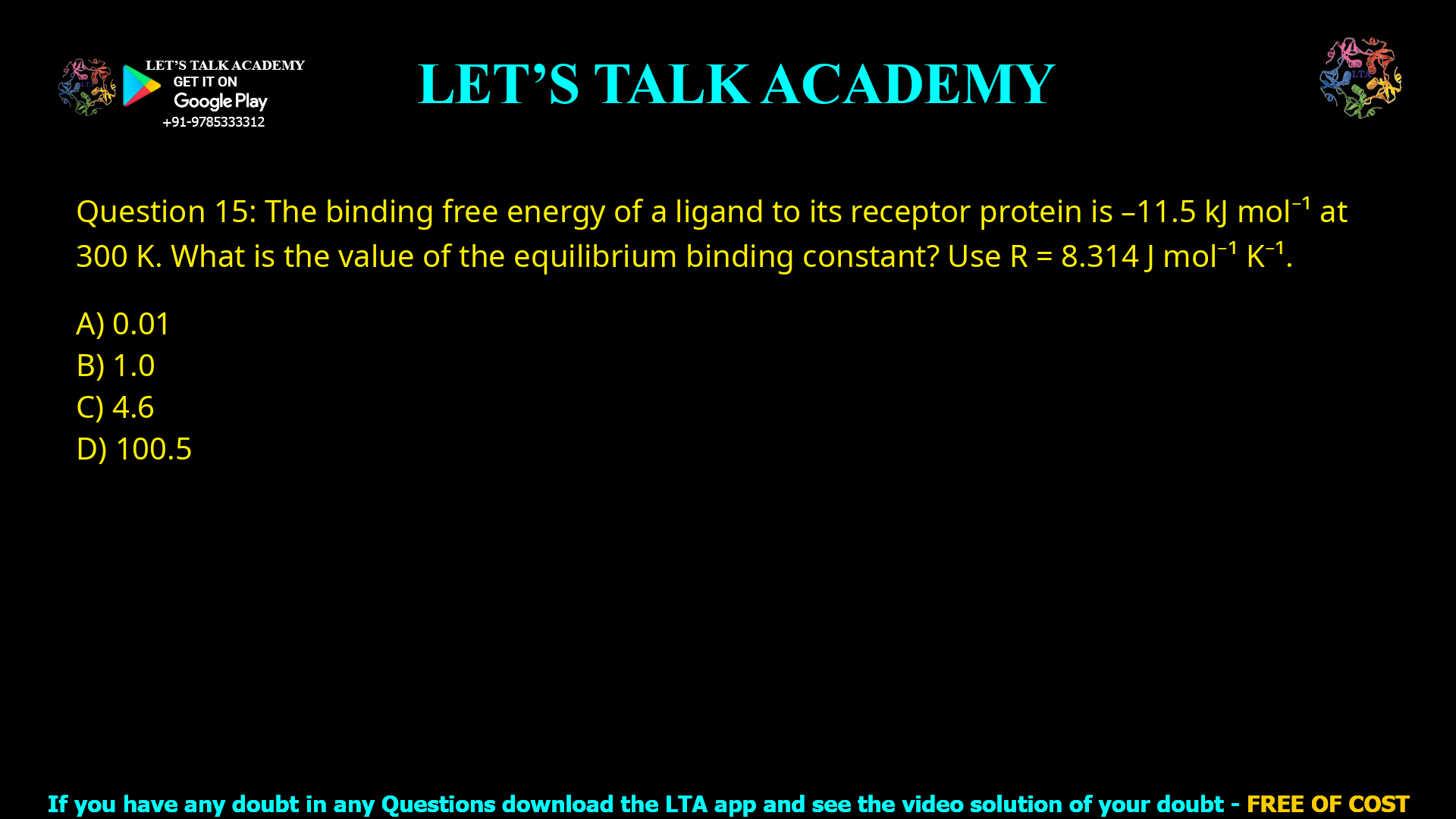
Q.15 The binding free energy of a ligand to its receptor protein is −11.5 kJ mol−1 at 300 K. What is the value of the equilibrium binding constant? Use R = 8.314 J mol−1 K−1. (A) 0.01 (B) 1.0 (C) 4.6 (D) 100.5

Ligand-Receptor Binding Free Energy

Q.14 Match the media component (Column I) with its role (Column II). Column I                                      Column II P. Sucrose                               1. Anti-foam agent Q. Zinc chloride                     2. Nitrogen source R. Ammonium sulphate       3. Carbon source S. Silicone oil                          4. Trace element (A) P-1, Q-2, R-3, S-4 (B) P-2, Q-1, R-3, S-4 (C) P-3, Q-2, R-4, S-1 (D) P-3, Q-4, R-2, S-1

Media Components Matching

Q.13 For a double-pipe heat exchanger, the inside and outside heat transfer coefficients are 1200 W m-2 K-1, respectively. The thickness and thermal conductivity of the thin-walled inner pipe are 1 cm and 10 W m-1 K-1, respectively. The value of the overall heat transfer coefficient is ___________ W m-2 K-1. (A) 0.016 (B) 42.5 (C) 62.5 (D) 310

Double-Pipe Heat Exchangers

Q.12 If the eigenvalues of a 2×2 matrix P are 4 and 2, then the eigenvalues of the matrix  P^-1  are (A) 0, 0 (B) 0.0625, 0.25 (C) 0.25, 0.5 (D) 2, 4

Eigenvalues of Inverse Matrix

Q.11 What is the order of the differential equation given below? d^2y/dx^2 - 6x = 3x^4 - 2x^3 + 2 (A) 1 (B) 2 (C) 3 (D) 4

Order of Differential Equation

Q.10 Consider a cube made by folding a single sheet of paper of appropriate shape. The interior faces of the cube are all blank. However, the exterior faces that are not visible in the above view may not be blank. Which one of the following represents a possible unfolding of the cube?

Cube Unfolding Puzzle Solution

Q.9 In the square grid shown on the left, a person standing at P2 position is required to move to P5 position. The only movement allowed for a step involves, “two moves along one direction followed by one move in a perpendicular direction”. The permissible directions for movement are shown as dotted arrows in the right. For example, a person at a given position Y can move only to the positions marked X on the right. Without occupying any of the shaded squares at the end of each step, the minimum number of steps required to go from P2 to P5 is (A) 4 (B) 5 (C) 6 (D) 7

Move Steps from P2 to P5 on Grid

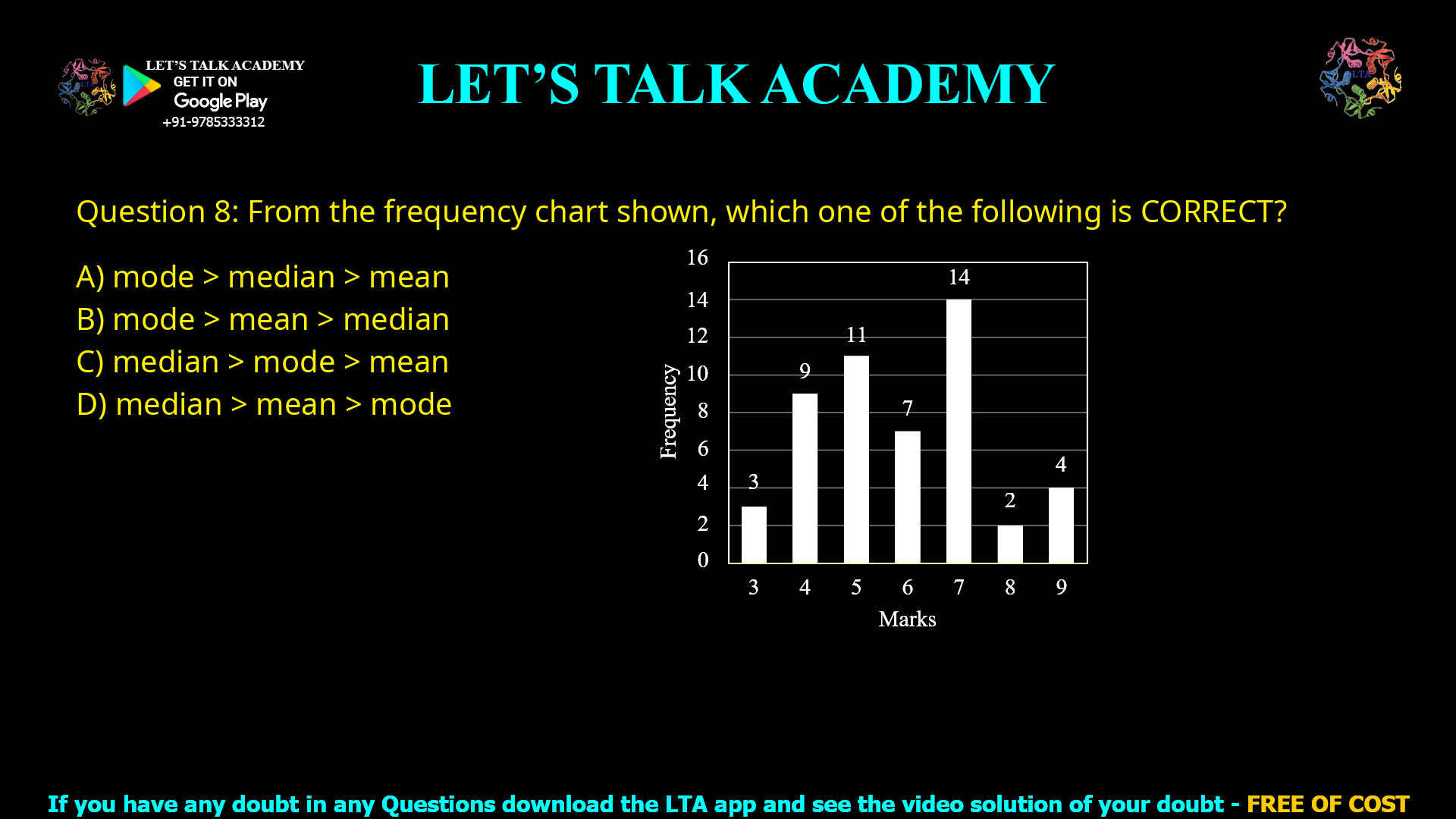
Q.8 The above frequency chart shows the frequency distribution of marks obtained by a set of students in an exam. From the data presented above, which one of the following is CORRECT? (A) mean > mode > median (B) mode > median > mean (C) mode > mean > median (D) median > mode > mean

Mean, Median and Mode Comparison From Frequency Chart

Q.7 P invested ₹ 5000 per month for 6 months of a year and Q invested ₹ 𝑥 per month for 8 months of the year in a partnership business. The profit is shared in proportion to the total investment made in that year. If at the end of that investment year, Q receives 4/9 of the total profit, what is the value of 𝑥 (in ₹)? (A) 2500 (B) 3000 (C) 4687 (D) 8437

Partnership Profit Sharing

Q.6 Healthy eating is a critical component of healthy aging. When should one start eating healthy? It turns out that it is never too early. For example, babies who start eating healthy in the first year are more likely to have better overall health as they get older. Which one of the following is the CORRECT logical inference based on the information in the above passage? (A) Healthy eating is important for those with good health conditions, but not for others (B) Eating healthy can be started at any age, earlier the better (C) Eating healthy and better overall health are more correlated at a young age, but not older age (D) Healthy eating is more important for adults than kids

 When Should You Start Healthy Eating?

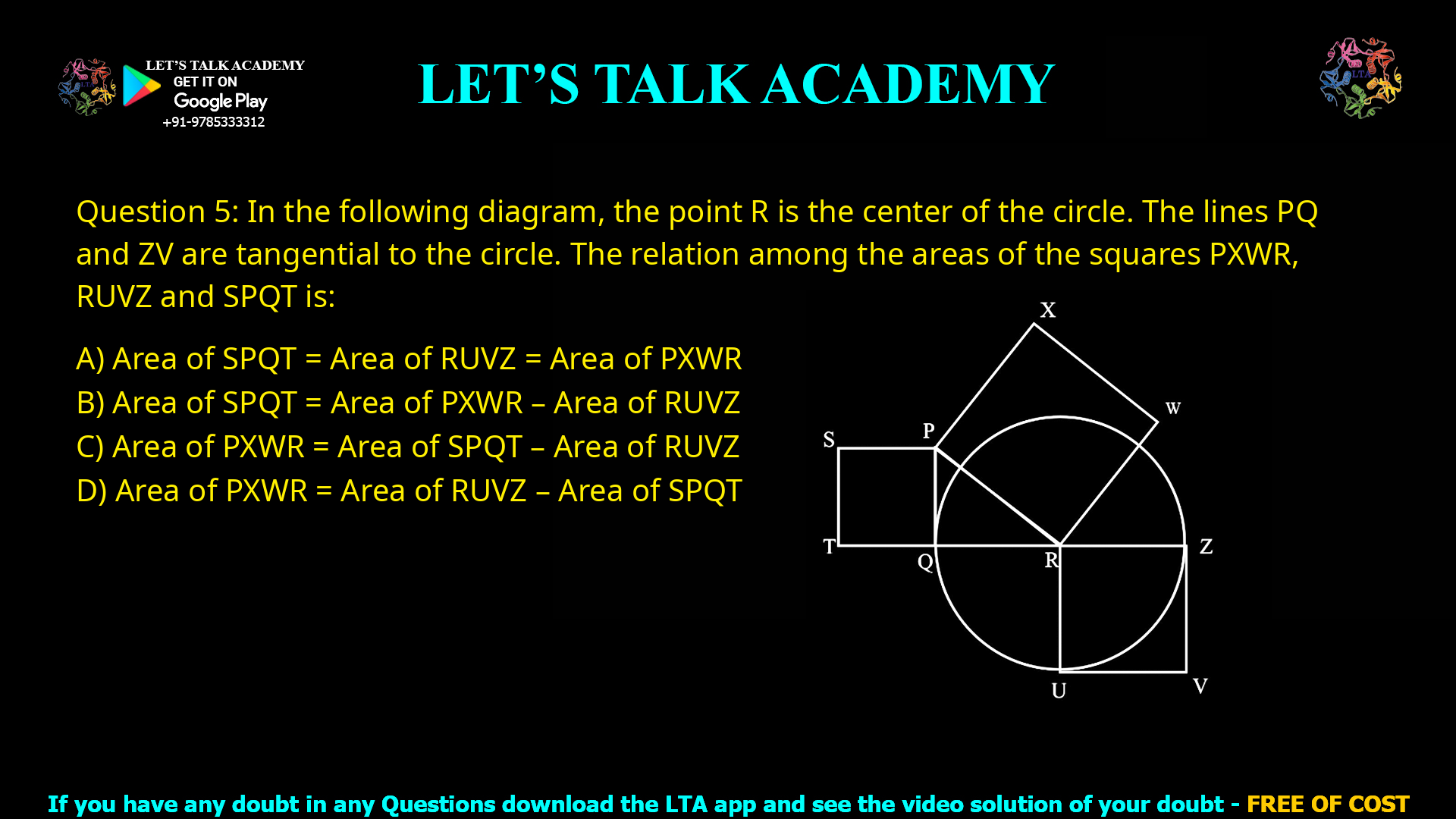
Q.5 In the following diagram, the point R is the center of the circle. The lines PQ and ZV are tangential to the circle. The relation among the areas of the squares, PXWR, RUVZ and SPQT is (A) Area of SPQT = Area of RUVZ = Area of PXWR (B) Area of SPQT = Area of PXWR  Area of RUVZ (C) Area of PXWR = Area of SPQT  Area of RUVZ (D) Area of PXWR = Area of RUVZ  Area of SPQT

Tangential Geometry Puzzle

Q.4 Given the statements:  P is the sister of Q.  Q is the husband of R.  R is the mother of S.  T is the husband of P. Based on the above information, T is ______ of S. (A) the grandfather (B) an uncle (C) the father (D) a brother

Solve P Sister of Q Puzzle with Family Tree

Q.3 If 𝑝 ∶ 𝑞 = 1 ∶ 2 𝑞 ∶ 𝑟 = 4 ∶ 3 𝑟 ∶ 𝑠 = 4 ∶ 5 and 𝑢 is 50% more than 𝑠 , what is the ratio 𝑝 ∶ 𝑢? (A) 2 ∶ 15 (B) 16 ∶ 15 (C) 1: 5 (D) 16: 45

Ratio Proportion Problems

Q.2 Two straight lines pass through the origin (𝑥଴, 𝑦଴) = (0,0). One of them passes through the point (𝑥ଵ, 𝑦ଵ) = (1,3) and the other passes through the point (𝑥ଶ, 𝑦ଶ) = (1,2). What is the area enclosed between the straight lines in the interval [0, 1] on the 𝑥 -axis? (A) 0.5 (B) 1.0 (C) 1.5 (D) 2.0

Area Enclosed Between Straight Lines

Q.1 You should _________ when to say _________. (A) no / no (B) no / know (C) know / know (D) know / no

Master “Know vs No” Homophones

Latest Courses