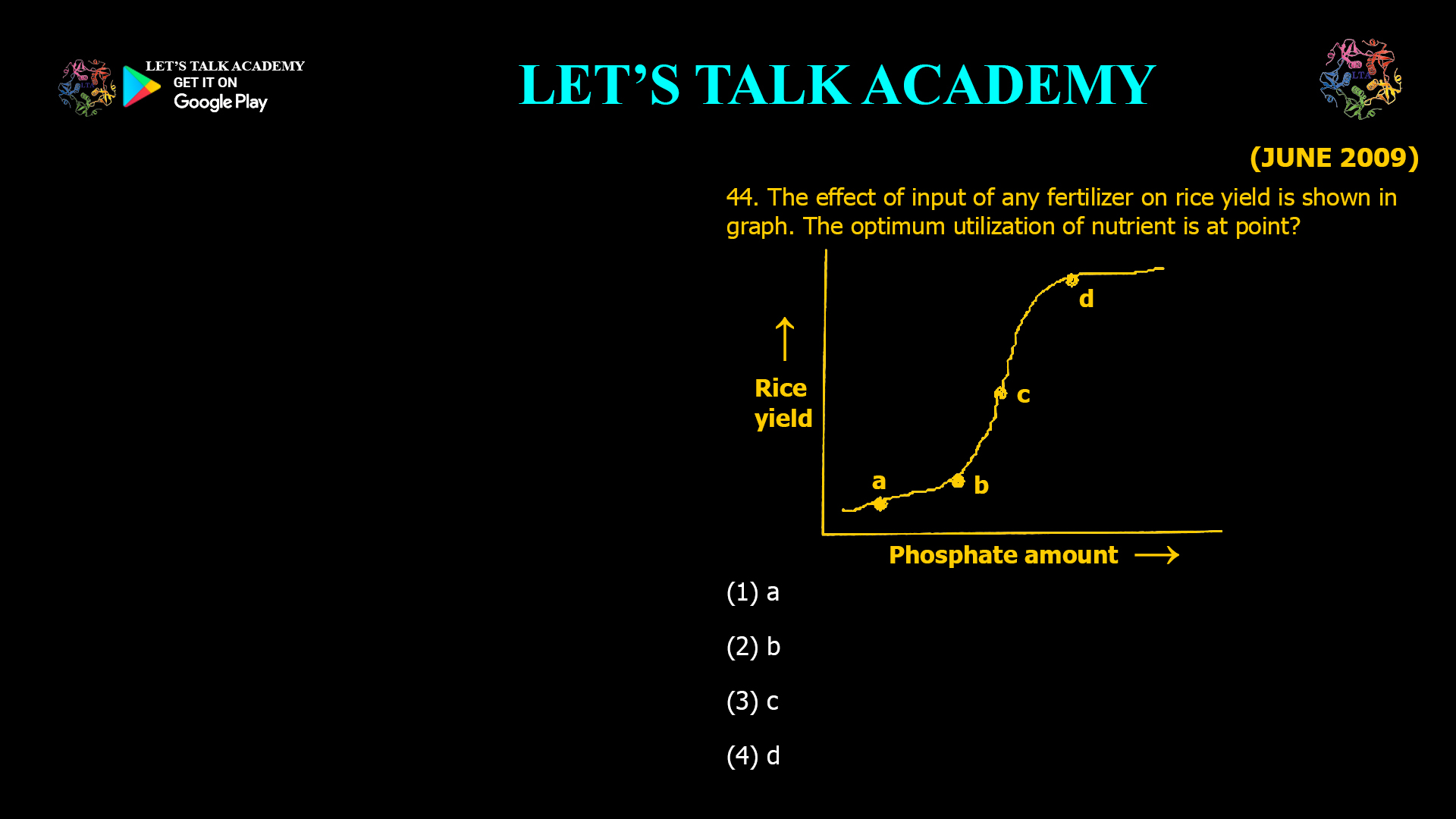
The effect of input of any fertilizer on rice yield is shownin graph. The optimum utilization of nutrient is atpoint?        (1) a (2) b (3) c (4) d

Where Is the Optimum Utilization of Nutrient on a Rice Fertilizer-Yield Graph?

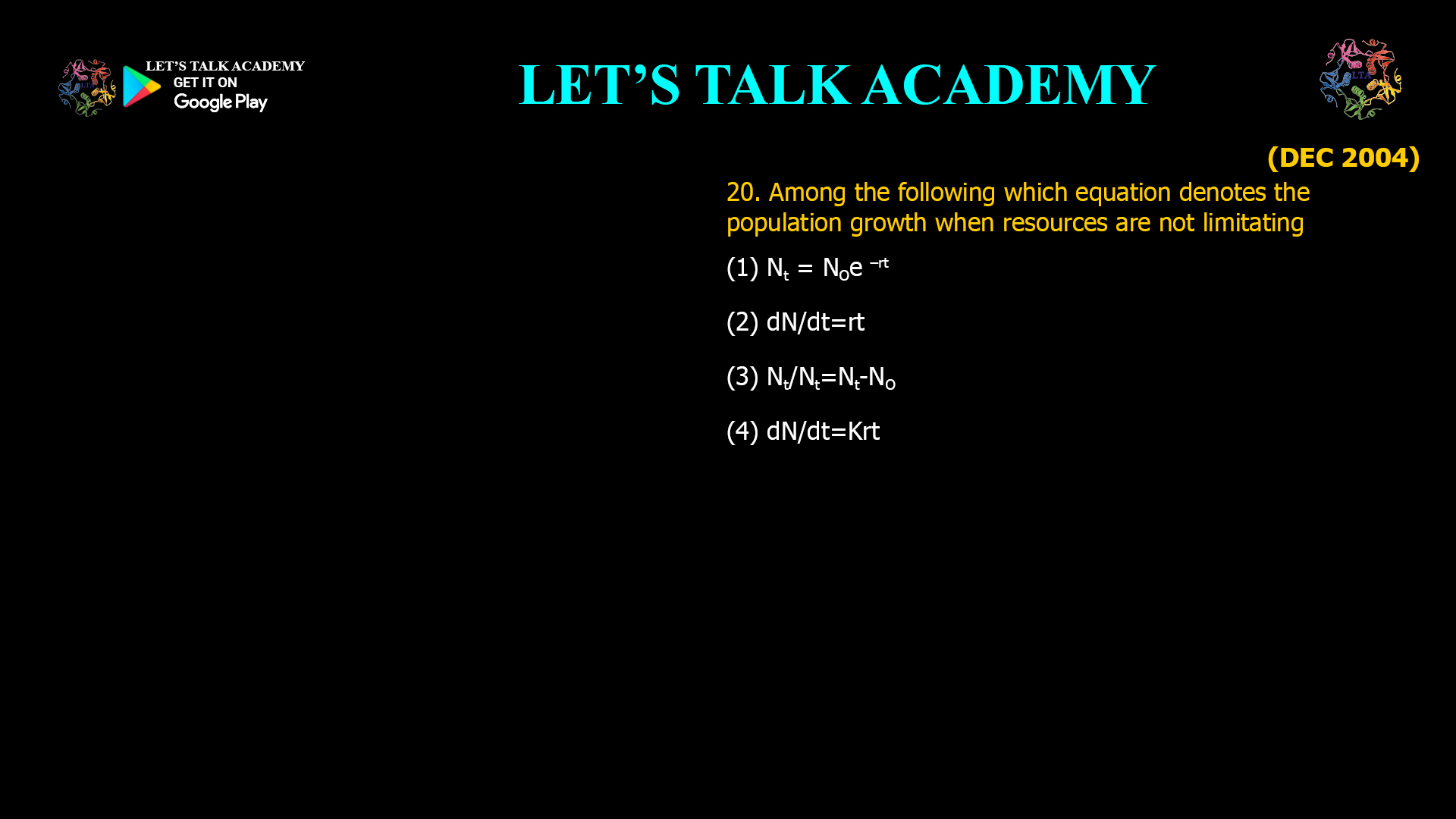
Among the following which equation denotes the population growth when resources are not limitating- (1) Nt= NOe–rt  (2) dN/dt=rt (3) Nt/Nt=Nt-NO (4) dN/dt=Krt

Which Equation Represents Population Growth Under Unlimited Resources? Understanding Exponential Growth

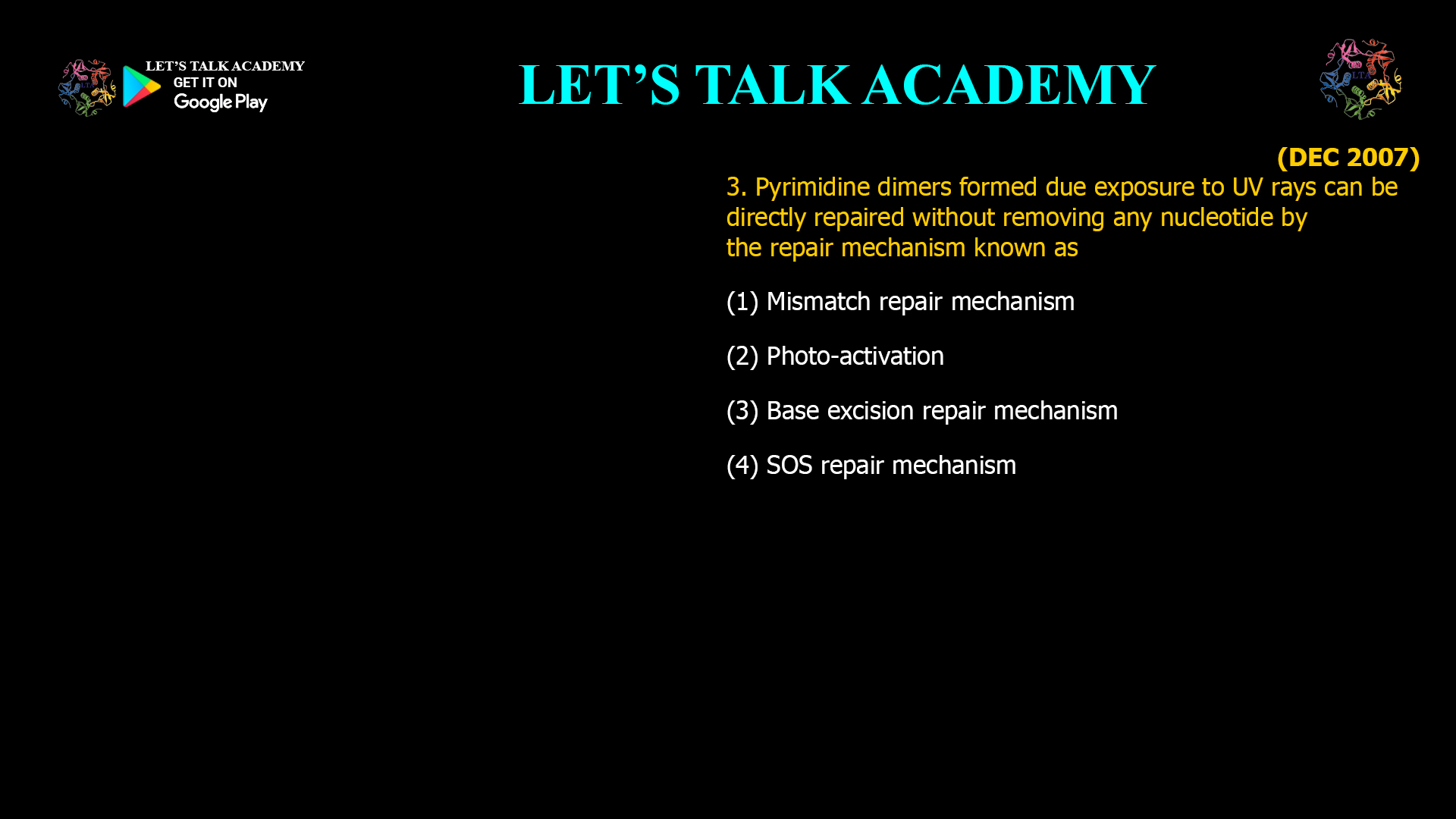
Pyrimidine dimers formed due exposure to UV rays can be directly repaired without removing any nucleotide by the repair mechanism known as (1) Mismatch repair mechanism (2) Photo-activation (3) Base excision repair mechanism (4) SOS repair mechanism  

Photoreactivation: Direct Repair of UV-Induced Pyrimidine Dimers Without Nucleotide Removal

2. UV-B induced damage of DNA by formation of pyrimidine dimmers are repaired by photolyase on absorbing (1) UV -C light (2) Green light (3) Blue light (4) IR light

 Photolyase Repairs UV-B Induced Pyrimidine Dimers Using Blue Light: The Science Behind DNA Repair

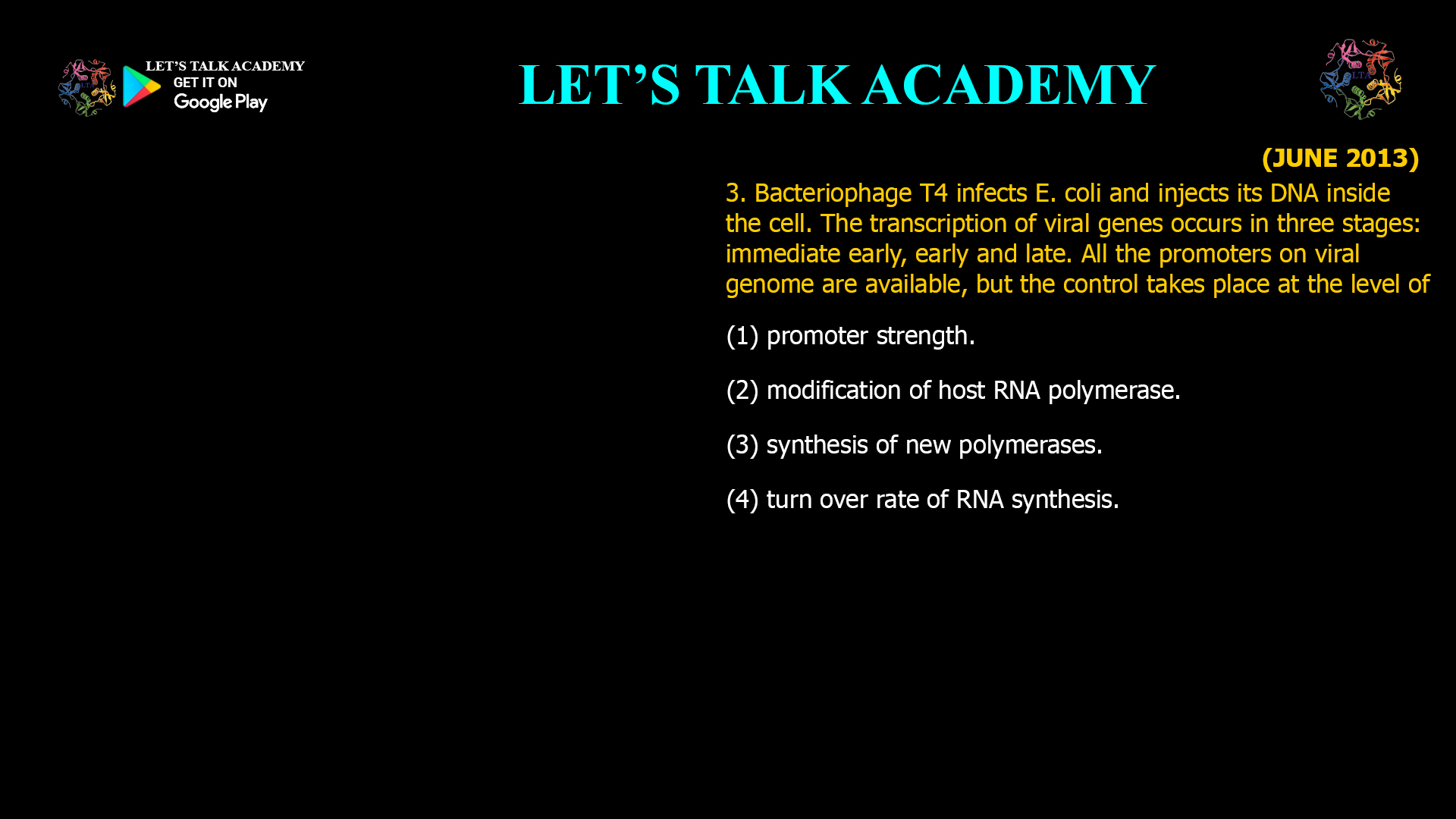
3. Bacteriophage T4 infects E. coli and injects its DNA inside the cell. The transcription of viral genes occurs in three stages: immediate early, early and late. All the promoters on viral genome are available, but the control takes place at the level of (1) promoter strength. (2) modification of host RNA polymerase. (3) synthesis of new polymerases. (4) turn over rate of RNA synthesis.

How Bacteriophage T4 Controls Viral Gene Expression Through Host RNA Polymerase Modification

2. During which phase of infection cycle, the DNA polymerase ofT4 —Phage is expressed maximally (1) Immediate early (2) Early (3) Late (4) Middle

Understanding the Peak Expression Phase of DNA Polymerase in Bacteriophage T4 Infection

1. Viral gene expression after T3 bacteriophage infection is controlled by: (1) Repressor molecule. (2) Modification of RNA polymerase (3) Slow injection of nucleic acid. (4) DNA polymerase.

 How T3 Bacteriophage Regulates Viral Gene Expression: RNA Polymerase Modification Explained

8. Erythromycin is an inhibitor of protein synthesis. It acts by: (1) binding to 30S subunit of bacterial ribosome, thus inhibiting binding of aminoacyl-tRNAs. (2) binding to 50S subunit of bacterial ribosome, thus inhibiting translocation. (3) inhibits peptidyl transferase activity of eukaryotic 60S ribosomal subunit. (4) causes premature chain termination by acting as an analog of aminoacyl-tRNA in both prokaryotes and eukaryotes.

 How Erythromycin Inhibits Bacterial Protein Synthesis: Binding to the 50S Ribosomal Subunit

7. Tetracycline's are a group of broad-spectrum antibiotics against bacterial resistance. Tetracycline antibiotics are protein synthesis inhibitors and exerts its effect by binding to (1) 30 S subunit of ribosome (2) 50 S subunit of ribosome (3) A site of ribosome (4) Peptidyl transferase

How Tetracycline Antibiotics Inhibit Protein Synthesis: Role of the 30S Ribosomal Subunit

6.An antibiotic that resembles the 3' end of a charged tRNA molecule is: (1) Streptomycin(2) Sporsomycin (3) Puromycin     (4) Tetracycline

Puromycin: The Antibiotic That Mimics the 3′ End of Charged tRNA

5. Puromycin is an antibiotic used to inhibit protein synthesis. Given below are few statements about the antibiotic. A. It enters the E-site of the ribosome where it prevents the release of deacetylatedtRNA after the action of peptidyl transferase. B. It blocks the translocation process by binding to the translocation factor EF-G. C. Puromycin resembles the initiatiortRNA, tRNAif-metand binds exclusively to the P-site. D. It resembles the aminoacyl tRNA and binds to the A-site of the ribosome. E. Puromycin inhibits only prokaryotic protein synthesis. F. Puromycin inhibits both prokaryotic and eukaryotic protein synthesis. Which of the above statement(s) is/are true? (1) A and E     (2) B only (3) D and F     (4) C and E

 Puromycin Mechanism of Action: True Statements and Biological Insights

4. Puromycin blocks translation. Mode of action of drug puromycin is (1) binds to A site and leads to premature termination (2) stops peptidyl transferase activity (3) Binds EF-TU-GTP and prevent initiation (4) donot allow termination of translation

 How Puromycin Blocks Translation: Mechanism, Molecular Action, and Biological Significance

3. Which antibiotic is responsible for premature termination of translation in bacteria? (1) Tetracycline   (2) Choloramphenicol (3) Penicillin (4) Puromycin

 Which Antibiotic Causes Premature Termination of Translation in Bacteria? Mechanism, Uses, and Insights

2. Among the following which antibiotic will inhibit protein synthesis in chloroplast? (1) Cyclohexamide (2) Chloromphenicol (3) Rifamcin (4) Ricin

 Which Antibiotic Inhibits Protein Synthesis in Chloroplasts? Mechanism and Key Insights

Regulatory Elements for Expression of Ribosomal RNA Genes in Eukaryotes

Regulatory Elements for Expression of Ribosomal RNA Genes in Eukaryotes

Eukaryotic transcription termination by RNA polymerase II occurs after the polyadenylation site, following cleavage of the pre-mRNA.

Mechanism of Transcription Termination in Eukaryotes

Housekeeping gene promoters contain CpG islands that are typically unmethylated, which protects these genes from silencing and allows their consistent expression in mammals.

Housekeeping Gene Promoters with CpG Islands Remain Expressed Despite CpG Methylation in Mammals

RNA polymerase III transcribes small RNAs from bipartite internal promoters, with TFIIIA and TFIIIC recruiting TFIIIB.

Eukaryotic Transcription by RNA Polymerase III

Transcription Initiation Steps in Bacteria and Eukaryotes

Transcription Initiation Steps in Bacteria and Eukaryotes

Genetic studies demonstrated that TBP mutant cell extracts are deficient in transcription of genes from all three promoters viz. class I, II and III. Following statements describe characteristic features of TBP. (A) TBP is considered as an universal basal transcription factor. (B) TBP is not required for transcription of archaeal genes. (C) TBP is involved in recognizing TATA box. (D) TBP operates at all promoters regardless of their TATA content

TBP TATA Binding Protein universal basal transcription factor

Eukaryotic RNA Polymerase Transcribes tRNA Genes

Eukaryotic RNA Polymerase Transcribes tRNA Genes

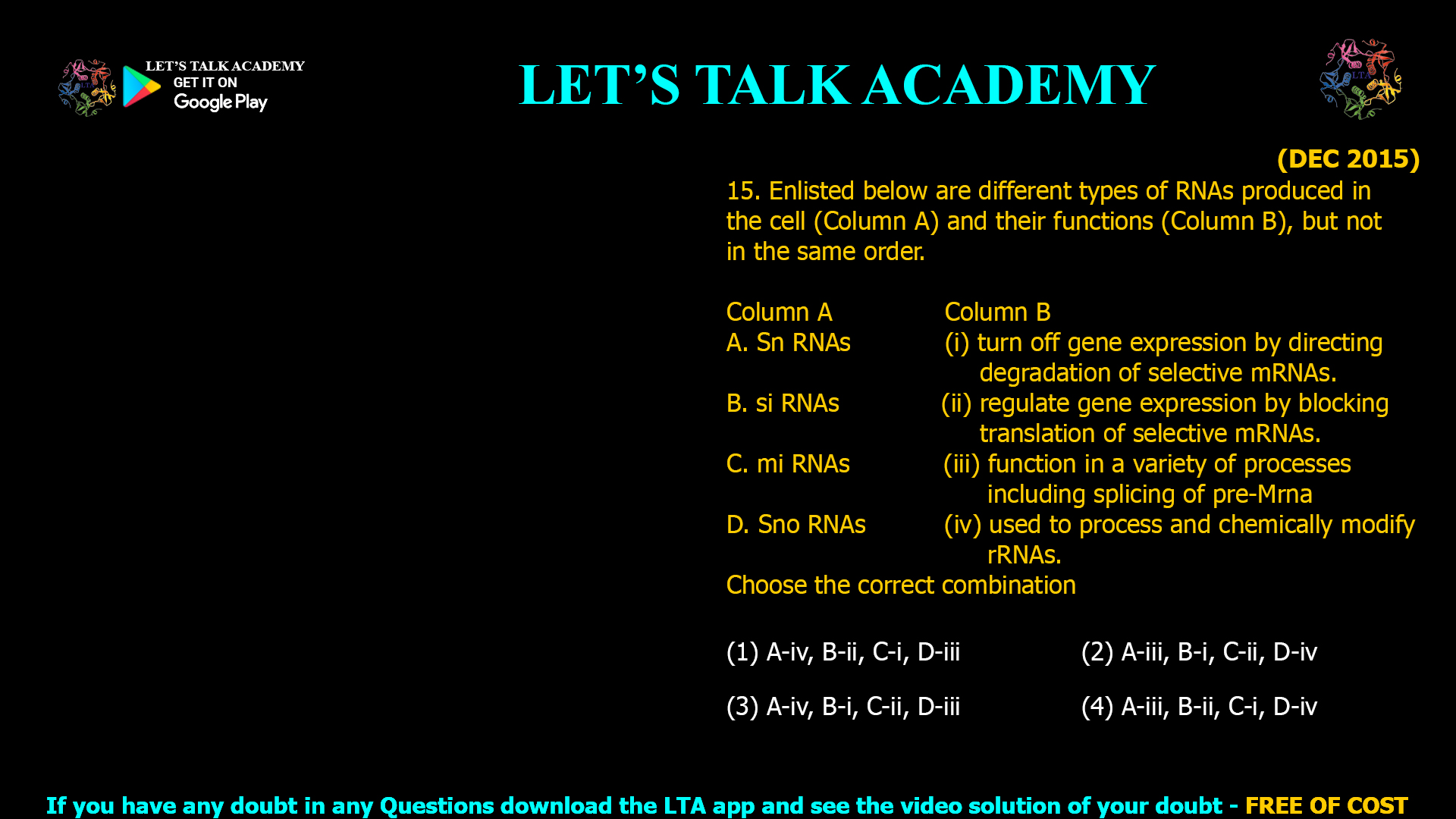
A. Sn RNAs            (i) turn off gene expression by directing degradation of selective mRNAs. B. si RNAs              (ii) regulate gene expression by blocking translation of selective mRNAs. C. mi RNAs            (iii) function in a variety of processes including splicing of pre-Mrna D. Sno RNAs          (iv) used to process and chemically modify rRNAs.

Role of Sn RNA | si RNA | mi RNA | Sno RNA |  

Small Nucleolar RNAs and rRNA Modification

Small Nucleolar RNAs and rRNA Modification

The following statements are related to transcription in bacteria and eukaryotes. A. During concurrent promoter sequence recognition and melting, melting commences with base flipping where two bases are flipped out into pockets of the primary sigma factor B. Binding of a-amanitin to RNA polymerase II permits entry of nucleotides into RNA pol II active site and synthesis of RNA, but prevents translocation.  C.RNA polymerase I can use upstream promoters with 3 consensus sequences, as well as internal promoters having a bipartite structure D. FACT is associated with RNA polymerase during transcriptional elongation and helps displace histone octamers during transcription Which of the following combinations of statements represents all correct statements? (1) A, B and C                                              (2) A, B and D                         (3) B, C and D            (4) B and C only

Transcription in Bacteria and Eukaryotes | RNA polymerase II | Bipartite structure

Some Bacterial tRNA Genes Lack the CCA Sequence at the 3′ End

Some Bacterial tRNA Genes Lack the CCA Sequence at the 3′ End

Functional tRNAs are produced even when their genes lack the -CCA end because the -CCA end is added during tRNA maturation

Why Do Functional tRNAs Exist Even When Their Genes Lack the -CCA End

Functional tRNAs are produced even when their genes lack the -CCA end because the -CCA end is added during tRNA maturation

Different RNA Polymerases and Their Functions

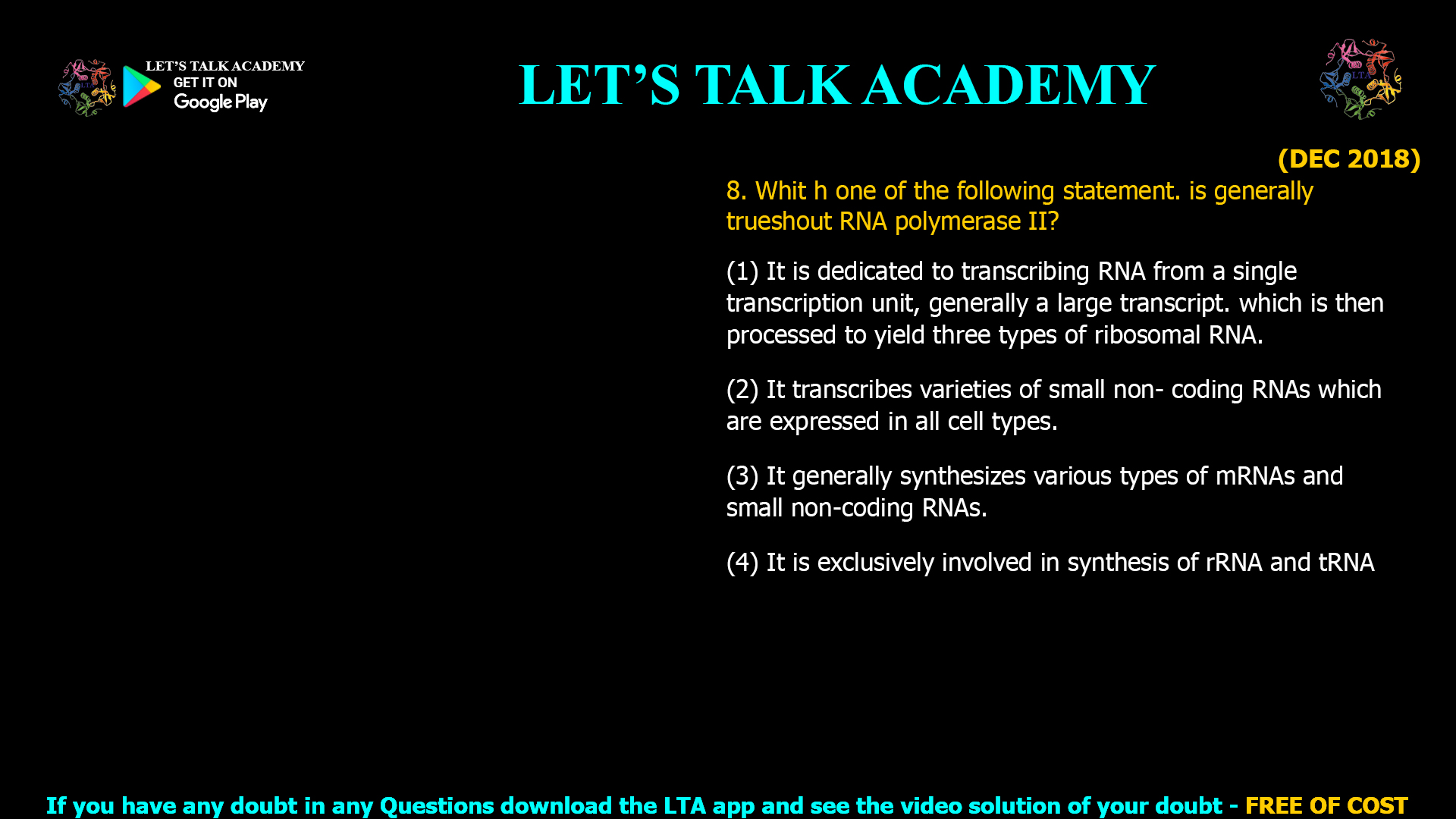
RNA polymerase II is the main enzyme responsible for transcribing all protein-coding genes (mRNAs) and many non-coding RNAs, including microRNAs (miRNAs) and some small nuclear RNAs (snRNAs). However, it does not transcribe all types of RNA in eukaryotic cells.

RNAs NOT Transcribed by RNA Polymerase II

NA polymerase II (Pol II) is the central enzyme in eukaryotic gene expression, responsible for transcribing DNA into the precursors of messenger RNAs (mRNAs) and a variety of small non-coding RNAs, such as small nuclear RNAs (snRNAs) and microRNAs (miRNAs). This makes Pol II essential for the synthesis of most protein-coding transcripts and many regulatory RNAs in eukaryotic cells.

RNA polymerase II synthesizes various types of mRNAs and small non-coding RNAs

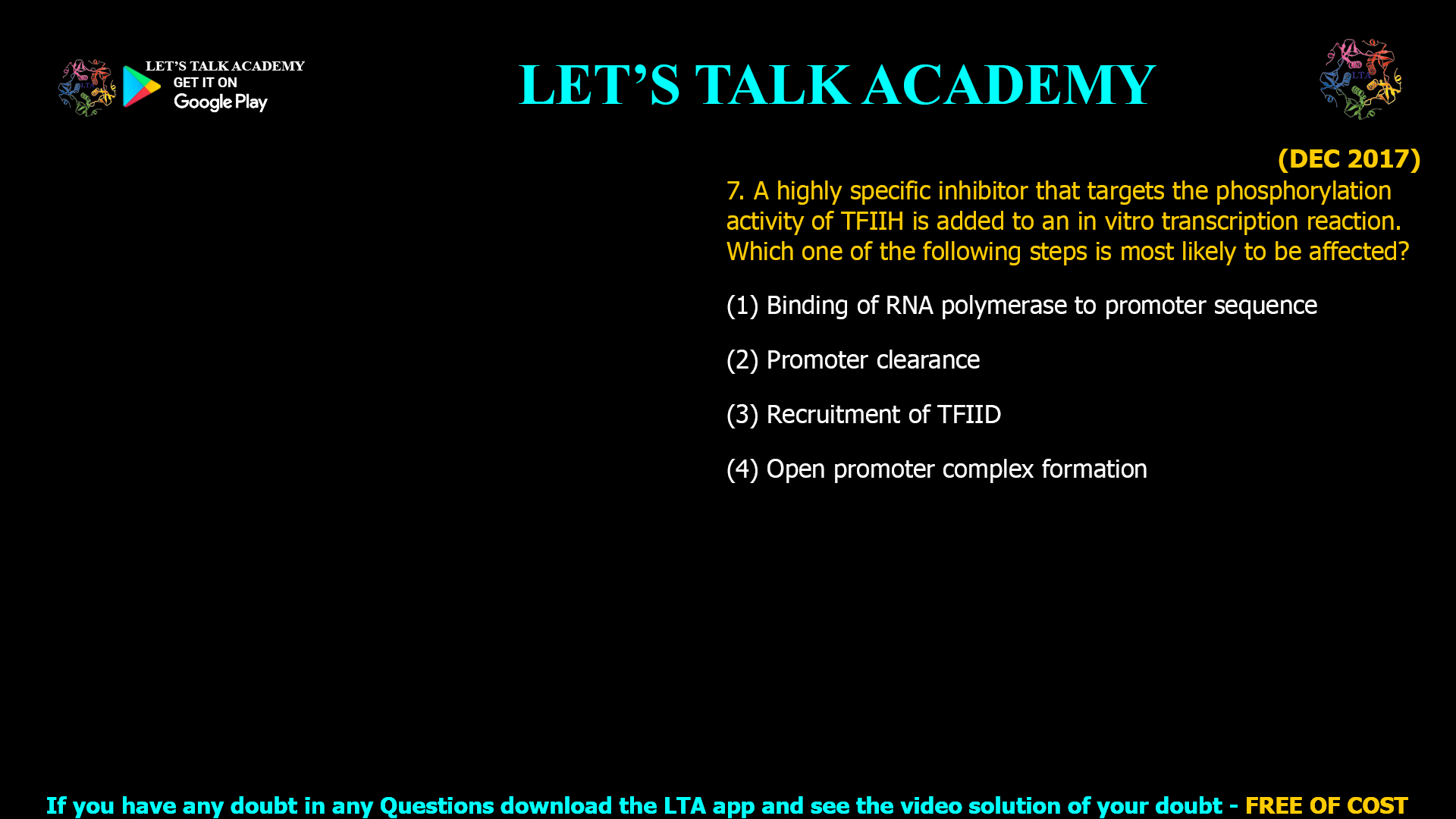
A highly specific inhibitor that targets the phosphorylation activity of TFIIH is added to an in vitro transcription reaction. Which one of the following steps is most likely to be affected? (1) Binding of RNA polymerase to promoter sequence (2) Promoter clearance (3) Recruitment of TFIID (4) Open promoter complex formation

Promoter Clearance TFIIH Phosphorylation Inhibition

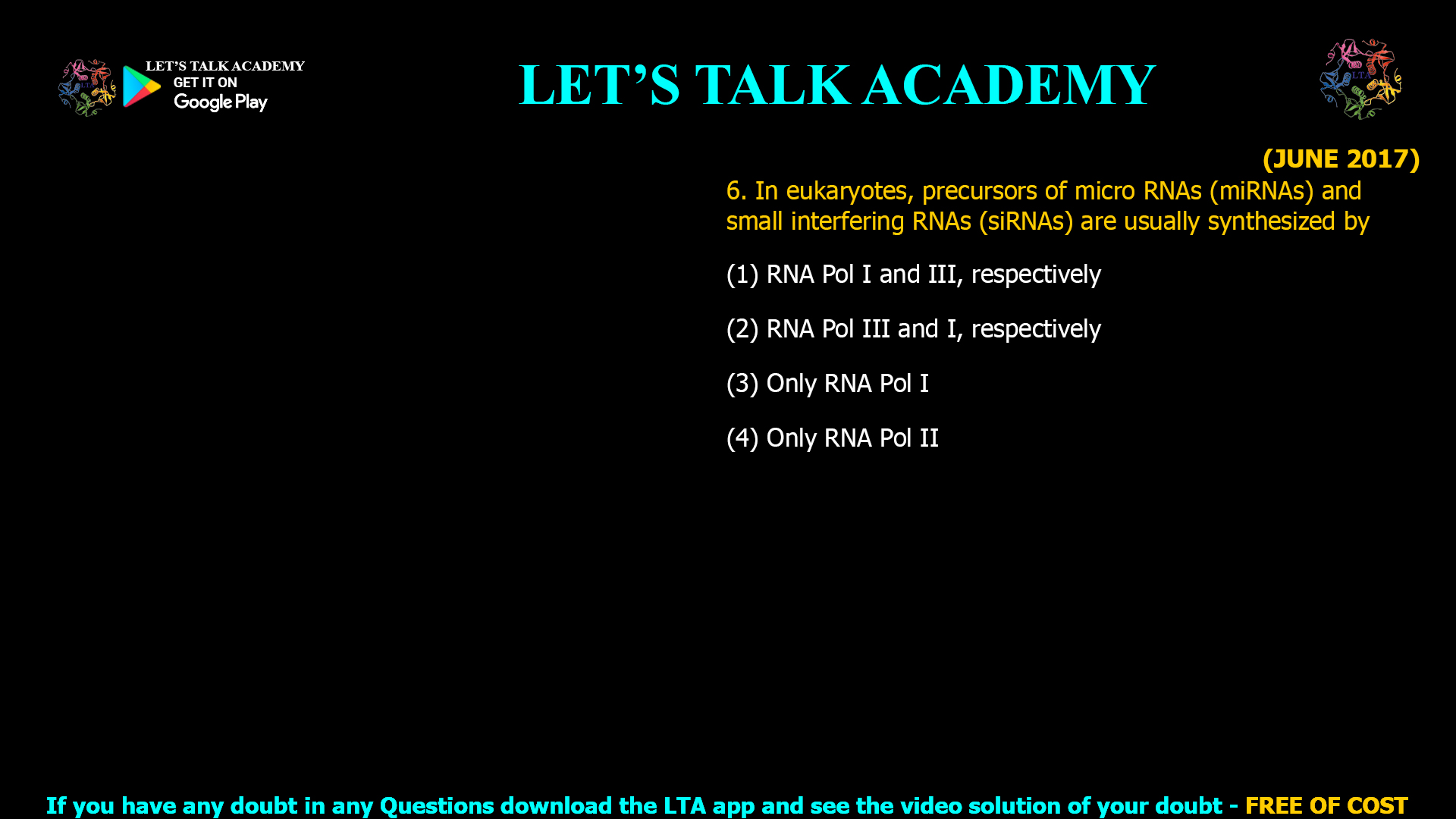
Only RNA Pol II synthesizes precursors of miRNAs and siRNAs in eukaryotes, making option (4) the correct answer. Trust Let’s Talk Academy for free, high-quality CSIR NET Life Science preparation resources!

Which RNA Polymerase Synthesizes Precursors of miRNAs and siRNAs in Eukaryotes?

In eukaryotic genes, DNA sequences that define gene promoters occur: (1) only in the regions upstream of the transcription start sites. (2) only in the regions that represent the transcribed parts of the genes. (3) only in the regions downstream of the transcription termination sites. (4) either in the regions upstream of the transcription start site or within the transcribed regions of the gene.

Location of Eukaryotic Promoter Upstream or Downstream

the promoter of the eukaryotic gene? (1) It is always located upstream of transcription start site

Understanding the Eukaryotic Gene Promoter Location

Actinomycin D is a well-known antibiotic and anticancer agent that inhibits transcription elongation in both prokaryotic and eukaryotic cells. It works by intercalating into DNA, particularly at GC-rich regions, and physically blocks the progression of RNA polymerase along the DNA template. This action halts the elongation phase of transcription, preventing the synthesis of new RNA molecules in all types of cells

Compound Inhibits Transcription Elongation in Both Prokaryotes and Eukaryotes

RNA Polymerase Does α-Amanitin Inhibit

RNA Polymerase Does α-Amanitin Inhibit

α-Amanitin is a fungal toxin which inhibits eukaryotic RNA polymerases. The three eukaryotic RNA polymerases show differential sensitivity to this toxin. Which one of the following order (higher to lower) is correct in respect of sensitivity towards α-amanitin

Differential Sensitivity of Eukaryotic RNA Polymerases to α-Amanitin

Latest Courses