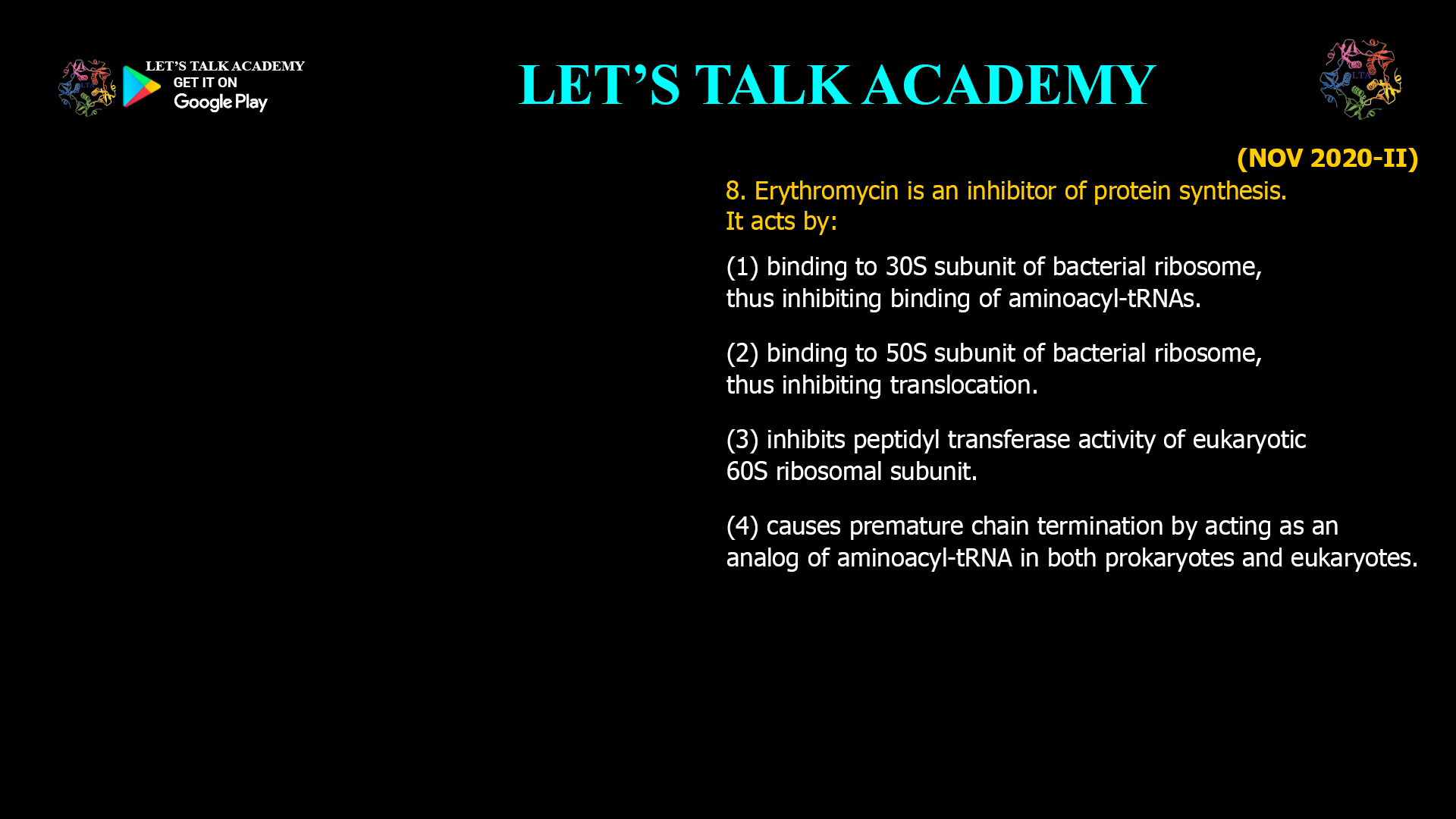
8. Erythromycin is an inhibitor of protein synthesis. It acts by:
(1) binding to 30S subunit of bacterial ribosome, thus inhibiting binding of aminoacyl-tRNAs.
(2) binding to 50S subunit of bacterial ribosome, thus inhibiting translocation.
(3) inhibits peptidyl transferase activity of eukaryotic 60S ribosomal subunit.
(4) causes premature chain termination by acting as an analog of aminoacyl-tRNA in both prokaryotes and eukaryotes.
Erythromycin is a widely used macrolide antibiotic, renowned for its effectiveness against a broad range of bacterial infections. Its clinical value stems from a highly specific mechanism of action targeting bacterial protein synthesis. Understanding how erythromycin works at the molecular level is crucial for microbiologists, clinicians, and anyone interested in antibiotic resistance and therapy.
How Erythromycin Inhibits Protein Synthesis
Erythromycin exerts its antibacterial effect by interfering with the process of translation, which is essential for protein synthesis in bacteria. Its mechanism is both targeted and efficient, making it a cornerstone in the treatment of respiratory, skin, and soft tissue infections.
Binding to the 50S Ribosomal Subunit
Erythromycin specifically binds to the 23S rRNA within the 50S subunit of the bacterial ribosome17. This binding site is located at the entrance of the nascent peptide exit tunnel—the channel through which the newly synthesized protein emerges from the ribosome68. By occupying this strategic position, erythromycin effectively blocks the passage of the growing peptide chain.
Inhibition of Translocation
The primary effect of erythromycin’s binding is the inhibition of the translocation step during protein synthesis1. Translocation is the process by which the ribosome moves along the mRNA, shifting the tRNAs and the nascent peptide from one site to the next. Erythromycin stalls this movement, causing the ribosome to halt and preventing the elongation of the protein chain. This results in the cessation of protein synthesis and, ultimately, bacterial growth127.
Bacteriostatic Action
Erythromycin is considered a bacteriostatic antibiotic, meaning it inhibits the growth and multiplication of bacteria rather than directly killing them2. By stopping protein synthesis, it deprives bacteria of the proteins necessary for survival and replication.
Why Not the Other Mechanisms?
-
Binding to the 30S Subunit: This is the mechanism of action for antibiotics like tetracycline, not erythromycin.
-
Inhibiting Peptidyl Transferase Activity of Eukaryotic 60S Subunit: Erythromycin targets bacterial ribosomes, not eukaryotic ones, and does not directly inhibit peptidyl transferase activity.
-
Acting as an Analog of Aminoacyl-tRNA: This describes puromycin, which causes premature chain termination, not erythromycin.
Summary Table: Erythromycin’s Mechanism
| Mechanism/Target | Relevant? | Explanation |
|---|---|---|
| Binds 30S subunit, blocks aa-tRNA binding | No | Tetracycline mechanism, not erythromycin |
| Binds 50S subunit, inhibits translocation | Yes | Erythromycin binds 23S rRNA in 50S subunit, blocks peptide exit tunnel |
| Inhibits peptidyl transferase of eukaryotic 60S | No | Erythromycin targets prokaryotic 50S, not eukaryotic 60S subunit |
| Analog of aminoacyl-tRNA, causes premature termination | No | Puromycin mechanism, not erythromycin |
Correct Answer
(2) binding to 50S subunit of bacterial ribosome, thus inhibiting translocation.
Clinical and Research Implications
Erythromycin’s ability to selectively target the bacterial 50S ribosomal subunit makes it a safe and effective antibiotic for human use, as human ribosomes are structurally different and not affected by this drug. However, the rise of erythromycin-resistant bacteria—often due to modifications in the 23S rRNA—highlights the ongoing need for vigilance in antibiotic stewardship and continued research into novel inhibitors.
Conclusion
Erythromycin acts as a protein synthesis inhibitor by binding to the 50S subunit of the bacterial ribosome, blocking the translocation step and stalling the production of essential proteins. This precise mechanism underpins its success as a broad-spectrum antibiotic and its continued importance in clinical practice. Understanding how erythromycin works not only informs better therapeutic use but also guides the development of next-generation antibiotics to combat resistance.


6 Comments
Komal Sharma
September 18, 2025Erythromycin acts as a protein synthesis inhibitor by binding to the 50S subunit of the bacterial ribosome, blocking the translocation step and stalling the production of essential proteins. This precise mechanism underpins its success as a broad-spectrum antibiotic and its continued importance in clinical practice. Understanding how erythromycin works not only informs better therapeutic use but also guides the development of next-generation antibiotics to combat resistance.
Sakshi yadav
November 3, 2025Erythromycin binding to 50S subunit of bacterial ribosome, thus inhibiting translocation.
Sakshi Kanwar
November 3, 2025Binds 50S subunit, inhibits translocation
Santosh Saini
November 3, 2025Binding to 50s subunit of bacterial ribosome, thus inhibiting translocation
Sonal Nagar
November 4, 2025Option 2nd
Muskan Yadav
November 7, 2025(2) binding to 50S subunit of bacterial ribosome, thus inhibiting translocation.