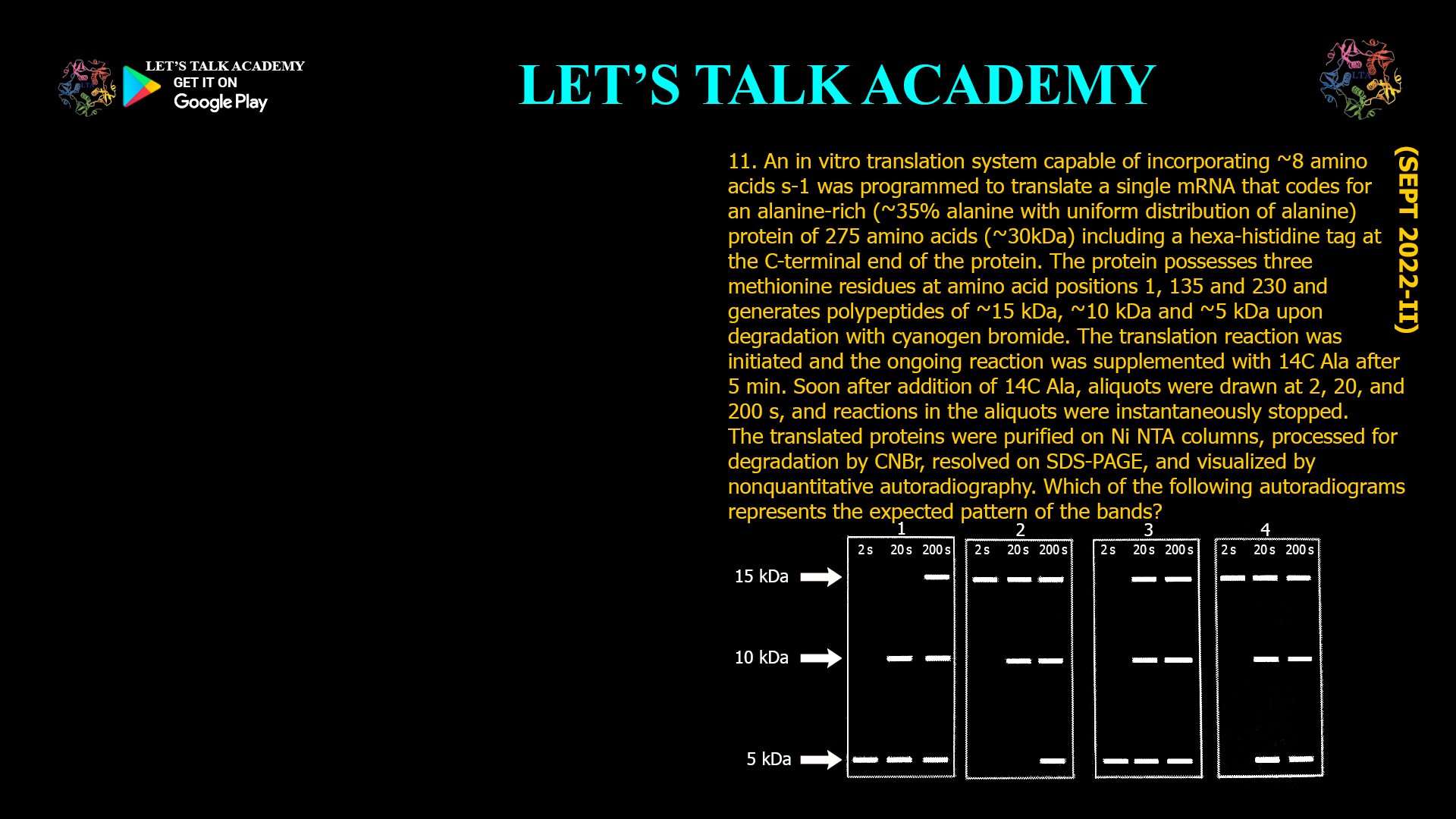
11. An in vitro translation system capable of incorporating ~8 amino acids s-1 was programmed to translate a single mRNA that codes for an alanine-rich (35% alanine with uniform distribution of alanine) protein of 275 amino acids (~30kDa) including a hexa-histidine tag at the c-terminal end of the protein. The protein possesses three methionine residues at amino acid positions 1, 135 and 230 and generates polypeptides of ~15 kDa, ~10 kDa and ~5 kDa upon degradation with cyanogen bromide. The translation reaction was initiated and the ongoing reaction was supplemented with 14C Ala after 5 min. Soon after addition of 14C Ala, aliquots were drawn at 2, 20, and 200 s, and reactions in the aliquots were instantaneously stopped. The translated proteins were purified on Ni NTA columns, processed for degradation by CNBr, resolved on SDS-PAGE, and visualized by nonquantitative autoradiography. Which Of the following autoradiograms represents the expected pattern of the bands?

Autoradiography Patterns In Vitro Translation with Cyanogen Bromide Cleavage

10. A reporter cell line with stably integrated retroviral promoter-luciferase construct was transfected with an expression vector for a cellular protein. The protein seems to regulate the activation of retroviral promoter as analyzed by luciferase activity assay. Which one of the following techniques will you use to show "in vivo" recruitment of the cellular protein on the integrated retroviral promoter? (1) Electrophoretic mobility shift assay (2) RNAse protection assay (3) DNAse hypersensitivity assay (4) Chromatin immunoprecipitation assay.

Chromatin Immunoprecipitation (ChIP) Assay

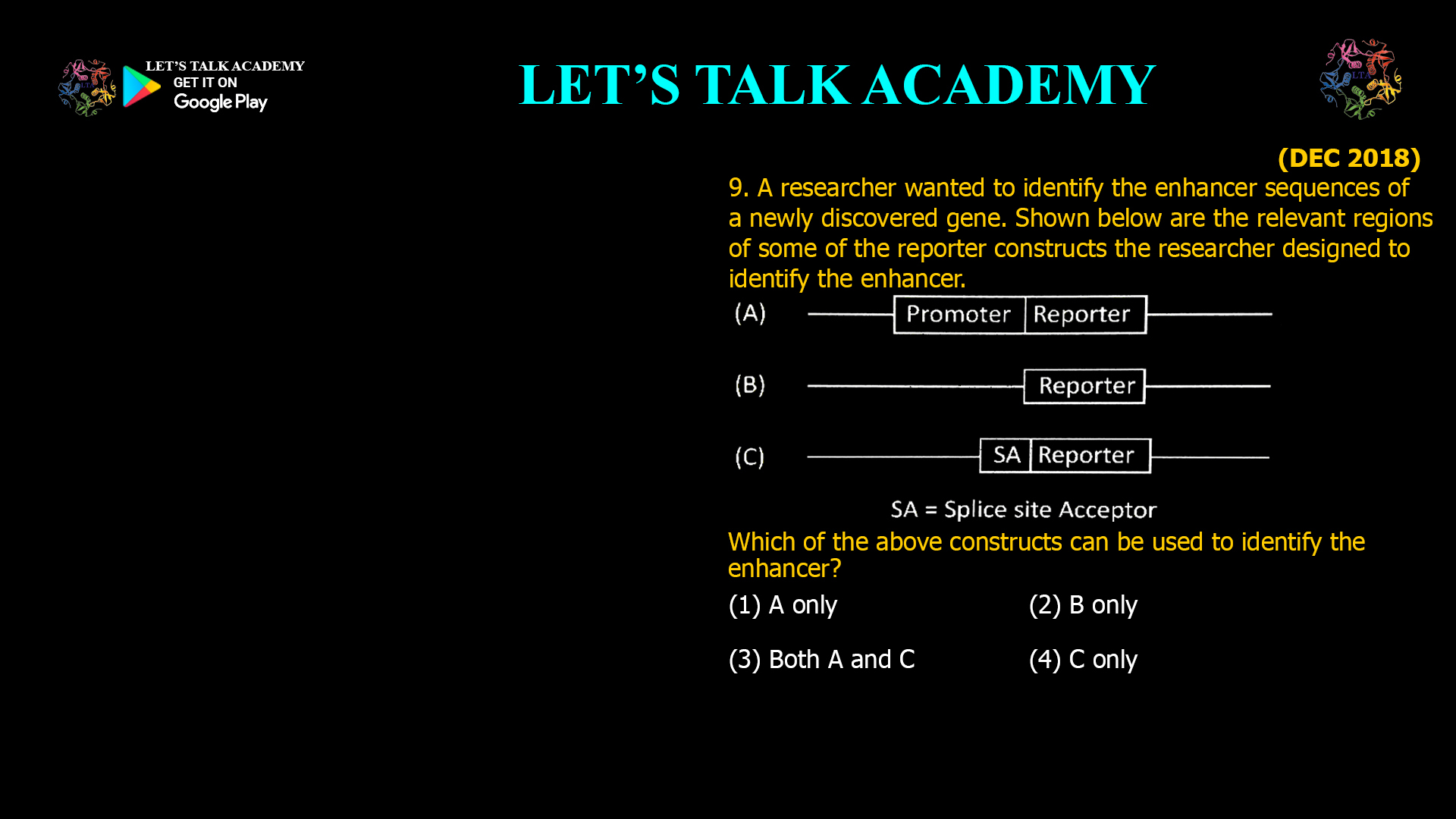
9. A researcher wanted to identify the enhancer sequences of a newly discovered gene. Shown below are the relevant regions of some of the reporter constructs the researcher designed to identify the enhancer. Which of the above constructs can be used to identify the enhancer? (1) A only (2) B only (3) Both A and C (4) C only

How to Identify Enhancer Sequences Using Reporter Constructs

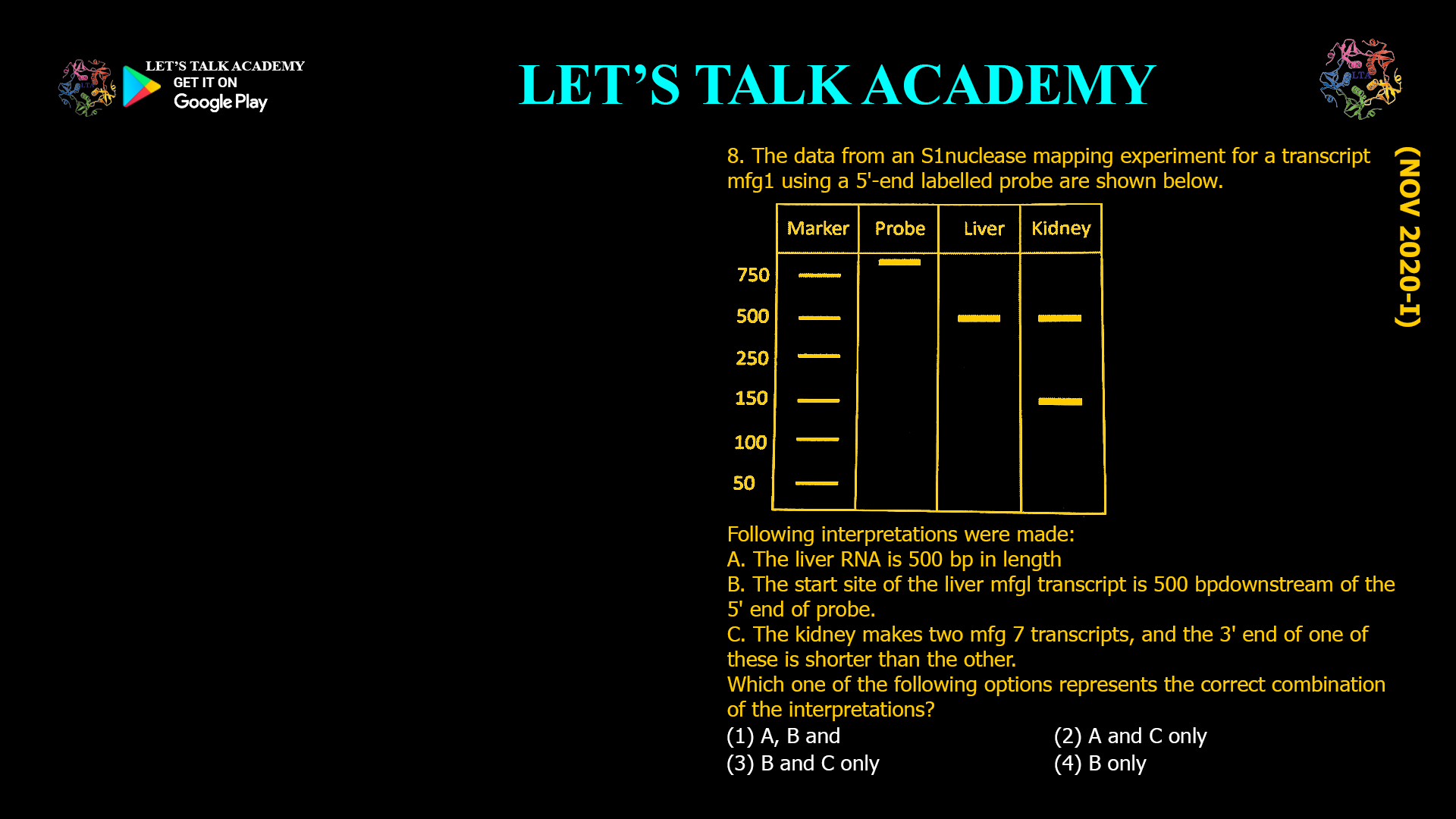
8. The data from an S1 nuclease mapping experiment for a transcript mfg1 using a 5'-end labelled probe are shown below. Following interpretations were made: A. The liver RNA is 500 bp in length B. The start site of the liver mfgl transcript is 500 bp downstream of the 5' end of probe. C. The kidney makes two mfg 7 transcripts, and the 3' end of one of these is shorter than the other. Which one of the following options represents the correct combination of the interpretations? (1) A, B and (2) A and C only (3) B and C only (4) B only

S1 Nuclease Mapping: Understanding Transcript Length and Start Sites

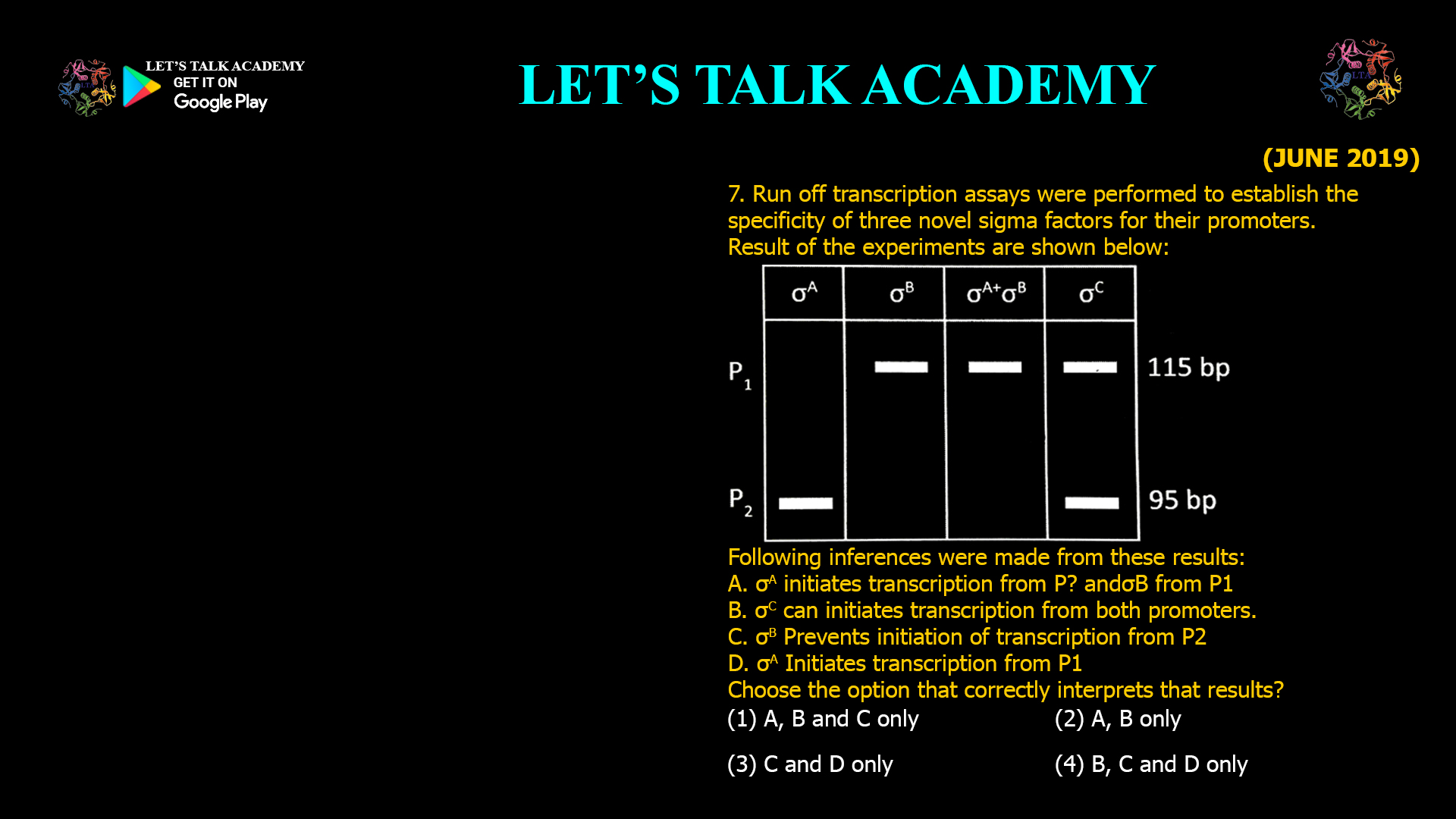
(JUNE 2019) 7. Run off transcription assays were performed to establish the specificity of three novel sigma factors for their promoters. Result of the experiments are shown below: Following inferences were made from these results: A. σA initiates transcription from P? and σB from P1 B. σC can initiates transcription from both promoters. C. σB Prevents initiation of transcription from P2 D. σA Initiates transcription from P1 Choose the option that correctly interprets that results? (1) A, B and C only (2) A, B only (3) C and D only (4) B, C and D only

Interpreting Run-Off Transcription Assay Results: Specificity of Novel Sigma Factors for Promoters

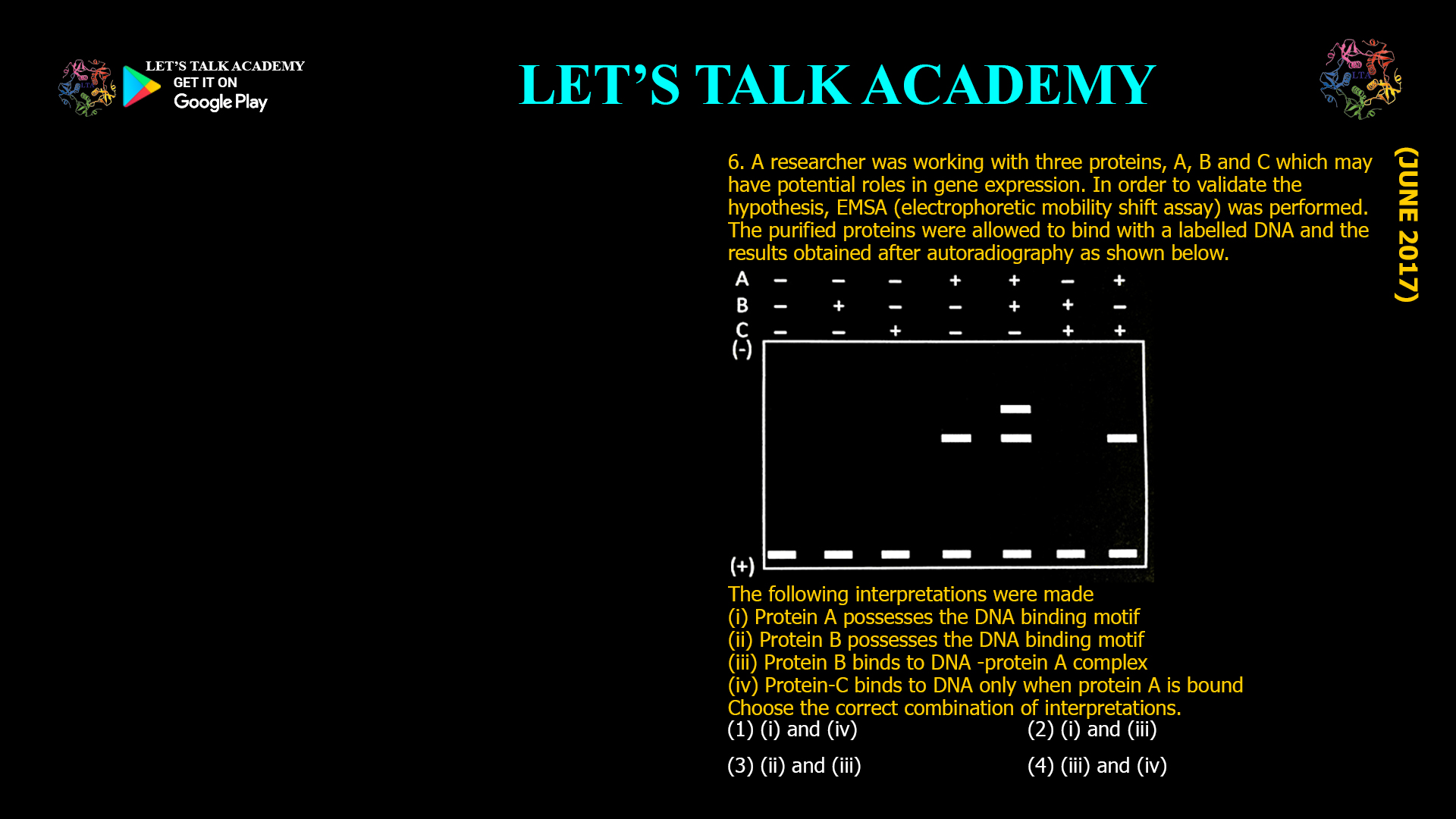
6. A researcher was working with three proteins, A, B and C which may have potential roles in gene expression. In order to validate the hypothesis, EMSA (electrophoretic mobility shift assay) was performed. The purified proteins were allowed to bind with a labelled DNA and the results obtained after autoradiography as shown below. The following interpretations were made (i) Protein A possesses the DNA binding motif (ii) Protein B possesses the DNA binding motif (iii) Protein B binds to DNA -protein A complex (iv) Protein-C binds to DNA only when protein A is bound Choose the correct combination of interpretations. (1) (i) and (iv) (2) (i) and (iii) (3) (ii) and (iii) (4) (iii) and (iv)

Interpreting EMSA Results: Understanding Protein-DNA and Protein-Protein Interactions in Gene Regulation

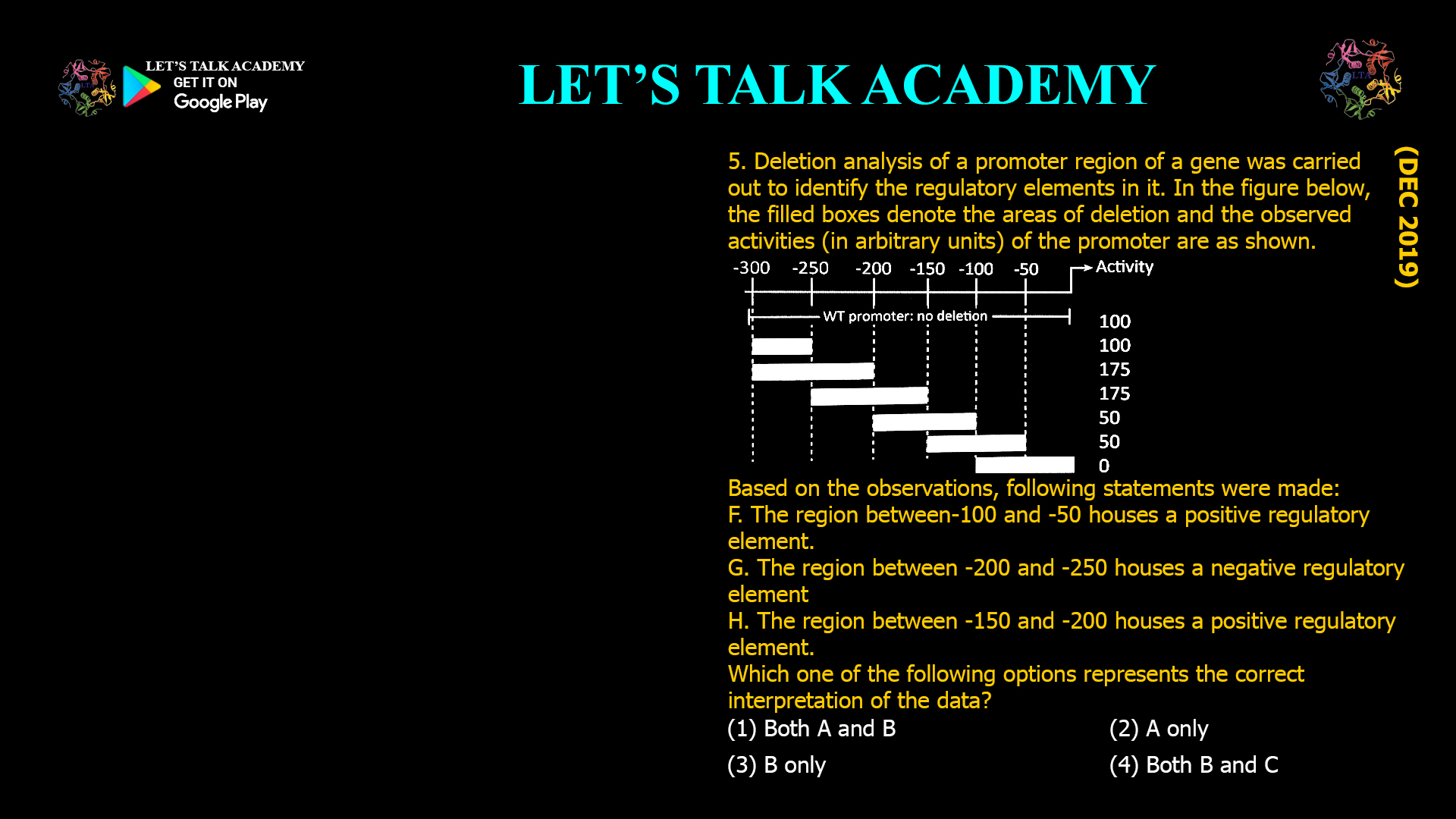
5. Deletion analysis of a promoter region of a gene was carried out to identify the regulatory elements in it. In the figure below, the filled boxes denote the areas of deletion and the observed activities (in arbitrary units) of the promoter are as shown. Based on the observations, following statements were made: F. The region between-100 and -50 houses a positive regulatory element. G. The region between -200 and -250 houses a negative regulatory element H. The region between -150 and -200 houses a positive regulatory element. Which one of the following options represents the correct interpretation of the data? (1) Both A and B (2) A only (3) B only (4) Both B and C

Promoter Deletion Analysis To Identify Negative Regulatory Element

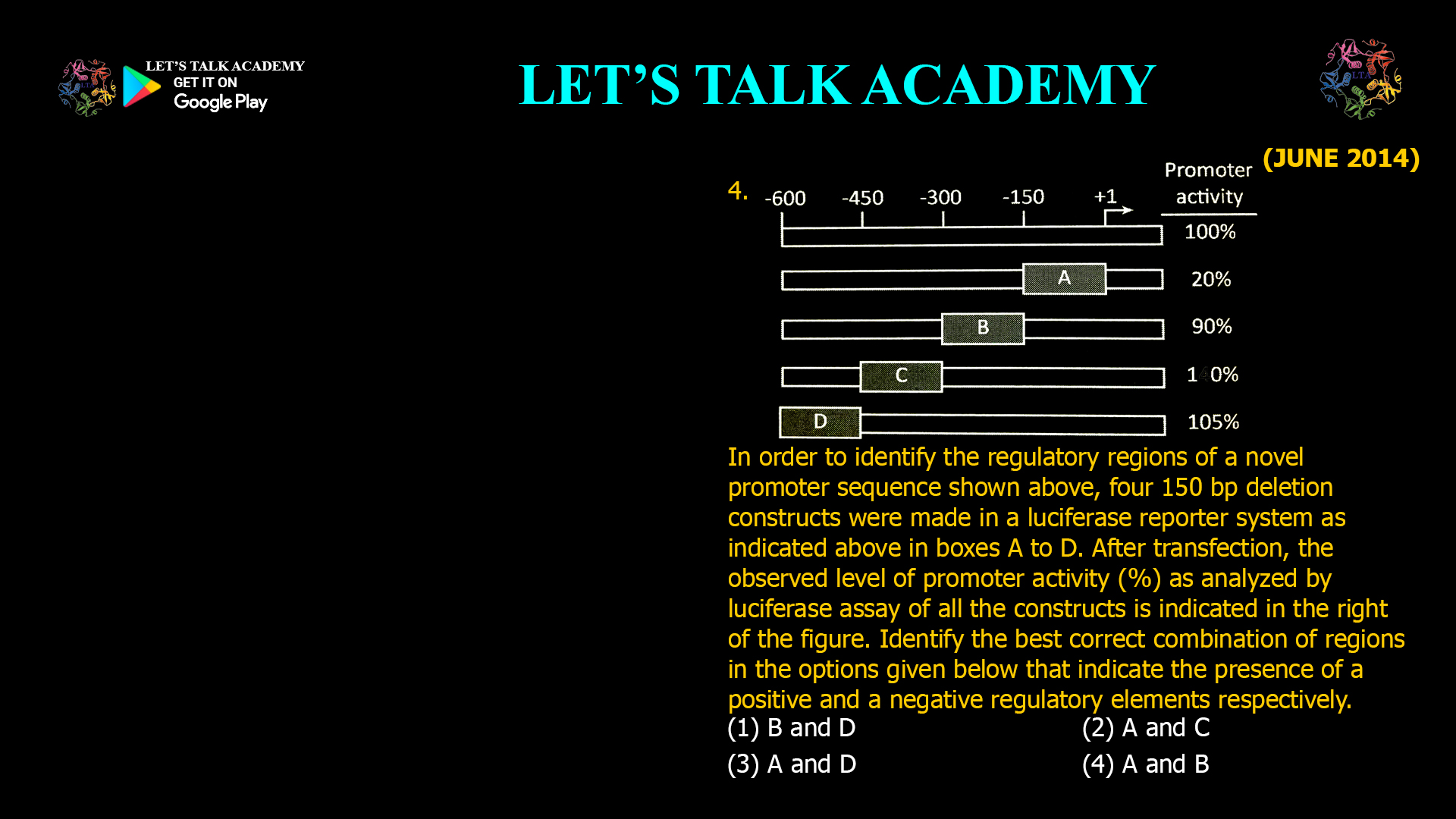
4. In order to identify the regulatory regions of a novel promoter sequence shown above, four 150 bp deletion constructs were made in a luciferase reporter system as indicated above in boxes A to D. After transfection, the observed level of promoter activity (%) as analyzed by luciferase assay of all the constructs is indicated in the right of the figure. Identify the best correct combination of regions in the options given below that indicate the presence of a positive and a negative regulatory elements respectively. (1) Band D (2) A and C (3) A and D (4) A and B

Positive and Negative Regulatory Elements in Promoters by Luciferase Reporter Deletion Constructs

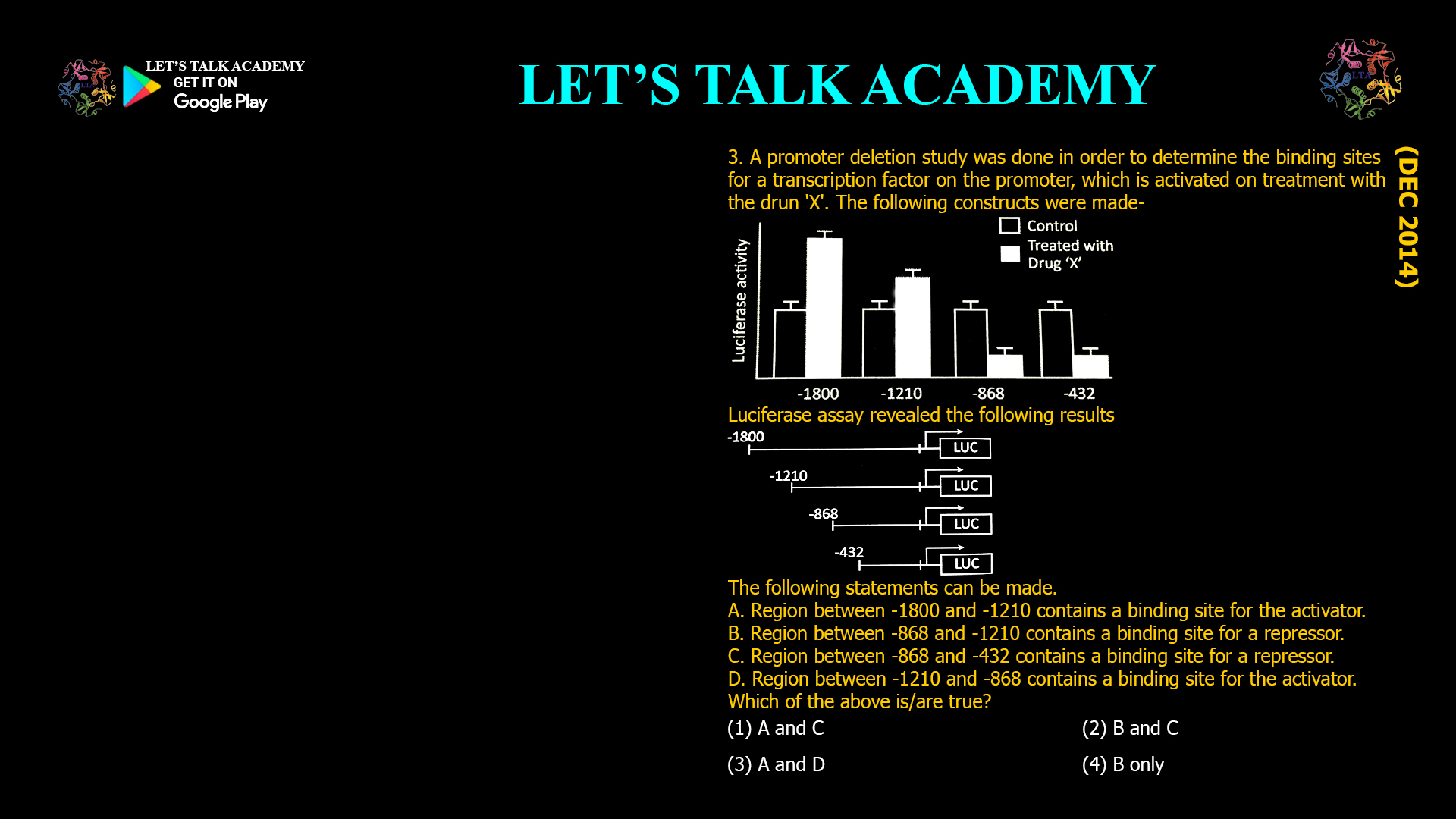
promoter deletion study was done in order to determine the binding sites for a transcription factor on the promoter, which is activated on treatment with the drug 'X'. The following constructs were made- The following statements can be made. A. Region between -1800 and -1210 contains a binding site for the activator. B. Region between -868 and -1210 contains a binding site for a repressor. C. Region between -868 and -432 contains a binding site for a repressor.

Promoter Deletion Analysis: Identifying Activator and Repressor Binding Sites in Gene Regulation

2. Which of the following methods can be used to study protein-protein interactions? (1) Co-immunoprecipitation (2) Peptide mapping (3) Radiolabeling (4) Enzyme linked immunoassay

Co-immunoprecipitation: The Most Effective Method to Study Protein-Protein Interactions

1. Which technique is most suitable to study transcription factor and its binding site? (1) DNAse I foot printing (2) Western blotting (3) Northern blotting (4) Microarray

DNase I Foot printing to Study Transcription Factors and Their Binding Sites

Latest Courses