






















75. A mixture of two proteins was subjected to following three chromatographic columns: (a) Cation exchange, (b) Size exclusion (Sephadex 100) and (c) Reverse phase. Following elution profiles were obtained. Which of the following statements is correct? (A) A is larger and more hydrophobic than B. (B) B is more anionic and more hydrophobic than A. (C) A is more hydrophobic and smaller than B.

Protein Mixture Cation Exchange

74. Which one of the following techniques CANNOT be used to remove salt from a protein solution (A) Ultrafiltration (B) Ion exchange chromatography (C) Gel filtration chromatography (D) Dialysis

 Ultrafiltration Cannot Remove Salt Protein Solution

73. You are studying the binding of proteins to the cytoplasmic face of cultured liver cells and have found a method that gives a good yield of inside-out vesicles from the plasma membrane. Unfortunately, your preparations are contaminated with variable amounts of right-side-out vesicles. Nothing you have tried avoids this contamination. Somebody suggests that you pass the vesicles over an affinity column made of lectin coupled to Sepharose beads. What is the rationale of this suggestion? (A) Right-side-out vesicles will be lysed by lectin coupled to Sepharose beads. (B) Right-side-out vesicles will simply bind to the lectin coupled Sepharose beads. (C) Lectin will bind to the carbohydrate residues present only on the inside out vesicles. (D) Lectin will bind to only glycoproteins and glycolipids present on the inside out vesicles.

Lectin Sepharose Right-Side-Out Vesicles

72. Match the chromatographic technique from Group X with the appropriate elution conditions given in Group Y: Group X A. DEAE-Sephadex B. Chromatofocusing C. Phenyl Sepharose D. G-150 Sephadex Group Y (i) Increasing NaCl gradient (ii) Isocratic elution (iii) pH gradient (iv) Decreasing (NH4)2SO4 gradient A. P-ii, Q-i, R-iii, S-i B. P-i, Q-iv, R-iii, S-ii C. P-iv, Q-iii, R-ii, S-i D. P-iii, Q-i, R-ii, S-iv

DEAE-Sephadex Chromatofocusing Phenyl Sepharose

71. In which type of chromatography are ion-pairing agents used for elution? A. Hydrophobic interaction chromatography B. Reverse phase chromatography C. Ion exchange chromatography D. Immobilized metal anion chromatography

Ion-Pairing Agents Reverse Phase Chromatography

70. Nickel nitrilotriacetic acid columns are used in __________ chromatography. A. Ion exchange B. Affinity C. Size exclusion D. Reverse phase

 Nickel Nitrilotriacetic Acid Columns

69. Which one of the following purification steps always requires a high initial ionic strength in the sample? A. Ion exchange chromatography B. Hydrophobic interaction chromatography C. Chromatofocusing D. Gel filtration chromatography

Hydrophobic Interaction Chromatography High Ionic Strength

68. In a gel filtration chromatography: A. The large protein will be eluted first B. The small protein will be eluted first C. Both large and small will elute at the same time D. The small protein with high charge will be eluted first

 Gel Filtration Chromatography

67. Which type of matrix is involved by Carboxymethyl cellulose among the following options: A. Anion-exchange matrix B. Plant cell wall constituent C. Cation-exchange matrix D. Gel filtration matrix

Carboxymethyl Cellulose Cation Exchange Matrix

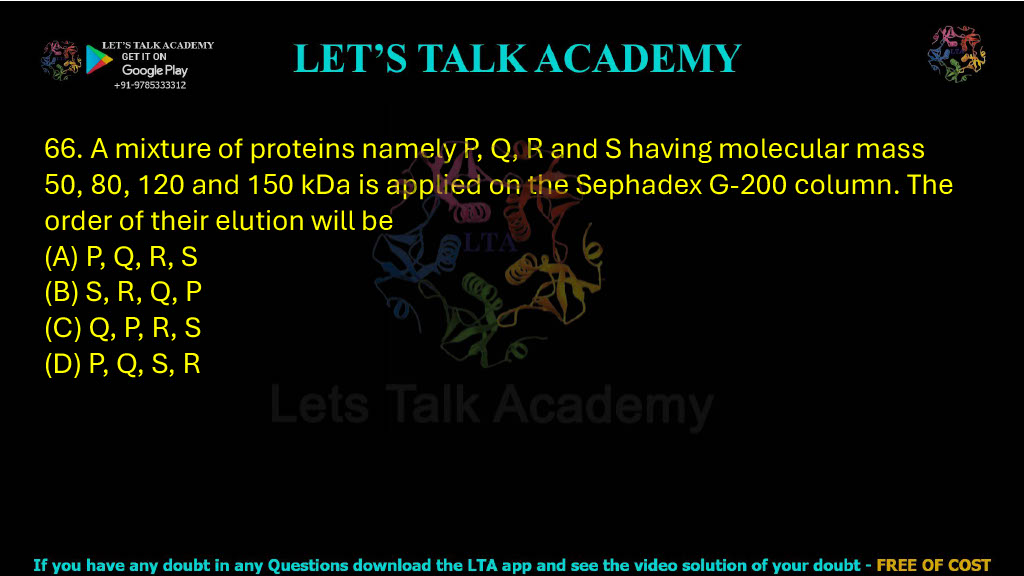
66. A mixture of proteins namely P, Q, R and S having molecular mass 50, 80, 120 and 150 kDa is applied on the Sephadex G-200 column. The order of their elution will be: A. P, Q, R, S B. S, R, Q, P C. Q, P, R, S D. P, Q, S, R

Sephadex G-200 Proteins Elution Order

65. Separation of DNA molecules labelled with 15N and 14N can be accomplished by: A. Capillary electrophoresis B. Differential centrifugation C. Pulse field gel electrophoresis D. Density gradient ultracentrifugation

Separation of 15N and 14N DNA

64. Optical density of 1 means: A. 1% of the incident light is absorbed B. 10% of the incident light is transmitted C. 10% of the incident light is absorbed D. 90% of the incident light is transmitted

D. 90% of the incident light is transmitted

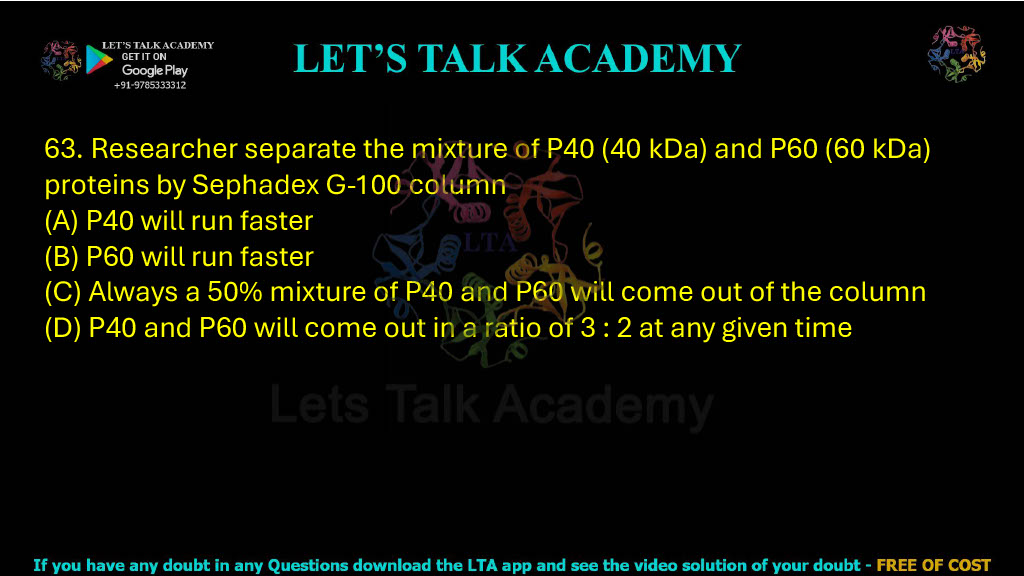
63. A researcher separates the tm of P40 (40 kDa) from a mixture of proteins P-60 (60 kDa) using a Sephadex G-100 column. A. P40 will run faster B. P60 will run faster C. Always a 50% mixture of P40 and P60 will come out of the column D. P40 and P60 will come out in a ratio of 3:2 at any given time

Sephadex G-100 P40

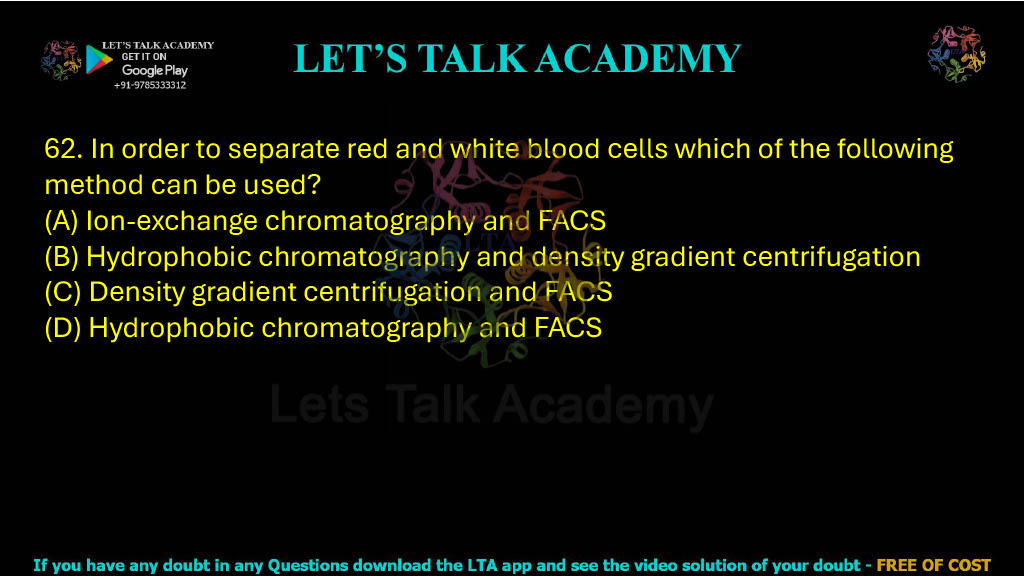
62. In order to separate red and white blood cells, which of the following methods can be used? A. Ion-exchange chromatography and FACS B. Hydrophobic chromatography and density gradient centrifugation C. Density gradient centrifugation and FACS D. Hydrophobic chromatography and FACS

Density Gradient Centrifugation

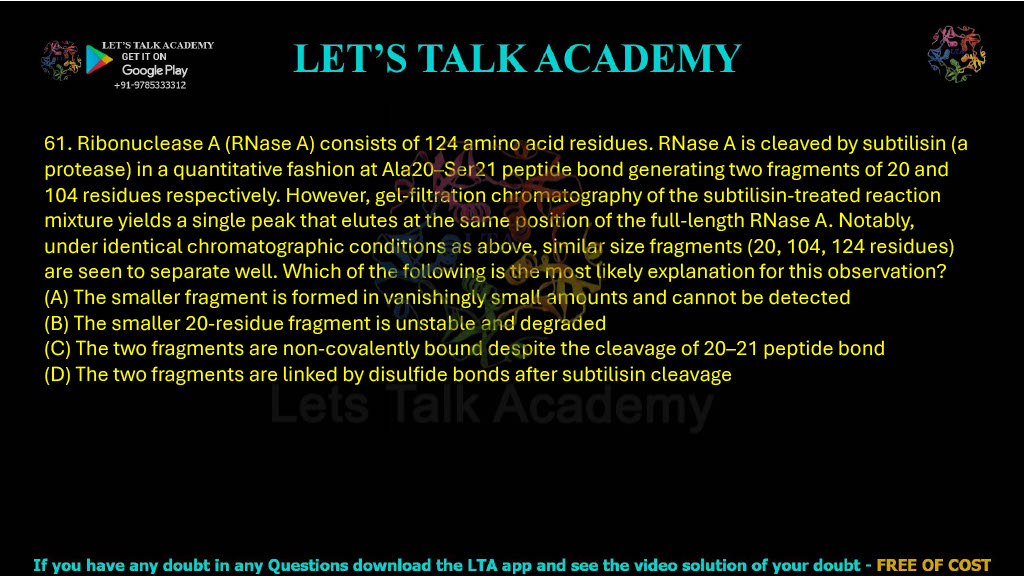
61. Ribonuclease A (RNase A) consists of 124 amino acid residues. RNase A is cleaved by subtilisin (a protease) in a quantitative fashion at the Ala 20 – Ser 21 peptide bond generating two fragments of 20 and 104 residues respectively. However, gel-filtration chromatography of the subtilisin-treated reaction mixture yields a single peak that elutes at the same position as full-length RNase A. Notably, under identical chromatographic conditions as above, similar size fragments (20, 104, 124 residues) are seen to separate well. Which of the following is the most likely explanation for this observation? A. The smaller fragment is formed in vanishingly small amounts and cannot be detected B. The 20-residue fragment is unstable and degraded C. The two fragments are non-covalently bound despite the cleavage of the 20–21 peptide bond D. The two fragments are linked by disulfide bonds after subtilisin cleavage

RNase A Fragments Linked

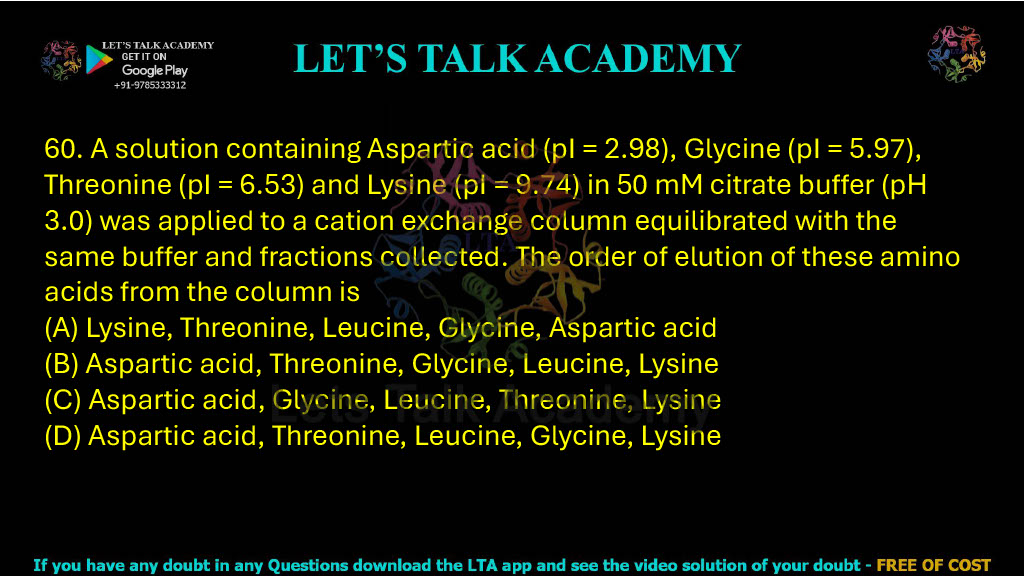
60. A solution containing Aspartic acid (pI = 2.98), Glycine (pI = 5.97), Threonine (pI = 6.53) and Lysine (pI = 9.74) in 50 mM citrate buffer (pH 3.0) was applied to a cation exchange column equilibrated with the same buffer and fractions collected. The order of elution of these amino acids from the column is: A. Lysine, Threonine, Leucine, Glycine, Aspartic acid B. Aspartic acid, Threonine, Glycine, Leucine, Lysine C. Aspartic acid, Glycine, Leucine, Threonine, Lysine D. Aspartic acid, Threonine, Leucine, Glycine, Lysine

 Cation Exchange Amino Acid Elution Order

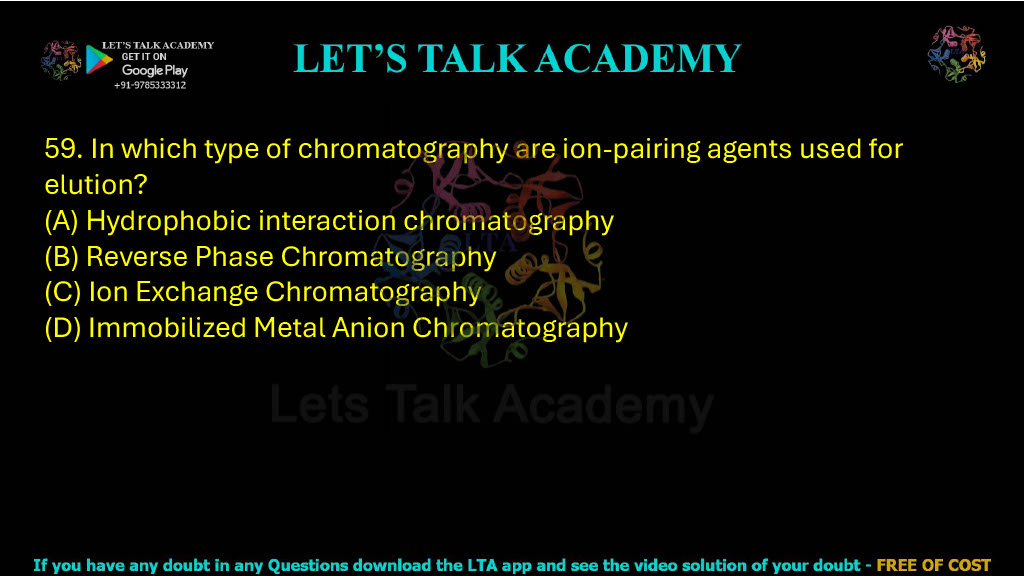
59. In which type of chromatography are ion-pairing agents used for elution? A. Hydrophobic interaction chromatography B. Reverse phase chromatography C. Ion exchange chromatography D. Immobilized metal anion chromatography

Ion Pairing Agents

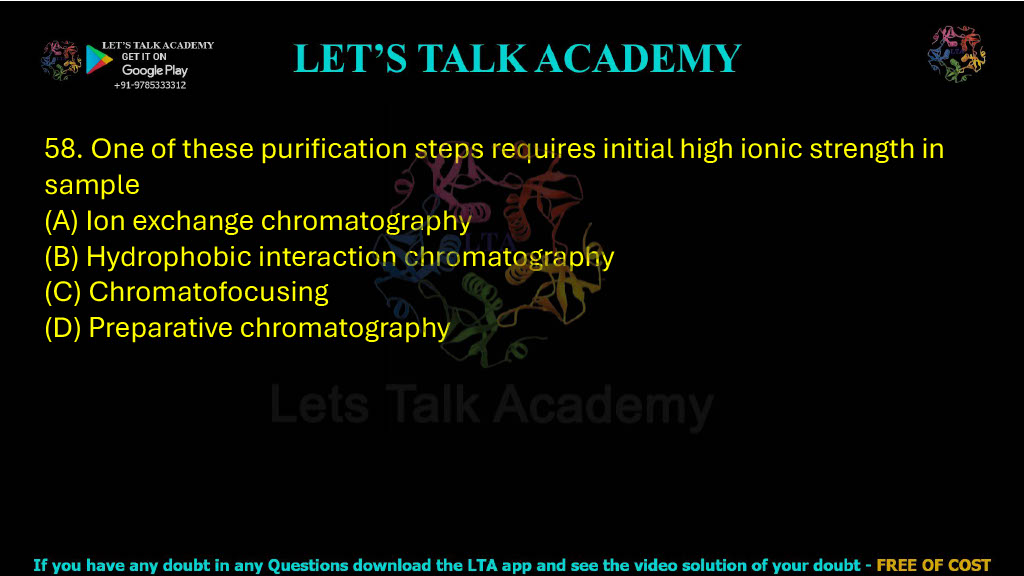
58. One of these purification steps requires initial high ionic strength in the sample: A. Ion exchange chromatography B. Hydrophobic interaction chromatography C. Chromatofocusing D. Preparative chromatography

High Ionic Strength Requirement

57. Carboxymethyl cellulose is: A. A cation-exchange matrix B. A gel filtration matrix C. An anion-exchange matrix D. A plant cell wall constituent

Carboxymethyl Cellulose Cation Exchange Matrix

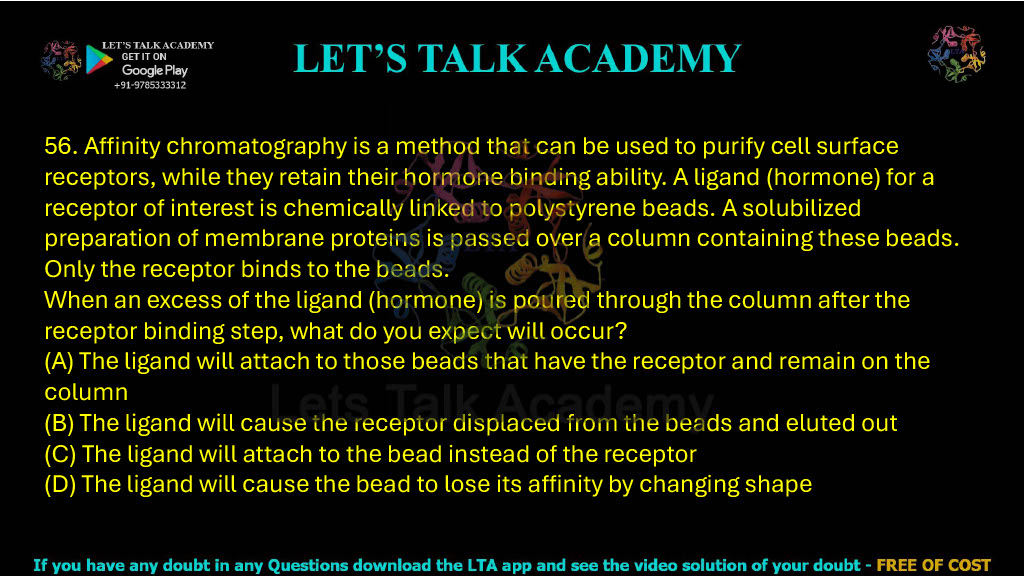
56. Affinity chromatography is a method that can be used to purify cell surface receptors, while they retain their hormone binding ability. A ligand (hormone) for a receptor of interest is chemically linked to polystyrene beads. A solubilized preparation of membrane proteins is passed over a column containing these beads. Only the receptor binds to the beads. When an excess of the ligand (hormone) is poured through the column after the receptor binding step, what do you expect will occur? A. The ligand will attach to those beads that have the receptor and remain on the column B. The ligand will cause the receptor to be displaced from the beads and eluted out C. The ligand will attach to the bead instead of the receptor D. The ligand will cause the bead to lose its affinity by changing shape

Affinity Chromatography Elution

55. Two monomeric proteins migrate identically in SDS-polyacrylamide gel electrophoresis, but get separated in a gel-permeation chromatography experiment. This could be because: A. They have different isoelectric points B. One protein has more disulphide bonds C. One protein is fibrous while the other is globular D. One protein has more hydrophobic patches on its surface as compared to the other

Fibrous vs Globular Proteins

54. Which would be best to separate a protein that binds strongly to its substrate? A. Gel filtration B. Affinity chromatography C. Cation exchange D. Anion exchange

Protein Substrate Binding Separation

53. The relative solubility of solute in both the phases determines the: A. Rate of movement of solvent B. Rate of disappearance of solvent C. Rate of movement of solute D. Rate of disappearance of solute

Relative Solubility Determines

52. A proper solvent that is passed through the column for elution so that separated components can be collected is called: A. Adsorbent B. Buffer solution C. Mobile phase D. None of the above

Solvent for Elution in Chromatography Columns

51. The gas-solid chromatography is __________ chromatography as per basic principle involved. A. Exclusion B. Ion-exchange C. Adsorption D. Absorption

Gas-Solid Chromatography

50. In size exclusion chromatography, solute molecules are separated based on: A. Molecular geometry and size B. Molecular composition C. Molecular phase D. Molecular formula

Size Exclusion Chromatography Separates

49. Liquid chromatography is a technique for separating: A. Ions that are not dissolved in a solvent B. Ions that are dissolved in a solvent C. Ions that are dissolved in a solute D. All of the above

 Liquid Chromatography Separates

48. Which of the following is not stationary phase? A. Liquid-liquid chromatography B. Gas-liquid chromatography C. Gas-solid chromatography D. Solid-solid chromatography

Solid-Solid Chromatography

47. There is no need of support if packed into a column when the stationary phase is: A. Gas B. Liquid C. Solid D. None of the above

No Support Needed When Stationary Phase

46. Chromatography involves two mutually: A. Immiscible phases B. Miscible phases C. Soluble phases D. None of the above

Chromatography Involves Two Mutually

45. Chromatography is the process for identification, purification and separation of components of a mixture on the basis of: A. Difference in their boiling point B. Difference in their melting point C. Difference in their affinity for mobile and stationary phase D. Difference in their solubility

Chromatography Separation

44. In reversed-phase HPLC: A. A hydrophilic stationary phase is combined with a non-polar mobile phase B. A hydrophobic stationary phase is combined with a polar mobile phase C. A hydrophobic stationary phase is combined with a non-polar mobile phase D. A hydrophilic stationary phase is combined with a polar mobile phase

Reversed-Phase HPLC Stationary

43. In anion exchange chromatography, A. The column contains negatively charged beads where positively charged proteins bind B. The column contains positively charged beads where negatively charged proteins bind C. The column contains both positive and negatively charged beads where proteins bind depending upon their net charge D. All of these

Anion Exchange Chromatography Mechanism

42. The use of insulin hormone to purify its receptor is an example of (A) Ion exchange chromatography (B) Affinity chromatography (C) Gel filtration chromatography (D) Ligand mediated chromatography

Insulin Receptor Purification

In gel filtration chromatography, separation of proteins are based on their (A) Size and net charge (B) Size and shape (C) Size and specific affinity (D) Shape and net charge

Gel Filtration Chromatography

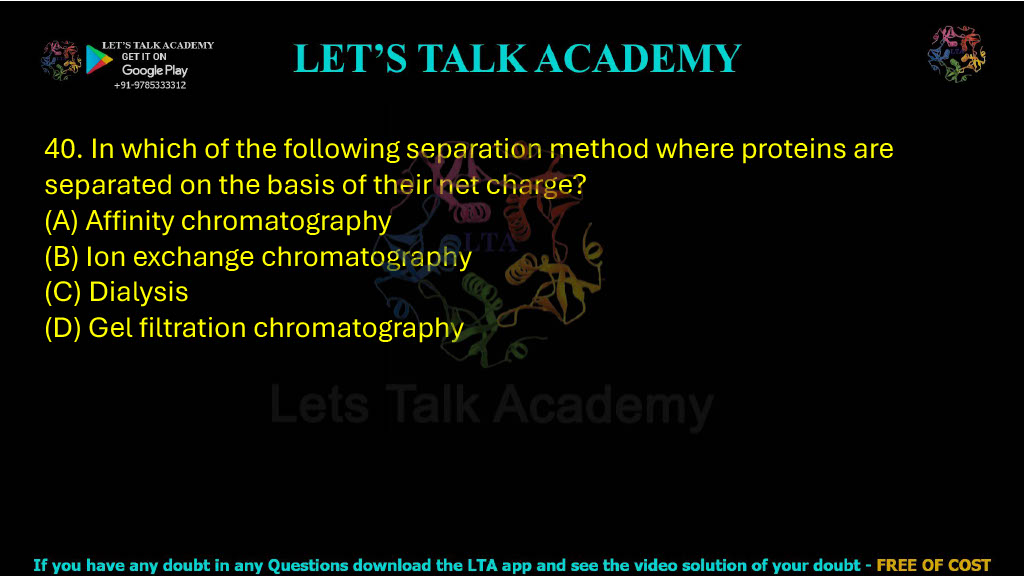
40. In which of the following separation method where proteins are separated on the basis of their net charge (A) Affinity chromatography (B) Ion exchange chromatography (C) Dialysis (D) Gel filtration chromatography

 Protein Separation by Net Charge

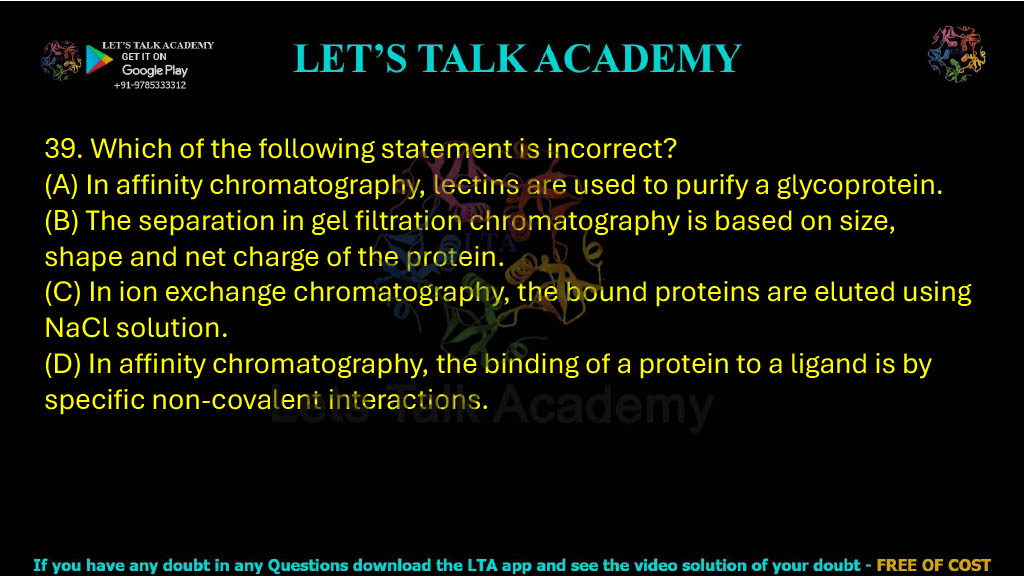
39. Which of the following statements is incorrect? A. In affinity chromatography, lectins are used to purify a glycoprotein B. The separation in gel filtration chromatography is based on size, shape and net charge of the protein C. In ion exchange chromatography, the bound proteins are eluted using NaCl solution D. In affinity chromatography, the binding of a protein to a ligand is by specific non-covalent interactions

Incorrect Statement on Protein Chromatography Methods

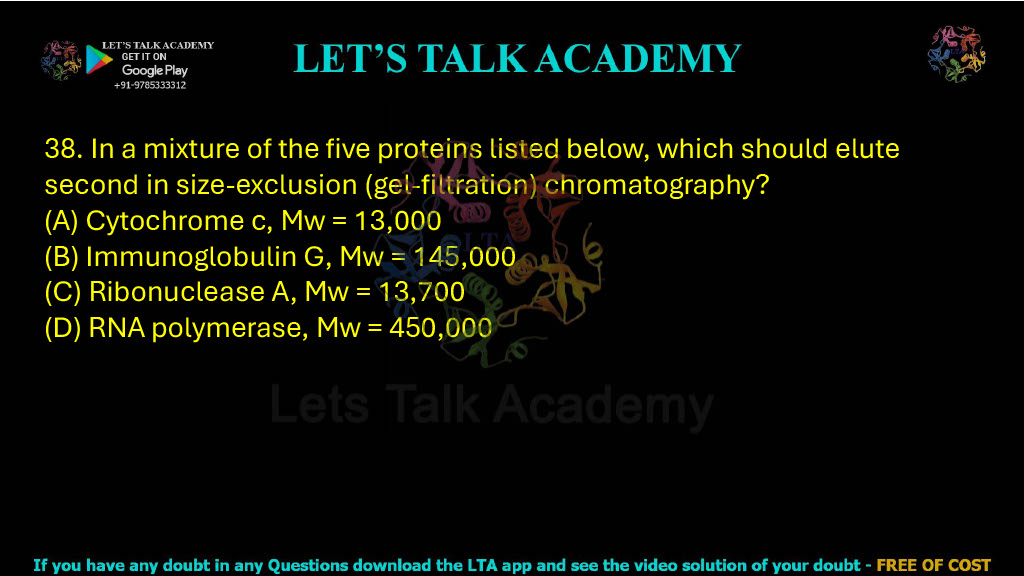
38. In a mixture of the five proteins listed below, which should elute second in size-exclusion (gel-filtration) chromatography? A. Cytochrome c (Mw = 13,000) B. Immunoglobulin G (Mw = 145,000) C. Ribonuclease A (Mw = 13,700) D. RNA polymerase (Mw = 450,000)

Size-Exclusion Chromatography

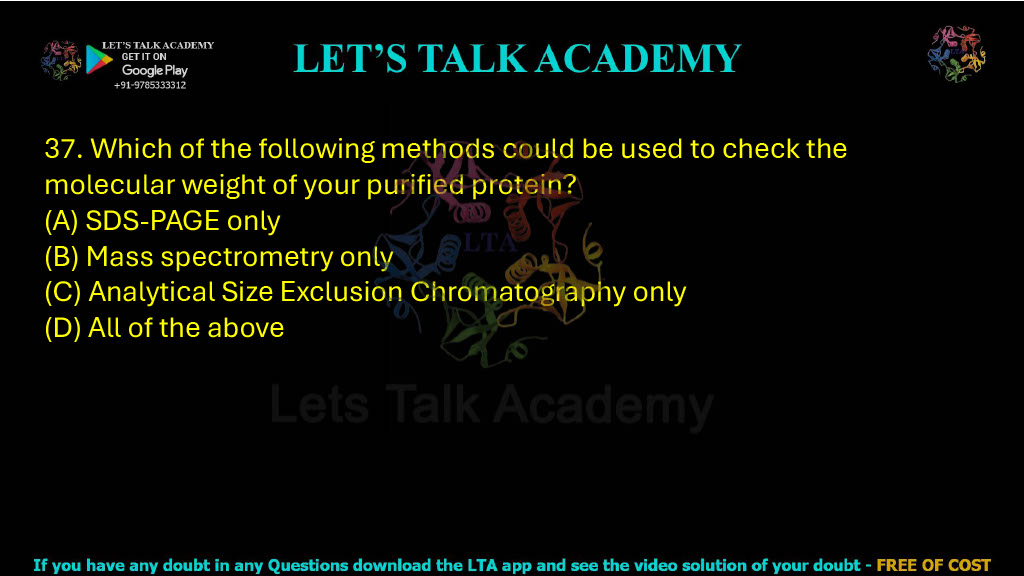
37. Which of the following methods could be used to check the molecular weight of your purified protein? A. SDS-PAGE only B. Mass spectrometry only C. Analytical size exclusion chromatography only D. All of the above

Methods to Check Molecular Weight

36. To elute target proteins from an affinity chromatography matrix, which of the following conditions would be the most appropriate? A. Low salt concentrations B. High salt concentrations C. Adding a soluble ligand which competes with the affinity tagged protein for binding to the column D. Just keep washing buffer through the column, isocratic elution

 Elute Target Proteins from Affinity Chromatography Matrix

35. What properties of a protein does hydrophobic interaction chromatography exploit for purification? A. Charged amino acids B. Hydrophobic amino acids on the protein surface C. Molecular weight D. Enzyme activity

Hydrophobic Interaction Chromatography

34. For an application where you require a sample of your target protein at high purity, what would be a good purification strategy? Assume that your starting point is E. coli cells in which the target protein fused to an affinity tag has been over-expressed. A. Affinity chromatography (AC) followed by size exclusion chromatography (SEC) B. AC only C. AC followed by ion-exchange (IEX) followed by SEC D. AC followed by IEX, followed by hydrophobic interaction (HIC) and then SEC

Best Protein Purification Strategy

33. Back diffusion occurs mostly in: A. Size exclusion chromatography B. Gas chromatography C. HPLC D. HPTLC

Back Diffusion Gas Chromatography

32. The process of release of volatile / soluble components of a GC or HPLC stationary phase is termed as: A. Bleed B. Creep C. Back flush D. Back diffusion

GC HPLC Stationary Phase Bleed

31. Which of the following is the correct statement: A. Resolution is proportional to the square root of the number of theoretical plates in a column B. Resolution is inversely proportional to the square root of the number of theoretical plates in a column C. Resolution is proportional to the square of the number of theoretical plates in a column D. Resolution is proportional to the number of theoretical plates in a column

Theoretical Plates Chromatography 

30. α-bungarotoxin binds to acetylcholine receptor (AChR) protein with high specificity and prevents the ion channel opening. This interaction can be exploited to purify AChR from membrane using (A) Ion-exchange chromatography (B) Gel filtration chromatography (C) Affinity chromatography (D) Density gradient centrifugation

α-Bungarotoxin Binds Acetylcholine Receptor

29. Chromatography with solid stationary phase is called (A) Circle chromatography (B) Square chromatography (C) Solid chromatography Chromatography with solid stationary phase is called adsorption chromatography. The correct answer is option (D).

Chromatography Solid Stationary Phase

28. A combination of paper chromatography and electrophoresis involves: A. Partition chromatography B. Electrical mobility of the ionic species C. Both (a) and (b) D. None of these

Paper Chromatography Electrophoresis

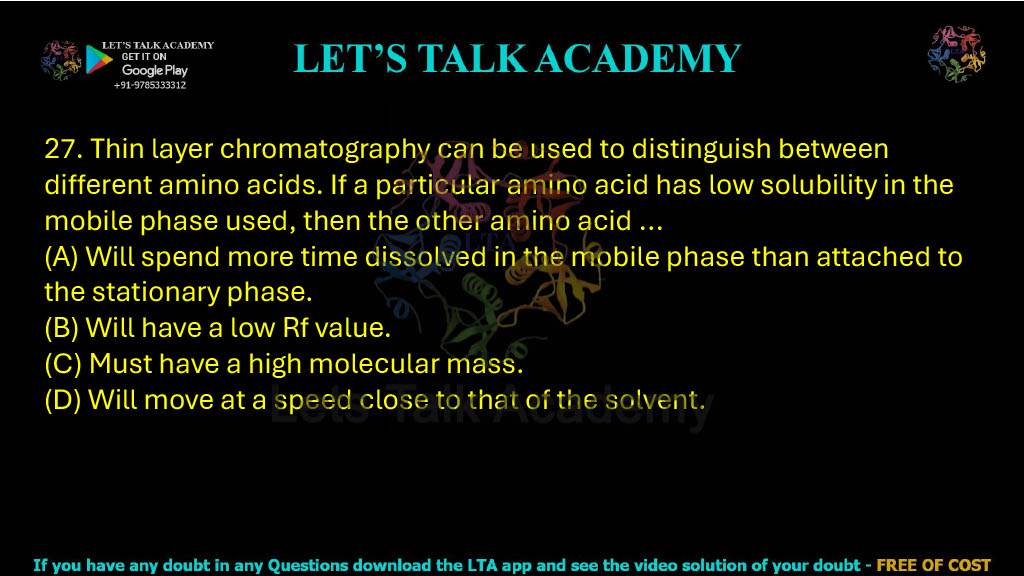
27. Thin layer chromatography can be used to distinguish between different amino acids. If a particular amino acid has low solubility in the mobile phase used, then the other amino acid: A. Will spend more time dissolved in the mobile phase than attached to the stationary phase B. Will have a low Rf value C. Must have a high molecular mass D. Will move at a speed close to that of the solvent

Thin Layer Chromatography

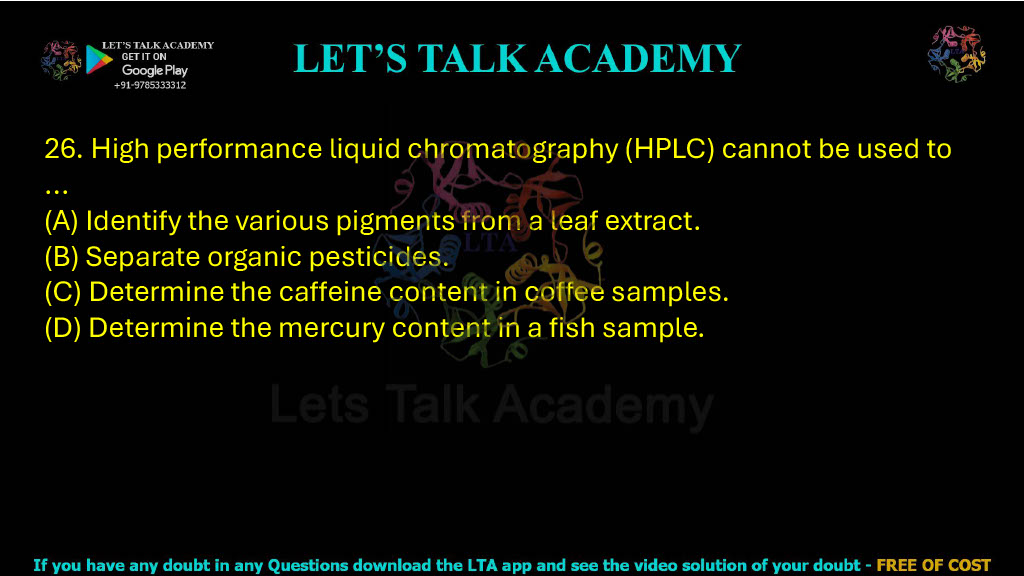
26. High performance liquid chromatography (HPLC) cannot be used to: A. Identify the various pigments from a leaf extract B. Separate organic pesticides C. Determine the caffeine content in coffee samples D. Determine the mercury content in a fish sample

HPLC Cannot Determine Mercury Content Fish

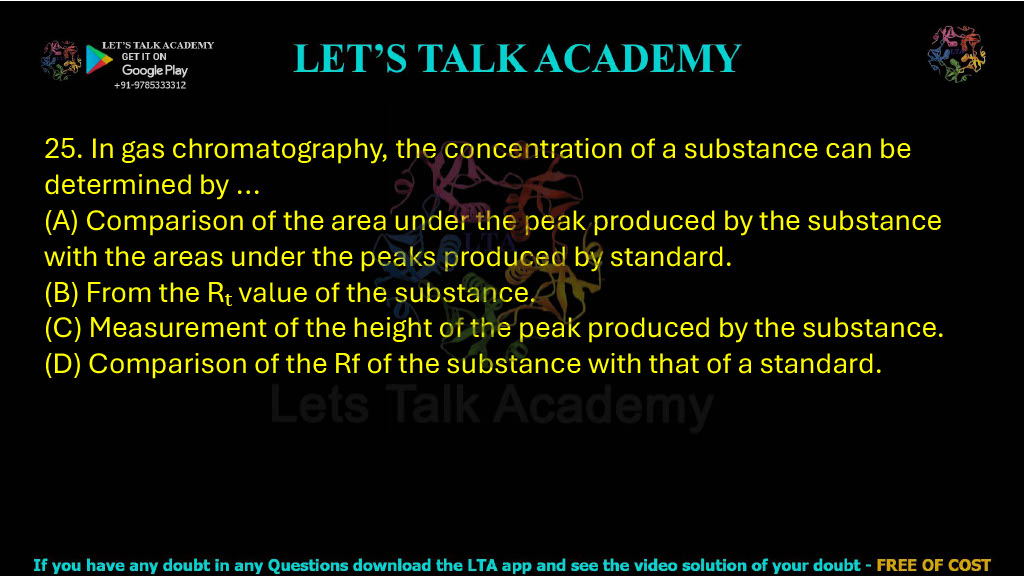
25. In gas chromatography, the concentration of a substance can be determined by: A. Comparison of the area under the peak produced by the substance with the areas under the peaks produced by a standard B. From the Rt value of the substance C. Measurement of the height of the peak produced by the substance D. Comparison of the Rf of the substance with that of a standard

Gas Chromatography Concentration

24. Which of the following statements about chromatography is correct? A. Paper chromatography and gas chromatography are both routinely used for qualitative analysis only. B. Paper chromatography is usually considered to be quantitative only, while gas chromatography can be qualitative or quantitative. C. Paper chromatography is usually considered to be qualitative only, while gas chromatography can be qualitative or quantitative. D. Paper chromatography and gas chromatography are both routinely used for quantitative analysis only.

Paper Chromatography Qualitative vs Gas Chromatography Quantitative Analysis

23. In reverse phase chromatography, the nature of the stationary phase is: A. Non-polar B. Polar C. Either non-polar or polar D. None of these

Reverse Phase Chromatography Stationary Phase

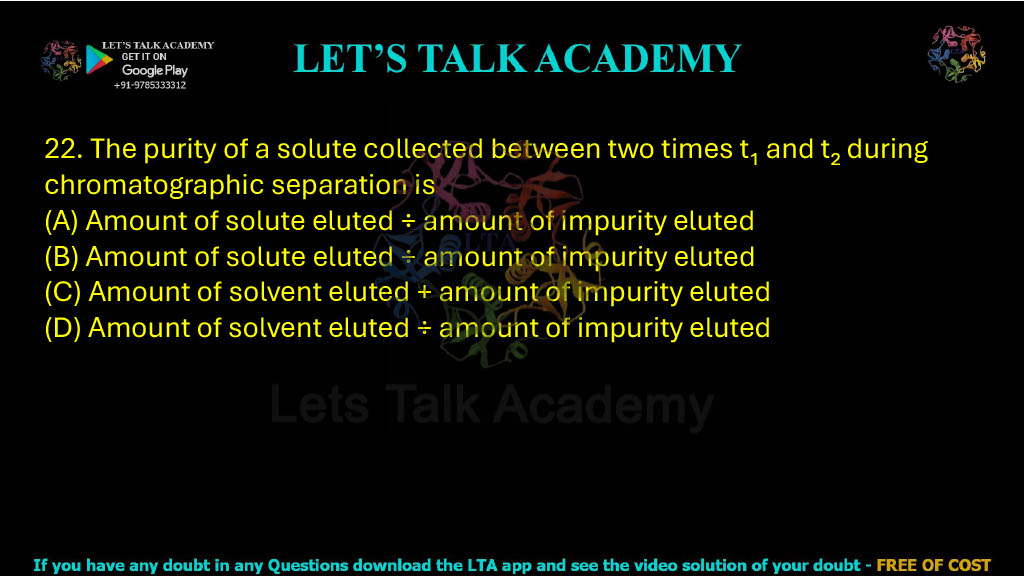
22. The purity of a solute collected between two times t1 and t2 during chromatographic separation is: A. Amount of solute eluted − amount of impurity eluted B. Amount of solute eluted / amount of impurity eluted C. Amount of solute eluted + amount of impurity eluted D. Amount of solvent eluted / amount of impurity eluted

Chromatographic Purity

21. Chromatography is based on the: A. Different rate of movement of the solute in a column B. Separation of one solute from other constituents by being captured on the adsorbent C. Different rate of movement of the solvent in the column D. None of the above

Chromatography Principles

20. In a gel filtration column: A. Smaller proteins enter the beads more readily B. Larger proteins elute first C. Both A and B D. Large proteins enter the beads more readily

 Gel Filtration Column

19. Which one of the following techniques is suitable for the large-scale purification of isozymes (A and B) that differ from each other by a single positively charged amino acid? A. Chromatofocusing B. Gel filtration chromatography C. Native PAGE D. Analytical isoelectric focusing

Large-Scale Isozyme Purification

18. Which one of the following is true during the separation of biomolecules by reversed-phase chromatography? A. Stationary phase is less polar than the mobile phase B. Stationary phase is more polar than the mobile phase C. Both the stationary and the mobile phase have the same polarity D. Polarity of the mobile phase does not play any role

Reversed-Phase Chromatography Stationary

17. In Sephadex G series (gel filtration), as the G number increases from 10, 15, 25 … 200, the pore size of the beads: A. Decreases B. Increases C. Remains constant D. Varies from manufacturer to manufacturer

Sephadex G Series

16. Which one of the following purification steps always requires a high initial ionic strength in the sample? A. Ion exchange chromatography B. Hydrophobic interaction chromatography C. Chromatofocusing D. Gel filtration chromatography

Hydrophobic Interaction Chromatography

15. In a gel filtration chromatography: A. The large protein will be eluted first B. The small protein will be eluted first C. Both large and small will elute at the same time D. The small protein with high charge will be eluted first

Gel Filtration Chromatography Elution Order

14. β-lactoglobulin which is a monomer at neutral pH is known to tetramerise at acidic pH of 2. Which one of the following techniques could be effectively employed to demonstrate the formation of a tetramer? A. Native gel electrophoresis B. Anion exchange chromatography C. SDS-polyacrylamide gel electrophoresis D. Reverse phase chromatography

β-Lactoglobulin Tetramer Formation

13. Initial high ionic strength is needed among the following purification techniques in sample? A. Ion-exchange chromatography B. Hydrophobic interaction chromatography C. Chromatofocusing D. Preparative chromatography

Hydrophobic Interaction Chromatography

12. Which is the best technique to separate two proteins which have the same molecular mass as well as the same isoelectric point? A. Reverse-phase chromatography B. Gel-filtration chromatography C. Ion-exchange chromatography D. Chromatofocusing

Best Technique Separate Protein

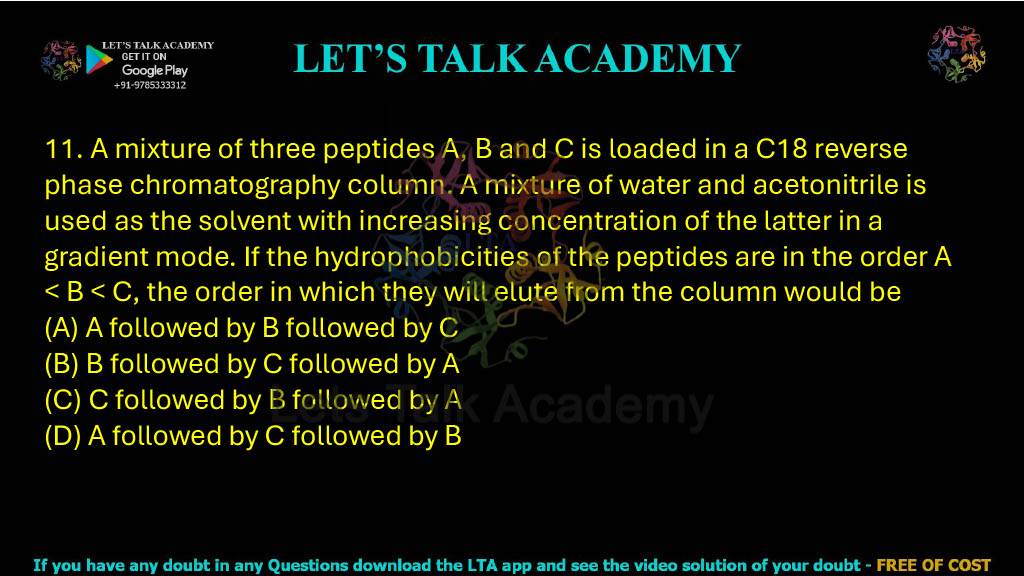
11. A mixture of three peptides A, B and C is loaded in a C18 reverse-phase chromatography column. A mixture of water and acetonitrile is used as the solvent with increasing concentration of the latter in a gradient mode. If the hydrophobicities of the peptides are in the order A < B < C, the order in which they will elute from the column would be: A. A followed by B followed by C B. B followed by C followed by A C. C followed by B followed by A D. A followed by C followed by B

everse Phase Chromatography Peptide Elution

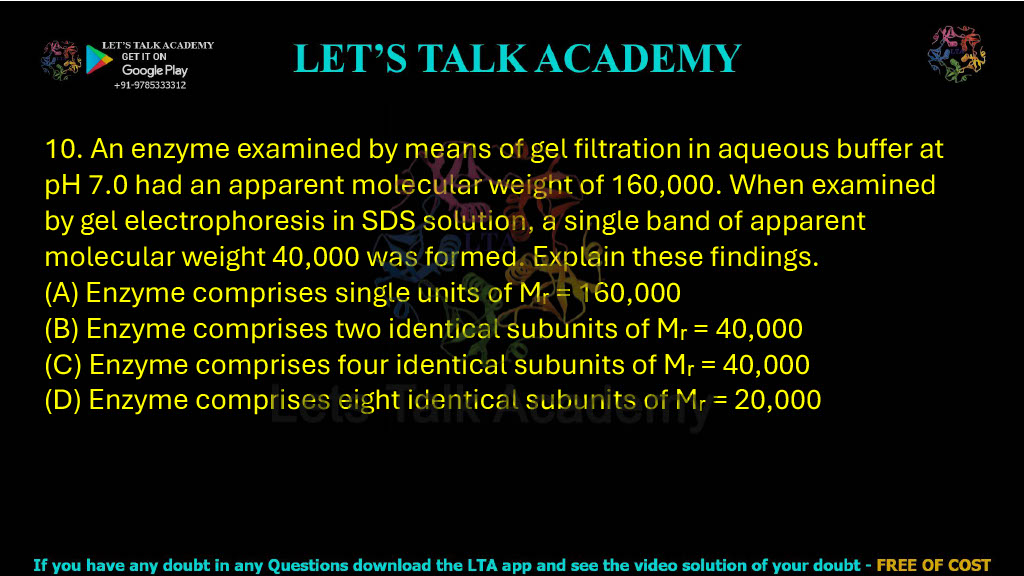
10. An enzyme examined by means of gel filtration in aqueous buffer at pH 7.0 had an apparent molecular weight of 160,000. When examined by gel electrophoresis in SDS solution, a single band of apparent molecular weight 40,000 was formed. Explain these findings. A. Enzyme comprises single units of Mr = 160,000 B. Enzyme comprises two identical subunits of Mr = 40,000 C. Enzyme comprises four identical subunits of Mr = 40,000 D. Enzyme comprises eight identical subunits of Mr = 20,000

Enzyme 160kDa Gel Filtration

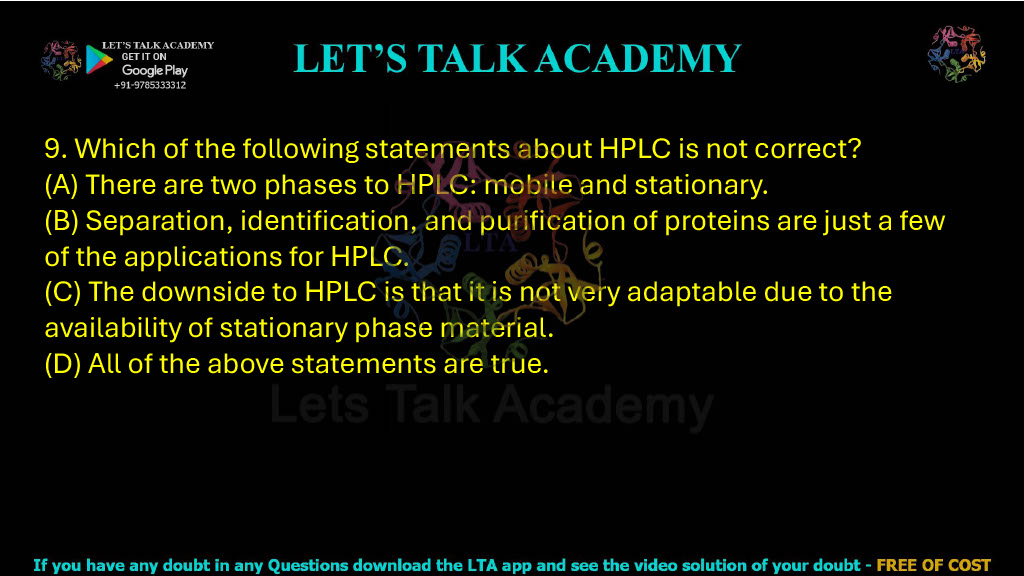
9. Which of the following statements about HPLC is not correct? A. There are two phases to HPLC: mobile and stationary. B. Separation, identification, and purification of proteins are just a few of the applications for HPLC. C. The downside to HPLC is that it is not very adaptable due to the availability of stationary phase material. D. All of the above statements are true.

Which HPLC Statement is NOT Correct

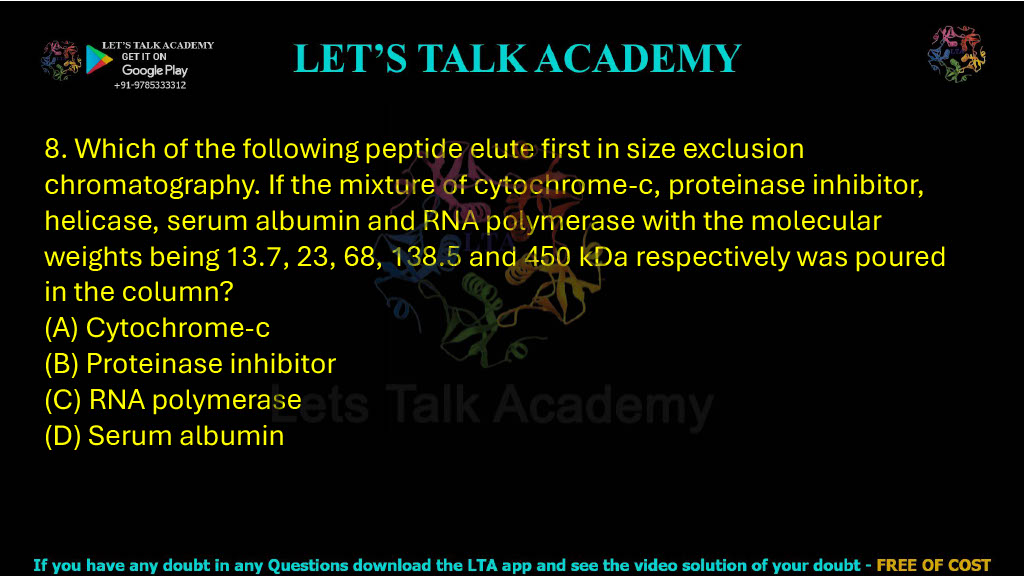
8. Which of the following peptides elutes first in size-exclusion chromatography? If a mixture of cytochrome-c, proteinase inhibitor, helicase, serum albumin and RNA polymerase with molecular weights 13.7, 23, 68, 138.5 and 450 kDa respectively is poured into the column: A. Cytochrome-c B. Proteinase inhibitor C. RNA polymerase D. Serum albumin

 Cytochrome c Proteinase Inhibitor

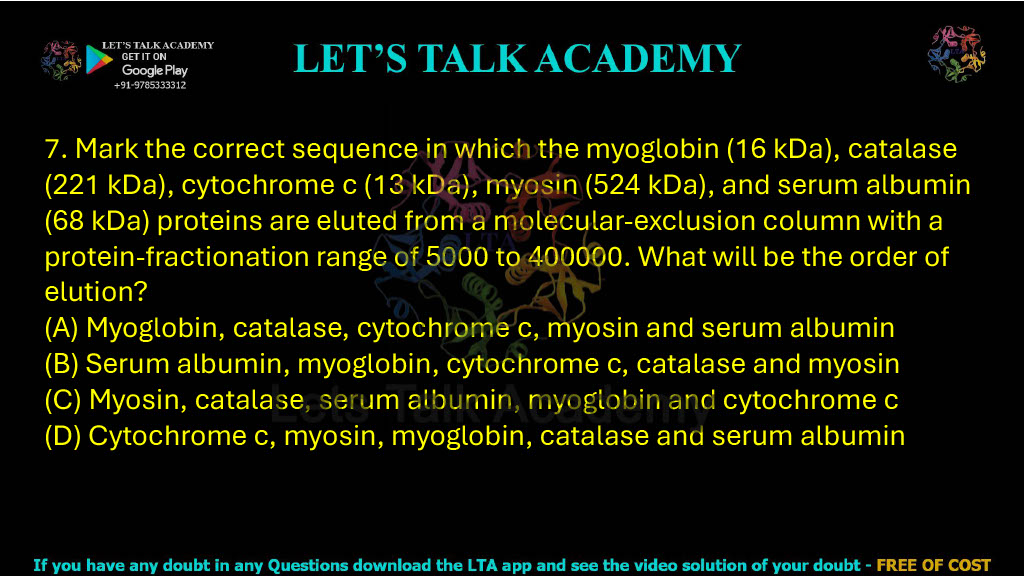
7. Mark the correct sequence in which myoglobin (16 kDa), catalase (221 kDa), cytochrome c (13 kDa), myosin (524 kDa), and serum albumin (68 kDa) are eluted from a molecular-exclusion column with a protein-fractionation range of 5,000 to 400,000. A. Myoglobin, catalase, cytochrome c, myosin and serum albumin B. Serum albumin, myoglobin, cytochrome c, catalase and myosin C. Myosin, catalase, serum albumin, myoglobin and cytochrome c D. Cytochrome c, myosin, myoglobin, catalase and serum albumin

 Myoglobin Catalase Cytochrome

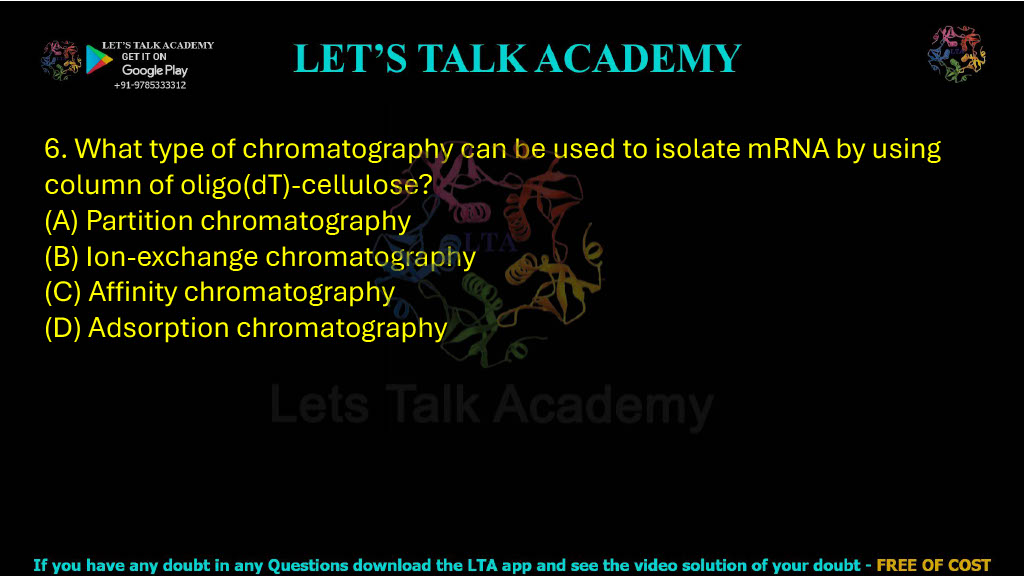
6. What type of chromatography can be used to isolate mRNA using a column of oligo (dT)-cellulose? A. Partition chromatography B. Ion-exchange chromatography C. Affinity chromatography D. Adsorption chromatography

Oligo dT Cellulose mRNA Isolation Chromatography

5. Two proteins having a slight difference in size are subjected to size-exclusion chromatography and partially flow from each other. If longer columns show no improvement in separation, it is due to: A. Increased axial dispersion B. Increase in number of theoretical plates C. Increase in loading capacity D. Increase in flow rate

Size Exclusion Chromatography Column

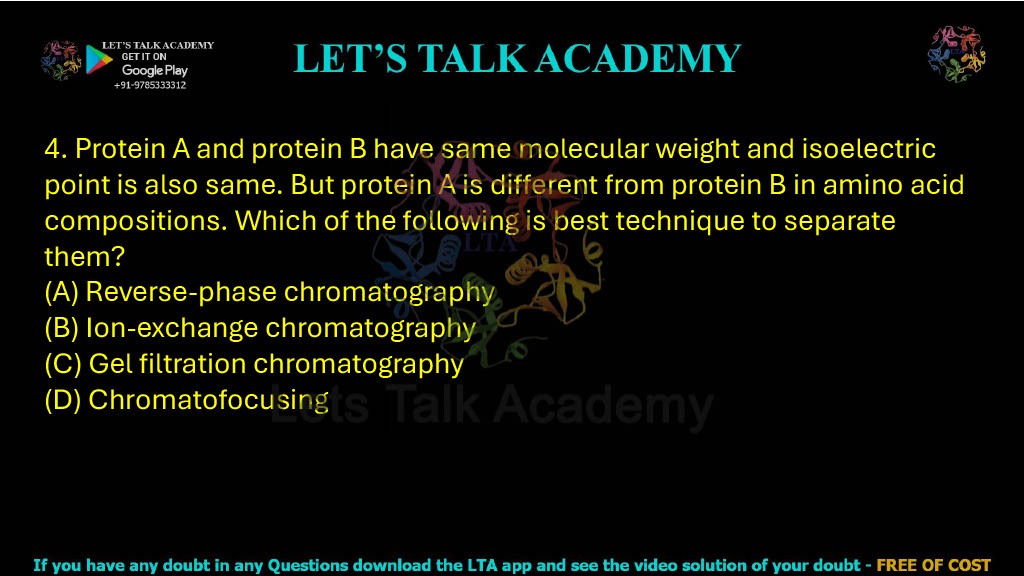
4. Protein A and protein B have the same molecular weight and isoelectric point but differ in amino acid composition. Which of the following techniques is best to separate them? A. Reverse-phase chromatography B. Ion-exchange chromatography C. Gel-filtration chromatography D. Chromatofocusing

Best Technique to Separate Proteins

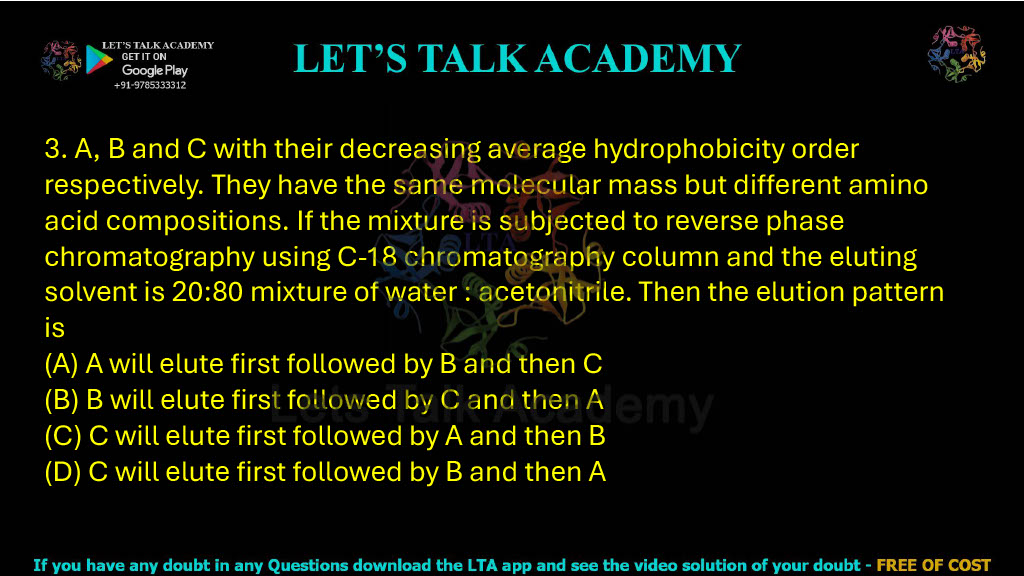
3. Proteins A, B and C have decreasing average hydrophobicity respectively and the same molecular mass but different amino acid compositions. If the mixture is subjected to reverse-phase chromatography using a C-18 column and the eluting solvent is 20:80 water:acetonitrile, then the elution pattern is: A. A will elute first followed by B and then C B. A will elute first followed by C and then A C. C will elute first followed by A and then B D. C will elute first followed by B and then A

 Reverse Phase Chromatography Elution Order

2. Liquid Chromatography Mass Spectrometry (LCMS) is characterized by: A. Allows fast separation and analysis of proteins B. Separates proteins from metals C. Separates trypsin from peptides D. None of the above

Liquid Chromatography Mass Spectrometry

1. How can two proteins be purified at physiological pH if both have the same mass but the pI of one is 6.5 and different from the other? A. Ion-exchange chromatography (anion exchange) B. Thin-layer chromatography C. Ion-exchange chromatography (cation exchange) D. Gel-filtration chromatography

How to Purify Proteins at Physiological pH

CSIR NET Life Science Previous Year Questions on METHODS IN BIOLOGY – Video and Text Solutions

Protein Mixture Cation Exchange

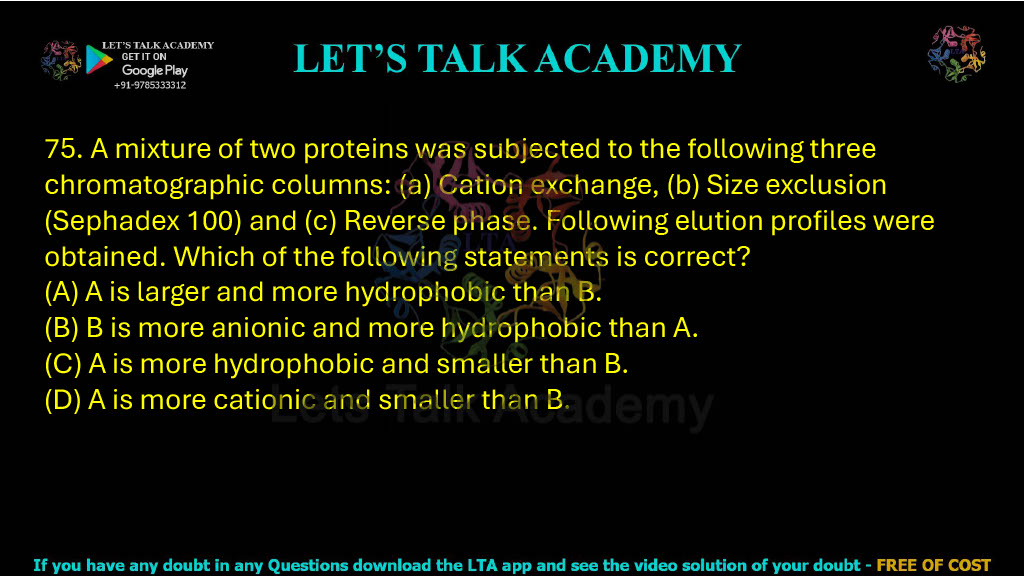
75. A mixture of two proteins was subjected to following three chromatographic columns: (a) Cation exchange, (b) Size exclusion (Sephadex 100) and (c) Reverse phase. Following elution profiles were obtained. Which of the following statements is correct? (A) A is larger and more hydrophobic than B. (B) B is more anionic and more hydrophobic than […]
CSIR NET Life Science Previous Year Questions on METHODS IN BIOLOGY – Video and Text Solutions

 Ultrafiltration Cannot Remove Salt Protein Solution

74. Which one of the following techniques CANNOT be used to remove salt from a protein solution (A) Ultrafiltration (B) Ion exchange chromatography (C) Gel filtration chromatography (D) Dialysis The correct answer is A. Ultrafiltration. Ultrafiltration retains proteins (>10-100 kDa) using size-based membranes but allows salts (<1 kDa) to pass through only if the solution […]

CSIR NET Life Science Previous Year Questions on METHODS IN BIOLOGY – Video and Text Solutions

Lectin Sepharose Right-Side-Out Vesicles

73. You are studying the binding of proteins to the cytoplasmic face of cultured liver cells and have found a method that gives a good yield of inside-out vesicles from the plasma membrane. Unfortunately, your preparations are contaminated with variable amounts of right-side-out vesicles. Nothing you have tried avoids this contamination. Somebody suggests that you […]

CSIR NET Life Science Previous Year Questions on METHODS IN BIOLOGY – Video and Text Solutions

DEAE-Sephadex Chromatofocusing Phenyl Sepharose

72. Match the chromatographic technique from Group X with the appropriate elution conditions given in Group Y: Group X A. DEAE-Sephadex B. Chromatofocusing C. Phenyl Sepharose D. G-150 Sephadex Group Y (i) Increasing NaCl gradient (ii) Isocratic elution (iii) pH gradient (iv) Decreasing (NH4)2SO4 gradient A. P-ii, Q-i, R-iii, S-i B. P-i, Q-iv, R-iii, S-ii […]

CSIR NET Life Science Previous Year Questions on METHODS IN BIOLOGY – Video and Text Solutions

Ion-Pairing Agents Reverse Phase Chromatography

71. In which type of chromatography are ion-pairing agents used for elution? A. Hydrophobic interaction chromatography B. Reverse phase chromatography C. Ion exchange chromatography D. Immobilized metal anion chromatography Reverse phase chromatography uses ion-pairing agents for elution of charged analytes on hydrophobic columns. Correct Answer The correct option is B. Reverse phase chromatography. Ion-pairing reagents like […]

CSIR NET Life Science Previous Year Questions on METHODS IN BIOLOGY – Video and Text Solutions

 Nickel Nitrilotriacetic Acid Columns

70. Nickel nitrilotriacetic acid columns are used in __________ chromatography. A. Ion exchange B. Affinity C. Size exclusion D. Reverse phase The correct answer is B. Affinity. Nickel nitrilotriacetic acid (Ni-NTA) columns enable immobilized metal affinity chromatography (IMAC) by chelating Ni²⁺ ions, which specifically bind histidine-tagged proteins for purification.​ Option Explanations A. Ion exchange separates by […]

CSIR NET Life Science Previous Year Questions on METHODS IN BIOLOGY – Video and Text Solutions

Hydrophobic Interaction Chromatography High Ionic Strength

69. Which one of the following purification steps always requires a high initial ionic strength in the sample? A. Ion exchange chromatography B. Hydrophobic interaction chromatography C. Chromatofocusing D. Gel filtration chromatography Hydrophobic interaction chromatography (HIC) requires high initial ionic strength in the sample to promote protein binding to the hydrophobic resin.​ Correct Answer The […]

CSIR NET Life Science Previous Year Questions on METHODS IN BIOLOGY – Video and Text Solutions

Carboxymethyl Cellulose Cation Exchange Matrix

67. Which type of matrix is involved by Carboxymethyl cellulose among the following options: A. Anion-exchange matrix B. Plant cell wall constituent C. Cation-exchange matrix D. Gel filtration matrix Carboxymethyl cellulose (CMC) is a cation-exchange matrix due to its negatively charged carboxymethyl groups (-CH₂COOH), which bind positively charged molecules like proteins at appropriate pH levels. […]

Latest Courses