
1. Introduction
The adaptive immune system provides highly specific protection against pathogens and other foreign substances. Unlike innate immunity, adaptive immunity generates responses that are directed toward particular antigens and can produce long-lasting immunological memory.
Adaptive immune responses are broadly divided into two major forms:
- Humoral immune response
- Cell-mediated immune response
The humoral immune response is mainly mediated by B lymphocytes and antibodies present in body fluids such as blood, lymph, and extracellular secretions. It is particularly important for controlling pathogens and toxins located outside host cells.
The cell-mediated immune response is mainly mediated by T lymphocytes. It is especially important for eliminating infected, abnormal, or altered host cells and for coordinating immune responses through cytokines.
Although these responses have distinct mechanisms, they are closely interconnected. B cells often require help from CD4⁺ T cells, while T-cell responses depend on antigen presentation by specialized antigen-presenting cells.
2. Definition of Humoral Immune Response
The humoral immune response is an adaptive immune response in which B lymphocytes recognize antigen and differentiate into antibody-secreting plasma cells.
The antibodies released by plasma cells circulate through body fluids and bind specifically to their target antigens.
2.1 Major Components
The major components of humoral immunity include:
- B lymphocytes
- B-cell receptors (BCRs)
- Plasma cells
- Memory B cells
- Antibodies
- CD4⁺ helper T cells
- Cytokines
- Complement proteins
2.2 Main Functions
Humoral immunity contributes to:
- Neutralization of toxins and viruses
- Opsonization of pathogens
- Complement activation
- Agglutination of particulate antigens
- Antibody-dependent cellular cytotoxicity
- Mucosal protection
- Formation of immunological memory
3. Definition of Cell-Mediated Immune Response
The cell-mediated immune response is an adaptive immune response primarily mediated by T lymphocytes rather than circulating antibodies.
T cells recognize antigen-derived peptides presented by major histocompatibility complex (MHC) molecules on cell surfaces.
Cell-mediated immunity is particularly important against:
- Intracellular pathogens
- Virus-infected cells
- Some intracellular bacteria
- Tumor cells
- Other abnormal host cells
4. Major Cells Involved
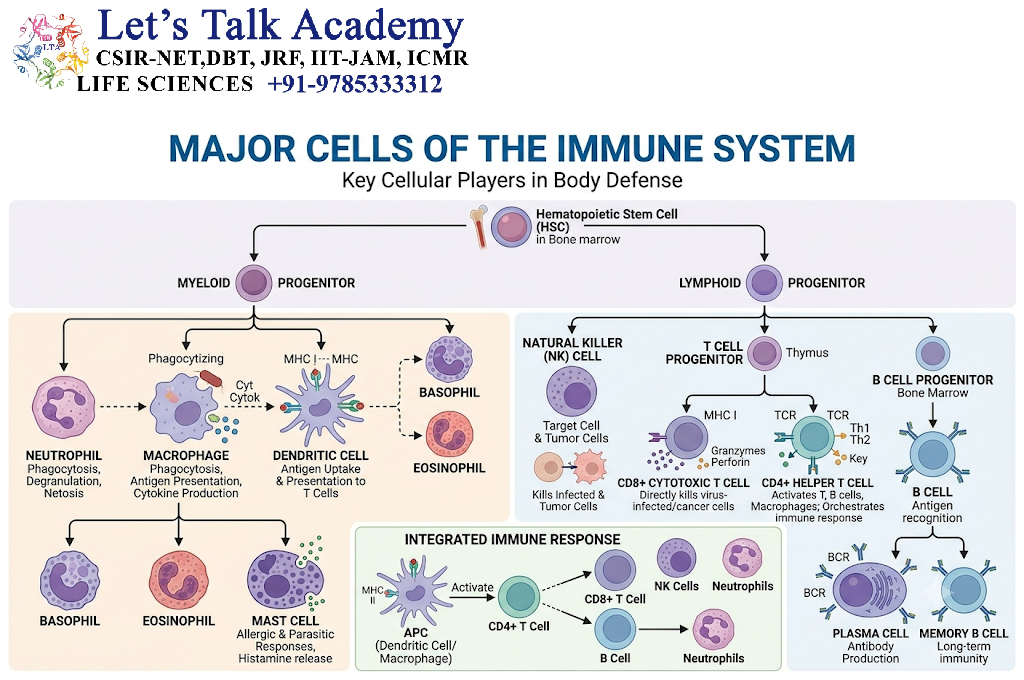
4.1 B Cells
B cells are the principal lymphocytes responsible for humoral immunity.
Their major functions include:
- Antigen recognition
- Antibody production
- Antigen presentation
- Cytokine production
- Formation of memory B cells
4.2 Helper T Cells
CD4⁺ T cells coordinate immune responses by releasing cytokines and providing activation signals to other immune cells.
They are particularly important for:
- B-cell activation
- Macrophage activation
- T-cell differentiation
- Regulation of immune responses
4.3 Cytotoxic T Cells
CD8⁺ cytotoxic T lymphocytes recognize infected or abnormal cells and can directly induce their death.
They use mechanisms such as:
- Perforin and granzymes
- Fas–Fas ligand signaling
4.4 Regulatory T Cells
Regulatory T cells help prevent excessive immune activation and contribute to peripheral immune tolerance.
5. Antigen Recognition in Humoral Immunity
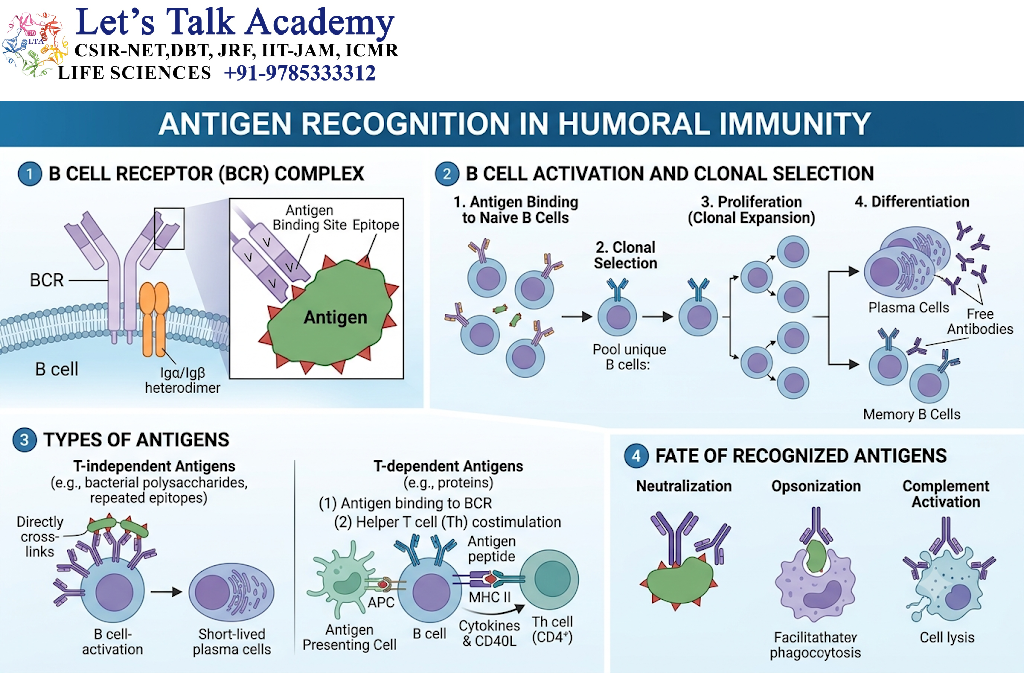
B cells recognize antigen through their B-cell receptors (BCRs).
Unlike T-cell receptors, BCRs can recognize many forms of relatively intact antigen, including:
- Proteins
- Polysaccharides
- Lipids
- Glycoproteins
- Other molecular structures
The antigen-binding site of the BCR interacts with a specific region called an epitope.
5.1 BCR Signaling
A simplified BCR signaling pathway is:
Antigen → BCR → CD79a/CD79b → Src-family kinases → Syk → downstream signaling → B-cell activation
Important downstream pathways include:
- PLCγ2–Ca²⁺–NFAT
- PI3K–AKT
- MAPK
- NF-κB
These pathways promote B-cell survival, proliferation and differentiation.
6. Activation of B Cells
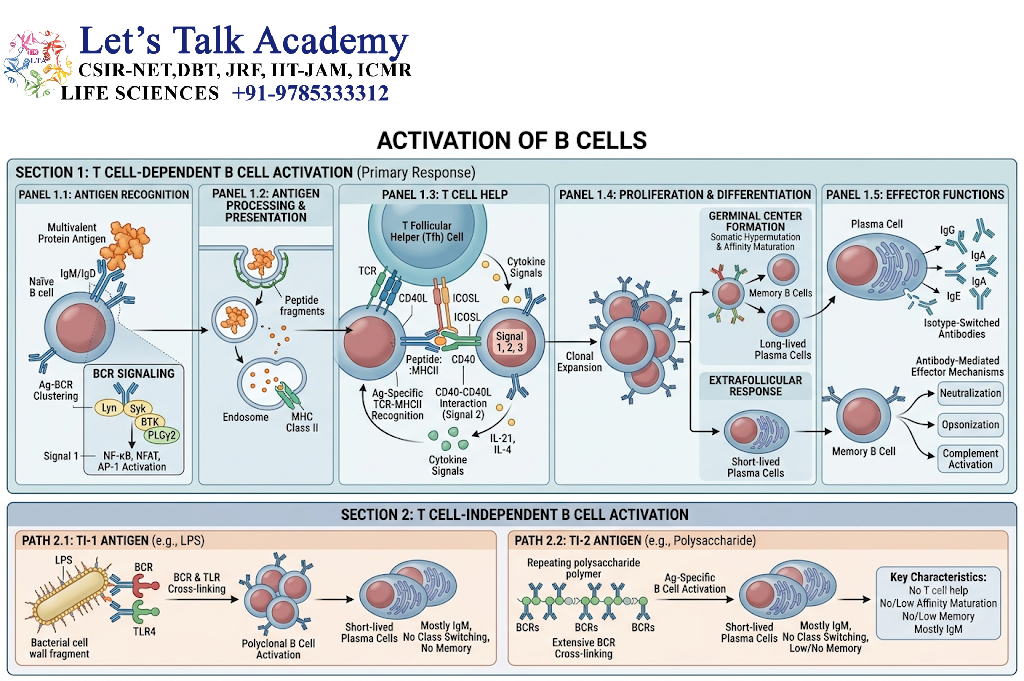
B-cell activation can occur through two broad mechanisms:
- T-dependent activation
- T-independent activation
6.1 T-Dependent B-Cell Activation
Protein antigens commonly induce T-dependent responses.
The general sequence is:
Antigen recognition → BCR signaling → antigen internalization → peptide processing → MHC II presentation → CD4⁺ T-cell recognition → CD40–CD40L interaction + cytokines → B-cell proliferation and differentiation
This pathway supports:
- Class-switch recombination
- Somatic hypermutation
- Affinity maturation
- Long-lived plasma cells
- Memory B-cell formation
6.2 T-Independent B-Cell Activation
Some antigens can activate B cells with limited or no conventional T-cell help.
Examples include highly repetitive structures such as certain polysaccharides.
These responses commonly produce:
- Strong IgM responses
- More limited class switching
- Less extensive affinity maturation
- More limited memory formation compared with typical T-dependent responses
7. Plasma Cell Formation
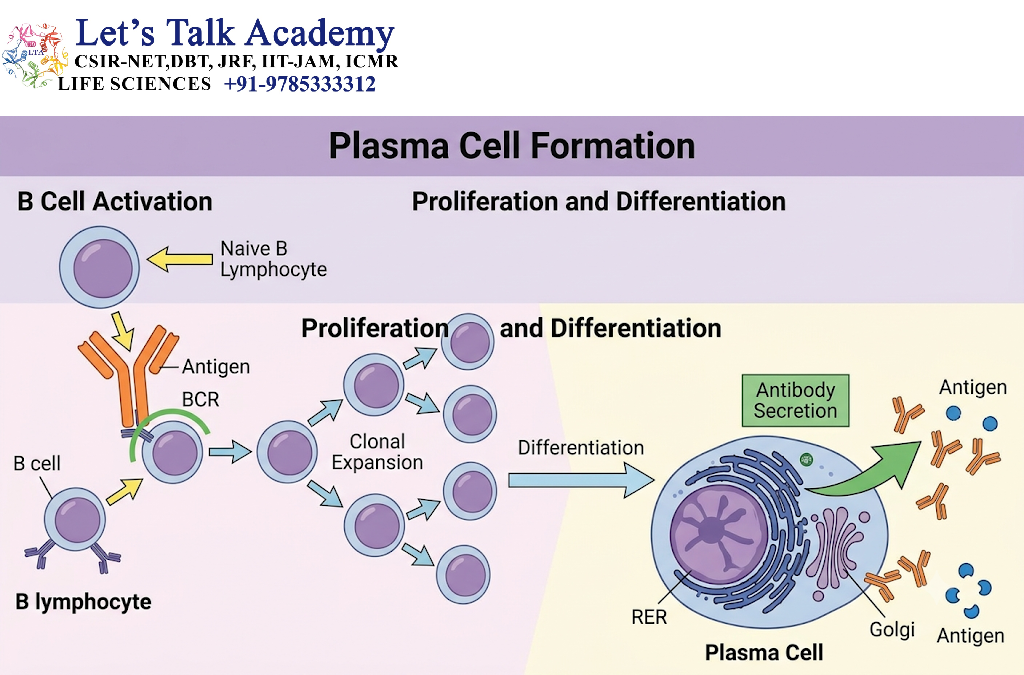
After activation, some B cells differentiate into plasma cells.
Plasma cells are specialized antibody-secreting cells.
They contain extensive rough endoplasmic reticulum and Golgi apparatus because they synthesize and secrete large quantities of immunoglobulin.
7.1 Plasma Cell Function
Activated B cell → proliferation → differentiation → plasma cell → antibody secretion
Antibodies then circulate through blood and extracellular fluids and bind their specific targets.
8. Antibody-Mediated Effector Mechanisms
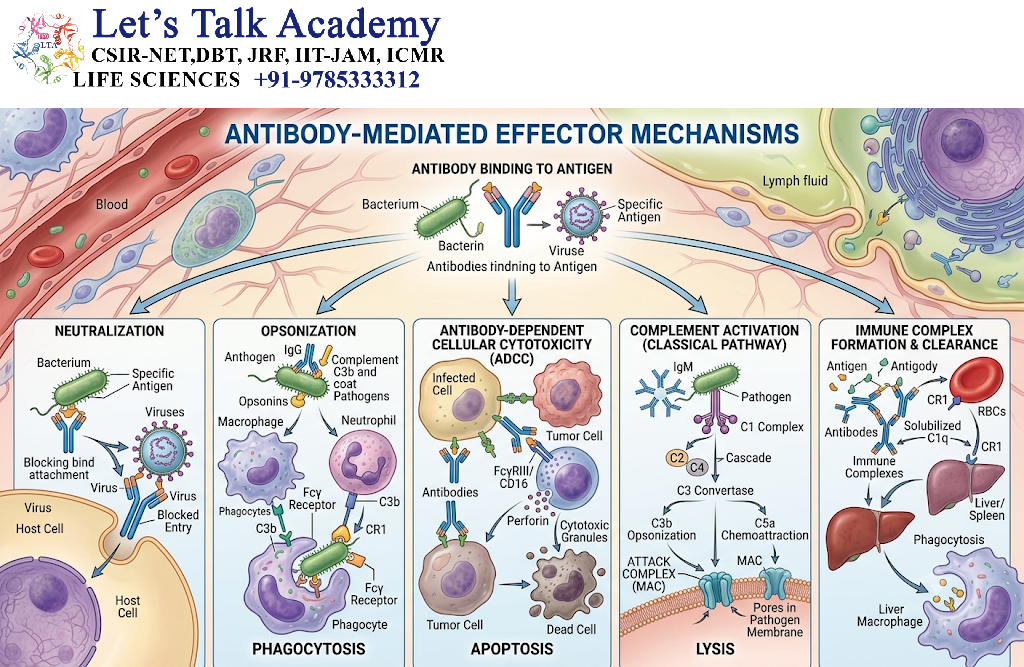
8.1 Neutralization
Antibodies can bind pathogens or toxins and prevent them from interacting with host-cell receptors.
Antibody + toxin/virus → blocked interaction → reduced cellular entry or toxicity
8.2 Opsonization
Antibodies can coat microbial surfaces and facilitate their uptake by phagocytes.
Pathogen → antibody coating → Fc receptor recognition → phagocytosis
8.3 Complement Activation
Some antibody classes can activate the classical complement pathway.
Complement activation can contribute to:
- Opsonization
- Inflammation
- Pathogen clearance
- Membrane attack complex formation
8.4 Agglutination
Antibodies can cross-link multiple particles or cells, causing them to form aggregates that can be more efficiently removed.
8.5 Antibody-Dependent Cellular Cytotoxicity
Antibody-coated target cells can be recognized by Fc-receptor-bearing immune cells such as natural killer cells.
This can result in target-cell killing.
9. Immunoglobulin Classes in Humoral Immunity
| Antibody | Major Role |
|---|---|
| IgM | Early primary response, complement activation, agglutination |
| IgG | Systemic protection, neutralization, opsonization and other Fc-mediated functions |
| IgA | Mucosal and secretory protection |
| IgE | Parasite defense and immediate hypersensitivity |
| IgD | Mainly associated with B-cell receptor function on naïve B cells |
10. Germinal Center Reaction
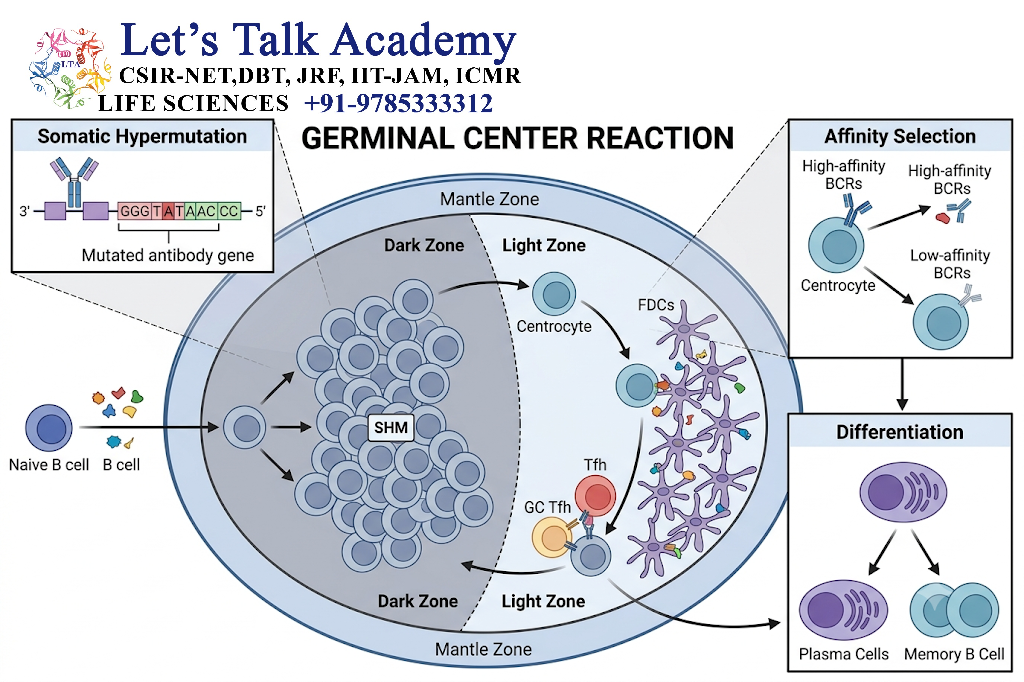
In many T-dependent immune responses, activated B cells enter germinal centers within secondary lymphoid organs.
The germinal center reaction involves:
- Rapid B-cell proliferation
- Somatic hypermutation
- Selection of higher-affinity B cells
- Class-switch recombination
- Memory B-cell formation
- Long-lived plasma-cell formation
10.1 Somatic Hypermutation
Somatic hypermutation introduces mutations into immunoglobulin variable-region genes.
This creates B-cell clones with different antigen-binding properties.
10.2 Affinity Maturation
B cells expressing higher-affinity antibodies can receive stronger survival signals and become preferentially selected.
Thus, antibody affinity can increase during the immune response.
10.3 Class-Switch Recombination
B cells can change the antibody heavy-chain constant region while retaining the same basic antigen specificity.
For example:
IgM → IgG / IgA / IgE
The variable region responsible for antigen recognition is retained, while the constant region changes the antibody’s effector properties.
11.
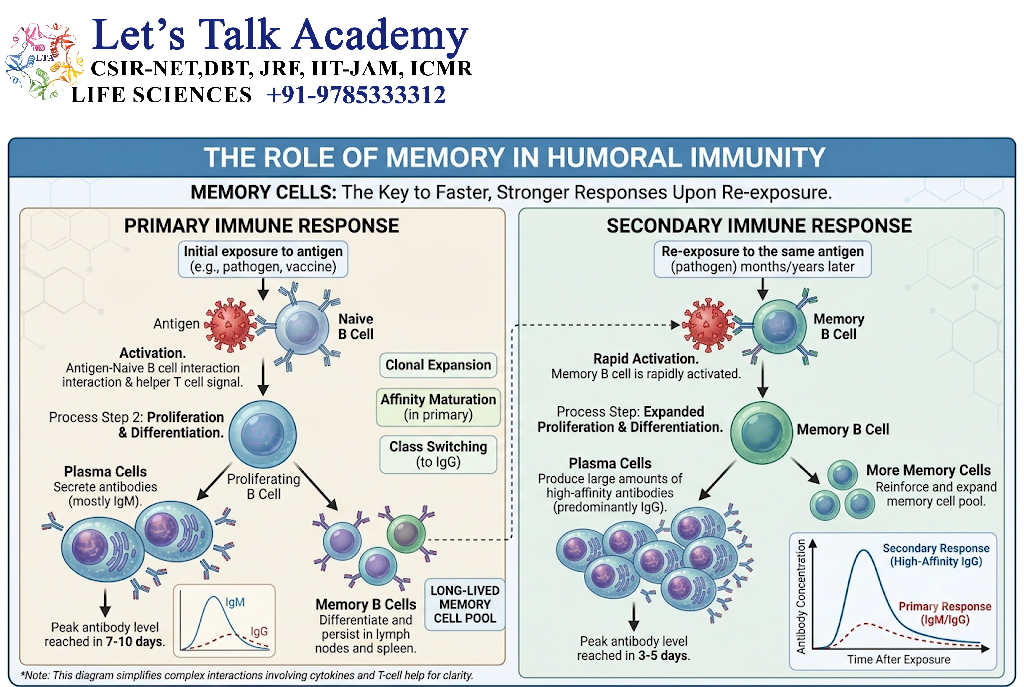
Some activated B cells become memory B cells.
Memory B cells persist after the initial immune response and can respond rapidly following subsequent exposure to the same antigen.
The secondary response is generally:
- Faster
- Larger
- More effective
- Often associated with higher-affinity antibodies
12. Antigen Recognition in Cell-Mediated Immunity
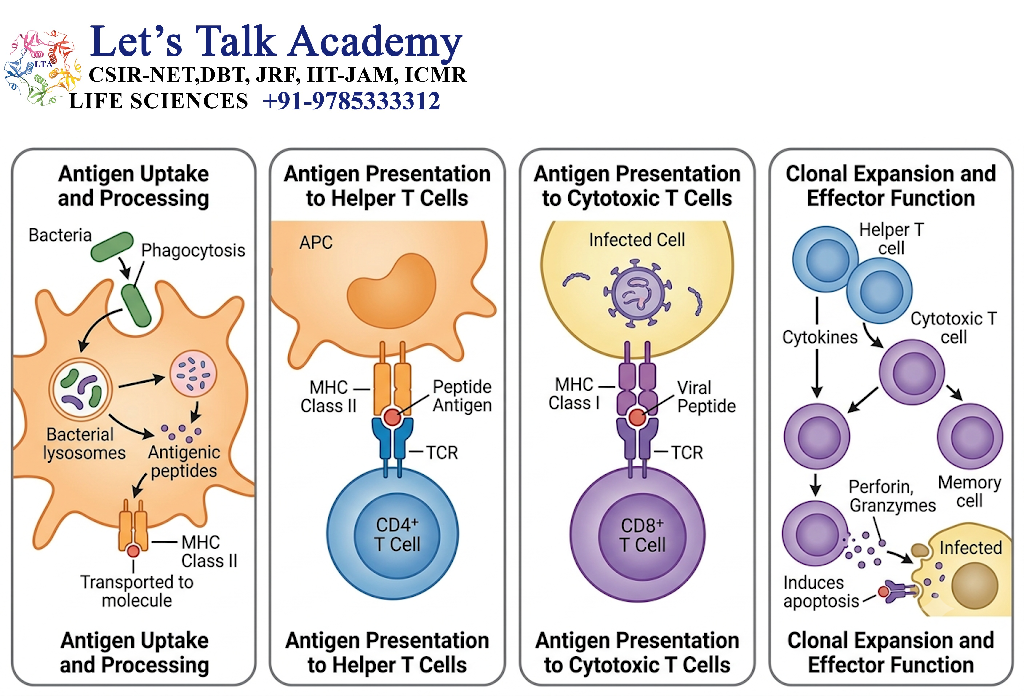
T cells recognize antigen through the T-cell receptor (TCR).
Unlike BCRs, conventional TCRs generally recognize processed peptide antigens presented by MHC molecules.
Two major antigen-presentation pathways are:
- MHC class I → CD8⁺ T cells
- MHC class II → CD4⁺ T cells
13. MHC Class I and CD8⁺ T Cells
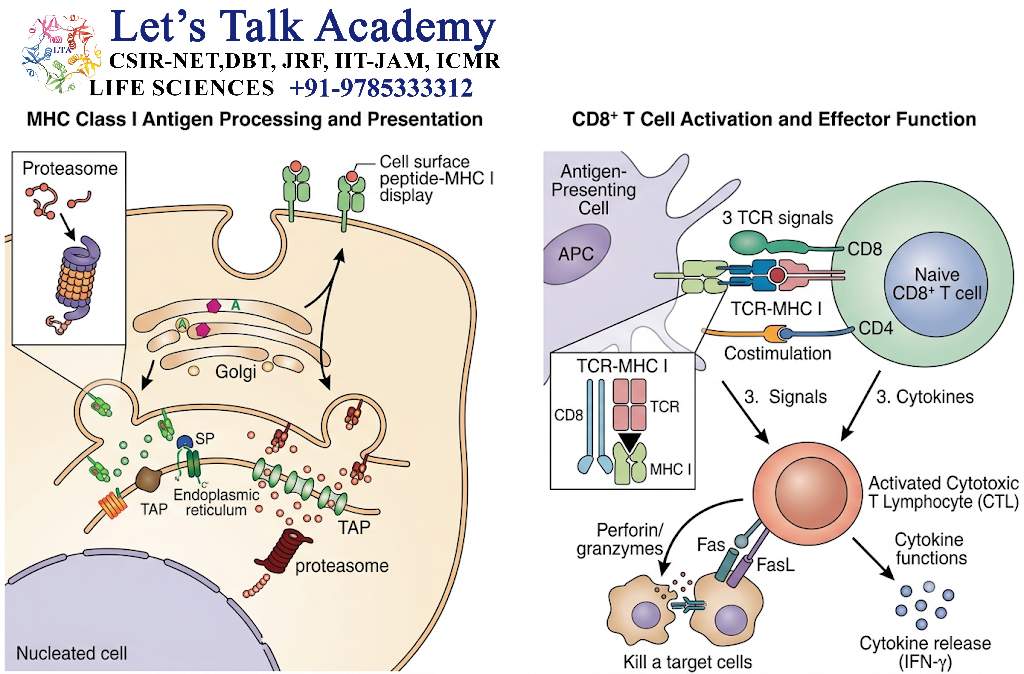
MHC class I molecules are expressed by most nucleated cells.
They commonly present peptides derived from intracellular proteins.
The basic pathway is:
Intracellular protein → proteasomal processing → peptide transport → MHC I loading → cell-surface presentation → CD8⁺ T-cell recognition
CD8⁺ cytotoxic T cells can then destroy the infected or abnormal cell.
14.MHC Class II and CD4⁺ T Cells
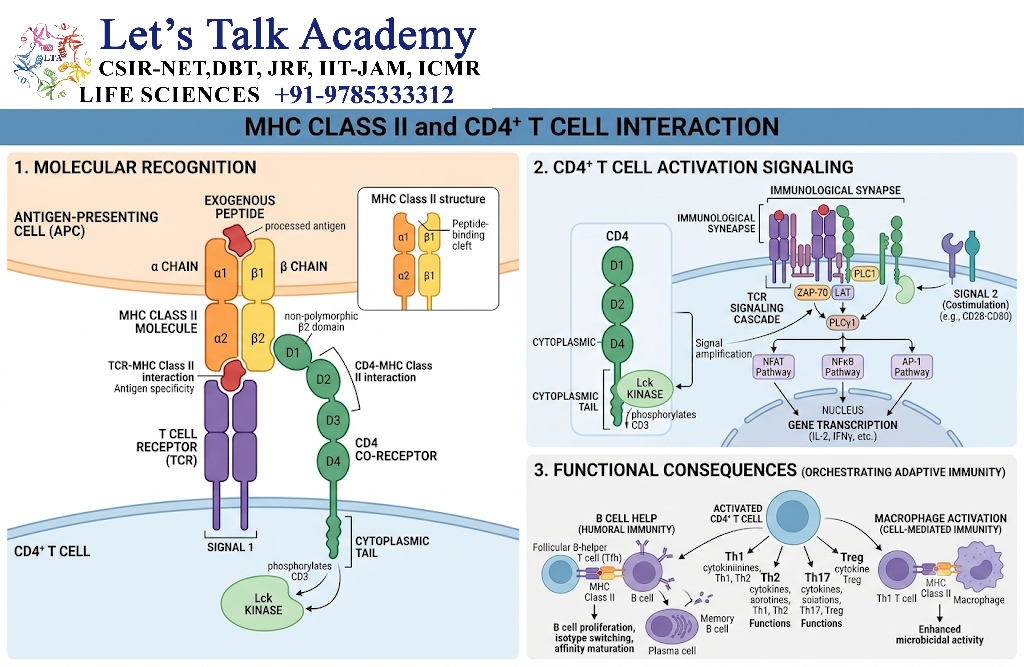
MHC class II molecules are mainly expressed by professional antigen-presenting cells such as:
- Dendritic cells
- Macrophages
- B cells
They commonly present peptides derived from extracellularly acquired antigens.
The general pathway is:
Extracellular antigen → endocytosis/phagocytosis → processing → MHC II loading → surface presentation → CD4⁺ T-cell recognition
15. Activation of T Cells
T-cell activation generally requires three major signals.
Signal 1: Antigen Recognition
The TCR recognizes a specific peptide–MHC complex.
Signal 2: Co-Stimulation
A major co-stimulatory interaction is:
CD28 on T cell ↔ CD80/CD86 on antigen-presenting cell
Signal 3: Cytokines
Cytokines influence T-cell proliferation, survival and differentiation.
The simplified model is:
Signal 1 + Signal 2 + Signal 3 → T-cell activation and differentiation
Without appropriate co-stimulation, antigen recognition can lead to functional unresponsiveness rather than full activation.
16. TCR Signaling Pathway
A simplified pathway is:
TCR–peptide-MHC → CD4/CD8 → Lck → CD3 ITAM phosphorylation → ZAP-70 → LAT/SLP-76 → PLCγ1, Ras/MAPK and PKCθ pathways
These pathways activate major transcription factors such as:
- NFAT
- AP-1
- NF-κB
The resulting gene-expression program promotes T-cell activation and differentiation.
17. CD4⁺ T-Cell Differentiation
Activated CD4⁺ T cells can differentiate into different functional populations depending on cytokine signals and transcriptional programs.
17.1 Th1 Cells
Th1 cells are strongly associated with cellular immune responses against intracellular pathogens.
Important features include:
- IFN-γ production
- T-bet transcription factor
- Macrophage activation
17.2 Th2 Cells
Th2 cells contribute to responses involving extracellular parasites and allergic inflammation.
Important cytokines include:
- IL-4
- IL-5
- IL-13
The transcription factor GATA-3 is strongly associated with Th2 differentiation.
17.3 Th17 Cells
Th17 cells produce cytokines such as:
- IL-17
- IL-22
They contribute to barrier immunity and inflammatory responses against certain extracellular microbes.
The transcription factor RORγt is important for Th17 differentiation.
17.4 T Follicular Helper Cells
T follicular helper cells are specialized CD4⁺ T cells that provide help to B cells in lymphoid follicles.
They support:
- Germinal center formation
- B-cell proliferation
- Class switching
- Affinity maturation
- Memory B-cell formation
- Plasma-cell differentiation
17.5 Regulatory T Cells
Regulatory T cells suppress excessive immune responses and contribute to maintenance of self-tolerance.
A major transcription factor associated with Treg identity is FOXP3.
18. CD8⁺ Cytotoxic T-Cell Response
Activated CD8⁺ T cells can differentiate into cytotoxic effector cells.
Their major function is to eliminate infected or abnormal cells.
18.1 Perforin–Granzyme Pathway
Cytotoxic T cells release:
- Perforin
- Granzymes
Perforin facilitates delivery of granzymes into the target-cell environment, where granzymes activate pathways leading to programmed cell death.
18.2 Fas–FasL Pathway
Another mechanism involves:
Fas on target cell ↔ Fas ligand on T cell → death signaling → apoptosis
19. Cell-Mediated Immunity and Macrophage Activation
Certain CD4⁺ T-cell responses enhance macrophage antimicrobial activity.
For example, IFN-γ produced by Th1 cells can promote macrophage activation.
This is particularly important for controlling pathogens that can survive within phagocytic cells.
20. T-Cell Memory
After an immune response, some activated T cells survive as memory cells.
Important memory populations include:
- Central memory T cells
- Effector memory T cells
- Tissue-resident memory T cells
These cells can provide enhanced protection during subsequent exposure to the same antigen.
21. Humoral vs Cell-Mediated Immunity
| Feature | Humoral Immunity | Cell-Mediated Immunity |
|---|---|---|
| Main cells | B cells | T cells |
| Major effector | Antibodies | Effector T cells |
| Main recognition | Intact antigen | Peptide–MHC |
| Major targets | Extracellular microbes and toxins | Infected or abnormal cells |
| Major receptors | BCR | TCR |
| Key effector cells | Plasma cells | CD4⁺ and CD8⁺ T cells |
| Major molecules | Immunoglobulins | Cytokines, cytotoxic molecules |
| MHC requirement | Not required for BCR antigen recognition | Required for conventional TCR recognition |
| Memory | Memory B cells | Memory T cells |
| Major functions | Neutralization, opsonization, complement activation | Cytokine-mediated coordination and target-cell killing |
22. Interaction Between Humoral and Cell-Mediated Immunity
Humoral and cell-mediated immunity do not operate independently.
A major example is T-cell-dependent B-cell activation.
The integrated process can be represented as:
Antigen enters body
↓
B cell recognizes antigen through BCR
↓
B cell internalizes and processes antigen
↓
Peptide presented on MHC II
↓
CD4⁺ T cell recognizes peptide–MHC II
↓
CD40–CD40L + cytokine signaling
↓
B-cell proliferation and differentiation
↓
Plasma cells + Memory B cells
↓
Antibody production + immune memory
This interaction demonstrates how cellular and humoral immunity cooperate to generate an effective adaptive response.
23. Primary and Secondary Immune Responses
23.1 Primary Response
The primary response occurs during the first exposure to an antigen.
It generally involves:
- Antigen recognition
- Lymphocyte activation
- Clonal expansion
- Effector-cell formation
- Memory-cell formation
23.2 Secondary Response
During subsequent exposure to the same antigen, memory B and T cells respond more rapidly.
This results from the persistence of antigen-specific memory populations.
24. Regulation of Humoral and Cell-Mediated Responses
Immune responses must be tightly regulated because excessive activation can damage host tissues.
Important regulatory mechanisms include:
- Regulatory T cells
- Inhibitory receptors
- Antibody feedback
- Cytokine regulation
- Receptor downregulation
- Phosphatases
- Apoptosis of activated lymphocytes
- Reduction of antigenic stimulation
Important inhibitory receptors include:
- CTLA-4
- PD-1
These mechanisms help limit unnecessary or prolonged immune activation.
25. Immune Tolerance
Adaptive immunity must distinguish self from non-self.
25.1 B-Cell Tolerance
Potentially self-reactive B cells may undergo:
- Receptor editing
- Deletion
- Anergy
- Functional suppression
25.2 T-Cell Tolerance
T-cell tolerance involves:
- Positive and negative selection in the thymus
- Peripheral anergy
- Regulatory T cells
- Activation-induced cell death
- Inhibitory receptor signaling
Failure of these mechanisms can contribute to autoimmune disease.


