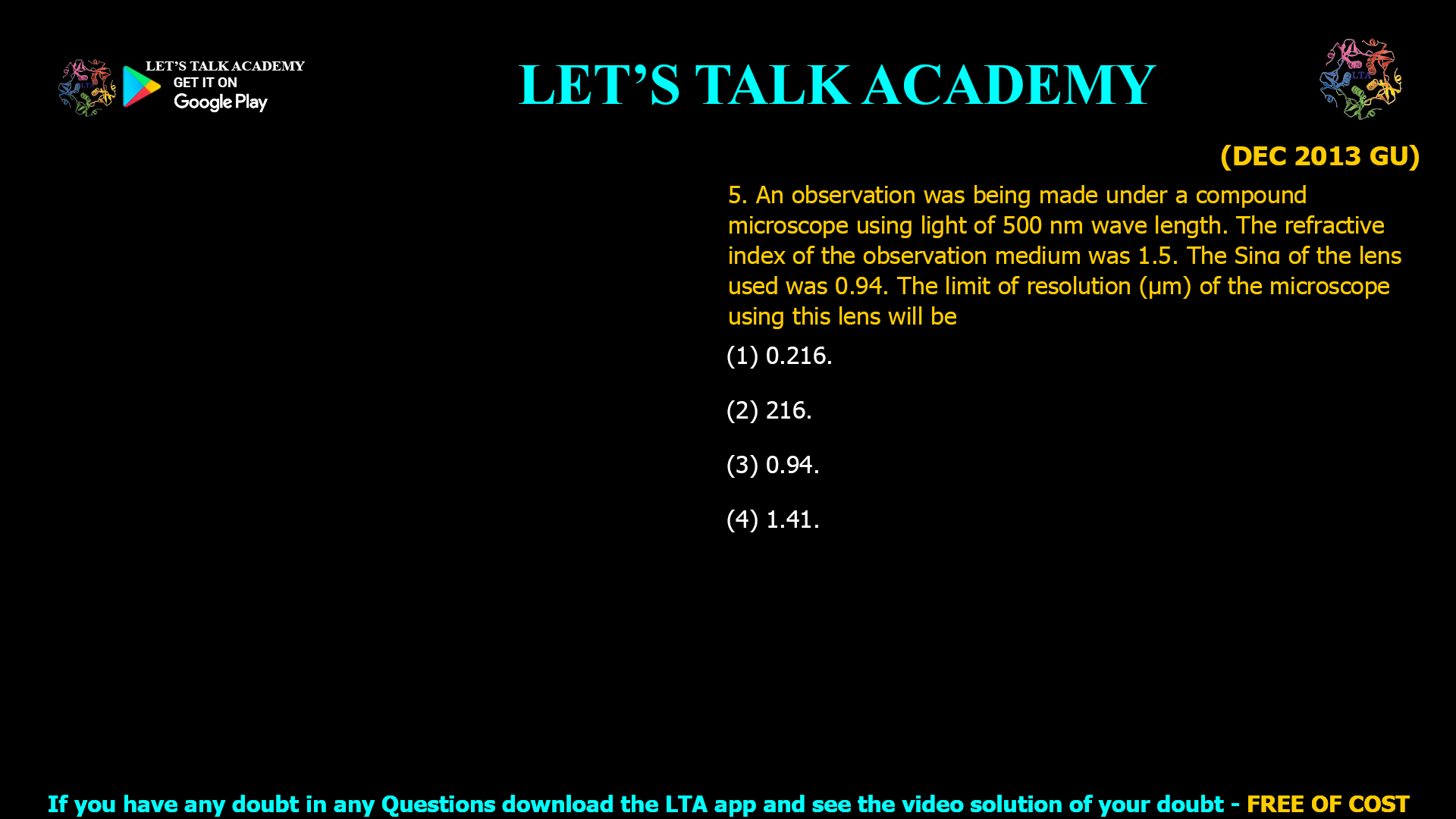
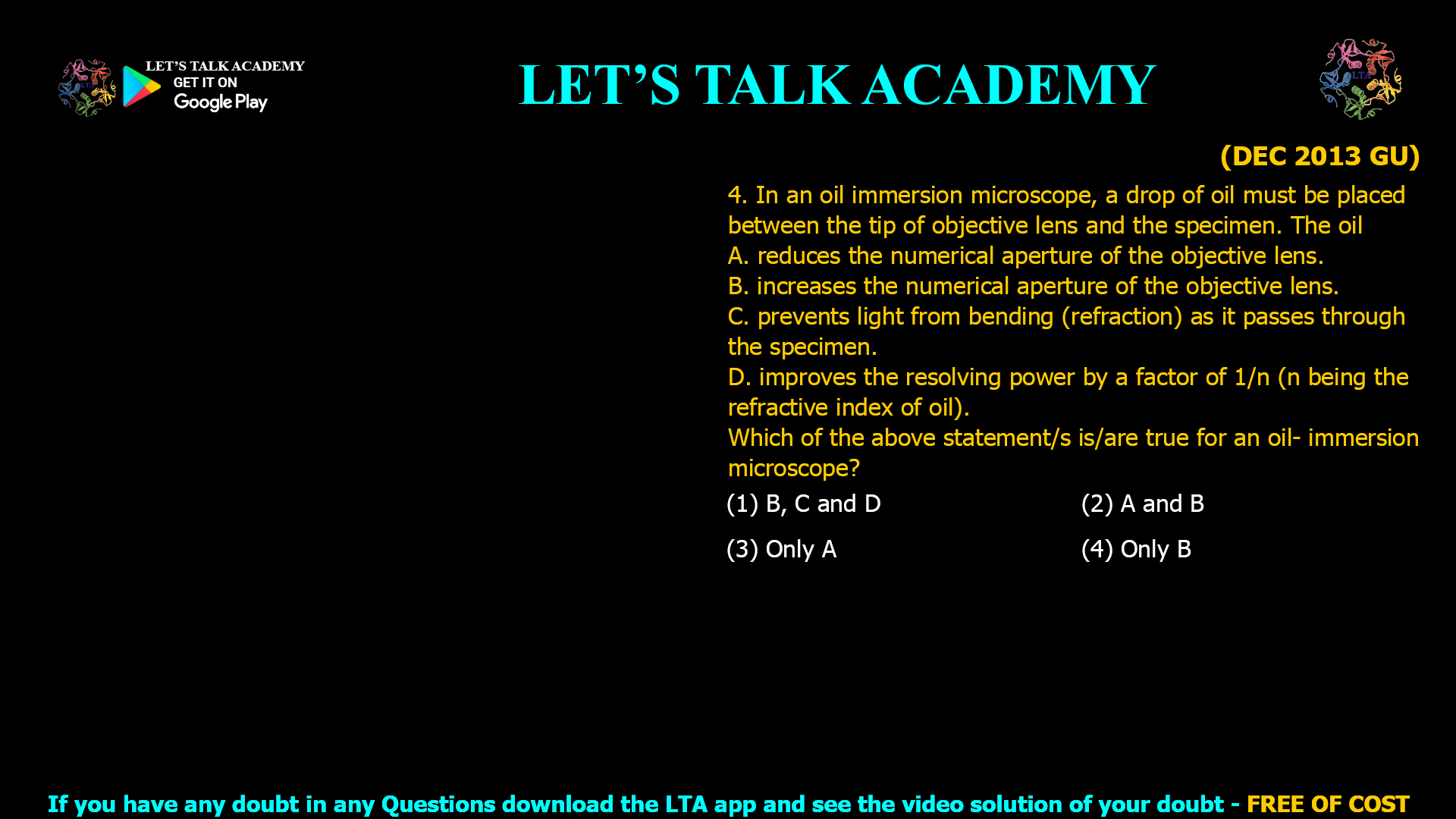
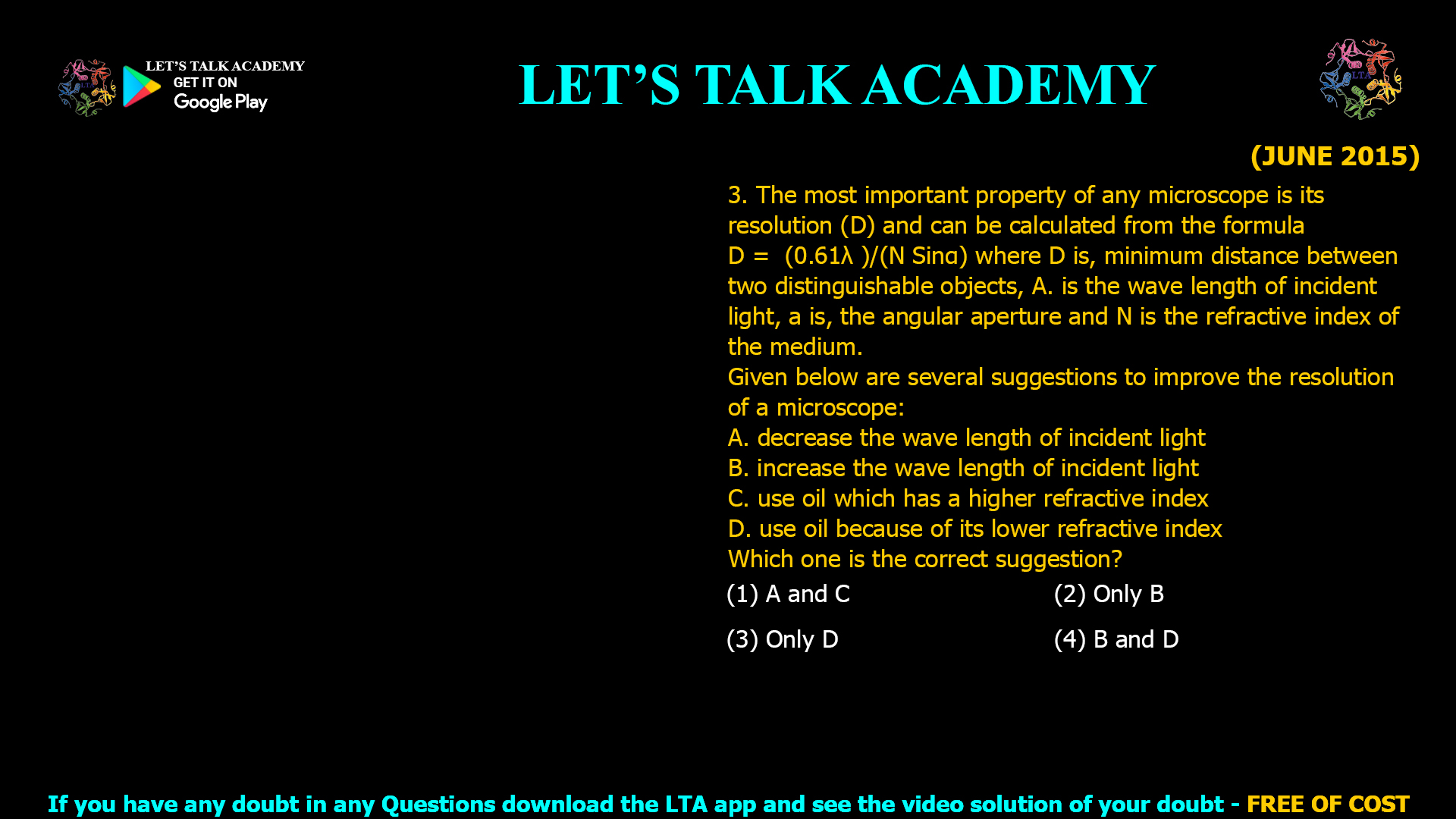
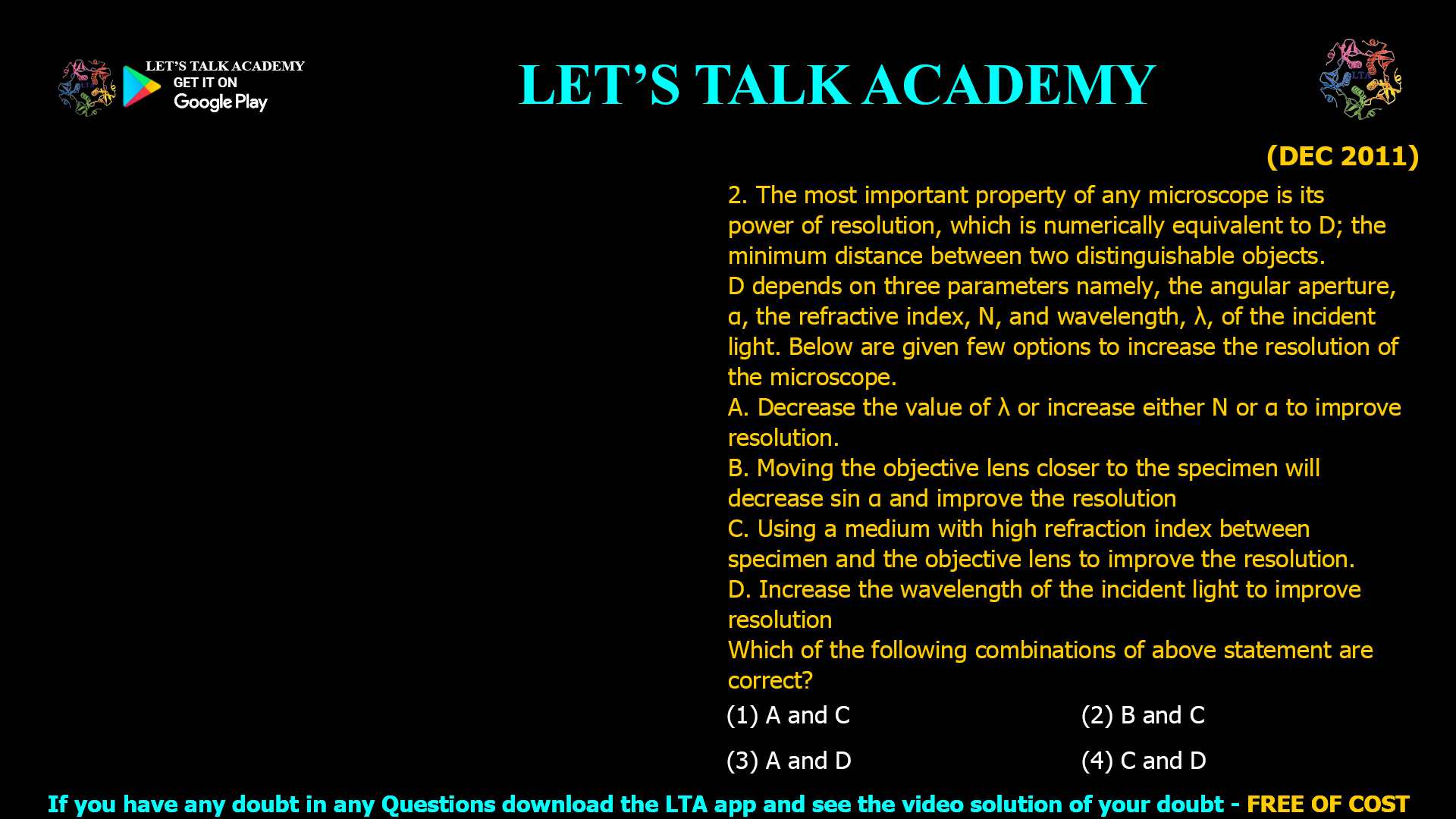
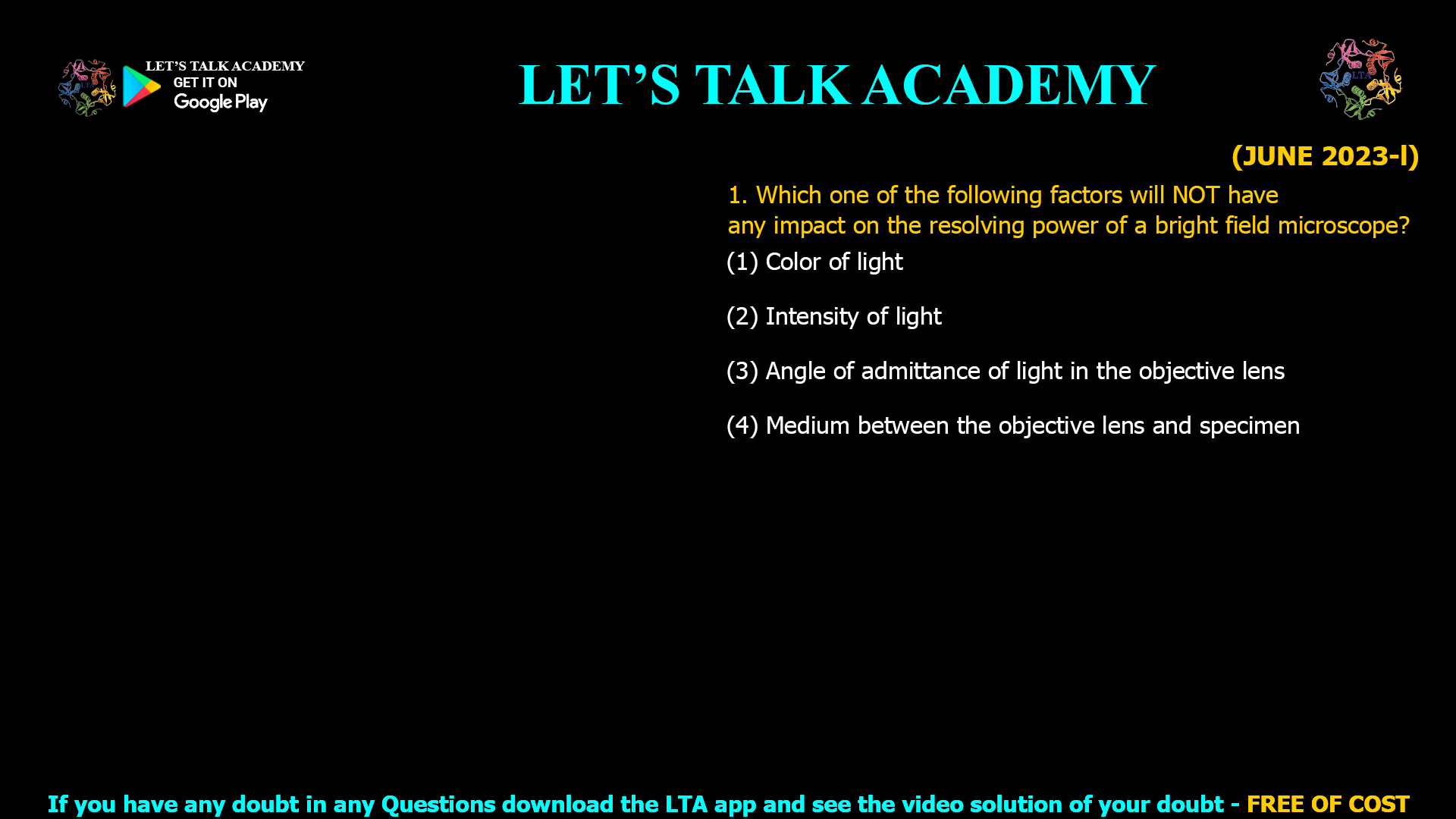
28. Which property is measured with a scanning probe microscope? A. Magnetism B. Electric resistance C. Light absorption D. All of the above Scanning probe microscopes (SPMs) excel at nanoscale […]
Category: CSIR NET Life Science Previous Year Questions on Microscopy
Here’s a **SEO-friendly article draft** for your request on **CSIR NET Life Science Previous Year Questions on Microscopy**.
—
# CSIR NET Life Science Previous Year Questions on Microscopy – Topic-Wise Guide
Preparing for the **CSIR NET Life Science exam** requires in-depth understanding of core topics, and **Microscopy** is one of the most frequently asked sections. Questions from **electron microscopy, confocal microscopy, fluorescence techniques, resolution, and labeling methods** are often included in the exam. Practicing **previous year questions (PYQs)** from microscopy not only strengthens your concepts but also improves problem-solving speed.
In this article, we will cover **important previous year CSIR NET Life Science questions on Microscopy**, along with explanations, exam insights, and preparation tips.
—
## 📌 Why Microscopy is Important for CSIR NET Life Science?
* Microscopy is a fundamental tool in **cell biology, molecular biology, and biochemistry**.
* The exam frequently tests your understanding of:
* Principles of light and electron microscopy.
* Resolution and wavelength relationship.
* Immunofluorescence and confocal microscopy applications.
* Electron microscopy labeling with gold particles.
* Weightage: On average, **1–2 questions (2–4 marks)** appear from microscopy in each CSIR NET Life Science paper.
—
## 🔥 Previous Year CSIR NET Life Science Questions on Microscopy
### 1. Immuno-Electron Microscopy (2019, December)
**Question:**
In electron microscopy, to detect a specific macromolecule such as the spindle pole body (SPB), the commonly used method is to couple secondary antibodies with:
**a)** Alexa 568
**b)** Cy5
**c)** Gold particles
**d)** Osmium tetroxide
✅ **Answer:** Gold particles
👉 *Explanation:* Gold-conjugated antibodies provide high-contrast signals in electron microscopy.
—
### 2. Confocal Microscopy for Co-Localization (2013, December)
**Question:**
Co-localization of two fluorescently labeled proteins in an organelle is usually visualized using:
**a)** Interference-contrast microscopy
**b)** Scanning electron microscopy
**c)** Confocal microscopy
**d)** Atomic force microscopy
✅ **Answer:** Confocal microscopy
👉 *Explanation:* Confocal microscopy provides **optical sectioning** and high-resolution 3D imaging.
—
### 3. Resolution: Electron vs. Light Microscopes (Model PYQ)
**Question:**
Electron microscopes have higher resolution compared to light microscopes because:
**a)** They use shorter wavelength electrons
**b)** They use multiple lenses
**c)** They magnify more than light microscopes
**d)** They avoid chromatic aberration
✅ **Answer:** They use shorter wavelength electrons
👉 *Explanation:* Resolution is inversely proportional to wavelength. Electrons have much shorter wavelengths than visible light.
—
### 4. Immunofluorescence Microscopy (Practice Question)
**Question:**
Immunofluorescence microscopy is most widely used for detecting:
**a)** Carbohydrates
**b)** Lipids
**c)** Specific proteins
**d)** DNA sequences
✅ **Answer:** Specific proteins
👉 *Explanation:* Fluorescently tagged antibodies bind to target proteins for precise localization inside cells.
—
## 📊 Topic-Wise Trend of Microscopy Questions
| Year | Question Type | Concept Tested |
| ————– | —————————- | ———————- |
| 2019 Dec | Electron Microscopy | Gold particle labeling |
| 2013 Dec | Confocal Microscopy | Co-localization |
| 2015 Model | Electron vs Light Microscopy | Resolution principle |
| Multiple Years | Immunofluorescence | Protein detection |
—
## 📖 Preparation Tips for Microscopy in CSIR NET Life Science
1. **Revise NCERT + Advanced Cell Biology Books** (Alberts, Lodish, Karp).
2. Understand the **principle of resolution** and the **Rayleigh criterion**.
3. Learn the difference between **light, electron, fluorescence, and confocal microscopy**.
4. Practice at least **10–15 microscopy PYQs** from the last 10 years.
5. Use **diagrams** for better retention.
—
## 📂 Download CSIR NET Previous Year Papers
To strengthen your preparation, download and solve **official CSIR NET Life Science PYQs** from NTA’s website or trusted resources like Pathfinder Academy and Let’s Talk Academy.
—
## 🏆 Conclusion
Microscopy is a **high-yield topic** in the **CSIR NET Life Science exam**. Practicing **previous year questions** on microscopy helps you understand the **exam pattern, recurring concepts, and application-based problem solving**. Focus on **electron microscopy, confocal microscopy, and immunofluorescence techniques** for maximum score in this section.


