
1. Introduction
Development of a multicellular organism is controlled by the coordinated activity of thousands of genes. These genes regulate:
- Cell division
- Cell differentiation
- Cell migration
- Cell-cell communication
- Tissue patterning
- Organ formation
- Growth
- Cell death
- Body-axis formation
A major question in developmental biology is:
How can we determine which genes control a particular developmental process?
One of the most powerful approaches is to study organisms in which specific genes have been altered.
Two important experimental approaches are:
- Mutant analysis
- Transgenic analysis
Mutant analysis studies organisms carrying naturally occurring or experimentally induced genetic changes.
Transgenic analysis involves introducing an external or modified genetic sequence into an organism and observing its effect.
Together, these approaches allow researchers to establish relationships between:
Gene → Gene product → Signaling pathway → Cell behavior → Tissue pattern → Developmental outcome
2. What is a Mutant?
A mutant is an organism, cell, or gene carrying a genetic alteration called a mutation.
A mutation is a change in the DNA sequence.
The mutation may affect:
- Protein structure
- Protein amount
- Gene expression
- Timing of gene expression
- Location of gene expression
- Regulatory regions
If the altered gene is involved in development, the organism may show a visible developmental abnormality called a mutant phenotype.
Basic concept
Normal gene
↓
Normal gene product
↓
Normal developmental process
Whereas:
Mutated gene
↓
Altered/absent gene product
↓
Altered developmental process
↓
Mutant phenotype
Therefore, studying the phenotype can provide information about the function of the affected gene.
3. Mutant Analysis
Mutant analysis is the study of developmental abnormalities produced by genetic mutations to determine the functions of genes involved in development.
It is one of the classical methods of developmental genetics.
For example, if mutation of gene X causes abnormal development of a limb, researchers can investigate whether gene X is involved in:
- Limb initiation
- Pattern formation
- Cell proliferation
- Cell differentiation
- Signaling
- Tissue organization
4. Why Mutants Are Useful in Developmental Biology
Mutants are useful because a change in phenotype can reveal the function of a gene.
Important questions include:
- What happens when a gene is lost?
- What happens when a gene becomes overactive?
- Where is the gene required?
- At what developmental stage is it required?
- Which cells are affected?
- Which signaling pathway is altered?
- Does another gene compensate for its loss?
Thus, mutant analysis helps convert a developmental observation into a molecular mechanism.
5. Types of Mutations Used in Developmental Analysis
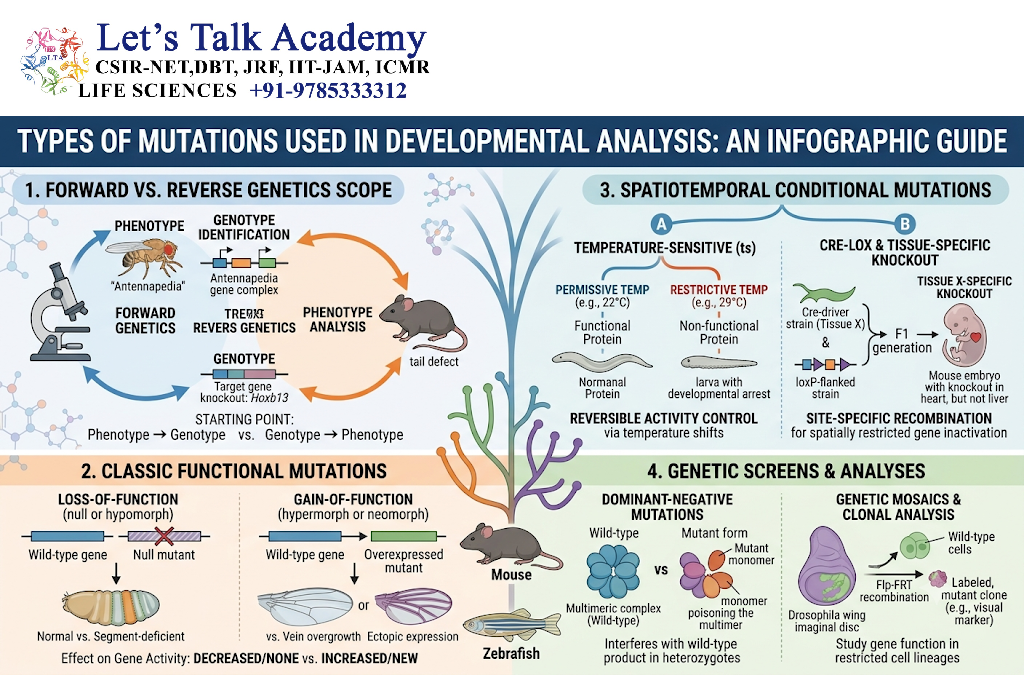
Mutations can be classified in several ways.
5.1 Loss-of-Function Mutation
A loss-of-function mutation reduces or eliminates the normal activity of a gene.
Example
If gene A normally promotes formation of a particular structure:
Gene A active → Structure develops
After loss of gene A:
Gene A inactive → Structure fails to develop
Loss-of-function mutants are particularly useful for determining whether a gene is required for a developmental process.
6. Null Mutation
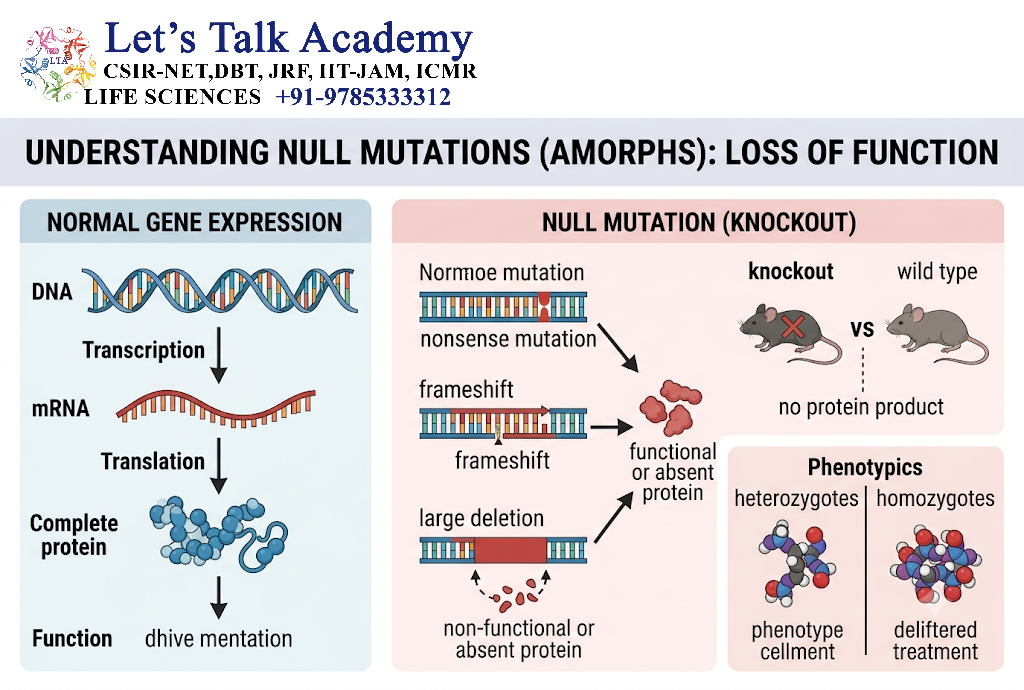
A null mutation results in complete loss of functional gene activity.
It can occur through changes that prevent production of a functional gene product.
Example
Functional gene → functional protein → normal development
Null allele → no functional protein → developmental defect
A null mutation can provide strong evidence about the normal requirement for a gene.
7. Hypomorphic Mutation
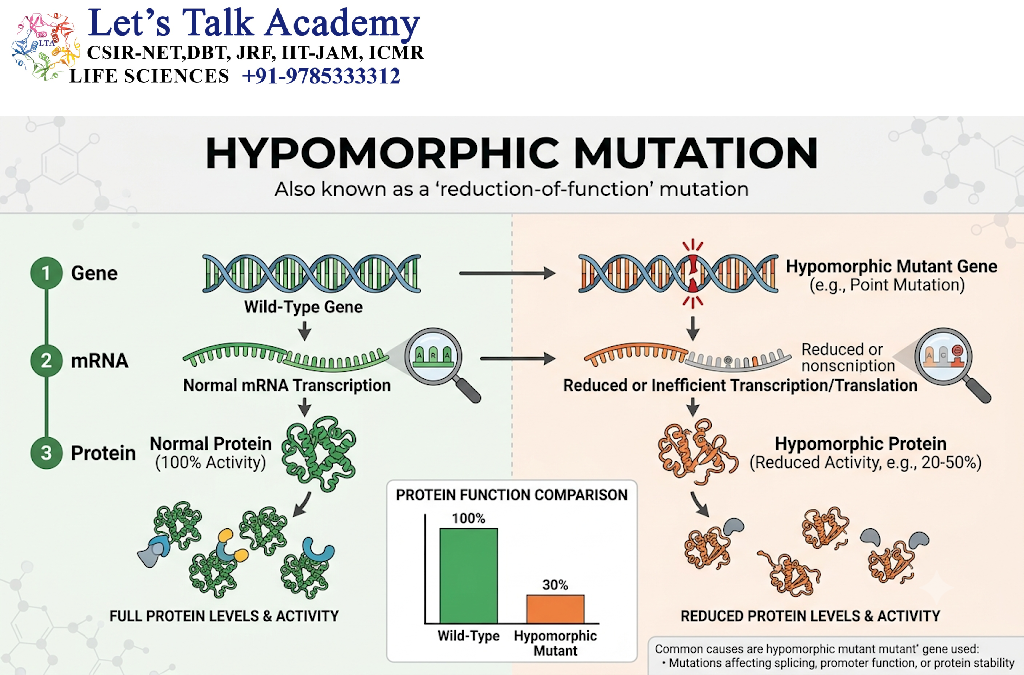
A hypomorphic mutation produces reduced gene activity rather than complete loss.
For example:
Normal activity = 100%
Hypomorphic mutant = 20–70% activity
The exact developmental phenotype may depend on how much gene activity remains.
This can be useful when complete loss of a gene causes early lethality.
8. Gain-of-Function Mutation
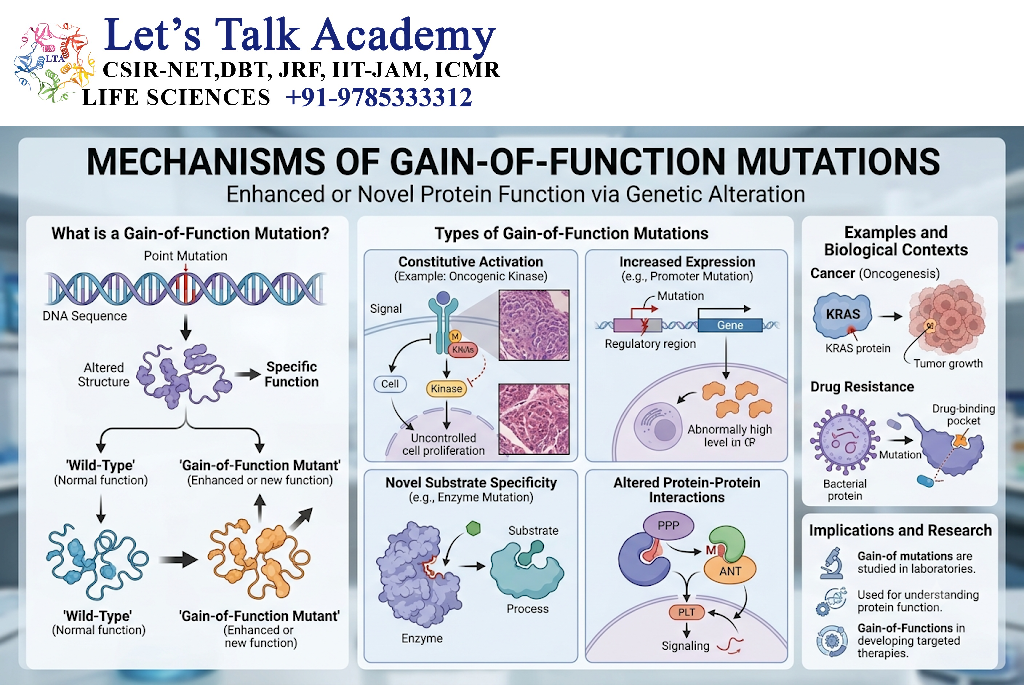
A gain-of-function mutation causes increased, abnormal, or new activity of a gene.
Possible effects include:
- Excessive gene activity
- Gene activity in an abnormal tissue
- Gene activity at an abnormal time
- Altered protein function
Basic mechanism
Normal gene → normal developmental signal
Gain-of-function mutation → excessive/ectopic signal → altered developmental pattern
Gain-of-function analysis can help determine what a gene can cause when activated.
9. Dominant-Negative Mutation
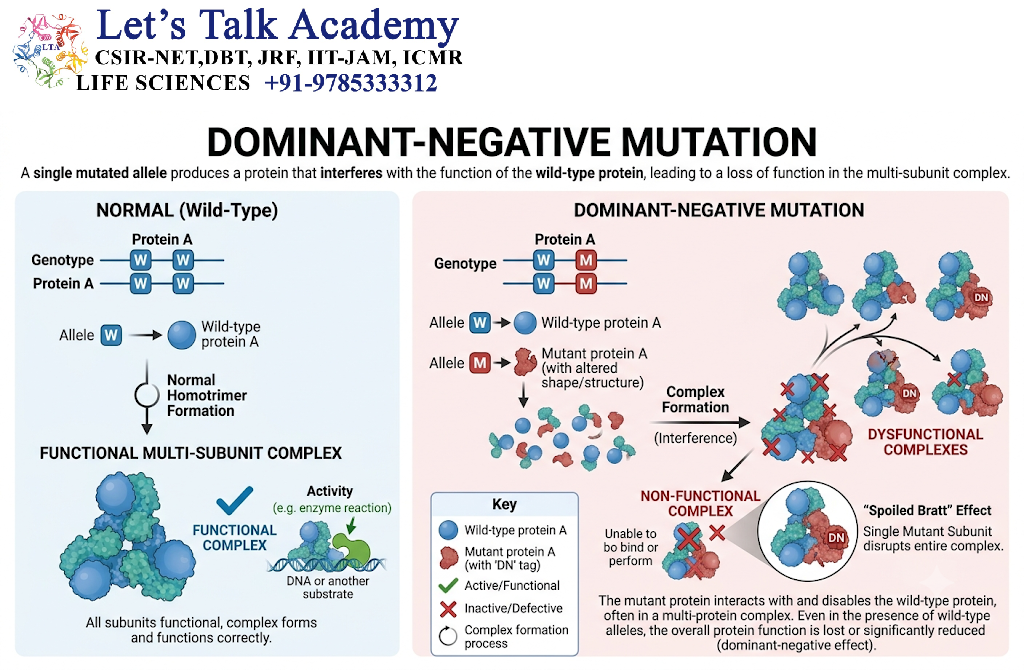
A dominant-negative mutation produces a mutant gene product that interferes with the normal gene product.
This is particularly important for proteins that function as:
- Dimers
- Multimers
- Protein complexes
The mutant protein can interfere with the function of the normal protein.
10. Conditional Mutants
Some genes are essential for early development.
If such a gene is completely inactivated, the organism may die before the later developmental process being studied can be examined.
A solution is to use a conditional mutation.
In a conditional mutant, gene function is altered only under particular conditions.
Examples of conditions include:
- Temperature
- Chemical treatment
- Developmental stage
- Specific tissue
- Specific signaling system
This allows researchers to study genes at different stages of development.
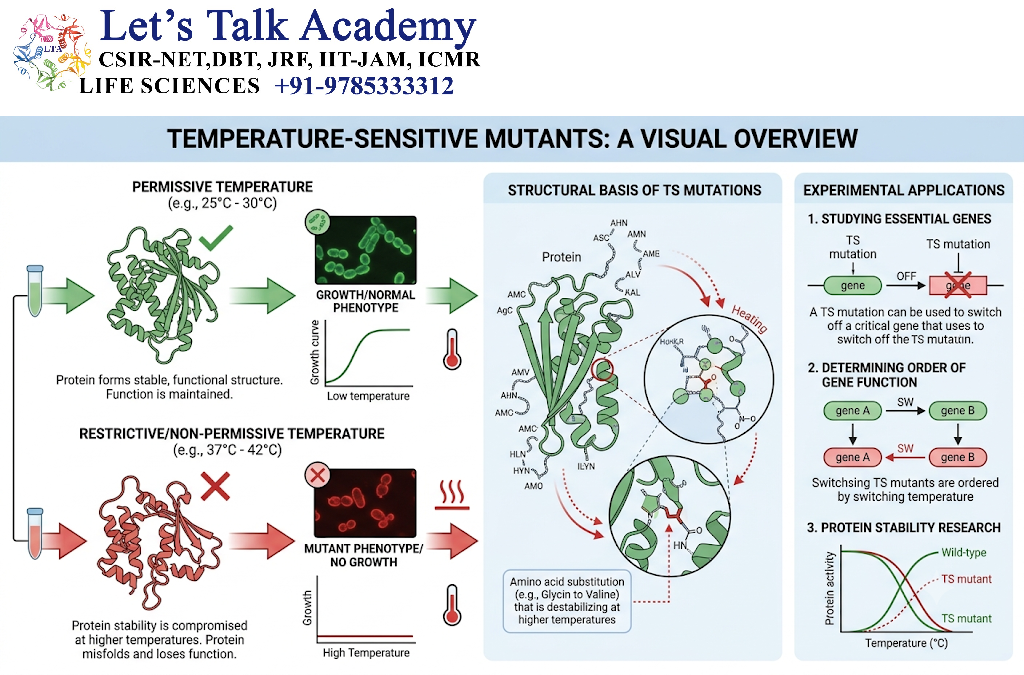
11. Temperature-Sensitive Mutants
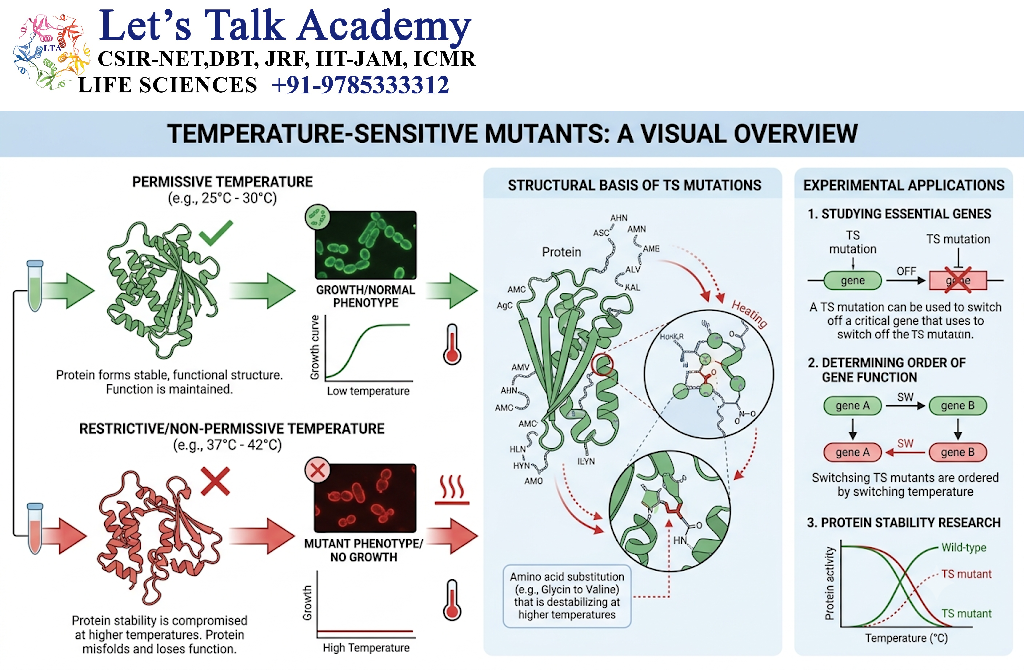
A temperature-sensitive mutation produces different phenotypes at different temperatures.
For example:
Permissive temperature → gene functions sufficiently
Restrictive temperature → gene function is disrupted
This technique has historically been useful for studying genes required at specific developmental stages.
12. Maternal-Effect Mutants
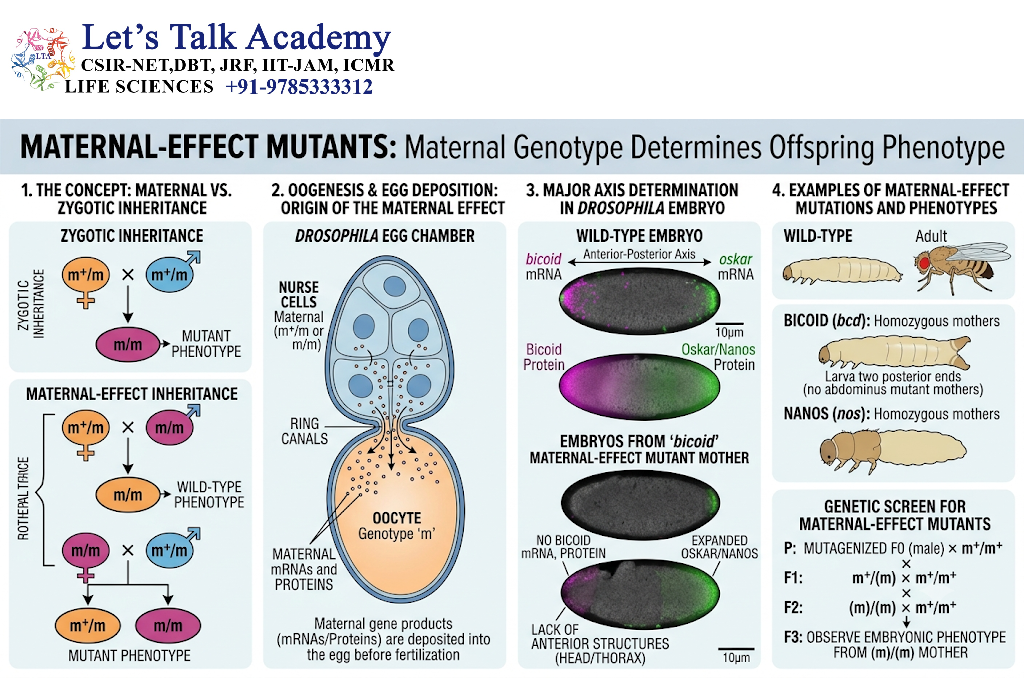
A maternal-effect mutation is a mutation in the mother’s genotype that affects the phenotype of the offspring because the mother supplies important gene products to the developing egg.
This is especially important during early embryogenesis.
The early embryo may initially depend heavily on:
- Maternal mRNAs
- Maternal proteins
- Cytoplasmic determinants
General mechanism
Maternal genotype
↓
Maternal gene products deposited in egg
↓
Early embryo uses these products
↓
Embryonic developmental pattern
Therefore, the offspring’s early phenotype may reflect the mother’s genotype rather than its own genotype.
13. Morphological Mutants
Some mutations produce easily visible changes in body structure.
Examples include changes in:
- Body segmentation
- Limb development
- Wing formation
- Eye development
- Pigmentation
- Organ formation
Such phenotypes are valuable because they allow researchers to connect genes with specific developmental structures.
14. Developmental Mutants in Model Organisms
Several organisms are particularly useful for mutant analysis.
| Model organism | Important developmental studies |
|---|---|
| Drosophila melanogaster | Body patterning, segmentation, Hox genes |
| Caenorhabditis elegans | Cell lineage, apoptosis |
| Mouse | Mammalian development, organogenesis |
| Zebrafish | Vertebrate development, organ formation |
| Arabidopsis thaliana | Plant development |
| Xenopus | Early vertebrate development |
These organisms are called model organisms because their genetics and development can be experimentally studied efficiently.
15. Mutagenesis
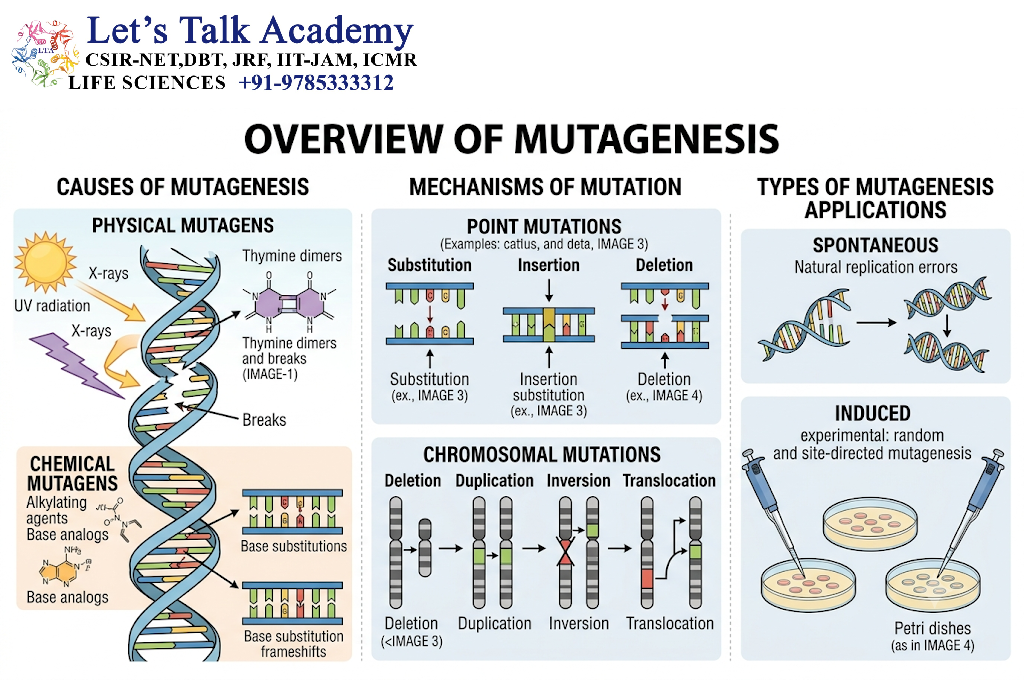
To obtain mutants experimentally, researchers can induce mutations.
This process is called mutagenesis.
Mutagenesis can be:
15.1 Chemical Mutagenesis
Chemical agents can alter DNA.
Examples include certain mutagenic chemicals that produce nucleotide changes.
15.2 Radiation Mutagenesis
Radiation can produce DNA damage and chromosome alterations.
15.3 Insertional Mutagenesis
A DNA sequence or mobile genetic element can insert into a gene and disrupt its function.
15.4 Targeted Genetic Modification
Modern methods can specifically alter selected genes using approaches such as:
- Homologous recombination
- CRISPR-based genome editing
16. Forward Genetics
Forward genetics begins with a phenotype and asks which gene is responsible.
Flow
Mutagenesis
↓
Screen organisms
↓
Identify unusual phenotype
↓
Genetic mapping
↓
Identify affected gene
↓
Determine gene function
Example
Suppose a mutant animal cannot develop normal eyes.
Researchers can ask:
Which mutation causes the eye phenotype?
This is a forward-genetic approach.
17. Reverse Genetics
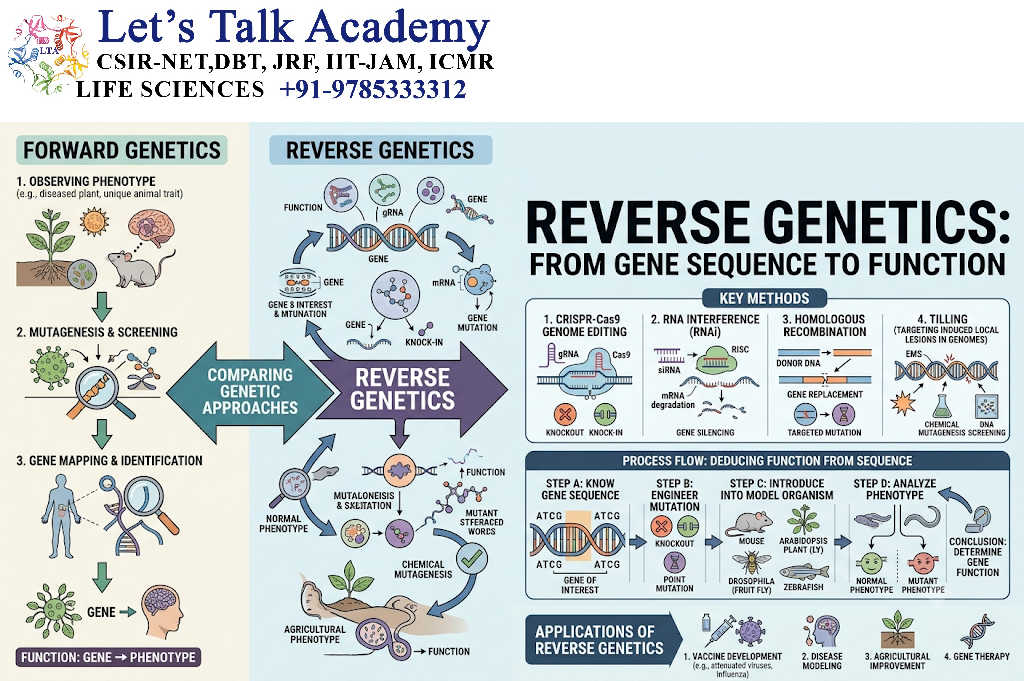
Reverse genetics begins with a known gene and asks what phenotype results when that gene is altered.
Flow
Known gene
↓
Alter gene function
↓
Observe phenotype
↓
Determine developmental role
For example:
Gene X → knockout
↓
Observe abnormal limb development
↓
Gene X contributes to limb development
18. Forward vs Reverse Genetics
| Feature | Forward genetics | Reverse genetics |
|---|---|---|
| Starting point | Phenotype | Known gene |
| Main question | Which gene causes this phenotype? | What does this gene do? |
| Basic strategy | Mutation → phenotype → gene | Gene alteration → phenotype |
| Useful for | Gene discovery | Gene-function analysis |
19. Genetic Screens
A genetic screen is a systematic search for organisms showing a particular phenotype.
For example, researchers may screen thousands of individuals for:
- Abnormal segmentation
- Defective eye formation
- Abnormal limb development
- Altered cell migration
- Abnormal embryonic patterning
Screens can identify genes that would otherwise be difficult to discover.
20. Enhancer and Suppressor Mutations
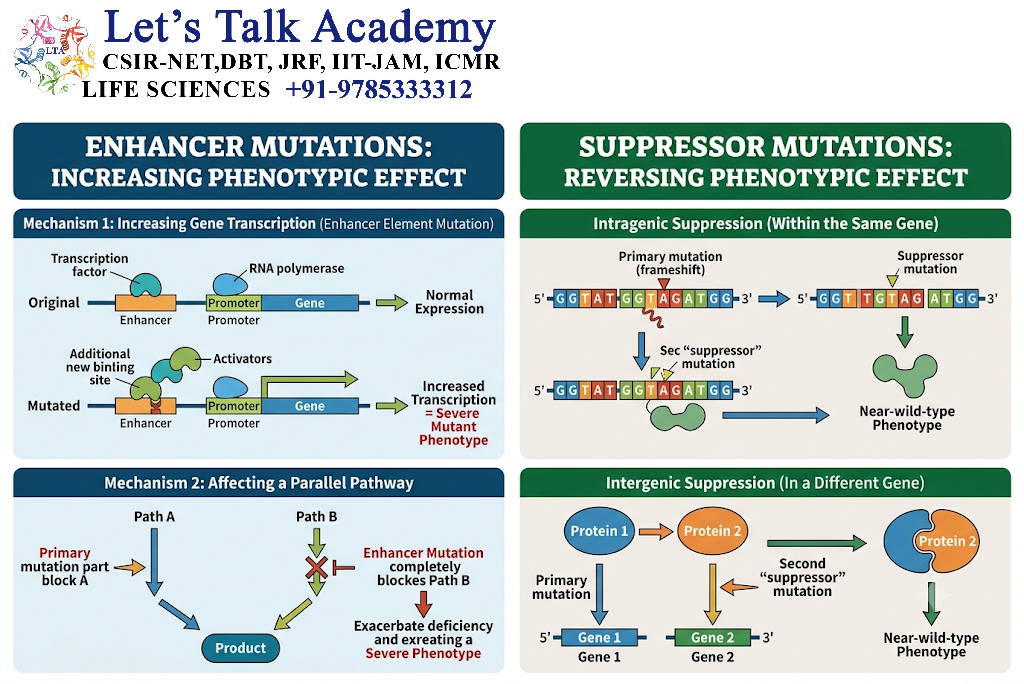
Mutant analysis can also be used to study genetic interactions.
Enhancer mutation
An enhancer mutation makes an existing phenotype more severe.
Suppressor mutation
A suppressor mutation reduces or eliminates another mutation’s phenotype.
These interactions can reveal whether genes act:
- In the same pathway
- At different stages
- Upstream or downstream
- In parallel pathways
Example
Gene A mutation → developmental defect
If mutation of gene B makes the defect worse:
A mutation + B mutation → stronger phenotype
Gene B may interact with gene A.
If another mutation restores normal development:
A mutation + C mutation → near-normal phenotype
Gene C may suppress the pathway defect.
21. Genetic Epistasis
Epistasis refers to a genetic interaction in which the phenotype associated with one gene masks or modifies the effect of another gene.
It is particularly useful for determining the order of genes in developmental pathways.
Example
Suppose:
Gene A → Gene B → Gene C → developmental process
Mutations in these genes can help determine the pathway order.
Simplified analysis
Mutation A → phenotype
Mutation B → phenotype
Double mutant A+B → phenotype of B
This may suggest that B functions downstream of A.
However, epistasis must be interpreted carefully because developmental pathways can be complex and branched.
22. What is a Transgenic Organism?
A transgenic organism is an organism whose genome contains a deliberately introduced genetic sequence, often derived from another organism or an engineered DNA construct.
The introduced DNA is called a transgene.
Basic process
Gene of interest
↓
DNA construct
↓
Introduction into developing cells/embryo
↓
Integration or targeted insertion
↓
Transgenic organism
↓
Study gene expression/function
Transgenic organisms are powerful tools for studying when, where, and how genes function.
23. Purpose of Transgenic Analysis
Transgenic approaches can be used to study:
- Gene expression
- Gene regulation
- Cell lineage
- Tissue-specific gene function
- Developmental signaling
- Protein localization
- Gene overexpression
- Disease mechanisms
- Regulatory DNA sequences
They are particularly useful because researchers can manipulate gene activity and directly observe developmental consequences.
24. Transgenic Constructs
A transgenic construct generally contains several functional components.
A simplified construct may include:
Promoter/enhancer
+
Gene of interest
+
Regulatory sequences
+
Polyadenylation/termination signal
The promoter determines where and when the transgene is expressed.
Example
Tissue-specific promoter
↓
Gene X
↓
Gene X expressed only in selected tissue
This allows researchers to investigate the function of Gene X in a particular developmental context.
25. Reporter Genes
One of the most important uses of transgenics is the study of gene expression using reporter genes.
A reporter produces an easily detectable signal.
Common reporter systems include:
- GFP – Green Fluorescent Protein
- RFP – Red Fluorescent Protein
- LacZ – β-galactosidase
- Luciferase
Basic principle
Regulatory region of gene X
+
Reporter gene
↓
Reporter expression
↓
Visible/detectable signal
↓
Location and timing of gene activity
This allows researchers to determine where a developmental gene is active.
26. GFP as a Reporter
GFP (Green Fluorescent Protein) produces green fluorescence under appropriate excitation.
If the regulatory region of developmental gene X controls GFP:
Gene X regulatory region → GFP
Wherever the regulatory region is active, fluorescence can indicate gene-expression activity.
This can be used to study:
- Spatial expression
- Temporal expression
- Cell populations
- Cell migration
- Tissue development
27. Promoter Analysis
A promoter contains DNA sequences involved in transcriptional regulation.
Researchers can attach different promoter fragments to a reporter gene.
Example
Promoter fragment A → GFP
Promoter fragment B → GFP
If only fragment A produces expression in a particular tissue, the relevant regulatory information may be located within fragment A.
Thus, transgenic reporter analysis can identify cis-regulatory elements controlling developmental gene expression.
28. Enhancer Analysis
Enhancers are regulatory DNA elements that influence gene expression.
A developmental gene may have different enhancers controlling expression in:
- Nervous tissue
- Limb tissue
- Heart
- Muscle
- Embryonic ectoderm
Reporter constructs allow researchers to test whether a DNA sequence functions as an enhancer.
Flow
Candidate DNA sequence
↓
Reporter construct
↓
Introduce into organism
↓
Observe reporter pattern
↓
Determine regulatory activity
29. Gene Overexpression
A transgene can be designed to produce excessive or ectopic expression of a gene.
This allows researchers to ask:
What happens when this developmental signal is activated more strongly or in the wrong place?
Example
Normal Gene X
→ normal tissue pattern
Gene X overexpression
→ altered signaling
→ altered cell fate/patterning
This can provide evidence about the ability of a gene to influence developmental fate.
30. Ectopic Expression
Ectopic expression means expression of a gene in a location where it is not normally expressed.
For example:
Gene normally active → Tissue A
Experimental expression:
Gene active → Tissue B
If Tissue B develops a new or altered characteristic, this provides evidence about the developmental potential of the gene.
31. Gene Knockout
A gene knockout is an experimental disruption or removal of gene function.
The resulting organism is called a knockout organism.
Basic analysis
Normal organism
→ normal development
Gene X knockout
→ developmental phenotype
The phenotype helps reveal the normal function of Gene X.
Modern genome-editing methods such as CRISPR can be used to generate targeted gene disruptions.
32. Conditional Knockout
A complete knockout may cause early embryonic death.
In such cases, researchers can use a conditional knockout.
The gene is disrupted:
- In a particular tissue
- At a particular developmental stage
- Under particular experimental conditions
This helps determine the tissue-specific or time-specific function of a gene.
33. Tissue-Specific Gene Manipulation
Development is highly dependent on where a gene functions.
A gene may be essential in one tissue but unnecessary in another.
Therefore, transgenic systems can be designed to manipulate gene activity specifically in:
- Neural cells
- Muscle cells
- Liver
- Heart
- Skin
- Germ cells
- Developing limbs
This provides more precise information than whole-organism gene disruption.
34. Cre-Lox System
A widely used conditional genetic system is the Cre-Lox system.
It uses:
- Cre recombinase
- LoxP DNA sites
A target gene can be surrounded by loxP sites.
When Cre recombinase is expressed in a particular tissue:
Cre
↓
Recognizes loxP sites
↓
Recombination
↓
Target gene deleted or modified
If Cre expression is tissue-specific, gene modification can occur specifically in that tissue.
35. Inducible Genetic Systems
Some genetic systems allow researchers to control gene activity at a chosen time.
This is important when a gene has different roles at different developmental stages.
General concept
Gene manipulation system
+
Inducible signal
↓
Gene activated/deactivated
↓
Developmental response observed
This helps distinguish early developmental functions from later functions.
36. Rescue Experiments
A rescue experiment is an important way to strengthen evidence for gene function.
Suppose:
Mutation in Gene X → abnormal phenotype
Researchers introduce a functional copy of Gene X.
If:
Functional Gene X introduced → phenotype improves or returns toward normal
this provides strong evidence that the original phenotype was related to loss of Gene X function.
Flow
Mutation
↓
Abnormal phenotype
↓
Add functional gene
↓
Phenotype rescued
↓
Evidence for Gene X function
37. Cell-Autonomous and Non-Cell-Autonomous Effects
Transgenic and mutant analysis can help determine whether a gene acts within the affected cell or through signals from neighboring cells.
Cell-autonomous effect
The gene is required directly within the cell showing the phenotype.
Non-cell-autonomous effect
The gene functions in one cell or tissue but affects another cell or tissue through signaling.
This distinction is extremely important in developmental biology because tissues constantly communicate with one another.
38. Lineage Tracing Using Transgenic Approaches
Transgenic systems can be used to label cells and follow their descendants.
For example:
Specific cell population
↓
Permanent genetic label
↓
Cell division and migration
↓
Descendant cells remain labeled
↓
Determine developmental lineage
This helps answer questions such as:
- Where did a cell originate?
- Which tissues does it produce?
- Does it change identity?
- How does it migrate during development?
39. Mutants and Cell Fate
Mutant analysis can reveal genes involved in cell-fate decisions.
Suppose a mutation causes one cell type to develop into another.
This suggests that the mutated gene may normally:
- Promote the original fate
- Suppress the alternative fate
- Respond to an inductive signal
- Regulate transcription factors
Thus:
Mutation → altered cell fate → identify developmental regulatory mechanism
40. Mutants and Morphogens
Mutant analysis is also useful for studying morphogens.
A morphogen is a signaling molecule that can provide positional information through concentration-dependent effects.
Suppose mutation of a morphogen gene causes loss or alteration of several tissue types.
Researchers can compare:
- Normal expression
- Mutant phenotype
- Overexpression phenotype
- Ectopic expression phenotype
This can help establish how the signal controls pattern formation.
41. Mutants and Signaling Pathways
Developmental signaling pathways can be investigated using mutants.
Important pathways include:
- WNT
- Hedgehog
- Notch
- FGF
- TGF-β/BMP
- Hippo
- JAK-STAT
General strategy
Mutate pathway component
↓
Observe developmental phenotype
↓
Compare with other pathway mutants
↓
Determine genetic relationship
↓
Construct developmental pathway
42. Example: Hox Gene Analysis
Hox genes are important regulators of body patterning along the anterior-posterior axis.
Mutant analysis of Hox genes has shown that changes in their activity can alter the identity of body structures.
This illustrates an important principle:
Developmental genes can control the identity and organization of tissues rather than simply controlling cell proliferation.
Hox genes therefore provide a classic example of how genetic analysis can reveal mechanisms of body-pattern formation.
43. Example: Drosophila Development
Drosophila melanogaster has been extremely important for understanding developmental genetics.
Mutant screens identified genes involved in:
- Anterior-posterior patterning
- Dorsal-ventral patterning
- Segmentation
- Segment identity
- Appendage development
Genes in these pathways helped establish the idea that development is controlled by hierarchical gene regulatory networks.
44. Example: Homeotic Mutants
Homeotic mutations can cause one body structure to develop with the identity of another body structure.
Such mutants provided important evidence that specific genes regulate positional identity during development.
They contributed to the discovery and understanding of Hox genes.
45. Transgenic Analysis of Developmental Genes
A developmental gene can be studied using multiple experimental approaches.
For example:
Normal expression
Use a reporter:
Gene regulatory region → GFP
Loss of function
Gene knockout → developmental phenotype
Increased activity
Gene overexpression → developmental phenotype
Abnormal location
Ectopic expression → altered tissue identity
Functional confirmation
Rescue → restoration of phenotype
Using multiple approaches provides stronger evidence than relying on a single experiment.
46. Mutants vs Transgenics
| Feature | Mutant analysis | Transgenic analysis |
|---|---|---|
| Basic approach | Study altered endogenous gene | Introduce engineered genetic material |
| Starting point | Mutation | Designed DNA construct |
| Main purpose | Determine gene requirement/function | Test gene expression/function/regulation |
| Loss-of-function | Common | Can be engineered |
| Gain-of-function | Can occur naturally/experimentally | Can be deliberately produced |
| Reporter analysis | Limited | Very useful |
| Tissue-specific manipulation | Possible but less direct | Highly useful |
| Gene-expression study | Indirect or through molecular assays | Reporter-based analysis is powerful |
| Gene rescue | Possible | Commonly used |
| Developmental pathway analysis | Very important | Very important |
47. Forward Genetics vs Transgenic Analysis
| Feature | Forward genetics | Transgenic analysis |
|---|---|---|
| Starting point | Phenotype | Known DNA/gene |
| Main question | Which gene is responsible? | What does this sequence/gene do? |
| Approach | Mutagenesis and screening | Genetic engineering |
| Major use | Gene discovery | Gene function/regulation |
| Reporter use | Not central | Very common |
| Example | Screen abnormal embryos | GFP under developmental enhancer |
48. Advantages of Mutant Analysis
Mutant analysis provides:
- Direct information about gene necessity
- Identification of developmental genes
- Discovery of genetic pathways
- Information about gene interactions
- Phenotypic evidence of gene function
- Ability to study developmental timing
- Identification of conserved developmental mechanisms
49. Limitations of Mutant Analysis
Mutant analysis also has limitations.
1. Genetic redundancy
Two genes may have overlapping functions.
Loss of one gene may produce little phenotype.
2. Early lethality
Mutation may kill the organism before the developmental stage of interest.
3. Pleiotropy
One gene may affect multiple biological processes.
Therefore, a phenotype may have several causes.
4. Genetic background
Different genetic backgrounds can influence mutant phenotypes.
5. Compensation
Cells may compensate for loss of a gene by changing other pathways.
50. Advantages of Transgenic Analysis
Transgenic approaches provide:
- Controlled gene expression
- Tissue-specific manipulation
- Temporal control
- Reporter-based visualization
- Gain-of-function analysis
- Gene rescue
- Lineage tracing
- Analysis of regulatory DNA
- Conditional gene manipulation
51. Limitations of Transgenic Analysis
Some limitations include:
- Transgene expression may not reproduce normal endogenous expression.
- Position effects can influence transgene activity if insertion is random.
- Excessive expression can produce non-physiological phenotypes.
- Genetic engineering can sometimes produce unintended effects.
- Developmental systems may have complex compensatory mechanisms.
- Results from model organisms may not always directly represent human development.
52. Role of CRISPR in Developmental Biology
Modern genome-editing methods have greatly expanded genetic analysis.
CRISPR-based systems can be used to:
- Knock out genes
- Introduce specific mutations
- Modify regulatory sequences
- Alter gene expression
- Generate conditional models
- Study non-coding DNA
General concept
Target DNA sequence
↓
Guide RNA directs editing machinery
↓
Targeted genome modification
↓
Altered gene function
↓
Developmental phenotype
↓
Functional analysis
CRISPR has therefore made targeted genetic analysis more accessible and precise.
53. Mutants and Transgenics in Gene Regulatory Networks
Development is controlled by gene regulatory networks (GRNs).
A simplified network may be:
Signal
↓
Receptor
↓
Intracellular signaling
↓
Transcription factor
↓
Target genes
↓
Cell behavior
↓
Tissue development
Mutant and transgenic experiments can manipulate different components of this network.
By comparing the resulting phenotypes, researchers can determine:
- Which genes are upstream
- Which genes are downstream
- Which genes interact
- Which genes regulate one another
- Which genes are required for a particular cell fate
54. Complete Experimental Logic
A typical developmental-genetics experiment can follow this sequence:
Identify developmental process
↓
Identify candidate gene
↓
Mutate or manipulate gene
↓
Observe phenotype
↓
Compare with normal organism
↓
Determine gene expression
↓
Perform rescue or additional genetic tests
↓
Study pathway interactions
↓
Construct developmental model
This combination of approaches is much more powerful than simply observing a mutation.
55. Mutant and Transgenic Analysis of Cell Signaling
Consider a developmental signal:
Ligand → Receptor → Signal transduction → Transcription factor → Target genes
Researchers can independently manipulate each component.
For example:
| Manipulation | Question |
|---|---|
| Ligand knockout | Is the signal required? |
| Receptor knockout | Is signal reception required? |
| Receptor overexpression | What happens with increased signaling? |
| Reporter construct | Where is the pathway active? |
| Transcription-factor mutation | Which downstream response is required? |
| Rescue experiment | Can normal development be restored? |
This allows developmental pathways to be experimentally dissected.
56. Mutants and Transgenics in Analysis of Cell Fate
Cell fate decisions can be studied through:
- Loss-of-function mutants
- Gain-of-function mutants
- Reporter genes
- Lineage tracing
- Conditional knockouts
- Ectopic gene expression
General mechanism
Developmental signal
↓
Gene regulatory network
↓
Cell-fate decision
↓
Differentiation
↓
Specialized cell
If mutation changes the final cell type, the affected gene may be part of the cell-fate regulatory system.
57. Important Applications
Mutant and transgenic approaches are used to study:
Early embryonic patterning
How body axes are established.
Cell differentiation
How unspecialized cells acquire specialized identities.
Organogenesis
How organs form.
Nervous-system development
How neurons are generated and organized.
Limb development
How positional information controls limb patterning.
Stem-cell biology
How cells maintain or lose developmental potency.
Disease mechanisms
How developmental pathways contribute to congenital disorders and disease.
Regenerative biology
How developmental pathways can be reactivated during tissue repair.


