
1. Introduction to Stem Cells
Stem cells are a specialized population of cells characterized primarily by two fundamental properties: self-renewal and differentiation potential. Unlike terminally differentiated cells, which generally perform highly specialized functions, stem cells can undergo repeated cell divisions while maintaining a stem-cell population and, under appropriate conditions, generate more specialized progenitor or differentiated cells.
Stem cell biology connects several major areas of modern life science, including developmental biology, cell biology, molecular biology, genetics, epigenetics, tissue regeneration, disease modeling, and regenerative medicine. Understanding stem cells therefore requires more than memorizing their definitions. It involves understanding how cellular identity is established, maintained, altered, and transmitted during cell division and differentiation.
Stem cells are not a single uniform population. Their biological properties vary according to their developmental origin, anatomical location, potency, molecular state, and surrounding microenvironment. Embryonic stem cells and induced pluripotent stem cells are pluripotent, whereas most adult stem cells have more restricted differentiation potential. The ability of stem cells to generate different cell types makes them central to embryonic development and tissue maintenance. During development, stem and progenitor cells progressively acquire specialized identities. In adult tissues, tissue-resident stem cells help maintain cellular homeostasis and participate in repair after injury.
A useful way to understand stem cell biology is to consider three interconnected questions:
- How does a stem cell maintain its identity?
- How does a stem cell decide whether to self-renew or differentiate?
- How can researchers manipulate these processes experimentally?
The answers involve transcription factors, epigenetic regulation, intracellular signaling pathways, cell-cell interactions, extracellular matrix components, metabolism, and the specialized microenvironment known as the stem cell niche.
2. Fundamental Properties of Stem Cells
2.1 Self-Renewal
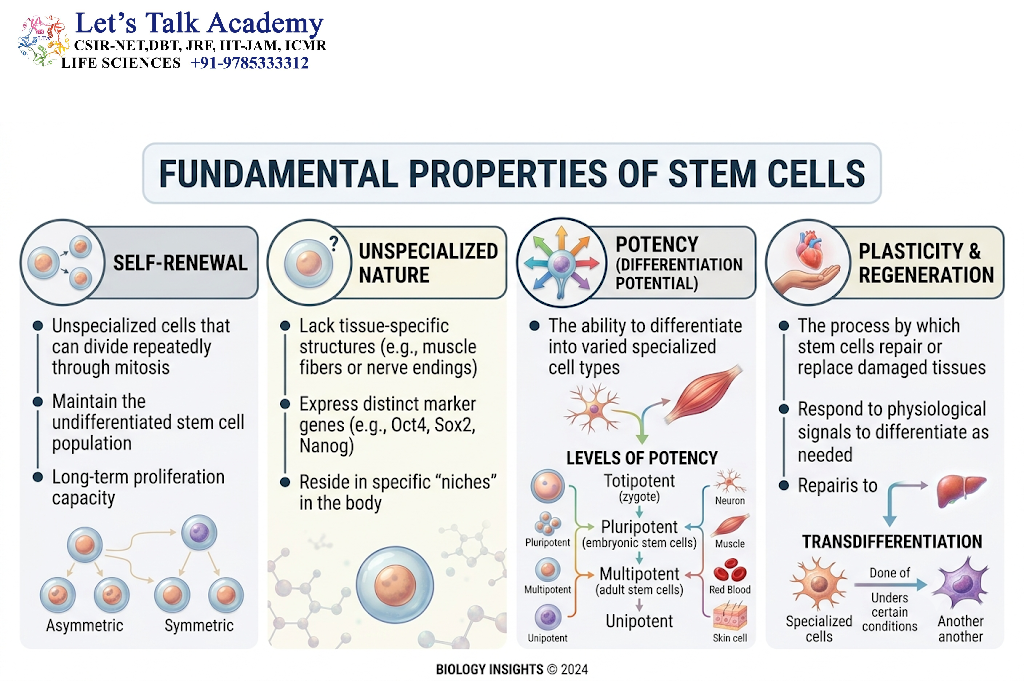
Self-renewal is the ability of a stem cell to undergo cell division and produce daughter cells that retain stem-cell characteristics.
Self-renewal does not simply mean that a cell divides. Many differentiated cells can divide under certain conditions, but they do not necessarily maintain a long-term stem-cell population. True stem-cell self-renewal involves the preservation of an undifferentiated state across successive divisions.
Stem-cell division can produce different outcomes:
- Two stem cells
- One stem cell and one differentiating progenitor cell
- Two differentiating daughter cells
These patterns are often discussed in relation to symmetric and asymmetric cell division.
In symmetric self-renewing division, both daughter cells retain stem-cell properties. In asymmetric division, one daughter cell retains stem-cell characteristics while the other enters a differentiation pathway.
The balance between these outcomes is critical. Excessive self-renewal can contribute to abnormal tissue expansion, whereas excessive differentiation can deplete the stem-cell population. Therefore, tissues must carefully regulate stem-cell numbers.
2.2 Differentiation
Differentiation is the process through which a relatively unspecialized cell acquires structural, biochemical, and functional characteristics of a specialized cell type.
For example, during hematopoiesis, hematopoietic stem cells generate progenitor populations that eventually produce erythrocytes, leukocytes, megakaryocytes, and other blood-cell lineages.
Differentiation is regulated by changes in gene expression rather than simply by changes in cell shape. A differentiating cell activates genes required for its future function while repressing genes associated with alternative cellular identities.
Differentiation is influenced by:
- Transcription factors
- Growth factors
- Cytokines
- Cell-cell interactions
- Extracellular matrix
- Epigenetic modifications
- Intracellular signaling pathways
- Metabolic state
- Mechanical signals
- Stem-cell niche components
Thus, differentiation is a controlled molecular process rather than a random conversion of one cell type into another.
2.3 Potency
Potency describes the range of cell types that a stem cell can generate.
Stem cells can be classified according to their developmental potential.
2.3.1 Totipotent Cells
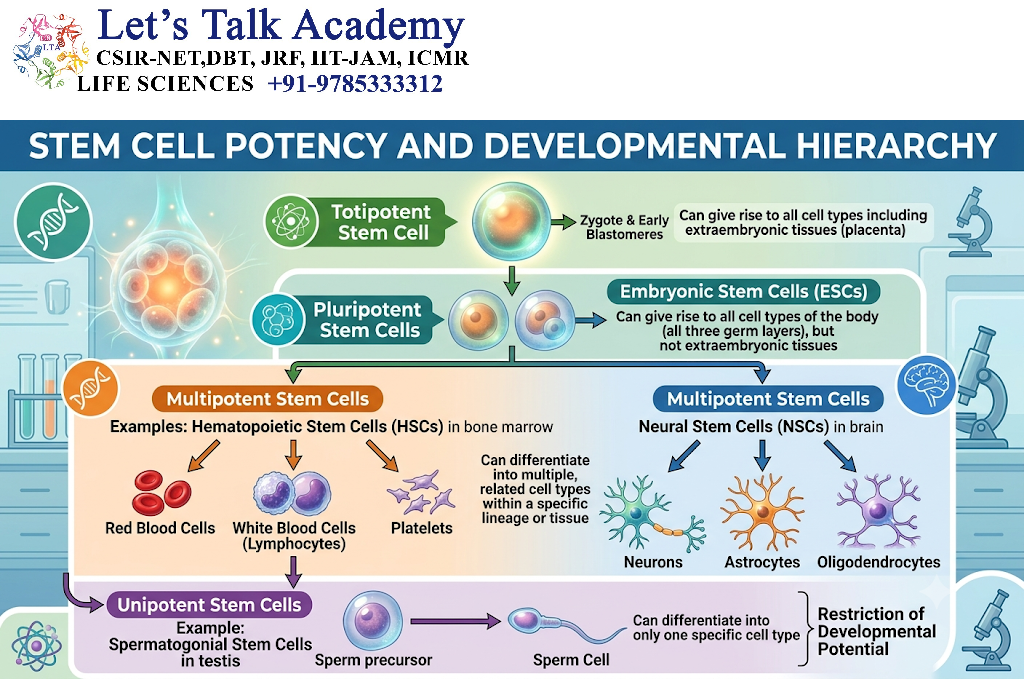
Totipotent cells have the broadest developmental potential. They can generate embryonic as well as extraembryonic tissues.
The fertilized egg and early blastomeres represent the classic biological context for totipotency.
2.3.2 Pluripotent Cells
Pluripotent cells can generate derivatives of all three embryonic germ layers:
- Ectoderm
- Mesoderm
- Endoderm
Embryonic stem cells and induced pluripotent stem cells are major examples of pluripotent stem cells.
2.3.3 Multipotent Cells
Multipotent stem cells generate several related cell types within a particular tissue or developmental system.
Hematopoietic stem cells are a classic example because they can generate multiple blood-cell lineages.
2.3.4 Oligopotent Cells
Oligopotent progenitor or stem-cell populations have a more restricted potential and can generate a limited number of closely related cell types.
2.3.5 Unipotent Cells
Unipotent stem or progenitor cells have the most restricted differentiation capacity among these categories. They primarily generate one mature cell type but may retain the capacity for self-renewal.
Potency therefore represents a continuum of developmental potential rather than simply a list of unrelated categories.
3. Classification of Stem Cells

Stem cells can be classified according to their developmental origin, potency, or anatomical source.
The major categories include embryonic stem cells, adult or tissue-specific stem cells, and induced pluripotent stem cells.
3.1 Embryonic Stem Cells
Embryonic stem cells are derived from the inner cell mass of the preimplantation blastocyst. They possess pluripotency and can generate derivatives of all three embryonic germ layers.
In culture, embryonic stem cells can proliferate for extended periods while retaining pluripotent characteristics under appropriate conditions.
Important characteristics include:
- Pluripotency
- High proliferative capacity
- Ability to self-renew
- Expression of pluripotency-associated transcription factors
- Ability to differentiate into diverse specialized cell types
Key molecular regulators of pluripotency include transcription factors such as OCT4, SOX2, and NANOG.
These factors form part of an interconnected regulatory network that maintains the pluripotent state.
3.2 Adult or Tissue-Specific Stem Cells
Adult stem cells are found in various tissues after embryonic development. They generally participate in tissue maintenance, cellular turnover, and repair.
Examples include:
- Hematopoietic stem cells
- Intestinal stem cells
- Neural stem or progenitor cells
- Skin stem cells
- Muscle satellite cells
- Mesenchymal stromal/stem cell populations
Adult stem cells are usually more restricted in their differentiation potential than pluripotent stem cells.
Their activity is strongly influenced by the tissue environment in which they reside. This specialized environment is called the stem cell niche.
3.3 Induced Pluripotent Stem Cells
Induced pluripotent stem cells, commonly abbreviated as iPSCs, are generated by reprogramming differentiated somatic cells into a pluripotent state.
The discovery of cellular reprogramming demonstrated that differentiated cell identity is not completely irreversible.
Classical reprogramming involves the forced expression of transcription factors, most famously:
- OCT4
- SOX2
- KLF4
- c-MYC
These factors are commonly known as Yamanaka factors.
Reprogramming involves extensive changes in gene expression and epigenetic state. The original differentiated cellular program is progressively replaced by a pluripotency-associated regulatory network.
4. Stem Cell Potency and Developmental Hierarchy
4.1 From Stem Cell to Mature Cell
Cell differentiation can be viewed as a developmental hierarchy.
A simplified sequence is:
Stem cell → progenitor cell → precursor cell → differentiated cell
Stem cells generally possess greater developmental potential and long-term self-renewal capacity than downstream progenitors.
As differentiation proceeds, developmental options become progressively restricted.
For example:
Hematopoietic stem cell → multipotent progenitor → lineage-restricted progenitor → mature blood cell
This progressive restriction is associated with coordinated changes in transcription factor activity, chromatin organization, signaling responses, and cellular metabolism.
4.2 Germ Layers and Pluripotency
During embryonic development, pluripotent cells contribute to three primary germ layers:
Ectoderm
Ectoderm gives rise to structures including:
- Nervous system
- Epidermis
- Certain sensory tissues
Mesoderm
Mesoderm contributes to:
- Muscle
- Bone
- Cartilage
- Blood
- Connective tissues
- Cardiovascular structures
Endoderm
Endoderm contributes to:
- Gastrointestinal epithelium
- Hepatic lineages
- Pancreatic lineages
- Respiratory epithelium
The three-germ-layer concept is fundamental for understanding pluripotency and directed differentiation.
5. Molecular Basis of Stemness
5.1 Transcriptional Regulation
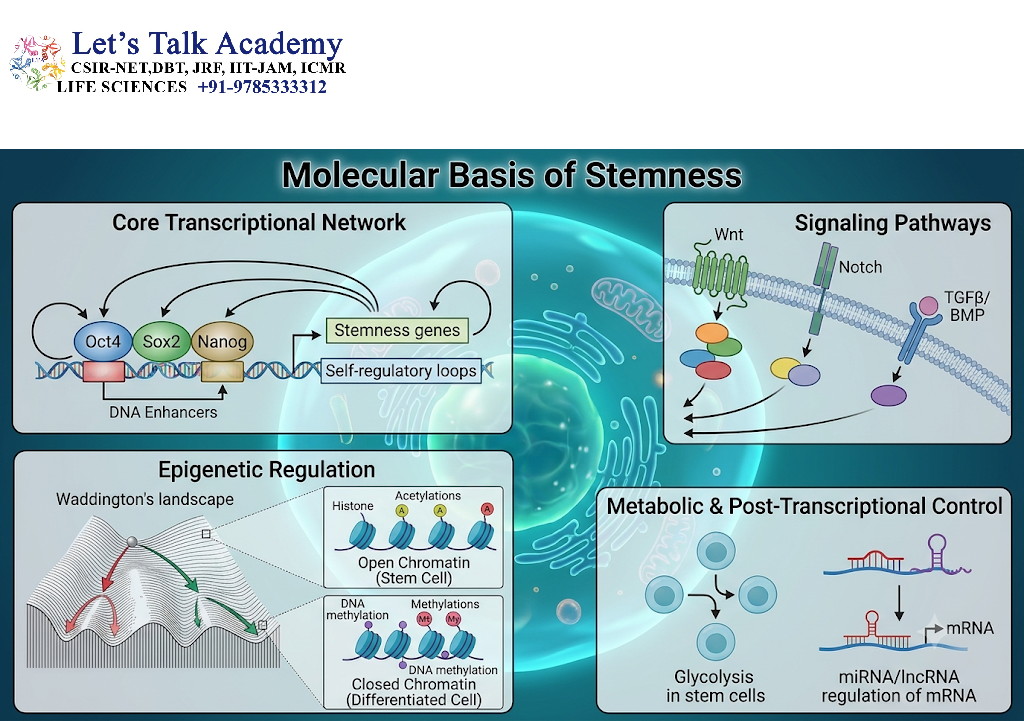
Stem-cell identity is maintained through complex gene-regulatory networks.
In pluripotent stem cells, transcription factors such as OCT4, SOX2, and NANOG interact with one another and with numerous additional regulatory proteins.
These factors regulate genes associated with:
- Self-renewal
- Cell-cycle regulation
- Pluripotency
- Differentiation
- Chromatin organization
The stem-cell state is therefore not controlled by a single “stemness gene.” Instead, it represents a dynamic regulatory network.
5.2 Epigenetic Regulation
Epigenetics refers to heritable or relatively stable changes in gene activity that occur without changing the underlying DNA sequence.
Important epigenetic mechanisms include:
- DNA methylation
- Histone modification
- Chromatin remodeling
- Non-coding RNA regulation
During differentiation, genes associated with a specific lineage become accessible and active, whereas genes associated with alternative lineages may become repressed.
During cellular reprogramming, many of these epigenetic patterns are remodeled as differentiated cells acquire pluripotent characteristics.
5.3 Chromatin Remodeling
Chromatin structure determines how accessible DNA is to transcriptional machinery.
Stem-cell identity requires dynamic chromatin organization that permits appropriate developmental genes to remain responsive to differentiation signals.
Chromatin-remodeling complexes, histone modifications, DNA methylation, and transcription factors collectively regulate this accessibility.
5.4 Non-Coding RNAs
MicroRNAs and other non-coding RNAs also contribute to stem-cell regulation.
They can influence:
- mRNA stability
- Translation
- Cell proliferation
- Differentiation
- Apoptosis
- Reprogramming
Therefore, stem-cell regulation involves multiple layers of gene control rather than transcription alone.
6. Stem Cell Niche
6.1 Definition of the Stem Cell Niche
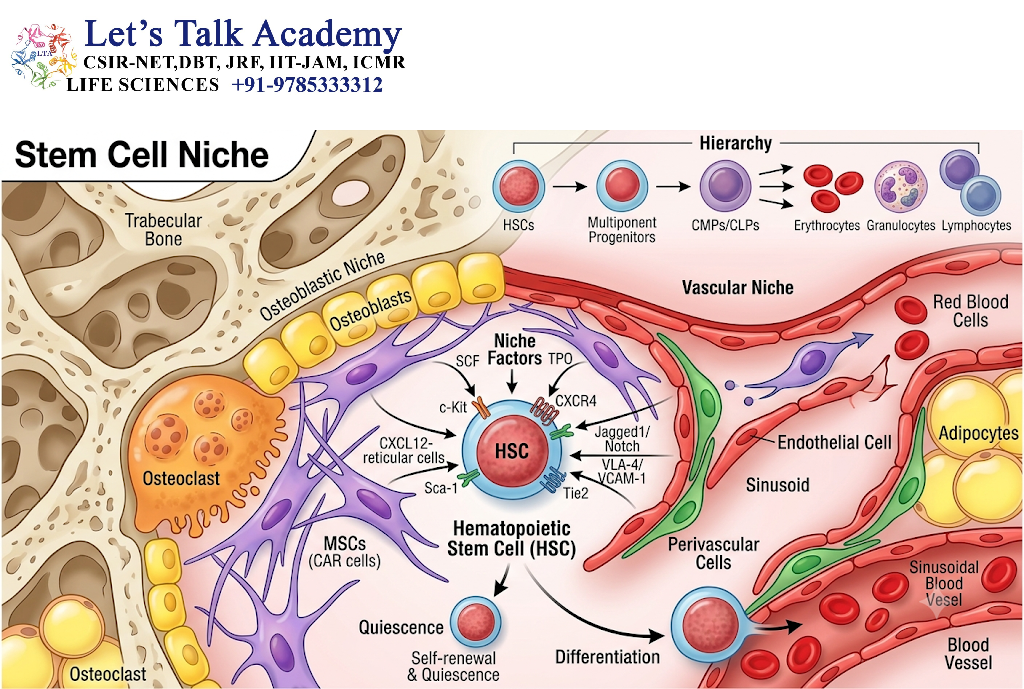
The stem cell niche is the specialized microenvironment that regulates stem-cell behavior.
It includes:
- Neighboring cells
- Extracellular matrix
- Growth factors
- Cytokines
- Blood vessels
- Neural inputs
- Mechanical signals
- Metabolic factors
The niche can maintain stem-cell quiescence, promote proliferation, influence differentiation, and regulate responses to tissue injury.
6.2 Importance of the Microenvironment
Stem cells do not function independently of their surroundings.
A stem cell may behave differently when placed in a different microenvironment because its fate is influenced by extracellular signals.
Important components include:
- Cell adhesion molecules
- Integrins
- Cadherins
- Extracellular matrix proteins
- Soluble growth factors
- Cytokines
- Oxygen concentration
- Nutrient availability
The niche therefore acts as an important regulator of stem-cell fate.
6.3 Quiescence
Many adult stem cells can enter a relatively inactive state called quiescence.
Quiescent stem cells divide infrequently but can become activated in response to physiological requirements or tissue injury.
Quiescence protects stem cells from excessive proliferation and may help preserve their long-term regenerative capacity.
7. Major Signaling Pathways in Stem Cell Biology
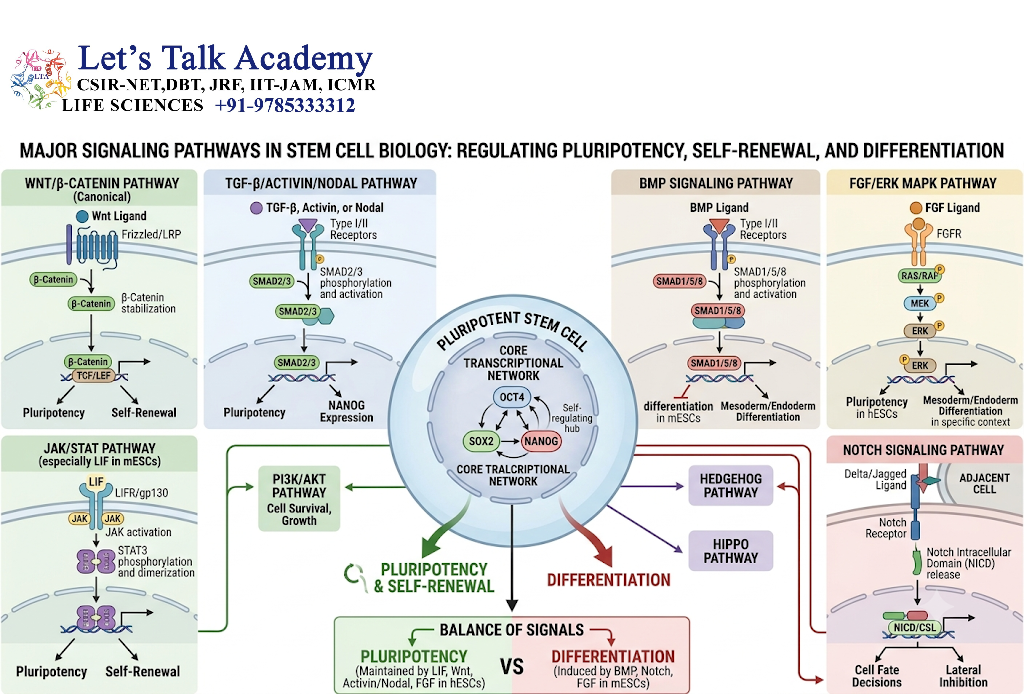
Stem-cell behavior is strongly influenced by intracellular signaling pathways.
7.1 Wnt Signaling
The Wnt/β-catenin pathway plays important roles in:
- Self-renewal
- Development
- Cell fate specification
- Tissue regeneration
When canonical Wnt signaling is activated, β-catenin can accumulate and influence transcriptional programs associated with cell proliferation and identity.
7.2 Notch Signaling
Notch signaling is important in cell-cell communication and influences:
- Cell fate decisions
- Differentiation
- Tissue homeostasis
- Stem-cell maintenance
Notch signaling is particularly important because it frequently operates through direct interaction between neighboring cells.
7.3 Hedgehog Signaling
Hedgehog signaling contributes to embryonic patterning and the regulation of progenitor and stem-cell populations in several tissues.
7.4 BMP Signaling
Bone morphogenetic proteins belong to the transforming growth factor-beta superfamily.
BMP signaling can influence proliferation, differentiation, lineage specification, and tissue development.
7.5 TGF-β and Activin Signaling
TGF-β-related pathways have major roles in pluripotency, differentiation, epithelial biology, and tissue remodeling.
The effects of these pathways depend heavily on cellular context and developmental stage.
7.6 FGF Signaling
Fibroblast growth factor signaling regulates:
- Cell proliferation
- Survival
- Differentiation
- Development
- Stem-cell maintenance
The balance among signaling pathways rather than activation of a single pathway generally determines cell fate. Several major pathways, including Wnt, Notch, Hedgehog, and BMP, participate in stem-cell regulation and organogenesis.
8. Stem Cell Differentiation
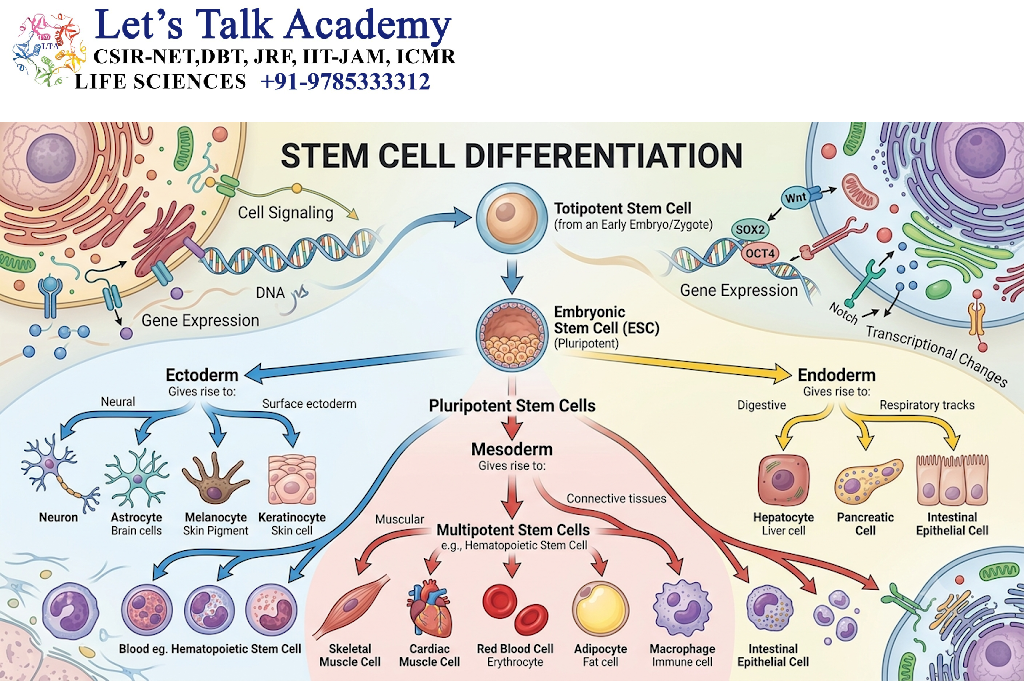
8.1 Concept of Directed Differentiation
Directed differentiation is the controlled process of guiding stem cells toward a desired specialized cell type.
Researchers manipulate the cellular environment using combinations of:
- Growth factors
- Small molecules
- Signaling inhibitors
- Extracellular matrix components
- Culture conditions
- Transcription factors
The goal is to reproduce important developmental signals in a controlled laboratory environment.
8.2 Sequential Differentiation
Differentiation generally occurs through multiple stages rather than a single step.
For example:
Pluripotent stem cell → germ-layer progenitor → lineage progenitor → immature specialized cell → mature functional cell
Each stage is associated with changes in gene expression and cellular phenotype.
8.3 Factors Affecting Differentiation
Differentiation can be influenced by:
- Concentration of signaling molecules
- Duration of exposure
- Timing of pathway activation or inhibition
- Cell density
- Extracellular matrix
- Oxygen level
- Mechanical environment
- Metabolic conditions
This explains why small changes in culture conditions can produce substantially different outcomes.
9. Cell Culture and Maintenance of Stem Cells
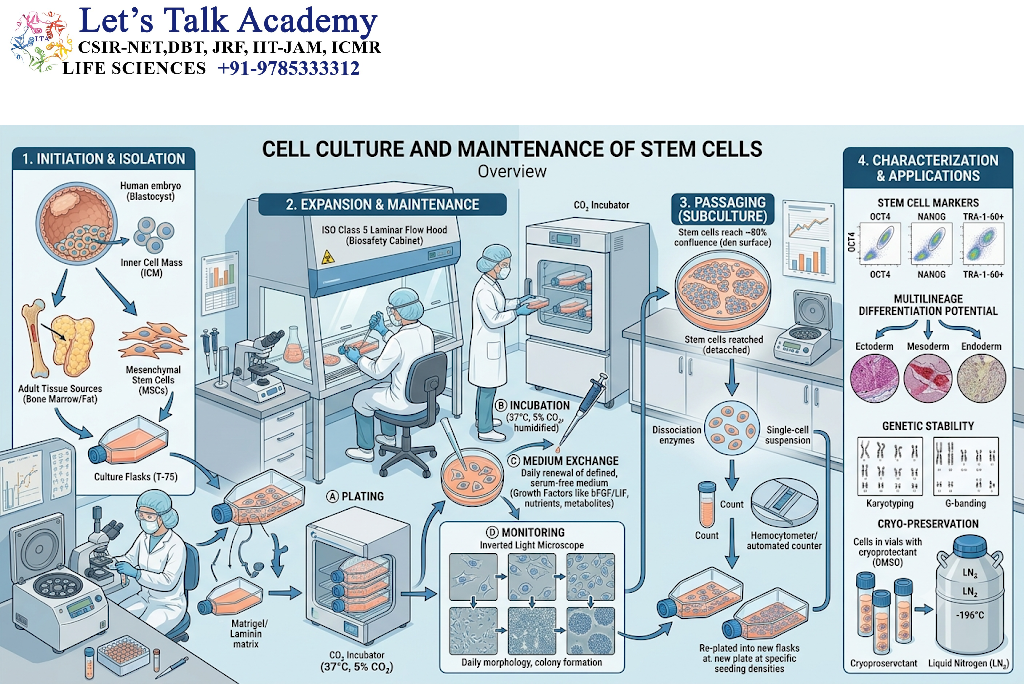
9.1 Stem Cell Culture
Stem cells can be maintained under controlled laboratory conditions using specialized culture media.
Culture systems provide nutrients and signals necessary for survival and proliferation.
Important variables include:
- Culture medium
- Growth factors
- Extracellular matrix
- Temperature
- Gas composition
- Cell density
- Passage number
Human pluripotent stem-cell culture is particularly sensitive to medium composition, extracellular matrix, handling procedures, and culture platform.
9.2 Passage and Expansion
When cultured cells proliferate and become crowded, they are generally transferred or subcultured into fresh culture conditions.
Each cycle is known as a passage.
Repeated expansion allows researchers to generate large numbers of cells for research, although prolonged culture can introduce changes in genomic stability or cellular phenotype.
9.3 Feeder-Dependent and Feeder-Free Culture
Historically, some stem-cell cultures were maintained using feeder cells that provided supportive signals.
Modern systems increasingly use feeder-free and chemically defined approaches.
These systems can improve reproducibility and reduce variability associated with undefined biological components.
10. Identification and Characterization of Stem Cells
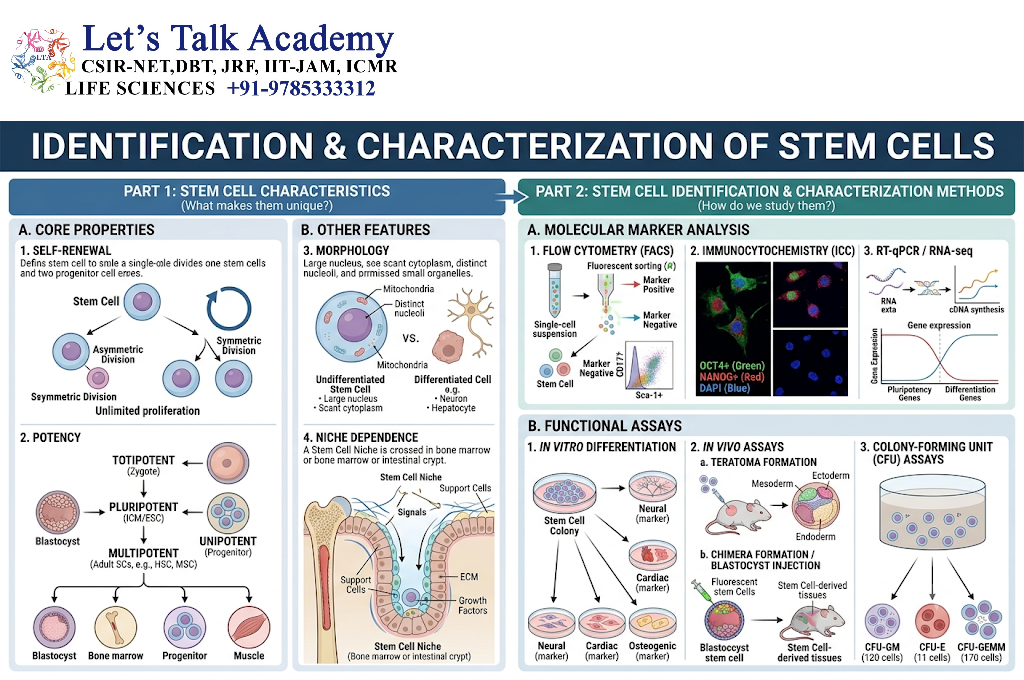
Simply observing cells with a particular morphology is not sufficient to establish stem-cell identity.
A rigorous characterization strategy generally combines molecular, cellular, genetic, and functional measurements.
10.1 Molecular Markers
Pluripotent stem cells can be evaluated for expression of pluripotency-associated markers such as:
- OCT4
- SOX2
- NANOG
- TRA-1-60
- TRA-1-81
- SSEA-associated markers
Marker expression should be interpreted together with other evidence because no single marker proves complete stem-cell functionality.
10.2 Proliferative Capacity
Stem-cell populations can be assessed for their capacity to proliferate over time.
However, rapid proliferation alone does not establish stemness.
10.3 Genomic Stability
Chromosomal and genomic integrity are important considerations, especially when cells are intended for research or therapeutic development.
Changes in chromosome number or genome structure can arise during prolonged culture.
10.4 Differentiation Potential
Functional differentiation assays provide important evidence of developmental potential.
For pluripotent cells, researchers may examine their ability to generate derivatives of ectoderm, mesoderm, and endoderm.
The NIH describes characterization approaches that include assessing stem-cell gene expression, proliferation, chromosomal integrity, and differentiation capacity.
11. Induced Pluripotency and Cellular Reprogramming

11.1 Concept of Reprogramming
Cellular reprogramming demonstrates that differentiated cell identity can be experimentally altered.
A differentiated somatic cell contains essentially the same genome as many other cells of the organism, but different cell types express different subsets of genes.
Reprogramming changes the regulatory state of the cell and establishes a pluripotency-associated gene-expression program.
11.2 Yamanaka Factors
The classical combination of:
OCT4 + SOX2 + KLF4 + c-MYC
can induce reprogramming of differentiated cells toward pluripotency.
Each factor contributes to remodeling the transcriptional network.
11.3 Molecular Events During Reprogramming
Reprogramming involves:
- Suppression of the original somatic transcriptional program
- Activation of pluripotency-associated genes
- Epigenetic remodeling
- Chromatin reorganization
- Changes in cellular metabolism
- Establishment of a stable pluripotent regulatory network
Reprogramming efficiency and quality depend on the method used and the biological characteristics of the starting cells.
12. Stem Cells in Tissue Regeneration
One of the major biological roles of stem cells is the maintenance and repair of tissues.
12.1 Hematopoietic Regeneration
Hematopoietic stem cells continuously produce blood-cell populations.
They contribute to the maintenance of:
- Erythroid cells
- Myeloid cells
- Lymphoid cells
- Megakaryocytic lineage cells
This makes hematopoietic stem-cell biology an important model for studying self-renewal and lineage commitment.
12.2 Intestinal Regeneration
The intestinal epithelium undergoes continuous renewal.
Intestinal stem cells located in specialized regions of the intestinal crypts generate progenitor cells that differentiate into multiple epithelial cell types.
12.3 Skin Regeneration
Skin contains several stem and progenitor populations involved in epidermal maintenance and hair-follicle regeneration.
Their activity is influenced by interactions among epithelial cells, stromal cells, extracellular matrix, and signaling pathways.
12.4 Muscle Regeneration
Skeletal muscle contains specialized stem cells known as satellite cells.
Following muscle injury, satellite cells can become activated, proliferate, and contribute to muscle repair.
13. Applications of Stem Cell Biology
13.1 Regenerative Medicine
Stem cells have potential applications in tissue repair and regenerative medicine because they can generate specialized cells or influence tissue repair processes.
However, successful regeneration requires more than simply introducing stem cells into damaged tissue.
Researchers must consider:
- Cell survival
- Cell identity
- Differentiation
- Integration
- Vascularization
- Immune response
- Functional maturation
- Long-term safety
13.2 Disease Modeling
Stem cells, particularly iPSCs, provide valuable models for studying human diseases.
Patient-derived cells can be reprogrammed and differentiated into disease-relevant cell types.
This allows researchers to study cellular phenotypes that may be difficult to obtain directly from patients.
iPSCs are widely used for disease modeling, developmental studies, drug screening, and investigation of therapeutic strategies.
13.3 Drug Discovery
Stem-cell-derived cells can be used to evaluate drug effects in human-relevant cellular systems.
Applications include:
- Drug efficacy testing
- Toxicity assessment
- Mechanistic studies
- Disease-specific screening
- Personalized pharmacological studies
13.4 Organoids
Organoids are three-dimensional cellular structures generated from stem or progenitor cells that can reproduce some structural and functional characteristics of organs.
Examples include:
- Intestinal organoids
- Brain organoids
- Liver organoids
- Kidney organoids
- Retinal organoids
Organoids provide an intermediate experimental system between simple two-dimensional cell cultures and whole-organism studies.
13.5 Developmental Biology
Stem cells can be used to investigate developmental processes that are difficult to observe directly in humans.
Differentiation of pluripotent stem cells can reproduce aspects of early developmental programs and therefore provides an experimental model for studying cell fate decisions.
14. Stem Cells and Cancer
Stem-cell biology is closely connected to cancer biology.
Some tumors contain populations of cells with stem-like properties known as cancer stem cells or tumor-initiating cells.
These cells may possess characteristics such as:
- Self-renewal
- Differentiation potential
- Tumor initiation
- Resistance to some treatments
The cancer stem-cell concept is useful for understanding tumor heterogeneity and disease recurrence, although the biology varies substantially among tumor types.
Importantly, normal stem-cell pathways such as Wnt, Notch, Hedgehog, and TGF-β signaling can also become dysregulated in cancer.
15. Stem Cells and Cell Cycle Regulation
Stem-cell populations must carefully regulate proliferation.
The cell cycle consists of:
- G1 phase
- S phase
- G2 phase
- M phase
Some adult stem cells can remain in a quiescent state and enter the cell cycle only when required.
Cell-cycle regulators interact with differentiation pathways, DNA damage responses, and metabolic signals.
Maintaining genomic integrity is particularly important because stem cells can persist for long periods and generate large numbers of descendant cells.
16. Stem Cell Metabolism
Stem-cell metabolism is not simply a source of energy; it can also influence cell identity.
Different cellular states can display distinct metabolic characteristics.
Important metabolic processes include:
- Glycolysis
- Oxidative phosphorylation
- Fatty-acid metabolism
- Amino-acid metabolism
- Reactive oxygen species regulation
Changes in metabolism can influence epigenetic enzymes and therefore affect gene expression.
This creates a connection between metabolism, epigenetics, and cell fate.
17. Stem Cells and Apoptosis
Stem-cell populations must balance proliferation with cell death.
Apoptosis is a programmed form of cell death that helps remove damaged or unnecessary cells.
If stem cells acquire severe genomic damage, cellular quality-control mechanisms can trigger apoptosis or permanent growth arrest.
Failure of these protective mechanisms can contribute to abnormal cell accumulation and potentially tumorigenesis.
18. Ethical and Biological Considerations
Stem-cell research raises scientific, clinical, and ethical questions.
18.1 Embryonic Stem Cells
The derivation and use of embryonic stem cells involve ethical considerations because the cells originate from early-stage embryos.
These considerations have influenced research policies, regulations, and public discussions surrounding embryonic stem-cell research.
18.2 Induced Pluripotent Stem Cells
iPSCs provide an alternative source of pluripotent cells because they are generated by reprogramming differentiated somatic cells.
They avoid some of the ethical issues associated with the use of embryos, although they introduce their own scientific and safety considerations.
18.3 Genetic and Genomic Stability
Before stem-cell-derived products can be considered for therapeutic use, researchers need to carefully evaluate:
- Genetic stability
- Differentiation purity
- Functional maturity
- Tumor-forming potential
- Immune compatibility
- Long-term behavior
19. Limitations and Challenges of Stem Cell Research
Despite major advances, stem-cell biology still faces significant challenges.
19.1 Incomplete Differentiation
Stem-cell-derived cells may resemble the desired cell type without reaching full physiological maturity.
This is especially important when researchers attempt to reproduce adult tissues from pluripotent stem cells.
19.2 Cellular Heterogeneity
Differentiation cultures can contain multiple cell populations.
Even a culture designed to generate one cell type may contain unwanted cells.
Therefore, purification and quality-control strategies are important.
19.3 Genomic Instability
Long-term culture and repeated expansion can potentially lead to genetic abnormalities.
Consequently, genomic monitoring is important for experimental and translational applications.
19.4 Tumor Formation
Residual undifferentiated pluripotent cells can pose a risk of unwanted proliferation or tumor formation.
Therefore, controlling differentiation and removing undesirable cell populations are major considerations.
19.5 Immune Rejection
Cells derived from another individual may trigger immune responses.
Although patient-specific iPSCs may reduce some compatibility issues, immunological factors remain relevant to cell-based therapies.
19.6 Reproducibility
Stem-cell behavior can vary according to:
- Cell line
- Donor
- Culture conditions
- Passage history
- Genetic background
- Differentiation protocol
- Laboratory handling
Reproducibility is therefore a major concern in stem-cell research.
20. Stem Cells and Three-Dimensional Biology
Traditional cell culture often uses two-dimensional surfaces.
However, cells inside living tissues exist in a complex three-dimensional environment.
Three-dimensional systems can incorporate:
- Cell-cell interactions
- Extracellular matrix
- Mechanical forces
- Spatial organization
- Chemical gradients
Organoids and engineered tissue systems therefore provide increasingly sophisticated models for studying stem-cell behavior.
Three-dimensional technologies, biomaterials, organoids, and bioprinting are important areas of modern stem-cell research.
21. Stem Cells in Regenerative Medicine
Regenerative medicine aims to restore tissue structure and function following injury, degeneration, or disease.
Stem cells may contribute through several mechanisms:
- Direct replacement of damaged cells
- Generation of progenitor populations
- Secretion of signaling molecules
- Modulation of inflammation
- Interaction with endogenous repair mechanisms
- Remodeling of the tissue microenvironment
The therapeutic effect of a stem-cell-based approach therefore does not always depend exclusively on permanent integration of transplanted cells.
22. Important Experimental Concepts in Stem Cell Biology
22.1 Self-Renewal Versus Differentiation
One of the central concepts is the balance between:
Self-renewal ↔ Differentiation
This balance determines whether a stem-cell population is maintained or progressively converted into specialized cells.
22.2 Cell Fate Determination
Cell fate refers to the developmental outcome that a cell is expected to follow.
Cell fate is influenced by:
- Intrinsic transcription factors
- Extrinsic signals
- Cell position
- Cell-cell interactions
- Epigenetic state
- Developmental timing
22.3 Plasticity
Cellular plasticity describes the ability of cells to change their phenotype or developmental state in response to biological signals.
Reprogramming to iPSCs is an extreme example of experimentally induced cellular plasticity.
22.4 Stemness
“Stemness” refers broadly to the biological properties associated with self-renewal and developmental potential.
It should not be regarded as a single molecular characteristic. Stemness results from the interaction of multiple regulatory networks.
23. Key Molecular Concepts to Remember
For a strong understanding of stem-cell biology, the following concepts should be connected rather than studied independently.
Stem cell → self-renewal → potency → niche → signaling → transcription factors → epigenetic regulation → differentiation → tissue regeneration
Important molecular terms include:
- OCT4
- SOX2
- NANOG
- KLF4
- c-MYC
- Wnt/β-catenin
- Notch
- Hedgehog
- BMP
- TGF-β
- FGF
- Extracellular matrix
- Epigenetic remodeling
- Cellular reprogramming
- Organoids
24. Comparative Overview of Major Stem Cell Types
| Feature | Embryonic Stem Cells | Adult Stem Cells | Induced Pluripotent Stem Cells |
|---|---|---|---|
| Major source | Inner cell mass of blastocyst | Postnatal tissues | Reprogrammed somatic cells |
| Potency | Pluripotent | Usually multipotent or more restricted | Pluripotent |
| Self-renewal | High | Tissue-dependent | High under suitable conditions |
| Differentiation range | Broad | Usually tissue-associated | Broad |
| Embryo required for derivation | Yes | No | No |
| Reprogramming required | No | No | Yes |
| Major applications | Developmental biology, differentiation studies | Tissue maintenance and repair research | Disease modeling, developmental studies, drug screening |
| Major concerns | Ethical and biological considerations | Limited expansion and potency in many populations | Reprogramming quality, genomic stability, differentiation control |
25. Future Directions in Stem Cell Research
The future of stem-cell biology is moving toward increasingly precise control of cellular identity.
Important areas include:
- Improved cellular reprogramming
- Chemically controlled reprogramming
- Genome editing
- Organoid engineering
- Tissue engineering
- Three-dimensional culture
- Biomaterials
- Single-cell analysis
- Spatial transcriptomics
- Artificial intelligence-assisted cell characterization
- Personalized disease modeling
- Improved differentiation protocols
- Cell-based regenerative therapies
Modern research increasingly combines stem-cell biology with genomics, bioengineering, computational biology, and developmental biology.
The central challenge is no longer simply generating stem cells. Researchers increasingly seek to produce predictable, mature, stable, functional, and clinically relevant cell populations.
26. Integrated View of Stem Cell Biology
Stem-cell biology can be understood as a balance between intrinsic and extrinsic regulation.
Intrinsic mechanisms include:
- Transcription factors
- Epigenetic state
- Chromatin organization
- Metabolism
- Cell-cycle regulation
Extrinsic mechanisms include:
- Growth factors
- Cytokines
- Cell-cell interactions
- Extracellular matrix
- Mechanical signals
- Oxygen and nutrient availability
- Stem-cell niche
Together, these mechanisms determine whether a cell remains quiescent, self-renews, proliferates, differentiates, or undergoes cell death.
This integrated model explains why stem-cell behavior cannot be understood by studying a single gene or signaling pathway in isolation.


