
1. Introduction
Multicellular organisms begin development from a single fertilized cell, the zygote. As development proceeds, cells divide repeatedly and gradually become specialized.
A major question in developmental biology is:
How does one initial cell produce many different types of specialized cells?
The answer involves a series of interconnected developmental processes:
Potency → Specification → Commitment → Determination → Differentiation
These processes gradually restrict the developmental potential of cells and establish specialized cell types.
For example, cells of an early embryo can eventually develop into:
- Neurons
- Muscle cells
- Blood cells
- Skin cells
- Bone cells
- Liver cells
- Pancreatic cells
Although these cells contain essentially the same genome, they express different sets of genes. This differential gene expression produces different cellular structures and functions.
2. Determination
Definition
Determination is the developmental process by which a cell becomes stably committed to a particular developmental fate.
After determination, the cell is expected to follow a particular developmental pathway even if it is placed in a different environment.
In simple words:
Determination is the stage at which a cell’s developmental fate becomes relatively fixed.
It is more stable than specification.
3. Concept of Determination
During early development, cells often have many possible developmental pathways.
As development progresses, these possibilities become restricted.
General progression
High developmental potential
↓
Specification
↓
Commitment
↓
Determination
↓
Differentiation
↓
Specialized cell
Therefore, determination represents an important transition toward a stable cell fate.
4. Determination and Cell Fate
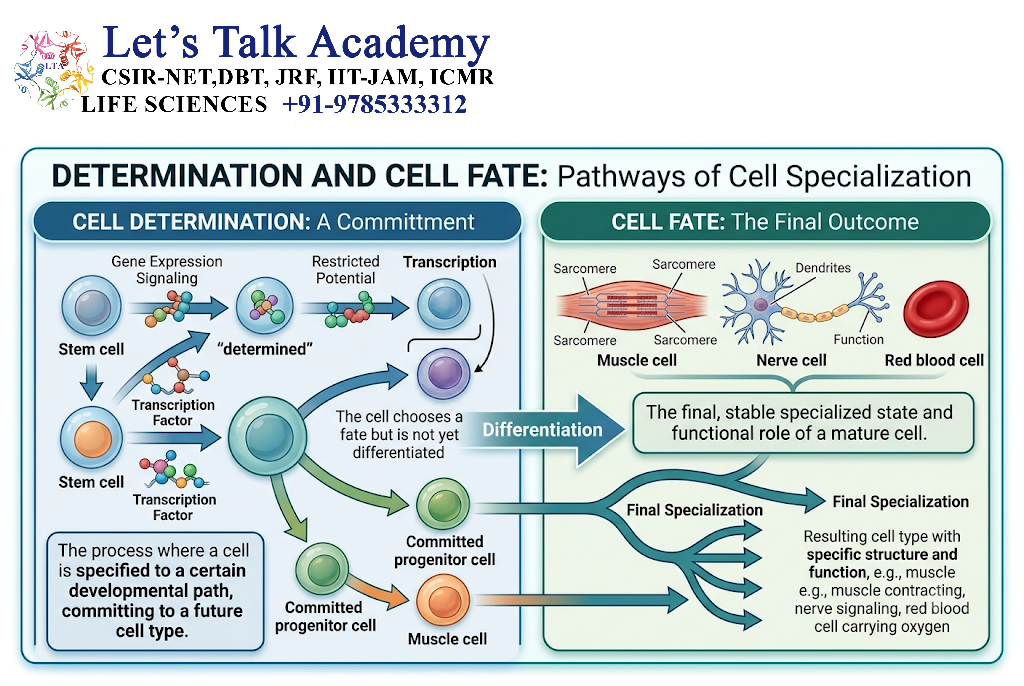
Cell fate refers to the developmental outcome that a cell normally follows.
For example:
Stem/progenitor cell
↓
Determination toward neuronal lineage
↓
Neural precursor
↓
Differentiation
↓
Neuron
Determination does not necessarily mean that the cell has already acquired all the characteristics of a mature neuron.
Instead, it means that the cell has become committed to the neuronal developmental pathway.
5. Determination vs Specification
These two terms are closely related but should not be confused.
| Specification | Determination |
|---|---|
| Earlier developmental state | More advanced developmental state |
| Relatively reversible | More stable |
| Cell is biased toward a fate | Cell is committed to a fate |
| Environmental changes may alter fate | Fate is more resistant to environmental changes |
| Precedes or overlaps determination | Usually follows specification |
Easy example
Specification:
“I am likely to become a neuron.”
Determination:
“I am committed to the neuronal pathway.”
6. Determination and Commitment
Commitment is a broad developmental concept describing progressive restriction of cell fate.
Determination represents a more stable level of commitment.
Thus:
Commitment = broad process
Determination = relatively stable commitment to a particular fate
7. Molecular Basis of Determination
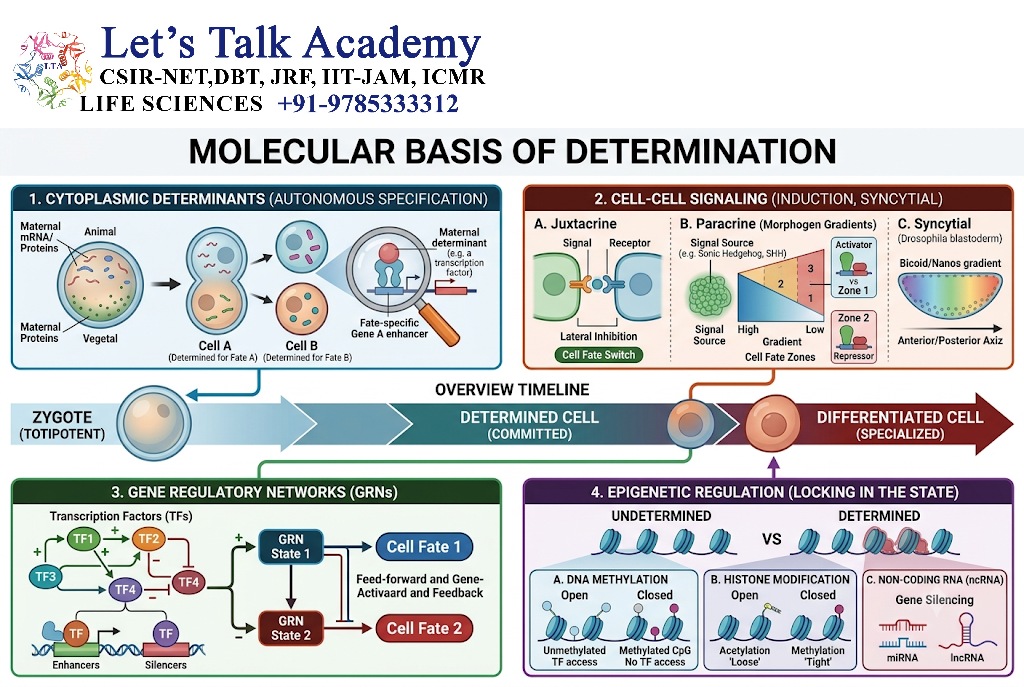
Determination depends mainly on stable changes in gene regulation.
Important mechanisms include:
- Transcription factors
- Gene regulatory networks
- Enhancers
- Chromatin remodeling
- DNA methylation
- Histone modification
- Cell-signaling pathways
- Positive feedback loops
These mechanisms help establish a stable developmental program.
General mechanism
Developmental signal
↓
Transcription factors activated
↓
Lineage-specific genes expressed
↓
Additional regulatory genes activated
↓
Feedback maintains the program
↓
Stable cell-fate commitment
8. Role of Transcription Factors
Transcription factors are major regulators of determination.
They bind regulatory DNA sequences and control expression of developmental genes.
Important examples include:
| Transcription factor | Major developmental role |
|---|---|
| MYOD1 | Muscle lineage |
| PAX6 | Eye and nervous-system development |
| GATA1 | Erythroid and megakaryocytic development |
| SOX9 | Cartilage and related developmental programs |
| RUNX2 | Osteoblast development |
| NEUROD | Neural differentiation |
| PU.1 | Hematopoietic lineage decisions |
These factors can activate lineage-specific genes while suppressing genes associated with alternative cell fates.
9. Master Regulatory Genes
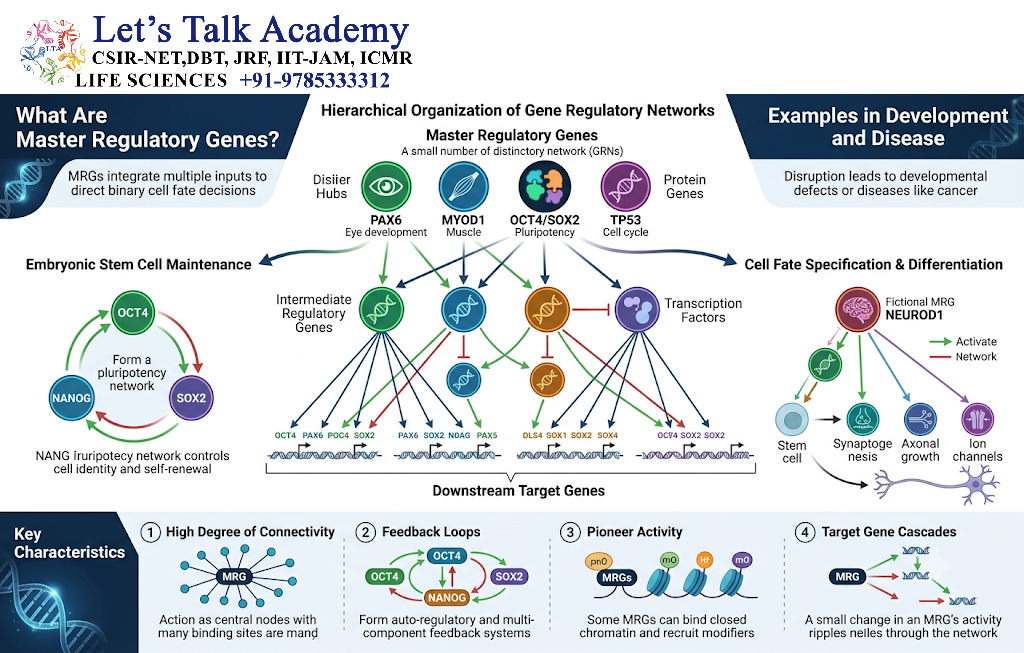
Some transcription factors have particularly strong effects on cell identity and are sometimes called master regulatory factors.
For example:
MYOD1
↓
Activates muscle-associated genes
↓
Muscle developmental program
↓
Muscle cell differentiation
Similarly, combinations of transcription factors can establish neuronal, blood, bone and other developmental programs.
10. Gene Regulatory Networks
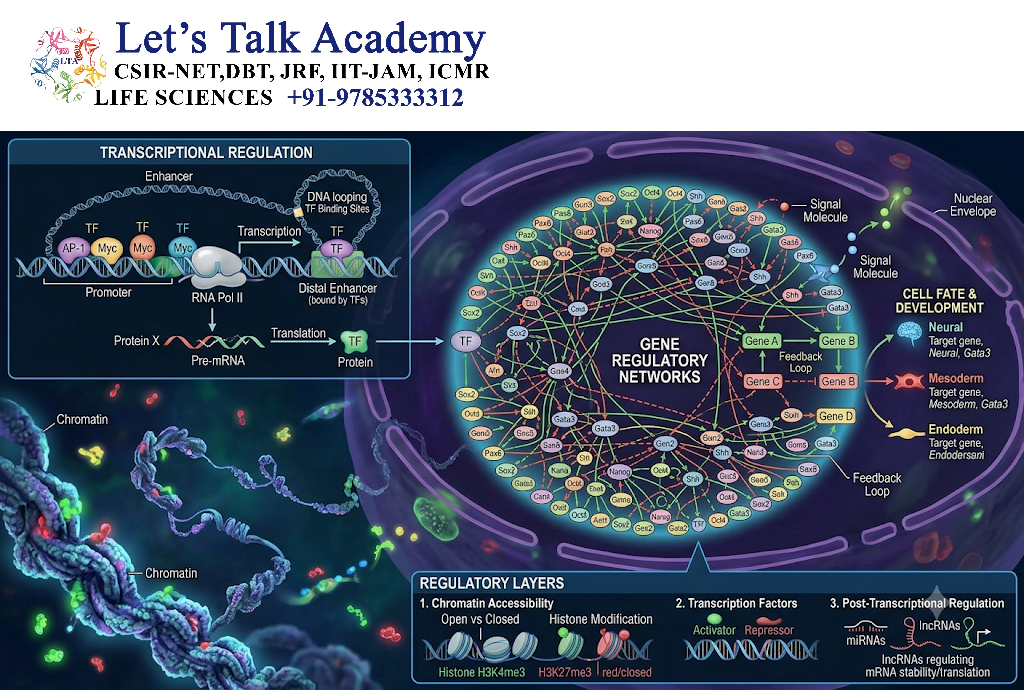
Cell determination is not usually controlled by one gene.
Instead, genes interact in a gene regulatory network.
Simplified mechanism
Signal
↓
Transcription factor A
↓
Genes B, C and D
↓
Additional transcription factors
↓
Feedback loops
↓
Stable gene-expression pattern
↓
Determined cell
These networks stabilize cell identity.
11. Epigenetic Regulation in Determination
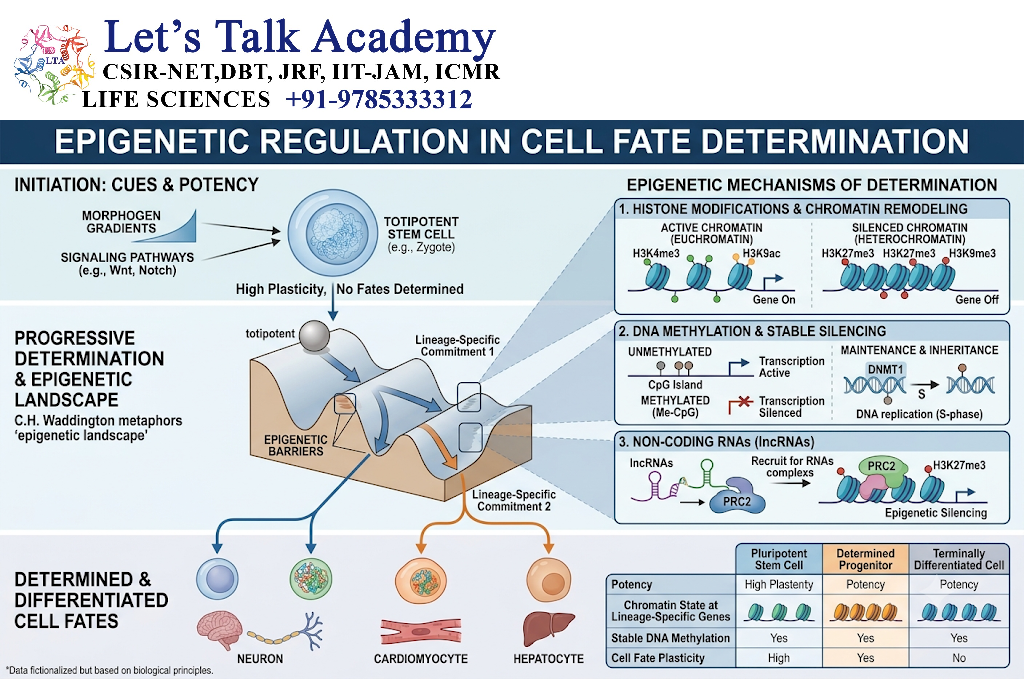
Epigenetic regulation is important for maintaining developmental identity.
Mechanisms include:
DNA methylation
Can contribute to stable repression of certain genes.
Histone modification
Can influence whether chromatin is accessible for transcription.
Chromatin remodeling
Changes the physical accessibility of regulatory DNA.
Enhancer regulation
Cell-type-specific enhancers activate genes required for particular cell identities.
Thus:
Epigenetic regulation → stable gene-expression pattern → stable cell identity
12. Role of Cell Signaling
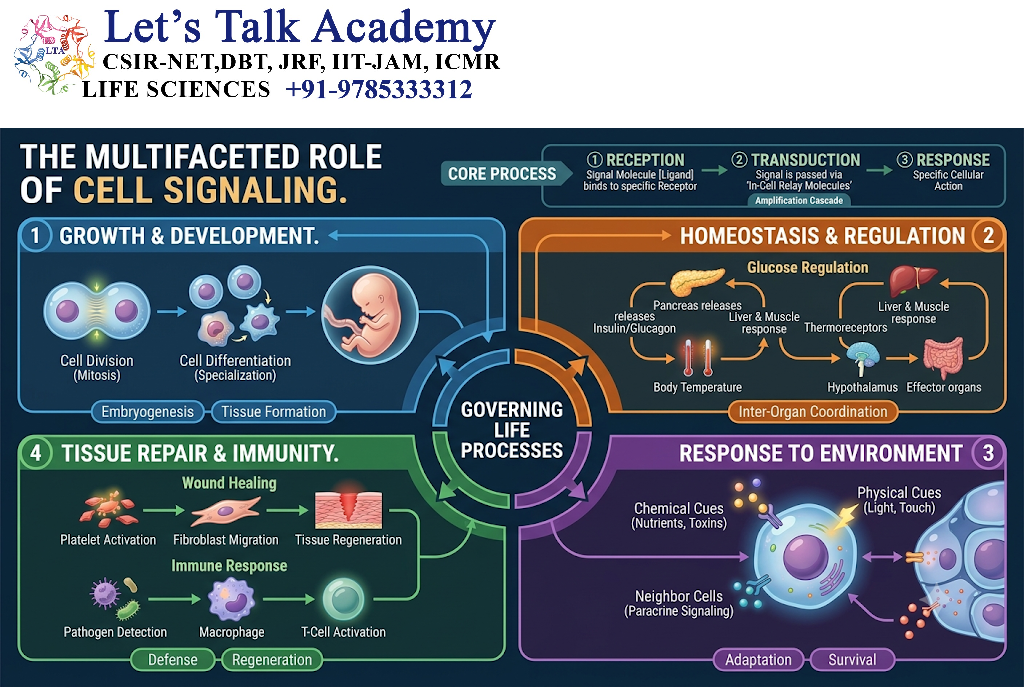
Determination can be influenced by developmental signaling pathways.
Important pathways include:
- WNT
- Notch
- Hedgehog
- FGF
- TGF-β
- BMP
- JAK-STAT
These signals activate transcriptional programs that influence cell fate.
13. Role of Induction in Determination
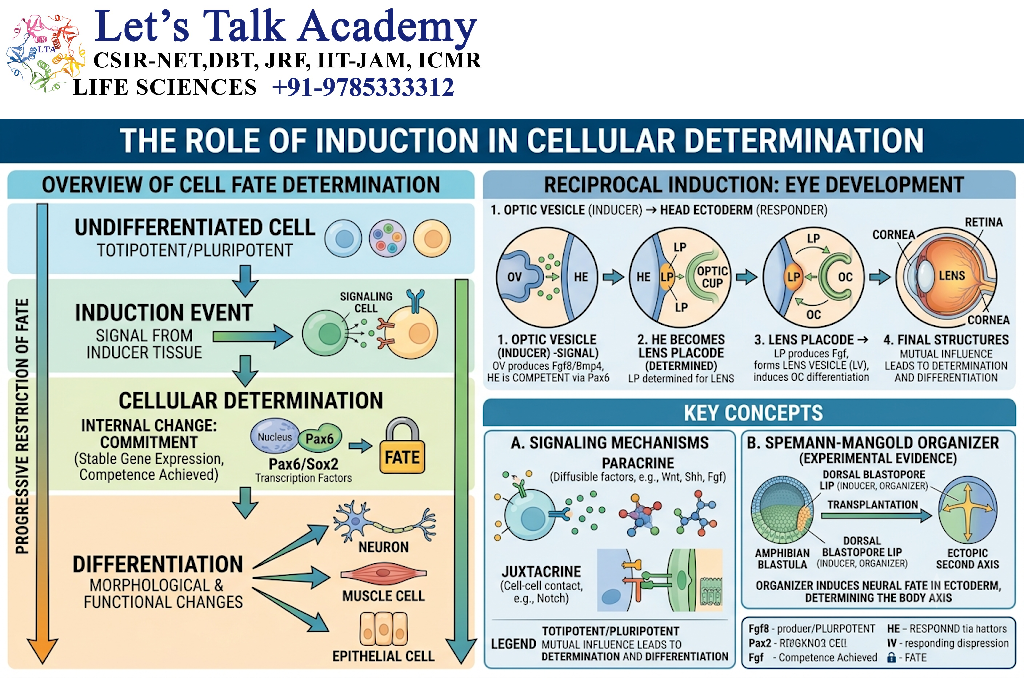
Induction can initiate or influence determination.
General pathway
Inducer
↓
Developmental signal
↓
Competent responder
↓
Signal transduction
↓
Transcription factors
↓
Specification
↓
Commitment
↓
Determination
Therefore, induction can provide the external information required for a cell to enter a particular developmental pathway.
14. Determination and Potency
Potency describes the range of developmental possibilities available to a cell.
Determination reduces that range.
Example
A highly potent cell:
Can become many cell types
↓
Progressive commitment
↓
Fewer possible fates
↓
Determination
↓
One major developmental pathway
Thus:
As determination increases → developmental potential generally becomes more restricted.
15. Determination of Muscle Cells
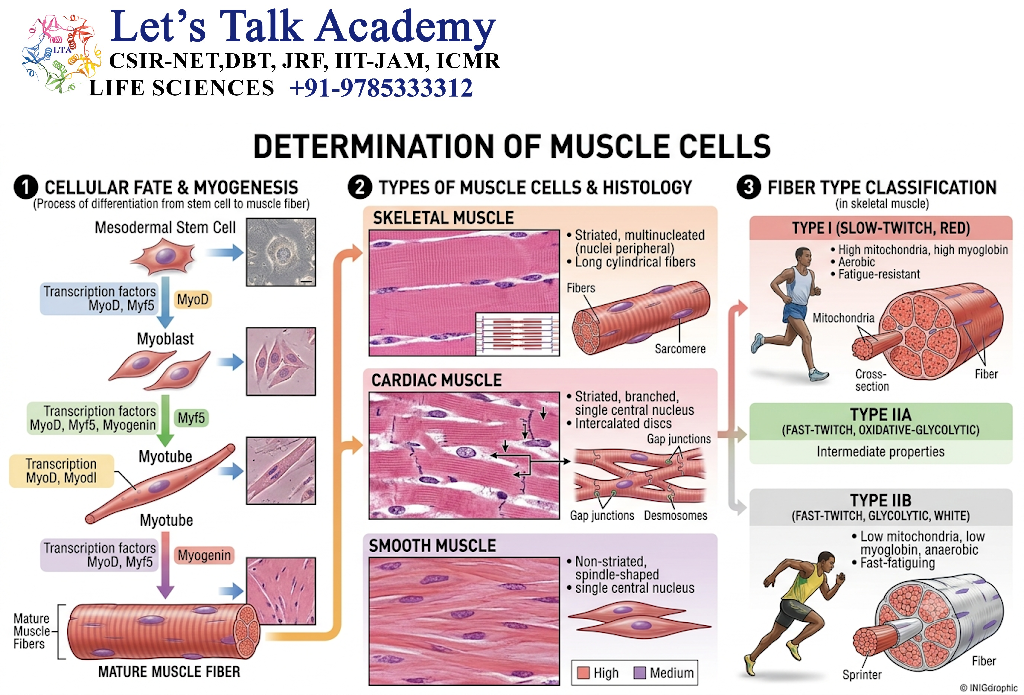
Muscle development is a classic example.
Mesodermal precursor cells receive developmental signals.
↓
Muscle-associated transcription factors become activated.
↓
MYOD1 and related regulatory factors promote the muscle program.
↓
Cells become committed to the muscle lineage.
↓
Myoblasts develop.
↓
Myoblasts differentiate and fuse.
↓
Multinucleated muscle fibers form.
Simplified flow
Mesoderm → muscle precursor → determination → myoblast → differentiation → muscle fiber
16. Determination of Neurons
Neuronal development also involves progressive fate restriction.
Simplified pathway
Neural progenitor
↓
Neural lineage commitment
↓
Neuronal determination
↓
Expression of neuronal regulatory genes
↓
Neuronal differentiation
↓
Mature neuron
Factors including NEUROG/NeuroD family proteins participate in neuronal developmental programs.
17. Determination of Blood Cells
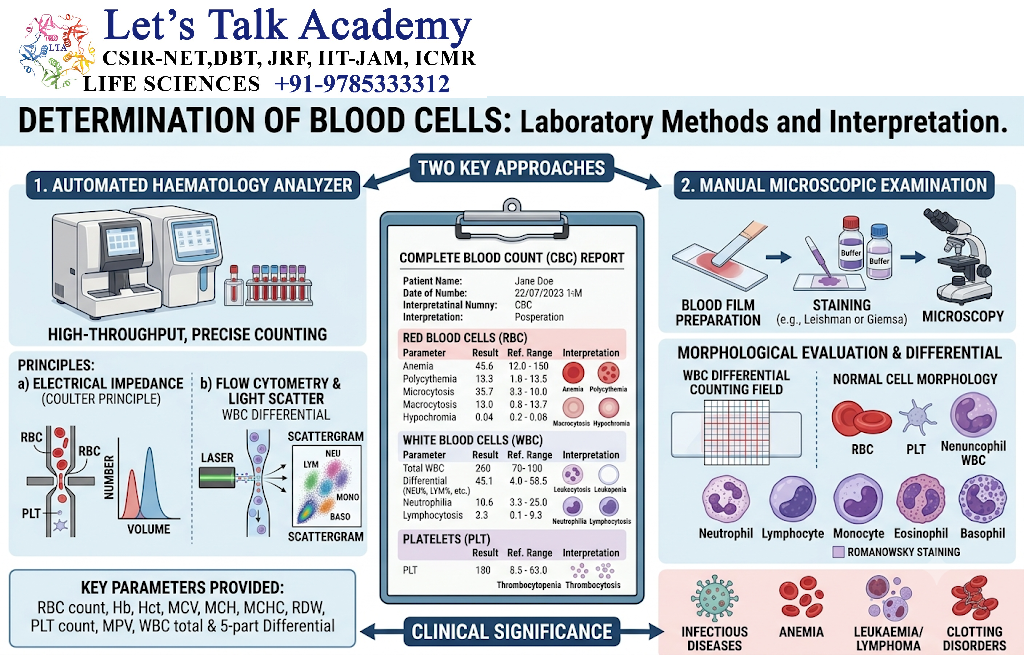
Hematopoiesis demonstrates progressive lineage restriction.
Simplified pathway
Hematopoietic stem cell
↓
Multipotent progenitor
↓
Lineage-restricted progenitor
↓
Determination toward specific blood lineage
↓
Differentiation
↓
Mature blood cell
Possible outcomes include:
- Red blood cells
- Platelets
- Neutrophils
- Monocytes
- Lymphocytes
Different transcription factors and signaling pathways regulate these lineage decisions.
18. Determination of Bone Cells
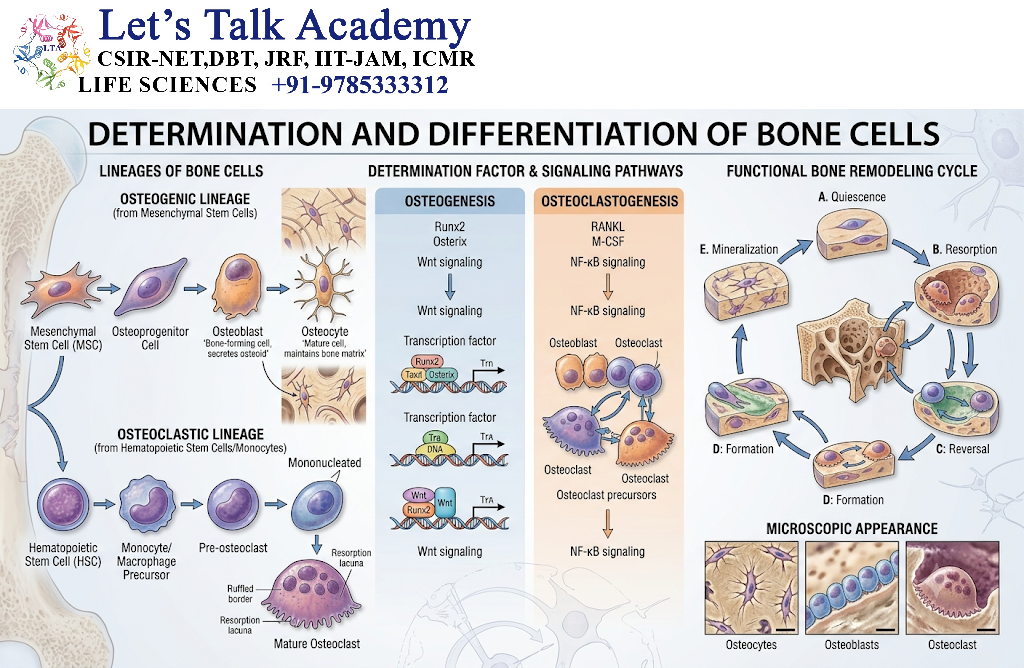
Mesenchymal progenitor cells can enter an osteogenic pathway.
Simplified pathway
Mesenchymal progenitor
↓
Osteogenic commitment
↓
RUNX2 activation
↓
Osteoblast developmental program
↓
Osteoblast differentiation
↓
Mature bone-forming cells
RUNX2 is an important regulator of osteoblast development.
19. Determination and Alternative Cell Fates
Determination involves not only activating one developmental pathway but often suppressing alternative pathways.
For example:
Lineage A genes ↑
while:
Lineage B genes ↓
This helps stabilize the chosen cell fate.
General mechanism
Fate A transcription factors
↓
Activate Fate A genes
↓
Suppress alternative fate genes
↓
Cell identity becomes stable
This creates a regulatory network that reinforces determination.
20. Positive Feedback in Determination
Positive feedback can help stabilize developmental decisions.
Example
Transcription factor A
↓
Activates its own expression or activates another factor
↓
Additional regulatory genes activated
↓
Same developmental program reinforced
↓
Stable cell identity
This helps prevent temporary signals from producing unstable cell-fate decisions.
21. Differentiation
Definition
Differentiation is the process by which a relatively unspecialized cell acquires the structural, molecular and functional characteristics of a specialized cell.
Examples include:
- Stem cell → neuron
- Myoblast → muscle cell
- Progenitor → red blood cell
- Mesenchymal cell → osteoblast
- Epithelial precursor → specialized epithelial cell
Differentiation produces cells with specialized functions.
22. Characteristics of Differentiated Cells
A differentiated cell generally develops:
- Specialized shape
- Specialized proteins
- Specific organelles
- Specific receptors
- Specific metabolic properties
- Specialized cellular functions
For example, neurons develop structures specialized for communication, while muscle cells develop molecular machinery for contraction.
23. Molecular Basis of Differentiation
Differentiation is primarily based on differential gene expression.
Most cells of an organism contain essentially the same genome, but different genes are active in different cell types.
Example
Neuron
Expresses neuronal genes.
Muscle cell
Expresses muscle-specific genes.
Red blood cell precursor
Expresses genes required for erythroid development.
Thus:
Same genome + different gene expression = different cell types
24. Differential Gene Expression
This is one of the central principles of developmental biology.
General mechanism
Developmental signal
↓
Transcription factors
↓
Specific genes activated
↓
Other genes repressed
↓
Specific proteins produced
↓
Cell structure changes
↓
Cell function changes
↓
Differentiated cell
25. Differentiation and Cell Structure
Differentiation causes changes in cell morphology.
Neuron
Develops:
- Axon
- Dendrites
- Specialized synaptic structures
Muscle cell
Develops:
- Contractile proteins
- Organized myofibrils
- Specialized membrane systems
Red blood cell
Develops:
- Hemoglobin-rich cytoplasm
- Specialized shape
- In mammals, loss of nucleus during maturation
Therefore, gene expression changes eventually produce visible cellular differences.
26. Differentiation and Cellular Function
Differentiation also produces specialized functions.
| Cell type | Major function |
|---|---|
| Neuron | Electrical and chemical communication |
| Muscle cell | Contraction |
| Red blood cell | Oxygen transport |
| Pancreatic β-cell | Insulin secretion |
| Osteoblast | Bone formation |
| Hepatocyte | Metabolism and detoxification |
Thus:
Differentiation → specialized structure + specialized function
27. Differentiation Is Usually Progressive
Differentiation generally occurs through multiple stages.
Example
Stem cell
↓
Progenitor
↓
Precursor
↓
Immature specialized cell
↓
Mature specialized cell
At each stage, the cell expresses increasingly specialized genes.
28. Differentiation and Cell Cycle
Differentiation can be associated with changes in cell proliferation.
Some cells:
- Continue dividing
- Divide slowly
- Temporarily stop dividing
- Permanently exit the cell cycle
For example, many highly differentiated cells have limited proliferative capacity.
However, this varies considerably between cell types.
29. Differentiation and Cell Shape
Changes in gene expression can alter:
- Cytoskeleton
- Cell adhesion
- Cell polarity
- Membrane proteins
- Extracellular matrix interactions
These changes modify cell shape and organization.
For example, neuronal differentiation involves extensive changes in the cytoskeleton to form axons and dendrites.
30. Differentiation and Cell Adhesion
Differentiated cells often express specific adhesion molecules.
These molecules help cells:
- Attach to neighboring cells
- Form tissues
- Maintain polarity
- Organize into organs
Therefore, differentiation contributes not only to individual cell specialization but also to tissue architecture.
31. Differentiation and Extracellular Matrix
The extracellular matrix provides structural and signaling information.
Different tissues contain different combinations of:
- Collagen
- Laminins
- Fibronectin
- Proteoglycans
- Other matrix components
Cells can change their interaction with the extracellular matrix during differentiation.
32. Differentiation and Cell Communication
Differentiated cells develop specialized communication systems.
For example:
- Neurons develop synaptic communication.
- Muscle cells respond to neural and hormonal signals.
- Endocrine cells secrete hormones.
- Immune cells express specialized receptors.
Thus, differentiation establishes both cellular structure and communication behavior.
33. Differentiation of Stem Cells
Stem cells possess self-renewal capacity and varying degrees of developmental potency.
They can produce specialized progeny through controlled differentiation.
General process
Stem cell
↓
Signal exposure
↓
Lineage specification
↓
Commitment
↓
Differentiation
↓
Mature specialized cell
Different combinations of growth factors and signaling pathways can influence the differentiation process.
34. Determination vs Differentiation
This distinction is extremely important.
| Determination | Differentiation |
|---|---|
| Commitment to a developmental fate | Acquisition of specialized characteristics |
| Primarily concerns cell fate | Primarily concerns cell phenotype |
| Occurs before or during differentiation | Represents progressive specialization |
| Relatively stable | Produces observable molecular/structural changes |
| “What will I become?” | “What specialized features will I develop?” |
Easy example
Determination:
A cell commits to becoming a muscle cell.
Differentiation:
The cell develops contractile proteins, myofibrils and muscle-specific characteristics.
35. Determination and Differentiation Are Related but Different
The two processes are often connected:
Specification
↓
Commitment
↓
Determination
↓
Differentiation
However, they should not be considered completely separate stages in every biological situation.
Development is dynamic, and these processes can overlap.
36. Role of Cell Signaling in Differentiation
Major signaling pathways regulate differentiation.
WNT
Regulates:
- Stem-cell maintenance
- Fate decisions
- Tissue development
Notch
Regulates:
- Cell fate
- Differentiation
- Lateral inhibition
FGF
Regulates:
- Proliferation
- Differentiation
- Organ development
BMP/TGF-β
Regulates:
- Tissue patterning
- Differentiation
- Bone development
- Organogenesis
Hedgehog
Regulates:
- Pattern formation
- Neural development
- Limb development
37. Role of Microenvironment
Differentiation does not occur in isolation.
The cellular environment contains:
- Growth factors
- Hormones
- Extracellular matrix
- Neighboring cells
- Mechanical signals
- Nutrients
- Oxygen levels
These factors influence differentiation.
This environment is sometimes described as the cellular niche or microenvironment.
38. Determination and Differentiation in Developmental Sequence
A simplified developmental sequence is:
Stage 1 — Potency
Cell has many developmental possibilities.
↓
Stage 2 — Specification
Cell becomes biased toward a particular fate.
↓
Stage 3 — Commitment
Alternative possibilities become progressively restricted.
↓
Stage 4 — Determination
Cell becomes relatively stably committed.
↓
Stage 5 — Differentiation
Cell acquires specialized characteristics.
↓
Stage 6 — Maturation
Cell reaches functional specialization.
39. Complete Example: Muscle Development
Mesodermal cell
↓
Developmental signaling
↓
Specification toward muscle lineage
↓
MYOD1 and related factors activated
↓
Commitment
↓
Determination toward muscle fate
↓
Myoblast formation
↓
Expression of muscle-specific proteins
↓
Cell fusion
↓
Myotube
↓
Mature muscle fiber
This example shows how determination and differentiation are connected but distinct.
40. Complete Example: Neuronal Development
Neural progenitor
↓
Neuronal fate specification
↓
Commitment
↓
Neuronal determination
↓
Neural transcription factors activated
↓
Neuronal genes expressed
↓
Axon and dendrite formation
↓
Synaptic machinery develops
↓
Mature neuron
41. Complete Example: Blood Cell Development
Hematopoietic stem cell
↓
Multipotent progenitor
↓
Lineage specification
↓
Commitment
↓
Determination
↓
Lineage-specific gene expression
↓
Differentiation
↓
Mature blood cell
For example:
Hematopoietic stem cell → erythroid lineage → erythroblast stages → mature red blood cell
42. Can Determined Cells Change Their Fate?
Determination is relatively stable, but modern developmental biology demonstrates that cell identity can sometimes be altered.
Examples include:
- Cellular reprogramming
- Induced pluripotent stem cells
- Transdifferentiation
- Regenerative responses
Therefore, determination should not always be considered absolutely irreversible.
It is better described as a stable developmental commitment under normal developmental conditions.
43. Cellular Reprogramming
Differentiated cells can sometimes be experimentally reprogrammed to a more plastic state.
A major example is the generation of induced pluripotent stem cells (iPSCs).
Certain transcription factors can reset cellular gene-regulatory states.
A classical combination includes:
- OCT4
- SOX2
- KLF4
- c-MYC
These are commonly called Yamanaka factors.
Simplified process
Differentiated cell
↓
Reprogramming factors
↓
Epigenetic remodeling
↓
Pluripotent-like state
↓
iPSC
This demonstrates that differentiated states can be altered under specific experimental conditions.
44. Transdifferentiation
Transdifferentiation refers to conversion of one differentiated cell type into another differentiated cell type without necessarily passing through a fully pluripotent state.
General concept
Differentiated Cell A
↓
Regulatory changes
↓
Differentiated Cell B
This process demonstrates the plasticity of cellular identity.
45. Determination, Differentiation and Developmental Plasticity
Developmental plasticity refers to the ability of cells or organisms to modify developmental outcomes in response to environmental or cellular conditions.
This means developmental fate is influenced by both:
- Internal genetic programs
- External signals
Therefore, development is not simply a rigid genetic program; it involves dynamic interactions between genes, cells and environment.


