
1. Introduction
The development of a multicellular organism begins with a relatively small number of cells and ultimately produces a highly organized body containing hundreds of specialized cell types. A central question in developmental biology is how cells acquire their specific identities and how their descendants contribute to different tissues and organs.
Two important concepts used to understand this process are cell fate and cell lineage.
Cell fate refers to the developmental outcome that a cell is expected to adopt under normal developmental conditions. It answers the question:
“What will this cell become?”
Cell lineage refers to the developmental history and ancestry of a cell and its descendants. It answers the question:
“Where did this cell come from, and which cells are its descendants?”
These concepts are related but not identical. A lineage describes the history of cell divisions, whereas fate describes the developmental identity or outcome associated with a cell.
For example, a stem or progenitor cell may divide repeatedly and produce a lineage of cells that ultimately gives rise to neurons. The lineage describes the sequence of cellular ancestors and descendants, whereas neuronal fate describes the developmental outcome.
The study of cell fate and cell lineage is fundamental for understanding:
- Embryonic development
- Tissue differentiation
- Organ formation
- Stem-cell biology
- Regeneration
- Tissue homeostasis
- Developmental disorders
- Cancer biology
2. Concept of Cell Fate
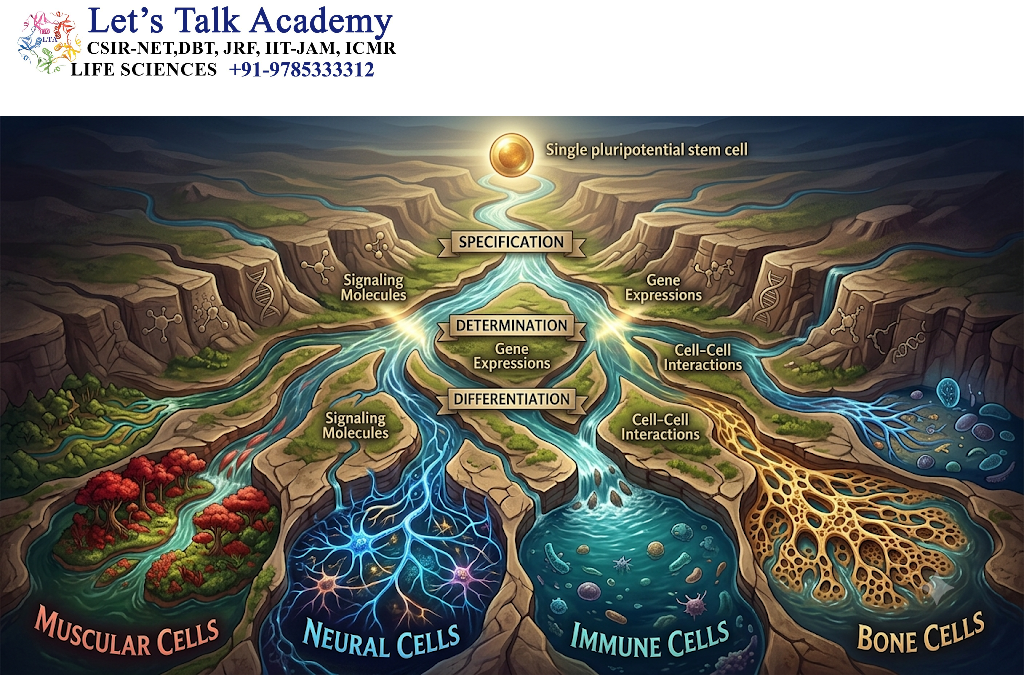
2.1 Definition of Cell Fate
Cell fate is the developmental outcome that a cell normally follows during development.
A cell may eventually become:
- A neuron
- A muscle cell
- A hepatocyte
- An epithelial cell
- A blood cell
- A pancreatic cell
- A connective-tissue cell
The fate of a cell is influenced by both intrinsic and extrinsic factors.
2.2 Cell Fate Is Not the Same as Cell Type
Cell fate refers to a developmental outcome, whereas cell type refers to the differentiated state or identity of the resulting cell.
For example:
Cell fate → neuronal differentiation
↓
Cell type → specific neuronal subtype
Thus, cell fate can be considered part of the developmental process through which a particular cell type is generated.
2.3 Importance of Cell Fate
Cell-fate specification allows a developing embryo to generate spatially organized populations of specialized cells.
Without appropriate cell-fate decisions, cells would not acquire the identities necessary to construct functional tissues and organs.
3. Cell Fate Specification
3.1 Definition
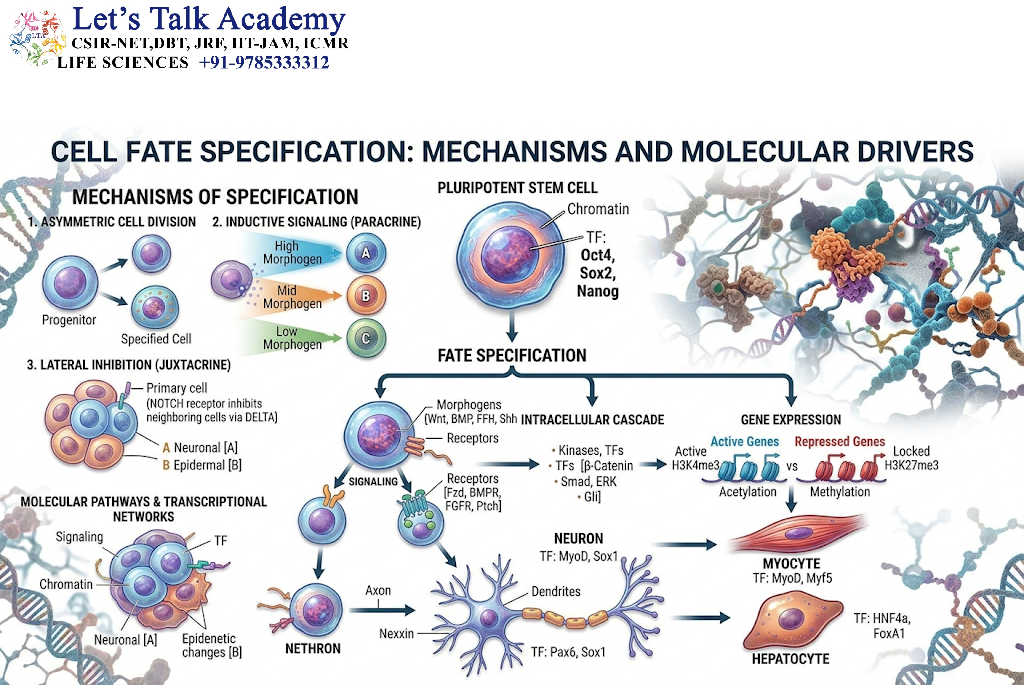
Cell-fate specification is the process by which a cell becomes capable of developing toward a particular fate under appropriate developmental conditions.
Specification does not necessarily mean that the fate is permanently fixed.
A specified cell may still change its developmental pathway if the surrounding environment is altered.
3.2 Determination
Determination refers to a later developmental state in which a cell’s developmental fate becomes more firmly established.
A determined cell generally maintains its developmental pathway even when placed in a different environment, although the exact degree of irreversibility depends on the biological system.
A simplified progression is:
Uncommitted cell
↓
Specification
↓
Determination
↓
Differentiation
↓
Mature cell
These stages represent useful conceptual categories rather than universally discrete molecular states.
4. Differentiation
4.1 Definition
Cell differentiation is the process through which a relatively unspecialized cell acquires specialized structural, biochemical, and functional characteristics.
For example:
Progenitor cell
↓
Differentiation
↓
Neuron
A differentiated neuron may acquire:
- Specific morphology
- Axons and dendrites
- Neurotransmitter machinery
- Ion channels
- Specialized gene-expression patterns
4.2 Gene Expression During Differentiation
Differentiation does not usually require different cells to possess completely different genomes.
Instead, different cells selectively express different subsets of genes.
Therefore:
Same genome + different gene-expression programs → different cell identities
This is a fundamental principle of developmental biology.
4.3 Transcription Factors
Transcription factors play major roles in controlling cell identity.
They can activate or repress groups of genes that establish particular developmental programs.
Examples of developmental transcription factors include:
- MyoD in muscle development
- Neurogenin family proteins in neural development
- GATA factors in blood and other developmental contexts
- PAX proteins in several developmental programs
5. Cell Lineage
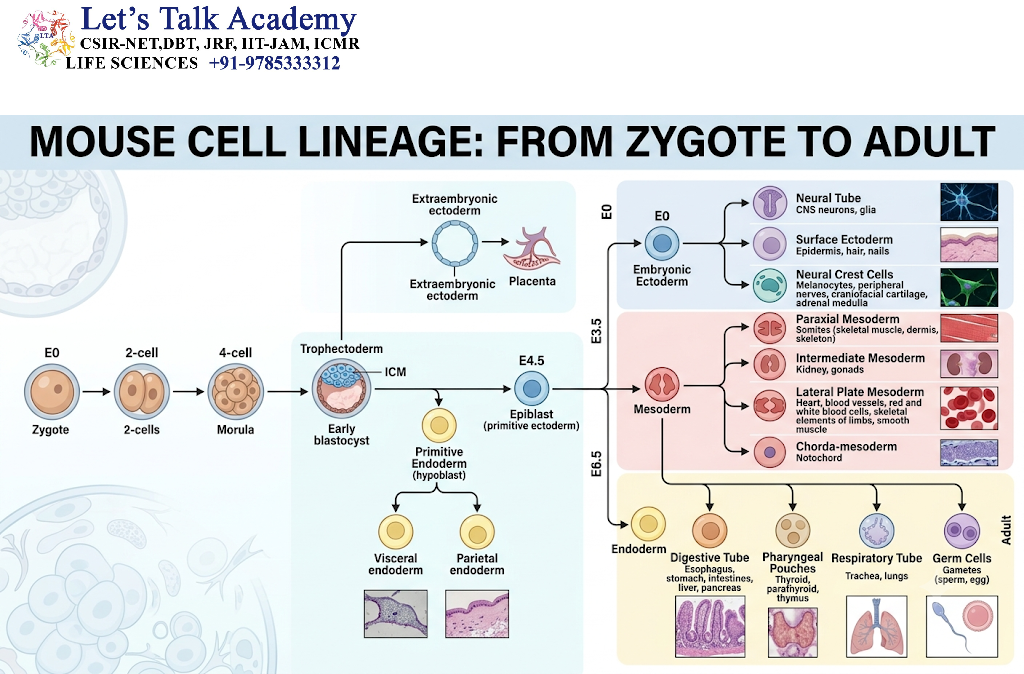
5.1 Definition
A cell lineage is the sequence of cell divisions and developmental relationships connecting an ancestral cell to its descendants.
A simplified lineage can be represented as:
Parent cell
↓
Cell A + Cell B
↓
A1 + A2 + B1 + B2
↓
Specialized descendants
Each branch represents a developmental relationship between cells.
5.2 Lineage Tree
A lineage can be represented as a branching tree.
For example:
Stem cell
├── Progenitor A
│ ├── Cell type A1
│ └── Cell type A2
└── Progenitor B
├── Cell type B1

└── Cell type B2
This is called a cell-lineage tree.
5.3 Lineage Versus Fate
These concepts should be distinguished carefully.
Lineage: developmental history.
Fate: developmental outcome.
A cell may have a particular lineage but its fate can sometimes be influenced by environmental signals.
Therefore:
Lineage tells us where the cell came from.
Fate tells us what the cell becomes.
6. Potency and Developmental Potential
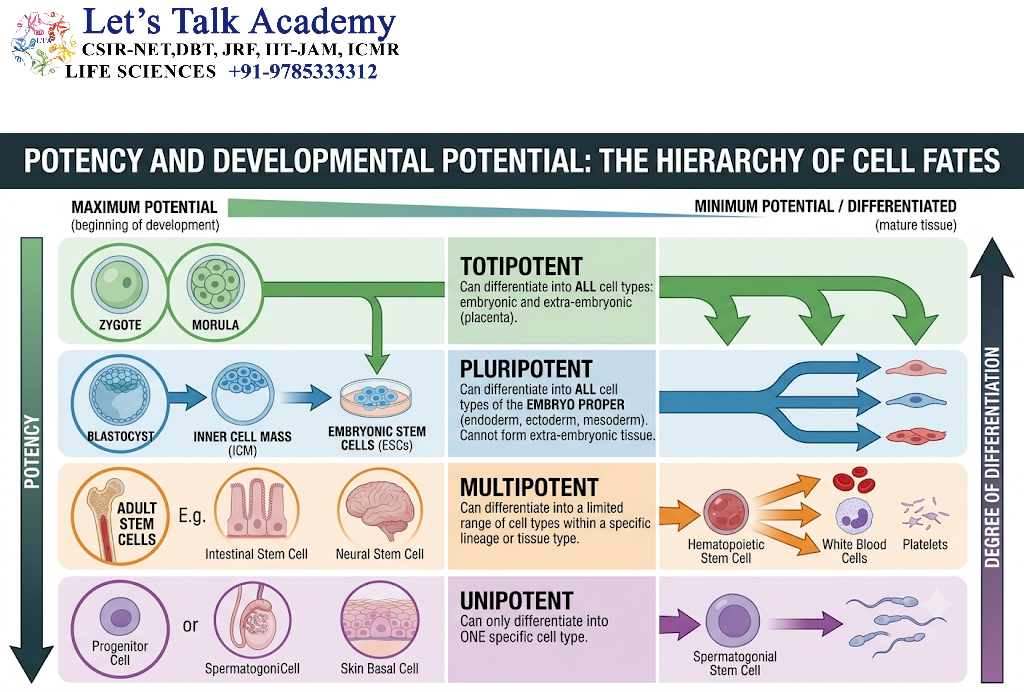
Cell fate is closely related to the concept of cellular potency.
6.1 Totipotency
A totipotent cell has the developmental potential to generate all embryonic and extraembryonic cell types necessary to produce an entire organism under appropriate conditions.
The fertilized egg, or zygote, is the classical example.
6.2 Pluripotency
A pluripotent cell can generate derivatives of all three embryonic germ layers:
- Ectoderm
- Mesoderm
- Endoderm
Embryonic stem cells are a classic example of pluripotent cells.
6.3 Multipotency
A multipotent cell can produce multiple related cell types within a particular developmental or tissue lineage.
For example, hematopoietic stem cells can generate many types of blood cells.
6.4 Oligopotency
Oligopotent cells can produce a smaller range of related cell types.
6.5 Unipotency
A unipotent cell has a more restricted developmental potential, generally producing one principal mature cell type while retaining the ability to self-renew in some contexts.
The general progression can be represented as:
Totipotent → Pluripotent → Multipotent → Oligopotent → More restricted progenitor → Differentiated cell
However, developmental potential is context-dependent and should not always be viewed as a simple irreversible ladder.
7. Intrinsic and Extrinsic Regulation of Cell Fate
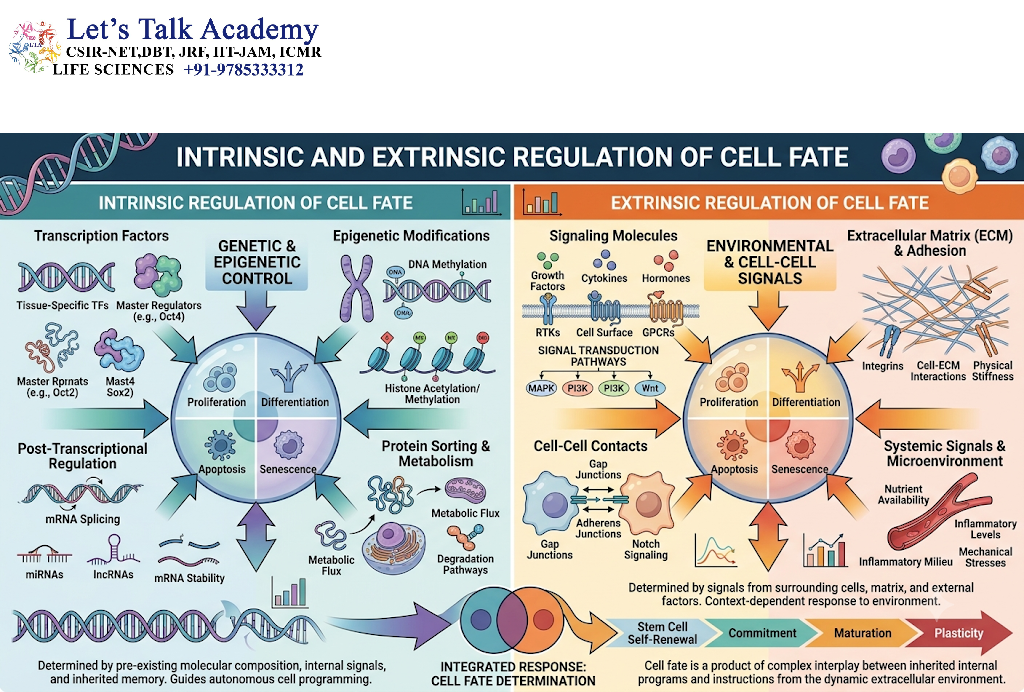
Cell fate is determined through the interaction of intrinsic and extrinsic mechanisms.
7.1 Intrinsic Determinants
Intrinsic determinants are factors present within the cell that influence its developmental behavior.
These can include:
- Transcription factors
- Cell polarity
- Maternal RNAs
- Proteins
- Epigenetic states
- Asymmetric inheritance of cellular components
7.2 Extrinsic Signals
Extrinsic signals originate from the cell’s environment.
They include:
- Growth factors
- Morphogens
- Cytokines
- Cell–cell interactions
- Extracellular matrix signals
- Mechanical signals
Thus:
Cell fate = intrinsic cellular state + environmental information
8. Cytoplasmic Determinants
8.1 Concept
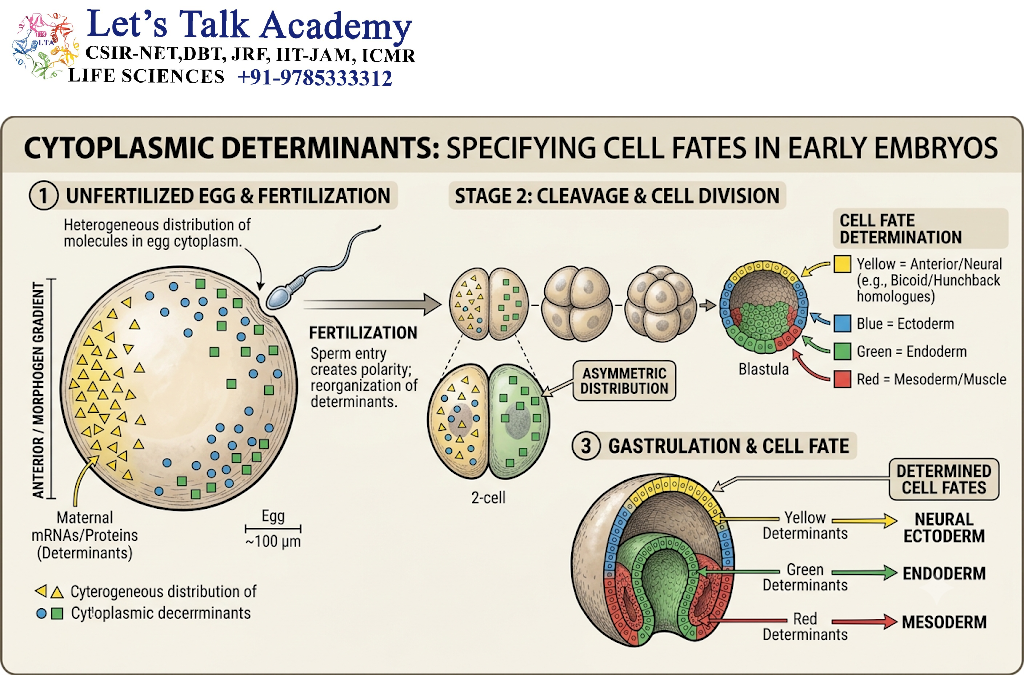
During some early developmental processes, cells inherit different cytoplasmic components.
These components may include:
- Messenger RNAs
- Proteins
- Regulatory molecules
If these determinants are distributed asymmetrically during cell division, daughter cells can begin with different molecular states.
8.2 Role in Early Development
Cytoplasmic determinants are particularly important in certain organisms and developmental systems.
They provide an example of how cell fate can be influenced by information inherited directly from the parent cell.
9. Asymmetric Cell Division
9.1 Definition
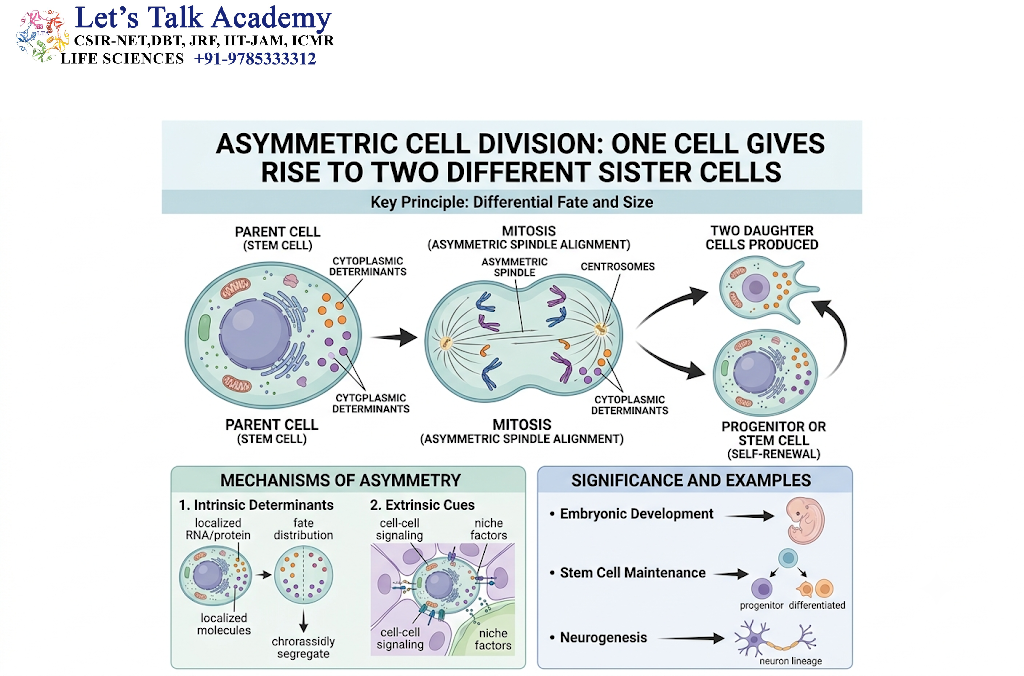
An asymmetric cell division produces daughter cells that differ in developmental potential, molecular composition, or environmental exposure.
For example:
Parent cell
↓
Daughter cell A + Daughter cell B
where A and B have different developmental properties.
9.2 Mechanisms
Asymmetry can result from:
- Unequal distribution of determinants
- Cell polarity
- Differential receptor inheritance
- Unequal exposure to extracellular signals
- Differences in cell position
9.3 Importance
Asymmetric division allows organisms to simultaneously achieve:
- Self-renewal
- Production of differentiated progeny
This is particularly important in stem-cell populations.
10. Symmetric Cell Division
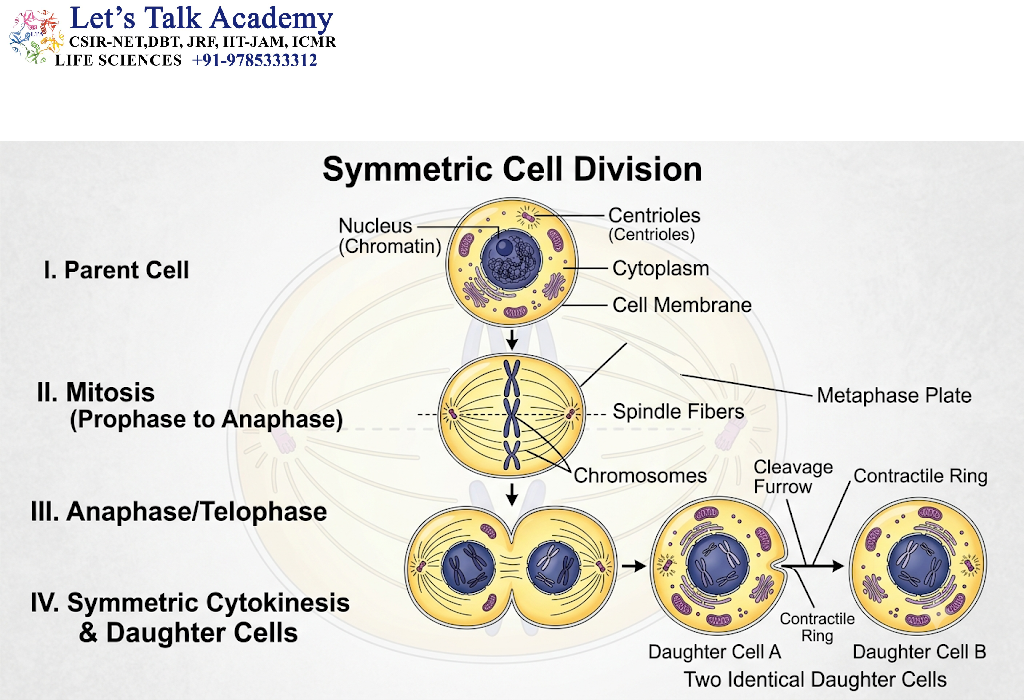
Symmetric divisions can also have important developmental roles.
A cell may divide to produce:
Two similar progenitor cells
or
Two similar differentiated cells
Symmetric proliferation can expand a population before differentiation occurs.
Therefore, development often requires a balance between:
Symmetric division → population expansion
and
Asymmetric division → diversification and self-renewal
11. Inductive Cell Interactions
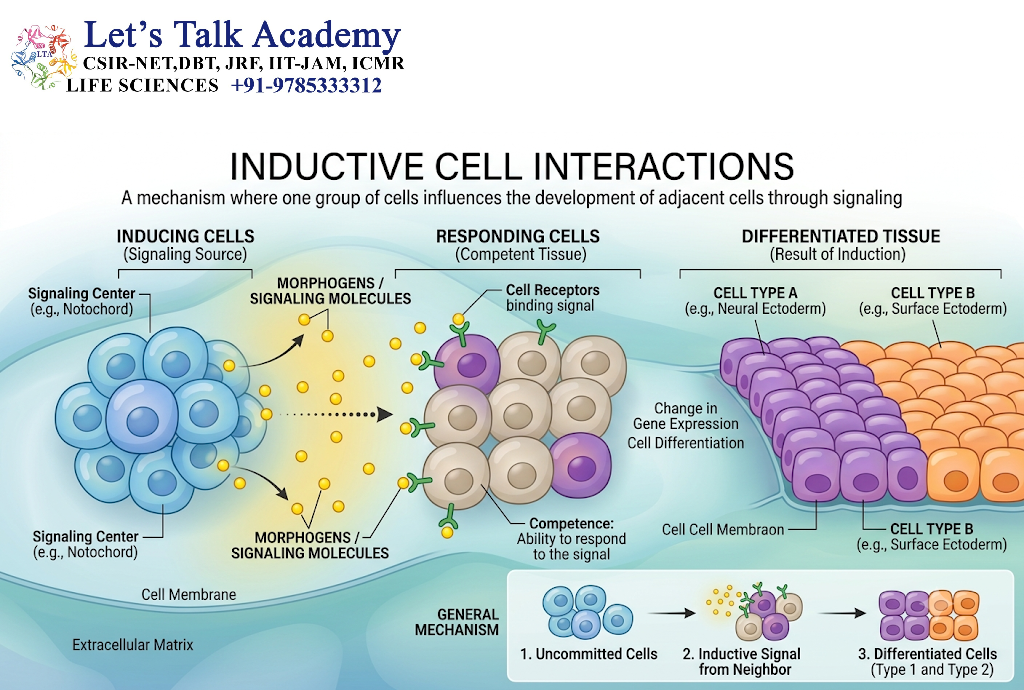
11.1 Definition of Induction
Induction occurs when one group of cells influences the developmental fate of neighboring cells through signaling.
The signaling tissue is sometimes called the inducing tissue, while the responding tissue is called the responding tissue.
A simplified model is:
Inducing cells
↓
Signal
↓
Responding cells
↓
Altered gene expression
↓
New cell fate
11.2 Importance of Induction
Inductive interactions are fundamental to embryonic development.
They allow cells to acquire identities based on their position relative to other cells.
12. Morphogens and Cell Fate
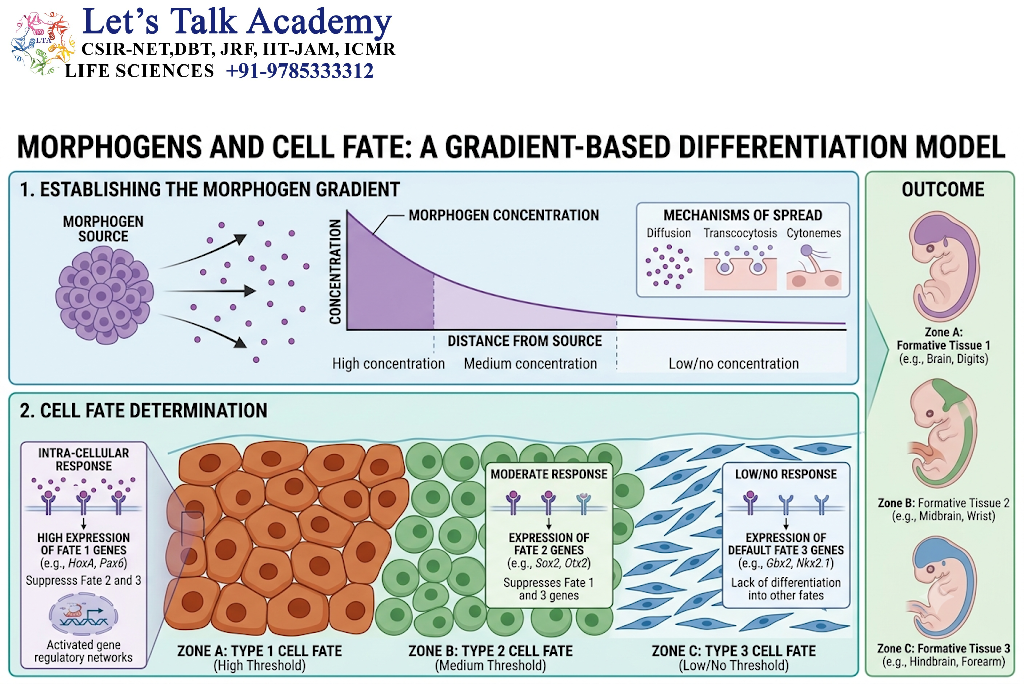
Morphogen gradients provide positional information that can influence cell fate.
A simplified model is:
High morphogen concentration → Fate A
Intermediate concentration → Fate B
Low concentration → Fate C
The previous chapter on morphogenetic gradients can therefore be directly connected to cell fate.
Morphogens such as Hedgehog, BMP-related signals, Wnt-related signals, and retinoic acid contribute to developmental patterning in different contexts.
13. Cell–Cell Signaling and Cell Fate
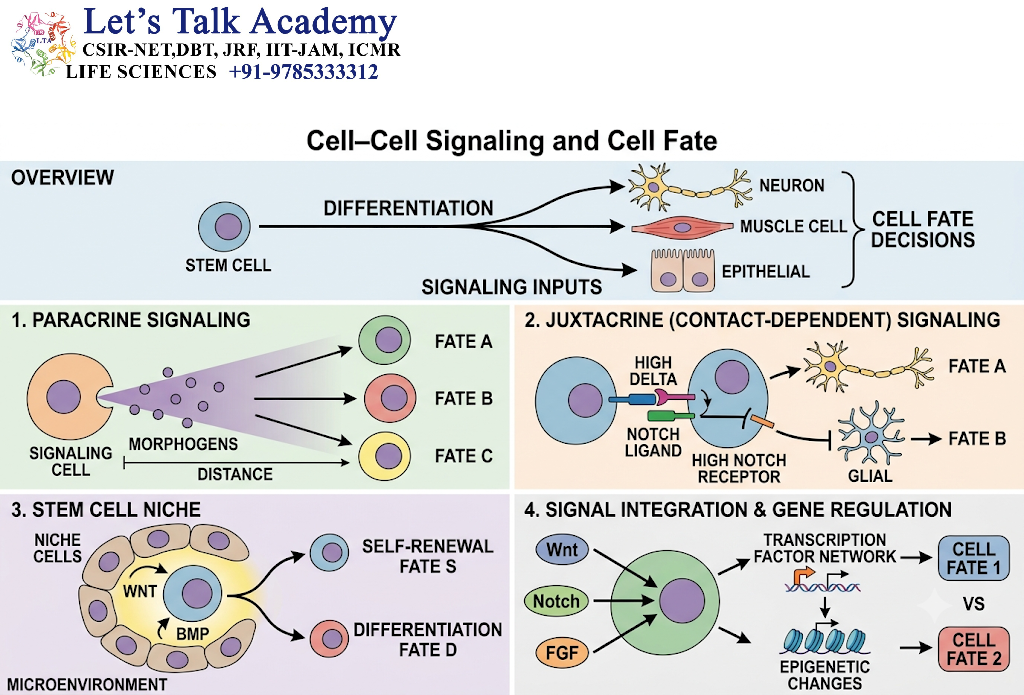
Cells communicate through several signaling systems.
Important developmental pathways include:
- Notch
- Wnt
- Hedgehog
- BMP/TGF-β
- FGF
- Retinoic acid signaling
These pathways can regulate:
- Proliferation
- Differentiation
- Survival
- Migration
- Cell fate
14. Notch Signaling and Cell-Fate Decisions
14.1 Basic Mechanism
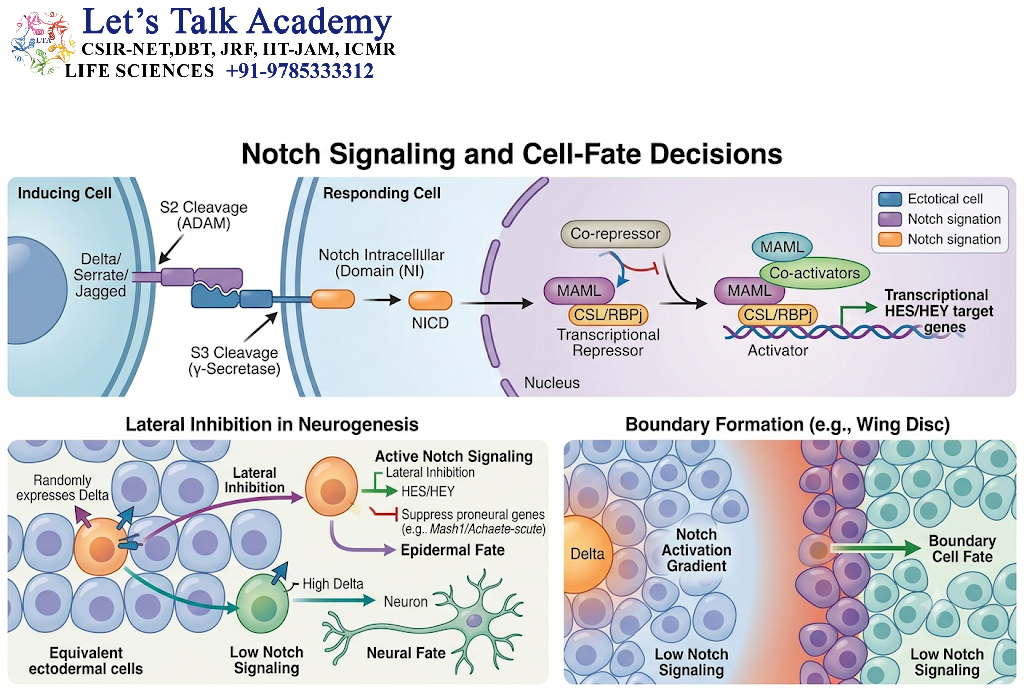
Notch signaling is particularly important in cell–cell communication.
Unlike many secreted signaling molecules, Notch signaling generally requires direct contact between neighboring cells.
A simplified pathway is:
Ligand on neighboring cell
↓
Notch receptor
↓
Proteolytic receptor processing
↓
Notch intracellular domain
↓
Nuclear signaling
↓
Target-gene regulation
14.2 Lateral Inhibition
Notch signaling can generate differences between neighboring cells.
One cell may begin adopting a particular fate and activate Notch signaling in adjacent cells, causing them to adopt an alternative fate.
This mechanism is known as lateral inhibition.
It is important in several developmental systems, including nervous-system development.
15. Lineage Restriction
As development progresses, cells generally become more restricted in their developmental potential.
For example:
Pluripotent cell
↓
Mesodermal progenitor
↓
Muscle progenitor
↓
Myoblast
↓
Muscle cell
At each stage, the potential developmental outcomes become narrower.
This process is called lineage restriction.
16. Germ Layers and Cell Lineages
During early embryonic development, cells become organized into three primary germ layers:
- Ectoderm
- Mesoderm
- Endoderm
These germ layers give rise to different tissues.
16.1 Ectoderm
Ectoderm contributes to structures including:
- Nervous system
- Epidermis
- Several sensory structures
16.2 Mesoderm
Mesoderm contributes to:
- Muscle
- Bone
- Connective tissue
- Blood
- Blood vessels
- Kidneys and associated structures
16.3 Endoderm
Endoderm contributes to epithelial components of several internal organs, including:
- Gastrointestinal tract
- Respiratory tract
- Liver-associated tissues
- Pancreatic tissues
These are broad developmental relationships, and actual tissue development involves extensive signaling and interactions among germ layers.
17. Hematopoietic Cell Lineage
Hematopoiesis provides a useful example of lineage restriction.
A simplified model is:
Hematopoietic stem cell
↓
Multipotent progenitor
↓
Myeloid and lymphoid progenitor populations
↓
Different blood-cell lineages
These can include:
- Red blood cells
- Platelets
- Neutrophils
- Monocytes
- Macrophages
- B lymphocytes
- T lymphocytes
- Natural killer cells
The hematopoietic system demonstrates how stem cells can maintain a population while continuously producing differentiated descendants.
18. Neural Cell Lineage
Neural development provides another important example.
A neural progenitor may produce different neuronal and glial populations.
A simplified model is:
Neural stem/progenitor cell
↓
Neural progenitor
↓
Neuron / astrocyte / oligodendrocyte
The exact developmental outcome depends on:
- Transcription factors
- Extracellular signals
- Timing
- Cell position
- Notch signaling
- Morphogen gradients
19. Muscle Cell Lineage
Skeletal muscle development provides an example of lineage-specific transcriptional regulation.
Muscle progenitor cells activate transcriptional programs involving factors such as:
- MyoD
- Myf5
- Myogenin
These factors help establish muscle-specific gene expression.
The simplified pathway is:
Mesodermal progenitor
↓
Muscle progenitor
↓
Myoblast
↓
Myoblast fusion
↓
Multinucleated muscle fiber
20. Lineage Tracing
20.1 Definition
Lineage tracing is an experimental approach used to determine the descendants of a particular cell or cell population.
Researchers mark a cell or population and then follow the labeled descendants over time.
20.2 Basic Principle
Initial cell
↓
Labeling
↓
Cell division
↓
Descendant cells
↓
Identification of labeled cells
This provides information about developmental relationships.
21. Genetic Lineage Tracing
Genetic lineage tracing uses genetically encoded markers to permanently label cells or their descendants.
Once activated, the marker can be inherited by daughter cells.
This allows researchers to determine:
- Which cells produce which descendants
- How tissues develop
- Whether a population contributes to regeneration
- Whether cells change identity under specific conditions
22. Clonal Analysis
22.1 Definition
A clone is a population of cells derived from a common ancestral cell.
Clonal analysis attempts to determine the contribution of individual cells to a developing tissue.
If one labeled cell produces many descendants, these cells form a clone.
22.2 Importance
Clonal analysis can reveal:
- Self-renewal
- Proliferative capacity
- Lineage potential
- Tissue organization
23. Fate Mapping
23.1 Definition
Fate mapping determines what a particular region or cell population of an embryo normally develops into.
It answers:
“What will cells in this location become?”
Lineage tracing asks:
“Which descendants originated from this cell?”
Although the two approaches are related, they address different developmental questions.
24. Fate Mapping Versus Lineage Tracing
| Feature | Fate mapping | Lineage tracing |
|---|---|---|
| Main question | What will this region/cell become? | Which cells descend from this cell? |
| Focus | Developmental outcome | Developmental ancestry |
| Approach | Mark or identify a developmental region | Permanently label a cell/population and follow descendants |
| Application | Embryonic patterning | Development, regeneration, stem-cell biology |
| Main concept | Fate | Lineage |
25. Cell Fate and Environmental Influence
Cell fate is not always determined entirely by intrinsic factors.
Environmental signals can alter developmental outcomes.
For example:
Cell A
↓
Placed in environment X
↓
Fate X
But:
Cell A
↓
Placed in environment Y
↓
Potentially altered fate Y
This demonstrates that cell fate can be context-dependent.
26. Competence
26.1 Definition
Competence refers to the ability of a cell to respond to a particular developmental signal.
A signal may be present, but a cell will not respond appropriately if it lacks the required receptors or intracellular machinery.
Thus:
Signal present ≠ response guaranteed
The responding cell must be competent to interpret the signal.
26.2 Developmental Competence
Competence can change during development.
A cell may be responsive to a particular signal at one stage but become unresponsive later.
This provides temporal control over cell-fate decisions.
27. Cell Fate and Epigenetic Regulation
Cell fate is stabilized partly through epigenetic mechanisms.
Important processes include:
- DNA methylation
- Histone modification
- Chromatin remodeling
- Non-coding RNA regulation
These mechanisms help maintain cell-specific gene-expression patterns.
For example:
Differentiation signal
↓
Transcription-factor activation
↓
Chromatin remodeling
↓
Cell-type-specific gene expression
↓
Stable cellular identity
28. Transcriptional Networks and Cell Fate
Cell fate is generally not controlled by one gene alone.
Instead, transcription factors form regulatory networks.
One transcription factor can activate several genes, while those genes can regulate additional transcription factors.
This creates a gene regulatory network.
A simplified model is:
Factor A
↓
Factors B + C
↓
Target genes
↓
Cell-specific proteins
↓
Cell identity
Positive feedback can stabilize a particular fate, whereas inhibitory interactions can prevent alternative fates.
29. Bistability in Cell-Fate Decisions
Some cell-fate decisions behave like molecular switches.
For example:
State A ↔ State B
A positive-feedback network may stabilize one state and suppress the alternative.
This produces bistability, where cells tend to settle into one of two stable molecular states.
Bistable regulatory systems can help make developmental decisions robust.
30. Plasticity of Cell Fate
Cell fate is not always permanently fixed.
Some differentiated cells can alter their identity under certain conditions.
This property is known as cellular plasticity.
Plasticity can occur during:
- Development
- Regeneration
- Tissue injury
- Disease
- Cancer
The degree of plasticity varies considerably among cell types.
31. Transdifferentiation
Transdifferentiation refers to conversion of one differentiated cell type into another differentiated cell type without necessarily passing through a pluripotent state.
Conceptually:
Differentiated cell A
↓
Reprogramming / signaling changes
↓
Differentiated cell B
This demonstrates that differentiated states can, under certain circumstances, be more flexible than previously assumed.
32. Cellular Reprogramming
Cellular reprogramming can reset differentiated cells toward a pluripotent state.
A major example is the generation of induced pluripotent stem cells (iPSCs).
The classic reprogramming factors include:
- OCT4
- SOX2
- KLF4
- c-MYC
These are commonly known as the Yamanaka factors.
The conceptual sequence is:
Differentiated cell
↓
Reprogramming factors
↓
Epigenetic resetting
↓
Induced pluripotent stem cell
↓
Directed differentiation
↓
Desired cell type
This discovery demonstrated that differentiated cell identity can be experimentally altered.
33. Cell Lineage During Development
Development can be understood as a combination of:
Cell proliferation + lineage decisions + migration + differentiation + tissue organization
A simplified sequence is:
Fertilized egg
↓
Early embryonic cells
↓
Germ-layer formation
↓
Tissue-specific progenitors
↓
Lineage-restricted cells
↓
Differentiated cells
↓
Mature tissues
Each stage involves coordinated cell-fate decisions.
34. Cell Lineage and Tissue Homeostasis
Cell lineage does not end with embryonic development.
Adult tissues continuously replace damaged or aged cells.
Stem cells and progenitor cells contribute to this process.
For example:
Adult stem cell
↓
Progenitor
↓
Differentiated cell
↓
Mature tissue
This maintains tissue homeostasis.
35. Cell Fate During Regeneration
After tissue injury, cells may:
- Proliferate
- Change their state
- Recruit neighboring cells
- Activate developmental signaling pathways
- Produce new differentiated cells
Regeneration can therefore reactivate signaling mechanisms that resemble developmental processes.
However, regeneration generally occurs within an established tissue architecture and is therefore not simply a repetition of embryonic development.
36. Cell Fate and Cancer
Abnormal regulation of cell fate can contribute to cancer.
Cancer cells may acquire:
- Increased plasticity
- Stem-like properties
- Altered differentiation
- Abnormal lineage switching
- Resistance to cell death
Developmental signaling pathways can also become persistently activated.
Important examples include:
- Wnt
- Hedgehog
- Notch
- TGF-β
Thus, understanding normal cell-fate regulation helps explain how abnormal cell states can emerge during tumor development.
37. Relationship Between Cell Fate, Lineage, and Differentiation
These three concepts can be connected as follows:
Cell lineage
= developmental history
Cell fate
= developmental outcome
Cell differentiation
= process of acquiring specialized characteristics
A simplified model is:
Stem cell
↓
Lineage progression
↓
Fate specification
↓
Determination
↓
Differentiation
↓
Mature cell
These processes overlap but should not be considered identical.
38. Major Factors Controlling Cell Fate
Cell fate is influenced by multiple levels of regulation.
38.1 Genetic Factors
Mutations and inherited genetic programs influence developmental potential.
38.2 Transcription Factors
Transcription factors activate and repress cell-type-specific genes.
38.3 Cell Signaling
Extracellular signaling pathways provide positional and environmental information.
38.4 Epigenetic Regulation
Chromatin states influence which genes can be expressed.
38.5 Cell Position
A cell’s physical location determines which signals it receives.
38.6 Cell–Cell Interaction
Neighboring cells can influence each other’s developmental fate.
38.7 Extracellular Matrix
Matrix composition and mechanical properties can affect differentiation.
38.8 Time
Developmental signals have different effects at different stages.
Therefore, cell fate is a highly integrated process.
39. Experimental Methods for Studying Cell Fate and Lineage
Several experimental methods have contributed to our understanding of cell fate.
39.1 Fate Mapping
Determines the developmental outcome of specific embryonic regions or populations.
39.2 Genetic Lineage Tracing
Permanently marks cells and follows their descendants.
39.3 Live-Cell Imaging
Allows researchers to observe cell divisions and movements over time.
39.4 Single-Cell RNA Sequencing
Measures gene-expression patterns in individual cells.
This can help identify:
- Cell states
- Differentiation trajectories
- Transitional populations
- Lineage relationships
39.5 Clonal Analysis
Determines the descendants and proliferative behavior of individual cells.
39.6 Molecular Perturbation
Gene knockout, knockdown, overexpression, and other manipulations can reveal the roles of particular genes and pathways.
40. Modern View of Cell Lineages
The traditional view of development often represented lineage as a rigid branching tree:
Stem cell → progenitor → differentiated cell
Modern research indicates that many developmental systems are more flexible.
Cells can move through continuous molecular states rather than always following sharply separated branches.
A more realistic model can therefore resemble:
Cell state A → transitional states → Cell state B
with environmental signals influencing the trajectory.
This concept is especially important in:
- Stem-cell biology
- Regeneration
- Cancer
- Tissue repair


