1. Ideal Aseptic condition means (1) No microorganisms (2) Controlled fungi and bacteria (3) No endospores of fungi (4) Bacteria lesser then 200

What is an ideal aseptic condition?

24. E. coli based Humulin is a (1) Insulin (2) Interferon (3) Growth factor (4) Disaccharide

What is E. coli–based Humulin?

23. If we want to obtain glycosylated protein from microbe, suitable choice will be (1) Bacteria (2) Yeast (3) Mycoplasma (4) Animal cell

Best microbial system for glycosylated protein production

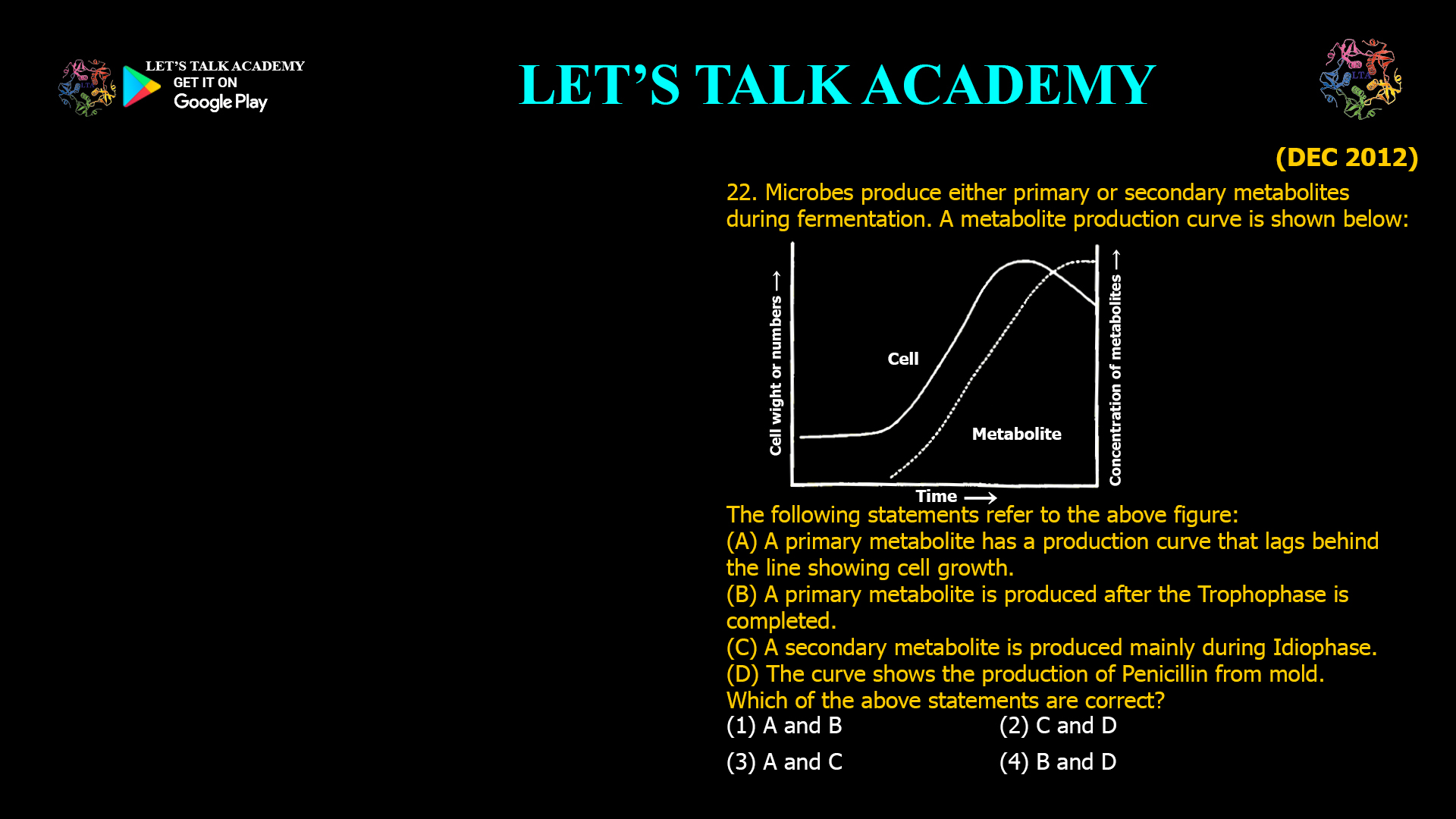
22. Microbes produce either primary or secondary metabolites during fermentation. A metabolite production curve is shown below: The following statements refer to the above figure: (A) A primary metabolite has a production curve that lags behind the line showing cell growth. (B) A primary metabolite is produced after the Trophophase is completed. (C) A secondary metabolite is produced mainly during Idiophase. (D) The curve shows the production of Penicillin from mold. Which of the above statements are correct? (1) A and B (2) C and D (3) A and C (4) B and D

Primary vs secondary metabolite production curve in fermentation

21. Which of the following curve correctly represents the antibiotic production by Streptomyces species?

Correct curve for antibiotic production by Streptomyces species

20. Which of the following curves correctly represents the process of ethanol production by yeast?

Correct curve for ethanol production by yeast in batch fermentation

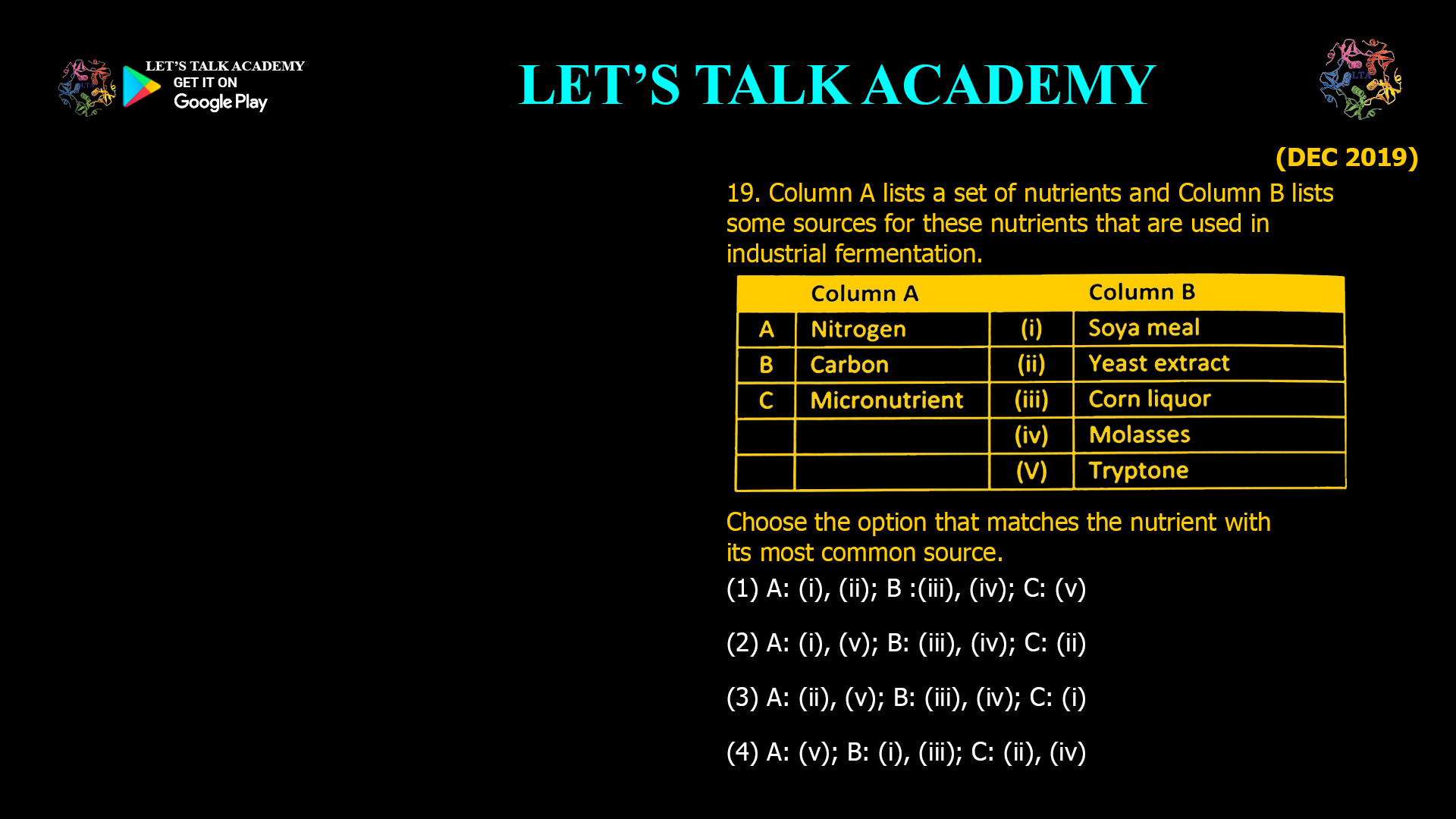
19. Column A lists a set of nutrients and Column B lists some sources for these nutrients that are used in industrial fermentation. Choose the option that matches the nutrient with its most common source. (1) A: (i), (ii); B :(iii), (iv); C: (v) (2) A: (i), (v); B: (iii), (iv); C: (ii) (3) A: (ii), (v); B: (iii), (iv); C: (i) (4) A: (v); B: (i), (iii); C: (ii), (iv)

Industrial fermentation nutrients

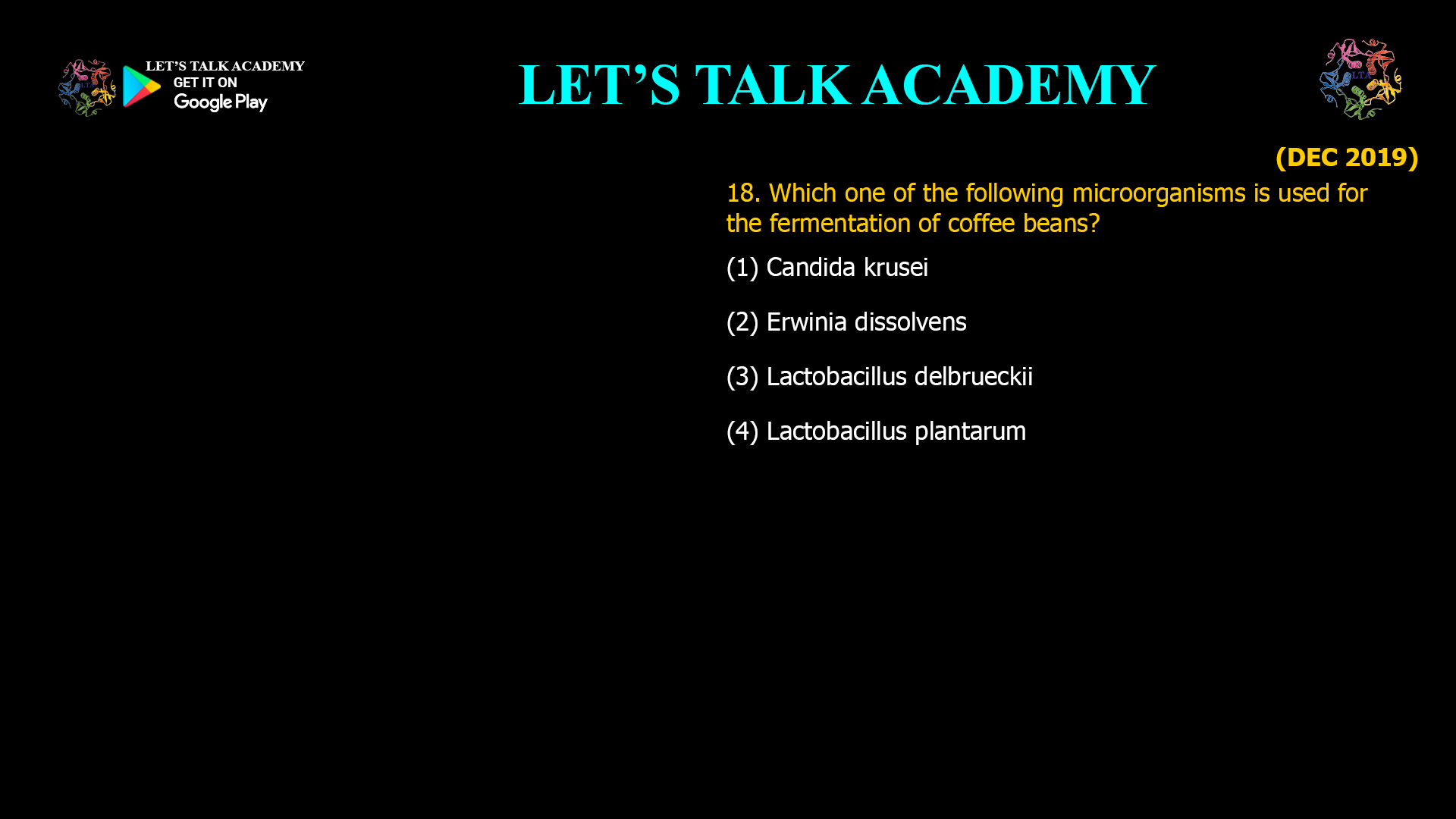
18. Which one of the following microorganisms is used for the fermentation of coffee beans? (1) Candida krusei (2) Erwinia dissolvens (3) Lactobacillus delbrueckii (4) Lactobacillus plantarum

Why Candida krusei Is Widely Used in Coffee Bean Fermentation

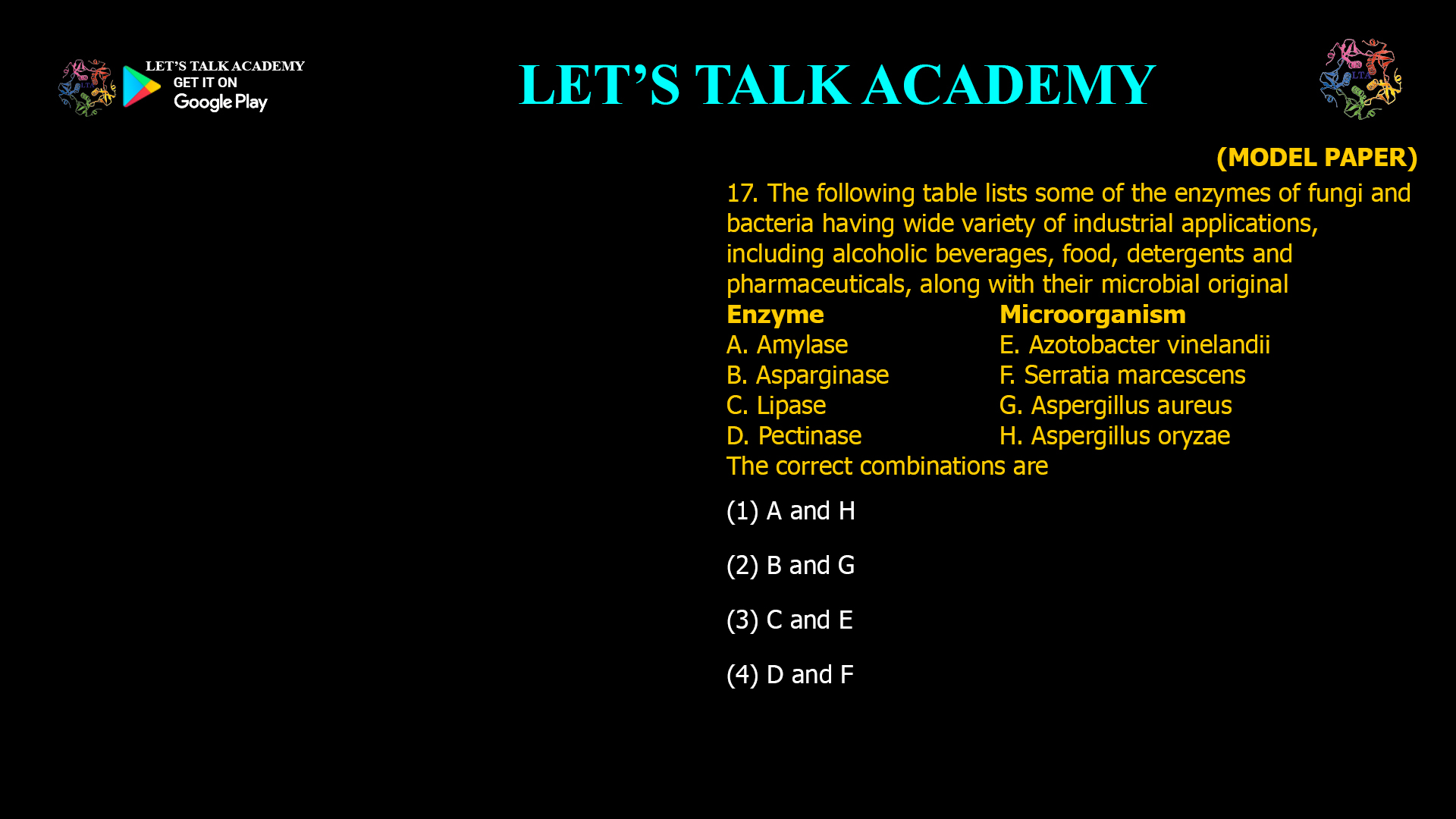
17. The following table lists some of the enzymes of fungi and bacteria having wide variety of industrial applications, including alcoholic beverages, food, detergents and pharmaceuticals, along with their microbial original Enzyme Microorganism A. Amylase E. Azotobacter vinelandii B. Asparginase F. Serratia marcescens C. Lipase G. Aspergillus aureus D. Pectinase H. Aspergillus oryzae The correct combinations are (1) A and H (2) B and G (3) C and E (4) D and F

Industrial Enzymes and Their Microbial Sources

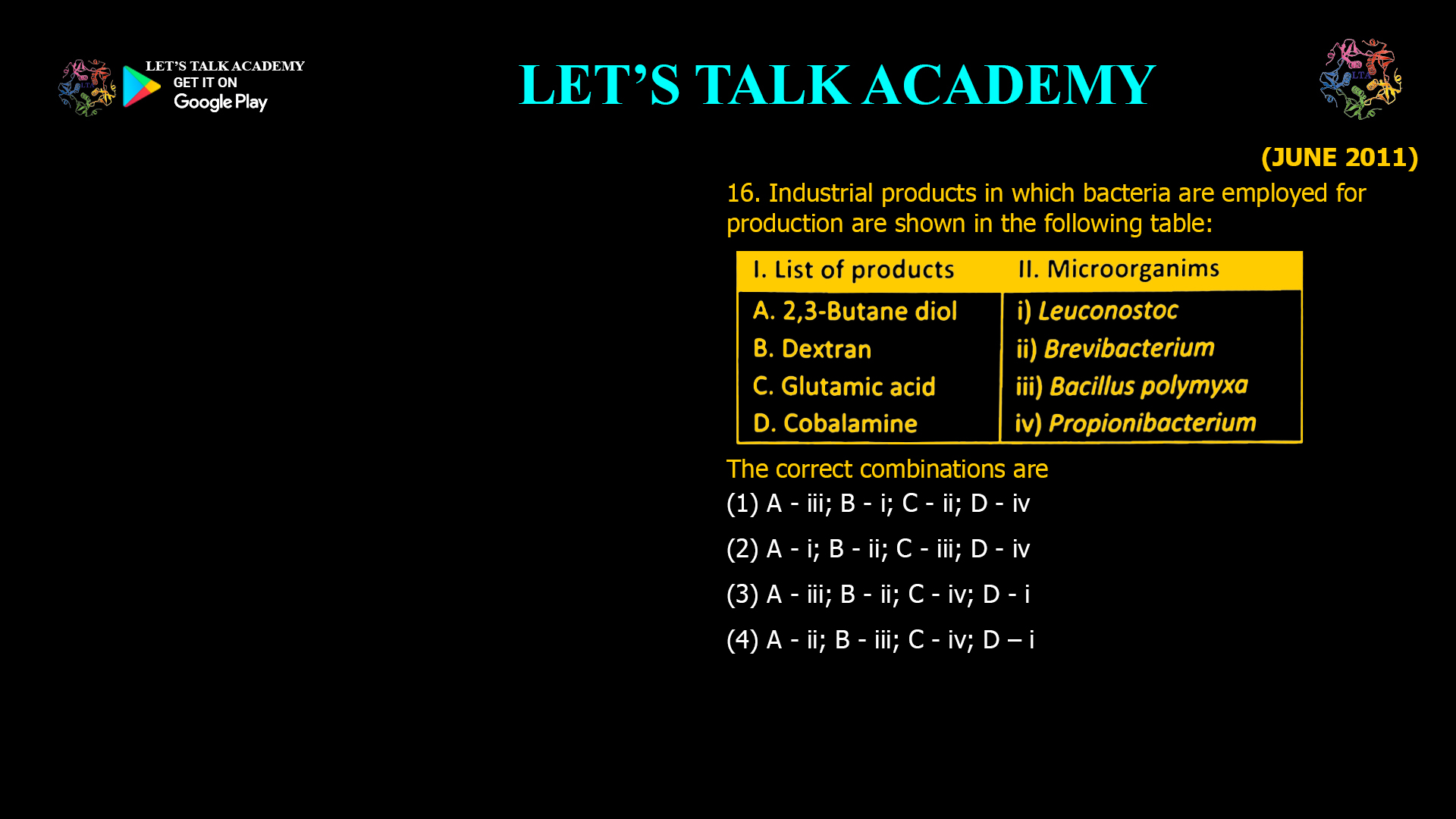
16. Industrial products in which bacteria are employed for production are shown in the following table: The correct combinations are (1) A - iii; B - i; C - ii; D - iv (2) A - i; B - ii; C - iii; D - iv (3) A - iii; B - ii; C - iv; D - i (4) A - ii; B - iii; C - iv; D – i

Industrial Products and Their Bacterial Producers

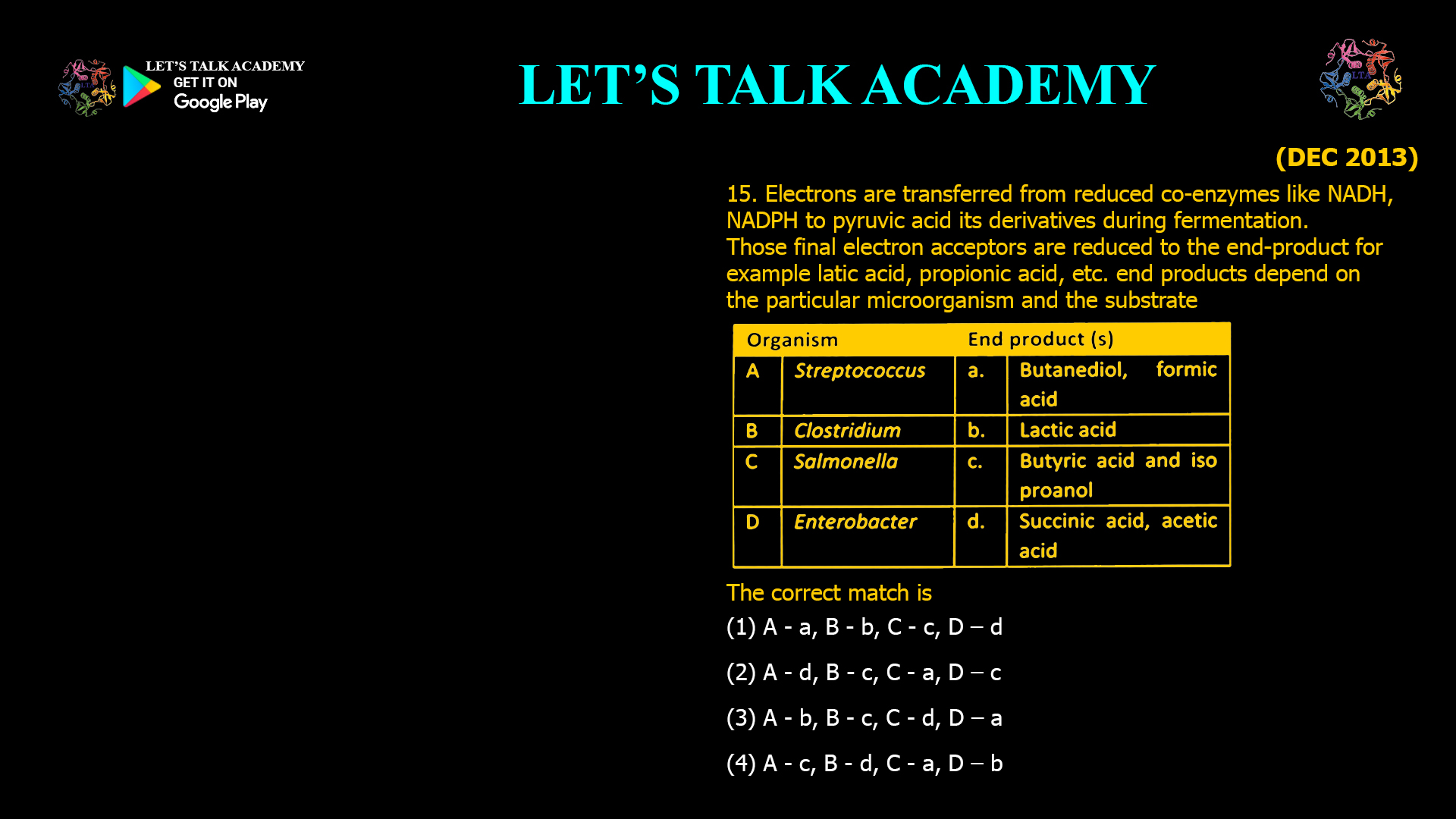
15. Electrons are transferred from reduced co-enzymes like NADH, NADPH to pyruvic acid its derivatives during fermentation. Those final electron acceptors are reduced to the end-product for example latic acid, propionic acid, etc. end products depend on the particular microorganism and the substrate The correct match is (1) A - a, B - b, C - c, D – d (2) A - d, B - c, C - a, D – c (3) A - b, B - c, C - d, D – a (4) A - c, B - d, C - a, D – b

Fermentation End Products of Streptococcus, Clostridium, Salmonella and Enterobacter

14. Red wine and Red grapes are important source of which anti-tumour agent? (1) Taxol (2) Vincristine (3) Resveratol (4) Bradystanin

Resveratrol in Red Wine and Grapes as a Natural Anti-Tumour Agent

13. Fungus used for commercial production of citric acid is- (1) Neurospora (2) Penicillium (3) Aspergillus (4) Saccharomyces

The Primary Fungus Used for Commercial Citric Acid Production

12. Among the following which is source of maximum antibiotics- (1) Streptomyces (2) Penicillin (3) Actinomyces (4) Bacillus

Streptomyces: The Major Microbial Source of Antibiotics

11. Which microorganism is used for production of methanol as fuel in industry? (1) Acetobacter (2) Azobacter (3) Sacchromyces (4) Clostridium

Microorganism Used for Methanol Fuel Production in Industry

10. Enzymes are nowadays used extensively in bio-processing industries. Enzymes 1 is used for treatment of hides to provide a finer texture, in leather processing and manufacture of glue. Enzyme 2 is used for clarification of fruit juices. Identify Enzymes 1 and 2 Enzyme 1 Enzyme 2 (1) Amylase Pectinase (2) Protease Amylase (3) Protease Pectinase (4) Pectinase Amylase

Key Industrial Enzymes in Leather Processing and Fruit Juice Clarification

9. Enzyme used in cheese production is- (1) Rennet (2) α-Amylase (3) Lactase (4) Trypsin

Rennet Enzyme in Cheese Production

8. Coliforms are used as indicator organisms of sewage pollution because they (1) are pathogens. (2) ferment lactose. (3) are abundant in human intestines. (4) grow within 24 hours.

Why Coliform Bacteria Are Used as Indicators of Sewage Pollution

7. Novel groups of polyketides can be synthesized in Actinomycetes by (1) gene rearrangement. (2) gene amplification. (3) combinatorial biosynthesis. (4) metabolic engineering.

How Combinatorial Biosynthesis Creates Novel Polyketides in Actinomycetes

6. Which one of the following statements is NOT true for a continuous culture-based fermentation? (1) The exponential phase of growth is extended. (2) Nutrients are utilized efficiently and faster. (3) Risk of contamination is lower than batch fermentation. (4) A chemostat allows maintenance of growth rate during fermentation.

Continuous Culture Fermentation

5. Which one of the following is NOT typically a product of fermentation? (1) Cheese (2) Black tea (3) Kombucha (4) Green tea

Is Green Tea a Fermented Product?

4. During the production of alcohol by fermentation using budding yeast, oxygen supply is kept 'limited. Why? (1) Budding yeasts are obligate anaerobes and cannot tolerate oxygen. (2) Budding yeasts lose mitochondria in the absence of oxygen. (3) Budding yeasts are facultative anaerobes (4) Alcohol is oxidized further in the presence of oxygen.

Why Oxygen Is Kept Limited in Yeast Alcohol Fermentation

3. Which of the following microbial fermentations are anaerobic? (1) Ethanol and acetone-butanol. (2) Citric acid and propionic acid. (3) Penicillin and vitamin B12 (4) Streptomycin and rifampicin.

Anaerobic Microbial Fermentations

2. Which one of the following statements CANNOT be included while defining the fermentation process? (1) Alcohol is formed from sugar residues (2) Requires an electron transport system. (3) Utilizes an organic compound as the final electron acceptor (4) Produces lactic acid in oxygen deprived muscle

Key Features of Fermentation

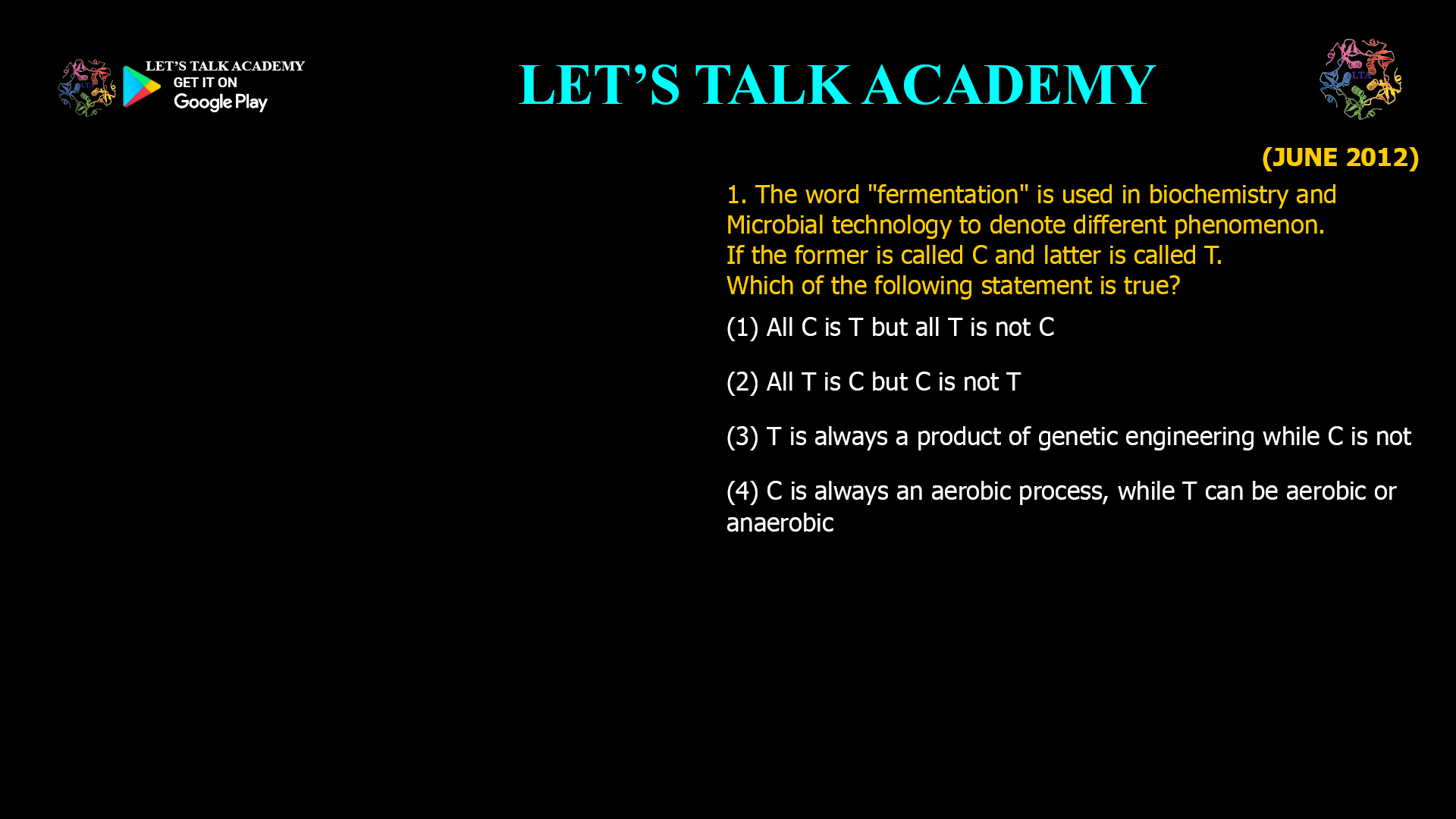
1. The word "fermentation" is used in biochemistry and Microbial technology to denote different phenomenon. If the former is called C and latter is called T. Which of the following statement is true? (1) All C is T but all T is not C (2) All T is C but C is not T (3) T is always a product of genetic engineering while C is not (4) C is always an aerobic process, while T can be aerobic or anaerobic

Difference Between Biochemical and Microbial Fermentation in Biotechnology

Latest Courses