
1. Introduction to Vacuoles
Vacuoles are membrane-bound compartments found in the cells of plants, fungi, protists, and some animals. They are particularly prominent in mature plant cells, where a large central vacuole may occupy a substantial portion of the total cell volume.
For a long time, vacuoles were considered relatively simple storage compartments. Modern cell biology has shown that they are highly dynamic organelles involved in a wide range of cellular processes, including storage, digestion, ion regulation, pH regulation, osmotic balance, cellular growth, detoxification, defense, and programmed degradation of cellular components.
A typical plant vacuole is surrounded by a specialized membrane called the tonoplast and contains an aqueous solution known as cell sap.
A simplified organization is:
Cytoplasm → Tonoplast → Vacuolar lumen → Cell sap
The vacuole is therefore not an empty space. It is a metabolically active compartment whose composition is carefully regulated by membrane transport systems.
2. General Characteristics of Vacuoles
Vacuoles show considerable variation in size, number, composition, and function.
Important characteristics include:
- Vacuoles are membrane-bound compartments.
- Their surrounding membrane is called the tonoplast.
- They contain a fluid-filled lumen.
- They are particularly large in mature plant cells.
- Their contents vary according to cell type and physiological condition.
- They participate in storage and degradation.
- They contribute to cellular osmotic regulation.
- They help maintain turgor pressure.
- They regulate the intracellular concentration of ions and metabolites.
- They can participate in cellular defense and detoxification.
3. Structure of Vacuoles
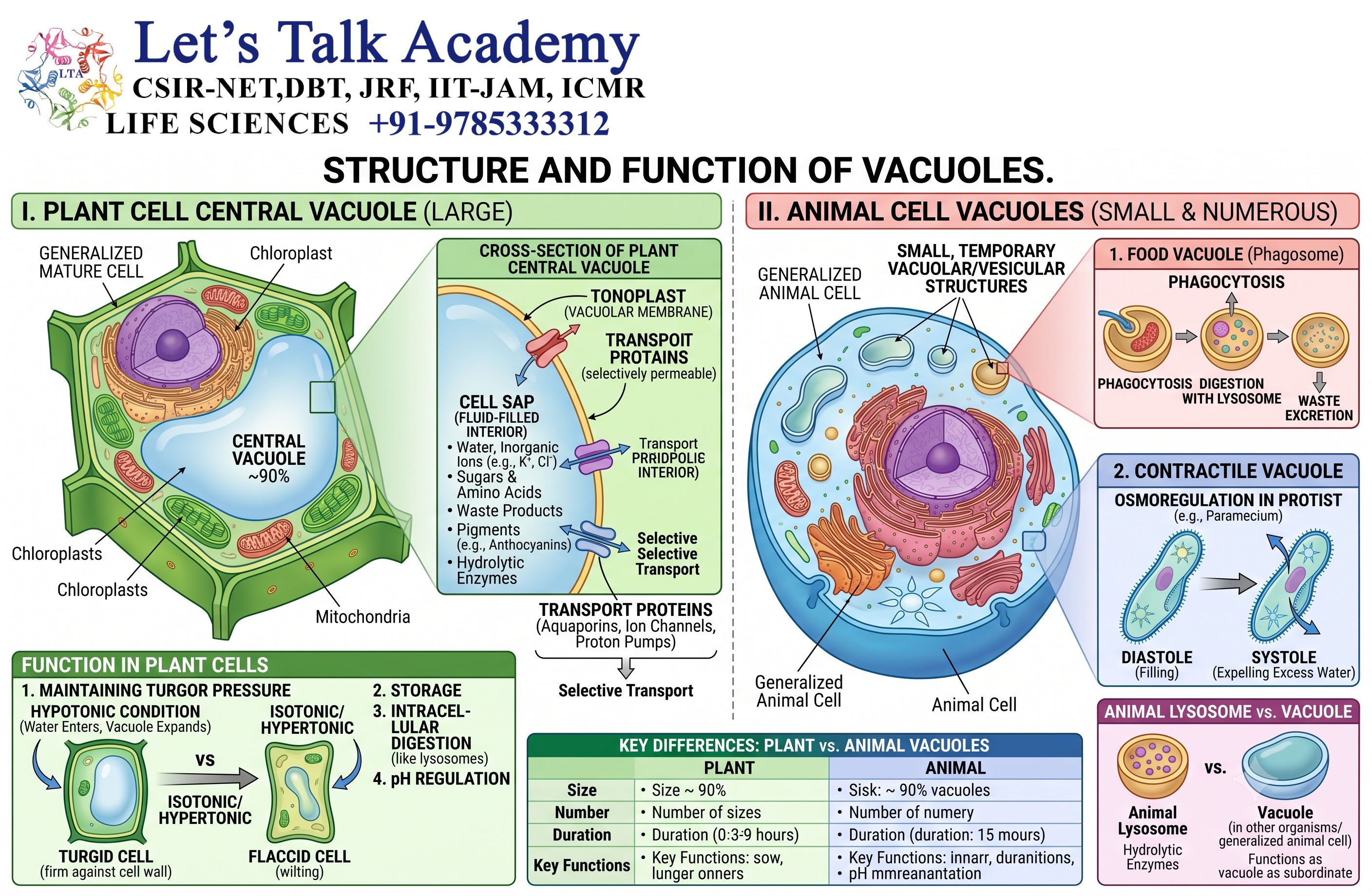
A typical plant vacuole consists of three major components:
- Tonoplast
- Vacuolar lumen
- Cell sap
3.1 Tonoplast
The tonoplast is the membrane surrounding the vacuole.
It is a selectively permeable membrane composed mainly of:
- Lipids
- Membrane proteins
- Transport proteins
- Enzymes
- Receptors and regulatory proteins
The tonoplast controls the movement of substances between the cytoplasm and vacuolar lumen.
Important transport systems include:
- Ion channels
- Proton pumps
- Transporters
- Antiporters
- Aquaporins
3.2 Vacuolar Lumen
The internal space of the vacuole is called the vacuolar lumen.
It contains an aqueous mixture of various substances.
These may include:
- Water
- Inorganic ions
- Sugars
- Amino acids
- Organic acids
- Pigments
- Proteins
- Secondary metabolites
- Waste products
- Hydrolytic enzymes
3.3 Cell Sap
The solution present inside plant vacuoles is commonly called cell sap.
Its exact composition varies according to:
- Cell type
- Plant species
- Developmental stage
- Environmental conditions
- Metabolic state
Cell sap contributes significantly to osmotic balance and cellular water relations.
4. Formation and Biogenesis of Vacuoles
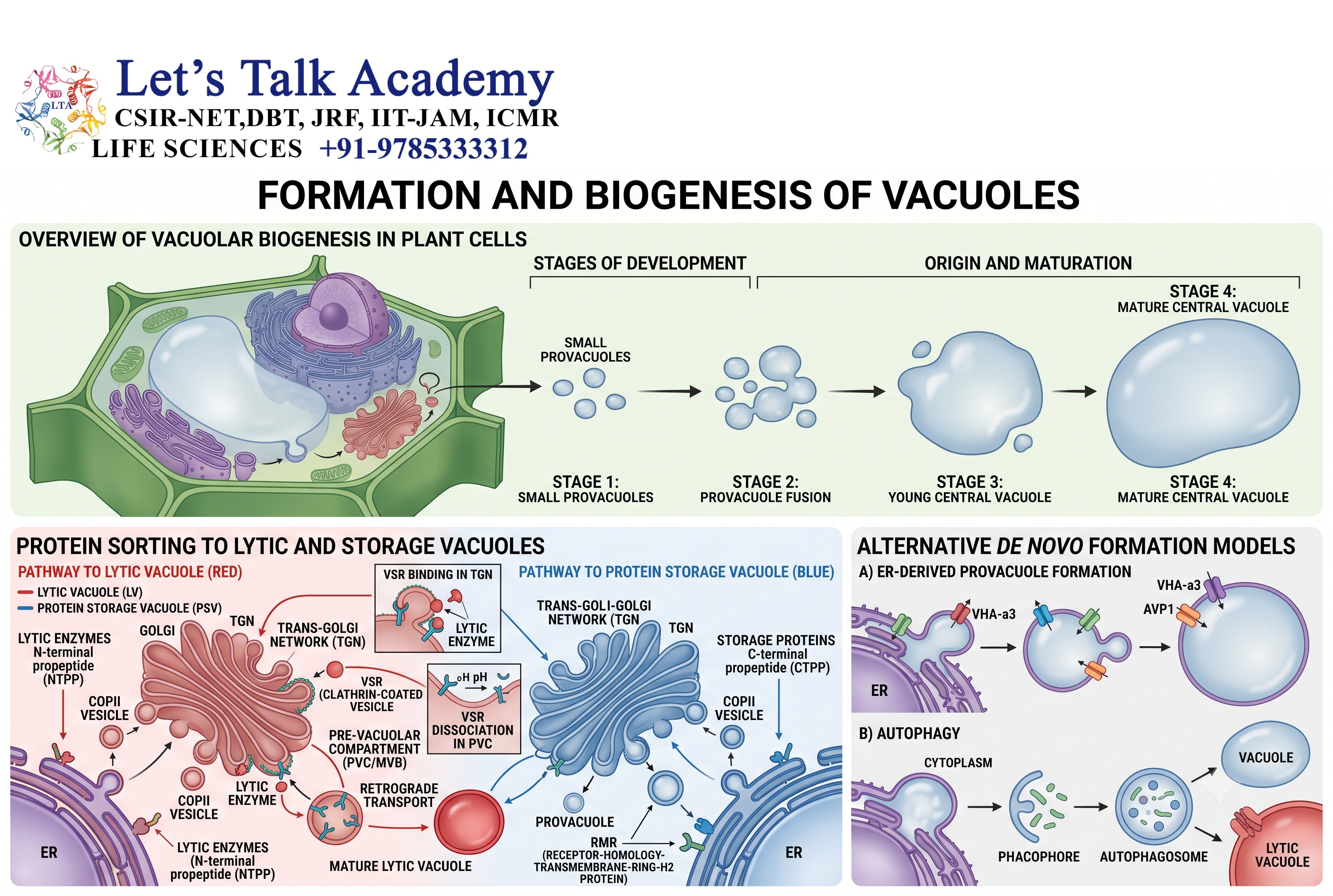
Vacuoles are not simply spaces that appear inside cells. They develop through coordinated membrane trafficking and fusion processes.
In plant cells, vacuolar membranes and proteins are supplied through the endomembrane system.
Important components involved include:
- Endoplasmic reticulum
- Golgi apparatus
- Endosomes
- Prevacuolar compartments
- Transport vesicles
A simplified pathway is:
Endoplasmic reticulum
↓
Golgi apparatus
↓
Transport vesicles
↓
Prevacuolar/endosomal compartments
↓
Vacuolar membrane
↓
Vacuole
During plant cell development, smaller vacuoles can undergo fusion and eventually form larger vacuolar compartments.
5. Vacuole Development in Plant Cells
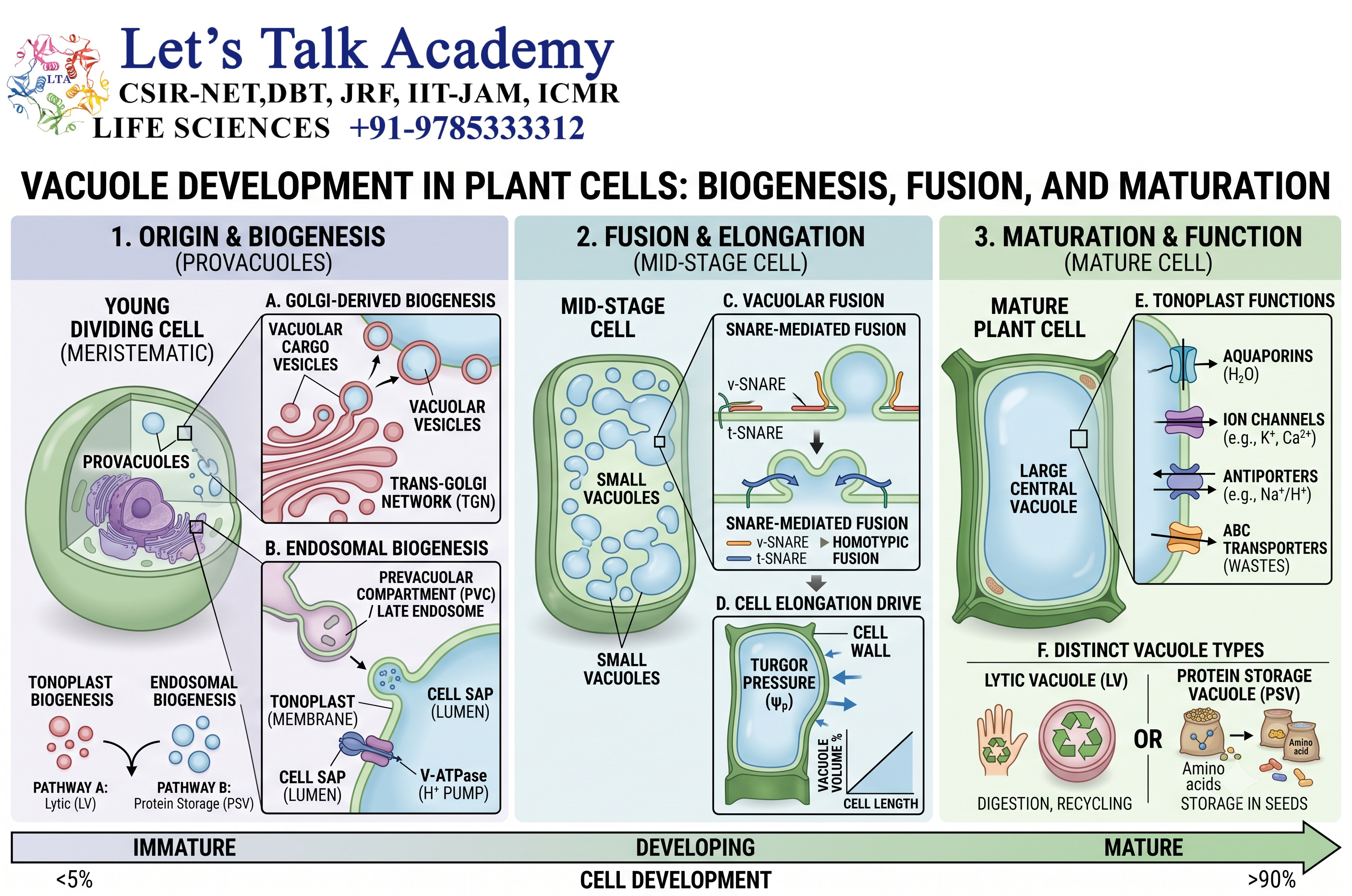
Young plant cells generally contain several small vacuoles.
As the cell matures:
Small vacuoles
↓
Vacuole fusion
↓
Larger vacuolar compartments
↓
Large central vacuole
The development of the central vacuole is closely associated with cell enlargement.
The vacuole can expand by accumulating water and dissolved substances, causing the cytoplasm to occupy a relatively smaller region of the mature cell.
6. Central Vacuole
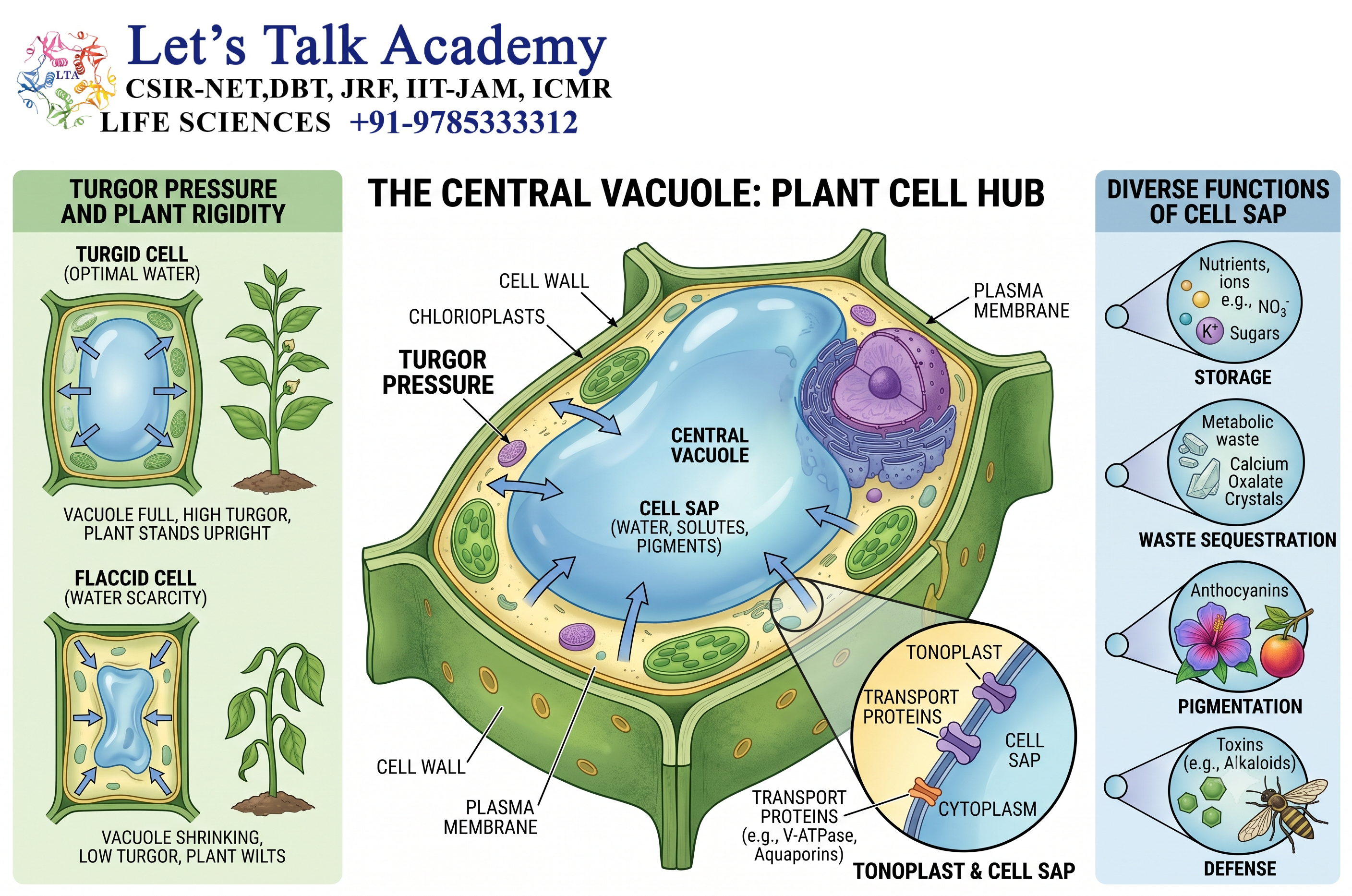
The central vacuole is a characteristic feature of many mature plant cells.
It can occupy a large fraction of the cell volume, although its size varies considerably among cell types.
The central vacuole performs several functions simultaneously.
Major functions include:
- Water storage
- Ion storage
- Metabolite storage
- Waste sequestration
- Osmotic regulation
- pH regulation
- Maintenance of turgor
- Cellular degradation
- Defense
- Regulation of cell expansion
7. Vacuoles in Different Organisms
Vacuoles are not restricted to plants.
They occur in various forms in:
- Plants
- Fungi
- Protists
- Some animal cells
However, the structure and functions of these vacuoles can differ substantially.
7.1 Plant Vacuoles
Plant vacuoles are generally large and multifunctional.
7.2 Fungal Vacuoles
Fungal vacuoles participate in:
- Ion storage
- pH regulation
- Degradation
- Nutrient storage
- Osmoregulation
- Autophagy-related processes
7.3 Protist Vacuoles
Protists may contain specialized vacuoles involved in digestion, water regulation, or other functions.
A particularly important example is the contractile vacuole found in many freshwater protists.
8. Contractile Vacuoles
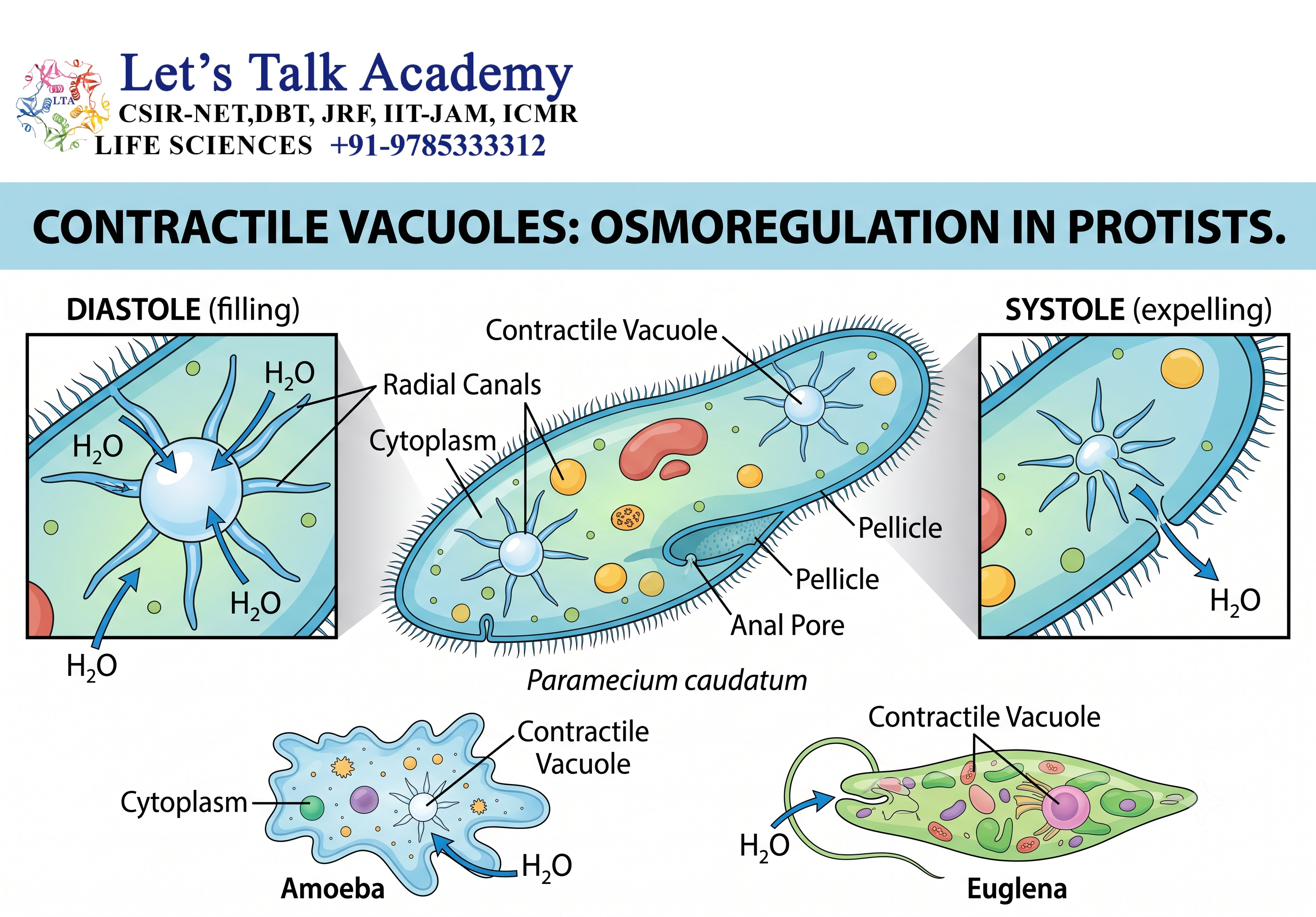
Contractile vacuoles are specialized structures that regulate water balance in many freshwater protists.
They are particularly important in organisms living in hypotonic environments.
Because water continuously enters such cells by osmosis, excess water must be removed.
The contractile vacuole performs this function.
Simplified process:
Water enters cell
↓
Water accumulates
↓
Contractile vacuole fills
↓
Vacuole contracts
↓
Water expelled outside
This process is known as osmoregulation.
9. Vacuoles and Osmoregulation
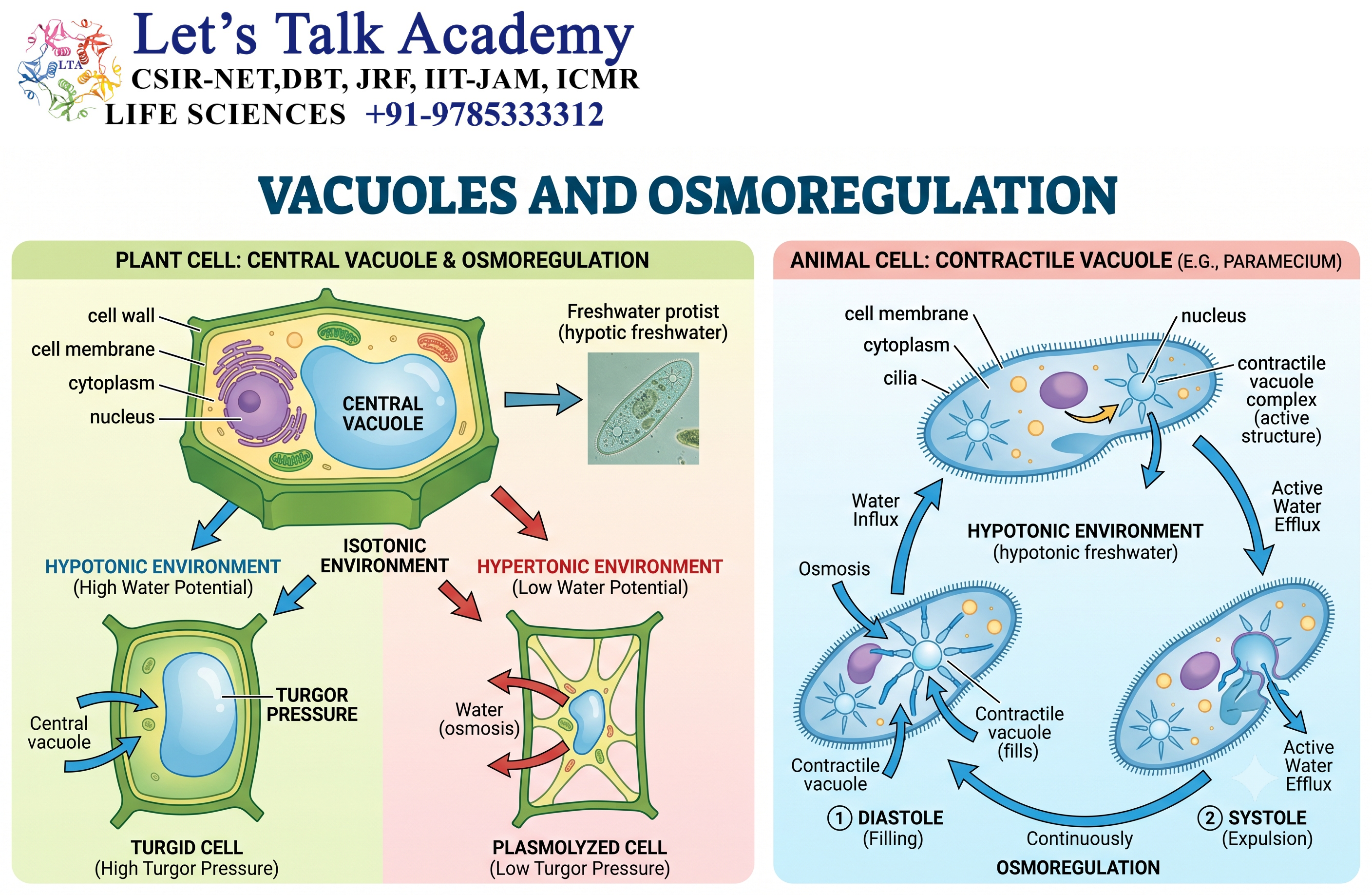
Osmoregulation refers to the control of water and solute balance within a cell.
Plant vacuoles contribute significantly to osmoregulation by controlling the concentration of dissolved substances.
The accumulation of ions and metabolites inside the vacuole influences the movement of water.
This allows the cell to maintain an appropriate internal water balance.
10. Vacuoles and Turgor Pressure
One of the most important functions of the plant vacuole is maintaining turgor pressure.
When water enters a plant cell, it accumulates largely in the vacuole.
The resulting internal pressure pushes the plasma membrane and cytoplasm against the cell wall.
This pressure is called turgor pressure.
Simplified relationship:
Water uptake
↓
Vacuolar expansion
↓
Pressure against cell wall
↓
Turgor pressure
↓
Cell rigidity and support
Turgor is essential for maintaining the upright structure of many non-woody plant tissues.
11. Vacuoles and Plant Cell Expansion
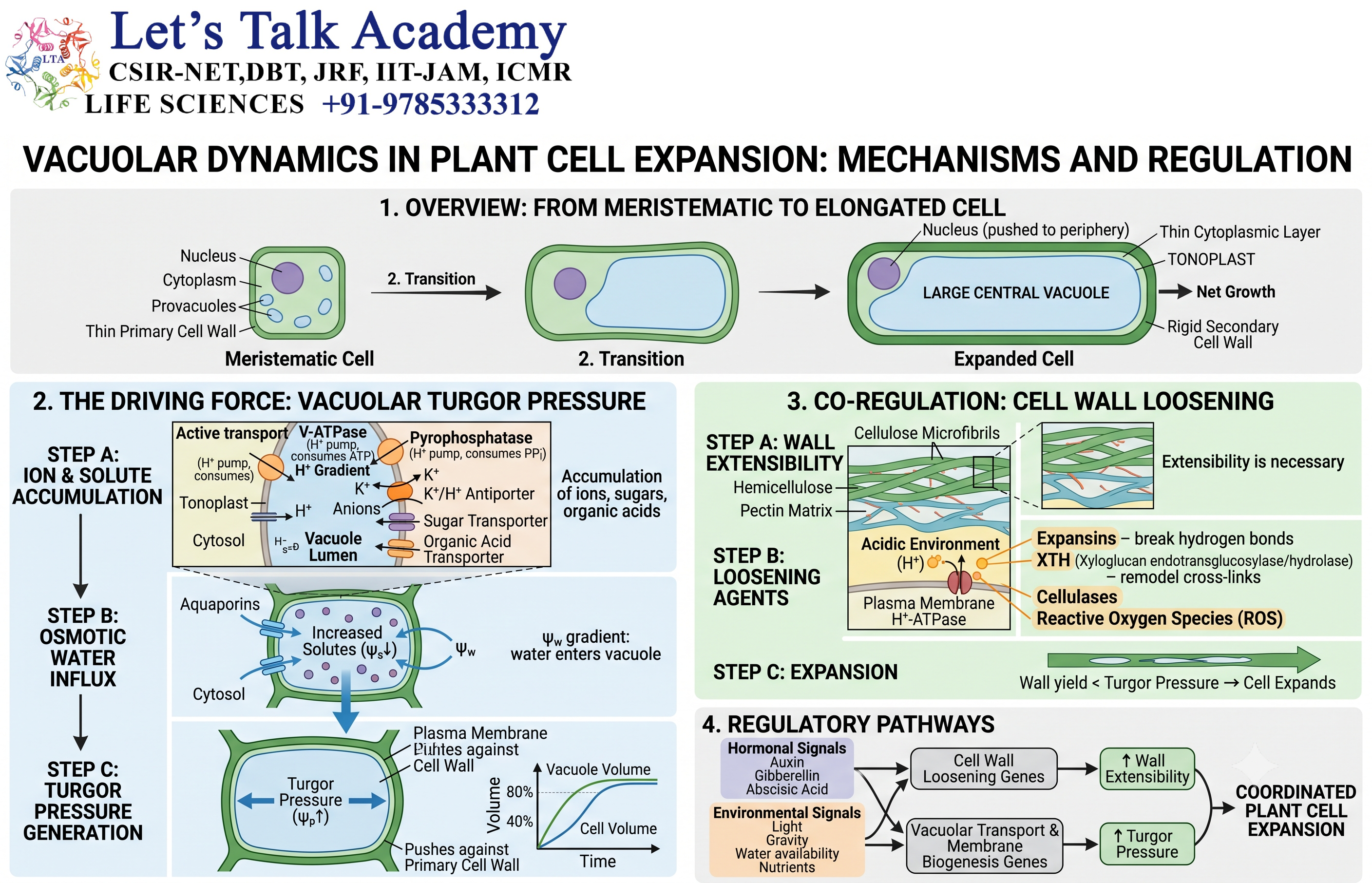
Plant cells cannot expand in the same manner as animal cells because they possess rigid cell walls.
Instead, cell expansion involves coordinated:
- Water uptake
- Vacuolar expansion
- Cell wall modification
- Membrane growth
- Cytoplasmic reorganization
The vacuole provides a major volume-expanding compartment.
Thus:
Vacuolar water accumulation → Increased internal pressure → Cell expansion
This mechanism is particularly important during plant growth.
12. Vacuolar Storage Function
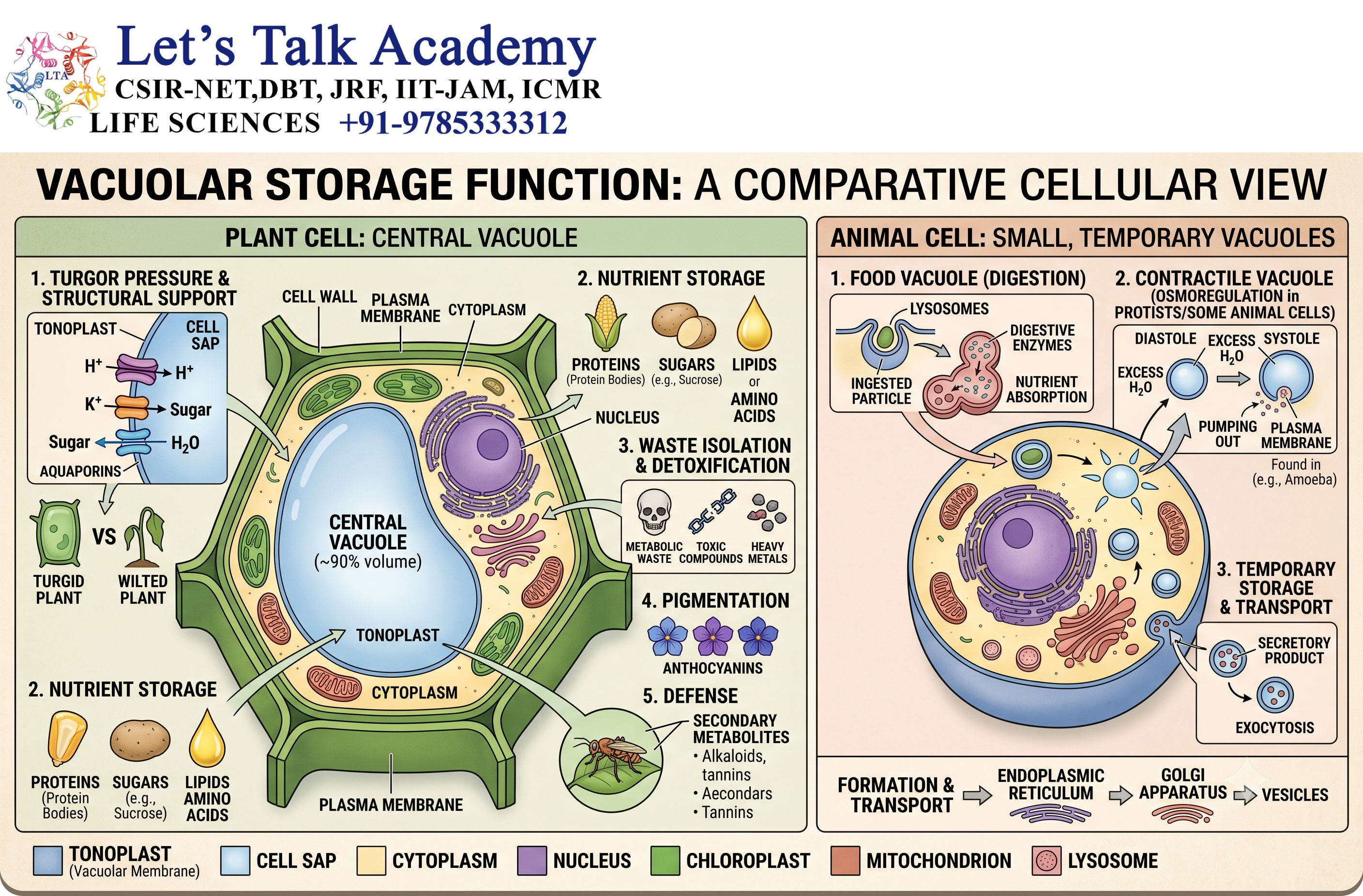
Vacuoles act as important storage compartments.
They can store:
- Sugars
- Amino acids
- Organic acids
- Ions
- Proteins
- Pigments
- Secondary metabolites
Storage allows the plant cell to separate these substances from the cytoplasm and regulate their availability.
13. Storage of Inorganic Ions
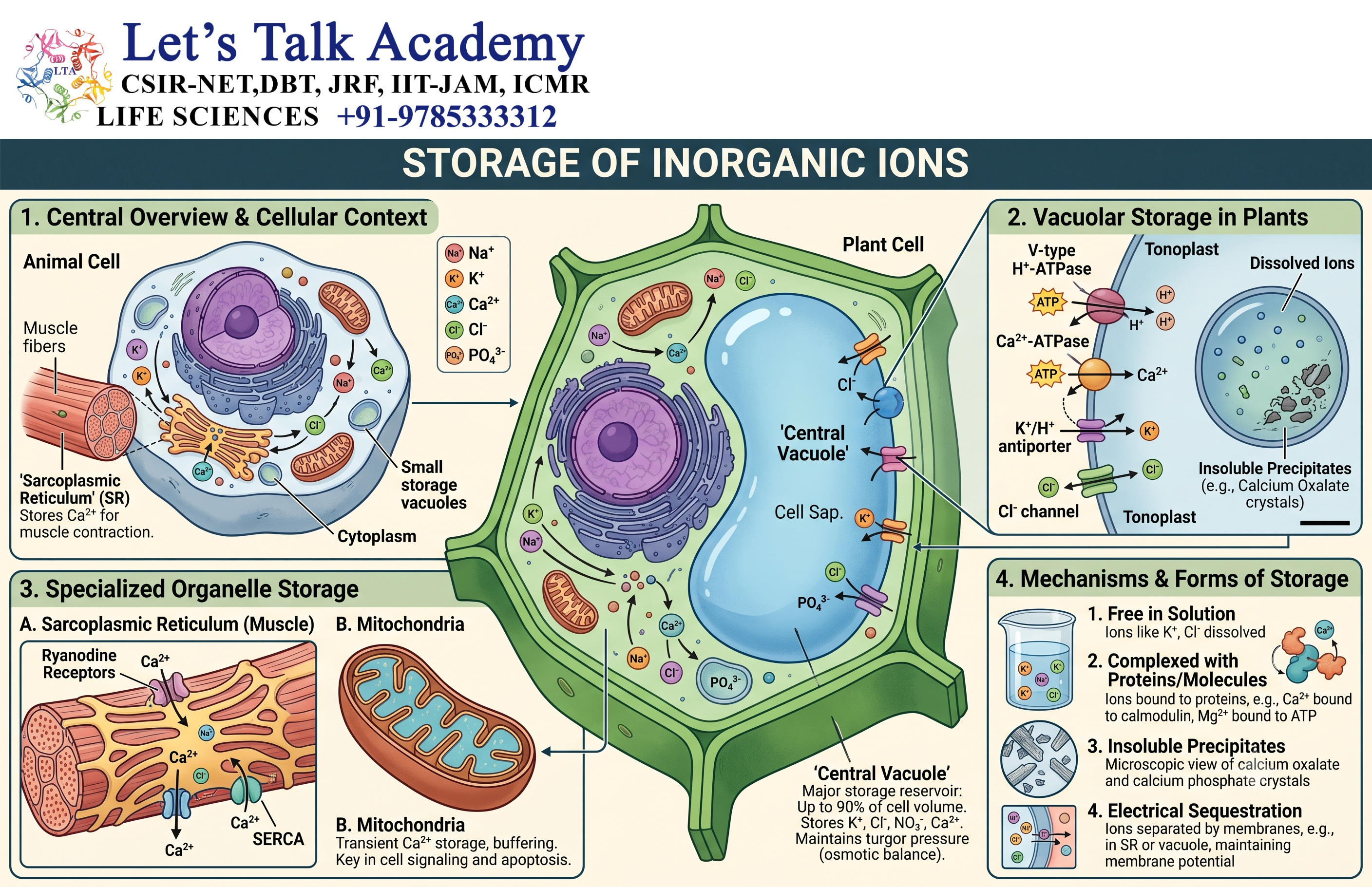
Vacuoles can accumulate ions such as:
- Potassium
- Calcium
- Magnesium
- Chloride
- Nitrate
- Phosphate
Ion sequestration is important for:
- Osmotic balance
- Nutrient storage
- Cytoplasmic ion homeostasis
- Stress tolerance
The tonoplast controls the movement of these ions.
14. Vacuoles as Protein Storage Compartments
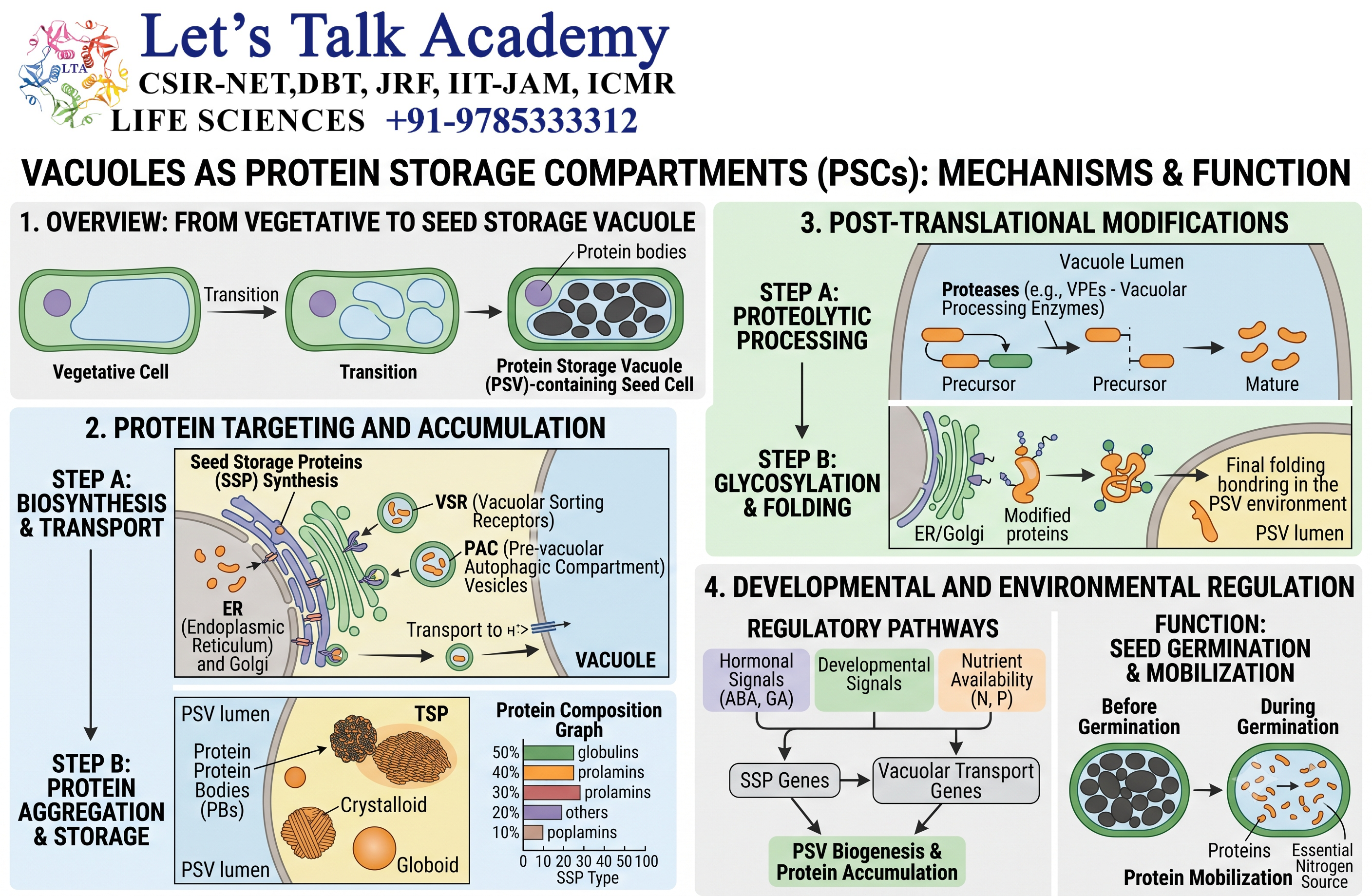
Some plant vacuoles are specialized for storing proteins.
These are commonly associated with seeds and storage tissues.
Proteins stored in vacuoles can serve as nutrient reserves that become available during germination and early plant development.
Such compartments are often referred to as protein storage vacuoles.
15. Vacuolar Storage of Sugars
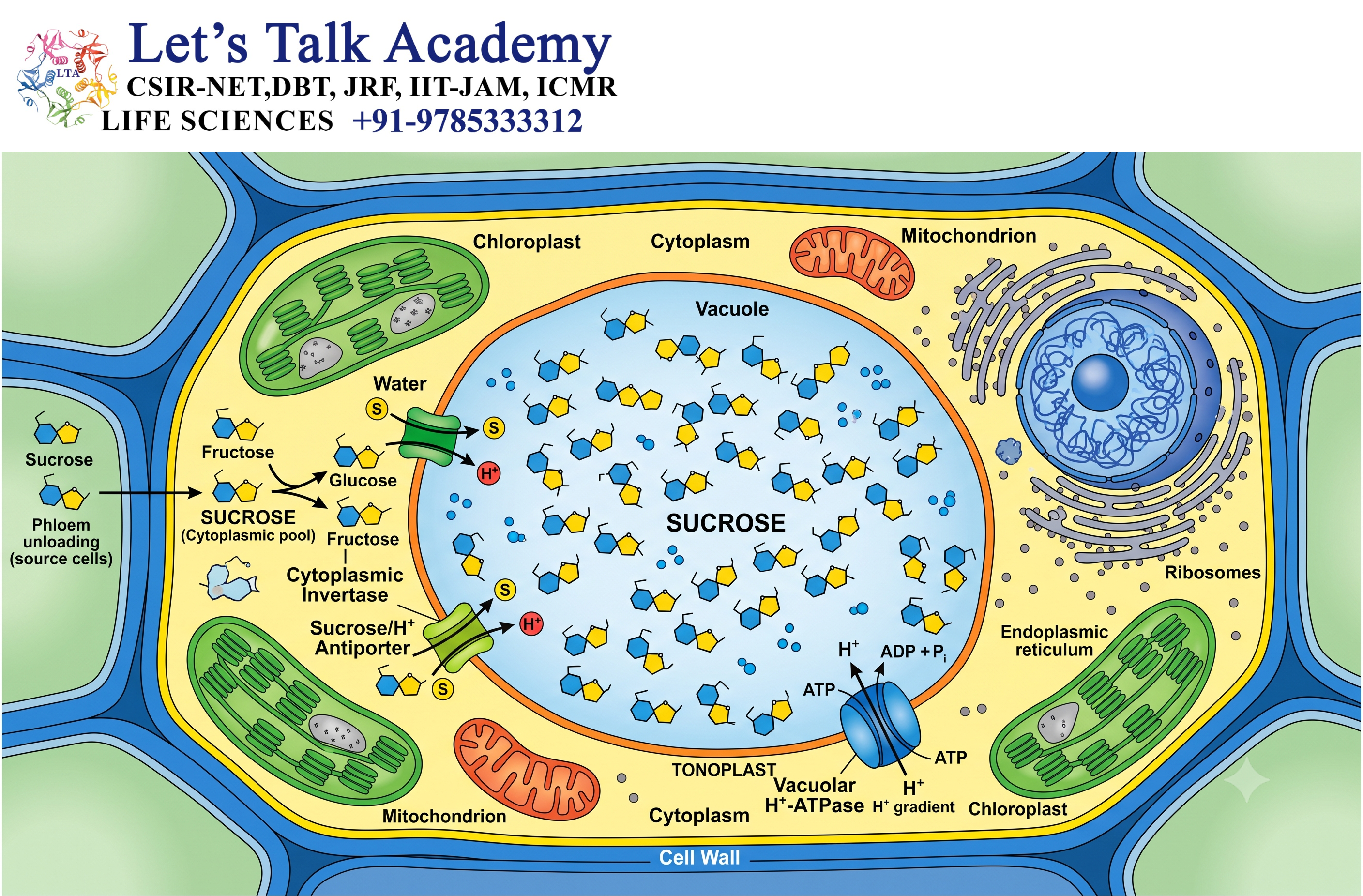
Vacuoles can accumulate soluble sugars.
Important examples include:
- Glucose
- Fructose
- Sucrose
Sugar accumulation can contribute to:
- Osmotic regulation
- Storage
- Fruit sweetness
- Metabolic regulation
The concentration of soluble sugars inside vacuoles can change significantly during fruit development and ripening.
16. Vacuoles and Pigments
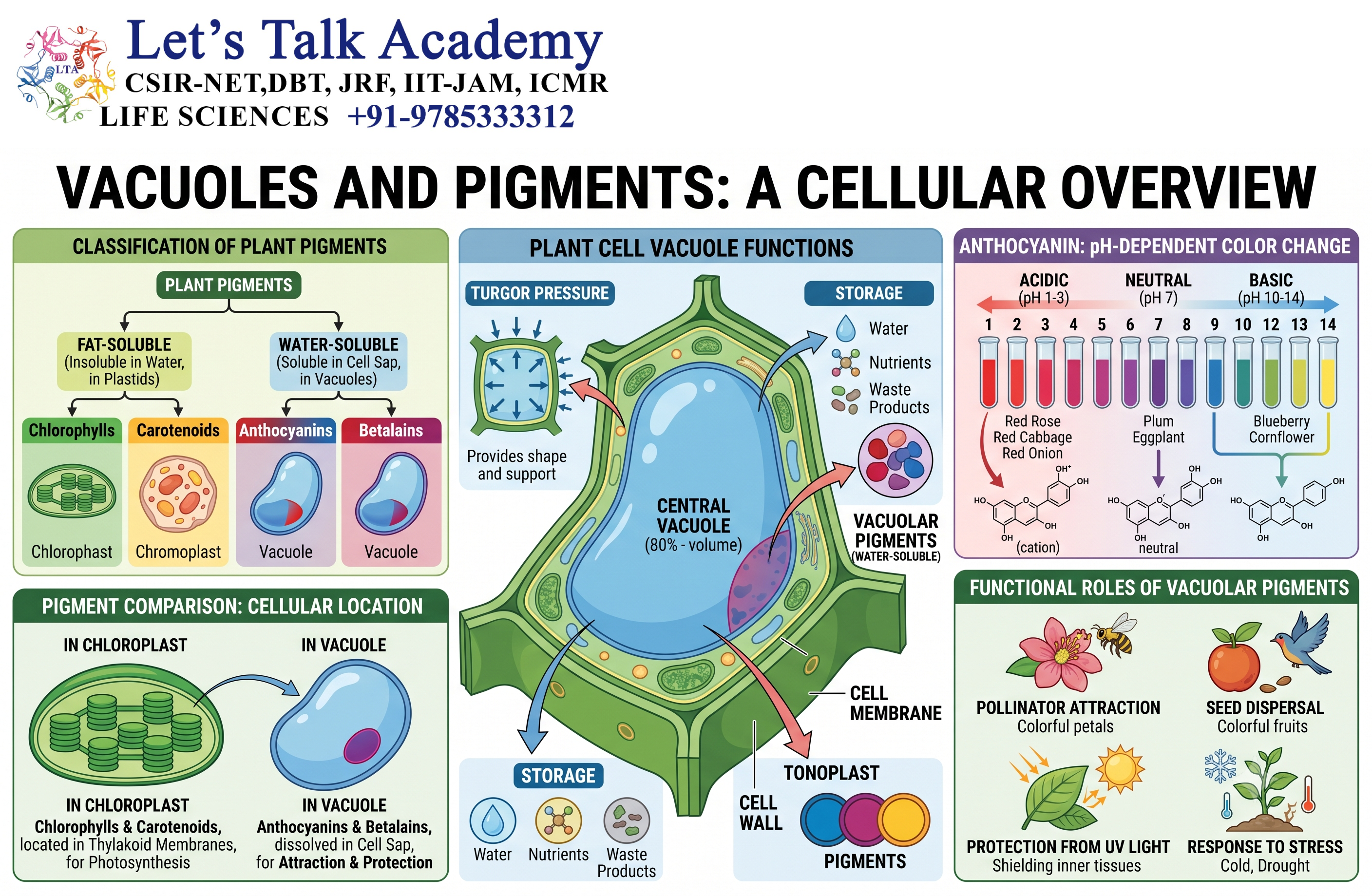
Some vacuoles contain pigments, particularly anthocyanins.
Anthocyanins are water-soluble pigments responsible for many red, purple, and blue colors in plant tissues.
They are often stored in the vacuolar lumen.
Thus:
Anthocyanin synthesis → Transport into vacuole → Vacuolar accumulation → Tissue coloration
Vacuolar pigmentation can contribute to:
- Flower coloration
- Fruit coloration
- Leaf coloration
- Attraction of pollinators
- Protection against environmental stress
17. Vacuoles and Secondary Metabolites
Vacuoles can store numerous secondary metabolites.
These include:
- Alkaloids
- Phenolic compounds
- Flavonoids
- Anthocyanins
- Tannins
- Certain terpenoid compounds
Sequestration of these compounds can protect the cytoplasm from their potentially harmful effects while allowing the plant to use them for defense or signaling.
18. Vacuoles in Plant Defense
Vacuoles contribute to plant defense through the storage and controlled release of defensive compounds.
These may include:
- Toxic metabolites
- Proteases
- Phenolic compounds
- Alkaloids
- Defense-related proteins
Some vacuolar enzymes and substrates remain separated until cellular damage occurs.
Following tissue disruption, they may interact and generate compounds that deter herbivores or pathogens.
19. Vacuoles and Detoxification
Vacuoles can act as sequestration compartments for potentially harmful substances.
They may accumulate:
- Excess ions
- Heavy metals
- Toxic metabolites
- Xenobiotic compounds
A simplified detoxification pathway is:
Toxic compound
↓
Recognition or modification
↓
Transport toward vacuole
↓
Vacuolar sequestration
↓
Reduced cytoplasmic toxicity
This mechanism is particularly important under environmental stress.
20. Vacuoles and Heavy Metal Sequestration
Plants exposed to excessive concentrations of certain metals can use vacuolar sequestration as one mechanism of tolerance.
Metal ions may be transported into the vacuole and complexed with suitable molecules.
This reduces their concentration in metabolically sensitive cytoplasmic compartments.
Vacuolar sequestration therefore contributes to cellular protection under metal stress.
21. Vacuoles and Cellular pH
Vacuoles can maintain an internal environment that differs significantly from the cytoplasm.
In many plant vacuoles, the lumen is acidic.
This acidity is generated and maintained partly by proton pumps in the tonoplast.
Two important proton-pumping systems include:
- Vacuolar H⁺-ATPase (V-ATPase)
- Vacuolar H⁺-pyrophosphatase (V-PPase)
These systems transport protons into the vacuolar lumen.
Simplified process:
ATP or pyrophosphate energy
↓
Proton transport
↓
H⁺ accumulation in vacuole
↓
Acidic vacuolar lumen
This acidic environment is important for several vacuolar functions.
22. Vacuoles as Digestive Compartments
Plant vacuoles can contain hydrolytic enzymes capable of breaking down cellular macromolecules.
These include enzymes involved in the degradation of:
- Proteins
- Nucleic acids
- Lipids
- Carbohydrates
This makes vacuoles functionally comparable in some respects to lysosomal compartments in animal cells.
However, plant vacuoles are structurally and functionally diverse and should not simply be regarded as plant equivalents of lysosomes.
23. Vacuoles and Autophagy
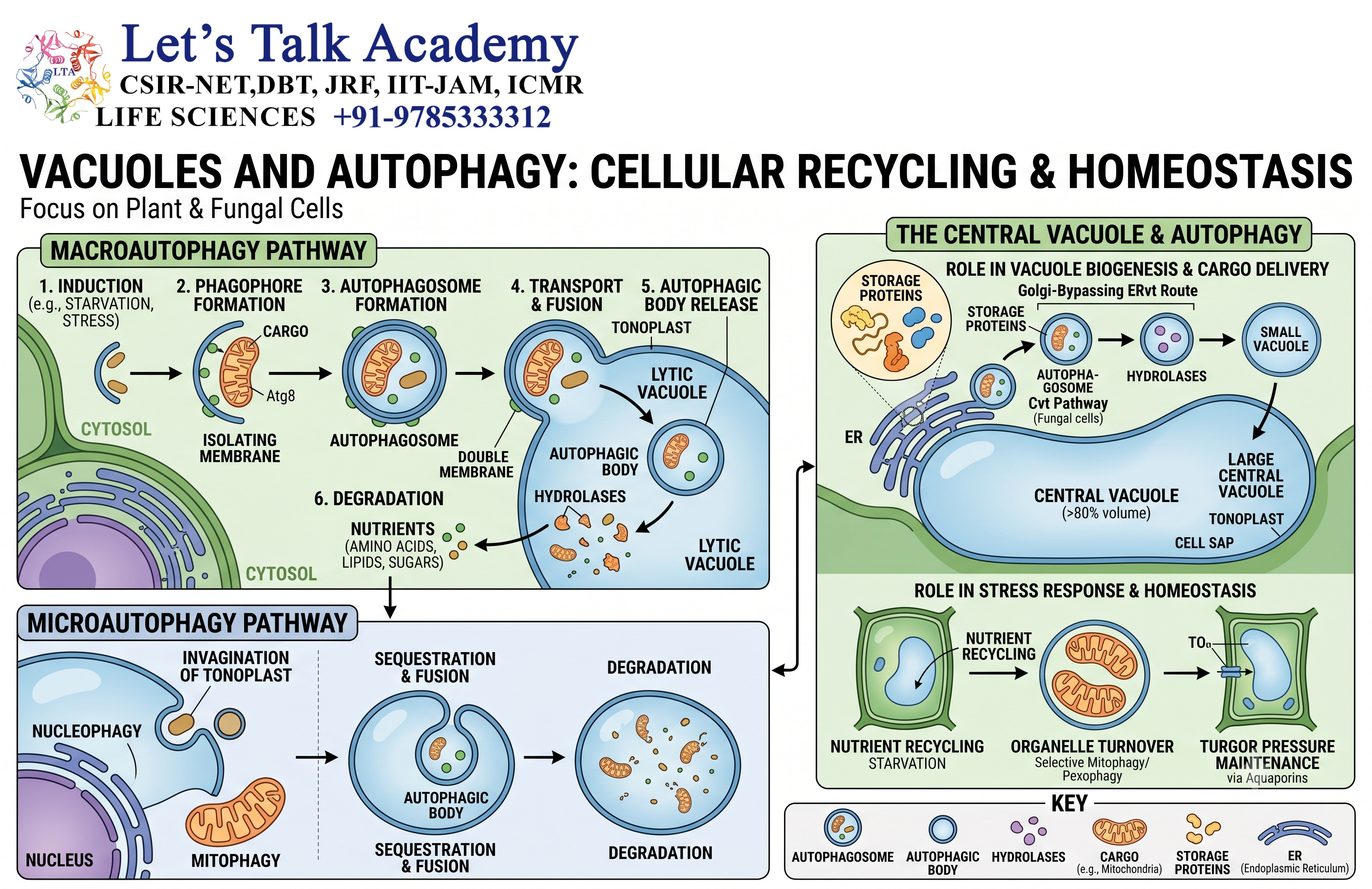
Vacuoles play an important role in autophagy, a cellular process through which damaged or unnecessary cellular components are delivered for degradation and recycling.
A simplified pathway is:
Damaged organelle
↓
Autophagosome formation
↓
Transport toward vacuole
↓
Fusion with vacuolar compartment
↓
Degradation
↓
Recycling of components
Autophagy is essential for maintaining cellular homeostasis, particularly during nutrient limitation and developmental transitions.
24. Vacuoles and Cellular Recycling
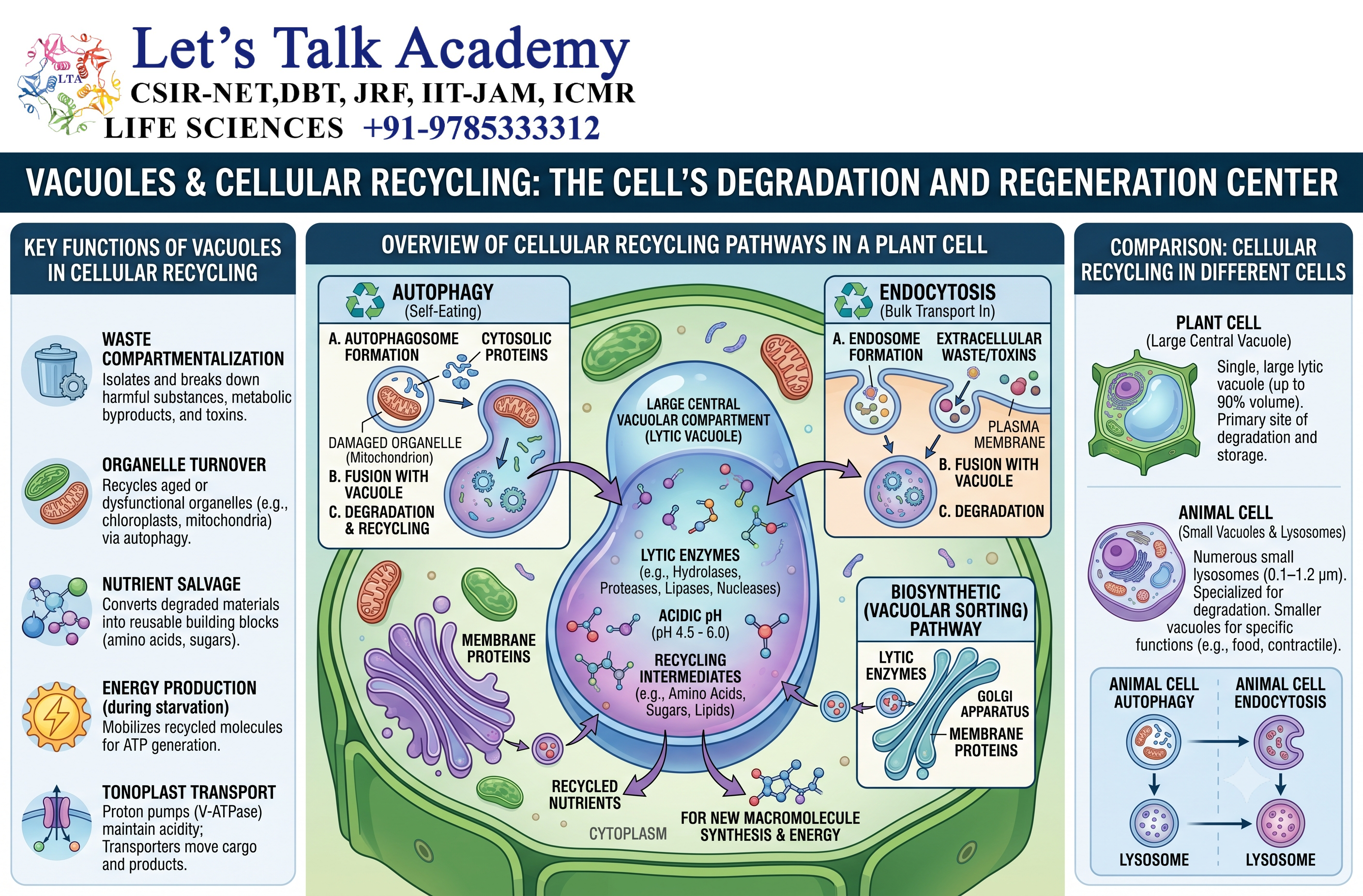
Degradation within vacuoles allows cells to recover useful molecules.
For example:
Protein degradation
↓
Amino acids
↓
Reused in metabolism and protein synthesis
Similarly, degradation of other macromolecules can release nutrients that are recycled by the cell.
Therefore, vacuoles function not only as waste-storage compartments but also as important recycling centers.
25. Vacuolar Membrane Transport
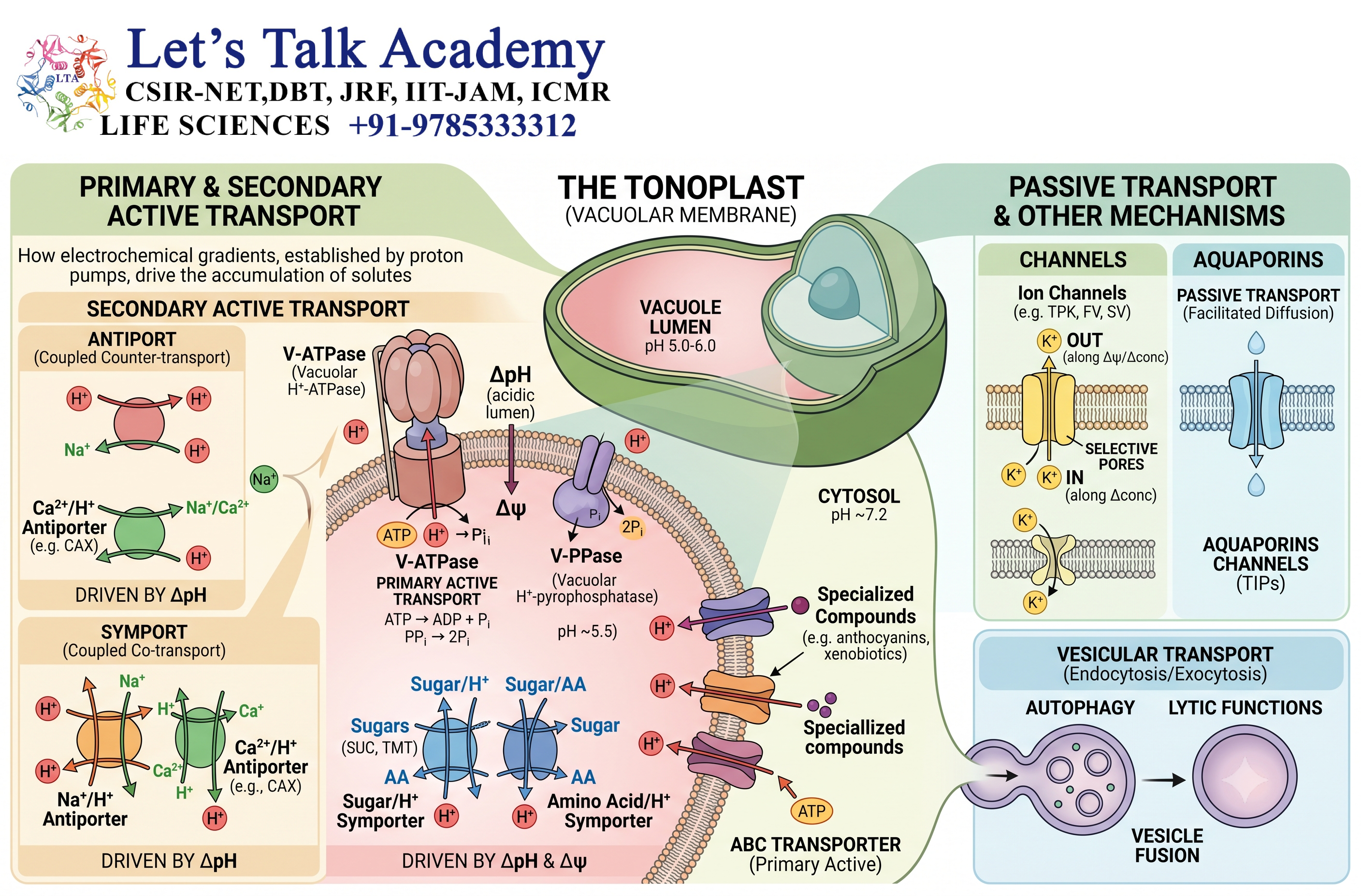
The tonoplast contains numerous transport proteins.
Major classes include:
- Ion channels
- Proton pumps
- Antiporters
- Symporters
- Aquaporins
- ABC-type transporters
These proteins regulate the movement of substances between the cytoplasm and vacuolar lumen.
25.1 Proton Pumps
Proton pumps establish the electrochemical gradient across the tonoplast.
25.2 Ion Channels
Ion channels allow selective movement of ions.
25.3 Antiporters
Antiporters exchange one substance for another, often using an existing electrochemical gradient.
25.4 Aquaporins
Aquaporins facilitate regulated water movement across membranes.
26. Vacuolar Acidification
Vacuolar acidity is a key physiological feature.
The proton gradient generated across the tonoplast can drive the transport of other substances.
The general relationship is:
Proton pumping → H⁺ gradient → Membrane potential and pH gradient → Secondary transport
This mechanism allows cells to accumulate specific ions and metabolites inside vacuoles.
27. Vacuolar pH and Pigment Color
The pH of the vacuole can influence the appearance of certain pigments.
Anthocyanin coloration, for example, can vary depending on the chemical environment of the vacuole.
Therefore, changes in vacuolar pH can influence visible plant pigmentation.
28. Vacuoles and Calcium Storage
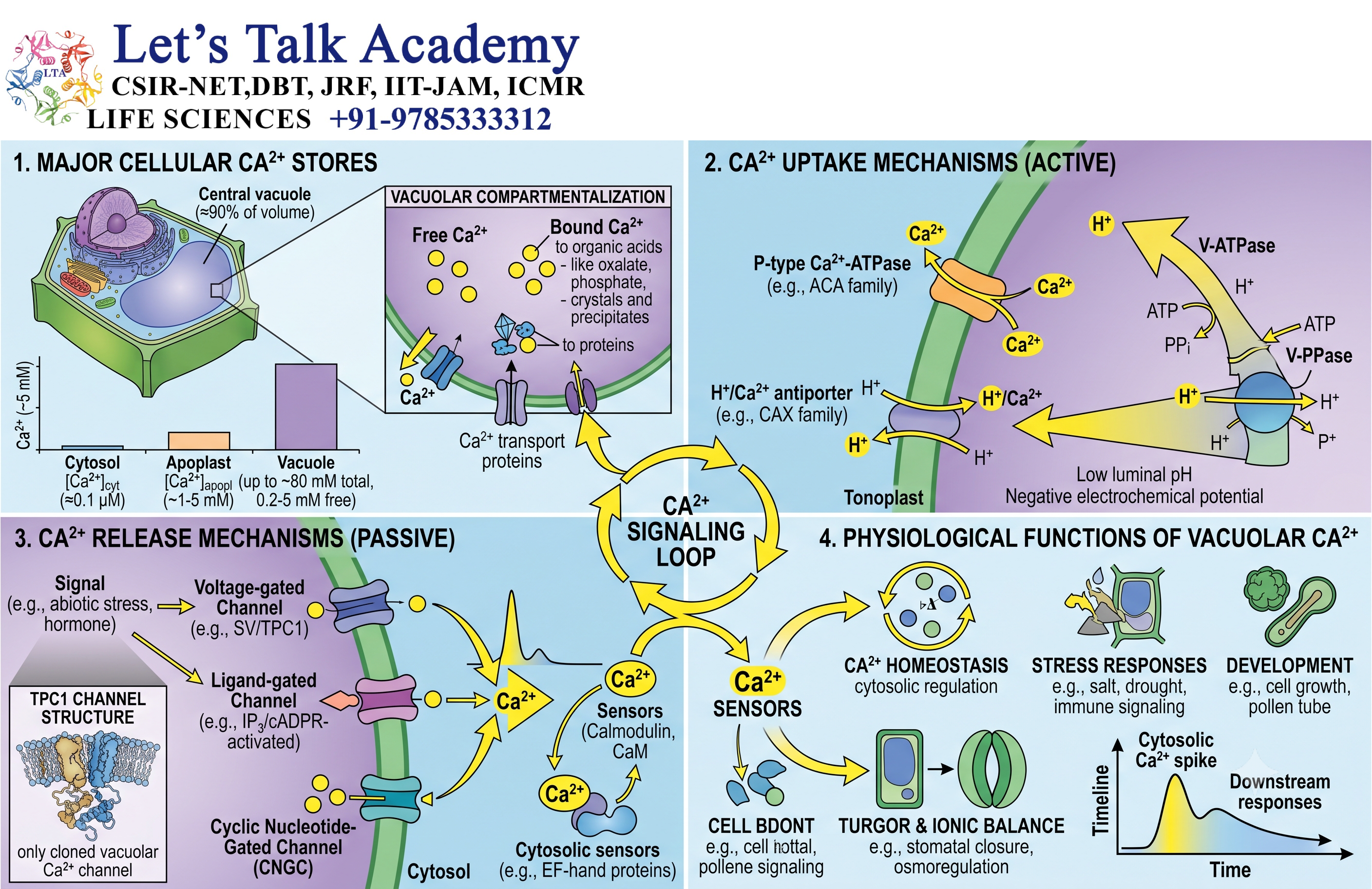
Vacuoles can function as important intracellular reservoirs of calcium.
Calcium is a major signaling molecule in plant cells.
Changes in cytosolic calcium concentration can act as signals during:
- Stress responses
- Hormonal signaling
- Development
- Defense
- Environmental responses
Vacuolar calcium storage helps regulate cytoplasmic calcium concentrations.
29. Vacuoles and Nutrient Homeostasis
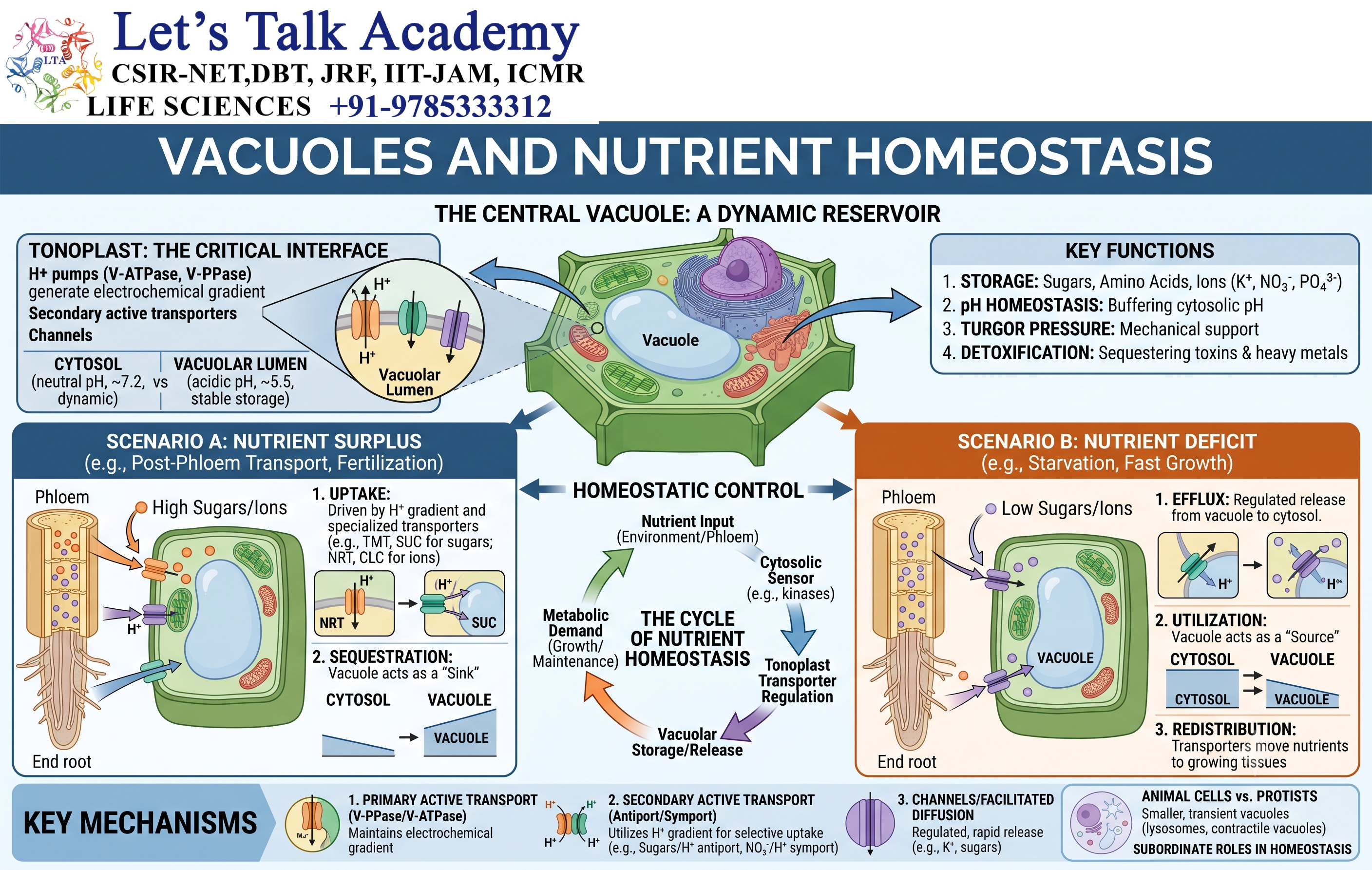
Vacuoles contribute to the homeostasis of several nutrients.
They can temporarily store nutrients and release them according to cellular requirements.
This is particularly important when nutrient availability changes.
For example:
Nutrient uptake
↓
Vacuolar storage
↓
Controlled release
↓
Cellular utilization
This provides metabolic flexibility.
30. Vacuoles During Nutrient Stress
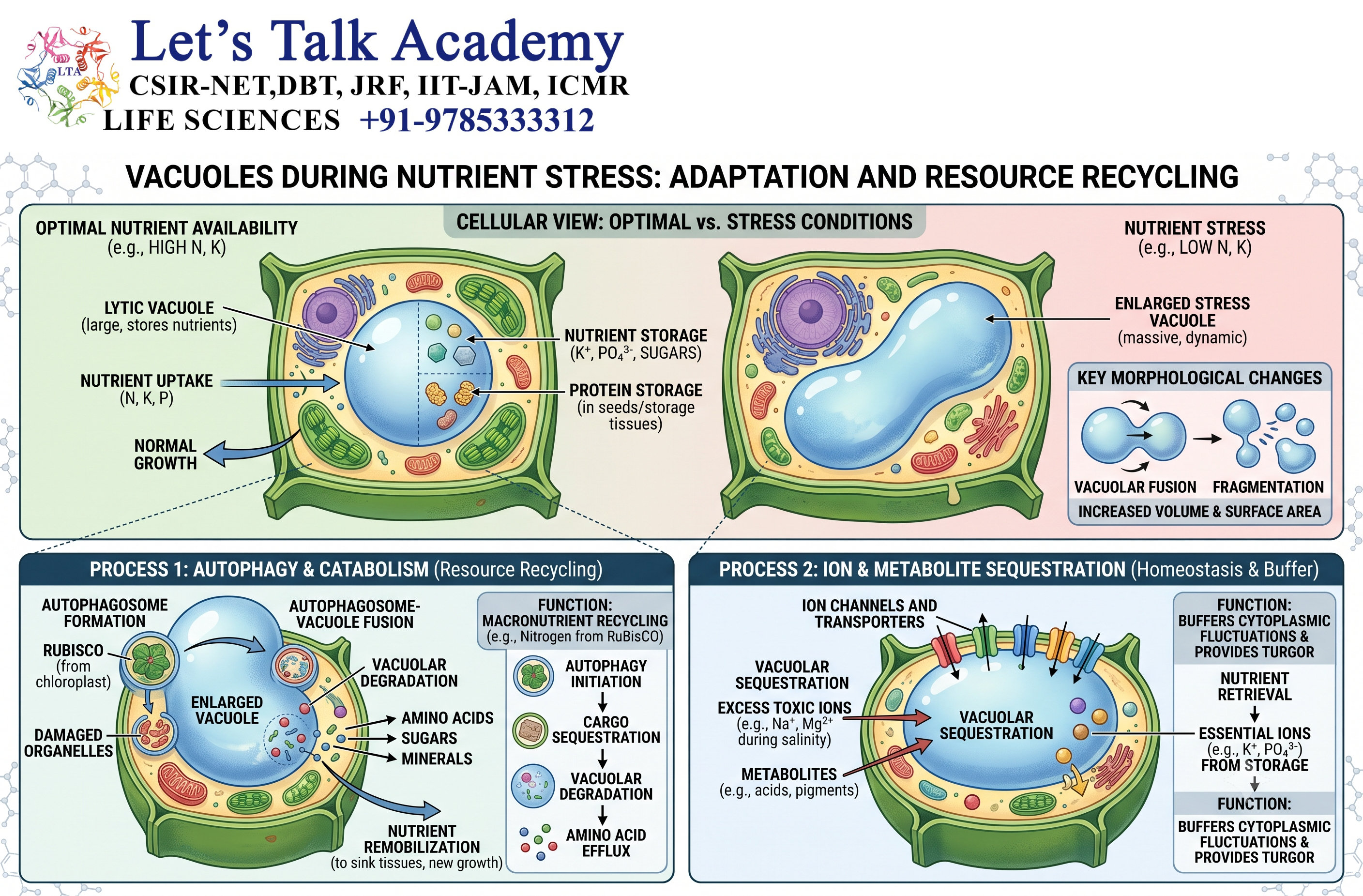
Under nutrient limitation, vacuoles can participate in nutrient remobilization.
Stored compounds may be degraded and released to support essential cellular processes.
Autophagy can contribute to this process by delivering cellular components to the vacuole for degradation.
Thus, vacuoles become especially important during periods of nutrient scarcity.
31. Vacuoles and Senescence
During plant senescence, vacuoles participate in the degradation and recycling of cellular components.
Senescence involves extensive remodeling of cellular structures.
Vacuoles contribute to:
- Protein degradation
- Nutrient recycling
- Removal of damaged components
- Redistribution of nutrients to developing tissues
This allows plants to recover valuable resources from aging tissues.
32. Lytic and Storage Vacuoles
Plant vacuoles can be broadly distinguished functionally into different categories.
32.1 Lytic Vacuoles
Lytic vacuoles are rich in hydrolytic enzymes and participate in degradation.
Their functions include:
- Macromolecule degradation
- Autophagy
- Cellular recycling
32.2 Protein Storage Vacuoles
Protein storage vacuoles are specialized for storing proteins and other reserve materials.
They are particularly important in seeds.
However, the distinction between vacuolar types is not always absolute, and vacuolar identity can change during development.
33. Vacuoles in Seeds
Seeds often contain specialized storage compartments.
Protein storage vacuoles can accumulate:
- Storage proteins
- Mineral nutrients
- Other reserve substances
During germination, these stored materials are mobilized to support the developing embryo.
Simplified pathway:
Seed maturation
↓
Reserve accumulation
↓
Germination
↓
Vacuolar mobilization
↓
Nutrient release
↓
Seedling growth
34. Vacuoles in Fruit Development
Vacuoles have major roles in fruit development.
They can accumulate:
- Sugars
- Organic acids
- Pigments
- Aroma-related compounds
- Secondary metabolites
These compounds influence important fruit characteristics such as:
- Sweetness
- Acidity
- Color
- Flavor
- Aroma
Therefore, vacuolar metabolism contributes significantly to fruit quality.
35. Vacuoles and Organic Acids
Organic acids can accumulate inside plant vacuoles.
Examples include:
- Malic acid
- Citric acid
- Oxalic acid
These compounds can contribute to:
- Cellular pH regulation
- Osmotic balance
- Metabolism
- Fruit acidity
Vacuolar storage allows organic acids to accumulate without disrupting cytoplasmic metabolism.
36. Vacuoles and Water Relations
Water movement is central to vacuolar function.
The vacuole acts as a major intracellular water reservoir.
Changes in water availability can alter:
- Vacuolar volume
- Turgor pressure
- Cell expansion
- Stomatal behavior
- Plant growth
Under water deficit, maintaining appropriate osmotic conditions can help cells retain water and preserve cellular function.
37. Vacuoles During Drought Stress
During drought, plants undergo substantial changes in water relations.
Vacuoles can contribute to drought adaptation through:
- Osmolyte accumulation
- Ion redistribution
- Water retention
- Adjustment of cellular osmotic potential
Accumulation of compatible solutes can help maintain water uptake and cellular hydration.
38. Vacuoles and Salt Stress
High salt concentrations can cause ionic and osmotic stress.
Plants may sequester excess sodium and other ions into vacuoles.
A simplified mechanism is:
High external salt
↓
Ion entry
↓
Ion transport
↓
Vacuolar sequestration
↓
Reduced cytoplasmic ion toxicity
This is one important component of plant salt tolerance.
39. Vacuoles and Cell Homeostasis
Vacuoles contribute to cellular homeostasis by regulating:
- Water
- Ions
- pH
- Metabolites
- Waste materials
- Nutrients
- Toxic compounds
Thus, the vacuole acts as a major buffering and regulatory compartment.
40. Vacuolar Trafficking
Proteins and other molecules are transported to vacuoles through intracellular trafficking pathways.
Major components include:
Endoplasmic reticulum
↓
Golgi apparatus
↓
Trans-Golgi network
↓
Endosomal/prevacuolar compartments
↓
Vacuole
Specific sorting signals ensure that proteins reach the appropriate cellular compartment.
41. Protein Sorting to Vacuoles
Proteins destined for vacuoles are synthesized in the endoplasmic reticulum and transported through the secretory pathway.
They may contain specific vacuolar sorting determinants that direct them toward vacuolar compartments.
This ensures that hydrolytic enzymes, storage proteins, and other vacuolar proteins reach their correct destinations.
42. Vacuoles and Endomembrane System
Vacuoles are an important component of the endomembrane system.
They interact functionally with:
- Endoplasmic reticulum
- Golgi apparatus
- Endosomes
- Plasma membrane
- Transport vesicles
This network enables continuous movement of membranes and cargo throughout the cell.
43. Vacuoles and Lysosomes: Comparison
Although plant vacuoles can perform lysosome-like degradation, they are not identical to animal lysosomes.
| Feature | Plant vacuoles | Animal lysosomes |
|---|---|---|
| Typical size | Often very large | Usually smaller |
| Major membrane | Tonoplast | Lysosomal membrane |
| Storage role | Major function | Limited |
| Turgor regulation | Major role in plants | Not applicable |
| Degradation | Yes | Major function |
| Osmoregulation | Important | More limited |
| Pigment storage | Can occur | Generally not a major role |
| Protein storage | Can occur | Not a typical major role |
44. Vacuoles and Cell Death
Vacuolar processes can contribute to forms of plant programmed cell death.
Vacuolar enzymes may participate in the breakdown of cellular components during developmental or stress-related cell death.
Vacuolar collapse and release of hydrolytic activities can be important events in certain plant cell death pathways.
45. Vacuoles and Plant Development
Vacuoles change dynamically during plant development.
They are involved in:
- Cell differentiation
- Cell expansion
- Tissue development
- Seed maturation
- Fruit development
- Senescence
Therefore, vacuoles should be considered dynamic developmental organelles rather than static storage spaces.
46. Vacuolar Dynamics
Vacuoles continuously undergo:
- Fusion
- Fission
- Expansion
- Shrinkage
- Membrane remodeling
- Changes in internal composition
These processes allow vacuolar function to adapt to cellular requirements.
A simplified concept is:
Cellular demand
↓
Vacuolar remodeling
↓
Change in volume/composition
↓
Functional adaptation
47. Vacuoles and Cellular Signaling
Vacuoles influence signaling by controlling the concentration of ions and metabolites.
Calcium, proton gradients, and other molecules associated with vacuolar transport can influence signaling pathways.
Therefore, vacuolar function is connected to broader cellular responses.
48. Evolutionary Significance of Vacuoles
Vacuoles are highly diverse across eukaryotic organisms.
Their evolutionary diversification has allowed different organisms to use vacuolar compartments for:
- Digestion
- Storage
- Osmoregulation
- Detoxification
- Nutrient recycling
- pH regulation
In plants, the expansion of vacuolar functions has been particularly important for adapting to terrestrial environments.
49. Major Functions of Vacuoles
The functions of vacuoles can be summarized as:
Storage
→ Water, ions, sugars, proteins, pigments, metabolites
Osmoregulation
→ Control of water and solute balance
Turgor maintenance
→ Provides internal pressure for cell rigidity
Cell expansion
→ Supports plant cell enlargement
Digestion
→ Hydrolysis of cellular components
Autophagy
→ Degradation and recycling of cellular materials
Detoxification
→ Sequestration of harmful substances
Defense
→ Storage of defensive compounds and enzymes
pH regulation
→ Maintenance of acidic vacuolar environment
Nutrient recycling
→ Release of nutrients during stress and development
50. Comparison of Important Vacuolar Types
| Type | Major role | Example/Occurrence |
|---|---|---|
| Central vacuole | Storage, turgor, homeostasis | Mature plant cells |
| Lytic vacuole | Degradation | Plant cells |
| Protein storage vacuole | Storage of proteins | Seeds |
| Contractile vacuole | Osmoregulation | Freshwater protists |
| Specialized storage vacuole | Accumulation of specific metabolites | Specialized plant tissues |


