
1. Introduction
Chloroplasts are specialized membrane-bound organelles found primarily in the cells of plants and algae. They are the major sites of photosynthesis, the process through which light energy is converted into chemical energy. Chloroplasts capture solar energy and use it to synthesize carbohydrates from carbon dioxide and water, releasing oxygen as a by-product.
The chloroplast is not simply a photosynthetic compartment. It is a highly organized metabolic organelle involved in the synthesis of fatty acids, amino acids, pigments, nucleotides, hormones, and several other important cellular compounds. It also participates in cellular signaling and communicates extensively with the nucleus and other organelles.
The ability of chloroplasts to perform photosynthesis depends on their internal organization. Their membranes contain photosynthetic pigments, electron carriers, and ATP-producing machinery, while the surrounding aqueous matrix contains enzymes required for carbon fixation and other metabolic reactions.
The structure and function of chloroplasts provide a remarkable example of how compartmentalization increases the efficiency of cellular metabolism.
2. Discovery and General Characteristics of Chloroplasts
2.1 Historical Background
The green color of plant tissues was recognized long before the detailed structure of chloroplasts was understood. Early microscopic observations revealed green bodies within plant cells, which were later identified as chloroplasts.
The term chloroplast is derived from Greek words associated with green coloration and formation. As microscopy and cell biology developed, scientists demonstrated that these structures were distinct organelles surrounded by membranes.
The study of chloroplasts eventually contributed to the development of the endosymbiotic theory, which explains their evolutionary origin.
2.2 General Characteristics
Chloroplasts generally possess the following characteristics:
- They are semiautonomous organelles.
- They are surrounded by a double-membrane envelope.
- They contain their own DNA.
- They contain ribosomes capable of synthesizing some chloroplast proteins.
- They divide by a process resembling binary fission.
- Their internal membranes form a specialized thylakoid system.
- Chlorophyll and other photosynthetic pigments are located mainly in thylakoid membranes.
- The stroma contains enzymes involved in carbon fixation.
- They are involved in several metabolic pathways in addition to photosynthesis.
The number and morphology of chloroplasts vary according to cell type, plant species, developmental stage, and environmental conditions.
3. Structure of Chloroplast
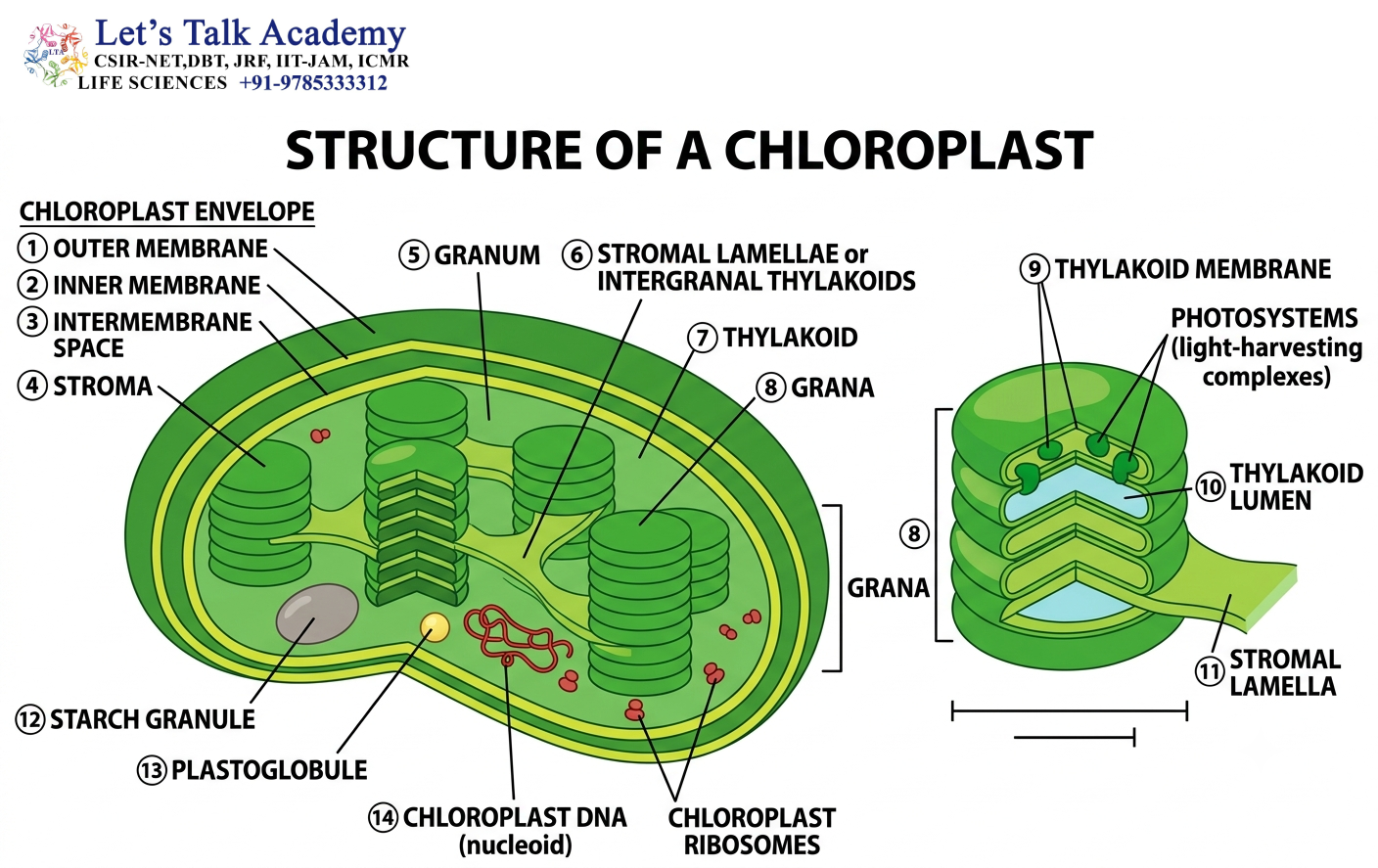
A typical chloroplast is approximately several micrometers in length and is usually lens-shaped, oval, spherical, or discoid depending on the organism and cell type.
The major structural components of a chloroplast include:
- Outer membrane
- Intermembrane space
- Inner membrane
- Stroma
- Thylakoid membranes
- Grana
- Stroma lamellae
- Chloroplast DNA
- Ribosomes
- Plastoglobuli
- Starch grains
3.1 Chloroplast Envelope
The chloroplast envelope consists of two membranes:
- Outer membrane
- Inner membrane
Between them is a narrow intermembrane space.
The envelope separates the chloroplast from the cytoplasm and controls the movement of molecules into and out of the organelle.
3.2 Outer Chloroplast Membrane
The outer membrane is relatively permeable to many small molecules and ions because it contains channel-forming proteins known as porins.
However, larger molecules and proteins require specific transport mechanisms to cross the chloroplast envelope.
The outer membrane therefore provides both structural protection and controlled communication between the chloroplast and cytoplasm.
3.3 Intermembrane Space
The intermembrane space is located between the outer and inner envelope membranes.
Although it is relatively narrow, it serves as an important transitional compartment during the transport of metabolites and proteins into the chloroplast.
3.4 Inner Chloroplast Membrane
The inner membrane is more selective than the outer membrane. It contains numerous transport proteins that regulate the movement of metabolites, ions, and other substances between the cytosol and chloroplast stroma.
The inner membrane also contains protein-translocation machinery involved in importing proteins synthesized in the cytoplasm.
3.5 Stroma
The stroma is the aqueous internal matrix enclosed by the inner chloroplast membrane.
It contains:
- Enzymes
- Chloroplast DNA
- Ribosomes
- RNA
- ATP
- NADPH
- Sugars and metabolic intermediates
- Starch grains
- Plastoglobuli
- Various ions and cofactors
The stroma is particularly important for the reactions that use ATP and NADPH generated by the light-dependent reactions.
3.6 Thylakoid Membrane
Thylakoids are flattened membrane-bound sacs located within the chloroplast.
The thylakoid membrane contains:
- Chlorophyll
- Carotenoids
- Photosystem I
- Photosystem II
- Electron transport components
- Cytochrome b6f complex
- ATP synthase
- Associated proteins
The thylakoid membrane is therefore the primary site of the light-dependent reactions of photosynthesis.
3.7 Thylakoid Lumen
The interior of a thylakoid is called the thylakoid lumen.
During the light-dependent reactions, protons accumulate in the lumen. This creates an electrochemical proton gradient across the thylakoid membrane.
ATP synthase uses this proton gradient to synthesize ATP.
3.8 Grana
Stacks of thylakoids are called grana or granum in the singular.
The stacking arrangement increases the organization and functional efficiency of the photosynthetic machinery.
Photosystem II and associated proteins are particularly enriched in the appressed regions of grana membranes.
3.9 Stroma Lamellae
The individual grana are interconnected by unstacked membrane regions called stroma lamellae or intergranal thylakoids.
Stroma lamellae contain substantial amounts of Photosystem I and ATP synthase and provide continuity between different grana stacks.
3.10 Plastoglobuli
Plastoglobuli are lipid-rich structures associated with chloroplast membranes.
They contain various lipids and lipid-associated proteins and participate in membrane lipid metabolism, pigment metabolism, and stress-related processes.
3.11 Starch Grains
Chloroplasts can temporarily store photosynthetic products as starch.
During periods of active photosynthesis, carbon fixed through the Calvin cycle can be converted into starch within the chloroplast. This starch can later be degraded to provide carbon and energy.
4. Molecular Organization of Chloroplast Membranes
The chloroplast contains several distinct membrane systems with specialized functions.
4.1 Membrane Compartmentalization
The chloroplast is divided into:
- Outer envelope membrane
- Inner envelope membrane
- Thylakoid membrane
- Thylakoid lumen
This compartmentalization allows different biochemical reactions to occur simultaneously under controlled conditions.
4.2 Photosynthetic Protein Complexes
The thylakoid membrane contains several large protein complexes.
The major complexes are:
- Photosystem II
- Cytochrome b6f complex
- Photosystem I
- ATP synthase
These complexes operate in a coordinated manner during the light-dependent reactions.
5. Photosynthetic Pigments
Photosynthetic pigments absorb light energy and initiate the process of photosynthesis.
5.1 Chlorophyll
The principal photosynthetic pigment in higher plants is chlorophyll a.
Chlorophyll b is an accessory pigment that broadens the range of wavelengths that can be absorbed.
Chlorophyll molecules contain a porphyrin-like ring system with a centrally coordinated magnesium ion and a hydrophobic phytol tail.
5.2 Chlorophyll a
Chlorophyll a is directly involved in the reaction centers of both major photosystems.
It absorbs light strongly in the blue and red regions of the visible spectrum.
5.3 Chlorophyll b
Chlorophyll b functions mainly as an accessory pigment.
It transfers absorbed excitation energy to chlorophyll a, thereby increasing the efficiency of light harvesting.
5.4 Carotenoids
Carotenoids include:
- Carotenes
- Xanthophylls
They absorb wavelengths of light that chlorophylls absorb less efficiently.
Carotenoids also protect the photosynthetic apparatus from photooxidative damage by participating in mechanisms that dissipate excess excitation energy.
6. Photosystems
Photosystems are organized pigment-protein complexes located in thylakoid membranes.
The two major photosystems are:
- Photosystem II
- Photosystem I
6.1 Photosystem II
Photosystem II is primarily responsible for extracting electrons from water.
Its reaction center contains a special chlorophyll a pair known as P680 because it absorbs maximally near 680 nm.
Photosystem II catalyzes water oxidation, producing:
- Electrons
- Protons
- Molecular oxygen
The oxygen released during oxygenic photosynthesis originates from water.
6.2 Water-Splitting Complex
The oxygen-evolving complex associated with Photosystem II contains a manganese-containing catalytic cluster.
It accumulates oxidizing equivalents and facilitates the sequential extraction of electrons from water.
The overall reaction can be represented as:
2H₂O → O₂ + 4H⁺ + 4e⁻
This reaction is one of the defining features of oxygenic photosynthesis.
6.3 Photosystem I
Photosystem I contains a reaction-center chlorophyll pair known as P700 because its absorption maximum is near 700 nm.
Photosystem I receives electrons from the electron transport chain and uses light energy to raise them to a high-energy state.
The energized electrons ultimately participate in the reduction of NADP⁺ to NADPH.
7. Light-Dependent Reactions
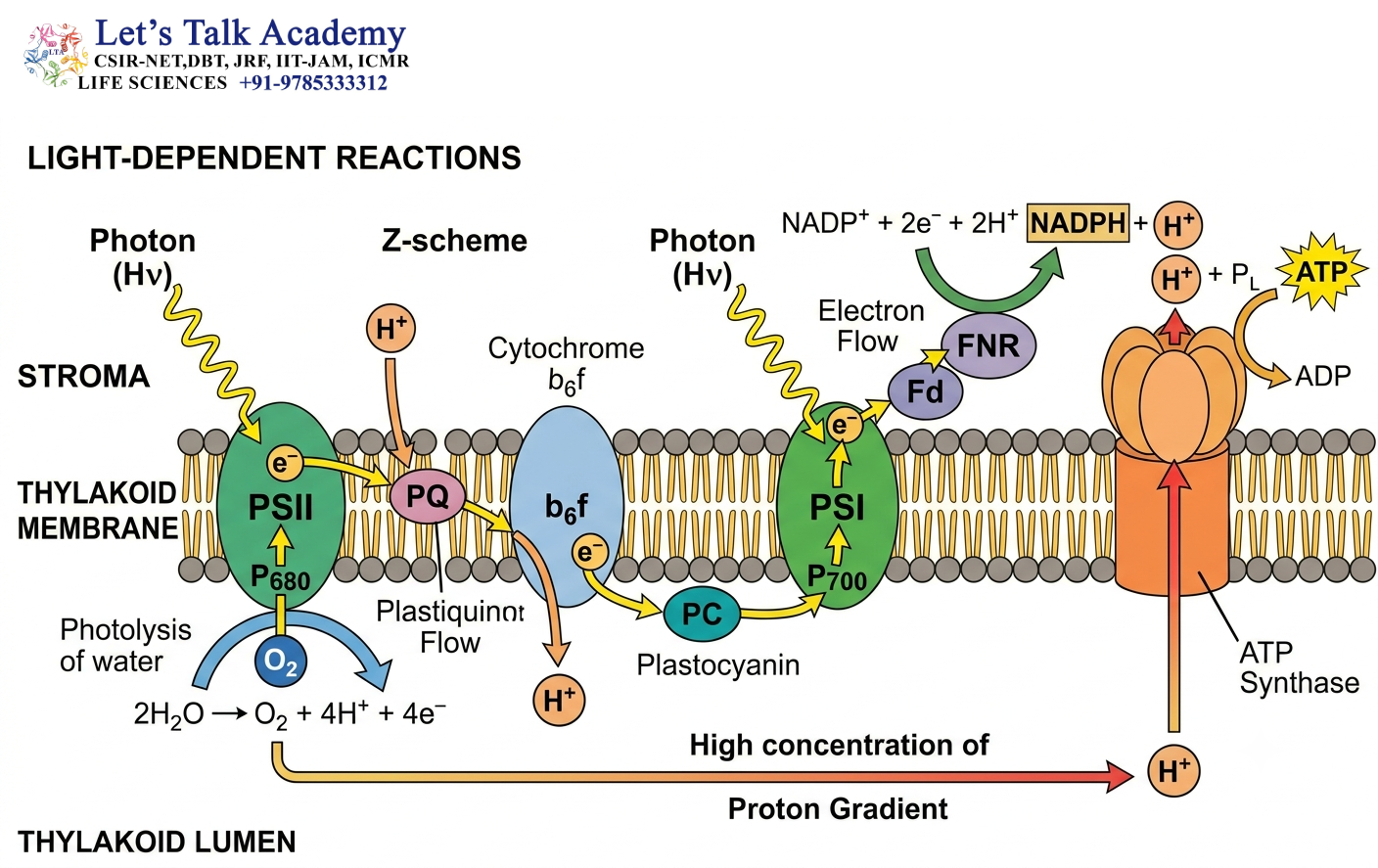
The light-dependent reactions occur mainly in the thylakoid membranes.
They convert light energy into chemical energy in the form of:
- ATP
- NADPH
Oxygen is released as a by-product of water oxidation.
7.1 Absorption of Light
When chlorophyll and accessory pigments absorb photons, electrons within the pigment molecules become excited.
The excitation energy is transferred through pigment molecules until it reaches the reaction center.
7.2 Electron Transport
Electrons move through a sequence of electron carriers.
A simplified pathway is:
Water → Photosystem II → plastoquinone → cytochrome b6f → plastocyanin → Photosystem I → ferredoxin → NADP⁺
Electron movement is coupled to proton translocation and contributes to the formation of a proton gradient.
7.3 Proton Gradient
Protons accumulate inside the thylakoid lumen.
This produces a proton-motive force across the thylakoid membrane.
The stored electrochemical energy is then used by ATP synthase.
7.4 Photophosphorylation
The synthesis of ATP using light-driven electron transport is called photophosphorylation.
Protons move down their electrochemical gradient through ATP synthase.
The energy released drives:
ADP + Pi → ATP
8. Cyclic and Non-Cyclic Electron Flow
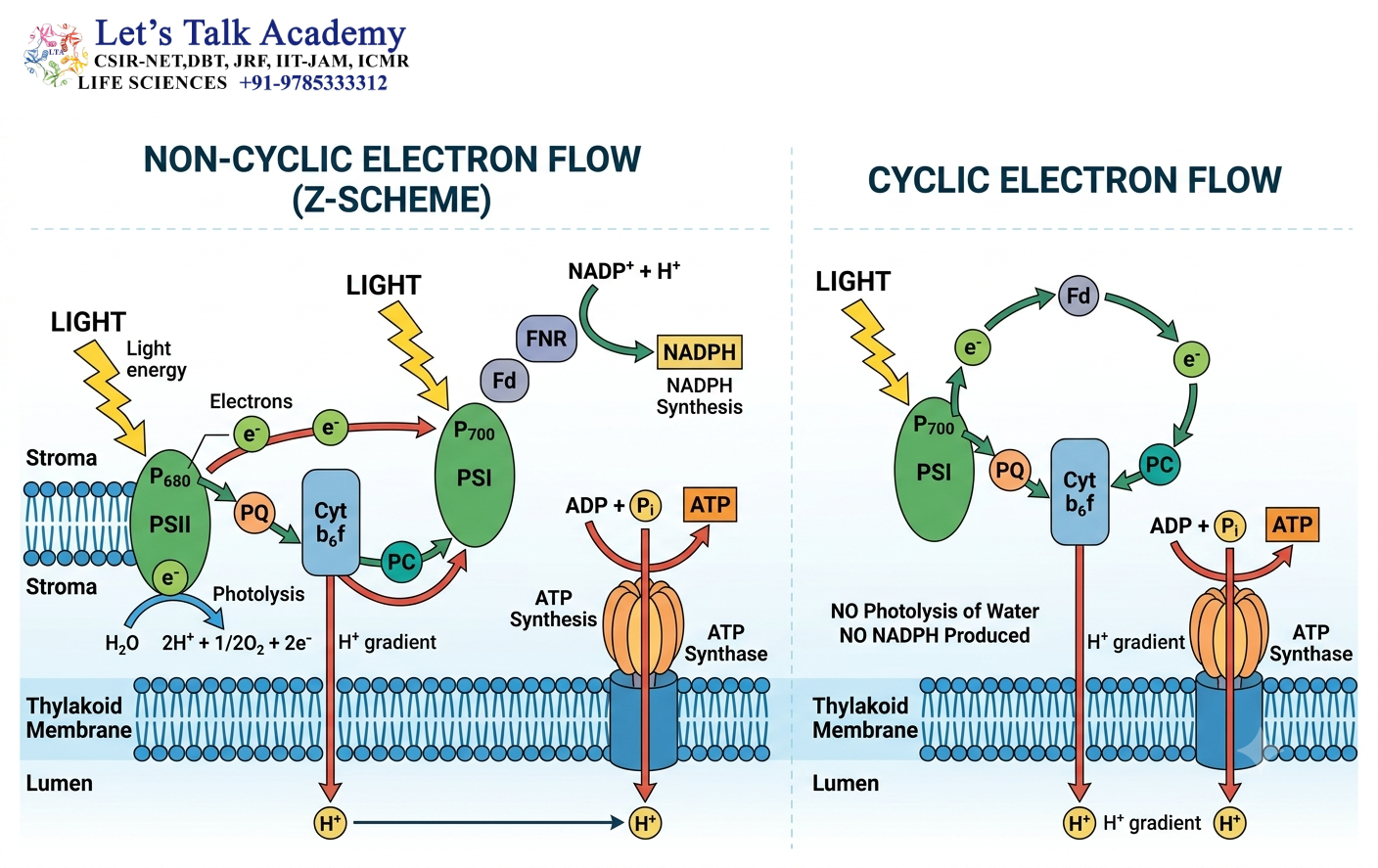
8.1 Non-Cyclic Electron Flow
Non-cyclic electron flow involves both Photosystem II and Photosystem I.
It results in the production of:
- ATP
- NADPH
- O₂
Electrons originate from water and ultimately contribute to NADPH formation.
8.2 Cyclic Electron Flow
Cyclic electron flow primarily involves Photosystem I.
Electrons are recycled through components of the electron transport chain rather than reducing NADP⁺.
The major result is additional ATP production without direct production of NADPH or oxygen.
Cyclic electron flow helps balance the ATP and NADPH requirements of carbon fixation.
9. Calvin-Benson Cycle

The Calvin-Benson cycle occurs in the chloroplast stroma.
It uses ATP and NADPH generated by the light-dependent reactions to convert inorganic carbon into carbohydrate precursors.
The cycle can be divided into three major phases:
- Carbon fixation
- Reduction
- Regeneration of RuBP
9.1 Carbon Fixation
Carbon dioxide is incorporated into an organic molecule through the action of ribulose-1,5-bisphosphate carboxylase/oxygenase (Rubisco).
Rubisco catalyzes the reaction between CO₂ and ribulose-1,5-bisphosphate (RuBP).
The unstable intermediate formed subsequently produces molecules of 3-phosphoglycerate.
9.2 Reduction Phase
3-phosphoglycerate is converted into a higher-energy phosphorylated compound using ATP.
NADPH then provides reducing power, resulting in the formation of glyceraldehyde-3-phosphate.
9.3 Regeneration Phase
Most of the glyceraldehyde-3-phosphate produced is used to regenerate RuBP.
This allows the cycle to continue fixing additional carbon dioxide.
9.4 Rubisco
Rubisco is one of the most abundant enzymes on Earth.
It has both carboxylase and oxygenase activities.
Its oxygenase activity contributes to photorespiration, particularly under conditions where oxygen concentration is relatively high and carbon dioxide availability is limited.
10. Photorespiration
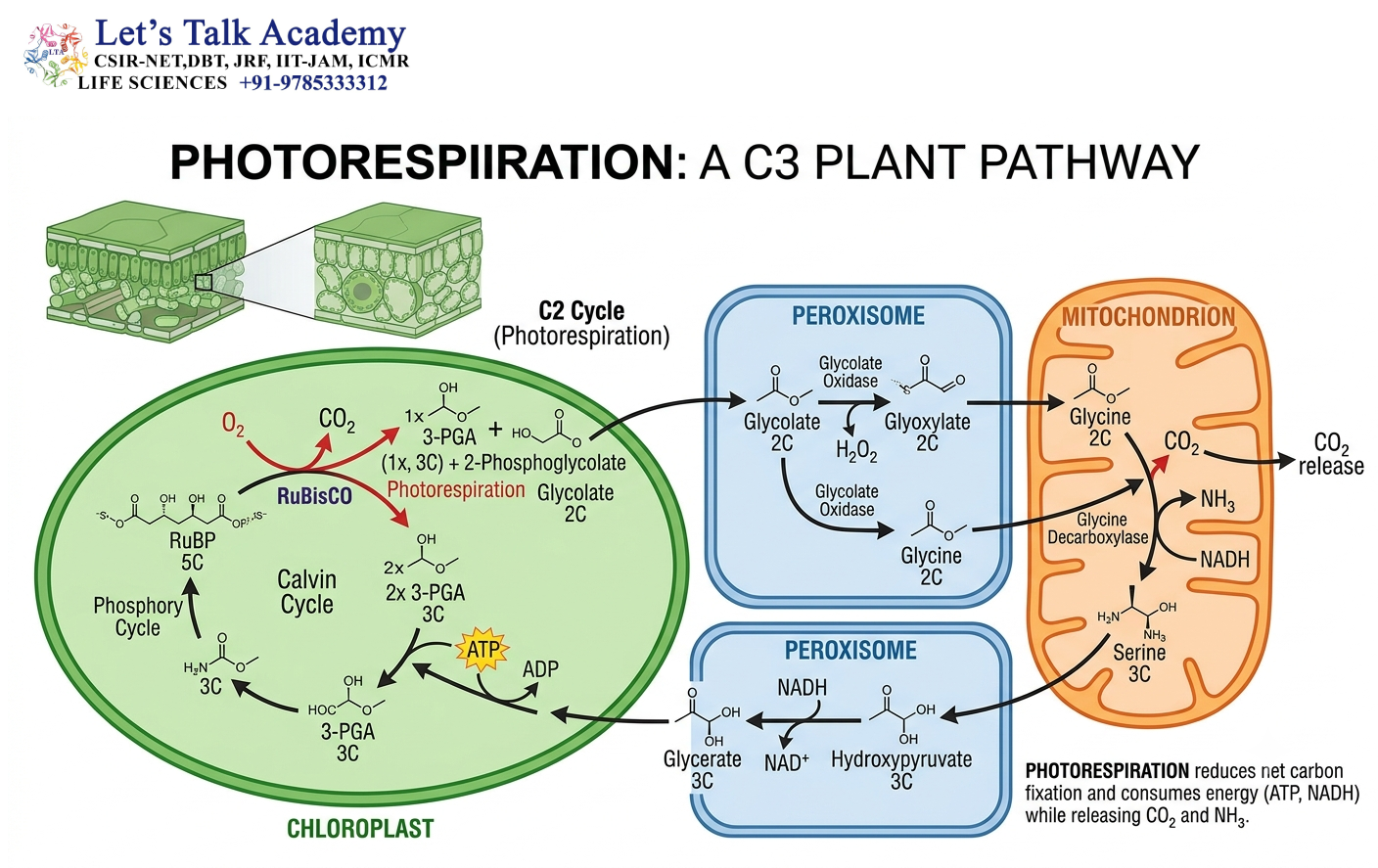
Photorespiration is a metabolic pathway associated with the oxygenase activity of Rubisco.
When Rubisco reacts with oxygen instead of carbon dioxide, a two-carbon compound is produced that cannot directly continue through the Calvin cycle.
Photorespiration involves coordinated reactions among:
- Chloroplasts
- Peroxisomes
- Mitochondria
Although photorespiration consumes energy and results in carbon loss, it also performs important metabolic and protective functions.
11. C4 Photosynthesis
Some plants have evolved mechanisms that concentrate carbon dioxide around Rubisco.
In C4 plants, initial carbon fixation occurs through phosphoenolpyruvate carboxylase, producing four-carbon compounds.
These compounds are transported to specialized cells where CO₂ is released and used by Rubisco.
This arrangement reduces photorespiration and is particularly advantageous under:
- High temperature
- High light intensity
- Low internal CO₂ concentration
Examples include maize and sugarcane.
12. CAM Photosynthesis
Crassulacean acid metabolism (CAM) is another adaptation for carbon fixation under water-limited conditions.
CAM plants generally:
- Take up CO₂ at night.
- Fix CO₂ into organic acids.
- Store these acids in vacuoles.
- Release CO₂ during the day.
- Use the released CO₂ in the Calvin cycle.
This reduces daytime stomatal opening and therefore decreases water loss.
13. Chloroplast Genetic System
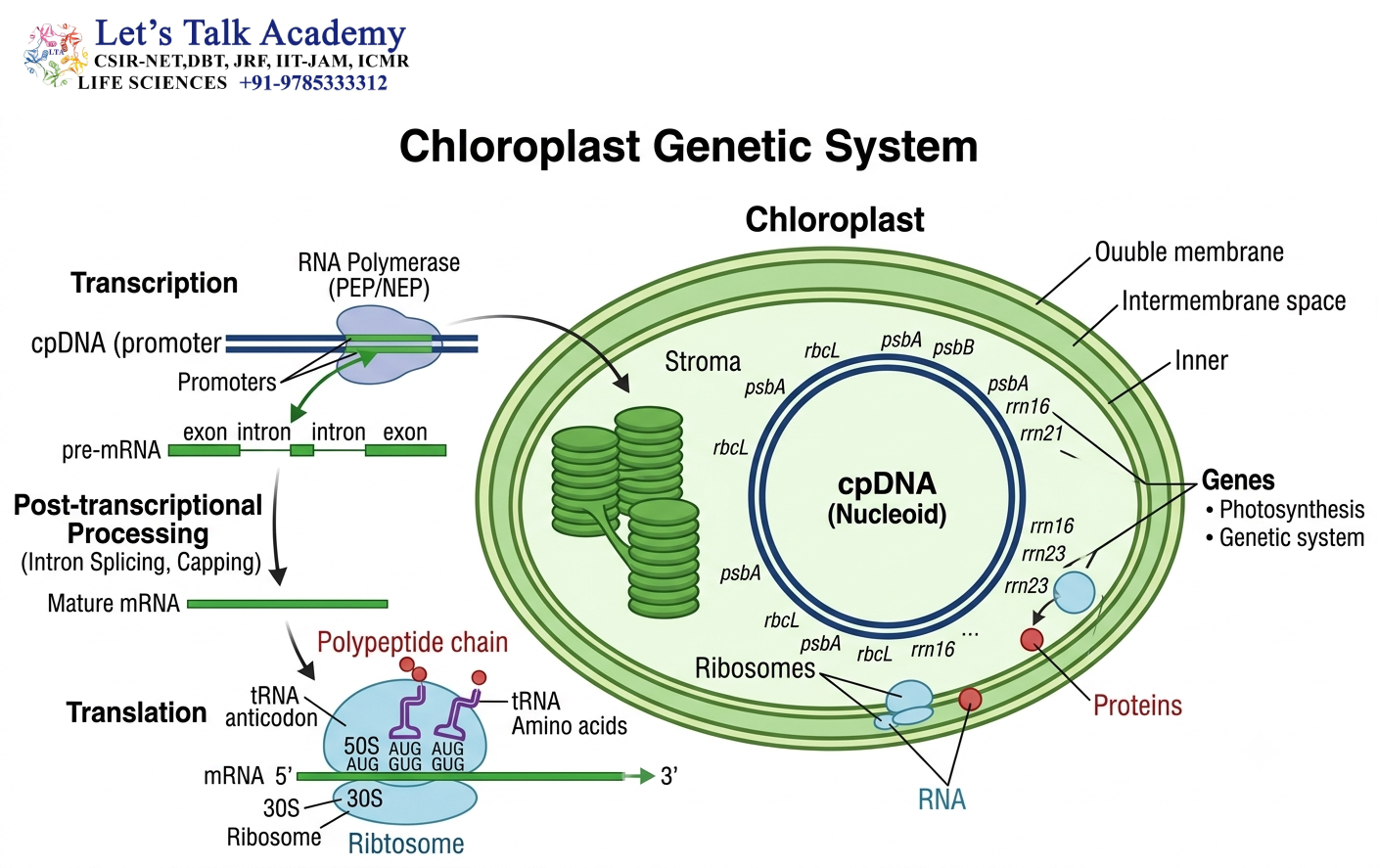
One of the most important characteristics of chloroplasts is that they possess their own genetic material.
13.1 Chloroplast DNA
Chloroplast DNA is generally circular and occurs in multiple copies within the organelle.
The chloroplast genome contains genes encoding some:
- Ribosomal RNAs
- Transfer RNAs
- Ribosomal proteins
- Photosynthetic proteins
- Components involved in gene expression
However, the chloroplast genome does not encode all proteins required for chloroplast function.
13.2 Semiautonomous Nature
Chloroplasts are described as semiautonomous because they possess their own DNA and protein-synthesizing machinery but remain highly dependent on nuclear genes.
A large majority of chloroplast proteins are encoded by nuclear DNA, synthesized in the cytoplasm, and imported into chloroplasts.
13.3 Chloroplast Ribosomes
Chloroplasts contain ribosomes that resemble bacterial ribosomes more closely than cytosolic ribosomes of eukaryotic cells.
This characteristic provides important evidence supporting the endosymbiotic origin of chloroplasts.
14. Endosymbiotic Origin of Chloroplasts
The endosymbiotic theory proposes that chloroplasts originated from an ancestral photosynthetic cyanobacterium that was engulfed by an early eukaryotic cell.
Over evolutionary time, the engulfed organism became an intracellular symbiont and eventually developed into the modern chloroplast.
14.1 Evidence for Endosymbiosis
Several observations support this hypothesis:
- Chloroplasts contain their own DNA.
- Their genomes are generally circular.
- They contain bacterial-type ribosomes.
- They divide by a process resembling binary fission.
- Chloroplasts possess a double membrane.
- Molecular comparisons show evolutionary relationships between chloroplast genes and cyanobacterial genes.
14.2 Gene Transfer
During evolution, many genes from the ancestral cyanobacterium were transferred to the host nuclear genome.
Consequently, modern chloroplasts depend extensively on proteins encoded by nuclear genes.
15. Chloroplast Protein Import

Because many chloroplast proteins are encoded by nuclear genes, they must be transported from the cytoplasm into the chloroplast.
15.1 Transit Peptides
Many nuclear-encoded chloroplast proteins possess N-terminal transit peptides.
These targeting sequences help identify proteins destined for chloroplast import.
15.2 TOC and TIC Complexes
Protein import across the chloroplast envelope involves specialized translocation systems.
The TOC complex functions mainly at the outer envelope, while the TIC machinery is associated with transport across the inner envelope.
After entering the chloroplast, targeting information can direct proteins to specific internal compartments.
16. Chloroplast Biogenesis
Chloroplasts develop from immature plastids called proplastids.
16.1 Proplastids
Proplastids occur in meristematic cells.
They are small, relatively undifferentiated plastids that can develop into different types of plastids depending on cellular and environmental signals.
16.2 Development into Chloroplasts
In the presence of light, proplastids in many tissues develop into chloroplasts.
This process involves:
- Chloroplast division
- Genome replication
- Synthesis of chlorophyll
- Development of thylakoid membranes
- Assembly of photosynthetic protein complexes
- Import of nuclear-encoded proteins
16.3 Light-Regulated Development
Light is an important signal controlling chloroplast development.
In darkness, many seedlings develop etioplasts rather than fully functional chloroplasts.
When exposed to light, etioplasts undergo dramatic structural and biochemical changes leading to chloroplast formation.
17. Chloroplast Division

Chloroplasts reproduce primarily through division of pre-existing plastids.
Their division involves coordinated activities of both chloroplast-encoded and nuclear-encoded proteins.
A division machinery forms around the chloroplast and constricts the organelle until two daughter plastids are produced.
This controlled process ensures proper distribution of chloroplast genetic material and cellular components.
18. Metabolic Functions of Chloroplasts
Chloroplasts perform numerous functions beyond photosynthesis.
18.1 Fatty Acid Synthesis
Chloroplasts are important sites for fatty acid synthesis in plants.
Fatty acids are required for:
- Membrane formation
- Lipid storage
- Signaling molecules
- Plastid membrane biogenesis
18.2 Amino Acid Metabolism
Chloroplasts participate in the synthesis and metabolism of several amino acids.
Nitrogen assimilation is closely connected with chloroplast metabolism.
18.3 Nitrogen Assimilation
The chloroplast is involved in the assimilation of inorganic nitrogen into organic compounds.
Enzymes involved in nitrogen metabolism interact with carbon metabolism, linking the availability of carbon skeletons with nitrogen assimilation.
18.4 Pigment Biosynthesis
Chloroplasts participate in the synthesis of chlorophyll and carotenoids.
These pigments are essential for light harvesting and photoprotection.
18.5 Sulfur Assimilation
Chloroplasts participate in sulfur assimilation and the formation of sulfur-containing metabolites.
18.6 Starch Metabolism
Chloroplasts can synthesize and temporarily store starch during photosynthetic activity.
This transient starch can later be degraded to support metabolism when photosynthesis is reduced or absent.
19. Chloroplast–Nucleus Communication
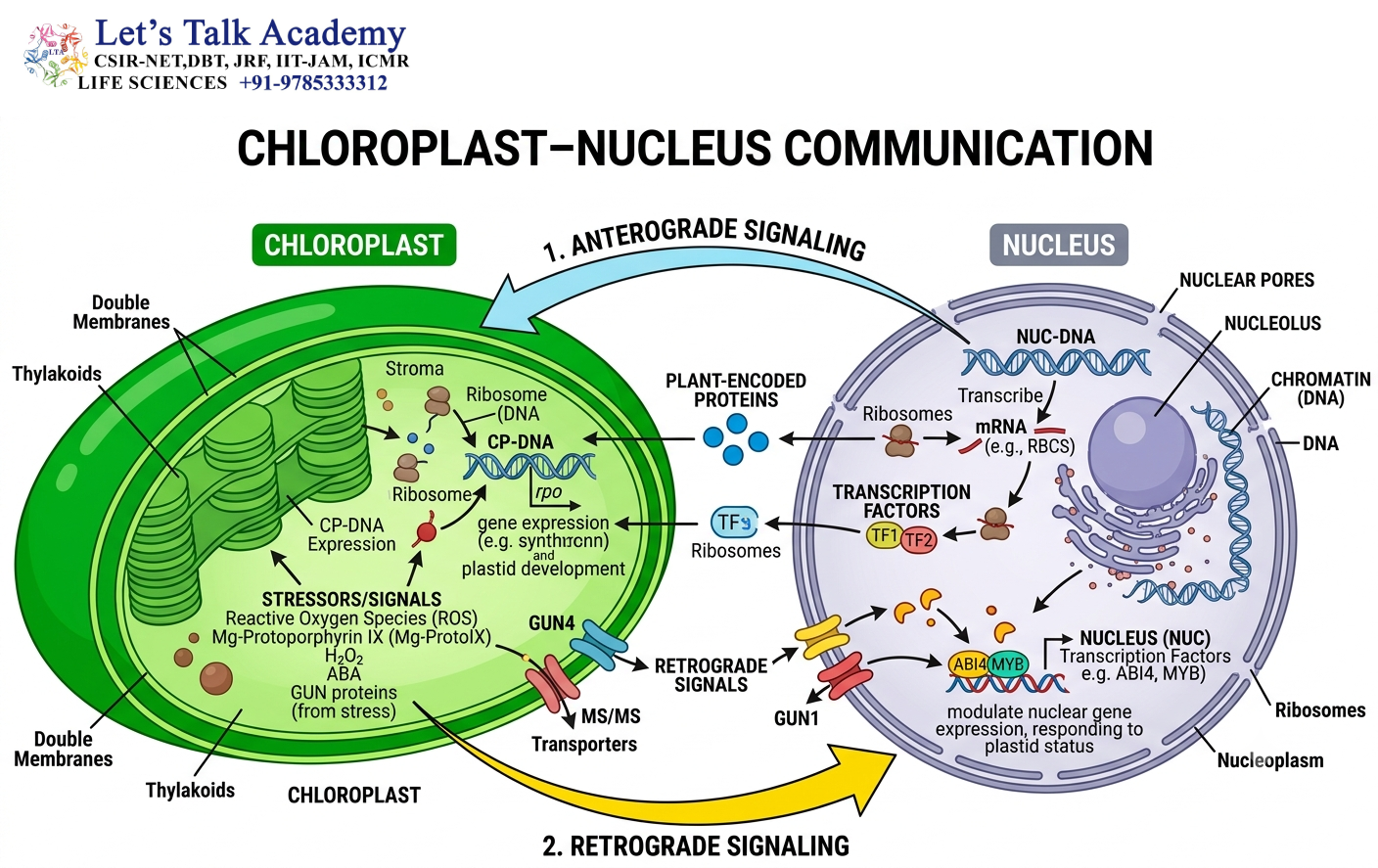
Chloroplasts continuously communicate with the nucleus.
This communication is essential because chloroplast development and function depend on proteins encoded by both genomes.
19.1 Anterograde Signaling
Signals from the nucleus regulate chloroplast development and activity.
Nuclear genes encode many chloroplast proteins, and their expression must be coordinated with the physiological state of the chloroplast.
19.2 Retrograde Signaling
Chloroplasts also send signals back to the nucleus.
These signals can communicate:
- Photosynthetic status
- Oxidative stress
- Metabolic conditions
- Developmental state
- Environmental stress
Retrograde signaling allows the cell to coordinate nuclear gene expression with chloroplast condition.
20. Chloroplasts and Reactive Oxygen Species
Photosynthetic electron transport can generate reactive oxygen species (ROS), particularly when the absorbed light energy exceeds the capacity of photosynthetic metabolism.
Important ROS include:
- Superoxide
- Hydrogen peroxide
- Singlet oxygen
20.1 Protective Mechanisms
Chloroplasts possess several antioxidant systems.
These include:
- Superoxide dismutase
- Ascorbate
- Glutathione
- Peroxidases
- Catalase-associated systems
- Carotenoid-based photoprotection
These mechanisms help minimize oxidative damage to proteins, lipids, pigments, and nucleic acids.
21. Non-Photochemical Quenching
Plants must safely dissipate excess absorbed light energy.
One important protective mechanism is non-photochemical quenching (NPQ).
During NPQ, excess excitation energy is converted into heat rather than being transferred into potentially damaging photochemical reactions.
Xanthophyll pigments and changes in thylakoid proton concentration are important components of this protective response.
22. Chloroplast Stress Responses
Chloroplasts are highly sensitive to environmental conditions.
22.1 High Light Stress
Excessive light can damage photosynthetic components, especially Photosystem II.
Plants respond by activating photoprotective mechanisms and repairing damaged components.
22.2 Temperature Stress
High or low temperatures can affect:
- Membrane fluidity
- Enzyme activity
- Electron transport
- Carbon fixation
- Protein stability
22.3 Water Stress
Water deficiency causes stomatal closure, reducing CO₂ availability inside leaves.
This can increase the relative oxygenation activity of Rubisco and enhance photorespiration.
22.4 Salinity Stress
High salt concentrations can disrupt cellular water balance and ion homeostasis and can indirectly increase oxidative stress in chloroplasts.
23. Chloroplast Ultrastructure and Functional Organization

The internal architecture of the chloroplast is closely related to its biochemical activities.
The division between grana and stroma lamellae allows photosynthetic complexes to be distributed in an organized manner.
23.1 Lateral Heterogeneity
Thylakoid membranes are not uniform.
Different protein complexes occur at different relative concentrations in stacked and unstacked regions.
Photosystem II is enriched in grana, whereas Photosystem I and ATP synthase are relatively enriched in stroma lamellae.
This organization facilitates efficient electron transfer and regulation of photosynthetic activity.
24. Chloroplast DNA Replication and Gene Expression
Chloroplast genomes must be replicated and expressed to maintain chloroplast function.
24.1 Transcription
Chloroplast DNA is transcribed to produce:
- Messenger RNAs
- Ribosomal RNAs
- Transfer RNAs
24.2 Translation
Chloroplast ribosomes translate chloroplast-encoded proteins.
These proteins include several important components of photosynthetic complexes and the chloroplast gene-expression machinery.
24.3 Coordination with Nuclear Gene Expression
Chloroplast and nuclear gene expression must remain synchronized.
A failure in this coordination can interfere with chloroplast development and photosynthetic function.
25. Plastid Types and Chloroplast Relationships
Chloroplasts belong to the larger family of plastids.
25.1 Proplastids
Undifferentiated plastids found mainly in meristematic cells.
25.2 Chloroplasts
Photosynthetically active plastids containing chlorophyll.
25.3 Chromoplasts
Pigment-rich plastids that commonly accumulate carotenoids and contribute to the coloration of flowers and fruits.
25.4 Leucoplasts
Colorless plastids involved primarily in storage and biosynthetic functions.
Examples include:
- Amyloplasts
- Elaioplasts
- Proteinoplasts
26. Chloroplasts and Carbon Economy of Plants
Chloroplasts play a central role in the movement of carbon through plant cells.
Carbon dioxide is incorporated into organic molecules through carbon fixation. These products can then be used to synthesize:
- Sugars
- Starch
- Cellulose precursors
- Lipids
- Amino acids
- Secondary metabolites
Thus, chloroplasts act as major metabolic hubs connecting photosynthesis with the broader biosynthetic network of the plant.
27. Relationship Between Chloroplasts and Mitochondria
Chloroplasts and mitochondria are both energy-transforming organelles, but their functions differ.
| Feature | Chloroplast | Mitochondrion |
|---|---|---|
| Major function | Photosynthesis | Cellular respiration |
| Energy input | Light energy | Chemical energy |
| Main energy products | ATP and NADPH | ATP |
| Major carbon process | Carbon fixation | Carbon oxidation |
| Genetic material | Present | Present |
| Ribosomes | Present | Present |
| Double membrane | Present | Present |
| Endosymbiotic origin | Cyanobacterial ancestor | Bacterial ancestor |
The two organelles also communicate metabolically and exchange intermediates.
28. Chloroplast Transport Systems
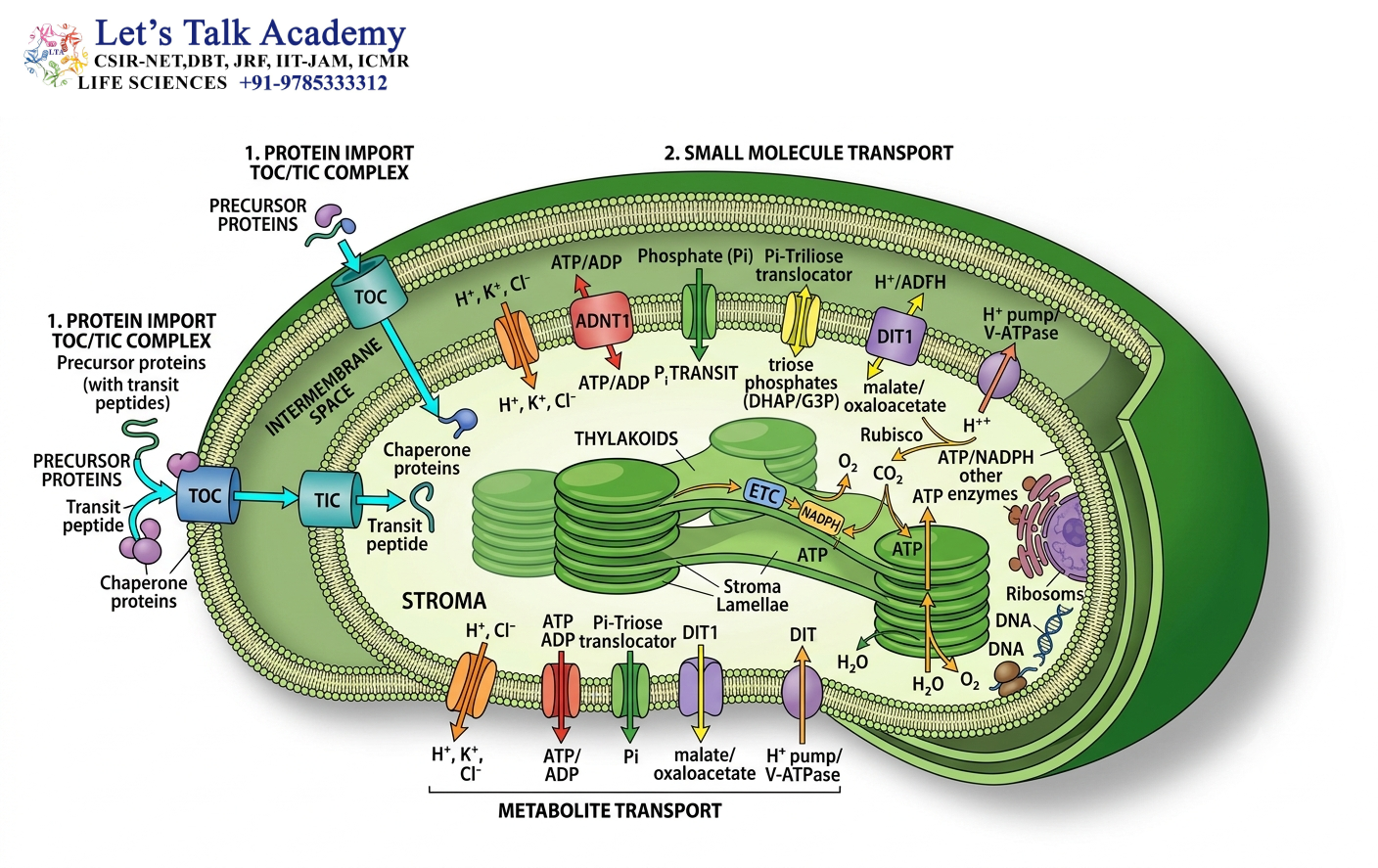
The chloroplast must transport many metabolites across its envelope and internal membranes.
Important transported substances include:
- Phosphate
- Triose phosphates
- Sugars
- Organic acids
- Nucleotides
- Amino acids
- Ions
Specific transport proteins ensure that metabolic pathways remain balanced.
29. Chloroplasts in Different Plant Tissues
Chloroplast structure and abundance vary among tissues.
29.1 Mesophyll Cells
Leaf mesophyll cells generally contain many chloroplasts and are major sites of photosynthesis.
29.2 Guard Cells
Guard cells contain chloroplasts and use their metabolic activities to support stomatal regulation.
29.3 Bundle Sheath Cells
In C4 plants, bundle sheath chloroplasts have specialized roles in carbon concentration and often differ structurally from mesophyll chloroplasts.
30. Chloroplast Adaptation to Light Conditions
Plants can adjust chloroplast structure and photosynthetic activity according to their light environment.
30.1 High-Light Conditions
Plants exposed to strong light generally require enhanced photoprotective mechanisms.
30.2 Low-Light Conditions
Under low light, plants can modify pigment composition and photosynthetic antenna organization to improve light capture.
This flexibility allows plants to optimize photosynthesis under changing environmental conditions.
31. Importance of Chloroplasts in the Biosphere
Chloroplasts have enormous ecological importance.
Through photosynthesis, chloroplast-containing organisms:
- Produce organic matter.
- Remove carbon dioxide from the atmosphere.
- Release oxygen.
- Support food webs.
- Store solar energy in chemical form.
- Influence global carbon cycling.
The oxygen-rich atmosphere of Earth is largely a consequence of oxygenic photosynthesis carried out by cyanobacteria and their descendants, including chloroplast-bearing organisms.
32. Chloroplasts as Evolutionary Innovations
The evolution of chloroplasts transformed the metabolic capabilities of eukaryotic cells.
The acquisition of photosynthetic machinery allowed certain eukaryotes to use sunlight as an energy source.
Primary plastids originated through an ancient endosymbiotic event involving a cyanobacterium. Additional evolutionary events involving plastid acquisition produced more complex plastids in several groups of algae.
33. Important Chloroplast Components and Their Functions
| Component | Major Function |
|---|---|
| Outer membrane | Protection and molecular exchange |
| Inner membrane | Selective transport |
| Stroma | Carbon fixation and metabolic reactions |
| Thylakoid membrane | Light-dependent reactions |
| Thylakoid lumen | Proton accumulation |
| Photosystem II | Water oxidation and electron generation |
| Cytochrome b6f | Electron transfer and proton translocation |
| Photosystem I | Light-driven electron excitation |
| ATP synthase | ATP synthesis |
| Chlorophyll | Light absorption |
| Carotenoids | Light harvesting and photoprotection |
| Chloroplast DNA | Genetic information |
| Ribosomes | Protein synthesis |
| Plastoglobuli | Lipid and pigment-associated metabolism |
| Starch grains | Temporary carbohydrate storage |
34. Overall Mechanism of Photosynthesis in Chloroplasts
Photosynthesis can be understood as a coordinated sequence of events.
First, chlorophyll and accessory pigments absorb photons.
Second, Photosystem II uses light energy to extract electrons from water.
Third, electrons travel through an electron transport chain, while proton movement contributes to the development of a proton gradient.
Fourth, ATP synthase uses the proton gradient to produce ATP.
Fifth, Photosystem I absorbs additional light energy and re-energizes electrons.
Sixth, these electrons are ultimately used to reduce NADP⁺ to NADPH.
Finally, ATP and NADPH enter the Calvin-Benson cycle, where carbon dioxide is incorporated into organic compounds.
Thus, chloroplasts connect light capture, electron transport, energy conversion, and carbon assimilation into one integrated system.


