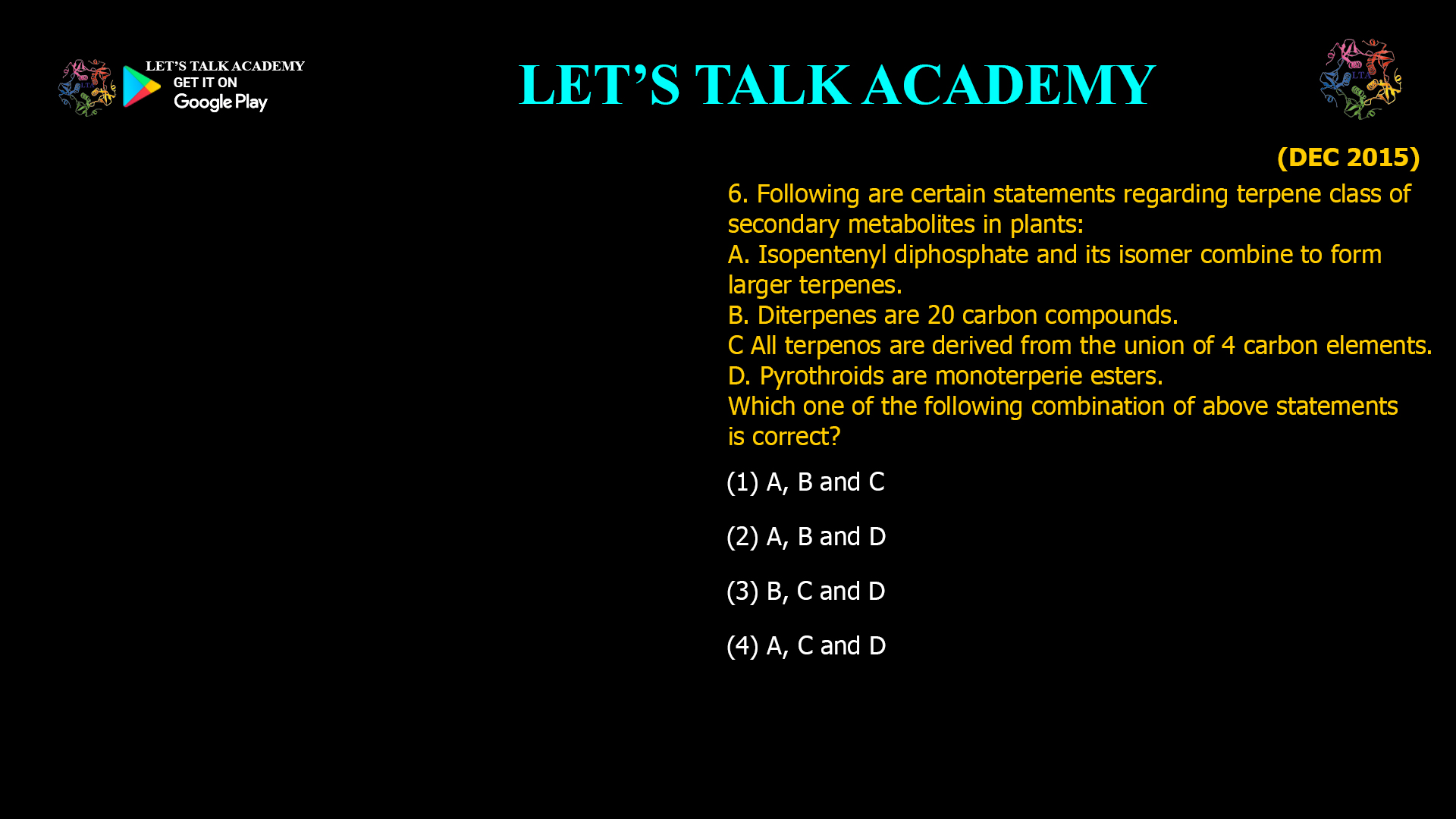
6. Following are certain statements regarding terpene class of secondary metabolites in plants: A. Isopentenyl diphosphate and its isomer combine to form larger terpenes. B. Diterpenes are 20 carbon compounds. C All terpenos are derived from the union of 4 carbon elements. D. Pyrothroids are monoterperie esters. Which one of the following combination of above statements is correct? (1) A, B and C (2) A, B and D (3) B, C and D (4) A, C and D

Biosynthesis and Characteristics of Plant Terpenes

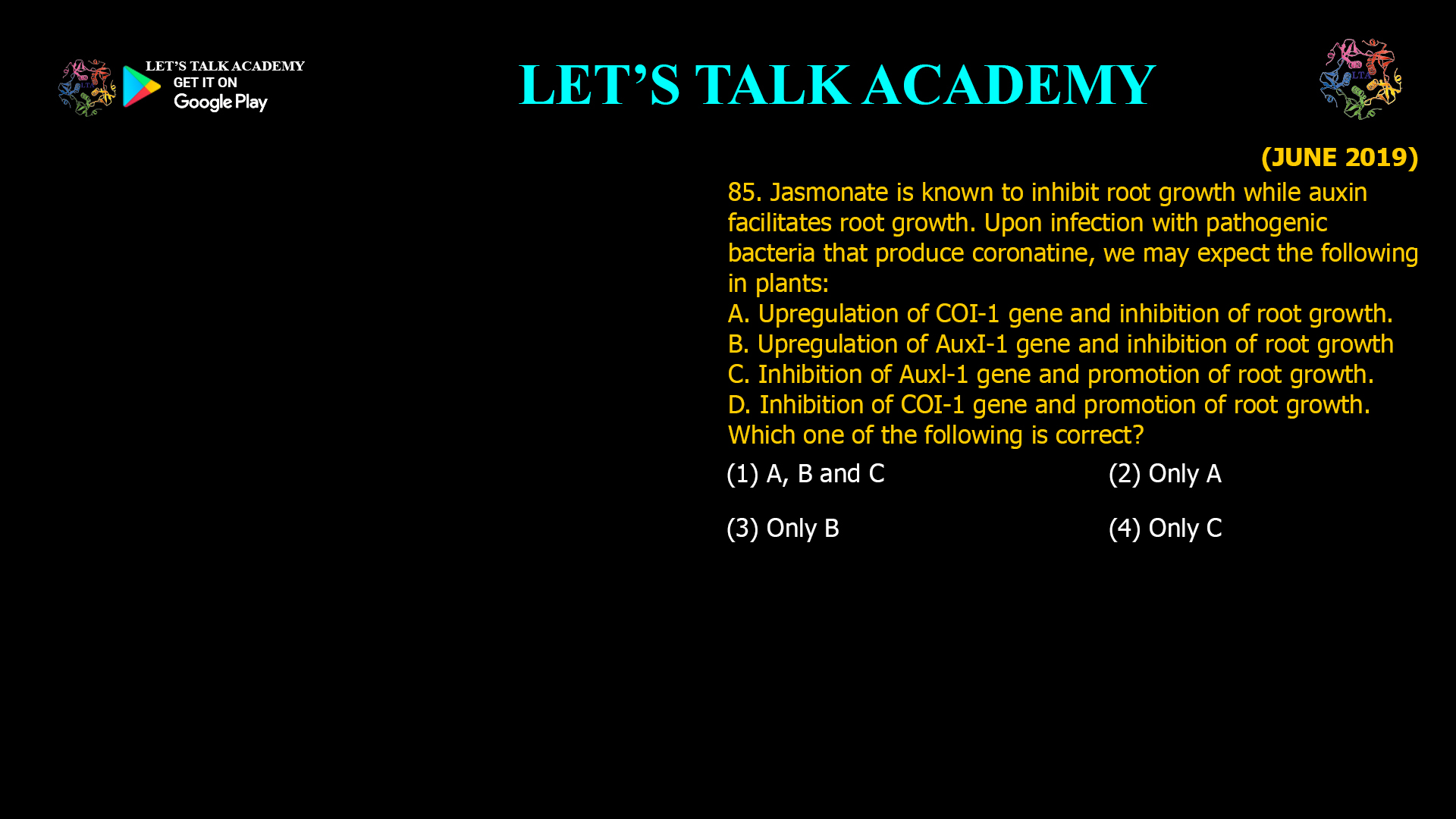
85. Jasmonate is known to inhibit root growth while auxin facilitates root growth. Upon infection with pathogenic bacteria that produce coronatine, we may expect the following in plants: A. Upregulation of COI-1 gene and inhibition of root growth. B. Upregulation of AuxI-1 gene and inhibition of root growth C. Inhibition of Auxl-1 gene and promotion of root growth. D. Inhibition of COI-1 gene and promotion of root growth. Which one of the following is correct? (1) A, B and C (2) Only A (3) Only B (4) Only C

Coronatine Activation of Jasmonate Signaling via COI1 Inhibits Root Growth During Pathogen Infection

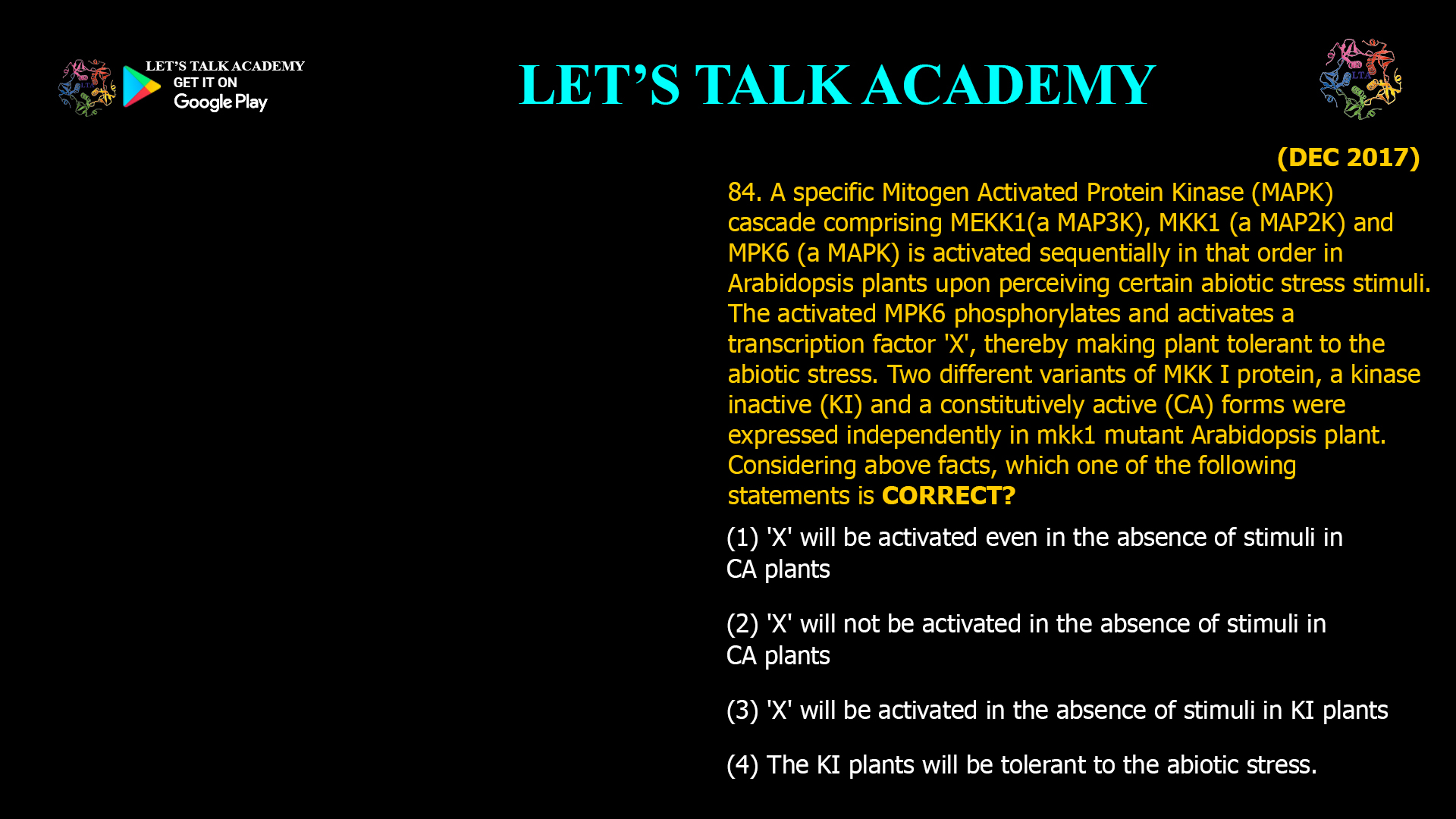
84. A specific Mitogen Activated Protein Kinase (MAPK) cascade comprising MEKK1(a MAP3K), MKK1 (a MAP2K) and MPK6 (a MAPK) is activated sequentially in that order in Arabidopsis plants upon perceiving certain abiotic stress stimuli. The activated MPK6 phosphorylates and activates a transcription factor 'X', thereby making plant tolerant to the abiotic stress. Two different variants of MKK I protein, a kinase inactive (KI) and a constitutively active (CA) forms were expressed independently in mkk1 mutant Arabidopsis plant. Considering above facts, which one of the following statements is CORRECT? (1) 'X' will be activated even in the absence of stimuli in CA plants (2) 'X' will not be activated in the absence of stimuli in CA plants (3) 'X' will be activated in the absence of stimuli in KI plants (4) The KI plants will be tolerant to the abiotic stress.

Constitutive Activation of MKK1 in MAPK Cascade Triggers Abiotic Stress Response Independent of Stimuli

solve this question in details explain every option and write SEO friendly article on it with key phrase and metadiscriprion and slug, slug shoud be from keywords of question. and the keyswords of slug and discription and keyphrase and introduction should be according to SEO

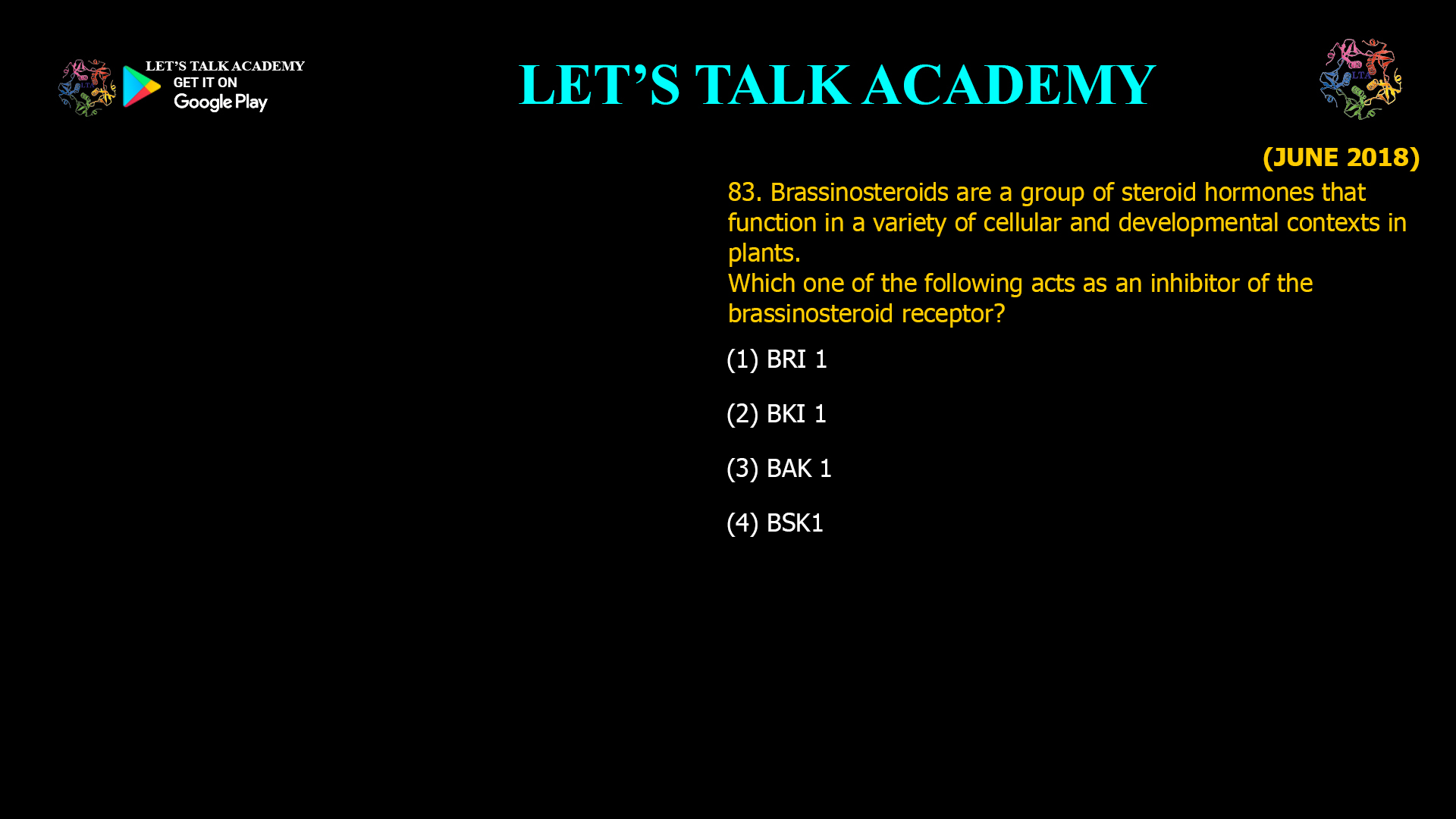
BKI1: The Key Inhibitor of Brassinosteroid Receptor BRI1 in Plant Growth Regulation

82. Following are certain statements related to seed maturation: A. Seed maturation involves mainly the accumulation of storage products, such as starch, lipids and proteins. B. A large number of chaperones including the family of LATE EMBRYO ABUNDANT (LEA) proteins, play a crucial role in the dessication process of seeds C. Moisture content gets reduced with the maturation of seed D. ABA and gibberellin both promote seed dormancy Which one of the following options has all correct statements? (1) A and C only (2) B and D only (3) B, C and D only (4) A, B and C only

Seed Maturation: Storage Accumulation, LEA Proteins, Desiccation, and Hormonal Regulation

81. Many factors related to the role of abscisic acid (ABA) in contributing to drought, cold and salt resistance in plants are listed below: A. The transcription factors DREB 1 and DREB2 bind to the cis-acting elements of the promoter of ABA responsive genes in an ABA dependent manner. B. ABA induces many genes such as LEA and RD29. C. ABA-responsive genes contain six nucleotide ABRE elements in the promoter. D. Nine-nucleotide dehydration- responsive elements (DRE) are present in ABA responsive genes. Which one of the following combinations of the above statements is correct with respect to ABA? (1) A, B and C (2) A, C and D (3) B, C and D (4) A only

Role of Abscisic Acid (ABA) in Regulating Stress-Responsive Genes and Plant Stress Tolerance

80. Plant growth hormone receptors, namely TIR1, GID1, COI1 and PYL1 were knocked out independently in Arabidopsis plant. The resultant plants are named as tir1, gid1, coit and pyl1. Which one of the following statements regarding the above Arabidopsis plants is correct? (1) tirisdefective in ABA signaling while coil in gibberelline signaling (2) gid1 is defective in auxin signaling while pyll in JA signaling (3) coil is defective in JA signaling while pyllin ABA signaling (4) tir7 is defective in gibberellin signaling while gid1 in auxin signaling

Functional Analysis of Arabidopsis Plant Hormone Receptor Mutants

79. Which one of the following is the correct function of JAZ (JASMONATE ZIM- DOMAIN) protein family, a key regulator of Jasmonic Acid (JA) signalling response? (1) Binds to MYC2 and represses the JA dependent genes. (2) Binds to MYC2 and transcribes JA dependent genes. (3) Acts as receptor of JA signal. (4) Involved in directly inducing JA dependent genes.

Function of JAZ Proteins in Jasmonic Acid Signaling

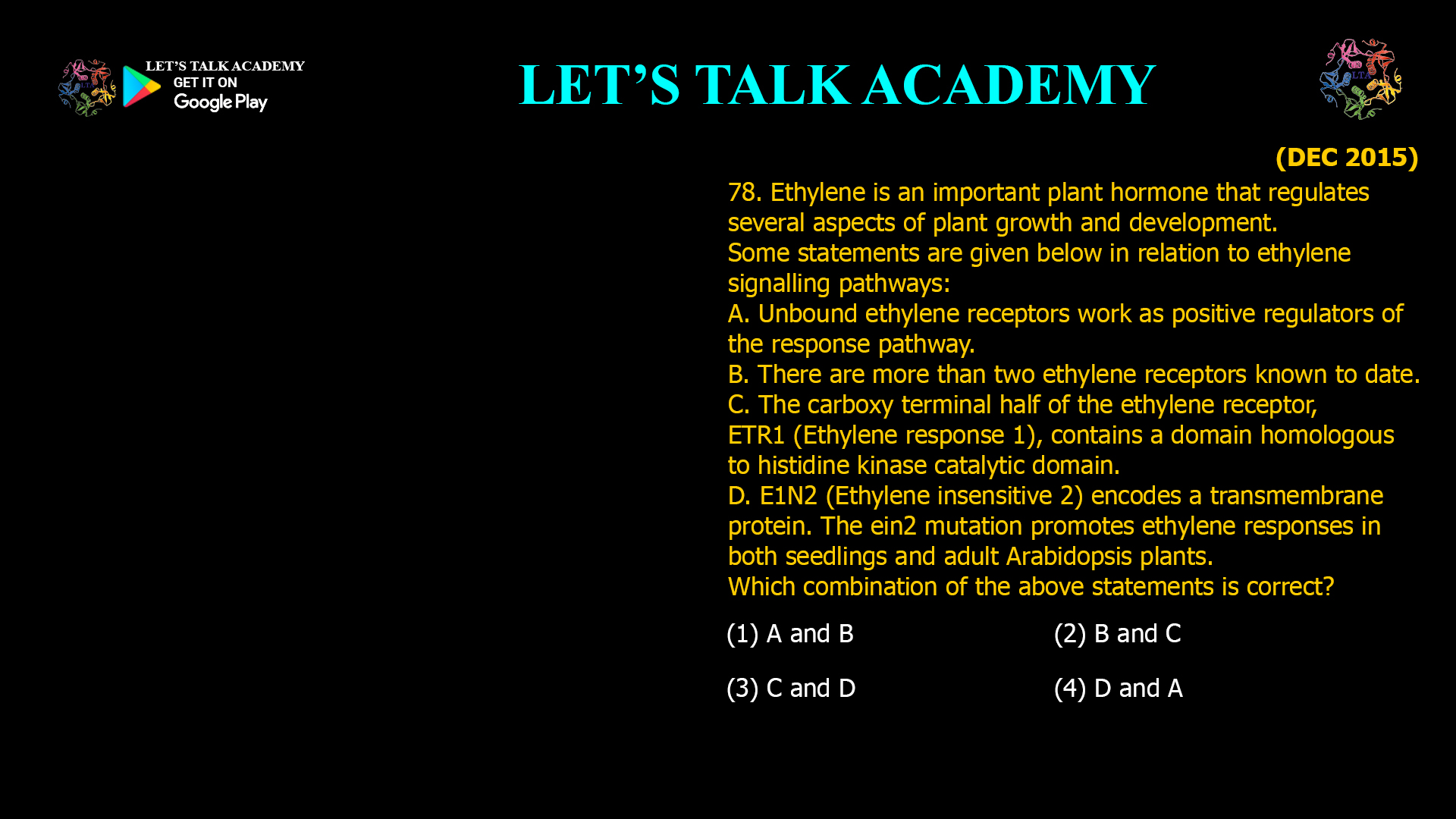
78. Ethylene is an important plant hormone that regulates several aspects of plant growth and development. Some statements are given below in relation to ethylene signalling pathways: A. Unbound ethylene receptors work as positive regulators of the response pathway. B. There are more than two ethylene receptors known to date. C. The carboxy terminal half of the ethylene receptor, ETR1 (Ethylene response 1), contains a domain homologous to histidine kinase catalytic domain. D. E1N2 (Ethylene insensitive 2) encodes a transmembrane protein. The ein2 mutation promotes ethylene responses in both seedlings and adult Arabidopsis plants. Which combination of the above statements is correct? (1) A and B (2) B and C (3) C and D (4) D and A

Key Components and Mechanisms of Ethylene Signaling Pathway in Plants

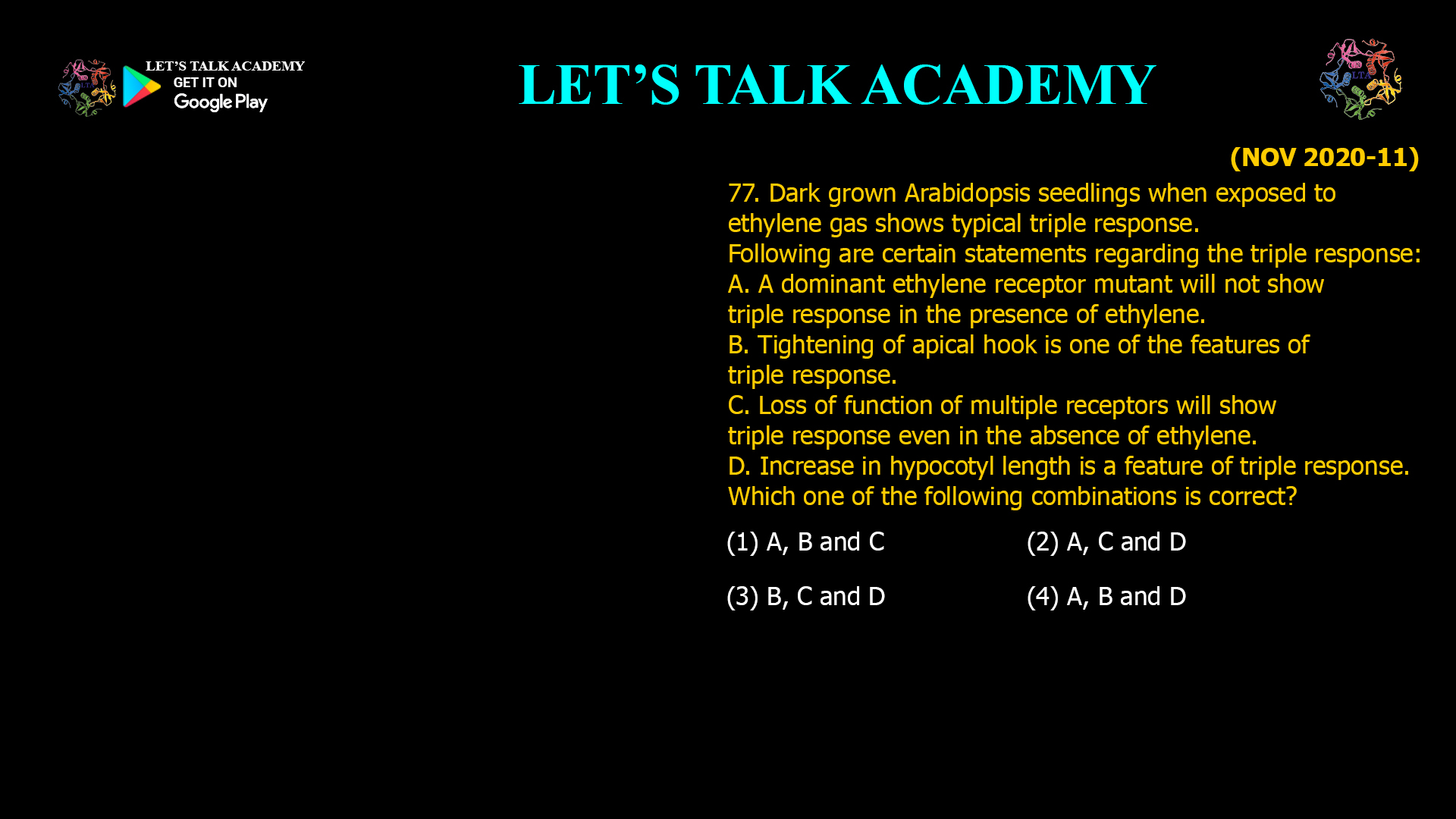
77. Dark grown Arabidopsis seedlings when exposed to ethylene gas shows typical triple response. Following are certain statements regarding the triple response: A. A dominant ethylene receptor mutant will not show triple response in the presence of ethylene. B.Tightening of apical hook is one of the features of triple response. C. Loss of function of multiple receptors will show triple response even in the absence of ethylene. D. Increase in hypocotyl length is a feature of triple response. Which one of the following combinations is correct? (1) A, B and C (2) A, C and D (3) B, C and D (4) A, B and D

Arabidopsis Ethylene Triple Response

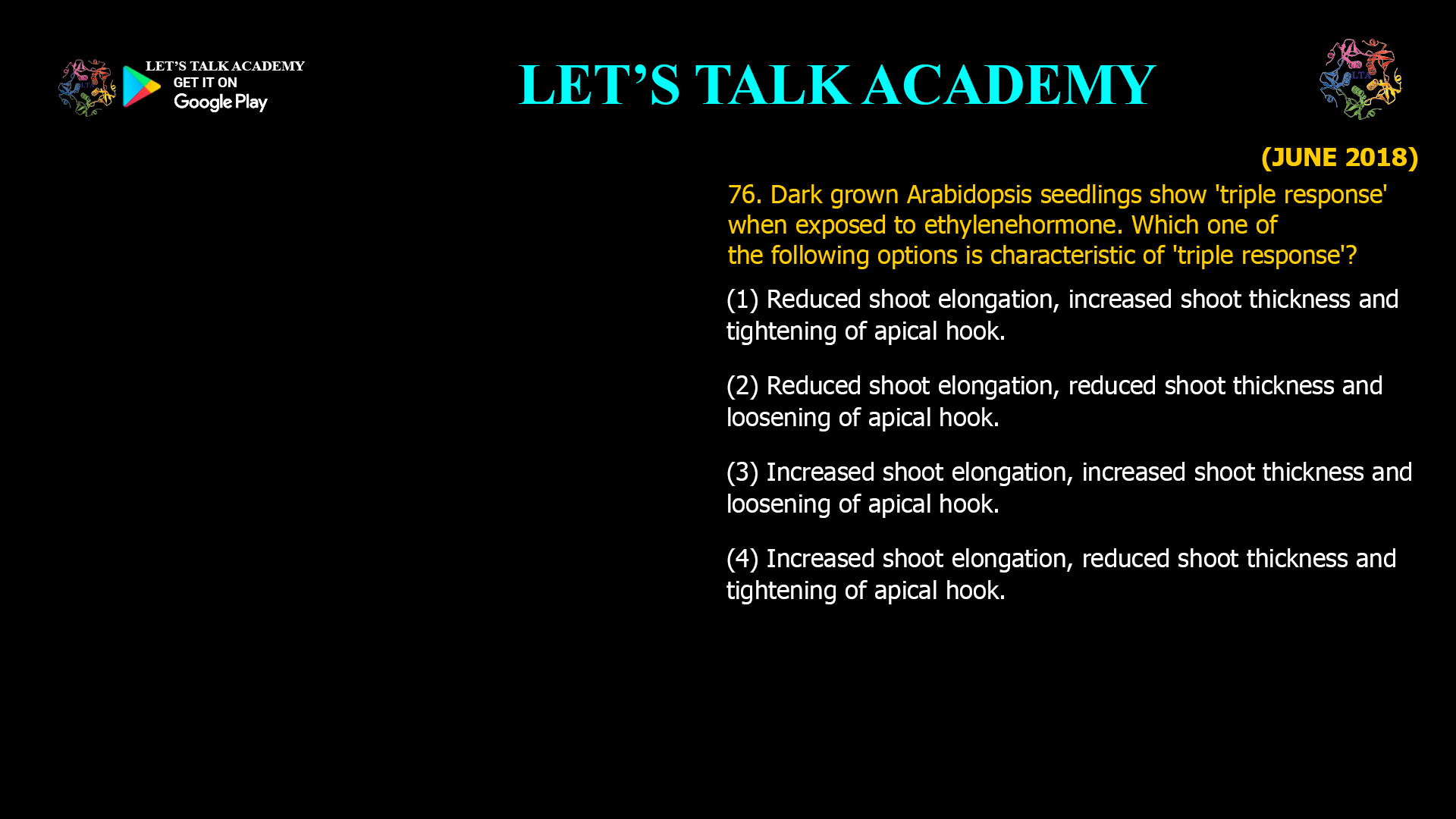
76. Dark grown Arabidopsis seedlings show 'triple response' when exposed to ethylenehormone. Which one of the following options is characteristic of 'triple response'? (1) Reduced shoot elongation, increased shoot thickness and tightening of apical hook. (2) Reduced shoot elongation, reduced shoot thickness and loosening of apical hook. (3) Increased shoot elongation, increased shoot thickness and loosening of apical hook. (4) Increased shoot elongation, reduced shoot thickness and tightening of apical hook.

Key Characteristics of the Ethylene-Induced Triple Response in Dark-Grown Arabidopsis Seedlings

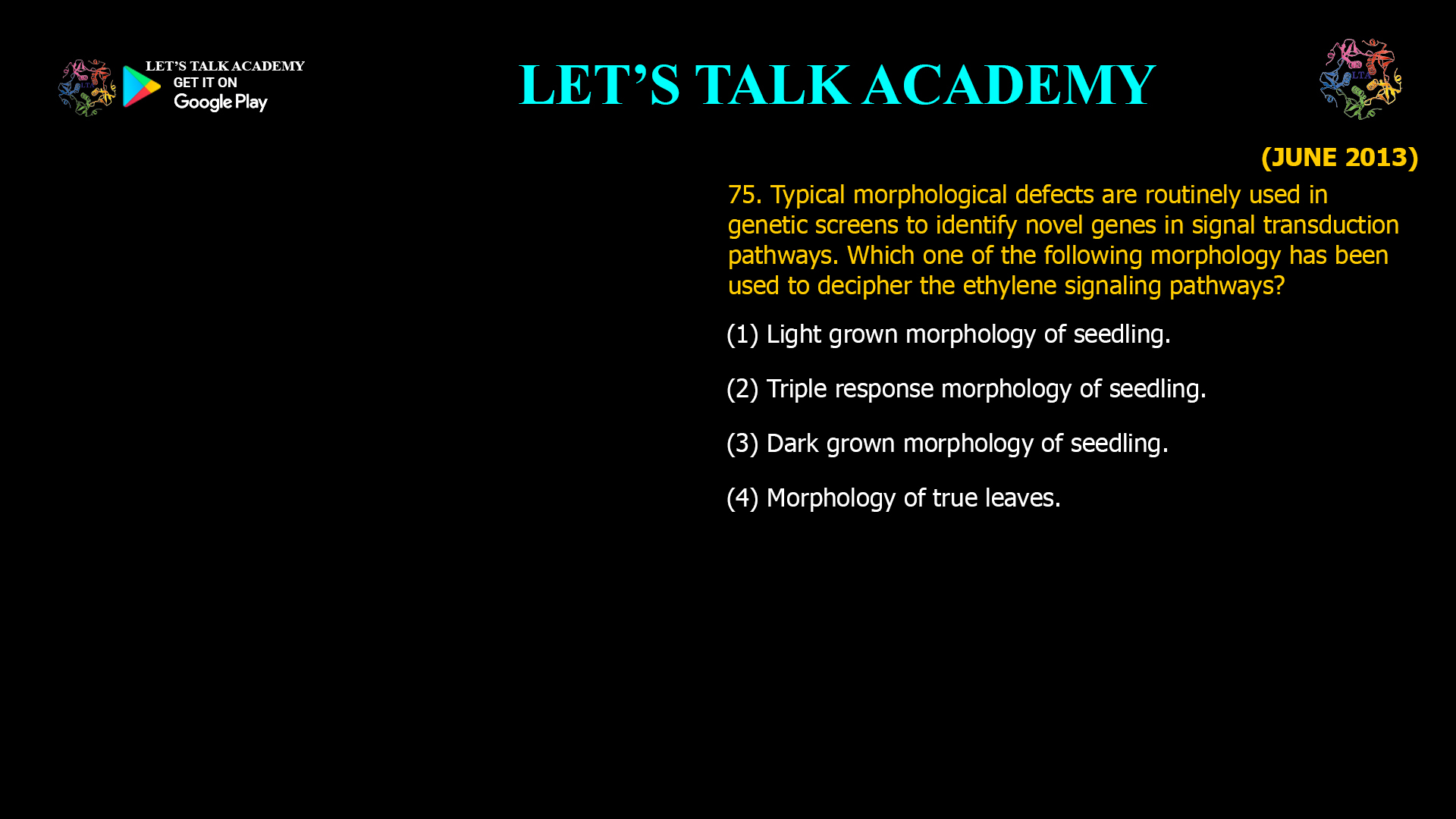
75. Typical morphological defects are routinely used in genetic screens to identify novel genes in signal transduction pathways. Which one of the following morphology has been used to decipher the ethylene signaling pathways? (1) Light grown morphology of seedling. (2) Triple response morphology of seedling. (3) Dark grown morphology of seedling. (4) Morphology of true leaves.

Using Triple Response Morphology in Genetic Screens to Decipher Ethylene Signaling Pathways

74. Dark-grown seedlings display 'triple response' when exposed to ethylene. Which one of the fallowing is NOT a part of 'triple response'? (1) Decrease in epicotyl elongation. (2) Rapid unfolding and expansion of leaves. (3) Thickening of shoot. (4) Horizontal growth of epicotyl.

Key Features of Ethylene-Induced Triple Response in Dark-Grown Seedlings

73. Which of the following plant hormones can mimic the det1 mutation, causing de-etiolation and chloroplast development in dark? (1) Cytokinin (2) Gibberellin (3) Auxin (4) Ethylene

Cytokinin Mimicking det1 Mutation

72. Ethylene binding to its receptor does lead to (1) activation of the receptor (2) phosphorylation of the receptor (3) activation of CTR Raf kinase (4) activation of Ethylene insensitive factor

Ethylene Receptor Binding and CTR1 Kinase Activation in Plant Ethylene Signaling

71. While screening an EMS-mutagenized population of a plant, a researcher identified a mutant with reduced gibberellic acid sensitivity. Which one of the following proteins is most likely to be defective in this mutant? (1) Sucrose non-fermenting related kinase 2 (SnRK2) (2) Constitutive triple response 1 (CTR1) (3) Phytochrome interacting factor (PIF) (4) Coronative-insensitive 1 (C0I1)

Role of Phytochrome Interacting Factor (PIF) in Gibberellic Acid Sensitivity and Mutant Identification

70. Following are certain statements regarding gibberellic acid (GA) signal transduction: (A) DELLA proteins negatively regulate GA signalling. (B) Degradation of GA receptor (GID1) is mediated by DELLA proteins. (C) Ubiquitination and subsequent degradation of DELLA proteins are independent of GID1. (D) GA binding to GID1 promotes binding of GID1 to DELLA proteins. Which one of the following combination of statements is correct? (1) A and B (2) B and C (3) C and D (4) A and D

DELLA and GID1 Interactions in Gibberellin Signal Transduction Pathway

69. A researcher developed a mutant of Arabidopsis plant where the function of SLEEPY 1 (SLY1) containing SCF complex has been disrupted. Which one of the following statements is INCORRECT in the developed mutant in relation to gibberellic acid (GA) signal transduction? (1) GA will bind to GA-insensitive dwarf 1 (GID1) protein. (2) A complex of GA-GID1 and DELLA protein will be formed (3) The DELLA protein will be ubiquitinated. (4) The DELLA protein will not be degraded.

Arabidopsis SLEEPY1 Mutant and Its Effects on Gibberellin Signaling Pathway

68. Examples of many factors that regulate plant height in response to gibberellic acid (GA) are listed below: A. Binding of a GA bound repressor to the promoter of the DELLA domain containing GRAS protein gene and blocking its expression. B. Binding of the GA receptor complex to GRAS. C. Directing GRAS for ubiquitination and degradation by the 26S proteasome. D. Micro RNA directed down regulation of the GRAS protein expression. Which one of the following combinations is correct? (1) A and B (2) B and C (3) C and D (4) A and D

Role of DELLA and GRAS Proteins in Plant Height Regulation

67. Most of DNA binding protein binds to DNA by particular motif to modulate gene expression. Genes which are under regulation of gibberllin acid have GRE which is recognized by transcription factor GREB. The motif in GREB is (1) Leucine Zipper (2) bZIP (3) Zinc finger (4) Homeodomain

Zinc Finger Motif of GREB Transcription Factor in Gibberellin Signaling

66. Ethylene signaling pathway is important for a fruit ripening. Which one of the following responses is routinely used to identity ethylene signaling pathway components? (1) Cotyledon expansion response (2) Lateral root formation response (3) Triple response (4) Flowering time response

A Key Test for Identifying Ethylene Signaling Pathway Components

65. The following statements are made to describe auxin signal transduction pathway, from receptor binding to the physiological response: A. Auxin response factors (ARFs) are nuclear proteins that bind to auxin response elements (Aux REs) to activate or repress gene transcription. B. AUX/IAA proteins are secondary regulators of auxin induced gene expression. Binding of AUX/IAA proteins to the ARF protein blocks its transcription regulation. C. Auxin binding to TIR1/AFB promotes ubiquitin mediated degradation and removal of AUX/IAA proteins. D. Auxin binding to auxin response factors (ARFs) causes their destruction by the 26S proteasome pathway. Which one of the following combinations of above statements is correct? (1) A, B and C (2) A, C and D (3) B, C and D (4) A, B and D

Auxin Signal Transduction Pathway

64 Which one of the following plant hormones use the two-component histidine kinase receptor system for signal transduction? (1) Auxin (2) Gibberellin (3) Cytokinin(4) Abscisic acid

Two-component histidine kinase receptor system

63 Match the above columns involving plant hormones and their signalling pathways: Column I Column II Column III (A) Auxin and (a) Trans- (i) Response mediated Gibberellins membrane by receptor phosphorylation / dephosphorylation (B) Cytokinin (b) Soluble (ii) Response and receptor mediated by Brassino- proteasome steroid mediated protein degradation (1) A-(a)-1 and B-(b)-i (2) A-(b)-ii and B-(a)-i (3) A-(b)-i and B-(a)-i (4) A-(a)-ii and B-(b)-i

Signaling Pathways of Plant Hormones

62. Programmed cell death (PCD) plays an important role in development of barley aleurone. The following statements are made with respect to involvement of various phytohormones and signaling molecules. A Gibberellic and promotes PCD. B. Abscisic acid postpones PCD. C. Cyclic GMP signaling postpones PCD. D. Nitric oxide scavenger delays PCD. Which one of the following combinations of statements is correct? (1) A and C (2) B and D (3) A and B (4) C and D

Role of Gibberellin and Abscisic Acid in Programmed Cell Death of Barley Aleurone

61. Following are some statements regarding plant growth hormones. A. Ethylene regulates abscission. B. Gibberlins do not play any role in flowering C. Auxin and cytokinin promote cell division. D. Over expression of cytokinin oxidase would promote root growth E. ABA inhibits root growth and promotes shoot growth at low water potential. F. ABA promotes leaf senescence independent of ethylene. Which one of the following combination of above statements is correct? (1) A, C and F (2) B, C and D (3) D, E and f (4) B, D, and E

Key Roles of Plant Growth Hormones

60. Given below are names of phytohormones in column I and their associated features/effects/function in column II. I II A.Auxin i. Delayed leaf senescence B. Gibberellins ii. Epinastic bending of leaves C. Cytokinin iii. Polar transport D. Ethylene iv. Removal of seed dormancy. Select the correct set ofcombinbinations from the option given below; (1) A-iii, B-ii, C-iv, D-i (2) A-iv, B-iii, C-i, D-ii (3) A-iii, B-iv, C-i, D-ii (4) A-i, B-iv, C-iii, D-ii

Matching Phytohormones with Their Key Functions: Auxin, Gibberellins, Cytokinins, and Ethylene

59. A researcher has obtained an Arabidopsis mutant defective in strigolactones (SLs), a novel plant hormone. The following statements were made regarding the mutant phenotype: A. Shoot branching gets enhanced in the mutant plant B. Hyphal branching of arbuscular mycorrhizal fungi (AM-fungi) gets enhanced during colonization in the mutant plants C. Shoot branching gets inhibited in the mutant plants D. Germination of seeds of parasitic plant is prevented near the mutant plant Which one of the following options represents the combination of correct statements? (1) A and B (2) B and C (3) B and D (4) A and D

Arabidopsis Mutants Defective in Strigolactones

58. Which one of the following plant derived signalling molecule induces hyphal branching of arbuscular mycorrhizal fungi, a phenomenon that is observed at the initial stages of colonisation of these fungi? (1) Salicylic acid (2) Abscisic acid (3) Strigolactones (4) Systemin

Strigolactones as Key Signaling Molecules Inducing Hyphal Branching in Arbuscular Mycorrhizal Fungi

57. Following are some statements for synthesis of jasmonic acid in plants A. 12-oxo-phytodienoic acid is produced in chloroplast and transported to peroxisome. B. Action of lipoxygenase, alleneoxide synthase and allene oxide cyclase takes place in peroxisome. C.12-oxo-phytodicnoic acid is first reduced and then converted to jasmonic acid by 0-oxidation. D. Final production of jasmonic acid takes place in chloroplast. E. Action of allene oxide synthase and allene oxide cyclase takes place in chloroplast. Which one of the following combination of above statements is correct? (1) A, B and C (2) B, D andE (3) C, D and E (4) A, C and E

Key Steps in Jasmonic Acid Synthesis

56. Which of the following set of cell organelles are involved in the biosynthesis of jasmonic acid through octadecanoidsignalling pathway? (1) Chloroplast and peroxisomes (2) Chloroplast and mitochondria (3) Mitochondria and peroxisomes (4) Golgi bodies and mitochondria

Chloroplasts and Peroxisomes in the Octadecanoid Signaling Pathway

55 Jasmonic acids (JA) that are known to activate many defense responses in plants are biosynthesized in chloroplast and peroxisome. Which one of the following reactions is confined to perosoxisome only during biosynthesis of JA? (1) Conversion of 12, 13-epoxy linolenic acid to 12- oxo-phytodienoic acid by the action of allene oxide cyclase. (2) Conversion of 12-oxo-phytodienoic acid to 3-oxo2(2'[z]-pentenyl) cylopentane-l-octanoate by the action of oxo-phytodienoate reductase. (3) Conversion of linolenic acid to beeta-hydroperoxy linolenic acid by lipoxygenase. (4) Conversion of 13-hydroperoxy linolenic acid to 12, 13-Epoxy linolenic acid by allene oxide synthase

Peroxisomal Role of Oxo-Phytodienoate Reductase in Plants

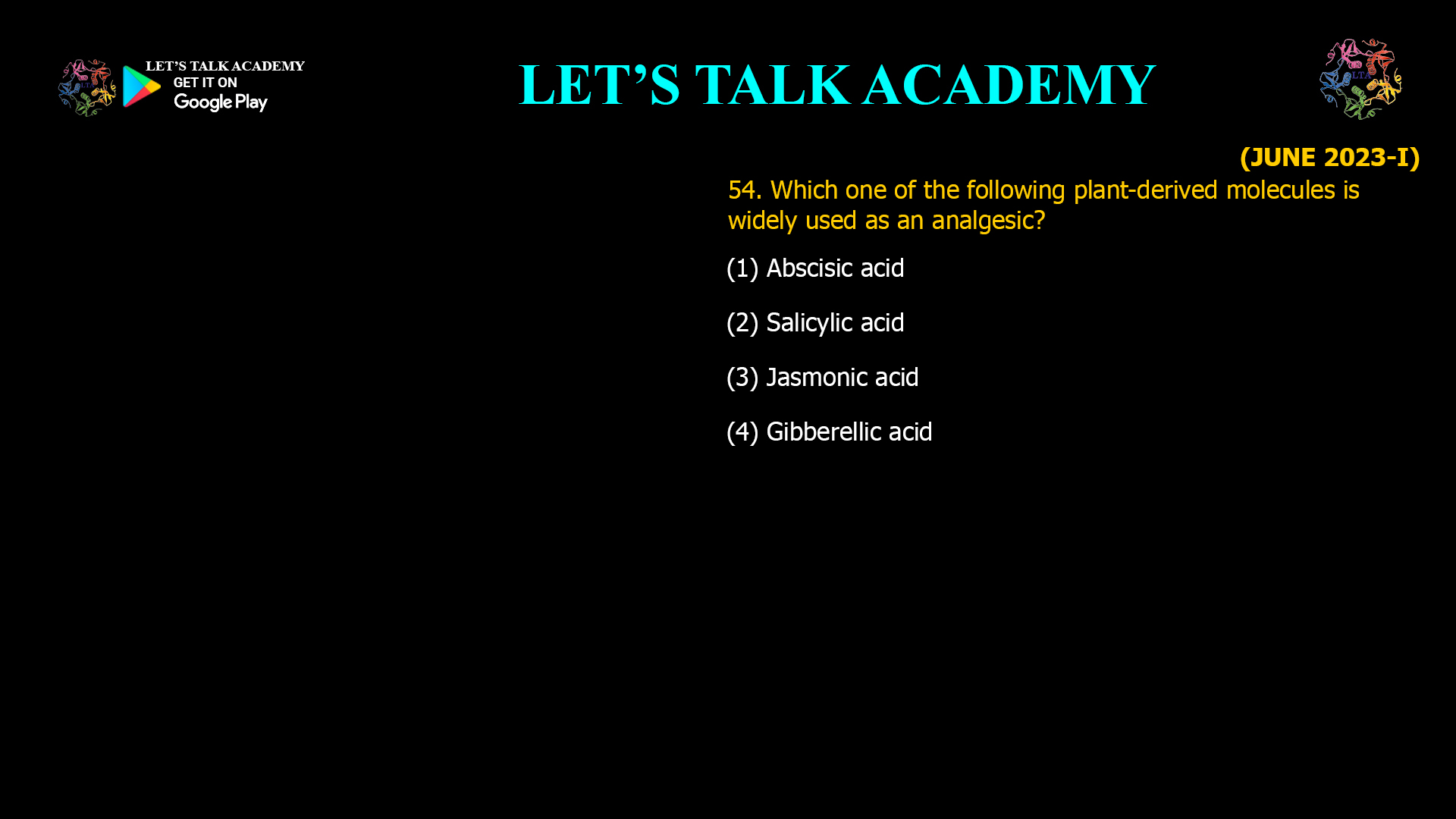
54. Which one of the following plant-derived molecules is widely used as an analgesic? (1) Abscisic acid (2) Salicylic acid (3) Jasmonic acid (4) Gibberellic acid

The Widely Used Plant-Derived Analgesic and Its Medicinal Importance

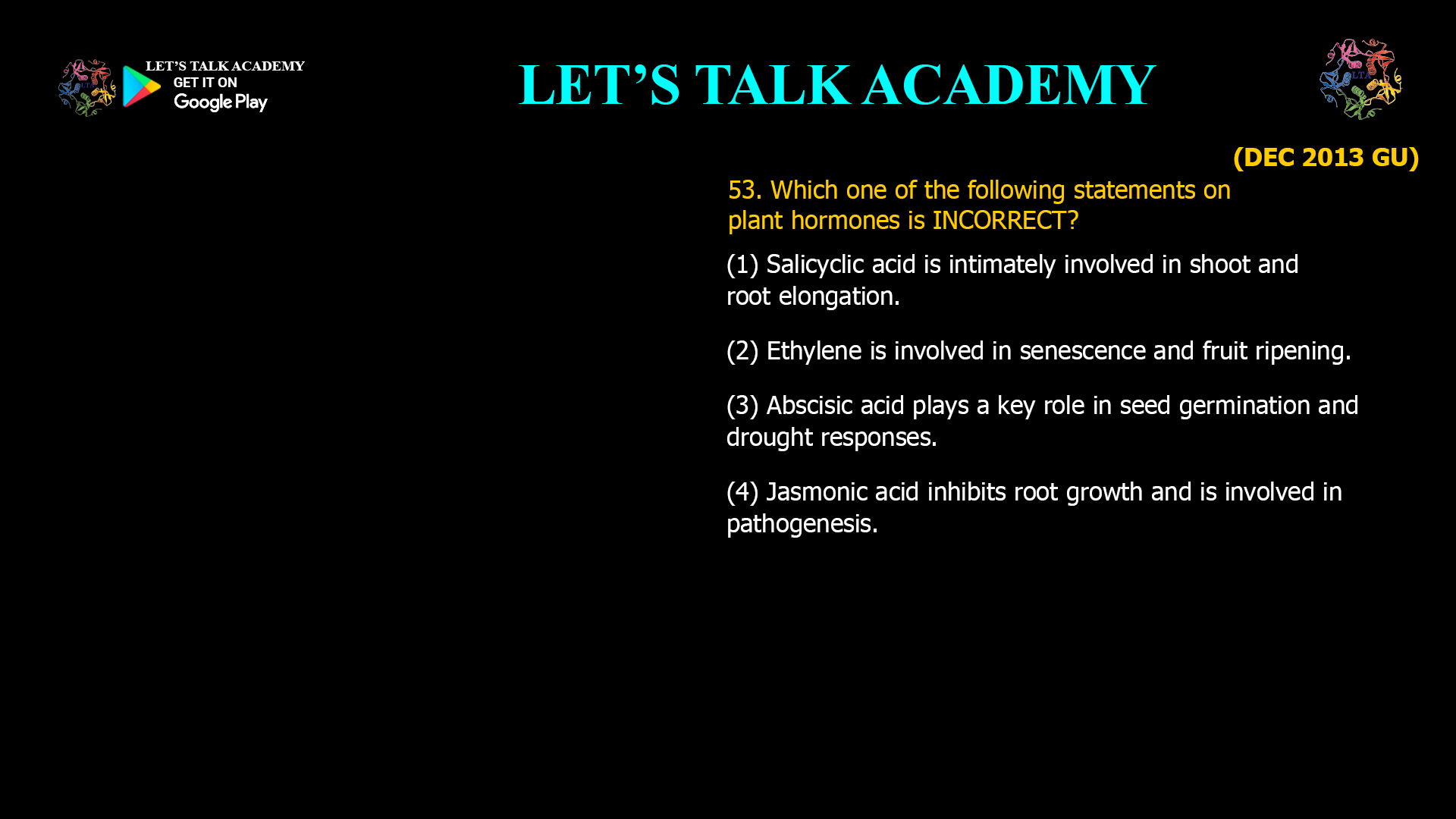
53. Which one of the following statements on plant hormones is INCORRECT? (1) Salicyclic acid is intimately involved in shoot and root elongation. (2) Ethylene is involved in senescence and fruit ripening. (3) Abscisic acid plays a key role in seed germination and drought responses. (4) Jasmonic acid inhibits root growth and is involved in pathogenesis.

Comparative Roles of Plant Hormones

52. Which or the following factors is known to be involved Postponing programmed cell death in cereal aleuroneuntil endosperm mobilization is complete? (1) Gibberellic acid (2) Abscisic acid (3) Acidic pH of the vacuoles (4) c-GMP mediated signal transduction pathway

Abscisic Acid’s Role in Postponing Programmed Cell Death in Cereal Aleurone Cells

51. Which one of the following statements about phytohormone ABA is correct? (1) High level of ABA predominantly promotes vivipary. (2) ABA-Beeta-D-glucosyl ester is an active form of ABA. (3) Inactivation of ABA involves its oxidation to phaseic acid. (4)ABA biosynthesis occurs entirely in the plastids.

Abscisic Acid (ABA) Inactivation

50. Following are certain facts about the effect of abscisic acid (ABA) on the development and physiological effect of plants: A. ABA promotes leaf senescence independent of ethylene B. ABA promotes shoot growth and inhibits root growth at low water potential. C.ABA inhibits gibberellin induced enzyme production D. Seed dormancy is controlled by ratio of ABA and gibberllin Which one of the following combination of above statements is true? (1) A, B and C (2) B, C and D (3) A, B and D (4) A, C and D

Abscisic Acid Effects on Plant Development: Leaf Senescence, Gibberellin Inhibition, and Seed Dormancy Control

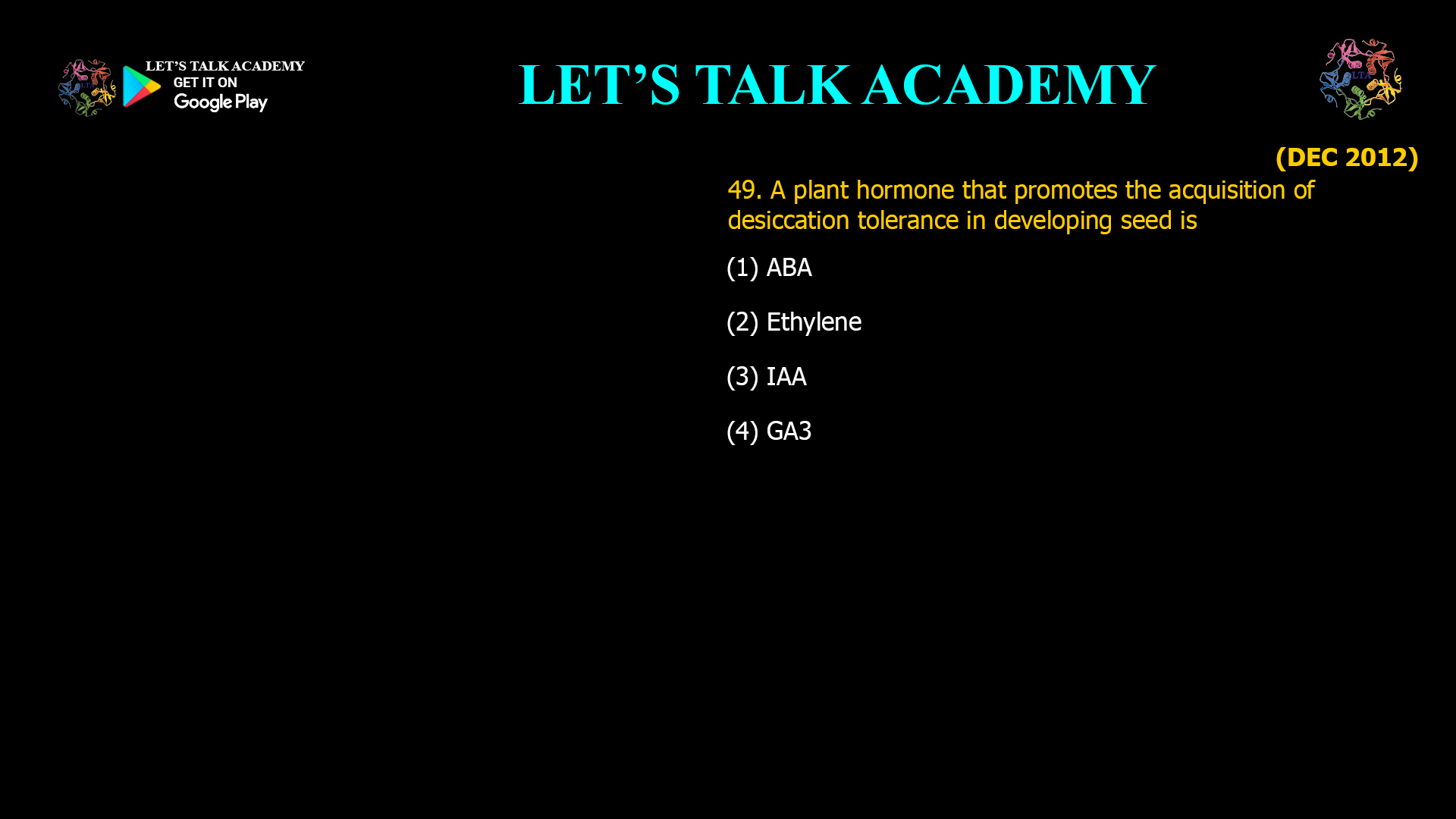
49. A plant hormone that promotes the acquisition of desiccation tolerance in developing seed is (1) ABA (2) Ethylene (3) IAA (4) GA3.

Abscisic Acid Promotes Desiccation Tolerance in Developing Seeds

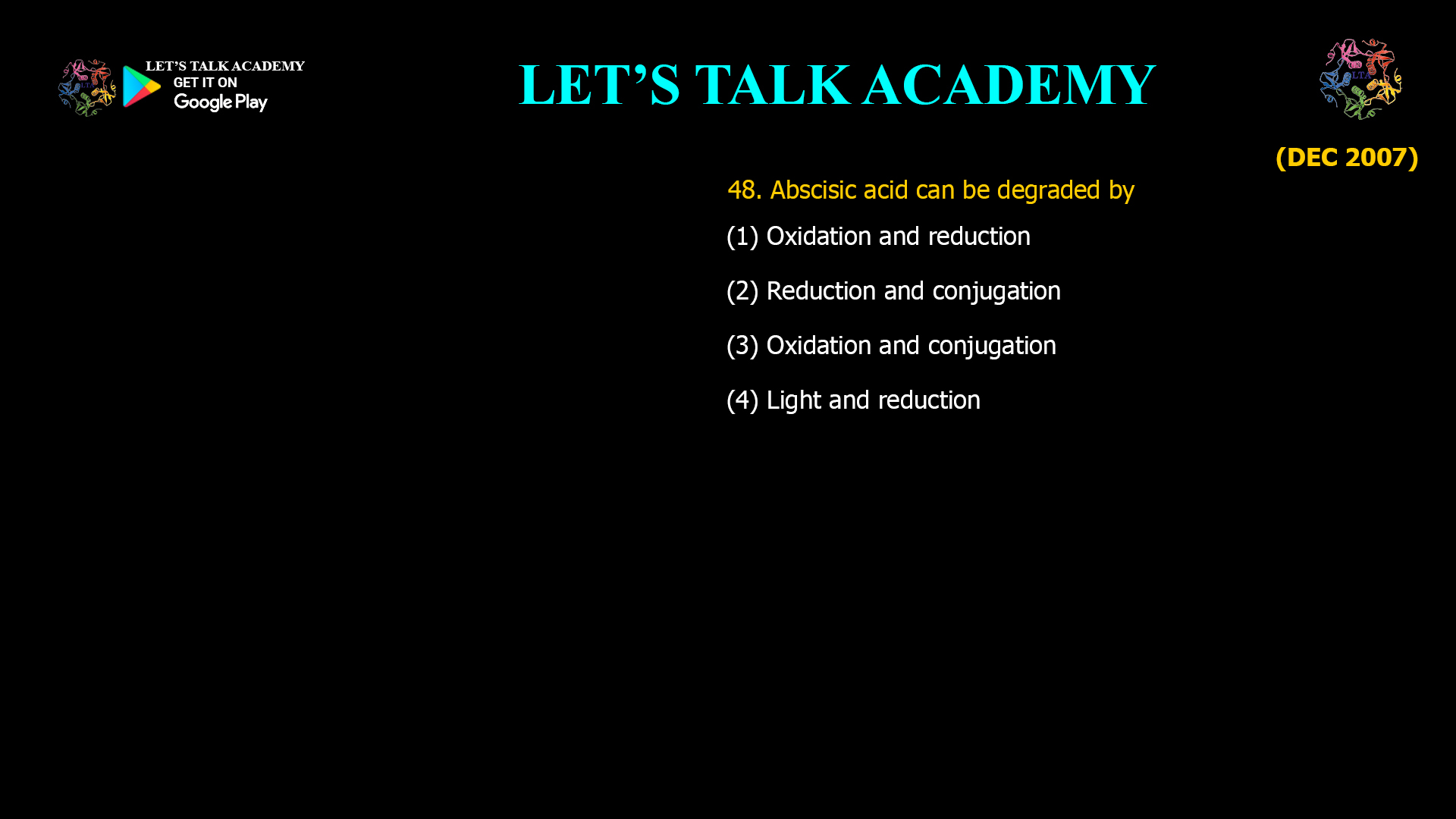
48. Abscisic acid can be degraded by (1) Oxidation and reduction (2) Reduction and conjugation (3) Oxidation and conjugation (4) Light and reduction

Abscisic Acid Degradation in Plants

47. Which of the following DONOT occur during seed development? (1) Accumulation of storage proteins (2) Synthesis of LEA proteins (3) Desiccation (4) Synthesis of Gibberellic acid

Key Processes in Seed Development

46. A protein especially abundant in desiccated seeds and also help in osmotic adjustment (1) LEA (2) HSP (3) Globin (4) alpha-amylase

Abundant in Desiccated Seeds and Key for Osmotic Adjustment

45. Which hormone induces formation of Late Embryogenesis Abundant (LEA) protein during seed maturation? (1) Gibberellic acid (2) Ethylene (3) Abscisic acid (4) Cytokinin

Abscisic Acid Induces LEA Protein Formation During Seed Maturation

44. The phytohormone responsible for deposition of storage reserves, prevention of precocious germination, acquisition of desiccation tolerance, and induction of primary dormancy in seeds is (1) Gibberlic Acid (2) Ethylene (3) Abssicic acid (4) Cytokinin

The Role of Abscisic Acid in Seed Dormancy, Storage Reserve Deposition, and Desiccation Tolerance

43. Which hormone is responsible for opening and closing of stomata? (1) ABA (2) IAA (3) Cytokinin (4) Ethylene

The Key Hormone Regulating Stomatal Opening and Closing

42. Which hormone play important role in water stress in plants? (1) Abscisic acid (2) Ethylene (3) Gibberellic acid (4) Auxin

Central Plant Hormone for Water Stress Response and Adaptation

41. Hormone responsible for maturation of Embryo is- (1) Abscisic acid (2) Gibberellic acid (3) Ethylene (4) Auxin

The Plant Hormone Responsible for Embryo Maturation

40. Which of the following is the plant hormone involved in seed and bud dormancy and in response of plants to stress? (1) Abscisic acid (2) Cytokinin (3) Auxins (4) Gibberellins

Key Plant Hormone for Seed and Bud Dormancy and Stress Response

39. Plants make several hormones that are important for growth and development. Some statements on plant hormones are given below: A. Auxin is produced primarily in the root apices B.Cytokinins are a smaller group of related compounds C.Gibberellins are a large group of related compounds defined not by their biological functions but by their structures. D.Brassinosteroids are an important class of plant hormones, which control a broad spectrum of developmental reposes including pollen tube growth. Which one of the following combination of the above statements is correct? (1) A, B and C (2) B, C and D (3) A, C and D (4) A, B and D

Key Sites of Plant Hormone Production

38. S-adenosyl methionine is a precursor of which plant hormone? (1) Absiccic acid (2) Auxin (3) Ethylene (4) Cytokinin

SAM as a Key Precursor in Ethylene Biosynthesis Pathway

37. Aspirin delays senescence in cut parts of plant and keeps flower fresh for longer time The effect of aspirin (1) by decreasing the synthesis of ethylene. (2) by increasing the synthesis of absicicic acid (3) by increasing the synthesis of cytokinins (4) by increasing the synthesis of gibberlic acid

Aspirin Delays Plant Senescence by Inhibiting Ethylene Synthesis

36. For which one of the plant hormone biosynthetic pathways, 1-aminocyclo- propane- 1 -carboxylic acid is an intermediate? (1) Abscisic acid (2) Brassinosteroid (3) Ethylene (4) Gibberellic acid

Key Intermediate in Ethylene Biosynthesis Pathway

35. The hormone responsible for leaf epinasty(curvature) in flooding-sensitive plants such as tomato is (1) abscisic acid (2) auxin (3) ethylene (4) gibbrellic acid

Ethylene Hormone Induces Leaf Epinasty in Flooding-Sensitive Tomato Plants

34. Plant hormone responsible fruit ripening is (1) Auxin (2) Gibberellic acid (3) Abscisic acid (4) Ethylene

The Principal Plant Hormone Responsible for Fruit Ripening

33. Following statements were made regarding gibberellins (GA) biosynthesis in plants and fungi. (A) Two separate enzymes are involved in synthesis of ent-kaurene from GGDP in plants (B) Only a single bifunctional enzyme catalyses the synthesis of net- kaurene from GGDP in fungi (C) GA-biosynthesis genes are mostly clustered on a single chromosome in fungi. (D) GA-biosynthesis genes are randomly located on chromosomes in fungi. Which one of the following combination of statements is correct? (1) A, B and C only (2) A, B and D only (3) B and C only (4) A and D only

Comparison of Gibberellin Biosynthesis Pathways and Gene Organization in Plants and Fungi

32. The plant hormone gibberellins (GA) are a group of (1) Monoterpenes (C10) (2) Diterpenes (C20), (3) Triterpenes (C30) (4) Sequiterpenes (C15)

Gibberellins as Diterpene Plant Hormones

31. Out of several gibberllins identified in plants, which one of the following is NOT bioactive (1) GA1 (2) GA3 (3) GA4 (4) GA5

Bioactive and Non-Bioactive Gibberellins

30. The plant hormone, Gibberellic Acid is generally NOT associated with (1) stem elongation. (2) Parthenocarpy (3) parthenogenesis (4) malt production

Gibberellic Acid Functions

29. A farmer growing a particular variety of grape plants in vineyard, observes the following: (A)Fruit size normally remained small. (B) Natural seed abortion. (C) Development of fungal infection as the pedicels are small in size due to which moisture is retained in the bunches of grapes. Experts suggested spraying gibberellic acid during the fruit development. This treatment would help in getting rid of (1) A, B and C (2) only A and B (3) only A and C (4) only B and C

Gibberellic Acid Induces Alpha-Amylase Gene Expression

28. Gibberellic acid (GA) controls seed germination by directing breakdown of the stored starch. In which one of the following tissues of the barley seed, alpha-amylase gene is induced in response to GA? (1) Endosperm (2) Coleoptile (3) Aleurone layer (4) Embryo

Alpha-Amylase Gene Induction

27. Which one of the following statements regarding seed germination of a wild type plant is NOT correct? (1) Low ABA and high bioactive GA can break seed dormancy. (2) Light accompanied with high temperature can break seed dormancy. (3) GA induces synthesis of hydrolytic enzymes in cereal grains (4) Degradation of carbohydrates and storage proteins provide nourishment and energy to support seedling growth.

Seed Germination in Wild Type Plants

26. The dwarf pea mutant (le) used by Mendel was defective in which of the following enzyme involved in gibberellin biosynthesis? (1) ent-Kaurene synthase. (2) GA 3 beeta-hydroxylase. (3) GA 20-oxidase. (4) ent-Kaurenoic acid hydroxylase.

Mendel’s Dwarf Pea Mutant and Defect in Gibberellin 3 Beta-Hydroxylase Enzyme

25. Which plant hormones signal transduction pathway includes genes 'rht, 'spy', 'gai'? (1) Auxin (2) Gibberlicacid (3) Abscisic acid (4) Ethylene

Plant Hormone Signal Transduction Pathway Genes

24 During germination of seeds, after imbibition of water first step would be (1) Mobilization of reserve food (2) Transcription of specific genes (3) Cell division (4) Embryo differentiation

Activation of Gene Transcription

23. Among the following which is not involved in plant defense signaling pathway (1) Gibberellic acid (2) Ethylene (3) Salicylic acid (4) Jasmonic acid

Plant Defense Signaling Pathways

22. Gibberellic acid activates alpha-amylase activity in (1) Endosperm (2) Aleuronic layer (3) Cotyledons (4) Embryo

Plant growth regulator Gibberellic acid

21 .During germination of barley seeds, enzymes for mobilization of reserve material to developing embryo are secreted from (1) Endosperm (2) Embryo (3) Aleurone layer (4) Embryonic leaves

Enzyme-Secreting Tissue in Germinating Barley Seeds

20. Gibberellic acid stimulates seed germination in monocots by activation of digestive enzymes by acting on (1) Endosperm (2) Aleurone layer (3) Embryo (4) Cotyledons

Gibberellic Acid Action on the Aleurone Layer During Monocot Seed Germination

19. Among the following which hormone can induce flowering in short day plants grown even under long duration of light (1) Gibberllic acid (2) Auxins (3) Cytokinin (4) Abscisic acid

Gibberellic Acid-Induced Flowering in Short Day Plants

18. Which plant growth regulator is involved in activating alpha-amylase activity in germinating seeds? (1) Auxin (2) Cytokinin (3) Gibberlic acid (4) Brassinosteroids

Regulator is involved in activating alpha-amylase activity

17. Hydrolysis of stored proteins produced free amino acids which can be used for glucose biosynthesis. Phytohormone responsible for conversion of stored protein into glucose by activating in germinating cereals is- (1) Cytokinin (2) Auxin (3) Gibberellin (4) Abscissic Acid

Gibberellin-Controlled Protein Mobilization

16. The dwarfing gene which was responsible for green revolution is involved in signaling of which plant hormone? (1) Gibberlic acid (2) Cytokinin (3) Absicic acid (4) Ethylene

Gibberellin Signaling in Semi-Dwarf Crops

15. Mobilization of starch by alpha amylase activity is induced by (1) Auxin (2) Cytokinin (3) Gibberellic acid (4) Ethylene

Gibberellic Acid-Induced α-Amylase Activity

14. Which one of the following statements related to components/features of senescence in plants is INCORRECT? (1) Programmed cell death in plants may generate functional cells or tissues. (2) Senescence can be induced by application of cytokinins and delayed by overexpression of salicylic acid. (3) Plants defective in autophagy demonstrate accelerated plant senescence. (4) Leaf senescence is regulated by NAC and WRKY gene families.

Key Regulatory Components of Plant Leaf Senescence and Programmed Cell Death

13. Transgenic tobacco plants over-expressing isopentenyl transferase (IPT) under the control of promoter region of Senescence Associated Receptor kinase (P SARK) were exposed to drought for 15 days followed by re-watering for 7 days. The following hypotheses were proposed regarding changes in the transgenic plants at the end of 7 days of re-watering: A. The plants would be wilted and fail to survive, B. The plants would be healthy and survive. C. The plants would show higher production of cytokinin compared to wild type plants. D. The plants would show higher production of absicic acid compared to wild type plants. Which one of the following combinations of the above hypotheses is correct? (1)A and C (2) A and D (3) B and C (4) B and D

PSARK::IPT Transgenic Tobacco

12. Agrobacterium tumefacienscauses crown gall diseases in dicot plants. Which phytohormone genes are present of T-DNA? (1) Auxin and cytokinin (2) Auxin only (3) Cytokinin only (4) Cytokinin and Gibberellic acid

Phytohormone Genes Carried on Agrobacterium tumefaciens

11. Gibberllin treatment to grape plants leads to (1) Fruit ripening (2) Seedless fruit (3) Cell division (4) Leaf fall

Effect of Gibberellin Treatment on Grape Plant

10. A transgenic lettuce plant was generated by over expressing isopentenyl transferase (IPT) gene under the control of the promoter of senescence activator gene (SAG12). Following are some statements regarding this transgenic plant. The transgenic plants A. exhibit delayed senescence. B. exhibit fast senescence. C. have higher amount of cytokinin during senescence. D. have higher amount of gibberellins during senescence. Which one of the following combinations of above statements is correct? (1) A and B (2) A and C (3) B and D (4) C and D

Senescence-Activated SAG12

9. Which one of the following statements is correct for the transport of cytokinin in plants? (1) It takes place only from root to shoot. (2) it takes place only from shoot to root (3) Root and shoot make their own cytqk,n, therefore. no transport is required. (4) Transport can occur from root to shoot and vice versa.

Direction of Cytokinin Transport in Plants

8. The plant hormones, auxins and cytokinins, and their interactions play an important role in regulating apical dominance_ The following figure represents a" experiment related to the study of gene interactions that influence axillary bud outgrowth or dormancy. Q,Z and M represent genes involved Phytohorrnone pathway. Based on the above figure, the following statements were made: A. 'X' is an auxin that maintains expression of 'Q' and 'Z' and represses 'M'. B. 'Y' is a cytokinin that promotes axillary bud growth and is induced by 'M'. C Decapitation (removal of apex) activates} D. 'X' is a cytokinin that represses 'M'. 'X' Which one of the following options represents correct staternent(s)? (1) A and C only (2) B and D only (3) A and B only (4) C only

Auxin–Cytokinin Interactions in Apical Dominance and Axillary Bud Outgrowth

7. The following statements are made regarding cytokinin (CE) biosynthesis plants: A.Trans-zeatin (tZ) and iso-pentenyladenile (iP) are common active forms of isoprenoid CKs. B. CKs are present as nucleoside and glycosidic conjugates but not as nucleotide conjugates. C. Dephosphorylation and deribosylation Steps are involved in two-step pathway for active CK formation. D. Lonely Guy (LOG) enzyme , involved in CK metabolism Which one of the following options represents the combination of all correct statements? (1)A, B and C (2) A, Band D (3) A, C and D(4) B, C and D

Cytokinin Biosynthesis Plants

6.Cytokinin synthesis is maximum in (1) Roots (2) Leaves (3) Shoots tip (4) Fruits

Cytokinin synthesis

5. A young dicot seedling (e.gsoyabean) is subjected tc gravity stimulus by laying it horizontally on a surface the shoot bends upwards and root bends downward. Indicate the reason. (1) Redistribution of auxin throughout the seedlings is responsible for stimulatory unequal growth in shoots and roots. (2) Redistribution of auxin in shoots while cytokinine in roots is responsible for stimulatory unequal growth. (3) Redistribution of auxin in roots while cytokinine in shoot is responsible for stimulatory unequal growth. (4) Redistribution of cytokinine throughout the seedlings is responsible for stimulatory unequal growth in shoots and roots.

Auxin Redistribution and Gravitropic Bending in Young Dicot Seedlings

4. The plant hormone indole-3-acetic acid (I.) is ores,: in most plants. The structure of this hormone is related to which one of the following amino acids? (1) Glutamic acid (2) Aspartic acid (3) lysine (4) Tryptophan

Indole-3-Acetic Acid Structure

3. Bending of Oat coleoptiles tip toward source of unilateral light of wavelength 454 is due to (1) lateral distribution of auxin toward shaded area (2) Polar transport of auxin (3) Degradation of auxin toward light (4) Synthesis of auxin in shaded area

Lateral Auxin Redistribution and Phototropic Bending in Oat Coleoptiles

2. A tryptophan auxotroph in corn showed 50 times more accumulation of IAA then the normal. Probable explanation for this is (1) There exist another tryptophan independent pathway for IAA synthesis (2) IAA is probably inhibited by feedback mechanism (3) IAA was not oxidized (4) Deconjugation of ester linked IAA does not take place

Tryptophan Auxotroph in Corn

1. In plants IAA causes cell elongation due to - (1) Increase in pH of Apoplast (2) Increase in pH of cytoplasm (3) Decrease in pH of Apoplast (4) Increase in pH of cytoplasm

IAA causes cell elongation

Latest Courses