
1. Introduction
The immune system protects the body against infectious microorganisms such as bacteria, viruses, fungi and parasites. The innate immune system provides an immediate defense against these microorganisms. One of its most important functions is the rapid recognition of conserved molecular structures associated with pathogens.
Toll-like receptors (TLRs) are a major family of pattern-recognition receptors (PRRs) that recognize these conserved structures. They detect molecules known as pathogen-associated molecular patterns (PAMPs) and can also detect certain endogenous molecules released during cellular damage, known as damage-associated molecular patterns (DAMPs).
TLRs are present on a variety of cells, including macrophages, dendritic cells, neutrophils, B lymphocytes and epithelial cells. Some TLRs are located on the plasma membrane, where they recognize extracellular microbial components, whereas others are located inside endosomal compartments, where they detect microbial nucleic acids.
Activation of TLRs initiates intracellular signaling cascades that ultimately activate transcription factors such as NF-κB, AP-1, IRF3 and IRF7. These transcription factors regulate the expression of genes encoding inflammatory cytokines, chemokines, antimicrobial molecules and type-I interferons.
Thus, TLRs provide an important molecular connection between microbial recognition and activation of innate immune responses.
2. Historical Background of Toll-Like Receptors
The concept of TLRs originated from studies of the Toll protein of Drosophila melanogaster. Toll was originally identified because of its role in embryonic development.
Subsequent research demonstrated that Toll was also involved in the immune defense of Drosophila against fungal infection. This discovery suggested that related receptors might exist in mammals.
Mammalian proteins structurally related to Drosophila Toll were subsequently identified and named Toll-like receptors.
The discovery of TLRs significantly advanced understanding of innate immunity because it demonstrated how immune cells could recognize conserved microbial structures and rapidly initiate immune responses.
3. Pattern-Recognition Receptors
3.1 Definition
Pattern-recognition receptors (PRRs) are receptors of the innate immune system that recognize conserved molecular structures associated with pathogens or cellular damage.
PRRs do not generally recognize a unique antigen in the same manner as antibodies or T-cell receptors. Instead, they recognize molecular patterns that are shared by groups of microorganisms.
Major classes of PRRs
| PRR family | Major location | Major structures recognized |
|---|---|---|
| TLRs | Plasma membrane/endosomes | Lipids, proteins, nucleic acids |
| NOD-like receptors | Cytoplasm | Microbial products and cellular stress signals |
| RIG-I-like receptors | Cytoplasm | Viral RNA |
| C-type lectin receptors | Cell surface/endosomes | Carbohydrate structures |
| Cytosolic DNA sensors | Cytoplasm | DNA |
TLRs are therefore one component of a larger network of innate immune recognition receptors.
4. Pathogen-Associated Molecular Patterns
4.1 Definition
Pathogen-associated molecular patterns (PAMPs) are conserved molecular structures that are characteristic of microorganisms and can be recognized by innate immune receptors.
PAMPs are usually essential or highly conserved components of microorganisms, making them useful targets for innate immune recognition.
Important PAMPs recognized by TLRs
| PAMP | Major source | Receptor |
|---|---|---|
| Lipopolysaccharide | Gram-negative bacteria | TLR4 |
| Triacylated lipopeptides | Bacteria | TLR1/TLR2 |
| Diacylated lipopeptides | Bacteria | TLR2/TLR6 |
| Flagellin | Bacterial flagella | TLR5 |
| Double-stranded RNA | Viruses | TLR3 |
| Single-stranded RNA | Viruses | TLR7/TLR8 |
| Unmethylated CpG DNA | Microorganisms | TLR9 |
5. Damage-Associated Molecular Patterns
5.1 Definition
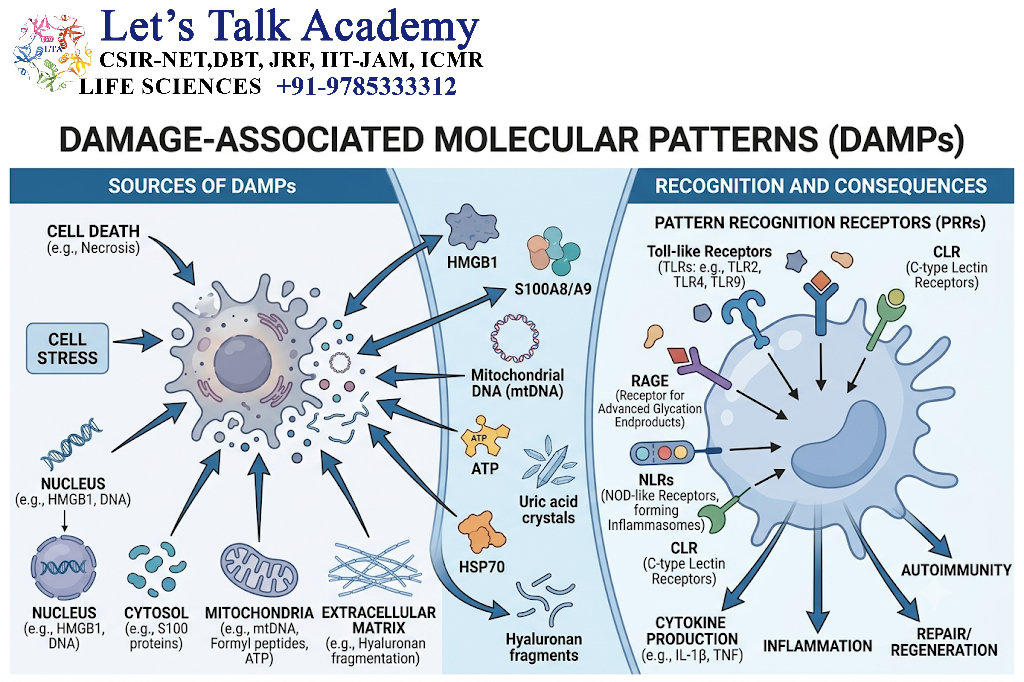
Damage-associated molecular patterns (DAMPs) are endogenous molecules released, exposed or generated during cellular stress, tissue injury or cell death.
DAMPs can activate innate immune receptors even in the absence of an invading microorganism.
Examples include:
- Extracellular ATP
- HMGB1
- Certain heat-shock proteins
- Components released from damaged cells
DAMP-mediated activation of innate immunity contributes to sterile inflammation, in which inflammation occurs without an active microbial infection.
6. General Structure of TLRs
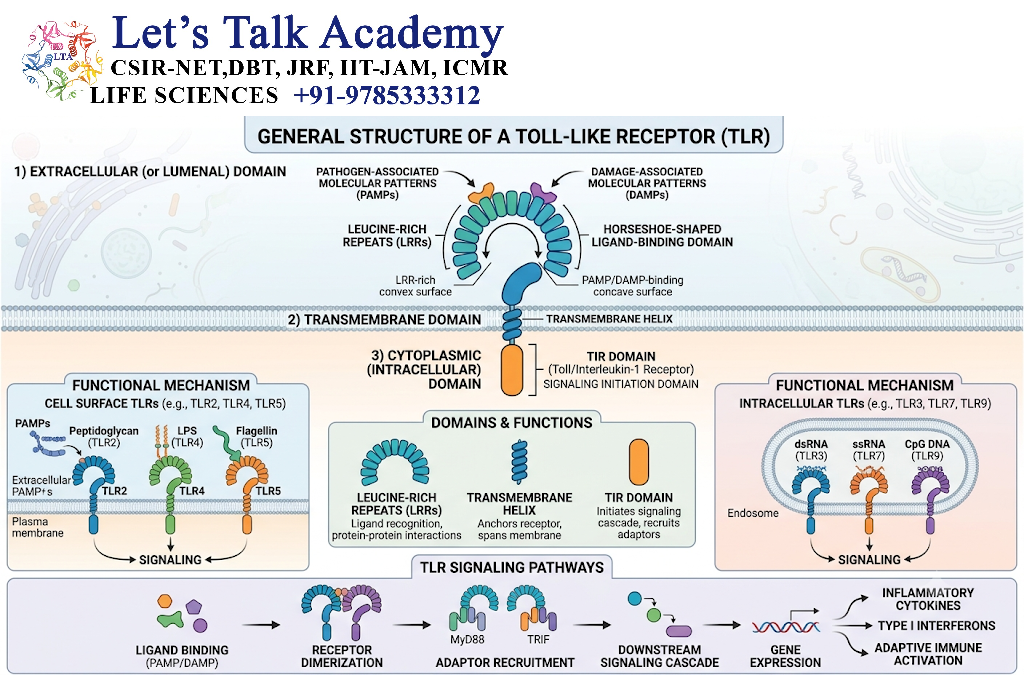
TLRs are generally type-I transmembrane glycoproteins. Their structure can be divided into three major regions:
- Extracellular leucine-rich repeat domain
- Transmembrane domain
- Cytoplasmic TIR domain
Simplified organization
Extracellular region → LRR domain → Transmembrane domain → TIR domain → Cytoplasm
Each region performs a specific function in ligand recognition and signal transduction.
7. Extracellular Leucine-Rich Repeat Domain
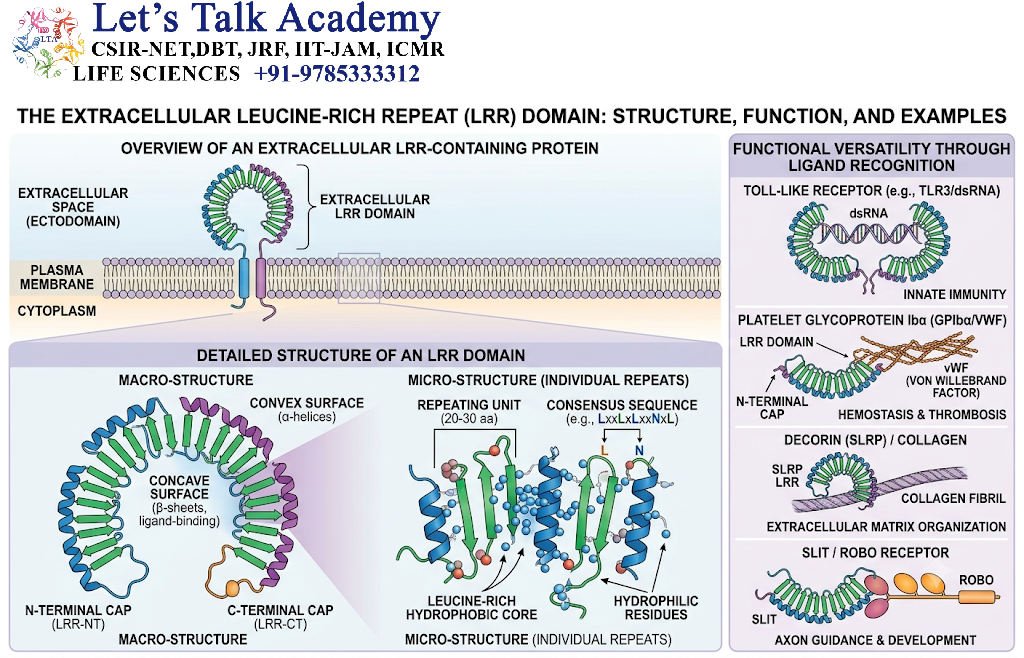
The extracellular region of TLRs contains multiple leucine-rich repeats (LRRs).
These repeats form a characteristic curved structure that provides a molecular surface for ligand recognition and receptor interaction.
Functions of the LRR domain
The LRR domain:
- Participates in ligand recognition
- Determines ligand specificity
- Participates in receptor dimerization
- Helps generate the conformational changes required for signaling
The exact ligand-recognition mechanism differs among individual TLRs.
8. Transmembrane Domain
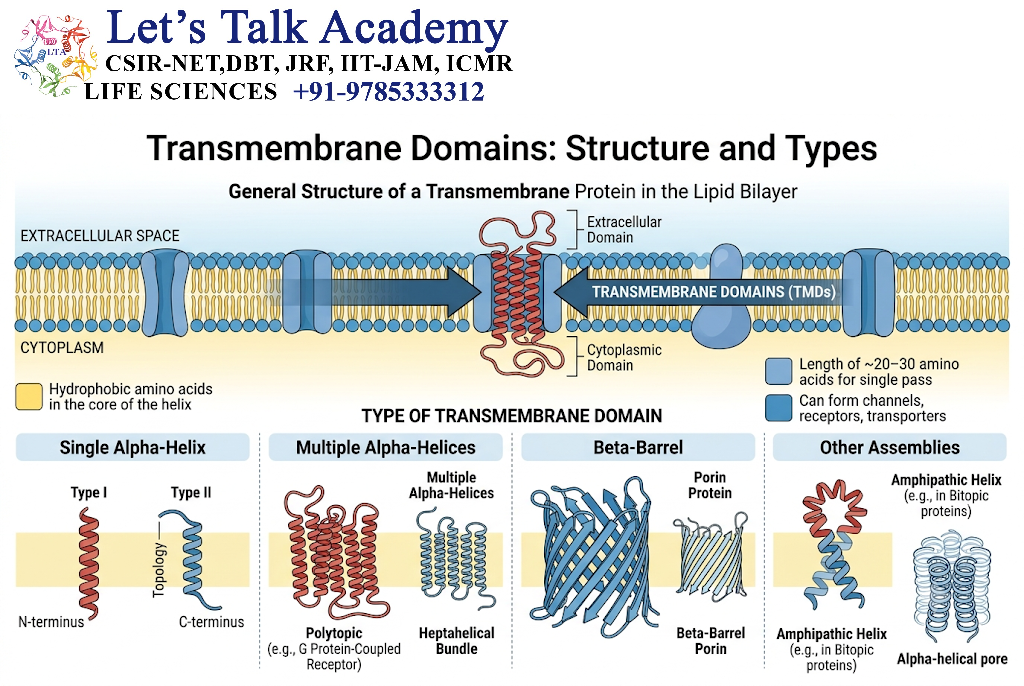
TLRs contain a single transmembrane segment that anchors the receptor within the cellular membrane.
The transmembrane domain separates the extracellular ligand-recognition region from the intracellular signaling region.
Following ligand recognition, structural changes in the receptor are transmitted toward the intracellular region, facilitating activation of downstream signaling proteins.
9. Cytoplasmic TIR Domain
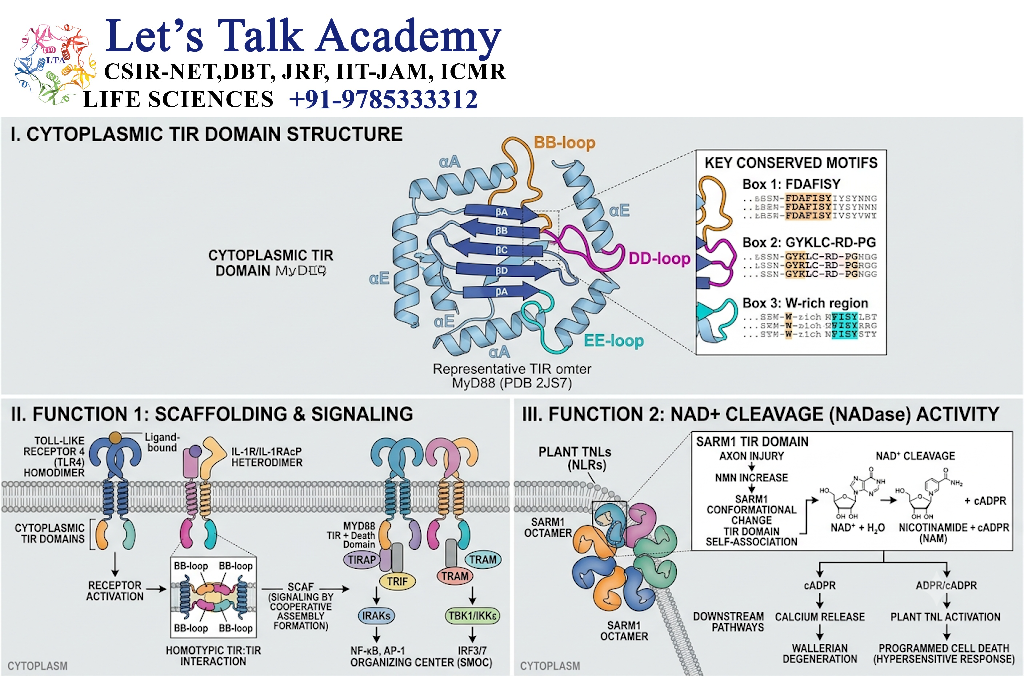
The cytoplasmic region contains a Toll/Interleukin-1 receptor (TIR) domain.
The TIR domain is essential for signal transduction because it interacts with TIR-containing adaptor proteins.
Important adaptor proteins include:
- MyD88
- TIRAP/MAL
- TRIF
- TRAM
Different TLRs use different combinations of adaptor proteins, which explains why different TLRs can produce different cellular responses.
10. Classification of Human TLRs
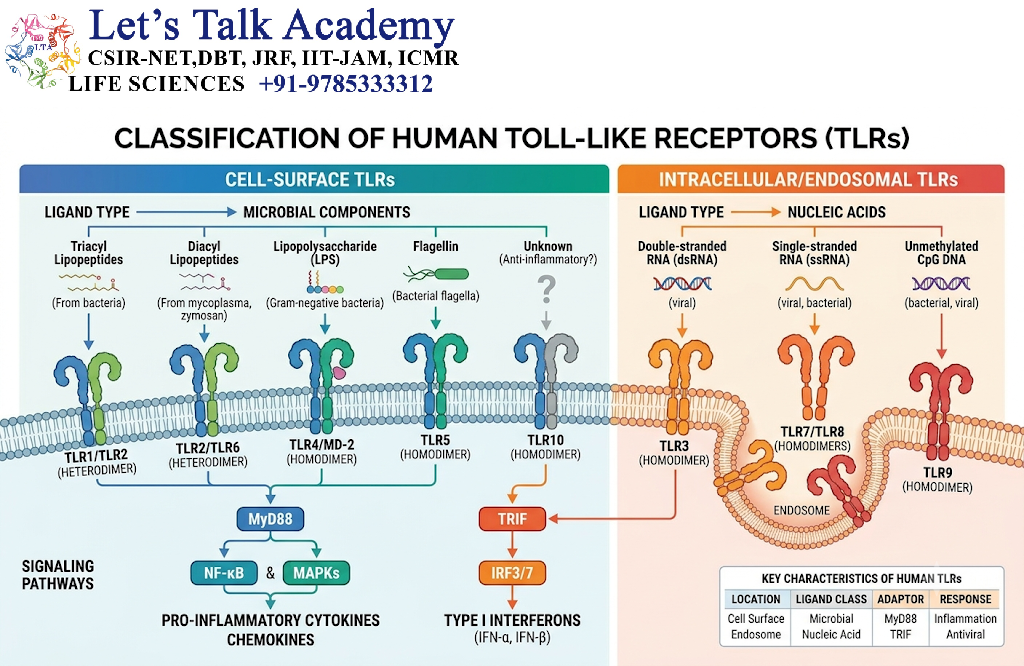
Humans have 10 TLRs: TLR1–TLR10.
They can be broadly divided according to their cellular localization.
10.1 Cell-Surface TLRs
These TLRs are mainly associated with the plasma membrane and generally recognize microbial components such as lipids, lipoproteins and proteins.
Important cell-surface TLRs include:
- TLR1
- TLR2
- TLR4
- TLR5
- TLR6
- TLR10
10.2 Endosomal TLRs
These receptors are primarily located within intracellular endosomal compartments and mainly recognize microbial nucleic acids.
Important endosomal TLRs include:
- TLR3
- TLR7
- TLR8
- TLR9
Classification table
| Group | TLRs | Major type of ligand |
|---|---|---|
| Cell surface | TLR1, TLR2, TLR4, TLR5, TLR6, TLR10 | Lipids, lipoproteins, proteins |
| Endosomal | TLR3, TLR7, TLR8, TLR9 | Microbial nucleic acids |
11. TLR1
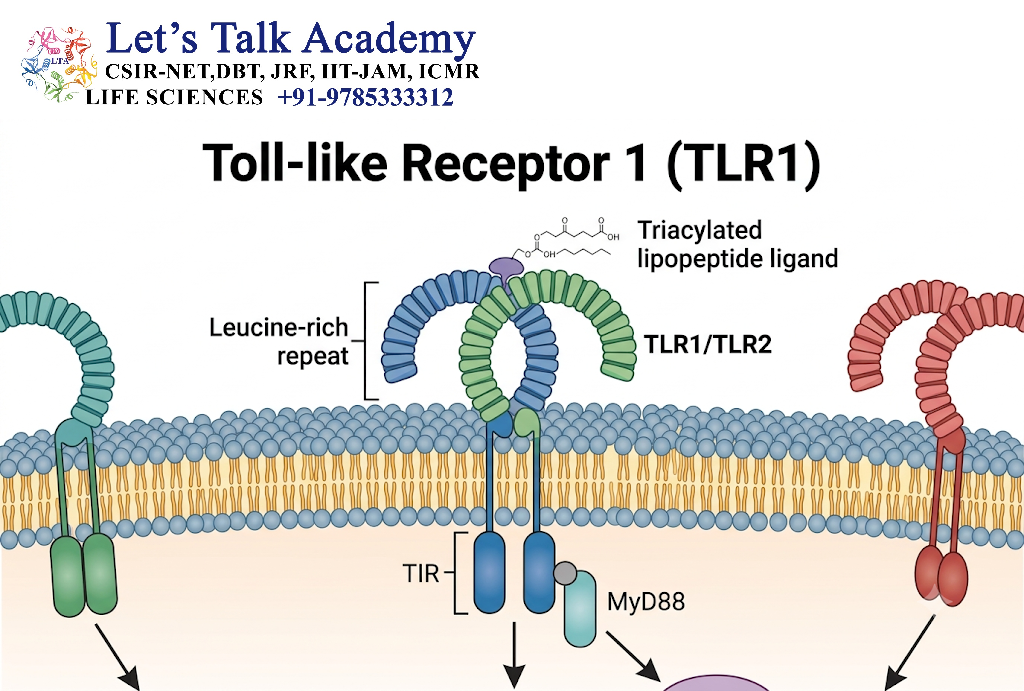
TLR1 generally functions as a heterodimer with TLR2.
Ligand
TLR1/TLR2 recognizes mainly triacylated lipopeptides associated with microorganisms.
Location
TLR1 is primarily associated with the cell surface.
Signaling
Following ligand recognition, TLR1/TLR2 activates signaling primarily through the MyD88-dependent pathway.
Major sequence
TLR1/TLR2 → TIRAP/MAL → MyD88 → IRAKs → TRAF6 → TAK1 → NF-κB/MAPK
Biological function
Activation results in production of inflammatory mediators that contribute to antimicrobial defense.
12. TLR2
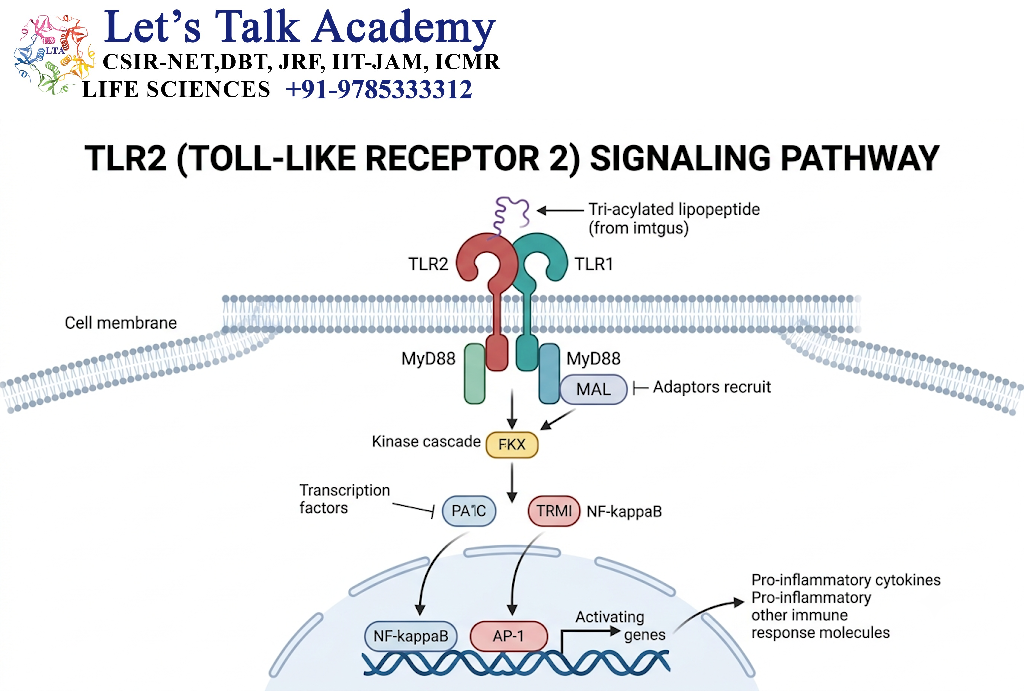
TLR2 is an important cell-surface receptor involved in recognition of several microbial lipids and lipoproteins.
TLR2 commonly forms heterodimers with:
- TLR1
- TLR6
TLR2/TLR1
Recognizes mainly triacylated lipopeptides.
TLR2/TLR6
Recognizes mainly diacylated lipopeptides.
Major ligands
- Bacterial lipoproteins
- Lipopeptides
- Components of Gram-positive microorganisms
- Certain fungal components
Signaling
TLR2 primarily signals through MyD88, with TIRAP/MAL acting as an important bridging adaptor.
Major outcome
Activation results in:
- NF-κB activation
- MAPK activation
- Production of inflammatory cytokines
- Production of chemokines
- Recruitment and activation of immune cells
13. TLR3
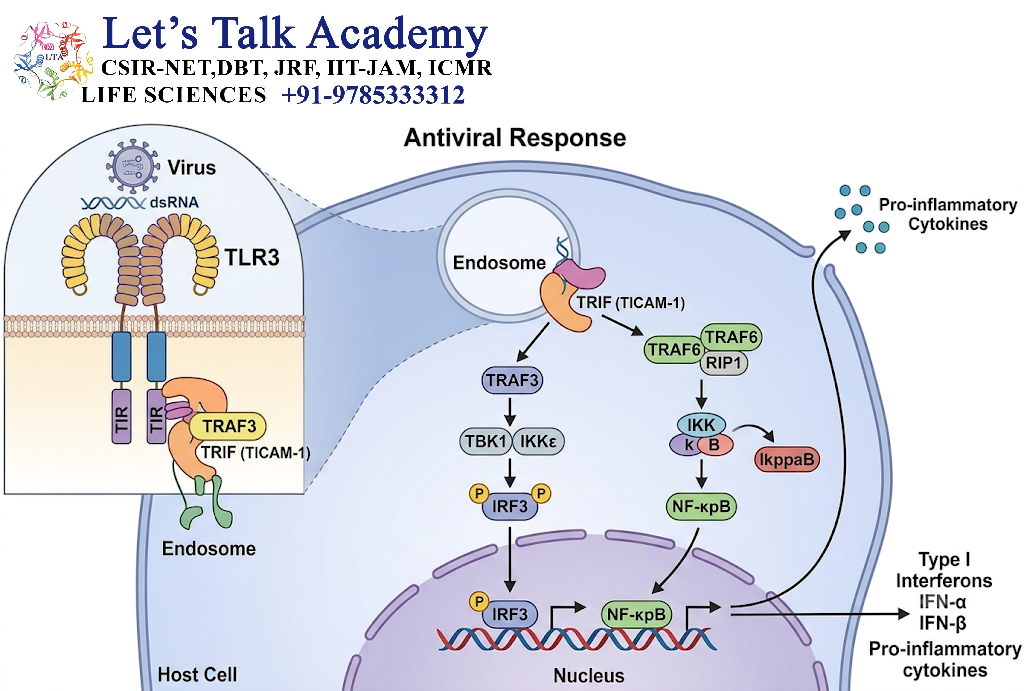
TLR3 is an endosomal TLR that recognizes double-stranded RNA (dsRNA).
Double-stranded RNA can be produced during the replication cycle of many viruses.
Location
TLR3 is primarily found in intracellular endosomal compartments.
Ligand
Double-stranded RNA
Adaptor
TLR3 is unique among human TLRs because its signaling is primarily dependent on:
TRIF
rather than MyD88.
Signaling pathway
dsRNA → TLR3 → TRIF → TBK1/IKKε → IRF3 → Type-I interferons
TLR3 signaling can also activate NF-κB.
Major functions
TLR3 contributes particularly to antiviral innate immunity by promoting production of type-I interferons, especially IFN-β, along with inflammatory mediators.
14. TLR4
TLR4 is one of the best-characterized TLRs.
It recognizes lipopolysaccharide (LPS), a major component of the outer membrane of Gram-negative bacteria.
Major ligand
Lipopolysaccharide (LPS)
TLR4 recognition of LPS requires accessory molecules including:
- LPS-binding protein
- CD14
- MD-2
The active receptor complex involves TLR4 and MD-2.
Signaling pathways
TLR4 can activate both major TLR signaling routes.
MyD88-dependent pathway
TLR4 → TIRAP/MAL → MyD88 → IRAK4 → IRAK1 → TRAF6 → TAK1 → NF-κB/MAPK
This pathway contributes strongly to inflammatory cytokine production.
TRIF-dependent pathway
TLR4 → TRAM → TRIF → TBK1/IKKε → IRF3
This pathway contributes to type-I interferon production.
Biological significance
Excessive TLR4 activation by bacterial LPS can contribute to systemic inflammatory responses and is an important mechanism studied in sepsis and endotoxin-associated inflammation.
15. TLR5
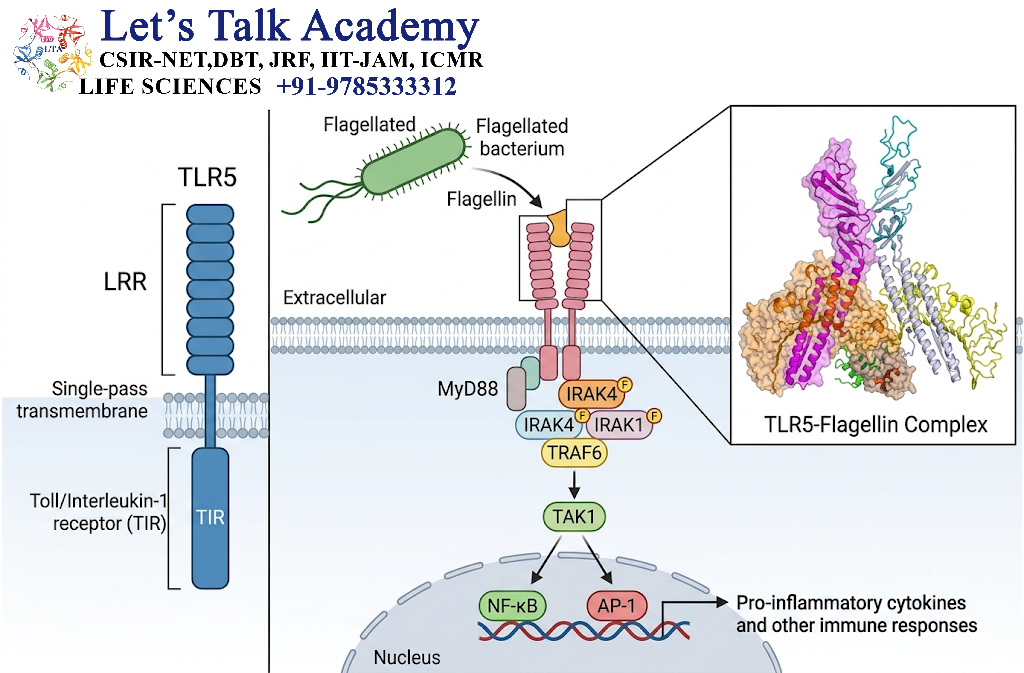
TLR5 is a cell-surface receptor that recognizes flagellin, the major structural protein of bacterial flagella.
Ligand
Flagellin
Location
Primarily cell surface.
Signaling
TLR5 primarily uses the MyD88-dependent pathway.
Pathway
Flagellin → TLR5 → MyD88 → IRAKs → TRAF6 → TAK1 → NF-κB/MAPK
Biological function
TLR5 allows the innate immune system to detect motile bacteria expressing flagellin and promotes inflammatory and antimicrobial responses.
16. TLR6
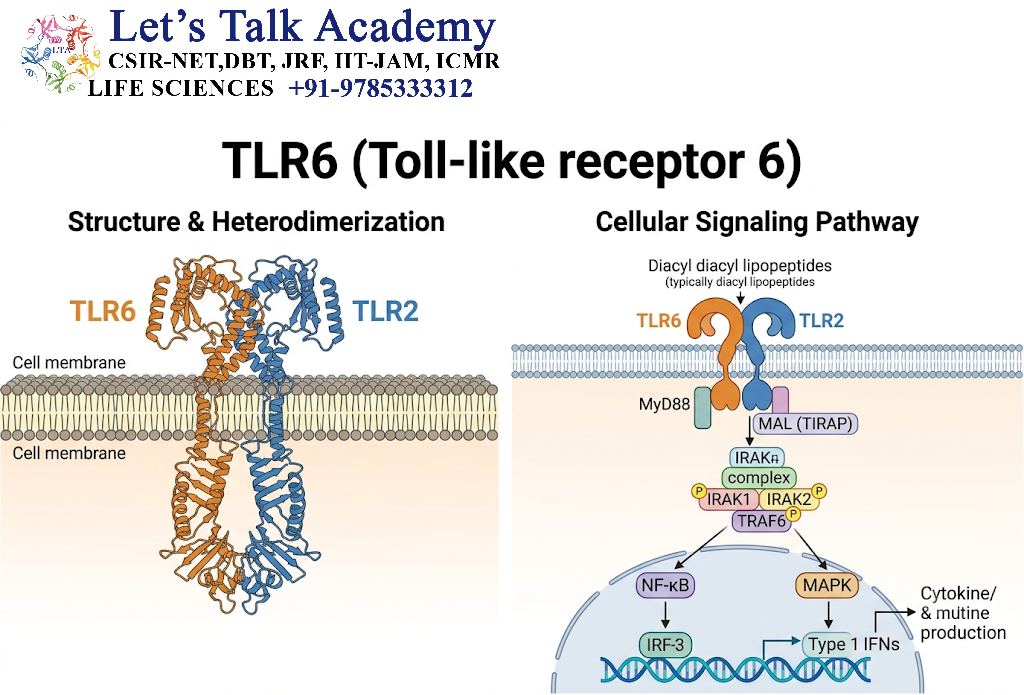
TLR6 functions mainly as a heterodimer with TLR2.
Major ligands
TLR2/TLR6 recognizes several diacylated lipopeptides.
Signaling
It primarily uses the MyD88-dependent pathway.
Pathway
TLR2/TLR6 → TIRAP/MAL → MyD88 → IRAKs → TRAF6 → TAK1 → NF-κB/MAPK
Activation leads to production of inflammatory cytokines and chemokines.
17. TLR7
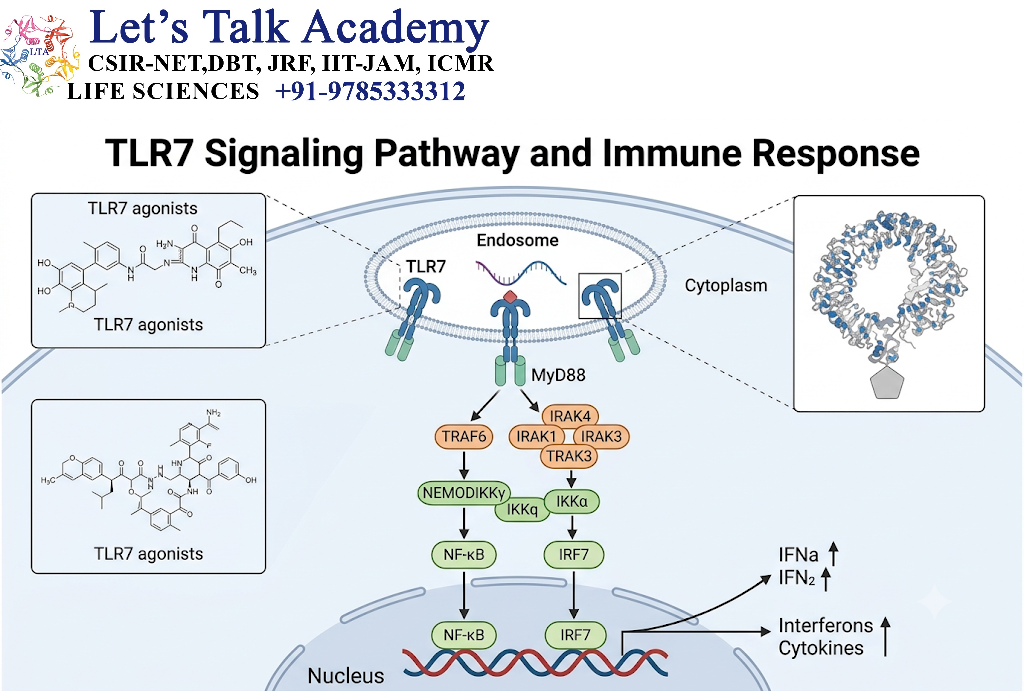
TLR7 is an endosomal receptor that recognizes microbial single-stranded RNA (ssRNA).
It has an important role in antiviral immunity.
Ligand
Single-stranded RNA
Location
Endosomal compartments.
Adaptor
MyD88
Signaling
ssRNA → TLR7 → MyD88 → IRAK4/IRAK1 → TRAF6 → IRF7/NF-κB
TLR7 activation can stimulate production of type-I interferons and inflammatory cytokines.
Biological importance
TLR7 is particularly important in recognition of viral RNA and activation of antiviral immune responses.
18. TLR8
TLR8 is another endosomal receptor that recognizes microbial single-stranded RNA and related RNA-derived structures.
Location
Endosomal compartment.
Ligand
Microbial ssRNA and RNA degradation products.
Adaptor
MyD88
Signaling
RNA → TLR8 → MyD88 → IRAK4 → IRAK1 → TRAF6 → NF-κB/MAPK
TLR8 activation promotes inflammatory cytokine production and contributes to antiviral immunity.
19. TLR9
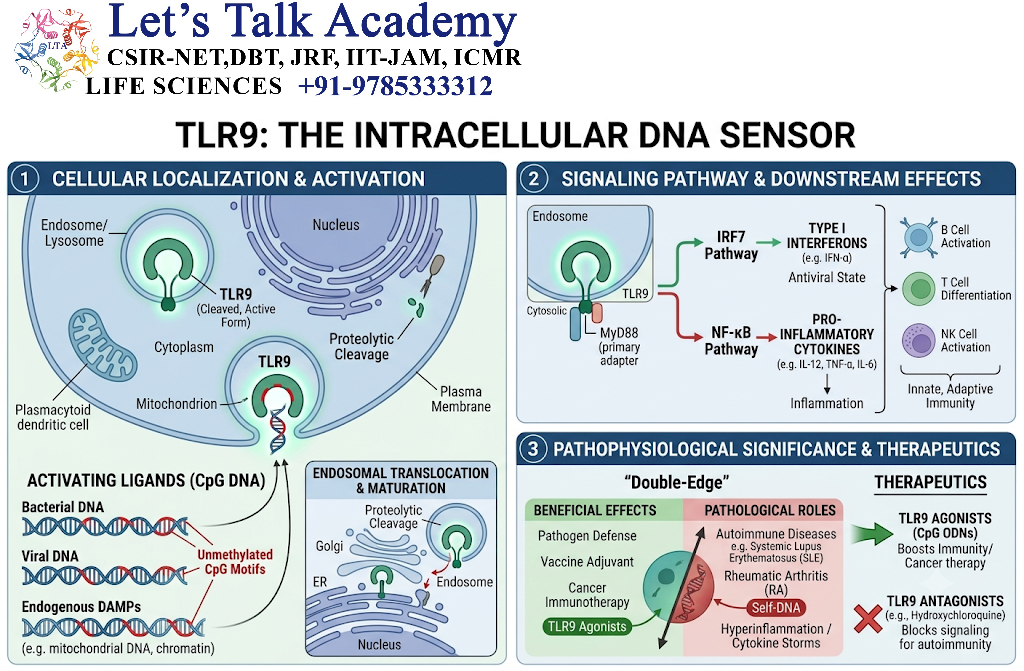
TLR9 recognizes DNA containing unmethylated CpG motifs, which are relatively abundant in microbial DNA compared with vertebrate genomic DNA.
Location
Endosomal compartment.
Major ligand
Unmethylated CpG-rich microbial DNA
Adaptor
MyD88
Signaling
CpG DNA → TLR9 → MyD88 → IRAK4/IRAK1 → TRAF6 → NF-κB/IRF7
Biological functions
TLR9 contributes to:
- Recognition of microbial DNA
- Production of inflammatory cytokines
- Production of type-I interferons
- Activation of innate immune responses
20. TLR10
TLR10 is the least well-characterized member of the human TLR family.
It is structurally related to other TLRs and can participate in immune regulation, but its precise physiological functions and endogenous or microbial ligands remain less clearly established than those of many other TLRs.
Therefore, TLR10 should be distinguished from the better-characterized TLRs such as TLR3, TLR4, TLR7 and TLR9.
21. Comparison of Human TLRs
| TLR | Main location | Major ligand | Main adaptor/signaling |
|---|---|---|---|
| TLR1 | Cell surface | Triacylated lipopeptides with TLR2 | MyD88/TIRAP |
| TLR2 | Cell surface | Lipoproteins/lipopeptides | MyD88/TIRAP |
| TLR3 | Endosome | dsRNA | TRIF |
| TLR4 | Cell surface/endosomal signaling | LPS | MyD88 + TRIF |
| TLR5 | Cell surface | Flagellin | MyD88 |
| TLR6 | Cell surface | Diacylated lipopeptides with TLR2 | MyD88/TIRAP |
| TLR7 | Endosome | ssRNA | MyD88 |
| TLR8 | Endosome | ssRNA/RNA products | MyD88 |
| TLR9 | Endosome | Unmethylated CpG DNA | MyD88 |
| TLR10 | Cell surface | Not completely established | Regulatory functions under investigation |
22. TLR Dimerization
Many TLRs become functionally active through dimerization.
Dimerization may occur between two identical receptors or between two different TLRs.
Examples
TLR1 + TLR2
Recognizes triacylated lipopeptides.
TLR2 + TLR6
Recognizes diacylated lipopeptides.
Some TLRs, such as TLR3, TLR4, TLR5, TLR7, TLR8 and TLR9, can form receptor complexes that facilitate intracellular signaling after ligand recognition.
Dimerization brings the intracellular TIR domains into an appropriate arrangement for interaction with adaptor proteins.
23. TLR Signaling
TLR signaling is the process by which recognition of a microbial molecule at the receptor is converted into changes in gene expression inside the cell.
The major signaling pathways are:
- MyD88-dependent pathway
- TRIF-dependent pathway
24. MyD88-Dependent Signaling Pathway
Most TLRs use MyD88, with TLR3 being the major exception.
The pathway can be summarized as:
TLR activation → TIR adaptor → MyD88 → IRAK4 → IRAK1/2 → TRAF6 → TAK1 → IKK/MAPK → NF-κB/AP-1
24.1 MyD88 Recruitment
After TLR activation, the TIR domains interact with adaptor proteins.
MyD88 is recruited directly or indirectly depending on the TLR.
For TLR2 and TLR4, TIRAP/MAL helps recruit MyD88 to the activated receptor.
24.2 IRAK Activation
MyD88 recruits IL-1 receptor-associated kinases (IRAKs).
Important members include:
- IRAK4
- IRAK1
- IRAK2
IRAK4 plays an important initiating role in the signaling cascade.
24.3 TRAF6 Activation
Activated IRAKs interact with TRAF6, an important signaling protein.
TRAF6 contributes to downstream activation of the kinase TAK1.
24.4 TAK1 Activation
TAK1, or transforming growth factor-β-activated kinase 1, is a major signaling kinase downstream of TRAF6.
TAK1 activates pathways leading to:
- NF-κB activation
- MAPK activation
24.5 NF-κB Activation
Under resting conditions, NF-κB is retained in the cytoplasm by inhibitory proteins called IκBs.
Activation of the IKK complex results in phosphorylation and degradation of IκB.
NF-κB is then able to enter the nucleus and regulate transcription of inflammatory genes.
24.6 MAPK Activation
TLR signaling can also activate MAPK pathways, including:
- ERK
- JNK
- p38
These pathways contribute to activation of AP-1 and expression of inflammatory genes.
25. TRIF-Dependent Signaling Pathway
The TRIF pathway is particularly important for antiviral responses.
The main receptors associated with this pathway are:
- TLR3
- TLR4
Basic pathway
TLR3/TLR4 → TRIF → TBK1/IKKε → IRF3 → Type-I interferons
TRIF signaling can also activate NF-κB.
25.1 IRF3 Activation
Interferon regulatory factor 3 (IRF3) is an important transcription factor activated downstream of TLR3 and TLR4.
Following activation, IRF3 enters the nucleus and promotes expression of type-I interferons, particularly IFN-β.
25.2 Type-I Interferons
Type-I interferons include:
- IFN-α
- IFN-β
They play a central role in antiviral defense by inducing expression of interferon-stimulated genes.
26. Important TLR Adaptor Proteins
| Adaptor | Full name | Main TLR association | Major role |
|---|---|---|---|
| MyD88 | Myeloid differentiation primary response 88 | Most TLRs | Inflammatory signaling |
| TIRAP/MAL | TIR-domain-containing adaptor protein | TLR2, TLR4 | MyD88 recruitment |
| TRIF | TIR-domain-containing adaptor-inducing interferon-β | TLR3, TLR4 | Interferon signaling |
| TRAM | TRIF-related adaptor molecule | TLR4 | TRIF recruitment |
27. Major Transcription Factors Activated by TLRs
27.1 NF-κB
NF-κB regulates genes involved in:
- Inflammation
- Cytokine production
- Cell survival
- Immune-cell recruitment
27.2 AP-1
AP-1 is activated through MAPK pathways and regulates expression of several inflammatory genes.
27.3 IRF3
IRF3 is particularly important in TLR3 and TLR4 signaling and contributes to production of type-I interferons.
27.4 IRF7
IRF7 is particularly important in signaling through nucleic-acid-sensing TLRs such as TLR7 and TLR9 and contributes strongly to type-I interferon production.
28. Cytokines Produced Following TLR Activation
TLR activation can stimulate production of several cytokines.
Major inflammatory cytokines
- TNF-α
- IL-1β
- IL-6
- IL-12
Chemokines
Chemokines help recruit immune cells to sites of infection or tissue injury.
Type-I interferons
- IFN-α
- IFN-β
These are particularly important for antiviral defense.
29. TLRs and Dendritic Cells
Dendritic cells are important antigen-presenting cells that connect innate and adaptive immunity.
TLR activation in dendritic cells can lead to:
- Dendritic-cell activation
- Increased expression of co-stimulatory molecules
- Increased cytokine production
- Enhanced antigen presentation
- Activation of T cells
Therefore, TLRs do not simply produce inflammation; they also help initiate adaptive immune responses.
30. TLRs and Macrophages
Macrophages express several TLRs and use them to recognize microorganisms.
Following TLR activation, macrophages can:
- Produce inflammatory cytokines
- Produce chemokines
- Increase antimicrobial activity
- Recruit other immune cells
- Participate in pathogen elimination
Macrophage TLR signaling is therefore an important component of early host defense.
31. TLRs and B Cells
Some B cells express TLRs and can respond directly to microbial molecules.
TLR signaling can influence:
- B-cell activation
- Cytokine production
- Antibody responses
- Interaction between innate and adaptive immunity
TLR signaling can therefore provide additional signals that influence B-cell responses.
32. TLRs and Adaptive Immunity
TLRs primarily belong to the innate immune system, but their activation strongly influences adaptive immunity.
TLR activation can increase:
- Antigen presentation
- Expression of co-stimulatory molecules
- Cytokine production
- T-cell activation
- B-cell responses
Thus, TLRs form an important bridge between innate and adaptive immunity.
33. TLRs in Antiviral Immunity
Several TLRs recognize viral nucleic acids.
| TLR | Viral material recognized |
|---|---|
| TLR3 | dsRNA |
| TLR7 | ssRNA |
| TLR8 | ssRNA |
| TLR9 | Viral/microbial DNA |
Activation of these receptors stimulates production of type-I interferons and other antiviral mediators.
The resulting response can induce expression of interferon-stimulated genes (ISGs), which establish an antiviral state in cells.
34. TLRs in Bacterial Immunity
TLRs recognize several bacterial components.
For example:
- TLR4 recognizes LPS.
- TLR5 recognizes flagellin.
- TLR2/TLR1 recognizes certain triacylated lipopeptides.
- TLR2/TLR6 recognizes certain diacylated lipopeptides.
- TLR9 recognizes microbial DNA.
This recognition triggers inflammatory and antimicrobial responses.
35. Regulation of TLR Signaling
TLR activation must be tightly controlled.
Excessive or prolonged activation can produce excessive inflammation and tissue damage.
The body therefore uses multiple mechanisms to regulate TLR signaling.
These include:
- Limiting receptor expression
- Controlling receptor trafficking
- Negative regulatory proteins
- Removal or degradation of signaling molecules
- Production of anti-inflammatory mediators
- Termination of transcriptional responses
Balanced TLR signaling is therefore essential for effective host defense without excessive tissue injury.
36. Clinical Significance of TLRs
TLRs are involved in many physiological and pathological processes.
36.1 Infectious Diseases
TLRs are important in recognition of:
- Bacterial infections
- Viral infections
- Fungal infections
- Other microbial infections
Defects in TLR signaling can alter host susceptibility to infection.
36.2 Sepsis and Systemic Inflammation
Excessive activation of TLR pathways, particularly pathways associated with bacterial products such as LPS, can contribute to systemic inflammatory responses.
TLR4 is particularly important in the study of LPS-mediated inflammation.
36.3 Autoimmune and Inflammatory Diseases
Abnormal activation of nucleic-acid-sensing TLRs has been investigated in several autoimmune and chronic inflammatory conditions.
The inappropriate recognition of endogenous nucleic acids can contribute to inflammatory signaling.
36.4 Cancer
TLR signaling has been investigated in cancer because TLR pathways can influence:
- Inflammation
- Tumor-cell behavior
- Immune-cell activation
- Tumor microenvironment
The effects can vary depending on the receptor, tissue and biological context.
37. TLR3, TLR7, TLR8 and TLR9 Comparison
| Feature | TLR3 | TLR7 | TLR8 | TLR9 |
|---|---|---|---|---|
| Location | Endosome | Endosome | Endosome | Endosome |
| Major ligand | dsRNA | ssRNA | ssRNA/RNA products | CpG DNA |
| Main adaptor | TRIF | MyD88 | MyD88 | MyD88 |
| Major response | Type-I IFN | IFN + inflammation | Inflammation + antiviral response | IFN + inflammation |
38. TLR2 and TLR4 Comparison
| Feature | TLR2 | TLR4 |
|---|---|---|
| Main location | Cell surface | Cell surface with endosomal signaling |
| Major recognition | Lipoproteins/lipopeptides | LPS |
| Important partners | TLR1/TLR6 | MD-2 |
| MyD88 pathway | Yes | Yes |
| TRIF pathway | No major canonical role | Yes |
| Major association | Bacterial/fungal components | Gram-negative bacterial LPS |
39. MyD88 and TRIF Comparison
| Feature | MyD88 | TRIF |
|---|---|---|
| Full name | Myeloid differentiation primary response 88 | TIR-domain-containing adaptor-inducing interferon-β |
| Main role | Inflammatory signaling | Interferon signaling |
| Major transcription factors | NF-κB, AP-1 | IRF3, NF-κB |
| Major cytokine response | Inflammatory cytokines | Type-I interferons |
| Important receptors | Most TLRs | TLR3 and TLR4 |
40. TLR Signaling: Complete Conceptual Flow
A simplified sequence of TLR signaling can be represented as:
Microbial component
↓
TLR recognition
↓
TLR dimerization/activation
↓
TIR-domain interaction
↓
Adaptor recruitment
↓
MyD88 or TRIF pathway
↓
IRAK/TRAF6/TAK1 or TBK1/IKKε signaling
↓
NF-κB / AP-1 / IRF activation
↓
Gene transcription
↓
Cytokines + chemokines + type-I interferons
↓
Innate immune response
41. Important Differences Between PAMPs and DAMPs
| Feature | PAMPs | DAMPs |
|---|---|---|
| Origin | Microorganisms | Host cells/tissues |
| Associated with | Infection | Cellular damage/stress |
| Examples | LPS, flagellin, microbial RNA | HMGB1, ATP |
| Recognition | PRRs | PRRs |
| Major outcome | Antimicrobial inflammation | Sterile inflammation |
42. Biological Importance of TLRs
TLRs are important because they provide:
- Rapid recognition of pathogens
- Activation of innate immunity
- Production of inflammatory cytokines
- Antiviral interferon responses
- Recruitment of immune cells
- Activation of antigen-presenting cells
- Connection between innate and adaptive immunity
Therefore, TLRs can be considered important sentinel receptors of the innate immune system.
43. High-Yield Summary Table
| TLR | Main ligand | Location | Major adaptor | Major response |
|---|---|---|---|---|
| TLR1 | Triacylated lipopeptides with TLR2 | Cell surface | MyD88/TIRAP | Inflammation |
| TLR2 | Lipoproteins/lipopeptides | Cell surface | MyD88/TIRAP | Inflammation |
| TLR3 | dsRNA | Endosome | TRIF | Type-I IFN |
| TLR4 | LPS | Cell surface/endosomal signaling | MyD88 + TRIF | Inflammation + IFN |
| TLR5 | Flagellin | Cell surface | MyD88 | Inflammation |
| TLR6 | Diacylated lipopeptides with TLR2 | Cell surface | MyD88/TIRAP | Inflammation |
| TLR7 | ssRNA | Endosome | MyD88 | IFN + inflammation |
| TLR8 | ssRNA/RNA products | Endosome | MyD88 | Inflammation + antiviral response |
| TLR9 | CpG DNA | Endosome | MyD88 | IFN + inflammation |
| TLR10 | Not completely established | Mainly cell surface | Under investigation | Immunoregulatory functions |


