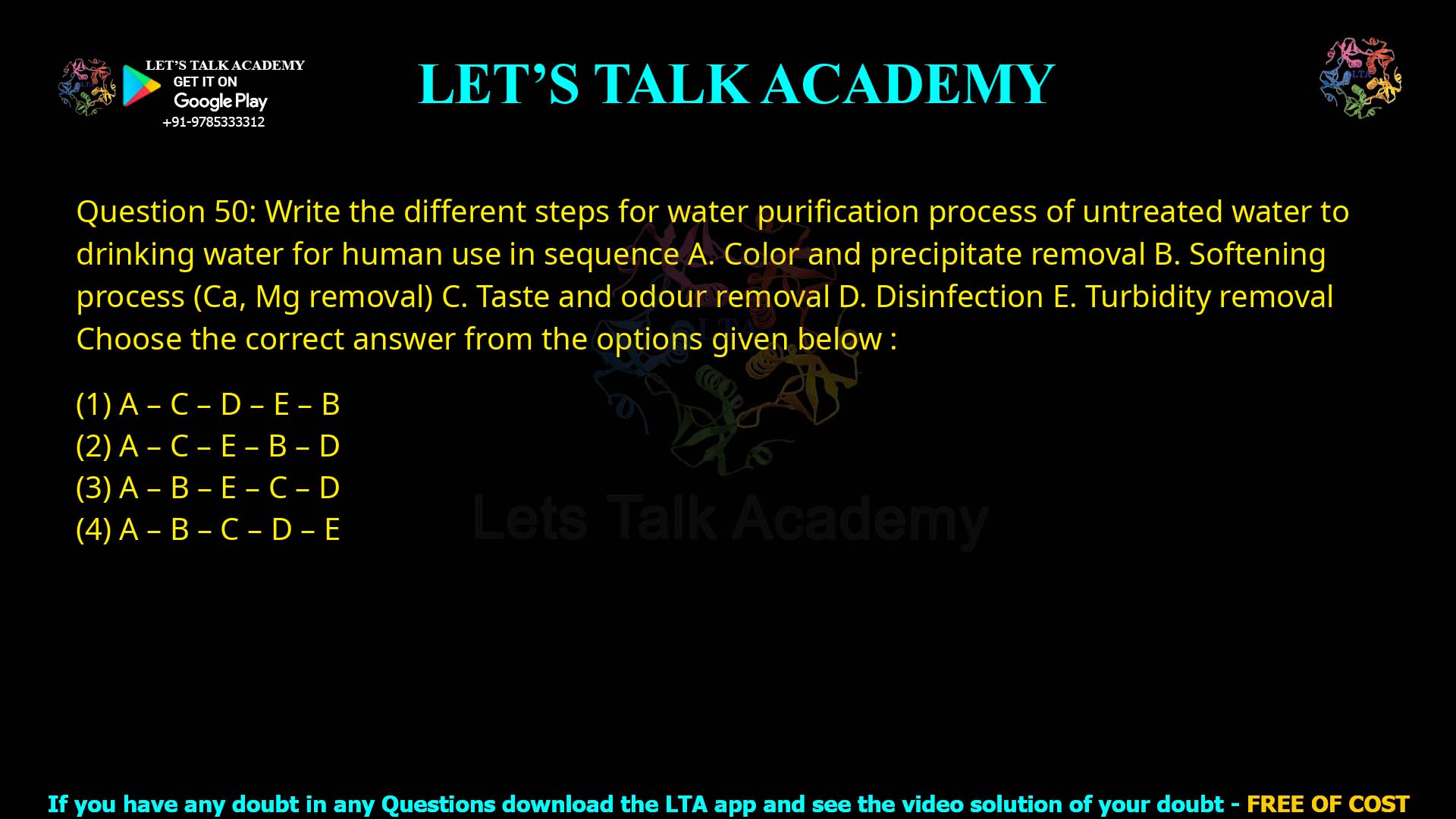
Q.50 Write the different steps for water purification process of untreated water
to drinking water for human use in sequence:
- Color and precipitate removal
- Softening process (Ca, Mg removal)
- Taste and odour removal
- Disinfection
- Turbidity removal
Choose the correct answer from the options given below:
- A – C – D – E – B
- A – C – E – B – D
- A – B – E – C – D
- A – B – C – D – E
A – B – C – D – E is the correct sequence for the water purification process steps.
Question Breakdown
This question tests the standard sequence of municipal water treatment from untreated water to potable drinking water. The steps address specific contaminants progressively: color/precipitates first, then hardness, taste/odor, turbidity, and pathogens last.
Correct Sequence Explanation
Standard water purification follows this logical order:
-
A (Color and precipitate removal): Sedimentation/coagulation removes visible color, mud, and precipitates early.
-
B (Softening process – Ca, Mg removal): Ion exchange or lime softening follows to eliminate hardness ions after gross solids are gone.
-
C (Taste and odour removal): Activated carbon or aeration targets organic compounds post-softening.
-
D (Disinfection): Chlorination/UV kills microbes after physical/chemical treatments to avoid interference.
-
E (Turbidity removal): Final filtration (sand/membrane) polishes clarity before distribution.
Thus, A – B – C – D – E matches conventional treatment plant flow.
Why Other Options Are Wrong
-
A – C – D – E – B: Taste/odor (C) before softening (B); hardness removal precedes aesthetic treatment.
-
A – C – E – B – D: Places disinfection (D) mid-process; must be near end after filtration.
-
A – B – E – C – D: Turbidity (E) before taste (C); fine filtration follows, not precedes, odor control.
The water purification process steps sequence transforms raw water into safe drinking water through systematic contaminant removal. This guide details the correct sequence for water purification process of untreated water to drinking water—A (color/precipitate), B (Ca/Mg softening), C (taste/odor), D (disinfection), E (turbidity)—essential for exams and public health understanding.
Water Treatment Overview
Municipal plants follow 5-7 core steps to remove physical, chemical, and biological impurities, serving billions daily. Sequence prevents downstream fouling and ensures efficacy.
Step-by-Step Sequence (A-B-C-D-E)
-
A: Coagulation/sedimentation removes color, precipitates via alum flocs.
-
B: Softening (lime/soda or ion exchange) precipitates Ca²⁺, Mg²⁺ as carbonates.
-
C: Activated carbon adsorption or aeration eliminates organics causing taste/odor.
-
D: Chlorine/ozone/UV disinfects pathogens post-clarification.
-
E: Rapid sand/microfiltration removes residual turbidity (<1 NTU).
Step Process Targets Method A Color/Precipitate Removal Mud, organics Coagulation/Sedimentation B Softening Ca, Mg ions Lime softening/Ion exchange C Taste/Odour Removal VOCs, organics Carbon filtration/Aeration D Disinfection Bacteria, viruses Chlorination/UV E Turbidity Removal Fine particles Sand filtration This water purification steps sequence ensures compliance with WHO standards (turbidity <1 NTU, zero coliforms).
-


