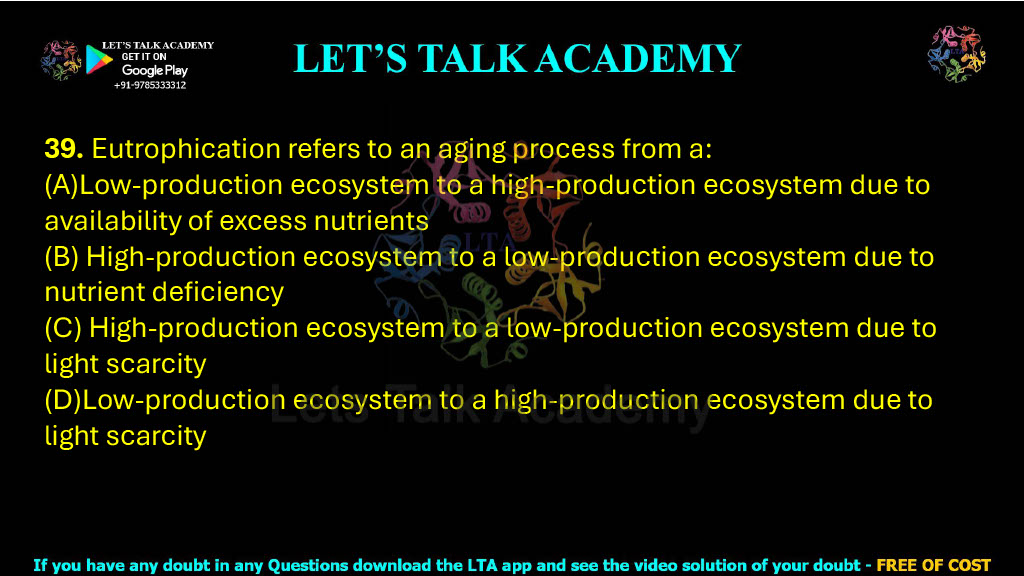




39. Eutrophication refers to an aging process from a: (A)Low-production ecosystem to a high-production ecosystem due to availability of excess nutrients (B) High-production ecosystem to a low-production ecosystem due to nutrient deficiency (C) High-production ecosystem to a low-production ecosystem due to light scarcity (D)Low-production ecosystem to a high-production ecosystem due to light scarcity

What Does Eutrophication Refer to in an Aquatic Ecosystem?

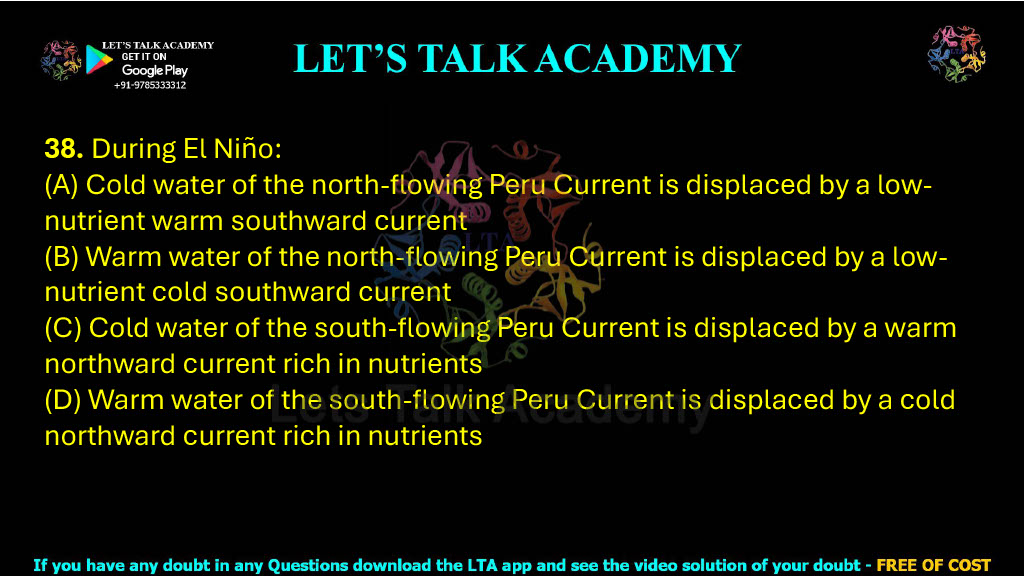
38. During El Niño:  (A) Cold water of the north-flowing Peru Current is displaced by a low-nutrient warm southward current (B) Warm water of the north-flowing Peru Current is displaced by a low-nutrient cold southward current (C) Cold water of the south-flowing Peru Current is displaced by a warm northward current rich in nutrients (D) Warm water of the south-flowing Peru Current is displaced by a cold northward current rich in nutrients

During El Niño, the Cold North-Flowing Peru Current

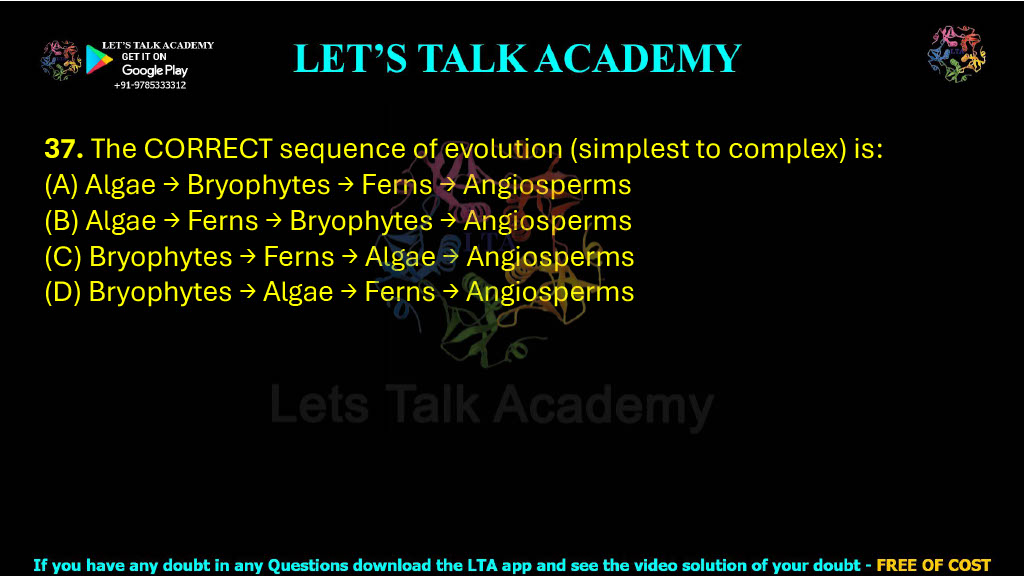
37. The CORRECT sequence of evolution (simplest to complex) is:  (A) Algae → Bryophytes → Ferns → Angiosperms (B) Algae → Ferns → Bryophytes → Angiosperms (C) Bryophytes → Ferns → Algae → Angiosperms (D) Bryophytes → Algae → Ferns → Angiosperms

Correct Sequence of Plant Evolution from Algae to Angiosperms

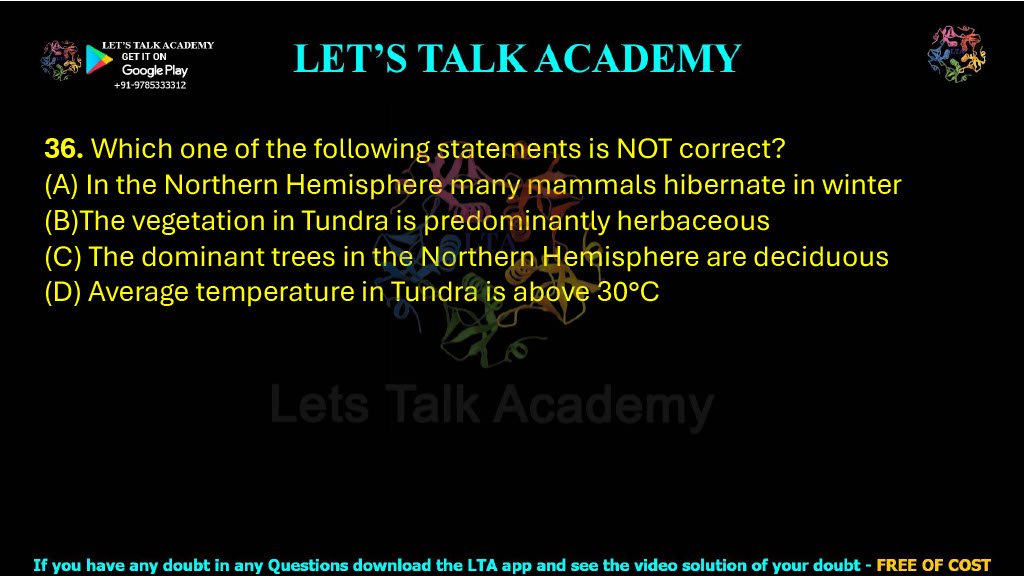
36. Which one of the following statements is NOT correct?  (A) In the Northern Hemisphere many mammals hibernate in winter (B)The vegetation in Tundra is predominantly herbaceous (C) The dominant trees in the Northern Hemisphere are deciduous (D) Average temperature in Tundra is above 30°C

Which Statement About the Northern Hemisphere

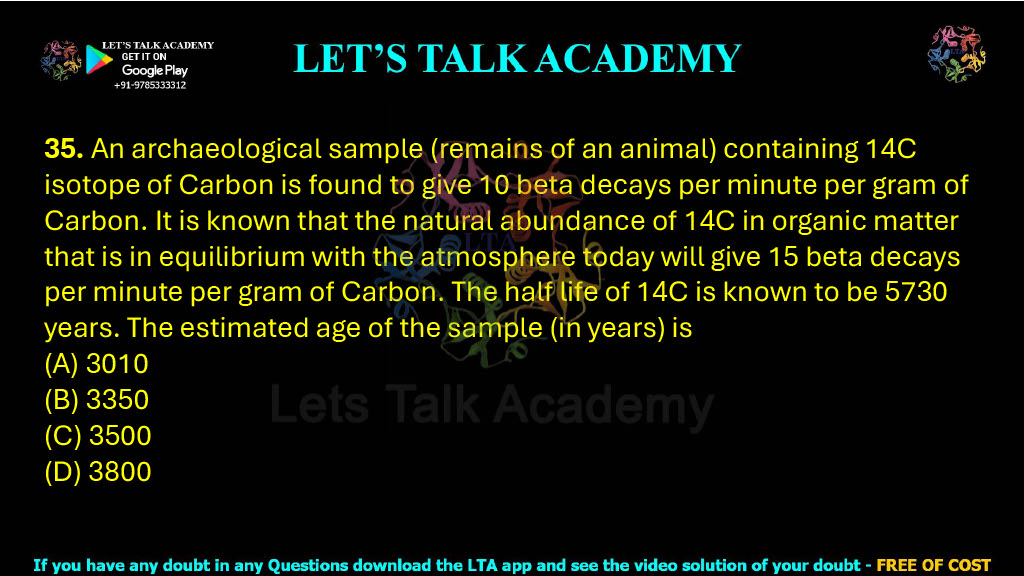
35. An archaeological sample (remains of an animal) containing 14C isotope of Carbon is found to give 10 beta decays per minute per gram of Carbon. It is known that the natural abundance of 14C in organic matter that is in equilibrium with the atmosphere today will give 15 beta decays per minute per gram of Carbon. The half life of 14C is known to be 5730 years. The estimated age of the sample (in years) is  (A) 3010 (B) 3350 (C) 3500 (D) 3800

The Estimated Age of the Archaeological Sample

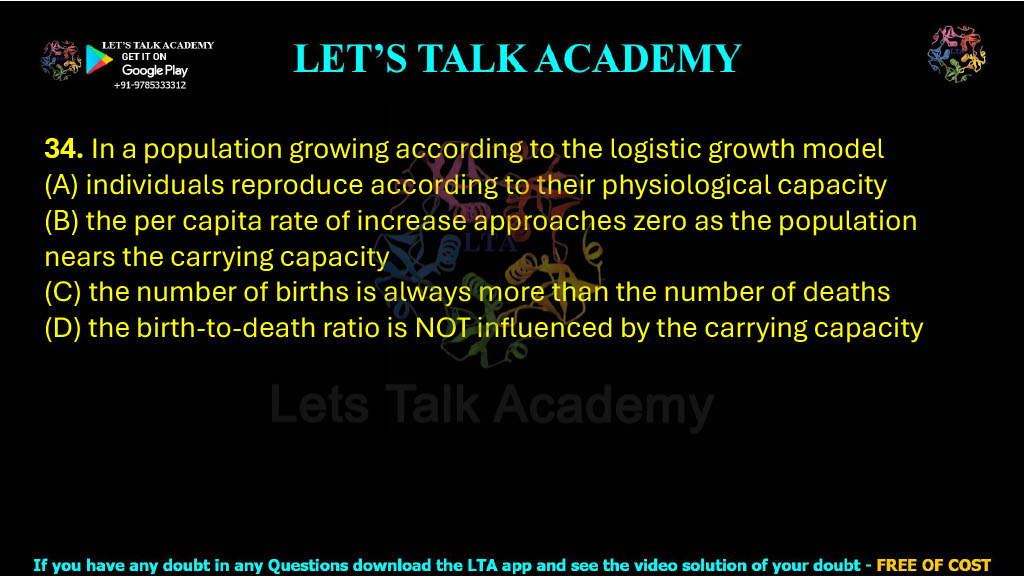
34. In a population growing according to the logistic growth model  (A) individuals reproduce according to their physiological capacity (B) the per capita rate of increase approaches zero as the population nears the carrying capacity (C) the number of births is always more than the number of deaths (D) the birth-to-death ratio is NOT influenced by the carrying capacity

Logistic Growth Model and Carrying Capacity

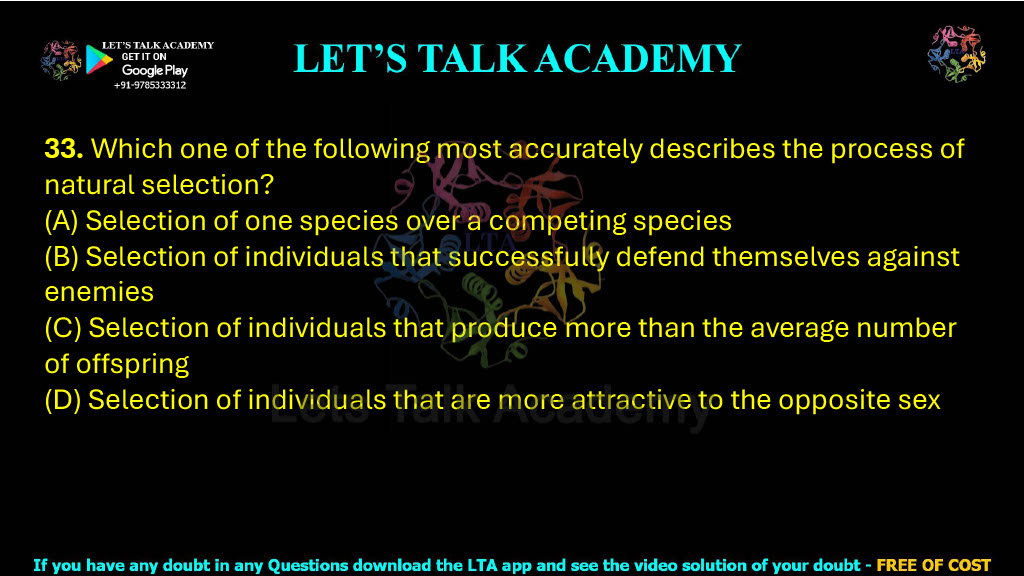
33. Which one of the following most accurately describes the process of natural selection?  (A) Selection of one species over a competing species (B) Selection of individuals that successfully defend themselves against enemies (C) Selection of individuals that produce more than the average number of offspring (D) Selection of individuals that are more attractive to the opposite sex

Which Statement Most Accurately Describes

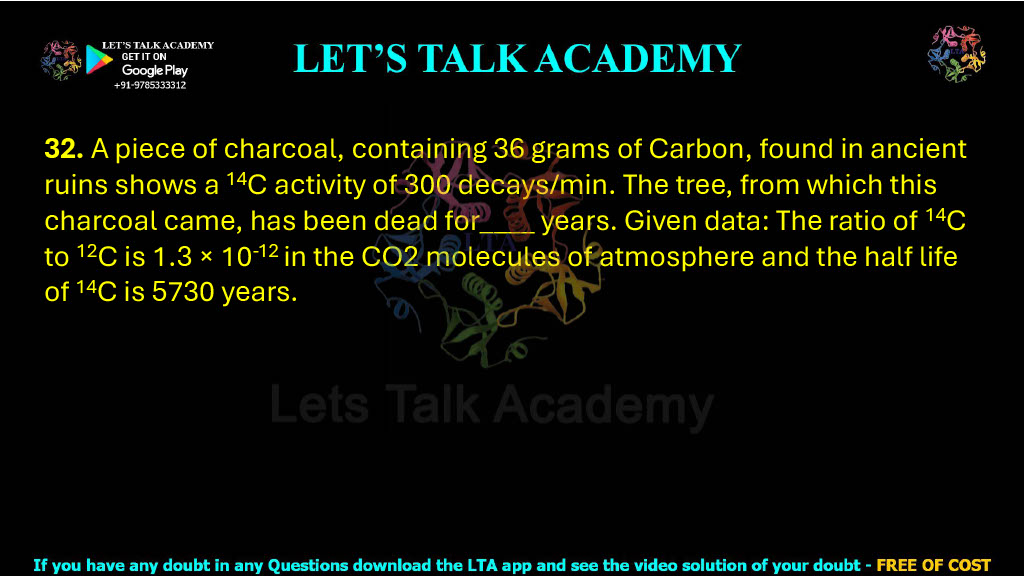
32. A piece of charcoal, containing 36 grams of Carbon, found in ancient ruins shows a 14C activity of 300 decays/min. The tree, from which this charcoal came, has been dead for____ years. Given data: The ratio of 14C to 12C is 1.3 × 10⁻¹² in the CO2 molecules of atmosphere and the half life of 14C is 5730 years.          

Carbon-14 Dating Numerical

31. Match the entries in Group I with the entries in Group II  Group I                                    Group II DNA replication                 1) Hershey and Chase Genetic Code                      2) Miller and Urey Life on Earth                      3)Messelson and Stahl DNA as Genetic                 4) Nirenberg and Khorana Material       (A) P-2, Q-1, R-3, S-4    (B) P-4, Q-3, R-2, S-1 (C) P-3, Q-4, R-2, S-1     (D) P-3, Q-4, R-1, S-2

Match DNA Replication, Genetic Code, Life on Earth and DNA

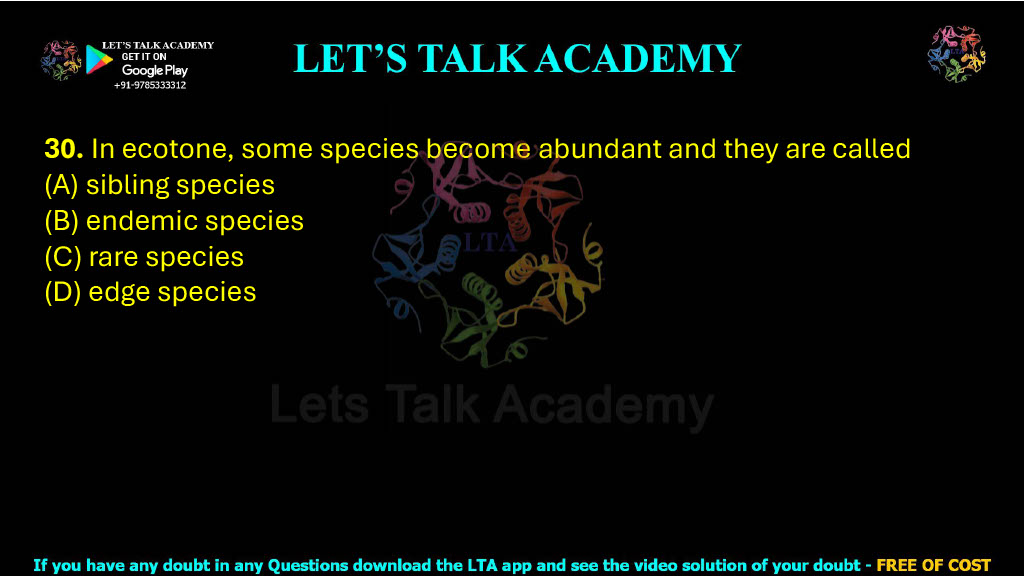
30. In ecotone, some species become abundant and they are called  (A) sibling species         (B) endemic species (C) rare species  (D) edge species

What Are the Species That Become Abundant in an Ecotone ?

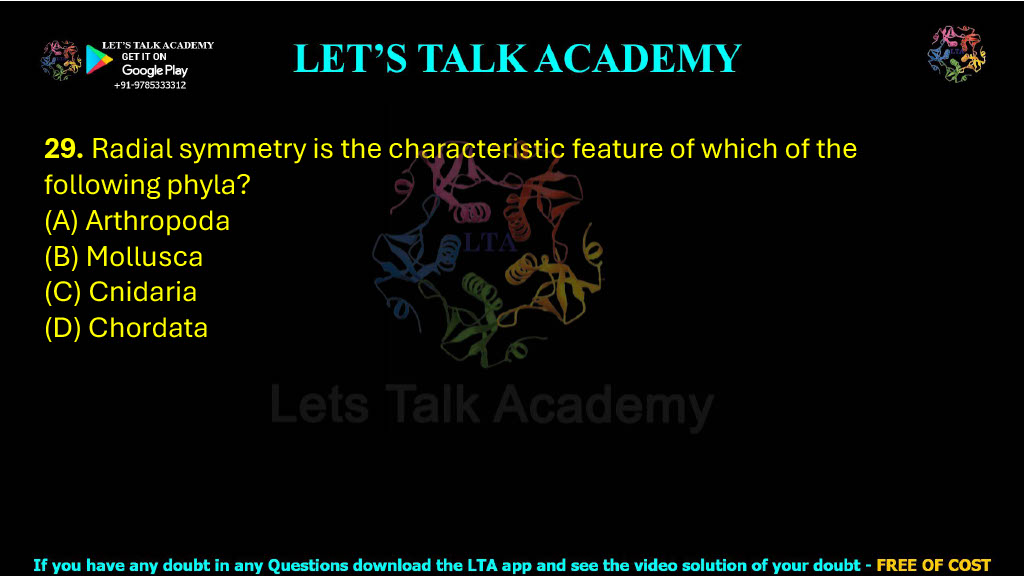
29. Radial symmetry is the characteristic feature of which of the following phyla?             (A) Arthropoda (B) Mollusca     (C) Cnidaria      (D) Chordata

Radial Symmetry Is the Characteristic Feature of Which Phylum?

28. Which of the following is NOT an example of an adaptive defense mechanism against predation? (A) Bright colors of bird pollinated flower (B) Insect that resembles a stick (C) Nicotine in the tobacco plant (D) Spines on porcupine

Which Is NOT an Adaptive Defense Mechanism Against Predation?

27. The natural geographical distribution of kangaroos is limited to the Australian continent because  (A) abiotic factors determine the distribution (B) dispersal is limited by accessibility to other continents (C) kangaroos have not selected habitats in other continents (D) predators limit the distribution in other continents

Natural Geographical Distribution of Kangaroos

26. Pyramid of energy in a forest ecosystem is (A) always inverted.       (B) dumb-bell shaped. (C) spindle shaped.        (D) always upright.

What Is the Shape of the Pyramid of Energy

25. The evolution of eyes in octopus and in human is an example of .  (A) divergent evolution  (B) convergent evolution (C) adaptive radiation     (D) genetic drift

Evolution of Eyes in Octopus and Humans

24. In a sampling expedition near a peninsula, 180 dolphins from a large population of dolphins were captured and marked by tagging their dorsal fins. The tagged dolphins were then allowed to join back into the population. In a subsequent expedition, 42 dolphins were photographed from same large population. Among these, 7 dolphins contained the tags. Assuming that the population size remains the same and that tags were not lost, the estimated population size of dolphins in the peninsula is___. (answer in integer)         

Dolphin Population Size Estimation

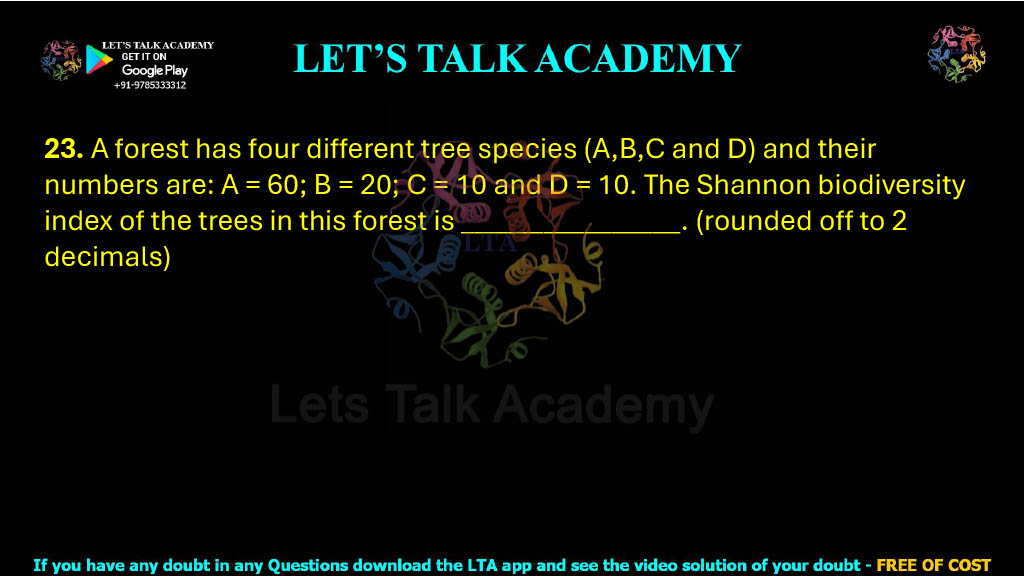
23. A forest has four different tree species (A,B,C and D) and their numbers are: A = 60; B = 20; C = 10 and D = 10. The Shannon biodiversity index of the trees in this forest is ________________. (rounded off to 2 decimals)        

How to Calculate the Shannon Biodiversity Index

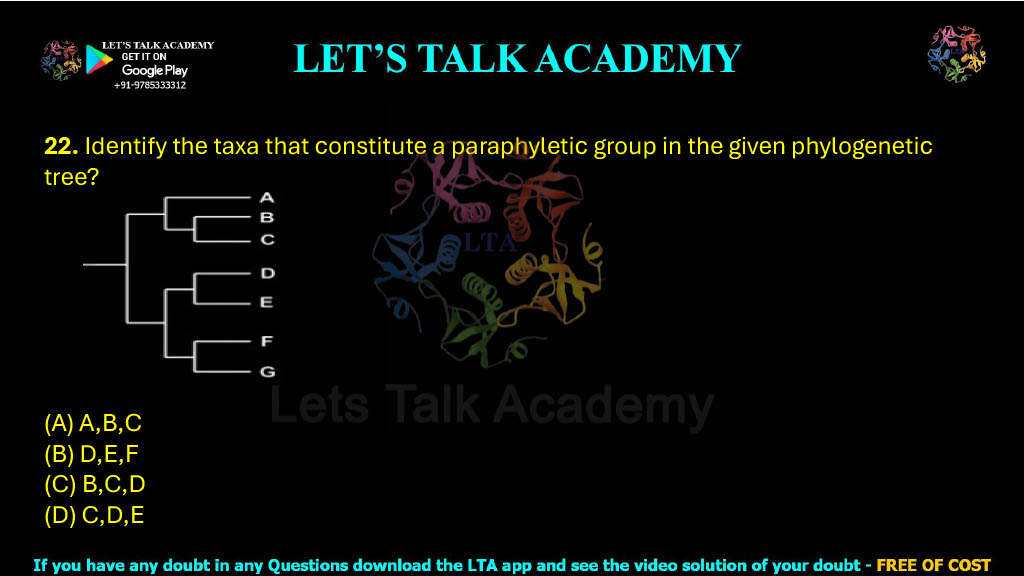
22. Identify the taxa that constitute a paraphyletic group in the given phylogenetic tree?                     (A) A,B,C  (B) D,E,F  (C) B,C,D  (D) C,D,E

Paraphyletic Group in a Phylogenetic Tree

21. Match the pair of organisms in Group I with their community interaction pattern in Group II.  Group I Group II P. Cattle egrets – African buffalo 1. Competition Q. Lynx – Fox 2. Predation R. Acacia tree – Pugnacious ants 3. Commensalism S. Leopard – Antelope 4. Mutualism (A) P-3, Q-1, R-4, S-2 (B) P-3, Q-4, R-1, S-2 (C) P-4, Q-1, R-3, S-2 (D) P-2, Q-3, R-1, S-4

Community Interaction Patterns: Matching Organism Pairs

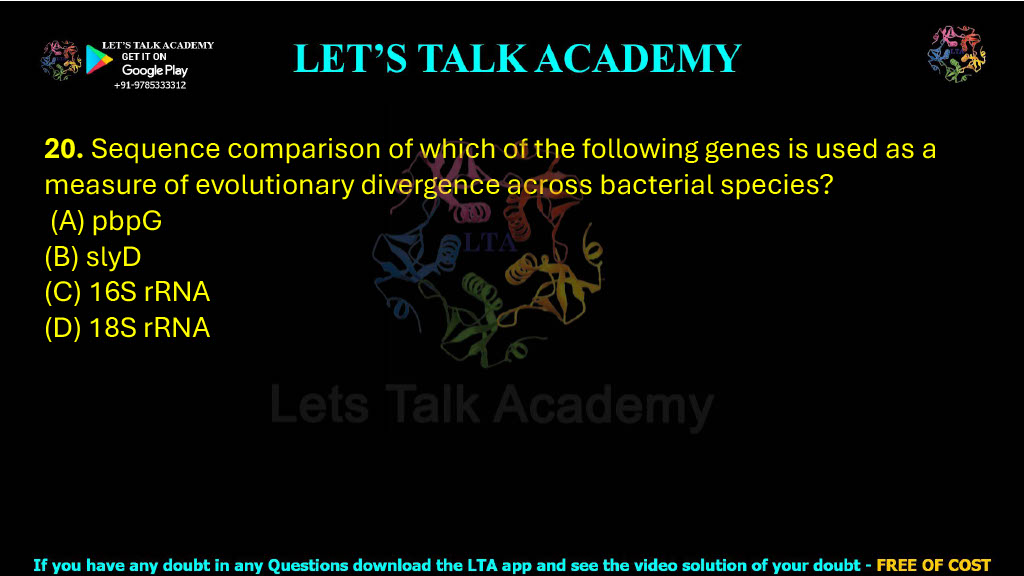
20. Sequence comparison of which of the following genes is used as a measure of evolutionary divergence across bacterial species?      (A) pbpG  (B) slyD  (C) 16S rRNA  (D) 18S rRNA

16S rRNA Gene Sequence Comparison

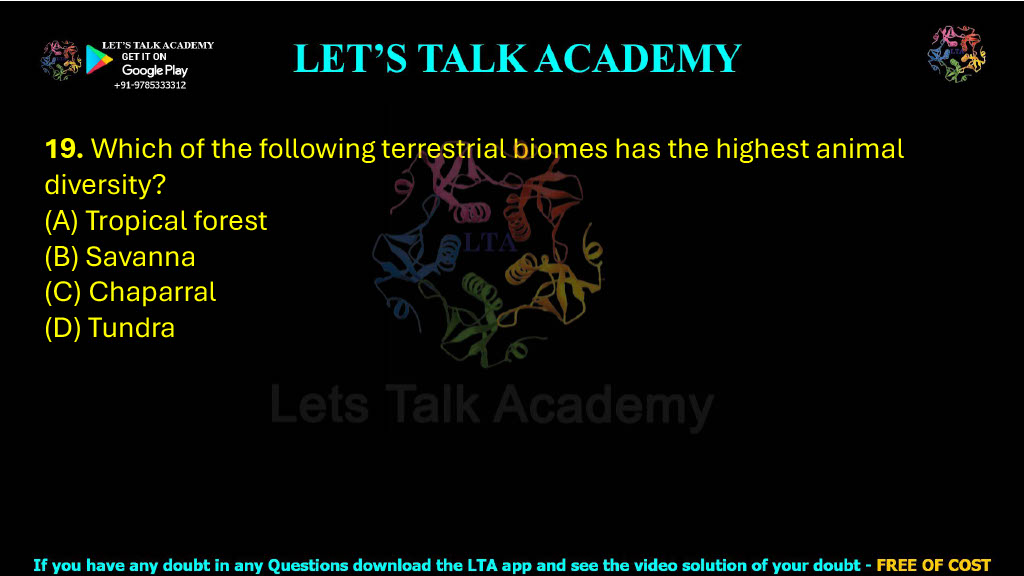
19. Which of the following terrestrial biomes has the highest animal diversity?    (A) Tropical forest  (B) Savanna  (C) Chaparral  (D) Tundra

Which Terrestrial Biome Has the Highest Animal Diversity?

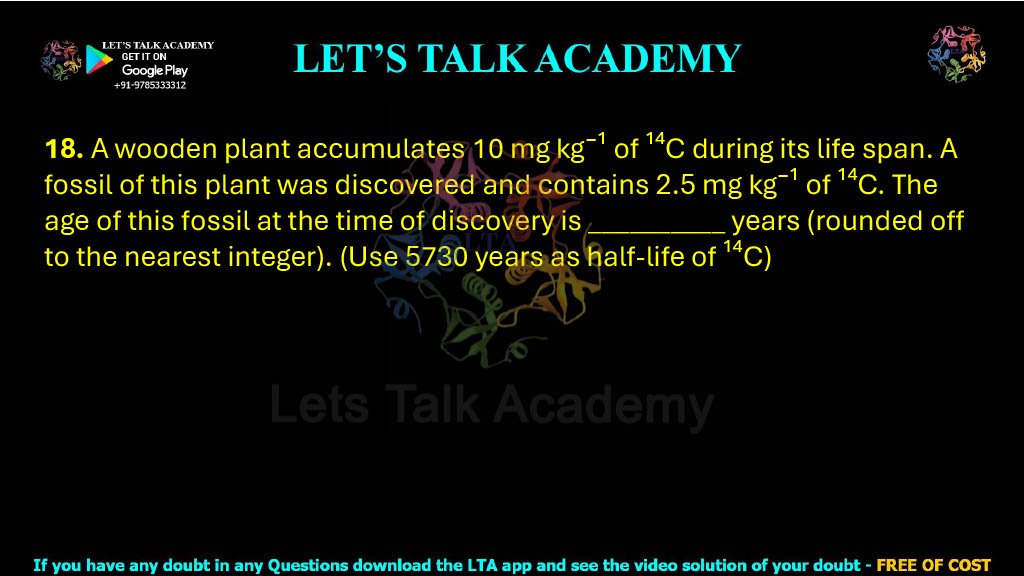
18. A wooden plant accumulates 10 mg kg⁻¹ of ¹⁴C during its life span. A fossil of this plant was discovered and contains 2.5 mg kg⁻¹ of ¹⁴C. The age of this fossil at the time of discovery is __________ years (rounded off to the nearest integer). (Use 5730 years as half-life of ¹⁴C)     

How to Calculate Fossil Age Using Carbon-14 Half-Life

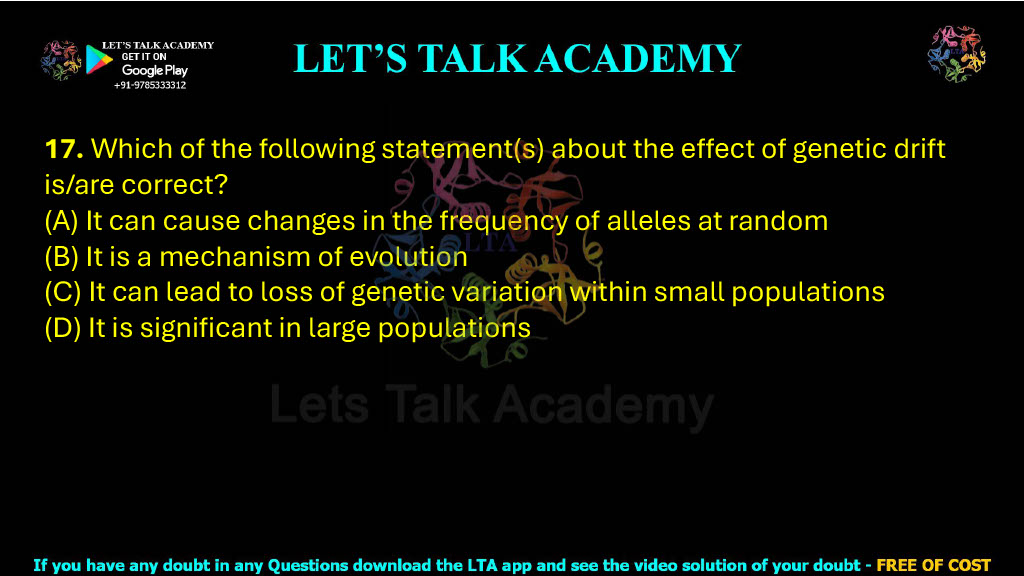
17. Which of the following statement(s) about the effect of genetic drift is/are correct?  (A) It can cause changes in the frequency of alleles at random (B) It is a mechanism of evolution (C) It can lead to loss of genetic variation within small populations (D) It is significant in large populations

Effects of Genetic Drift

16. Which of the following is/are example(s) of a lotic ecosystem?  (A) Lake (B) Pond (C) River (D) Stream

Which of the Following Are Examples of a Lotic Ecosystem?

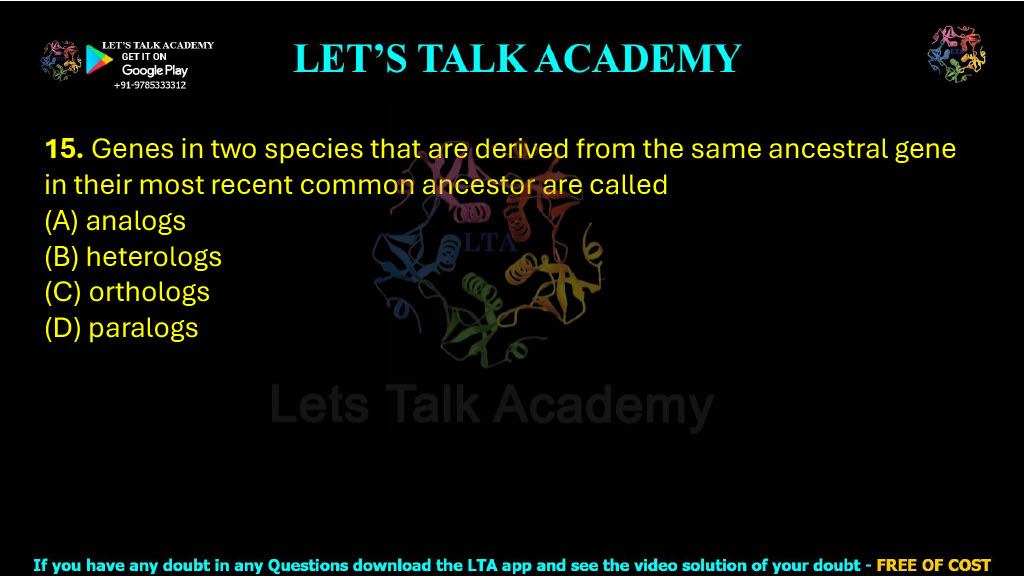
15. Genes in two species that are derived from the same ancestral gene in their most recent common ancestor are called (A) analogs (B) heterologs (C) orthologs (D) paralogs

Genes Derived from the Same Ancestral Gene in Two Species

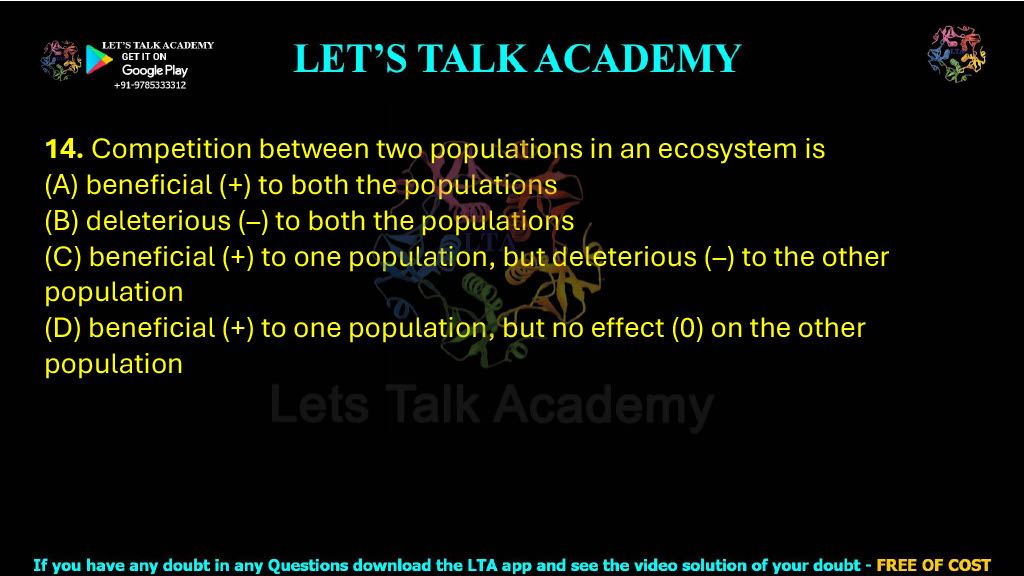
14. Competition between two populations in an ecosystem is  (A) beneficial (+) to both the populations (B) deleterious (–) to both the populations (C) beneficial (+) to one population, but deleterious (–) to the other population (D) beneficial (+) to one population, but no effect (0) on the other population

Competition Between Two Populations in an Ecosystem

13. The correct hierarchy of taxa in the Linnaean classification of eukaryotes is  (A) kingdom, class, phylum, order, family, genus (B) kingdom, order, class, phylum, family, genus (C) kingdom, phylum, order, family, class, genus (D) kingdom, phylum, class, order, family, genus

Correct Hierarchy of Taxa

12. Which of the following option(s) represent(s) the evolutionary relationship between the bird and bat wings as structures for flying?  (A) analogous (B) convergence (C) divergence (D) homologous

Evolutionary Relationship Between Bird and Bat Wings

11. A species of fish living in a lake are separated by drying up of the lake into two separate lakes. After several hundreds of years of separation, the two groups are unable to mate. These groups are now considered to be different ______. (A) communities (B) organisms (C) populations (D) species

Fish Population Separation and Speciation

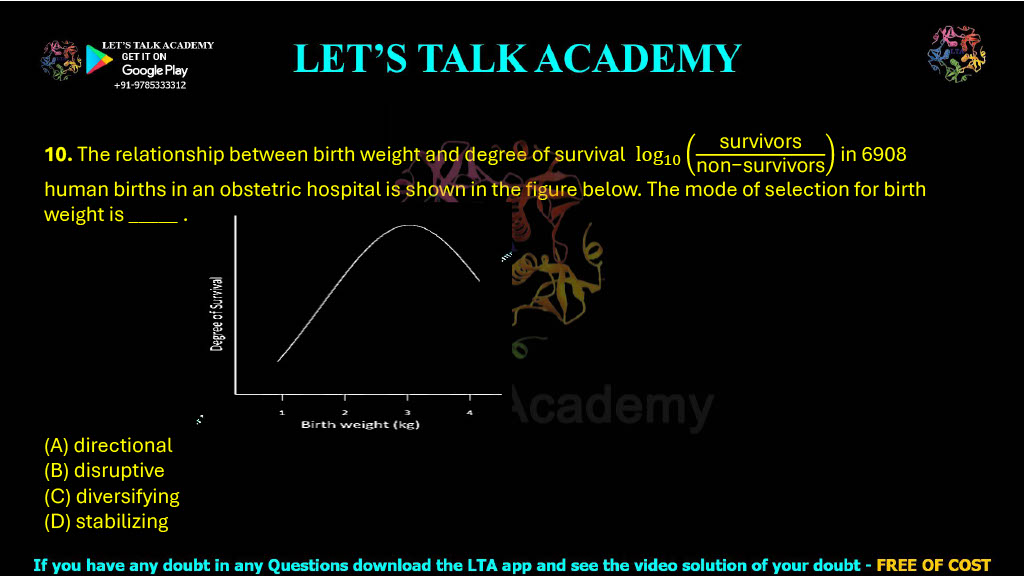
10. The relationship between birth weight and degree of survival in 6908 human births in an obstetric hospital is shown in the figure below. The mode of selection for birth weight is _____ .    (A) directional (B) disruptive (C) diversifying (D) stabilizing

Mode of Natural Selection for Human Birth Weight and Survival

9. Which one of the following does NOT belong to the freshwater ecosystem?  (A) Estuary (B) Lentic (C) Lotic (D) Wetland

Which Ecosystem Does Not Belong to the Freshwater Ecosystem?

8. Which of the following are producers in an ecological system?  (A) Macrophytes (B) Phytoplanktons (C) Zooplanktons (D) Cyanobacteria

Which Organisms Are Producers in an Ecological System?

7. In a honey bee population, the workers are infertile but protect the queen from intruders and help in reproduction. This is an example of (2022) (A) K selection (B) Sexual selection (C) Kin selection (D) Disruptive selection

Why Infertile Honey Bee Workers Protect the Queen

6. The zone of a pond system where respiration is more than production is called as _____.  (A) Limnetic zone (B) Littoral zone (C) Epilimnion zone (D) Benthic zone

Zone of a Pond Where Respiration Is More Than Production

5. A random fluctuation in gene frequency is called (A) Genetic drift (B) Genetic load (C) Panmixis (D) Genetic shift

What Is a Random Fluctuation in Gene Frequency?

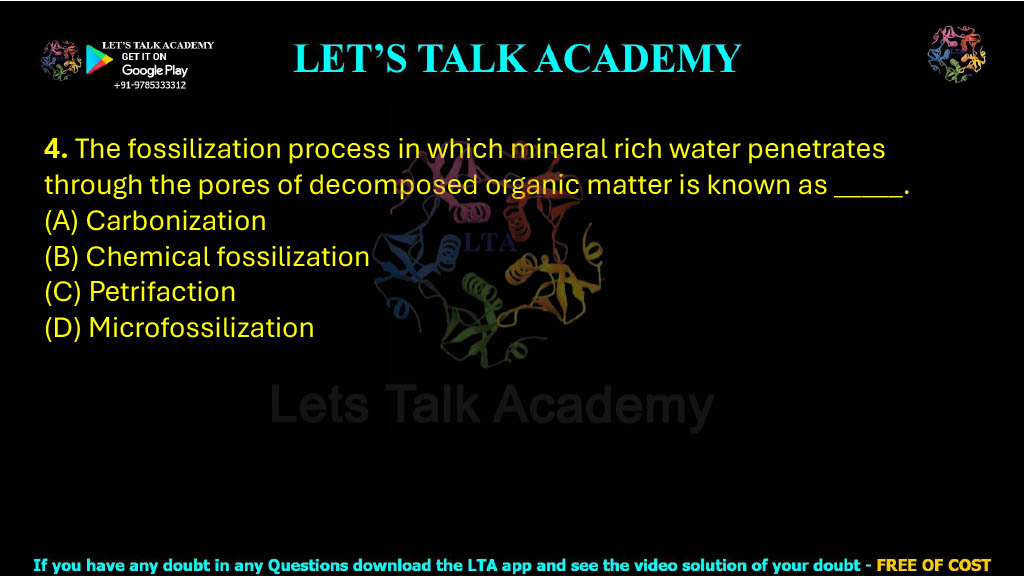
4. The fossilization process in which mineral rich water penetrates through the pores of decomposed organic matter is known as _____.     (A) Carbonization (B) Chemical fossilization (C) Petrifaction (D) Microfossilization

Which Fossilization Process Occurs

3. Which of the following pairs is/are analogous structures?  (A) Human hands and bat wings (B) Butterfly wings and bat wings (C) Bat wings and bird wings (D) Dolphin flippers and fish fins

Which Pairs Are Analogous Structures?

2. Which one of the following processes emerged earliest during the course of evolution?  (A) Antigen presentation (B) Antibody production (C) Phagocytosis (D) Thymic education

Which Immune Process Emerged Earliest During Evolution?

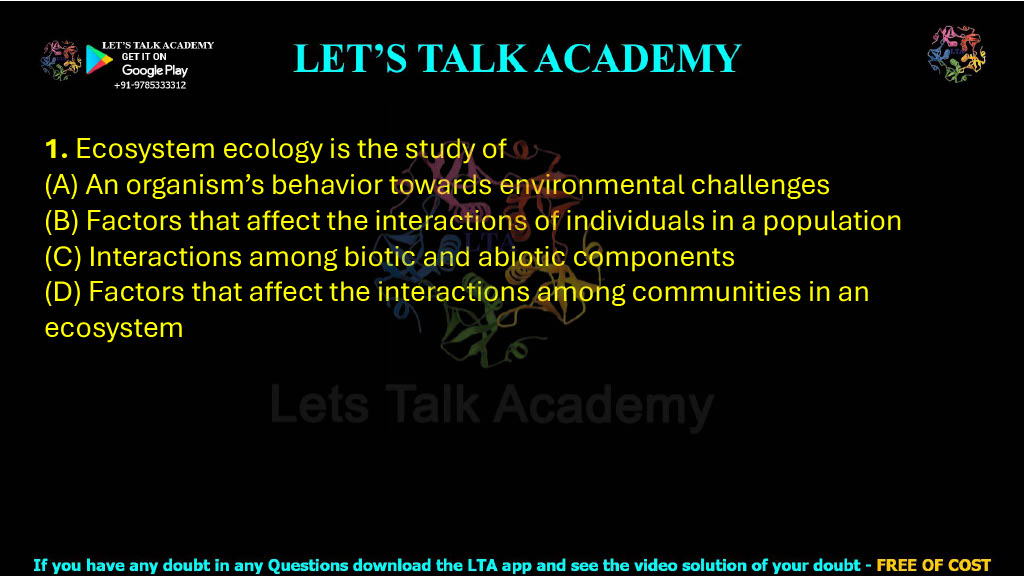
1. Ecosystem ecology is the study of (A) An organism’s behavior towards environmental challenges (B) Factors that affect the interactions of individuals in a population (C) Interactions among biotic and abiotic components (D) Factors that affect the interactions among communities in an ecosystem

Ecosystem Ecology Is the Study of Interactions

Latest Courses