
















































































































































16. Match the following compounds and bonds in Group I with the correct type of chemical bond given in Group II. Group I: P) NaCl Q) H2 R) Pd–P bond […]
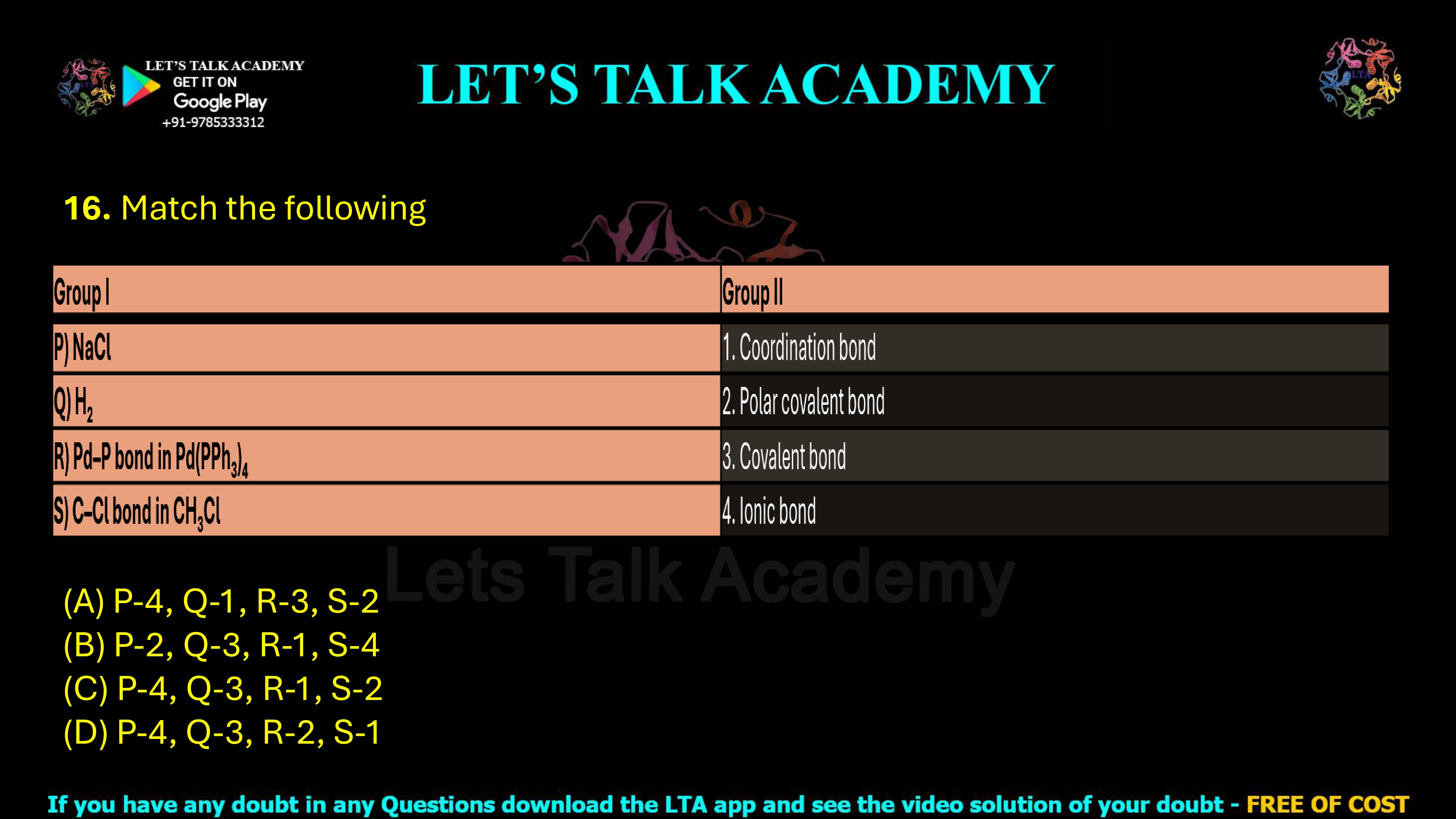

16. Match the following compounds and bonds in Group I with the correct type of chemical bond given in Group II. Group I: P) NaCl Q) H2 R) Pd–P bond […]
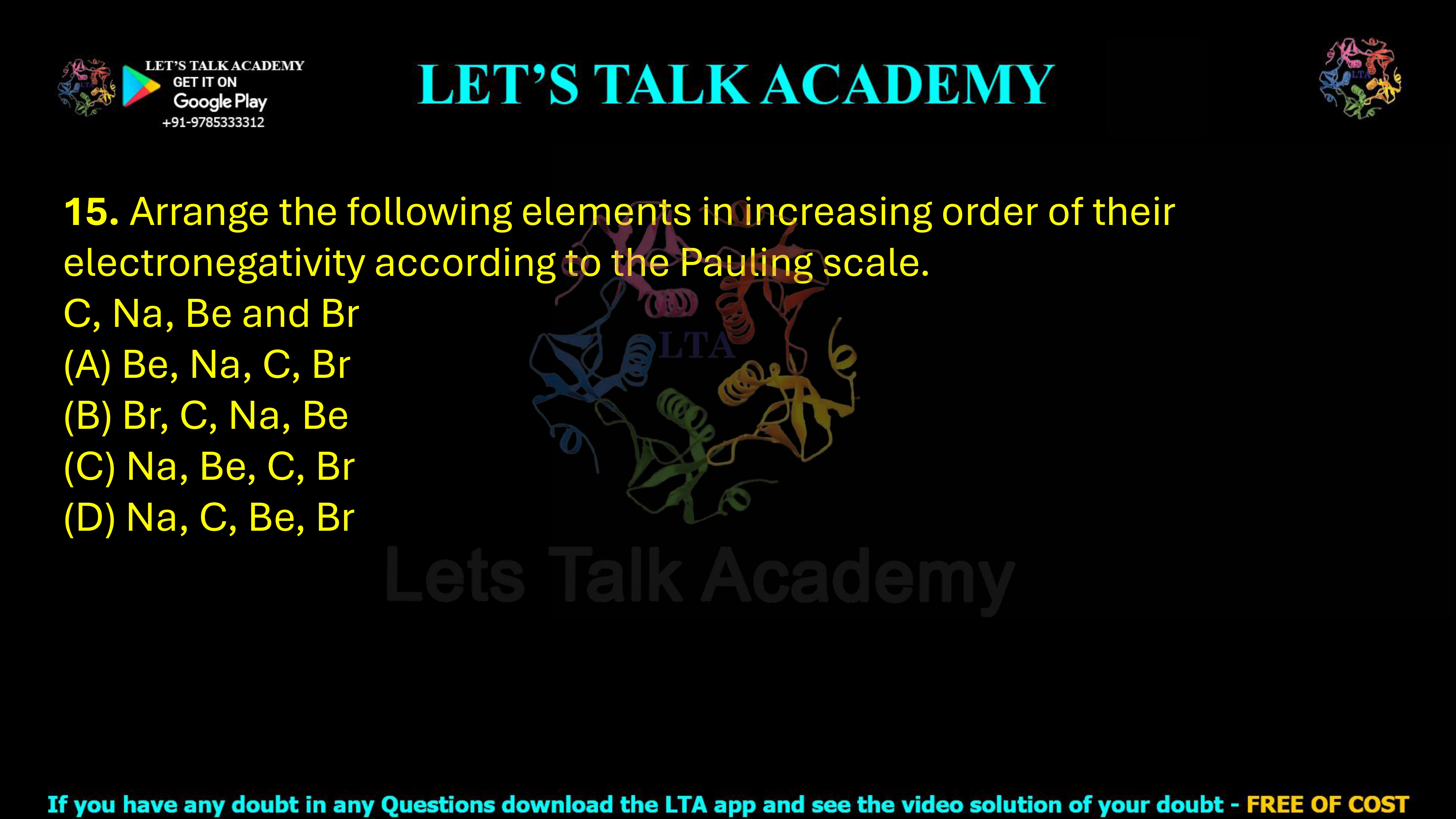
15. Arrange the following elements in increasing order of their electronegativity according to the Pauling scale: C, Na, Be and Br. Arrange Na, Be, C and Br in Increasing Order […]
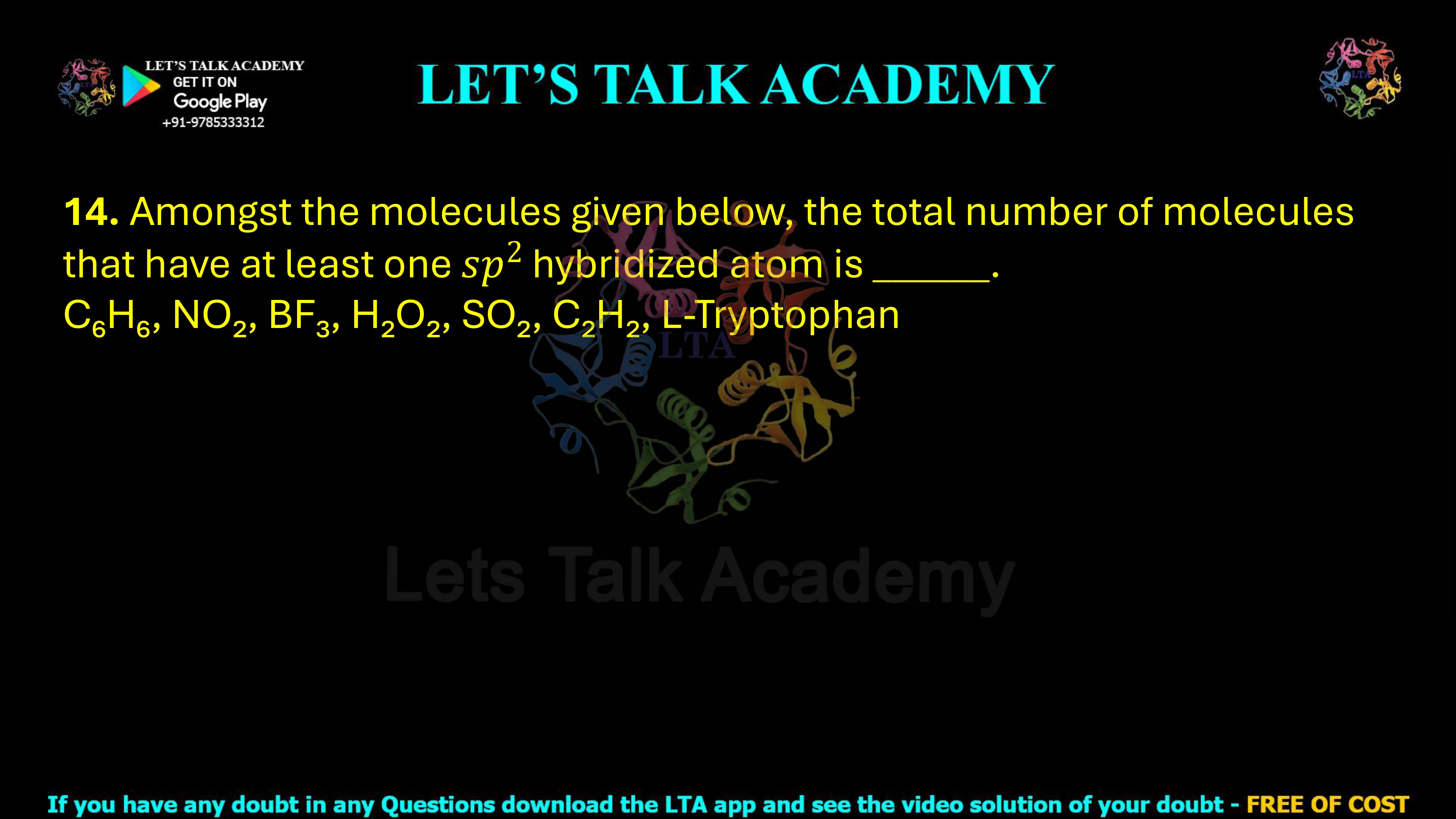
14. Amongst the molecules given below, the total number of molecules that have at least one sp2 hybridized atom is _____. Total Number of Molecules Having at Least One sp2 […]

13. Assuming the molecule shown below is aromatic, the value of “n” according to “Hückel’s rule” is _____. Value of n According to Hückel’s Rule for the Given Aromatic Molecule […]

12. Match the following bacterial structures with their correct functions. Bacterial Structures: (i) Cell wall (ii) Glycocalyx Functions: (a) Virulence factor (b) Selective permeability (c) Attachment to surfaces (d) Protection […]
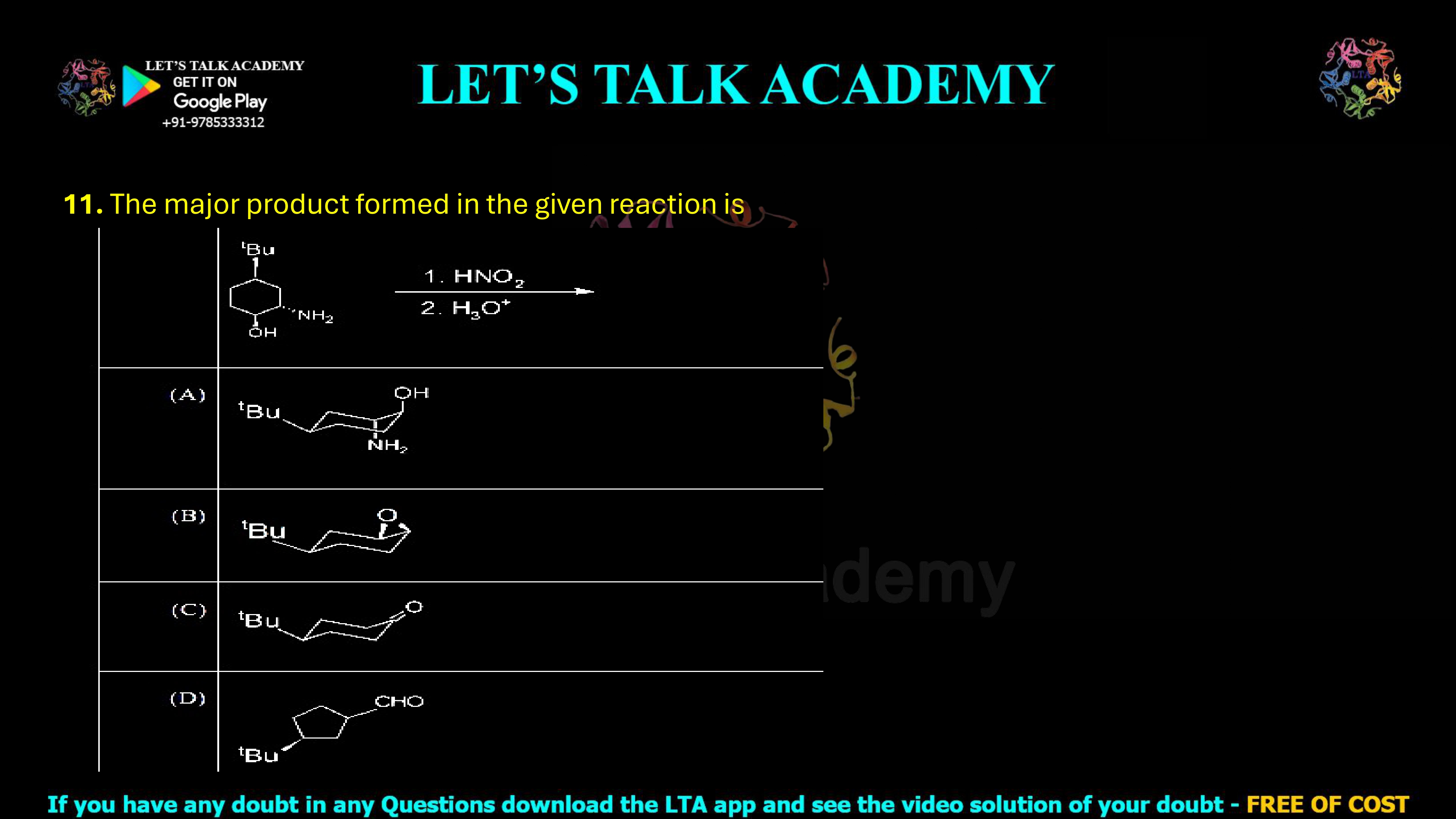
11. The given cyclic amino alcohol is treated first with HNO2 and then with H3O+. Which structure represents the major product formed in the reaction? Major Product of the Reaction […]
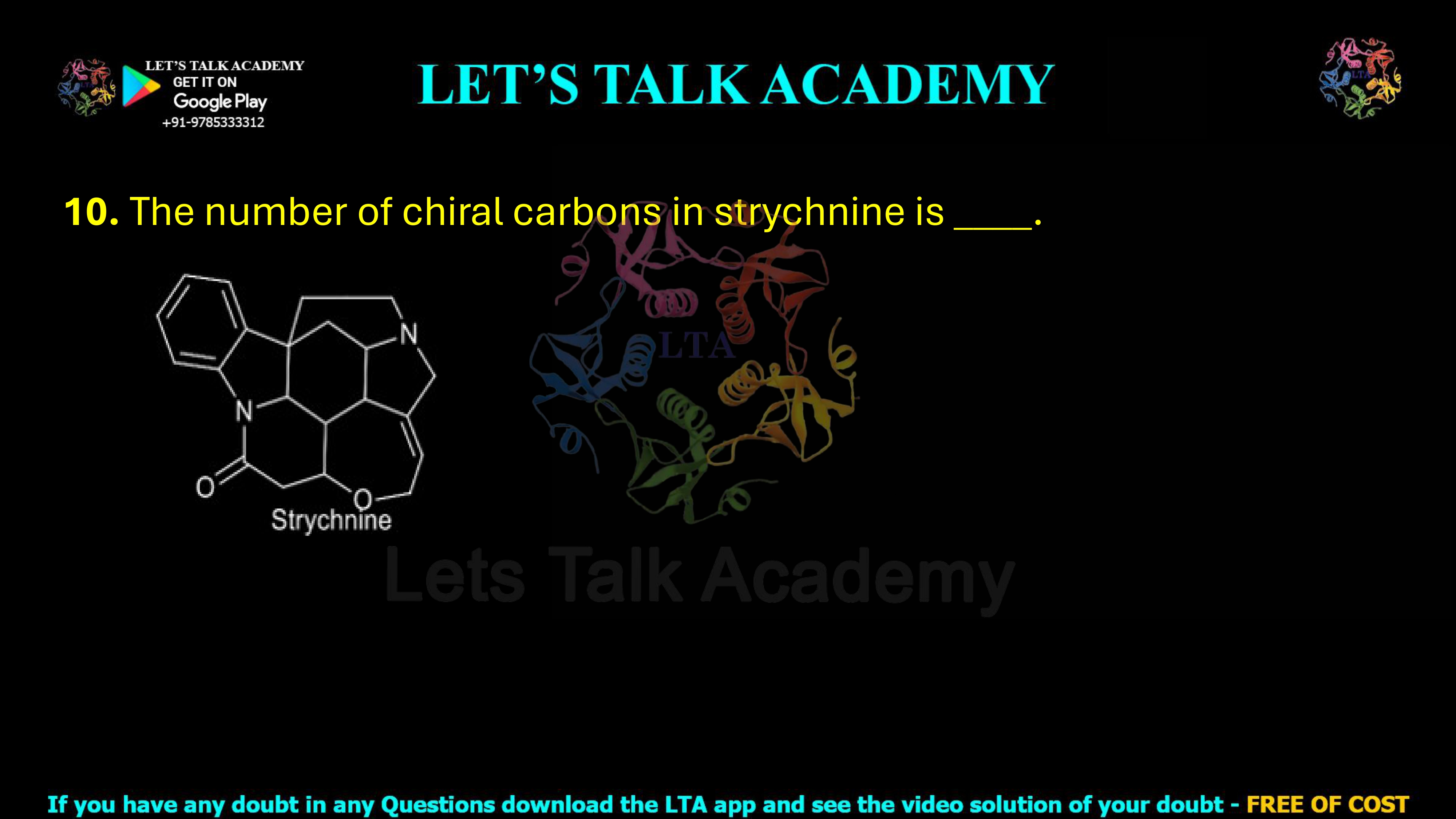
10. The number of chiral carbons in strychnine is _____. How Many Chiral Carbons Are Present in Strychnine? Correct Answer: 6 Chiral Carbons The number of chiral carbons in strychnine […]
9. The molar concentration of water in pure water is _____ M (rounded off to 1 decimal). Molar Concentration of Water in Pure Water – Detailed Step-by-Step Calculation Correct Answer: […]
8. The amount of hydrogen required to reduce 30 g of 2-butene is _____ g (rounded off to 2 decimals). What Amount of Hydrogen Is Required to Reduce 30 g […]
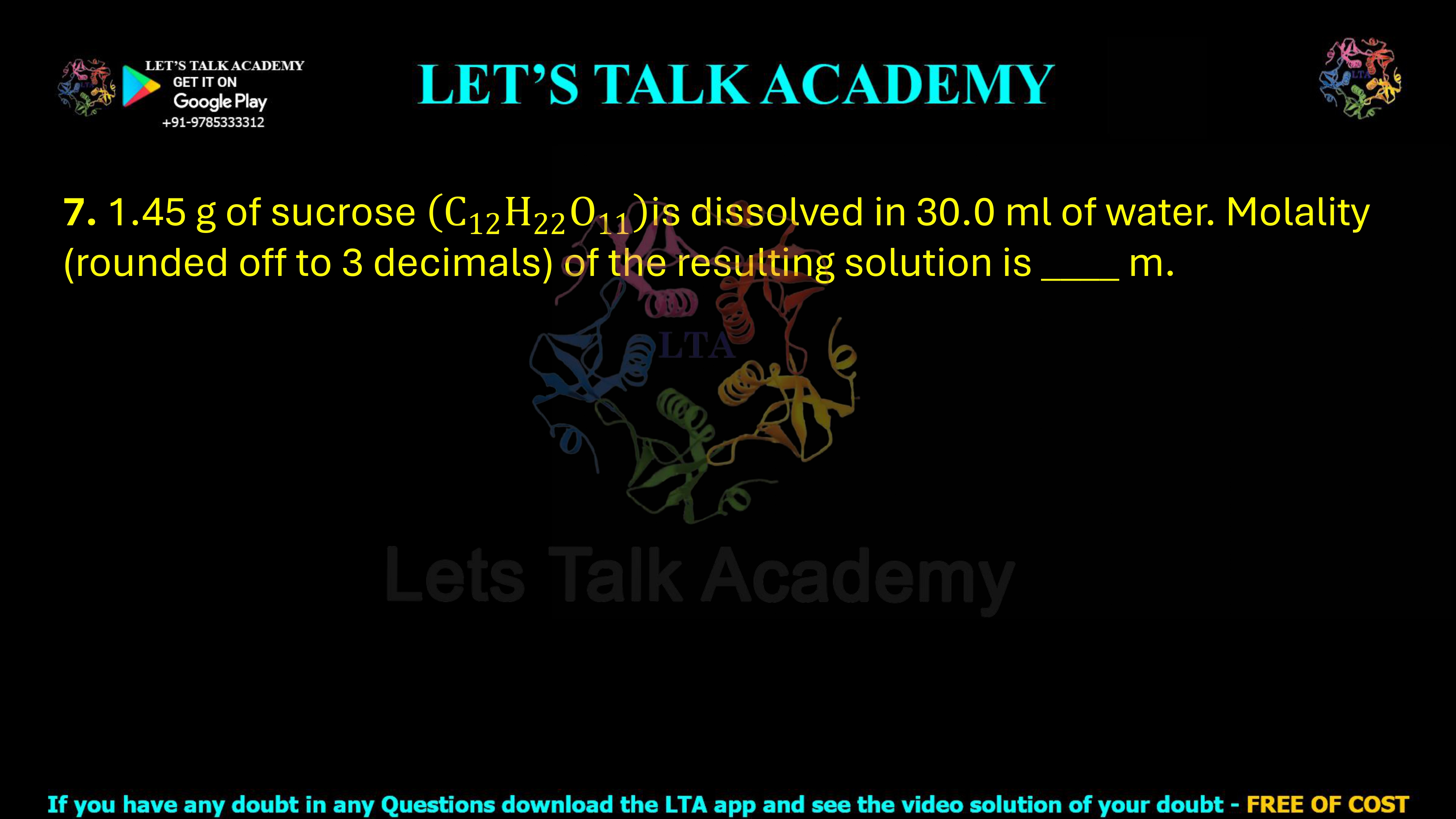
7. 1.45 g of sucrose (C12H22O11) is dissolved in 30.0 mL of water. Molality, rounded off to 3 decimals, of the resulting solution is _____ m. How to Calculate the […]


