




































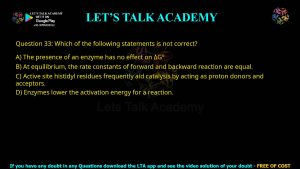


































(DEC 2013) 8. Enzymes help to lower the activation energies of reactions by (1) covalent interaction with substrates. (2) binding only with the solvent molecules, (3) changing reaction equilibria. (4) […]


(DEC 2013) 8. Enzymes help to lower the activation energies of reactions by (1) covalent interaction with substrates. (2) binding only with the solvent molecules, (3) changing reaction equilibria. (4) […]

7.Which of the following is NOT a property of an enzyme (1) from complex with substrate (2) decrease activation energy (3) decrease Gibb’s free energy (4) Increases rate of reaction […]
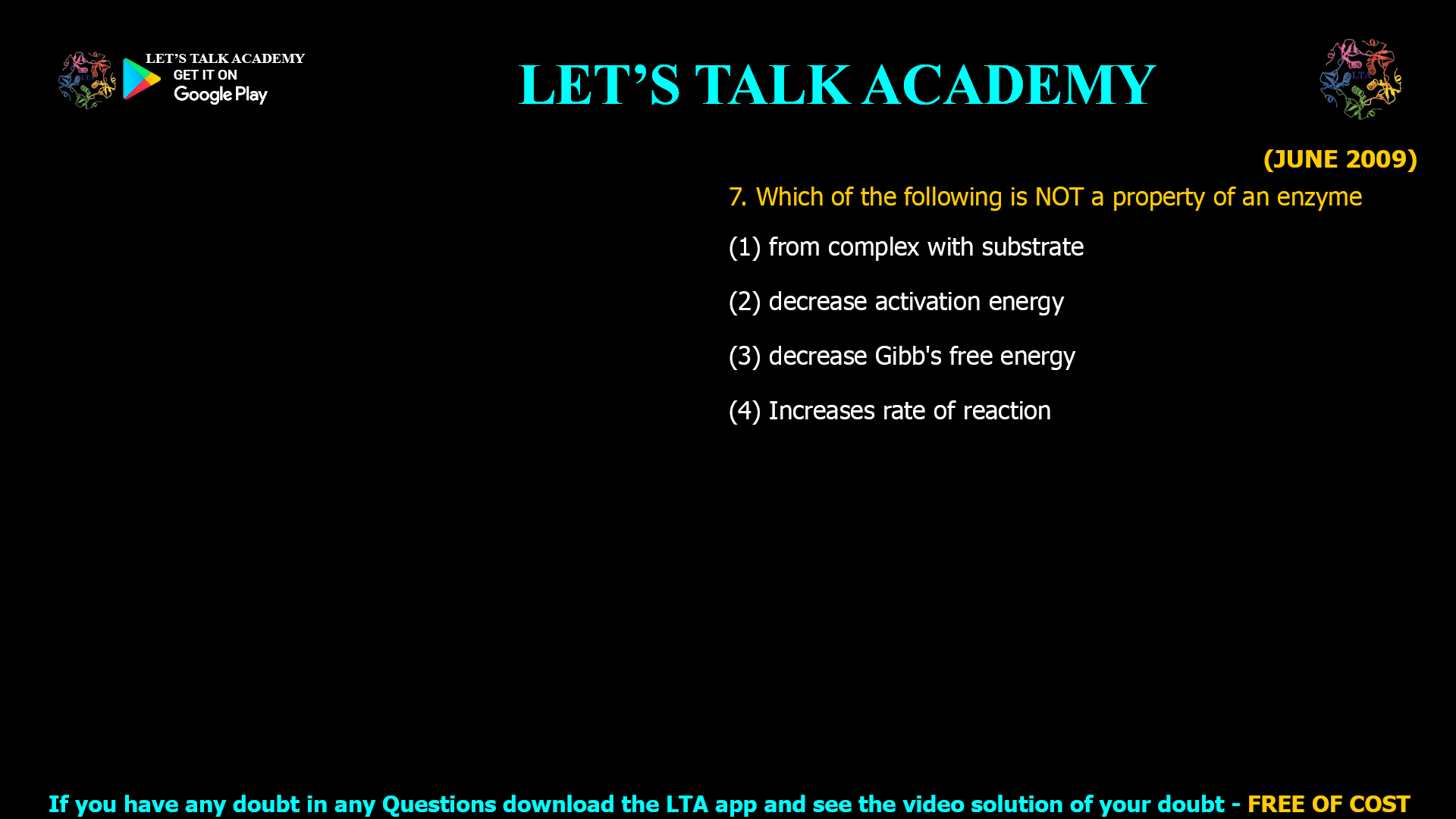
6. Which of the following is NOT a property of an enzyme (1) from complex with substrate (2) decrease activation energy (3) decrease Gibb’s free energy (4) Increases rate of […]
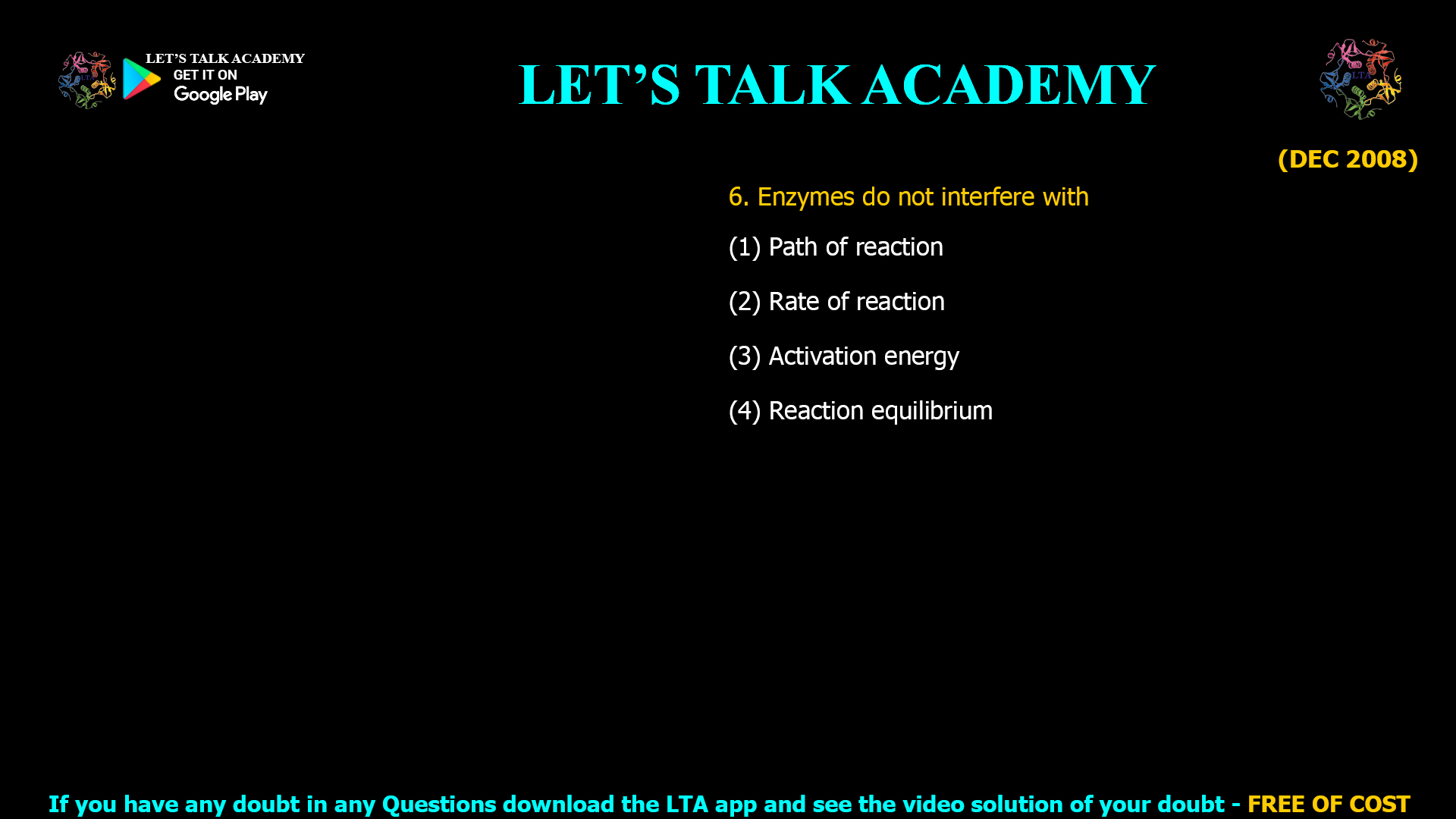
6. Enzymes do not interfere with (1) Path of reaction (2) Rate of reaction (3) Activation energy (4) Reaction equilibrium The correct answer is (4) Reaction equilibrium. Enzymes accelerate the rate […]
The correct answer is (1) disturbing the equilibrium of the chemical reaction. Enzymes are biological catalysts—they speed up reactions and alter the pathway (lower activation energy), but do not change the reaction’s […]
The correct answer is (3) Peptide bond. Peptide bonds are not typically formed between enzyme and substrate; rather, these covalent bonds connect amino acids in proteins, forming the enzyme’s structure, not […]
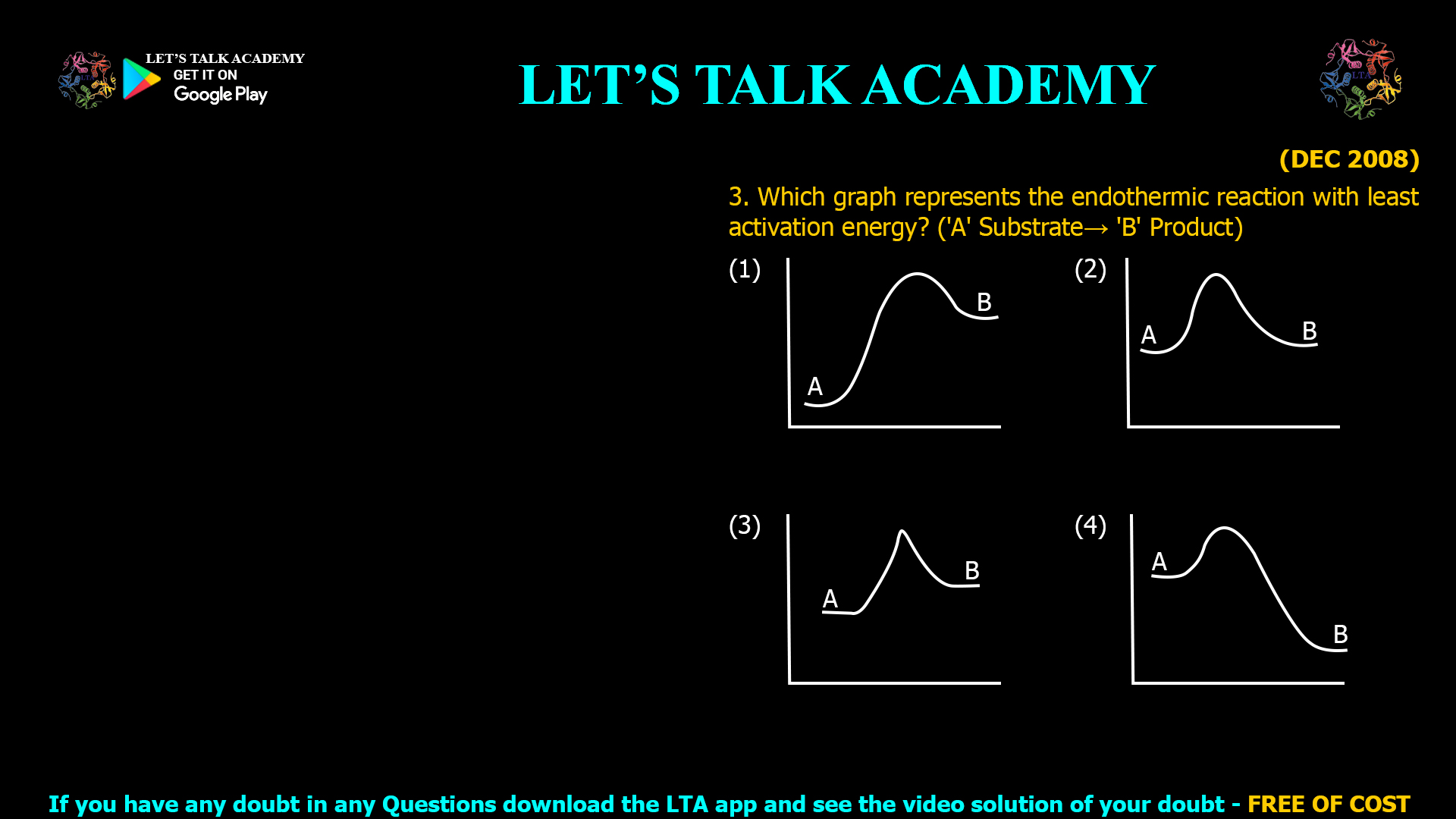
3. Which graph represents the endothermic reaction with least activation energy? (‘A’ Substrate→ ‘B’ Product) The correct answer is Option 3. This graph best represents an endothermic reaction with the least activation energy where ‘A’ (substrate) transitions to ‘B’ (product). Introduction […]
2. Enzymes accelerates rate of reaction by (1) Lowering number of transition states (2) Lowering the activation energy of highest transition state (3) Providing direct energy to substrate (4) Providing […]

Enzymes accelerate a reaction by which one of the following strategies? (1) Decreasing energy required to form the transition state. (2) Increasing kinetic energy of the substrate. (3) Increasing the […]
Which one of the following is NOT a vasoconstrictor? (1) Prostacyclin (2) Thromboxane A2 (3) Angiotensin-ll (4) Endothelin-1 Which One Is NOT a Vasoconstrictor? An In-Depth Explanation Understanding the complex […]


