










































































































8. λ-phage insert their DNA into bacterial host. The site for recombination on host is termed as- (1) attp (2) attB (3) Xis (4) Int λ-phage inserts its DNA into […]


8. λ-phage insert their DNA into bacterial host. The site for recombination on host is termed as- (1) attp (2) attB (3) Xis (4) Int λ-phage inserts its DNA into […]
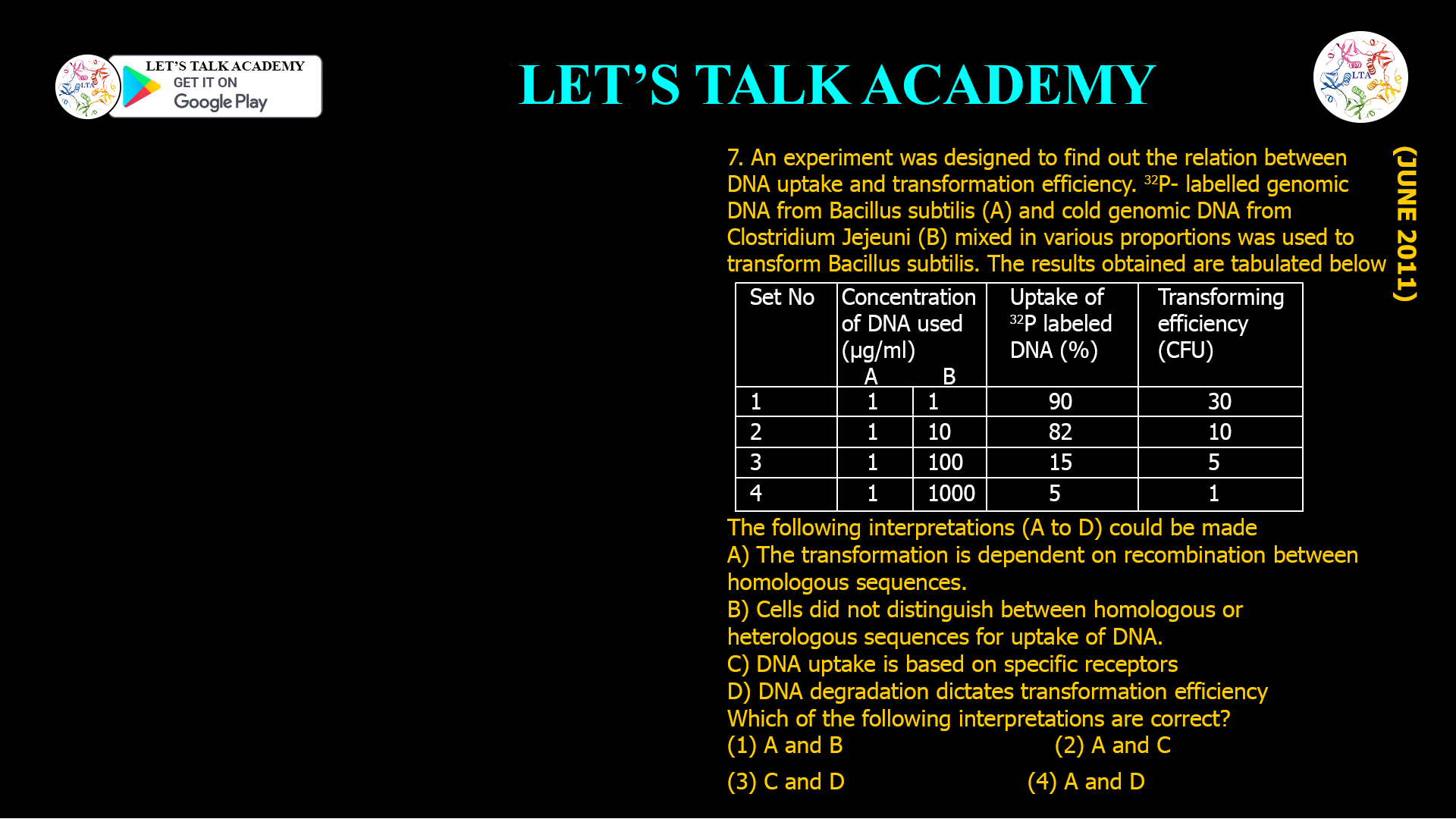
An experiment was designed to find out the relation between DNA uptake and transformation efficiency. 32P- labelled genomic DNA from Bacillus subtilis (A) and cold genomic DNA from Clostridium Jejeuni […]

6. In a transformation experiment, donor DNA from an E. coli strain with the genotypes was used to transform a strain of genotype Z+Y+. The frequencies of transformed classes were: […]
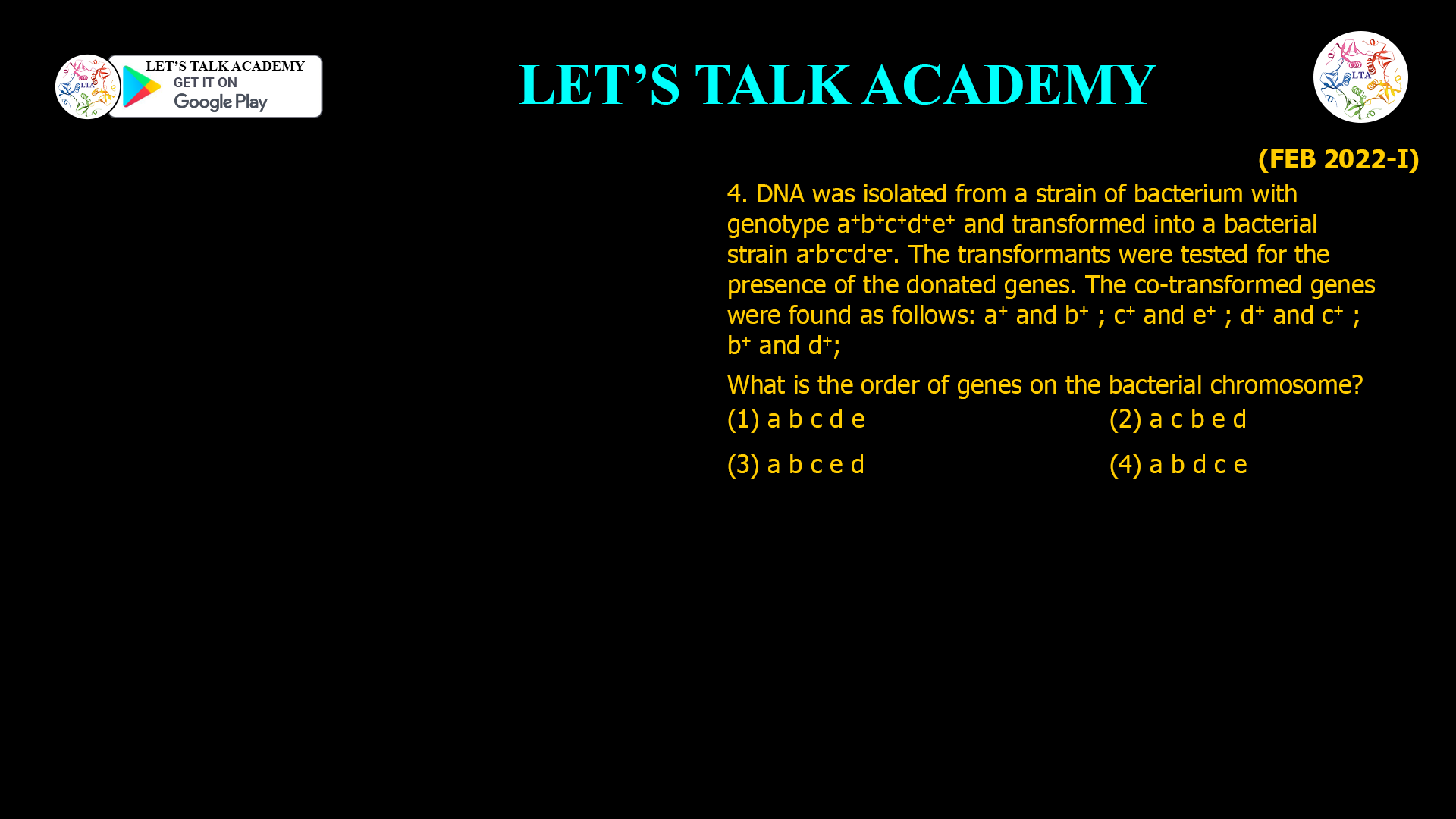
4. DNA was isolated from a strain of bacterium with genotype a+b+c+d+e+ and transformed into a bacterial strain a–b–c–d–e-. The transformants were tested for the presence of the donated genes. […]
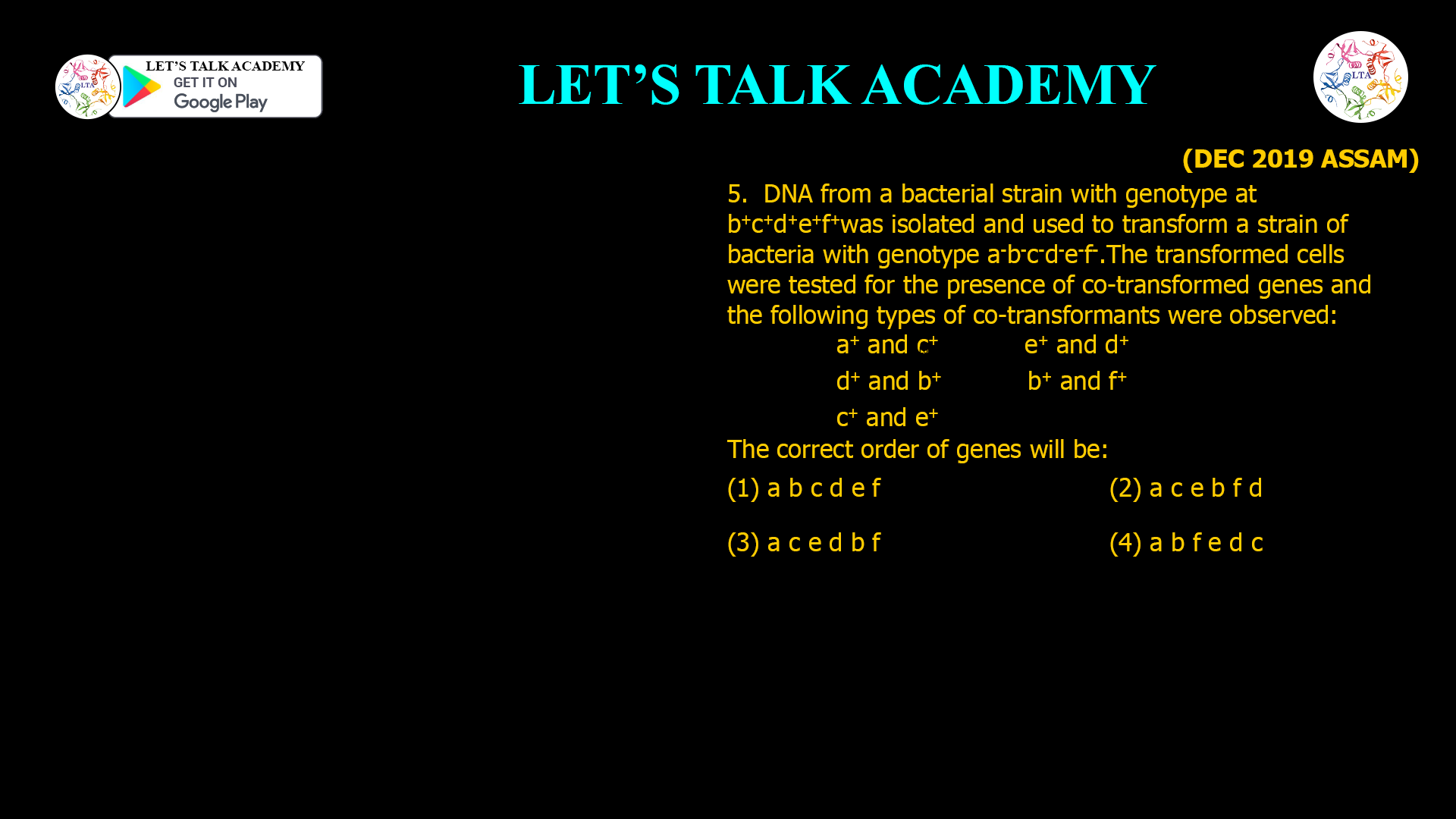
5. DNA from a bacterial strain with genotype at b+c+d+e+f+ was isolated and used to transform a strain of bacteria with genotype a–b–c–d–e–f–.The transformed cells were tested for the presence […]
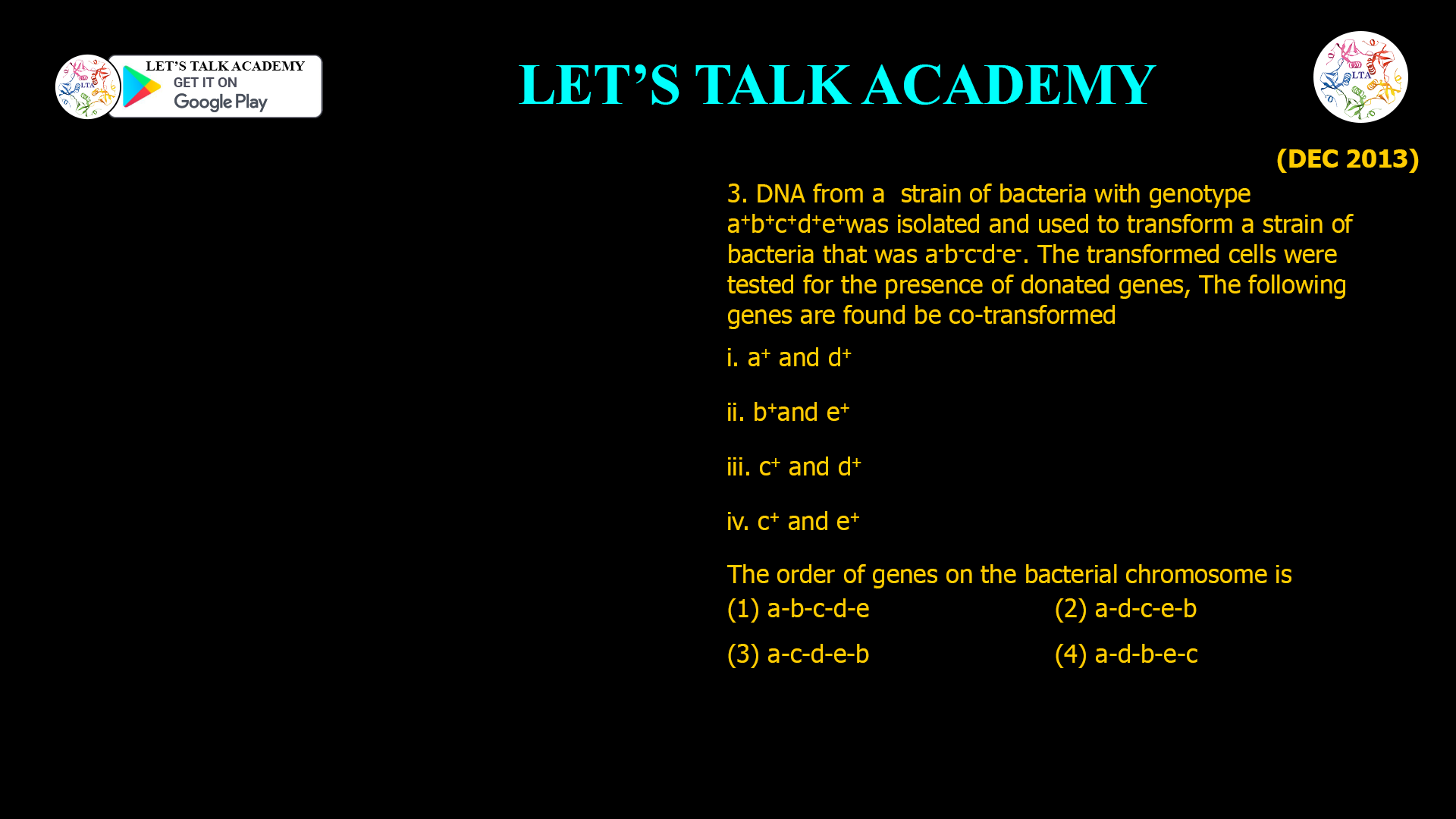
DNA from a strain of bacteria with genotype a+b+c+d+e+ was isolated and used to transform a strain of bacteria that was a–b–c–d–e–. The transformed cells were tested for the presence […]

2. A lac– culture of E. coli was mutagenised. On what media would one spread the mutagenised cells to select for lac+ cells? (1) Minimal media+ lactose. (2) Rich media […]

1. E. coli cells were transformed with plasmid carrying tetracycline resistance gene and later on plated on LB medium and various colonies were observed but same number of colonies were […]

21. Which of the following statements about site-specific recombinases is NOT true? (1) The Cre recombinase is believed to mediate the circularization of the Pl phage genome during infection of […]
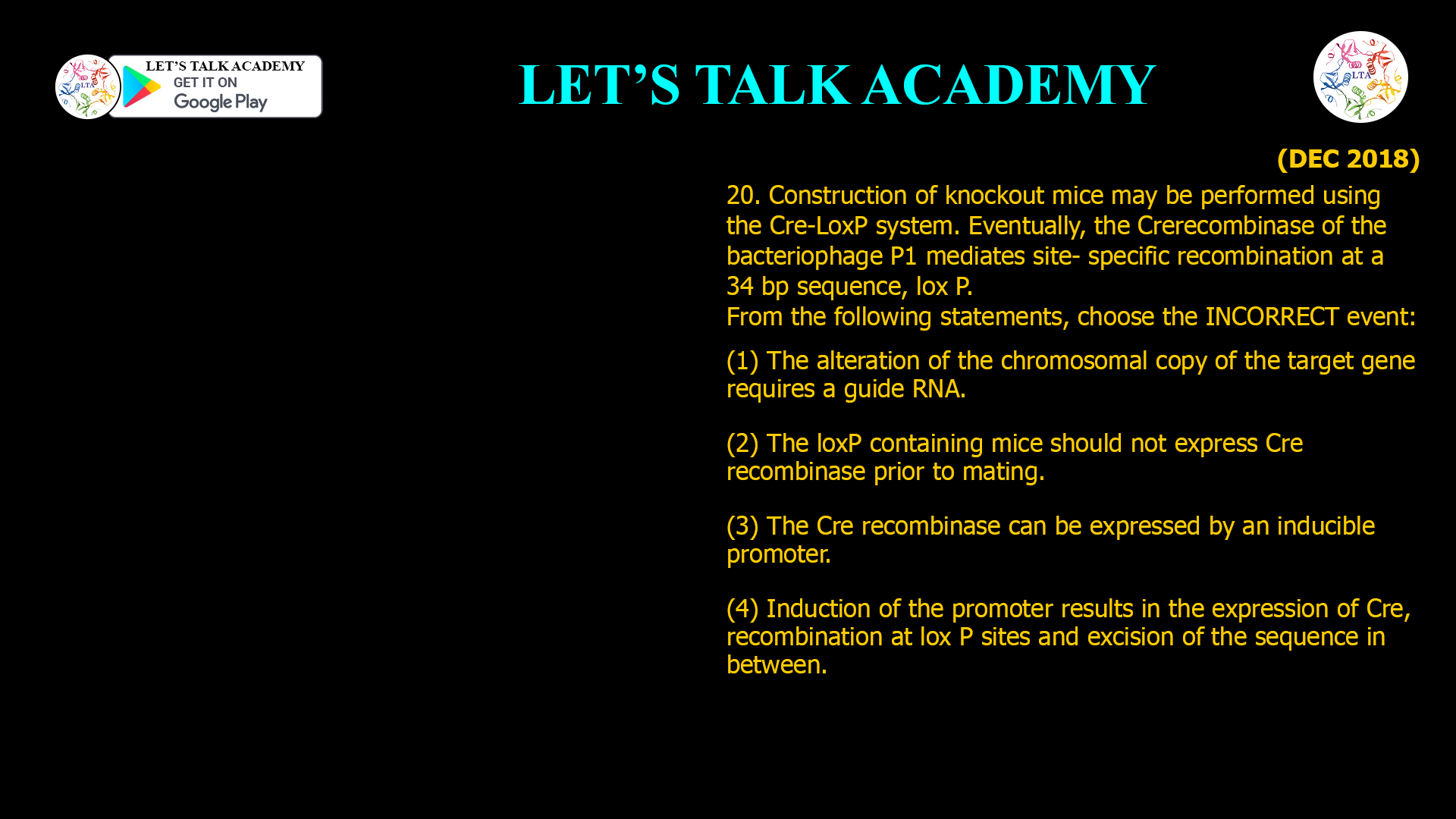
20. Construction of knockout mice may be performed using the Cre-LoxP system. Eventually, the Cre recombinase of the bacteriophage P1 mediates site- specific recombination at a 34 bp sequence, lox […]


