












































































































Q.38 Fӧrster Resonance Energy Transfer does NOT depend on the(A) relative orientation of donor and acceptor.(B) fluorescence quantum yield of acceptor.(C) distance between donor and acceptor.(D) overlap between donor’s emission […]


Q.38 Fӧrster Resonance Energy Transfer does NOT depend on the(A) relative orientation of donor and acceptor.(B) fluorescence quantum yield of acceptor.(C) distance between donor and acceptor.(D) overlap between donor’s emission […]
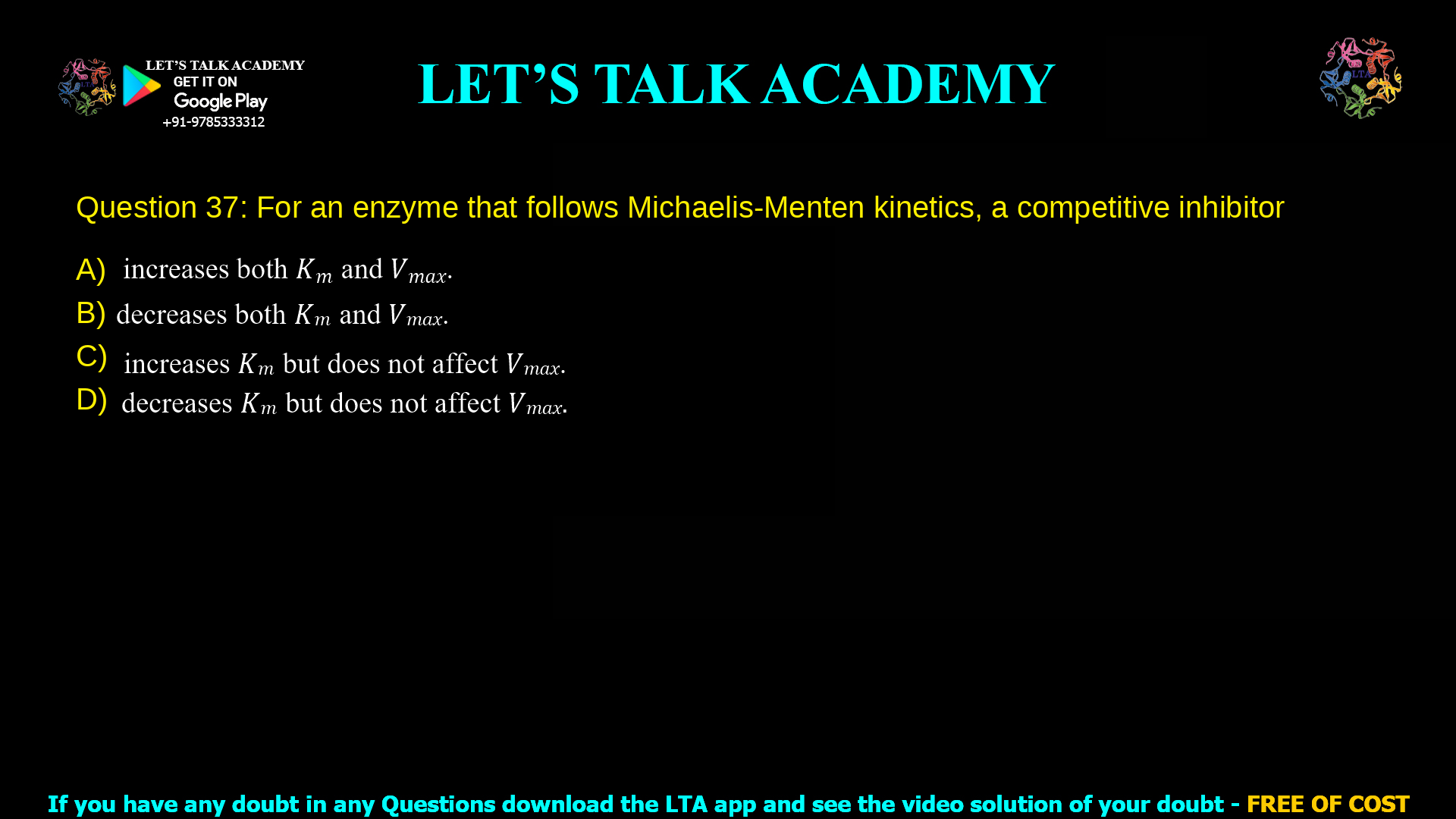
Q.37 For an enzyme that follows Michaelis–Menten kinetics, a competitive inhibitor(A) increases both 𝐾𝑚 and 𝑉𝑚𝑎𝑥.(B) decreases both 𝐾𝑚 and 𝑉𝑚𝑎𝑥.(C) increases 𝐾𝑚 but does not affect 𝑉𝑚𝑎𝑥.(D) decreases 𝐾𝑚 […]
Q.36 Which one of the following molecules does NOT contain phosphoanhydridebond(s)?(A) Adenosine diphosphate(B) Adenosine triphosphate(C) Fructose–1,6–bisphosphate(D) Pyrophosphate Fructose-1,6-bisphosphate does not contain phosphoanhydride bonds. This molecule from glycolysis features phosphoester linkages instead, […]
Q.35 Which of the following statements about antibodies is/are correct?(A) Different antibody classes have different effector functions.(B) Each antibody chain consists of an amino–terminal constant region and a carboxy–terminal variable […]
Q. 34 Which one of the following is the most sensitive immunoassay?(A) Immunoelectrophoresis(B) Immunofluorescence(C) Radial immunodiffusion(D) Radioimmunoassay Radioimmunoassay (RIA) is the most sensitive immunoassay among the given options. It detects […]
Q.33 Which one of the following ion channels opens to repolarize the neuronalmembrane when an action potential is generated?(A) Ca2+ channel(B) H+ channel(C) Na+ channel(D) K+ channel Potassium (K+) channels […]

Q.32 Which one of the following DNA repair systems requires DNA glycosylases?(A) Base–excision(B) Direct(C) Mismatch(D) Nucleotide–excision The correct answer is (A) Base-excision repair. DNA glycosylases initiate base-excision repair (BER) by […]
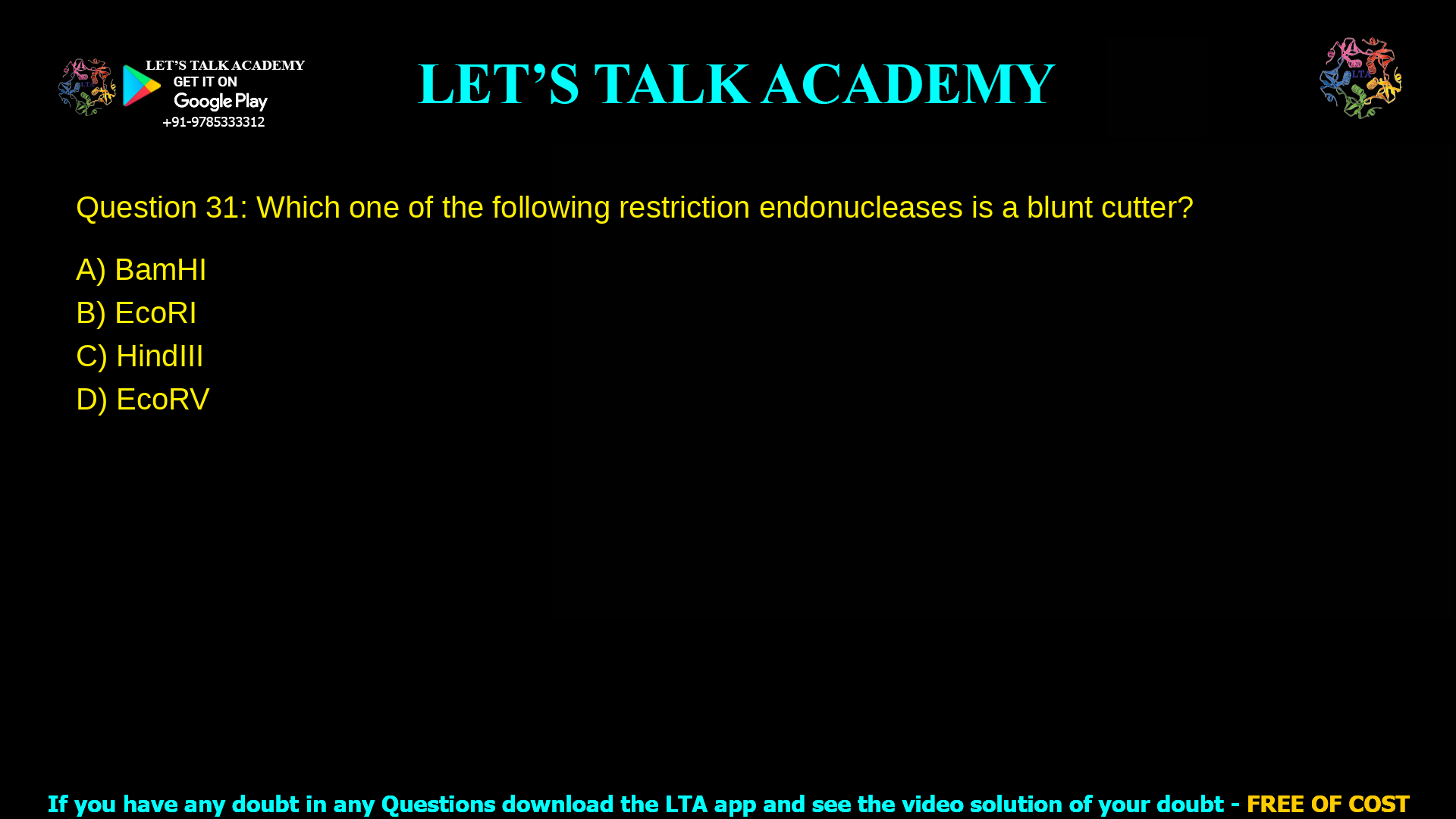
Q.31 Which one of the following restriction endonucleases is a blunt cutter?(A) BamHI(B) EcoRI(C) HindIII(D) EcoRV EcoRV is the blunt cutter among the given options. Question Breakdown Restriction endonucleases cut […]
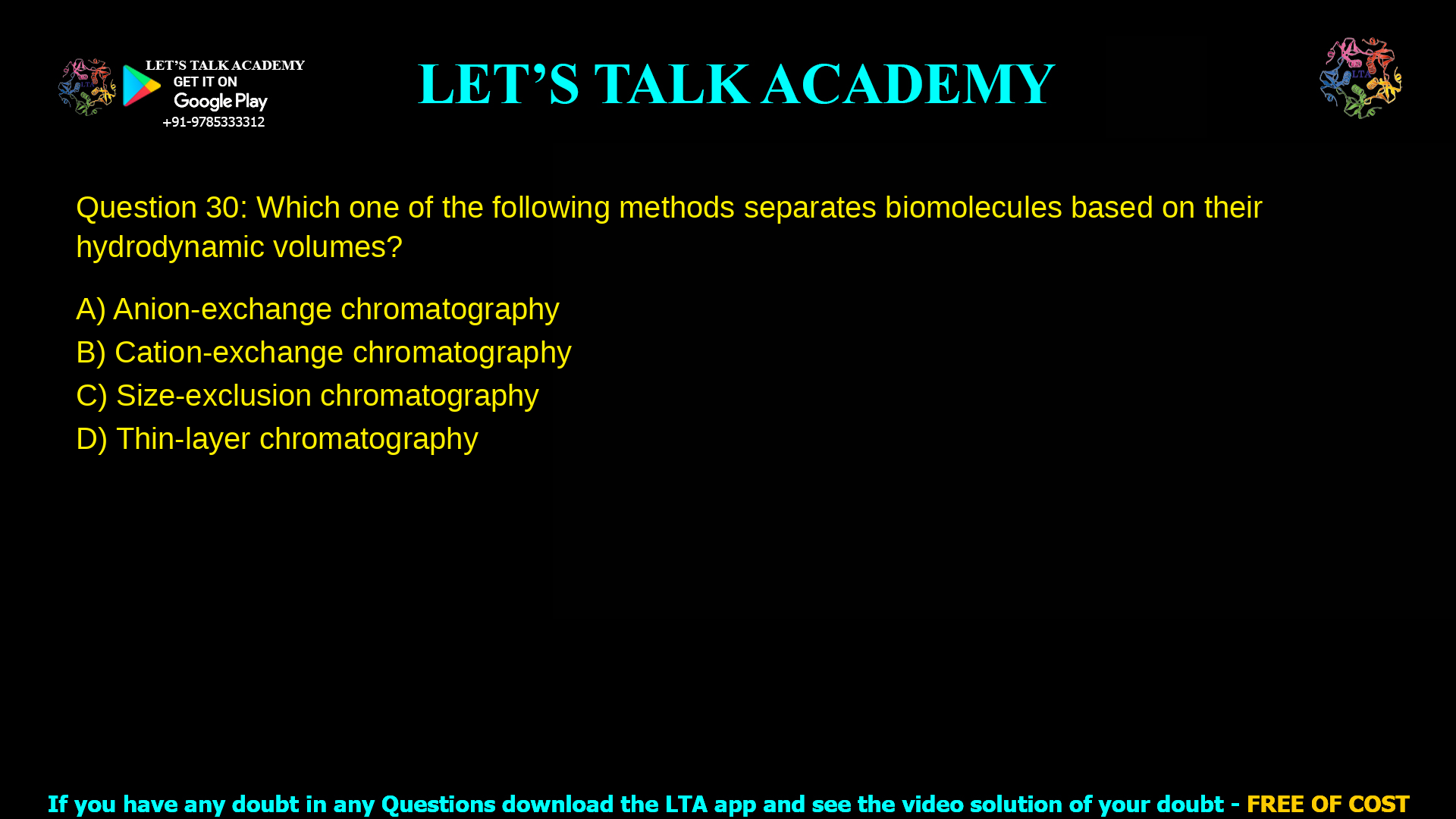
Q.30 Which one of the following methods separates biomolecules based on theirhydrodynamic volumes?(A) Anion–exchange chromatography(B) Cation–exchange chromatography(C) Size–exclusion chromatography(D) Thin–layer chromatography Size-exclusion chromatography separates biomolecules based on their hydrodynamic volumes, […]
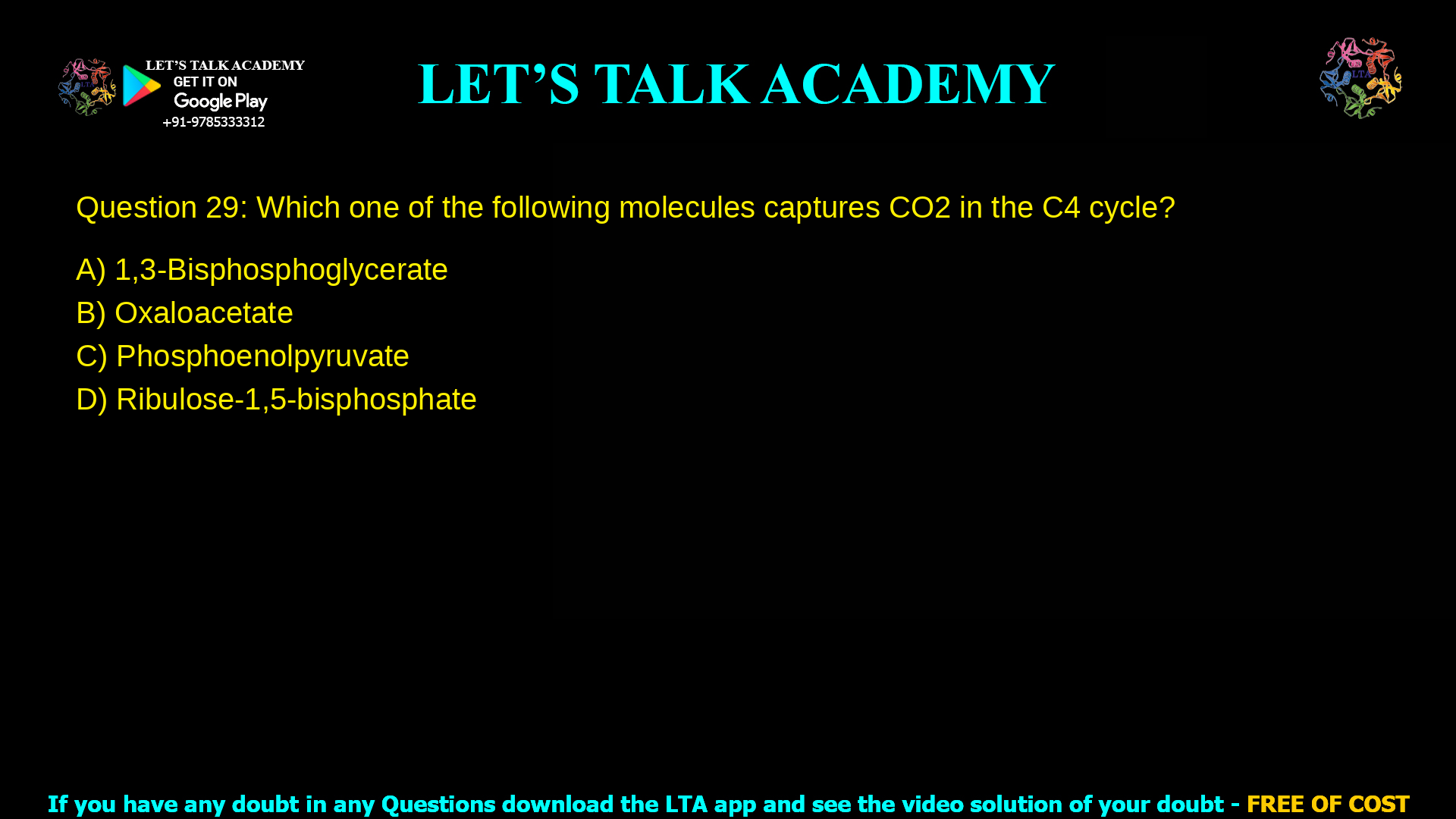
Q.29 Which one of the following molecules captures CO2 in the C4 cycle?(A) 1,3–Bisphosphoglycerate(B) Oxaloacetate(C) Phosphoenolpyruvate(D) Ribulose–1,5–bisphosphate Phosphoenolpyruvate (PEP) captures CO2 in the C4 cycle through carboxylation by PEP carboxylase […]


