






































































































37. Cytochrome-c has only one tryptophan residue (W) which is buried. The protein in cacodylate buffer (pH 6.0) is excited at 280 nm, and its emission spectrum measured in the […]
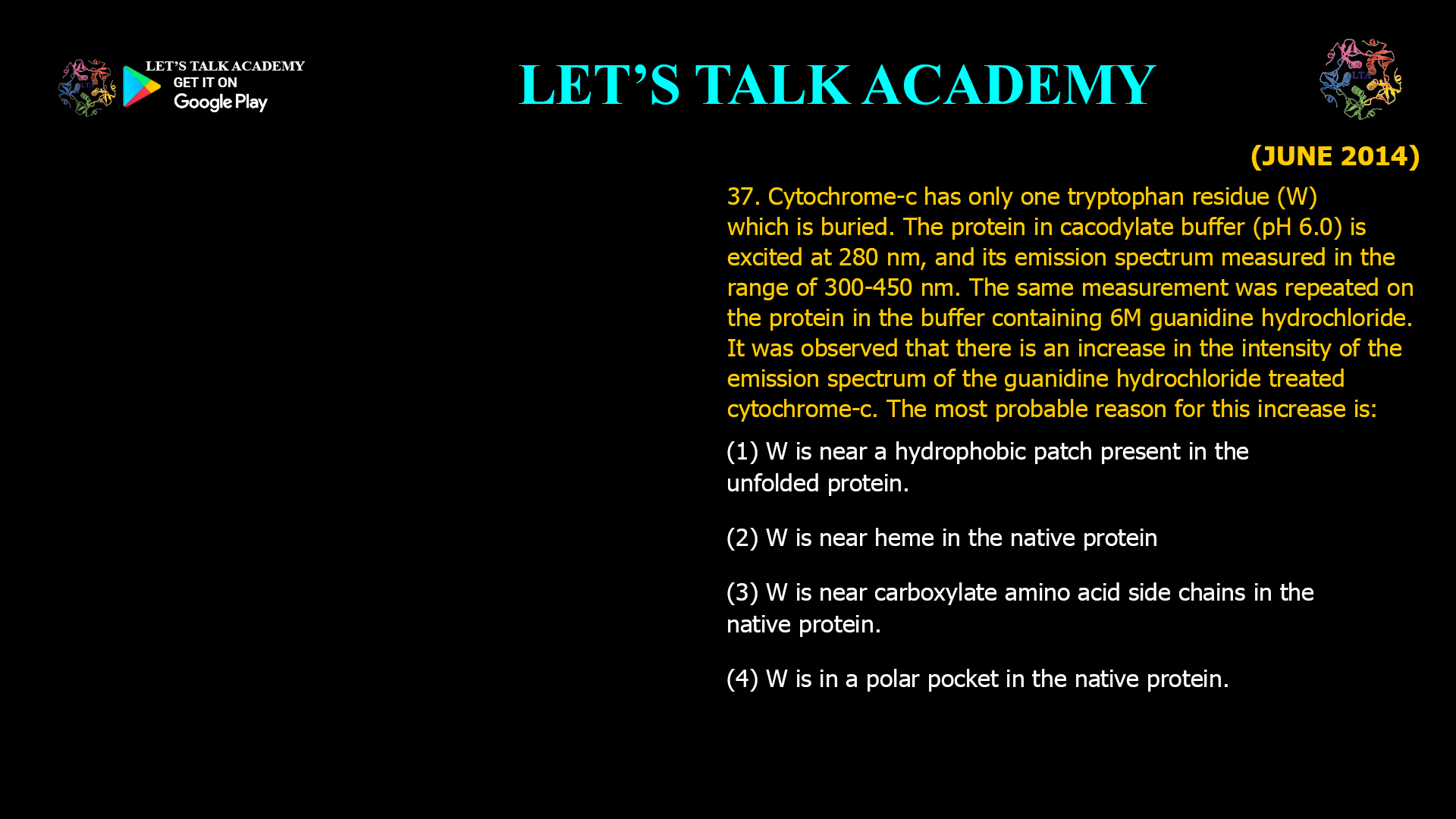

37. Cytochrome-c has only one tryptophan residue (W) which is buried. The protein in cacodylate buffer (pH 6.0) is excited at 280 nm, and its emission spectrum measured in the […]
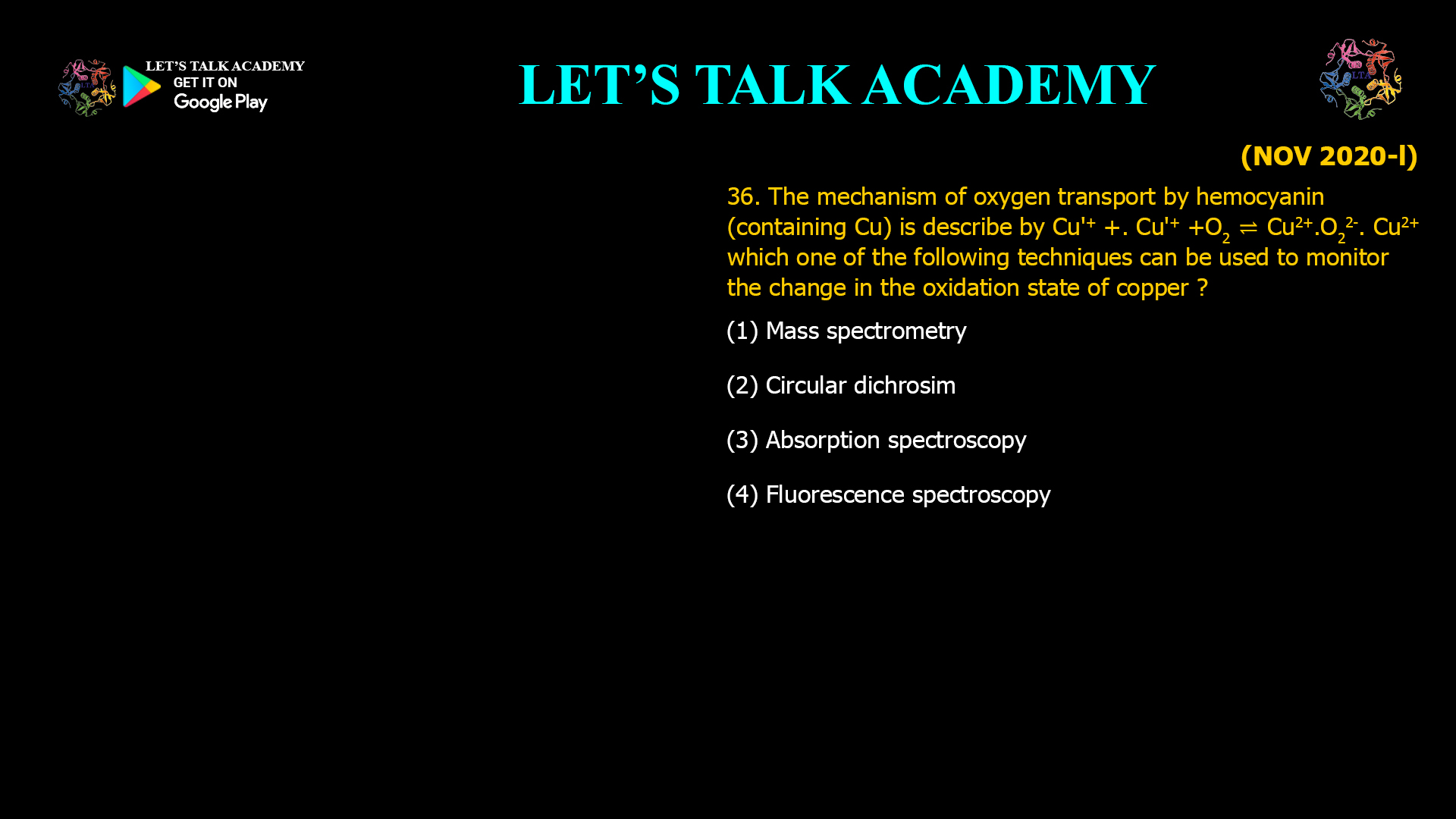
36. The mechanism of oxygen transport by hemocyanin (containing Cu) is described by: Cu⁺ + Cu⁺ + O₂ ⇌ Cu²⁺–O₂²⁻–Cu²⁺ Which one of the following techniques can be used to […]
35. Which of the following atomic nuclei cannot be probed by nuclear magnetic resonance spectroscopy? (A) ¹H (B) ³¹P (C) ¹⁸O (D) ¹⁵N Nuclei That Can and Cannot Be Studied […]
34. Haemoglobin has characteristic circular dichroism (CD) peaks in the far-UV, near UV and Soret regions. Contribution to near-UV CD comes entirely from (A) Aromatic amino acid residues. (B) Heme […]
33. Following observations are made regarding a peptide sequence. – The peptide is inert to Ellman’s reagent. However, on reacting with β-mercaptoethanol, the peptide gives a positive Ellman’s test. – […]
32. Poly-L-lysine exists in pure α-helix, β-sheet and random coiled conformation depending upon the solvent conditions. The values of mean residue ellipticity at 220 nm ([Θ]₂₂₀) are −35,700, −13,800 and […]
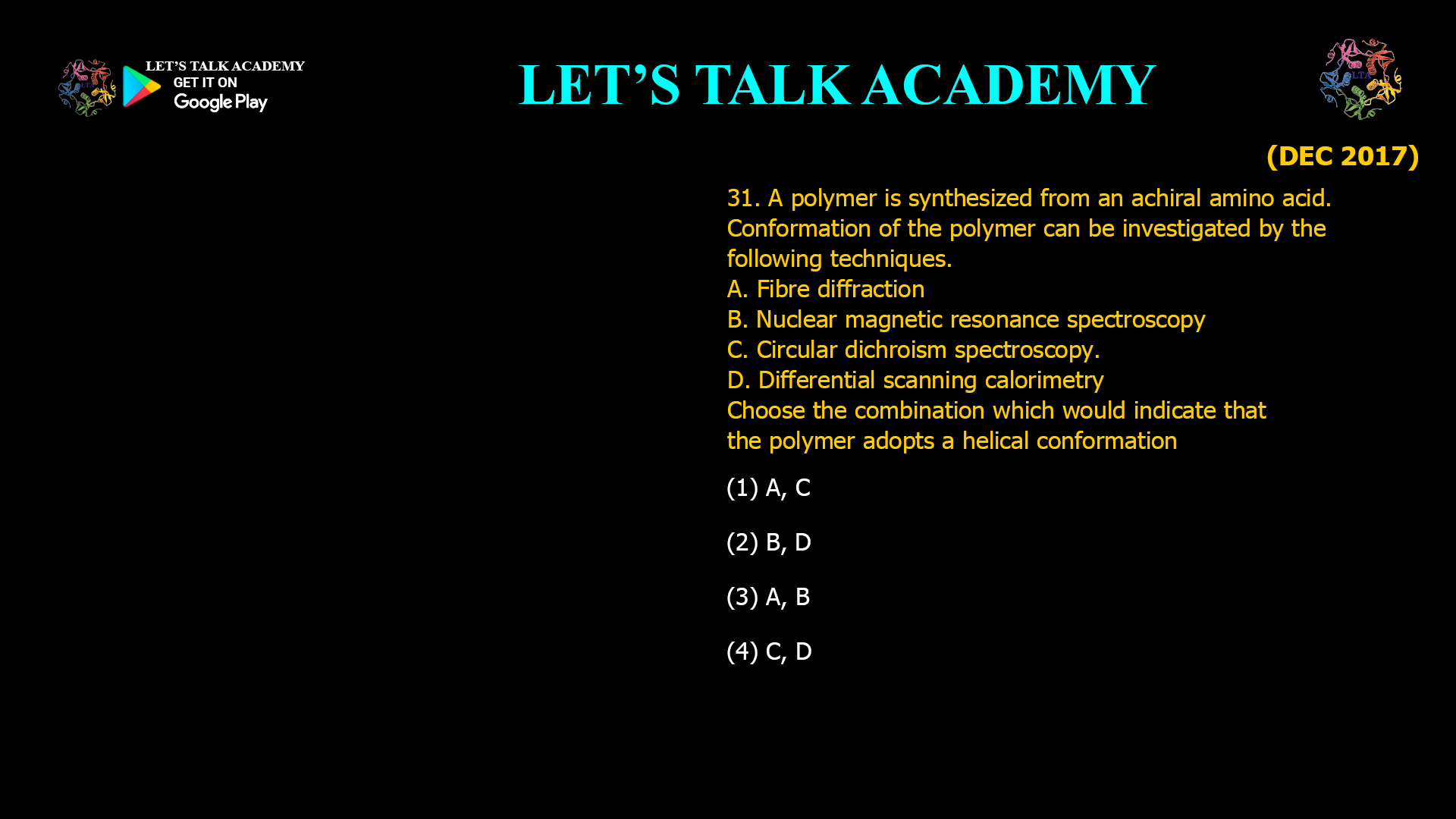
31. A polymer is synthesized from an achiral amino acid. Conformation of the polymer can be investigated by the following techniques. A. Fibre diffraction B. Nuclear magnetic resonance spectroscopy C. […]
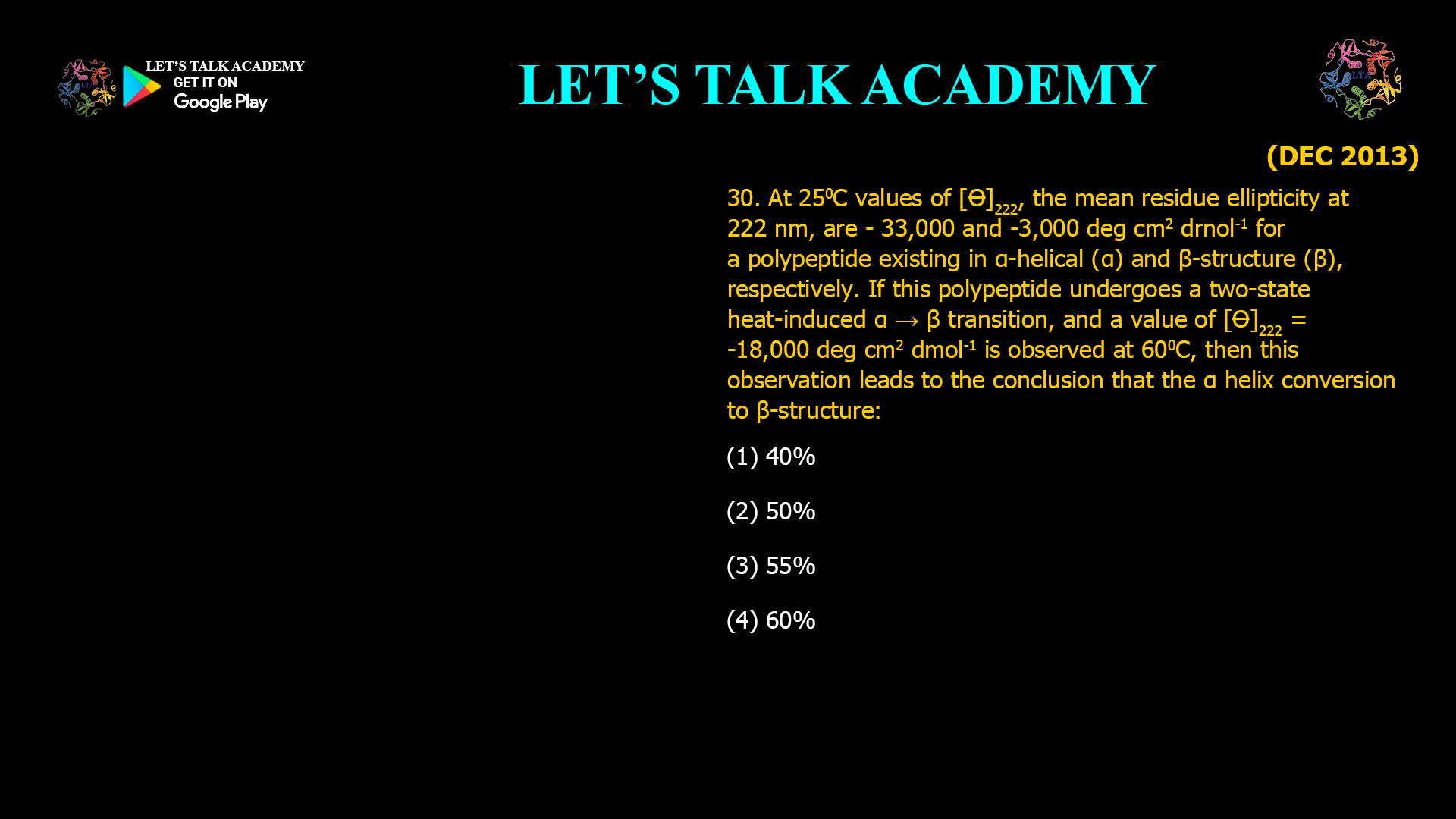
30. At 25°C values of [Θ]₂₂₂, the mean residue ellipticity at 222 nm, are −33,000 and −3,000 deg cm² dmol⁻¹ for a polypeptide existing in α-helical (α) and β-structure (β), […]
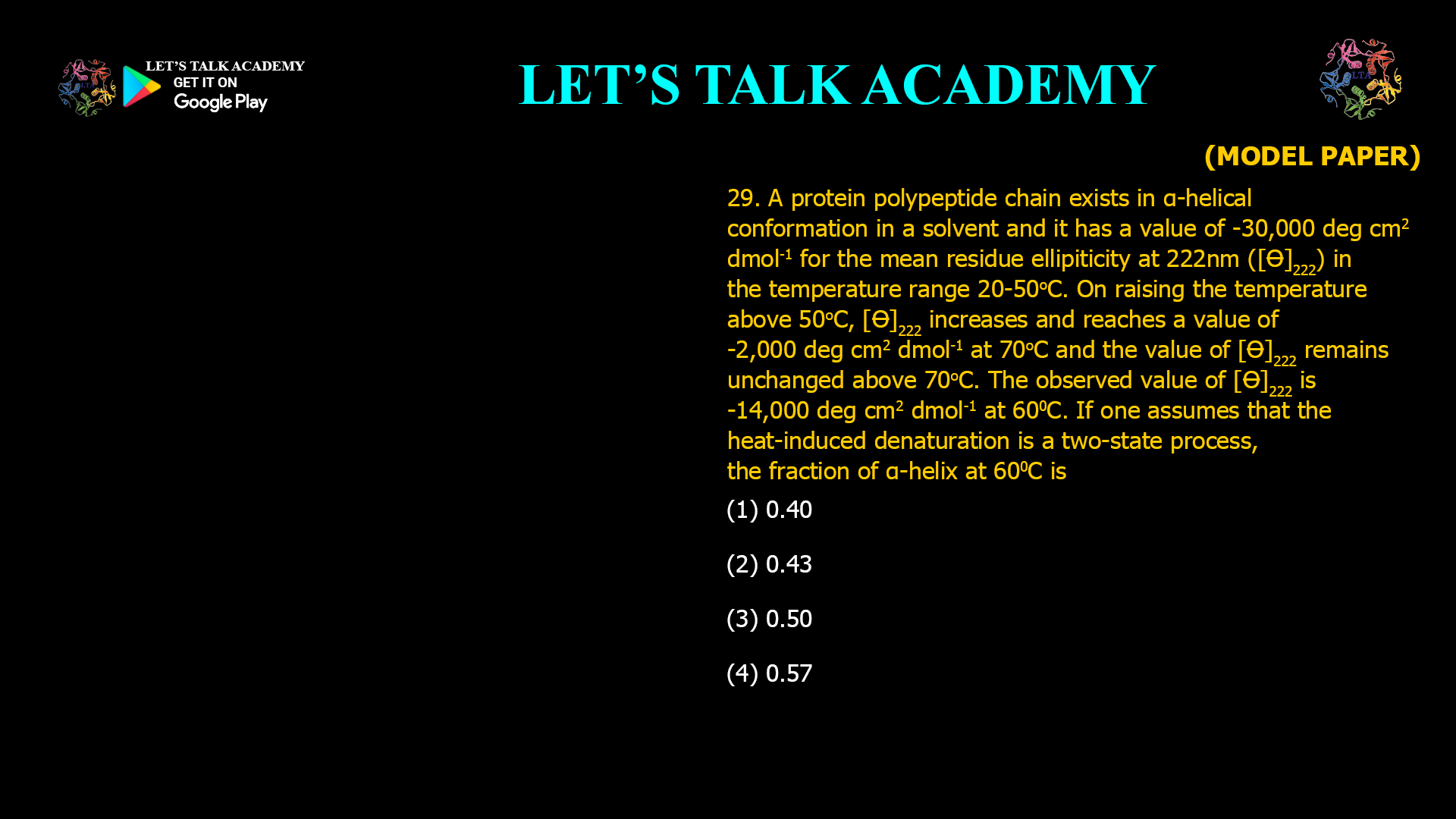
29. A protein polypeptide chain exists in α-helical conformation in a solvent and it has a value of −30,000 deg cm² dmol⁻¹ for the mean residue ellipticity at 222 nm […]
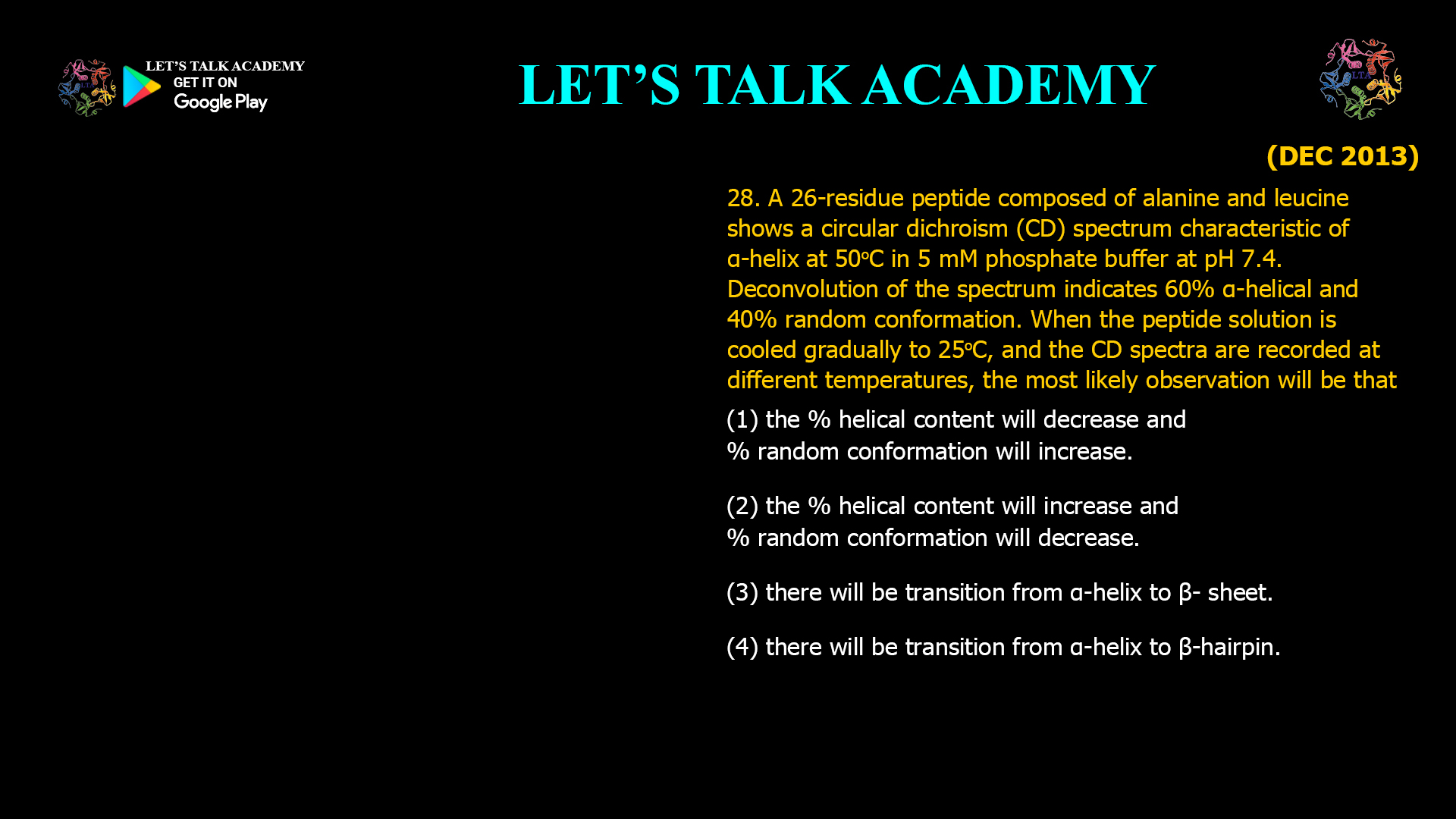
28. A 26-residue peptide composed of alanine and leucine shows a circular dichroism (CD) spectrum characteristic of α-helix at 50°C in 5 mM phosphate buffer at pH 7.4. Deconvolution of […]


