






















































































Major cause of evolution of genes and protein is (1) Point mutation (2) Chromosomal aberrations (3) Sexual reproduction (4) Gene duplication and divergence Gene Duplication and Divergence: The Major […]

Major cause of evolution of genes and protein is (1) Point mutation (2) Chromosomal aberrations (3) Sexual reproduction (4) Gene duplication and divergence Gene Duplication and Divergence: The Major […]
Allele frequency of a particular allele was found to be 0.5 in three different populations. It is probably due to is (1) Neutral allele (2) Stable polymorphism (3) Heterozygote advantage […]
With time molecular distance between organisms increases during evolution largely due to (1) Natural selection (2) Neutral Mutation (3) Random d rift (4) Point Mutations How Neutral Mutations Drive […]
With time molecular distance between organisms increases during evolution largely due to (1) Natural selection (2) Neutral Mutation (3) Random drift (4) Point Mutations The Molecular Clock Hypothesis: How […]

Inactive faulty copy of functional gene is called (1) Recessive gene (2) Pseudo gene (3) Null gene (4) Neutral gene What Is a Pseudogene? Understanding the Inactive, Faulty Copies […]
A group of palaeontologists digging in an area discovers a pre-historic human burialsite. The same group, while exploring a nearby area, discovered fossil remains of what appeared to be more […]
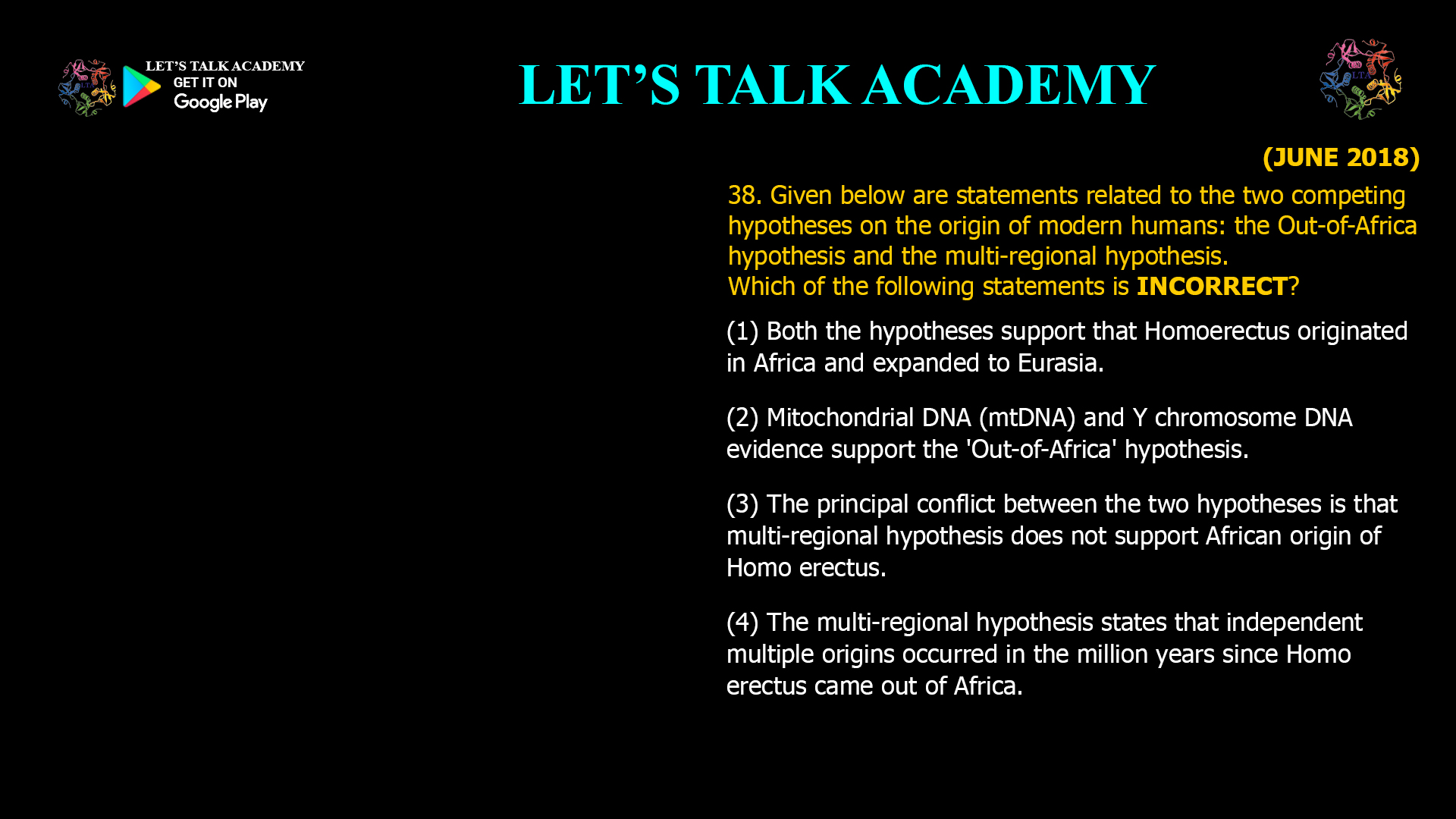
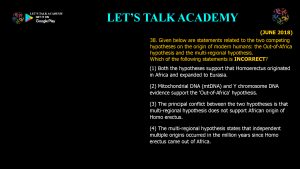
Given below are statements related to the two competing hypotheses on the origin of modern humans: the Out-of-Africa hypothesis and the multi-regional hypothesis. Which of the following statements is INCORRECT? […]

Following is a diagrammatic representation of human evolutionary tree .In the above diagram A, B, C and D respectively represent: (1) Denisovan, Homo habilis, Homo erectus, Homo neanderthalensis (2) Homo […]
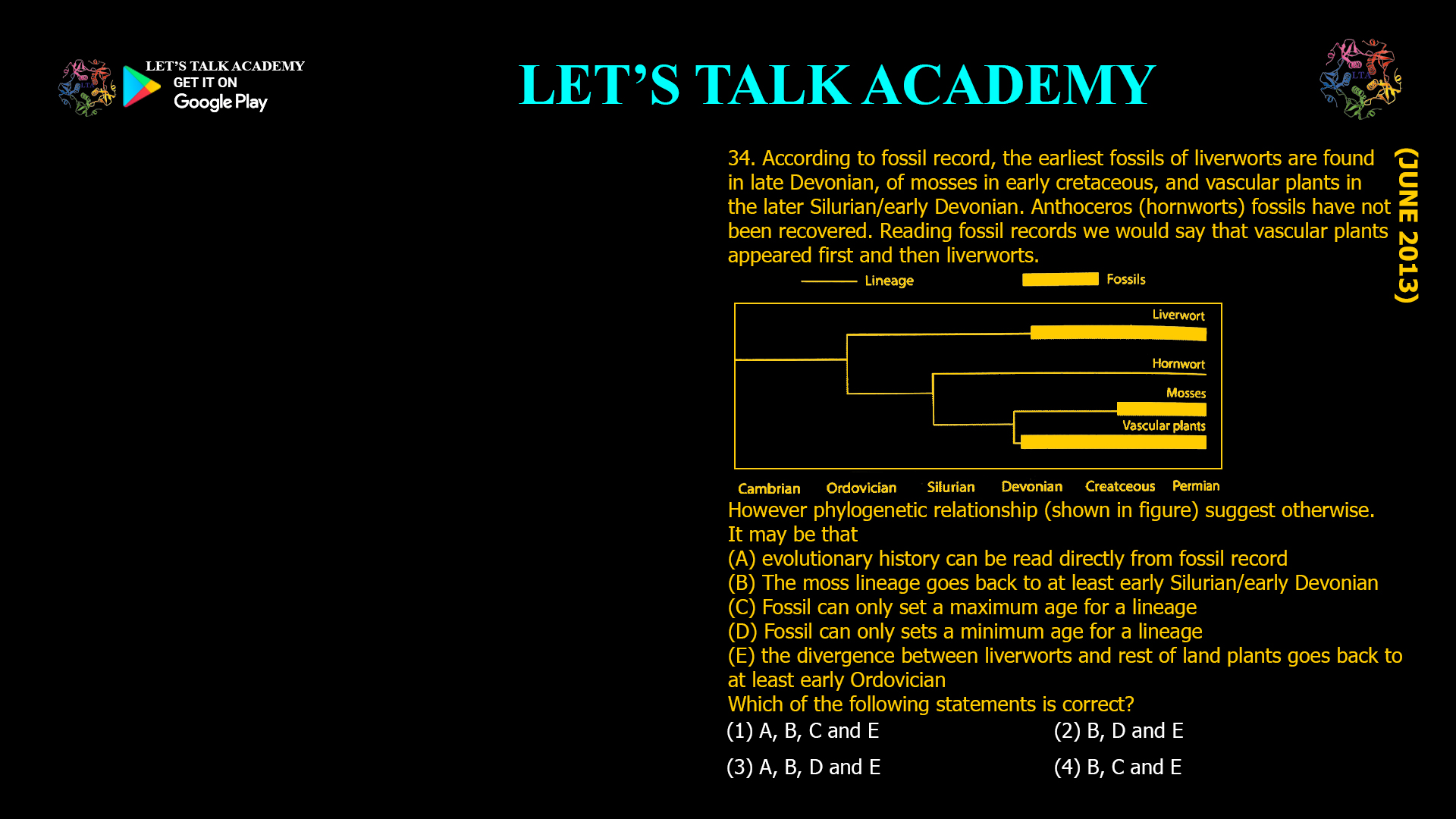
According to fossil record, the earliest fossils of liverworts are found in late Devonian, of mosses in early cretaceous, and vascular plants in the later Silurian/early Devonian. Anthoceros (hornworts) fossils […]
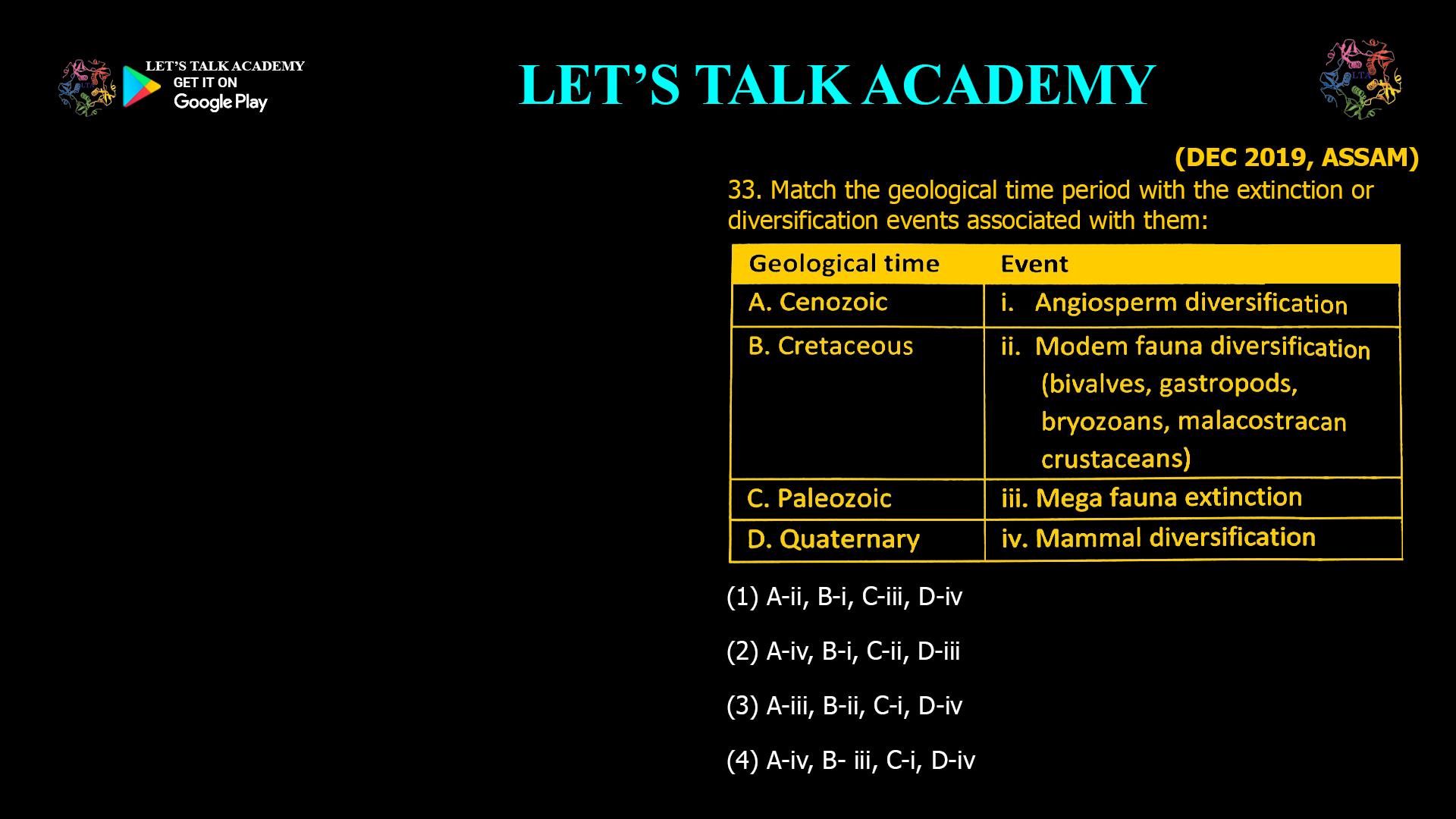
Match the geological time period with the extinction or diversification events associated with them: (1) A-ii, B-i, C-iii, D-iv (2) A-iv, B-i, C-ii, D-iii (3) A-iii, B-ii, C-i, D-iv (4) […]


