
Composition, Structure and Function of Biomolecules: Vitamins
1. Introduction to Vitamins
Vitamins are a group of low-molecular-weight organic compounds that are required in very small quantities for normal growth, development, metabolism, cellular maintenance, and physiological functioning. Unlike carbohydrates, lipids, and proteins, vitamins generally do not serve as major sources of metabolic energy. Instead, many vitamins participate directly or indirectly in biochemical reactions by functioning as coenzymes, coenzyme precursors, antioxidants, electron carriers, transcriptional regulators, or hormone-like signaling molecules.
The importance of vitamins becomes particularly clear when we examine cellular metabolism. A metabolic pathway may contain several enzymes, but some of those enzymes cannot function efficiently without an additional non-protein component. In many cases, this component is derived from a vitamin. Therefore, a vitamin deficiency can disrupt an entire metabolic pathway even when the corresponding enzyme protein itself is structurally normal.
For example, thiamine (vitamin B1) is converted into thiamine pyrophosphate (TPP), which is required by several important enzymes involved in carbohydrate and amino acid metabolism. Similarly, riboflavin gives rise to the coenzymes FAD and FMN, which participate in oxidation-reduction reactions. Niacin is the precursor of NAD⁺ and NADP⁺, two of the most important electron-transfer cofactors in cellular metabolism.
Thus, vitamins are not simply “nutritional substances.” From a biochemical perspective, they are closely connected with the functioning of enzymes, metabolic pathways, gene expression, antioxidant defense, blood formation, vision, bone metabolism, and cellular signaling.
2. General Characteristics of Vitamins
Vitamins have several characteristic properties that distinguish them from macronutrients.
First, they are required in small quantities compared with carbohydrates, proteins, and lipids. Even though their concentrations in cells may be very low, their biochemical effects can be extremely significant.
Second, vitamins generally do not provide energy directly. The calories obtained from food primarily come from carbohydrates, fats, and proteins. Vitamins instead help the enzymes and metabolic systems that extract and utilize this energy.
Third, many vitamins function after conversion into biologically active derivatives. The vitamin obtained from the diet may not always be the exact molecule that participates in the biochemical reaction. For example:
Vitamin B1 → Thiamine pyrophosphate (TPP)
Vitamin B2 → FMN and FAD
Vitamin B3 → NAD⁺ and NADP⁺
Vitamin B6 → Pyridoxal phosphate (PLP)
Vitamin B7 → Biotinylated enzyme cofactor
Vitamin B9 → Tetrahydrofolate (THF) derivatives
Vitamin B12 → Methylcobalamin and adenosylcobalamin
3. Classification of Vitamins
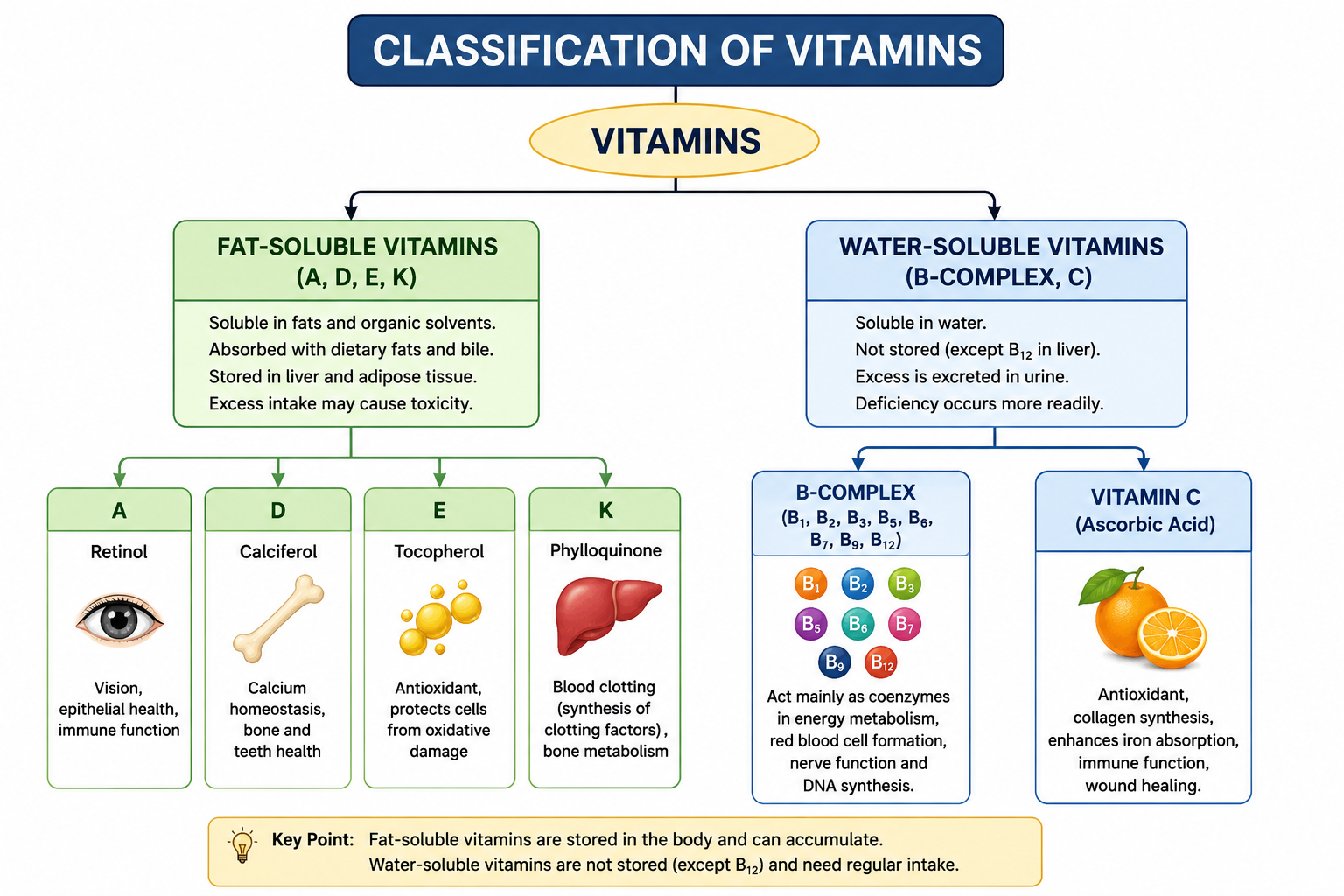
Vitamins are traditionally classified according to their solubility into two major groups:
3.1 Fat-Soluble Vitamins
The fat-soluble vitamins are:
Vitamin A
Vitamin D
Vitamin E
Vitamin K
These vitamins are associated with lipid absorption and can be stored to a greater extent in the body, particularly in the liver and adipose tissues. Because they can accumulate, excessive intake of some fat-soluble vitamins can produce toxicity.
3.2 Water-Soluble Vitamins
The water-soluble vitamins include:
Vitamin B1 – Thiamine
Vitamin B2 – Riboflavin
Vitamin B3 – Niacin
Vitamin B5 – Pantothenic acid
Vitamin B6 – Pyridoxine, pyridoxal, and pyridoxamine
Vitamin B7 – Biotin
Vitamin B9 – Folate
Vitamin B12 – Cobalamin
Vitamin C – Ascorbic acid
The B-complex vitamins are especially important in intermediary metabolism because many of them are converted into coenzymes required for carbohydrate, lipid, amino acid, and nucleotide metabolism.
Water-soluble vitamins are generally not stored extensively, although vitamin B12 is an important exception because substantial amounts can be stored in the liver for long periods.
4. Comparison Between Fat-Soluble and Water-Soluble Vitamins
| Feature | Fat-Soluble Vitamins | Water-Soluble Vitamins |
|---|---|---|
| Major vitamins | A, D, E, K | B-complex and C |
| Solubility | Lipid-soluble | Water-soluble |
| Storage | Relatively greater | Generally limited |
| Excretion | Mainly through bile/feces after metabolism | Mainly through urine |
| Deficiency development | May develop more slowly | Often develops more rapidly |
| Toxicity | More likely with excessive accumulation | Generally lower, although toxicity can occur |
| Major biochemical roles | Regulation, antioxidant activity, vision, bone metabolism, coagulation | Coenzyme activity, metabolism, electron transfer, biosynthesis |
| Important exception | — | Vitamin B12 can be stored extensively |
The distinction between these two groups is important because solubility strongly influences absorption, transport, storage, excretion, deficiency, and toxicity.
5. Vitamins as Biomolecules and Their Biochemical Importance
Vitamins are chemically diverse. Unlike proteins, they do not possess one common structural framework. Some are relatively simple organic molecules, whereas others contain complex ring systems or heterocyclic structures.
For example, vitamin C is a water-soluble lactone derivative, vitamin A contains a long conjugated hydrocarbon chain, vitamin E possesses a chromanol ring with a hydrophobic side chain, vitamin K contains a naphthoquinone ring system, and vitamin B12 contains a highly complex corrin ring surrounding cobalt.
This structural diversity explains why vitamins perform very different functions.
A useful way of understanding vitamins is therefore to connect:
Vitamin → Chemical structure → Active form → Biochemical reaction → Physiological function → Deficiency
6. Fat-Soluble Vitamins
6.1 Vitamin A
Vitamin A represents a group of chemically related compounds known as retinoids. Important forms include retinol, retinal, and retinoic acid.
Dietary provitamin A carotenoids such as β-carotene can be converted into vitamin A in the body.
6.1.1 Structure of Vitamin A
Retinoids contain a β-ionone ring and a conjugated polyene chain. The extended conjugated double-bond system is particularly important for the visual function of retinal.
The aldehyde form, 11-cis-retinal, combines with the protein opsin to form visual pigments involved in photoreception.
6.1.2 Functions of Vitamin A
Vitamin A has several important functions.
It is essential for vision, particularly adaptation to low-light conditions.
It also contributes to the maintenance and differentiation of epithelial tissues.
Another major function is regulation of gene expression. Retinoic acid acts through nuclear receptors, particularly retinoic acid receptors (RARs) and retinoid X receptors (RXRs), which regulate transcription of specific genes.
Therefore, vitamin A is not merely a “vision vitamin”; it also has an important role in cell differentiation and developmental regulation.
6.1.3 Vitamin A in Vision
In the visual cycle, 11-cis-retinal combines with opsin to form rhodopsin in rod cells.
When photons are absorbed, 11-cis-retinal undergoes photoisomerization toward an all-trans configuration. This conformational change initiates a signaling cascade that ultimately changes the membrane potential of the photoreceptor cell.
This is an important connection between a biomolecule and signal transduction.
6.1.4 Deficiency of Vitamin A
Vitamin A deficiency can result in impaired vision, particularly night blindness, and can also affect epithelial tissues.
Severe deficiency may lead to xerophthalmia and progressive damage to ocular tissues.
Remember:
Retinal → Vision
Retinoic acid → Gene regulation and differentiation
Retinol → Transport/storage-related form
7. Vitamin D
Vitamin D is a secosteroid, meaning that its steroid-like structure contains a ring that has undergone cleavage.
The major forms are vitamin D₂ (ergocalciferol) and vitamin D₃ (cholecalciferol).
Vitamin D₃ can be produced in the skin from 7-dehydrocholesterol following ultraviolet-B exposure.
Therefore, vitamin D differs from many classical dietary vitamins because the body can synthesize it under appropriate environmental conditions.
7.1 Activation of Vitamin D
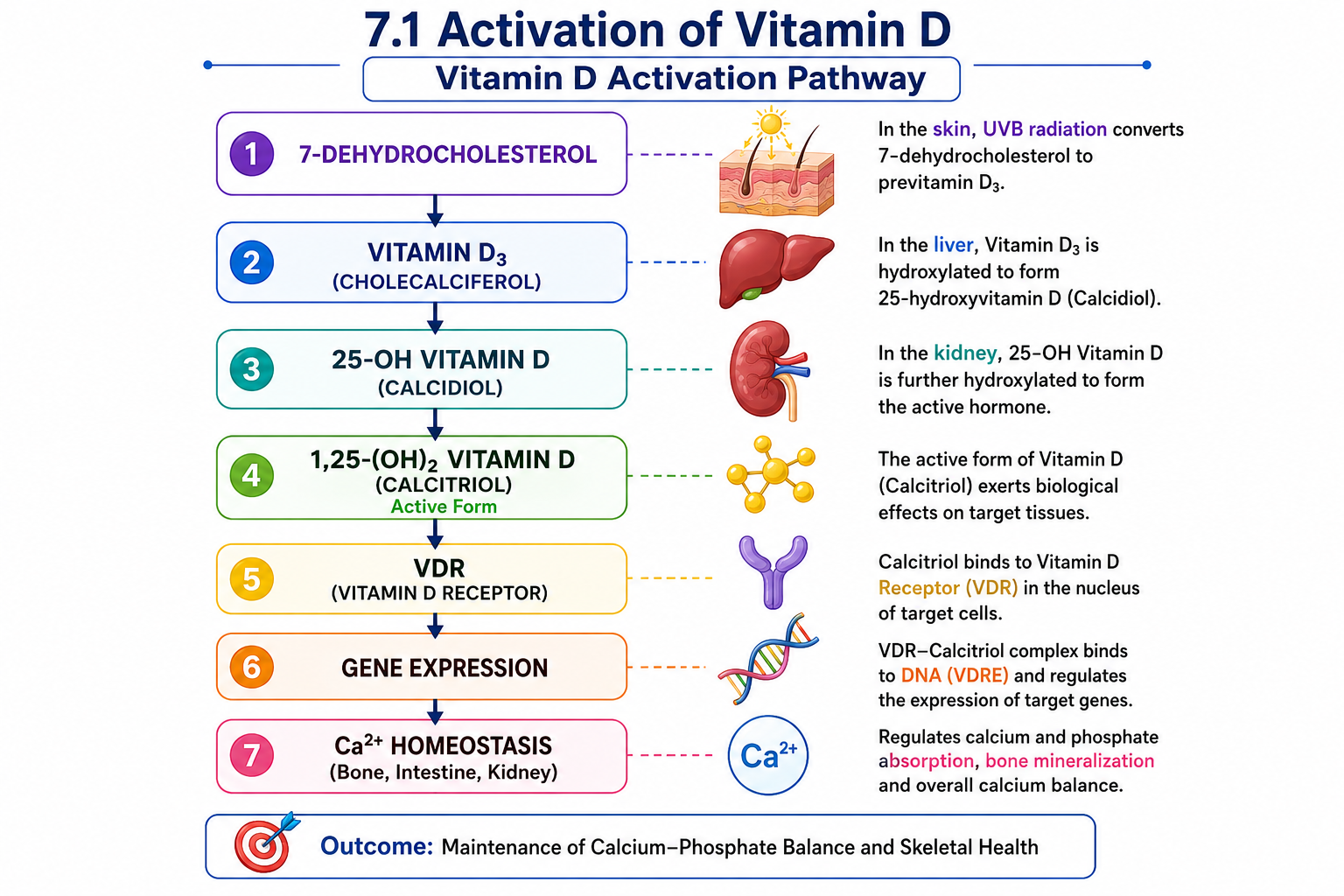
Vitamin D itself undergoes sequential modifications.
The first major hydroxylation occurs in the liver, producing 25-hydroxyvitamin D, also called calcidiol.
A second hydroxylation occurs primarily in the kidney, producing 1,25-dihydroxyvitamin D, or calcitriol.
Calcitriol is the biologically active hormonal form.
Simplified pathway
Vitamin D₃
↓ Liver hydroxylation
25-hydroxyvitamin D
↓ Kidney hydroxylation
1,25-dihydroxyvitamin D₃ (Calcitriol)
This pathway is extremely important for understanding vitamin D as a hormone-like regulator of gene expression.
7.2 Functions of Vitamin D
Vitamin D plays a central role in maintaining calcium and phosphate homeostasis.
It promotes intestinal calcium absorption and contributes to normal bone mineralization.
At the molecular level, calcitriol binds to the vitamin D receptor (VDR), a nuclear receptor. The receptor functions as a transcriptional regulator and alters the expression of target genes.
Therefore:
Vitamin D → Nuclear receptor → Gene expression → Calcium/phosphate homeostasis
This is an important example of how a vitamin can function as a signaling molecule rather than simply serving as a metabolic cofactor.
7.3 Deficiency of Vitamin D
Vitamin D deficiency can impair bone mineralization.
In children, severe deficiency can result in rickets, whereas in adults it can contribute to osteomalacia.
8. Vitamin E
Vitamin E refers primarily to a group of tocopherols and tocotrienols, with α-tocopherol being an important biologically active form.
Vitamin E is lipid-soluble and is particularly associated with membranes and lipid-rich environments.
8.1 Antioxidant Function
One of the most important functions of vitamin E is its role as a lipid-phase antioxidant.
Membrane lipids, especially polyunsaturated fatty acids, can undergo oxidative damage through lipid peroxidation.
Vitamin E can donate a hydrogen atom to lipid radicals, helping terminate the chain reaction of lipid peroxidation.
A simplified representation is:
Lipid radical + Vitamin E-H → Lipid-H + Vitamin E radical
This makes vitamin E particularly important for protecting cellular membranes from oxidative damage.
8.2 Deficiency of Vitamin E
Vitamin E deficiency is relatively uncommon in healthy individuals but may occur in association with disorders affecting fat absorption.
Because of its relationship with membrane integrity and antioxidant defense, severe deficiency can affect neuromuscular function.
9. Vitamin K
Vitamin K includes a family of quinone-related compounds.
Important forms include phylloquinone (vitamin K₁) and menaquinones (vitamin K₂ forms).
Vitamin K is especially important for the γ-carboxylation of specific glutamate residues in proteins.
9.1 Biochemical Function of Vitamin K
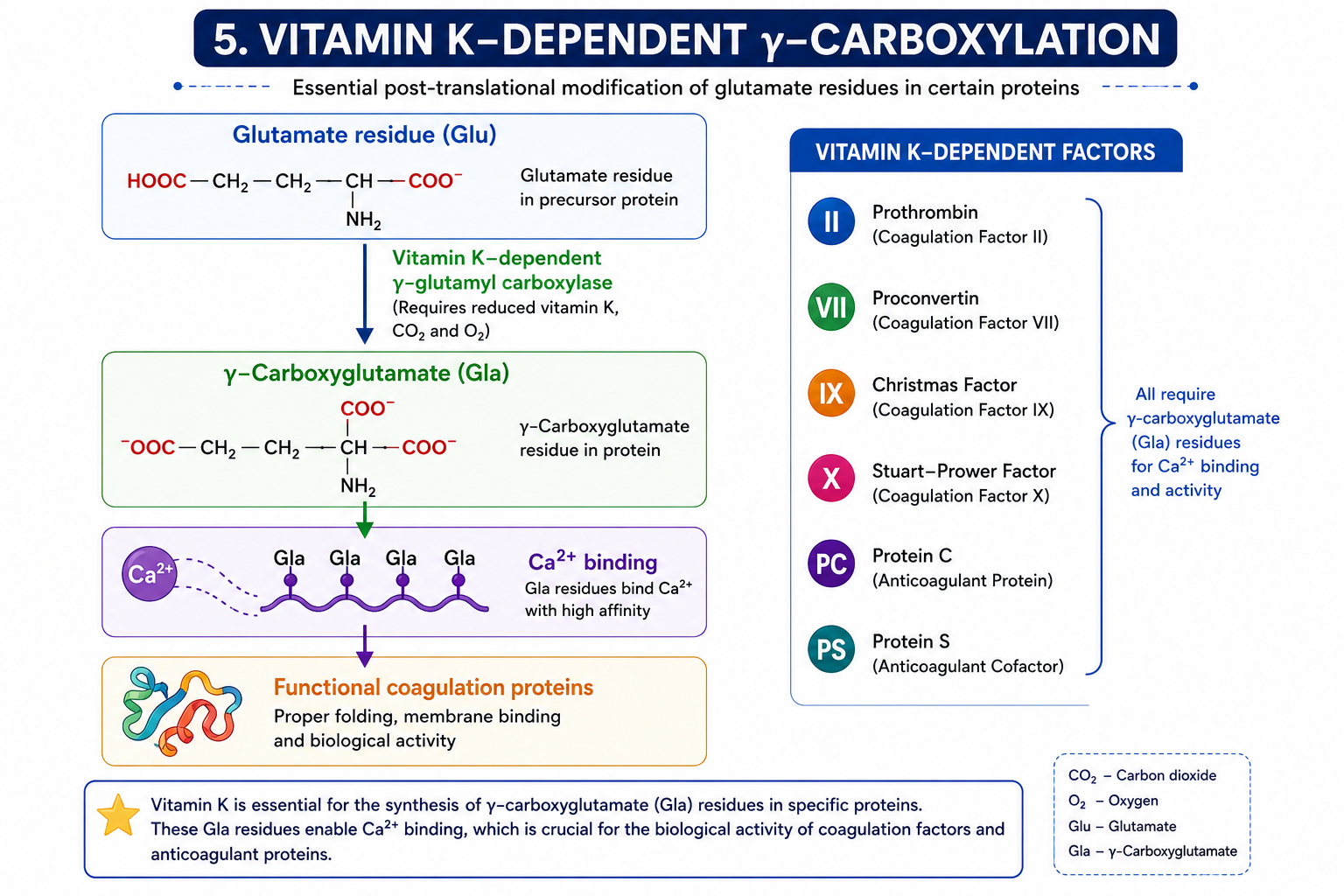
Vitamin K acts as a cofactor in the enzymatic carboxylation of glutamate residues.
This modification produces γ-carboxyglutamate (Gla) residues.
Gla residues are capable of binding calcium ions, which is essential for the activity of several proteins involved in blood coagulation and bone metabolism.
Important vitamin K-dependent coagulation proteins include:
Factor II
Factor VII
Factor IX
Factor X
and the anticoagulant proteins:
Protein C
Protein S
Vitamin K therefore connects a micronutrient with post-translational modification of proteins.
9.2 Deficiency of Vitamin K
Vitamin K deficiency can impair normal blood clotting and increase bleeding tendency.
An important conceptual point is that vitamin K does not simply “make blood clot.” Rather, it enables a specific post-translational modification required for the functional activity of several proteins.
10. Water-Soluble Vitamins
The water-soluble vitamins consist of the B-complex vitamins and vitamin C.
The B vitamins are particularly important in cellular metabolism because many are converted into coenzyme forms. They participate in oxidation-reduction reactions, carbon-transfer reactions, amino acid metabolism, nucleotide synthesis, and energy metabolism.
11. Vitamin B1 – Thiamine
Vitamin B1 is known as thiamine.
Its biologically important coenzyme form is:
Thiamine pyrophosphate (TPP)
TPP is also called thiamine diphosphate (TDP).
11.1 Structure and Biochemical Role
Thiamine contains a pyrimidine ring and a thiazolium ring.
The thiazolium ring is particularly important for its catalytic activity.
The positively charged thiazolium group allows TPP to stabilize carbanion-like intermediates during reactions involving the transfer of aldehyde units.
11.2 Enzymes Requiring TPP
Important TPP-dependent enzymes include:
Pyruvate dehydrogenase
α-Ketoglutarate dehydrogenase
Transketolase
Branched-chain α-ketoacid dehydrogenase
These enzymes connect thiamine with carbohydrate metabolism, the TCA cycle, the pentose phosphate pathway, and amino acid metabolism.
A very important association is:
B1 → TPP → Oxidative decarboxylation + Transketolase
11.3 Deficiency of Vitamin B1
Thiamine deficiency can produce beriberi.
Severe deficiency can also produce neurological abnormalities and Wernicke-Korsakoff syndrome, particularly in susceptible individuals.
12. Vitamin B2 – Riboflavin
Vitamin B2 is known as riboflavin.
Riboflavin is the precursor of two major flavin coenzymes:
FMN – Flavin mononucleotide
FAD – Flavin adenine dinucleotide
12.1 Structure of Riboflavin
Riboflavin contains an isoalloxazine ring system attached to a ribityl side chain.
The isoalloxazine ring is responsible for its redox properties.
12.2 Biochemical Function
FMN and FAD participate in oxidation-reduction reactions.
They can accept and donate electrons and hydrogen atoms, allowing flavoproteins to function in metabolic pathways.
Important examples include enzymes involved in:
Electron transport
Fatty acid oxidation
TCA-associated metabolism
Oxidative metabolism
Thus:
B2 → FMN/FAD → Redox reactions
12.3 Deficiency
Riboflavin deficiency can cause abnormalities involving mucous membranes, skin, and oral tissues.
13. Vitamin B3 – Niacin
Vitamin B3 includes nicotinic acid and nicotinamide.
Its most important biochemical significance is that it is the precursor of:
NAD⁺ – Nicotinamide adenine dinucleotide
NADP⁺ – Nicotinamide adenine dinucleotide phosphate
13.1 Structure and Redox Function
The biologically active portion of NAD⁺ and NADP⁺ is the nicotinamide ring.
This ring accepts a hydride ion during oxidation-reduction reactions.
The simplified reaction is:
NAD⁺ + 2e⁻ + H⁺ → NADH
NAD⁺ is particularly important in catabolic pathways, whereas NADPH is especially important in reductive biosynthesis and antioxidant systems.
13.2 Important Functions
NAD⁺ participates extensively in:
Glycolysis
TCA cycle
Fatty acid oxidation
Oxidative phosphorylation
NADPH is important in:
Fatty acid synthesis
Cholesterol synthesis
Maintenance of reduced glutathione
Other reductive biosynthetic reactions
13.3 Deficiency
Severe niacin deficiency produces pellagra, classically associated with the three Ds:
Dermatitis
Diarrhea
Dementia
14. Vitamin B5 – Pantothenic Acid
Vitamin B5 is known as pantothenic acid.
Its most important biochemical role is as a component of coenzyme A (CoA).
Coenzyme A contains a reactive sulfhydryl (-SH) group that allows it to form high-energy thioester bonds with acyl groups.
14.1 Biochemical Importance
CoA participates in the transfer of acyl groups.
An important example is:
Acetyl-CoA
Acetyl-CoA is a central metabolic intermediate connecting:
Carbohydrate metabolism
Fat metabolism
Amino acid metabolism
TCA cycle
Fatty acid synthesis
Therefore:
B5 → Coenzyme A → Acyl-group transfer
15. Vitamin B6 – Pyridoxine
Vitamin B6 refers to several related compounds, including:
Pyridoxine
Pyridoxal
Pyridoxamine
The biologically important coenzyme form is:
Pyridoxal phosphate (PLP)
15.1 Biochemical Role of PLP
PLP is particularly important in amino acid metabolism.
PLP-dependent enzymes participate in:
Transamination
Decarboxylation
Deamination
Racemization
and several other reactions involving amino acids.
During transamination, PLP forms a Schiff-base intermediate with the amino acid substrate.
This ability allows PLP to stabilize reaction intermediates and facilitate the rearrangement of amino groups.
15.2 Important Association
Vitamin B6 → PLP → Amino acid metabolism
This is one of the most important vitamin-coenzyme relationships to remember.
16. Vitamin B7 – Biotin
Vitamin B7 is known as biotin.
Biotin functions as a coenzyme for carboxylation reactions.
It acts as a carrier of activated carbon dioxide.
16.1 Biotin-Dependent Enzymes
Important biotin-dependent enzymes include:
Pyruvate carboxylase
Acetyl-CoA carboxylase
Propionyl-CoA carboxylase
3-Methylcrotonyl-CoA carboxylase
These enzymes participate in gluconeogenesis, fatty acid synthesis, and amino acid metabolism.
16.2 Biochemical Mechanism
Biotin is covalently attached to specific lysine residues in biotin-dependent enzymes.
The biotin prosthetic group functions as a swinging carrier that transfers activated CO₂ between active sites or catalytic steps.
Therefore:
B7 → Biotin → CO₂ transfer → Carboxylation reactions
17. Vitamin B9 – Folate
Vitamin B9 is known as folate.
The synthetic form commonly used in supplements and food fortification is folic acid.
Folate is converted into metabolically active tetrahydrofolate (THF) derivatives.
17.1 One-Carbon Metabolism
The most important biochemical role of folate is its participation in one-carbon metabolism.
THF derivatives carry one-carbon units in different oxidation states.
These one-carbon units are required for:
Purine synthesis
Thymidylate synthesis
Methionine metabolism
Therefore, folate is directly connected with DNA synthesis and cell proliferation.
17.2 Folate and Nucleotide Biosynthesis
During thymidylate synthesis:
dUMP → dTMP
the enzyme thymidylate synthase uses a folate-derived cofactor.
The folate derivative is oxidized during the reaction and must subsequently be regenerated.
Thus, folate deficiency can interfere with DNA synthesis, particularly in rapidly dividing cells.
17.3 Deficiency
Folate deficiency can lead to megaloblastic anemia.
Because folate is important for nucleotide synthesis, rapidly dividing tissues are particularly affected.
18. Vitamin B12 – Cobalamin
Vitamin B12 is known as cobalamin because it contains the metal cobalt.
It is structurally one of the most complex vitamins.
18.1 Active Forms
Important biologically active forms include:
Methylcobalamin
5′-Deoxyadenosylcobalamin
These forms participate in specific enzymatic reactions.
18.2 Major Biochemical Reactions
Vitamin B12 is required for reactions involving:
Methionine synthase
and
Methylmalonyl-CoA mutase
Methionine synthase participates in the conversion of homocysteine to methionine.
Methylmalonyl-CoA mutase participates in the conversion of methylmalonyl-CoA to succinyl-CoA.
Therefore, vitamin B12 connects:
Amino acid metabolism
One-carbon metabolism
Odd-chain fatty acid metabolism
18.3 Relationship Between Folate and Vitamin B12
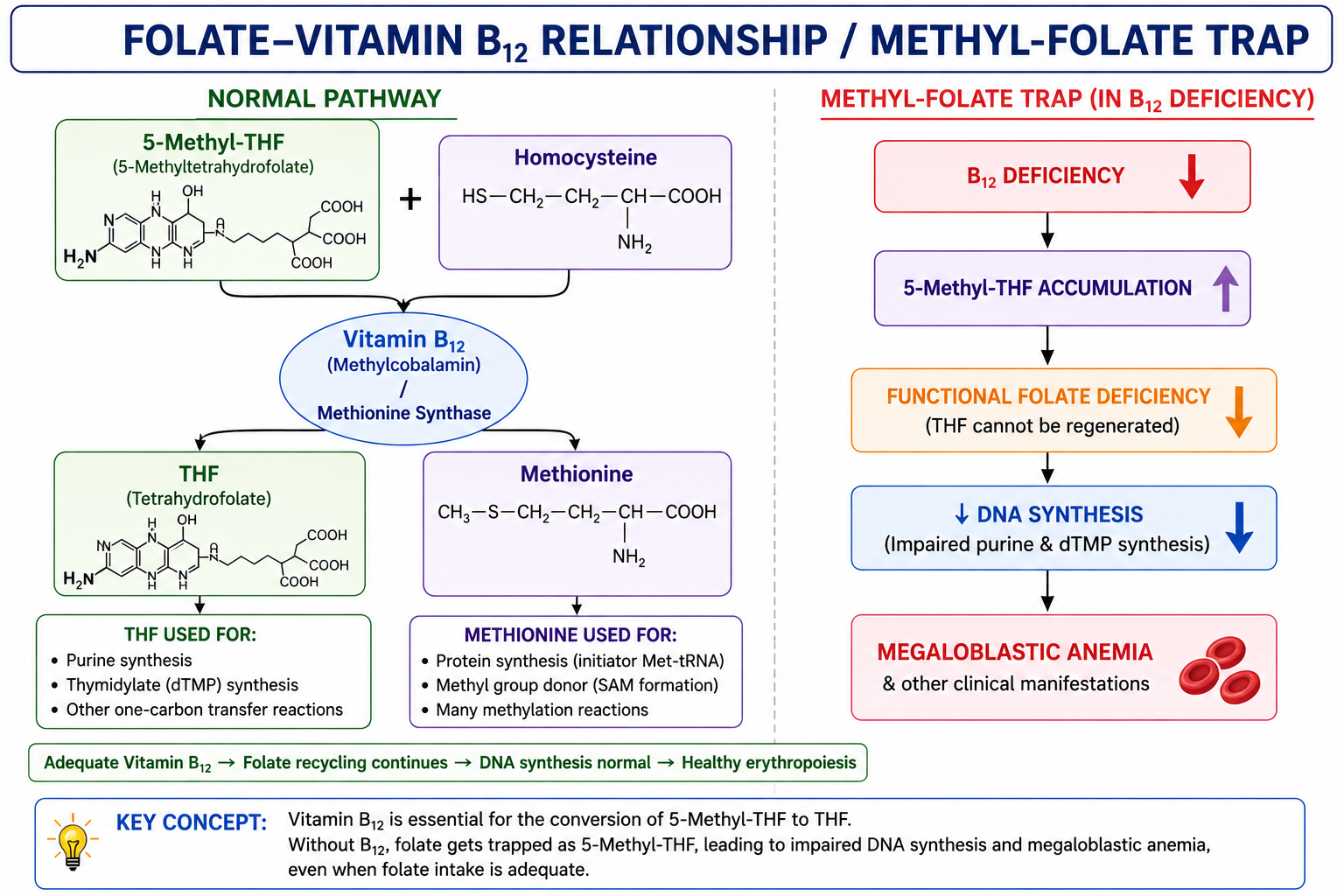
Vitamin B12 is required for the regeneration of active tetrahydrofolate from a methylated folate form during methionine synthesis.
When vitamin B12 is deficient, folate can become metabolically trapped as 5-methyl-THF.
This phenomenon is commonly described as the methyl-folate trap.
Therefore:
B12 deficiency → Impaired folate recycling → Impaired nucleotide synthesis
This explains why both folate and vitamin B12 deficiency can produce megaloblastic changes.
19. Vitamin C – Ascorbic Acid
Vitamin C is also called ascorbic acid.
It is a water-soluble vitamin with important functions in redox reactions, collagen synthesis, antioxidant defense, and iron metabolism.
19.1 Structure
Vitamin C is a lactone-derived molecule capable of undergoing reversible oxidation.
It can donate electrons and therefore participates in antioxidant reactions.
19.2 Role in Collagen Synthesis
One of the most important functions of vitamin C is its role in collagen biosynthesis.
Vitamin C is required for enzymes involved in the hydroxylation of specific proline and lysine residues in collagen.
These hydroxylation reactions are important for the proper structure and stability of collagen.
Therefore:
Vitamin C → Prolyl/Lysyl hydroxylation → Collagen stability
19.3 Antioxidant Function
Vitamin C can act as an antioxidant by participating in electron-transfer reactions.
It can also interact with other antioxidant systems and contribute to maintaining the cellular redox environment.
19.4 Deficiency
Severe vitamin C deficiency produces scurvy.
Symptoms may include impaired wound healing, bleeding gums, weakness, and abnormalities associated with defective connective tissue.
20. Vitamins as Coenzymes

One of the most important concepts in vitamin biochemistry is the relationship between vitamins and coenzymes.
A coenzyme is an organic non-protein component that assists an enzyme in catalyzing a reaction.
Many coenzymes are derived from vitamins.
For example:
Thiamine → TPP
Riboflavin → FMN/FAD
Niacin → NAD⁺/NADP⁺
Pantothenic acid → Coenzyme A
Vitamin B6 → PLP
Biotin → Biotin-dependent carboxylation cofactor
Folate → THF derivatives
Vitamin B12 → Cobalamin coenzymes
This relationship demonstrates why vitamin deficiency can produce widespread metabolic abnormalities.
21. Vitamin–Coenzyme Relationships
| Vitamin | Chemical name | Major active form | Major biochemical role |
|---|---|---|---|
| B1 | Thiamine | TPP/TDP | Oxidative decarboxylation, transketolase |
| B2 | Riboflavin | FMN, FAD | Redox reactions |
| B3 | Niacin | NAD⁺, NADP⁺ | Electron transfer |
| B5 | Pantothenic acid | Coenzyme A | Acyl-group transfer |
| B6 | Pyridoxine group | PLP | Amino acid metabolism |
| B7 | Biotin | Biotin cofactor | Carboxylation |
| B9 | Folate | THF derivatives | One-carbon transfer |
| B12 | Cobalamin | Methylcobalamin, adenosylcobalamin | Methionine and methylmalonyl-CoA metabolism |
| C | Ascorbic acid | Ascorbate | Hydroxylation and antioxidant reactions |
| A | Retinoids | Retinal/retinoic acid | Vision and gene regulation |
| D | Cholecalciferol-derived | Calcitriol | Calcium homeostasis and gene regulation |
| E | Tocopherols | α-Tocopherol | Lipid antioxidant |
| K | Quinone derivatives | Reduced vitamin K cofactor | γ-Carboxylation |
22. Vitamins and Oxidation-Reduction Reactions
Several vitamins are directly involved in electron transfer.
The most important examples are:
Vitamin B2 → FAD/FMN
Vitamin B3 → NAD⁺/NADP⁺
Vitamin C → Redox reactions
Vitamin E → Lipid-phase antioxidant
The distinction between NAD⁺/NADP⁺ and FAD/FMN is particularly important.
NAD⁺ and NADP⁺ generally participate as diffusible or enzyme-associated electron carriers, whereas FAD and FMN are frequently tightly associated with flavoproteins.
23. Vitamins and Energy Metabolism
Vitamins do not themselves provide significant caloric energy, but several vitamins are essential for the biochemical pathways through which energy is generated.
For example, glucose oxidation depends on several vitamin-derived cofactors.
During glycolysis, NAD⁺ is required by glyceraldehyde-3-phosphate dehydrogenase.
During pyruvate oxidation, TPP, FAD, NAD⁺, and CoA participate in the pyruvate dehydrogenase complex.
During the TCA cycle, several reactions require NAD⁺, FAD, CoA, or thiamine-derived TPP.
Therefore, vitamin deficiency can indirectly reduce ATP production by disrupting metabolic pathways.
24. Vitamins and Nucleotide Metabolism
Vitamins are also closely connected with DNA and RNA synthesis.
The most important example is folate.
THF derivatives donate one-carbon units required for purine biosynthesis and thymidylate synthesis.
Vitamin B12 is also connected with folate metabolism and therefore indirectly influences nucleotide synthesis.
This explains why deficiencies of folate or vitamin B12 particularly affect rapidly dividing cells.
25. Vitamins and Protein Metabolism
Vitamin B6 is especially important in amino acid metabolism.
PLP-dependent enzymes catalyze several reactions involving amino acids.
Transamination reactions are particularly important because they allow amino groups to be transferred between amino acids and keto acids.
A general reaction is:
Amino acid + α-keto acid ⇌ corresponding keto acid + corresponding amino acid
PLP functions as an essential coenzyme in many such reactions.
Vitamin B12 also participates in amino acid metabolism through methionine metabolism and methyl-group transfer.
26. Vitamins and Lipid Metabolism
Several vitamins participate in lipid metabolism.
Vitamin B2-derived FAD is important in fatty acid oxidation.
Vitamin B3-derived NAD⁺ participates in multiple oxidation reactions.
Pantothenic acid-derived CoA is required for the formation of acyl-CoA intermediates.
Biotin participates in acetyl-CoA carboxylase, a key enzyme of fatty acid synthesis.
Vitamin E protects membrane lipids from oxidative damage.
Thus, lipid metabolism provides multiple examples of vitamin-dependent biochemical reactions.
27. Vitamins and Gene Regulation
Some vitamins or their active metabolites act directly as regulators of gene expression.
The best examples are:
Vitamin A → Retinoic acid
Vitamin D → Calcitriol
These molecules bind intracellular/nuclear receptors that regulate transcription.
The receptors interact with specific DNA response elements and influence the expression of target genes.
This provides an important conceptual bridge between vitamin biochemistry, molecular biology, transcriptional regulation, and developmental biology.
28. Vitamins and Antioxidant Defense
Oxidative stress results when the generation of reactive oxygen species and related oxidants exceeds the capacity of antioxidant defense systems.
Vitamins can contribute to antioxidant protection.
Vitamin E is particularly important in lipid membranes because it interrupts lipid peroxidation chain reactions.
Vitamin C functions in aqueous environments and participates in redox reactions.
The antioxidant systems therefore operate through cooperation rather than through the action of a single vitamin.
29. Vitamin Deficiency
Vitamin deficiency occurs when the body does not receive, absorb, transport, activate, or utilize an adequate amount of a particular vitamin.
Deficiency may result from:
Inadequate dietary intake
Malabsorption
Increased physiological requirements
Metabolic disorders
Defective transport
Impaired conversion into active forms
Certain medications or chronic conditions
A deficiency may initially produce subtle biochemical abnormalities before obvious clinical symptoms become apparent.
This is important because vitamins frequently participate in fundamental metabolic pathways, and the biochemical disturbance may occur before severe tissue damage develops.
30. Vitamin Toxicity
Although vitamins are essential, more is not always better.
Toxicity is particularly important for fat-soluble vitamins, because they can accumulate in body tissues.
Excessive intake of certain vitamins can interfere with normal biochemical processes and produce adverse effects.
Water-soluble vitamins are generally more readily excreted, but this does not mean that unlimited intake is harmless. High doses of certain water-soluble vitamins can also produce adverse effects.
Therefore, vitamin metabolism should be understood in terms of homeostasis, rather than simply deficiency versus sufficiency.
31.Vitamin Deficiency Diseases
Vitamin |
Major deficiency condition/association |
|---|---|
| Vitamin A | Night blindness, xerophthalmia |
| Vitamin B1 | Beriberi, Wernicke-Korsakoff syndrome |
| Vitamin B2 | Oral and mucocutaneous abnormalities |
| Vitamin B3 | Pellagra |
| Vitamin B5 | Rare deficiency |
| Vitamin B6 | Neurological and hematological abnormalities |
| Vitamin B7 | Dermatitis and neurological manifestations |
| Vitamin B9 | Megaloblastic anemia |
| Vitamin B12 | Megaloblastic anemia and neurological abnormalities |
| Vitamin C | Scurvy |
| Vitamin D | Rickets, osteomalacia |
| Vitamin E | Neuromuscular abnormalities in severe deficiency |
| Vitamin K | Impaired blood coagulation |
32. Important Metabolic Pathways Associated with Vitamins
Glycolysis
NAD⁺ → Vitamin B3
Pyruvate Dehydrogenase Complex
TPP → Vitamin B1
FAD → Vitamin B2
NAD⁺ → Vitamin B3
CoA → Vitamin B5
TCA Cycle
Multiple reactions depend on vitamin-derived cofactors, including NAD⁺, FAD, and CoA.
Pentose Phosphate Pathway
TPP → Vitamin B1
is required by transketolase.
Fatty Acid Synthesis
Biotin → Vitamin B7
is required by acetyl-CoA carboxylase.
NADPH → Vitamin B3-derived cofactor
provides reducing power for biosynthetic reactions.
Amino Acid Metabolism
PLP → Vitamin B6
is required by many transaminases and other amino acid-metabolizing enzymes.
DNA Synthesis
THF derivatives → Vitamin B9
participate in purine and thymidylate biosynthesis.
Methionine Metabolism
Vitamin B12 + Folate
work together in the methionine cycle.
33. Vitamin B-Complex: An Integrated View
The B-complex vitamins should not be studied as completely independent molecules.
They work together within interconnected metabolic pathways.
For example, the oxidation of glucose involves several vitamin-derived cofactors. Pyruvate dehydrogenase requires TPP, FAD, NAD⁺, and CoA, which are derived from vitamins B1, B2, B3, and B5 respectively.
This means that a single metabolic pathway can depend on several vitamins simultaneously.
Similarly, amino acid metabolism heavily depends on PLP, while nucleotide metabolism depends strongly on folate and vitamin B12.
This integrated approach is particularly useful for solving CSIR-NET questions involving enzyme pathways, metabolic blocks, cofactor requirements, and deficiency syndromes.
34. Vitamins and Enzyme Activity
A vitamin-derived cofactor may be required for enzyme catalysis in different ways.
A cofactor can participate in:
Electron transfer
Hydrogen transfer
Carbon transfer
Acyl-group transfer
Amino-group transfer
Carboxylation
Hydroxylation
Stabilization of reaction intermediates
Therefore, when a vitamin deficiency occurs, the corresponding enzyme may remain present but its catalytic efficiency may decrease because the necessary cofactor is unavailable.
This distinction is important:
Vitamin deficiency does not necessarily mean absence of the enzyme protein.
Instead, the deficiency may prevent the enzyme from performing its normal catalytic function.
35. Prosthetic Groups and Coenzymes
Some vitamin-derived molecules are tightly associated with enzymes.
A prosthetic group is a non-protein component that is tightly bound to an enzyme and is required for its activity.
Examples include flavin groups in certain flavoproteins and biotin covalently attached to biotin-dependent carboxylases.
Other coenzymes may associate more transiently with enzymes and function as carriers of electrons or chemical groups.
Understanding this distinction helps explain why vitamins can function as components of enzyme systems rather than acting as enzymes themselves.
36.Vitamins Are Not Enzymes
A common misconception is that vitamins directly catalyze metabolic reactions.
They generally do not function as enzymes.
Enzymes are biological catalysts, usually proteins or catalytic RNAs, whereas vitamin-derived cofactors assist enzymes in carrying out specific chemical reactions.
For example, thiamine itself does not catalyze pyruvate decarboxylation independently. Its active derivative, TPP, participates in the catalytic mechanism of the appropriate enzyme.
This distinction is important for conceptual questions.
37.Vitamins Do Not Directly Provide ATP
Another common misconception is that taking vitamins directly provides energy.
Vitamins do not function as major caloric fuels.
Instead, several vitamins are necessary for the enzymes that convert carbohydrates, fats, and proteins into usable metabolic energy.
For example:
B1 → TPP
B2 → FAD/FMN
B3 → NAD⁺
B5 → CoA
These cofactors participate in pathways that ultimately contribute to ATP generation.
Therefore, vitamins are essential for energy metabolism but are not themselves major energy-yielding nutrients.
38. Vitamin Absorption and Storage
The solubility of vitamins strongly affects their absorption and distribution.
Fat-soluble vitamins are absorbed along with dietary lipids and depend on normal lipid digestion and absorption.
Water-soluble vitamins generally enter aqueous biological compartments more readily and are commonly transported in blood in dissolved or protein-associated forms.
Vitamin B12 is unusual because its absorption requires a specialized process involving intrinsic factor and uptake in the distal small intestine.
This makes vitamin B12 absorption an important example of the relationship between nutrition and specialized transport mechanisms.
39.Vitamin–Biochemical Reaction Pairs
Vitamin |
Active derivative |
Representative reaction/process |
|---|---|---|
| B1 | TPP | Oxidative decarboxylation |
| B1 | TPP | Transketolase reaction |
| B2 | FAD | Redox reaction |
| B2 | FMN | Electron transfer |
| B3 | NAD⁺ | Oxidation-reduction |
| B3 | NADPH | Reductive biosynthesis |
| B5 | CoA | Acyl transfer |
| B6 | PLP | Transamination |
| B7 | Biotin | CO₂ transfer |
| B9 | THF | One-carbon transfer |
| B12 | Methylcobalamin | Homocysteine → Methionine |
| B12 | Adenosylcobalamin | Methylmalonyl-CoA → Succinyl-CoA |
| C | Ascorbate | Collagen hydroxylation |
| K | Reduced vitamin K | γ-Carboxylation |
| D | Calcitriol | Transcriptional regulation |
| A | Retinoic acid | Transcriptional regulation |
| E | Tocopherol | Lipid radical protection |
40. Vitamin Deficiency as a Metabolic Block
A useful way to understand vitamin deficiency is to imagine a metabolic pathway:
Substrate → Enzyme + Cofactor → Product
If the vitamin-derived cofactor is missing:
Substrate → Enzyme without required cofactor → Reduced product formation
As a result, the substrate may accumulate while the product becomes deficient.
This principle is frequently useful in interpreting biochemical and clinical scenarios.
For example, a deficiency of vitamin B1 affects TPP-dependent enzymes, while a deficiency of folate affects one-carbon transfer reactions required for nucleotide synthesis.
Therefore, deficiency symptoms often reflect the metabolic pathway most severely affected by the missing cofactor.
43. Important Exceptions and Special Cases
Several exceptions are particularly useful for competitive examinations.
Vitamin D
Vitamin D can be synthesized in the skin under suitable UV-B exposure and is subsequently activated through hydroxylation reactions.
Vitamin K
Vitamin K is associated with bacterial production in the intestine, although dietary intake remains important.
Vitamin B12
Unlike most water-soluble vitamins, B12 can be stored substantially, particularly in the liver, allowing body stores to persist for long periods.
Niacin
Niacin can also be produced to some extent from the amino acid tryptophan, so dietary requirements depend partly on the availability of tryptophan and the efficiency of conversion.
These exceptions show why vitamin classification should not be treated as an absolute set of rules.
44. Vitamins in Cellular Homeostasis
At the cellular level, vitamins contribute to maintaining homeostasis through several mechanisms.
They support metabolic flux by functioning as enzyme cofactors.
They protect cellular components through antioxidant mechanisms.
They regulate transcription through nuclear receptors.
They participate in post-translational modification of proteins.
They support nucleotide synthesis and DNA replication.
They contribute to membrane protection and cellular signaling.
Therefore, vitamins influence cellular function at multiple biological levels:
Molecular level → Enzyme activity
Metabolic level → Pathway regulation
Cellular level → Growth and maintenance
Tissue level → Physiological function
Organismal level → Growth, development, and health


