
1. Introduction to Membrane Pumps
Cellular membranes are selectively permeable barriers that separate the internal environment of a cell or organelle from its surroundings. They control the movement of ions, nutrients, metabolites, and other molecules across the membrane.
Some substances can move across a membrane without direct energy expenditure, whereas others must be transported against their concentration or electrochemical gradients. Membrane pumps are specialized membrane proteins that perform this energy-dependent transport.
A membrane pump can be broadly defined as a transmembrane protein that uses an energy source to move ions or other substances across a biological membrane against their electrochemical gradient.
Unlike simple diffusion, pump-mediated transport requires energy. This allows cells to establish and maintain concentration gradients that are essential for:
- Membrane potential
- Osmotic balance
- Cell volume regulation
- Nutrient uptake
- Ion homeostasis
- Intracellular signaling
- pH regulation
- Electrical activity of neurons and muscles
- Secondary active transport
Membrane pumps are therefore fundamental components of cellular physiology.
2. Basic Principle of Membrane Pumping
The fundamental principle of membrane pumping is the conversion of energy into directed molecular transport.
Consider an ion present at a high concentration outside the cell and a low concentration inside. Diffusion would normally drive the ion toward the inside. If the cell needs to maintain a low intracellular concentration, it must actively remove the ion.
A membrane pump accomplishes this by using energy to transport the ion against its electrochemical gradient.
The general process can be represented as:
Energy source → conformational change in pump → movement of substrate → restoration of pump conformation
The energy source may be:
- ATP hydrolysis
- Light
- A previously established ion gradient
- Electron-transfer reactions in certain systems
3. Membrane Pumps and Active Transport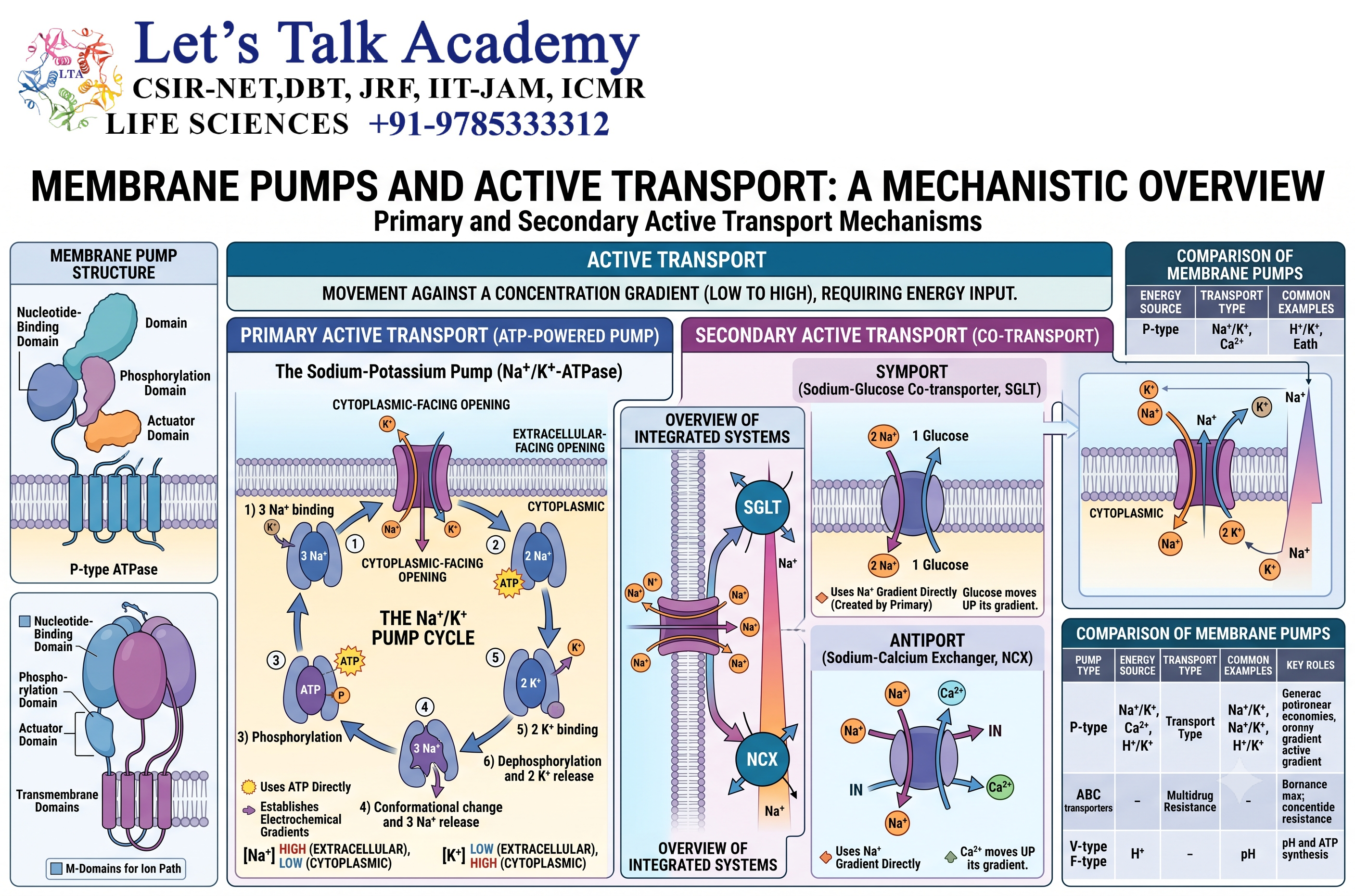
Membrane pumps are closely associated with active transport.
Active transport differs from passive transport because it requires an external or stored energy source.
3.1 Passive Transport
In passive transport, substances move spontaneously down their concentration or electrochemical gradient.
Examples include:
- Simple diffusion
- Facilitated diffusion
- Ion movement through channels
No direct metabolic energy is required.
3.2 Active Transport
In active transport, substances are transported against their electrochemical gradient.
Active transport can be divided into:
- Primary active transport
- Secondary active transport
Membrane pumps are particularly important in primary active transport.
4. Primary Active Transport
Primary active transport directly uses an energy source to transport substances across the membrane.
The most common energy source is ATP hydrolysis.
A simplified reaction is:
ATP + H₂O → ADP + Pi + energy
The released energy is coupled to conformational changes in a membrane protein.
Examples include:
- Na⁺/K⁺-ATPase
- Ca²⁺-ATPases
- H⁺-ATPases
- H⁺/K⁺-ATPase
These pumps establish electrochemical gradients that can subsequently be used by other transport proteins.
5. Secondary Active Transport
Secondary active transport does not directly hydrolyze ATP at the transporter itself.
Instead, it uses the energy stored in an ion gradient created by a primary active pump.
For example, the Na⁺/K⁺-ATPase maintains a high concentration of Na⁺ outside the cell. Na⁺ therefore tends to move back into the cell.
This favorable Na⁺ movement can be coupled to the transport of another substance.
Secondary active transport occurs in two major forms:
- Symport
- Antiport
5.1 Symport
In symport, two substances move in the same direction across the membrane.
For example, the Na⁺-glucose cotransporter uses the Na⁺ gradient to transport glucose into cells.
5.2 Antiport
In antiport, two substances move in opposite directions.
For example, Na⁺/Ca²⁺ exchangers use the Na⁺ gradient to drive Ca²⁺ movement across the membrane.
6. Major Families of Membrane Pumps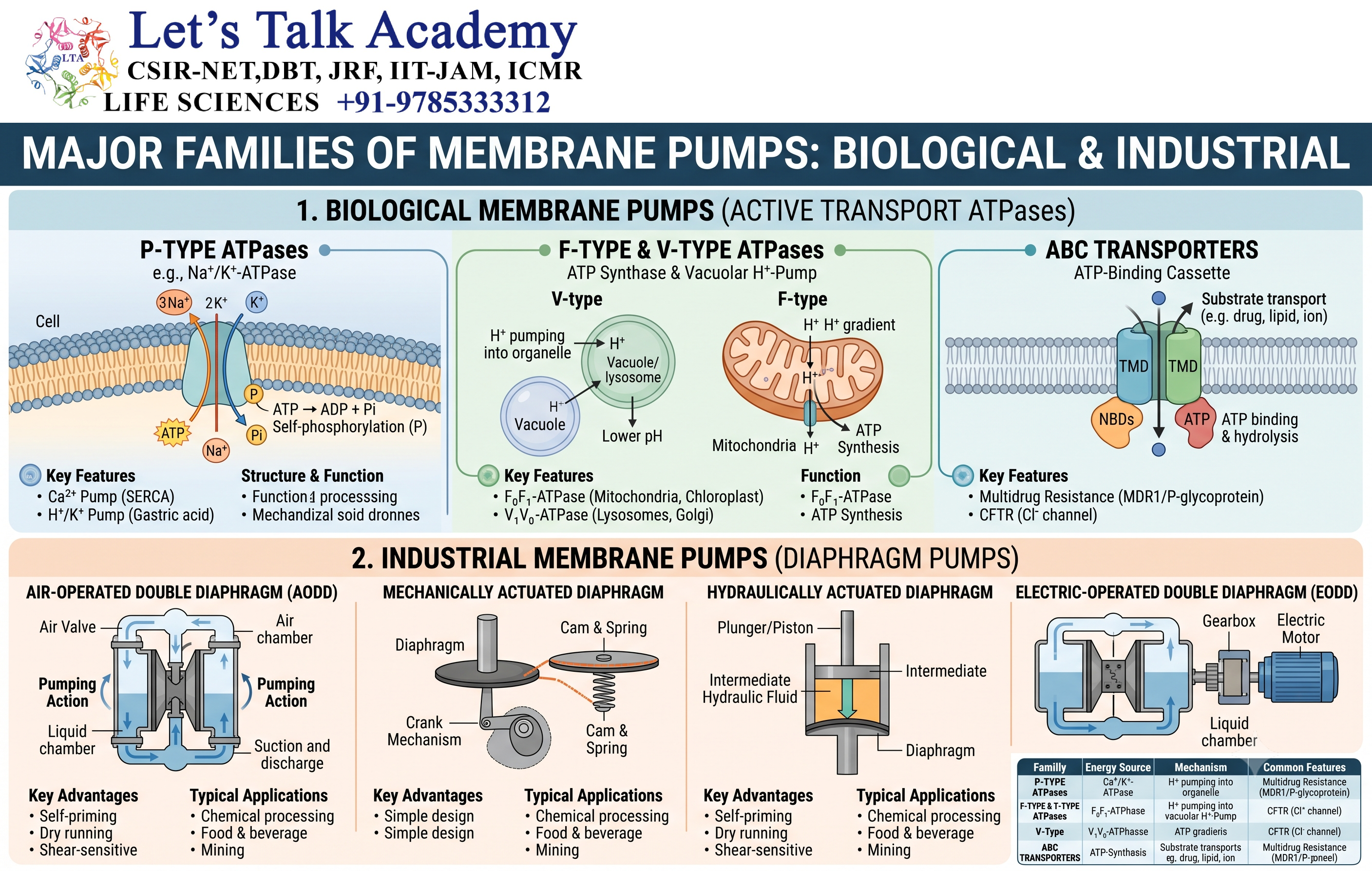
Membrane pumps can be classified according to their energy source, molecular structure, and mechanism of transport.
Major pump families include:
- P-type ATPases
- V-type ATPases
- F-type ATPases
- ABC transporters
- Light-driven pumps
Each family has distinctive structural and functional characteristics.
7. P-Type ATPases
P-type ATPases are among the most important active transport proteins in biological membranes.
They are called P-type because the pump becomes transiently phosphorylated during its transport cycle.
The phosphorylated intermediate is a key feature of their mechanism.
Major examples include:
- Na⁺/K⁺-ATPase
- Ca²⁺-ATPases
- H⁺/K⁺-ATPase
8. General Mechanism of P-Type ATPases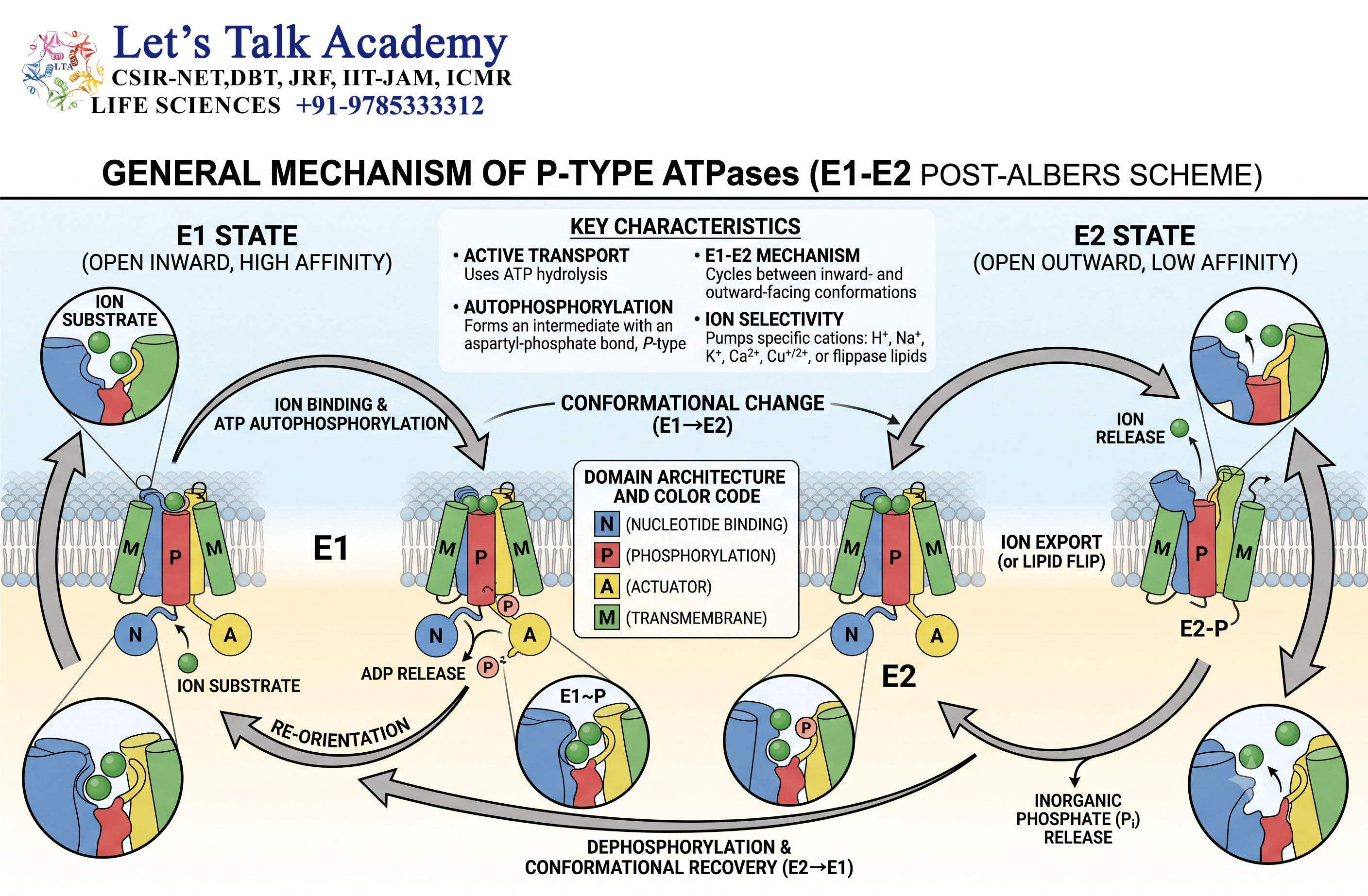
The transport cycle generally involves alternating conformational states.
A simplified mechanism is:
Step 1: Substrate Binding
The pump binds one or more ions on one side of the membrane.
Step 2: ATP Binding
ATP binds to the cytoplasmic portion of the pump.
Step 3: Phosphorylation
The pump transfers a phosphate group from ATP to a conserved amino acid residue, usually an aspartate.
Step 4: Conformational Change
Phosphorylation causes the protein to change its conformation.
Step 5: Ion Release
The bound ion is released on the opposite side of the membrane.
Step 6: Dephosphorylation
The phosphate group is removed.
Step 7: Return to Original State
The pump returns to a conformation capable of beginning another transport cycle.
This alternating-access mechanism prevents uncontrolled mixing of the two membrane compartments.
9. Na⁺/K⁺-ATPase
The Na⁺/K⁺-ATPase is one of the best-known membrane pumps in animal cells.
It maintains the characteristic ionic composition of the cytoplasm.
Under the classical transport cycle, one ATP molecule drives:
3 Na⁺ out of the cell + 2 K⁺ into the cell
Thus, the pump is electrogenic because there is a net movement of one positive charge outward per cycle.
10. Structure of Na⁺/K⁺-ATPase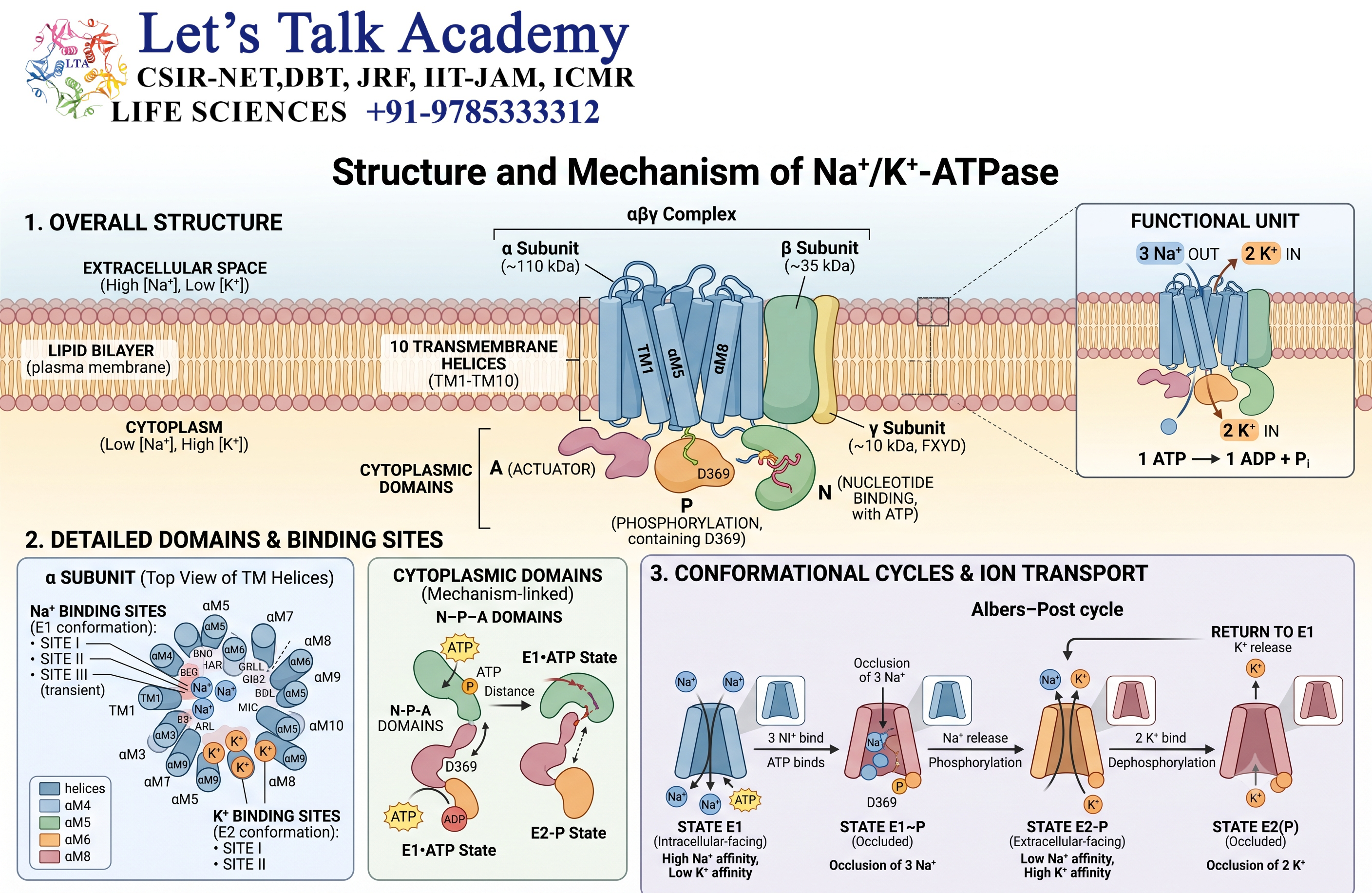
The Na⁺/K⁺-ATPase contains major protein components including:
- α subunit
- β subunit
The α subunit contains the principal catalytic and ion-binding sites.
The β subunit contributes to proper assembly, maturation, and membrane localization.
Some tissues also contain regulatory auxiliary subunits.
11. Mechanism of Na⁺/K⁺-ATPase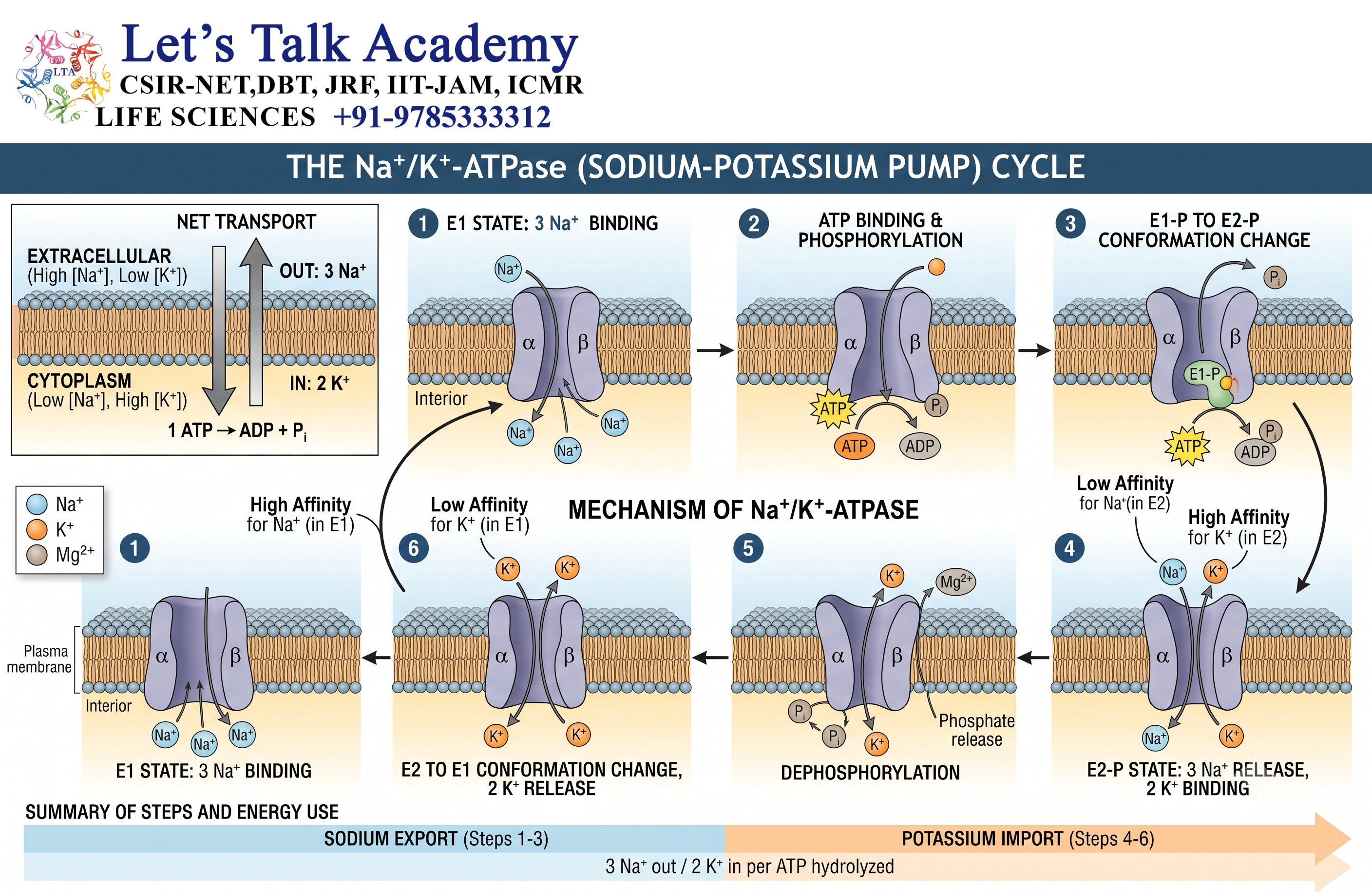
The transport cycle can be understood as follows.
11.1 Binding of Na⁺
Three Na⁺ ions bind to the cytoplasmic side of the pump.
11.2 ATP Hydrolysis and Phosphorylation
ATP is hydrolyzed and the pump becomes phosphorylated.
11.3 Conformational Change
The pump changes from an inward-facing state to an outward-facing state.
11.4 Release of Na⁺
The three Na⁺ ions are released outside the cell.
11.5 Binding of K⁺
Two K⁺ ions bind from the extracellular side.
11.6 Dephosphorylation
The phosphate group is removed from the pump.
11.7 Return to Original Conformation
The pump returns to its inward-facing state.
11.8 Release of K⁺
The two K⁺ ions are released into the cytoplasm.
The cycle can then repeat.
12. Physiological Importance of Na⁺/K⁺-ATPase
The Na⁺/K⁺-ATPase performs several essential functions.
12.1 Maintenance of Membrane Potential
The unequal distribution of Na⁺ and K⁺ contributes to the resting membrane potential of cells.
12.2 Regulation of Cell Volume
The pump helps prevent excessive intracellular accumulation of ions and water.
12.3 Generation of Na⁺ Gradient
The Na⁺ gradient provides energy for numerous secondary active transport systems.
12.4 Nervous System Function
Neurons depend heavily on Na⁺ and K⁺ gradients for electrical signaling.
12.5 Muscle Function
Proper ionic gradients are required for muscle excitation and contraction.
13. Ca²⁺ Pumps
Calcium ions act as important intracellular signaling molecules.
However, free cytosolic Ca²⁺ concentration must remain very low compared with extracellular Ca²⁺ and the calcium concentration within certain intracellular stores.
Ca²⁺ pumps actively transport calcium to maintain these gradients.
Important examples include:
- SERCA
- PMCA
14. SERCA Pump
SERCA stands for Sarcoplasmic/Endoplasmic Reticulum Ca²⁺-ATPase.
It transports Ca²⁺ from the cytosol into the endoplasmic reticulum or sarcoplasmic reticulum.
In muscle cells, SERCA is particularly important for relaxation.
During muscle contraction, cytosolic Ca²⁺ increases. SERCA subsequently pumps Ca²⁺ back into the sarcoplasmic reticulum.
This decreases cytosolic Ca²⁺ and contributes to muscle relaxation.
15. PMCA Pump
PMCA stands for Plasma Membrane Ca²⁺-ATPase.
It transports Ca²⁺ from the cytoplasm to the extracellular environment.
PMCA is particularly important for maintaining low cytosolic calcium levels.
Because Ca²⁺ functions as a second messenger, controlling its concentration is essential for regulating many cellular processes.
16. H⁺/K⁺-ATPase
The H⁺/K⁺-ATPase is another member of the P-type ATPase family.
It is particularly important in gastric parietal cells.
Its major function is to transport:
H⁺ out of the cell in exchange for K⁺ entering the cell.
This process contributes to the formation of the acidic environment of the stomach.
The pump is therefore essential for gastric acid secretion.
17. V-Type ATPases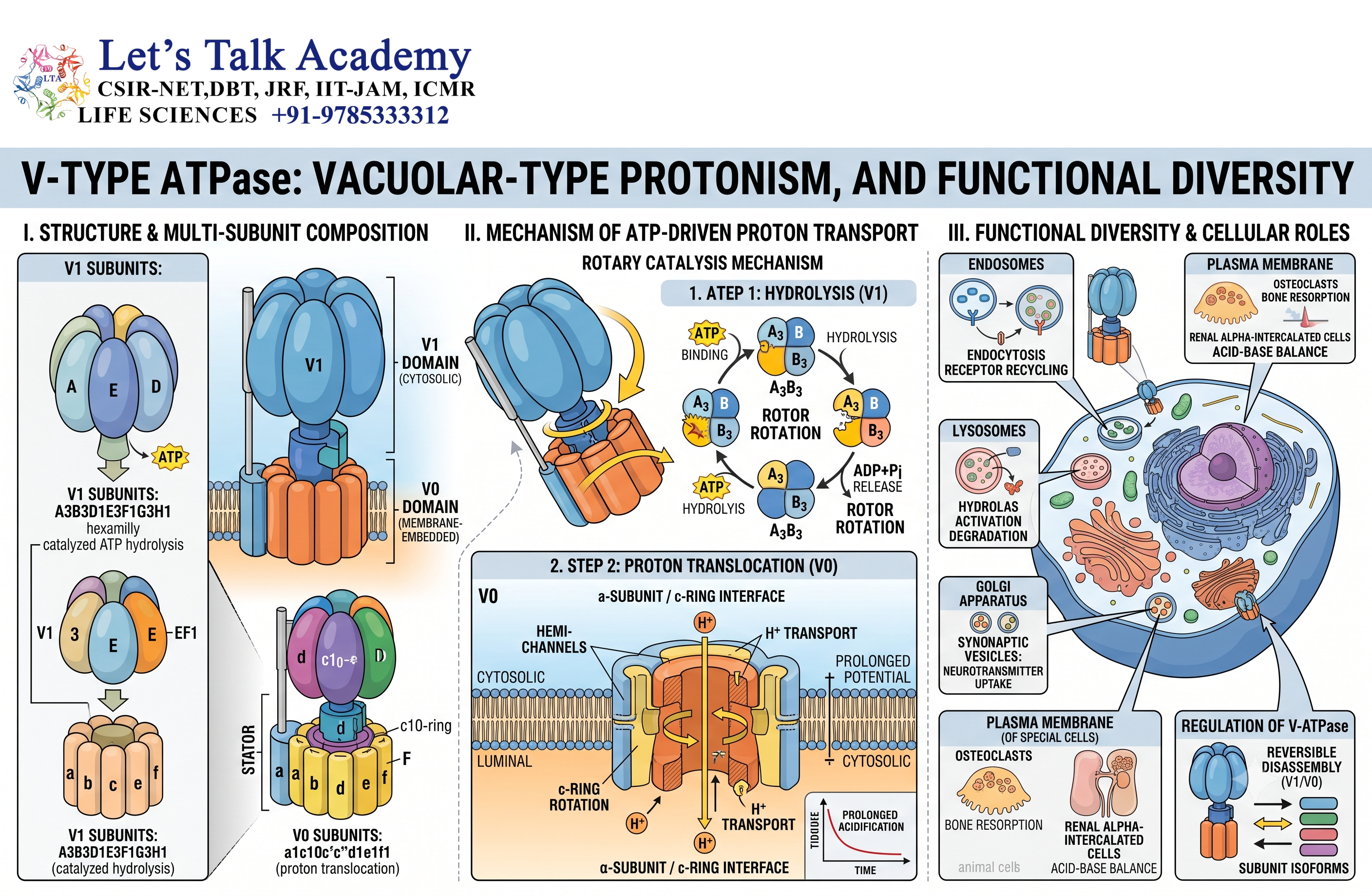
V-type ATPases are proton pumps that transport H⁺ ions across membranes.
They are particularly important in:
- Lysosomes
- Endosomes
- Secretory vesicles
- Vacuoles
- Certain plasma membranes
Their major function is to generate acidic intracellular compartments.
17.1 Mechanism
V-type ATPases use ATP hydrolysis to pump protons across a membrane.
The resulting proton gradient can influence:
- Protein degradation
- Vesicle trafficking
- Receptor recycling
- Enzyme activity
- Intracellular pH
18. F-Type ATPases
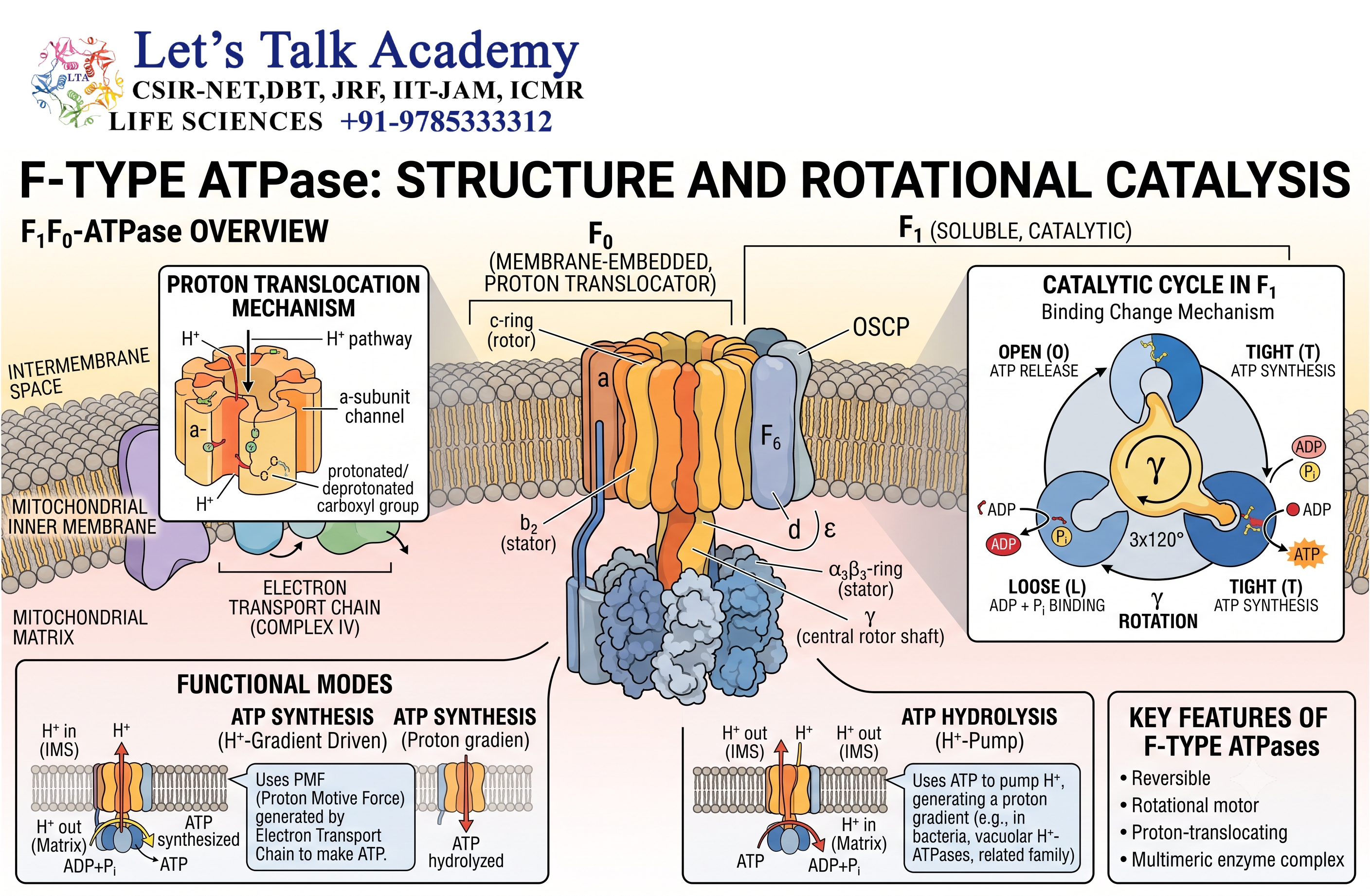
F-type ATPases are structurally and functionally different from P-type ATPases.
They are commonly found in:
- Mitochondrial inner membranes
- Bacterial plasma membranes
- Chloroplast membranes
F-type ATPases are particularly interesting because they can operate in the reverse direction.
When a proton gradient moves through the enzyme, the energy can be used to synthesize ATP.
Thus:
Proton gradient → ATP synthesis
This is why the mitochondrial F-type ATP synthase is central to oxidative phosphorylation.
Under some conditions, the same molecular machinery can hydrolyze ATP and pump protons.
19. ABC Transporters
ABC stands for ATP-Binding Cassette.
ABC transporters are a large family of membrane transport proteins that use ATP hydrolysis.
They transport many different substrates, including:
- Lipids
- Peptides
- Metabolites
- Organic ions
- Drugs
- Other small molecules
Their general structure includes membrane-spanning regions and ATP-binding domains.
20. Light-Driven Membrane Pumps
Some organisms use light as an energy source for active transport.
A well-known example is bacteriorhodopsin, a light-driven proton pump found in certain microorganisms.
Light causes a change in the retinal-containing protein, which drives proton movement across the membrane.
The resulting proton gradient can then be used for cellular energy generation.
21. Proton Pumps and Cellular pH
Proton pumps are essential for regulating pH.
Because proton concentration determines acidity, controlled H⁺ transport allows cells and organelles to establish specialized pH environments.
For example:
- Lysosomes are acidic.
- Vacuoles can be acidic.
- The stomach contains a highly acidic environment.
- Mitochondrial proton gradients contribute to ATP production.
Thus, proton pumping has both transport and regulatory functions.
22. Electrochemical Gradient
To understand membrane pumps properly, it is necessary to distinguish between chemical and electrical forces.
The movement of an ion is influenced by:
- Concentration difference
- Electrical potential difference
Together, these form the electrochemical gradient.
An ion may move against its concentration gradient but still move spontaneously because of an electrical gradient, or vice versa.
Therefore, active transport must be understood in terms of electrochemical potential rather than concentration alone.
23. Membrane Pumps and Membrane Potential
Membrane pumps contribute directly or indirectly to membrane potential.
The Na⁺/K⁺-ATPase is electrogenic because it transports three positive charges outward and two positive charges inward per cycle.
However, much of the resting membrane potential is generated by ion-selective permeability through channels, particularly K⁺ channels.
The pump maintains the ionic gradients that make this electrical behavior possible.
24. Pumps Versus Ion Channels
Membrane pumps and ion channels should not be confused.
| Feature | Membrane Pumps | Ion Channels |
|---|---|---|
| Energy requirement | Usually required | Usually no direct ATP requirement |
| Direction of movement | Can move against gradient | Generally down electrochemical gradient |
| Mechanism | Conformational transport cycle | Hydrophilic pore |
| Transport rate | Relatively slower | Very rapid |
| Main role | Establish gradients | Allow rapid ion movement |
| Example | Na⁺/K⁺-ATPase | K⁺ channel |
A useful way to remember the distinction is:
Pumps create gradients; channels dissipate gradients.
25. Pumps Versus Transporters
The term transporter is broader than pump.
A transporter may mediate:
- Facilitated diffusion
- Primary active transport
- Secondary active transport
A pump specifically refers to a transport system that uses energy to drive transport, generally against an electrochemical gradient.
26. Coupling of Energy and Transport
A central principle of membrane pump function is energy coupling.
Energy cannot simply be released without producing useful work.
Instead, the pump couples an energetically favorable process, such as ATP hydrolysis, to an energetically unfavorable transport reaction.
Conceptually:
ATP hydrolysis → conformational change → ion transport
The protein acts as a molecular machine that links these events.
27. Conformational Changes in Membrane Pumps
Membrane pumps do not simply act as open tubes.
They undergo controlled structural changes.
Different conformations expose the substrate-binding site to different sides of the membrane.
This prevents a continuous pore from forming and ensures directional transport.
The alternating-access principle is therefore fundamental to many active transport systems.
28. Regulation of Membrane Pumps
Membrane pump activity can be regulated at multiple levels.
Important regulatory mechanisms include:
- Phosphorylation
- Dephosphorylation
- Protein-protein interactions
- Hormonal signaling
- Changes in substrate concentration
- Changes in ATP availability
- Changes in intracellular ion concentration
- Alteration in pump expression
Regulation allows cells to adjust transport according to physiological requirements.
29. Factors Affecting Pump Activity
Several factors influence membrane pump activity.
29.1 ATP Availability
ATP-dependent pumps require sufficient ATP.
A severe decrease in cellular ATP can impair active transport.
29.2 Temperature
Temperature can influence enzyme activity and membrane fluidity.
29.3 Ion Concentration
The availability of transported ions affects pump activity.
29.4 pH
Changes in pH can alter protein structure and catalytic activity.
29.5 Membrane Environment
Membrane composition can influence the structure and function of membrane proteins.
30. Inhibition of Membrane Pumps
Membrane pumps can be inhibited by specific compounds or environmental conditions.
For example, ouabain and digoxin inhibit Na⁺/K⁺-ATPase.
Inhibition of Na⁺/K⁺-ATPase disrupts Na⁺ and K⁺ gradients and consequently affects many cellular processes.
In experimental biology, pump inhibitors are useful tools for studying transport mechanisms and cellular physiology.
31. Membrane Pumps in Nervous System Function
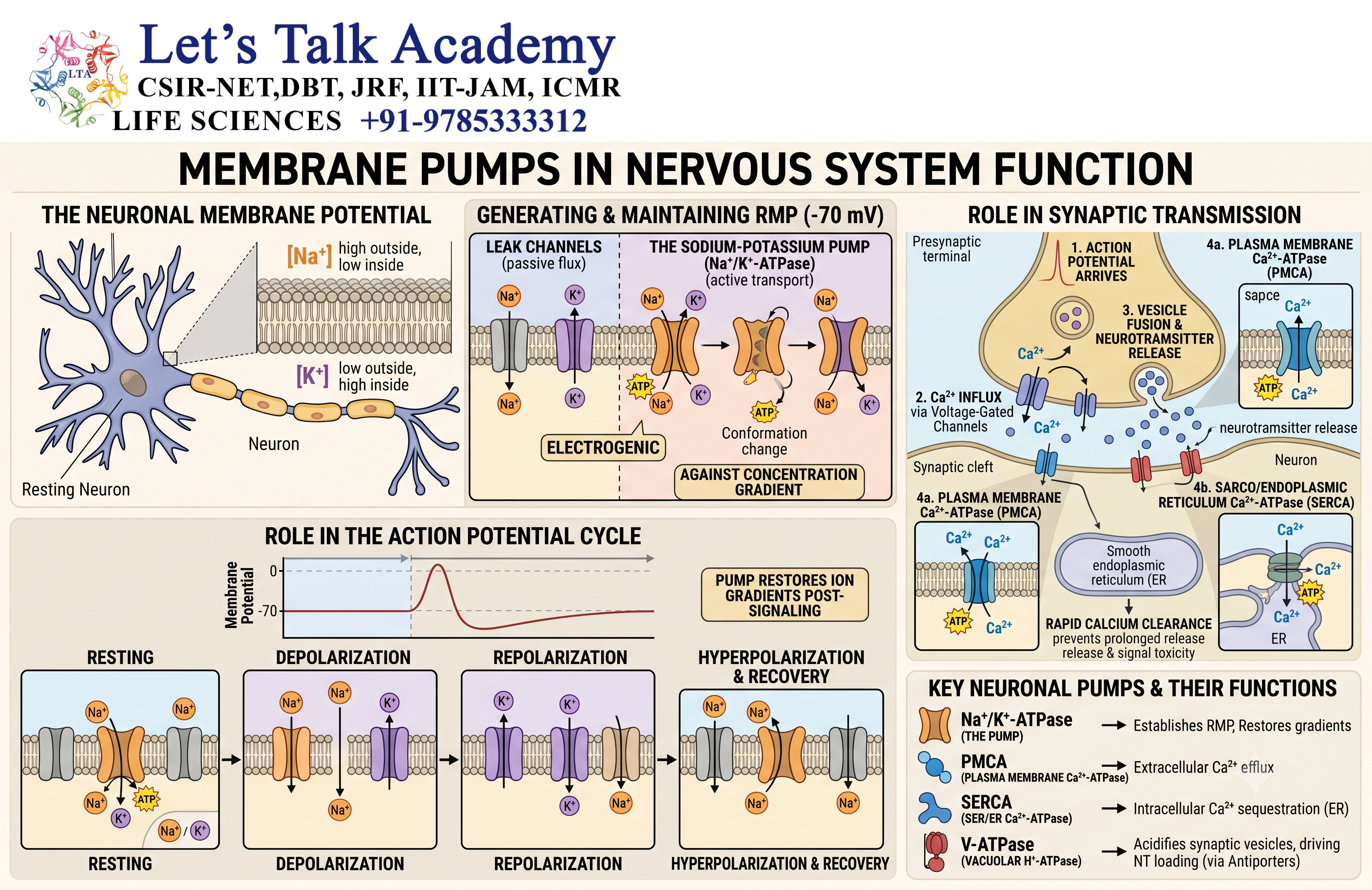
Neurons continuously maintain ionic gradients across their plasma membranes.
The Na⁺/K⁺-ATPase is essential for maintaining:
- High intracellular K⁺
- High extracellular Na⁺
- Resting ionic gradients
- Recovery following electrical activity
During an action potential, ion channels rapidly alter membrane permeability.
Afterward, pumps and other transport mechanisms help restore and maintain the underlying ionic gradients.
32. Membrane Pumps in Muscle Cells
Muscle contraction depends strongly on Ca²⁺ regulation.
During contraction, cytosolic Ca²⁺ increases.
Following contraction, Ca²⁺ must be removed from the cytosol.
SERCA pumps Ca²⁺ into the sarcoplasmic reticulum, helping restore the low cytosolic Ca²⁺ concentration associated with muscle relaxation.
Therefore, membrane pumps are essential for repeated cycles of muscle contraction and relaxation.
33. Membrane Pumps in Epithelial Transport
Epithelial cells use membrane pumps to establish directional transport.
For example, the Na⁺/K⁺-ATPase located on the basolateral membrane establishes a Na⁺ gradient.
This gradient can drive secondary active transport of:
- Glucose
- Amino acids
- Phosphate
- Other solutes
This mechanism is important in tissues such as the intestine and kidney.
34. Membrane Pumps in Kidney Function
The kidney depends extensively on active transport.
Na⁺/K⁺-ATPase helps establish gradients that support the reabsorption of numerous substances.
Transport systems in renal epithelial cells regulate:
- Na⁺
- K⁺
- Ca²⁺
- H⁺
- Glucose
- Amino acids
- Water indirectly through osmotic gradients
Thus, membrane pumps contribute to whole-body electrolyte and fluid balance.
35. Membrane Pumps in Plants
Plants also contain several important membrane pumps.
The plasma membrane H⁺-ATPase is especially important.
It pumps H⁺ ions out of plant cells and establishes an electrochemical proton gradient.
This gradient drives the uptake of:
- Mineral ions
- Sugars
- Amino acids
- Other nutrients
The proton gradient is therefore central to nutrient acquisition in plants.
36. Vacuolar Proton Pumps in Plants
Plant vacuoles contain V-type H⁺-ATPases.
These pumps transport protons into the vacuole and help establish an acidic internal environment.
The proton gradient contributes to:
- Ion storage
- Osmotic regulation
- Cellular pH regulation
- Metabolite accumulation
- Vacuolar transport
37. Membrane Pumps in Bacteria
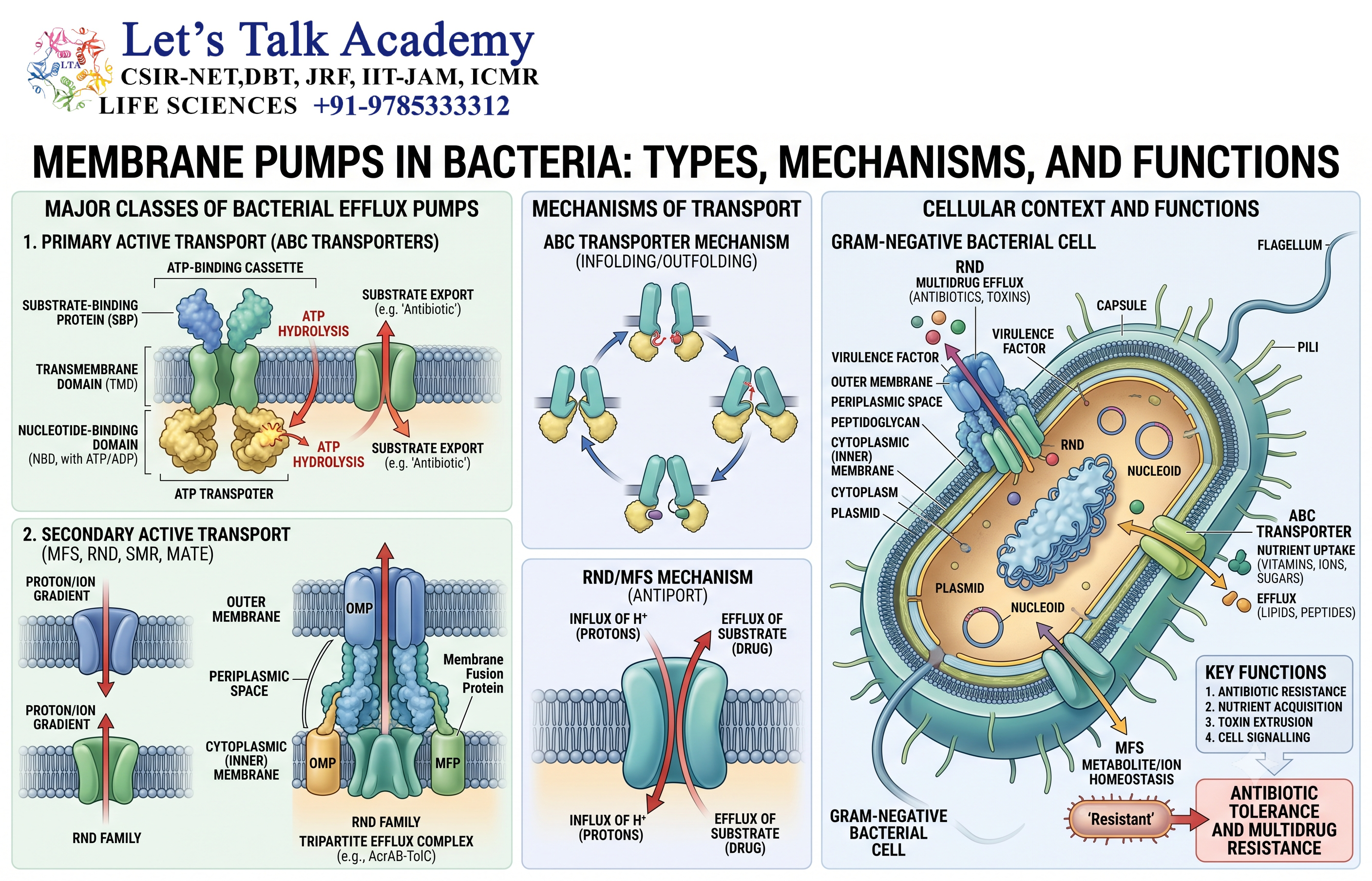
Bacteria possess several active transport systems.
These systems allow microorganisms to maintain:
- Cytoplasmic pH
- Ion balance
- Nutrient concentrations
- Membrane potential
- Energy gradients
Bacterial proton pumps are particularly important for establishing proton-motive force.
38. Proton-Motive Force
The proton-motive force is an electrochemical gradient of protons across a membrane.
It has two major components:
- Chemical gradient of H⁺
- Electrical potential difference
The proton-motive force can be used to:
- Drive ATP synthesis
- Transport nutrients
- Power flagellar movement
- Support other cellular processes
This illustrates how one membrane pump can indirectly power multiple cellular activities.
39. Membrane Pumps and Cellular Homeostasis
Homeostasis refers to the ability of cells to maintain relatively stable internal conditions.
Membrane pumps contribute directly to this stability by controlling:
- Ion concentration
- Osmotic pressure
- Cell volume
- pH
- Membrane potential
- Nutrient distribution
- Intracellular signaling
Without effective active transport, cells would gradually lose their normal ionic organization.
40. Energetic Cost of Membrane Pumping
Active transport consumes a significant amount of cellular energy.
In many cells, especially electrically active cells, a substantial fraction of ATP production is associated with maintaining ion gradients.
This energy expenditure is not wasteful.
It represents an investment in maintaining the chemical and electrical conditions required for life.
41. Integrated Relationship Between Pumps, Channels and Transporters
Membrane transport systems function as an interconnected network.
A simplified example is:
Na⁺/K⁺-ATPase → Na⁺ gradient → Na⁺-coupled transporter → nutrient uptake
Similarly:
H⁺ pump → proton gradient → ATP synthesis
And:
Ca²⁺ pump → low cytosolic Ca²⁺ → controlled signaling
Therefore, membrane pumps often have effects far beyond the molecules they directly transport.
42. Comparison of Major Membrane Pump Families
| Pump family | Energy source | Major transported ion/substrate | Major role |
|---|---|---|---|
| P-type ATPases | ATP | Na⁺, K⁺, Ca²⁺, H⁺ | Ion gradients |
| V-type ATPases | ATP | H⁺ | Organelle acidification |
| F-type ATPases | Proton gradient/ATP | H⁺ | ATP synthesis or proton pumping |
| ABC transporters | ATP | Diverse substrates | Molecular transport |
| Light-driven pumps | Light | Mainly H⁺ or ions | Energy transduction |
43. Important Conceptual Distinctions
Several concepts are frequently confused.
Pump
An energy-dependent transport protein.
Channel
A protein forming a pathway through which ions or molecules move down an electrochemical gradient.
Carrier
A protein that binds its transported substance and changes conformation to move it across the membrane.
Primary Active Transport
Transport directly powered by an energy source such as ATP hydrolysis.
Secondary Active Transport
Transport powered indirectly by an ion gradient established by primary active transport.
44. Biological Significance of Membrane Pumps
Membrane pumps are essential for almost every aspect of cellular physiology.
They help establish the conditions necessary for:
- Electrical signaling
- Muscle contraction
- Nutrient absorption
- Cellular secretion
- Vesicular transport
- pH regulation
- Osmotic balance
- Energy production
- Intracellular signaling
The importance of membrane pumps becomes particularly clear when their activity is disrupted. Loss of ion gradients can affect membrane potential, water balance, enzyme activity, signaling pathways, and eventually cell survival.


