
1. Introduction
1.1 Meaning of Osmosis
Osmosis is a fundamental biological process that explains how water moves across a selectively permeable membrane. It is essential for maintaining the water balance of cells and organisms and plays an important role in plant physiology, animal physiology, microbiology, and cellular biology.
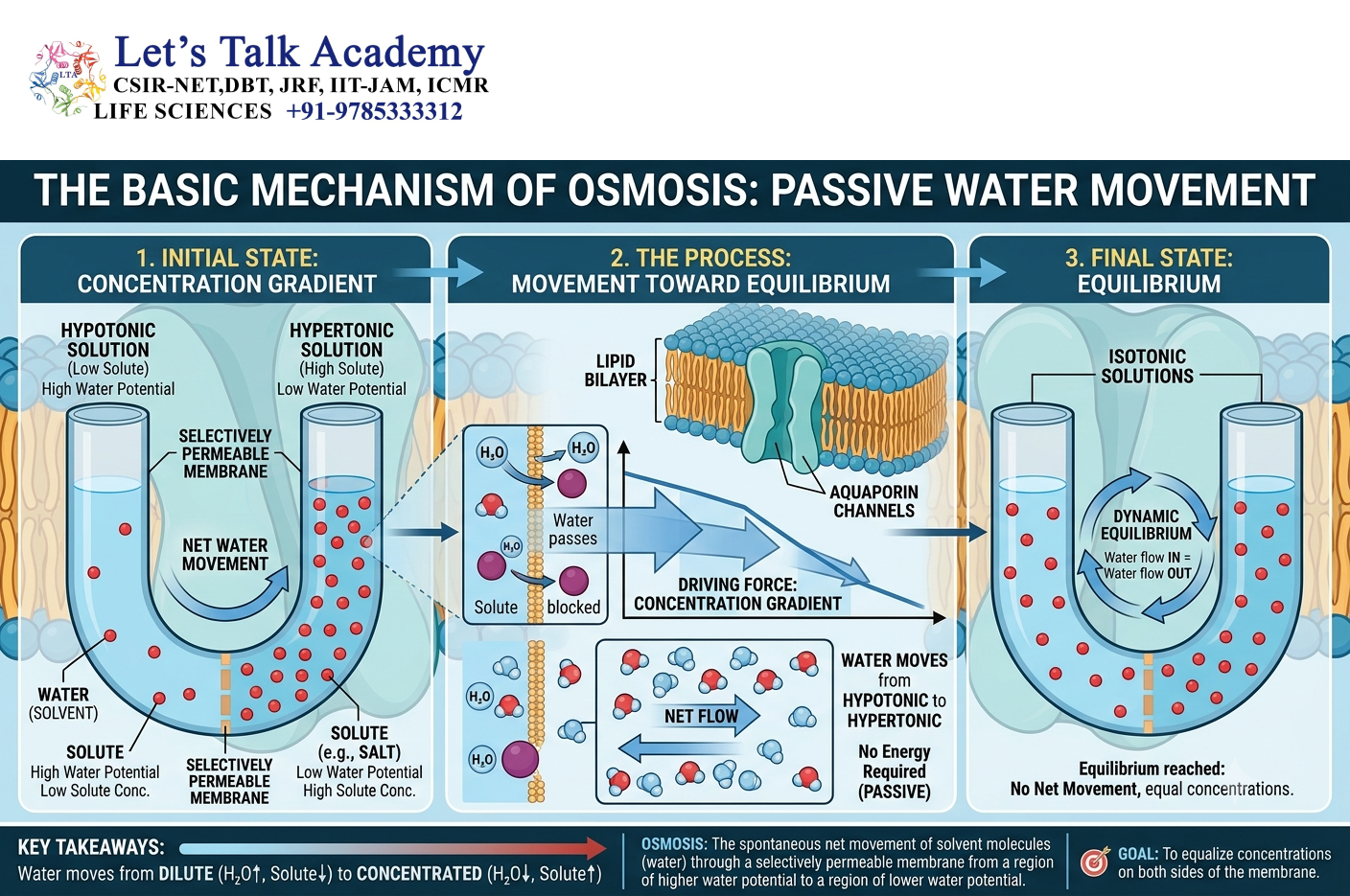
In simple terms, osmosis is the net movement of water molecules through a selectively permeable membrane from a region of higher water potential to a region of lower water potential.
The movement occurs because the two sides of the membrane have different concentrations of dissolved substances. Water tends to move toward the side containing a higher concentration of osmotically active solutes, provided those solutes cannot freely cross the membrane.
 1.2 Biological Importance of Osmosis
Osmosis is important because cells are surrounded by aqueous environments and must continuously maintain an appropriate internal water balance. Changes in water movement can alter cell volume, membrane tension, metabolic activity, and overall cellular function.
Osmosis is particularly important in:
- Plant water relations
- Animal cell volume regulation
- Kidney physiology
- Osmoregulation
- Stomatal movement
- Root water uptake
- Microbial survival
- Food preservation
- Medical and laboratory applications
1.3 Basic Principle
The fundamental principle of osmosis is that water moves passively across a selectively permeable membrane in response to a difference in water potential.
The scientifically precise statement is:
Water moves from higher water potential toward lower water potential.
2. Definition of Osmosis
2.1 Scientific Definition
Osmosis is the passive movement of water molecules across a selectively permeable membrane from a region of higher water potential to a region of lower water potential until equilibrium is approached.
The membrane allows water molecules to pass but restricts or prevents the movement of certain solute molecules.
A key point is that osmosis does not require cellular energy in the form of ATP. Therefore, it is considered a passive transport process.
2.2 Characteristics of Osmosis
The major characteristics of osmosis include:
- Osmosis involves the movement of water.
- A selectively permeable membrane is required.
- Water moves down its water-potential gradient.
- No direct expenditure of ATP is required.
- The process continues until the driving force for net water movement is eliminated.
- Osmosis is influenced by the concentration and nature of solutes.
- Membrane permeability affects the rate of water movement.
2.3 Osmosis as Passive Transport
Osmosis belongs to the category of passive transport because water movement occurs without direct energy expenditure by the cell.
This distinguishes osmosis from active transport, in which membrane proteins use cellular energy, directly or indirectly, to move substances against their electrochemical gradients.
3. Osmosis and Diffusion
3.1 Diffusion
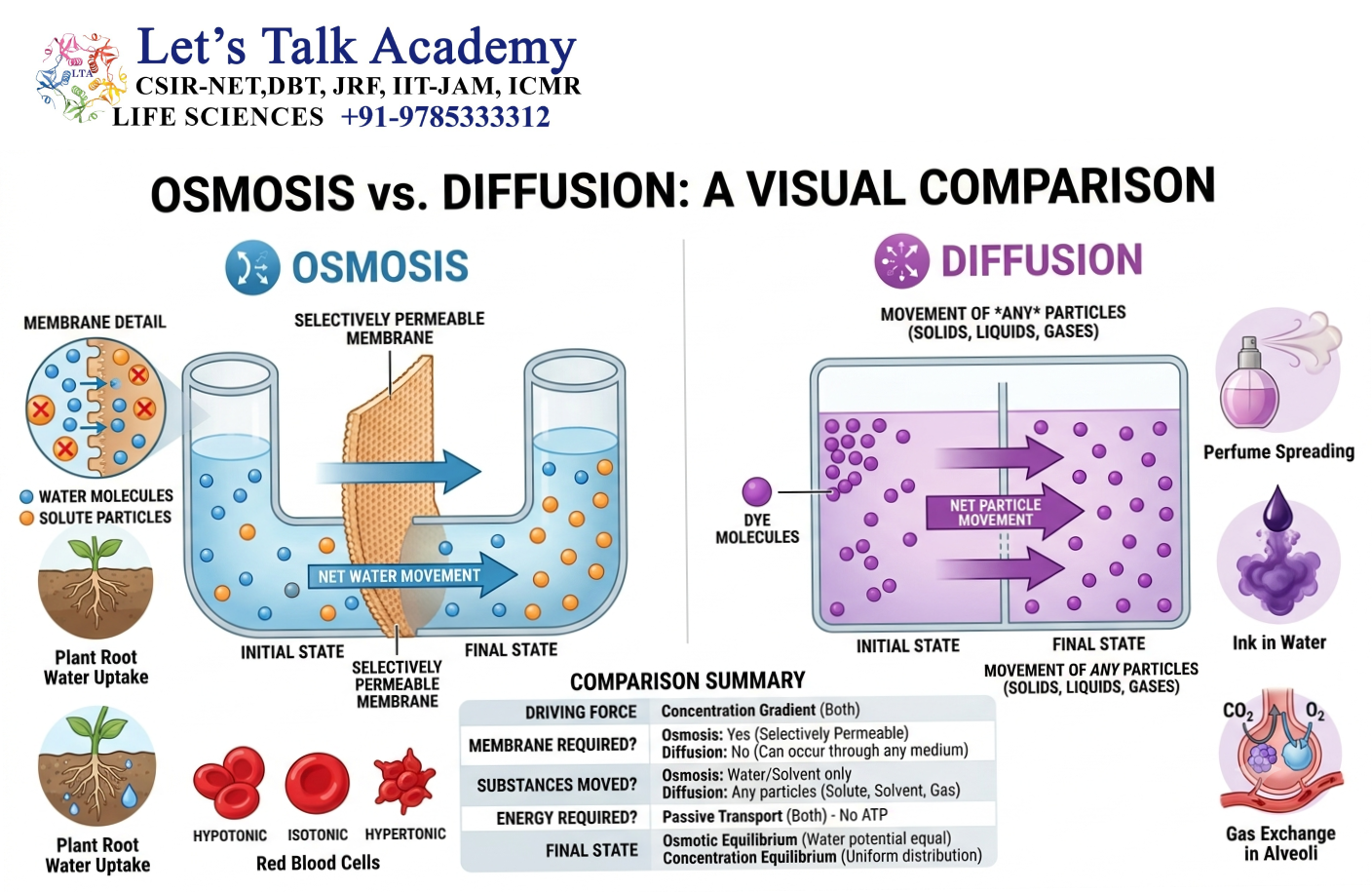
Diffusion is the net movement of particles from a region of higher concentration to a region of lower concentration due to their random molecular motion.
3.2 Osmosis
Osmosis specifically refers to the net movement of water across a selectively permeable membrane.
3.3 Difference Between Diffusion and Osmosis
| Feature | Diffusion | Osmosis |
|---|---|---|
| Substance moving | Solute or other particles | Water |
| Membrane required | Not always | Yes, selectively permeable membrane |
| Energy requirement | No ATP | No ATP |
| Driving force | Concentration gradient | Water-potential gradient |
| Biological significance | Movement of molecules | Regulation of cellular water balance |
Thus, osmosis can be considered a specialized form of passive movement involving water.
3.4 Relationship Between Diffusion and Osmosis
Both diffusion and osmosis result from spontaneous molecular movement. However, osmosis specifically concerns water movement through a membrane, while diffusion can involve many different types of molecules.
4. Selectively Permeable Membrane
4.1 Meaning of Selective Permeability
A selectively permeable membrane permits some substances to cross while restricting others.
In living cells, the plasma membrane performs this function.
4.2 Structure of the Plasma Membrane
The plasma membrane is primarily composed of a phospholipid bilayer containing proteins, cholesterol, and carbohydrates.
Small uncharged molecules may cross relatively easily, whereas many ions and polar molecules require membrane proteins.
4.3 Membrane Permeability and Osmosis
For osmosis to occur effectively, the membrane must allow water to cross while restricting the movement of the relevant solutes.
If solutes can freely cross the membrane, the solute concentration difference may decrease and the osmotic driving force may change.
5. Aquaporins
5.1 Definition of Aquaporins
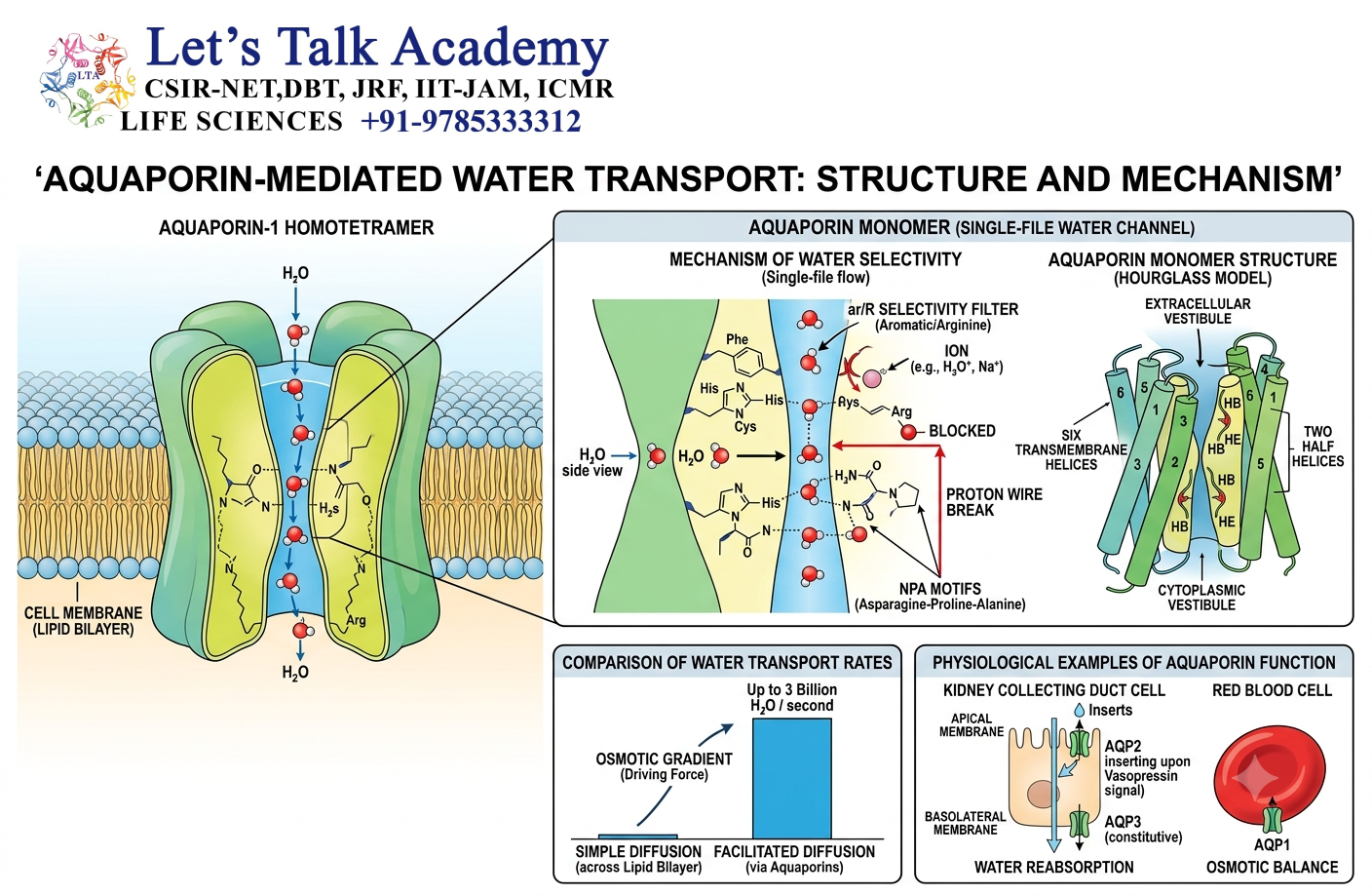
Aquaporins are membrane proteins that form channels facilitating the movement of water across biological membranes.
5.2 Functions of Aquaporins
Aquaporins are particularly important in:
- Kidney function
- Plant water transport
- Maintenance of cellular volume
- Epithelial water movement
- Regulation of water balance
5.3 Aquaporins and Water Transport
Aquaporins can greatly increase the permeability of biological membranes to water. Their regulation allows organisms and cells to control water movement according to physiological requirements.
6. Mechanism of Osmosis
6.1 Basic Experimental Model
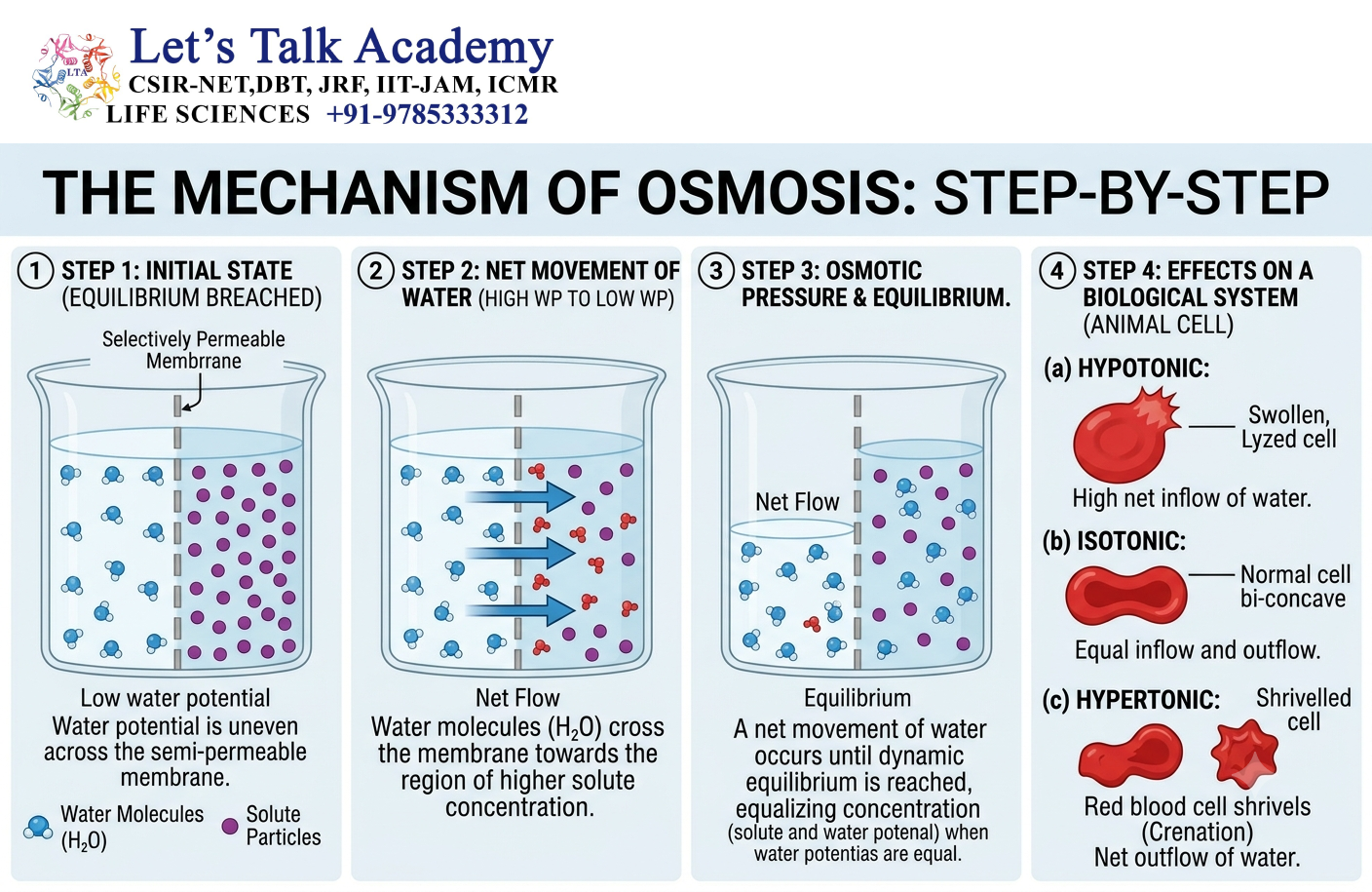
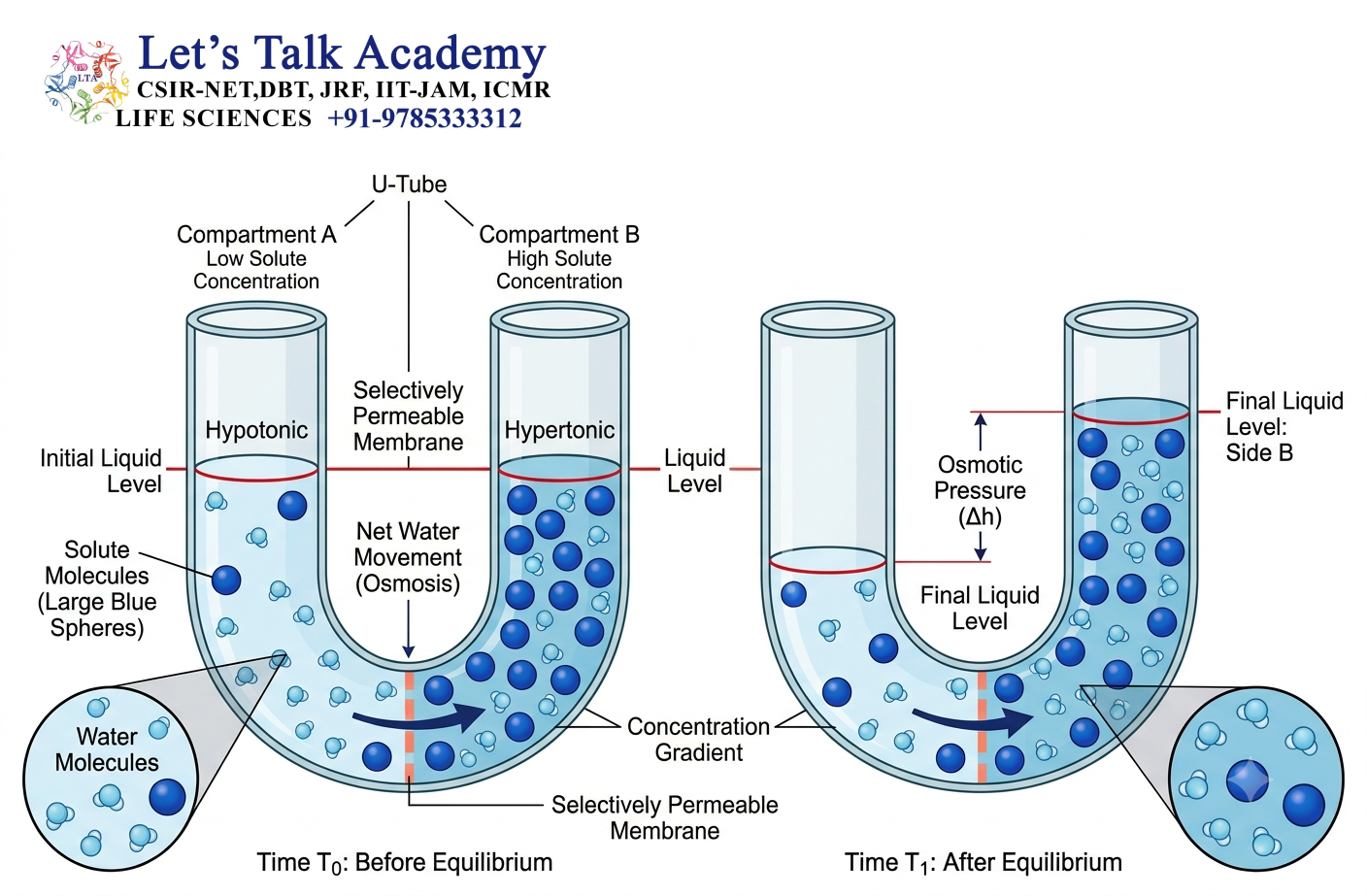
Consider a membrane separating two solutions.
Suppose:
- Side A contains a relatively low concentration of solute.
- Side B contains a relatively high concentration of solute.
- The membrane allows water to cross.
- The solute cannot cross the membrane.
Water molecules move from Side A toward Side B.
6.2 Direction of Water Movement
This movement occurs because Side A has a higher water potential, whereas Side B has a lower water potential.
The net movement of water continues until the relevant chemical-potential difference is sufficiently reduced.
6.3 Molecular Basis
Water molecules are in continuous random motion. When a selectively permeable membrane separates two solutions, the probability of water molecules crossing the membrane differs depending on the physicochemical conditions on each side.
The resulting net movement is observed as osmosis.
6.4 Important Clarification
It is common to say that water moves from a dilute solution to a concentrated solution. This is useful for introductory understanding, but the more precise biological description is:
Water moves from higher water potential toward lower water potential.
This distinction becomes especially important when studying plant physiology and water relations.
7. Osmotic Gradient
7.1 Definition
An osmotic gradient is a difference in the concentration of osmotically active solutes across a selectively permeable membrane.
7.2 Effect of Solute Concentration
The larger the effective difference in solute concentration, the greater the potential driving force for water movement, assuming other relevant conditions remain constant.
For example:
Low solute concentration → High solute concentration
Water tends to move toward the side with the higher effective solute concentration.
7.3 Factors Determining the Osmotic Gradient
The actual direction and magnitude of water movement depend on:
- Solute concentration
- Solute permeability
- Pressure
- Temperature
- Water potential
- Membrane properties
8. Osmotic Pressure
8.1 Definition
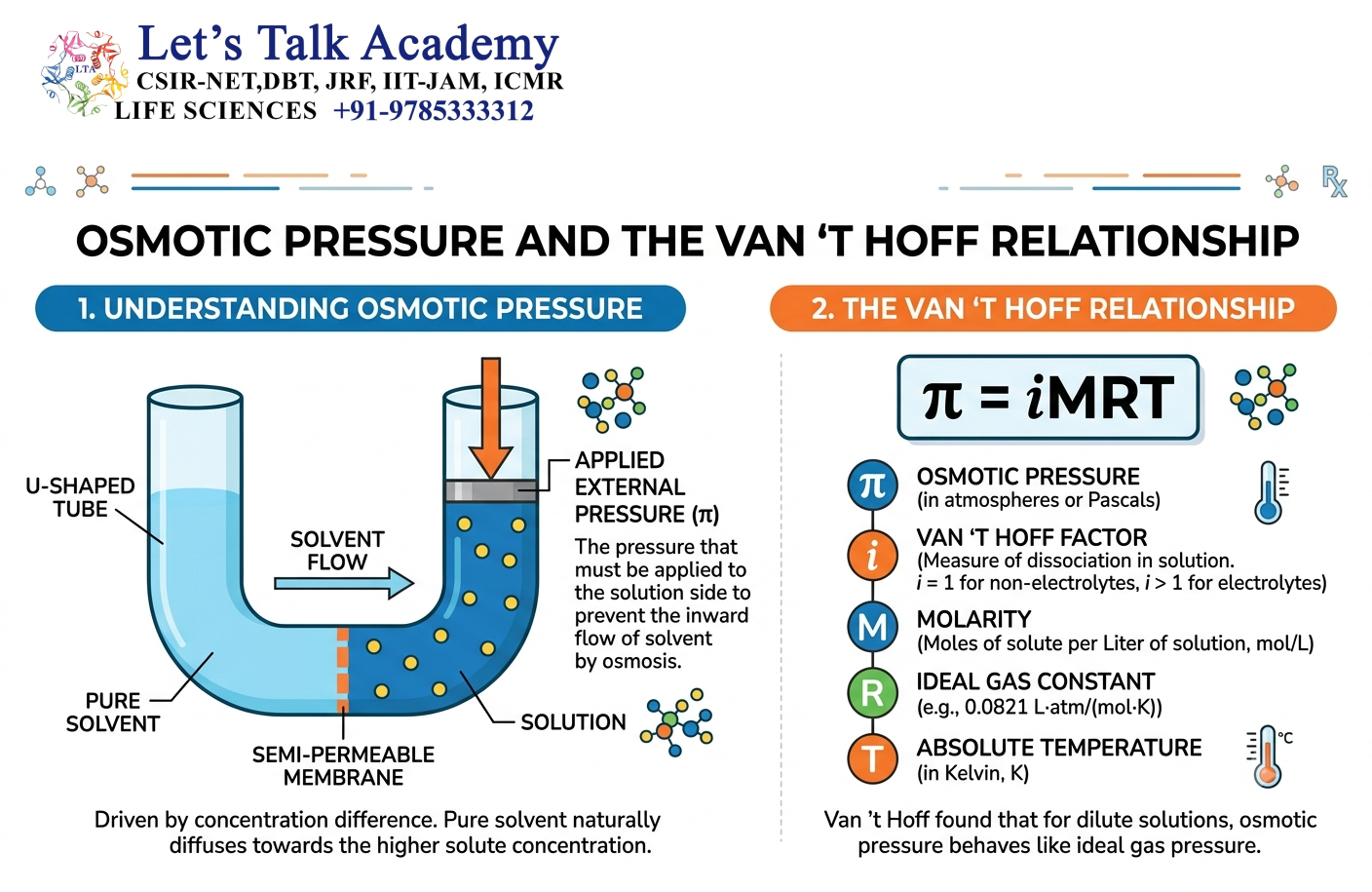
Osmotic pressure is the pressure that would need to be applied to a solution to prevent the net movement of water into that solution by osmosis.
8.2 Van ’t Hoff Equation
For dilute solutions, osmotic pressure can be represented by:
π=iCRT\pi = iCRT
Where:
- π\pi = osmotic pressure
- ii = van ’t Hoff factor
- CC = molar concentration
- RR = gas constant
- TT = absolute temperature
8.3 Biological Significance
Osmotic pressure helps explain why cells can gain or lose water when placed in solutions of different solute concentrations.
It is also important in understanding biological fluids, cell culture, kidney physiology, and membrane transport.
9. Osmolarity and Osmolality
9.1 Osmolarity
Osmolarity is the concentration of osmotically active particles per liter of solution.
It is commonly expressed as:
Osm/L
9.2 Osmolality
Osmolality is the concentration of osmotically active particles per kilogram of solvent.
It is expressed as:
Osm/kg
9.3 Difference Between Osmolarity and Osmolality
Although these values are often numerically similar for dilute aqueous solutions, they are conceptually different.
Osmolarity is based on solution volume, whereas osmolality is based on the mass of solvent.
10. Tonicity
10.1 Definition
Tonicity describes the effect of a surrounding solution on the volume of a cell, primarily based on the concentration of solutes that cannot freely cross the cell membrane.
10.2 Types of Tonicity
The three major categories are:
- Hypotonic solution
- Isotonic solution
- Hypertonic solution
10.3 Importance of Tonicity
Tonicity is particularly important in predicting whether a cell will:
- Gain water
- Lose water
- Maintain approximately constant volume
11. Hypotonic Solution
11.1 Definition
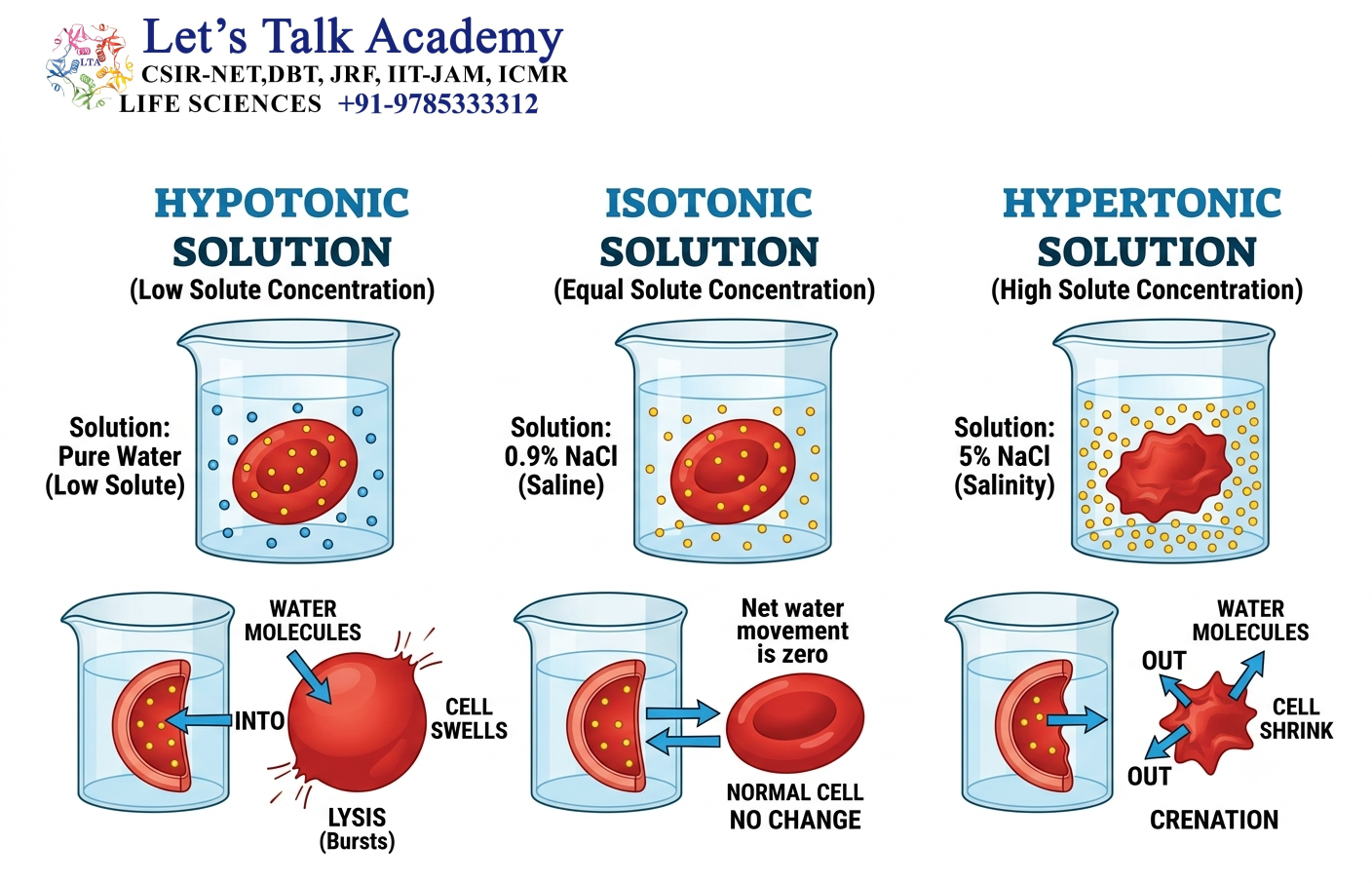
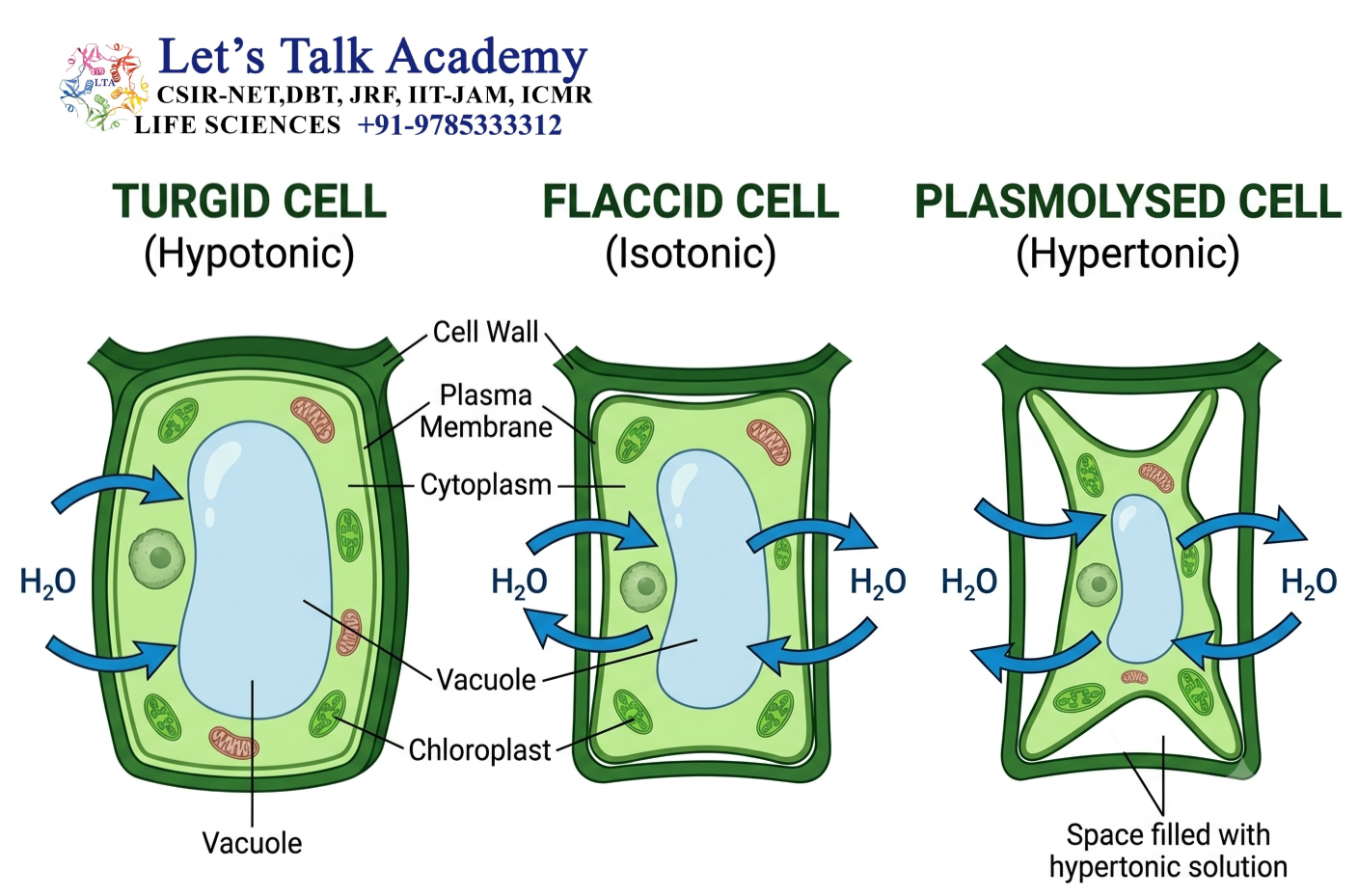
A solution is hypotonic relative to a cell when it has a lower effective concentration of nonpenetrating solutes than the cell interior.
Water tends to enter the cell.
11.2 Effect on Animal Cells
Water entry can cause:
- Cell swelling
- Excessive swelling
- Potential cell lysis
For example, a red blood cell placed in a sufficiently hypotonic solution can swell and eventually undergo hemolysis.
11.3 Effect on Plant Cells
Water enters the cell, increasing:
- Vacuolar volume
- Turgor pressure
- Cell rigidity
Plant cells generally do not burst under ordinary hypotonic conditions because the cell wall provides mechanical resistance.
12. Hypertonic Solution
12.1 Definition
A solution is hypertonic relative to a cell when it contains a higher effective concentration of nonpenetrating solutes than the cell interior.
Water tends to move out of the cell.
12.2 Effect on Animal Cells
The cell may shrink, a process commonly described as crenation in red blood cells.
12.3 Effect on Plant Cells
Water loss causes the plasma membrane and cytoplasm to pull away from the cell wall.
This phenomenon is known as plasmolysis.
13. Isotonic Solution
13.1 Definition
An isotonic solution produces no sustained net movement of water across the cell membrane under the specified conditions.
13.2 Dynamic Equilibrium
Water molecules continue to move in both directions, but the rates of movement are approximately equal.
Therefore:
Net water movement = 0
13.3 Important Concept
This does not mean that water molecules stop moving.
It means that movement occurs in both directions at approximately equal rates.
14. Osmosis in Animal Cells
14.1 Animal Cells and Osmotic Stress
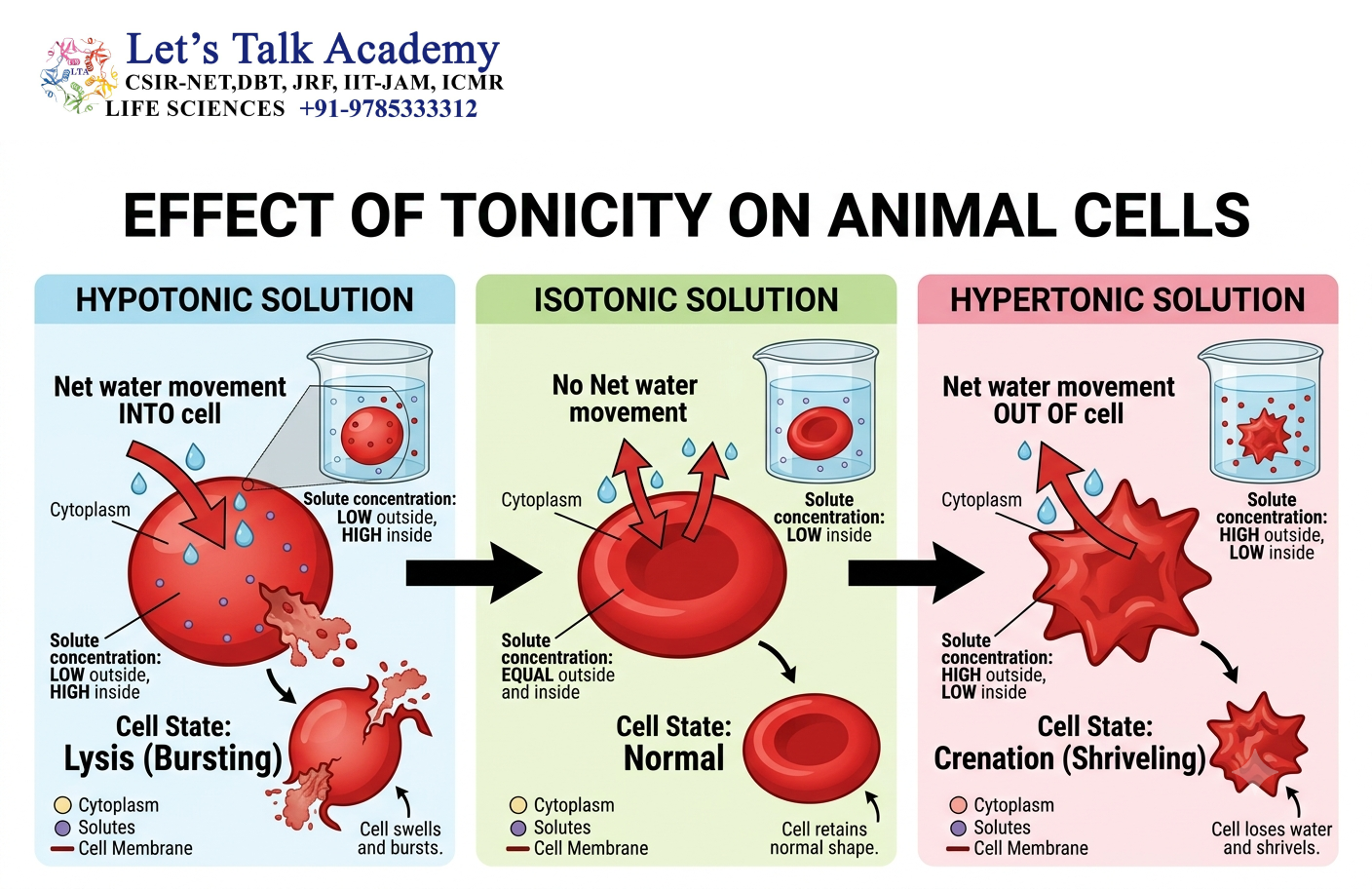
Animal cells are highly sensitive to changes in extracellular osmolarity because they generally lack a rigid cell wall.
14.2 Animal Cell in Isotonic Solution
The cell maintains approximately normal volume.
14.3 Animal Cell in Hypotonic Solution
Water enters the cell.
The cell swells and may eventually rupture.
14.4 Animal Cell in Hypertonic Solution
Water leaves the cell.
The cell shrinks and becomes crenated.
14.5 Biological Importance
This illustrates the importance of osmotic regulation in maintaining cellular homeostasis.
15. Osmosis in Plant Cells
15.1 Importance in Plants
Osmosis is particularly important in plants because it contributes to water uptake, cell expansion, and maintenance of structural rigidity.
15.2 Water Entry into Plant Cells
When a plant cell is placed in a hypotonic environment, water enters the cell.
The central vacuole expands and pushes the cytoplasm against the cell wall.
This generates turgor pressure.
15.3 Turgid Cell
A plant cell containing sufficient water and having high turgor pressure is called turgid.
15.4 Functions of Turgidity
Turgidity is important for:
- Maintaining plant rigidity
- Supporting leaves and young tissues
- Cell expansion
- Stomatal function
- Overall plant structure
16. Plasmolysis
16.1 Definition
Plasmolysis is the shrinkage of the protoplast away from the cell wall due to excessive loss of water from a plant cell.
16.2 Cause of Plasmolysis
It occurs when a plant cell is placed in a sufficiently hypertonic solution.
16.3 Sequence of Plasmolysis
- The external solution has a lower water potential.
- Water leaves the cell.
- The vacuole decreases in volume.
- The cytoplasm contracts.
- The plasma membrane pulls away from the cell wall.
- The cell becomes plasmolysed.
16.4 Biological Importance
Plasmolysis is an important experimental demonstration of osmosis and plant cell water relations.
17. Deplasmolysis
17.1 Definition
When a plasmolysed plant cell is transferred into a hypotonic solution, water enters the cell.
The protoplast gradually expands and returns toward its original position.
This process is called deplasmolysis.
17.2 Significance
Deplasmolysis demonstrates that plasmolysis can be reversible when the cell remains viable and the osmotic stress is removed.
18. Water Potential
18.1 Definition
Water potential is one of the most important concepts for understanding osmosis in plants.
It represents the tendency of water to move from one location to another.
It is commonly represented by:
Ψw\Psi_w
18.2 Components of Water Potential
For a simplified plant-water-relations framework:
Ψw=Ψs+Ψp\Psi_w = \Psi_s + \Psi_p
Where:
- Ψw\Psi_w = water potential
- Ψs\Psi_s = solute potential
- Ψp\Psi_p = pressure potential
18.3 Direction of Water Movement
Water moves from a region of higher water potential to lower water potential.
18.4 Solute Potential
The addition of solutes generally makes water potential more negative.
Thus:
More solute → lower solute potential → lower water potential
18.5 Pressure Potential
Pressure can increase water potential.
Positive pressure inside plant cells contributes to turgor.
19. Osmotic Potential and Solute Potential
19.1 Meaning
Osmotic potential is often used interchangeably with solute potential in plant physiology.
19.2 Effect of Solutes
The presence of dissolved solutes lowers the free energy of water and therefore lowers its water potential.
19.3 Equation
For a dilute solution, solute potential can be related to:
Ψs=−iCRT\Psi_s = -iCRT
Where:
- ii = van ’t Hoff factor
- CC = solute concentration
- RR = gas constant
- TT = absolute temperature
The negative sign indicates that dissolved solutes lower the water potential.
20. Factors Affecting Osmosis
20.1 Solute Concentration
An increase in the concentration of osmotically active solutes generally increases the osmotic driving force.
20.2 Temperature
Increasing temperature increases molecular kinetic energy and can influence the rate of water movement.
20.3 Membrane Permeability
The permeability of the membrane determines how easily water can cross.
Aquaporins can greatly facilitate water transport.
20.4 Surface Area
A larger membrane surface area can permit greater total water movement.
20.5 Distance Across the Membrane
Shorter diffusion distances generally facilitate faster movement.
20.6 Pressure
Pressure differences can oppose or promote water movement and are particularly important in plant cells.
21. Osmosis and Cellular Homeostasis
21.1 Importance of Water Balance
Osmosis is essential for maintaining cellular homeostasis.
Cells must regulate their internal water content because excessive water gain or loss can disturb:
- Cell volume
- Membrane integrity
- Protein function
- Enzyme activity
- Ion concentrations
- Metabolic reactions
21.2 Cellular Mechanisms
Organisms use multiple mechanisms to control osmotic balance.
These include:
- Ion pumps
- Ion channels
- Transporters
- Aquaporins
- Compatible solutes
- Hormonal regulation
- Specialized excretory systems
22. Osmoregulation
22.1 Definition
Osmoregulation is the physiological regulation of water and dissolved solute concentrations within an organism.
22.2 Freshwater Organisms
Freshwater is generally dilute relative to the body fluids of many freshwater animals.
As a result:
- Water tends to enter the body.
- Ions tend to be lost.
Such organisms must remove excess water and conserve or actively acquire ions.
22.3 Marine Organisms
Marine animals face different osmotic challenges because seawater is relatively concentrated.
They have physiological mechanisms that help regulate water and salt balance.
22.4 Importance of Osmoregulation
Osmoregulation allows organisms to maintain internal conditions within suitable physiological limits despite changes in the external environment.
23. Osmosis in the Kidney
23.1 Role in Water Reabsorption
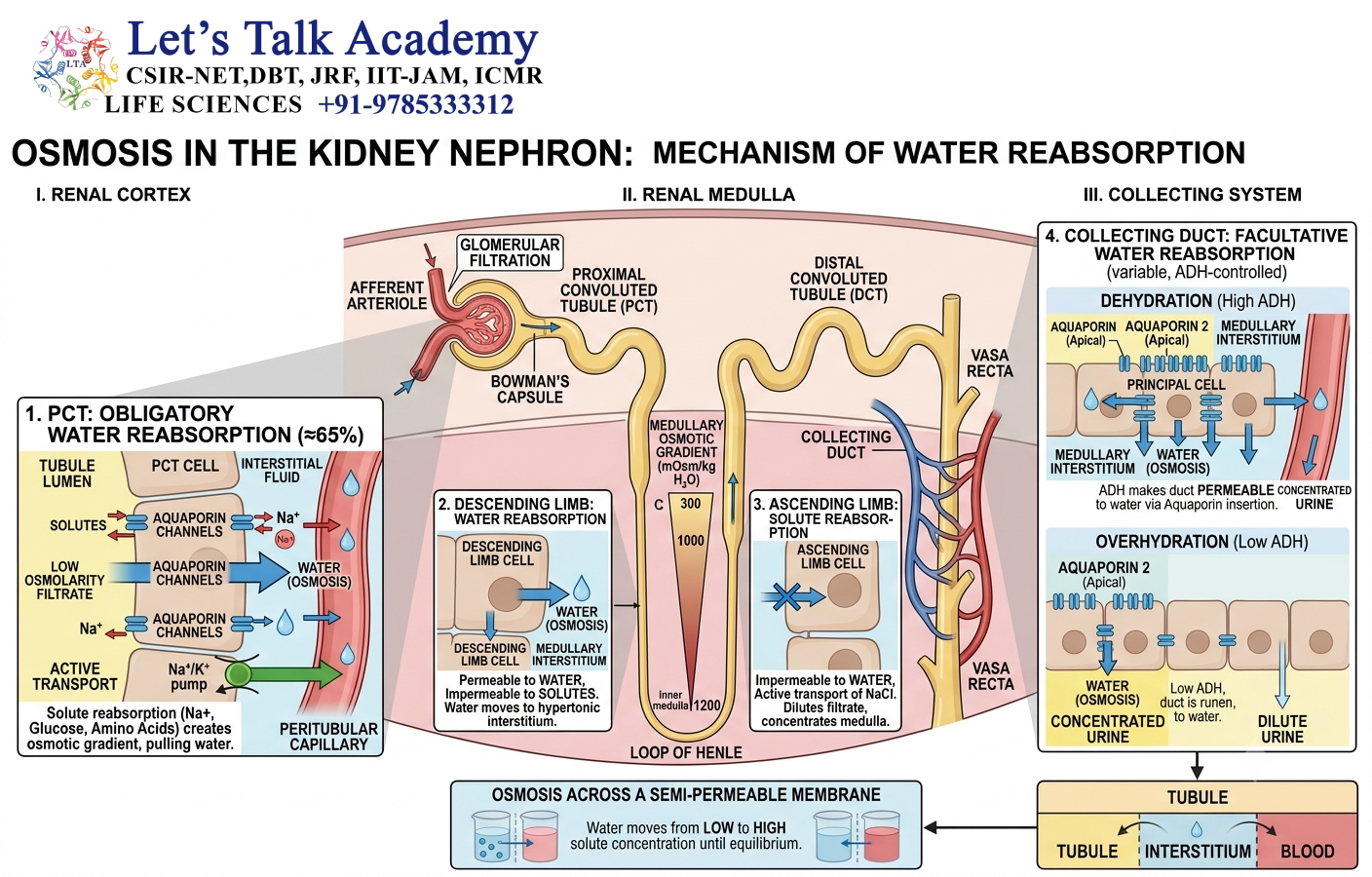
Osmosis has a major role in the formation of concentrated urine in mammals.
The kidney uses concentration gradients in the renal medulla to facilitate water reabsorption.
23.2 Loop of Henle
A particularly important structure is the loop of Henle, which contributes to the medullary osmotic gradient through the countercurrent multiplication mechanism.
23.3 Collecting Duct
The collecting duct can alter its water permeability under hormonal control, particularly through antidiuretic hormone (ADH).
23.4 Aquaporin-2
ADH promotes the insertion of aquaporin-2 channels into the apical membrane of collecting-duct cells, increasing water reabsorption.
Thus, osmosis is closely linked with the body’s ability to maintain water balance.
24. Osmosis in Plants
24.1 Major Roles
Plants continuously interact with water through osmotic and water-potential processes.
Osmosis contributes to:
- Root water uptake
- Maintenance of cell turgor
- Cell expansion
- Stomatal movement
- Water redistribution within tissues
24.2 Osmosis and Xylem Transport
Water movement through an entire plant cannot be explained by osmosis alone.
Long-distance water transport through the xylem is strongly explained by the cohesion-tension mechanism, involving transpiration-generated tension.
24.3 Important Distinction
Cellular water movement may involve osmosis, whereas long-distance xylem transport is primarily associated with water-potential gradients and physical forces generated by transpiration.
25. Role of Osmosis in Root Water Uptake
25.1 Water Entry into Roots
Root cells can have a lower water potential than the surrounding soil under many conditions.
This can favor movement of water into root tissues.
25.2 Pathways of Water Movement
Water then moves through different pathways, including:
- Apoplastic pathway
- Symplastic pathway
- Transmembrane pathway
25.3 Casparian Strip
The Casparian strip in the endodermis is particularly important because it restricts uncontrolled apoplastic movement and forces water and solutes to cross membranes before entering the vascular cylinder.
This provides the plant with greater control over substances entering the xylem.
26. Osmosis and Stomatal Movement
26.1 Role of Guard Cells
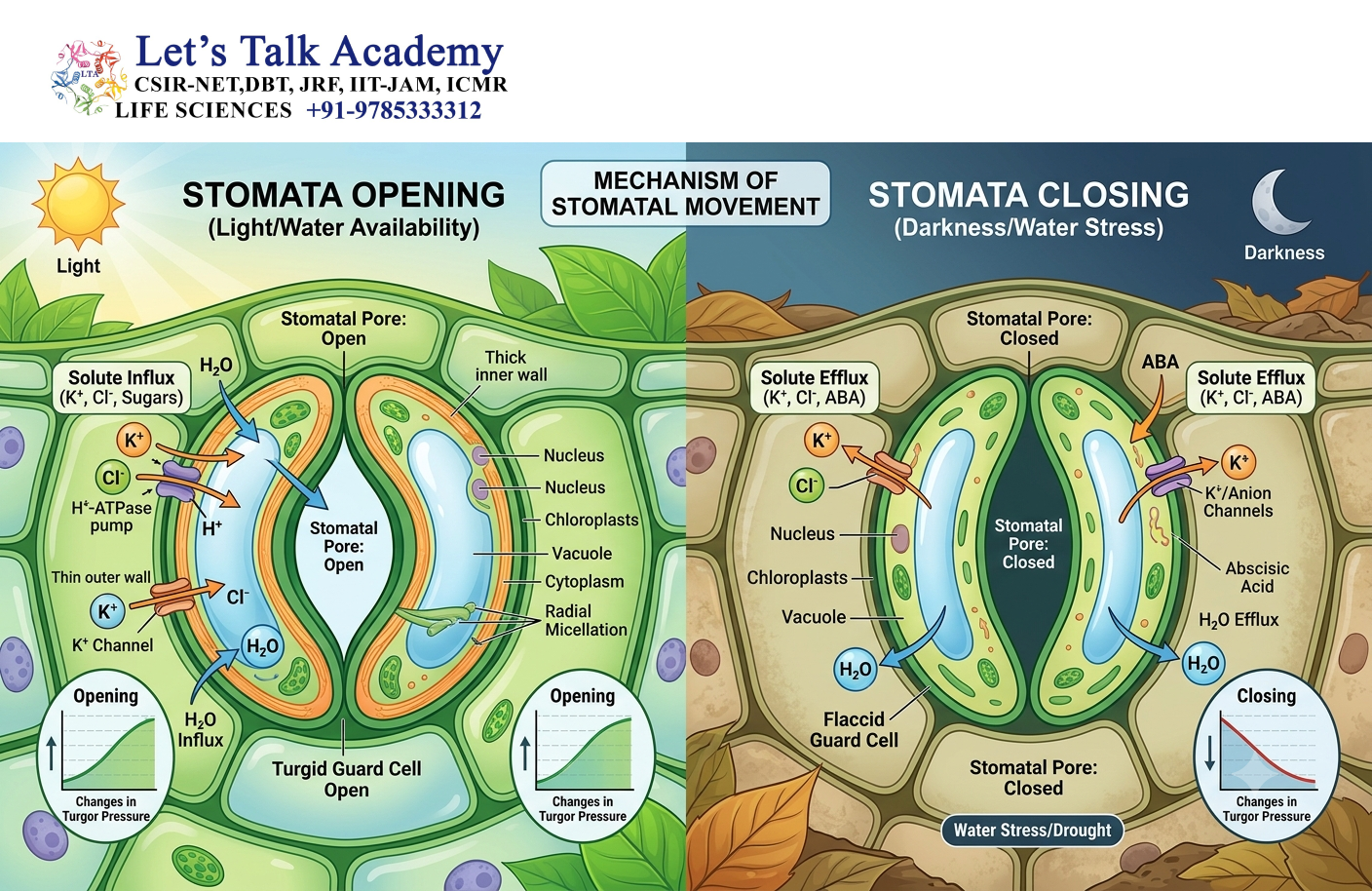
Guard cells regulate the opening and closing of stomata.
Changes in ion concentration inside guard cells influence their osmotic properties.
26.2 Stomatal Opening
When solutes accumulate in guard cells:
- Their solute potential becomes more negative.
- Water enters the guard cells.
- Guard-cell turgor increases.
- The guard cells change shape.
- The stomatal pore opens.
26.3 Stomatal Closing
When solutes are released and water exits:
- Guard-cell turgor decreases.
- Guard cells become less swollen.
- The stomatal pore closes.
26.4 Biological Significance
Thus, osmosis contributes directly to the regulation of gas exchange and transpiration.
27. Osmosis and Cell Volume Regulation
27.1 Changes in Cell Volume
Cells continuously adjust their volume in response to osmotic changes.
When extracellular osmolarity changes, water rapidly redistributes across the membrane.
27.2 Regulatory Mechanisms
Cells can respond through:
- Ion transport
- Organic osmolyte transport
- Changes in membrane permeability
- Activation of volume-regulated channels
27.3 Importance
These processes help restore cell volume after osmotic disturbances and protect cells from excessive swelling or shrinkage.
28. Osmosis and Food Preservation
28.1 Principle
Osmosis is also used outside the cellular context.
High concentrations of salt or sugar create an environment with low water availability.
28.2 Effect on Microorganisms
This can cause water to leave microbial cells and inhibit their growth.
28.3 Examples
Osmotic effects contribute to the preservation of foods such as:
- Pickles
- Jams
- Salted foods
- Preserved fruits
The underlying principle is that high external solute concentrations reduce water availability to microorganisms.
29. Osmosis and Medical Applications
29.1 Intravenous Fluids
Osmotic principles are important in medicine and biotechnology.
Intravenous fluids must be formulated carefully to avoid harmful changes in cell volume.
29.2 Hypertonic and Hypotonic Solutions
A solution that is excessively hypotonic can cause cells to take up water, whereas a strongly hypertonic solution can cause cellular water loss.
29.3 Other Applications
Osmotic principles are also relevant to:
- Dialysis
- Drug delivery
- Tissue preservation
- Intravenous therapy
- Renal physiology
- Cell culture
30. Osmosis vs Tonicity
30.1 Osmosis
Osmosis describes the movement of water across a selectively permeable membrane.
30.2 Tonicity
Tonicity describes the effect of a solution on the volume of a cell, particularly according to the behavior of solutes that cannot freely cross the membrane.
30.3 Major Difference
Tonicity depends strongly on effective, nonpenetrating solutes, whereas osmotic pressure can involve all osmotically active particles.
Therefore, osmosis and tonicity are related but not identical concepts.
31. Osmosis vs Osmotic Pressure
31.1 Osmosis
The process involving net movement of water across a selectively permeable membrane.
31.2 Osmotic Pressure
The pressure required to prevent that net osmotic movement.
31.3 Simple Comparison
Osmosis = process
Osmotic pressure = measure of the pressure associated with the osmotic tendency of a solution
32. Important Experimental Demonstrations of Osmosis
32.1 Potato Osmosis Experiment
Potato tissue can be placed in solutions containing different concentrations of sucrose or salt.
After a defined period, changes in mass or length can be measured.
32.2 Expected Results
- In a hypotonic solution, potato cells tend to gain water.
- In a hypertonic solution, potato cells tend to lose water.
- At the approximate isotonic concentration, there is little or no net change in mass.
32.3 Significance
This experiment can be used to estimate the osmotic behavior of plant tissue and demonstrate the relationship between solute concentration and water movement.
33. Importance of a Semipermeable Membrane in Experiments
33.1 Membrane Requirement
A proper osmosis experiment requires a barrier with selective permeability.
33.2 Effect of Solute Permeability
If both water and the relevant solute can freely cross the membrane, the observed behavior may not represent simple osmosis driven solely by a persistent solute gradient.
33.3 Experimental Variables
When interpreting an experiment, always consider:
- Membrane permeability
- Solute permeability
- Concentration gradient
- Pressure differences
- Temperature
- Duration of the experiment
34. Common Misconceptions About Osmosis
34.1 Misconception: Osmosis Is Movement of Solute
Incorrect.
Osmosis specifically concerns net movement of water.
34.2 Misconception: Water Always Moves Toward More Solute
This is a useful simplified rule, but it is not universally sufficient.
The more precise concept is movement toward lower water potential, considering solute and pressure effects.
34.3 Misconception: Osmosis Requires ATP
Incorrect.
Osmosis is a passive process and does not directly require ATP.
34.4 Misconception: Water Stops Moving at Equilibrium
Incorrect.
Molecules continue to move randomly. At equilibrium, there is no net movement.
34.5 Misconception: Isotonic Means No Water Movement
Incorrect.
Water moves in both directions, but there is no sustained net movement.


