
Glycolysis
Glycolysis: Pathway, Regulation, Energetics
1. Introduction and Significance
Glycolysis is the central metabolic pathway through which glucose is converted into pyruvate with the formation of ATP and NADH. The word glycolysis is derived from the Greek words glycos, meaning sugar, and lysis, meaning splitting. Therefore, glycolysis literally means the splitting of glucose.
It is one of the most important pathways in cellular metabolism because it provides energy rapidly and also produces metabolic intermediates required for several biosynthetic pathways.
- The sequence of all 10 reactions.
- Enzymes involved in each reaction.
- ATP consumption and production.
- NADH generation.
- Substrate-level phosphorylation.
- Regulation by ATP, AMP, citrate and fructose-2,6-bisphosphate.
- Differences between hexokinase and glucokinase.
- Regulation of PFK-1 and pyruvate kinase.
- Aerobic and anaerobic fates of pyruvate.
- Glycolytic energetics.
- Tissue-specific metabolism.
- Metabolic integration and biosynthetic functions.
A very important conceptual point is that glycolysis does not directly require molecular oxygen. Therefore, glycolysis can proceed under both aerobic and anaerobic conditions, provided that NAD+ is regenerated when necessary.
2. Cellular Location
Glycolysis occurs in the cytosol/cytoplasm of cells.
Unlike the citric acid cycle and oxidative phosphorylation, glycolysis does not occur inside the mitochondria.
In a typical eukaryotic cell:
Glucose → Glycolysis → Pyruvate
occurs in the cytosol.
When oxygen is available, pyruvate can subsequently enter the mitochondrion and undergo oxidative decarboxylation to form acetyl-CoA.
In cells lacking mitochondria, such as mature mammalian red blood cells, glycolysis is the major source of ATP because these cells cannot perform mitochondrial oxidative phosphorylation.
3. Overall Reaction of Glycolysis
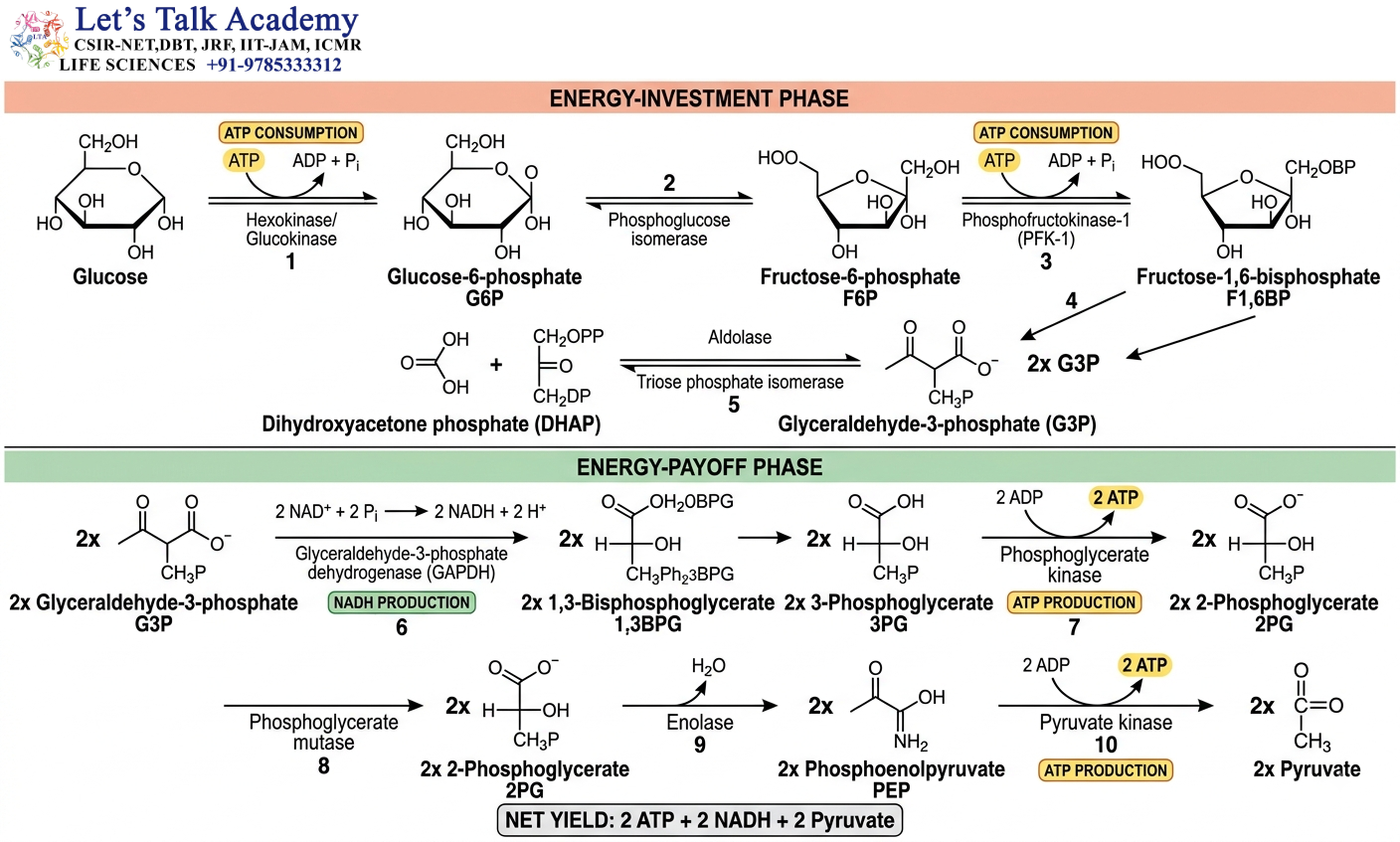
The overall reaction of glycolysis can be represented as:
Glucose + 2 ADP + 2 Pi + 2 NAD+ → 2 Pyruvate + 2 ATP + 2 NADH + 2 H+ + 2 H₂O
The pathway involves 10 enzymatic reactions.
Net products per glucose molecule
- 2 pyruvate
- 2 ATP net
- 2 NADH
- 2 H₂O
The important point is that 4 ATP are produced but 2 ATP are consumed, resulting in a net gain of 2 ATP.
4. Phases of Glycolysis
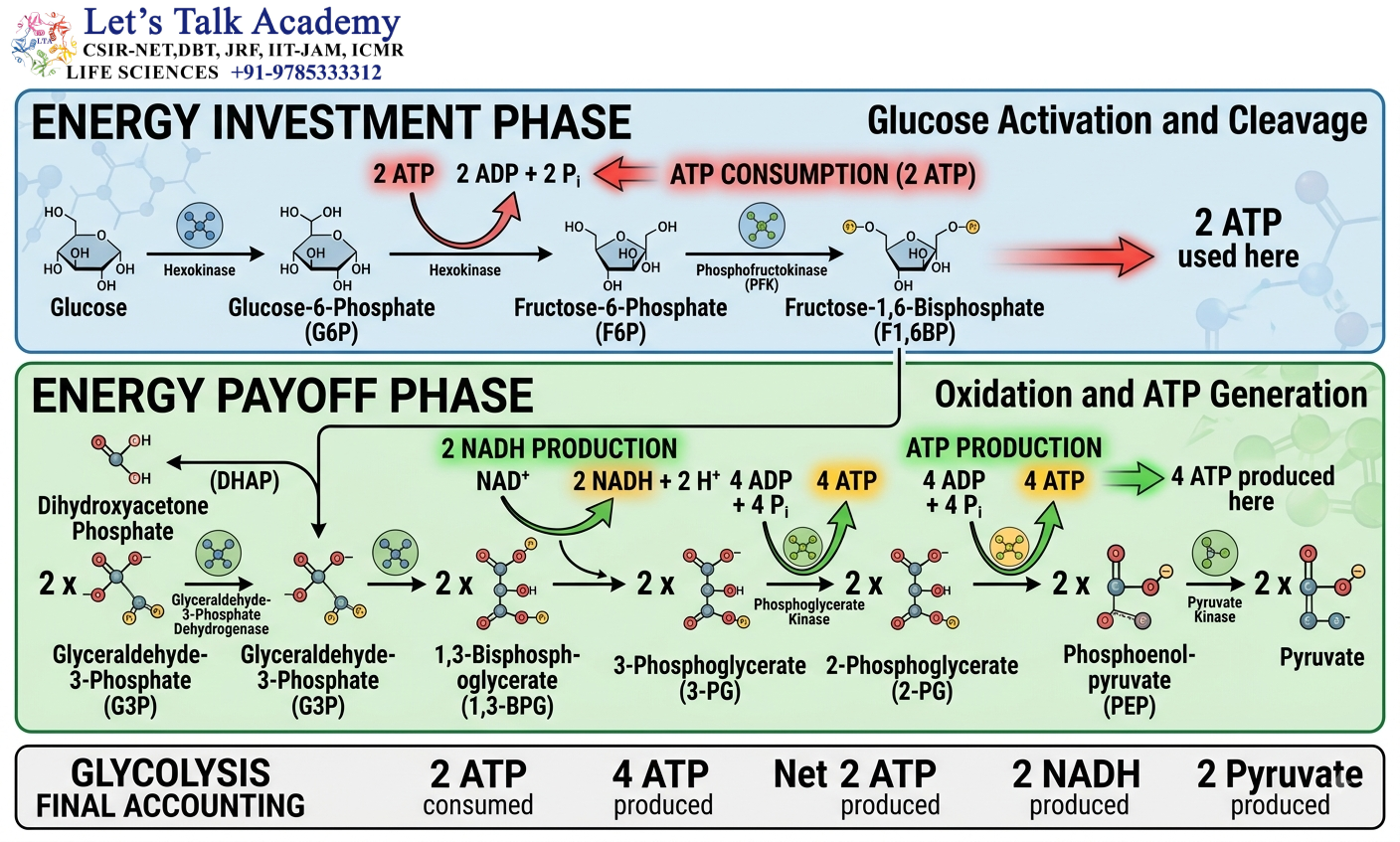
Glycolysis can be divided into two major phases:
4.1 Energy-Investment Phase
The first five reactions constitute the energy-investment phase.
During this phase:
- Glucose is phosphorylated.
- ATP is consumed.
- Fructose-1,6-bisphosphate is formed.
- The six-carbon sugar is eventually split into two three-carbon molecules.
ATP consumed
2 ATP per glucose molecule
ATP is consumed during:
- Glucose → Glucose-6-phosphate
- Fructose-6-phosphate → Fructose-1,6-bisphosphate
4.2 Energy-Payoff Phase
The second five reactions constitute the energy-payoff phase.
During this phase:
- NADH is produced.
- ATP is generated by substrate-level phosphorylation.
- Two pyruvate molecules are formed.
For each glucose molecule:
4 ATP are produced
Since 2 ATP were previously consumed:
Net ATP = 4 − 2 = 2 ATP
5. All 10 Reactions of Glycolysis
Reaction 1: Glucose → Glucose-6-Phosphate
Enzyme:
Hexokinase or glucokinase
Reaction:
Glucose + ATP → Glucose-6-phosphate + ADP
This reaction transfers a phosphate group from ATP to glucose.
The reaction is essentially irreversible under cellular conditions.
Significance
Phosphorylation of glucose:
- Traps glucose inside the cell.
- Activates glucose for further metabolism.
- Maintains a concentration gradient favoring glucose entry into the cell.
Hexokinase is inhibited by its product:
Glucose-6-phosphate
Glucokinase, in contrast, has a much higher Km and higher Vmax than most hexokinase isoforms and is particularly important in the liver and pancreatic β-cells.
6. Hexokinase vs Glucokinase
Feature |
Hexokinase |
Glucokinase |
|---|---|---|
| Major tissues | Most tissues | Liver and pancreatic β-cells |
| Km for glucose | Low | High |
| Affinity for glucose | High | Lower |
| Vmax | Lower | Higher |
| Product inhibition by G6P | Yes | No significant direct inhibition |
| Function | Glucose utilization even at low glucose | Glucose sensing and utilization when glucose is abundant |
Conceptual interpretation
Hexokinase allows tissues to phosphorylate glucose efficiently even when blood glucose is relatively low.
Glucokinase becomes particularly active when glucose concentration is high, making it suitable for the liver’s role in glucose storage and processing.
7. Reaction 2: Glucose-6-Phosphate → Fructose-6-Phosphate
Enzyme:
Phosphoglucose isomerase
This reaction converts an aldose sugar into a ketose sugar.
Glucose-6-phosphate ⇌ Fructose-6-phosphate
This rearrangement prepares the molecule for the subsequent phosphorylation and cleavage reactions.
The reaction is reversible.
8. Reaction 3: Fructose-6-Phosphate → Fructose-1,6-Bisphosphate
Enzyme:
Phosphofructokinase-1 (PFK-1)
Reaction:
Fructose-6-phosphate + ATP → Fructose-1,6-bisphosphate + ADP
This reaction consumes the second ATP molecule of glycolysis.
PFK-1 is one of the most important regulatory enzymes of glycolysis.
Importance
PFK-1 catalyzes the major committed step of glycolysis.
The pathway is therefore strongly controlled at this point.
Activators of PFK-1
- AMP
- ADP
- Fructose-2,6-bisphosphate
Inhibitors of PFK-1
- ATP
- Citrate
- High cellular energy status
ATP inhibits PFK-1 even though ATP is a substrate of the enzyme.
This is an example of feedback/allosteric regulation.
When ATP is abundant, the cell has less need to rapidly degrade glucose for energy.
9. Reaction 4: Fructose-1,6-Bisphosphate → DHAP + Glyceraldehyde-3-Phosphate
Enzyme:
Aldolase
The six-carbon fructose-1,6-bisphosphate molecule is cleaved into two three-carbon molecules:
Fructose-1,6-bisphosphate ⇌ Dihydroxyacetone phosphate + Glyceraldehyde-3-phosphate
The reaction is reversible.
10. Reaction 5: DHAP ⇌ Glyceraldehyde-3-Phosphate
Enzyme:
Triose phosphate isomerase
DHAP is converted into glyceraldehyde-3-phosphate.
Because only glyceraldehyde-3-phosphate proceeds directly through the remaining glycolytic reactions, this reaction ensures that both three-carbon fragments can contribute to ATP production.
Therefore, from one glucose molecule:
1 glucose → 2 glyceraldehyde-3-phosphate molecules
From this point onward, every reaction occurs twice per glucose molecule.
11. Reaction 6: Glyceraldehyde-3-Phosphate → 1,3-Bisphosphoglycerate
Enzyme:
Glyceraldehyde-3-phosphate dehydrogenase (GAPDH)
Reaction:
Glyceraldehyde-3-phosphate + Pi + NAD+ ⇌ 1,3-bisphosphoglycerate + NADH + H+
This is the oxidation step of glycolysis.
Important Features
- NAD+ is reduced to NADH.
- Inorganic phosphate is incorporated.
- No ATP is consumed or produced directly.
Because two G3P molecules are formed per glucose:
2 NADH are produced per glucose.
This is the only glycolytic reaction that directly produces NADH.
12. Reaction 7: 1,3-Bisphosphoglycerate → 3-Phosphoglycerate
Enzyme:
Phosphoglycerate kinase
Reaction:
1,3-Bisphosphoglycerate + ADP ⇌ 3-phosphoglycerate + ATP
This reaction produces ATP through:
Substrate-Level Phosphorylation
Substrate-level phosphorylation means that ATP is generated by direct transfer of a high-energy phosphate group from a metabolic intermediate to ADP.
This is different from oxidative phosphorylation, where ATP production is driven by the proton gradient across the mitochondrial inner membrane.
Because the reaction occurs twice per glucose:
2 ATP are produced.
13. Reaction 8: 3-Phosphoglycerate → 2-Phosphoglycerate
Enzyme:
Phosphoglycerate mutase
The phosphate group is shifted from carbon 3 to carbon 2.
3-Phosphoglycerate ⇌ 2-Phosphoglycerate
This rearrangement prepares the molecule for dehydration.
14. Reaction 9: 2-Phosphoglycerate → Phosphoenolpyruvate
Enzyme:
Enolase
Reaction:
2-Phosphoglycerate ⇌ Phosphoenolpyruvate + H₂O
Water is removed from the substrate.
The product, phosphoenolpyruvate (PEP), contains a very high-energy phosphate bond.
PEP has a very high phosphoryl-transfer potential, which makes the subsequent ATP-generating reaction strongly favorable.
15. Reaction 10: Phosphoenolpyruvate → Pyruvate
Enzyme:
Pyruvate kinase
Reaction:
PEP + ADP → Pyruvate + ATP
This is the second substrate-level phosphorylation reaction of glycolysis.
Since two PEP molecules are formed per glucose:
2 ATP are produced.
The reaction is essentially irreversible under physiological conditions.
16. Complete 10-Step Glycolytic Pathway
The complete pathway can be memorized in the following sequence:
Glucose
↓ Hexokinase / Glucokinase
Glucose-6-phosphate
↓ Phosphoglucose isomerase
Fructose-6-phosphate
↓ PFK-1
Fructose-1,6-bisphosphate
↓ Aldolase
DHAP + Glyceraldehyde-3-phosphate
↓ Triose phosphate isomerase
2 × Glyceraldehyde-3-phosphate
↓ GAPDH
2 × 1,3-Bisphosphoglycerate
↓ Phosphoglycerate kinase
2 × 3-Phosphoglycerate
↓ Phosphoglycerate mutase
2 × 2-Phosphoglycerate
↓ Enolase
2 × Phosphoenolpyruvate
↓ Pyruvate kinase
2 × Pyruvate
17. Enzymes and Cofactors of Glycolysis
Reaction |
Enzyme |
Important Cofactor/Substrate |
|---|---|---|
| 1 | Hexokinase/Glucokinase | ATP |
| 2 | Phosphoglucose isomerase | — |
| 3 | PFK-1 | ATP |
| 4 | Aldolase | — |
| 5 | Triose phosphate isomerase | — |
| 6 | GAPDH | NAD+ |
| 7 | Phosphoglycerate kinase | ADP |
| 8 | Phosphoglycerate mutase | — |
| 9 | Enolase | Mg²+ |
| 10 | Pyruvate kinase | ADP |
High-Yield Enzymes
The three major irreversible regulatory steps are:
- Hexokinase/Glucokinase
- PFK-1
- Pyruvate kinase
These reactions are particularly important in metabolic regulation.
18. ATP Consumption During Glycolysis
Two ATP molecules are consumed during the energy-investment phase.
ATP consumption occurs at:
Reaction 1:
Glucose → Glucose-6-phosphate
Reaction 3:
Fructose-6-phosphate → Fructose-1,6-bisphosphate
Therefore:
ATP consumed = 2 ATP/glucose
19. ATP Generation During Glycolysis
ATP is generated at two steps:
Reaction 7
1,3-Bisphosphoglycerate → 3-Phosphoglycerate
Reaction 10
PEP → Pyruvate
Each occurs twice per glucose.
Therefore:
2 ATP + 2 ATP = 4 ATP produced
Net ATP:
4 − 2 = 2 ATP
20. NADH Production
NADH is generated during the oxidation of glyceraldehyde-3-phosphate.
Reaction:
Glyceraldehyde-3-phosphate → 1,3-Bisphosphoglycerate
For one glucose:
2 G3P → 2 NADH
Therefore:
2 NADH are produced per glucose molecule.
The final energetic value of these NADH molecules depends on how their reducing equivalents are transferred into mitochondria in cells capable of oxidative phosphorylation.
21. Substrate-Level Phosphorylation
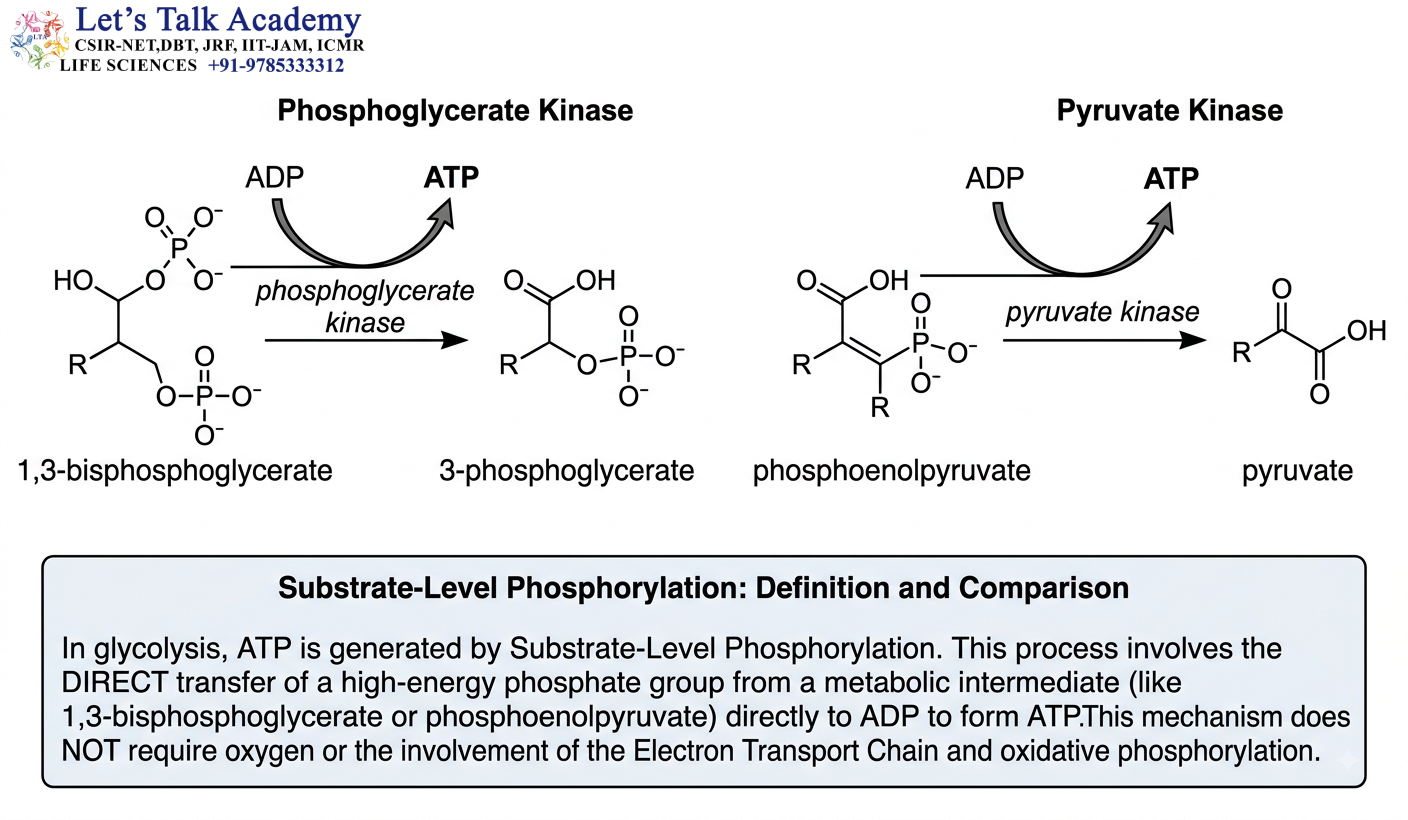
Glycolysis contains two substrate-level phosphorylation reactions.
First ATP-generating reaction
1,3-Bisphosphoglycerate → 3-Phosphoglycerate
Enzyme:
Phosphoglycerate kinase
Second ATP-generating reaction
PEP → Pyruvate
Enzyme:
Pyruvate kinase
Important Concept
Substrate-level phosphorylation can occur without an electron transport chain.
Therefore, ATP production by glycolysis can occur even in the absence of oxygen, provided the pathway’s NAD+ requirement is satisfied through an appropriate regeneration mechanism.
22. Regulation of Glycolysis
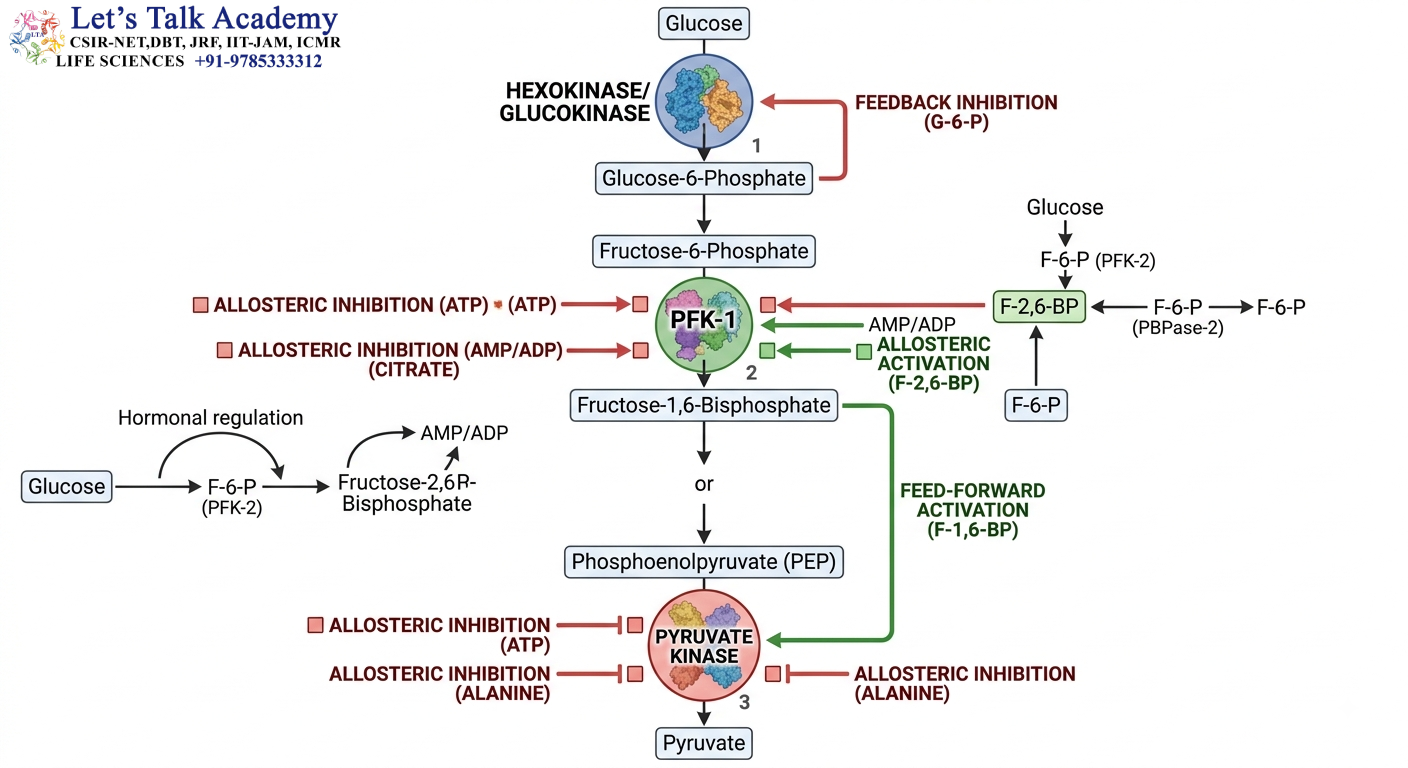
Glycolysis is regulated according to the energy requirements of the cell.
The major regulatory enzymes are:
- Hexokinase/glucokinase
- PFK-1
- Pyruvate kinase
Among these, PFK-1 is generally considered the major rate-limiting regulatory enzyme of glycolysis.
The pathway responds to:
- ATP/ADP ratio.
- AMP levels.
- Citrate.
- Fructose-2,6-bisphosphate.
- Hormonal signals.
- Cellular glucose availability.
- Tissue-specific metabolic demands.
23. Regulation of Hexokinase
Hexokinase is inhibited by its product:
Glucose-6-phosphate
This prevents excessive phosphorylation of glucose when downstream metabolism is limited.
Glucokinase behaves differently and is adapted to high-glucose conditions.
24. Regulation of PFK-1
PFK-1 is the central regulatory enzyme of glycolysis.
PFK-1 is activated by:
- AMP
- ADP
- Fructose-2,6-bisphosphate
PFK-1 is inhibited by:
- ATP
- Citrate
- High-energy conditions
Conceptual Relationship
Low ATP + high AMP → glycolysis increases
High ATP + high citrate → glycolysis decreases
This allows glycolysis to respond dynamically to cellular energy status.
25. Fructose-2,6-Bisphosphate and Glycolysis
Fructose-2,6-bisphosphate is one of the most powerful activators of PFK-1 in liver metabolism.
It:
Activates PFK-1 → increases glycolysis
and also inhibits:
Fructose-1,6-bisphosphatase → decreases gluconeogenesis
Therefore, fructose-2,6-bisphosphate helps coordinate glycolysis and gluconeogenesis in opposite directions.
The enzyme that controls fructose-2,6-bisphosphate levels is:
Phosphofructokinase-2/Fructose-2,6-bisphosphatase (PFK-2/FBPase-2)
Its regulation is particularly important in liver metabolism.
26. Regulation of Pyruvate Kinase
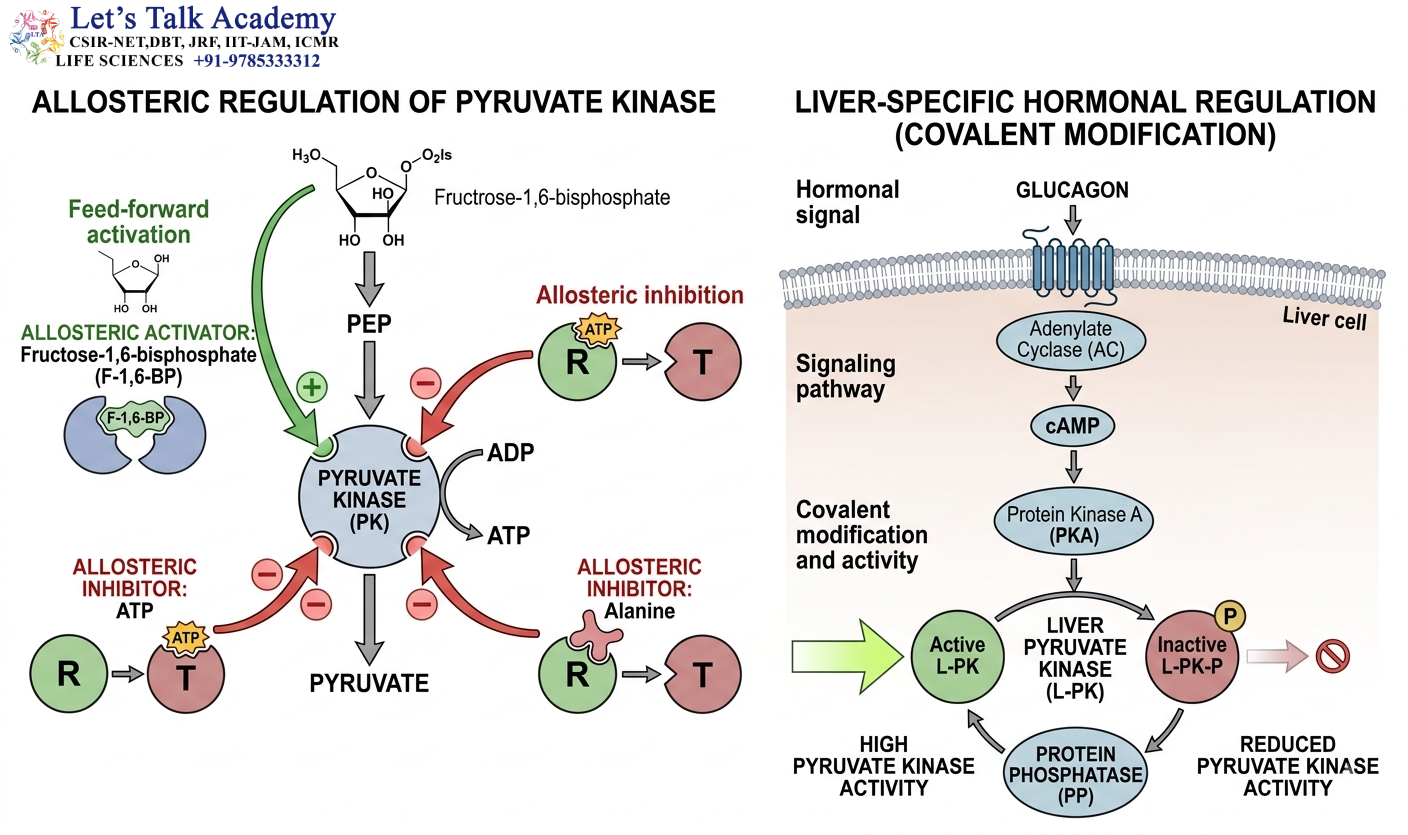
Pyruvate kinase catalyzes:
PEP → Pyruvate
Activator
Fructose-1,6-bisphosphate
This is an example of feed-forward activation.
The product of an earlier reaction stimulates a later step of the pathway.
Inhibitors
- ATP
- Alanine
In liver, hormonal regulation also affects pyruvate kinase activity.
27. Allosteric Regulation
Allosteric regulation occurs when a regulatory molecule binds to a site different from the enzyme’s active site and changes enzyme activity.
Glycolysis is strongly influenced by allosteric signals representing cellular energy status.
General principle
ATP high → glycolysis tends to decrease
AMP/ADP high → glycolysis tends to increase
This ensures that glycolysis responds to cellular energy demand.
28. Hormonal Regulation of Glycolysis
Hormonal control is especially important in the liver.
Insulin
Insulin generally promotes glucose utilization and glycolysis.
It promotes conditions favoring:
Glucose uptake/utilization → glycolysis → energy production and biosynthesis
Insulin also favors increased fructose-2,6-bisphosphate formation in the liver through regulation of PFK-2/FBPase-2.
Glucagon
Glucagon generally acts in opposition to insulin in the liver.
It promotes:
↓ Glycolysis
and favors:
↑ Gluconeogenesis
Glucagon signaling through cAMP and protein kinase A influences the phosphorylation state of metabolic regulatory proteins.
The insulin-glucagon relationship is an important example of hormonal coordination between glycolysis and gluconeogenesis.
29. Aerobic Fate of Pyruvate
When oxygen is available and mitochondrial metabolism is active, pyruvate can enter the mitochondrion.
Pyruvate is converted to acetyl-CoA by the:
Pyruvate dehydrogenase complex
The reaction is:
Pyruvate + CoA + NAD+ → Acetyl-CoA + CO₂ + NADH + H+
Acetyl-CoA subsequently enters the citric acid cycle.
Therefore:
Glucose → Pyruvate → Acetyl-CoA → TCA cycle → Electron transport chain
This allows the reducing equivalents generated during glucose oxidation to contribute to oxidative phosphorylation.
30. Anaerobic Glycolysis
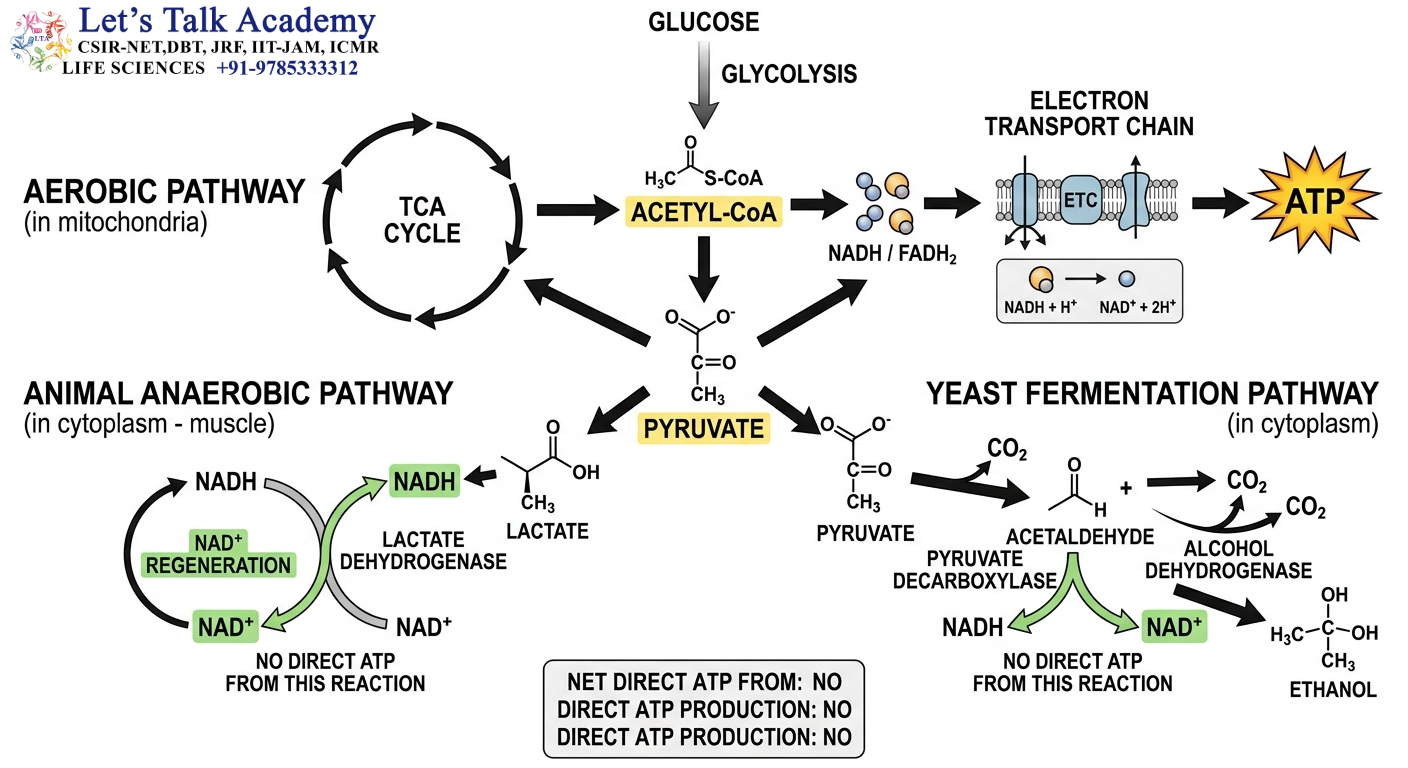
When mitochondrial oxidation is insufficient or unavailable, cells can regenerate NAD+ by reducing pyruvate.
This is essential because the GAPDH reaction requires NAD+.
Without NAD+ regeneration:
GAPDH reaction stops → glycolysis stops
Therefore, anaerobic metabolism provides a mechanism for maintaining glycolytic ATP production.
31. Lactate Fermentation
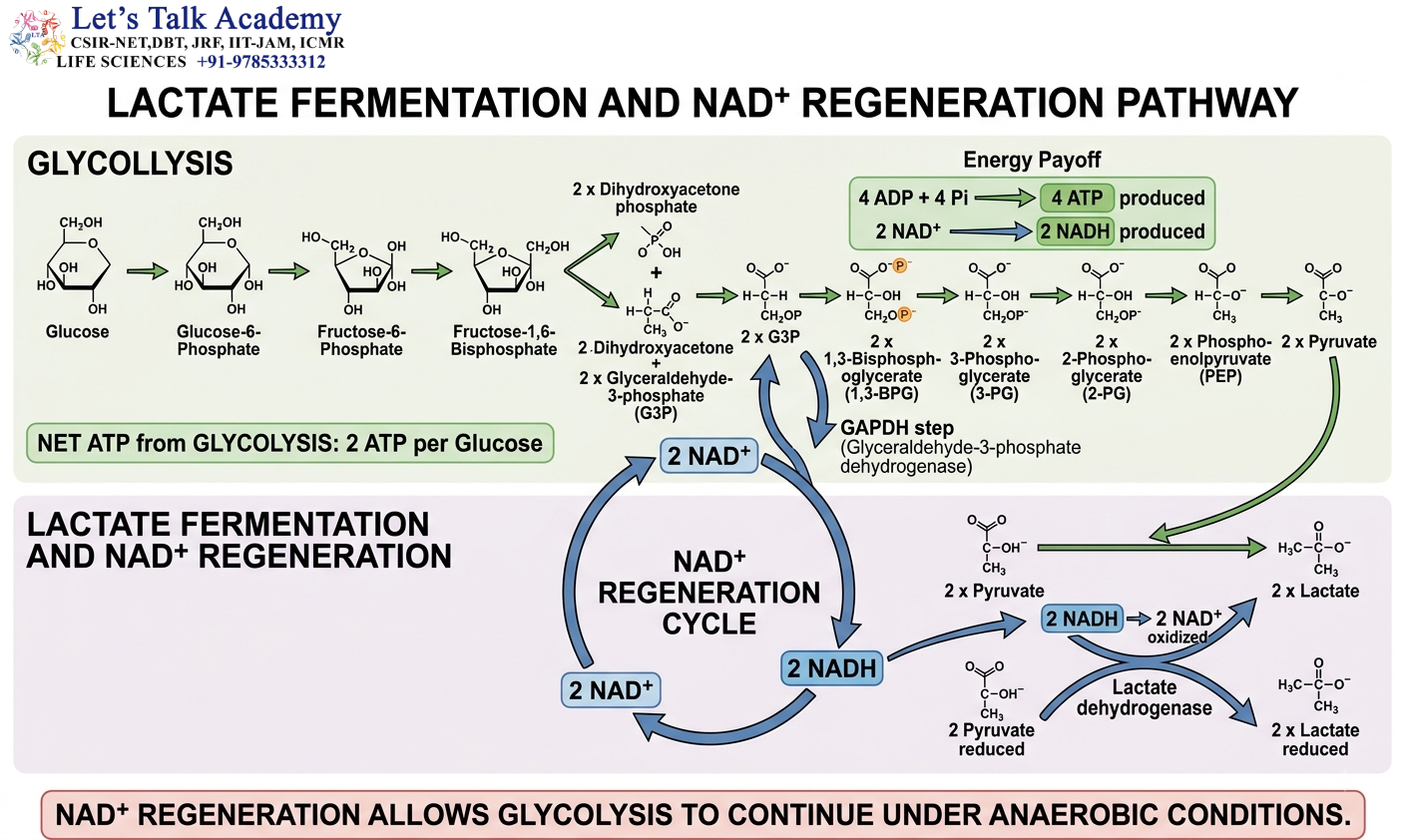
In many animal tissues, pyruvate is converted into lactate.
Enzyme:
Lactate dehydrogenase (LDH)
Reaction:
Pyruvate + NADH + H+ ⇌ Lactate + NAD+
The major purpose of this reaction is:
NADH → NAD+ regeneration
The regenerated NAD+ can then be used again by GAPDH.
Important Concept
Lactate formation does not produce additional ATP directly.
The ATP comes from glycolysis.
Therefore, anaerobic glycolysis provides:
Net 2 ATP per glucose
32. Alcoholic Fermentation
Alcoholic fermentation is characteristic of many microorganisms, particularly yeast.
The pathway occurs in two major steps.
Step 1
Pyruvate → Acetaldehyde + CO₂
Enzyme:
Pyruvate decarboxylase
Step 2
Acetaldehyde + NADH + H+ → Ethanol + NAD+
Enzyme:
Alcohol dehydrogenase
The regenerated NAD+ allows glycolysis to continue.
Overall Concept
Glucose → Pyruvate → Acetaldehyde → Ethanol
CO₂ is released during this process.
33. Cori Cycle
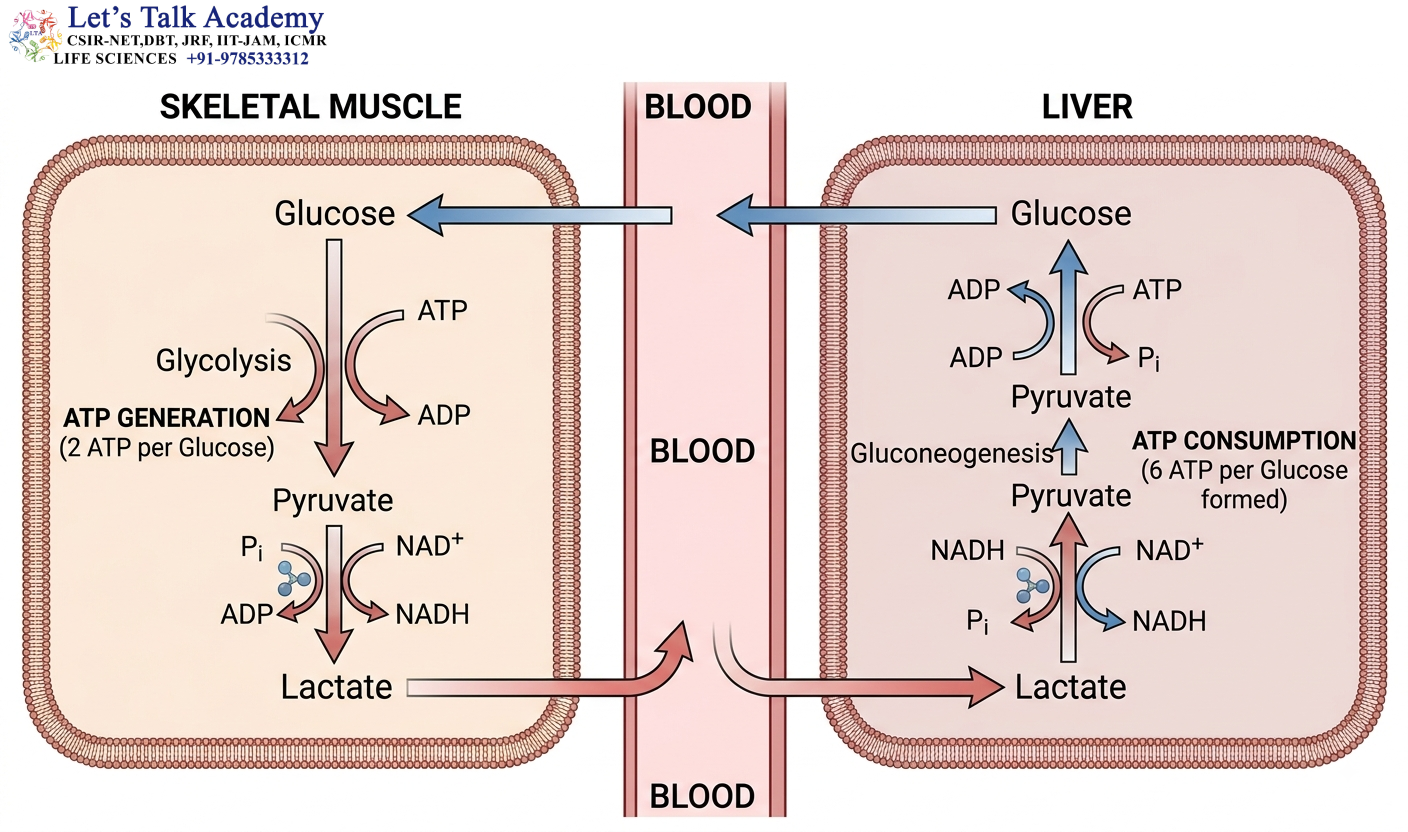
The Cori cycle connects anaerobic glycolysis in peripheral tissues with glucose production in the liver.
During intense exercise:
Muscle glucose → pyruvate → lactate
Lactate enters the bloodstream and is transported to the liver.
In the liver:
Lactate → Pyruvate → Glucose
The glucose can then return to muscle and be used for energy.
Simplified Cori Cycle
Muscle:
Glucose → Lactate
↓
Blood
↓
Liver:
Lactate → Glucose
↓
Blood
↓
Muscle
Significance
The Cori cycle:
- Allows continued glycolysis in muscle.
- Transfers lactate to the liver.
- Helps maintain blood glucose.
- Shifts part of the metabolic burden from muscle to liver.
The Cori cycle requires energy in the liver for gluconeogenesis.
Thus, the process involves metabolic cooperation between tissues.
34. Glycolytic Intermediates and Biosynthesis
Glycolysis is not only an ATP-producing pathway.
Several glycolytic intermediates serve as precursors for biosynthetic pathways.
Glucose-6-phosphate
Can contribute to:
- Pentose phosphate pathway.
- Glycogen synthesis.
Fructose-6-phosphate
Can contribute to:
- Amino sugar biosynthesis.
Dihydroxyacetone phosphate
Can contribute to:
- Glycerol-3-phosphate formation.
- Triacylglycerol synthesis.
3-Phosphoglycerate
Can contribute to:
- Serine biosynthesis.
Phosphoenolpyruvate
Can contribute to:
- Several biosynthetic pathways, particularly through its relationship with pyruvate and aromatic amino acid metabolism in organisms possessing the relevant pathways.
Pyruvate
Can contribute to:
- Alanine synthesis.
- Acetyl-CoA formation.
- Oxaloacetate formation.
- Other metabolic pathways.
Therefore, glycolysis is both:
Catabolic + Anabolic
Such pathways are often described as having amphibolic significance when they participate in both energy-yielding and biosynthetic metabolism.
35. Energetics of Glycolysis
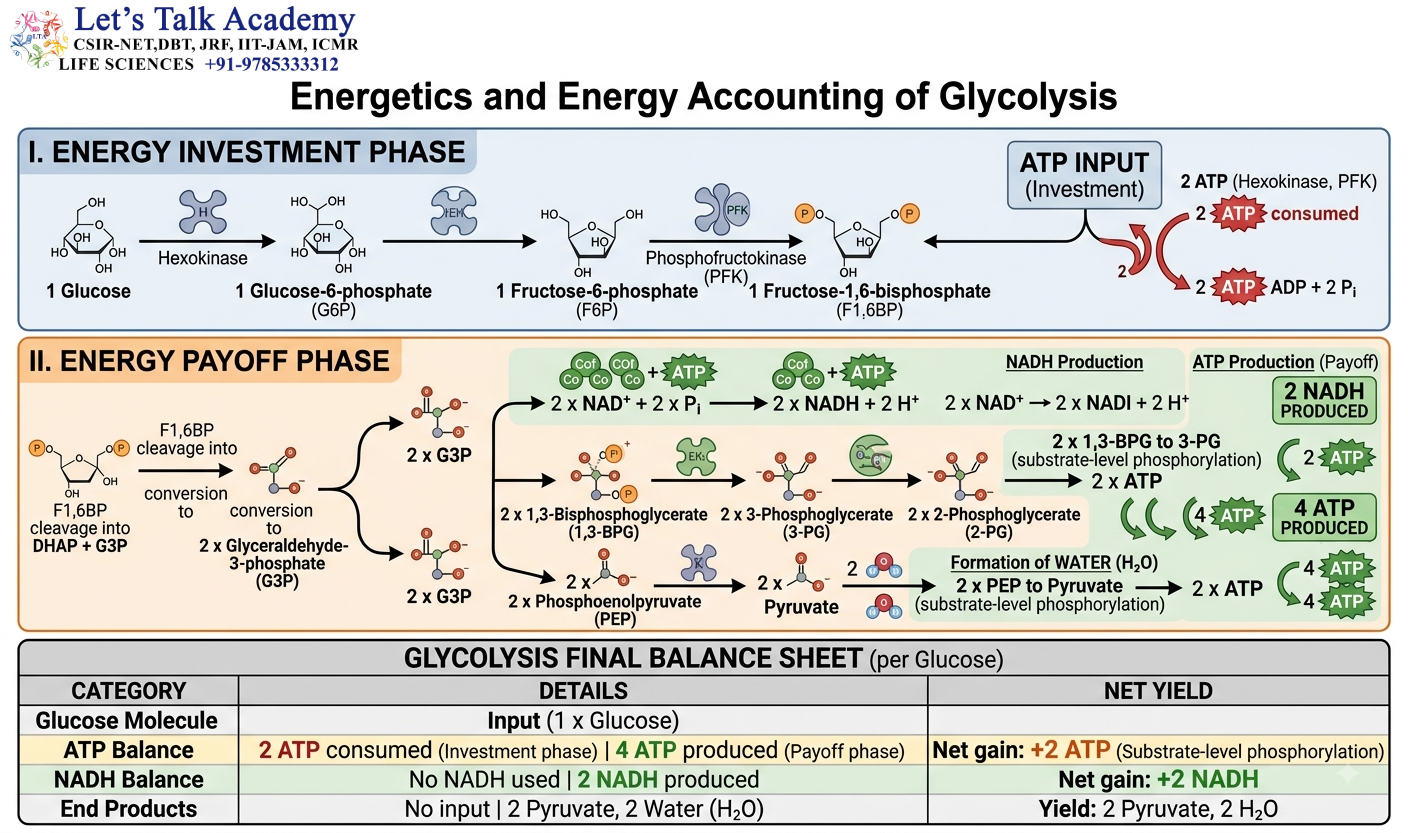
The energetic accounting of glycolysis.
ATP investment
2 ATP consumed
ATP production
4 ATP produced
Net ATP
2 ATP
NADH
2 NADH produced
Net yield under anaerobic conditions
When pyruvate is converted to lactate or ethanol and NAD+ is regenerated:
Net ATP = 2 ATP per glucose
No additional ATP is generated during fermentation itself.
36. ATP Yield Under Aerobic Conditions
The two NADH produced during glycolysis contain reducing equivalents that can contribute to mitochondrial ATP generation.
However, cytosolic NADH does not simply cross the inner mitochondrial membrane directly.
Its reducing equivalents are transferred through shuttle systems such as:
- Malate-aspartate shuttle.
- Glycerol-3-phosphate shuttle.
Therefore, the ATP yield associated with glycolytic NADH depends on the shuttle system and cellular context.
Do not memorize a single ATP value for glycolytic NADH without considering the shuttle system being specified.
37. Glycolysis in Different Tissues
Glycolysis is present in virtually all cells, but its importance varies among tissues.
Red Blood Cells
Mature mammalian RBCs lack mitochondria.
Therefore:
Glycolysis is their major pathway for ATP production.
RBC metabolism also produces 2,3-bisphosphoglycerate through the Rapoport-Luebering pathway.
Skeletal Muscle
During intense exercise:
- ATP demand rises rapidly.
- Oxygen delivery may become limiting.
- Glycolytic flux increases.
- Lactate formation increases.
Thus, anaerobic glycolysis can provide rapid ATP production.
Brain
The brain normally has a high demand for glucose-derived energy.
Glucose is extensively metabolized through glycolysis followed by mitochondrial oxidation under normal aerobic conditions.
Liver
The liver has an important role in:
- Glucose metabolism.
- Glycogen metabolism.
- Gluconeogenesis.
- Lactate processing.
- Regulation of blood glucose.
Liver glycolysis is strongly influenced by hormones such as insulin and glucagon.
Cancer Cells
Many cancer cells show increased glycolytic flux even when oxygen is available.
This phenomenon is commonly referred to as:
Aerobic glycolysis or the Warburg effect.
The increased glycolytic activity can support both ATP production and the generation of intermediates required for biosynthesis.
38. Important Inhibitors and Regulatory Molecules
Several compounds can influence glycolytic enzymes.
Iodoacetate
Inhibits:
Glyceraldehyde-3-phosphate dehydrogenase
It interferes with the sulfhydryl group required for enzyme function.
Fluoride
Inhibits:
Enolase
This property has historically been useful in preserving blood glucose samples by reducing glycolytic consumption of glucose by blood cells.
Arsenate
Can interfere with the GAPDH/phosphoglycerate kinase sequence by substituting for inorganic phosphate, allowing formation of an unstable arsenate-containing intermediate.
This can reduce ATP generation at the phosphoglycerate kinase step.
Important Regulatory Molecules
ATP: generally signals high energy.
AMP: signals low energy and activates glycolysis.
Citrate: indicates abundant biosynthetic/oxidative fuel and inhibits PFK-1.
Fructose-2,6-bisphosphate: strongly activates PFK-1.
Fructose-1,6-bisphosphate: activates pyruvate kinase through feed-forward regulation.
39. Irreversible Steps of Glycolysis
The three major physiologically irreversible reactions are:
Reaction 1
Glucose → Glucose-6-phosphate
Enzyme:
Hexokinase/Glucokinase
Reaction 3
Fructose-6-phosphate → Fructose-1,6-bisphosphate
Enzyme:
PFK-1
Reaction 10
PEP → Pyruvate
Enzyme:
Pyruvate kinase
These reactions are important because gluconeogenesis requires different enzymes to bypass them.
40. Why PFK-1 Is the Major Regulatory Step
PFK-1 controls the conversion of fructose-6-phosphate into fructose-1,6-bisphosphate.
This reaction is:
- Highly regulated.
- Essentially irreversible in cells.
- Closely linked to cellular energy status.
- Located at a major control point of glycolytic flux.
PFK-1 therefore functions as a metabolic decision point.
When the cell requires ATP:
AMP/ADP ↑ → PFK-1 activity ↑ → glycolysis ↑
When energy is abundant:
ATP ↑ → PFK-1 activity ↓ → glycolysis ↓
41. Feed-Forward Regulation
Feed-forward regulation occurs when an upstream metabolite activates an enzyme later in the pathway.
In glycolysis:
Fructose-1,6-bisphosphate → activates pyruvate kinase
This helps coordinate glycolytic flux.
If the pathway has successfully passed the PFK-1 step and fructose-1,6-bisphosphate accumulates, activation of pyruvate kinase helps promote downstream conversion toward pyruvate.
42. Glycolysis and Gluconeogenesis
Glycolysis and gluconeogenesis are not simply the same pathway operating backward.
The three irreversible glycolytic steps are bypassed during gluconeogenesis by different enzymes.
Glycolysis
Glucose → Pyruvate
Gluconeogenesis
Pyruvate → Glucose
The opposing pathways are carefully regulated to avoid futile cycling.
A high level of glycolysis generally does not occur simultaneously with maximal gluconeogenesis in the same liver cell under the same hormonal conditions.
43. Glycolysis and the Pentose Phosphate Pathway
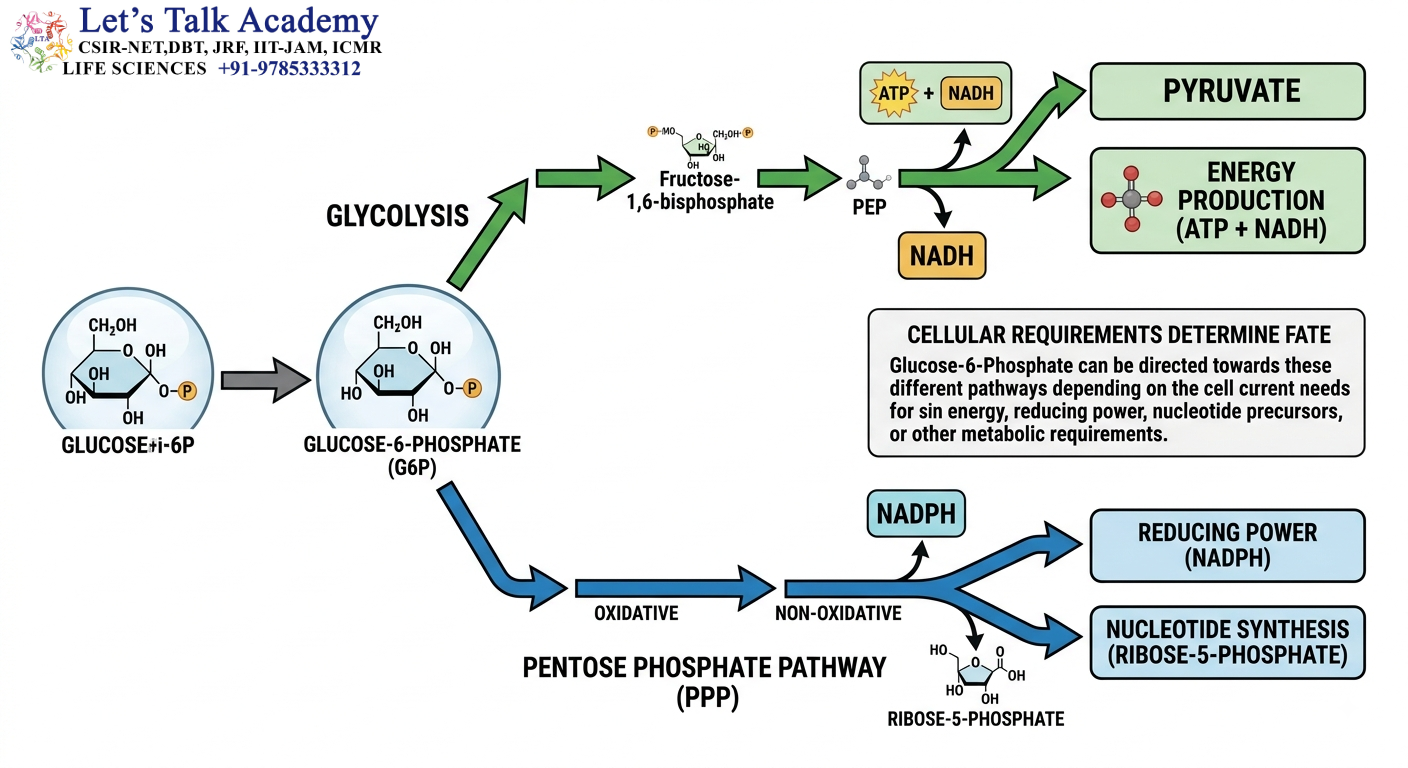
Glucose-6-phosphate represents an important metabolic branch point.
It can enter:
Glycolysis
or
Pentose phosphate pathway
The pentose phosphate pathway generates:
- NADPH.
- Ribose-5-phosphate.
Therefore, cellular glucose metabolism is distributed according to the cell’s requirements for:
- ATP.
- Reducing power.
- Nucleotide synthesis.
- Biosynthetic precursors.
44. Glycolytic Control According to Cellular Energy Status
A useful way to understand glycolysis is to consider the ATP/AMP ratio.
High ATP
Indicates:
Energy is abundant
Therefore:
PFK-1 activity decreases → glycolysis decreases
High AMP
Indicates:
Energy is low
Therefore:
PFK-1 activity increases → glycolysis increases
This is an example of metabolic feedback that connects energy demand with nutrient utilization.
45. Glycolysis Does Not Require Oxygen
One of the most common misconceptions is:
“Glycolysis is an aerobic pathway.”
This statement is incorrect.
Glycolysis itself does not require molecular oxygen.
The important requirement is the availability of:
NAD+
Under aerobic conditions, NADH can ultimately contribute its reducing equivalents to mitochondrial respiration.
Under anaerobic conditions, NADH is used to reduce pyruvate or another acceptor so that:
NAD+ is regenerated.


