












































































The mismatch-repair activity of E. coil repairs mis incorporated bases which is not removed by the proofreading activity of DNA polymerase. However, while doing so, it has to decide which strand […]
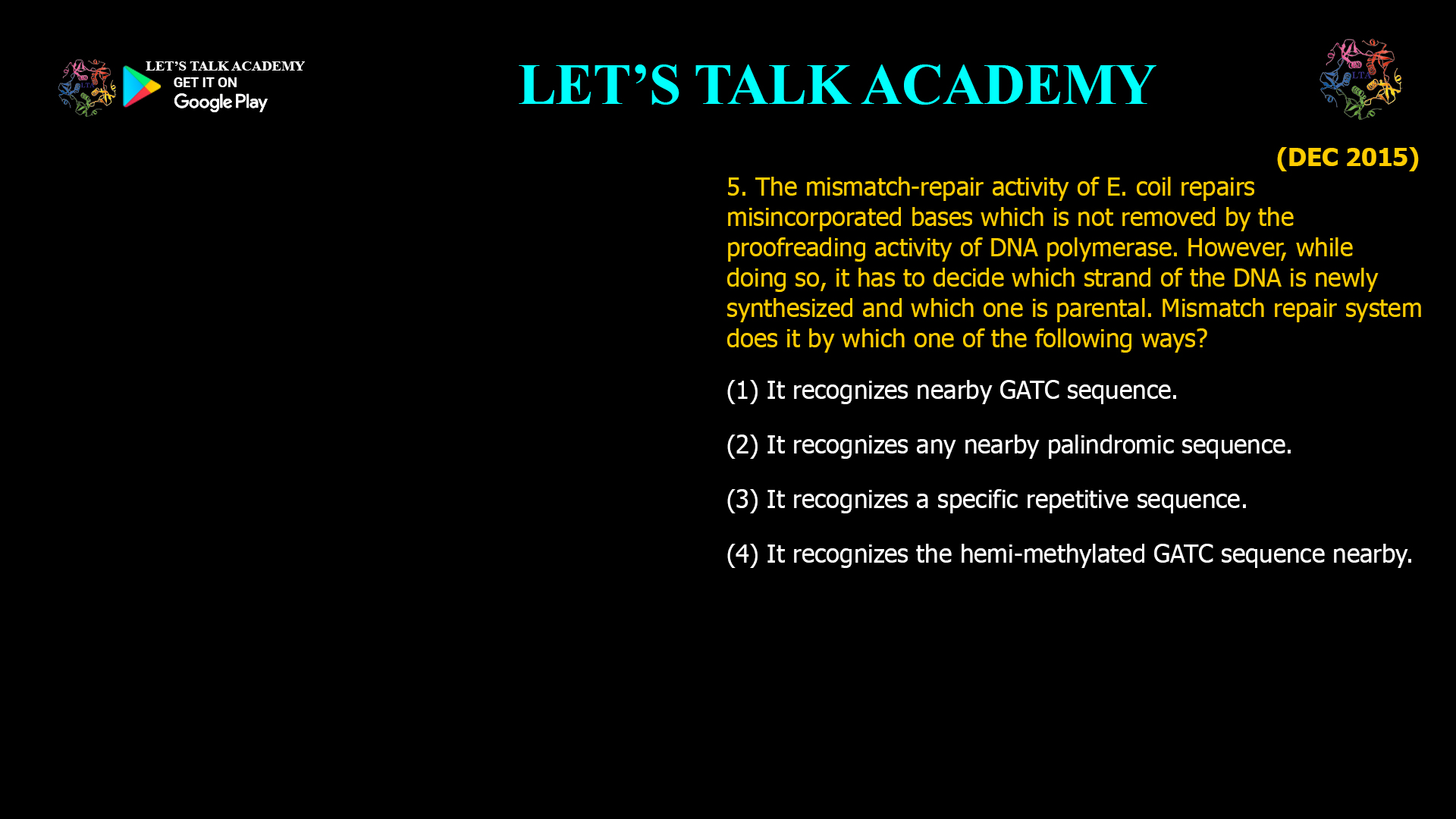

The mismatch-repair activity of E. coil repairs mis incorporated bases which is not removed by the proofreading activity of DNA polymerase. However, while doing so, it has to decide which strand […]

Semi-conservative mode of DNA replication in eukaryotes can be experimentally demonstrated by using (1) BromodU labeling(2) S35 labelling (3) In situ hybridization (4) G-banding Introduction DNA replication is a […]

4.The basic difference between direct repair and base excision repair is (1) Direct repair restores original structure of altered nucleotide without replacement, while in base excision repair the section of […]
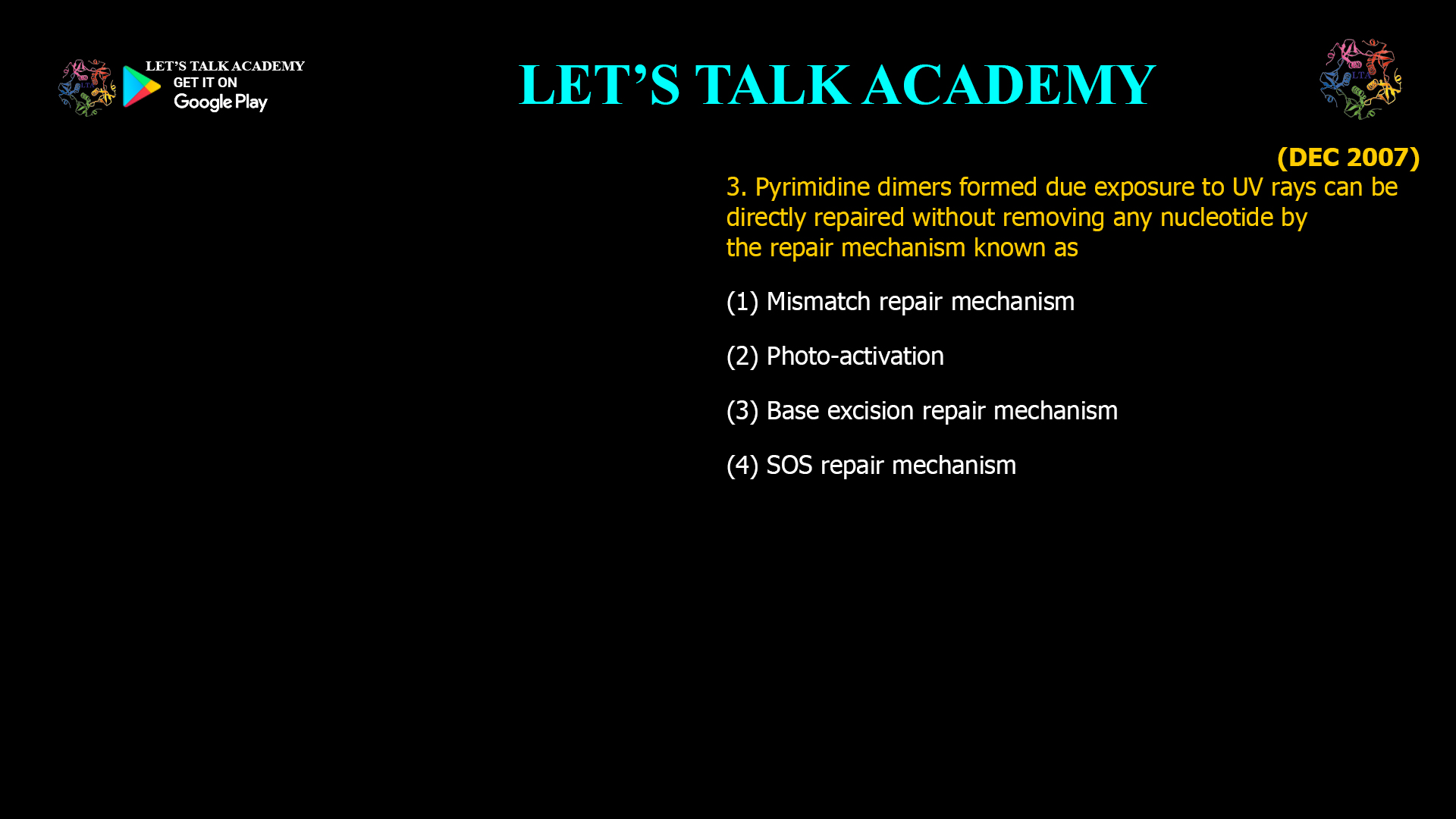
Pyrimidine dimers formed due exposure to UV rays can be directly repaired without removing any nucleotide by the repair mechanism known as (1) Mismatch repair mechanism (2) Photo-activation (3) Base […]

The semi-conservative nature of DNA replication was established by Meselson and Stahl in their classic experiment with bacteria. They grew bacteria in N15-NH4Cl containing medium, washed and then incubated in […]

UV-Binduced damage of DNA by formation ofpyrimidine dimmers are repaired by photolyase on absorbing (1) UV -C light (2) Green light (3) Blue light (4) IR light How Photolyase Repairs […]

Which enzyme is involved in direct repair mechanismagainst ultraviolet-induced DNA damage? (1) RNA polymerase (2) Uvr ABC (3) Restriction endonuclease (4) Photolyase Correct Answer: Photolyase (Option 4) […]
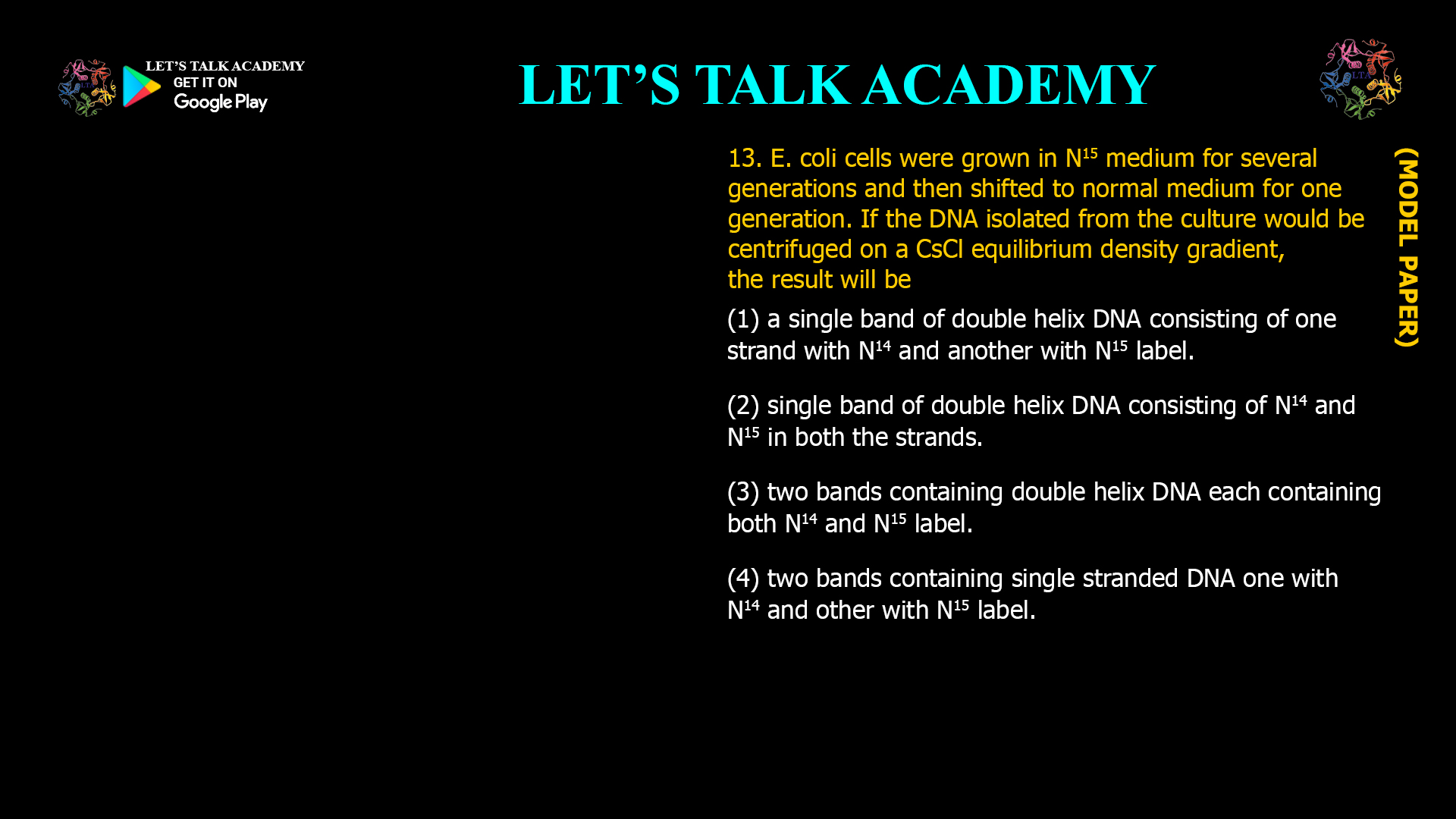
E. coli cells were grown in N15 medium for several generations and then shifted to normal medium for one generation. If the DNA isolated from the culture would be centrifuged […]
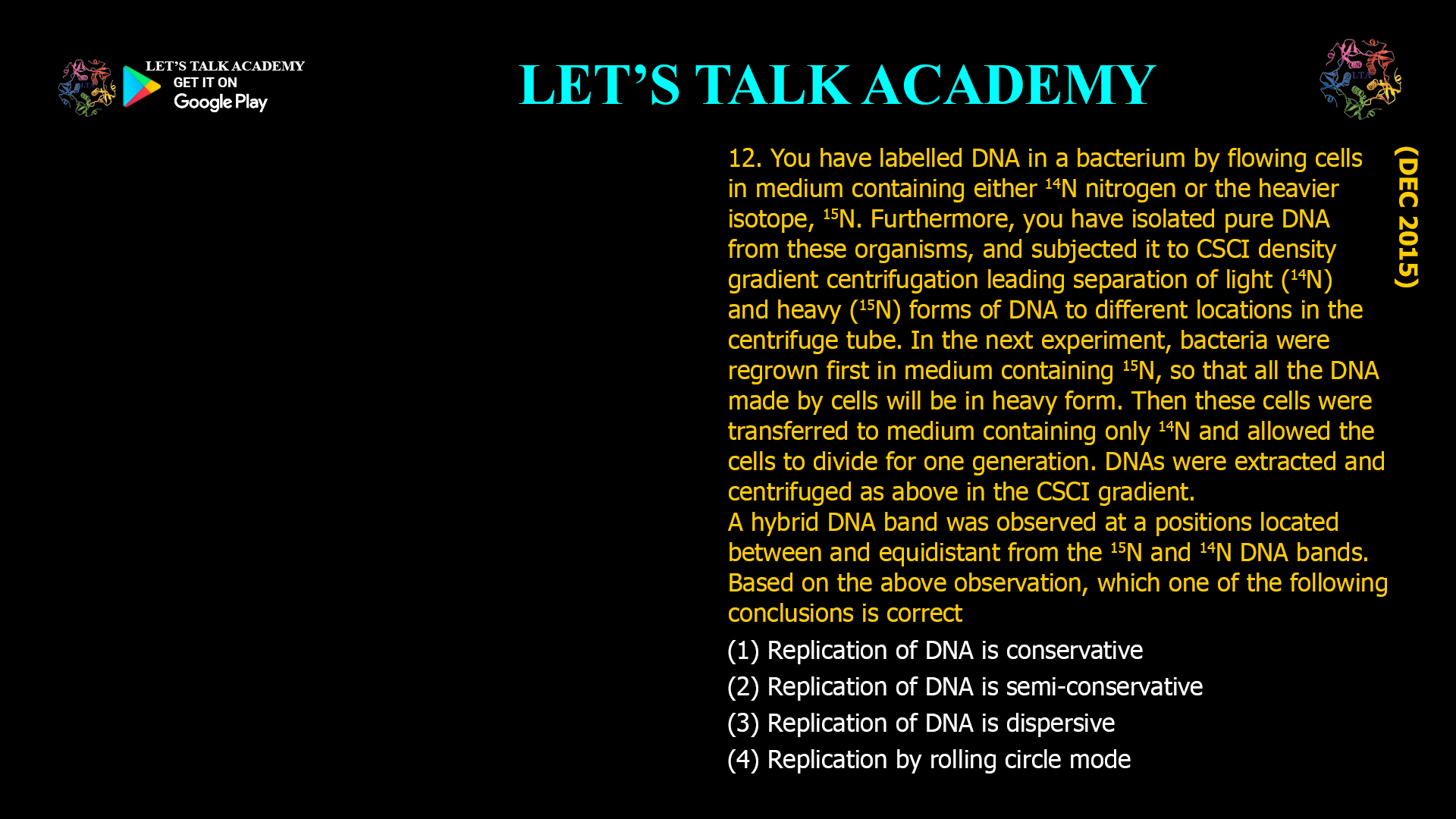
You have labelled DNA in a bacterium by flowing cells in medium containing either 14N nitrogen or the heavier isotope, 15N. Furthermore, you have isolated pure DNA from these organisms, […]
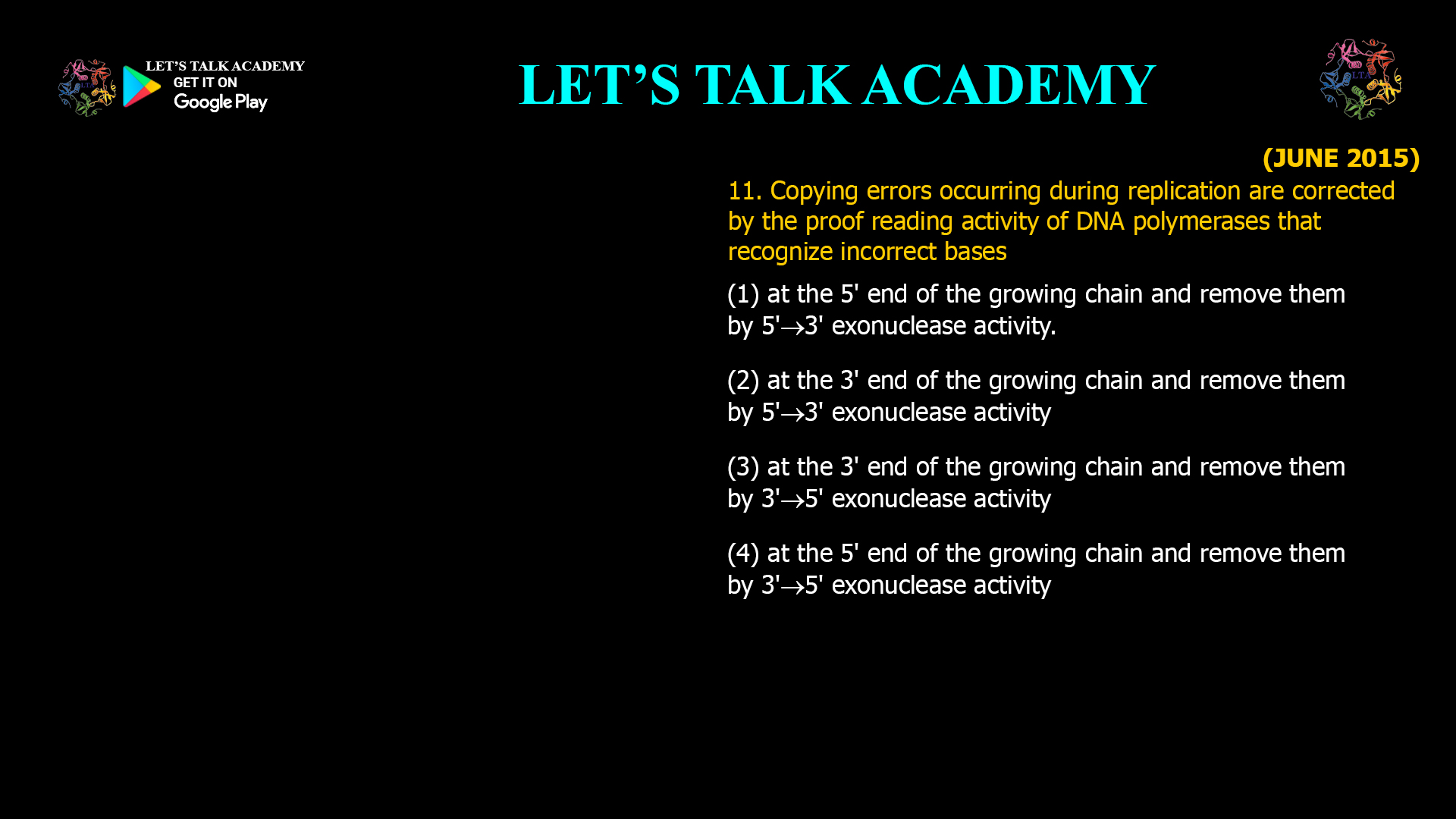
11. Copying errors occurring during replication are corrected by the proof reading activity of DNA polymerases that recognize incorrect bases (1) at the 5′ end of the growing chain and […]


