




































































2.RBC obtain their energy from- (1) Mitochondria (2) Fatty acid oxidation (3) Anaerobic glycolysis (4) Glyoxylate cycle How Do Red Blood Cells Obtain Their Energy? Exploring the Role of Anaerobic […]
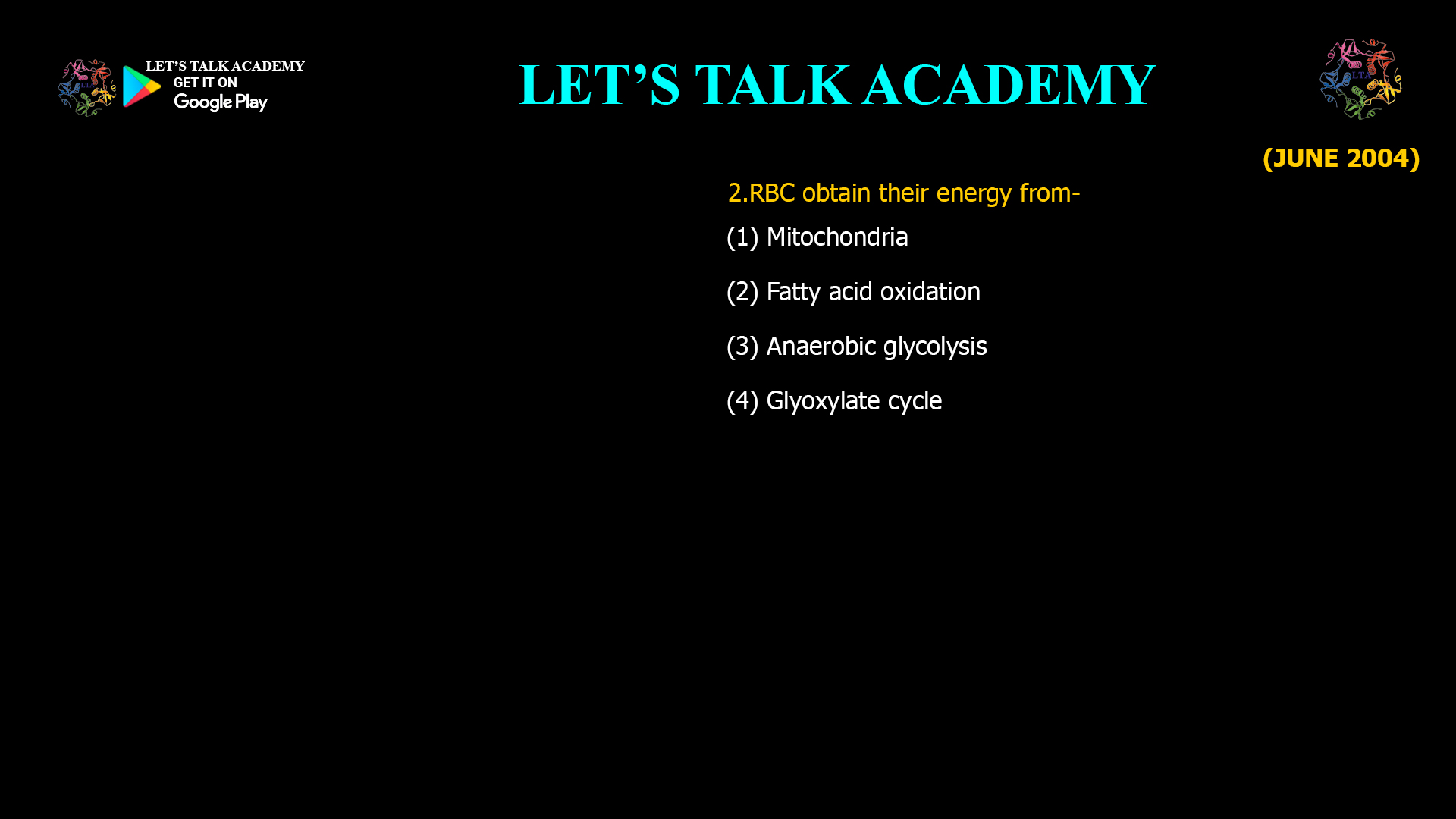

2.RBC obtain their energy from- (1) Mitochondria (2) Fatty acid oxidation (3) Anaerobic glycolysis (4) Glyoxylate cycle How Do Red Blood Cells Obtain Their Energy? Exploring the Role of Anaerobic […]
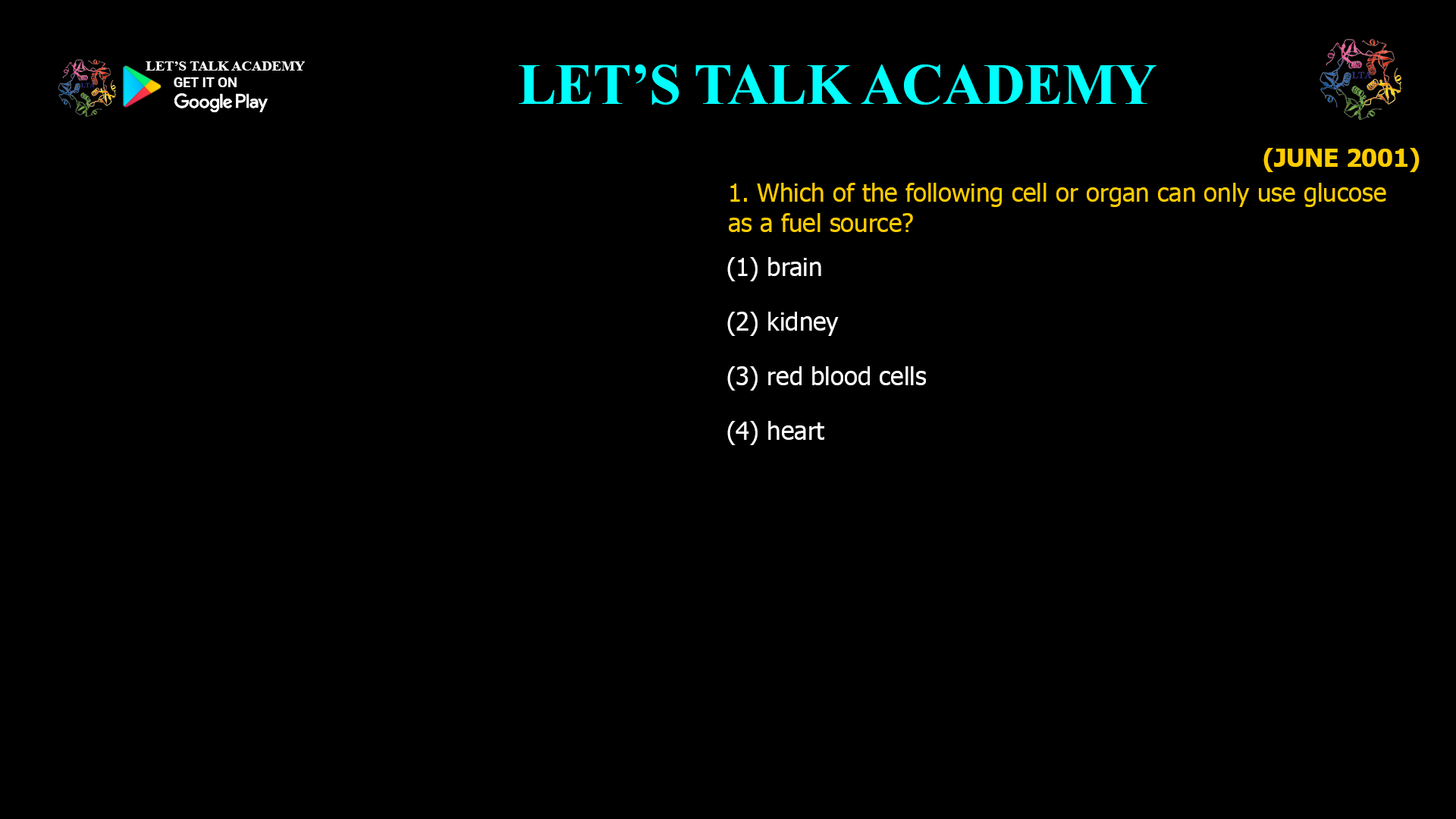
Which of the following cell or organ can only use glucose as a fuel source? (1) brain (2) kidney (3) red blood cells (4) heart Energy metabolism varies widely […]
26. The F1 subunit of F0F1 ATP synthase synthesizes ATP from ADP in the mitochondrial inner membrane. Purified F1 subunit hydrolyses ATP to ADP. Which one of the following reasons […]
25. Which of the following represents the most oxidized form of carbon? (1) HCOOH (2) HCHO (3) CH3OH (4) CO2 Carbon exhibits a range of oxidation […]
24. At which one of the following electron transport chain complexes does Antimycin A typically inhibit the respiratory chain? (1) Complex I (2) Complex II (3) Complex III (4) Complex […]
23. Cyanide, a chemical warfare agent, is toxic because it: A. binds to the heme a3 in mitochondrial cytochrome C oxidase (in complex IV) B. inhibits electron transport and thus […]

22. Match the chemical agents that interfere in oxidative phosphorylation process with their respective mode of action. Column I Column II (A) Antimycin A (i) Inhibits Fo component of ATP […]
21. Which statement is NOT correct regarding brown fat? (1) It is present in negligible amount in new born baby (2) It produces little ATP (3) It produces more heat […]

20. A practical class was going on where the students were demonstrating ATP synthesis in vitro using active mitochondria. Some students added one of the following to their tubes A. […]
19. Rotenone is an inhibitor of the electron transport chain. The addition of rotenone to cells results in which of the following? (1) Generation of mitochondrial reactive oxygen species and […]


