





































































According to Hamilton’s rule, ‘r’ is the coefficient of relatedness between two interacting individuals, ‘B’ is the benefit to the recipient and ‘C’ is the cost of the donor. Which […]
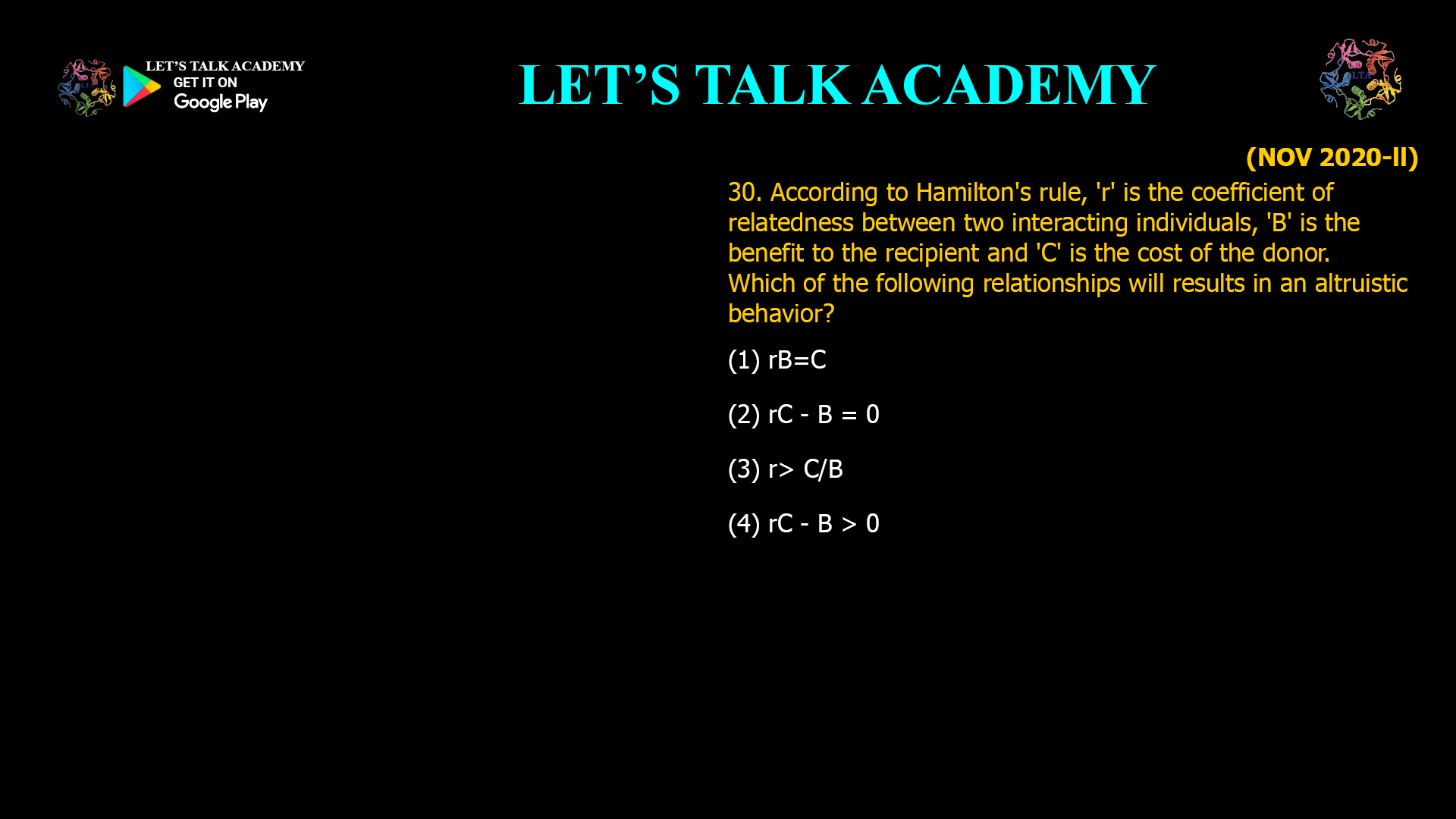

According to Hamilton’s rule, ‘r’ is the coefficient of relatedness between two interacting individuals, ‘B’ is the benefit to the recipient and ‘C’ is the cost of the donor. Which […]

In an altruistic act, if a donor sacrifices ‘C’ offspring which helps the recipient to gain ‘B’ offspring and the donor is related to the recipient by a coefficient γ, […]

The correct expression of Hamilton rule for the evaluation of altruism is [C = the cost of a behavioral act to the actor, b = the benefit of that act […]

Natural selection is primarily based on fitness, which is dependent on maximum number of offspring laid for next generation. But at present new evolutionary concept is added in animal behaviour […]

An individual’s ability to pass down their genes—both through their offspring and the offspring of close relatives with shared genes. This is termed as (1) Inclusive fitness (2) Darwinian fitness […]
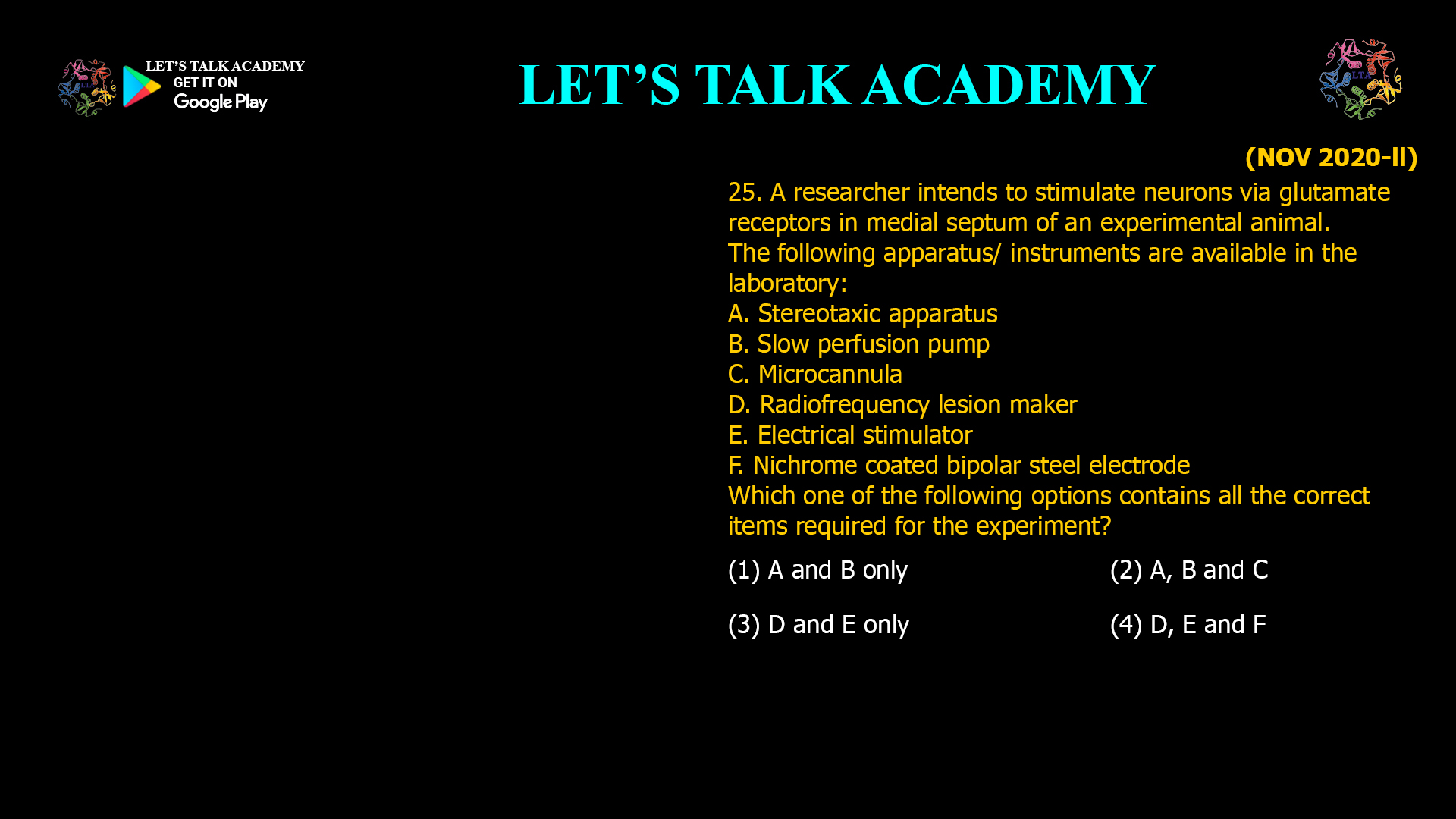
A researcher intends to stimulate neurons via glutamate receptors in medial septum of an experimental animal. The following apparatus/ instruments are available in the laboratory: A. Stereotaxic apparatus B. Slow […]

The behavior of a leopard killing an antelope or a deer grazing on spring grass for food is referred to as (1) competition (2) interaction (3) predation (4) mutualism […]

Consider a predator species foraging for prey in a habitat, where there are two prey species A and B. Assume the foraging predator can choose from a high-value prey A […]

In habitat ‘A’ pike cichlid fishes preferentially feeds on large adult guppies, while in habitat ‘B’ killer fish feeds on small, juvenile guppies. What will be effect if experimentally guppies […]

A study tested the importance of learning mechanisms in the development of antipredator escape responses in tadpoles of a frog species. Tadpoles hatched from eggs in the lab were kept […]


