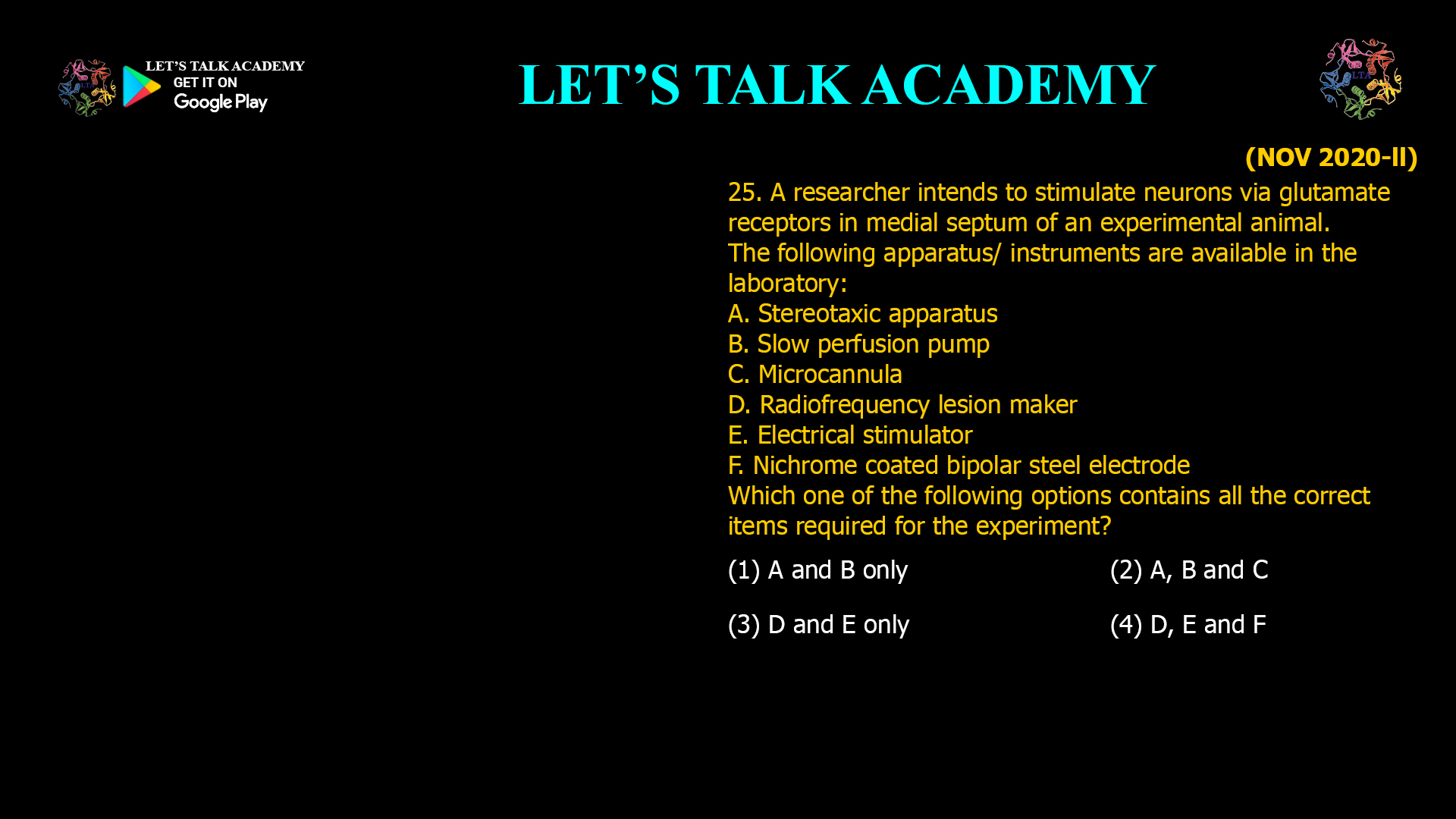
- A researcher intends to stimulate neurons via glutamate receptors in medial septum of
an experimental animal. The following apparatus/ instruments are available in the laboratory:
A. Stereotaxic apparatus
B. Slow perfusion pump
C. Microcannula
D. Radiofrequency lesion maker
E. Electrical stimulator
F. Nichrome coated bipolar steel electrode
Which one of the following options contains all the correct items required for the experiment?
(1) A and B only (2) A, B and C
(3) D and E only (4) D, E and FKey Steps in Stimulating Glutamate Receptors
Stimulating glutamate receptors in the medial septum typically involves the microinfusion of glutamate or glutamatergic agonists directly into the target area. This requires:
-
Accurate localization of the medial septum in the animal’s brain.
-
Controlled delivery of small volumes of solution.
-
A minimally invasive method to reach the target site.
Essential Apparatus and Their Functions
Here’s what each relevant instrument does:
-
Stereotaxic apparatus: This device is crucial for precisely positioning the animal’s head and guiding the placement of cannulas or electrodes into specific brain regions, such as the medial septum.
-
Slow perfusion pump: This pump allows for the controlled infusion of solutions (like glutamate) at a slow, steady rate, ensuring accurate dosing and minimizing tissue damage.
-
Microcannula: A fine tube used to deliver the solution directly into the brain region of interest.
Why Other Instruments Are Not Required
-
Radiofrequency lesion maker, electrical stimulator, and nichrome-coated bipolar steel electrode are primarily used for creating lesions or delivering electrical stimulation, not for chemical stimulation via glutamate receptors. These are not suitable for microinfusion of glutamate.
Correct Combination for Glutamate Receptor Stimulation
To stimulate neurons via glutamate receptors in the medial septum, the researcher needs:
-
Stereotaxic apparatus (A)
-
Slow perfusion pump (B)
-
Microcannula (C)
This combination allows for the precise and controlled delivery of glutamate directly to the medial septum, ensuring specific activation of glutamate receptors without unnecessary tissue damage or off-target effects.
Conclusion
For stimulating glutamate receptors in the medial septum of an experimental animal, the correct set of instruments is:
(2) A, B and C
This ensures accurate targeting, controlled infusion, and effective stimulation of the desired neural population.
-