




























































































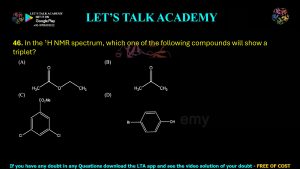













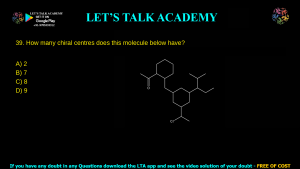


(DEC 2013 GU) 78. You have isolated spleen cells and purified your desired enzyme from the spleen cell extract by a sequence of steps involving ammonium sulfate fractionation and gel […]
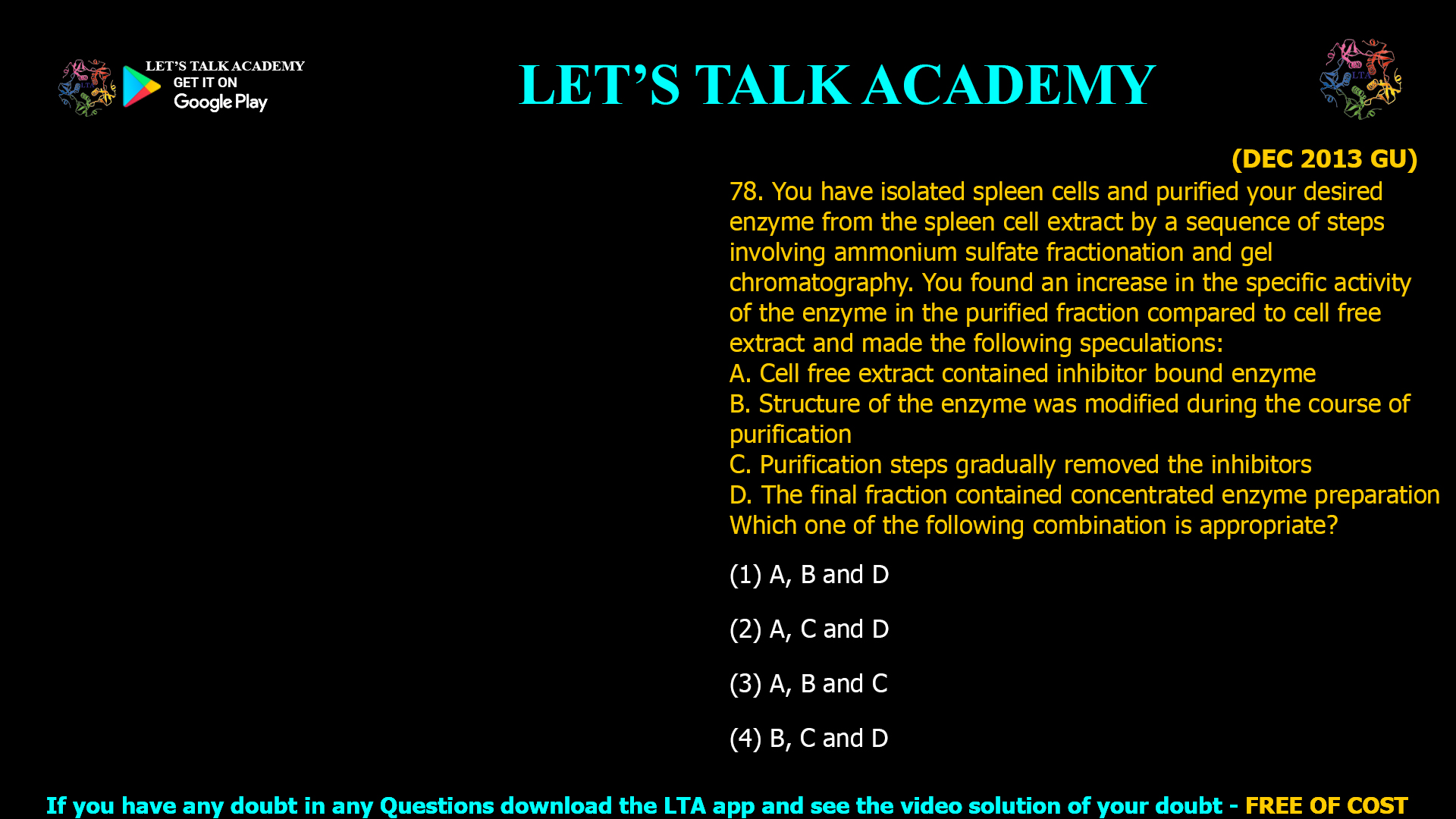

(DEC 2013 GU) 78. You have isolated spleen cells and purified your desired enzyme from the spleen cell extract by a sequence of steps involving ammonium sulfate fractionation and gel […]
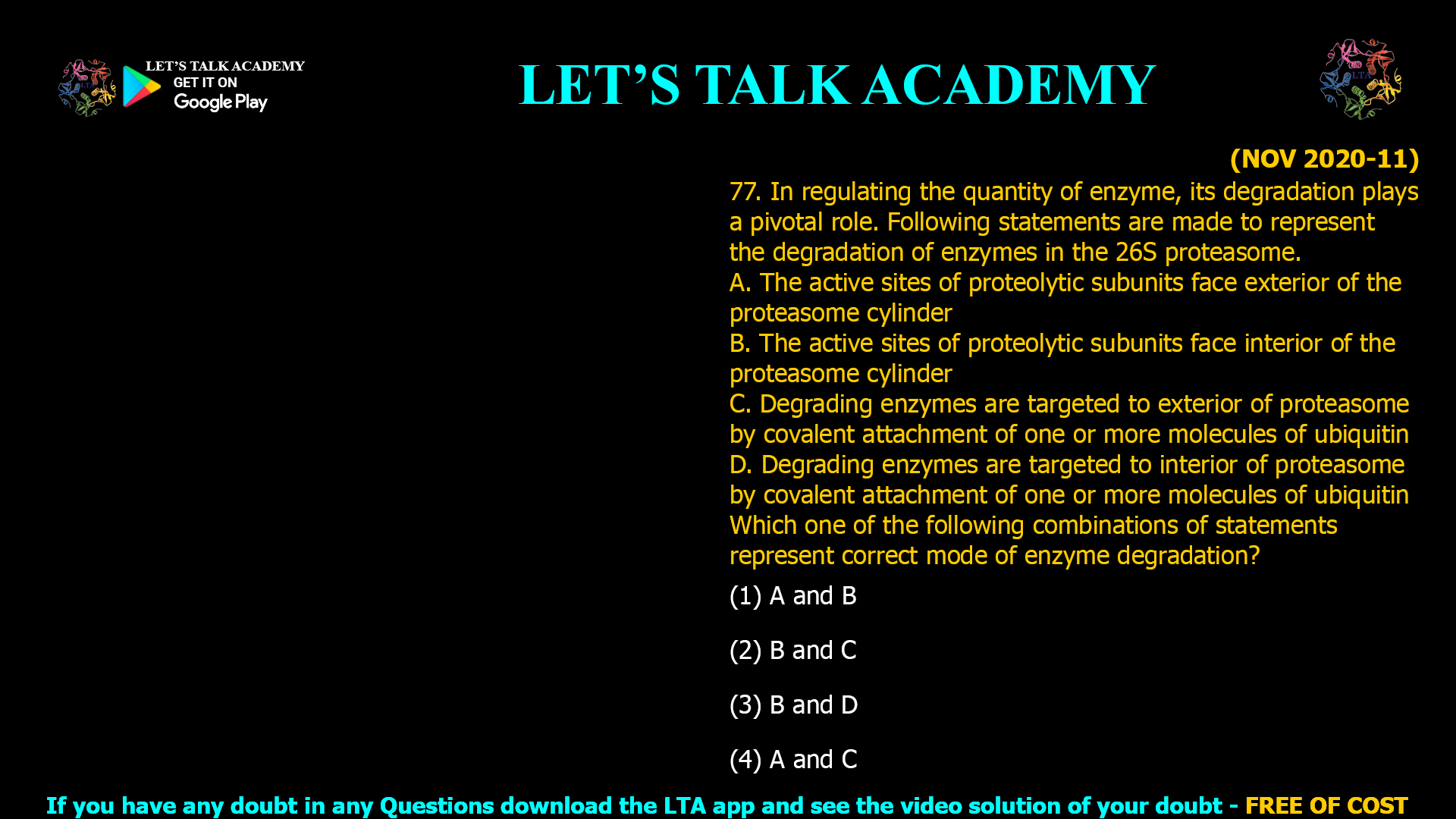
(NOV 2020-11) 77. In regulating the quantity of enzyme, its degradation plays a pivotal role. Following statements are made to represent the degradation of enzymes in the 26S proteasome. A. […]
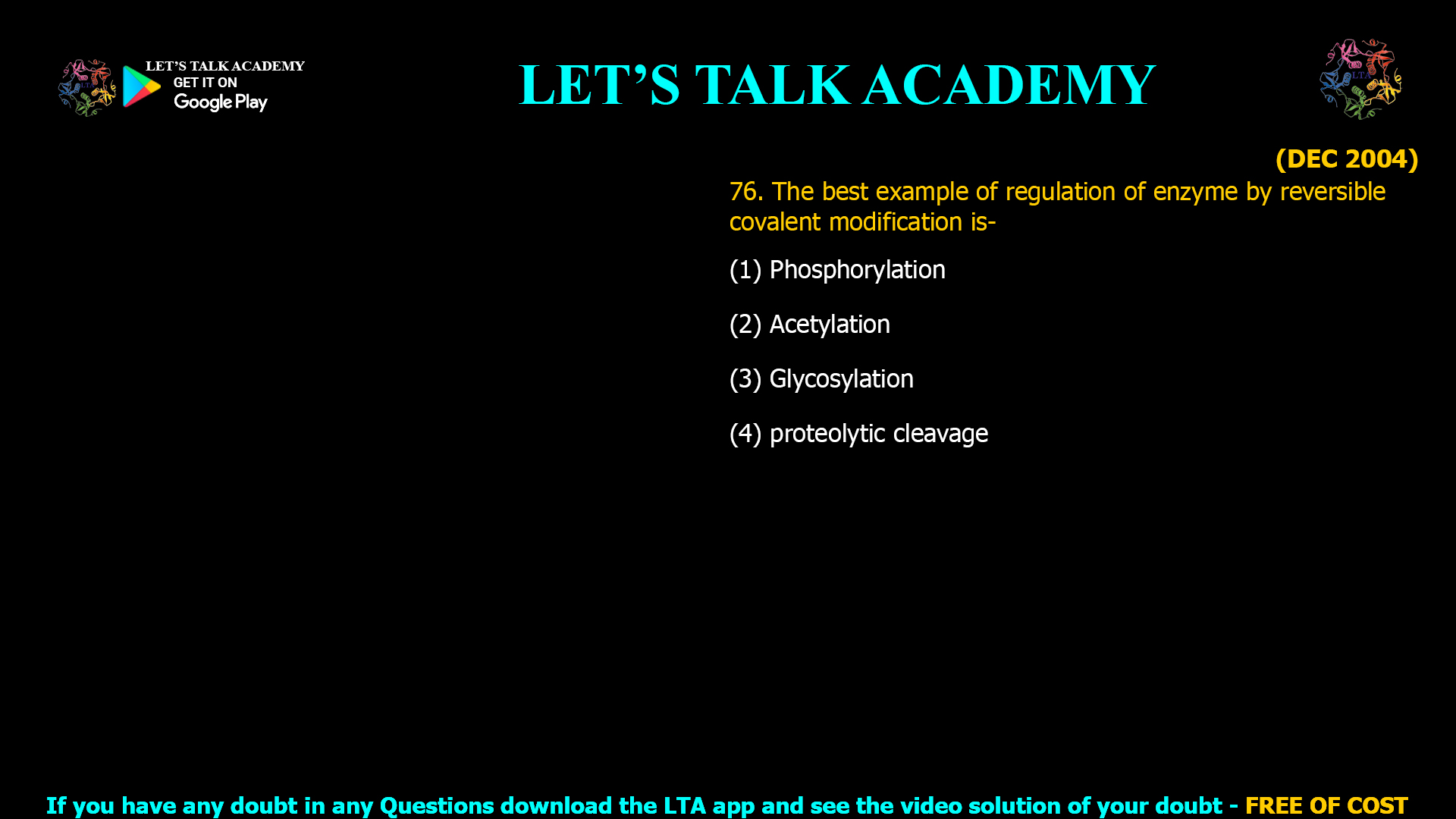
(DEC 2004) 76. The best example of regulation of enzyme by reversible covalent modification is- (1) Phosphorylation (2) Acetylation (3) Glycosylation (4) proteolytic cleavage The correct answer is (1) Phosphorylation. Introduction […]

The correct answer is (3) Column A-ii, Column B-ii. Introduction Dixon plots are essential tools in enzyme kinetics, allowing researchers to analyze and visualize enzyme inhibition data accurately. The choice of […]

The correct answer is Introduction Quantitative analysis of enzyme inhibition is essential for both basic biochemistry research and drug development. The Dixon plot is a classic graphical method used to […]

The correct answer is (3) Non-competitive inhibitor. Introduction Enzyme kinetics is foundational for understanding metabolic regulation and drug mechanisms. Identifying different inhibition types is pivotal when analyzing altered Lineweaver-Burk plots or […]
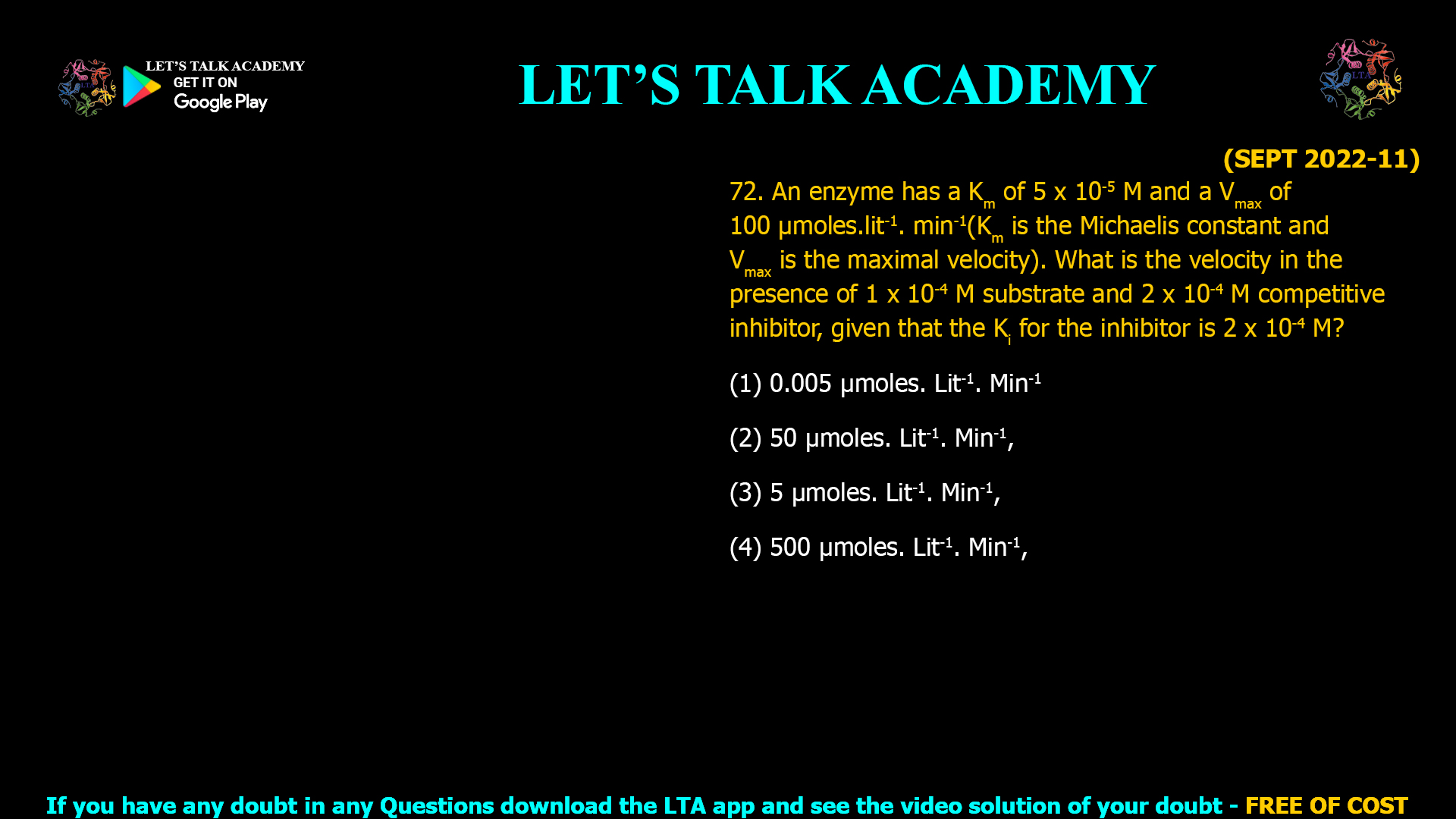
(SEPT 2022-11) 72. An enzyme has a Km of 5 x 10⁻⁵ M and a Vmax of 100 µmoles.lit-1. min-1(Km is the Michaelis constant and Vmax is the maximal velocity). […]
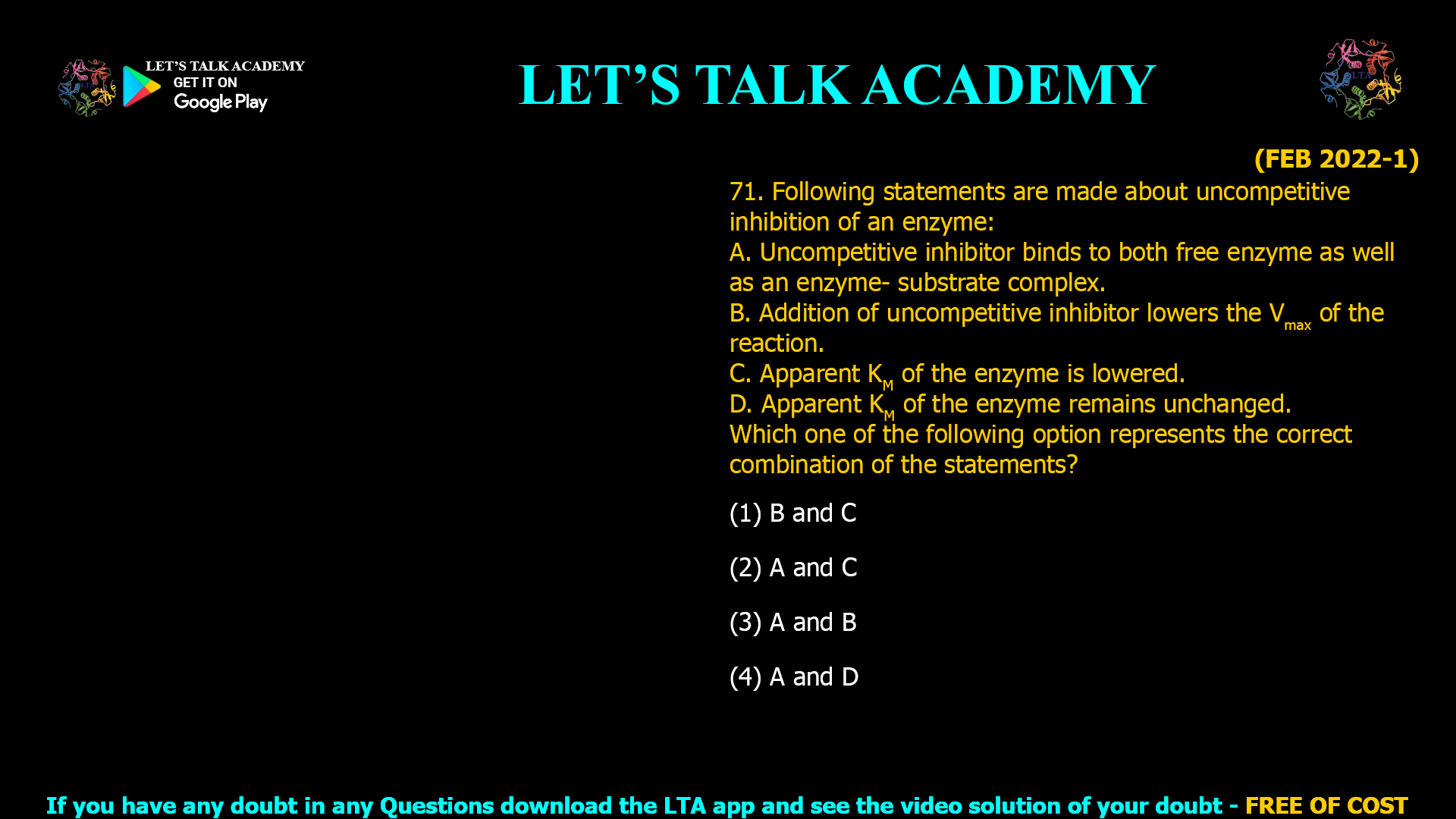
(FEB 2022-1) 71. Following statements are made about uncompetitive inhibition of an enzyme: A. Uncompetitive inhibitor binds to both free enzyme as well as an enzyme- substrate complex. B. Addition […]
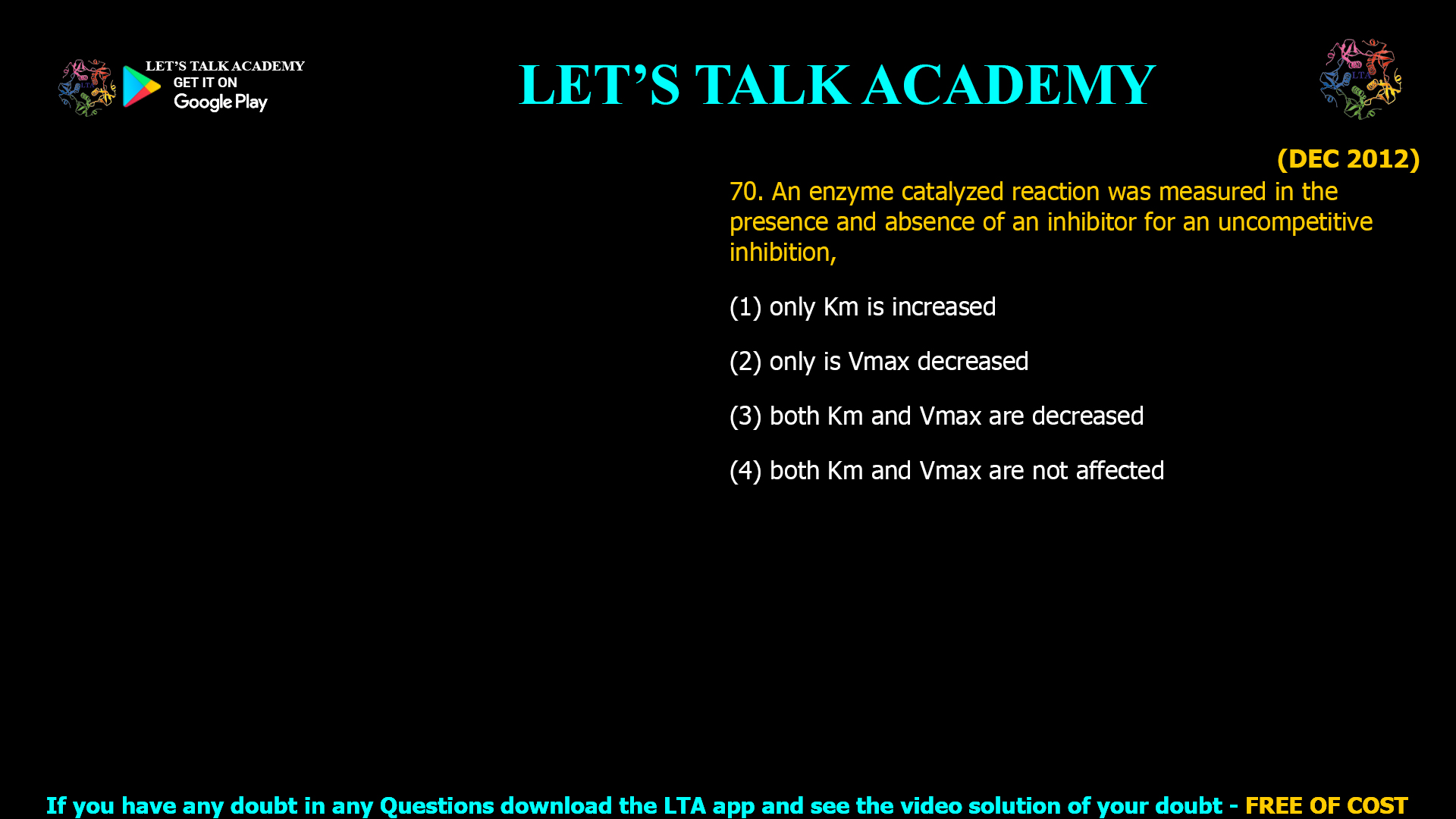
(DEC 2012) 70. An enzyme catalyzed reaction was measured in the presence and absence of an inhibitor for an uncompetitive inhibition, (1) only Km is increased (2) only is Vmax […]
(DEC 2013 GU) 69. If the product of an enzyme binds to the enzyme- substrate complex to exhibit its activity through a decrease in both Km and Vmax, this type […]


