
1. Introduction
All living organisms are composed of cells, and the cell is considered the fundamental structural and functional unit of life. Although cells share several basic characteristics, they differ considerably in their organization, size, genetic material, internal structures, and mechanisms of reproduction.
On the basis of cellular organization, organisms can broadly be divided into two major categories: prokaryotes and eukaryotes.
Prokaryotic cells are structurally simpler and generally smaller. Their genetic material is not enclosed within a membrane-bound nucleus. Bacteria and archaea are the two major groups of prokaryotic organisms.
Eukaryotic cells are generally more complex and contain a membrane-bound nucleus. They also possess several membrane-bound organelles that perform specialized functions. Animals, plants, fungi, and protists are composed of eukaryotic cells.
The distinction between prokaryotes and eukaryotes is one of the most fundamental concepts in cell biology because it explains major differences in genome organization, gene expression, cellular metabolism, cell division, and intracellular transport.
1.1 Meaning of Prokaryotic Cell
The term prokaryote is derived from Greek words meaning “before nucleus.” A prokaryotic cell does not contain a membrane-bound nucleus.
Its DNA is located in a region of the cytoplasm called the nucleoid.
Prokaryotic cells generally lack membrane-bound organelles such as mitochondria, endoplasmic reticulum, Golgi apparatus, and lysosomes.
However, the absence of membrane-bound organelles does not mean that prokaryotes are biologically simple. They possess highly organized molecular systems that allow them to carry out metabolism, DNA replication, transcription, translation, movement, environmental sensing, and cellular division.
1.2 Meaning of Eukaryotic Cell
The term eukaryote refers to organisms whose cells contain a true, membrane-bound nucleus.
The nucleus separates the genetic material from the cytoplasm.
Eukaryotic cells also contain specialized membrane-bound organelles, including:
- mitochondria,
- endoplasmic reticulum,
- Golgi apparatus,
- lysosomes,
- peroxisomes,
- vacuoles.
Plant cells additionally contain chloroplasts and other plastids.
This compartmentalization allows different biochemical processes to occur in specialized regions of the cell.
2. General Characteristics of Prokaryotes
2.1 Cellular Organization
Prokaryotes are generally unicellular organisms, although some species form colonies, filaments, or multicellular-like structures.
A typical prokaryotic cell contains:
- plasma membrane,
- cytoplasm,
- nucleoid,
- ribosomes,
- cell wall in most groups,
- various surface structures.
2.2 Genetic Material
The main chromosome of many prokotes is a circular DNA molecule.
However, genome organization varies among different prokaryotic groups.
In addition to the main chromosome, some prokaryotes contain smaller DNA molecules called plasmids.
2.3 Ribosomes
Prokaryotic cells contain 70S ribosomes, composed of 30S and 50S subunits.
These ribosomes are responsible for protein synthesis.
2.4 Cell Wall
Most bacteria possess a cell wall containing peptidoglycan.
Archaea do not contain bacterial-type peptidoglycan. Their cell envelopes have distinct molecular compositions.
The cell wall provides:
- structural support,
- protection,
- resistance to osmotic pressure,
- maintenance of cell shape.
2.5 Reproduction
Prokaryotes commonly reproduce through binary fission.
During binary fission, the chromosome is replicated, the cell elongates, and the cell divides into two daughter cells.
3. General Characteristics of Eukaryotes
3.1 Cellular Organization
Eukaryotic cells may exist as unicellular or multicellular organisms.
Examples of unicellular eukaryotes include many protists and yeasts.
Multicellular eukaryotes include:
- animals,
- plants,
- fungi,
- many algae.
3.2 Nucleus
The defining feature of eukaryotic cells is the presence of a membrane-bound nucleus.
The nucleus contains most of the cellular DNA and is surrounded by the nuclear envelope.
The nuclear envelope contains nuclear pores that regulate movement of molecules between the nucleus and cytoplasm.
3.3 Membrane-Bound Organelles
Eukaryotic cells possess specialized organelles.
Each organelle performs specific functions.
For example:
Mitochondria → ATP production
Endoplasmic reticulum → protein and lipid synthesis
Golgi apparatus → modification and sorting of molecules
Lysosomes → intracellular digestion
Peroxisomes → oxidative reactions
Chloroplasts → photosynthesis in plants and algae
3.4 Ribosomes
Eukaryotic cytoplasmic ribosomes are generally 80S, consisting of 40S and 60S subunits.
However, mitochondria and chloroplasts contain ribosomes that are more similar in several respects to prokaryotic ribosomes.
4. Plasma Membrane
4.1 Structure
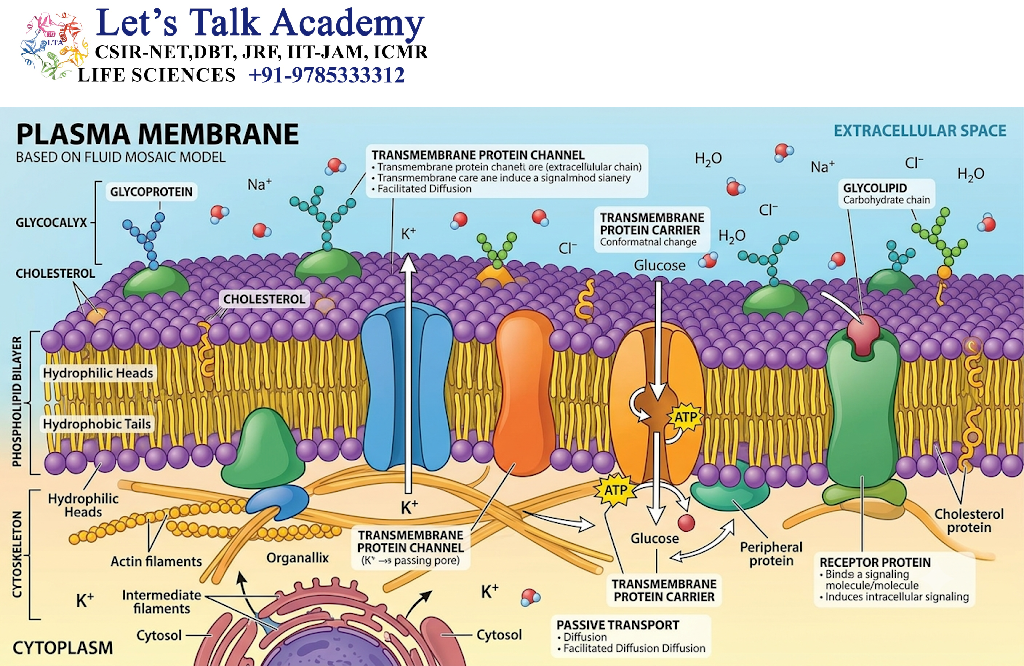
Both prokaryotic and eukaryotic cells possess a plasma membrane.
The membrane is primarily composed of lipids and proteins.
It follows the general fluid mosaic model, in which membrane components are dynamically organized within a lipid bilayer.
4.2 Functions
The plasma membrane:
- separates the cell from its environment,
- controls movement of substances,
- receives external signals,
- maintains ion gradients,
- participates in cell communication.
4.3 Membrane Transport
Both types of cells use mechanisms such as:
- simple diffusion,
- facilitated diffusion,
- active transport.
Eukaryotic cells additionally use processes such as:
- endocytosis,
- exocytosis.
5. Cytoplasm
5.1 Prokaryotic Cytoplasm
The prokaryotic cytoplasm contains:
- ribosomes,
- enzymes,
- metabolites,
- DNA,
- RNA,
- cytoskeletal elements,
- other molecular components.
Although it lacks membrane-bound organelles, it is highly organized at the molecular level.
5.2 Eukaryotic Cytoplasm
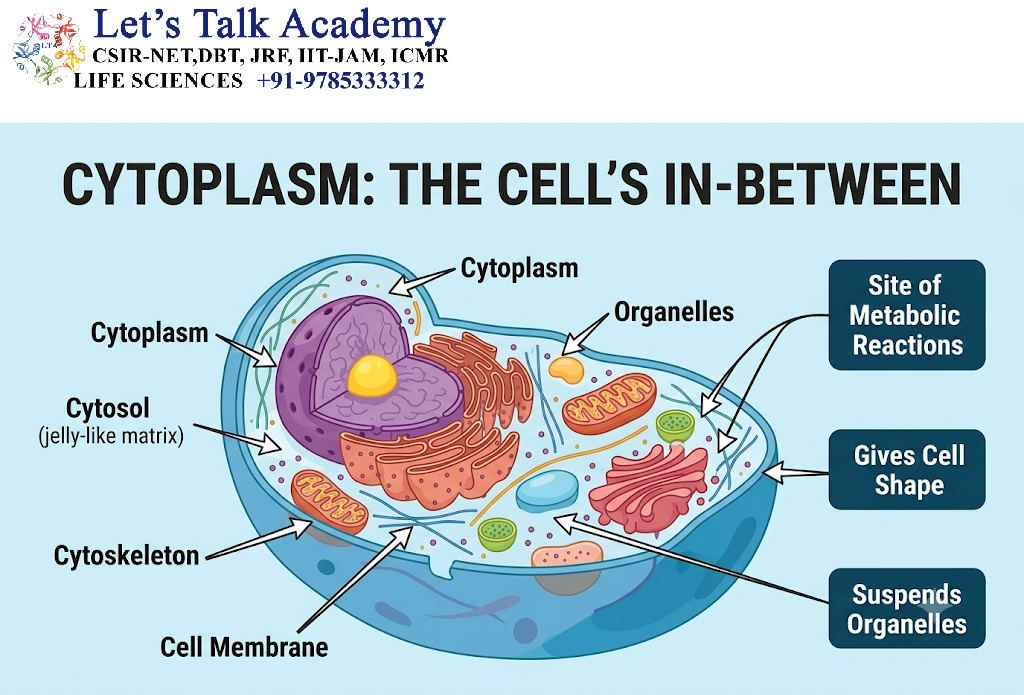
The eukaryotic cytoplasm contains the cytosol and numerous organelles.
Many metabolic processes occur in the cytoplasm or in specific organelles.
The compartmentalization of these processes increases the efficiency and regulation of cellular metabolism.
6. Genetic Material
6.1 Prokaryotic Genome
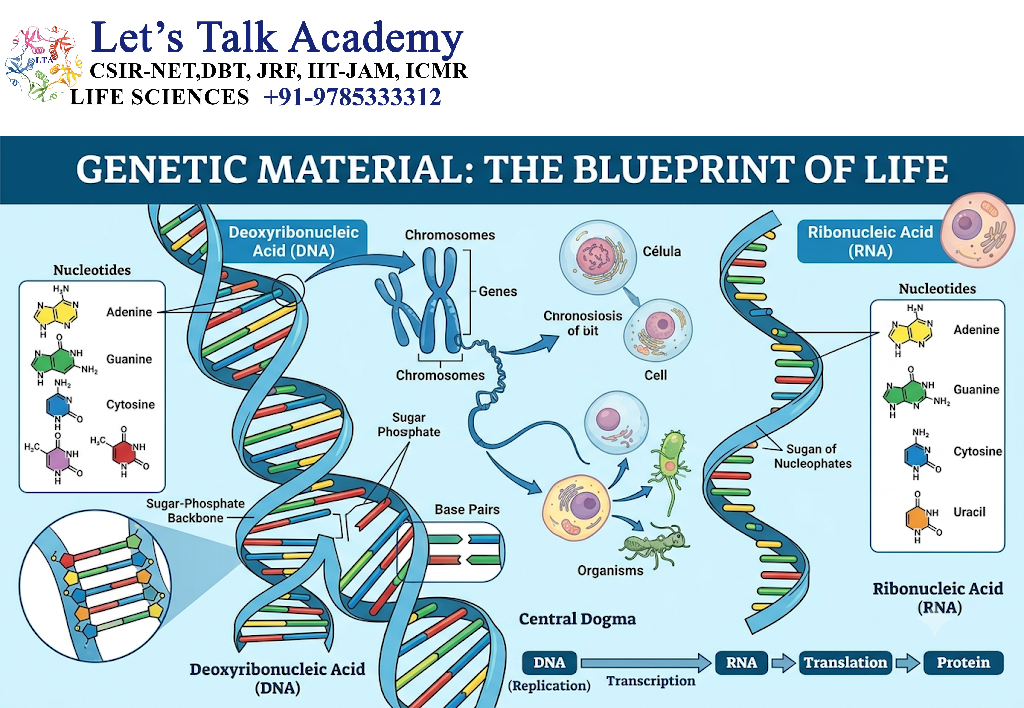
The bacterial chromosome is commonly a circular double-stranded DNA molecule.
The DNA is located in the nucleoid region rather than within a membrane-bound nucleus.
Some prokaryotes contain plasmids carrying additional genes.
6.2 Eukaryotic Genome
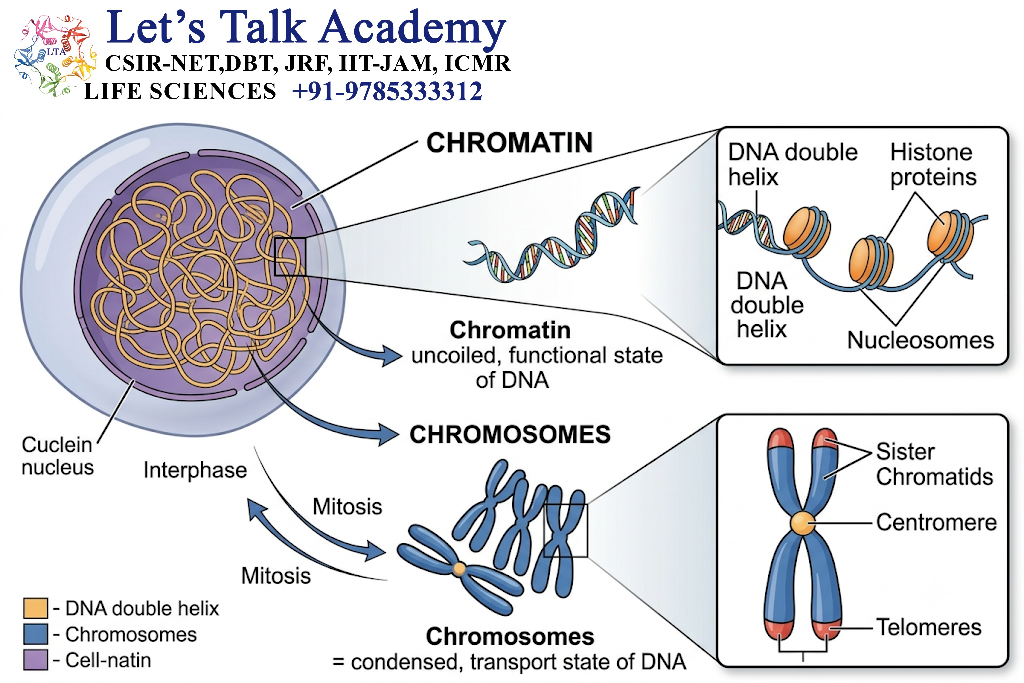
Eukaryotic nuclear DNA is organized into multiple linear chromosomes.
DNA is associated with proteins called histones, forming chromatin.
The chromosomes are located inside the nucleus.
6.3 Extrachromosomal DNA
Prokaryotes may contain plasmids.
Eukaryotic cells also contain DNA outside the nucleus in organelles such as:
- mitochondria,
- chloroplasts.
This organellar DNA provides important evidence for the evolutionary origin of these organelles.
7. Nucleoid and Nucleus
7.1 Nucleoid
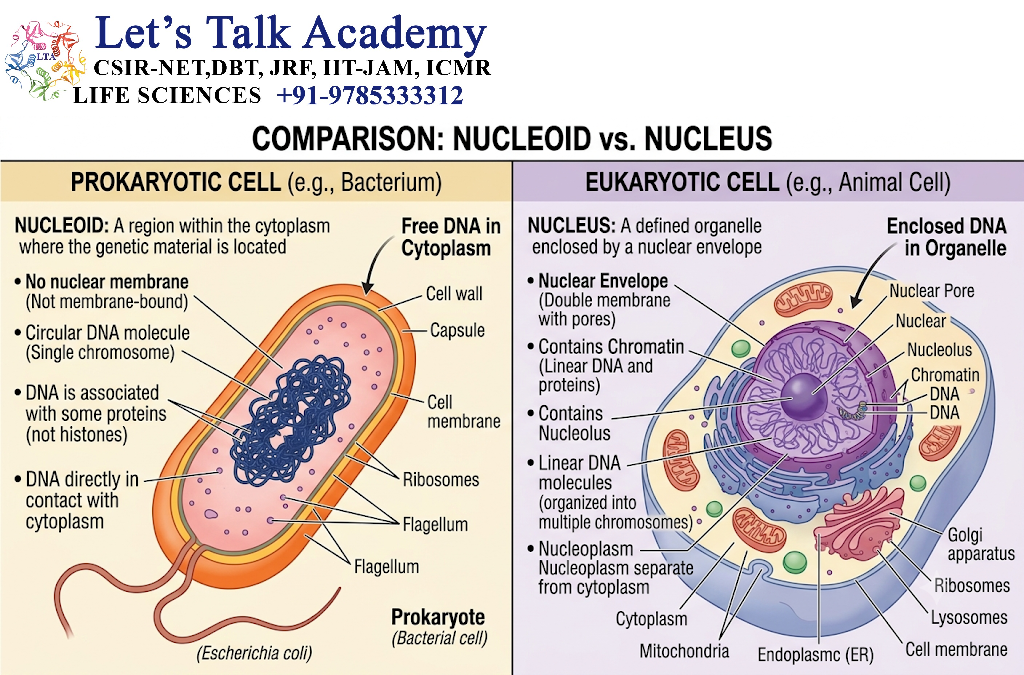
The nucleoid is the region of a prokaryotic cell where the chromosome is concentrated.
It is not surrounded by a membrane.
The DNA is compacted through supercoiling and interactions with DNA-associated proteins.
7.2 Nucleus
The nucleus is a membrane-bound compartment found in eukaryotic cells.
It contains:
- chromosomes,
- nucleolus,
- nuclear matrix-associated structures,
- regulatory proteins.
7.3 Nuclear Envelope
The nuclear envelope consists of two membranes.
Nuclear pores embedded in the envelope control the transport of RNA, proteins, and other molecules between the nucleus and cytoplasm.
8. Chromosomes and Chromatin
8.1 Prokaryotic Chromosome
Many bacterial chromosomes are circular and generally exist as a single major chromosome.
The chromosome is compacted within the nucleoid.
8.2 Eukaryotic Chromosomes
Eukaryotic chromosomes are generally linear.
DNA is wrapped around histone proteins to form nucleosomes.
Nucleosomes are fundamental units of chromatin organization.
8.3 Chromatin
Chromatin can exist in different functional states.
Euchromatin is generally less condensed and more transcriptionally active.
Heterochromatin is more condensed and generally less transcriptionally active.
9. Ribosomes
9.1 Prokaryotic Ribosomes
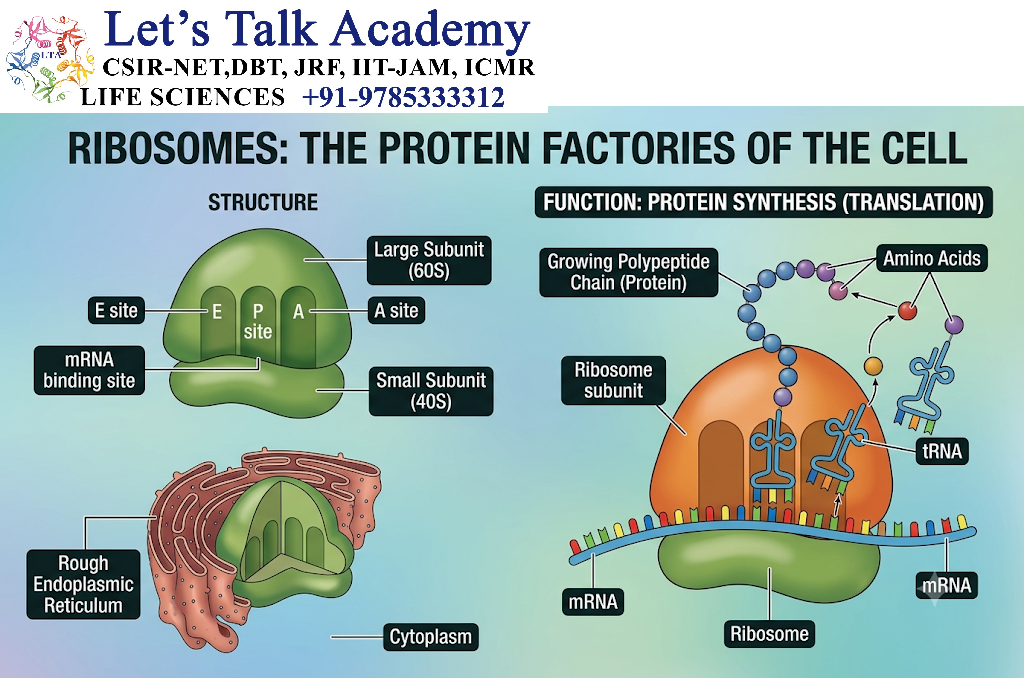
Prokaryotic ribosomes are generally 70S.
They consist of:
30S small subunit + 50S large subunit
They translate mRNA into proteins.
9.2 Eukaryotic Ribosomes
Cytoplasmic eukaryotic ribosomes are generally 80S.
They consist of:
40S small subunit + 60S large subunit
9.3 Significance
Differences between prokaryotic and eukaryotic ribosomes are biologically important because certain antibiotics can selectively interfere with bacterial protein synthesis.
10. Cell Wall
10.1 Bacterial Cell Wall
The bacterial cell wall primarily contains peptidoglycan.
Peptidoglycan consists of alternating sugar derivatives cross-linked by short peptides.
It provides mechanical strength and helps prevent osmotic lysis.
10.2 Gram-Positive Bacteria
Gram-positive bacteria generally possess a thick peptidoglycan layer.
They also contain teichoic acids and related cell-wall components.
10.3 Gram-Negative Bacteria
Gram-negative bacteria generally have:
- a thin peptidoglycan layer,
- an outer membrane,
- a periplasmic region.
The outer membrane contains lipopolysaccharide.
10.4 Archaeal Cell Walls
Archaeal cell envelopes differ fundamentally from bacterial cell walls.
Many archaea possess S-layers, while others possess specialized cell-wall materials.
They do not contain the peptidoglycan characteristic of most bacteria.
10.5 Eukaryotic Cell Walls
Animal cells lack cell walls.
Plant cells possess cell walls primarily composed of cellulose, hemicellulose, and pectin.
Fungal cell walls primarily contain chitin and other polysaccharides.
11. Cytoskeleton
11.1 Prokaryotic Cytoskeleton
Prokaryotes possess proteins with cytoskeletal functions.
Examples include proteins related to:
- FtsZ,
- MreB,
- crescentin.
These proteins contribute to cell division, shape, and organization.
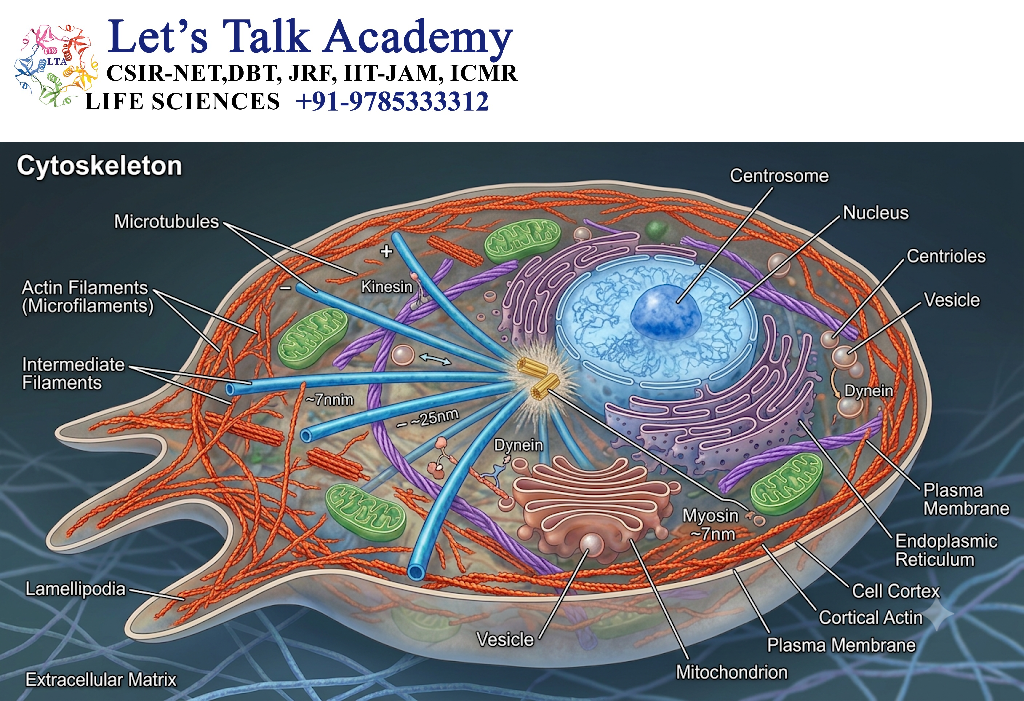
11.2 Eukaryotic Cytoskeleton
The eukaryotic cytoskeleton consists mainly of:
- microtubules,
- microfilaments,
- intermediate filaments.
It provides:
- mechanical support,
- cell shape,
- intracellular transport,
- chromosome movement,
- cell motility.
12. Cellular Organelles
12.1 Organelles in Prokaryotes
Prokaryotes generally lack membrane-bound organelles.
However, some possess specialized membrane structures associated with particular metabolic functions.
12.2 Organelles in Eukaryotes
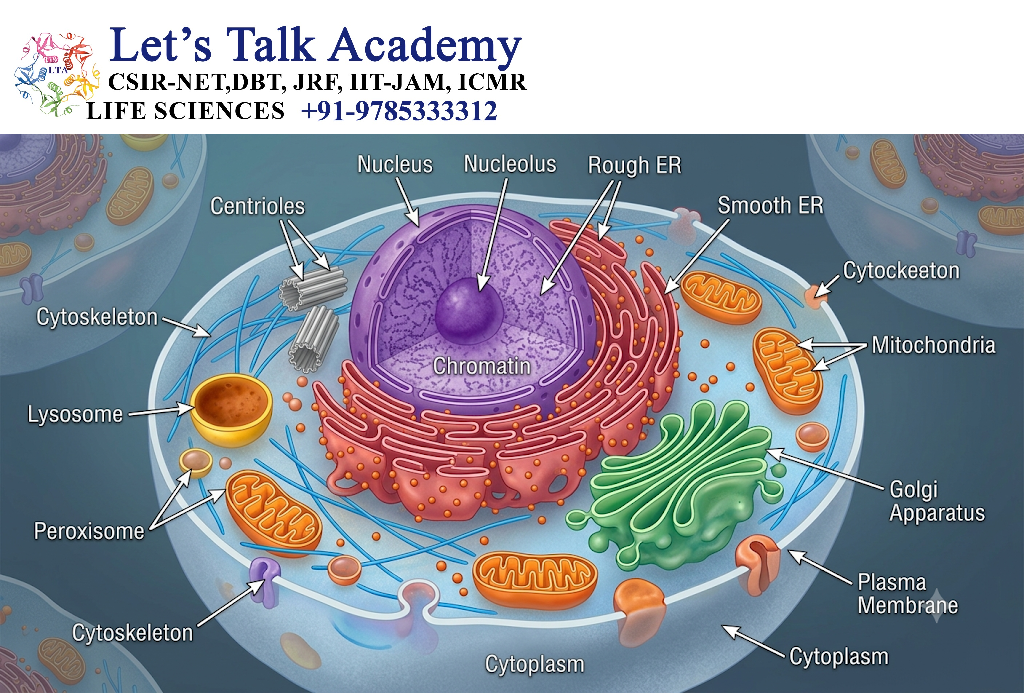
Eukaryotic cells contain numerous membrane-bound organelles.
Major organelles include:
- nucleus,
- mitochondria,
- endoplasmic reticulum,
- Golgi apparatus,
- lysosomes,
- peroxisomes,
- vacuoles.
Plant cells additionally contain chloroplasts and other plastids.
13. Mitochondria
13.1 Structure
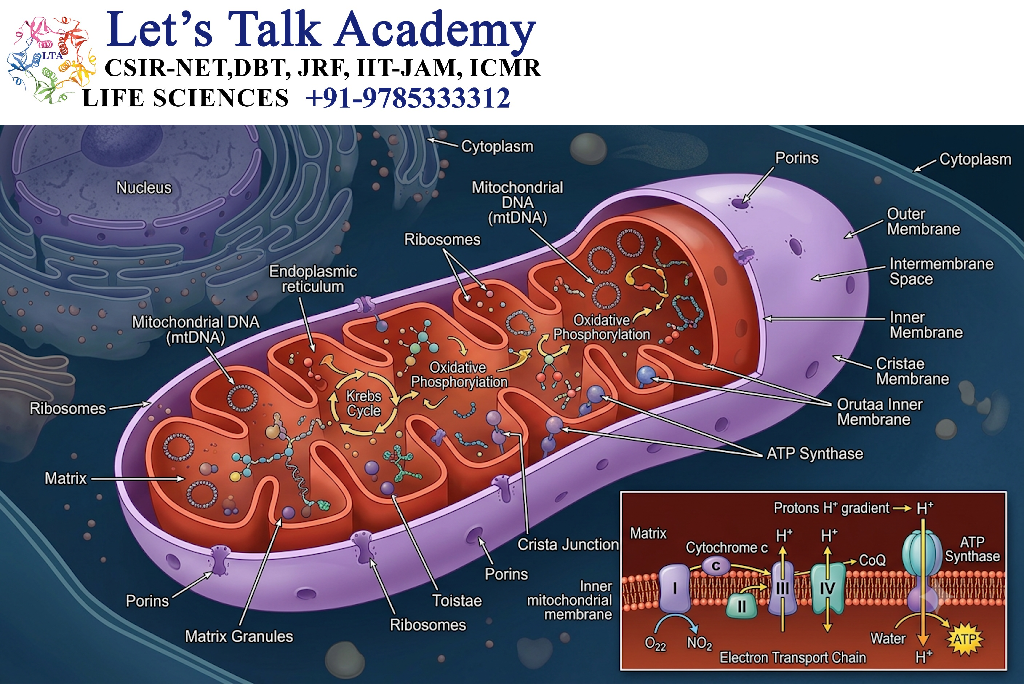
Mitochondria are double-membrane-bound organelles.
They contain:
- outer membrane,
- intermembrane space,
- inner membrane,
- matrix.
The inner membrane contains components of the electron transport chain and ATP synthase.
13.2 Function
Mitochondria are major sites of aerobic energy metabolism.
They participate in:
- oxidative phosphorylation,
- ATP production,
- metabolic pathways,
- apoptosis-related processes,
- calcium regulation.
13.3 Endosymbiotic Origin
Mitochondria possess their own DNA and bacterial-like ribosomes.
These characteristics support the endosymbiotic theory, which proposes that mitochondria evolved from ancestral bacterial cells that became associated with early eukaryotic cells.
14. Chloroplasts
14.1 Structure
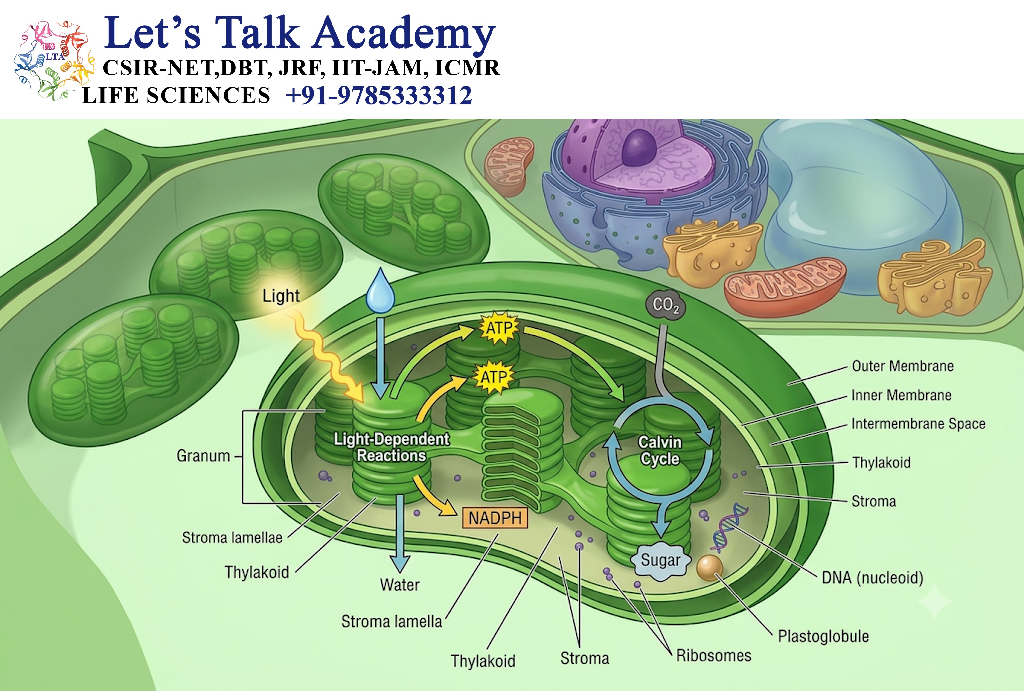
Chloroplasts are found in plants and many algae.
They possess:
- outer membrane,
- inner membrane,
- stroma,
- thylakoid membranes.
Thylakoids are often arranged into stacks called grana.
14.2 Function
Chloroplasts carry out photosynthesis.
Light-dependent reactions occur in thylakoid membranes, while carbon fixation occurs primarily in the stroma.
14.3 Endosymbiotic Origin
Like mitochondria, chloroplasts contain their own DNA and bacterial-like ribosomes.
Their evolutionary origin is associated with an ancient cyanobacterial endosymbiont.
15. Endoplasmic Reticulum
15.1 Rough Endoplasmic Reticulum
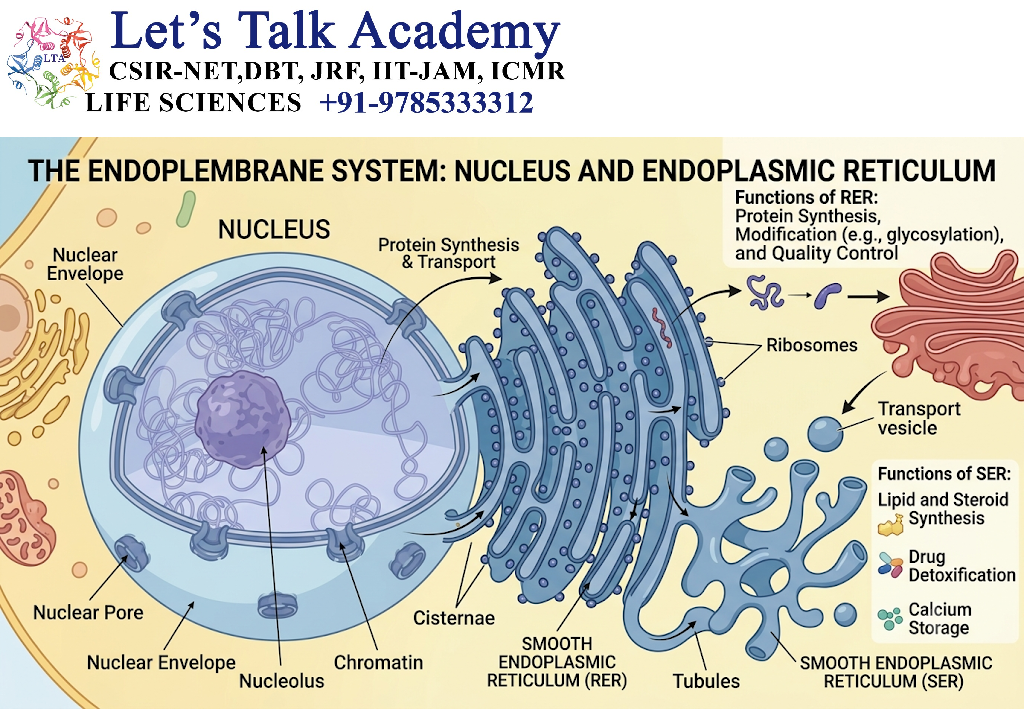
Rough ER contains ribosomes on its cytosolic surface.
It is involved in the synthesis and initial processing of proteins destined for:
- secretion,
- membranes,
- lysosomes.
15.2 Smooth Endoplasmic Reticulum
Smooth ER lacks attached ribosomes.
It participates in:
- lipid synthesis,
- detoxification,
- calcium storage,
- carbohydrate metabolism.
16. Golgi Apparatus
16.1 Structure
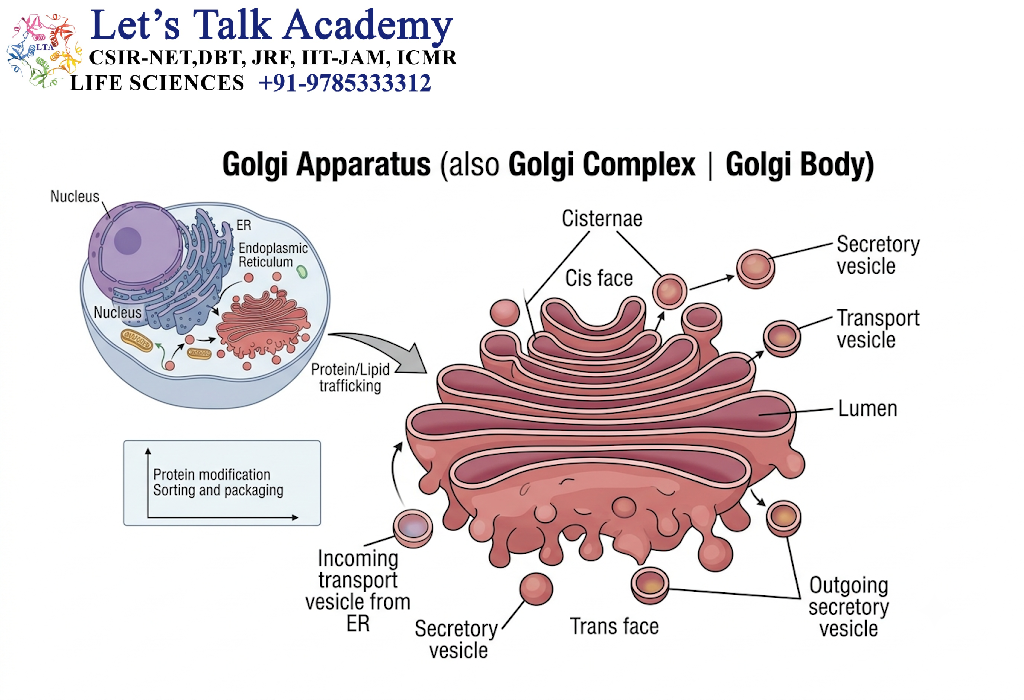
The Golgi apparatus consists of flattened membrane-bound sacs called cisternae.
It has functionally distinct regions, including cis, medial, and trans compartments.
16.2 Function
The Golgi apparatus:
- modifies proteins,
- modifies lipids,
- sorts molecules,
- packages molecules into vesicles,
- contributes to lysosome formation.
17. Lysosomes
17.1 Structure
Lysosomes are membrane-bound organelles containing hydrolytic enzymes.
These enzymes function optimally in an acidic environment.
17.2 Functions
Lysosomes participate in:
- degradation of macromolecules,
- recycling of cellular components,
- digestion of material taken up by endocytosis,
- autophagy.
18. Peroxisomes
18.1 Structure
Peroxisomes are single-membrane-bound organelles involved in oxidative metabolism.
18.2 Functions
They participate in:
- fatty acid oxidation,
- detoxification,
- hydrogen peroxide metabolism,
- synthesis of certain lipids.
The enzyme catalase converts hydrogen peroxide into water and oxygen.
19. Vacuoles
19.1 Vacuoles in Plant Cells
Plant cells often contain a large central vacuole.
It contributes to:
- storage,
- waste sequestration,
- ion balance,
- water regulation,
- maintenance of turgor pressure.
19.2 Vacuoles in Other Eukaryotes
Vacuoles can also occur in fungi and protists, where they perform various storage and regulatory functions.
20. Plastids
20.1 Definition
Plastids are specialized organelles found mainly in plants and algae.
They include:
- chloroplasts,
- chromoplasts,
- leucoplasts.
20.2 Chloroplasts
Chloroplasts carry out photosynthesis.
20.3 Chromoplasts
Chromoplasts contain pigments and contribute to coloration in plant tissues.
20.4 Leucoplasts
Leucoplasts are generally colorless plastids involved in storage and biosynthetic functions.
21. Cell Division
21.1 Prokaryotic Cell Division
Most prokaryotes reproduce by binary fission.
The process involves:
- DNA replication.
- Chromosome segregation.
- Cell elongation.
- Septum formation.
- Separation into daughter cells.
21.2 Eukaryotic Cell Division
Eukaryotic cells use complex mechanisms of cell division.
The major forms are:
- mitosis,
- meiosis.
Mitosis produces daughter cells with essentially the same chromosome number as the parent cell.
Meiosis produces haploid cells and contributes to genetic variation.
22. Cell Cycle
22.1 Prokaryotic Cell Cycle
Prokaryotic growth and division are generally less compartmentalized than the eukaryotic cell cycle.
DNA replication and cell division are coordinated with cellular growth.
22.2 Eukaryotic Cell Cycle
The eukaryotic cell cycle consists of:
G₁ → S → G₂ → M
The S phase is responsible for DNA replication.
The M phase includes mitosis and cytokinesis.
Cell-cycle progression is regulated by cyclins, cyclin-dependent kinases, checkpoints, and other regulatory proteins.
23. DNA Replication
23.1 Prokaryotic DNA Replication
Bacterial DNA replication generally begins at a specific origin and proceeds bidirectionally.
The process involves:
- DNA helicase,
- primase,
- DNA polymerase,
- DNA ligase,
- topoisomerases.
23.2 Eukaryotic DNA Replication
Eukaryotic chromosomes contain multiple origins of replication.
Multiple origins are necessary because eukaryotic chromosomes are generally much larger than bacterial chromosomes.
DNA replication occurs during the S phase of the cell cycle.
24. Transcription
24.1 Prokaryotic Transcription
In bacteria, transcription occurs in the cytoplasm because there is no membrane-bound nucleus.
Transcription and translation can occur in close association.
A single RNA polymerase core enzyme works with different sigma factors to recognize different classes of promoters.
24.2 Eukaryotic Transcription
In eukaryotes, nuclear transcription is separated spatially from cytoplasmic translation.
Major nuclear RNA polymerases include:
- RNA polymerase I,
- RNA polymerase II,
- RNA polymerase III.
RNA polymerase II primarily synthesizes mRNA precursors.
25. RNA Processing
25.1 Prokaryotic RNA
Many bacterial mRNAs can be translated soon after transcription.
Extensive processing of mRNA is generally less prominent than in eukaryotes.
25.2 Eukaryotic RNA
Eukaryotic pre-mRNA commonly undergoes:
- 5′ capping,
- splicing,
- 3′ polyadenylation.
These processes produce mature mRNA suitable for translation.
26. Translation
26.1 Prokaryotic Translation
Translation occurs on 70S ribosomes.
Because bacteria lack a nucleus, translation can begin while an mRNA molecule is still being transcribed.
26.2 Eukaryotic Translation
Translation occurs primarily on 80S ribosomes in the cytoplasm.
Proteins synthesized on rough ER-associated ribosomes enter the secretory pathway.
27. Gene Organization
27.1 Prokaryotic Genes
Bacterial genes are frequently organized into operons.
An operon allows several functionally related genes to be regulated together.
The lac operon and trp operon are classic examples.
27.2 Eukaryotic Genes
Eukaryotic genes are generally regulated individually through complex combinations of:
- promoters,
- enhancers,
- silencers,
- transcription factors,
- chromatin modifications.
28. Introns and Exons
28.1 Introns
Introns are sequences removed from precursor RNA during RNA splicing.
They are particularly common in eukaryotic nuclear genes.
28.2 Exons
Exons are sequences retained in mature RNA after splicing.
They may encode protein sequences or contribute to untranslated regions.
28.3 Alternative Splicing
Alternative splicing allows a single gene to generate different RNA and protein products.
This increases the functional diversity that can arise from a limited number of genes.
29. Compartmentalization
29.1 Prokaryotic Organization
Prokaryotes lack a nucleus and most membrane-bound organelles.
Their biochemical reactions occur within the cytoplasm, plasma membrane, and specialized cellular structures.
29.2 Eukaryotic Organization
Eukaryotic cells are highly compartmentalized.
Different organelles create specialized environments for specific biochemical processes.
For example:
Nucleus → DNA replication and transcription
Mitochondria → oxidative metabolism
ER → protein and lipid synthesis
Golgi → modification and sorting
Lysosome → degradation
Compartmentalization improves the regulation and efficiency of cellular processes.
30. Cellular Transport
30.1 Prokaryotic Transport
Prokaryotes use membrane proteins to transport nutrients, ions, and waste products.
Major mechanisms include:
- facilitated diffusion,
- primary active transport,
- secondary active transport.
30.2 Eukaryotic Transport
Eukaryotic cells use membrane transport as well as extensive vesicular trafficking.
Vesicles transport proteins and lipids between:
- ER,
- Golgi,
- endosomes,
- lysosomes,
- plasma membrane.
31. Cell Motility
31.1 Prokaryotic Flagella
Bacterial flagella are composed primarily of the protein flagellin and are powered by ion gradients across the membrane.
They rotate to produce movement.
31.2 Eukaryotic Cilia and Flagella
Eukaryotic cilia and flagella have a fundamentally different structure.
The typical motile structure contains a 9+2 arrangement of microtubules and is powered by dynein.
This distinction is an important example of structural differences between prokaryotic and eukaryotic systems.
32. Energy Metabolism
32.1 Prokaryotic Energy Production
Prokaryotes display enormous metabolic diversity.
They can obtain energy through:
- aerobic respiration,
- anaerobic respiration,
- fermentation,
- photosynthesis,
- chemolithotrophic processes.
In bacteria, the plasma membrane performs many functions analogous to those carried out by the mitochondrial inner membrane in eukaryotic cells.
32.2 Eukaryotic Energy Production
In eukaryotic cells, aerobic respiration primarily involves mitochondria.
The electron transport chain is located in the inner mitochondrial membrane.
Photosynthetic eukaryotes use chloroplasts for photosynthesis.
33. Cell Signaling
33.1 Prokaryotic Signaling
Prokaryotes respond to environmental changes through sophisticated signaling systems.
Examples include:
- two-component systems,
- chemotaxis pathways,
- quorum sensing.
33.2 Eukaryotic Signaling
Eukaryotic cells possess complex signaling networks involving:
- receptors,
- protein kinases,
- phosphatases,
- second messengers,
- transcription factors.
Examples of second messengers include:
- cyclic AMP,
- calcium ions,
- IP₃,
- DAG.
34. Quorum Sensing
34.1 Definition
Quorum sensing is a mechanism through which bacterial cells detect population density using signaling molecules.
When signaling molecules reach a threshold concentration, coordinated changes in gene expression can occur.
34.2 Functions
Quorum sensing can regulate:
- biofilm formation,
- virulence factors,
- bioluminescence,
- motility,
- secretion systems.
35. Endosymbiotic Theory
35.1 Basic Concept
The endosymbiotic theory proposes that mitochondria and chloroplasts originated from free-living bacterial ancestors that entered into stable associations with ancestral eukaryotic cells.
35.2 Evidence
Important evidence includes:
- double membranes,
- circular DNA,
- bacterial-like ribosomes,
- binary-fission-like division,
- similarities in genetic and molecular characteristics with bacteria.
35.3 Evolutionary Significance
The theory provides an important explanation for the origin of major energy-producing organelles in eukaryotic cells.
36. Similarities Between Prokaryotes and Eukaryotes
Despite their differences, both cell types share fundamental characteristics.
Both possess:
- DNA,
- RNA,
- ribosomes,
- plasma membranes,
- cytoplasm,
- genetic information,
- metabolic pathways,
- mechanisms for DNA replication,
- transcription,
- translation,
- mechanisms for energy conservation.
These similarities demonstrate the common biochemical foundation of cellular life.
37. Major Differences Between Prokaryotes and Eukaryotes
| Feature | Prokaryotes | Eukaryotes |
|---|---|---|
| Nucleus | Absent | Present |
| DNA location | Nucleoid | Nucleus |
| Chromosomes | Usually one major circular chromosome in bacteria | Usually multiple linear chromosomes |
| Membrane-bound organelles | Generally absent | Present |
| Ribosomes | 70S | 80S cytoplasmic |
| Cell division | Binary fission | Mitosis/meiosis |
| Cell size | Generally smaller | Generally larger |
| Cell wall | Common in bacteria and archaea, composition varies | Present in plants and fungi, absent in animals |
| Introns | Less common in bacterial protein-coding genes | Common in many nuclear genes |
| Transcription and translation | Can be coupled | Spatially separated |
| Operons | Common in bacteria | Rare as a general mode of nuclear gene organization |
| Cytoskeleton | Present but simpler | Highly developed |
| Mitochondria | Absent | Present in most eukaryotic cells |
| Chloroplasts | Absent | Present in plants and many algae |
| Genome organization | Relatively compact | More complex |
| Vesicular trafficking | Limited compared with eukaryotes | Extensive |
38. Bacteria and Archaea
38.1 Bacteria
Bacteria are prokaryotic organisms with diverse metabolic and ecological characteristics.
They can be found in:
- soil,
- water,
- air,
- extreme environments,
- animal and plant-associated environments.
38.2 Archaea
Archaea are also prokaryotic but differ from bacteria in several molecular and biochemical characteristics.
Important differences include:
- membrane lipid composition,
- cell-wall composition,
- transcriptional machinery,
- translation-related features,
- information-processing systems.
Some archaeal molecular mechanisms show similarities to eukaryotic systems.
39. Prokaryotic Genetic Variation
39.1 Mutation
Mutations introduce changes into DNA sequences.
39.2 Transformation
Transformation is the uptake of free DNA from the environment by a competent cell.
39.3 Transduction
Transduction is the transfer of bacterial genetic material through bacteriophages.
39.4 Conjugation
Conjugation involves direct cell-to-cell transfer of DNA, commonly mediated by plasmids or related mobile genetic elements.
These mechanisms allow rapid genetic exchange among prokaryotes.
40. Eukaryotic Genetic Variation
Eukaryotic genetic variation can arise through:
- mutation,
- recombination,
- independent assortment,
- chromosome segregation,
- sexual reproduction.
Meiosis is particularly important because it generates genetic variation through crossing over and independent assortment.
41. Prokaryotic and Eukaryotic Cell Communication
41.1 Prokaryotic Communication
Prokaryotic cells communicate through chemical signals and environmental sensing mechanisms.
They can respond rapidly to changes in nutrients, toxins, population density, and other environmental conditions.
41.2 Eukaryotic Communication
Eukaryotic multicellular organisms require extensive communication between cells.
Signals may act through:
- autocrine signaling,
- paracrine signaling,
- endocrine signaling,
- synaptic signaling.
42. Regulation of Gene Expression
42.1 Prokaryotic Regulation
Prokaryotic gene regulation commonly occurs through:
- repressors,
- activators,
- operons,
- attenuation,
- riboswitches,
- small regulatory RNAs.
Because transcription and translation can be coupled, regulation can be extremely rapid.
42.2 Eukaryotic Regulation
Eukaryotic gene expression is regulated at multiple levels:
- Chromatin organization
- Transcription
- RNA processing
- RNA transport
- mRNA stability
- Translation
- Post-translational modification
- Protein degradation
This multilayered regulation enables highly precise control of cellular behavior.
43. Cell Differentiation
43.1 Prokaryotic Differentiation
Although prokaryotes are usually unicellular, some species undergo specialized differentiation.
Examples include formation of:
- spores,
- heterocysts,
- specialized reproductive structures.
43.2 Eukaryotic Differentiation
Multicellular eukaryotes contain different cell types despite having essentially the same genome in most somatic cells.
Differences in gene expression produce specialized cells such as:
- neurons,
- muscle cells,
- epithelial cells,
- blood cells,
- plant vascular cells.
44. Development of Cellular Complexity
The transition from simple prokaryotic cellular organization to complex eukaryotic organization involved major evolutionary innovations.
Important developments included:
- internal membrane systems,
- nuclear compartmentalization,
- cytoskeletal complexity,
- endomembrane trafficking,
- endosymbiosis,
- increasingly complex genome regulation.
These innovations allowed eukaryotic cells to support larger genomes and more complex cellular functions.
45. Prokaryotes and Eukaryotes in the Tree of Life
Modern biological classification recognizes three major domains of cellular life:
- Bacteria
- Archaea
- Eukarya
Bacteria and Archaea are prokaryotic domains, while Eukarya contains eukaryotic organisms.
The evolutionary relationship between these groups is more complex than a simple linear progression from prokaryotes to eukaryotes.
Modern genomic evidence supports a close evolutionary relationship between eukaryotes and archaeal lineages, while mitochondria originated through an ancient bacterial endosymbiosis.


