1.Introduction
In eukaryotic cells, DNA is not present as a naked molecule. It is associated with histone proteins and several non-histone proteins to form a highly organized structure called chromatin. Chromatin allows very long DNA molecules to fit inside the nucleus while also controlling access to genetic information.
The organization of chromatin has a direct influence on whether a gene can be transcribed. When chromatin is relatively open and accessible, transcription machinery can gain access to regulatory DNA sequences and genes are more likely to be expressed. When chromatin becomes highly compact and inaccessible, transcription is generally reduced or prevented.
Therefore, chromatin is not simply a packaging system for DNA. It is an important regulatory platform that determines when, where, and to what extent genes are expressed.
The regulation of gene activity through changes in chromatin structure is closely associated with epigenetic regulation. Epigenetic mechanisms can alter gene activity without changing the underlying DNA sequence.
1. 1Definition of Chromatin
Chromatin is the complex of DNA, histone proteins, non-histone proteins, and associated RNA molecules that organizes and regulates eukaryotic genomes.
The basic structural unit of chromatin is the nucleosome.
Chromatin exists in different structural and functional states. The two broad forms are:
- Euchromatin
- Heterochromatin
Euchromatin is generally less condensed and associated with greater transcriptional activity, whereas heterochromatin is more condensed and generally associated with transcriptional repression.
1.2 Importance of Chromatin
Chromatin performs several important functions:
- It packages DNA inside the nucleus.
- It protects DNA from physical damage.
- It regulates access to DNA.
- It controls transcription.
- It contributes to DNA replication.
- It participates in DNA repair.
- It influences chromosome segregation.
- It helps maintain genome stability.
- It contributes to cell-type-specific gene expression.
- It participates in gene silencing.
Thus, chromatin structure is closely connected with almost every major process involving DNA.
2. Organization of Chromatin
2.1 DNA Double Helix
The fundamental genetic material of eukaryotic cells is DNA.
DNA is a long polymer consisting of nucleotides containing:
- deoxyribose sugar,
- phosphate group,
- nitrogenous bases.
The bases are:
- adenine,
- thymine,
- guanine,
- cytosine.
Because DNA molecules are extremely long, they must be compacted and organized to fit inside the nucleus.
2.2 Histone Proteins
Histones are positively charged proteins that interact with negatively charged DNA.
The major core histones are:
- H2A
- H2B
- H3
- H4
Two copies of each of these histones form the histone octamer around which DNA is wrapped.
Histone H1 is called a linker histone and participates in higher-order chromatin organization.
2.3 Nucleosome
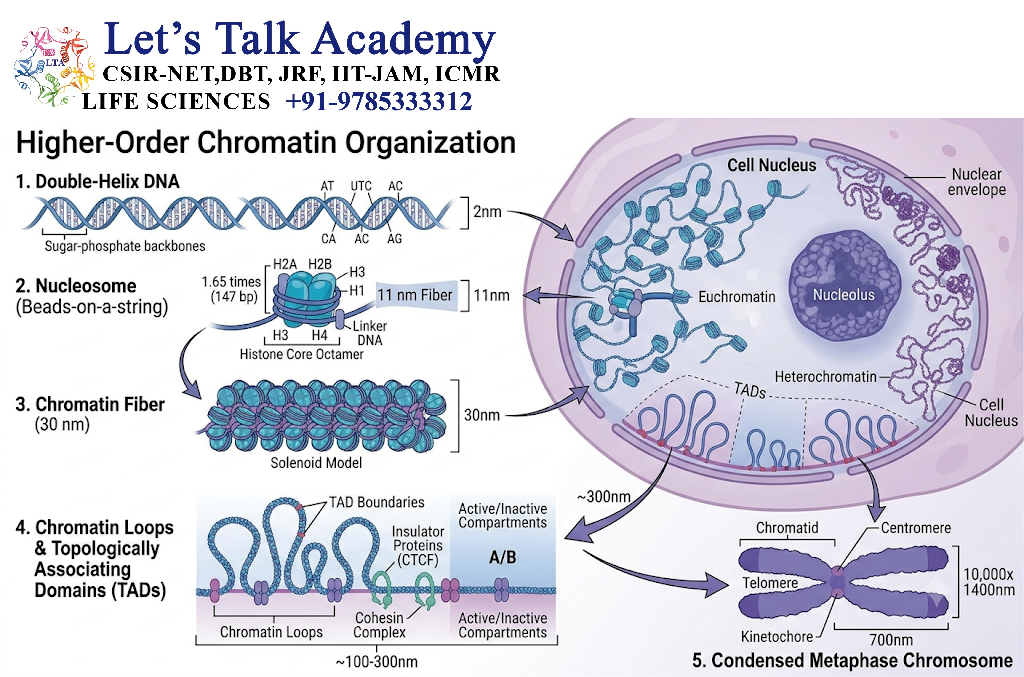
The nucleosome is the basic repeating unit of chromatin.
Approximately 147 base pairs of DNA are wrapped around a histone octamer.
The histone octamer contains:
2 × H2A + 2 × H2B + 2 × H3 + 2 × H4
DNA connecting adjacent nucleosomes is called linker DNA.
Histone H1 associates with linker DNA and contributes to chromatin compaction.
2.4 Nucleosome Positioning
Nucleosomes are not randomly positioned throughout the genome.
Their positioning can influence whether regulatory sequences are accessible to transcription factors.
A nucleosome positioned over a promoter may restrict access to transcription machinery and reduce transcription.
Conversely, removal or repositioning of nucleosomes can expose regulatory DNA and facilitate transcription.
3. Higher-Order Chromatin Organization
3.1 Chromatin Fiber
Nucleosomes interact with one another and with additional proteins to form increasingly complex chromatin structures.
Chromatin organization is dynamic rather than being a permanently fixed structure.
3.2 Chromatin Loops
Chromatin can form loops that bring distant regulatory elements into physical proximity.
For example, an enhancer located far from a promoter along the DNA sequence can interact with the promoter through chromatin looping.
This allows regulatory proteins bound to enhancers to influence transcription initiation.
3.3 Chromatin Domains
The genome is organized into functional domains that can differ in their transcriptional activity and regulatory properties.
These domains help establish appropriate interactions between promoters, enhancers, silencers, and other regulatory elements.
4. Euchromatin
4.1 Definition
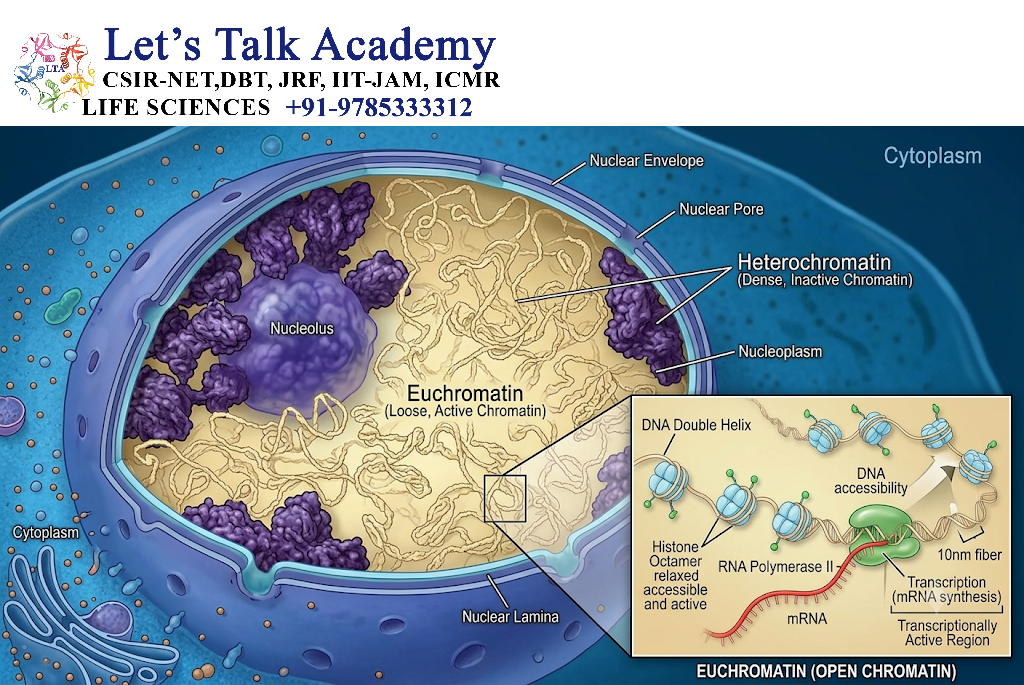
Euchromatin is a relatively open and less condensed form of chromatin that is generally associated with active or potentially active genes.
Because the DNA is more accessible, transcription factors and RNA polymerase can more easily interact with regulatory regions.
4.2 Characteristics
Euchromatin generally exhibits:
- lower chromatin compaction,
- greater DNA accessibility,
- enrichment of active histone modifications,
- relatively lower DNA methylation at many active regulatory regions,
- association with transcriptionally active genes.
However, euchromatin is not necessarily transcriptionally active at every moment.
4.3 Functional Importance
Euchromatin allows cells to activate genes required for:
- metabolism,
- growth,
- differentiation,
- cellular responses,
- tissue-specific functions.
5. Heterochromatin
5.1 Definition
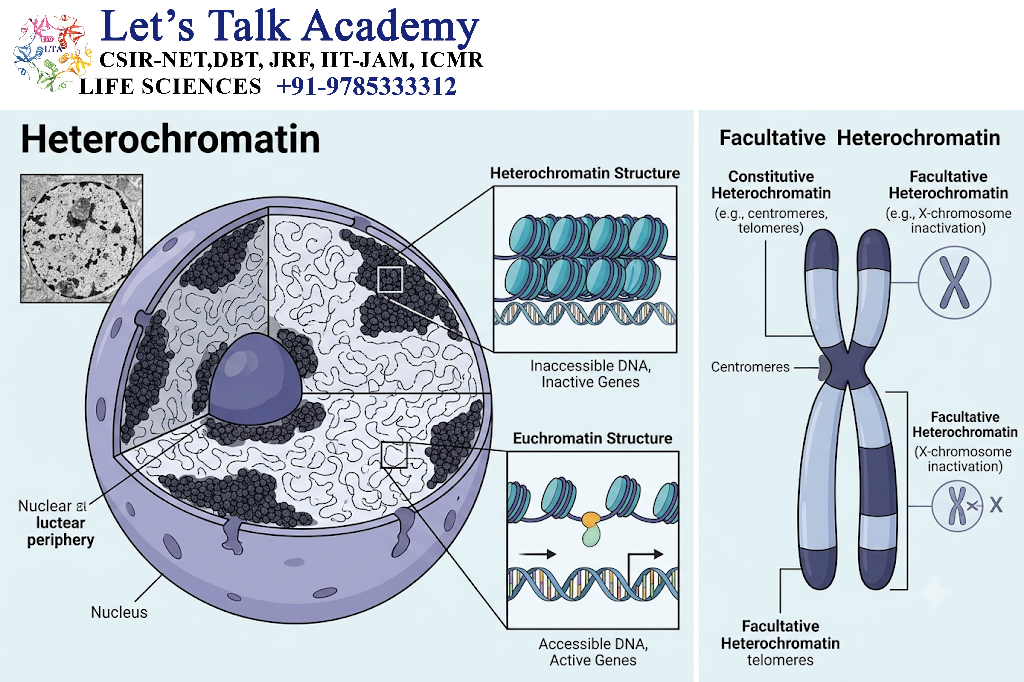
Heterochromatin is a relatively condensed form of chromatin that is generally associated with transcriptional repression.
It is particularly common in regions that require stable silencing or structural chromosome functions.
5.2 Constitutive Heterochromatin
Constitutive heterochromatin is generally maintained in a highly compact state.
It is commonly associated with repetitive DNA sequences, including many regions around:
- centromeres,
- telomeres.
5.3 Facultative Heterochromatin
Facultative heterochromatin can switch between relatively repressed and more active states depending on developmental or cellular conditions.
An important example is the inactive X chromosome in female mammals, which forms a condensed structure called a Barr body.
5.4 Characteristics
Heterochromatin commonly shows:
- high chromatin compaction,
- reduced DNA accessibility,
- enrichment of repressive histone modifications,
- association with gene silencing,
- increased involvement of chromatin-associated silencing proteins.
6. Chromatin and Gene Expression
6.1 Basic Relationship
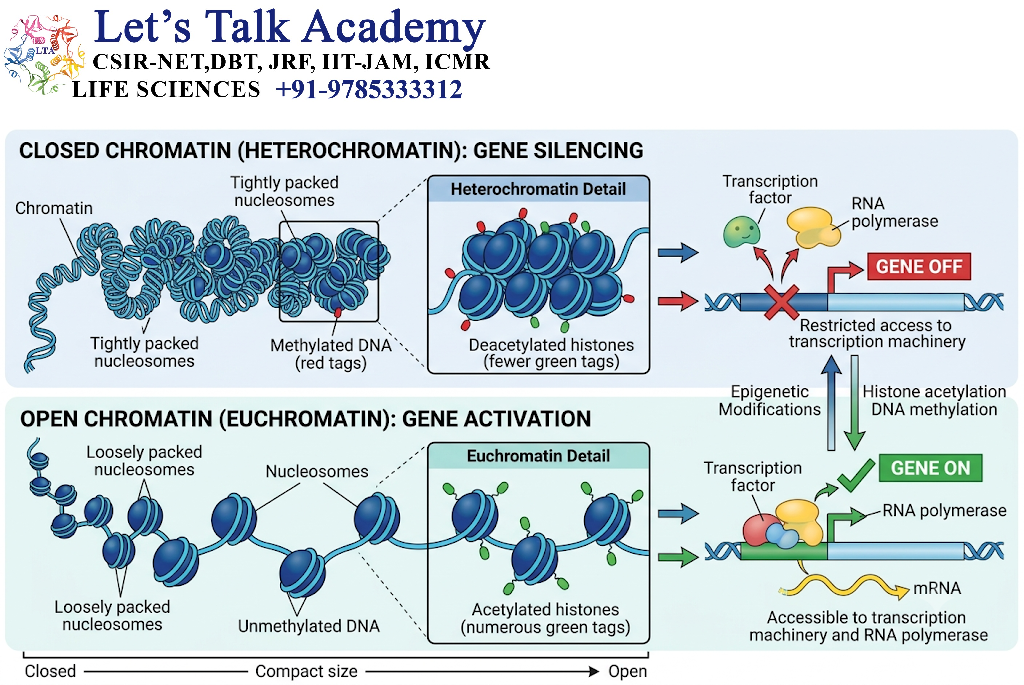
Gene expression requires access to DNA.
Transcription factors must bind regulatory sequences, and RNA polymerase must gain access to the transcriptional region.
Therefore:
Open chromatin → greater DNA accessibility → greater potential for transcription
and generally:
Compact chromatin → reduced DNA accessibility → transcriptional repression
This relationship is fundamental to chromatin-mediated regulation.
6.2 Chromatin as a Molecular Gatekeeper
Chromatin acts like a molecular gatekeeper.
It determines which regions of the genome are accessible to regulatory proteins.
A gene can contain the correct DNA sequence but still remain inactive if its promoter or regulatory elements are inaccessible because of chromatin organization.
6.3 Dynamic Nature of Chromatin
Chromatin is continuously remodeled.
During gene activation, nucleosomes may:
- move,
- be removed,
- be repositioned,
- undergo histone modifications.
During gene repression, nucleosomes and chromatin proteins can promote a more compact and inaccessible state.
7. Transcriptionally Active Chromatin
7.1 Promoter Accessibility
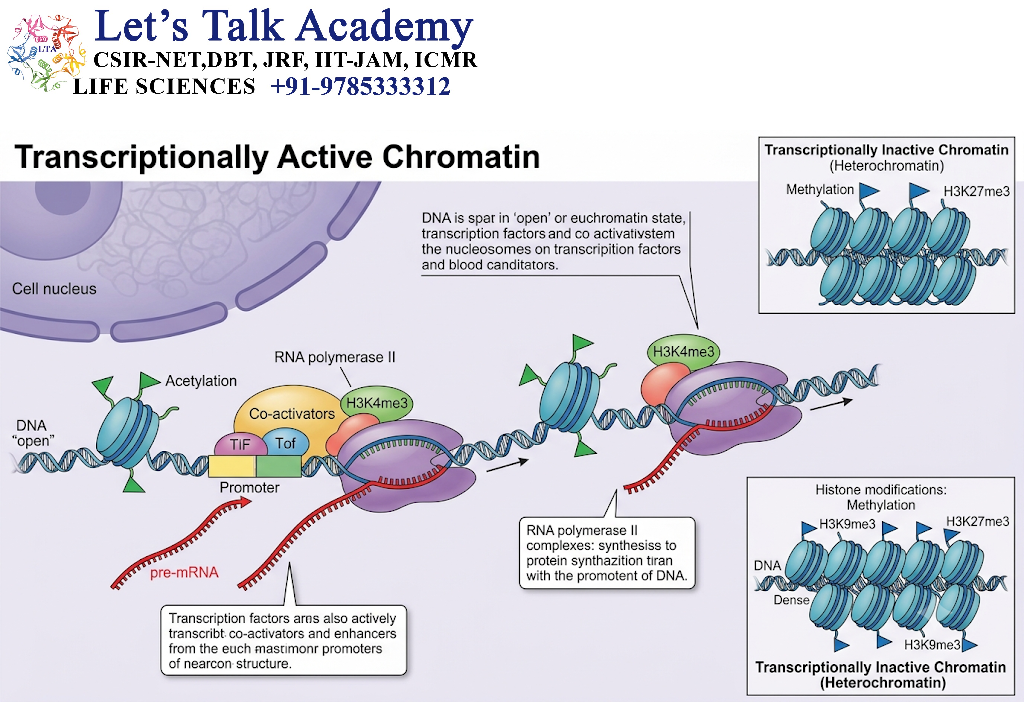
A promoter must generally be accessible for transcription initiation.
If nucleosomes occupy critical promoter sequences, transcription-factor binding may be restricted.
Chromatin remodeling complexes can reposition or remove nucleosomes, increasing accessibility.
7.2 Enhancer Accessibility
Enhancers are regulatory DNA elements that can increase gene transcription.
Their activity depends on the ability of transcription factors and coactivators to access the DNA.
Chromatin modifications can influence enhancer accessibility and activity.
7.3 Active Chromatin Marks
Several histone modifications are associated with transcriptionally active chromatin.
Examples include:
- H3K4me3, frequently associated with active promoters,
- H3K27ac, commonly associated with active enhancers,
- H3K36me3, associated with actively transcribed gene bodies.
These marks do not function independently. Their biological meaning depends on their genomic location and combination with other chromatin features.
8. Histone Modifications
8.1 Definition
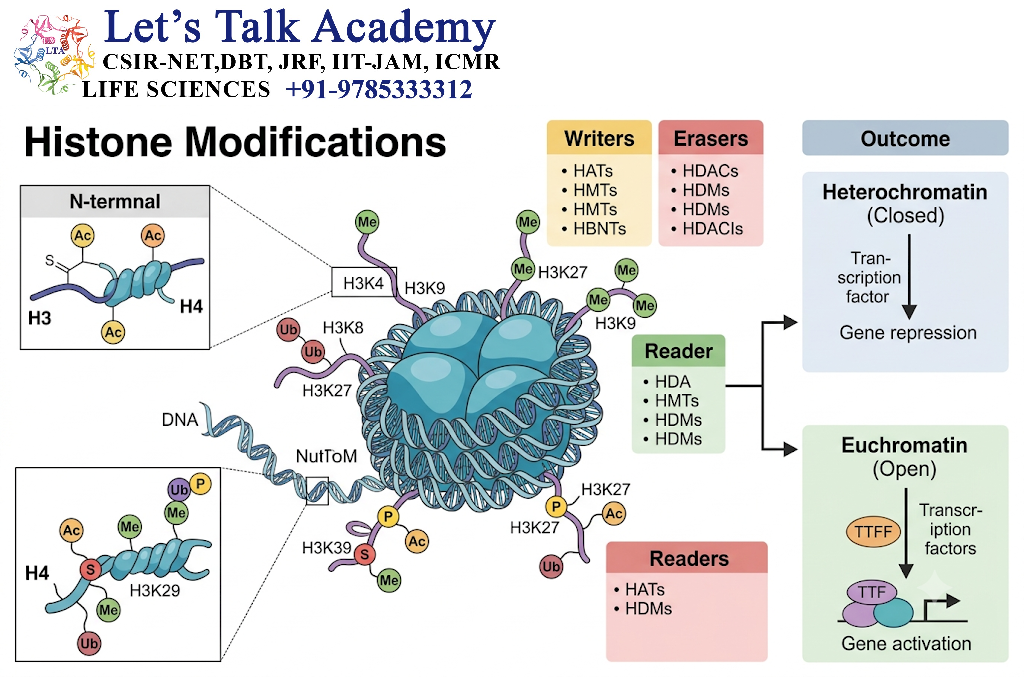
Histone modifications are chemical modifications added to amino acid residues of histone proteins.
They can alter chromatin structure and influence the recruitment of regulatory proteins.
Major histone modifications include:
- acetylation,
- methylation,
- phosphorylation,
- ubiquitination,
- sumoylation.
8.2 Histone Acetylation
Histone acetylation commonly occurs on lysine residues in histone tails.
The reaction is generally carried out by histone acetyltransferases (HATs).
Acetylation reduces the positive charge of lysine residues, weakening certain histone-DNA interactions and often promoting a more accessible chromatin state.
Histone acetylation is therefore frequently associated with transcriptional activation.
8.3 Histone Deacetylation
Histone deacetylases (HDACs) remove acetyl groups from histones.
Deacetylation can promote a more compact chromatin state and is frequently associated with transcriptional repression.
The relationship is context-dependent, but the HAT-HDAC balance is an important component of transcriptional regulation.
9. Histone Methylation
9.1 Definition
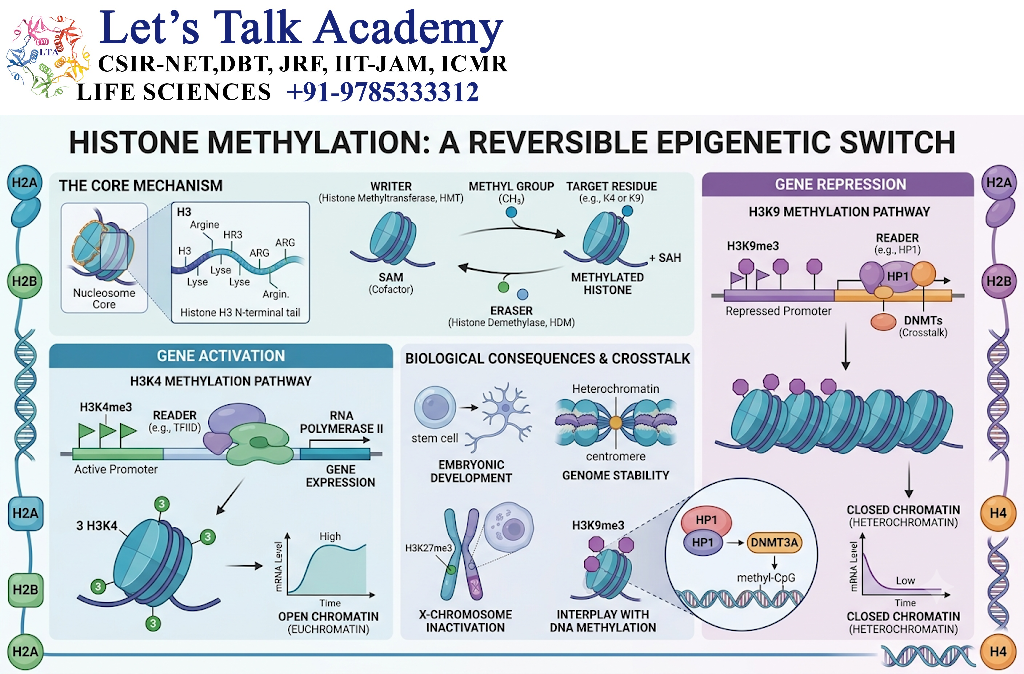
Histone methylation involves the addition of methyl groups to specific amino acid residues, commonly lysine or arginine.
Histone methyltransferases add methyl groups, while histone demethylases remove them.
9.2 Activation-Associated Methylation
Some methylation marks are associated with gene activation.
For example:
H3K4me3 → commonly associated with active promoters
9.3 Repression-Associated Methylation
Other methylation marks are associated with repression.
Examples include:
H3K9me3 → commonly associated with heterochromatin
H3K27me3 → commonly associated with Polycomb-mediated repression
Thus, histone methylation can either activate or repress transcription depending on:
- the modified residue,
- degree of methylation,
- genomic location,
- proteins recognizing the modification.
10. Histone Phosphorylation
10.1 Definition
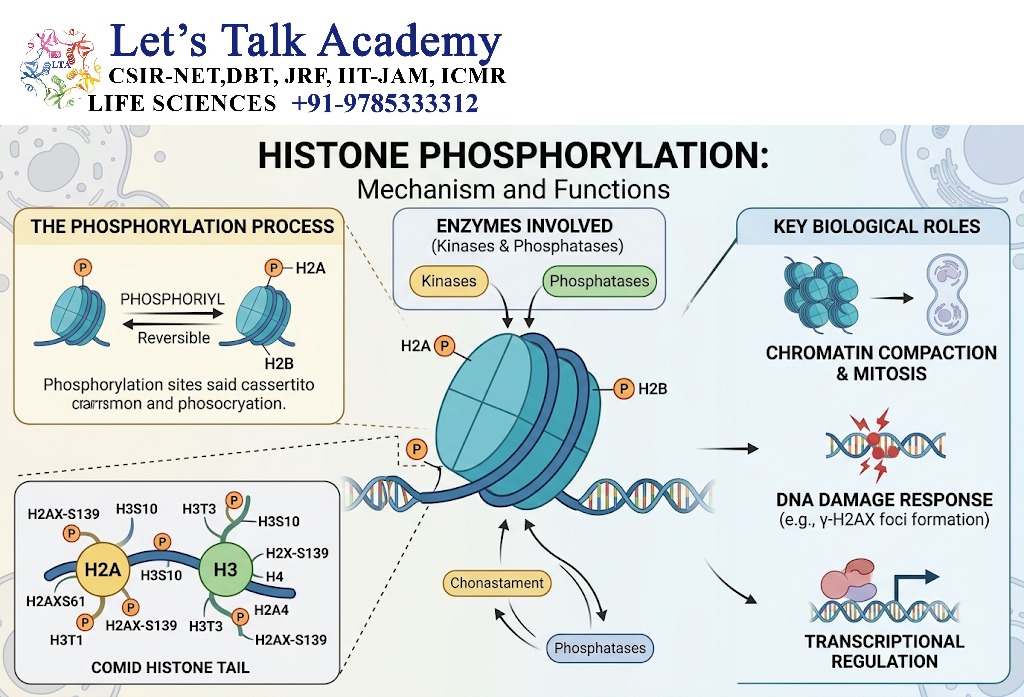
Histone phosphorylation involves addition of phosphate groups to specific amino acid residues.
It can participate in:
- transcriptional regulation,
- DNA damage responses,
- chromosome condensation,
- cell-cycle-associated processes.
An important example is phosphorylation of histone H2AX, producing γ-H2AX, which is associated with DNA double-strand break signaling.
11. Histone Ubiquitination
Histone Ubiquitination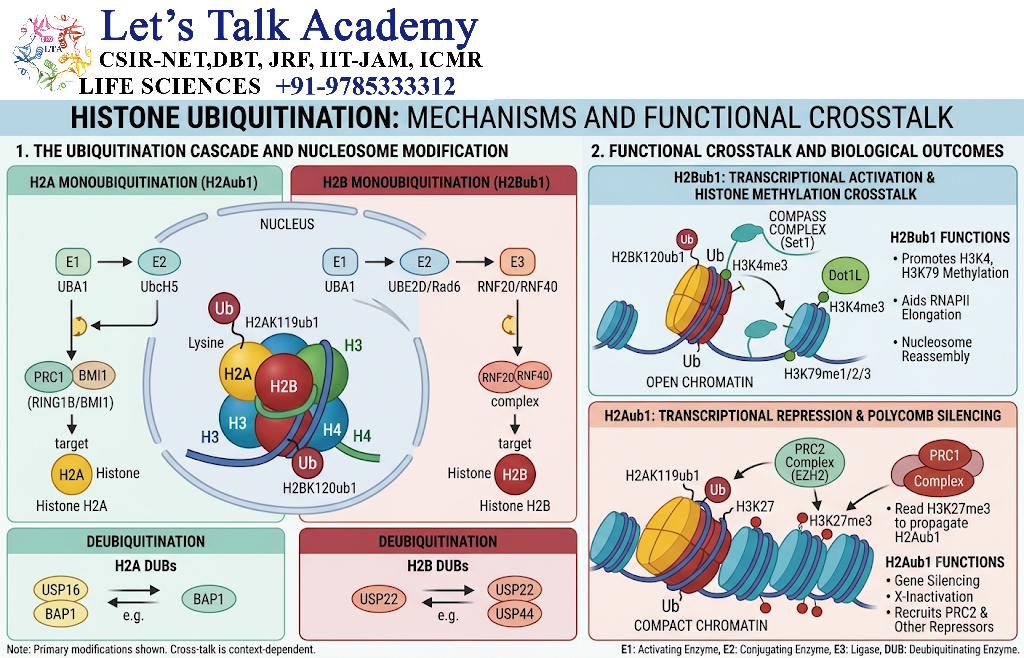
11.1 Definition
Ubiquitination involves attachment of ubiquitin to specific residues of histone proteins.
Unlike the polyubiquitination of many proteins that targets them for degradation, histone ubiquitination often serves regulatory functions.
For example, H2B ubiquitination can influence transcription and is associated with downstream histone methylation events.
12. Histone Code Concept
12.1 Basic Concept
The histone code hypothesis proposes that combinations of histone modifications can provide regulatory information that influences chromatin structure and gene activity.
For example, one combination of modifications may promote transcription, whereas another may promote repression.
12.2 Reader Proteins
Specific proteins called chromatin readers recognize particular histone modifications.
These reader proteins can recruit additional factors involved in:
- transcription,
- repression,
- chromatin remodeling,
- DNA repair.
Thus, histone modifications can function as molecular signals that recruit regulatory machinery.
13. ATP-Dependent Chromatin Remodeling
13.1 Definition
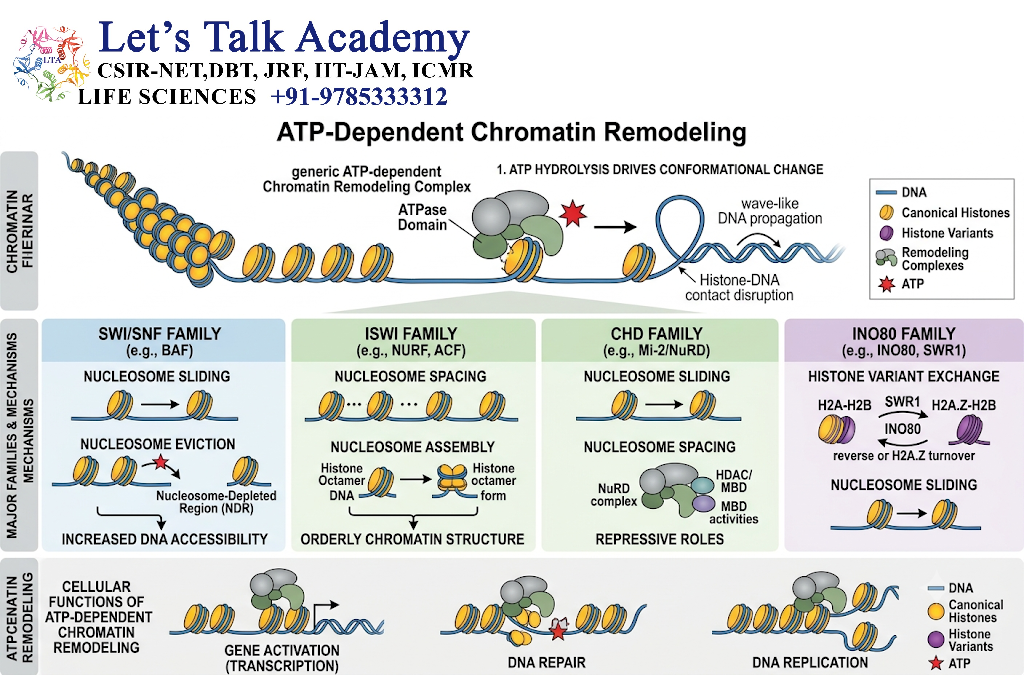
Chromatin-remodeling complexes use energy from ATP hydrolysis to alter nucleosome organization.
They can:
- reposition nucleosomes,
- remove nucleosomes,
- exchange histone variants,
- alter DNA accessibility.
13.2 Major Remodeling Families
Important chromatin-remodeling ATPase families include:
- SWI/SNF,
- ISWI,
- CHD,
- INO80/SWR1.
13.3 Role in Gene Activation
Remodeling complexes can move nucleosomes away from promoters and regulatory regions, allowing transcription factors to bind.
13.4 Role in Gene Repression
Some remodeling complexes can also establish or maintain nucleosome arrangements that restrict access to DNA.
Therefore, chromatin remodeling can contribute to both activation and repression.
14. DNA Methylation
14.1 Definition
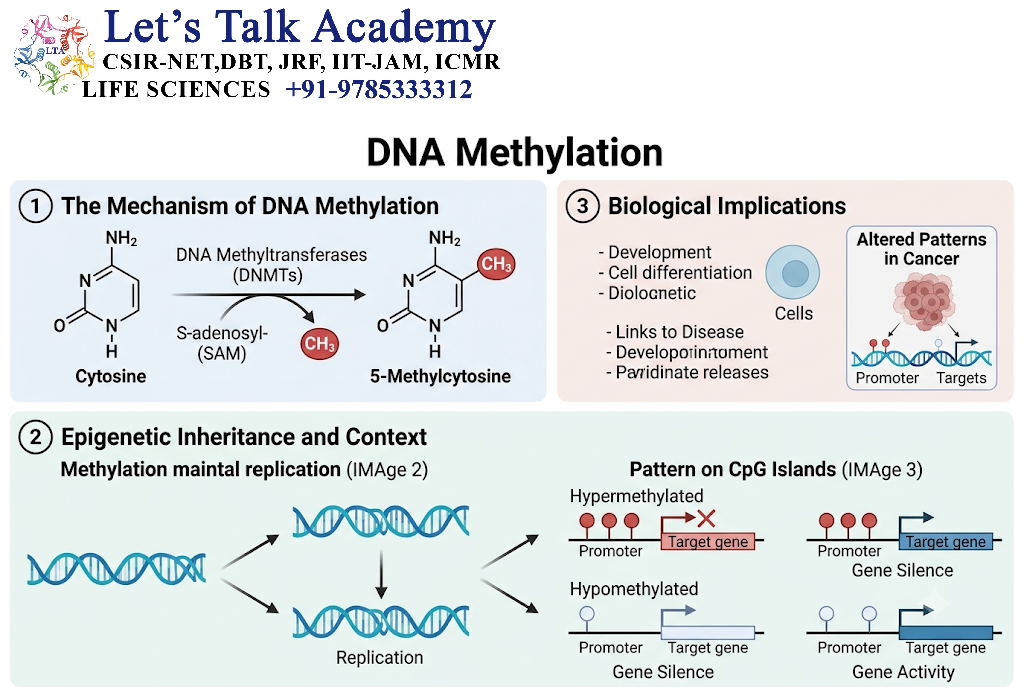
DNA methylation is an epigenetic modification involving addition of a methyl group to DNA.
In mammals, methylation commonly occurs at cytosine residues in CpG dinucleotides.
14.2 DNA Methyltransferases
DNA methylation is established and maintained by enzymes called DNA methyltransferases (DNMTs).
Important enzymes include:
- DNMT1,
- DNMT3A,
- DNMT3B.
DNMT3A and DNMT3B are primarily associated with de novo methylation, whereas DNMT1 plays a major role in maintaining methylation patterns after DNA replication.
14.3 DNA Methylation and Gene Silencing
DNA methylation at promoter CpG-rich regions is often associated with reduced transcription.
It can repress genes by:
- interfering with transcription-factor binding,
- recruiting methyl-CpG-binding proteins,
- promoting repressive chromatin formation.
15. DNA Demethylation
15.1 Active and Passive Demethylation
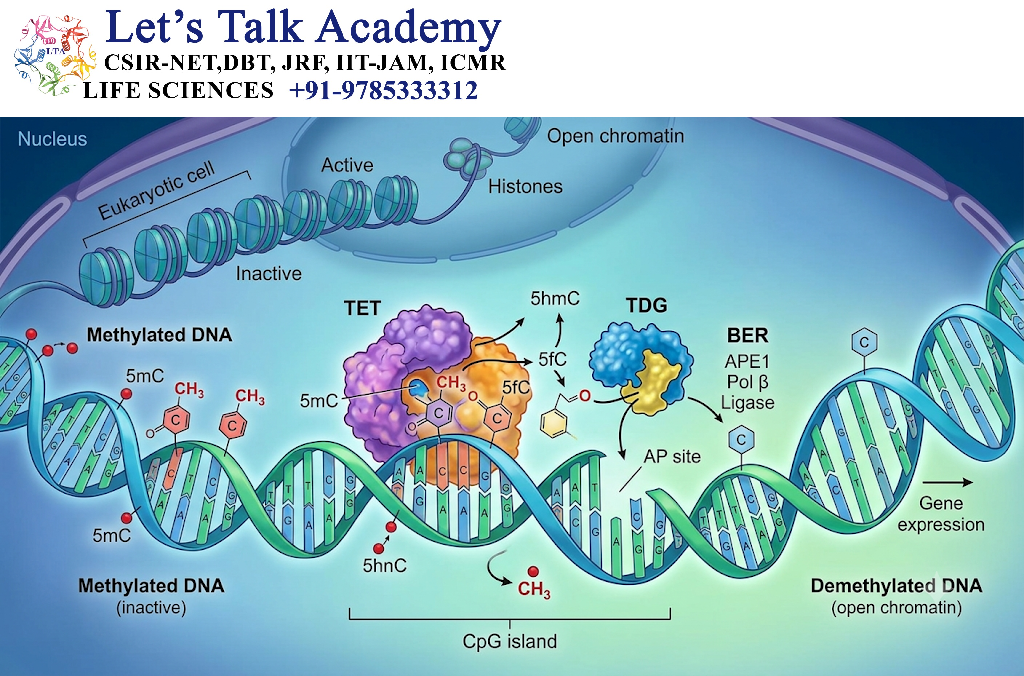
DNA methylation patterns can be reduced through passive loss during DNA replication or through active enzymatic pathways.
Proteins of the TET family contribute to active DNA demethylation pathways by oxidizing 5-methylcytosine derivatives.
15.2 Biological Importance
Changes in DNA methylation can regulate:
- development,
- cell differentiation,
- genomic imprinting,
- X-chromosome inactivation,
- transposable element silencing.
16. Chromatin Remodeling and Gene Activation
16.1 Stepwise Process
Gene activation commonly involves multiple coordinated events.
A simplified process is:
Signal
↓
Activation of transcription factors
↓
Recruitment of coactivators
↓
Chromatin remodeling
↓
Histone modification
↓
Increased DNA accessibility
↓
RNA polymerase recruitment
↓
Transcription
The exact sequence differs among genes and cellular contexts.
16.2 Coactivators
Coactivators are regulatory proteins that facilitate transcription without necessarily binding directly to DNA.
Some coactivators possess histone acetyltransferase activity or recruit chromatin-remodeling complexes.
17. Chromatin and Gene Silencing
17.1 Definition of Gene Silencing
Gene silencing refers to mechanisms that reduce or prevent the expression of a gene.
Silencing can occur at several levels, including:
- transcriptional,
- post-transcriptional,
- chromatin-mediated.
Chromatin-mediated gene silencing primarily involves making DNA less accessible to transcription machinery.
17.2 Formation of Repressive Chromatin
Gene silencing may involve:
- recruitment of repressors,
- histone modification,
- nucleosome repositioning,
- DNA methylation,
- recruitment of chromatin-binding proteins,
- chromatin compaction.
These processes can reinforce one another.
18. Heterochromatin-Mediated Silencing
18.1 Mechanism
Heterochromatin formation generally reduces access of transcription machinery to DNA.
Repressive histone marks can recruit chromatin proteins that promote further compaction.
For example, H3K9 methylation can recruit HP1 proteins, which participate in heterochromatin formation and spreading.
18.2 Spreading of Heterochromatin
Once established, heterochromatin can sometimes spread into neighboring genomic regions.
This spreading is controlled by boundary elements and other regulatory mechanisms that prevent inappropriate silencing of active genes.
19. Polycomb-Mediated Gene Silencing
19.1 Polycomb Group Proteins
Polycomb group proteins are important regulators of gene repression, particularly during development.
Two major complexes are:
- Polycomb Repressive Complex 2 (PRC2),
- Polycomb Repressive Complex 1 (PRC1).
19.2 PRC2
PRC2 catalyzes trimethylation of histone H3 at lysine 27:
H3K27me3
This modification is associated with transcriptional repression.
19.3 PRC1
PRC1 recognizes repressive chromatin features and contributes to chromatin compaction and transcriptional repression.
Polycomb-mediated regulation is particularly important for maintaining appropriate developmental gene-expression programs.
20. Insulator and Boundary Elements
20.1 Definition
Insulators are regulatory DNA elements that can help separate different chromatin domains.
They can prevent inappropriate communication between regulatory regions and neighboring genes.
20.2 CTCF
In mammals, the protein CTCF is an important architectural and regulatory factor associated with many chromatin boundaries and three-dimensional genome organization.
CTCF can contribute to the formation of chromatin loops and separation of regulatory domains.
21. Chromatin and Enhancers
21.1 Definition of Enhancer
An enhancer is a DNA regulatory element that can increase transcription of a target gene.
Enhancers can be located:
- upstream,
- downstream,
- within introns,
- at considerable distances from promoters.
21.2 Chromatin Accessibility
Enhancer activity depends on accessibility to transcription factors.
Active enhancers are often associated with:
- H3K27ac,
- H3K4me1,
- accessible chromatin.
Chromatin remodeling allows transcription factors to interact with enhancer DNA.
22. Chromatin and Promoters
22.1 Promoter Accessibility
Promoters are DNA sequences near transcription start sites where transcription machinery assembles.
Nucleosome positioning around promoters strongly influences transcription.
22.2 Nucleosome-Depleted Regions
Many active promoters contain relatively nucleosome-depleted regions that allow transcription factors and transcription machinery to bind efficiently.
23. Chromatin and Transcription Factors
23.1 Pioneer Transcription Factors
Some transcription factors called pioneer factors can bind relatively inaccessible chromatin.
They can initiate chromatin changes that allow additional regulatory proteins to bind.
23.2 General Transcription Factors
General transcription factors participate in the assembly of transcription machinery at promoters.
Their ability to function depends partly on chromatin accessibility.
24. Epigenetic Regulation
24.1 Definition
Epigenetic regulation refers to heritable or stable changes in gene activity that occur without changing the underlying DNA sequence.
Major epigenetic mechanisms include:
- DNA methylation,
- histone modifications,
- chromatin remodeling,
- nucleosome positioning,
- certain non-coding RNA-mediated mechanisms.
24.2 Importance
Epigenetic regulation is essential for:
- embryonic development,
- cell differentiation,
- tissue-specific gene expression,
- genomic imprinting,
- X-chromosome inactivation,
- maintenance of cellular identity.
25. Genomic Imprinting
25.1 Definition
Genomic imprinting is an epigenetic phenomenon in which gene expression depends on whether a particular allele was inherited from the mother or father.
Imprinting is established through epigenetic marks, particularly DNA methylation, in germ cells and maintained during development.
25.2 Biological Importance
Imprinting demonstrates that identical DNA sequences can have different functional outcomes depending on their epigenetic state and parental origin.
26. X-Chromosome Inactivation
26.1 Definition
In female mammals, one of the two X chromosomes is largely inactivated in somatic cells.
This process helps balance X-linked gene dosage between XX females and XY males.
26.2 XIST RNA
A long non-coding RNA called XIST plays a central role in X-chromosome inactivation.
XIST coats the X chromosome from which it is transcribed and recruits factors that establish a repressive chromatin state.
26.3 Barr Body
The inactive X chromosome becomes highly condensed and is visible as a Barr body in many interphase nuclei.
27. Chromatin and Non-Coding RNA
27.1 Role of Non-Coding RNA
Non-coding RNAs can participate in gene regulation at the chromatin level.
They can interact with:
- chromatin-modifying proteins,
- transcription factors,
- DNA,
- RNA.
27.2 Long Non-Coding RNAs
Long non-coding RNAs can recruit chromatin-modifying complexes to specific genomic regions.
XIST is an important example.
27.3 Small RNAs
Small RNA pathways can contribute to transcriptional gene silencing and heterochromatin formation in several organisms.
28. Chromatin and Repetitive DNA
28.1 Repetitive Sequences
Eukaryotic genomes contain many repetitive DNA sequences.
Some repetitive regions are maintained in heterochromatic states.
28.2 Transposable Elements
Transposable elements can potentially disrupt genes or alter genome structure.
Cells therefore use chromatin-based mechanisms, including DNA methylation and repressive histone modifications, to keep many transposable elements transcriptionally inactive.
29. Chromatin and Genome Stability
29.1 Protection of DNA
Chromatin protects DNA from physical and chemical damage.
29.2 DNA Repair
Chromatin must be temporarily modified or remodeled to allow DNA repair proteins to reach damaged DNA.
After repair, chromatin organization can be restored.
29.3 Balance Between Compaction and Accessibility
Genome stability requires a balance:
Too much compaction → impaired access to DNA
Too little organization → increased risk of inappropriate recombination and genome instability
Therefore, chromatin must remain dynamic.
30. Chromatin During DNA Replication
30.1 Chromatin Disassembly
During DNA replication, nucleosomes must be temporarily disrupted to allow replication machinery to copy DNA.
30.2 Chromatin Reassembly
After replication, histones are redistributed and new histones are incorporated to rebuild chromatin.
Some epigenetic information can be transmitted through this process.
31. Chromatin During Cell Division
31.1 Chromosome Condensation
During mitosis, chromatin becomes highly condensed to form visible chromosomes.
This condensation facilitates accurate chromosome segregation.
31.2 Decondensation
After chromosome segregation, chromosomes generally become less condensed during interphase.
This allows genes to become accessible according to the requirements of the cell.
32. Relationship Between Chromatin States and Gene Activity
A simplified relationship can be represented as:
Euchromatin
→ open chromatin
→ increased accessibility
→ transcription generally favored
Heterochromatin
→ compact chromatin
→ reduced accessibility
→ transcription generally repressed
However, these relationships are not absolute. Gene expression depends on the combined effects of transcription factors, chromatin modifications, DNA methylation, regulatory RNAs, and three-dimensional genome organization.
33. Writers, Erasers, and Readers
33.1 Writers
“Writers” are enzymes that add epigenetic modifications.
Examples include:
- histone acetyltransferases,
- histone methyltransferases,
- DNA methyltransferases.
33.2 Erasers
“Erasers” remove modifications.
Examples include:
- histone deacetylases,
- histone demethylases,
- enzymes involved in DNA demethylation pathways.
33.3 Readers
“Readers” recognize specific modifications and recruit additional proteins.
This system allows chromatin modifications to function as regulatory signals.
34. Chromatin Remodeling Complexes and Their Functions
| Remodeling family | General role |
|---|---|
| SWI/SNF | Nucleosome remodeling and transcription regulation |
| ISWI | Nucleosome spacing and chromatin organization |
| CHD | Chromatin remodeling and transcriptional regulation |
| INO80/SWR1 | Histone exchange and DNA repair-related functions |
These complexes use ATP hydrolysis to change nucleosome organization.
35. Active and Repressive Chromatin Marks
| Chromatin feature | General association |
|---|---|
| H3K4me3 | Active promoters |
| H3K27ac | Active enhancers |
| H3K36me3 | Active transcription within gene bodies |
| H3K9me3 | Constitutive heterochromatin/repression |
| H3K27me3 | Polycomb-associated repression |
| DNA methylation at promoter CpG regions | Frequently associated with repression |
These associations are general patterns rather than absolute rules. The biological effect depends on genomic location and cellular context.
36. Mechanism of Chromatin-Mediated Gene Activation
A simplified mechanism can be described as follows.
Step 1: Signal Reception
A cellular signal activates a transcription factor.
Step 2: DNA Binding
The transcription factor recognizes a regulatory DNA sequence.
Step 3: Recruitment of Coactivators
The transcription factor recruits coactivators and chromatin-remodeling proteins.
Step 4: Histone Modification
Histone acetyltransferases may add acetyl groups to histones.
Step 5: Chromatin Remodeling
ATP-dependent remodeling complexes reposition or remove nucleosomes.
Step 6: Increased Accessibility
The promoter and enhancer become more accessible.
Step 7: Recruitment of Transcription Machinery
General transcription factors and RNA polymerase are recruited.
Step 8: Transcription
RNA synthesis begins.
37. Mechanism of Chromatin-Mediated Gene Silencing
A simplified silencing pathway is:
Step 1: Recruitment of Repressor
A transcriptional repressor binds to a regulatory sequence.
Step 2: Recruitment of Corepressors
The repressor recruits proteins that modify chromatin.
Step 3: Histone Modification
Repressive histone modifications are established.
Step 4: DNA Methylation
In some contexts, DNA methylation is established or maintained.
Step 5: Chromatin Compaction
Nucleosome organization and chromatin-associated proteins promote a more compact state.
Step 6: Reduced Accessibility
Transcription factors and RNA polymerase have reduced access to the gene.
Step 7: Reduced Transcription
Gene expression decreases or becomes effectively silent.
38. Role of Chromatin in Development
38.1 Cell Differentiation
Almost all cells in a multicellular organism generally contain the same genome, yet they perform different functions.
This difference is largely produced by differential gene expression.
Chromatin mechanisms help determine which genes remain active or silent in each cell type.
38.2 Cellular Memory
Some chromatin states can be maintained through cell divisions.
This allows daughter cells to preserve aspects of the gene-expression program established in their parent cells.
39. Chromatin and Disease
39.1 Cancer
Abnormal chromatin regulation is frequently associated with cancer.
Alterations can occur in:
- DNA methylation,
- histone modifications,
- chromatin-remodeling complexes,
- transcriptional regulation.
These changes can activate oncogenes or silence tumor-suppressor genes.
39.2 Developmental Disorders
Mutations in chromatin regulators can disrupt normal development because many developmental genes require precisely controlled expression.
39.3 Epigenetic Dysregulation
Abnormal epigenetic patterns can alter cellular identity and contribute to disease processes.
40. Chromatin-Targeting Therapeutic Strategies
40.1 Histone Deacetylase Inhibitors
HDAC inhibitors increase histone acetylation by reducing deacetylase activity.
Some are used clinically in specific cancers.
40.2 DNA Methylation Inhibitors
Certain drugs interfere with DNA methylation and can reactivate genes that have become abnormally silenced.
40.3 Importance
These approaches demonstrate that chromatin states are biologically important and, in some contexts, pharmacologically modifiable.
41. Chromatin and Three-Dimensional Genome Organization
41.1 Genome Architecture
DNA is organized in three dimensions within the nucleus.
Regulatory elements that are distant along the DNA sequence can become physically close through chromatin looping.
41.2 Topologically Associated Domains
The genome contains regions called topologically associating domains (TADs) in which DNA sequences interact more frequently with one another than with sequences outside the domain.
TAD organization can influence enhancer-promoter communication.
41.3 Functional Significance
Three-dimensional genome organization contributes to:
- gene regulation,
- developmental programs,
- chromosome organization,
- maintenance of regulatory boundaries.
42. Important Differences Between Euchromatin and Heterochromatin
| Feature | Euchromatin | Heterochromatin |
|---|---|---|
| Condensation | Relatively low | Relatively high |
| Accessibility | Generally higher | Generally lower |
| Transcription | Often active or potentially active | Generally repressed |
| DNA replication | Generally earlier | Often later |
| Histone modifications | Enriched in active marks | Enriched in repressive marks |
| DNA methylation | Often lower at active regulatory regions | Frequently higher in many repetitive regions |
| Location | Distributed throughout genome | Enriched at centromeres, telomeres and other regions |
| Function | Gene expression and regulation | Silencing and chromosome organization |


