
Coupled Reactions
1. Meaning of Reaction Coupling
1.1 Definition of Reaction Coupling
Reaction coupling is the process in which two or more chemical reactions are linked so that the free-energy released by one reaction is used to drive another reaction.
In living cells, many reactions are thermodynamically unfavorable when considered individually. Such reactions require an input of free energy. Instead of supplying this energy from outside the cell, biological systems commonly couple the unfavorable reaction with another reaction that releases sufficient free energy.
A general representation is:
Reaction A: A → B
ΔG₁ > 0
This reaction is endergonic.
Reaction B: C → D
ΔG₂ < 0
This reaction is exergonic.
When the two reactions are coupled:
A + C → B + D
The total free-energy change is:
ΔG_total = ΔG₁ + ΔG₂
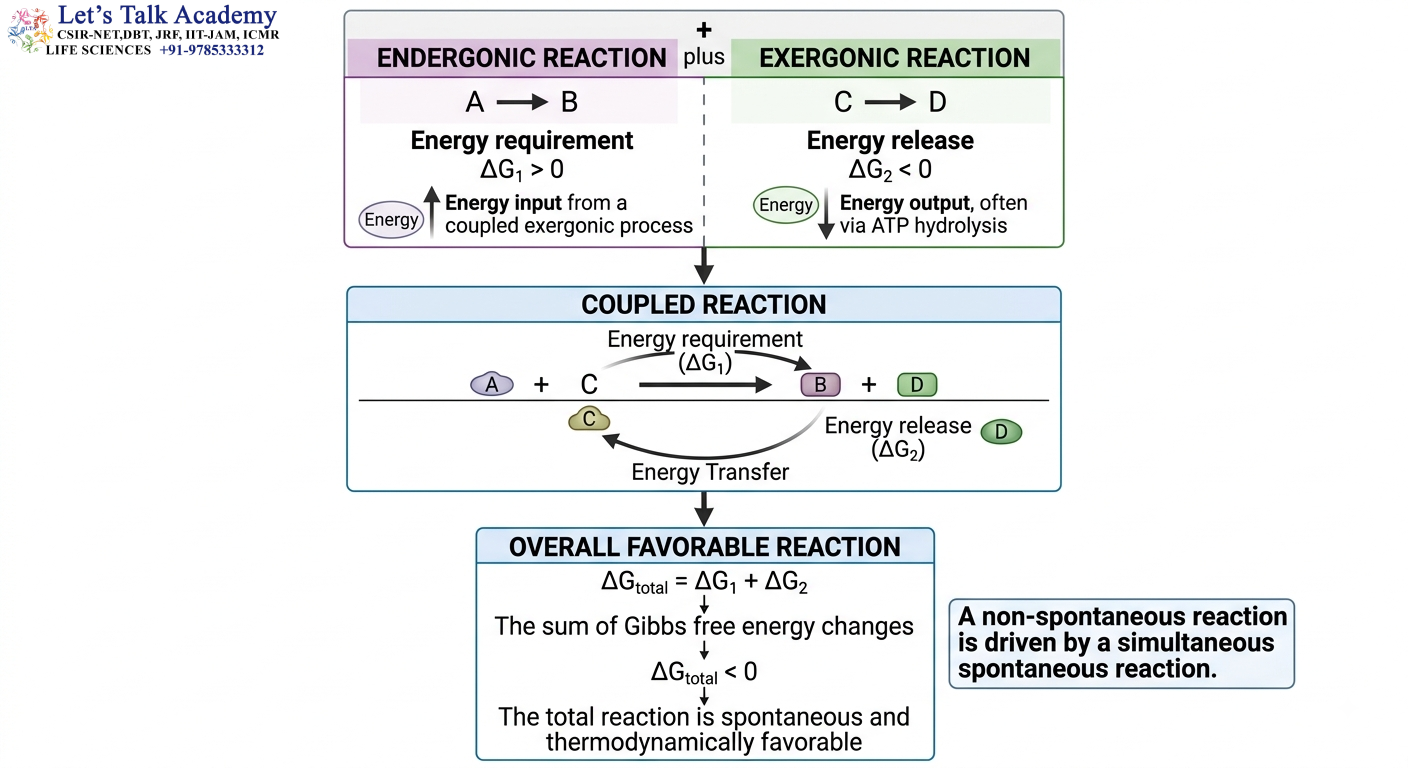
If: ΔG_total < 0
the overall coupled reaction is thermodynamically favorable.
1.1.1 Basic Biological Principle
The fundamental principle of reaction coupling is:
An energetically unfavorable reaction can be driven by coupling it to a sufficiently energetically favorable reaction.
The cell therefore does not violate thermodynamic laws. It simply transfers free energy from one process to another.
1.1.2 Why Reaction Coupling Is Important
Reaction coupling is essential because cells perform many energy-requiring processes, including:
- Protein synthesis
- DNA synthesis
- RNA synthesis
- Lipid synthesis
- Carbohydrate synthesis
- Active transport
- Muscle contraction
- Molecular motor movement
- Maintenance of ion gradients
- Signal transduction
- Cellular movement
- Macromolecular assembly
1.1.3 Common Energy-Coupling Molecules and Systems
Cells use several mechanisms to transfer energy:
- ATP
- GTP
- NADH and NADPH
- High-energy phosphorylated intermediates
- Proton gradients
- Sodium gradients
- Redox reactions
- Activated metabolic intermediates
A reaction being endergonic does not mean that it can never occur.
It means that the reaction requires a source of free energy.
If that reaction is properly coupled to an exergonic reaction, the overall process can become favorable.
2. Thermodynamic Basis of Reaction Coupling
2.1 Gibbs Free Energy

The thermodynamic basis of reaction coupling is the concept of Gibbs free energy.
The relationship is:
ΔG = ΔH − TΔS
where:
- ΔG = change in Gibbs free energy
- ΔH = change in enthalpy
- T = absolute temperature
- ΔS = change in entropy
Gibbs free energy determines the thermodynamic tendency of a reaction under a specified set of conditions.
2.1.1 Negative ΔG
When: ΔG < 0
the reaction is thermodynamically favorable and is called exergonic.
2.1.2 Positive ΔG
When: ΔG > 0
the reaction is thermodynamically unfavorable and is called endergonic.
2.1.3 Zero ΔG
When: ΔG = 0 the reaction is at equilibrium.
There is no net thermodynamic driving force in either direction.
2.1.4 Important Distinction
Thermodynamic favorability does not indicate how quickly a reaction occurs.
A reaction can have a negative ΔG but still proceed very slowly because of a high activation-energy barrier.
Therefore:
Thermodynamics → Determines favorability
Kinetics → Determines reaction rate
2.2 Standard Free Energy
Biochemical reactions are often discussed using the standard transformed free-energy change: ΔG°′
The prime symbol indicates that biochemical standard-state conventions are being used.
However, cellular conditions are rarely standard.
Therefore, the actual free-energy change is:
ΔG = ΔG°′ + RT ln Q
where:
- R = gas constant
- T = absolute temperature
- Q = reaction quotient
2.2.1 Why Actual ΔG Is Important
The actual direction of a cellular reaction depends on:
- Substrate concentration
- Product concentration
- Temperature
- pH
- Ionic conditions
- Cellular compartment
- Concentration of energy carriers
Therefore, ΔG°′ alone does not always tell us the actual direction of a reaction inside the cell.
3. Why Coupling Is Necessary
3.1 Energy Requirement of Living Cells
Living organisms are constantly performing work.
Examples include:
- Building macromolecules
- Transporting substances across membranes
- Maintaining membrane potential
- Moving chromosomes
- Moving vesicles
- Contracting muscles
- Moving molecular motors
- Replicating DNA
- Synthesizing RNA
- Synthesizing proteins
Most of these processes require controlled energy input.
3.2 Energy Released by Catabolism
Catabolic pathways break down energy-rich molecules.
For example:
Glucose → CO₂ + H₂O
The overall oxidation of glucose releases free energy.
However, the cell does not use all of this energy directly.
Instead, energy is captured through intermediate systems such as:
NADH
FADH₂
ATP
Proton-motive force
3.2.1 Energy Flow in Cellular Metabolism
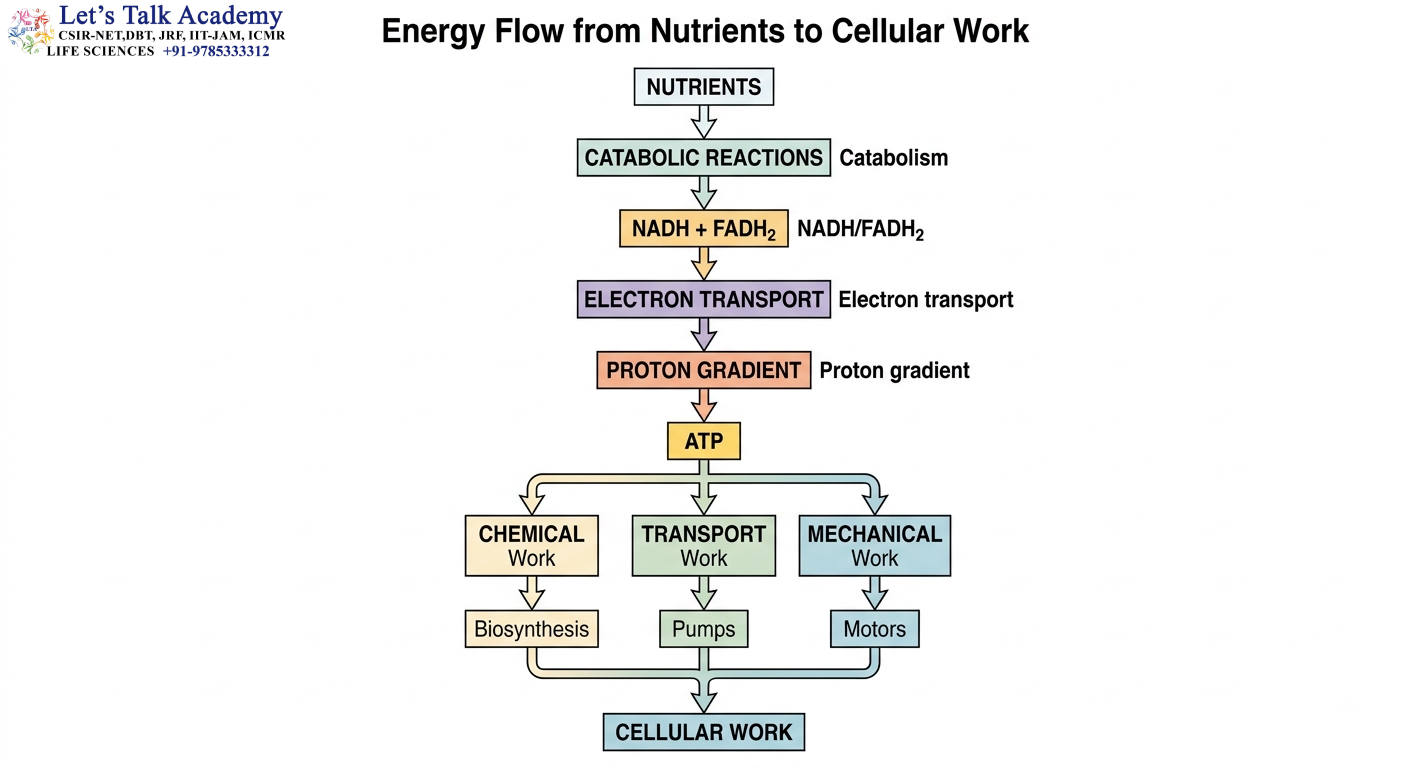
A simplified sequence is:
Nutrients
↓
Catabolic reactions
↓
Reduced electron carriers
↓
Electron transport
↓
Proton gradient
↓
ATP
↓
Cellular work
This is an excellent example of multiple coupled processes.
3.3 Prevention of Uncontrolled Energy Dissipation
If energy released during nutrient oxidation were immediately converted into heat, cells would lose a large fraction of its useful potential.
Coupling allows cells to conserve energy in biologically useful forms.
For example:
Redox energy → Proton gradient → ATP
This controlled transfer is much more useful than direct energy dissipation.
4. Exergonic and Endergonic Reactions
4.1 Exergonic Reactions
An exergonic reaction has: ΔG < 0
It releases free energy.
Examples include:
- ATP hydrolysis
- Oxidation of glucose
- Oxidation of NADH
- Electron transfer to oxygen
Exergonic does not necessarily mean that the reaction is fast.
It only indicates that the reaction is thermodynamically favorable under the specified conditions.
4.2 Endergonic Reactions
An endergonic reaction has: ΔG > 0
It requires free-energy input.
Examples include:
- Protein synthesis
- DNA synthesis
- Active transport against a gradient
- Many anabolic reactions
4.2.1 Biological Significance
Cells commonly drive endergonic reactions by coupling them to:
- ATP hydrolysis
- GTP hydrolysis
- Ion-gradient dissipation
- Redox reactions
- High-energy intermediate breakdown
4.3 Exergonic + Endergonic Coupling
Suppose:
Reaction A: ΔG = +30 kJ mol⁻¹
and:
Reaction B: ΔG = −50 kJ mol⁻¹
Then:
ΔG_total = +30 + (−50)
ΔG_total = −20 kJ mol⁻¹
Therefore, the coupled reaction is favorable.
4.3.1 Key Principle
The unfavorable reaction itself remains endergonic.
It is the overall coupled reaction that becomes favorable.
“ATP hydrolysis changes the ΔG of the endergonic reaction to a negative value.”
The correct interpretation is:
ATP hydrolysis and the energy-requiring reaction are coupled, producing an overall reaction with a favorable ΔG.
5. ΔG of Coupled Reactions
5.1 Additivity of Free Energy
For coupled reactions:
ΔG_total = ΔG₁ + ΔG₂ + ΔG₃ + …
This follows from the fact that Gibbs free energy is a state function.
5.1.1 Two-Reaction Example
If:
ΔG₁ = +20 kJ mol⁻¹
and:
ΔG₂ = −35 kJ mol⁻¹
then:
ΔG_total = −15 kJ mol⁻¹
The overall process is favorable.
5.1.2 Three-Reaction Example
Suppose:
ΔG₁ = +15 kJ mol⁻¹
ΔG₂ = +10 kJ mol⁻¹
ΔG₃ = −40 kJ mol⁻¹
Then:
ΔG_total = +15 + 10 − 40
ΔG_total = −15 kJ mol⁻¹
Therefore, the combined reaction is favorable.
5.2 Conditions for Coupling
Thermodynamic favorability alone is not enough to guarantee biological coupling.
The reactions must also be mechanistically connected.
For example, simply having ATP and an endergonic reaction in the same cellular compartment does not automatically mean that ATP hydrolysis will drive that reaction.
The molecular machinery must provide a pathway for energy transfer.
5.2.1 Thermodynamic Coupling
The overall free-energy balance becomes favorable.
5.2.2 Mechanistic Coupling
The reactions are physically or chemically linked through:
- An enzyme
- A phosphorylated intermediate
- A conformational change
- An ion gradient
- A shared intermediate
6. ATP-Dependent Coupling
6.1 ATP as a Cellular Energy Currency
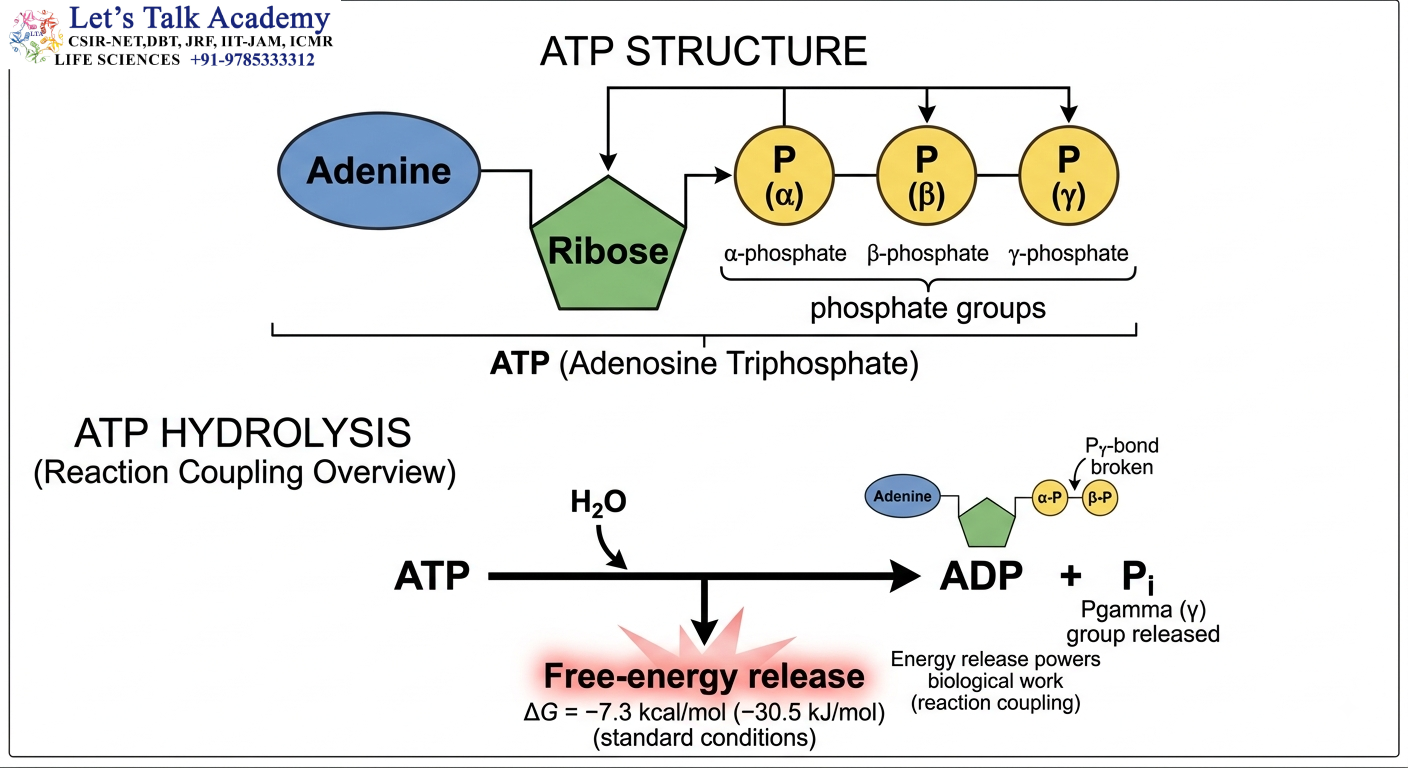
ATP stands for adenosine triphosphate.
It consists of:
- Adenine
- Ribose
- Three phosphate groups
ATP occupies a central position in cellular energy metabolism.
6.1.1 ATP Hydrolysis
The simplified reaction is:
ATP + H₂O → ADP + Pi
This reaction has a negative ΔG under physiological conditions.
Therefore, ATP hydrolysis can provide the free energy required for cellular work.
6.2 ATP Is an Energy-Transfer Molecule
ATP should not be thought of simply as a storage container filled with energy.
A better description is:
ATP is a major intermediate for transferring free energy between metabolic pathways and cellular work.
For example:
Catabolic metabolism
↓
ATP production
↓
ATP hydrolysis
↓
Cellular work
6.3 ATP-Dependent Chemical Work
ATP can drive biosynthetic reactions.
A common mechanism is phosphorylation.
General reaction:
Substrate + ATP → Phosphorylated substrate + ADP
Phosphorylation can alter the free-energy landscape and chemical reactivity of the substrate.
6.3.1 Example: Hexokinase
Glucose + ATP → Glucose-6-phosphate + ADP
ATP hydrolysis is coupled to glucose phosphorylation.
6.4 ATP-Dependent Transport Work
ATP hydrolysis powers membrane pumps.
Examples include:
- Na⁺/K⁺-ATPase
- Ca²⁺-ATPase
- H⁺-ATPase
These systems establish gradients that are essential for cellular function.
6.5 ATP-Dependent Mechanical Work
ATP hydrolysis can also be converted into mechanical movement.
Examples include:
- Myosin
- Kinesin
- Dynein
General mechanism:
ATP hydrolysis → Conformational change → Mechanical movement
7. Actual Free Energy of ATP Hydrolysis
7.1 Standard and Actual Conditions
The standard free-energy change of ATP hydrolysis is represented by ΔG°′.
The actual cellular free-energy change is:
ΔG = ΔG°′ + RT ln Q
For ATP hydrolysis, the reaction quotient is approximately:
Q = [ADP][Pi] / [ATP]
subject to the biochemical conventions used for the calculation.
7.1.1 Factors Affecting ATP Hydrolysis
The actual free energy depends on:
- ATP concentration
- ADP concentration
- Pi concentration
- Temperature
- pH
- Ionic environment
- Cellular compartment
7.1.2 ATP/ADP Ratio
A high ATP/ADP ratio generally indicates a high phosphorylation potential.
A lower ATP/ADP ratio generally indicates a lower phosphorylation potential.
This relationship is important in metabolic regulation.
8. Redox Coupling
8.1 Meaning of Redox Coupling
Redox coupling involves using the free energy associated with electron transfer to drive another energy-requiring process.
Oxidation and reduction always occur together.
8.1.1 Oxidation
Oxidation involves:
Loss of electrons
8.1.2 Reduction
Reduction involves:
Gain of electrons
A useful memory rule is:
OIL — Oxidation Is Loss
RIG — Reduction Is Gain
8.2 Electron Carriers
Important biological electron carriers include:
- NAD⁺/NADH
- FAD/FADH₂
- NADP⁺/NADPH
- Quinones
- Cytochromes
These molecules transfer electrons between different components of metabolic pathways.
8.3 Redox Coupling in Respiration
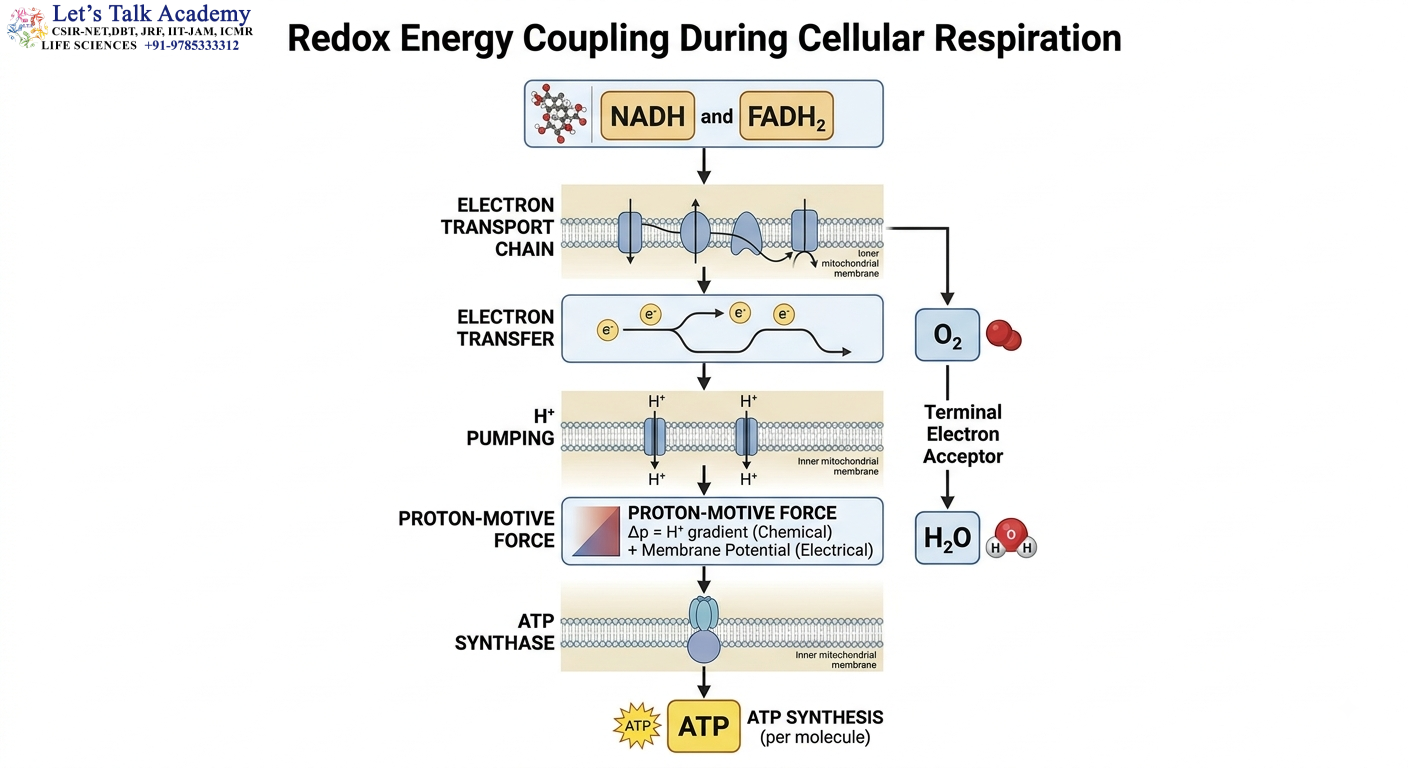
During cellular respiration:
NADH → Electron Transport Chain → O₂
The electron transfer releases free energy.
This energy is coupled to proton pumping.
The sequence is:
Electron transfer
↓
Proton pumping
↓
Proton-motive force
↓
ATP synthesis
This is one of the most important examples of energy coupling in biology.
9. Proton-Gradient Coupling
9.1 Formation of a Proton Gradient
A proton gradient exists when the concentration of H⁺ differs across a membrane.
For example, during mitochondrial respiration, electron transport drives proton movement across the inner mitochondrial membrane.
9.1.1 Chemical Gradient
The concentration difference creates a chemical driving force.
This is related to: ΔpH
9.1.2 Electrical Gradient
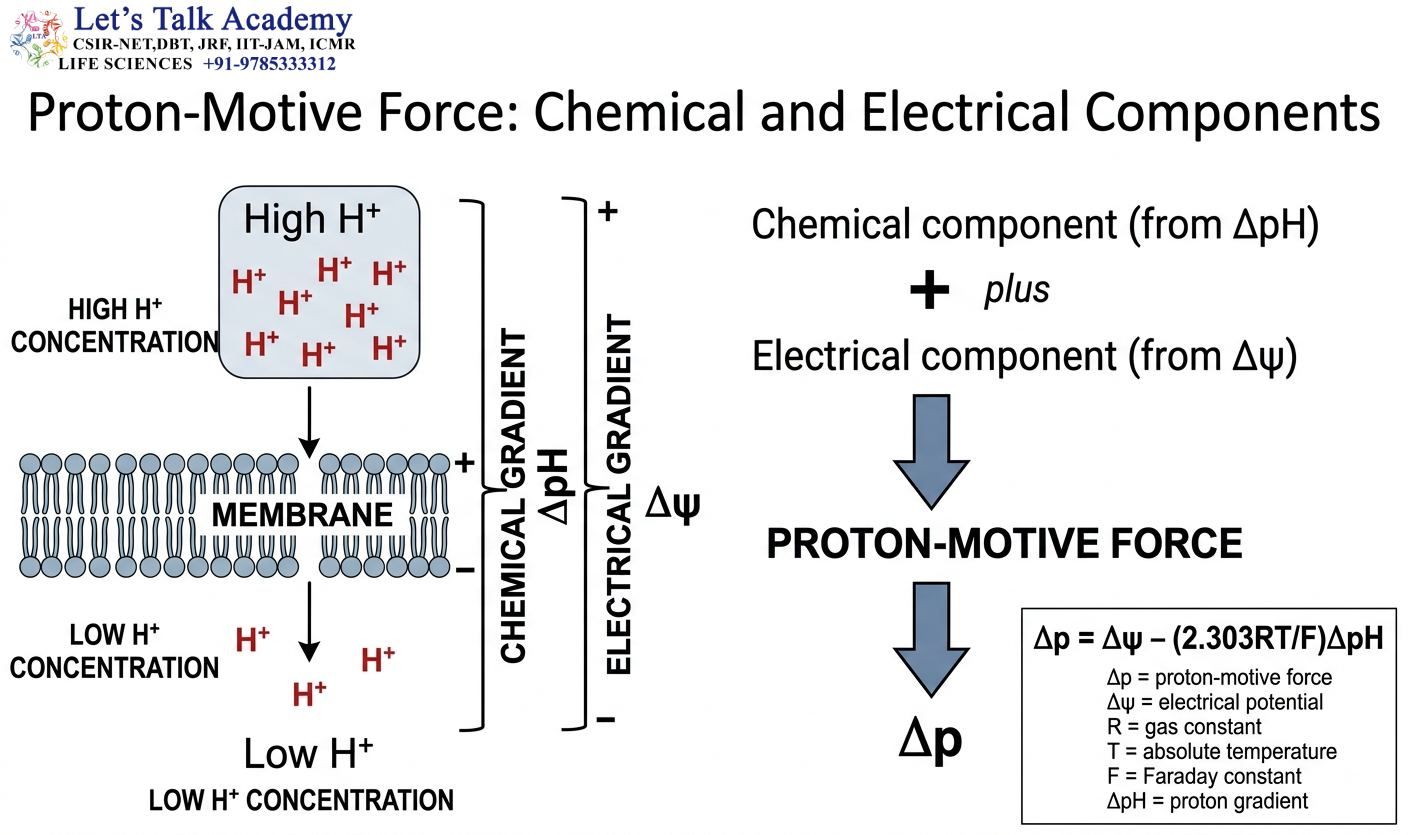
Because H⁺ carries a positive charge, separating protons across a membrane also creates an electrical potential.
This is represented by: Δψ
9.2 Proton-Motive Force
The combination of chemical and electrical components forms the proton-motive force.
A commonly used expression is:
Δp = Δψ − (2.303RT/F)ΔpH
The exact sign depends on the direction chosen for the membrane potential and proton gradient.
The proton-motive force can drive:
- ATP synthesis
- Active transport
- Nutrient uptake
- Flagellar rotation
- Other energy-dependent processes
10. Phosphoryl-Transfer Coupling
10.1 Meaning of Phosphoryl Transfer
Phosphoryl transfer involves movement of a phosphoryl group from one molecule to another.
Phosphoryl-transfer reactions are central to cellular energy metabolism.
10.2 High Phosphoryl-Transfer Potential
Important compounds include:
- ATP
- Phosphoenolpyruvate
- 1,3-Bisphosphoglycerate
- Phosphocreatine
These compounds can participate in reactions that conserve or transfer free energy.
10.2.1 ATP and Phosphoryl Transfer
ATP can transfer a phosphoryl group to an acceptor molecule.
General reaction:
ATP + Substrate → ADP + Phosphorylated substrate
10.3 Substrate-Level Phosphorylation
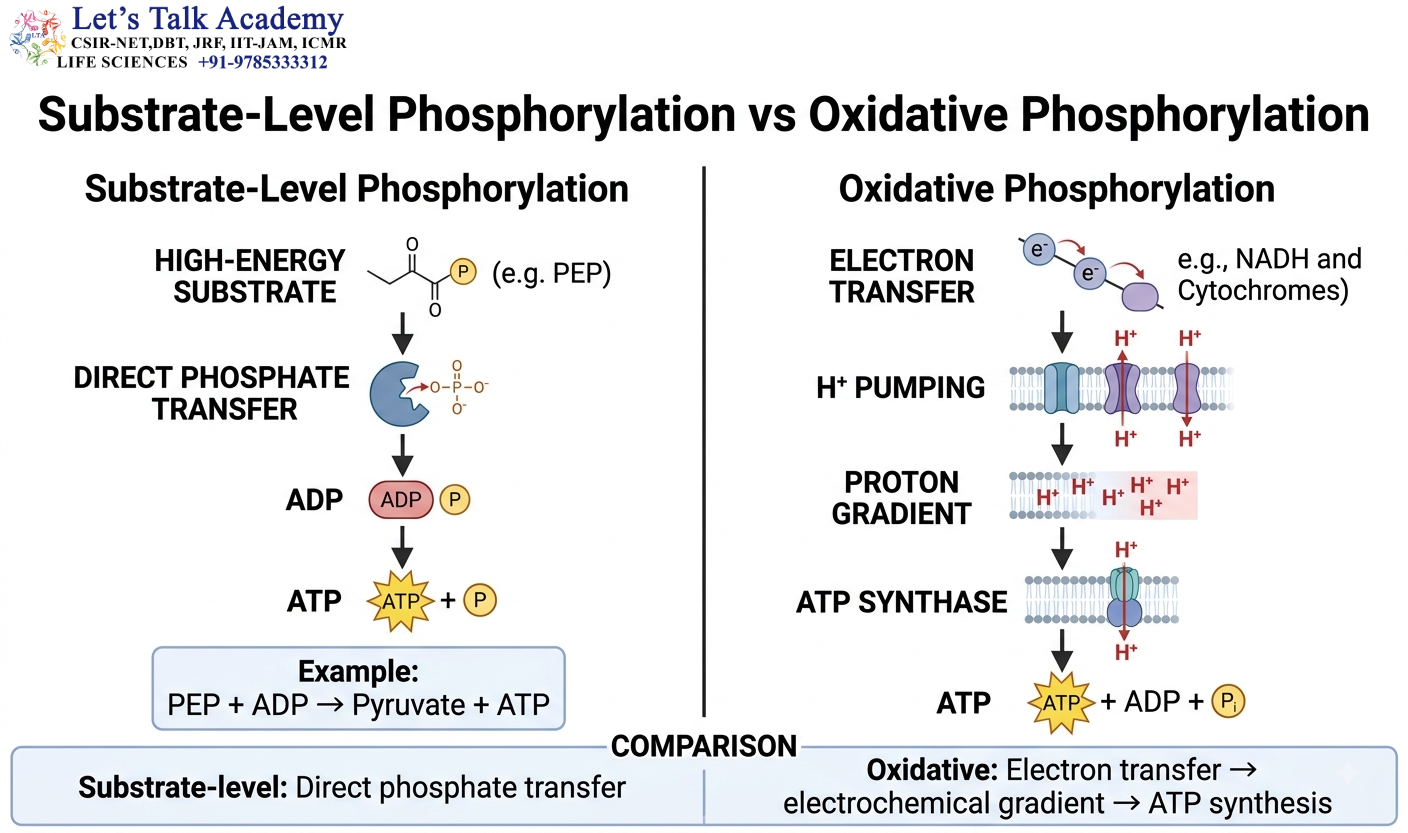
Substrate-level phosphorylation occurs when a high-energy substrate directly transfers a phosphate group to ADP.
Examples include:
1,3-Bisphosphoglycerate + ADP → 3-Phosphoglycerate + ATP
and:
PEP + ADP → Pyruvate + ATP
10.3.1 Important Difference
Substrate-level phosphorylation:
High-energy substrate → ATP
Oxidative phosphorylation:
Electron transfer → Proton gradient → ATP
11. Coupling in Glycolysis
11.1 Overview of Glycolysis
Glycolysis is a ten-step pathway that converts:
Glucose → Pyruvate
It occurs in the cytosol.
Glycolysis includes:
- Energy investment
- Energy payoff
- ATP consumption
- ATP production
- NADH production
11.2 Coupling in the Hexokinase Reaction
The phosphorylation of glucose requires energy.
The reaction is coupled to ATP hydrolysis:
Glucose + ATP → Glucose-6-phosphate + ADP
11.2.1 Biological Significance
The addition of phosphate:
- Traps glucose inside the cell
- Activates glucose for metabolism
- Helps maintain a concentration gradient favoring glucose entry
- Commits glucose to intracellular metabolic processing
11.3 Coupling in the PFK-1 Reaction
PFK-1 catalyzes:
Fructose-6-phosphate + ATP → Fructose-1,6-bisphosphate + ADP
This reaction uses ATP to drive phosphorylation.
11.3.1 Importance
PFK-1 is one of the major regulatory points of glycolysis.
Its activity is influenced by the cellular energy state.
11.4 Coupling During ATP Generation
Glycolysis later produces ATP through substrate-level phosphorylation.
11.4.1 Phosphoglycerate Kinase
1,3-Bisphosphoglycerate + ADP → 3-Phosphoglycerate + ATP
11.4.2 Pyruvate Kinase
PEP + ADP → Pyruvate + ATP
These reactions capture free energy in ATP.
12. Coupling in Oxidative Phosphorylation
12.1 Definition
Oxidative phosphorylation connects the oxidation of reduced electron carriers to ATP synthesis.
It is a classic example of indirect energy coupling.
12.2 Overall Energy Flow
The process can be represented as:
NADH/FADH₂ oxidation
↓
Electron transport
↓
Proton pumping
↓
Proton-motive force
↓
ATP synthase
↓
ATP
12.3 Role of the Inner Mitochondrial Membrane
The inner mitochondrial membrane is essential because it:
- Contains respiratory complexes
- Contains ATP synthase
- Maintains proton separation
- Provides a relatively low permeability barrier to protons
12.3.1 Proton Gradient
Electron transport provides the energy needed to move protons across the membrane.
The resulting gradient stores electrochemical energy.
12.4 ATP Synthase and Coupling
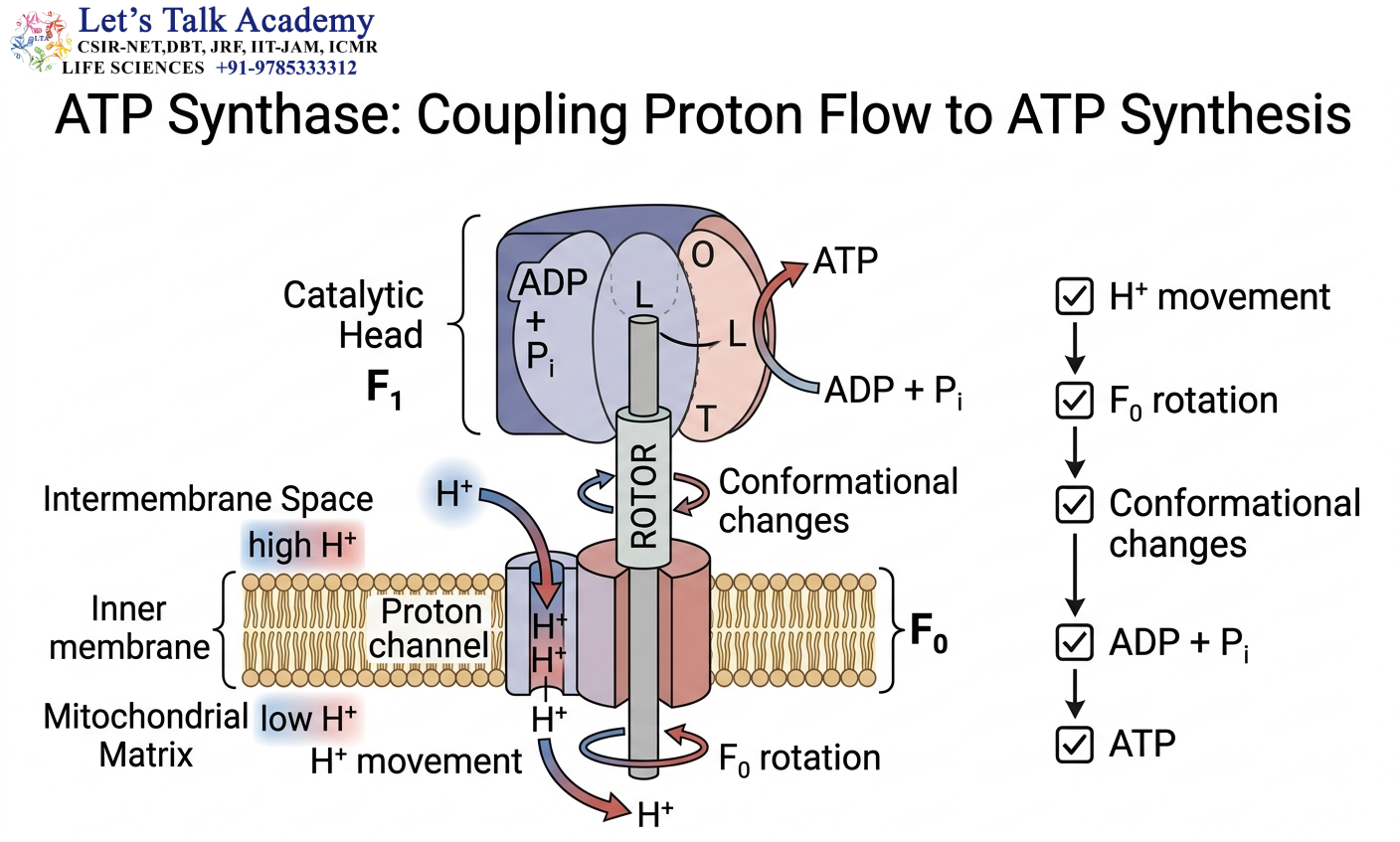
ATP synthase couples proton movement to ATP formation.
Protons move through the membrane-embedded portion of ATP synthase.
This produces rotational movement and conformational changes that are coupled to ATP synthesis in the catalytic portion.
The simplified process is:
H⁺ movement
↓
Rotation
↓
Conformational changes
↓
ADP + Pi → ATP
13. Coupling in Biosynthetic Pathways
13.1 Biosynthesis Requires Energy
Anabolic reactions construct complex molecules from simpler components.
Examples include:
- Protein synthesis
- DNA synthesis
- RNA synthesis
- Fatty-acid synthesis
- Polysaccharide synthesis
These reactions frequently require energy input.
13.2 ATP in Biosynthesis
ATP may be used to:
- Activate substrates
- Phosphorylate intermediates
- Drive unfavorable reactions
- Provide energy for macromolecular assembly
13.2.1 Activated Intermediates
Cells frequently use energy to generate an activated intermediate.
General sequence:
Energy input
↓
Activated intermediate
↓
Favorable subsequent reaction
This strategy is extremely common in metabolism.
13.3 GTP in Protein Synthesis
GTP is consumed during several steps of translation.
GTP hydrolysis is associated with:
- Initiation
- Elongation
- Translocation
- Ribosome-associated conformational changes
Therefore, protein synthesis is an energy-coupled process.
14. Coupling in Active Transport
14.1 Definition of Active Transport
Active transport moves a substance against its electrochemical gradient.
Because movement against a gradient requires energy, the process must be coupled to an energy source.
14.2 Primary Active Transport
Primary active transport directly uses energy such as ATP hydrolysis.
Examples:
- Na⁺/K⁺-ATPase
- Ca²⁺-ATPase
- H⁺-ATPase
14.3 Na⁺/K⁺-ATPase
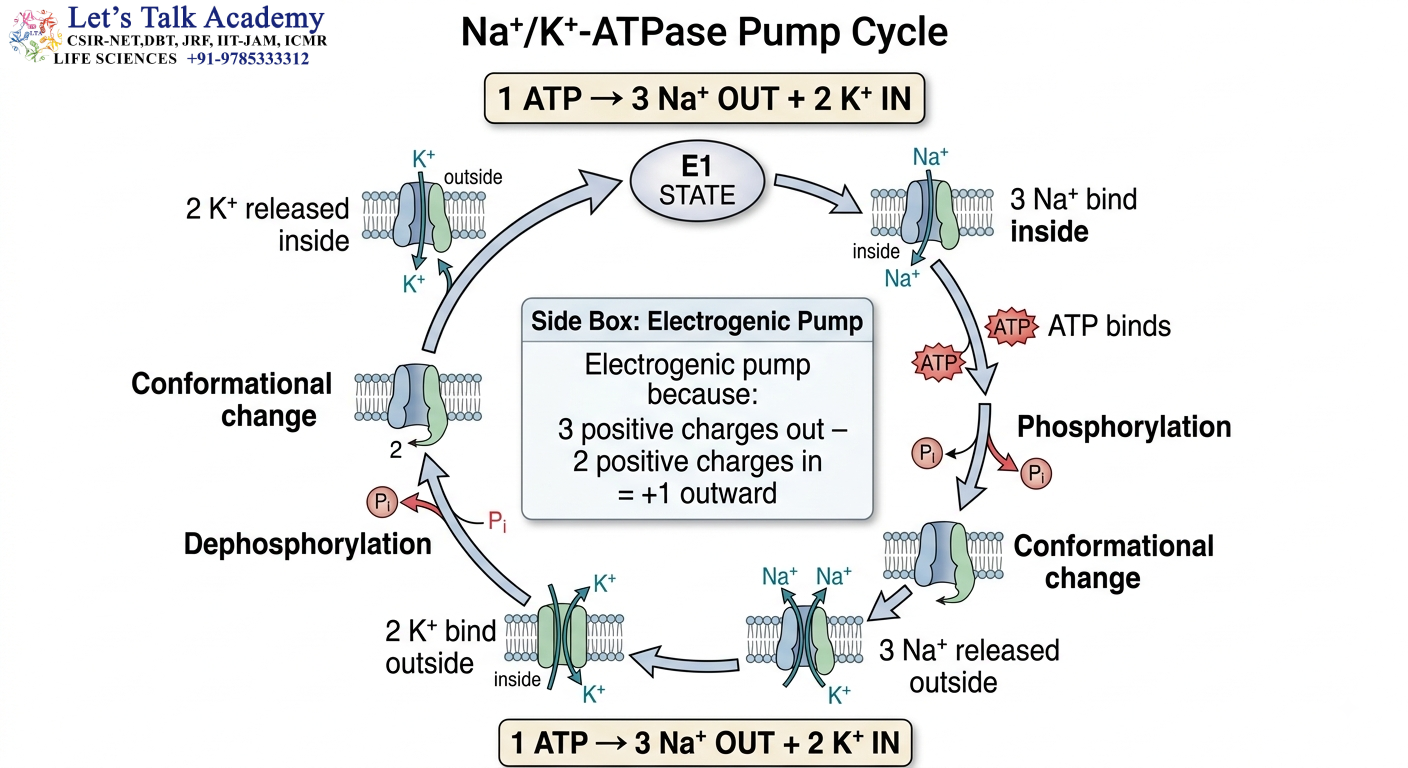
The classical Na⁺/K⁺-ATPase cycle transports:
3 Na⁺ out
and:
2 K⁺ in
per ATP hydrolyzed.
14.3.1 Electrogenic Nature
Because three positive charges leave while two enter, there is a net movement of one positive charge outward per cycle.
Therefore, the pump is electrogenic.
14.3.2 Biological Importance
The Na⁺/K⁺ gradient contributes to:
- Membrane potential
- Osmotic balance
- Secondary active transport
- Cellular volume regulation
- Excitable-cell physiology
14.4 Secondary Active Transport
Secondary active transport uses an ion gradient as its energy source.
The transporter itself may not directly hydrolyze ATP.
For example:
ATP hydrolysis
↓
Na⁺ gradient
↓
Na⁺-coupled glucose transport
This is an example of indirect energy coupling.
14.5 Symport and Antiport
14.5.1 Symport
Two substances move in the same direction.
14.5.2 Antiport
Two substances move in opposite directions.
Both can use ion gradients to perform transport work.
15. Coupling in Molecular Motors
15.1 Definition
Molecular motors are proteins that convert chemical energy into mechanical work.
Major examples include:
- Myosin
- Kinesin
- Dynein
15.2 Myosin
Myosin uses ATP hydrolysis to generate conformational changes that result in movement relative to actin.
A simplified cycle is:
ATP binding
↓
ATP hydrolysis
↓
Conformational change
↓
Actin interaction
↓
Power stroke
↓
Mechanical work
15.3 Kinesin
Kinesin moves along microtubules and transports cargo.
ATP binding and hydrolysis regulate the conformational states of the motor domains.
Kinesin is important in:
- Vesicle transport
- Organelle transport
- Intracellular trafficking
15.4 Dynein
Dynein is an ATP-dependent microtubule motor.
It participates in:
- Intracellular transport
- Ciliary movement
- Flagellar movement
15.4.1 Energy Transduction
Molecular motors demonstrate:
Chemical energy → Conformational energy → Mechanical work
16. ATP Hydrolysis and Cellular Work
16.1 Chemical Work
ATP hydrolysis supports the synthesis of:
- Proteins
- DNA
- RNA
- Lipids
- Polysaccharides
16.2 Transport Work
ATP powers pumps and transport systems.
Examples include:
- Na⁺/K⁺-ATPase
- Ca²⁺-ATPase
- Proton pumps
16.3 Mechanical Work
ATP powers:
- Muscle contraction
- Cytoskeletal movement
- Molecular motors
- Vesicle transport
16.4 Conformational Coupling
ATP often drives work through protein conformational changes.
ATP binding and hydrolysis can change the shape and interaction properties of a protein.
The conformational changes can then be coupled to:
- Transport
- Catalysis
- Movement
- Assembly
- Disassembly
16.4.1 Important Concept
ATP is not simply burned to produce heat.
Its hydrolysis is mechanistically coupled to molecular changes that produce useful cellular work.
17. Ion-Gradient-Driven Reactions
17.1 Electrochemical Gradient
An electrochemical gradient has two components:
Chemical gradient
and:
Electrical gradient
The total driving force for an ion depends on both.
17.2 Proton Gradients
Proton gradients are widely used in:
- Mitochondria
- Chloroplasts
- Bacteria
- Archaea
They can drive:
- ATP synthesis
- Transport
- Motility
- Other energy-dependent processes
17.3 Sodium Gradients
Sodium gradients can also store usable electrochemical energy.
They can drive:
- Nutrient transport
- Secondary active transport
- ATP synthesis in some organisms
- Flagellar movement
17.3.1 Important Concept
Biological energy transduction is not exclusively dependent on ATP.
Ion gradients can act as intermediate energy stores.
18. Chemiosmotic Coupling
18.1 Meaning of Chemiosmosis
Chemiosmosis is the process in which an electrochemical ion gradient across a membrane is used to perform biological work.
The concept is central to:
- Oxidative phosphorylation
- Photophosphorylation
- Bacterial energy metabolism
18.2 Basic Mechanism
The general mechanism is:
Energy source
↓
Ion pumping
↓
Electrochemical gradient
↓
Ion movement through a specific protein
↓
Energy transduction
18.3 Requirements for Chemiosmotic Coupling
Effective chemiosmotic coupling requires:
- A membrane.
- A difference in ion concentration across the membrane.
- An electrical potential or membrane potential.
- A pathway allowing controlled ion movement.
- A molecular machine capable of converting ion movement into useful work.
18.4 Mitochondrial Chemiosmosis
During oxidative phosphorylation:
Electron transport
↓
H⁺ pumping
↓
Proton-motive force
↓
ATP synthase
↓
ATP
The inner mitochondrial membrane is essential for maintaining this gradient.
18.5 Chloroplast Chemiosmosis
During photosynthesis:
Light energy
↓
Electron transport
↓
Proton accumulation in thylakoid lumen
↓
Proton movement through ATP synthase
↓
ATP synthesis
This is called photophosphorylation.
19. Energy Transduction
19.1 Definition
Energy transduction is the conversion of energy from one form into another.
Cells continuously perform energy transduction to capture and utilize energy.
19.2 Major Examples
19.2.1 Redox Energy to Electrochemical Energy
Electron transfer → Proton gradient
19.2.2 Electrochemical Energy to Chemical Energy
Proton gradient → ATP
19.2.3 Chemical Energy to Mechanical Energy
ATP hydrolysis → Molecular movement
19.2.4 Light Energy to Chemical Energy
Light → Electron transport → Proton gradient → ATP
19.3 Energy Transduction Does Not Create Energy
Cells cannot create energy.
They transform energy from one form into another.
This follows the first law of thermodynamics.
20. Examples of Coupled Reactions
20.1 Glucose Phosphorylation
Glucose + ATP → Glucose-6-phosphate + ADP
ATP hydrolysis drives glucose phosphorylation.
20.2 Fructose-6-Phosphate Phosphorylation
Fructose-6-phosphate + ATP → Fructose-1,6-bisphosphate + ADP
ATP hydrolysis is coupled to phosphorylation.
20.3 Substrate-Level Phosphorylation
1,3-Bisphosphoglycerate + ADP → 3-Phosphoglycerate + ATP
20.4 Oxidative Phosphorylation
Electron transfer → Proton gradient → ATP
20.5 Active Transport
ATP hydrolysis → Ion pumping
20.6 Secondary Active Transport
Na⁺ gradient → Glucose uptake
20.7 Molecular Motors
ATP hydrolysis → Conformational change → Mechanical movement
20.8 Photophosphorylation
Light energy → Proton gradient → ATP
21. Uncoupling vs Coupling
21.1 Coupling
In coupling, energy released by one process is efficiently connected to another process.
Example:
Proton-motive force → ATP synthesis
21.2 Uncoupling
Uncoupling occurs when the energy stored in an electrochemical gradient is dissipated without efficient ATP production.
For example, a proton leak can allow H⁺ to cross a membrane without passing through ATP synthase.
21.3 Uncoupling Proteins
Uncoupling proteins provide alternative pathways for proton movement.
This decreases the amount of proton-motive force available to ATP synthase.
21.4 UCP1 and Thermogenesis
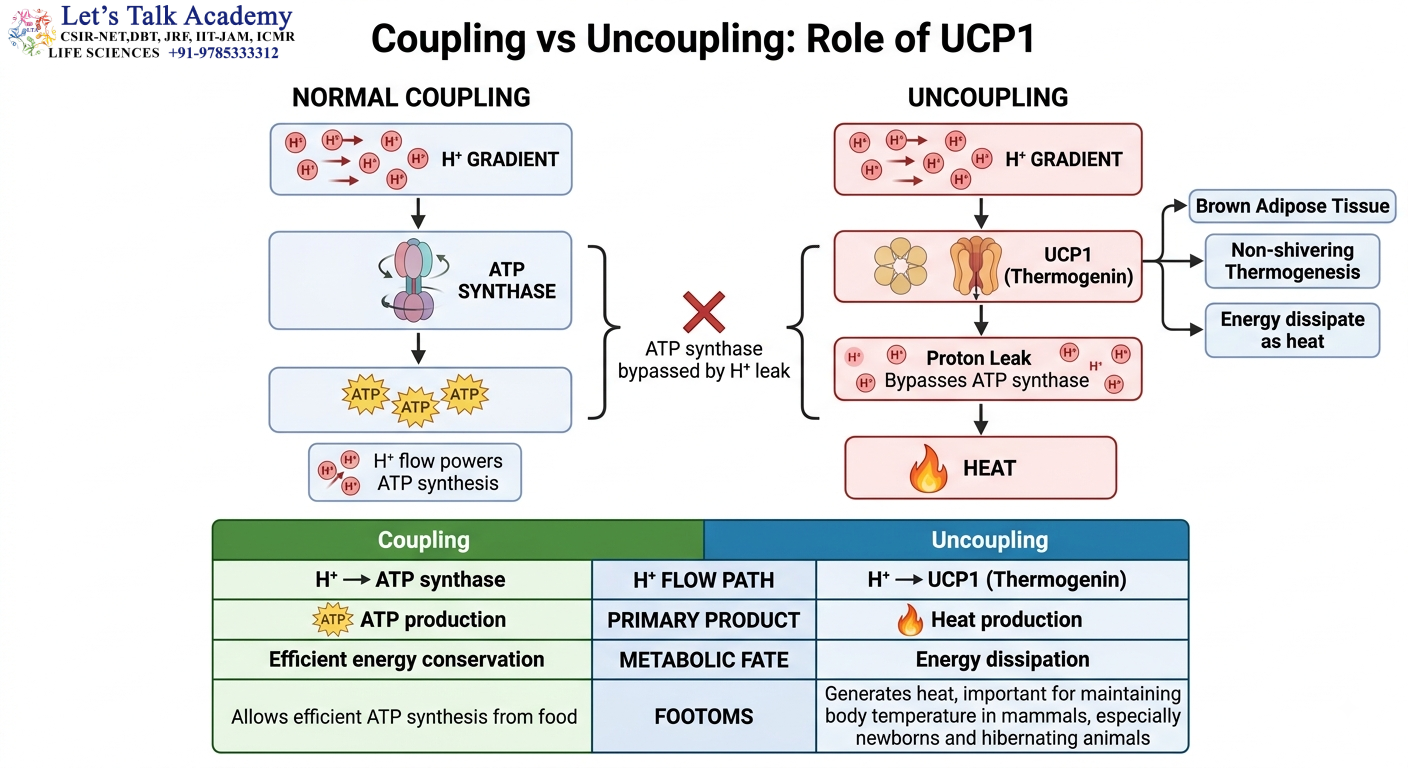
UCP1 is found in brown adipose tissue.
It allows proton movement across the inner mitochondrial membrane.
Instead of:
Proton gradient → ATP
energy is released largely as:
Proton gradient → Heat
This contributes to non-shivering thermogenesis.
21.5 Effect of Uncoupling on Respiration
Uncoupling can result in:
- Increased oxygen consumption
- Increased electron transport
- Reduced ATP synthesis efficiency
- Increased heat production
Uncoupling does not necessarily stop electron transport.
It can actually increase respiratory activity because the feedback limitation imposed by a large proton gradient is reduced.
22. Coupling in Nucleic Acid Synthesis
22.1 DNA Synthesis
DNA polymerization is coupled to the hydrolysis of nucleotide triphosphates.
A simplified representation is:
dNTP → dNMP incorporated into DNA + PPi
22.2 Pyrophosphate Hydrolysis
The released pyrophosphate can undergo:
PPi + H₂O → 2Pi
This hydrolysis contributes additional thermodynamic driving force.
22.2.1 Biological Significance
Pyrophosphate hydrolysis helps make nucleotide incorporation strongly favorable and contributes to the directionality of polymerization.
22.3 RNA Synthesis
RNA polymerization similarly uses nucleotide triphosphates.
The reaction releases pyrophosphate.
Therefore:
NTP incorporation + PPi hydrolysis
helps drive RNA synthesis.
23. Coupling in Protein Synthesis
23.1 Amino Acid Activation
Aminoacyl-tRNA synthetases use ATP to attach amino acids to their corresponding tRNAs.
General process:
Amino acid + ATP → Activated amino acid intermediate
followed by:
Aminoacyl-tRNA formation
23.2 Translation
GTP hydrolysis is coupled to several translation processes.
Important steps include:
- Initiation
- Elongation
- Translocation
- Termination-associated processes
23.2.1 Importance
Protein synthesis is therefore an energy-intensive and highly coupled cellular process.
24. Coupling in Fatty-Acid Metabolism
24.1 Fatty-Acid Activation
Before entering several metabolic pathways, fatty acids are activated to form acyl-CoA derivatives.
This requires energy.
A simplified representation is:
Fatty acid + CoA + ATP → Acyl-CoA
24.1.1 Importance
Activation makes the fatty acid more chemically reactive and suitable for subsequent metabolic reactions.
This illustrates:
Energy investment → Activated intermediate → Favorable metabolic reaction
25. Coupling in Signal Transduction
25.1 Protein Phosphorylation
Protein kinases transfer phosphate from ATP to target proteins.
General reaction:
Protein-OH + ATP → Protein-O-PO₃²⁻ + ADP
25.2 Consequences of Phosphorylation
Phosphorylation can alter:
- Protein activity
- Protein conformation
- Protein localization
- Protein stability
- Protein-protein interactions
25.2.1 Energy and Regulation
This demonstrates that ATP-dependent coupling is not restricted to metabolism.
It can also connect energy transfer with cellular regulation and information processing.
26. Coupling and Membrane Potential
26.1 Meaning of Membrane Potential
A membrane potential is an electrical potential difference across a biological membrane.
It results from unequal distribution of charged ions.
26.2 Membrane Potential as Stored Energy
A membrane potential represents a form of electrochemical potential energy.
It can be used to drive:
- Ion movement
- Transport
- ATP synthesis
- Cellular signaling
- Electrical excitability
26.3 Importance in Excitable Cells
In neurons and muscle cells, ion gradients and membrane potential are central to electrical signaling.
The Na⁺ and K⁺ gradients required for these processes are maintained partly through ATP-dependent ion pumping.
Therefore:
ATP hydrolysis → Ion gradient → Membrane potential → Cellular signaling
This represents another chain of energy coupling.
27. Coupling in Bacteria
27.1 Bacterial Proton-Motive Force
Bacteria can generate proton gradients across their plasma membranes.
These gradients can power:
- ATP synthesis
- Nutrient uptake
- Flagellar rotation
- Ion transport
27.2 Sodium-Motive Force
Some microorganisms use sodium gradients for energy transduction.
This demonstrates that biological energy coupling is flexible.
The fundamental requirement is not necessarily a proton gradient itself.
The important principle is the existence of an electrochemical gradient that can be coupled to useful work.
28. Coupling in Photosynthesis
28.1 Light-Driven Electron Transfer
Photosynthesis uses light energy to drive electron transfer.
The energy is converted into chemical and electrochemical forms.
28.2 Proton Gradient in Chloroplasts
Electron transport contributes to proton accumulation inside the thylakoid lumen.
This produces a proton gradient across the thylakoid membrane.
28.3 ATP Formation
Protons move through ATP synthase.
Their movement drives ATP formation:
ADP + Pi → ATP
28.4 Overall Coupling
The complete sequence is:
Light
↓
Electron excitation
↓
Electron transport
↓
Proton gradient
↓
ATP synthase
↓
ATP
This is photophosphorylation.
29. Thermodynamic Calculations
29.1 Actual Free Energy
The fundamental equation is:
ΔG = ΔG°′ + RT ln Q
where:
- ΔG = actual free-energy change
- ΔG°′ = standard transformed free-energy change
- R = gas constant
- T = absolute temperature
- Q = reaction quotient
29.2 Reaction Quotient
For:
aA + bB ⇌ cC + dD
the reaction quotient is:
Q = [C]ᶜ[D]ᵈ / [A]ᵃ[B]ᵇ
The stoichiometric coefficients become powers.
29.2.1 Example
For:
2A + B ⇌ 3C
the reaction quotient is:
Q = [C]³ / [A]²[B]
29.3 Effect of Q on ΔG
If: Q < 1 then: ln Q < 0 and the RT ln Q term is negative.
If: Q > 1 then: ln Q > 0 and the RT ln Q term is positive.
If: Q = 1 then: ln Q = 0
Therefore: ΔG = ΔG°′
30. ATP-Coupling Numerical Problems
30.1 Basic Calculation
Suppose an unfavorable reaction has:
ΔG = +35 kJ mol⁻¹
and ATP hydrolysis has:
ΔG = −50 kJ mol⁻¹
Then:
ΔG_total = +35 − 50
ΔG_total = −15 kJ mol⁻¹
Therefore, the coupled process is thermodynamically favorable.
30.2 Multiple ATP Molecules
Suppose a reaction requires:
+100 kJ mol⁻¹
and one ATP hydrolysis provides:
−40 kJ mol⁻¹
Two ATP molecules provide:
−80 kJ mol⁻¹
which is insufficient.
Three ATP molecules provide:
−120 kJ mol⁻¹
which is sufficient under the simplified assumptions.
The actual cellular system may not operate at 100% thermodynamic efficiency.
Therefore, numerical questions should always be solved using the assumptions and values given in the question.
31. Equilibrium and Coupled Reactions
31.1 Relationship Between ΔG and Equilibrium
At equilibrium:
ΔG = 0
For standard conditions:
ΔG°′ = −RT ln K′eq
31.1.1 Large Equilibrium Constant
A large K′eq indicates that products are strongly favored under the defined standard conditions.
31.1.2 Small Equilibrium Constant
A small K′eq indicates that reactants are favored.
31.2 Coupling and Equilibrium
Coupling can alter the overall thermodynamic tendency of a reaction system.
An unfavorable process can be driven forward when coupled to a favorable process.
However, coupling must involve appropriate molecular mechanisms.
32. Coupling and Reaction Rate
32.1 Thermodynamics
Thermodynamics determines whether a reaction is favorable.
The key quantity is: ΔG
32.2 Kinetics
Kinetics determines the rate at which a reaction proceeds.
The key concept is:
Activation energy
32.3 Role of Enzymes
Enzymes accelerate reactions by lowering activation energy.
They do not change:
- Overall ΔG
- Equilibrium constant
- Thermodynamic equilibrium position
33. Coupling Efficiency and Energy Dissipation
33.1 Energy Conservation
Cells attempt to conserve free energy in useful forms such as:
- ATP
- Ion gradients
- Reduced electron carriers
- Activated intermediates
33.2 Energy Dissipation
Some energy is inevitably dissipated as heat.
This is consistent with the second law of thermodynamics.
33.3 Coupling Efficiency
Coupling efficiency refers to how effectively the energy released by a driving process is conserved in a useful form.
For example:
Efficient oxidative phosphorylation → More ATP from a given amount of respiratory energy
Poor coupling → More energy dissipated as heat
34. Coupling Ratio and Stoichiometry
34.1 Meaning
A coupling ratio describes the number of molecules or ions associated with a particular energy-transduction event.
Examples include:
- H⁺ per ATP
- ATP per substrate oxidized
- Na⁺ per transported substrate
- ATP consumed per biosynthetic event
34.2 Importance in Oxidative Phosphorylation
ATP production depends on:
- Number of protons pumped
- Proton requirement of ATP synthase
- Transport costs
- Membrane leakage
- Cellular conditions
Therefore, ATP yield is linked to coupling stoichiometry.
35. Integrated View of Cellular Energy Coupling
35.1 From Nutrients to Cellular Work
The complete energy pathway can be represented as:
Nutrients
↓
Catabolism
↓
NADH + FADH₂
↓
Electron Transport
↓
Proton-Motive Force
↓
ATP
↓
Cellular Work
35.2 ATP as the Central Connector
ATP links energy-releasing pathways with energy-consuming pathways.
Therefore:
Catabolism → ATP generation → Anabolism
This is one of the central ideas of metabolism.
35.3 Multiple Forms of Energy
Cellular energy may exist temporarily as:
- Chemical potential
- Redox potential
- Phosphoryl-transfer potential
- Electrochemical potential
- Mechanical energy
Energy transduction allows conversion between these forms.
36. Master Concept of Oxidative Coupling
36.1 Complete Sequence
Glucose and other nutrients
↓
Oxidation
↓
NADH/FADH₂
↓
Electron Transport Chain
↓
Energy Release
↓
H⁺ Pumping
↓
Proton-Motive Force
↓
ATP Synthase
↓
ATP
↓
Cellular Work
36.1.1 Significance
This sequence demonstrates that ATP synthesis is not an isolated event.
It is the endpoint of a chain of coupled energy-transfer reactions.
37. Master Concept of ATP Coupling
37.1 General Mechanism
ATP + H₂O → ADP + Pi
↓
Free-energy release
↓
Phosphorylation / conformational change
↓
Cellular work
38. Master Concept of Chemiosmotic Coupling
38.1 General Mechanism
Energy source
↓
Ion pumping
↓
Electrochemical gradient
↓
Controlled ion movement
↓
Energy transduction
↓
ATP or cellular work
38.1.1 Major Examples
Mitochondria
Electron transport → H⁺ gradient → ATP
Chloroplasts
Light → H⁺ gradient → ATP
Bacteria
Electron transport → Ion gradient → ATP/transport/motility
39. Important Concepts
39.1 Thermodynamic Coupling vs Mechanistic Coupling
Thermodynamic coupling describes the free-energy relationship between reactions.
Mechanistic coupling describes how the reactions are physically linked.
A system requires both appropriate thermodynamic driving force and an appropriate molecular mechanism.
39.2 Direct and Indirect Coupling
39.2.1 Direct Coupling
ATP hydrolysis can be directly linked to phosphorylation or conformational changes.
39.2.2 Indirect Coupling
Electron transport first generates a proton gradient, and the proton gradient subsequently drives ATP synthesis.
Therefore oxidative phosphorylation is an example of indirect coupling through an electrochemical intermediate.
39.3 Energy Coupling Through Activated Intermediates
Many biosynthetic pathways use activated intermediates.
General pattern:
Energy input
↓
Activated intermediate
↓
Favorable chemical transformation
This is common in:
- Nucleic acid synthesis
- Protein synthesis
- Lipid metabolism
- Carbohydrate metabolism


