



































































22. Bacteriophage λ and Pl are both temperate phages. Which one of the following statements made about these phages and their lytic and lysogeny cycles in E. coli is INCORRECT? […]
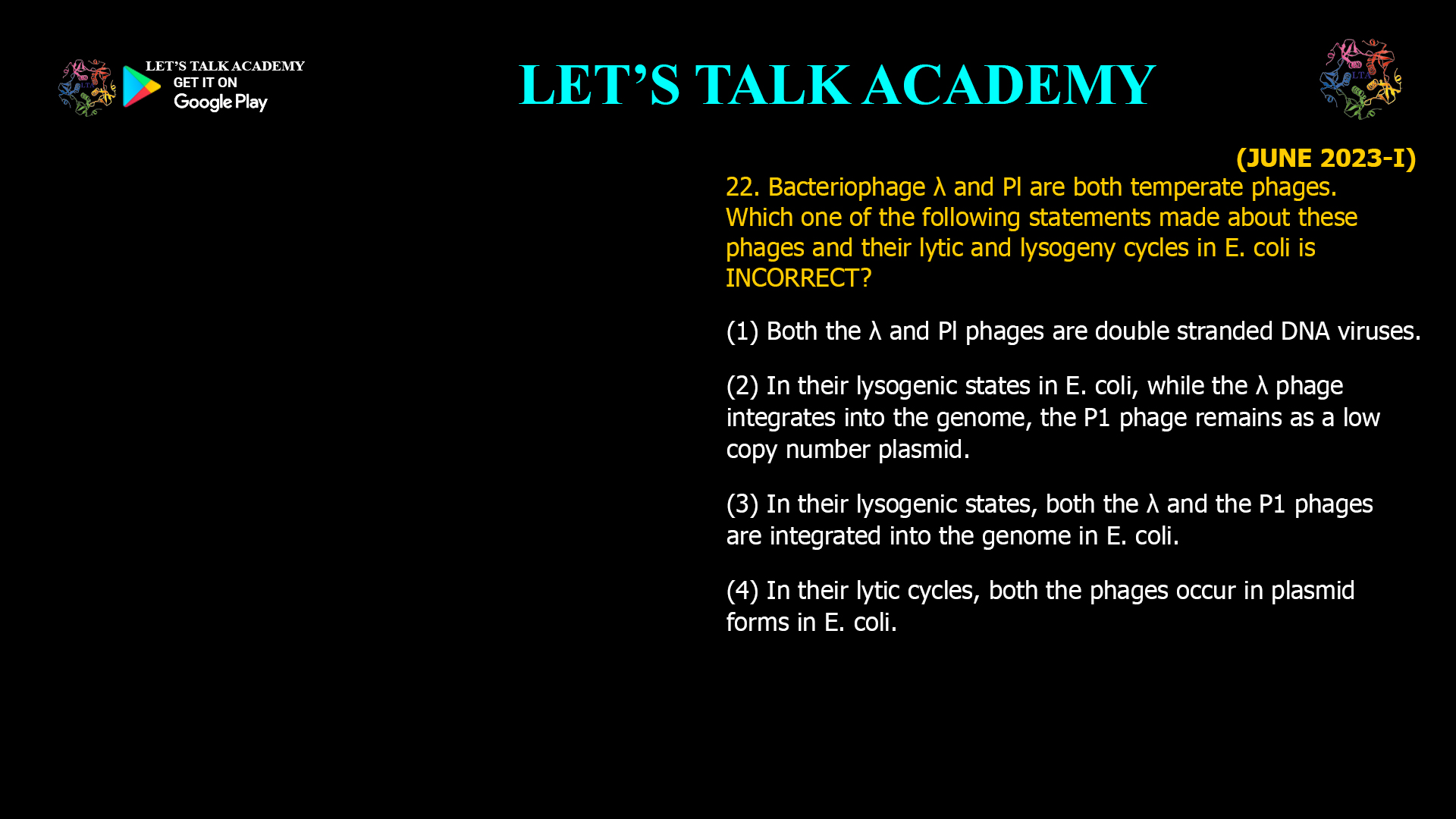
22. Bacteriophage λ and Pl are both temperate phages. Which one of the following statements made about these phages and their lytic and lysogeny cycles in E. coli is INCORRECT? […]

21. Bacteriophage λ proteins, Cl and Cro are crucial regulators of the lysogeny and lytic cycles of the bacteriophage. These proteins bind to the rightward operator region consisting of OR1, […]

10. In E. coli, the major DNA unwinding protein helicase, DnaB translocate in (1) 5’à3′ direction along the lagging strand template. (2) 3’à5 ‘direction along the lagging strand template. (3) […]

9. Which statement is correct regarding functioning of topoisomerase II? (1) Separate double stranded DNA (2) Act as primer (3) Renature the SS DNA (4) Attach to super coiled DNA […]
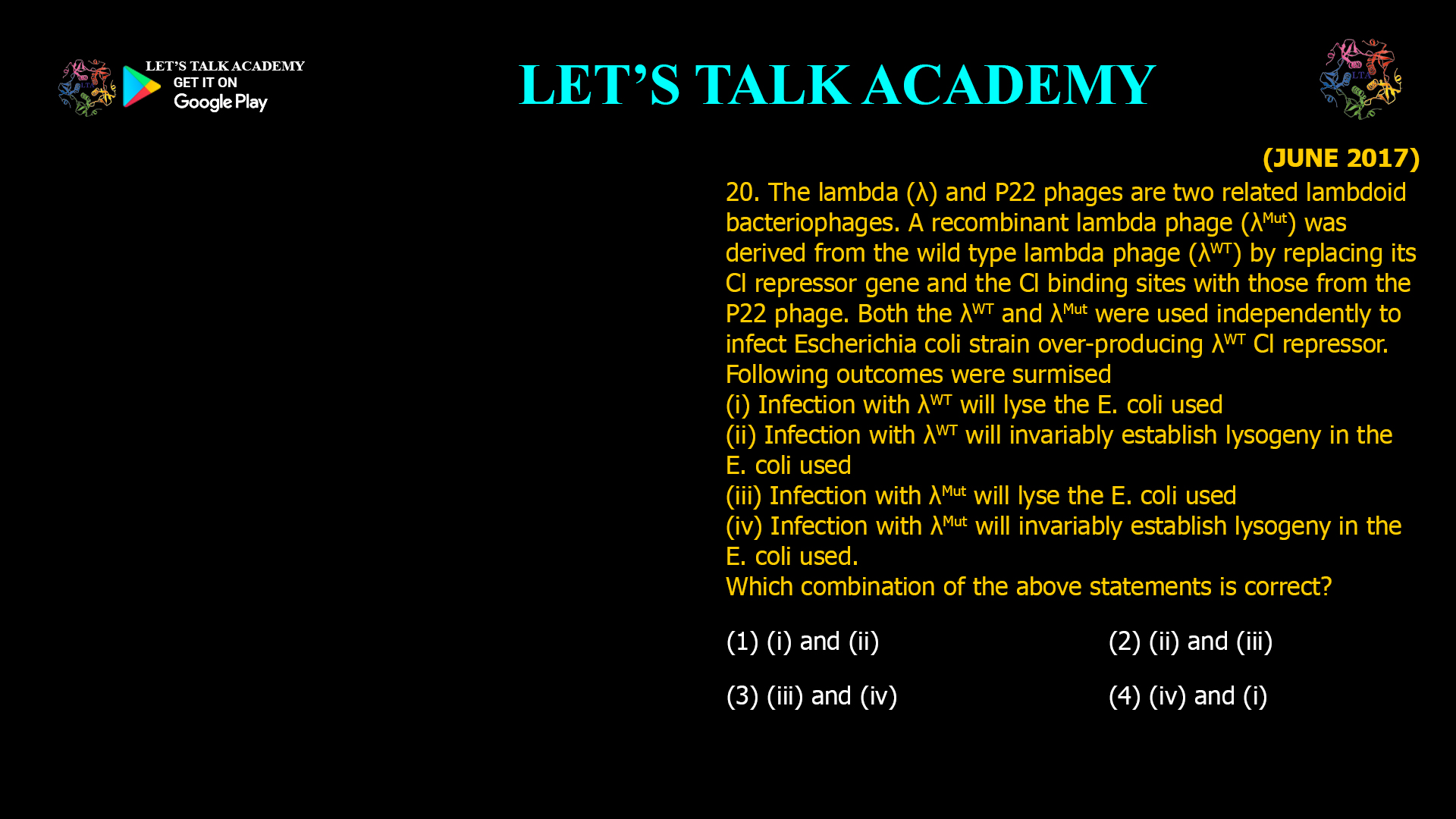
20. The lambda (λ) and P22 phages are two related lambdoid bacteriophages. A recombinant lambda phage (λMut) was derived from the wild type lambda phage (λWT) by replacing its Cl […]
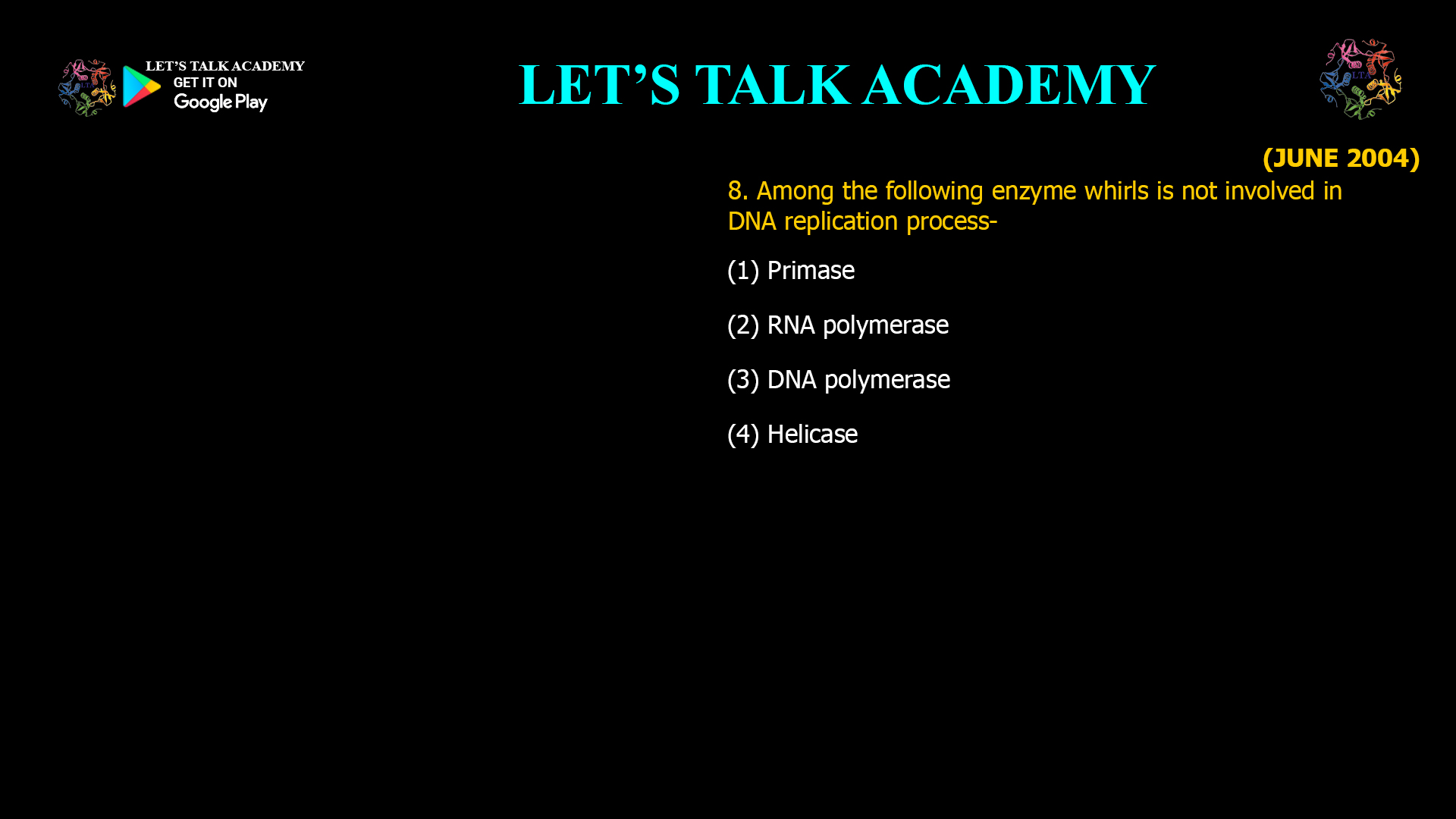
8. Among the following enzyme whirls is not involved in DNA replication process- (1) Primase (2) RNA polymerase (3) DNA polymerase (4) Helicase Introduction DNA replication is a complex […]
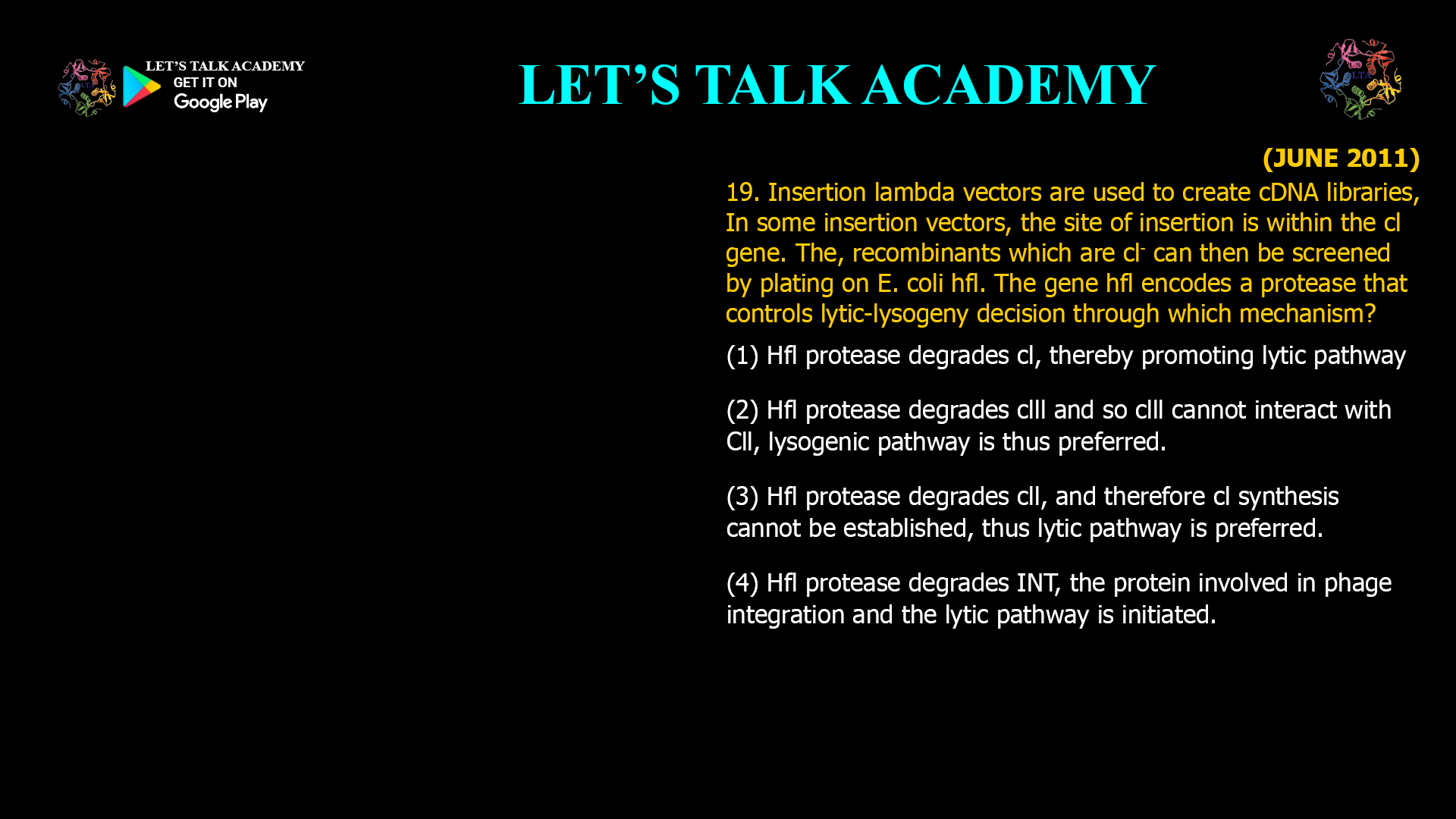
19. Insertion lambda vectors are used to create cDNA libraries, In some insertion vectors, the site of insertion is within the cl gene. The, recombinants which are cl–can then be […]
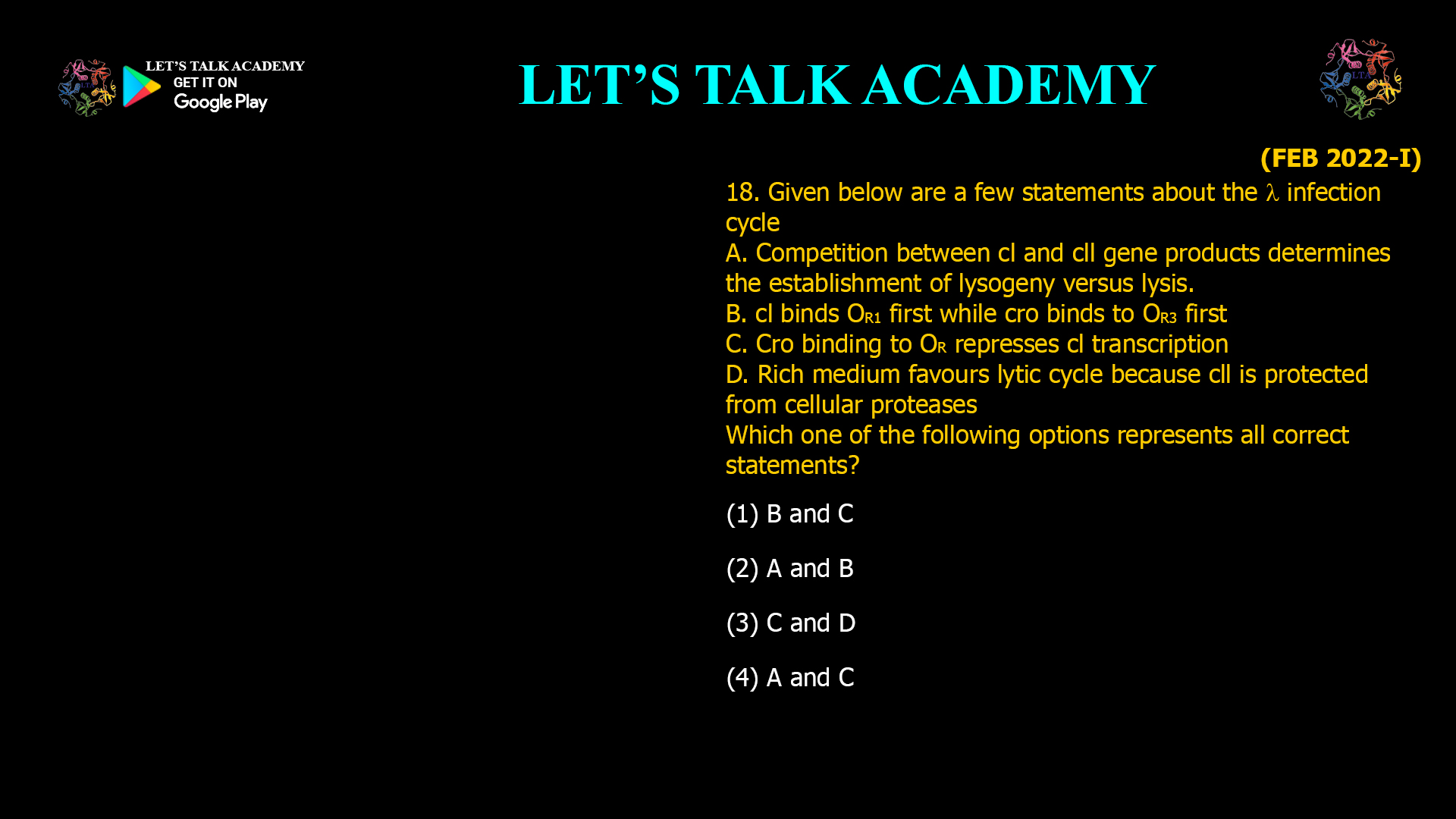
18. Given below are a few statements about the A infection cycle A. Competition between cl and Cll gene products determines the establishment of lysogeny versus lysis. B. cl binds […]
17. Bacteriophage λ, has two modes in its life cycle. Lytic and lysogenic. In the lysogenic mode, the expression of all the phage genes are repressed while the expression of […]
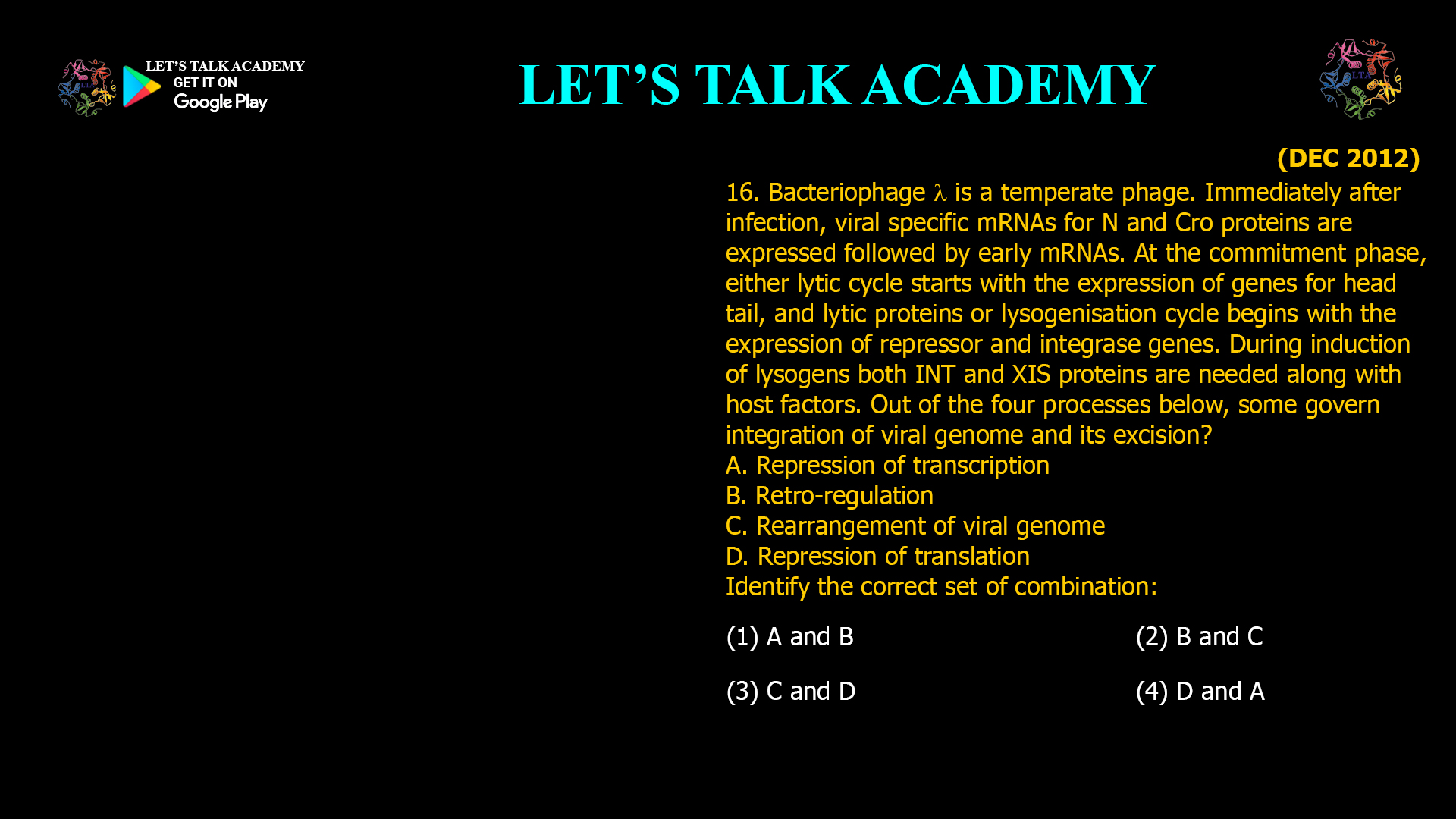
16. Bacteriophage λ is a temperate phage. Immediately after infection, viral specific mRNAs for N and Cro proteins are expressed followed by early mRNAs. At the commitment phase, either lytic […]


