








































































Aguanine (G) base in DNA is susceptible to modification to 8-oxo-G because of oxidative damage. If the modified G residues are not removed by a DNA glycosylase (Mut M or […]

Aguanine (G) base in DNA is susceptible to modification to 8-oxo-G because of oxidative damage. If the modified G residues are not removed by a DNA glycosylase (Mut M or […]

Although ribonucleoside triphosphates (rNTPs) are present at approximately IO-fold higher concentration than deoxyribo-nucleoside triphosphates (dNTPs) in the cell but they are incorporated into DNA at a rate that is more […]

Uracil containing plasmid was constructed and was used in transformation into the wild type (ung+) and uracil-N-glycosylase mutated (ung–) E. coli cells and scored for transformants in the presence of […]

In E. coli, though DNA polymerase I (POI l) plays an essential role in the replication process, it is not the major polymerase. Instead, the enzyme responsible for advancement of […]
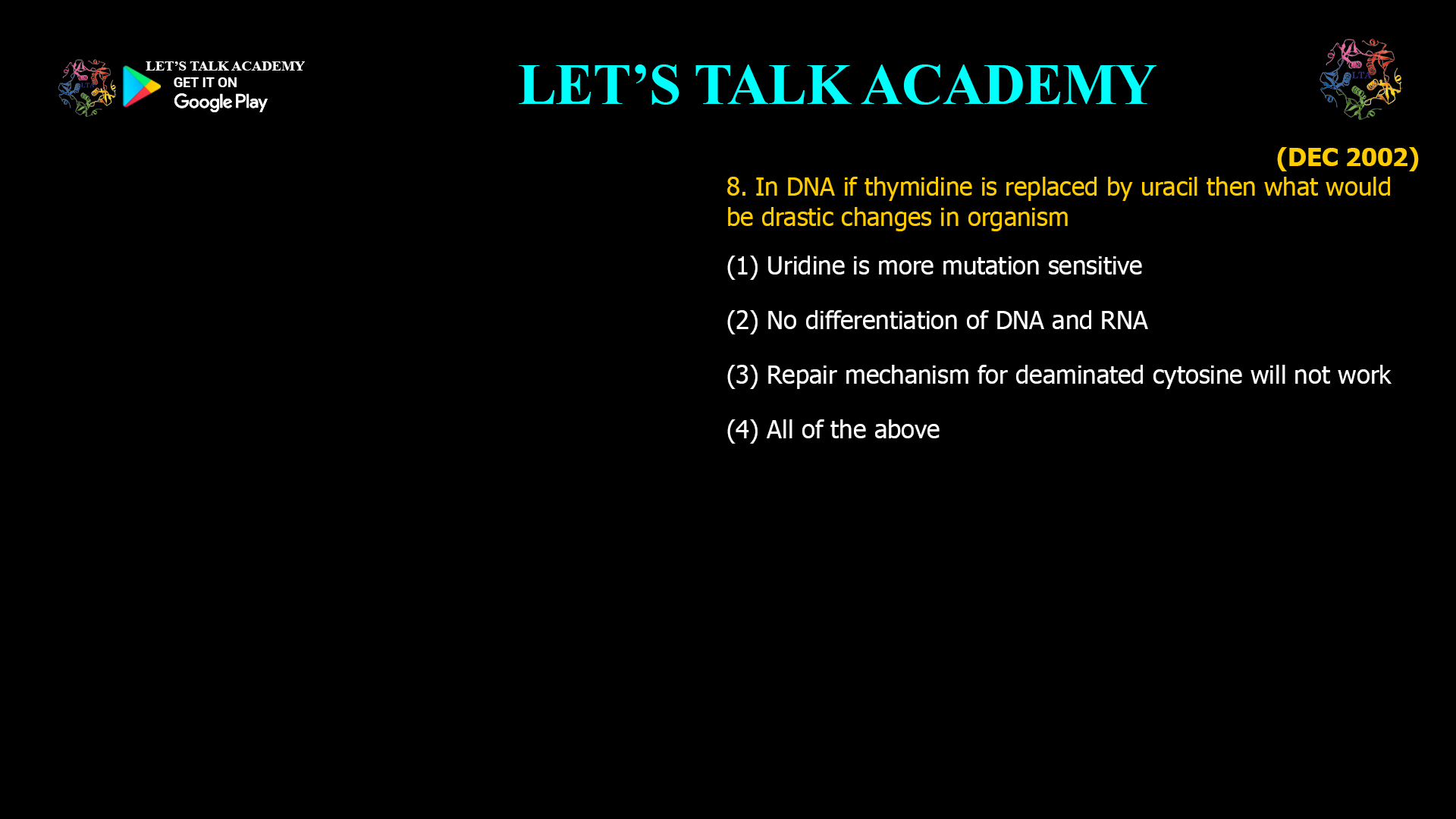
In DNA if thymidine is replaced by uracil then what would be drastic changes in organism (1) Uridine is more mutation sensitive (2) No differentiation of DNA and RNA (3) […]
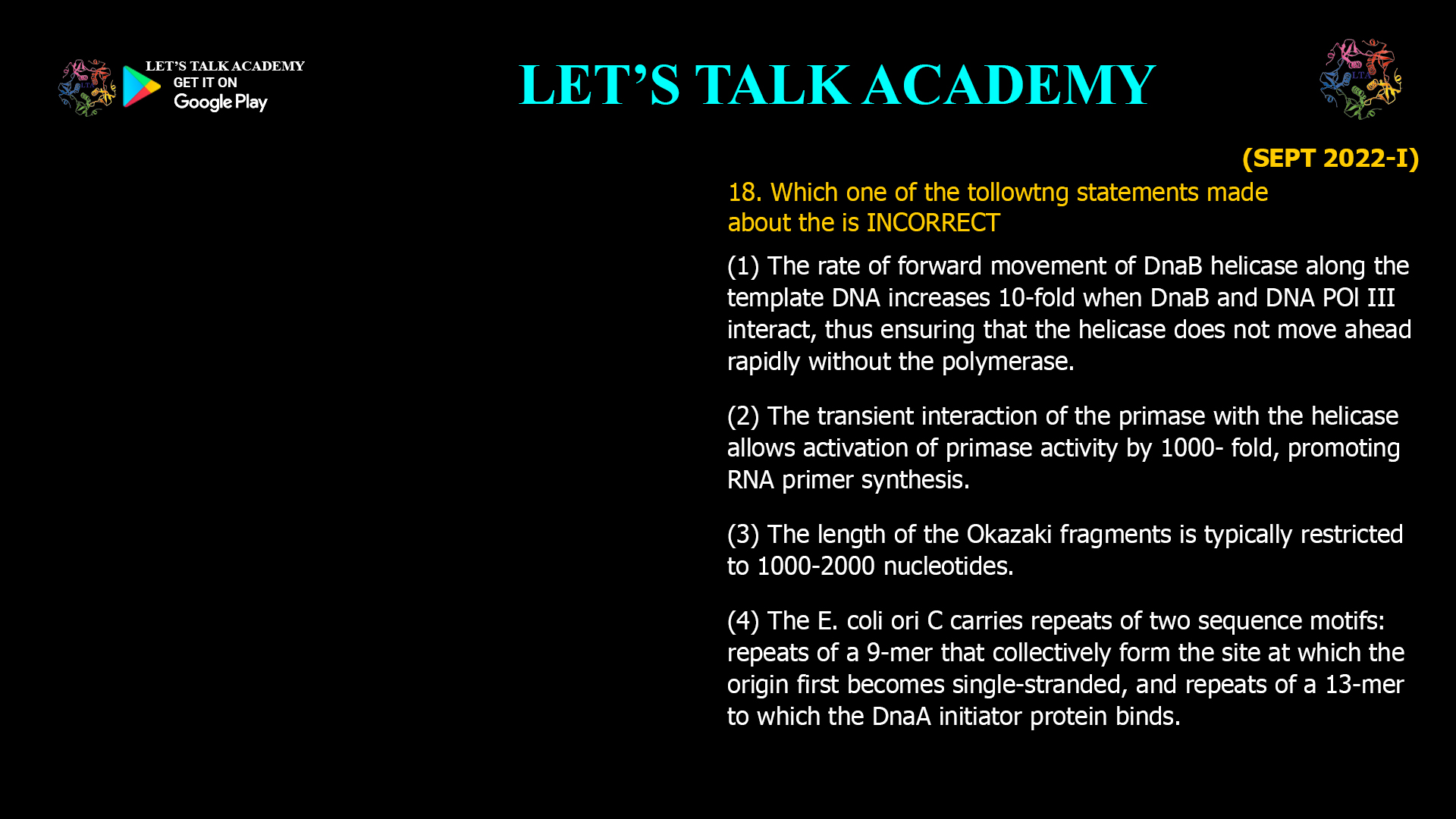
Which one of the tollowtng statements made about the is INCORRECT (1) The rate of forward movement otDnaB helicase along the template DNA increases 10-fold when DnaBand DNA POI III […]
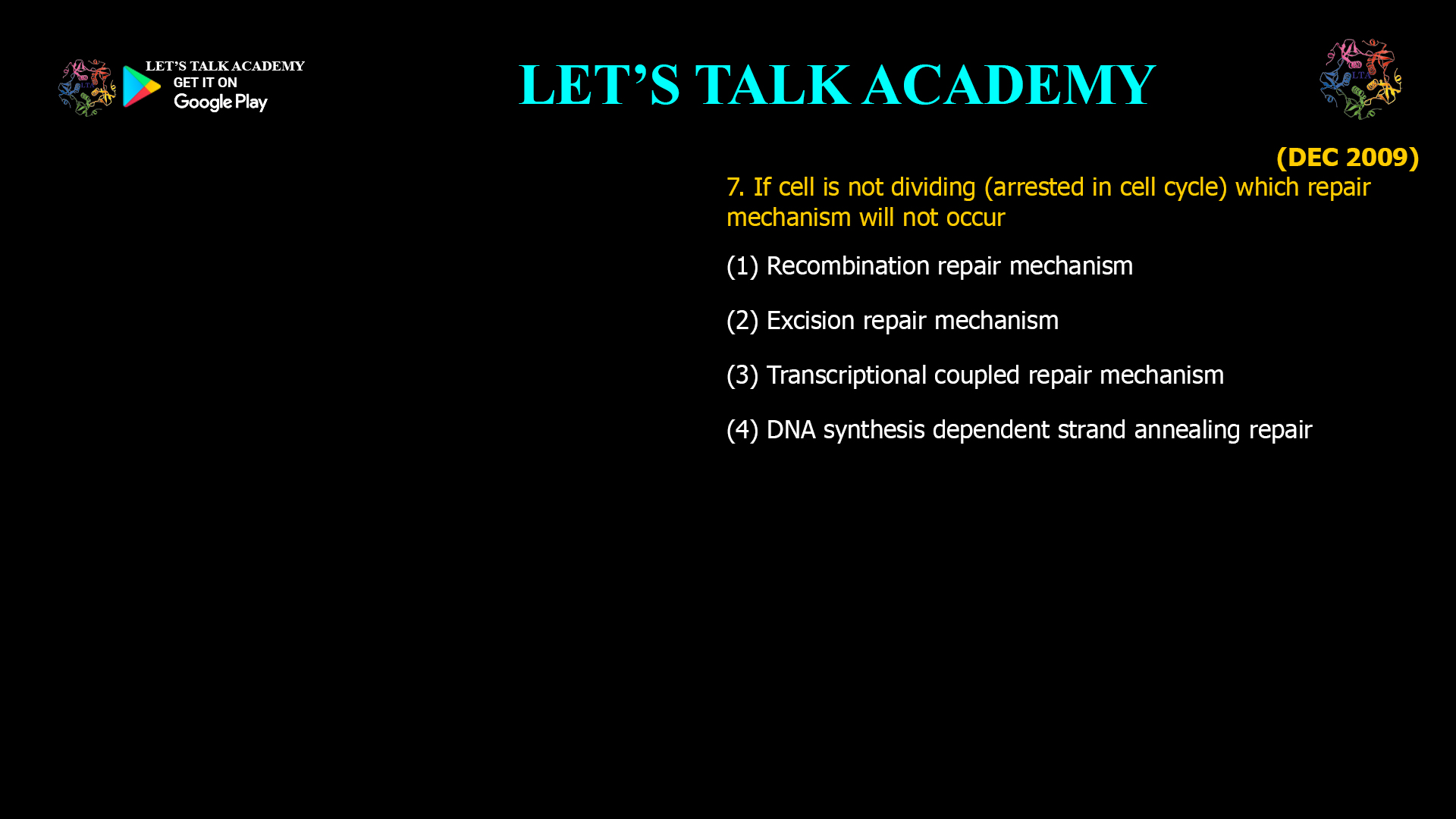
7.If cell is not dividing (arrested in cell cycle) which repair mechanism will not occur (1) Recombination repair mechanism (2) Excision repair mechanism (3) Transcriptional coupled repair mechanism (4) DNA […]
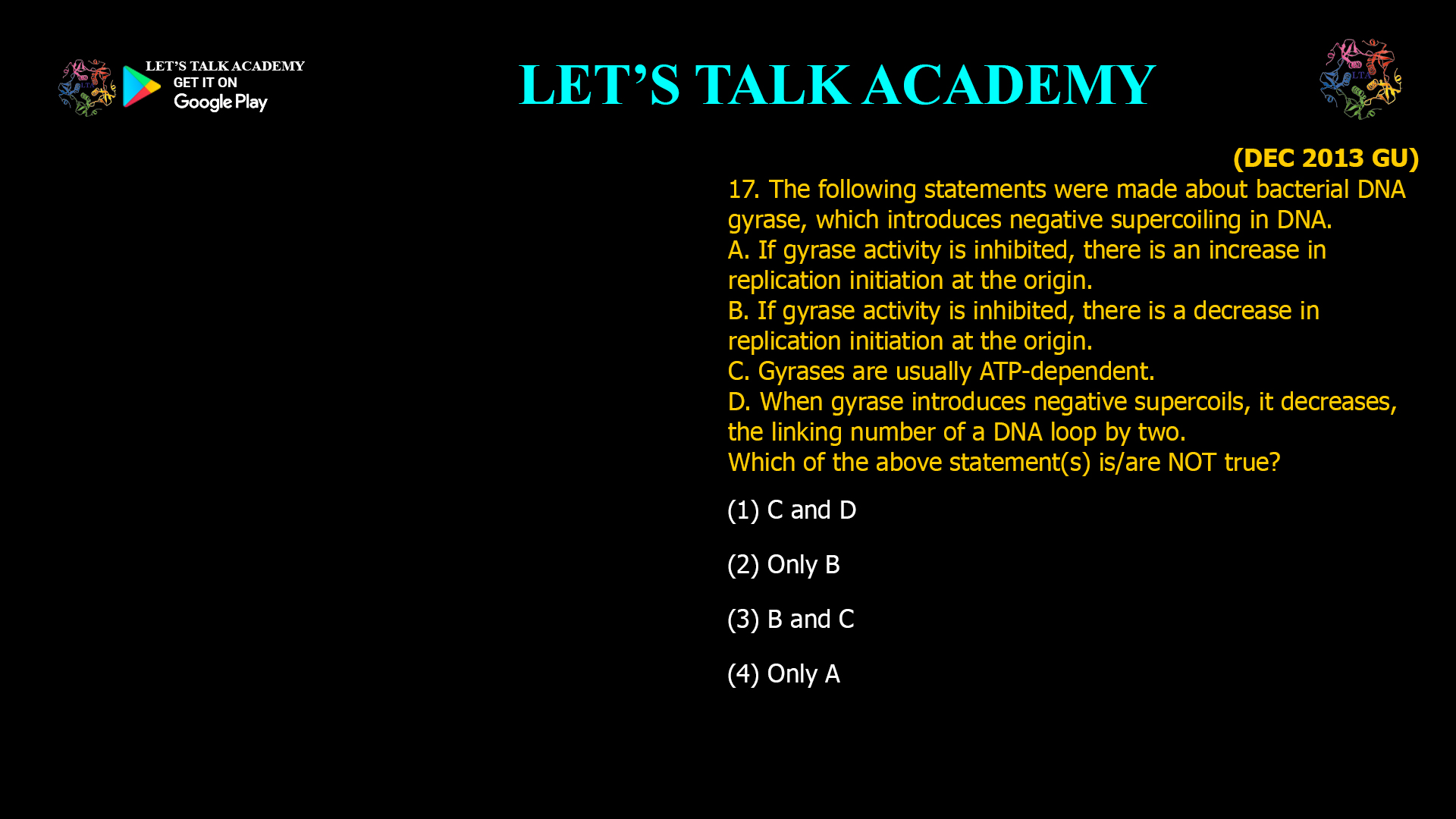
The following statements were made about bacterialDNA gyrase, which introduces negative supercoiling inDNA. A. If gyrase activity is inhibited, there is an increase inreplication initiation at the origin. B. If […]
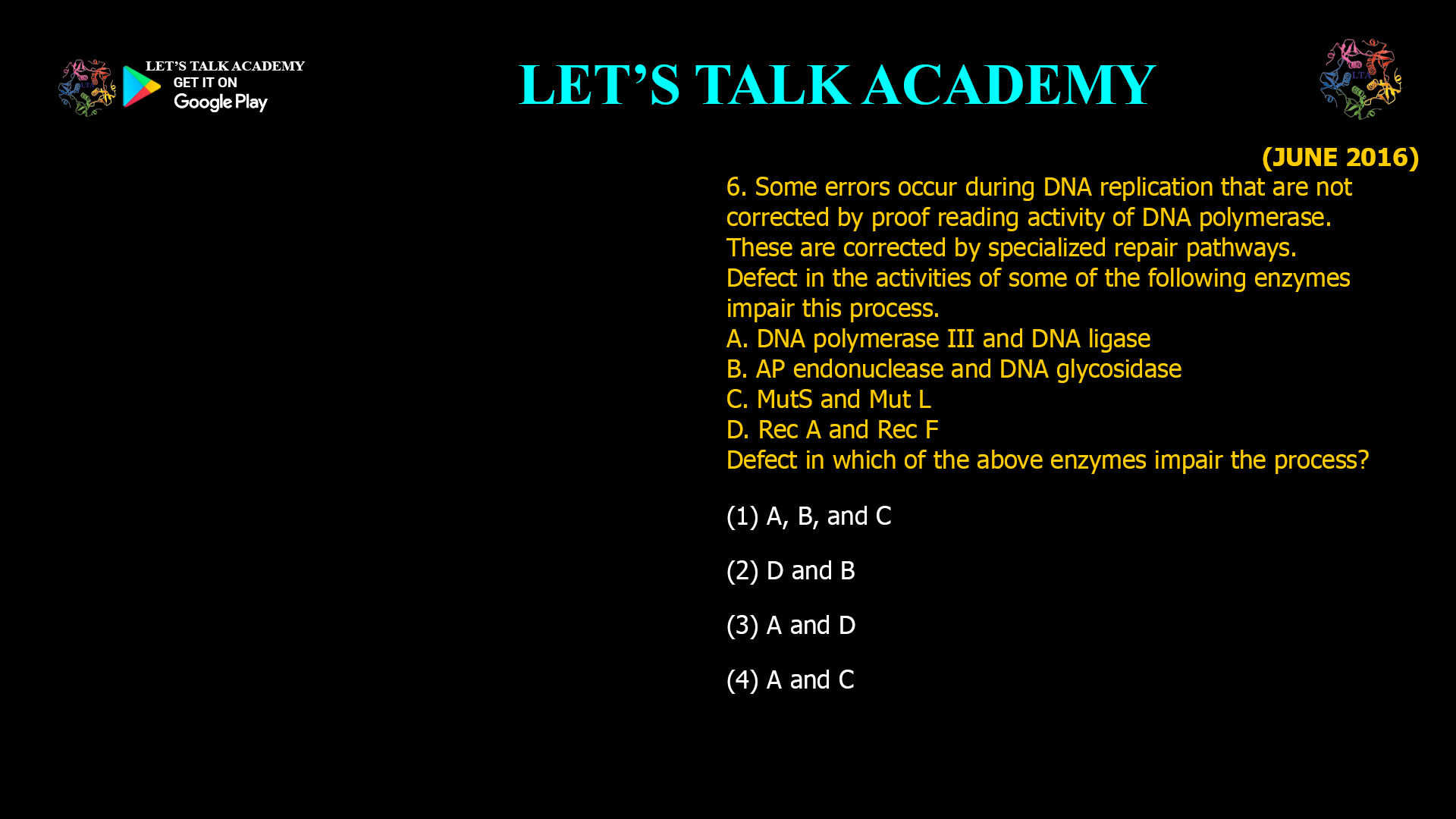
Some errors occur during DNA replication that are not corrected by proof reading activity of DNA polymerase. These are corrected by specialized repair pathways. Defect in the activities of some […]
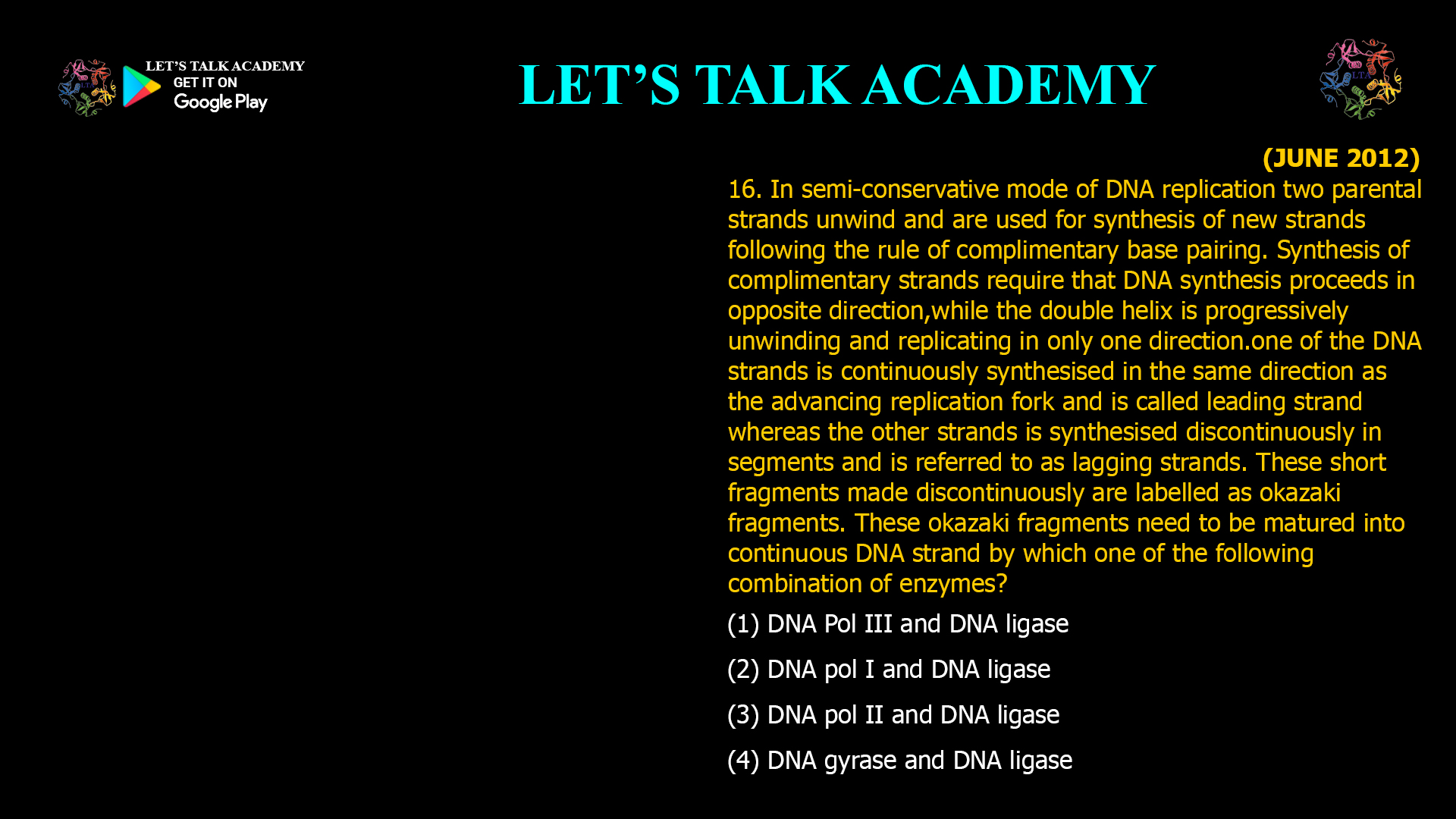
In semi-conservative mode of DNA replication twoparental strands unwind and are used for synthesis of new strands following the rule of complimentary base pairing. Synthesis of complimentary strands requirethat DNA […]


